
 In many ways I was very surprised to find myself attending a conference dedicated to Roman Wales, and in commenting on the #ArCC2026 conference feel that I should be completely transparent about my lack of qualifications in Roman studies. My research focus at undergraduate and postgraduate levels back in the mid-80s was earlier prehistory, although I did serve as trowel fodder at three Roman sites as well as several prehistoric ones. Some decades later my PhD research at UCL focused on prehistoric risk management during the last period of aridification in the eastern Sahara. I attended the conference because I am knee-deep in creating a detailed gazetteer of lowland Late Bronze Age to Iron Age settlements and find-spots from the Cheshire Plain to the Welsh foothills and the Wirral. I was interested in any current research that might be investigating the relationship between Iron Age and subsequent Roman occupation, as well as any assessments of the relationship between the rural indigenous population and the expanding Roman military and economic infrastructure in the 1st and early 2nd centuries AD. I expected to feel very much like a fish out of water 🐟, but the tone of the conference was one of mutual assistance and co-operation, an enjoyable and very useful experience.
It is the nature of conferences and that we all take away something different, relevant to our particular interests, but even with this important caveat it seems worth bringing together some of the themes that most struck me over the three days of the conference. I left my notes at the conference, so this is a free-wheeling and partial account, with apologies for any serious omissions. I have not included lecture titles but you can open my own (very battered) PDF copy of the final agenda and speaker abstracts for the #ArCC2026 conference here. Please do give me a yell if you have any corrections.
Day 1 – The Roman Research Framework for Wales and a tour of the re-opened Museum
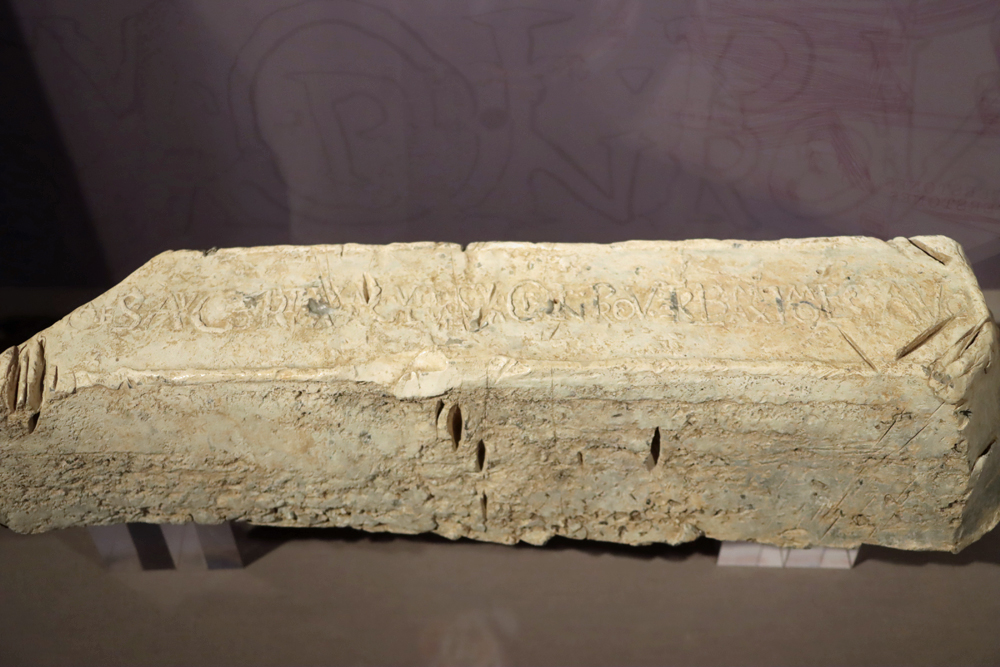
The lead ingot of Governor Marcus Trebellius on display in the Wrexham Museum. It was found in 2019 by Rob Jones, detectorist and consultant on archaeological sites, who immediately informed PAS of his discovery, without attempting to remove it from its context.
Day 1 began at 12 noon and carried on until 9pm. On arrival at the museum in the afternoon, all delegates were ushered into a large meeting room in the Wrexham Museum, where the topic was the development of the latest of the Research Frameworks for Roman Wales. In the early 2000s a project was inaugurated to develop a full set of regional Research Frameworks to create a strategic direction in order to secure the future of archaeological investigation of all types from the Palaeolithic up to and including the Roman period. These research frameworks, developed with the input of all interested parties, professional and independent, have helped to provide strategic guidance for all archaeological endeavours in Britain, providing a much better basis for understanding regional variations in terms of a number of different themes. You can see some of the British Frameworks and the ideas underlying them on the Research Frameworks website here. The Frameworks underscore all archaeological investigation and updating them every few years has therefore been critical, and this is again underway at the moment for Roman Wales. It was therefore particularly satisfying to spend the first day at the conference both learning about how the new Research Framework for the Roman period in Wales is being developed, and having the opportunity to contribute to it.
A Research Framework for the Archaeology of Wales home page
Leah Reynolds talked us through the key components of the new Research Framework, under seven headings: 1) Chronology; 2) Western Frontier; 3) Settlement and Land Use; 4) Ritual, Religion and Ceremony; 5) Material Culture; 6) Mobility and Migration; 7) Presenting the Roman Past. Within these categories, key themes, key sites and key published resources are being assembled, and good progress has already been made. All sections are under development, and the purpose of the late afternoon session was to ask the participants to contribute their knowledge and ideas to the mix. The objective was to make good use of the diverse range of interests and skills at the conference to obtain input into the new edition of the Research Framework. This was done in three steps, overseen by Caroline Pudney. First, a brainstorming session at each table produced individual and collective research ideas and goals, all noted in bright colours on A1 pages. Second, each table was asked to nominate a spokesperson to offer one key piece of information and one research question, both of which resulted in some very useful discussions. Finally, all of the pages were photographed so that the full range of ideas were captured digitally for potential inclusion into the Research Framework. As well as offering insights into the widely different concerns and interests of the mixture of people in the room, it was a lot of fun.

A section of one of the interpretation boards at the Prestatyn bath-house site showing how the site was used. This is the sort of site-specific explanatory material that is potentially relevant to Research Framework heading number 7: “Presenting the Roman Past.”
There was a two hour break in the agenda at 4pm, and I could not attend when it resumed at 6pm, but I understand from those who did attend that the keynote lecture by Dr Sam Moorhead and Graham Barker (delivered by the latter) was excellent. A visit to the museum galleries followed. The museum, which used to be dedicated to local archaeology and history, reopened on 25th September after three years of reinvention as The Football Museum of Wales and Wrexham Museum. I look forward to seeing it.
Day 1 (p.m. – keynote), Day 2 (all day) and Day 3 (a.m.)
A programme of lectures at the University of Wrexham
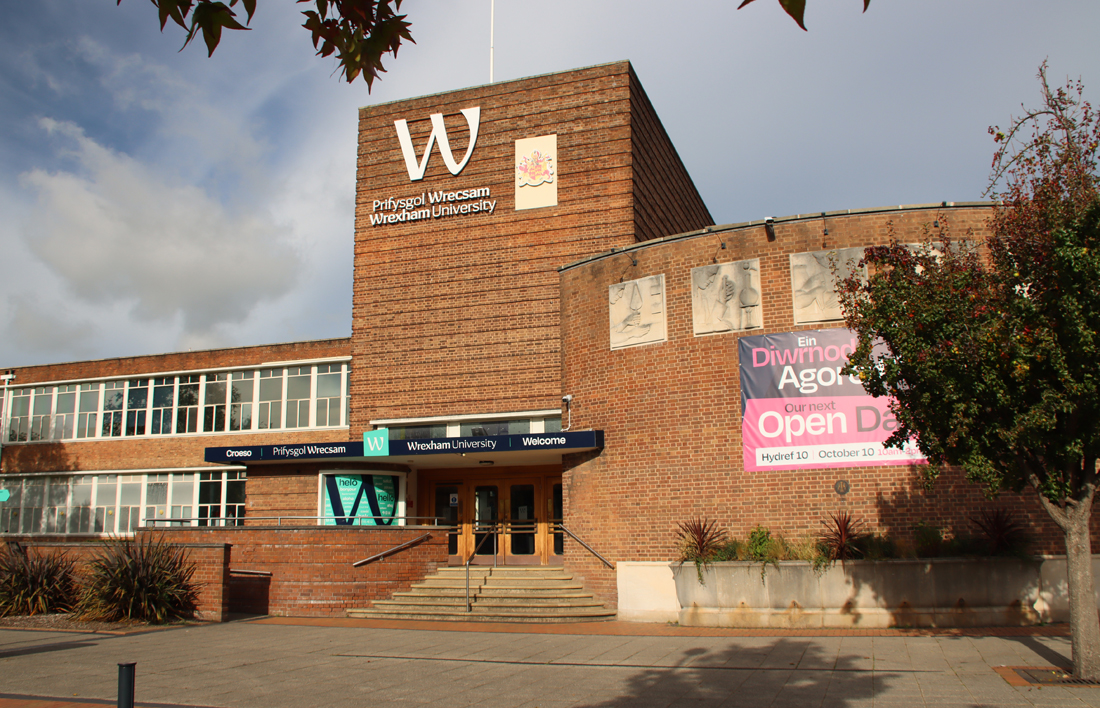
The University of Wrexham
The second day shifted from the museum to the University of Wrexham’s lecture theatre. If you were unable to take advantage of the opportunity to attend in person, all of the lectures, including Day 1’s keynote, will be available shortly on the Heneb YouTube channel. No attempt will therefore be made to summarize any of the specific lectures here, but some general observations about the conference and its themes are discussed.
First, it was good to see a wide age-range amongst the presenters, including a confident presentation from a second-year student from the University of Liverpool (Rachel Tynan speaking at her first conference, discussing the Roman recycling of glass, which is also the subject of her first paper – and she earned a massive round of applause).
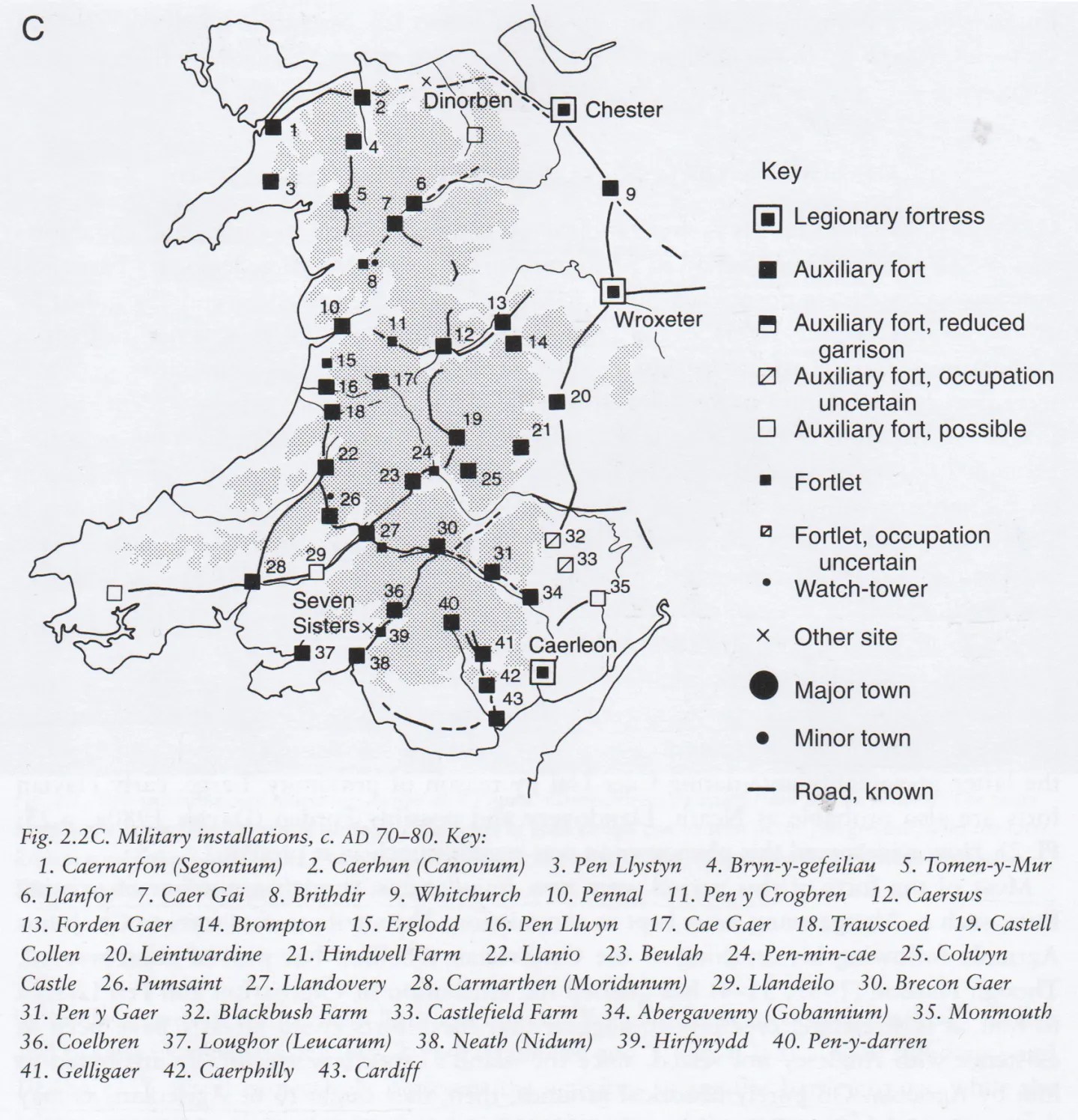
Rome in Wales: military installations c.AD70-80. Source: Arnold, C.J. and Davies, J.L. 2002. Roman and Early Medieval Wales. Sutton Publishing
The opening lecture was important in setting the scene for the rest of the lectures. Roger White (University of Birmingham) argued that the public perception of Wales is that the Romans met with continual resistance from indigenous populations, and that Rome made very little headway into the Welsh nation. Plenty of evidence was presented to challenge this idea, suggesting that however the Romans were perceived in Wales, they succeeded in holding on to much of the country as part of the Empire, with military sites forming an impressive network. It was argued that an impact of Roman influence is visible in the post-Roman period when Welsh communities promoted their identity and legitimacy by reference to the Roman past. This set the scene for discussing both Rome’s presence and ongoing indigenous Welsh livelihoods during the period of Roman occupation.
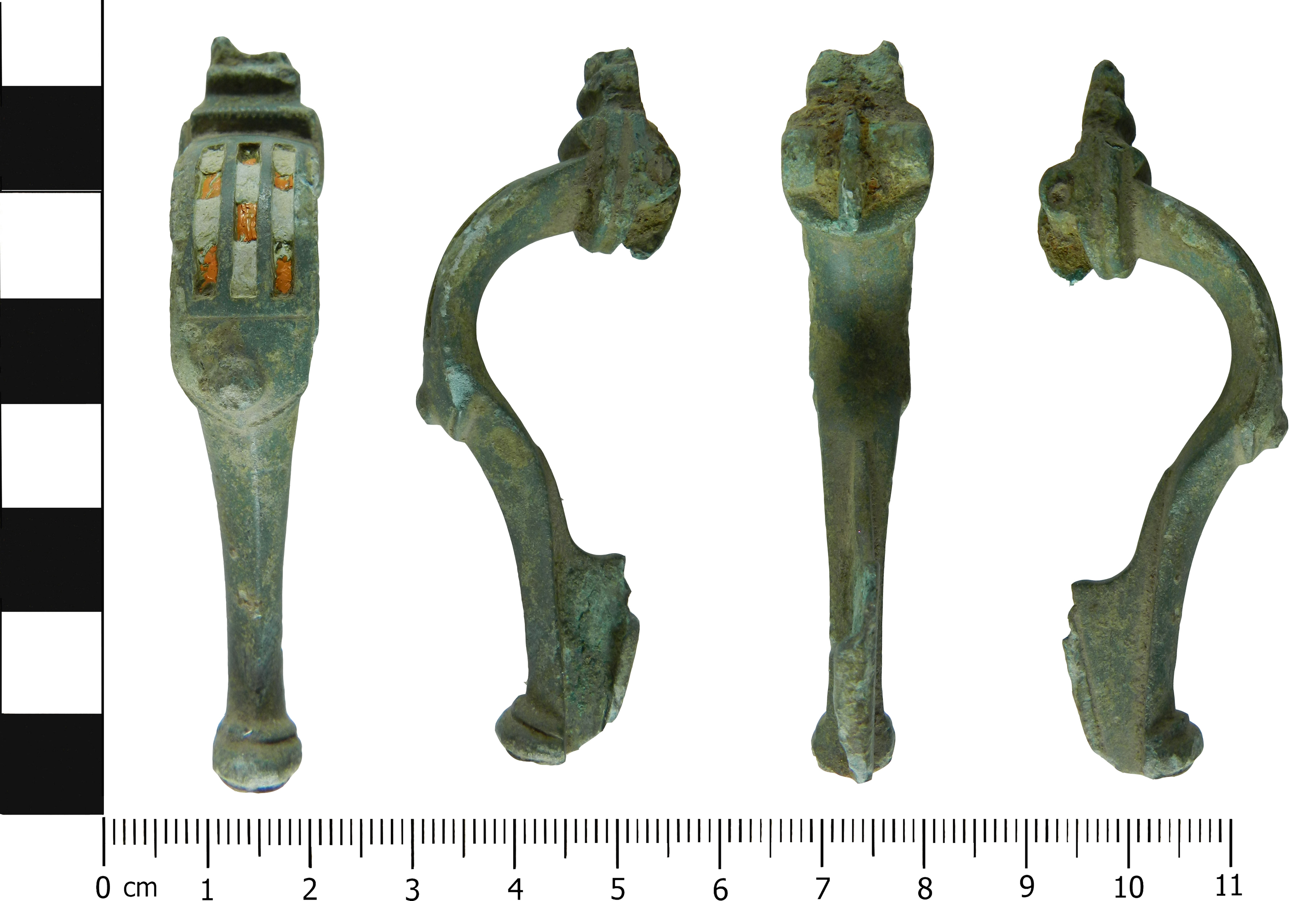
Copper alloy and enamel Wirral type brooch from Flintshire. LVPL-21B179 on the PAS database.
One important theme of the conference was the use of material remains to reveal specific aspects of beyond-the-site archaeology in the Roman period. As funding issues continue to be a problem for excavating, the potential and actual use of existing data for desk-based research has become more important, making use of resources like the PAS database, physical museum archives and grey literature will become increasingly important. Topics based on object groupings included: the types of objects that may be found in the PAS database for Roman Wales with a particular focus on fibulae, figurines and fastenings (Sally Worrell); what might be learned from the distribution of single coins (Matthew Ball); an exploration of the Wirral brooches in the context of the national distribution of Roman brooch types, also considering how colour choices may have served as indications of regional preference (Dr Frances MacIntosh); the role of recycled glass in Roman Britain as a means of handling poor access to luxury goods (Rachel Tynan); and the distribution of Anglesey copper ingots or “cakes” that are apparently unique to Anglesey and the immediately neighbouring area (Kelly Parry). The developing role of horses from the Iron Age into the Roman period was raised a couple of times during the conference, and the presence of horse fittings found in excavations and by detectorists, has provided a sense of their importance, countering the frequent absence of animal remains in many Welsh contexts.
Two excavations produced objects that presented challenges in terms of interpretation. Robert Philpott’s discussion of a cremation burial in a jar near Buckley in northeast Wales required an assessment of the broader landscape context in order to determine why the burial was located in that particular location, suggesting that natural and social boundaries may have played in important part in such decisions. During the 2010 Caerleon Priory Field excavations Mark Lewis found a partial carving on a slab of sandstone, followed by the subsequent discovery of a more ambiguous piece that was eventually found to belong to the same carving. The partial carvings required extensive research into comparative material to determine what they originally depicted, particularly as there were conflicting opinions about the subject matter. In both excavations, the importance of extrapolating from a single object to the broader significance of the site was clearly demonstrated.
Portable Antiquities Scheme home page
Given how important these material culture studies are becoming, it was good to hear that Portable Antiquities Scheme (PAS) database, with the evocative tagline “your finds, our history,” is being upgraded all the time, not only to improve the accessibility of its data but also to enable those who find new objects to submit them for analysis much more easily. At the same time the PAS database provides the raw data for statistical analysis of object types and their geographical and topographical distribution. Due to the work of metal detectorists it is particularly strong on metallic (including non-ferrous) objects, whilst field-walking projects and alert hikers also continue to use their powers of recognition to contribute important data about non-metal objects found in the landscape.
It was one of the many positive aspects of the conference that not only were archaeologists applauding those detectorists who contribute to archaeological activities, but that detectorists were volunteering both practical and technological assistance to archaeologists. It is very positive that the official organizations representing detectorists at both national and regional levels are working hand in hand with archaeological organizations. There will always be detectorists who break the law in the interests of personal gain, but that could equally be said of society as a whole. The establishment of PAS in 1997, initially as a pilot scheme, has been the lynch-pin for this mutual co-operation to help increase knowledge of all periods.
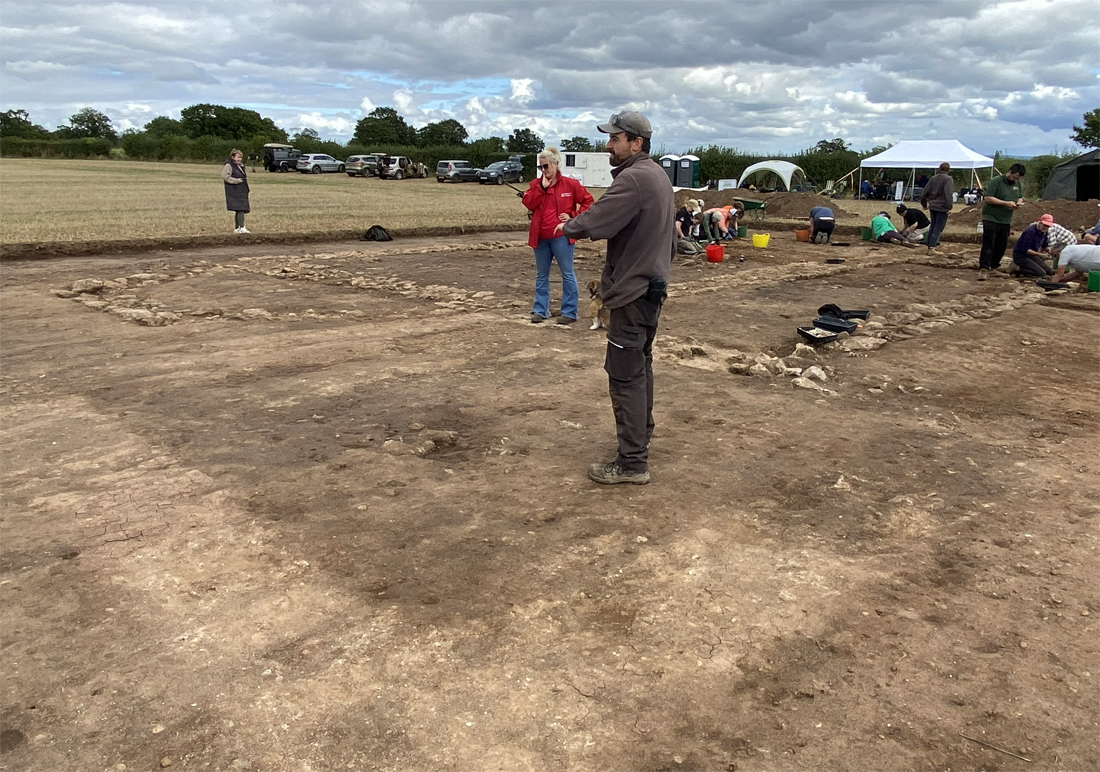
Rossett Villa, faint remains of the west wing in 2026. Photo taken a the Open Day in 2026
Although funding is a challenge, some excavations are still taking place. Two have already been mentioned above. Another example is the Rossett Villa, a few miles from the river Dee to its east, discovered following metal detectorist Rob Jones’s discovery of an important lead ingot nearby. Steve Grenter (formerly of Wrexham County Borough Council) and Caroline Pudney (University of Chester) described how, following their initial excavation in 2021, a second season was carried out earlier in 2026. It was very interesting to hear how a crowdsourcing model had been introduced by commercial archaeology company DigVentures, whose team worked with the original excavators at the site, and whose funding model offers the possibility of future seasons. The excavation not only establishes how the building developed over time, but suggests that other Roman sites, including roads, must be present in the area. It is also hoped that a wider landscape approach can be undertaken to assess the use of the area in prehistoric and Roman periods, including the range of farming activities that must have been carried out in the immediate area.
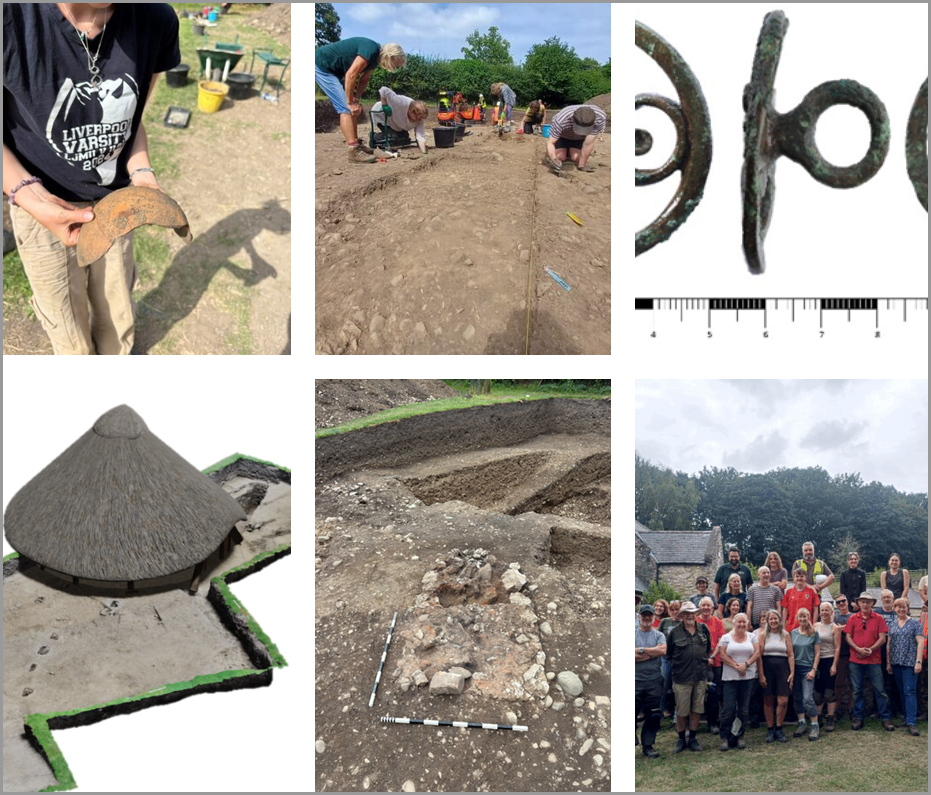
Excavations at Greenfield Valley. Source: Heneb
Chris Matthews of Heneb has been excavating at two sites in the northeast Wales coastal area, at Greenfield Valley (on the edges of Basingwerk Abbey) and at Mancot. Together the sites have produced extensive evidence of settlement and craft activity. Mancot (or Mancott in the earlier spelling), a centre of Roman brooch production, tied in nicely with the presentation by Frances McIntosh about Wirral brooches and regional fashions for different types of brooch. As well as data about Roman and post-Roman periods, the Greenfield Valley excavation has also produced data about the Iron Age occupation of the site. Together, these two sites are very important for expanding the understanding of the development of Roman activities of different types in coastal northeast Wales. In an area rich in primary raw materials, the expansion of archaeological investigation has considerable potential for expanding knowledge about manufacturing, trade and how agricultural activities support other specializations.
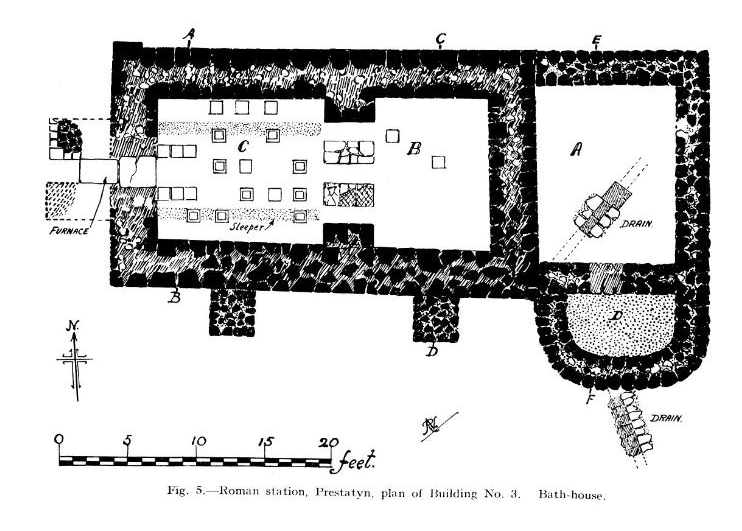
The Prestatyn Bath House as it was found when Newstead excavated it, associated with workshops at the foot of Halkyn Mountain, and probably associated with lead working. Subsequent excavator Kevin Blockley suggests that there must have been a port nearby in the Fforddisa area of Prestatyn (1989), but this has never been located. Image source: Newstead, Robert 1937. The Roman Station, Prestatyn. First Interim Report. Archaeologia Cambrensis vol.92), p.208-32
Whilst both site specific and object-orientated archaeological approaches were discussed, another interesting aspect of the conference was the problem of “missing” sites. For example, the lack of known Roman port sites impedes a rounded understanding Roman and Romano-British trade communication and trade, not just within Wales but along the entire Atlantic coastline and along key estuaries. The lead working community at Prestatyn was mentioned, but this is several miles inland and an accompanying port has been discussed but never located, and this was probably one of the closest ports to the known port of Meols on the end of the Wirral. Likewise, although Roman period roads are known in Wales, there must have been many more that remain to be located. The nature of transport links was also touched upon in Rachael Tynan’s presentation about recycled Roman glass, underscoring the need at some settlement sites to re-use materials rather than replacing objects when they may be remote from the supply of luxury goods. The identification of only two villa-style buildings in Wales was also highlighted, and the reasons for this were discussed in terms of contrasting economic opportunities and traditions associated with different types of landscape and topography. The density of hillforts in south-west Wales, highlighted by Ralph Häussler, was an indication of the presence of significant population in the Iron Age; but the contemporaneity (or otherwise) of these sites is poorly understood, and what these periods of occupation indicate for the relationship between upland and elusive lowland communities in southern Wales in the early Roman period needs more investigation.
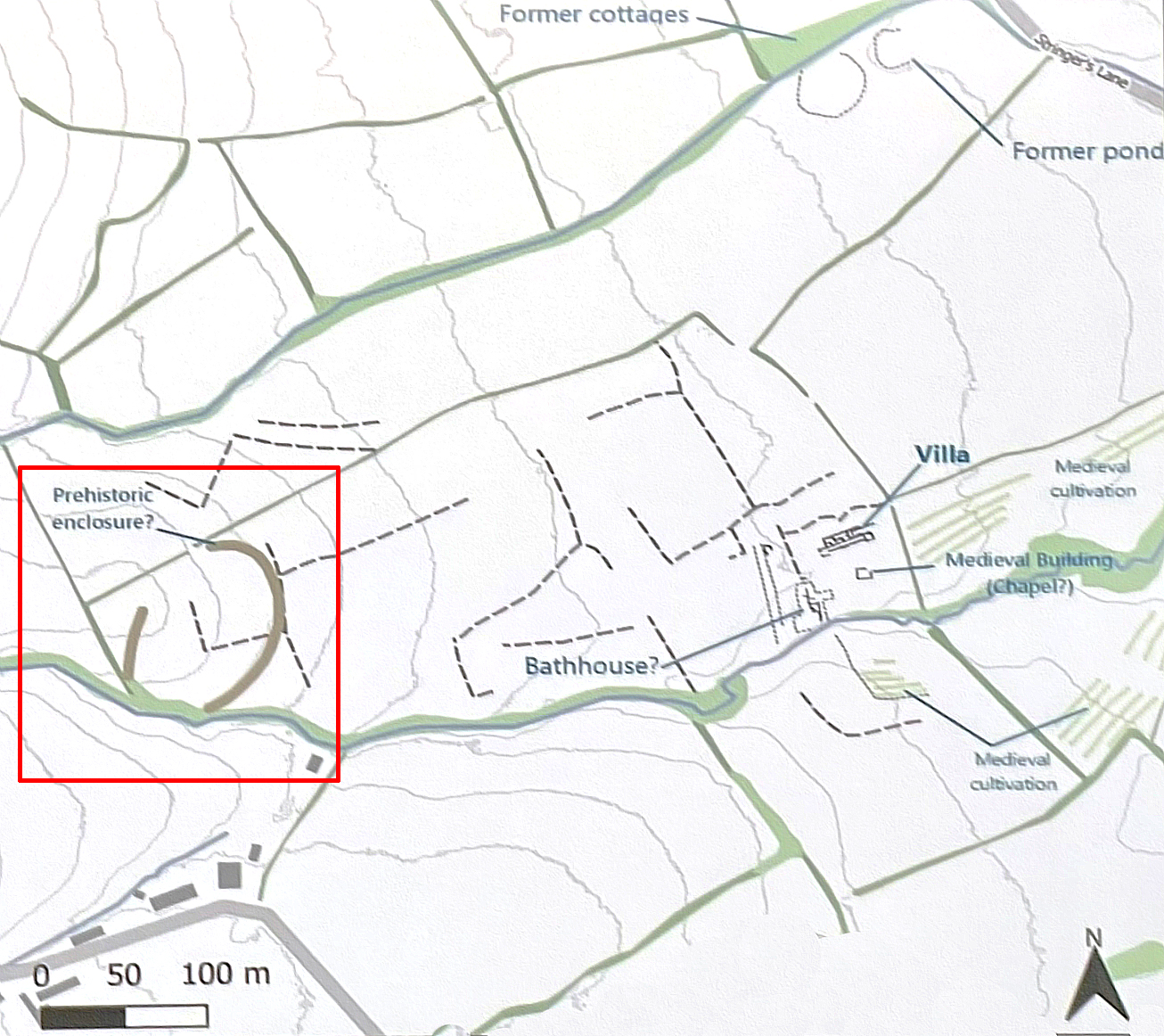
Excerpt from the slide showing the location of features at the Rossett Villa showing a possible prehistoric enclosure at far left. Slide shown in the presentation by Steve Grenter and Caroline Pudney, with thanks to Helen Anderson for sending me her photograph of the slide
Finally, the questions about the relationship between Iron Age and Roman sites ties in well with the discovery of a potentially prehistoric findings from the Rossett Villa and Greenland Valley sites. A possible prehistoric enclosure was identified during geophysical survey to the west of the villa next to the Poulton Brook, whilst postholes and related data found underneath the villa, suggest earlier Late Bronze Age, Iron Age or Romano-British occupation pre-dating the villa. Assuming that the villa was at the core of a farming operation, the presence of a prior lowland enclosure would not be unexpected, with occupants of both periods finding the location attractive for the same reasons. This topic was also address at the conference by recent discoveries presented by Chris Matthews from Heneb and his team at the Greenfields (Basingwerk Abbey) site on the North Wales coast, where excavations revealed Middle Iron Age material, and the connection, if any, between Iron Age and early Roman periods is being explored, bearing in mind possible contemporaneity of some phases with the initial construction of Deva Vitrix (Chester) in around AD74. These finds echo discoveries of other Iron Age structures beneath Roman sites.

Period plans showing the location of major features at the Prestatyn bath house site. Source: Blockley, Kevin. 1989. Prestatyn 1984-5. An Iron Age Farmstead and Romano-British Industrial Settlement in North Wales. BAR British Series 210
For example, in 1989 Kevin Blockley published his findings at the Roman bath house at Prestatyn in north Wales, showing the Period I Iron Age structures that preceded the Roman site. In 2018 Tony Wilmott and Dan Garner published their work at the Chester Amphitheatre that produced a roundhouse, a four-poster and two phases of field system underlying the earliest amphitheatre structure. These sites all demonstrate the benefits of geophysical survey for identifying potential sites and landscape features, ideally followed by excavation, for improving an understanding of the multi-period character not only of sites but of the wider settings in which they sit.
The conference provided details and discussion about many more topics than those described briefly above, and offered a considerable insight into the many challenges and achievements of Roman archaeology in Wales. It is an exciting time.
Day 3 p.m. – Organized visits
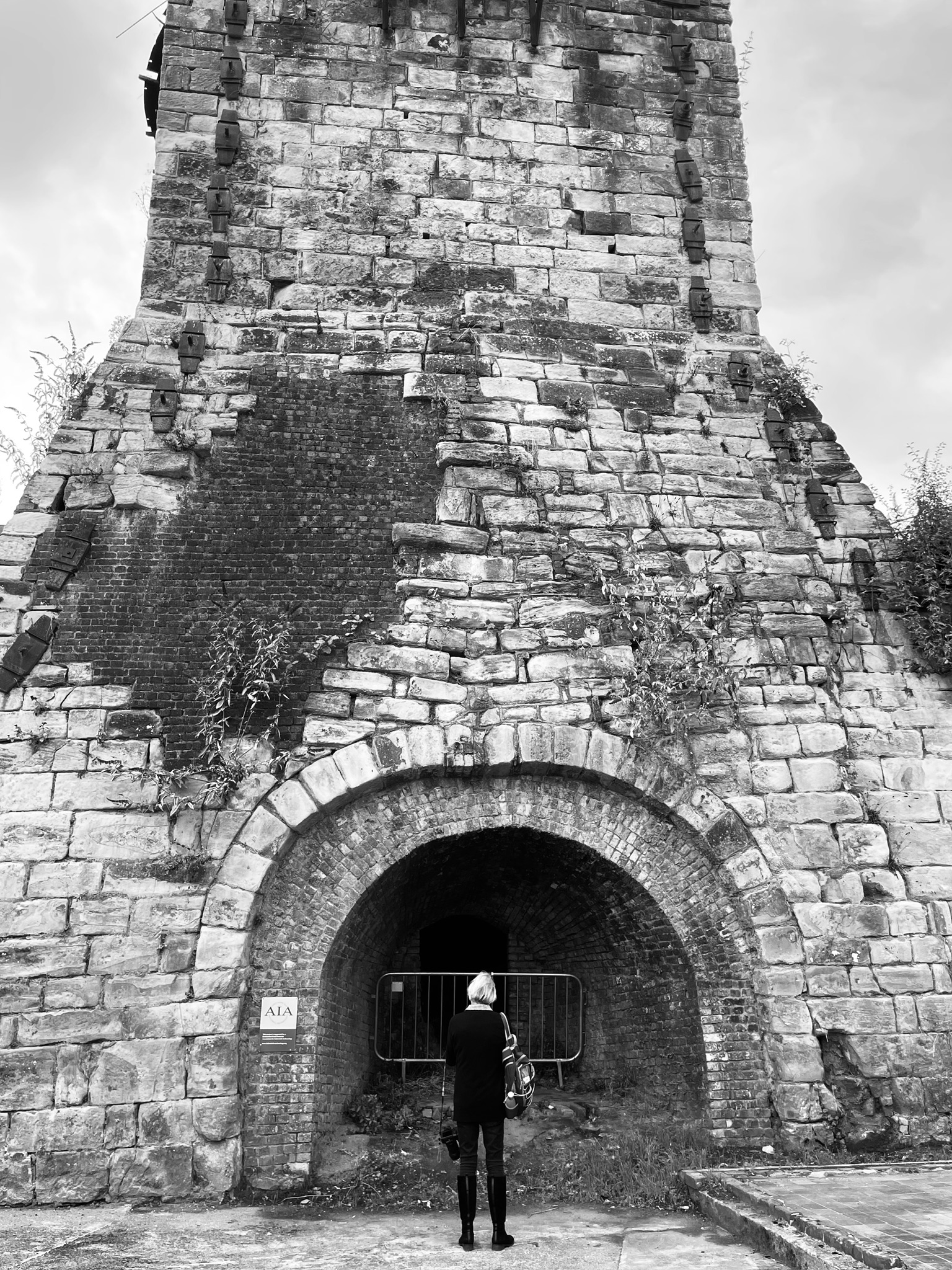
The 1818 “Old No.1” furnace on the Brymbo visit. Photograph and copyright Helen Anderson
With sincere thanks to the conference organizers for offering a choice of two afternoon trips – to Park in the Past in Hope, or to Stori Brymbo, neither of which I had managed to get around to visiting under my own steam, although both were on my to-do list. I chose the Stori Brymbo option and found it superb. The Brymbo site includes both the ongoing excavation at the 314 million year old tropical forest within its custom-made protective building, and the venerable remains of the old steelworks. Both are remarkable in their own unique ways, and were visually very striking. With many thanks to geologist Tom Hughes and palaeontologist Tim Astrop from the Brymbo Heritage Trust for their excellent talks about all phases of the site’s complex history, and to Heneb’s Zoë Arthurs for ensuring that we all got onto the coach both there and, more importantly, back again. I will write up the visit on the blog in the next couple of weeks when I have sorted out the photos. I look forward to hearing what the Park in the Past was like. What a lovely way to end a very rewarding conference.
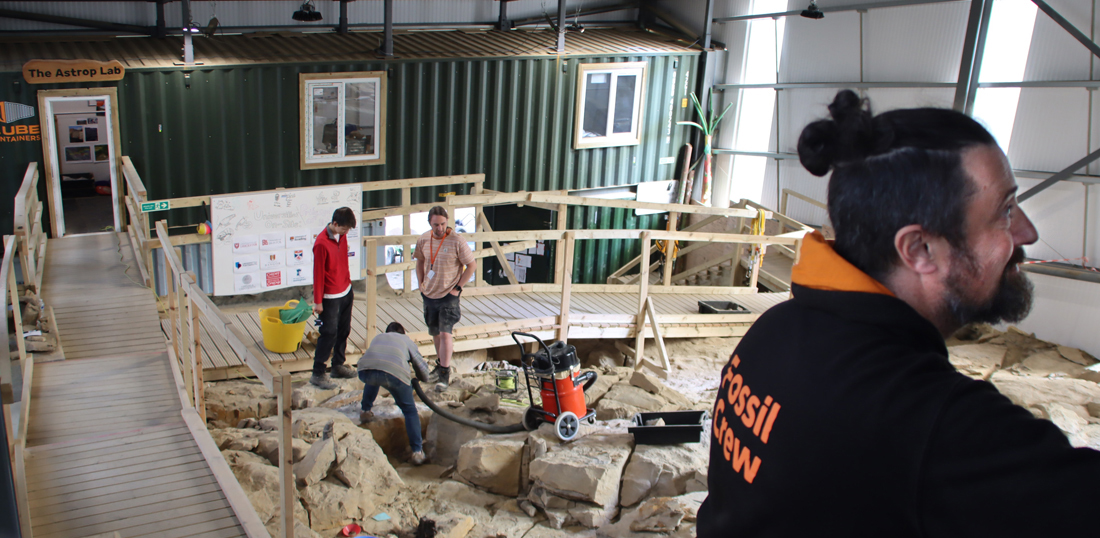
Palaeontologist Tim Astrop talking to visitors on the viewing platform about the fossilized plants being painstakingly excavated below under the protective cover of the dedicated building in which we were all standing
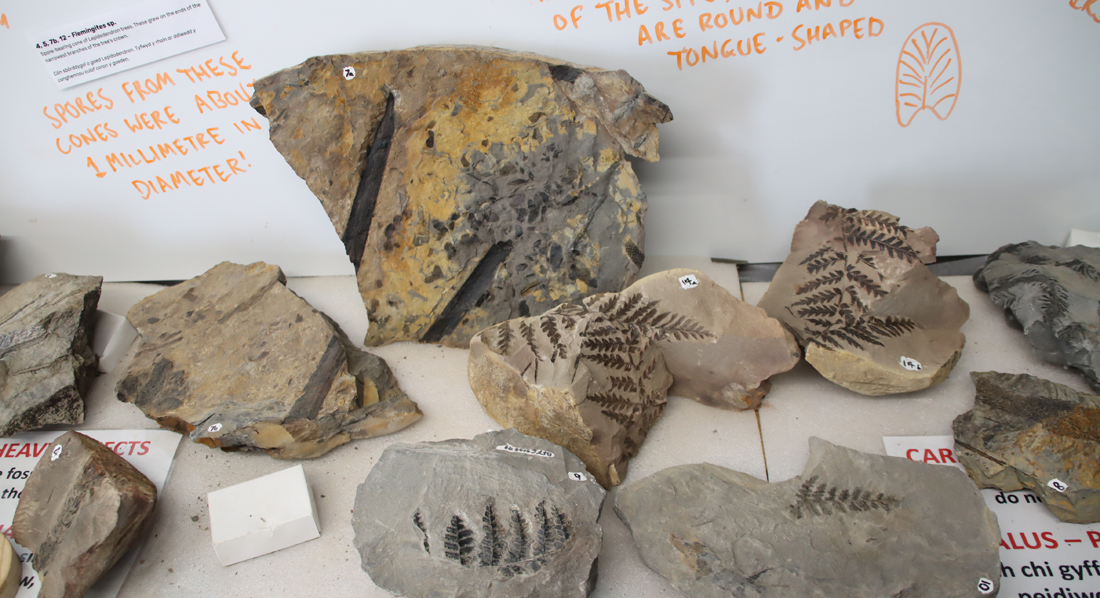
Final Comments
The conference was notable for the spirit of co-operation, the exchange of knowledge and a commitment to sharing resources, as well as the common interest in creating a viable strategy for the future of archaeological investigation in Roman and Romano-British Wales. Although a common thread was funding difficulties, albeit only lightly touched upon as everyone knows that this is a problem common to all, a considerable amount of realistic thinking is going into how to address research concerns in the face of such critical shortages. The mixture of ages and specializations at the conference hopefully bodes well for the future of professional archaeology.
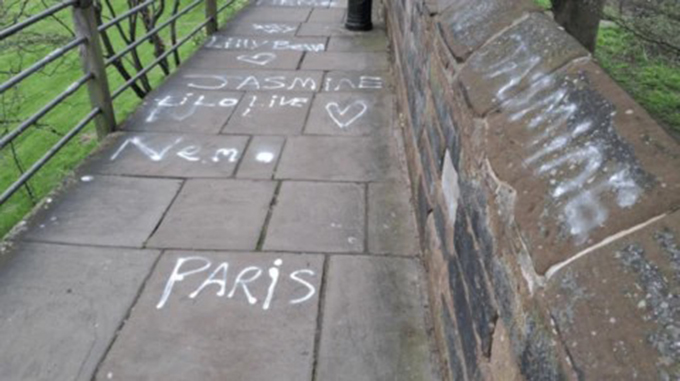
Graffiti damage to the city walls in Chester. Source: BBC News
I would also like to mention the Cheshire Heritage Crime Prevention team. I chatted on one break with Steve Gluning, a representative from the team who was attending the conference and, like me, was using coffee as a medicinal remedy for lack of sleep. We only touched on the topic, but we did manage to talk about both illicit metal detecting and vandalism. It was particularly interesting that the illicit metal detecting was divided into at least two categories. The first was the most obvious act of metal-detecting illegally, including night-hawking, by those who are completely aware of the criminality of their activities; but the other guilty parties are those who pursue an uninformed and opportunistic approach to detecting along public footpaths, in public parks and in other areas where the newbie detectorist who has not joined a responsible club might think that because the land is not in private ownership, it is fair game. Vandalism is also along a gradient from the blatant theft of historical materials to be sold for profit, to defacement of historical sites. This defacement includes malicious intentional damage, but also includes far more casual, unheeding acts of graffiti by both local residents and tourists. There are a number of methods by which these crimes were approached and solved both as they occurred. I suspect that better awareness of these and other problems, together with how archaeologists, detectorists and the public can support police activities in these areas would be very useful.
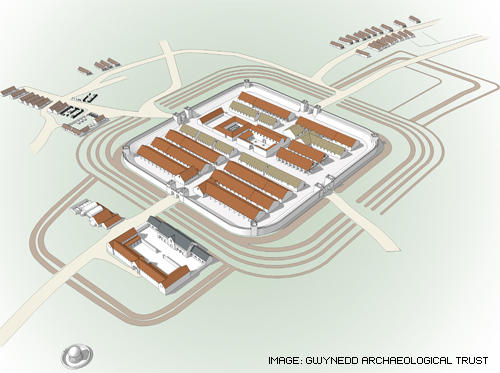
This helpful Gwynedd Archaeological Trust reconstruction of Cefn Caer superimposes an interpretation over what is today an empty field in Pennal (you can see the field on Coflein), which was on the GAT website and which I used on my blog with a link back to the GAT page. Since the incorporation of GAT into Heneb, the image is no longer available, and I cannot locate it anywhere other than on my 2019 blog post (I had to remove the broken link recently).
Going back to the Research Framework on Day 1, it was interesting to see that all seven boxes had been ticked by the speakers by the end of the conference. One of the ongoing challenges is clearly item 7 on the list, “Presenting the Roman Past,” which addresses how to present often minimal material on the ground to the public, and how to engage with wider audiences to provide real value to potential visitors. I spent much of my career in website development, and one of my greatest frustrations with the use of this very rich and relatively inexpensive medium for communicating archaeological ideas to the general public is the frequent disappearance of really useful resources from the Internet. Although websites are comparatively inexpensive to build and maintain, the investment in resources that can subsequently vanish runs a real risk of both wasting money and generating ill-will when people find themselves following broken links that have been provided by other sites. One of the real advantages of a web presence for marketing and branding is the ability for other people to link back to an online resource, generating traffic and interest. As a hypothetical example, an online Roman Wales trail might be a lot of fun, emulating other well known trails (such as pilgrim routes, the Offa’s Dyke Path and coastline trails) and is the sort of resource to which other website owners would link. But this would require investment not only in the design of the walk, the artwork and the design of the web page, but in committent to the ongoing maintenance of the page with a permanent web address. As soon as root addresses change (for example when one company buys another or when organizations amalgamate under a new name) web page addresses are often relocated or lost entirely. Website resources need to be protected as part of an ongoing heritage management strategy.
Aerial reconnaissance in Wales was mentioned during the conference. It has been of notable success for capturing hillfort images, but once the data has been evaluated, it will be interesting assess its value during periods of drought for discovering Later Iron Age and Romano-British lowland sites, not only in Wales and along the Marches, but to encourage similar programmes in other areas.

Between-lectures doodle
Sincere thanks to Susie White (PAS Cymru) and Zoë Arthurs (Heneb) for all their hard work to organize the conference, the evening entertainments and the visits. Thanks too to everyone who presented and attended and those who did such a good job of clearing up after us. It should also be mentioned that we all appreciated the Saturday lunchtime buffet with the scrumptious hot bites – there was a rumble of sincere appreciation throughout the room. I managed to leave my notebook computer behind, so many, many thanks to Rachael Tynan, Zoë Arthurs and Susie White for joining forces to identify me and hang on to it for me to collect – much appreciated.
As I hope that the above very partial account has suggested, the inaugural conference was a success with a wide range of presentations from different perspectives, using different types of dataset to improve understanding of Roman Wales. It is very good news that the conference will now be an annual event, and next year it will move to south Wales and will be held in Swansea in mid-October 2027, with dates and agenda to be confirmed. The initial stages of organization are already underway.
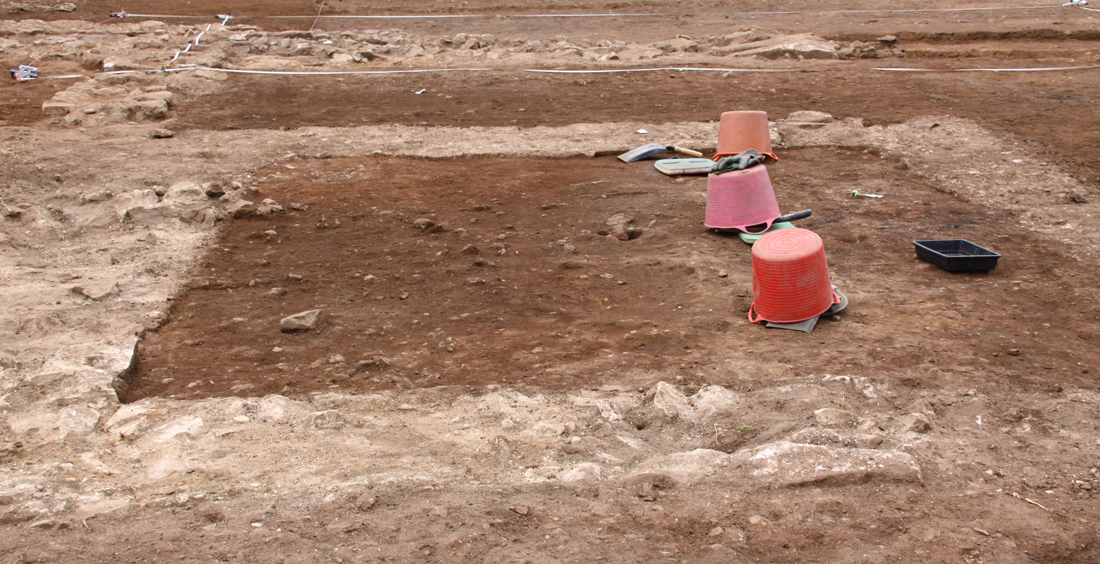
The Rossett Villa east wing under excavation in 2021. Photo taken at the Open Day in the same year.


Hello Andi,
sorry couldn’t attach screenshots, if you need them email me steventwigg968@btinternet.com
LikeLike
Dear Steve – thank you so much for your message. I will email you tomorrow, but just wanted to let you know that I had received this. There is a lot to get my teeth into! Best. Andie
LikeLike