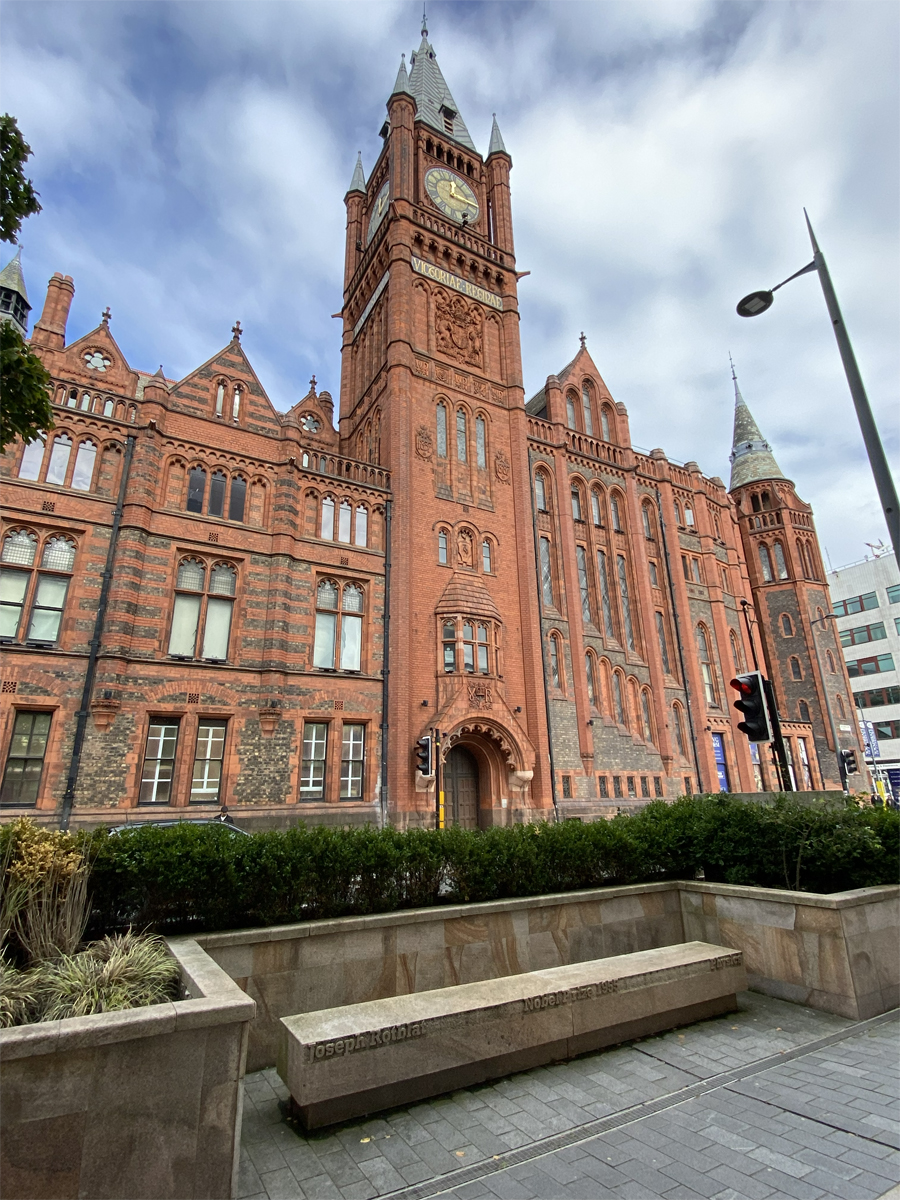
 On an unplanned day-trip to Liverpool I walked up from Central Station to the Victoria Museum and Art Gallery, which is conveniently opposite the Catholic Cathedral, which I also visited on the same day (gorgeous). Visiting details for the Victoria are at the end of this post.
The museum is owned by the University of Liverpool, and was originally designed to be used for university activities, with lecture theatres, teaching rooms, staff offices, commons rooms and a library. It was the first building to be commissioned by the university, and is thought to be the origin of the term “red brick universities.” It was converted into a museum and art gallery in 2008. Like most university collections the Victoria has a diverse mixture of objects collected by university academics and contributed by donors. As well as art works including paintings and sculpture, there are examples of the decorative arts, including furniture and ceramics, as well as typical 19th century zoological, botanical and geological specimens, and scientific equipment. It is not every university collection that is able to boast possession of one of Turner’s most admired works, but it is the variety and range of items that really characterizes the collection.
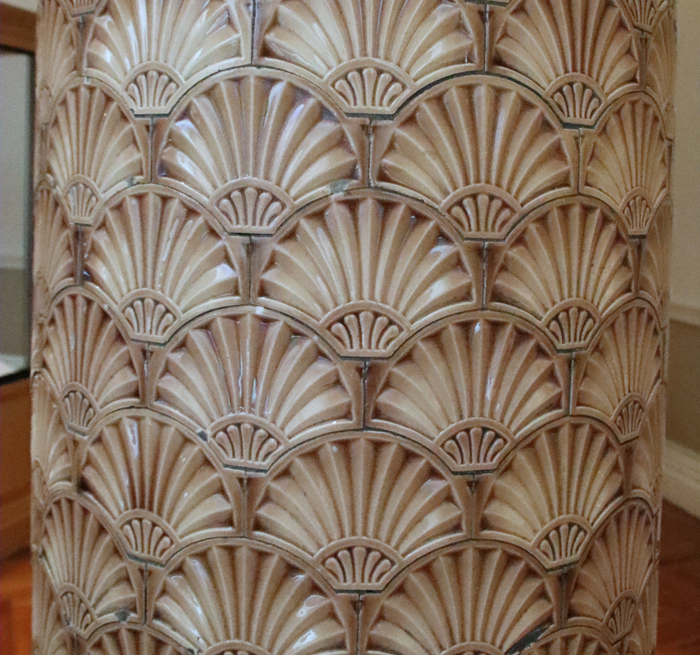
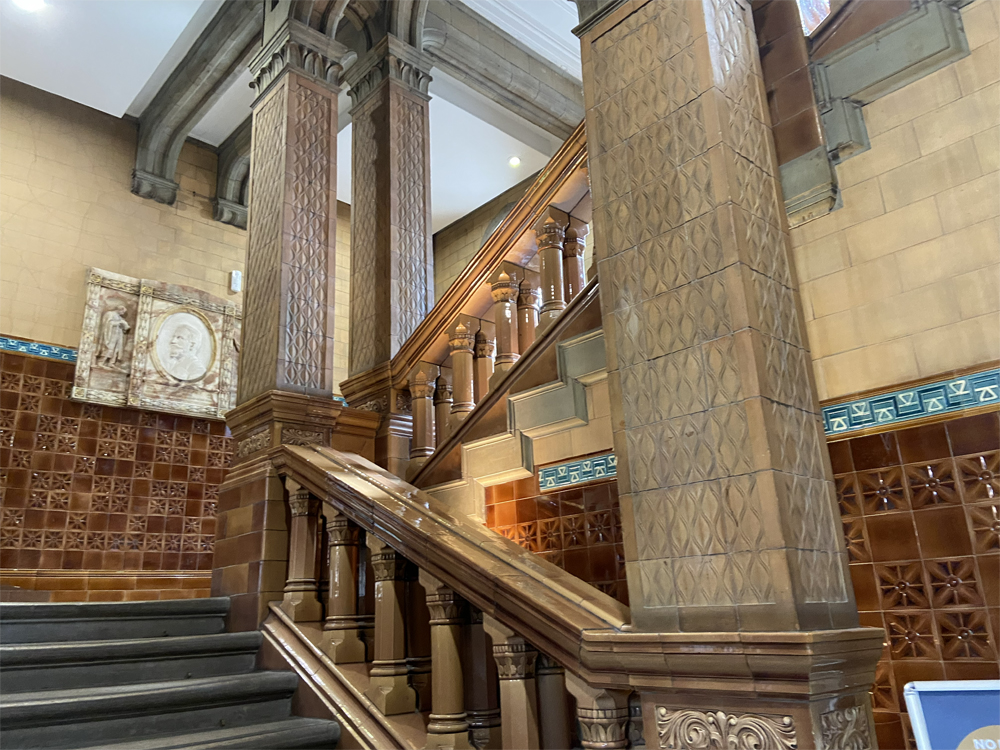
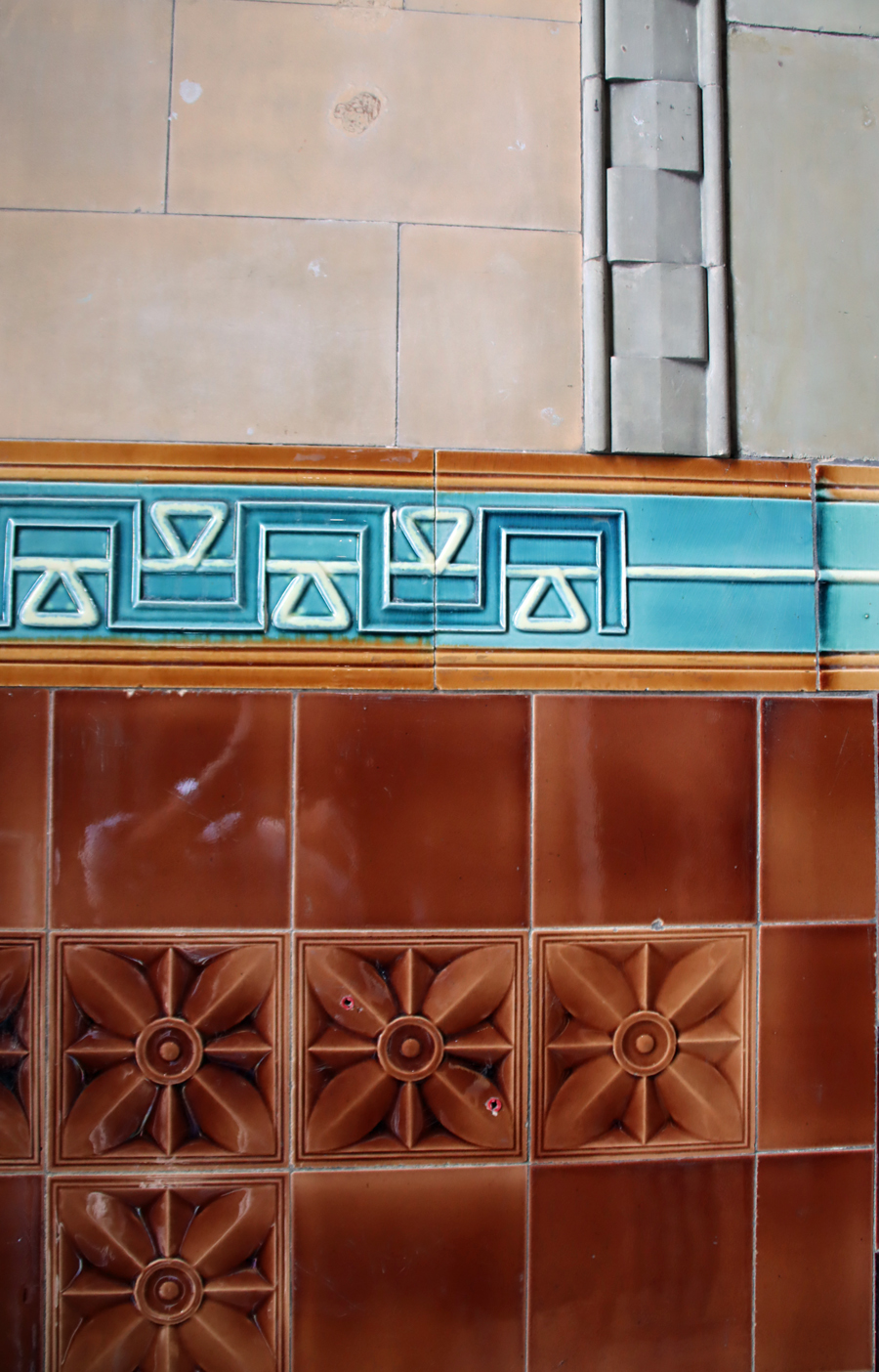
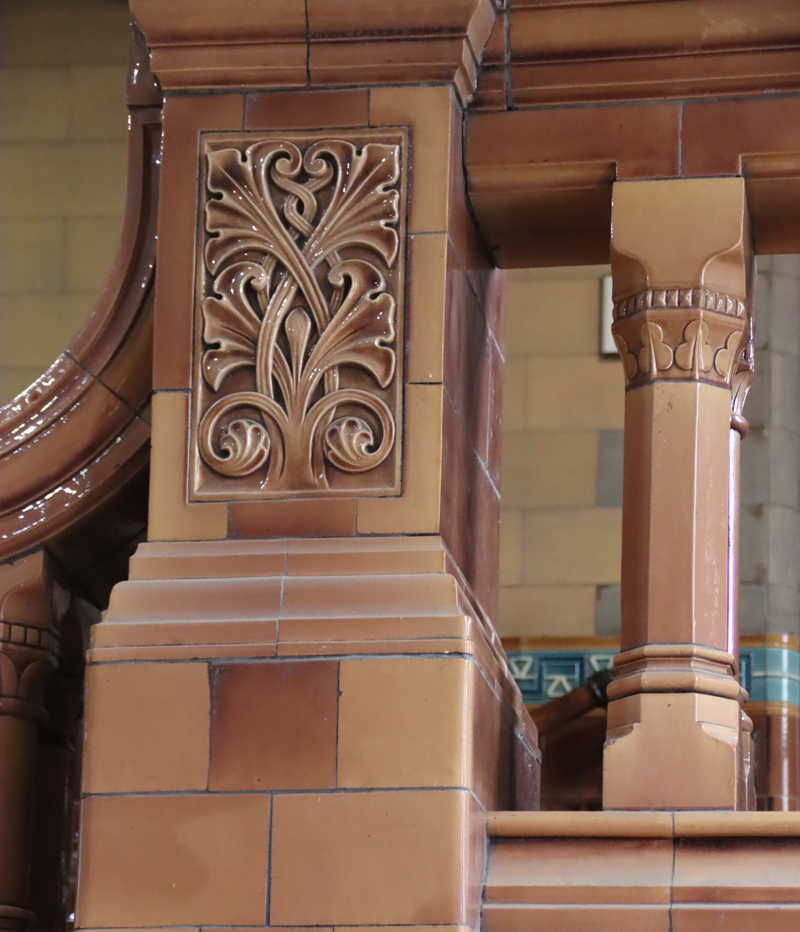
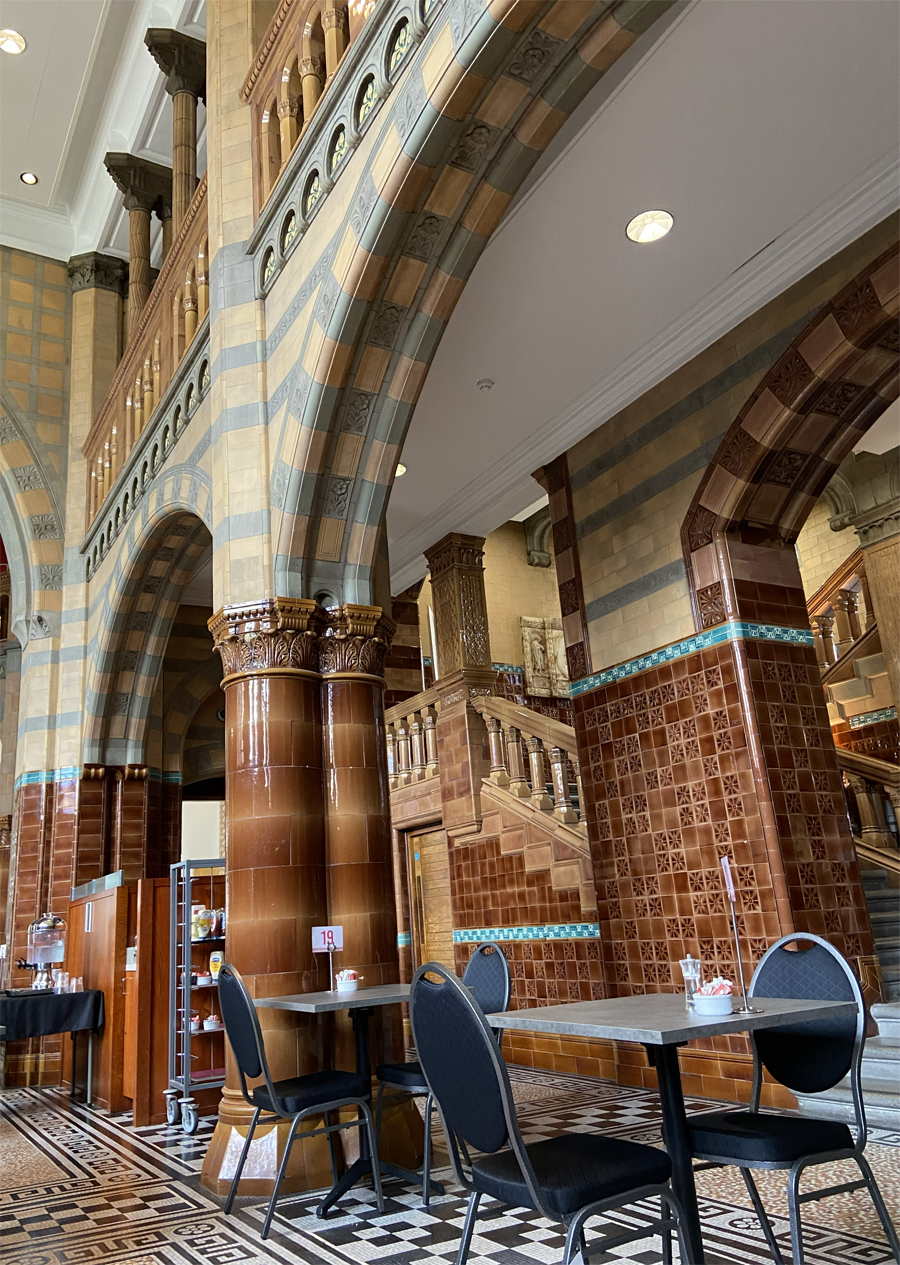 The museum building is a treat in its own right, both outside and in, a marvellous Victorian extravaganza, reflecting all the prosperity, self-confidence and extravagant creativity of 19th century Liverpool. It belongs to a trend that saw investment in national public collections of fine and decorative arts, a philanthropic urge to invest in cultural resources and make them available to a wide range of people. The Grade -2 listed building was built in 1892, designed by no less a personage than Alfred Waterhouse, whose most famous building is probably the Natural History Museum in London. It is built in a mixture of red brick and darker conventional brick, creating attractive contrasts in both colour and and it features towers, turrets, Gothic-inspired windows and doorways, and some great chimneys. The interior is magnificently over-the-top, with extensive use of glazed tiles, terracotta and Burmantofts faience, many moulded into sculpted shapes, in a variety of bright, glossy colours. The cafe on the ground floor is located in the middle of this remarkable mixture of colours and textures, but it also extends up the staircases.
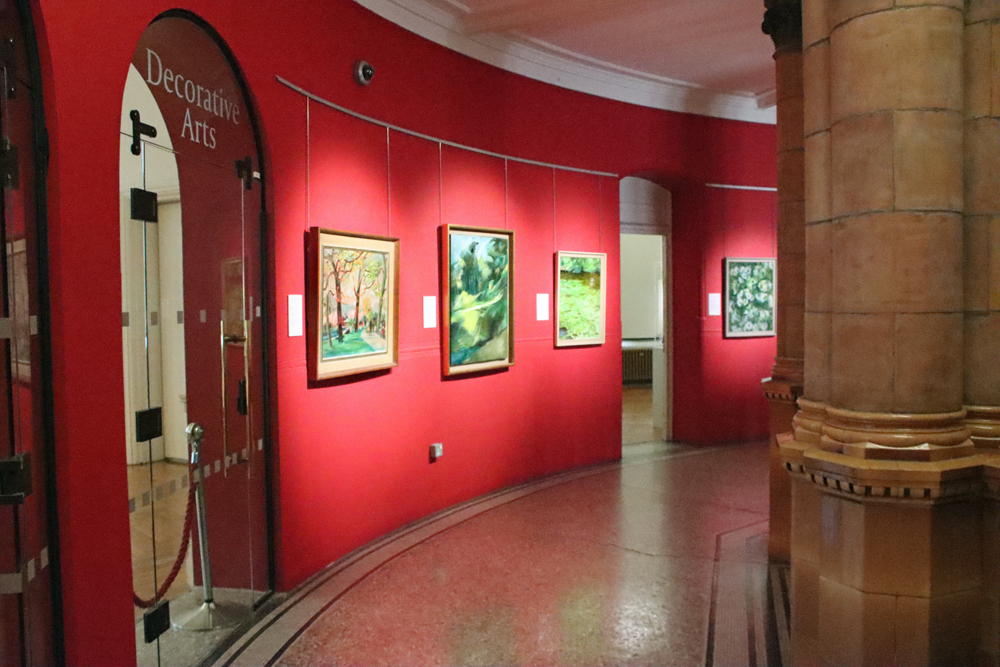 The first floor contains both permanent and temporary exhibitions. When I was there, one of the temporary exhibitions was Seeing Green: “The artists featured in this display each had their reasons for exploring greenery in their work. John Nash, for instance, turned to landscape painting as a form of therapy to heal from trauma. Caroline Emily Gray Hill found inspiration in the flowers near her home, continuing to paint well into later life. Meanwhile, Jim Russell, an environmentalist, expressed his values by creating art on recycled materials.” These paintings were arranged around a curving corridor, all very well illuminated and very effective against the red background.
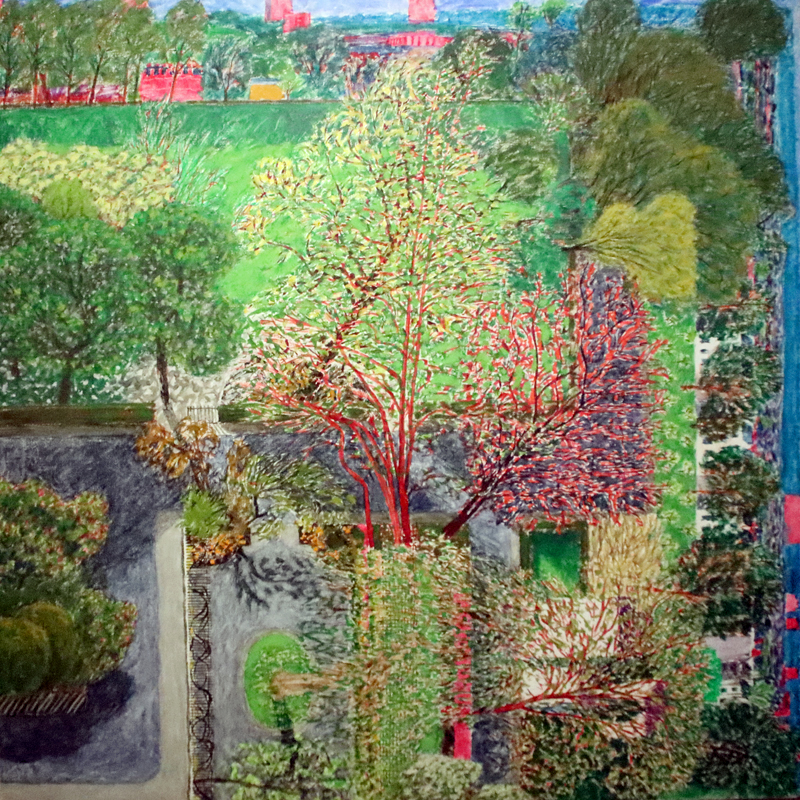
Adrian Berg. “Gloucester Lodge, Regent’s Park, London” 1981
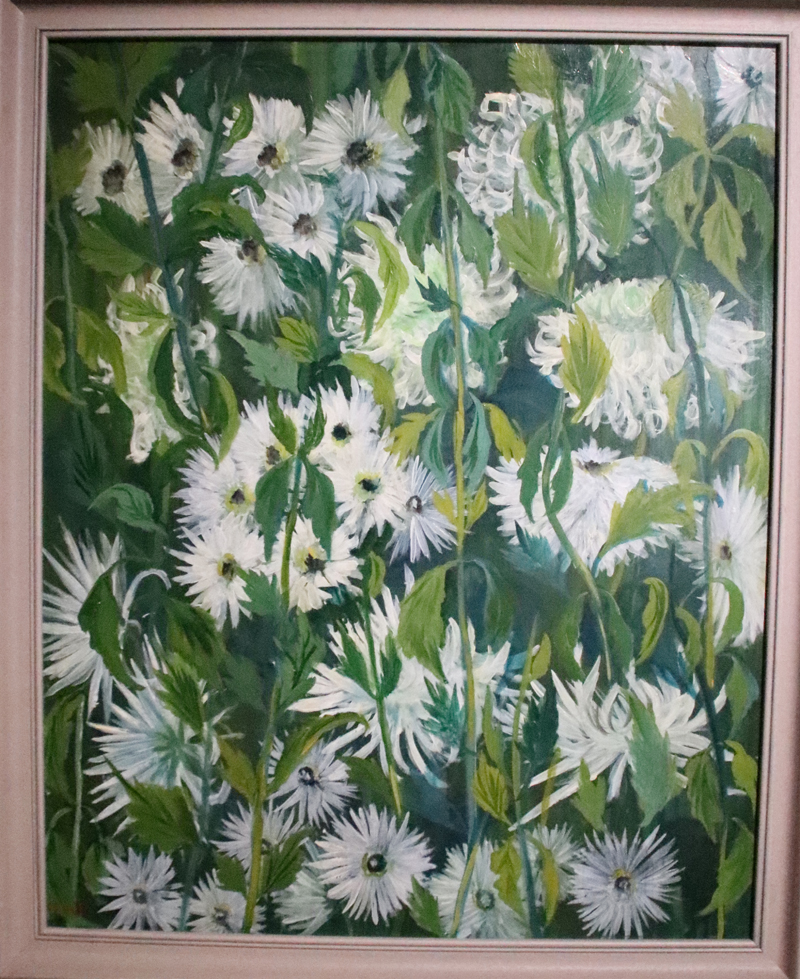
“Flowers and Foliage” by Lady Caroline Emily Gray Hill, c.1920. Oil on Board
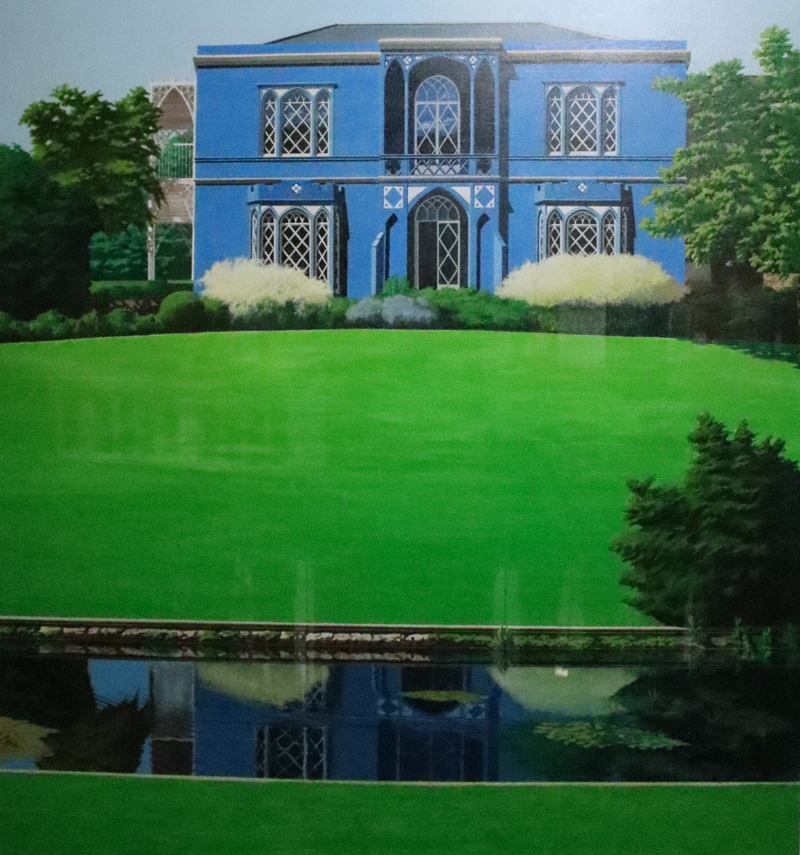
Greenbank House. John Baum 1972.
Off this corridor there are a series of galleries displaying other items from the collection from a variety of time periods. The following are just a few examples, admittedly picking out the ones that most appealed to me.
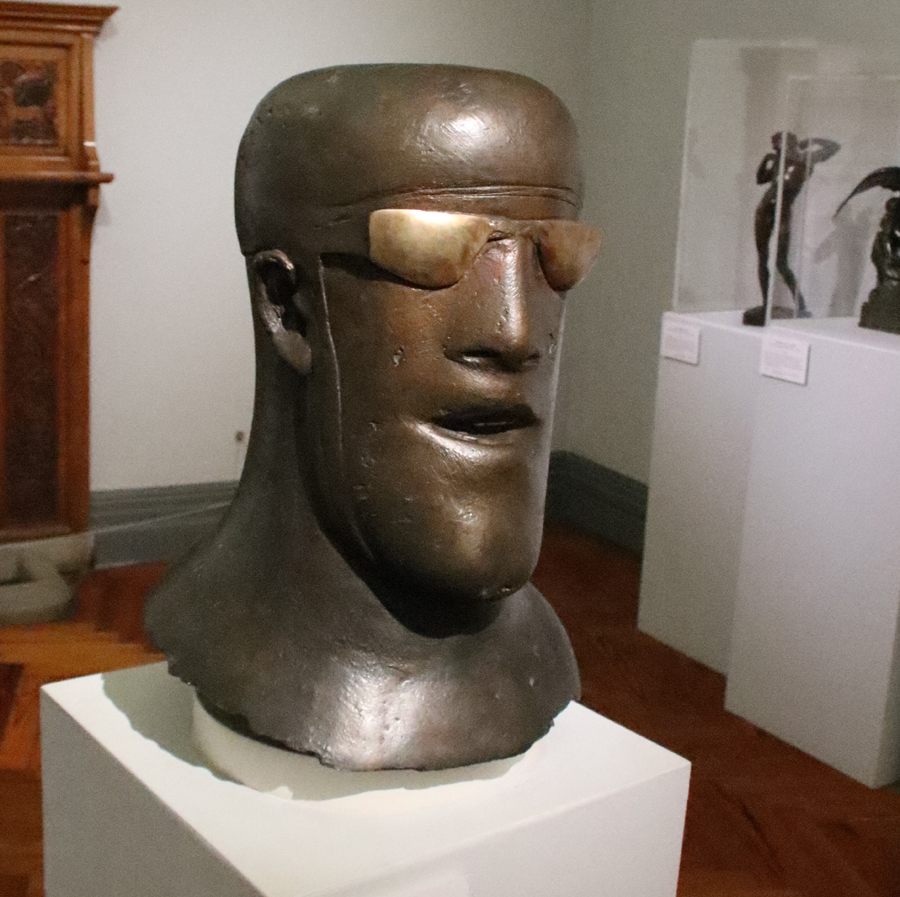
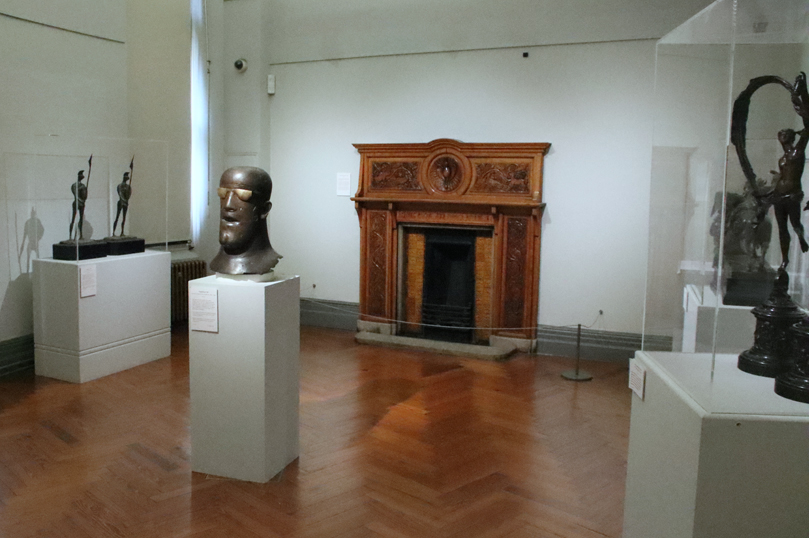
Dame Elizabeth Frink’s 1967 “Gogglehead”
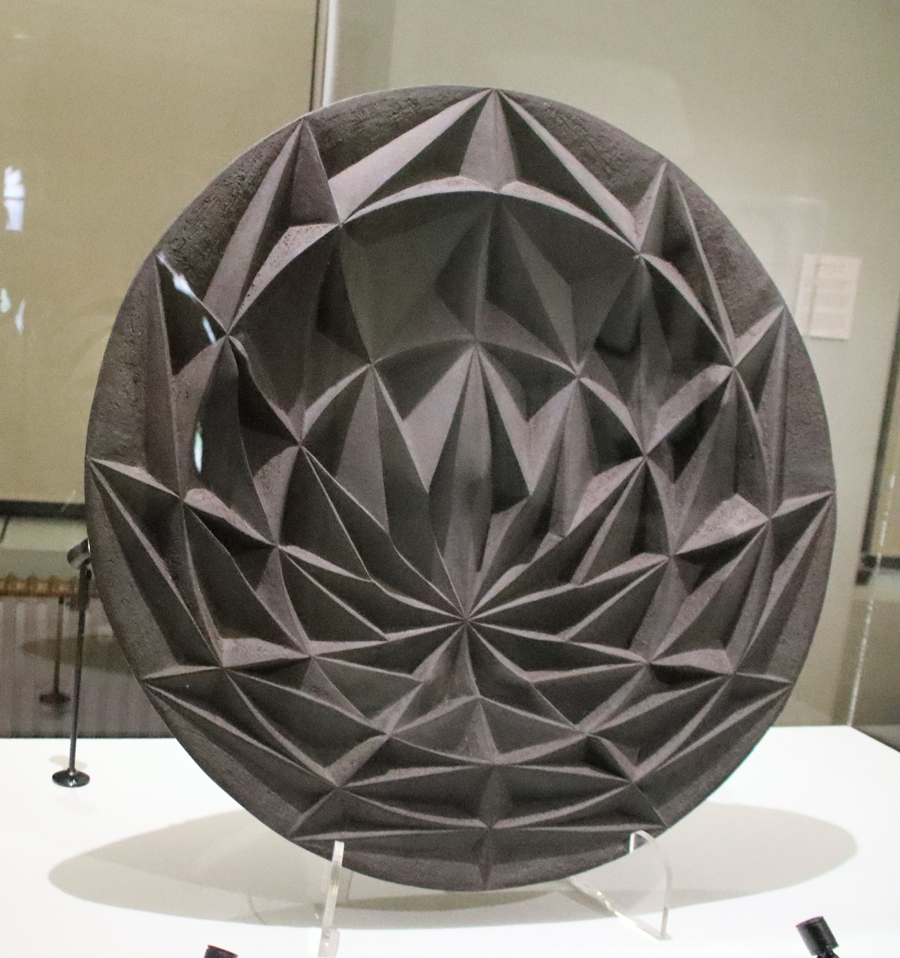
Halima Cassell’s 2013 “Noir Rhythm”
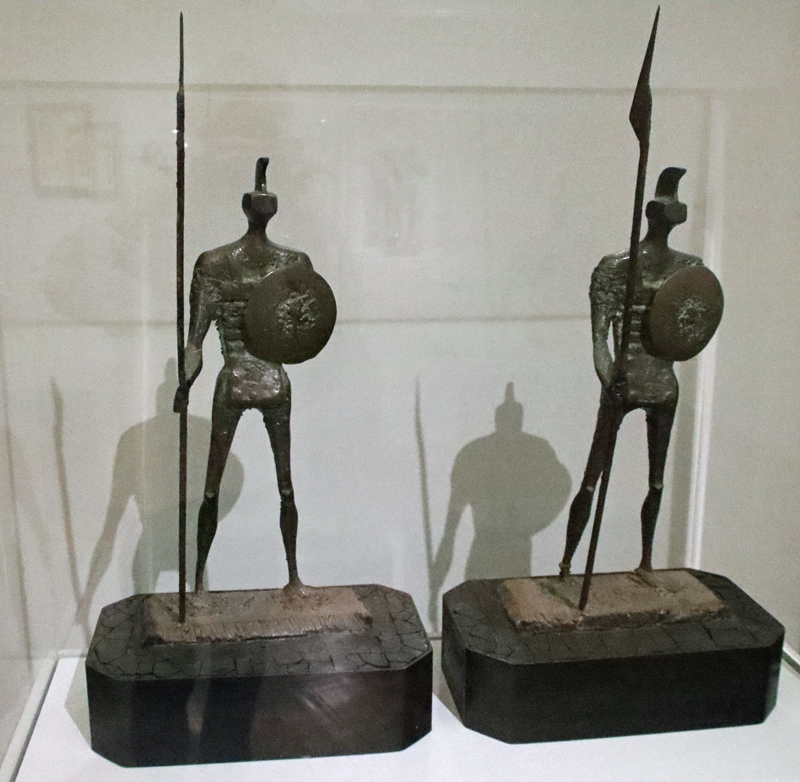
“Centurions” by Arthur Dooley, 1967. More examples of Dooley’s work can be seen in the Catholic Cathedral opposite the museum
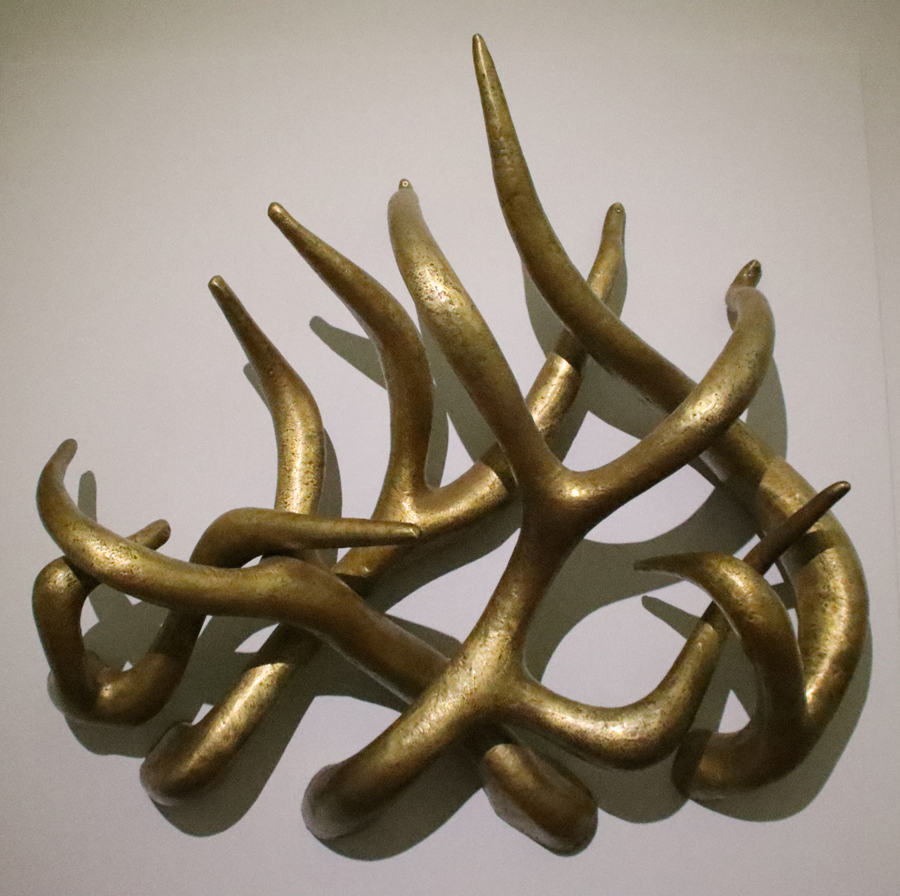
Mitzi Solomon Cunliffe. Loosestrife, 1951
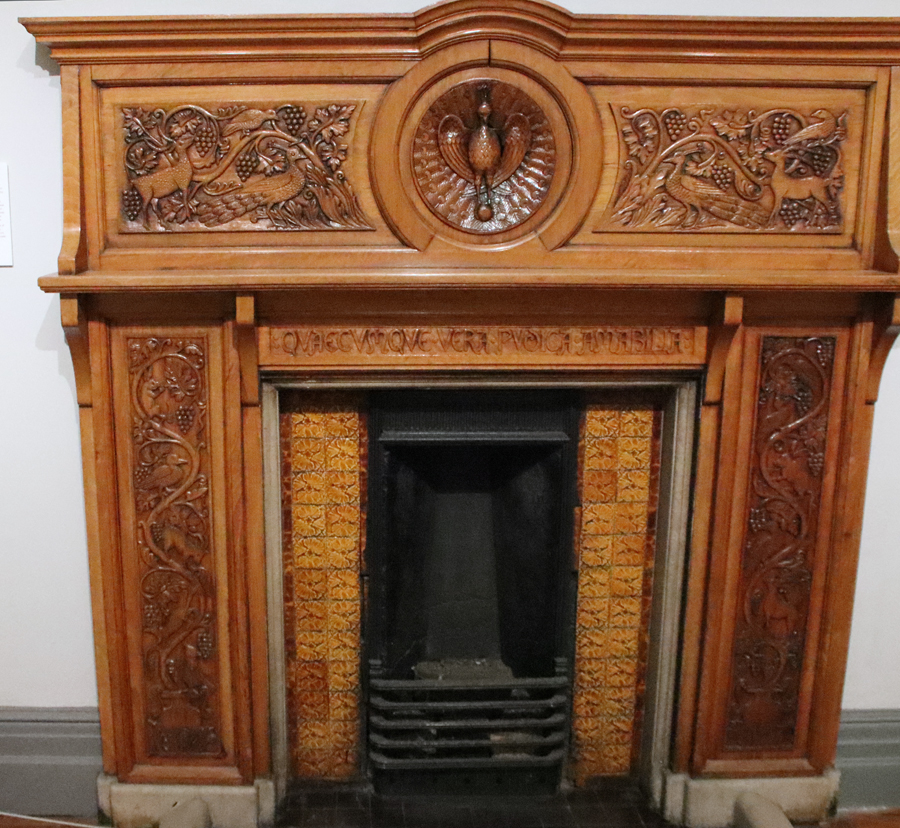
One of the original fireplaces in the Victoria Building
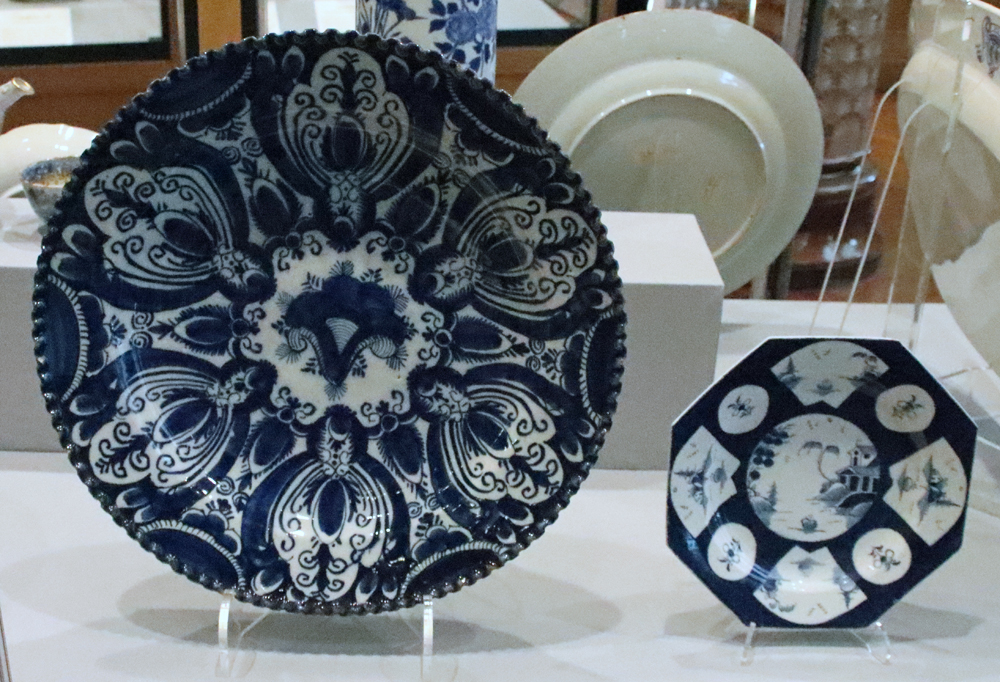
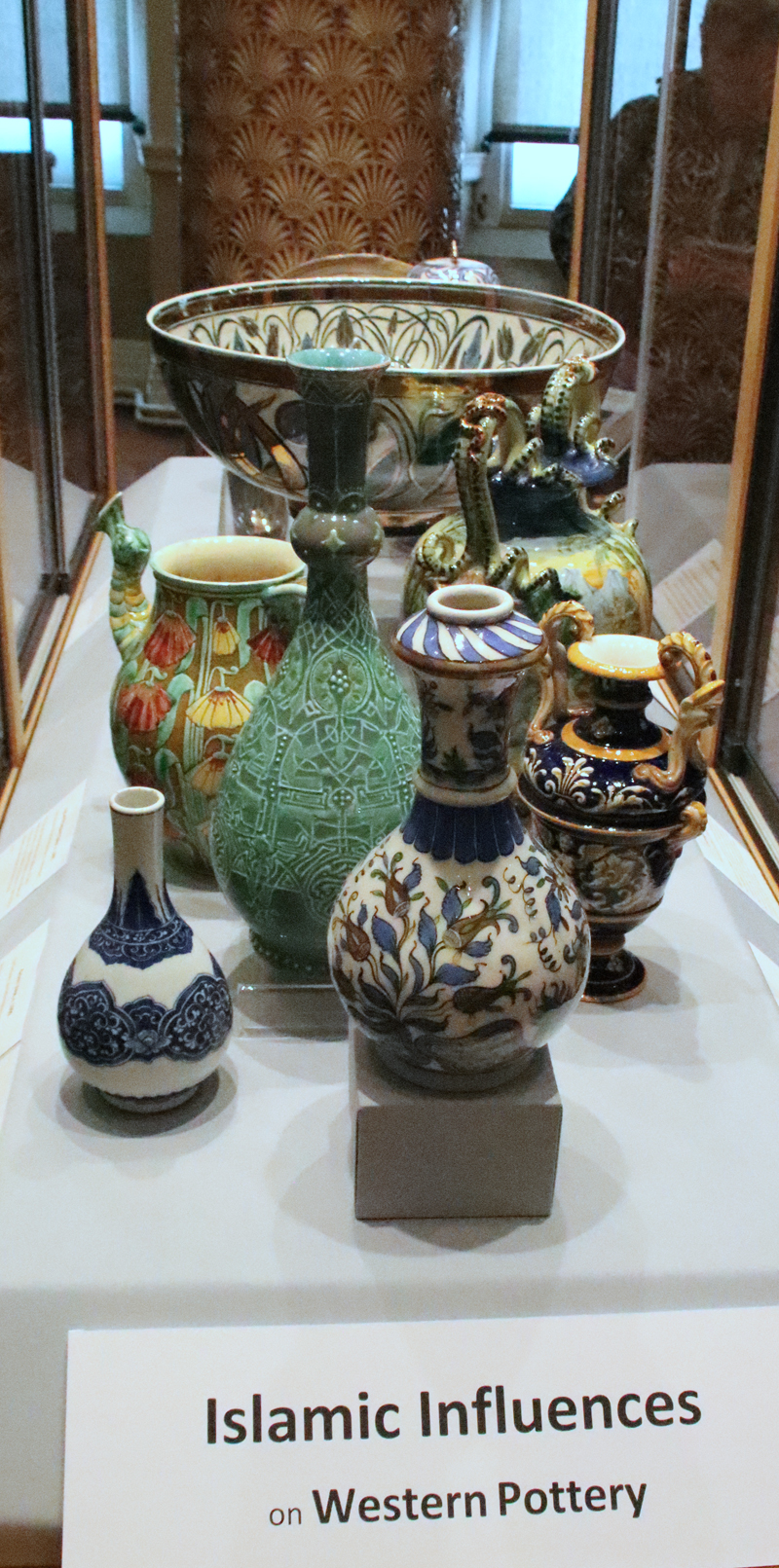
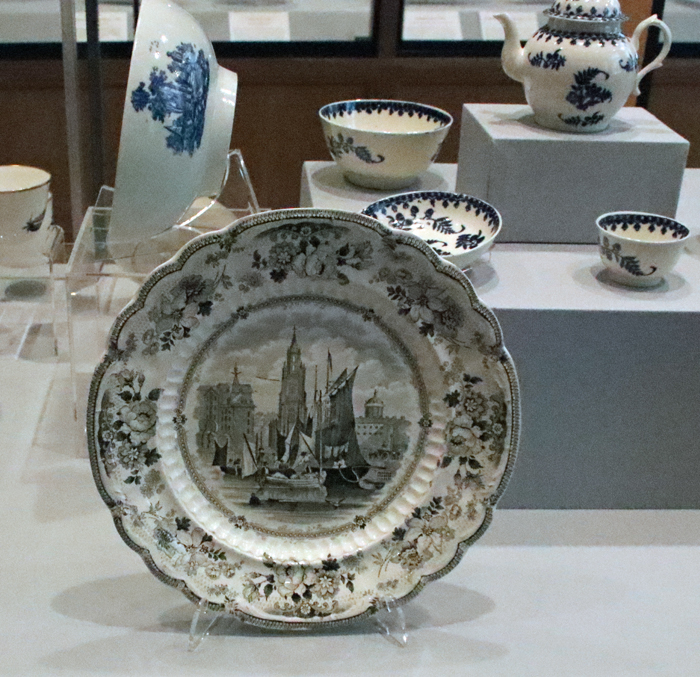
Seacombe slip plate c.1830, transfer-painted. Herculaneum Pottery. Based on a drawing by Samuel Austin and showing the River Mersey in the early 1800s. The spire at the rear was the tallest building in Liverpool at the time
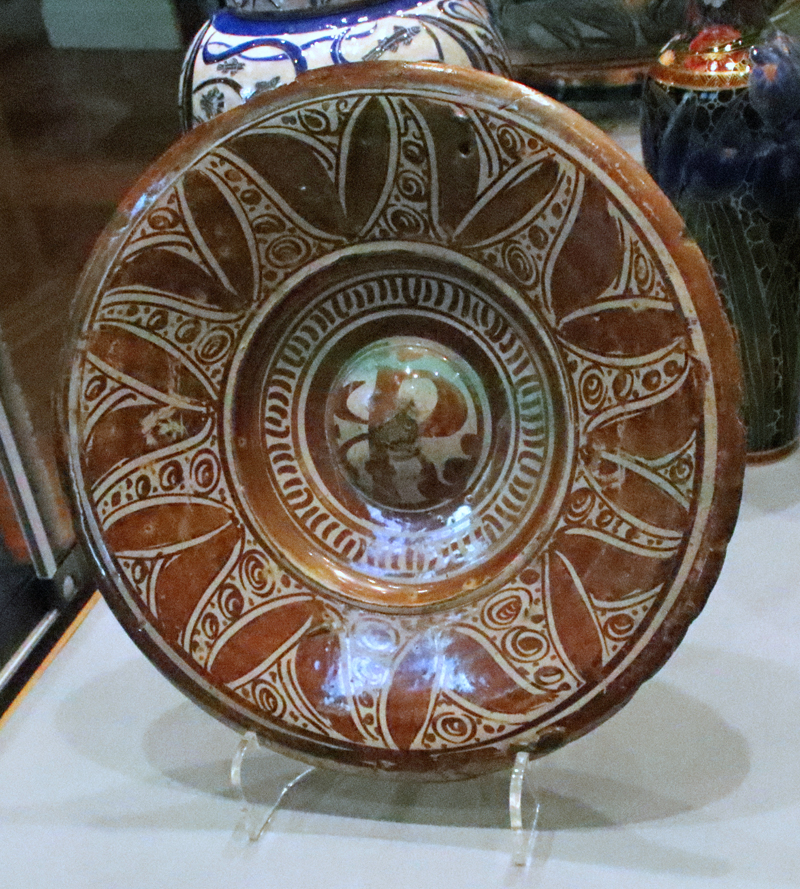
A Hispano-Moresque tin-glazed earthenware dish with lustre. Spain, c.1600. The technique was introduced by Moorish Arabs from northwest Africa, but the IHS abbreviation in the centre is Christian
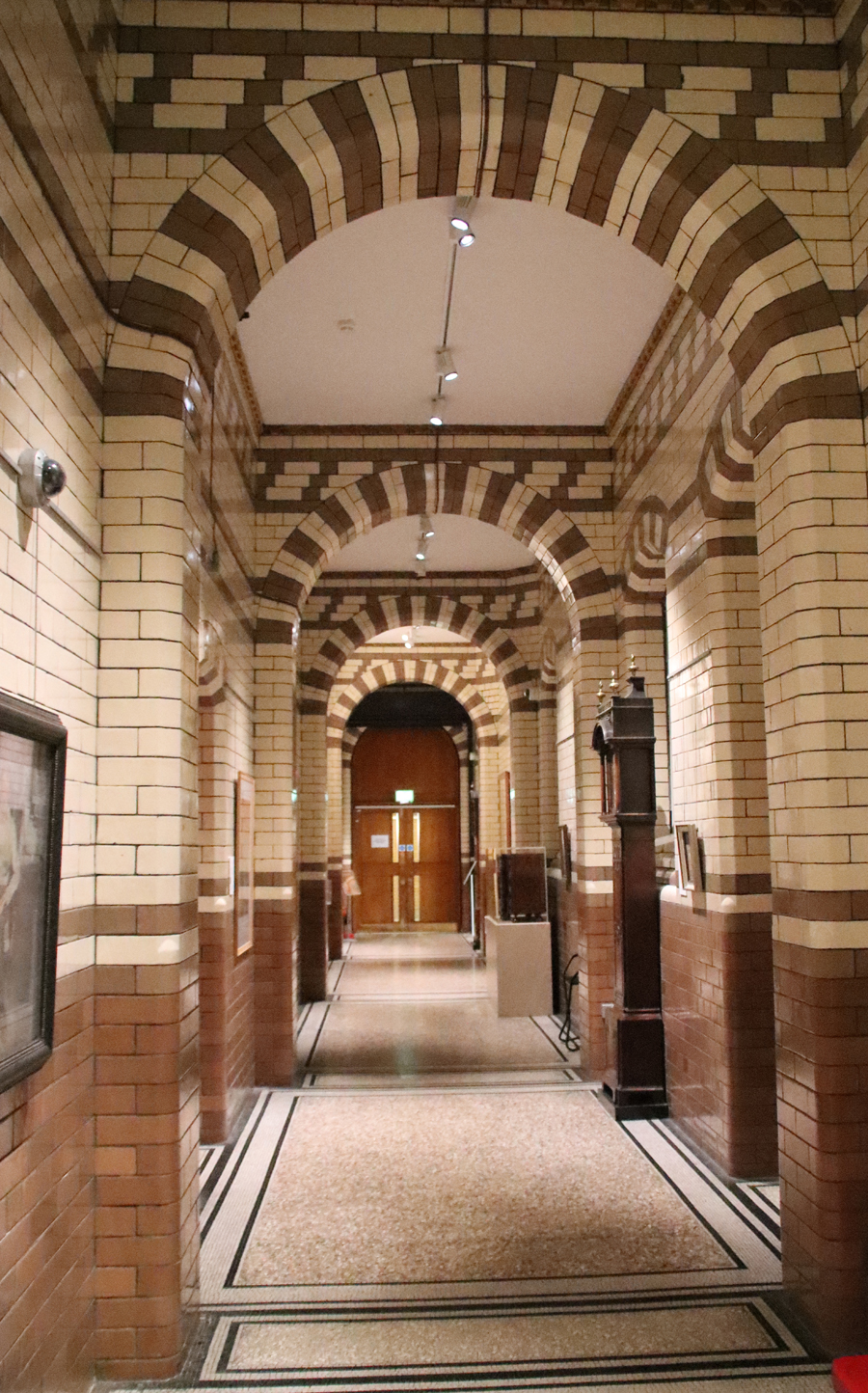
Retracing your steps past the stairwell, small galleries off another tiled corridor (looking rather as though it has been influenced by the Mezquita at Córdoba). These display more paintings, again a large variety of styles and types, with one gallery devoted to the original plans for the Victoria Building itself.
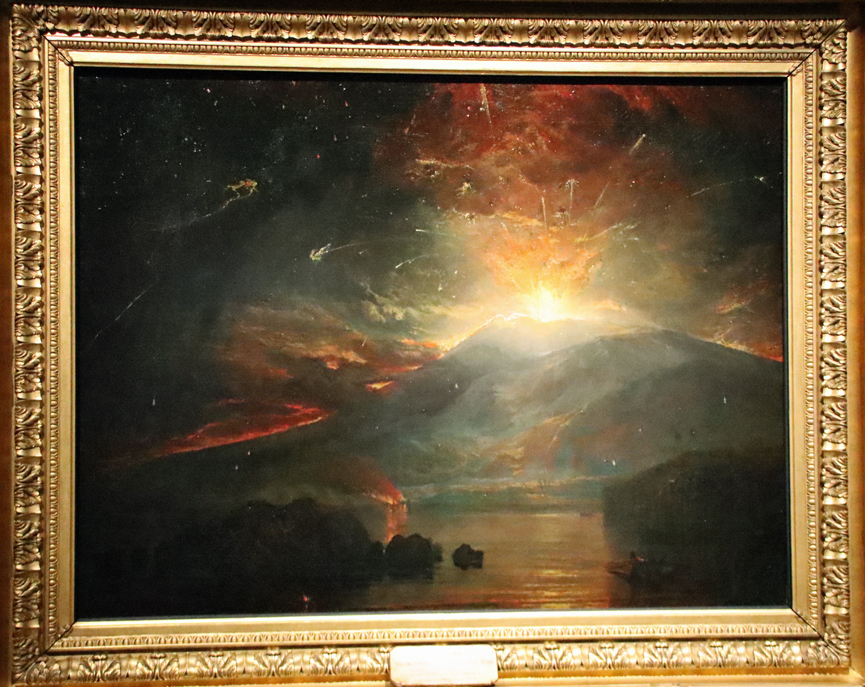
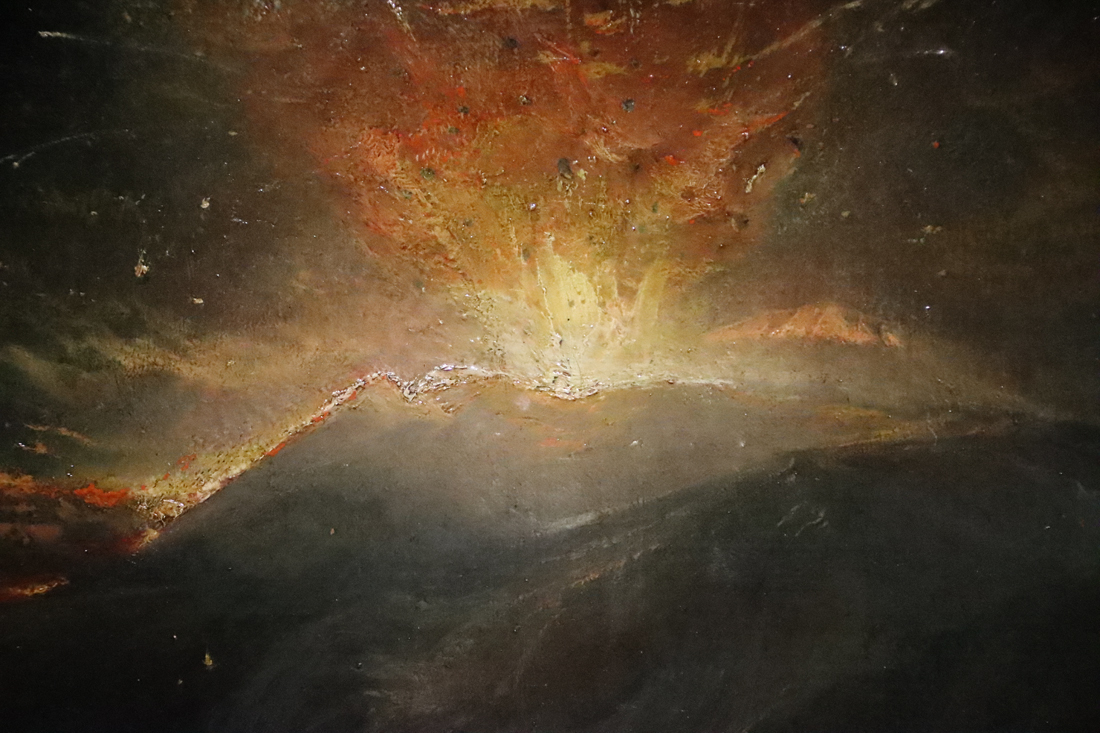
J.M.W. Turner 1815. The eruption of the Soufriere Mountains on the Island of St Vincent in 1912. Oils on canvas
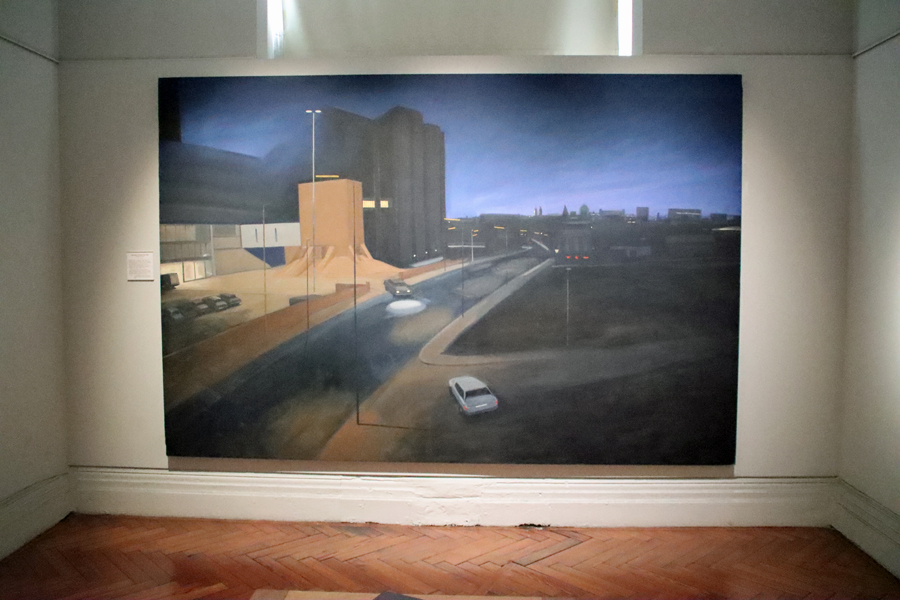
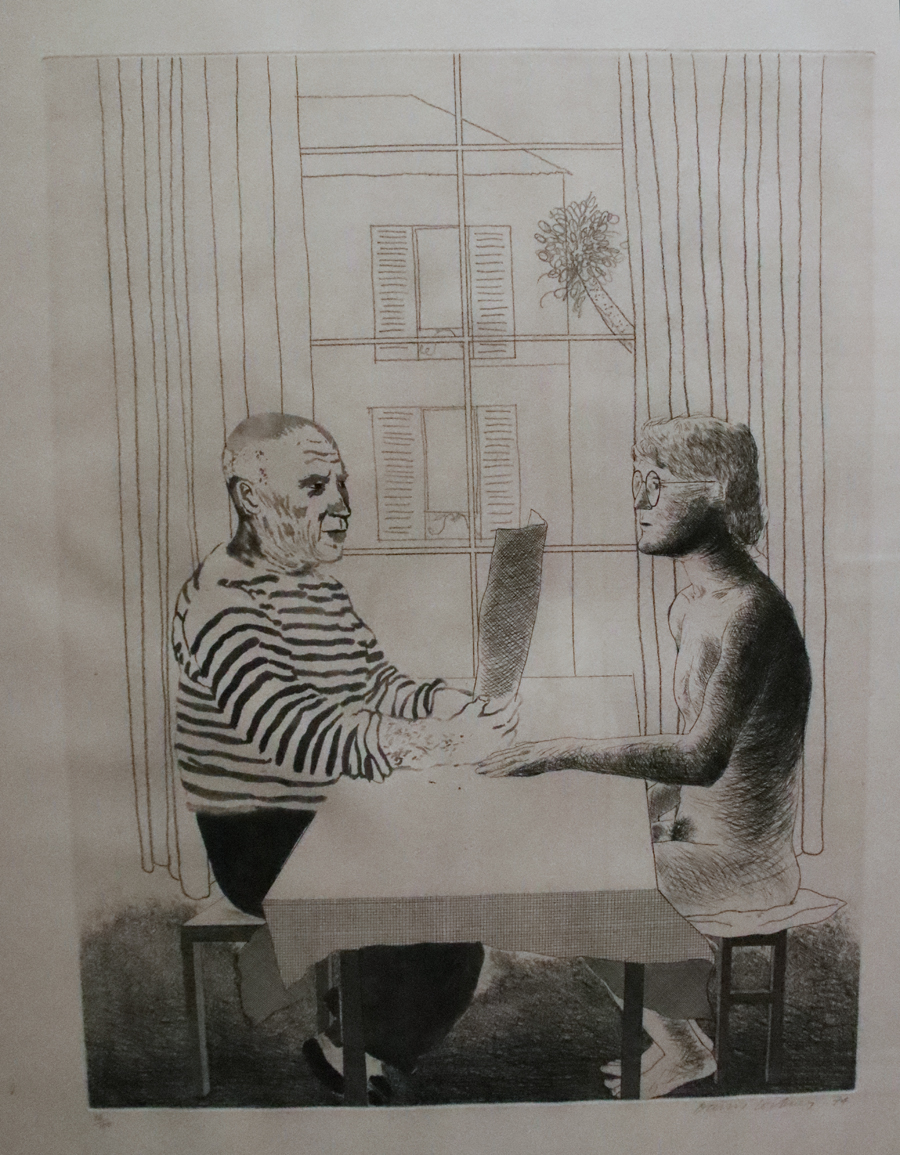
Artist and Model 1974 by David Hockney, showing an imagined encounter between Pablo Picasso and Hockney. Picasso had died the year before, and the two actually never met. Etching.
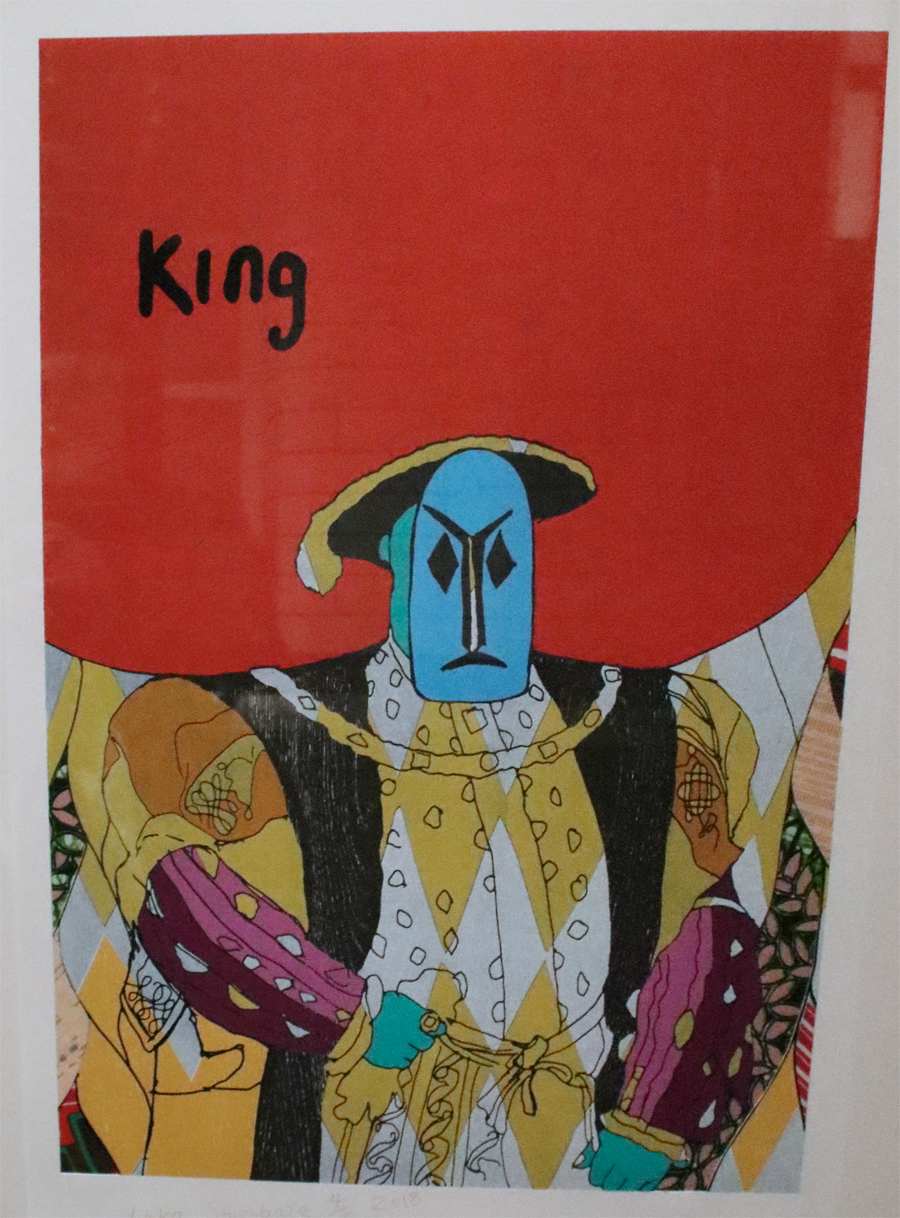
Yinka Shonibare: “Unstructured Icons – King” 2018. Woodblock print with fabric collage. One of a series of six prints showing historical Western figures
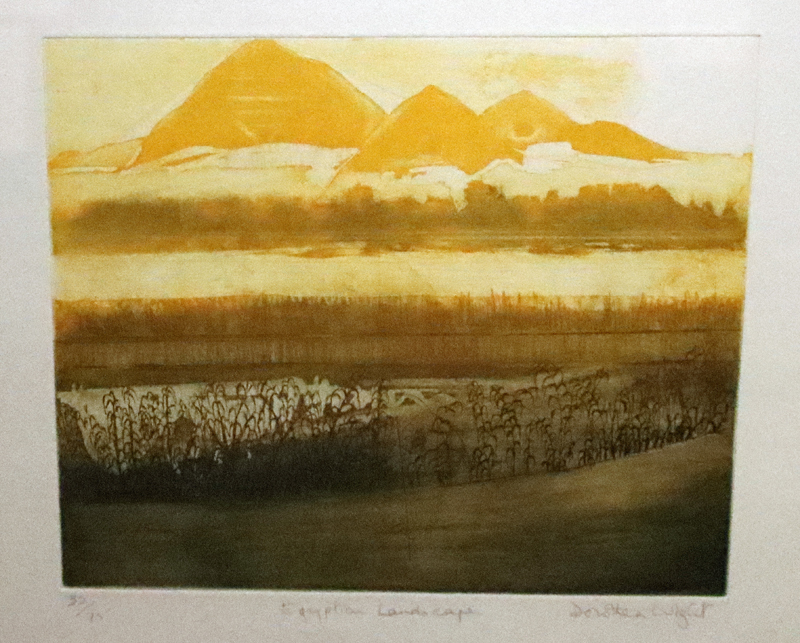
Egyptian landscape by Dorothea Wright, c.1973. Lithograph
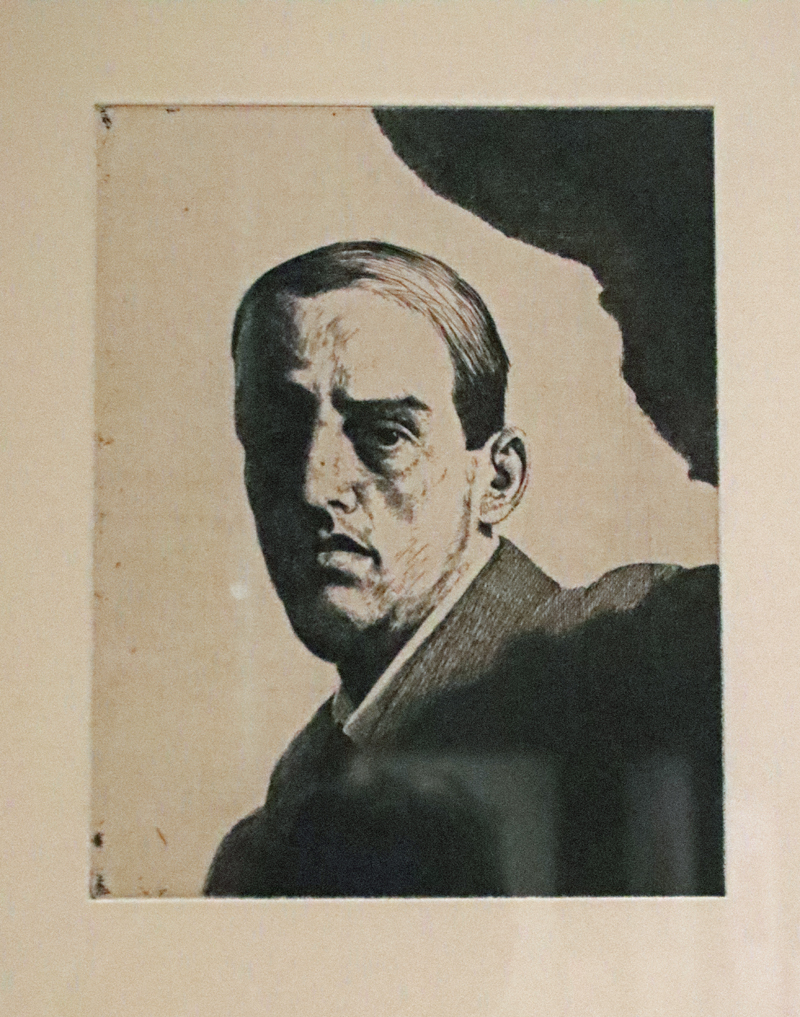
Stephen Conroy. “Head Studies (2)” 1992. Etching
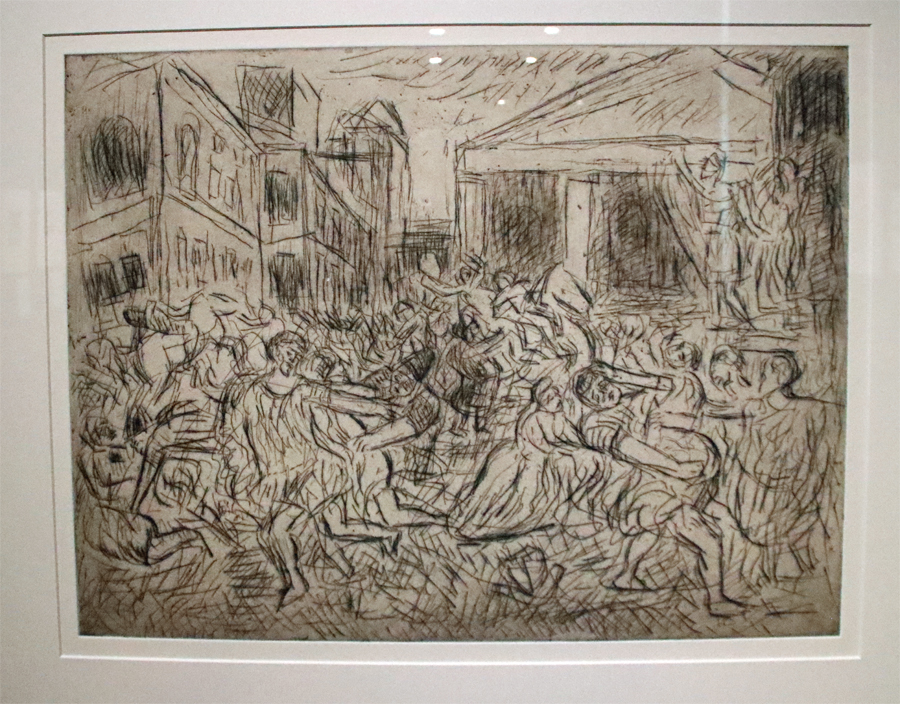
The Rape of the Sabines 1. By Leon Kossoff 1998. Etching and drypoint
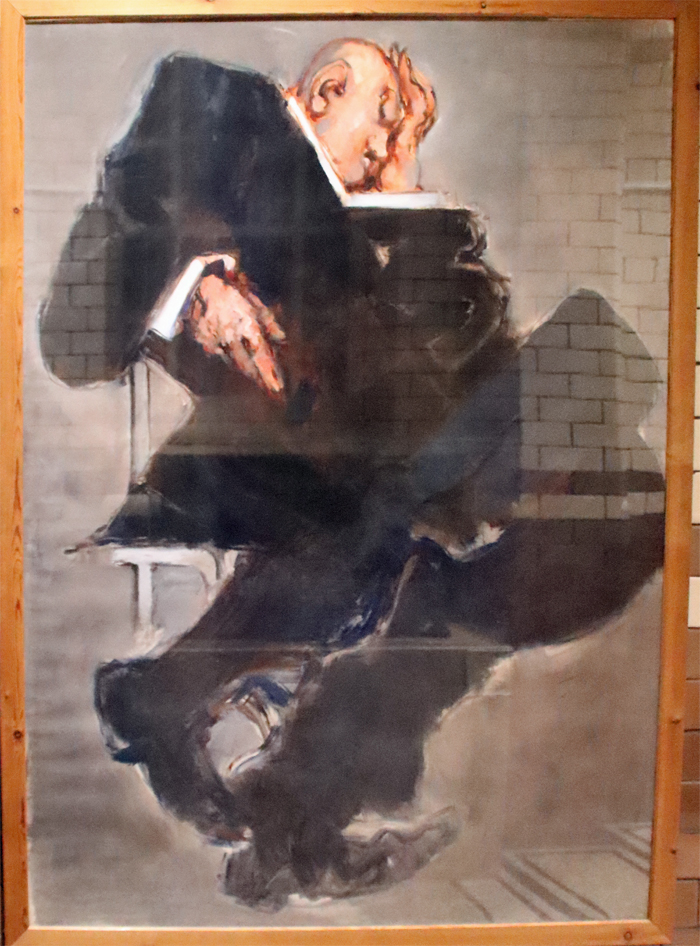
“End of Meeting” by John Heritage 1990. I loved this painting at first sight, because it perfectly reflects just how I feel at the end of a long, tedious and probably unnecessary meeting. Let me sleep or beam me up. It is a shame that the reflections in the glass, showing the glazed brickwork and floor, have made it impossible to photograph well, but this is a really great, humorous piece. You can see it on ArtUK here.
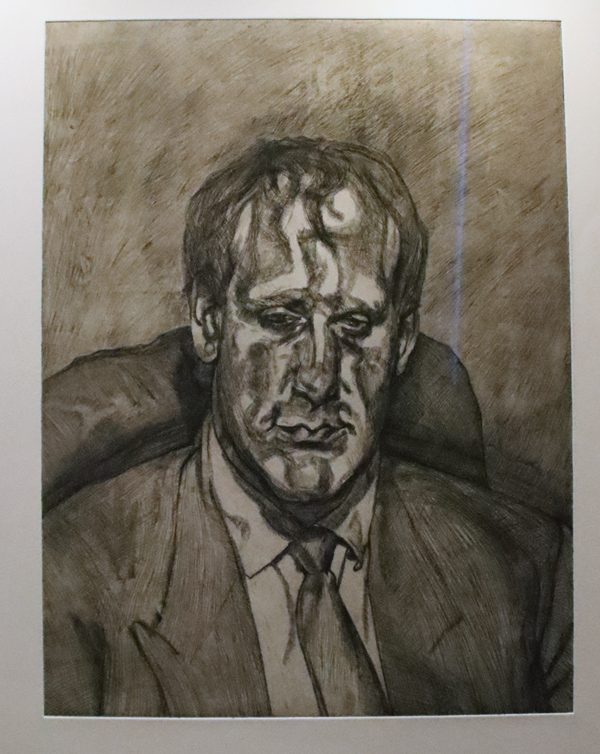
Head of an Irishman. By Lucian Freud 1999. Etching
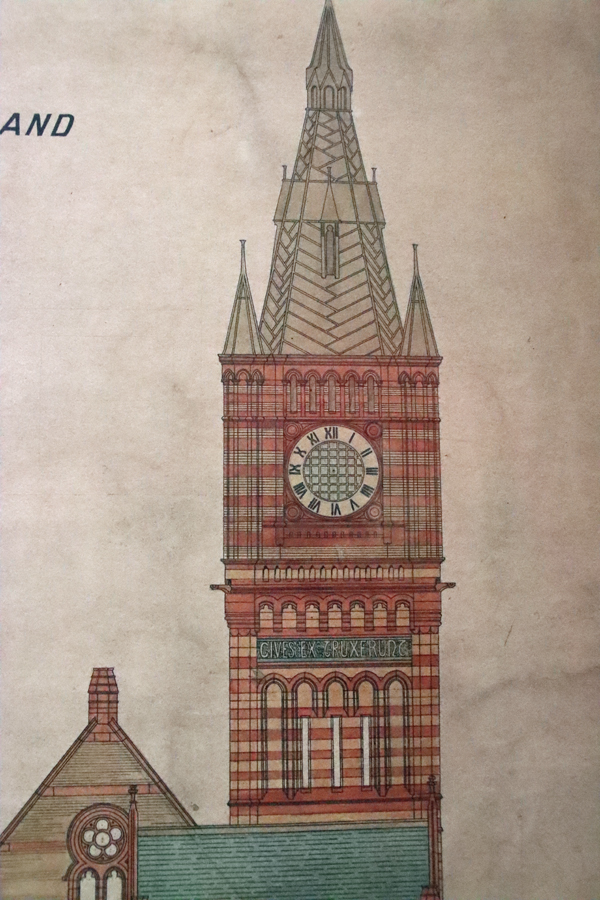
One of Alfred Waterhouse’s plans of the Victoria Building in the 1830s
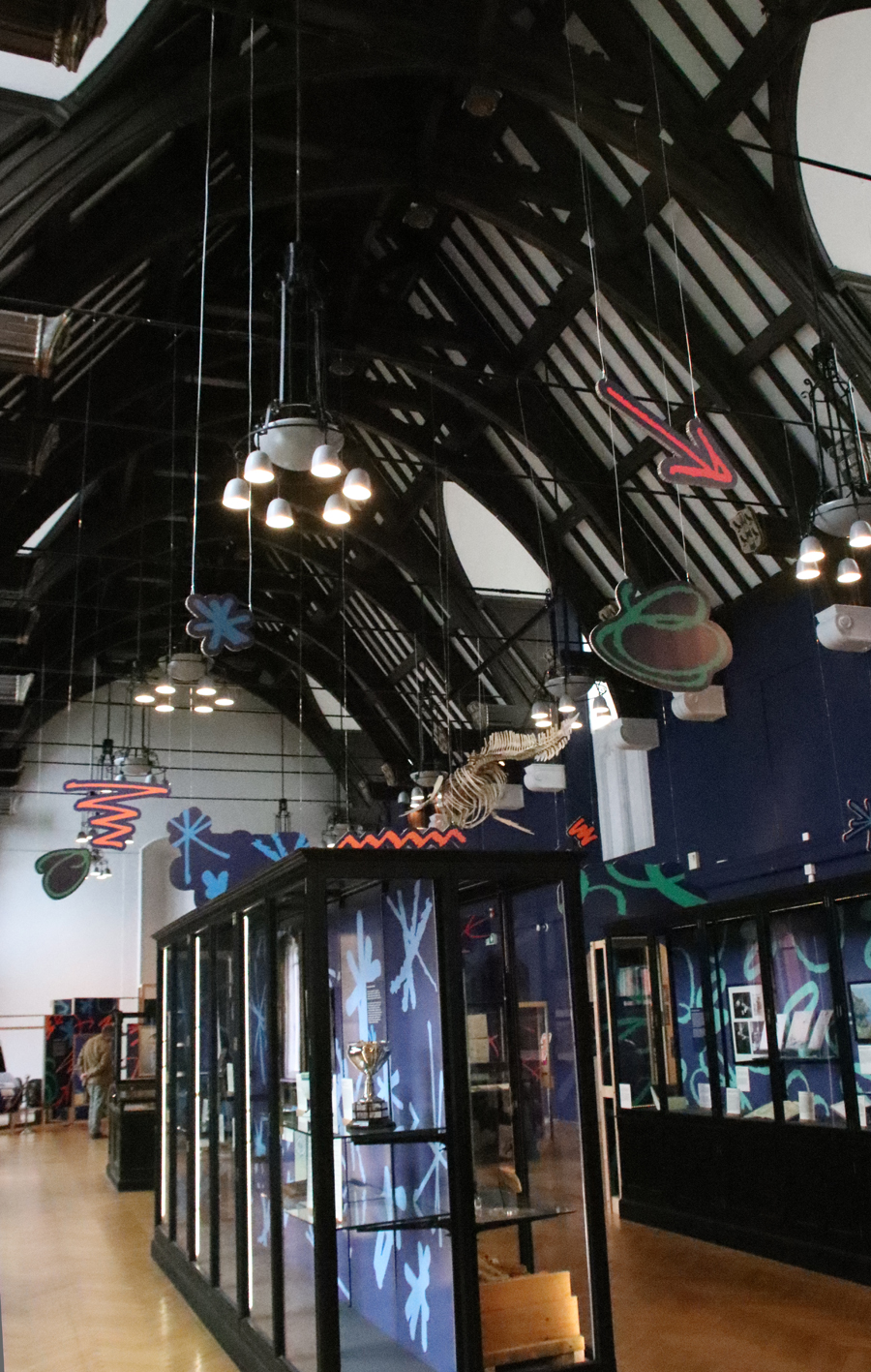
On the top floor, The Tate gallery space is named for sugar magnate Henry Tate and was the original library. It is an architectural spectacle in its own right, soaring upwards to an impressive roof space. This gallery is dedicated to scientific discovery and innovation. It includes specimens from the natural world, including fossils, geological samples, scientific equipment and objects that demonstrate the newly discovered Enlightenment and subsequent interest in how new ideas and technology was and should be employed.
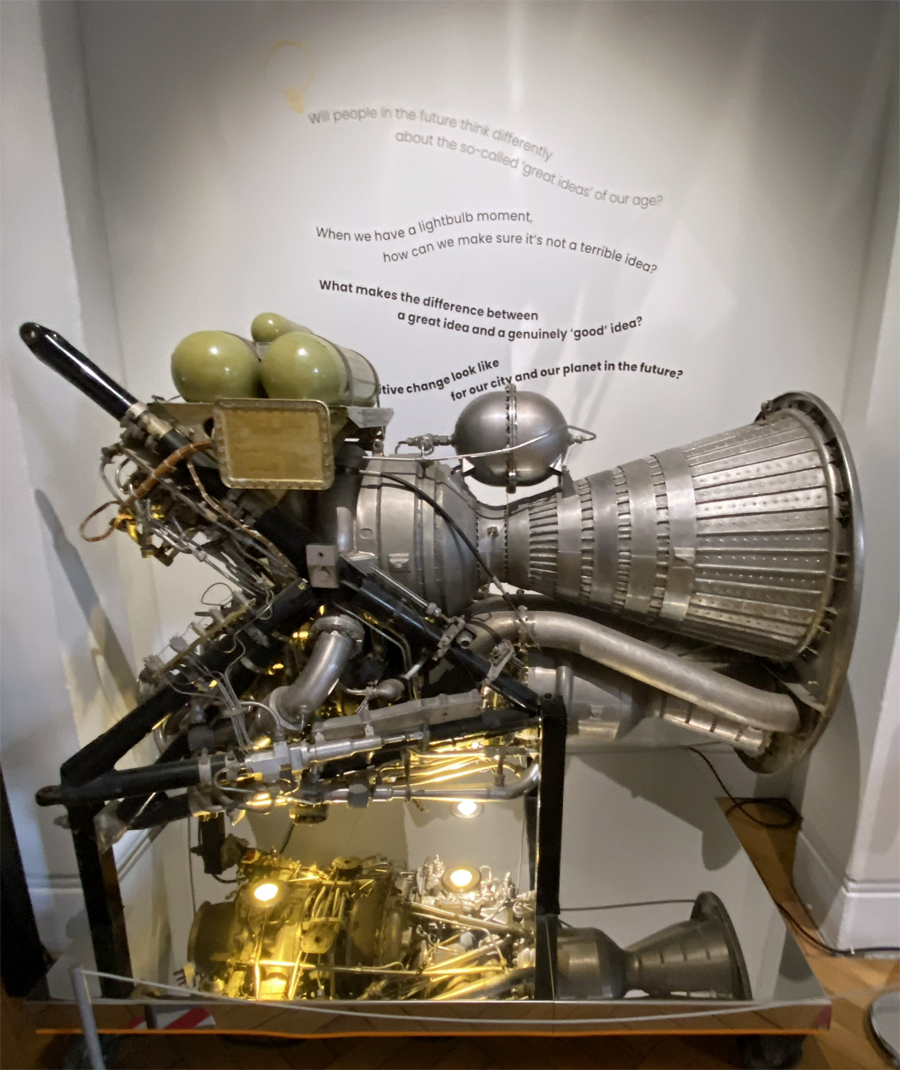
Stenter ASSt 1-1 rocket engine for missile propulsion. Bristol Siddley Engines Ltd
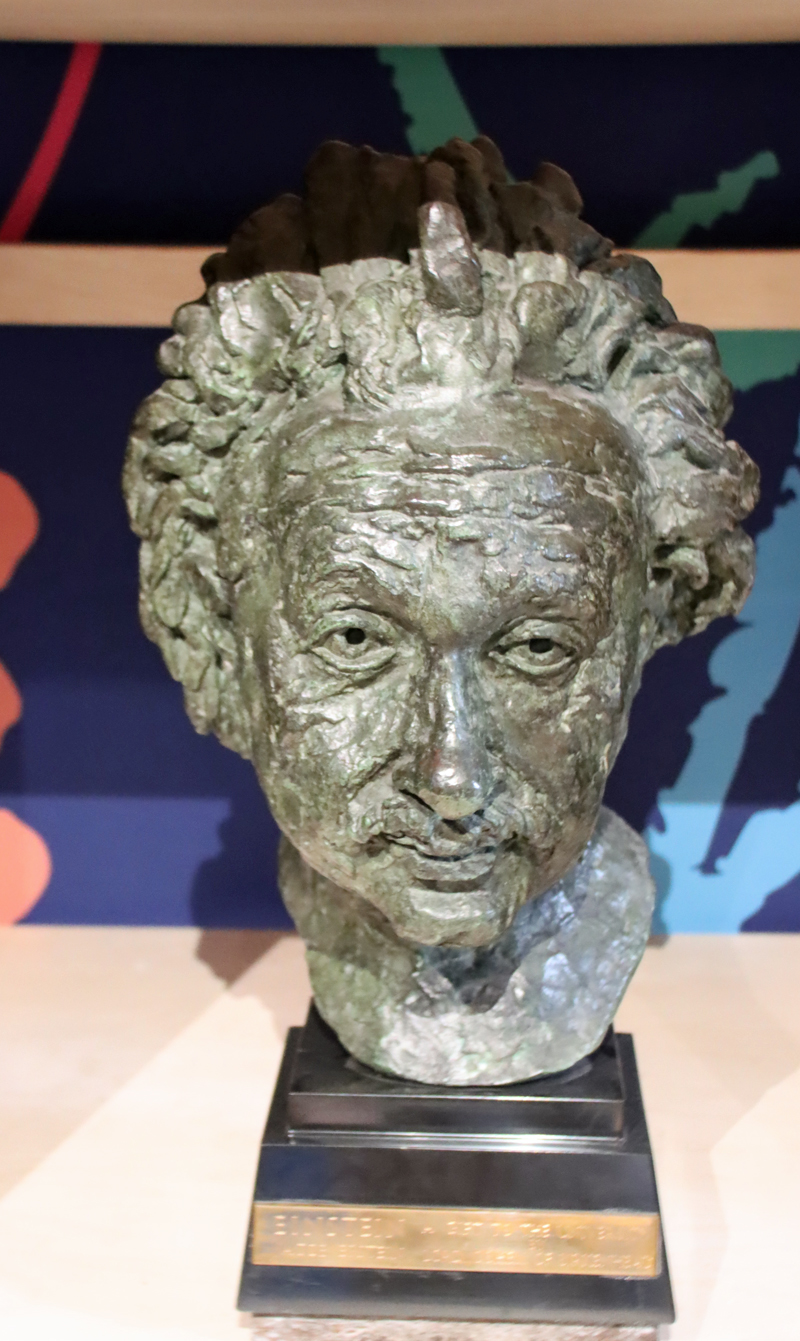
Cast of Albert Einstein by Jacob Epstein, 1993
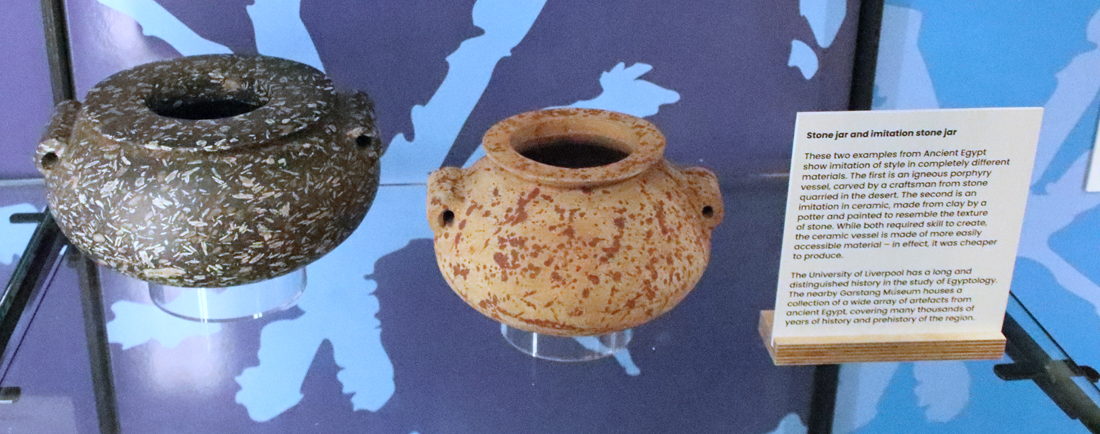
Gorgeous Predynastic Egyptian pottery. On the left a stone vessel made of porphyry. On the right, a pottery vessel made to look like a stone vessel (a skeuomorph). Professional archaeological investigations in Egypt followed on from treasure-hunting and helped to establish an academic understanding of Egypt, both Pharaonic and prehistoric.
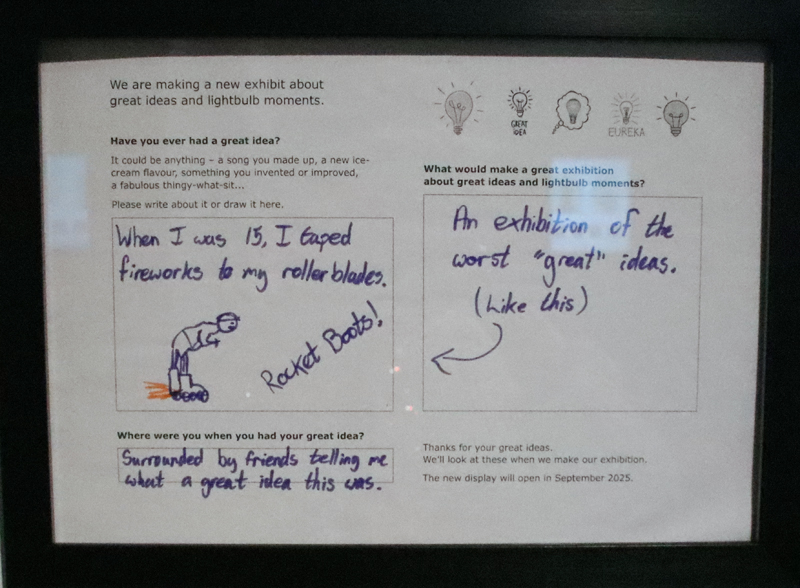
“We asked members of the public to tell us about great ideas they’ve had. Not all them turned out to be that great.”
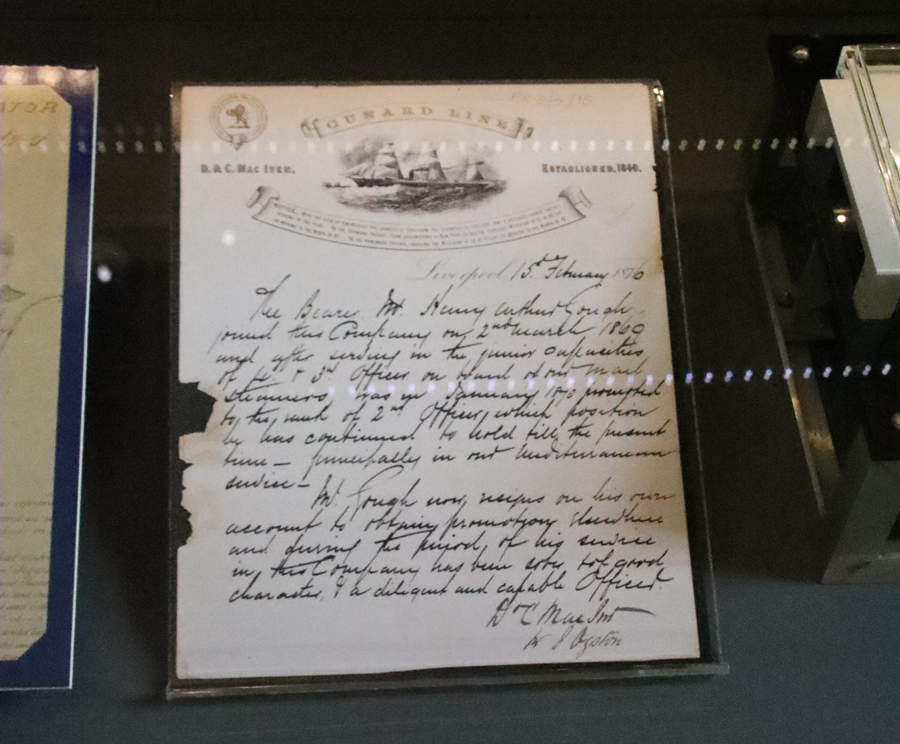
Cunard letterhead describing how collisions were avoided by restricting the Transatlatic fleet to specified routes.
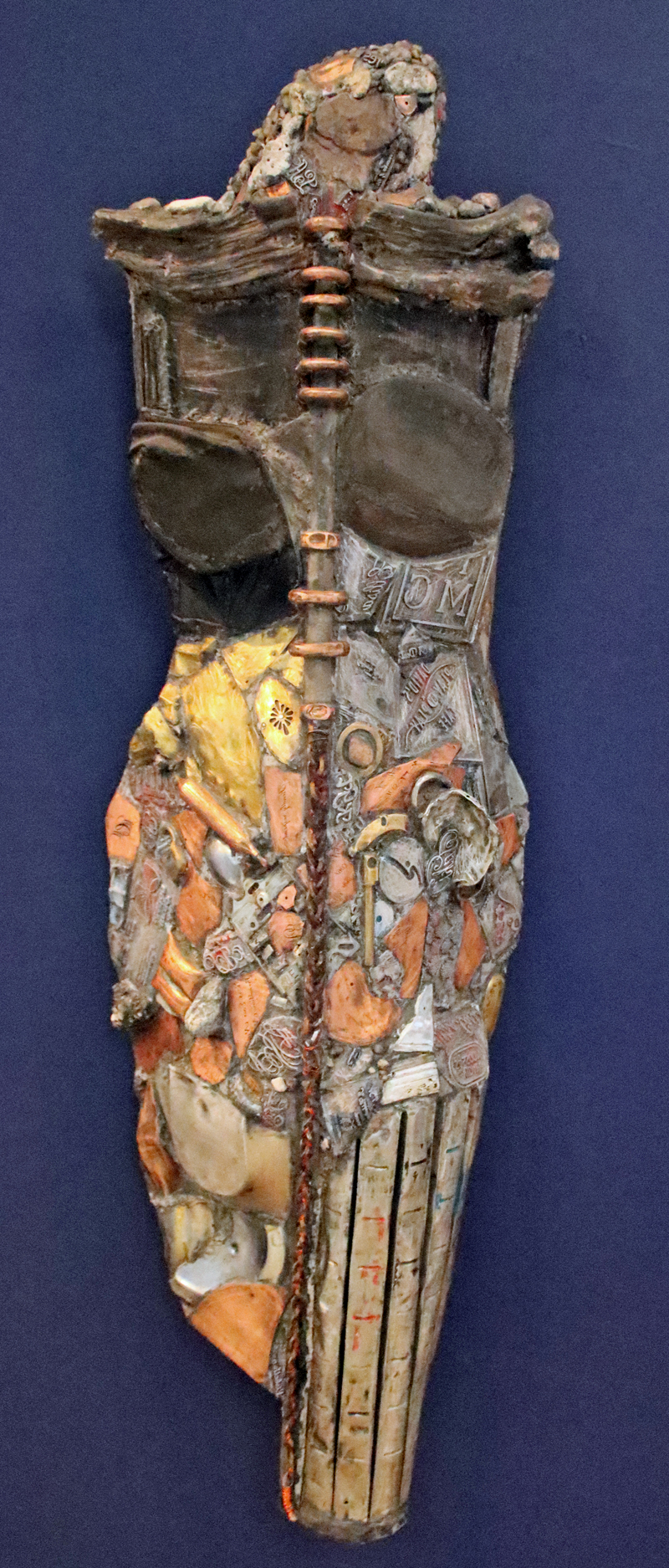
Linda Stein’s “Knight Adagio” 2006. “Stein makes a visual world where men wear dresses and women where armour and where lines of gender become blurred into androgyny.”
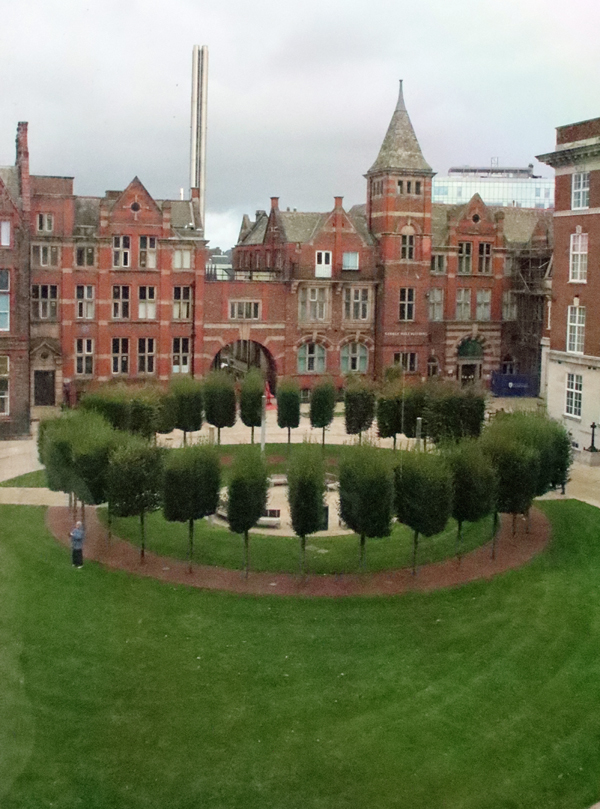
The green quadrangle, viewed from one of the windows on a rainy day.
Visiting
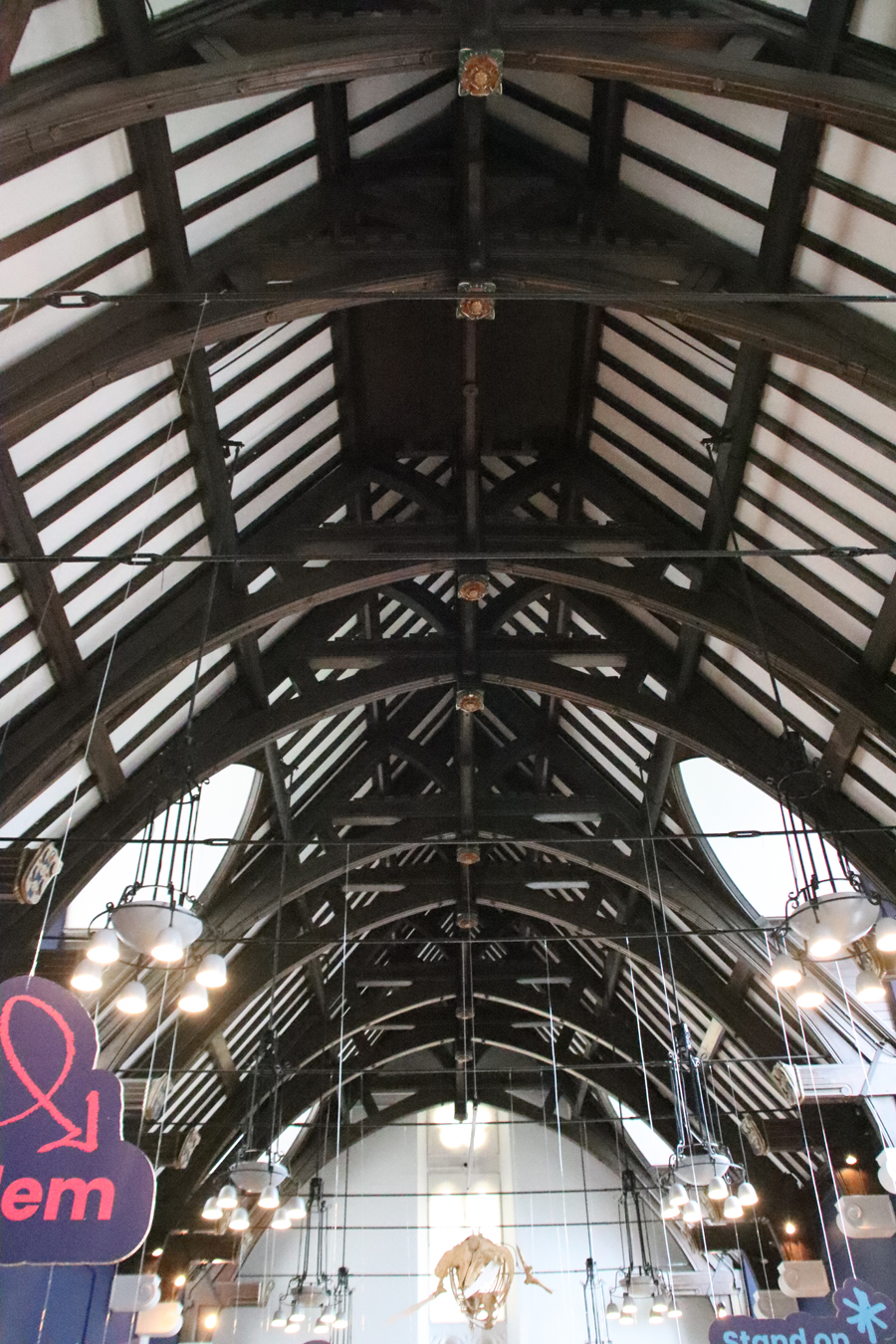
The Tate Gallery
The museum is located on the corner of Brownlow Hill and Ashton Street, with its entrance on Ashton street at What3Words ///tribes.winks.cage. It is opposite the rear entrance to the Catholic Cathedral, which is very much worth a visit in its own right. The museum’s website, which contains details of opening times and special exhibitions, can be found at https://www.liverpool.ac.uk/victoria-gallery-and-museum/. Entry is free (although do check for special exhibitions) and there are lifts to all floors. The museum has a café on the ground floor. I had an excellent latte, and the food being delivered to surrounding tables looked very tempting. You do have to be careful with the café’s opening hours, which at the time of writing are limited.
From my home south of Chester I have driven into Liverpool a couple of times before, and have parked at Liverpool One, but on the whole I have found it more convenient to drive to Hooton Station on the Wirral, abandon the car in the huge car park, and take the train in. With a day ticket it is a much drier option on a wet day, using the circular train route to get closer to places to visit. Like London, Liverpool is awfully grey and rather dismal on a rainy day.