Category Archives: Victorian Chester

William Hesketh Lever’s Port Sunlight Village – industry, architectural diversity and social responsibility

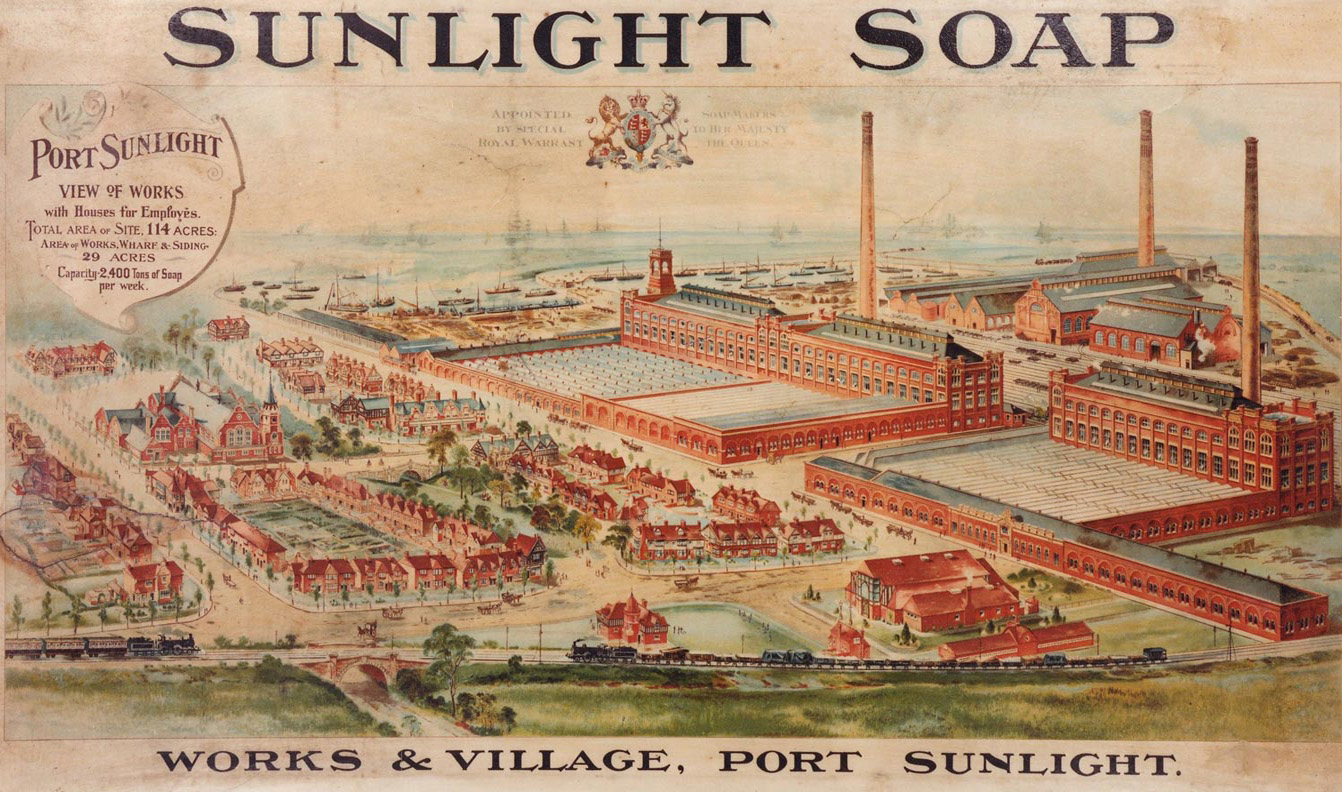
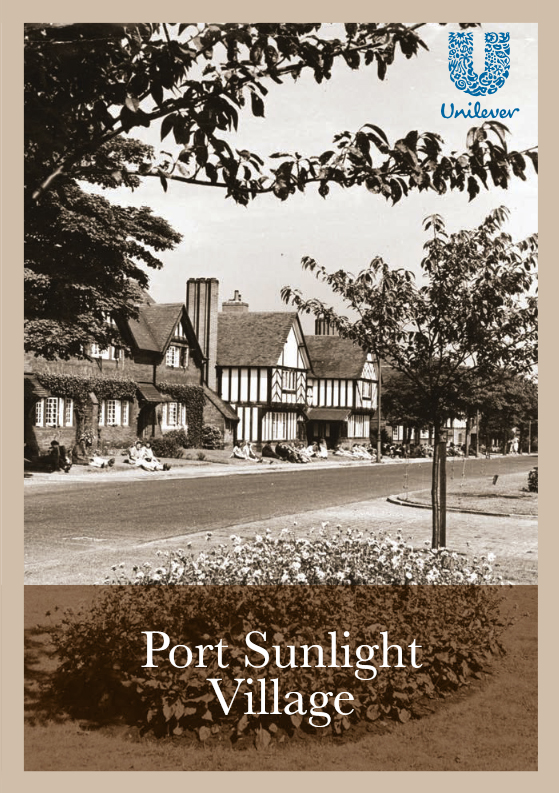
Port Sunlight. Source: Unilever Archives

It is quite a story.  When William Hesketh Lever purchased land for a new factory and decided to build a village for the workers and their families in 1888, he wanted it to be a place where people would enjoy living, to be a thing of beauty, to offer educational and leisure facilities, and to celebrate the best of both vernacular and formal British architecture.  Port Sunlight is often referred to as a model village, but this implies something rather effete, a bit of a vanity project, whereas the village was intended to offer all the benefits of a real, thriving, supportive community, as well as an educational and cultural hub.  Port Sunlight was to be the very antithesis of the slum housing and overcrowding that had crushed so many workers in industrial areas and enterprises of the northwest.

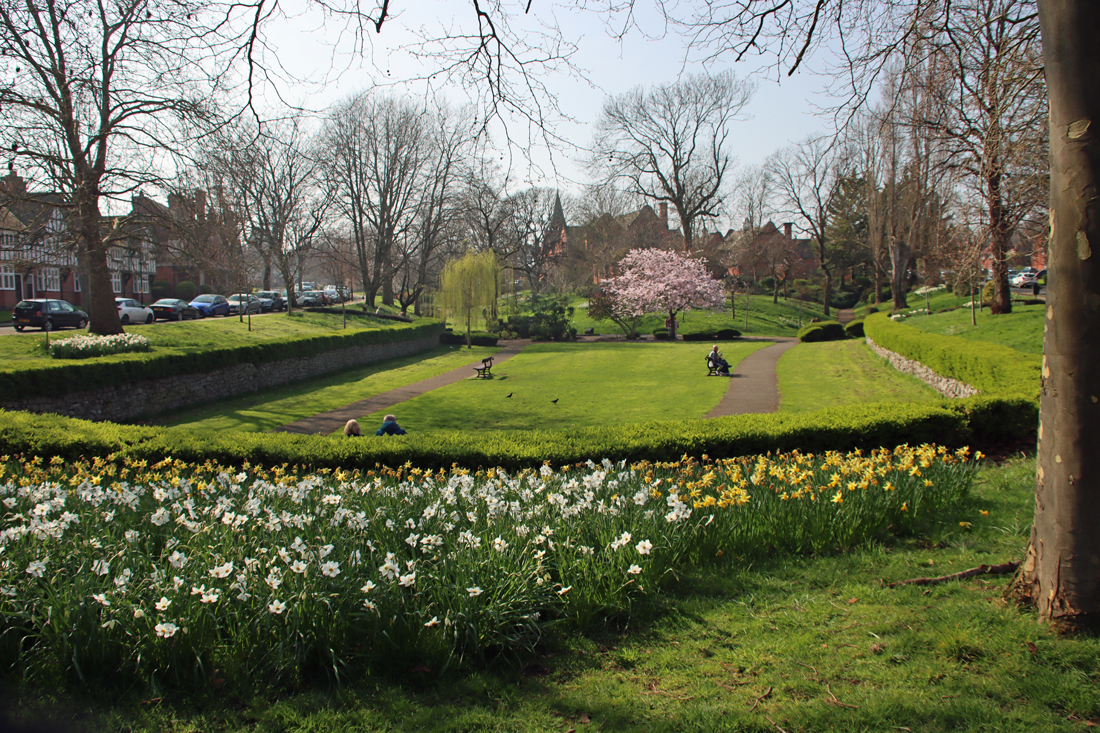
View down part of the Dell

View down a section of the Dell, once an inlet of the Mersey

To ensure that there was real architectural diversity, over 30 architects were employed.  Central roads were based on boulevards.  All streets were wide and the houses, all with a minimum of two bedrooms, were fronted with lawns.   As it grew during the late 19th and early 20th centuries there were open green areas, a formal garden based around an old inlet of the Mersey now called the Dell, cricket lawns, a bowling green, tennis courts, a theatre, an open-air swimming pool (ingeniously heated with surplus heat from the soap factory), schools, a church, a cottage hospital, a private fire brigade, a village shop and various improving societies and clubs, including a girls’ institute.  There were even plenty of allotments.  To top it off, a library was built with a small display area to share a changing selection of Lever’s ever-expanding collection of antiques and antiquities, which were eventually moved into a custom-made art gallery within the village, which still attracts hundreds of visitors a year.  Lever believed in prosperity sharing.  Instead of profit sharing, in which additional cash is put into pay packets, he shared the prosperity of the company by using it to maintain the village and continue expansion and to add improvements to living conditions.  The benefits to villagers came with risk, as anyone not caring for their home, or who fell short of Lever’s high moral standards could be ousted from their homes.  His attitude to the village and his workers has been termed paternalistic.  Today the village is managed and cared for by the Port Sunlight Village Trust, an independent charitable trust set up by Unilever in 1999.

William Hesketh Lever. Source: Wikipedia

William Hesketh Lever (1851-1925) was born in Bolton, the son of a grocer.  Although he and his younger brother James went into business together, providing the company with the name Lever Brothers, it was William who had the innovative flair that made the company a household name.  His commercial successes earned him the title baronet in 1911, after which he was Lord Lever and baron in 1917, becoming Lord Leverhulme (combining his own surname with that of his late wife).  In 1922, following the death of his wife in 1913, he was further honoured with the hereditary rank of Viscount.  He named his village after his best-selling product, the subject of his genius for branding and marketing, Sunlight soap.  The soap factory and related buildings sat behind the long low frontage of office buildings, which eventually became the Lever Brothers headquarters, on the very edge of the village.  It was featured in the Illustrated London News in 1898, clearly the focus of considerable wonder. Today, with its beautiful homes, its art gallery, its community hall, its green spaces and formal flower beds, and even its more recent garden centre, it really merits the term oasis, sitting between a busy, industrial and commercial part of the Wirral built around the A41, and the Chester-Liverpool railway line.

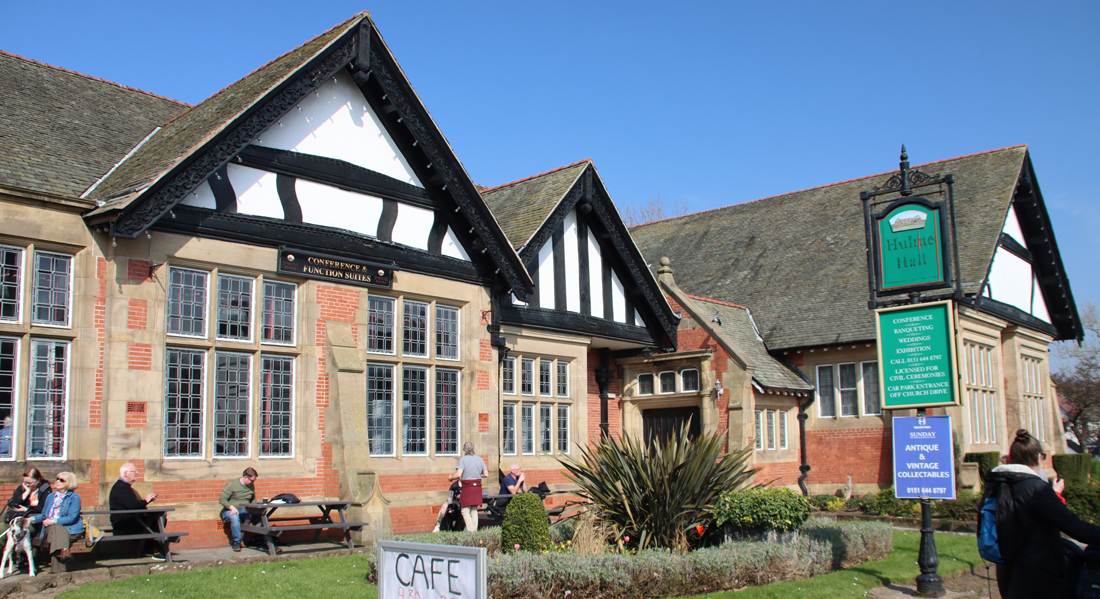
Hulme Hall

Hulme Hall

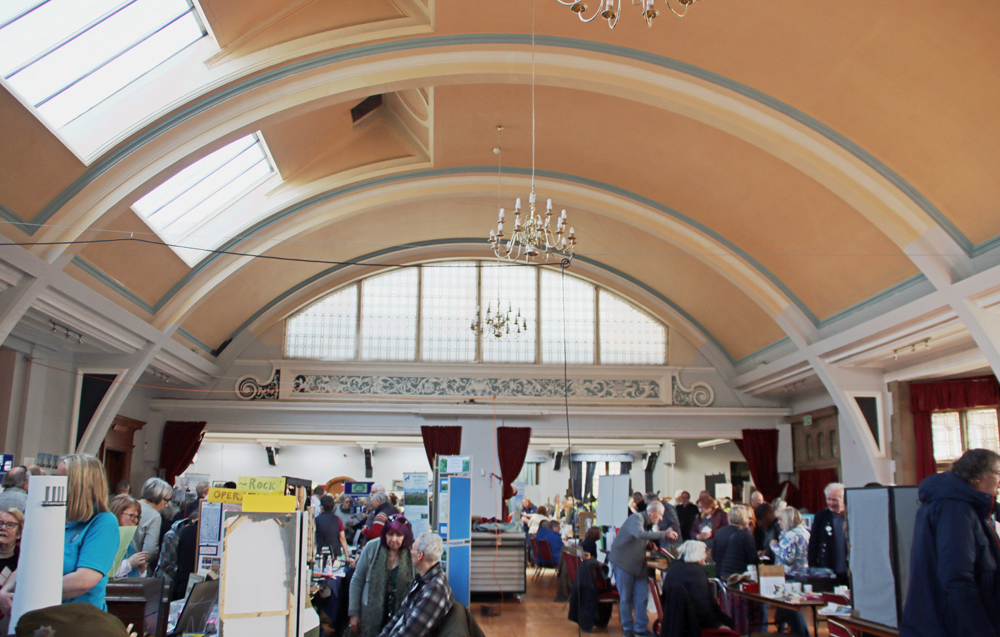
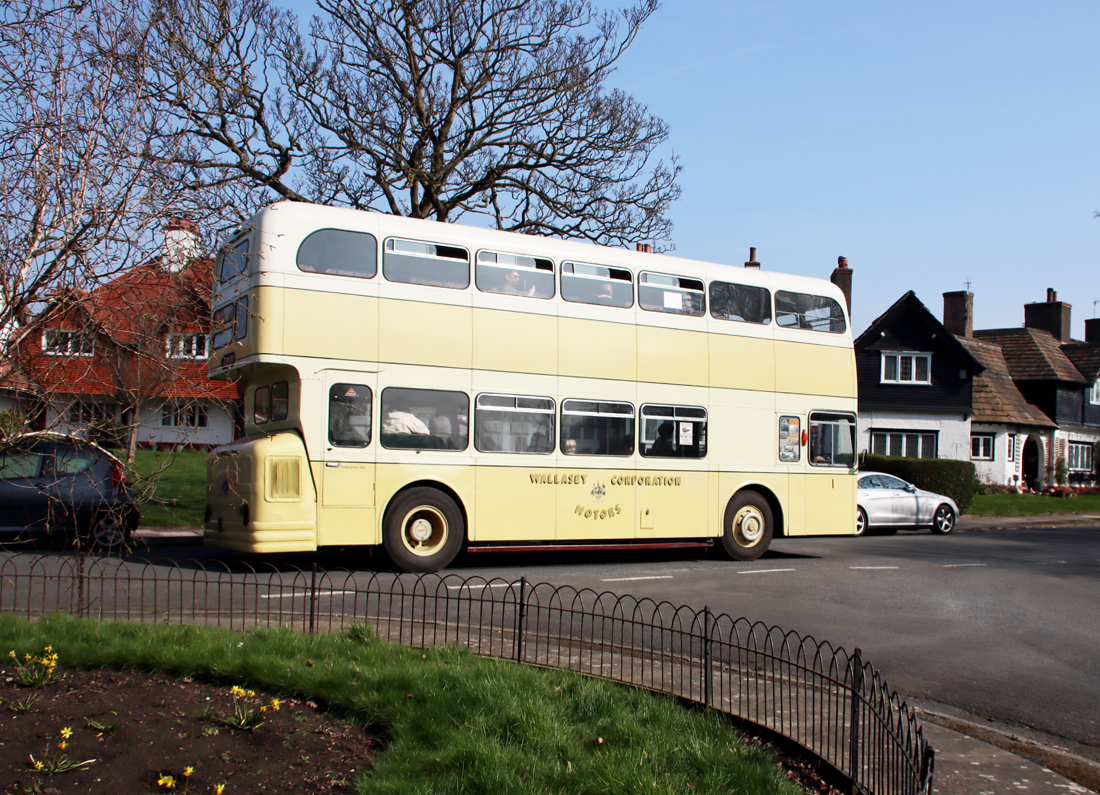
I was incredibly lucky to live in Port Sunlight for six months in the early 1990s, but apart from an enjoyable foray into the Lady Lever Art Gallery last year, had not had a wander around the village since moving back up to the area a few years ago.  It was huge fun to visit the Wirral History Festival on 21st March 2026.  It was a bright and sunny day, and the turnout was enormous.  There was a vintage double decker bus doing tours of the village, and the gorgeous 1901 Hulme Hall that hosted the event (originally built as a ladies / girls’ dining hall and named after Lever’s wife and designed by William and Segar Owen) was filled with a vast swathe of stalls. Entry to the Festival was free of charge but it inevitably ended up costing me a small fortune in purchases of books and journals 🙂  After its stint as a dining hall, and a temporary display area for Lever’s art collection, Hulme Hall housed Dutch and Belgian refugees in the First World War, later becoming a military hospital, and went on to be used by the American army in the Second World War. According to the Unilever Archives booklet the Beatles played there in 1962 and for the last few decades it has been it has been used for various community events.

Interior of Hulme Hall

Interior of Hulme Hall with the Wirral History Festival in full flow

The History Festival's village tour bus

The History Festival’s village tour bus doing the rounds near the Lady Lever art gallery

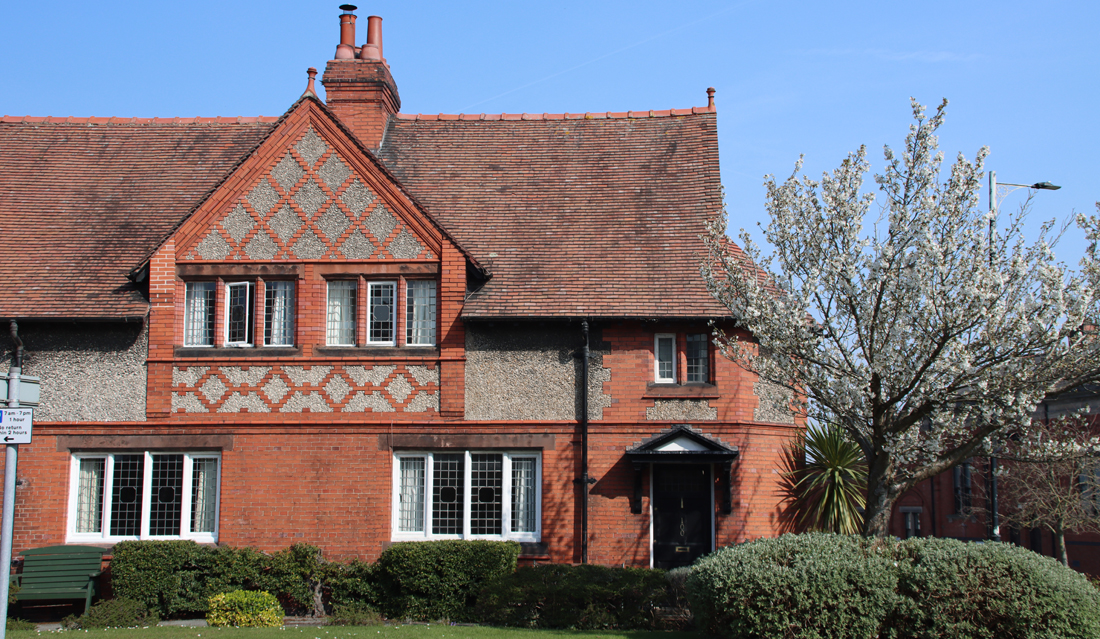
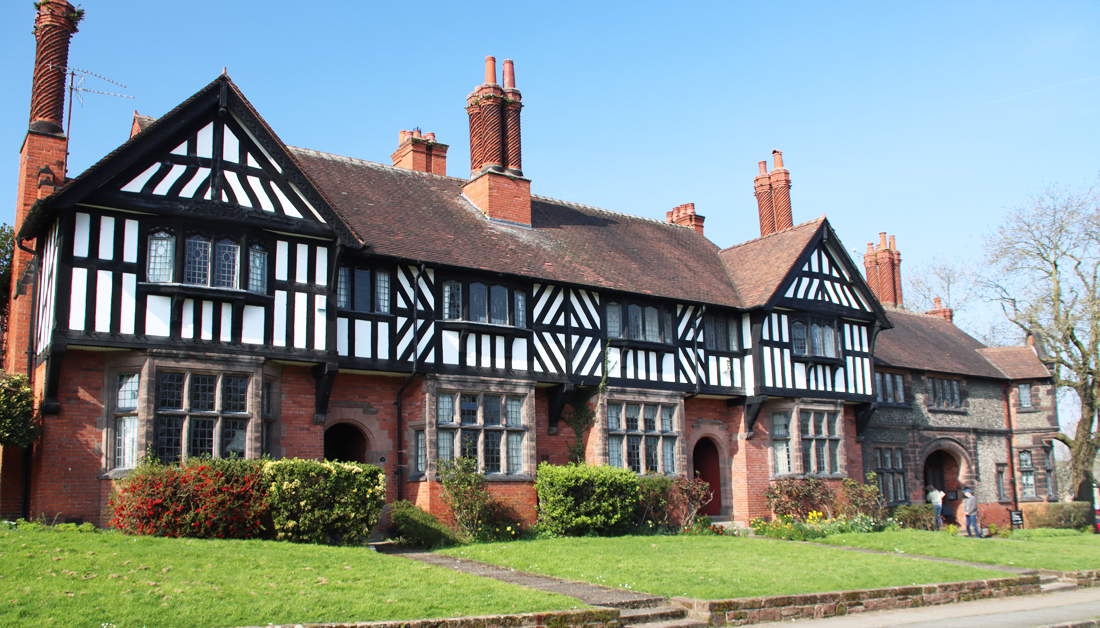
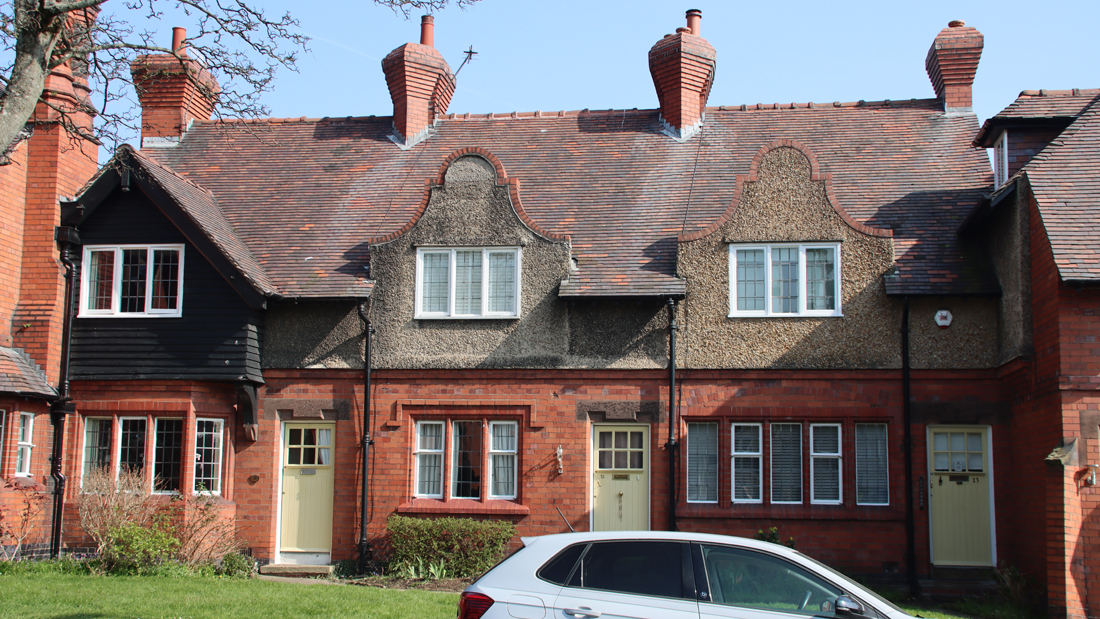
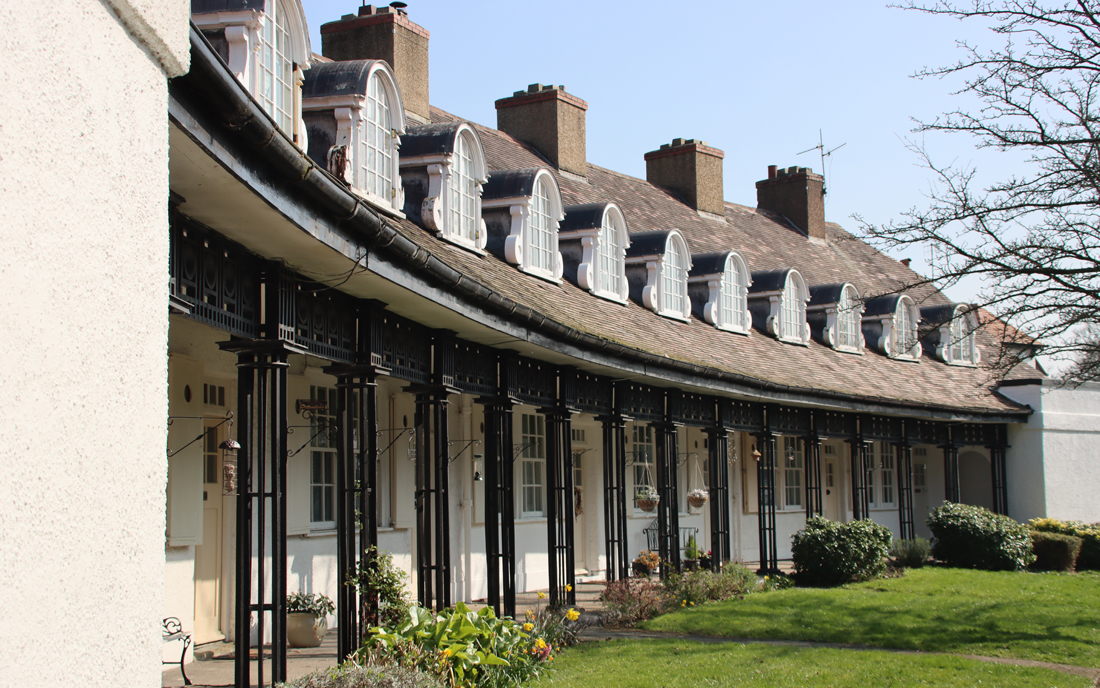
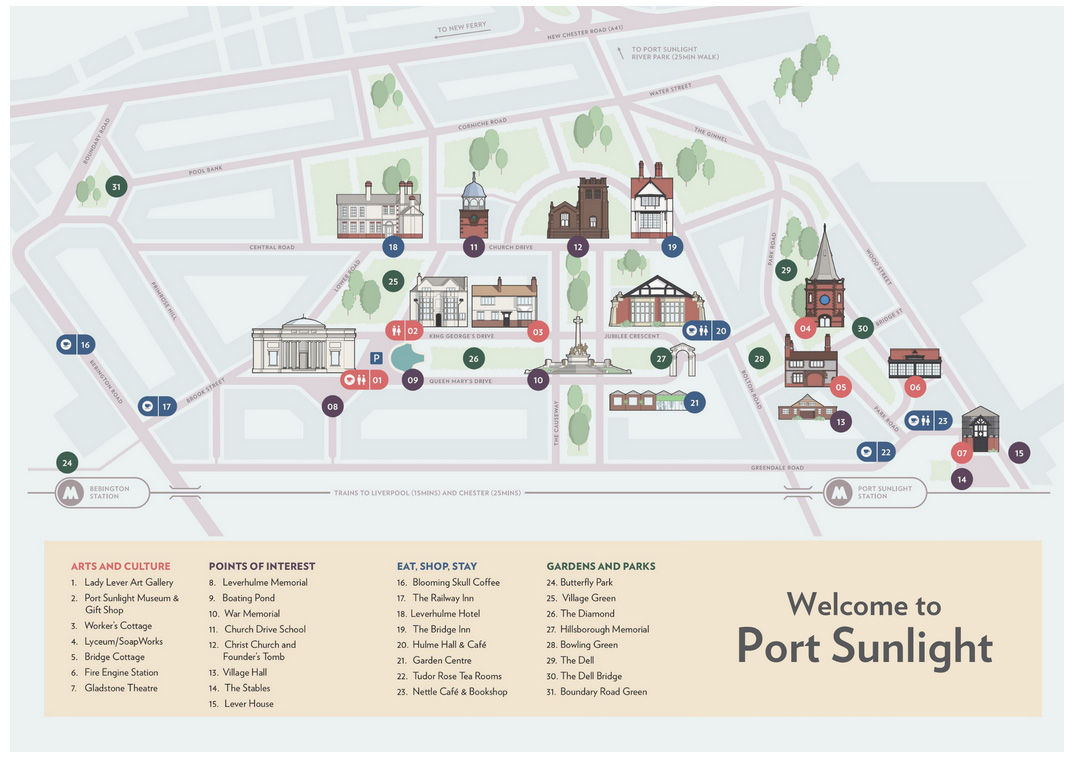
The subsequent walk around the beautifully maintained village, looking fabulous against blue skies and busy with visitors, was delightful.  Today the village, within a 130 acre estate, is home to more than 900 Grade II listed buildings.  It is impossible to do full justice to them here so I have picked out a few buildings to talk about, and have added snapshots of several others to give a sense of the village and its splendid character.  Although the buildings looked great in the sunshine, many of the photographs simply didn’t work, even with the help of Photoshop either because I was shooting straight into the sun or because buildings were in deep shade, and there are some notable omissions.  Hopefully I will take those on another visit. See the modern tourist map at the end of this post for some of the more prominent buildings.

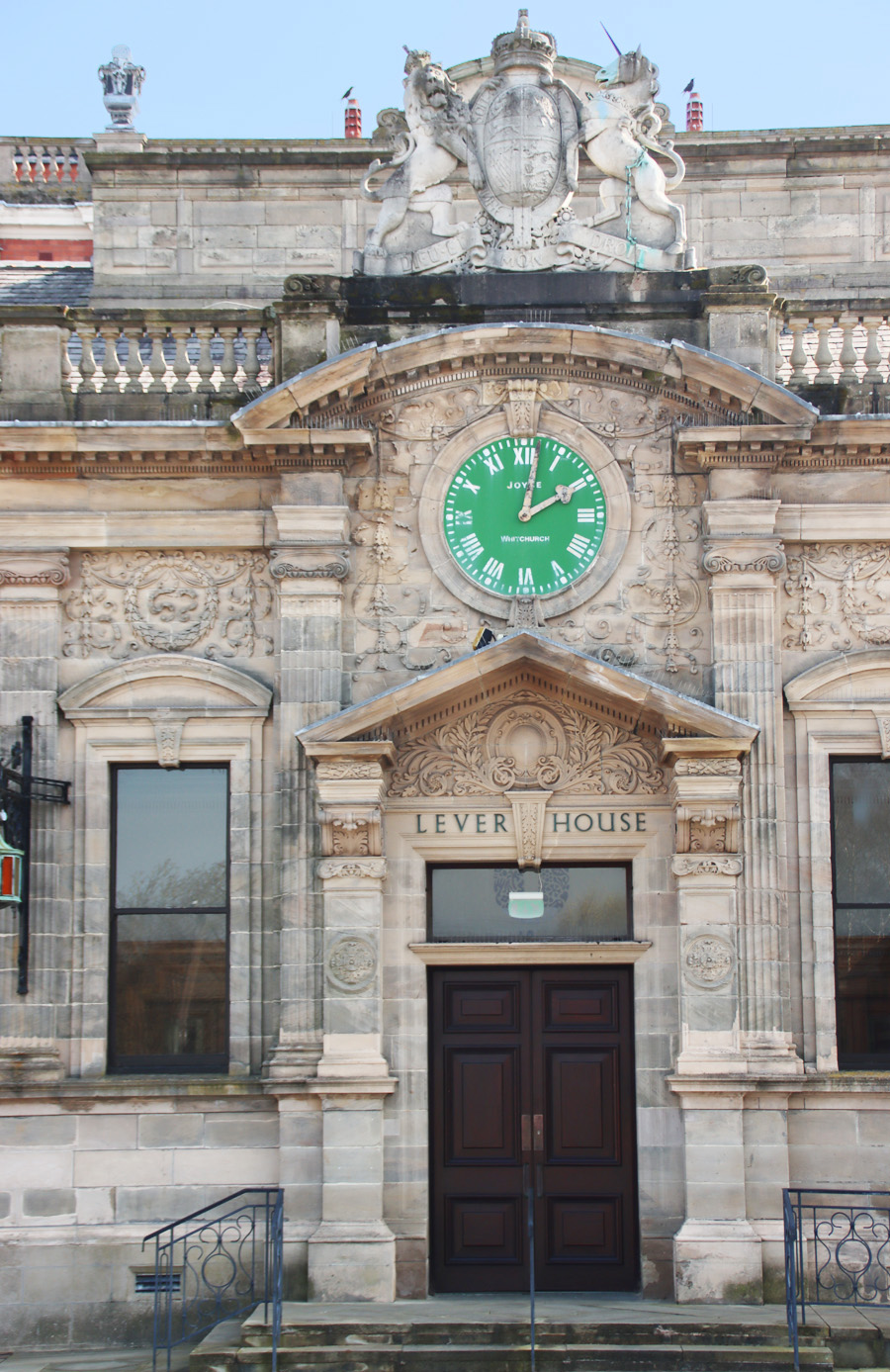
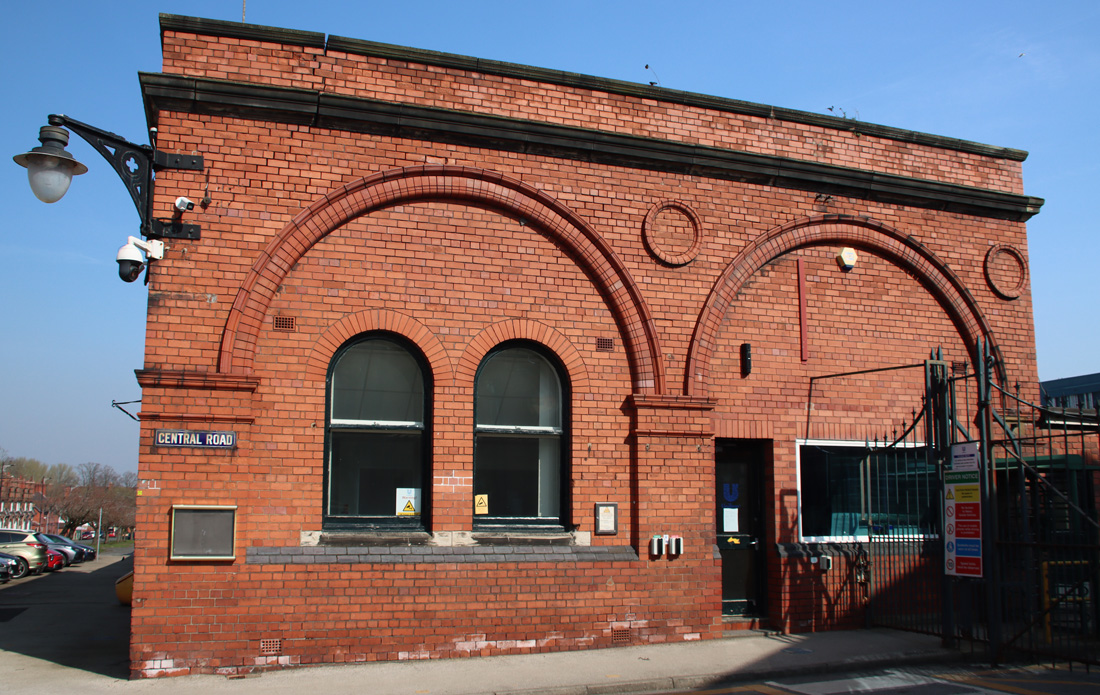
As the image at the top of the post shows so clearly, Port Sunlight was a story of two distinct parts:  the factory buildings that were focused on the production of soap, and the village that housed the workers and their families.  The long low brick frontage of the office buildings along Wood Street served as something of a liminal area between the splendid village and the industrial buildings, including the soap factory, accessed via Central Road beyond the gates.  The original main entrance to the offices of Lever House, with its 1895 ornamental stone façade by William and Segar Owen, and the Royal coat of arms above is still in situ, proudly welcoming visitors to Lever Brothers. Lever Brothers amalgamated with Dutch margarine producer Margarine Unie in 1929, becoming Unilever, today one of the world’s biggest multinationals.  Unilever Merseyside Ltd (UML) was based in the same Wood Street offices well into the 1990s.

Central Road, Port Sunlight

Part of Central Road, Port Sunlight, leading past the office buildings and through the gates into the factory zone

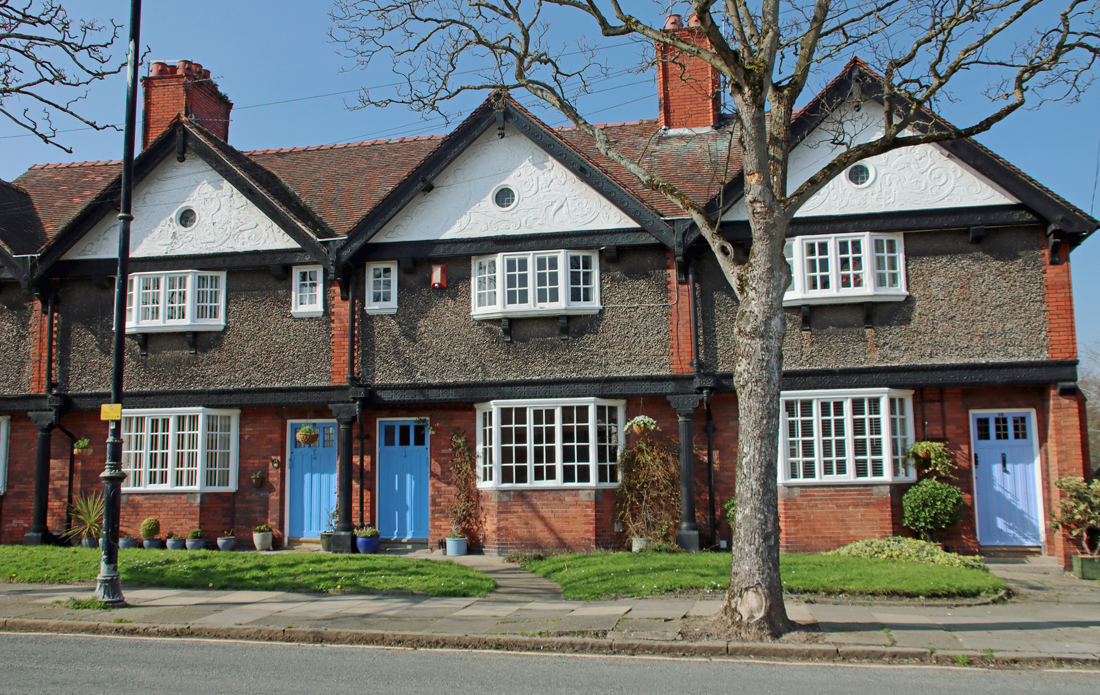
Houses on Wood Street, opposite the entrance to the factory area

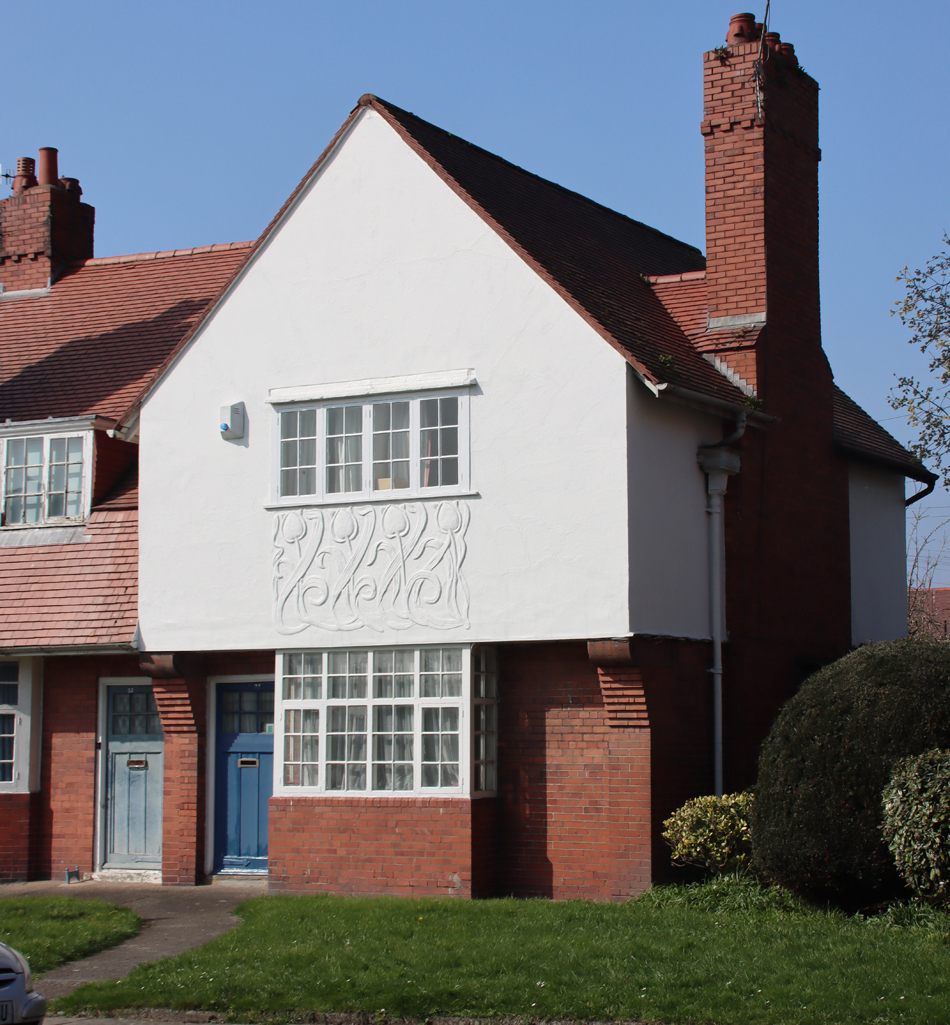
Houses on Wood Street, nearly opposite the entrance to the factory area. By Douglas and Fordham, 1894

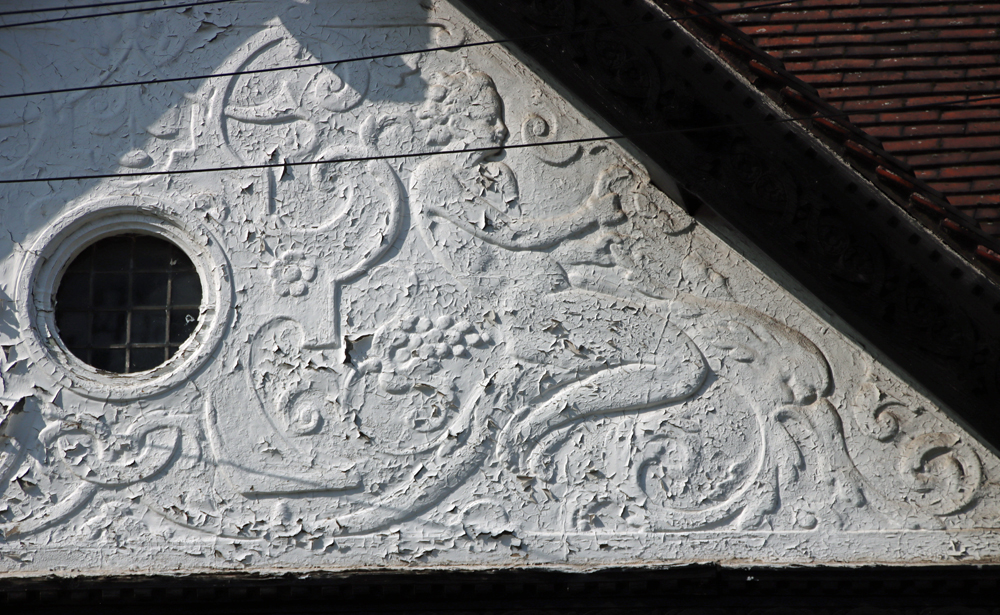
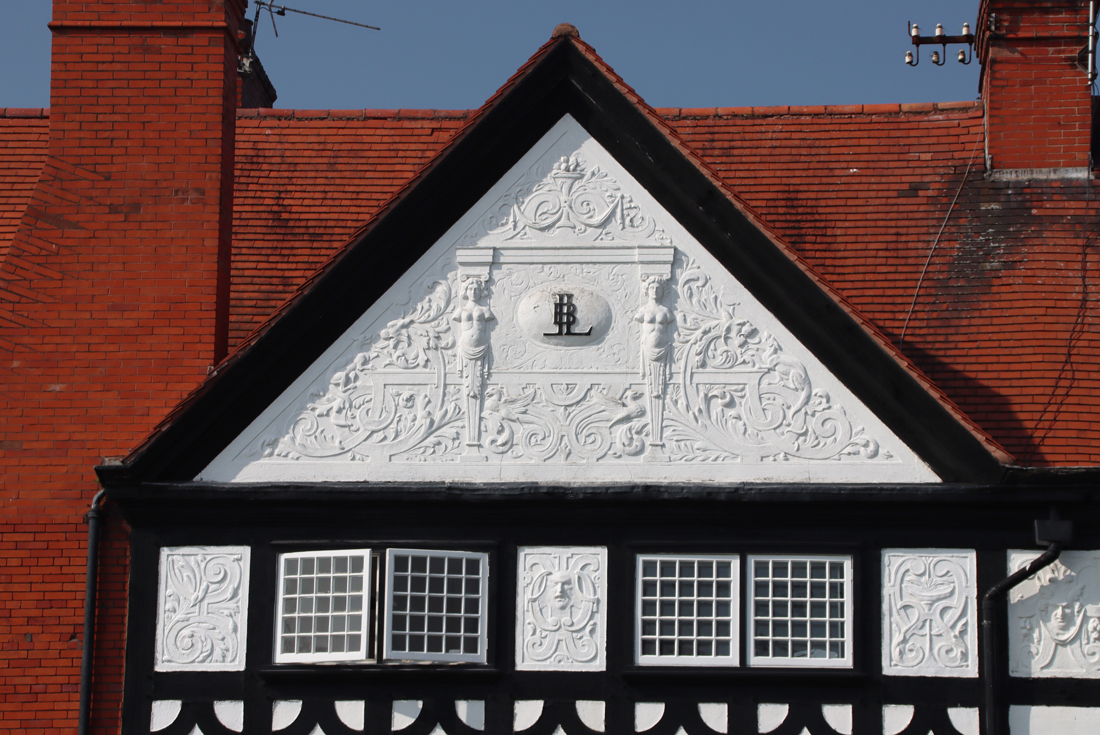
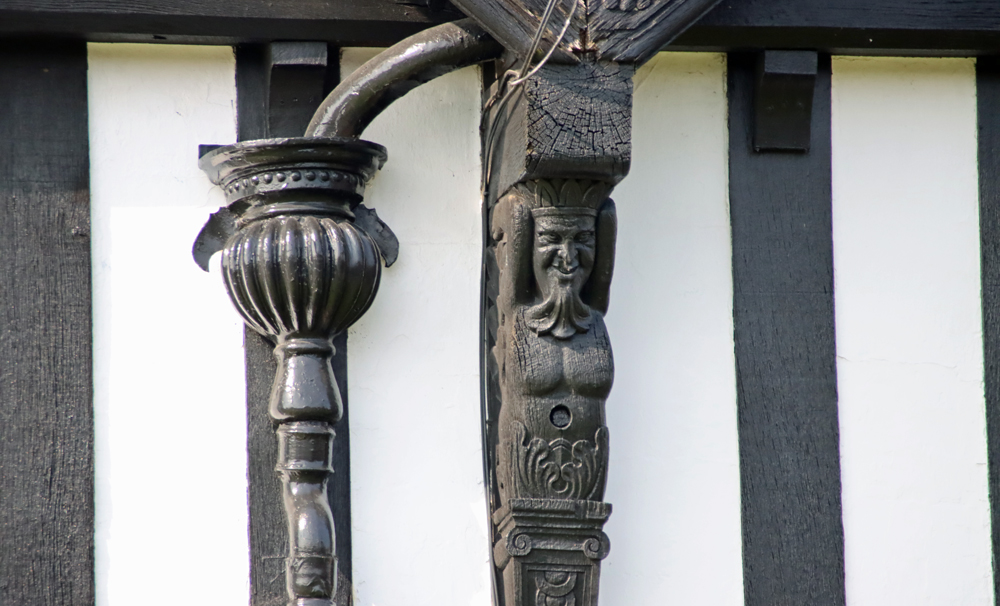
Decorative detail on the above building

Decorative detail on the above building


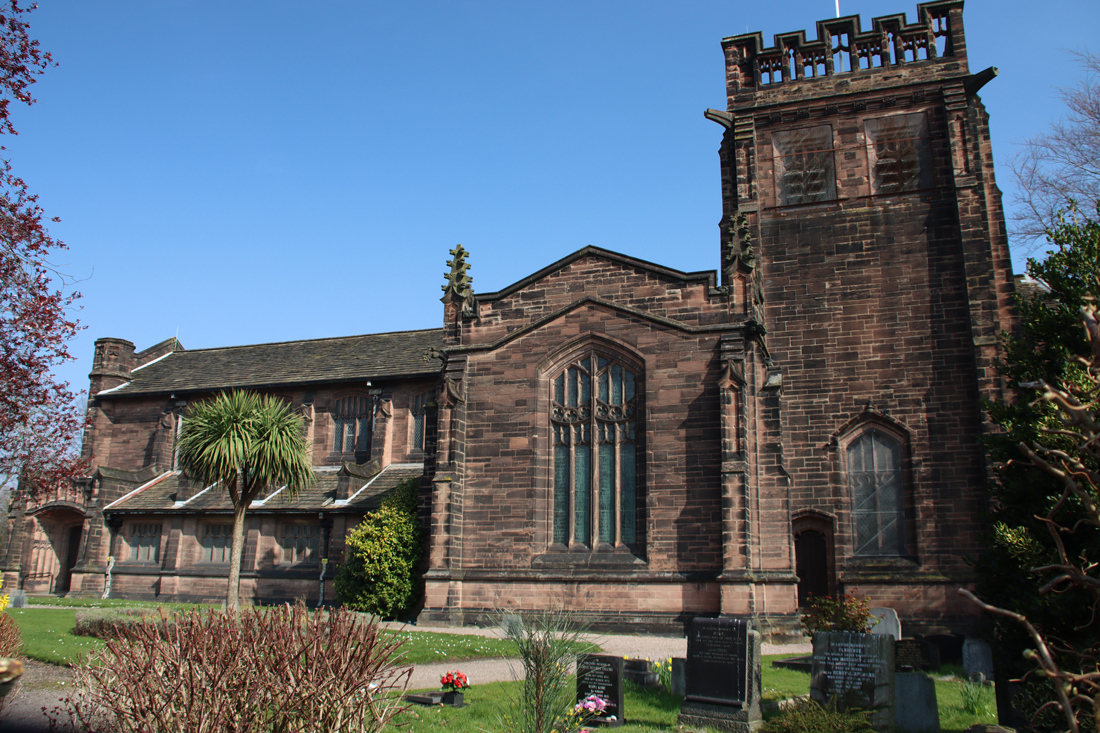
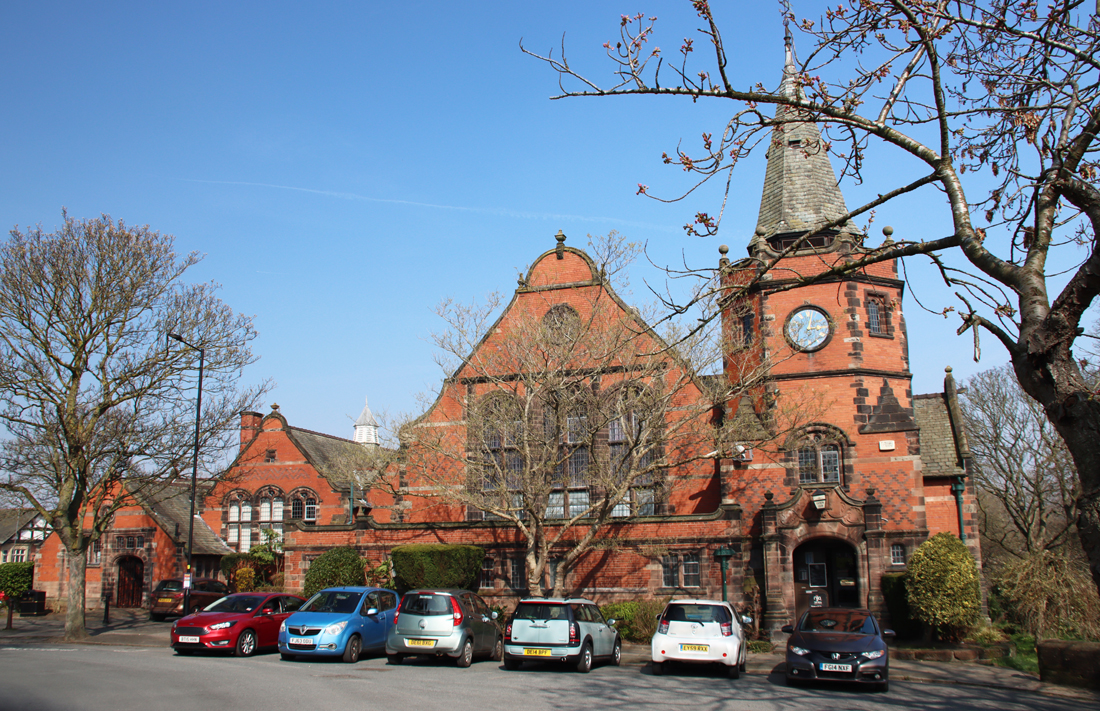
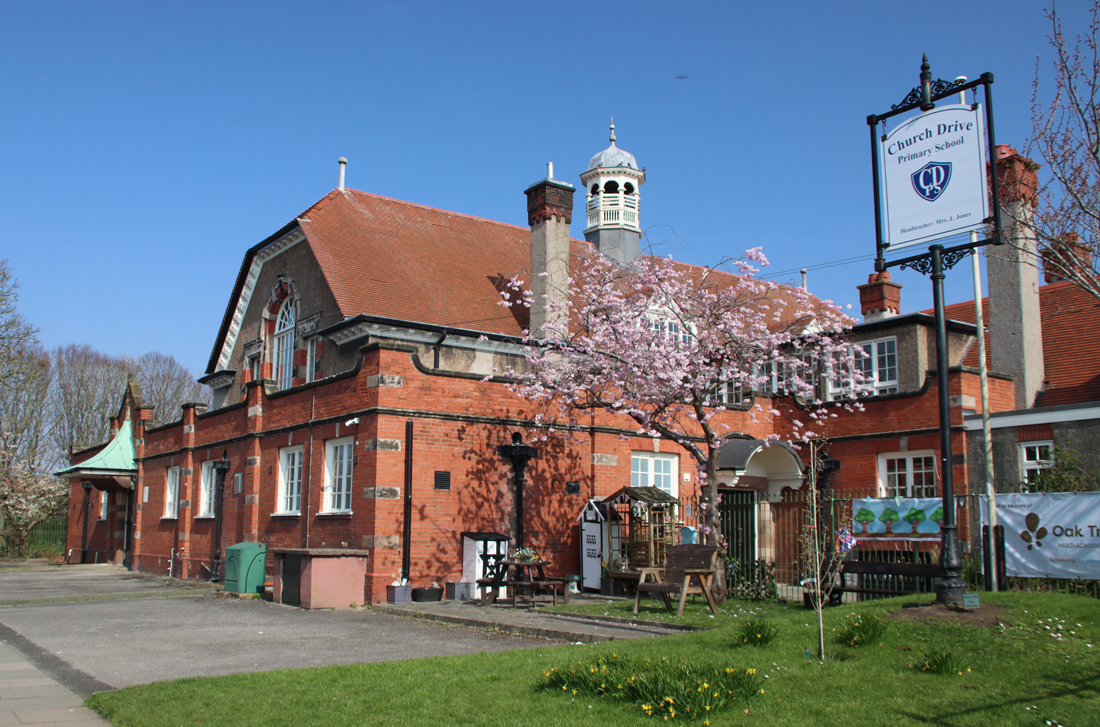
Community buildings were of fundamental importance to the development of the village.  Next to the large 1902-04 Gothic Revival church designed by William and Segar Owen is the splendid Church Drive School designed by Grayson and Ould. Dating to 1902-03, it was built to supplement the Park Road Schools in the building now known as the Lyceum, eventually replacing it.  The Lyceum, particularly enterprising and imaginative, was built 1894-96 and sits next to the Dell and its attractive bridge.  Designed by Douglas and Fordham it was enlarged in 1898 and had the capacity for 350 boys and girls and 150 infants.  It became a Lever Brothers training facility in 1917, eventually becoming the Unilever Archives between 1904 and 2006.  Today it serves as a community space, and also hosts an interactive exhibition about the production of soap.

The Lyceum

The Lyceum

Church Drive School

Church Drive School

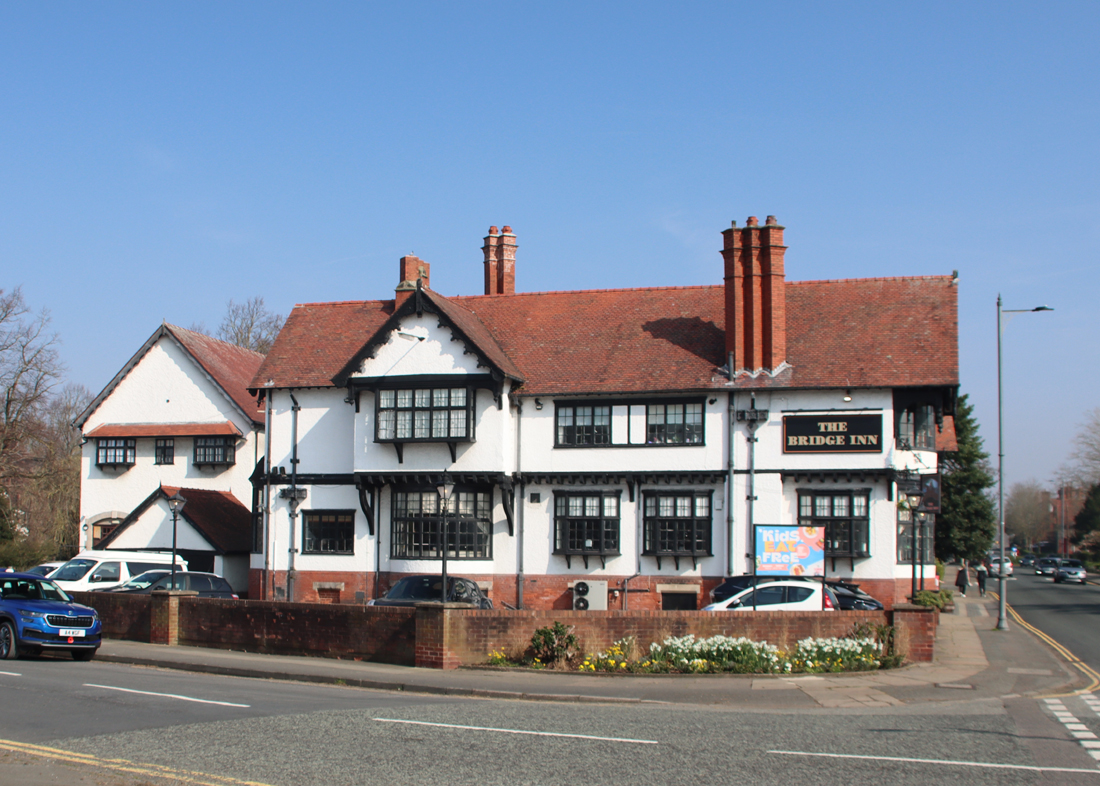
The Bridge Inn

The Bridge Inn intrigued me because Lever’s family were Congregational and were dedicated teetotallers.  According to the guide to the village produced by Unilever, it was built in 1900, having been designed by Grayson and Ould who also designed the rather more adventurous Church Drive School.  It was named for the 1897 Victoria Bridge, since demolished:  “It was originally opened as a temperance hotel with dining and tea rooms and a few guest bedrooms but, in 1903, a deputation of villagers requested that a licence be applied for. Lever had to agree to a referendum and over 80% voted in favour of a licensed public house!”

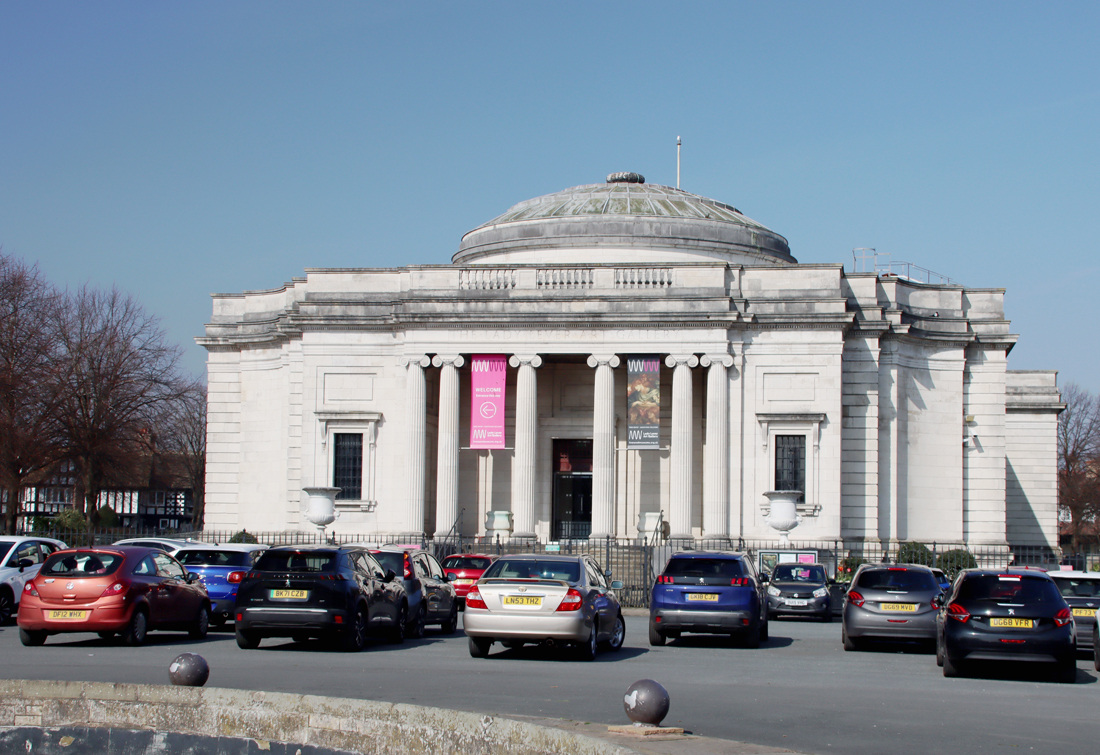
The Classically-inspired Lady Lever Art Gallery was not part of Lord Lever’s original vision for the village but having filled his several homes to capacity, and finding the display areas of Port Sunlight’s library and other public buildings insufficient, he decided to build a gallery so that he could properly share his collections with the general public.  He was one of the first British industrialist to create a gallery for his personal collections, although it was a practice very much in vogue in America, where he had visited with his wife and son.

Turner, Joseph Mallord William; The Falls of the Clyde; Lady Lever Art Gallery. Source: Art UK

The art gallery was named in the memory of his wife Elizabeth née Hulme who had died in 1913 before Lever became Lord Leverhulme.  Work began on the museum in 1914, with George V in attendance, and was opened in 1922 by Queen Victoria’s youngest daughter Princess Beatrice.  The items on display, from all periods of history and many different countries, were selected by Lever personally and included works purchased specially to cater for broader tastes than his own, as well as art that he commissioned.  When he died in 1926, a substantial proportion of Lever’s private collections was sold at auction, but the items in the Lady Lever represent some of the the best of his years of collecting.  The museum was handed to the nation in 1986. I visited last year, and posted about that visit here.


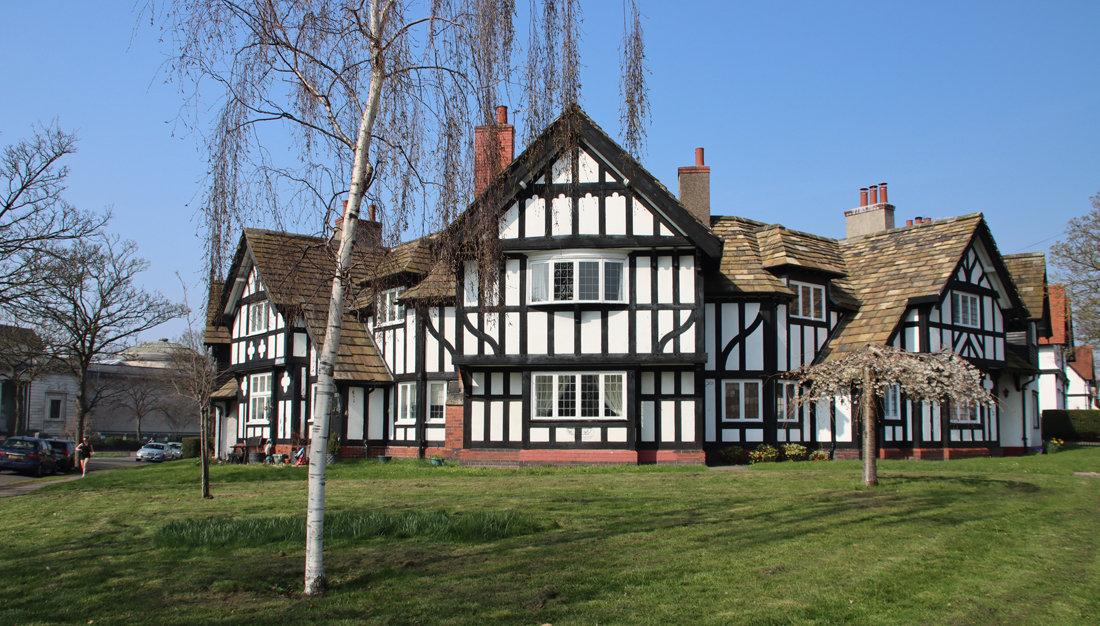
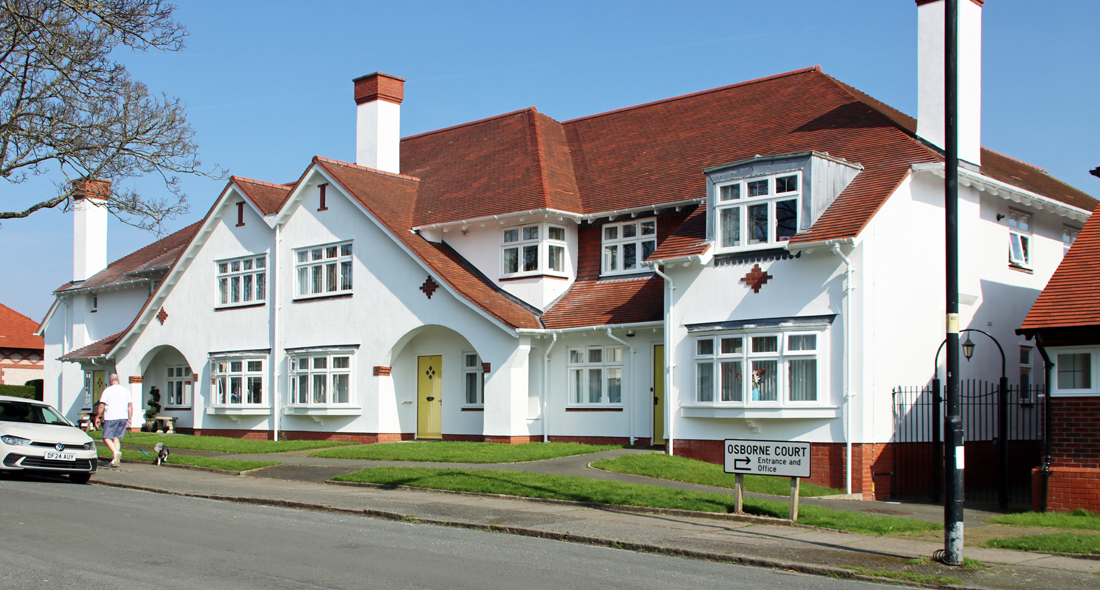
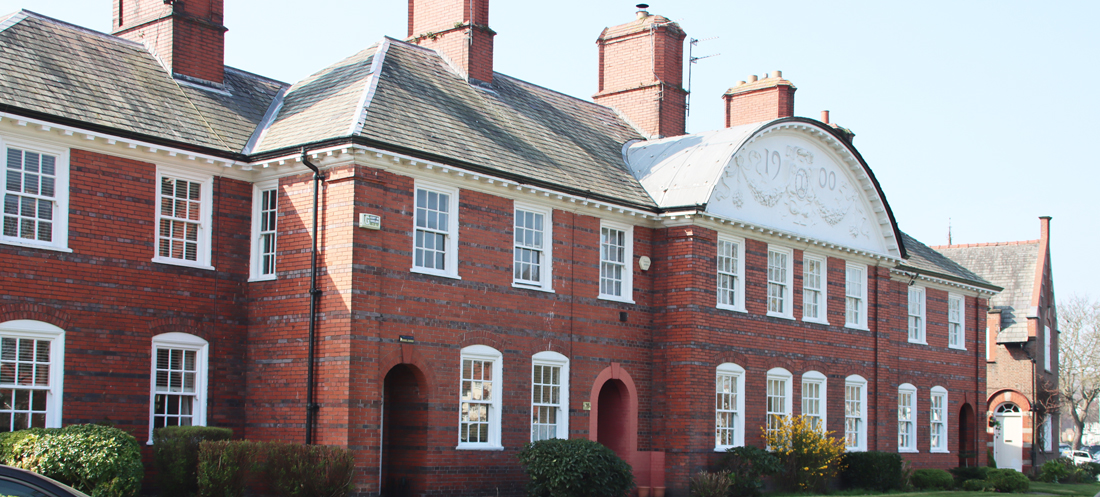
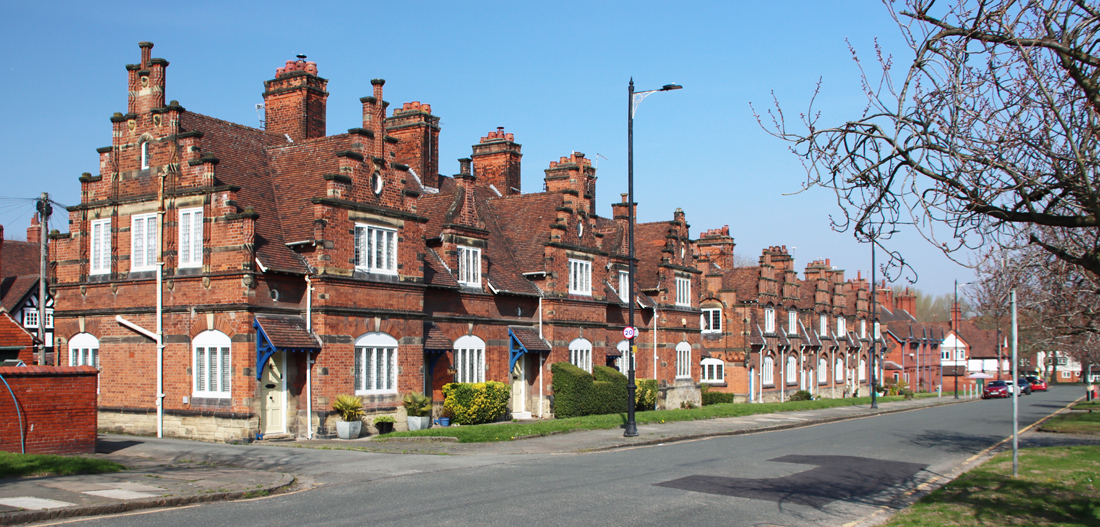
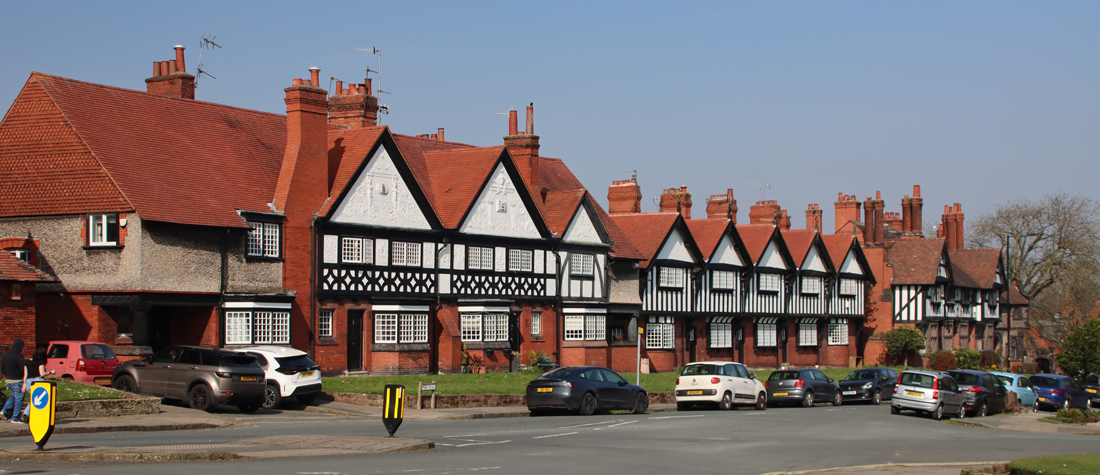
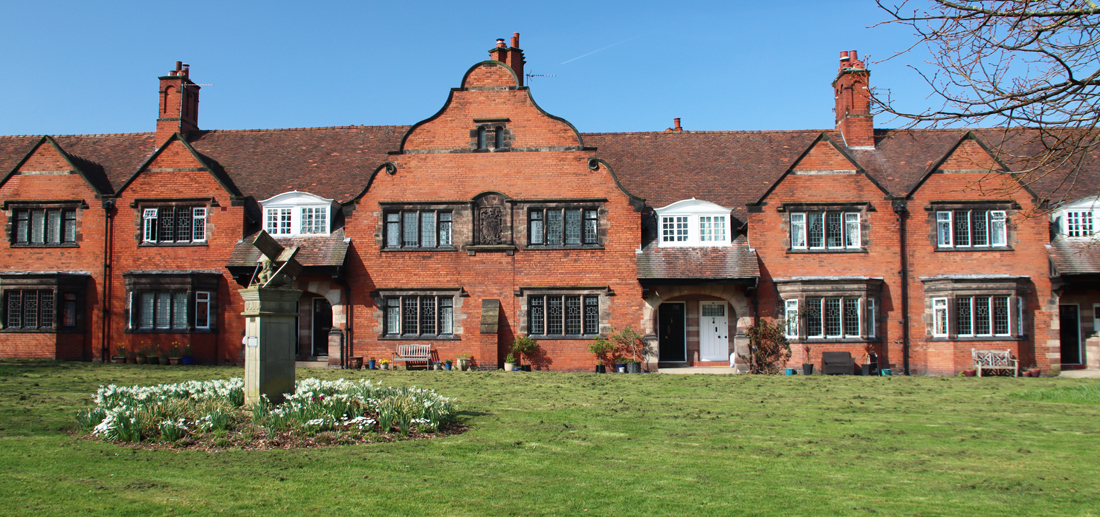
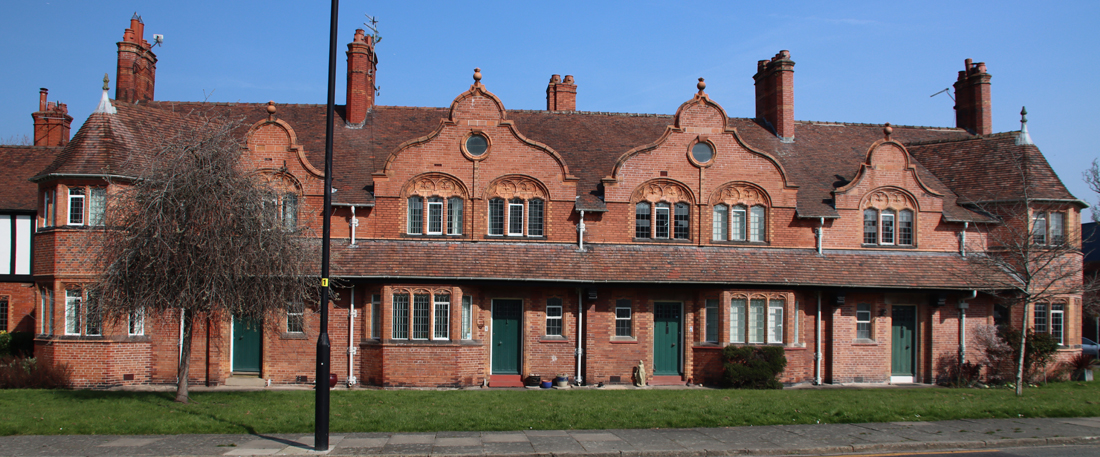
There is a huge mixture of housing styles and types in the village, some of them based on actual historical buildings, the others designed specially for Port Sunlight.

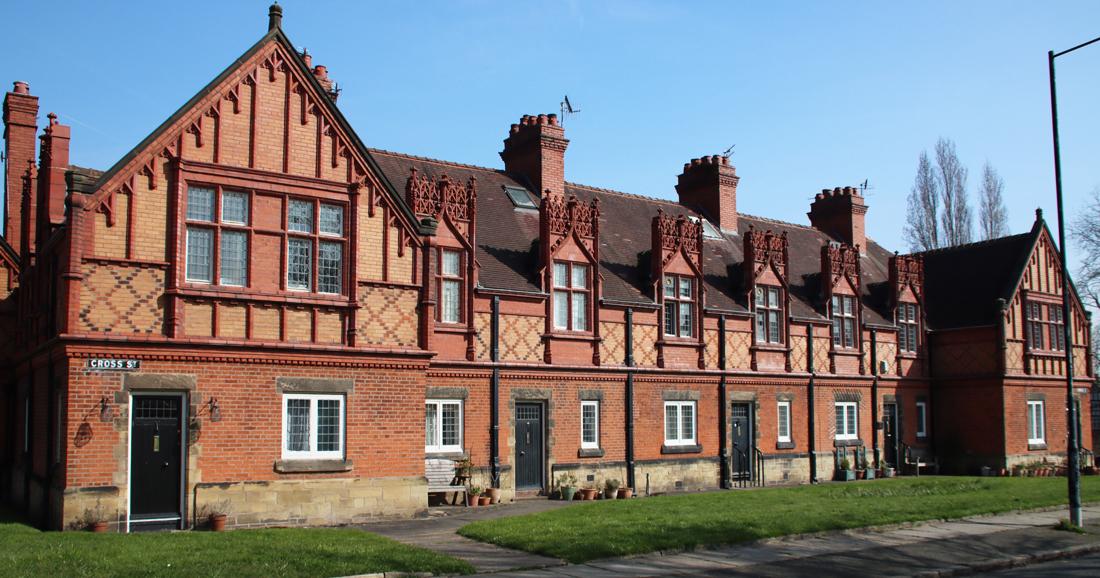
Cross Street, by Grayson and Ould 1896

On the corner of Lower Road and Central Road, by Lomax Simpson 1906

Central Road

Church Drive, by Grayson and Ould 1900-02

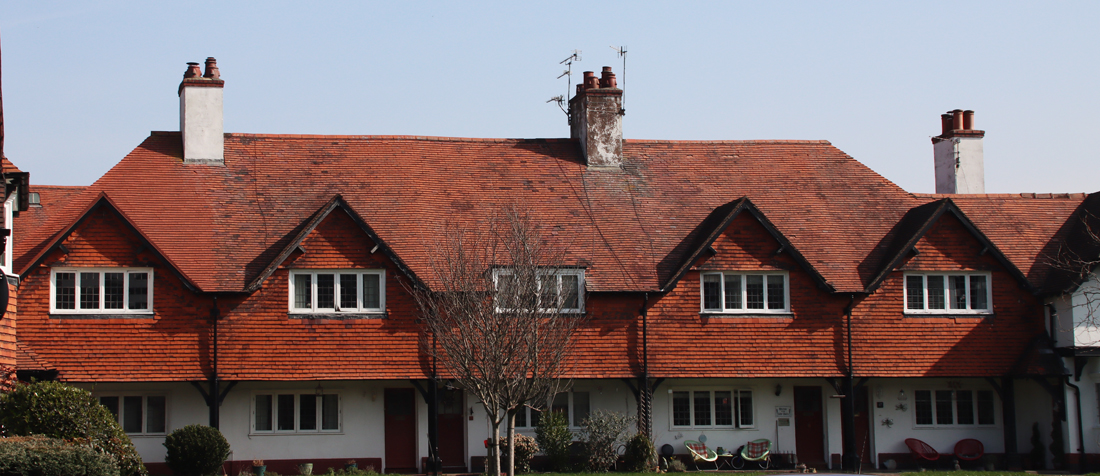
Park Road

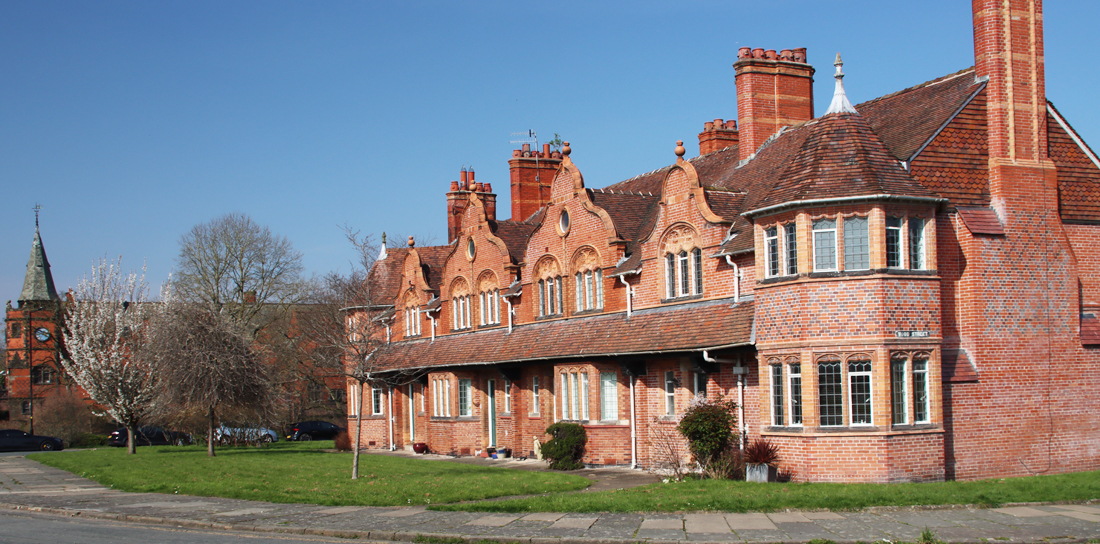
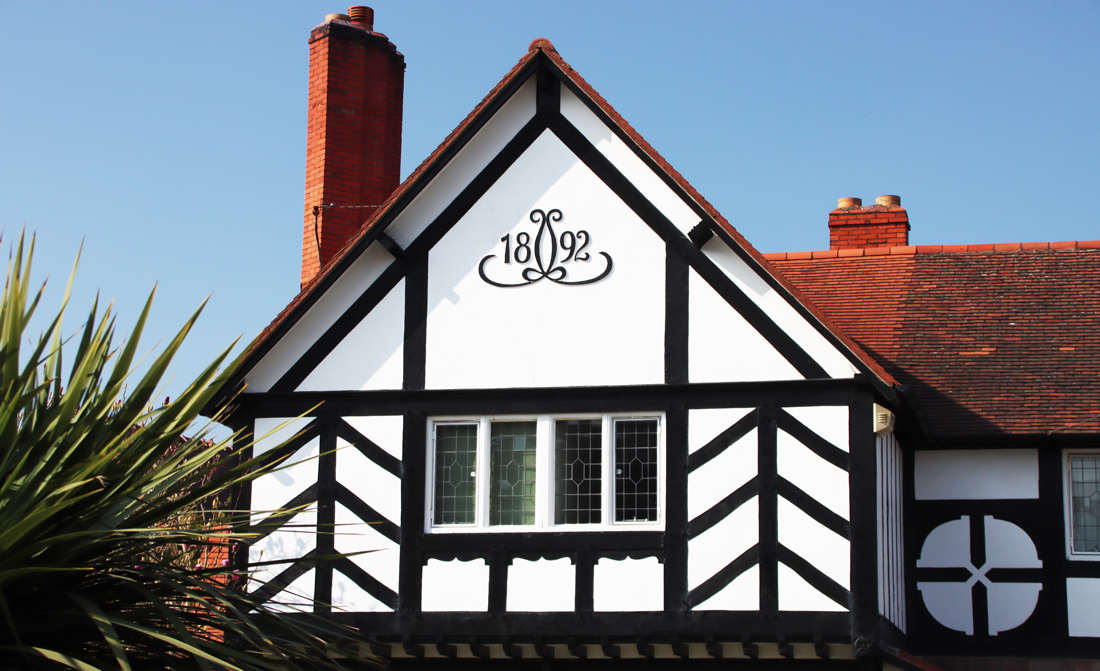
Park Road.  The first set at far left were by William Owen, 1892-4


Detail of the above picture

Wood Street by Grayson and Ould, 1895

Greendale Road by William and Segar Owen, 1894

Park Street, by Douglas and Fordham 1895

Lower Road, by C.H. Reilly, 1906

Bath Street, by Talbot 1895-97

3-9 Bridge Street by Douglas and Fordham

3-9 Bridge Street by Douglas and Fordham

Wood Street

Primrose Hill by Jonathan Simpson, 1899

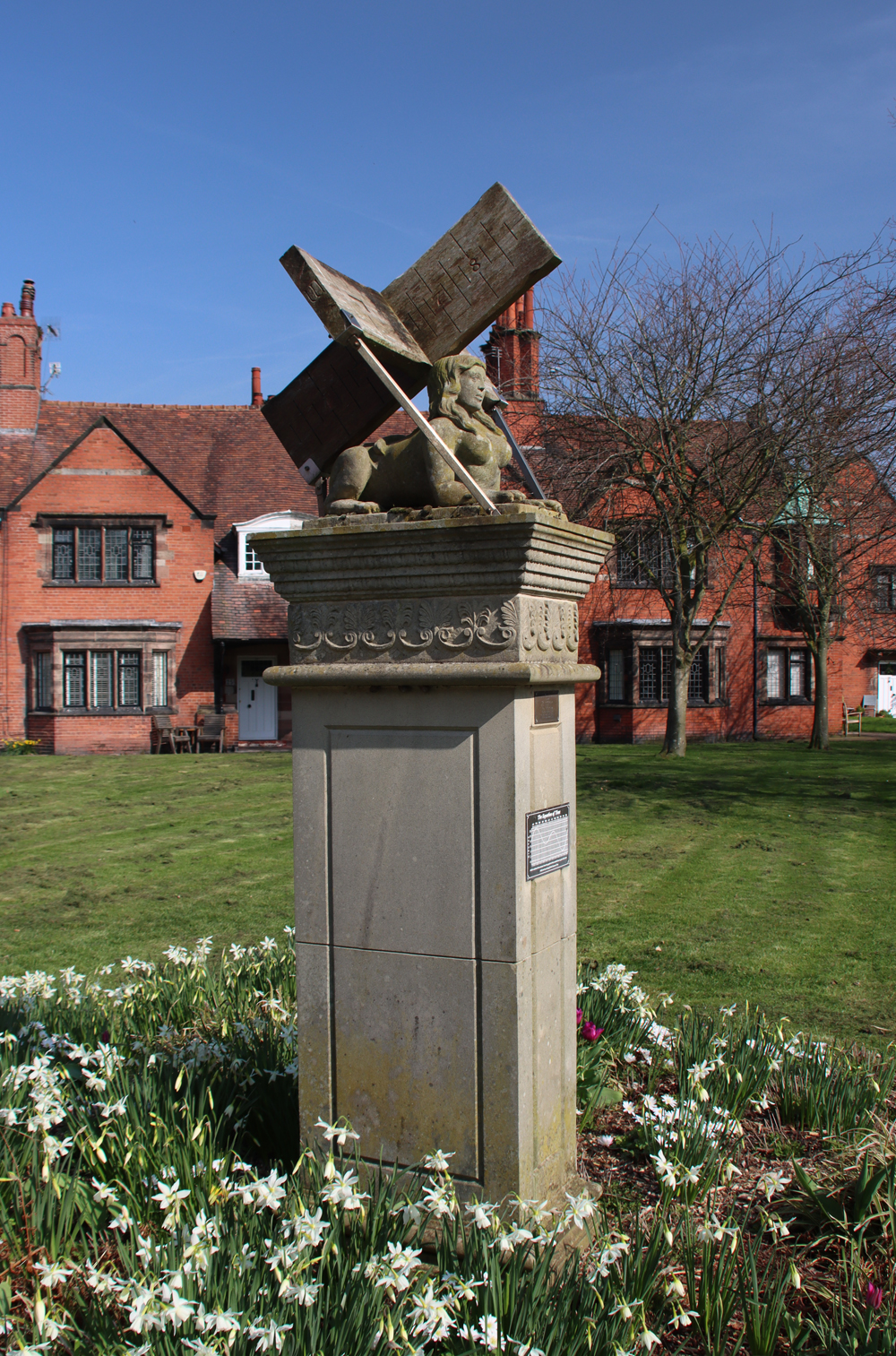
Port Sunlight's alternative sun dial

Port Sunlight’s alternative sun dial

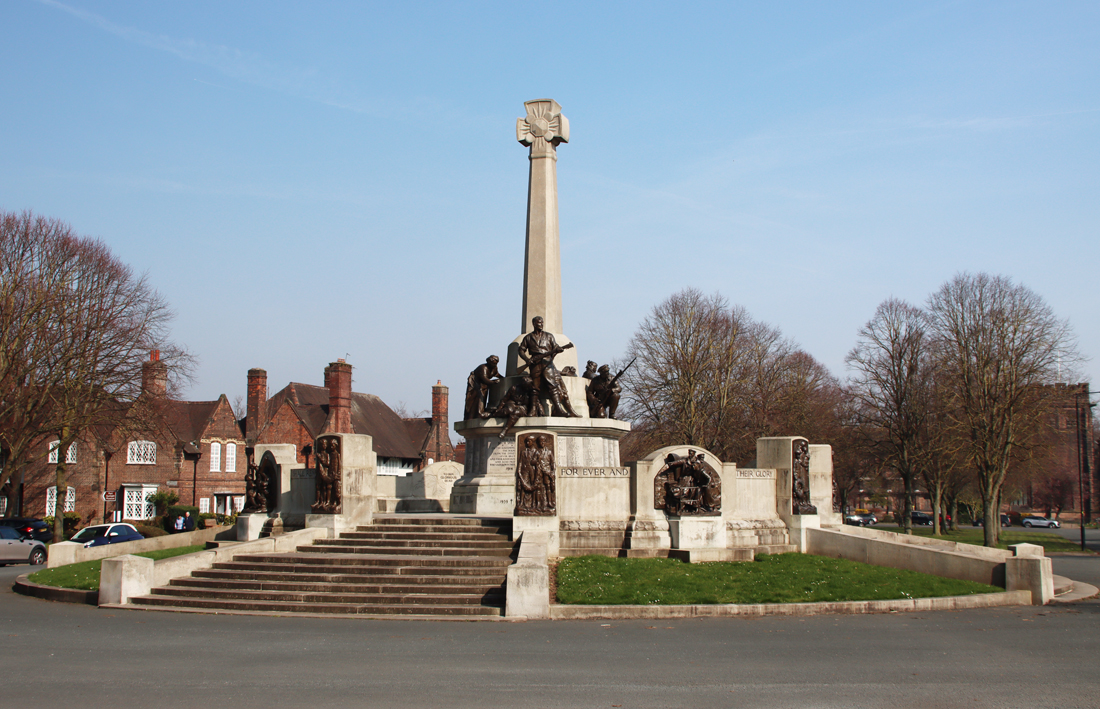
The war memorial is one of the unifying components of the village.  Built between 1919 and 1921, and designed by Sir William Goscombe John, a friend of Lever’s, its theme was defence of the home.  Inside the memorial is a copy of a book containing names of Port Sunlight residents and Lever Brothers employees worldwide who served in the forces during the First World War.

The War Memorial

The empty boating pond in front of the Lady Lever was not added until the 1930s.  In spite of several attempts to restore it to its former glory, the original construction of the pond, which used to include a fountain with a statue, was not sufficiently robust to survive the best part of a century, and solutions are now being sought to implement a long term repair to enable the pond to be re-filled and the statue and its fountain to be restored to their original positions.

The successful garden centre is on the site of the open air swimming pool near Port Sunlight railway station and the Gladstone Theatre, and is a rather good use of the space.  I daresay that Lord Leverhulme would have approved of something that combined commercial enterprise with a product that would bring pleasure in both the village and neighbouring areas.

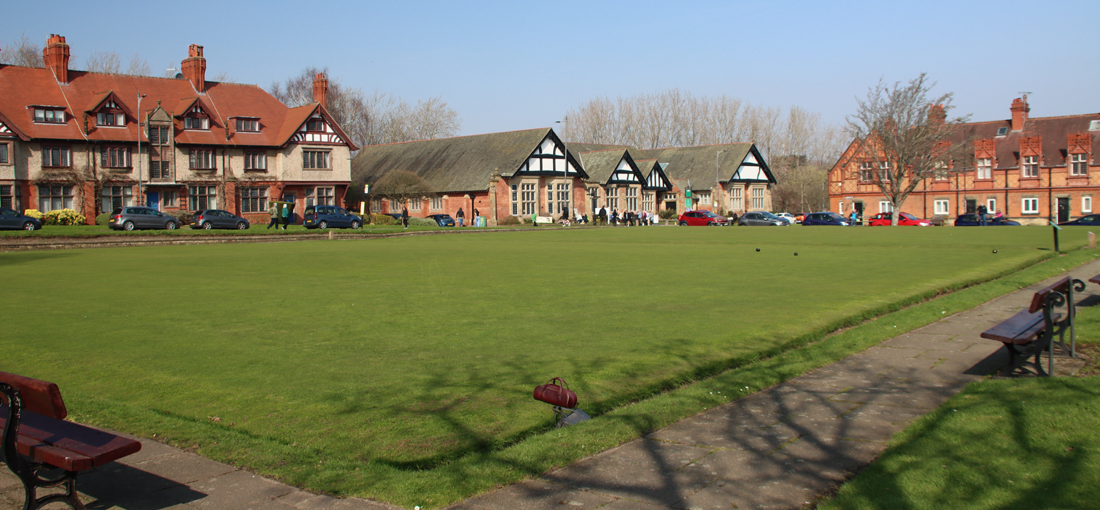
The bowling green with Hulme hall in the background

One of the two bowling greens, with Hulme hall in the background, Cross Street on the right and the 1890 William Owen buildings on Bolton Road to the left

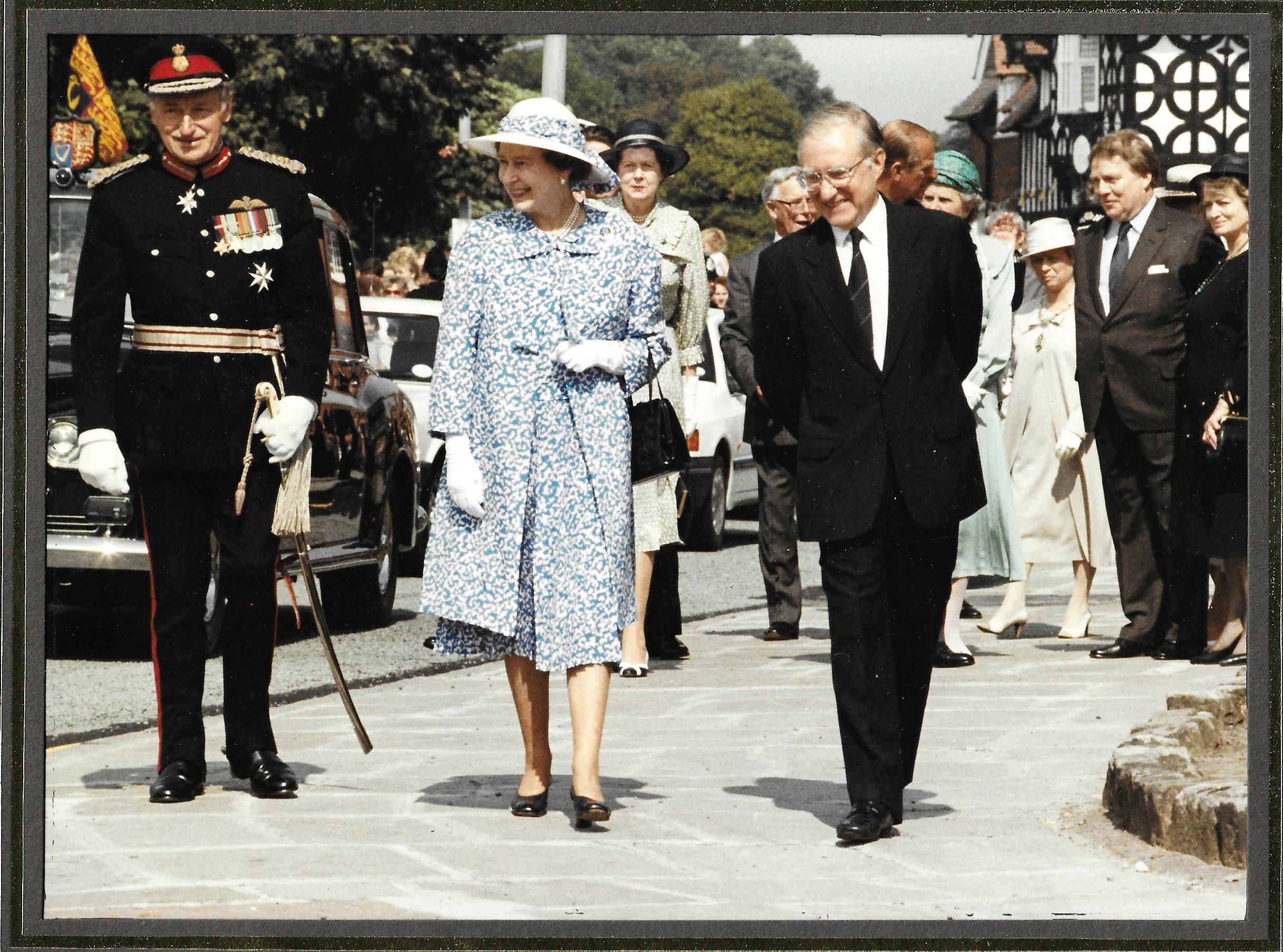
The Queen's visit to Port Sunlight in 1988 during a visit to celebrate the village's 100th birthday, with the then Managing Director of UML.

The Queen’s visit to Port Sunlight in 1988 during a visit to celebrate the village’s 100th birthday, with the then Managing Director of Unilever Merseyside Ltd (UML).

Sources:

Books

Hubbard, Edward and Michael Shippobottom 2019 (third edition). A Guide to Port Sunlight Village.  Liverpool University Press

MacQueen, A. 2004. The King of Sunlight. How William Lever Cleaned Up the World. Corgi.

Websites

Based in Churton
Lord Leverhulme’s multifarious collections at the Lady Lever Art Gallery in Port Sunlight, Wirral
https://wp.me/pcZwQK-70x

An Institutional History of Internal Communications in the UK
Domestos and Domestics: The Family Metaphor at Lever Brothers. By Joe Chick, August 2023
https://historyofinternalcomms.org/internal-communication-unilever-family/

National Museums Liverpool
Lady Lever Art Gallery
https://www.liverpoolmuseums.org.uk/lady-lever-art-gallery

Port Sunlight Village Trust
Home page
https://portsunlightvillage.com/
About Us
https://portsunlightvillage.com/about-us/
Renewing the Boating Pond
https://portsunlightvillage.com/renewing-the-boating-pond-project/
Racism, the Belgian Congo, and William Lever. Second edition, June 2022
https://portsunlightvillage.com/wp-content/uploads/2024/07/PSVT-Racism-the-Belgian-Congo-and-William-Lever-Booklet-July-2022.pdf

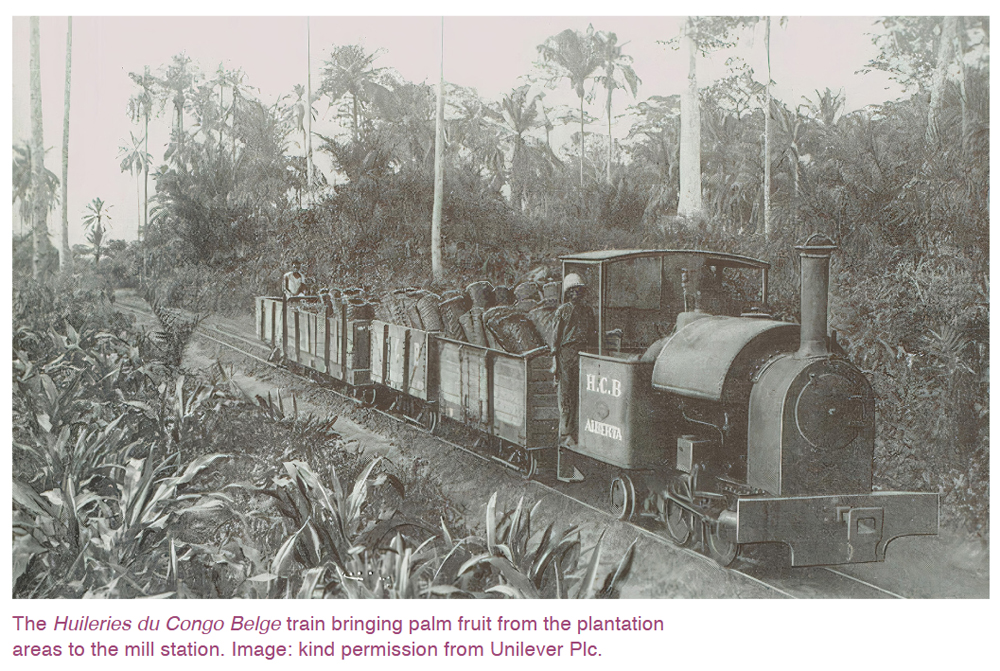
Lever Brothers in the Congo. Source: Port Sunlight Village Trust

Lever Brothers in the Congo. Source: Port Sunlight Village Trust

Unilever Archives
Port Sunlight Village booklet and guide (PDF)
https://archives-unilever.com/media/_file/website-documents/port%20sunlight%20village%20booklet.pdf

Wikipedia
Listed Buildings in Port Sunlight (list with photographs)
https://en.wikipedia.org/wiki/Listed_buildings_in_Port_Sunlight


Tourist map of some of the main non-residential buildings of Port Sunlight. Source and full-sized version: Port Sunlight Village Trust


Objects of privilege in the Ridgway Silver Gallery at the Grosvenor Museum, Chester
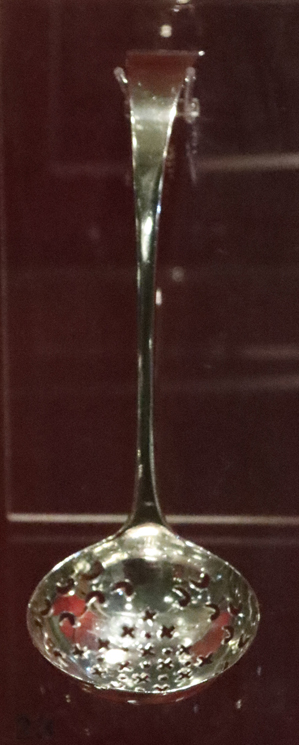
Sugar sifter spoon. George Walker I, Chester. 1794-95. 1988.53

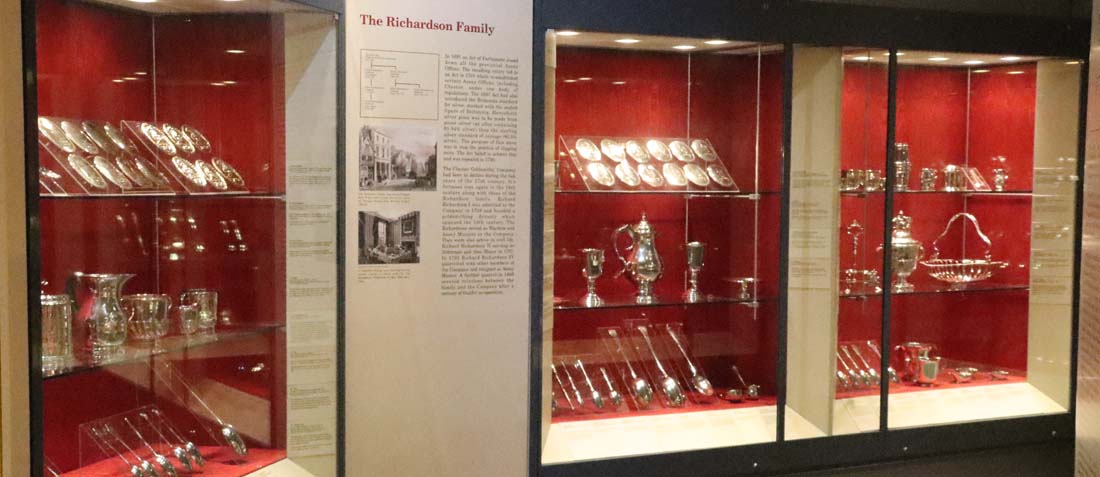
Silver is one of those materials that can be sublime in its simplicity, relying on the brilliance of the fabric, the purity of shape to create beauty and elegance in functional items.  It can also be elaborately ornate, relying on layers of opulent, showy adornment for its impact and to make its ostentatiously unsubtle point.  The Grosvenor Museum in Chester displays both extremes and everything in between, in its Ridgway Silver Gallery.  The Ridgway Gallery is dedicated both to items of silver that were made in Chester and those that were purchased elsewhere, mainly in London, for use in Chester.

Chester had a long tradition of silver-working at least from the 13th century onwards.  The Chester Goldsmiths Co., registered just before the Dissolution in 1531, were the key authority for the city goldsmiths at that time, laying down standards and rules for production, assaying, and marking objects.  Assaying is a quality control method by which the content of silver in an item is determined, and confirms its purity, integrity, validity, which in turn offered guarantees of value for purchasers.  In the 17th century there was a decline in production by Chester goldsmiths as London grew to prominence.  This was aggravated by the Civil War which raged around Chester’s city walls.

In spite of some very rocky years, the 18th century marked an upturn in the fortune of Chester silver production, described by Peter Boughton as its heyday.  Two family dynasties, the Richardsons and Lowes, became synonymous with locally produced silver.  After 1884 Chester’s Goss Street Assay Office was one of only four in Britain that was still active.  This was only closed in 1962, by an Act of Parliament.

Silver has always been a prestige item, intended for conspicuous display.  Even the most modest items would have been unaffordable for most of Chester’s population, so the market for silver was a clear indication of the prosperity of the city’s elite.  Wealthy individuals and families, as well as the city corporations, institutions and establishments were all affluent consumers of Chester silver, purchasing it to demonstrate both their personal status and the prestige of local enterprises.

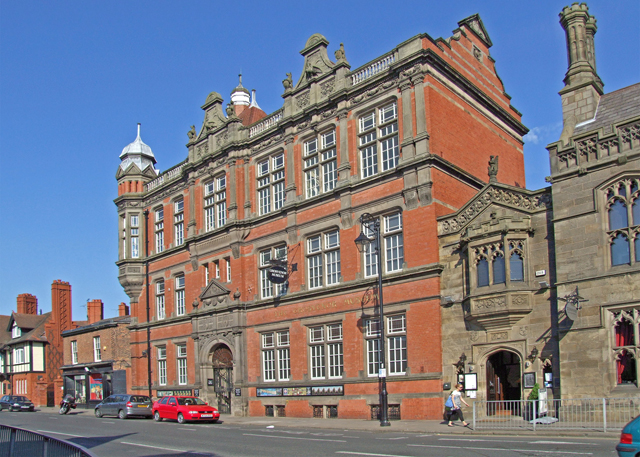
The Grosvenor Museum. Source: Geograph (1335188)

The Grosvenor Museum was founded in 1885-6 but it was not until the 1950s that it received the first pieces that formed its earliest display of silver.  In 1951 the Trustees of Chester Municipal Charities placed their collection of silver on long term loan.  The following year the museum began to acquire items of its own.  The earliest goldsmith represented in the Museum’s collection is William Mutton in the 16th century. The first exhibition of Chester silver was held to celebrate the Festival of Britain in 1951, which was held at the County Hall.  The present gallery was opened in 1992 by the Prince of Wales.  It was named after Canon Maurice Ridgway, the Vicar of Bowdon, who contributed a major work to the study of Chester silver with his 1968 Chester Goldsmiths from Early Times to 1726.  In 2000, the museum published Peter Boughton’s Catalogue of Silver in the Grosvenor Museum.

Interestingly, most of the more elegant and arguably the most aesthetically rewarding examples in the museum’s collection were earlier and were made in Chester, whilst the more ostentatious and elaborate pieces, including racing cups and church plate, were made in London and elsewhere, and purchased by local institutions.


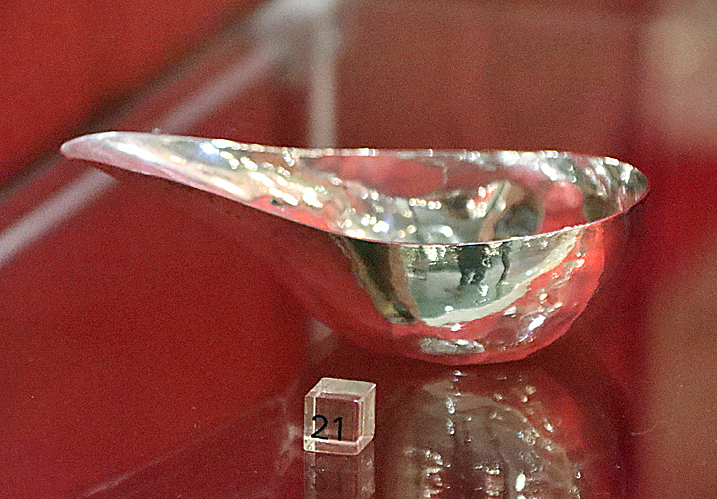
Silver pap boat by George Walker I of Chester, dating to 1771-2. My photo. Catalogue number 39, p.72-74

A stunning piece that helps to demonstrate the skills that go into the less elaborate pieces is the small pap boat made in Chester by George Walker I, dating to 1771-2.  It is made of sterling silver and is 12.3cm long.  Pap, according to Peter Boughton, is a “mix of stale white breadcrumbs or flower, cooked to a sloppy mush in water, with the possible addition of a little wine, beer, beef-stock or milk” and was fed to infants as young as three months to aid with weaning them onto solids. It sounds truly appalling. It was also fed to invalids, poor things.  By holding the pap cup in the palm of the hand, it was easy to place the feeding end into the mouth and, by tipping it gently, much easier to control delivery of the content than using a handled jug.  Fifteen other Chester pap boats are known.  Due to the lack of fussy decoration, the shape of the jug can be admired without distraction, and the absence of anywhere to hide in the crafting of the object allows the goldsmith’s mastery of the art to be appreciated.


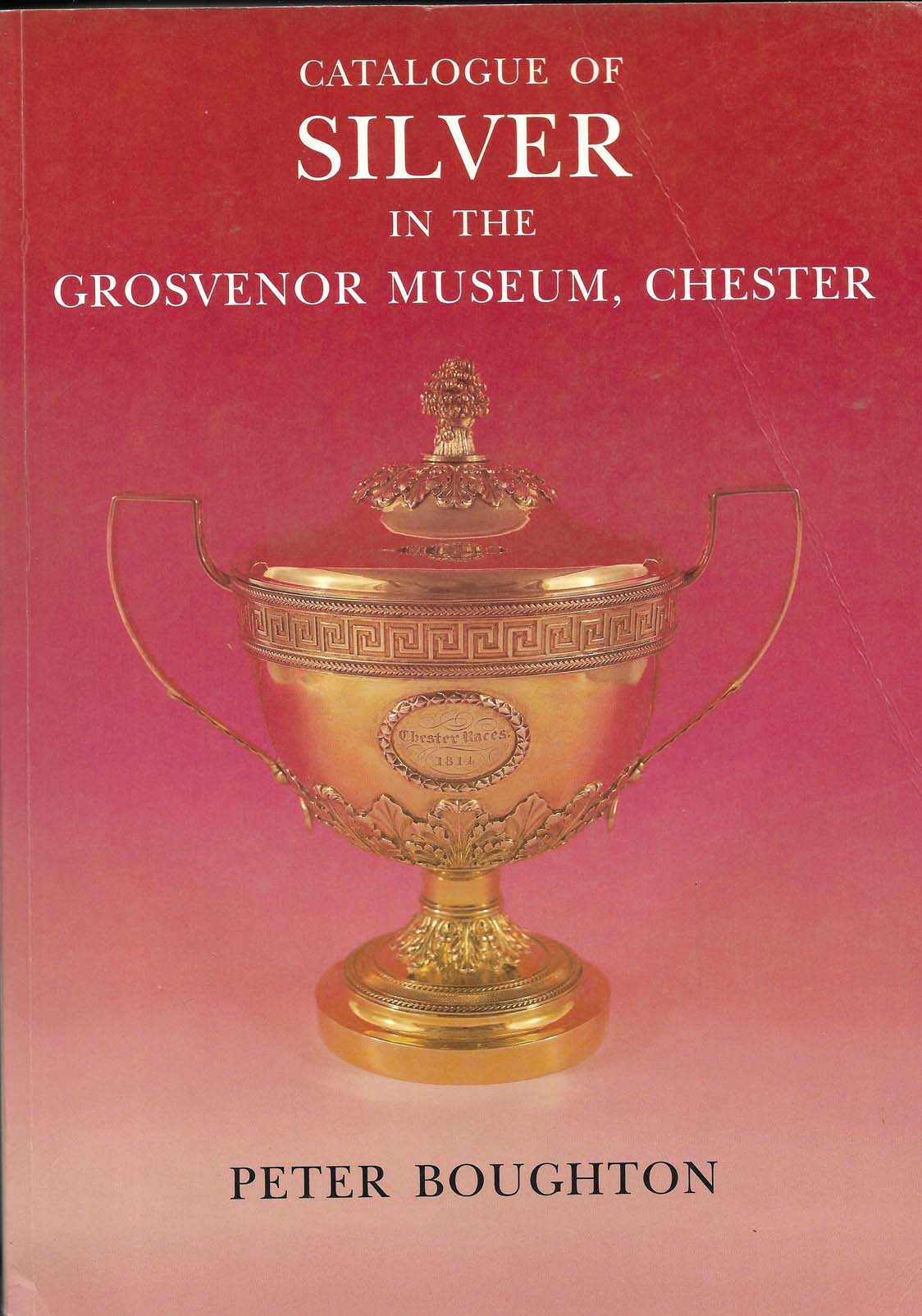
Peter Boughton’s Catalogue of Silver in the Grosvenor Museum. Chester. Phillimore., 2000. The cover image is a silver-covered cup made for the Chester races by Peter and William Bateman  of London 1813-4, (no.96 in the Catalogue)

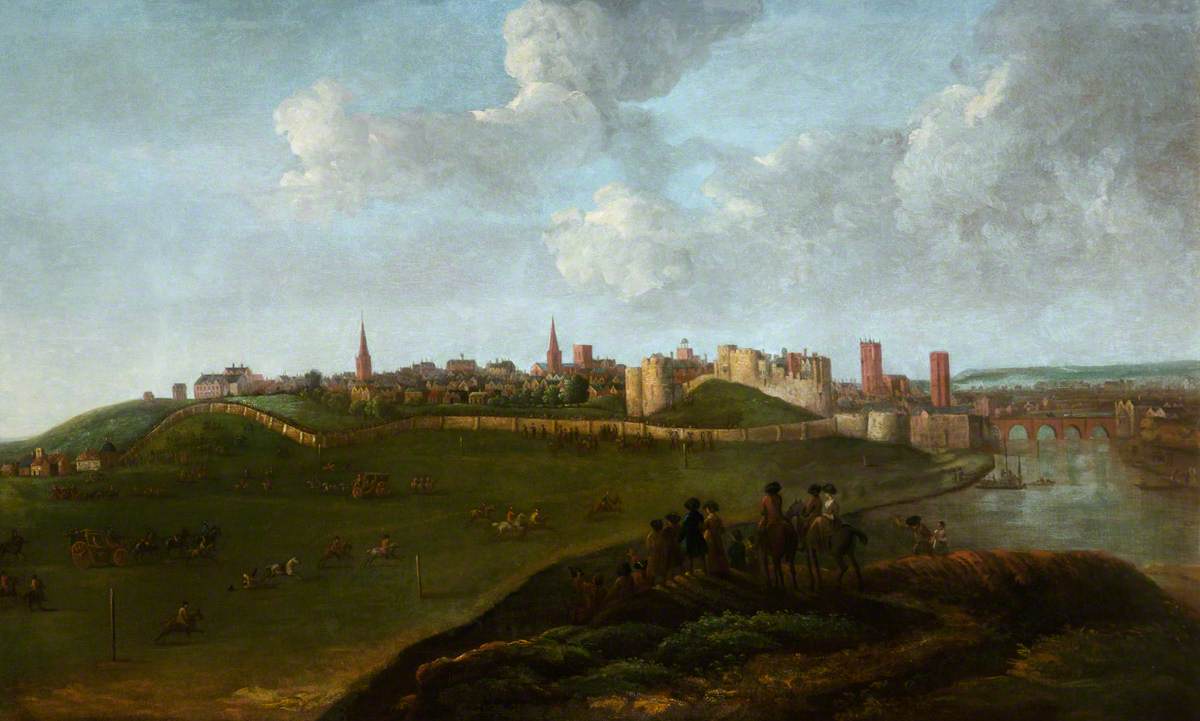
Of the many elaborate and ornate pieces in the Ridgway Gallery is the silver-gilt cup, with a cover, made for the Chester races by Peter and William Bateman  of London 1813-4, (no.96 in the Catalogue).  It represents an item that was purchased for use in Chester rather than made by one of the local goldsmiths.  Horse racing on Chester’s Roodee has been taking place since the early 16th century, with the earliest known painting of racing on the Roodee dating to the earlier 18th century, by Peter Tillemans.  Even today competition winners are awarded elaborate trophies or cups, often highly ornate, usually in silver, sometimes gilded, recognizing a significant sporting achievement with a substantial and expensive display of splendour.  This was the object chosen for the cover of Peter Boughton’s Catalogue of Silver in the Grosvenor Museum, published in 2000.  Its Neoclassical design sits somewhere between the elegant simplicity of the unadorned items and the more ornamented items that are virtually encrusted with decorative emblems and motifs.  It was made for the second Earl Grosvenor, who paid £70.00 for it, and on the opposite side from “Chester Races 1814,” shown on the catalogue cover, shows his heraldic device.  As well as emulating a Classical shape, it also makes use of Classical motifs.  The Bateman family of London had a long history of providing racing cups for the Chester races, and this is stylistically very similar to other trophies that they produced for Chester.

Peter Tillemans: Chester and the Roodee c.1710–1734, showing a horse race in action. Grosvenor Museum, via ArtWork.org


1755-6 (catalogue no.27) by Richard Richardson II, Chester
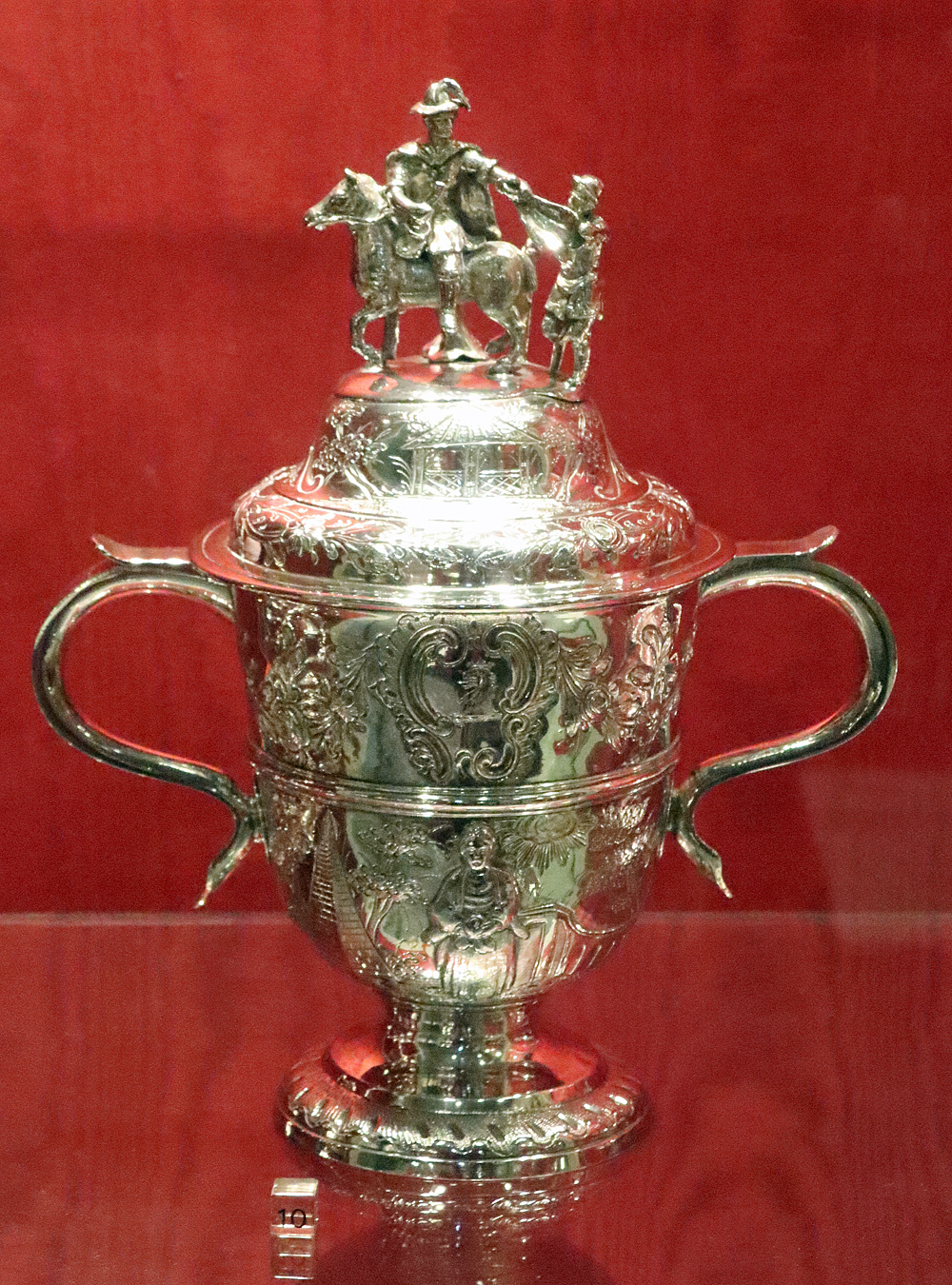
Another twin-handled ornate cup is the  St Martin drinking cup 1755-6 (catalogue no.27) by Richard Richardson II, Chester.  It is a rather bizarre mixture of decorative concepts. It’s key theme is the cast figure of St Martin of Tours on horseback, mounted on the lid.  Boughton comments that the use of cast figures is rare, and was confined to particularly elaborate vessels.  Although St Martin (c.316/336 – 397) became the third Bishop of Tours, be was born in Hungary, and served in the Roman cavalry in Gaul (modern France).  He performed a number of miracles and acts of charity.  The scene on the lid shows one of his best known charitable acts, similar in tone to the Good Samaritan, where he uses his sword (the top half missing on this piece) to cut his cloak in half to give to a freezing beggar dressed only in rags. As he slept that night, St Martin dreamed that Christ appeared before him wearing that section of the cloak that he had donated to the beggar.  St Martin left the army to become a follower of Hilary, the Bishop of Poitiers in southern France, and went on to found at least one monastery.

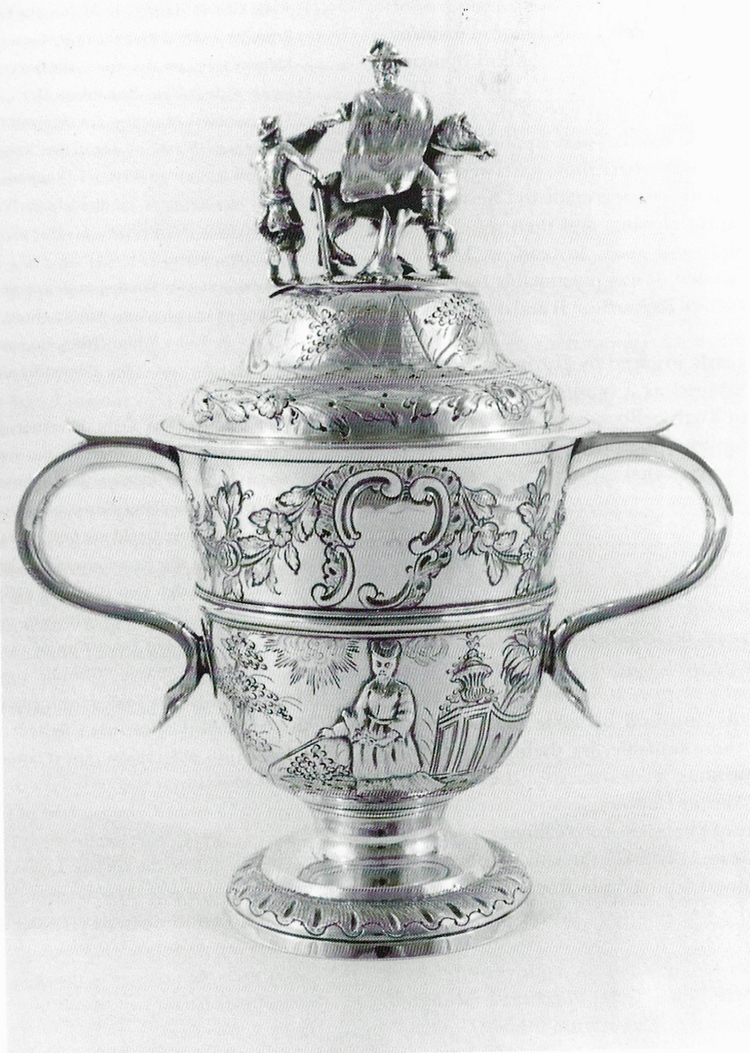
The other side of the St Martins Cup. Source: Peter Boughton's Catalogue of Silver (catalogue no.27), p.59

The St Martin’s Cup, showing the other side from the one above.  Source: Catalogue of Silver in the Grosvenor Museum, Chester. By Peter Boughton, p. 59, catalogue number 27

The main body of the vessel is a good example of fine chasing (the working of the silver to produce relief decoration).  Boughton  says that the chasing is the equal of examples found in contemporary London:  “employing a wide range of textures from very find matting on an even ground to vigorous punching over an irregular embossed surface.”  The style of the cup is derived from rococo designs but the body decoration is heavily influenced by Chinese porcelain and ornament, with obviously oriental themes combined with contemporary emblems from the decorative arts in the bottom half of the cup around the entire body of the vessel.  On one side a lady sits flanked by two cherry blossom trees and a tall slender pyramid or obelisk, with flowers in her lap, shown above; on the other, a figure sits with fishing rod in one hand, a sprig of cherry blossom in the other, and an urn set back to the rear right.  Above these scenes in the upper register are two ornamental cartouches, designed to house crests, of which one is empty and the other has an obviously later lion’s head crest, probably dating to the 19th century, shown on the above photograph.  The only parts of the cup that have not received some form of decoration are the two handles, which are beautifully shaped but plain, apart from thumb rests and the sinuous, tapering “ducks-head” ends.  The lid shows a Chinese style pavilion on one side, and another tall slender pyramid or obelisk on the other.  There is no connection between St Martin and east Asia, so the themes are presumably purely decorative.  The overall impact is remarkable, demonstrating the artist’s skill and the purchaser’s ambitions to own a unique, highly noticeable item that would surely draw the attention and comment of visitors.  Its style and themes make it unique in Chester.  Interestingly, it is thought that although is has the mark of Richard Richardson II on the base, it may have been purchased in London and the marked when it arrived in Chester.


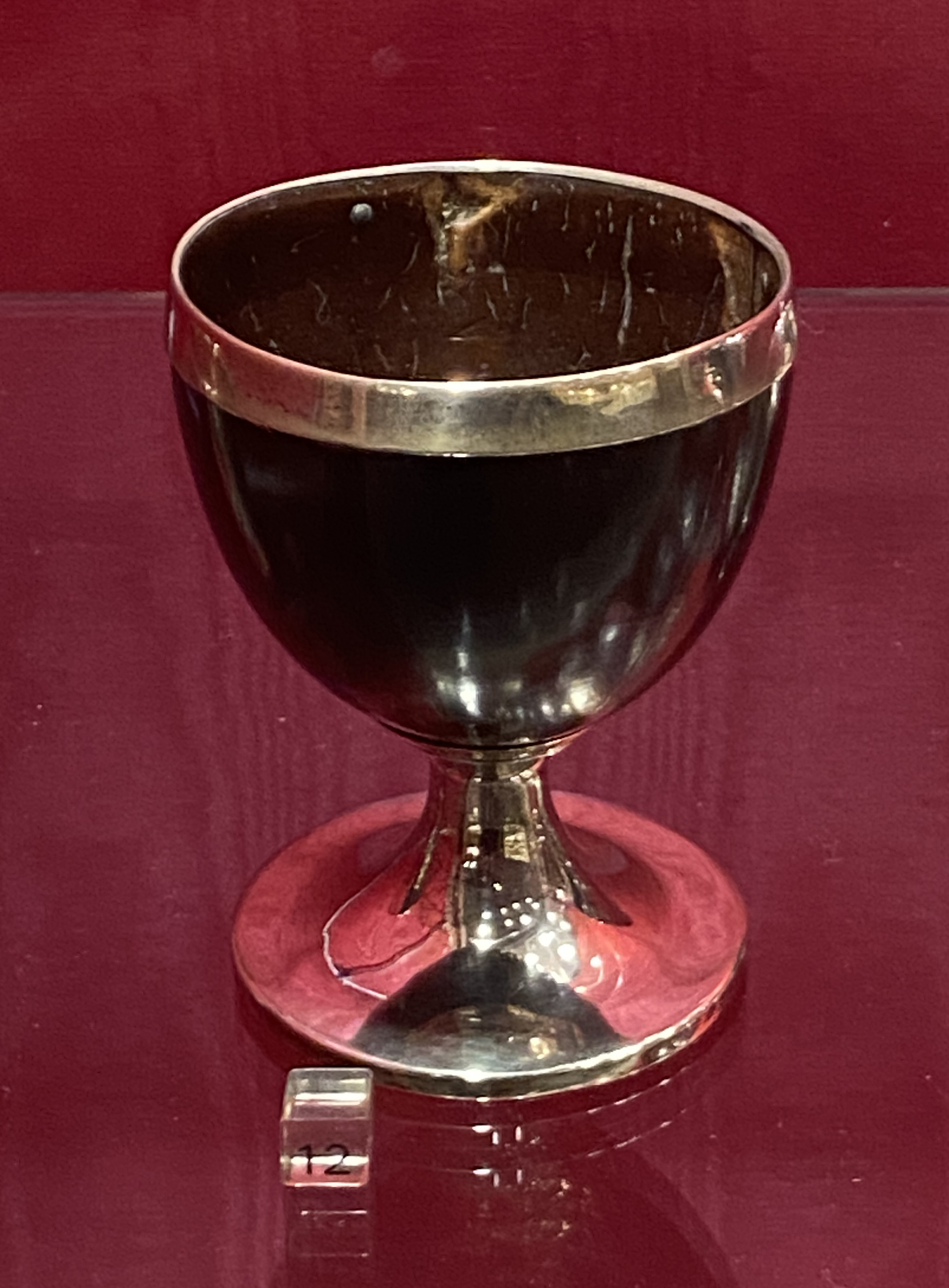
Coconut standing cup made by George Lowe I, dating to c.1807-17. My photo. Catalogue no.59, p.94-96

One of the most curious of the objects in the gallery is a remarkable glossy black goblet-style cup with a silver rim and a silver stem and base.  The 11cm tall black “standing cup” is perhaps one of the more surprising objects in the Ridgway Silver Gallery in Chester’s Grosvenor Museum.  The glossy section of the cup, looking like opaque black glass, is actually half a coconut.  It relies for its visual impact not on ornate decoration, but on the quality and texture of its materials, the high polish, and its satisfyingly rounded profile.  It was made by George Lowe I, whose mark appears on the base, and dates to c.1807-17.  Lowe originally had a business on Watergate Street and in 1803 moved to new premises in Bridge Street. The Lowes passed the trade from father to son over six generations.  According to Peter Boughton’s catalogue (pages 94-6), the coconut was fastened to the stem with a single brass screw and washer.  As well as being decorative, the silver rim protects the brittle top of the coconut.  There is a letter “B” engraved on the opposite side of the rim, but it is not known today what this originally signified.

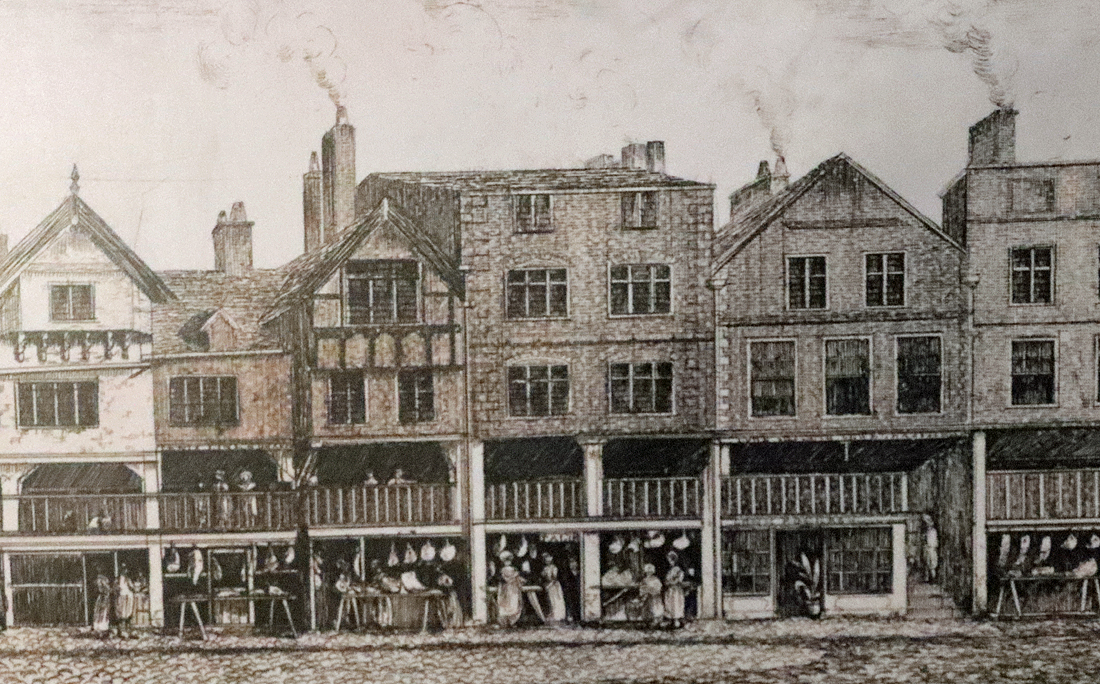
The Lowe family shop was on Bridge Street Row East, the second from the right in this 1820 print by George Bateman. Photograph on one of the interpretation boards in the Ridgway Gallery

Using coconuts to make novelty drinking vessels was not uncommon.  Once the fibres were removed from the exterior, they could be scraped to a  smooth surface and then polished to provide the high gloss seen here.  As coconut is not porous, and can be worked until very thin, it was perfect as an imaginative alternative to glass, with an unusual texture and appearance, providing an instant talking point.  Although records indicate that Lowe made other coconut cups, this is the sole survivor, but one of his other examples sold for £1 5s 0d (which equates, in the National Archives Currency Converter, to around £58.00 today).  Examples made by other manufacturers in Chester were recorded, with Boughton’s catalogue listing twenty four examples.
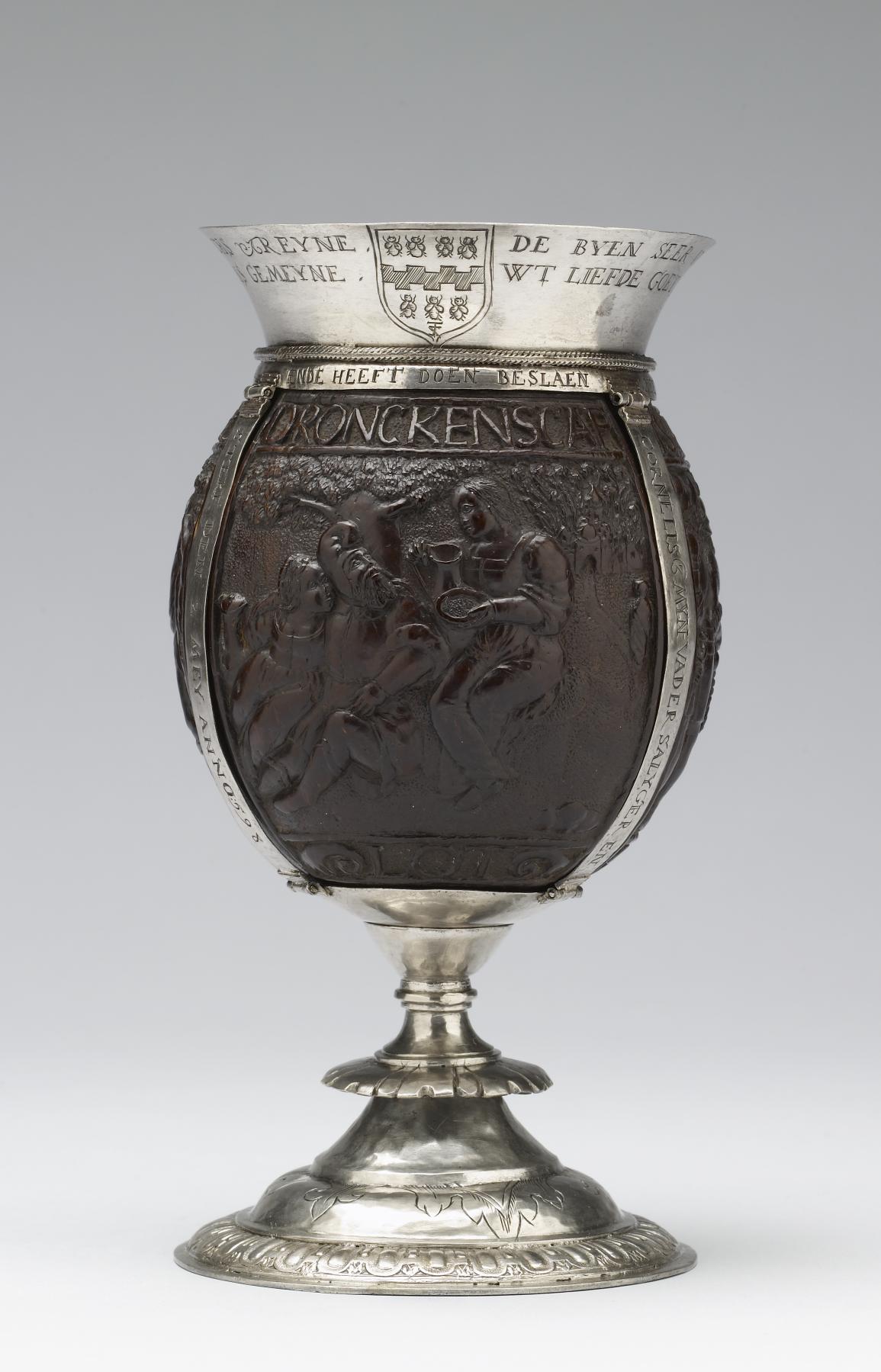
Coconut cup by Cornelis de Bye in 1598 in the Walters Museum (number 571046).  Source: Wikipedia

The earliest known record of a coconut cup dates from 1259, but the earliest surviving examples date from the 15th century, when coconut was thought to have magical, supernatural properties, and due to its rareness was a prestige material that made it a good partner for silver.  As shipping and trade made coconuts more accessible and prices came down, many more continued to be  made.  In Europe coconuts were commonly covered with ornament and scenes, much like carved wood, showing great skill, but opting for a completely different type of aesthetic preference.  The extravagant example to the right is by Cornelis de Bye, dating to 1598.  The inscription in Dutch, “Drunkenness is the root of all evil,” is accompanied by Old Testament scenes.


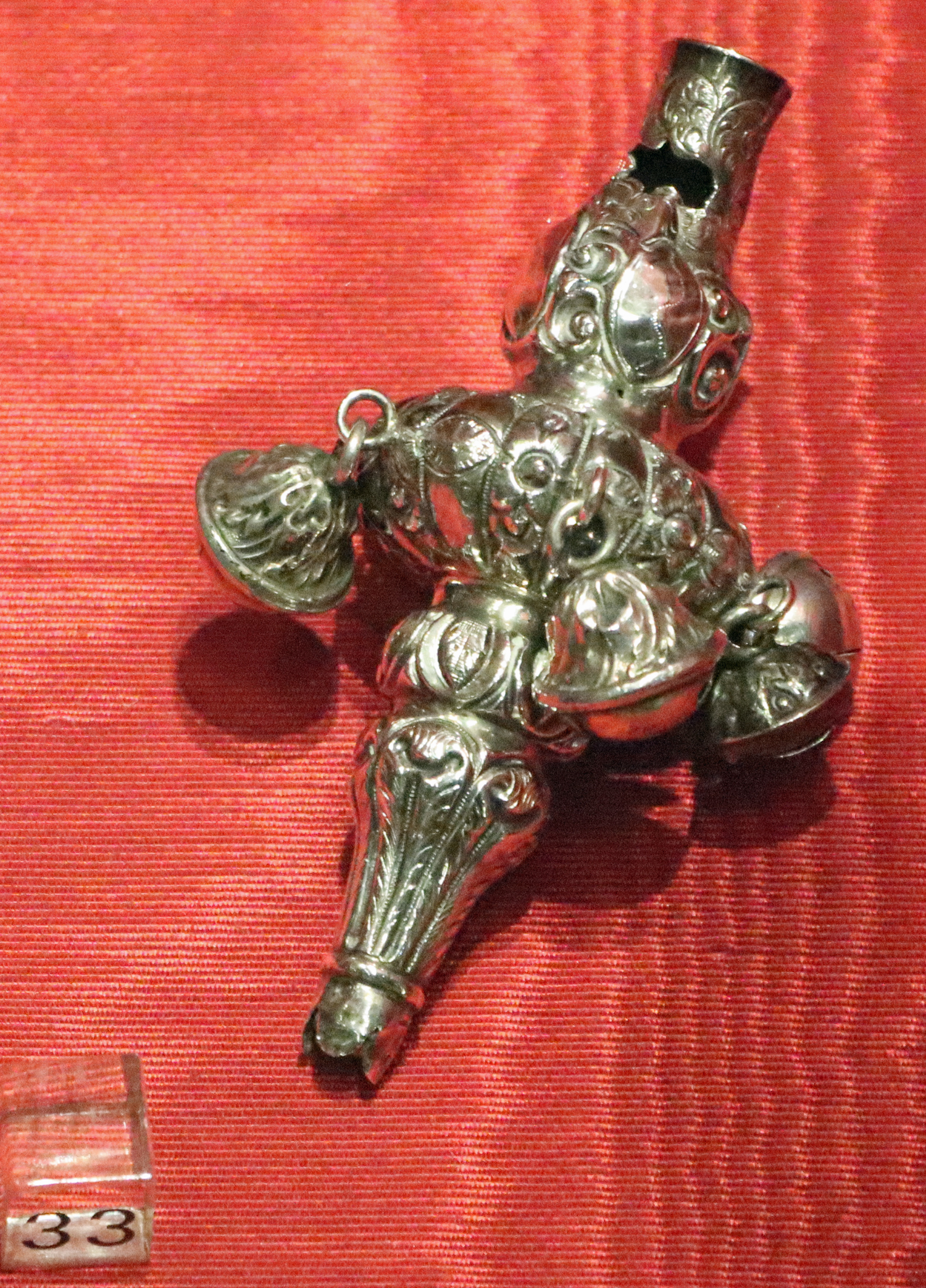
A highly ornate but diminutive item is a baby’s rattle combined with a whistle, bells and, before it was lost, a stick of coral on which the baby could chew, protruding from the socket at the base.  It was placed around the baby’s neck on a ribbon, both a toy and a teething device.  It was made by John Twemlow of Chester, in 1828-29.  Confined mainly to the home, it is equally impressive as an example of conspicuous wealth as the above cups.


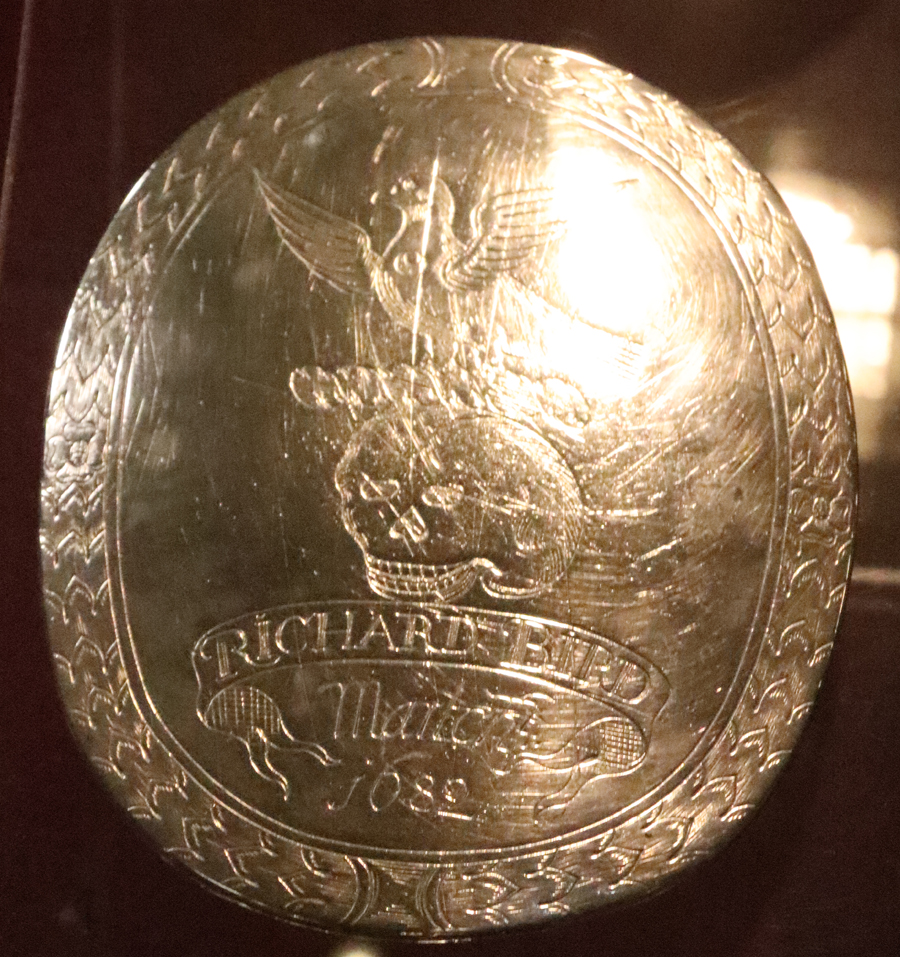
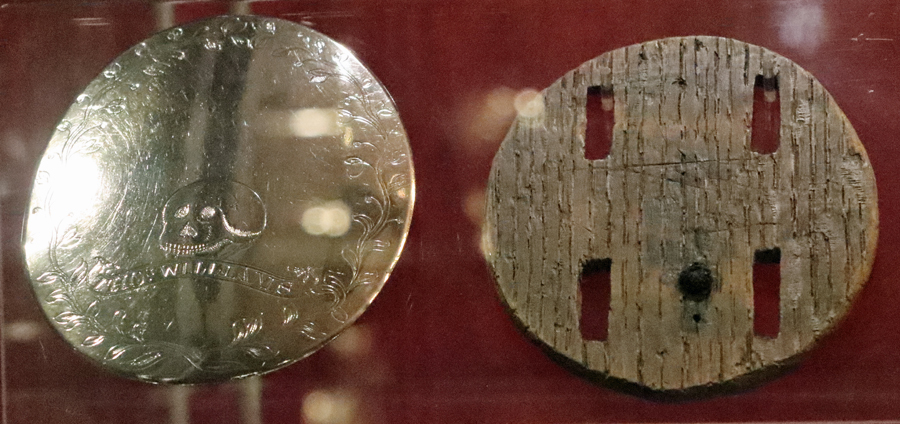
St John the Baptist Hospital badge from 1682

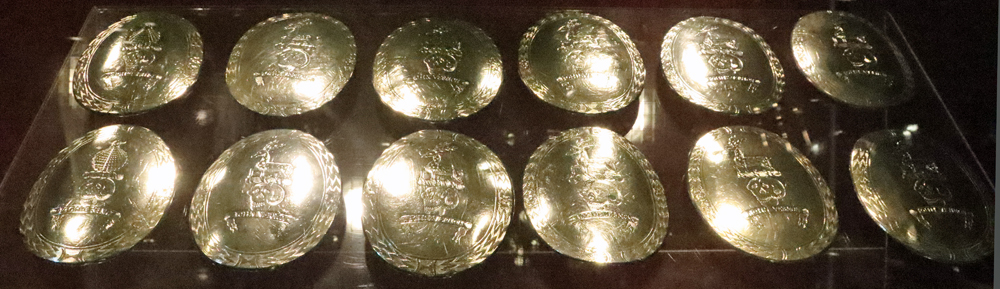
Finally, one of my favourite object groups in the gallery is one about which I can find out very little information:  the large oval hospital badges, engraved with specific motifs and legends and often featuring skulls as reminders of human mortality.   Apologies for the photographs, which are the best of several attempts at photographing several of the badges.  Unfortunately there is no information about the badges in Boughton’s catalogue of the museum’s silver, because they were only loaned to the museum and are therefore not included.  If you have any additional information do get in touch.  Although hospital badges are very familiar from modern nursing, where they have been traditionally awarded to nursing staff for both professional achievements and for association with particular hospitals, the 17 to 18th century ones on display in the Ridgway Gallery were awarded not to nursing staff or hospital governors but to almsmen, those who lived in almshouses and other housing provided by hospitals and religious institutions, often sponsored by named benefactors.  Almsmen and almswomen were awarded places in almshouses on the basis of certain stringent criteria, and were then responsible for certain duties within the almshouses.  The hospital and its buildings were intentionally demolished during the Siege of Chester (1644-1646) to prevent them walls being used as cover by the Parliamentarians, following which Oliver Cromwell put its reconstruction into the hands of the newly founded Chester Corporation.  In 1714 the hospital buildings were ordered to be taken down and rebuilt, creating today’s Bluecoat Building and associated structures.
St John the Baptist Hospital badge by Thomas Maddock, 1736-37

On the examples in the Ridgway Gallery, the large oval almsmen badge disks, held onto clothing by use of a wooden attachment at the rear, commemorate benefactors who provided alms via the Hospital of St John in Chester, which was located outside the Northgate.  At least five of those on display from the 17th century have the name Richard Bird inscribed on them in large letters, the name of the benefactor, together with the year 1682. The 17th century ones date to 1682, whilst the one with the wooden backing also shown here was made by goldsmith Thomas Maddock (who was mayor in 1744-5) and dates to 1736-37.  The badges were made during a period of great change for the hospital and its dependents.


Walking into the Ridgway Silver Gallery can be a bit overwhelming due to the sheer amount of lighting, polished silver, reflective surfaces and luxuriant red backgrounds, and it can be difficult to know where to start, but the interpretation panels and labelling are excellent, Peter Boughton’s catalogue is provided on a shelf for perusal, and there are some fascinating individual objects.  From the elaborate and ornate to the elegantly minimalist there is something for everyone.

Visiting details are available on the Grosvenor Museum and Art Gallery here.


Sources:

The detailed Grosvenor Museum interpretation panels in the Ridgway Silver Gallery offer an excellent source of information.

Books and papers

Boughton, Peter 2000. Catalogue of Silver in the Grosvenor Museum.  Phillimore.

Ridgway, Maurice 1968.  Chester Goldsmiths from Early Times to 1726John Sherratt & Son Ltd
Stewart-Brown, R. 1926. The Hospital of St John at Chester. The Historic Society of Lancashire and Shire, vol. 78, 1926, p.66-106
https://www.hslc.org.uk/wp-content/uploads/2017/06/78-6-Stewart-Brown.pdf

Websites

Great British Life
Inside the historic almshouses in Chester and Nantwich, 25th February 2025, by Joanne Goodwin
https://www.greatbritishlife.co.uk/magazines/cheshire/24884488.inside-historic-almshouses-chester-nantwich/ 


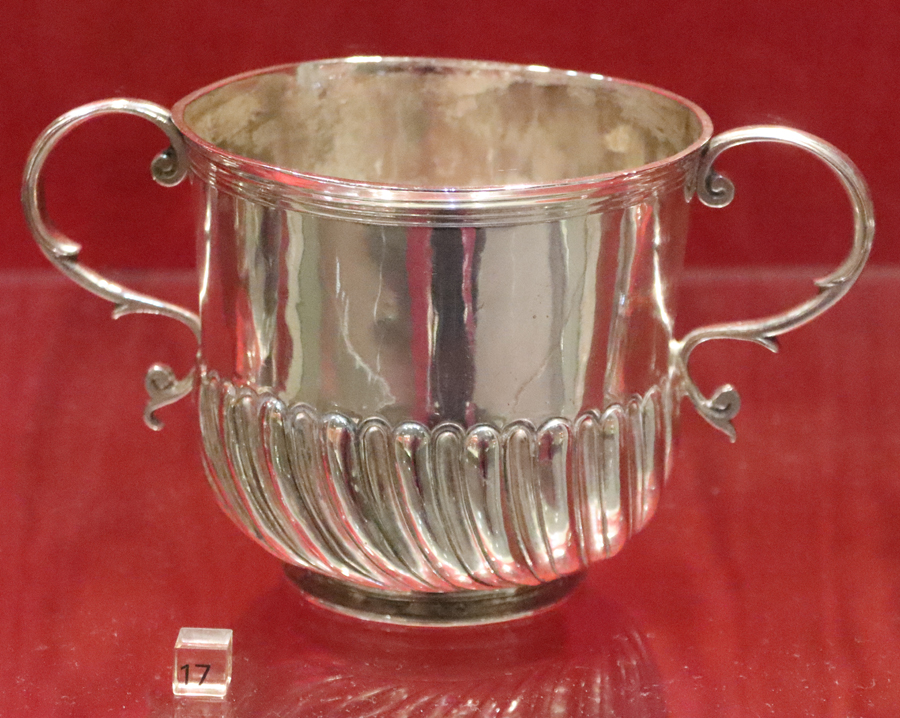
Thomas Robinson two-handled silver cup

Sterling silver cup by Thomas Robinson, 1690-92, Boughton catalogue number 5. The base is chased with alternate alternate spiral fluting and gadrooning, with two ornate handles, but the upper part of the body is plain and shows off the reflective surface of the vessel. Cups like this were used for caudle, a spiced mixture of alcohol (wine, ale or brandy) and gruel.  The balance between un-ornamented surface and the gently sweeping decorative features has particular elegance.

Walking the history of Chester’s canals, from the river Dee to Boughton #2 – The Walk

This post has been divided into two. Part 1, already posted here, looks at some of the history of the Chester city canals, in brief. Part 2 is a mainly photographic account following a walk along the canals from the point where the river Dee connects to the canal network to just beyond Tarvin Bridge.  Part of this was once the Chester Canal, which then became the Ellesmere and Chester Canal, as two different systems joined up with the rest of the canal network, and finally became the Shropshire Union Canal, the name by which it is known today.
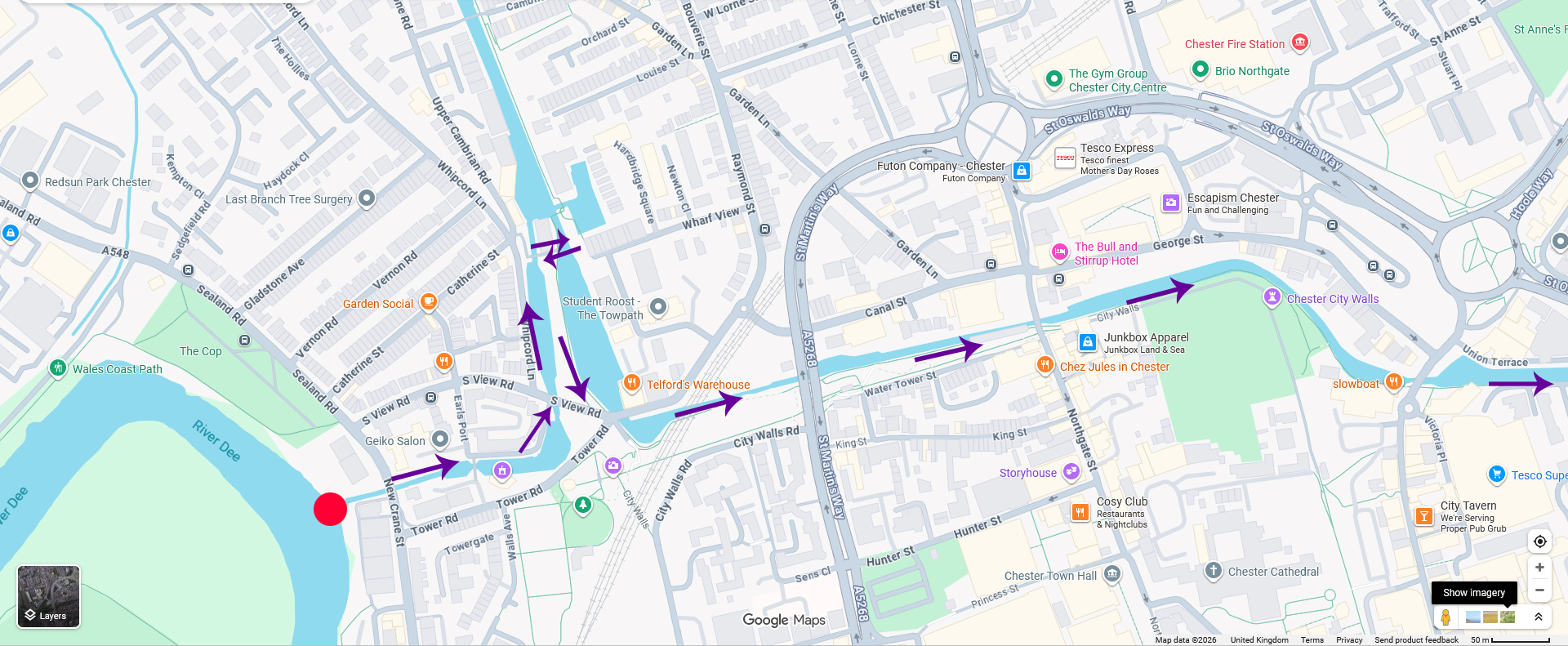
Map of the first part of the canal route

Map of the first part of the canal route. The start point is marked by the red dot.  The rest of the route follows the canal as far as the Chester Boughton Hall Cricket Club

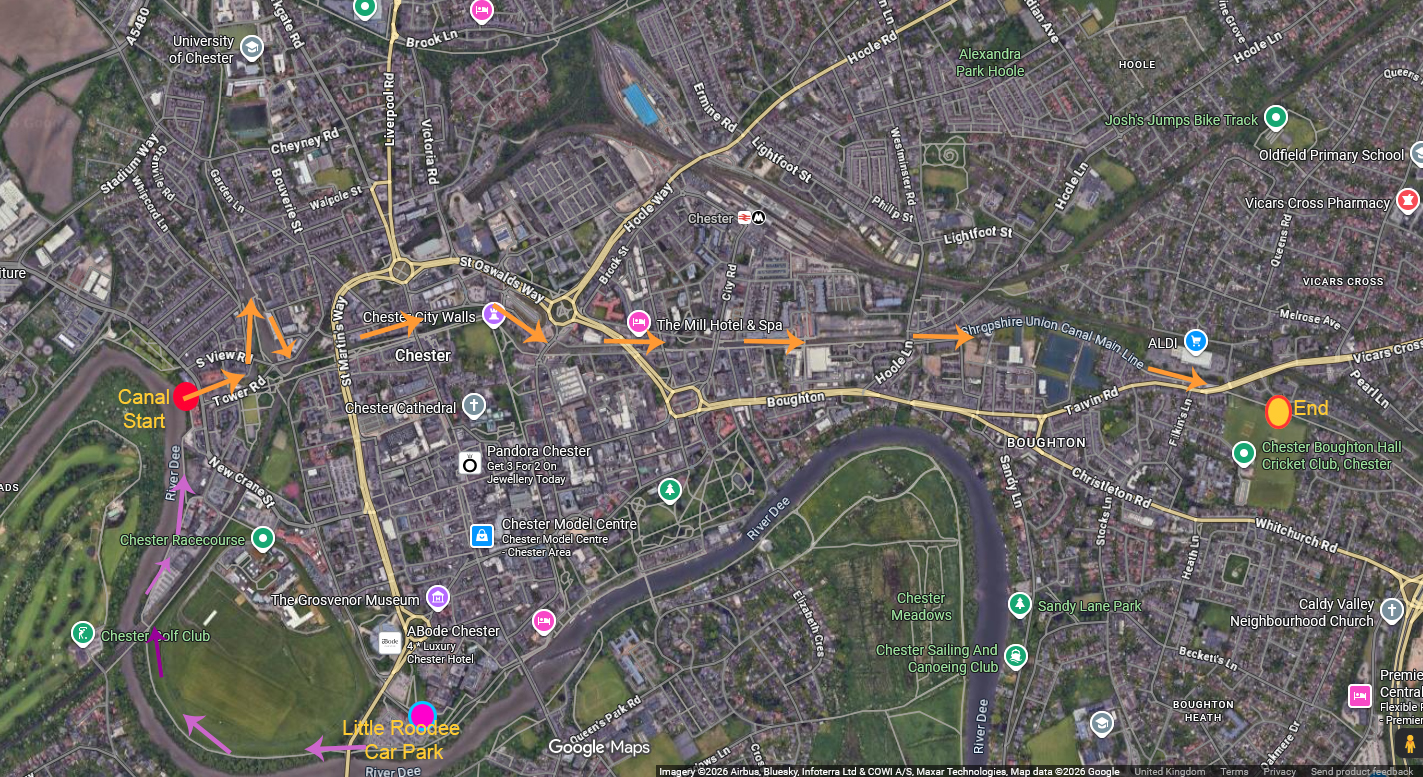
Map of the entire route from the Dee to Chester Boughton Hall Cricket Club

Map of the entire route, with the orange arrows showing the route from the Dee to Chester Boughton Hall Cricket Club. The pink arrows are the route I took from the Little Roodee car park to the start of the canal.  The darker purple arrow marks the arch beneath the railway viaduct that continues the river walk.

Detail of Tollemache Terrace

The walk begins at the point where the canal meets the river Dee, at the red dot (What3Words ///golf.finishing.upset).  It follows the tiny section of the old Chester Canal around the corner into the Dee Branch, which was created to allow access from the Wirral Line to the Dee.  The walk then crosses the roving-bridge with views up along the Wirral Line, across to the boatyard and down Tower Wharf Basin towards the main line of the canal to the east.  The walk then proceeds between Tower Wharf Basin and the Dee Branch, round the corner into the turning basin and along the rest of the canal, without any additional complications.  You can, of course, do as much or as little as you like. There is much more to see than included here – it’s a terrific walk.  I went as far as the Chester Boughton Hall Cricket Club, and the photographs go that far, but of course you can walk on as far as Wolverhampton if you have the time and stamina!

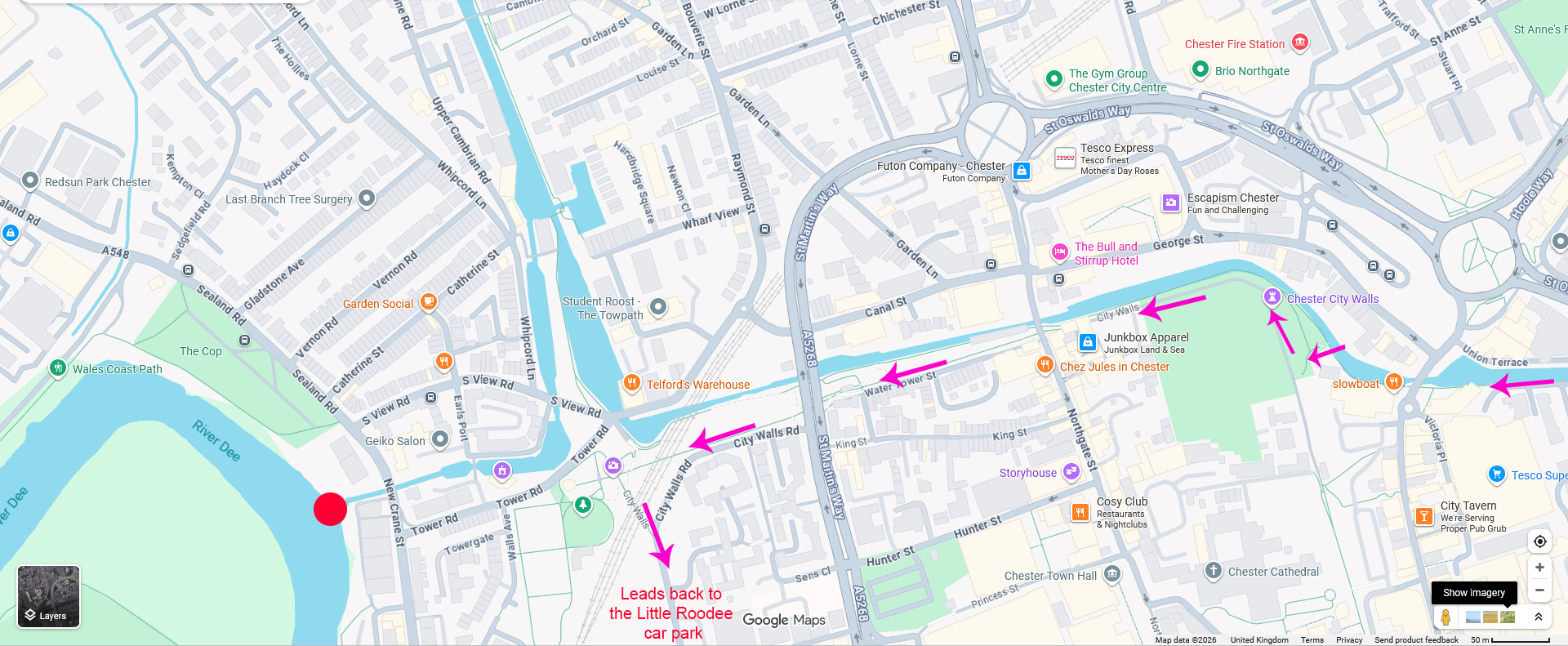
The return route is slightly different.  I parked in the long-term Little Roodee car park, which is under the city walls, so on the return route along the canal walked up onto the city walls (What3Words ///gone.dome.paths) and followed the walls back to the car park.

Map of the return route via the city walls

The slightly different return leg of the route, which leaves the main line of the canal and goes up on to the city walls looking down on the canal before heading, still on the city walls, towards the Little Roodee long term car park

There is plenty of parking in Chester, but I chose to park in the Little Roodee (What3Words ///helps.going.budget) because I was not sure how long I would take, and this is a long-term fixed-fee car park.  In the event, with plenty of stops to take photographs, it took around two and a half hours in total, two hours out (with lots of stops to take photos) and then an hour back to the Little Roodee via the City Walls, coming off the canal and walking above it from near to the King Charles Tower.  There are plenty of places to stop for drinks and a bite to eat.

The starting point

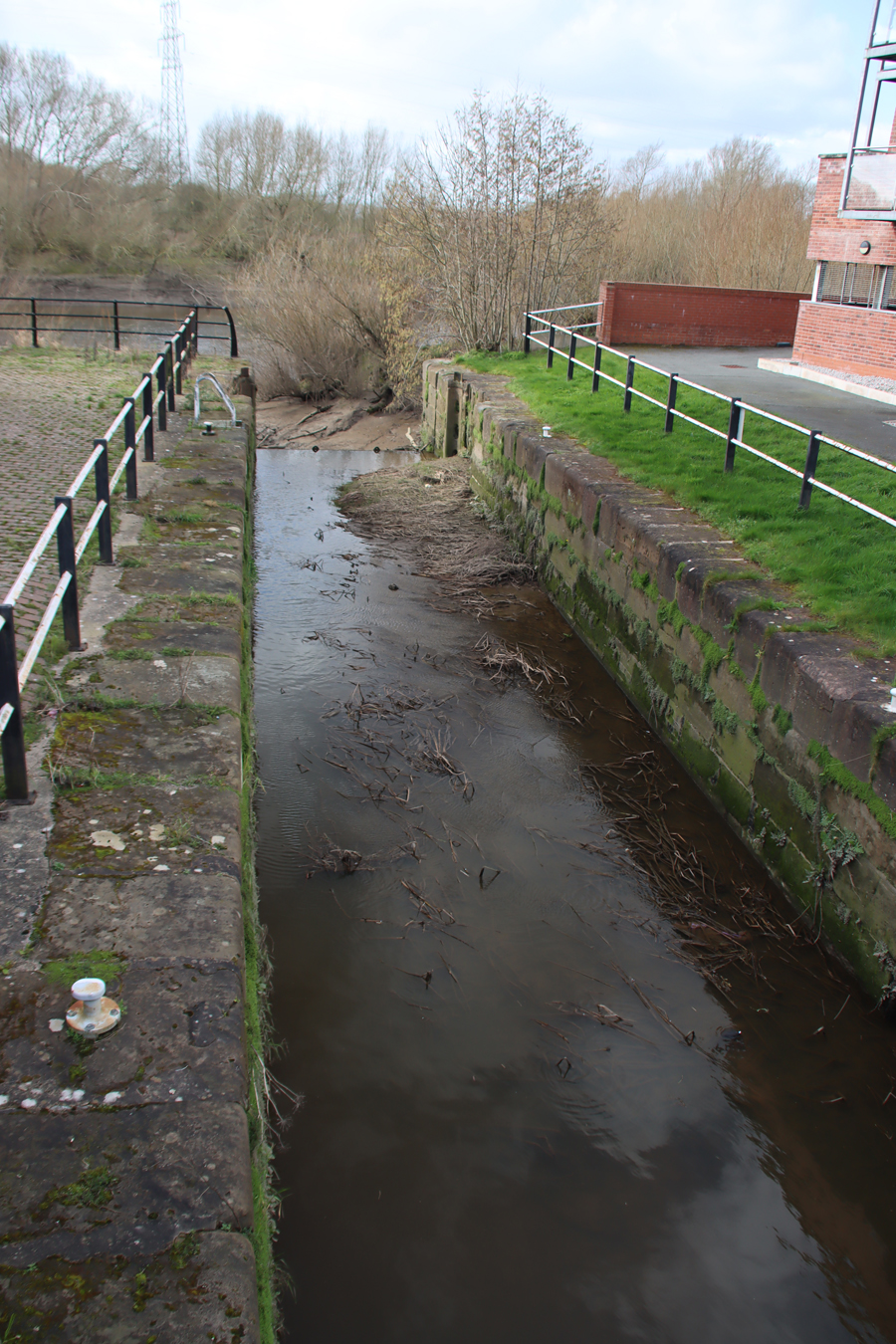
The starting point, where the canal tips water into the river Dee. The lock gates are long vanished, buy you can see where they once were.

The two main points to make at the beginning of the walk at the lock between the canal network into the Dee are that 1) this is obviously derelict and no longer usable, meaning that the canal network is now divorced from the river; and 2) this is one of the earliest parts of the Chester system, a legacy of the first Chester Canal, which went from Chester to Nantwich.  The connection with the river authorities had not been agreed before work began on the canal, and it took a number of years before the essential link between the Port of Chester and the Chester Canal were negotiated.

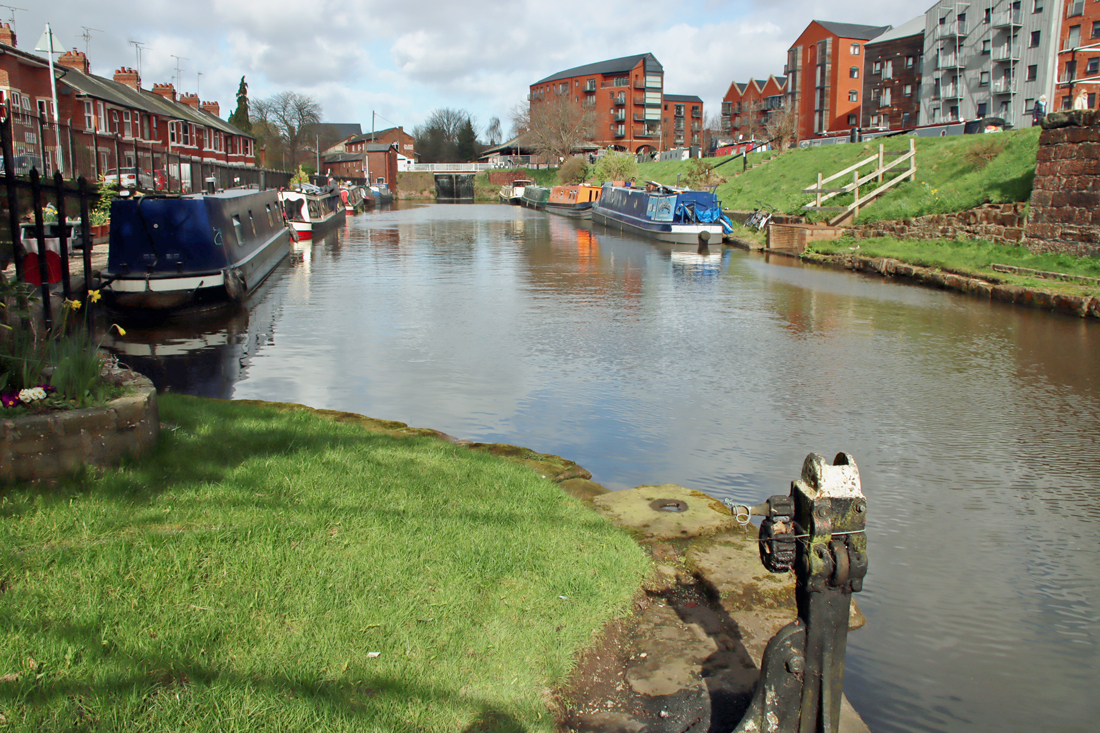
The walk continues over the road, from where this photograph was taken. Note that the canal passes under the road bridge.  Although this is now a fixed bridge, it was once a swing bridge to allow vessels of all heights to enter and leave the canal system.

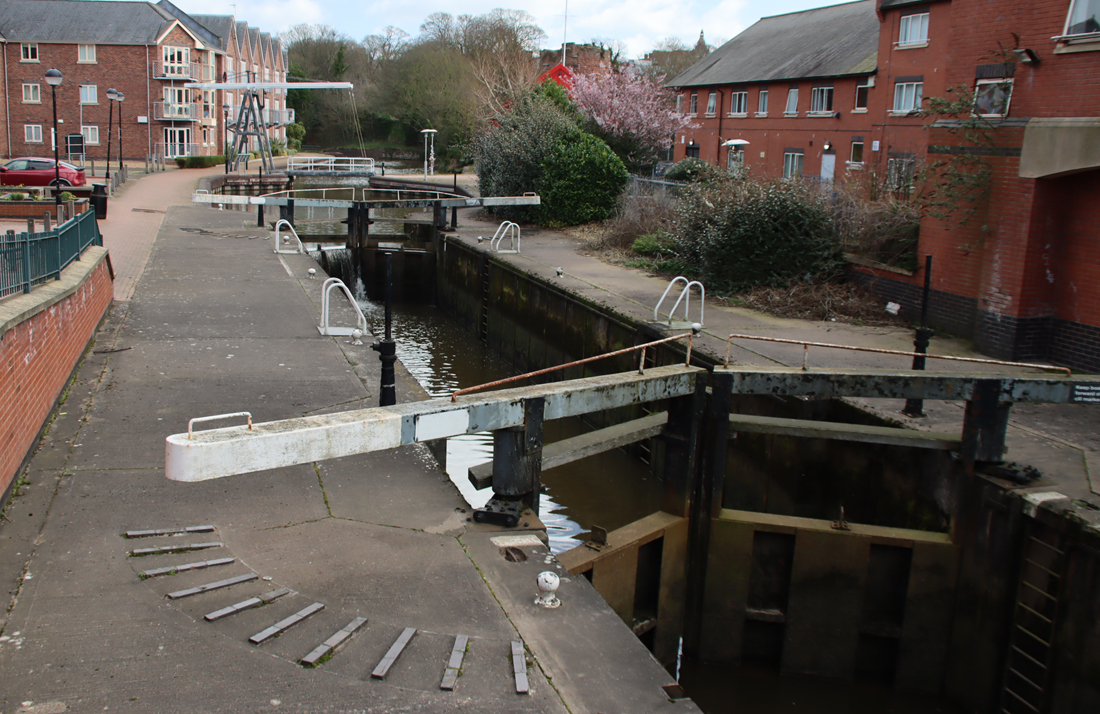
Over the road (cross with care as it is on a blind corner) you continue along the canal, staying to its left.  This is the final set of locks as you come from the west and south, or the first as you begin to proceed up the canal system towards Nantwich, the source of the water.

Beginning to explore the Chester leg of the canal system

Beginning to explore the Chester leg of the canal system

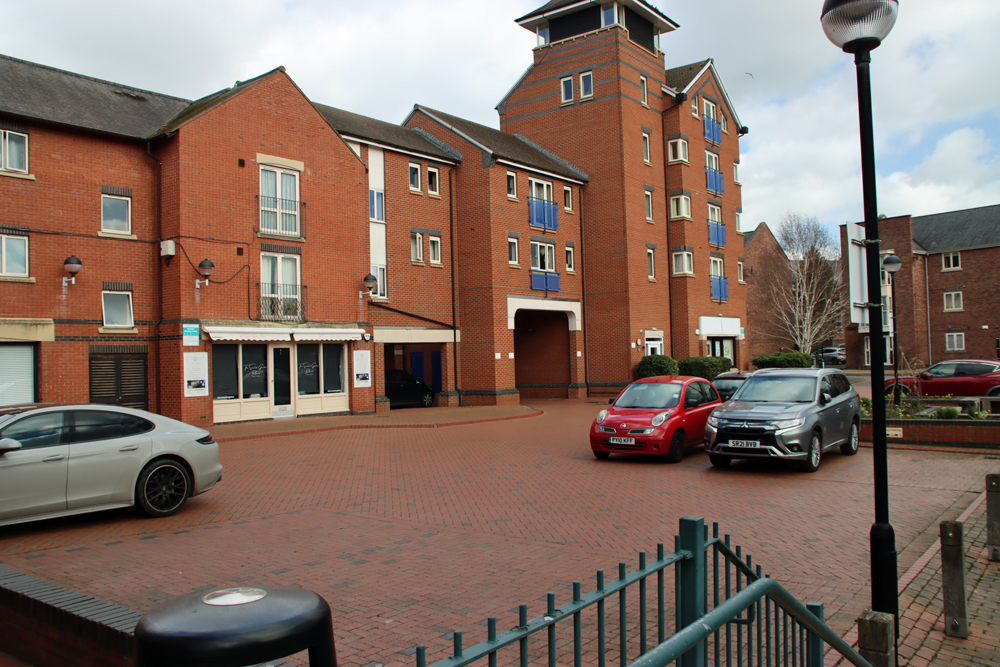
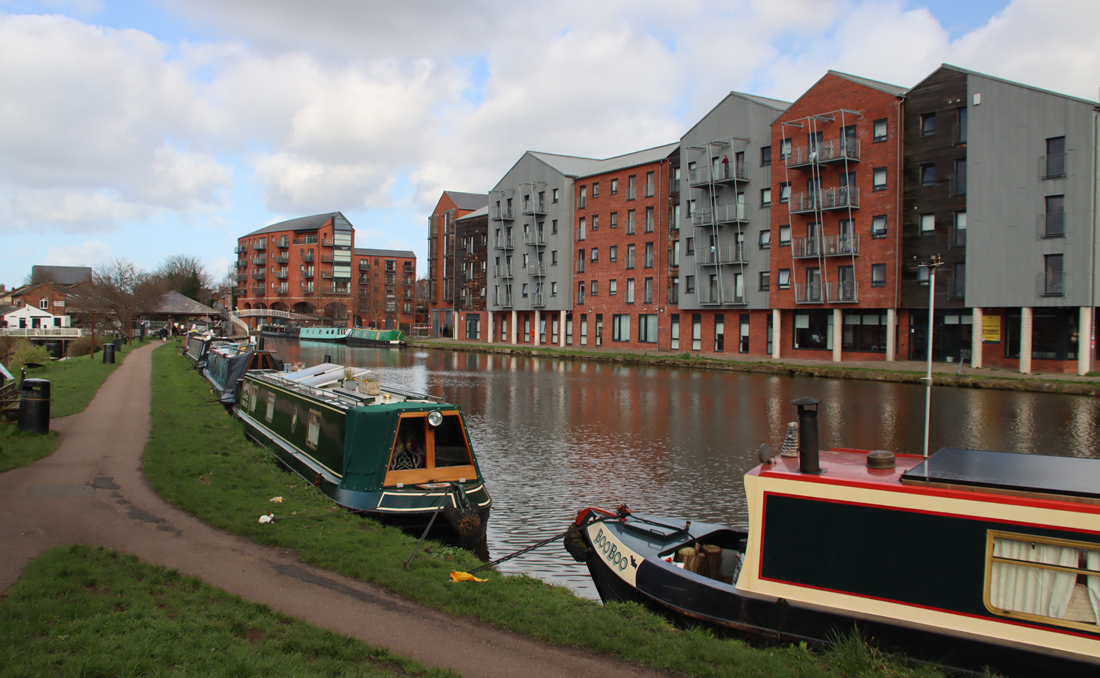
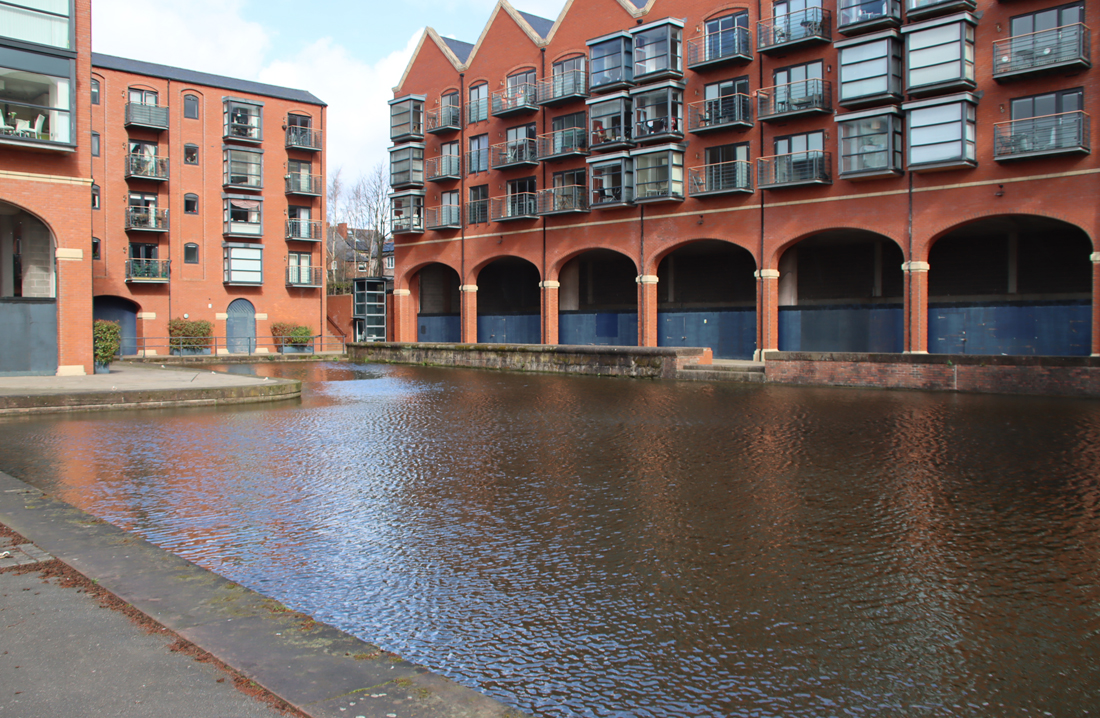
On your left is a housing development with retail at its base.  This marks the site of the old Dee Basin which is where, after coming down a flight of five locks, narrowboats and wide barges would enter a holding area to await the tide.

The former Dee Basin

The former Dee Basin


The former Dee Basin

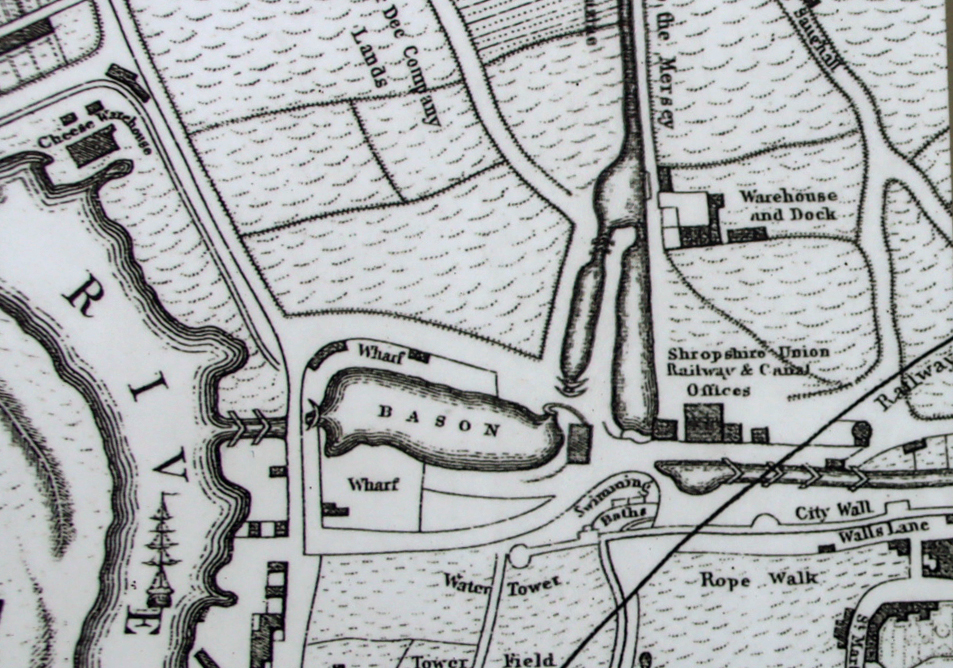
The former Dee Basin, shown on signage in the Tower Wharf Basin

When the Chester Canal was first built this was a tidal basin, but when the Chester Canal and the Ellesmere Canal merged, the water level was controlled by locks.  Continuing on, and staying left of the modern lift bridge, the bridge ahead of you leads you into the opening of the so-called Dee branch and on to Tower Wharf and the heart of the Chester canal system.   To proceed, do not go under the bridge (the footpath ends here) but go up the flight of steps to its left, turn right and cross the road and enter the Tower Wharf basin via the white gates.  On your right is the main line and Tower Wharf.  On your left, at a much lower level, is the Dee Branch, a requirement after the Wirral Line was added by the Ellesmere Canal (see an explanation of this in Part 1).  A lock was added to allow access to this lower section that flows out to the former Dee Basin and the river lock.

The Dee Branch

The Dee branch, with the main line up the bank at a higher level.

Tower Wharf basin

Tower Wharf basin


Telford's Warehouse

Telford’s Warehouse

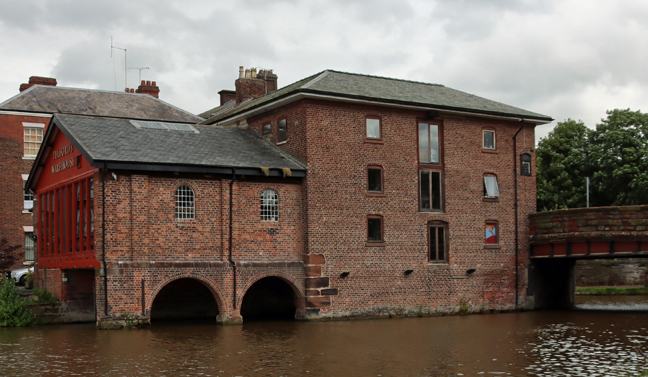
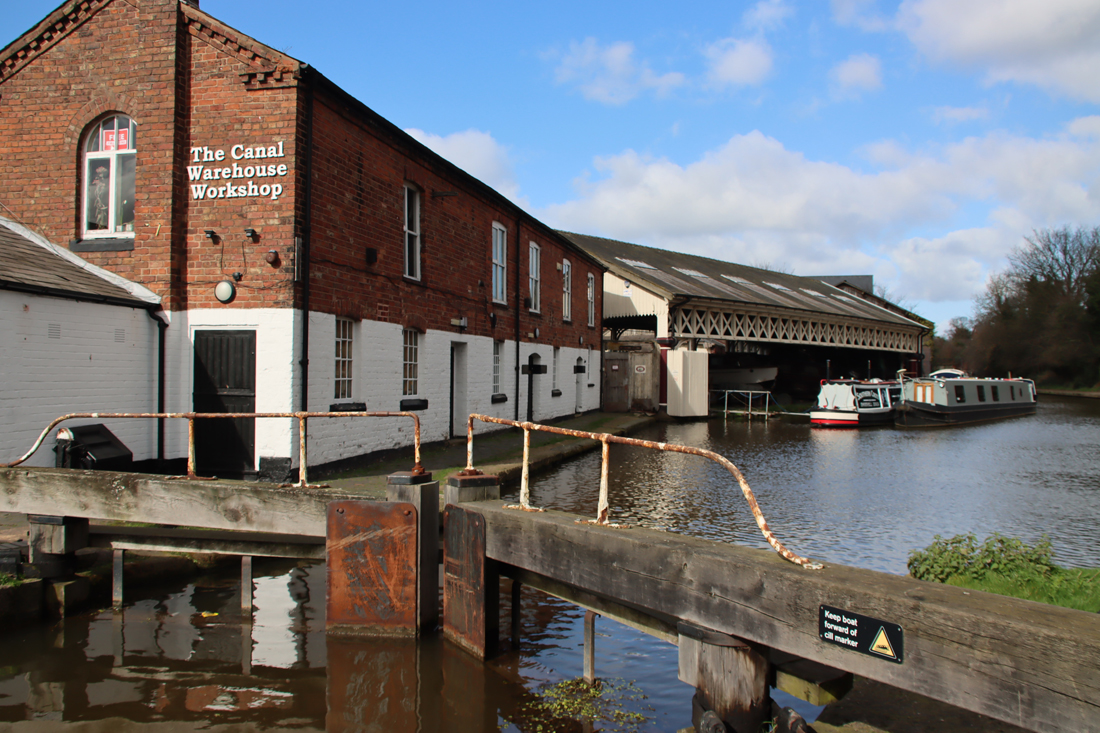
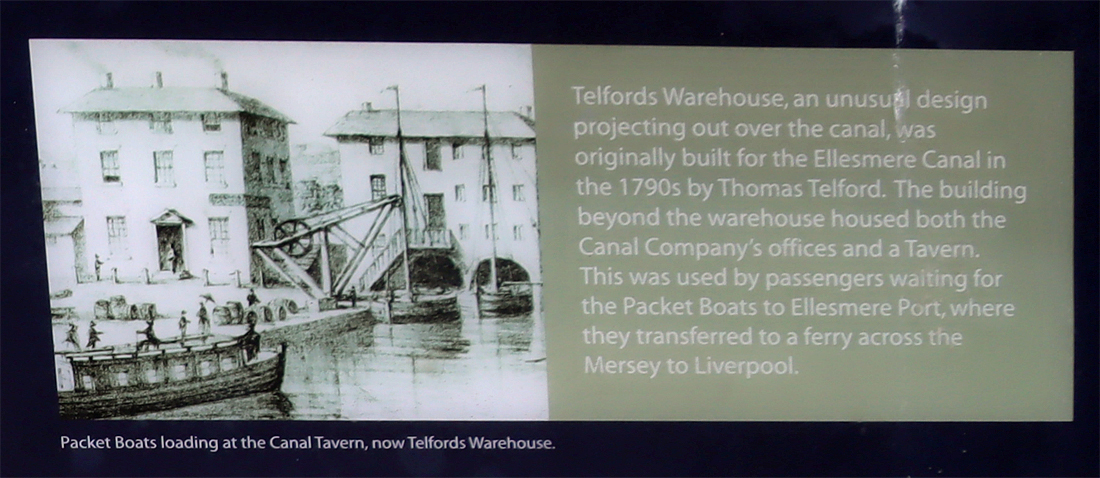
There are some terrific features to look out for in the Tower Wharf Basin.  When the Wirral Line was built a new boatyard was added with a graving dock, both still in situ, and the boatyard not only survives but has been in continuous use since it was built.  Immediately on your right, at the far southern end of the basin, is a late 18th century building called Telford’s Warehouse (now a pub), designed by Thomas Telford with the open arches allowing vessels to load and unload under cover.  Running along the side of the Dee branch is an attractive row of Victorian brick-built terraced housing on Whipcord Lane, post-dating the canal.

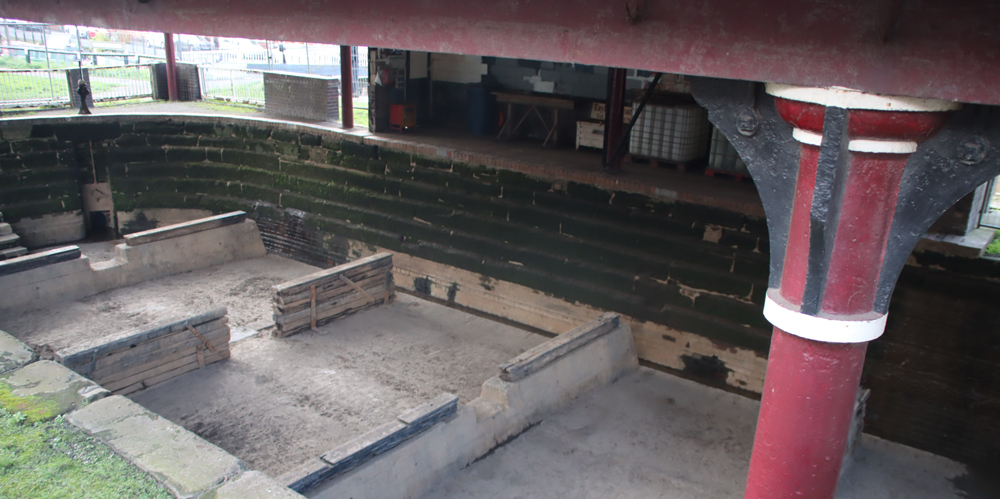
Straight ahead is what is known as Taylor’s Boatyard after a former owner, complete with the graving dock.  The graving dock is a dry dock into which ships can be floated, and then the lock emptied so that hulls can be worked on.  Sadly it is surrounded, for safety reasons, by ugly metal fencing, but it is a lovely feature.  The boatyard lies beyond.

Looking down from the roving-bridge into the graving dock

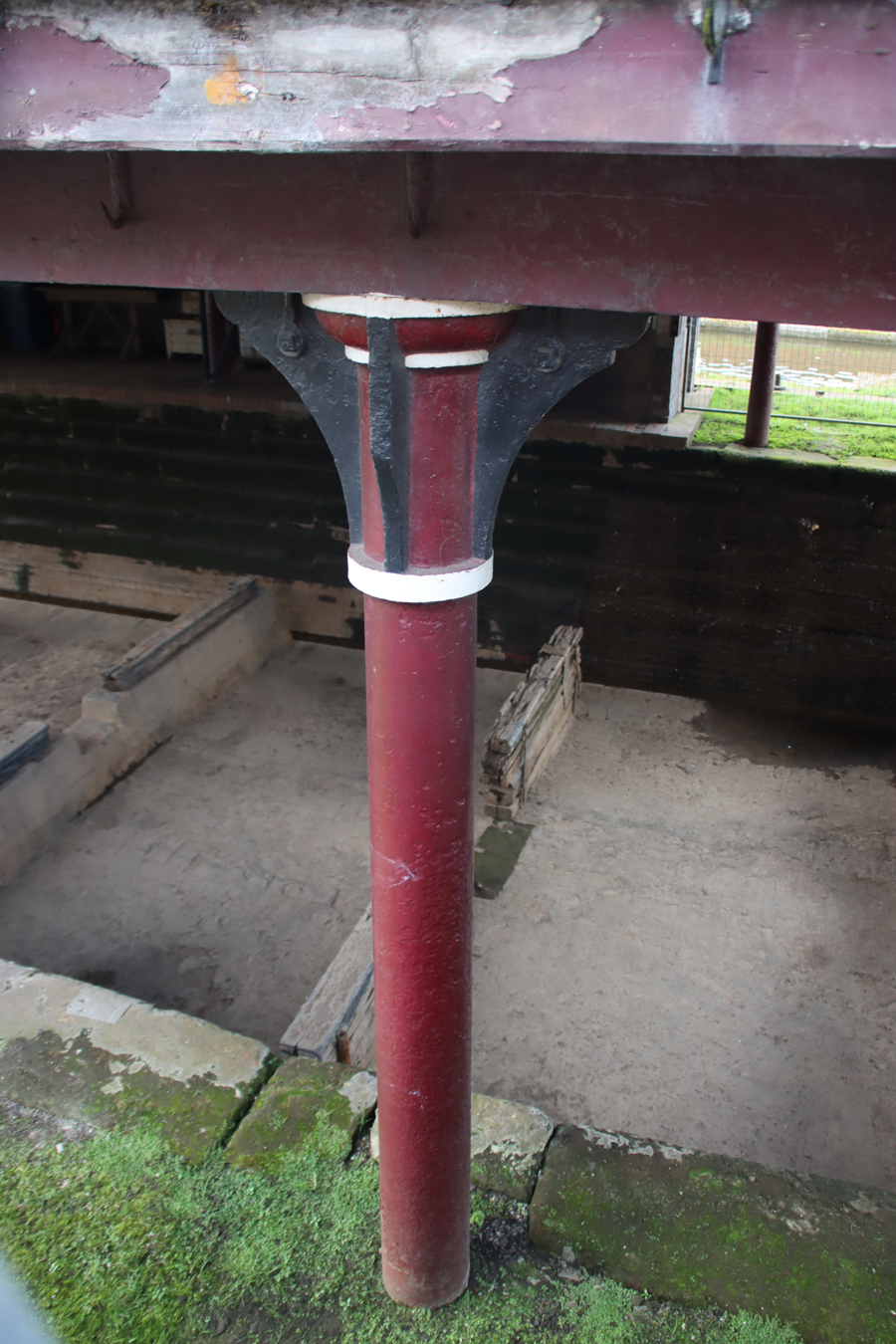
Attractive iron column in the graving dock

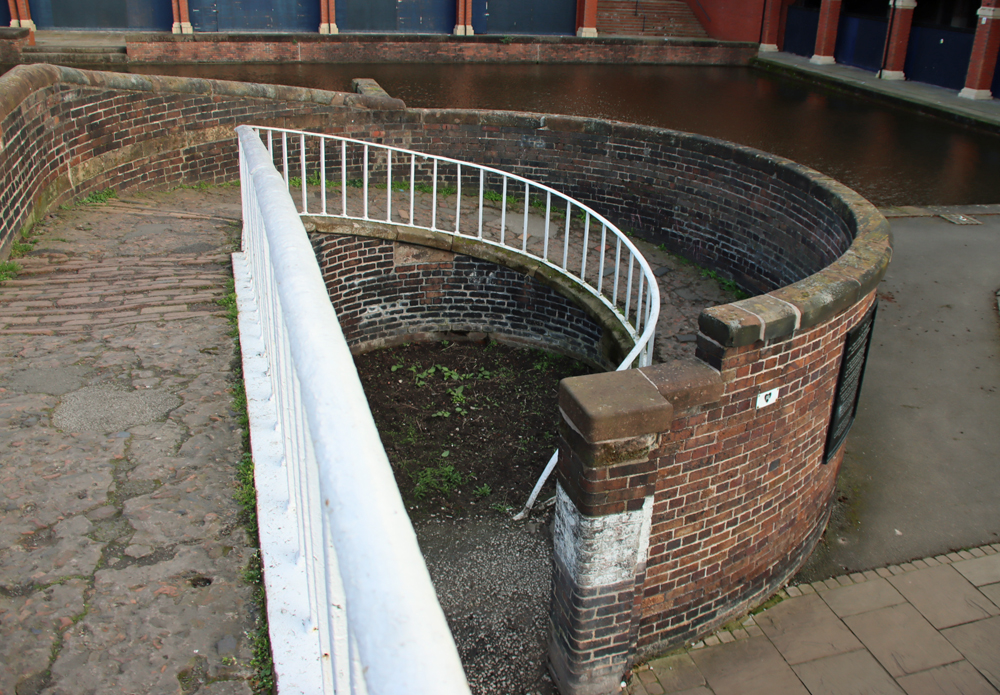
In 1802 business in the Basin had not only picked up but was doing so well that its capacity was considerably over-stretched and a new basin was required, named North Basin, which was surrounded by more warehousing.  An absolutely delightful roving-bridge or snake/turnover bridge connects Tower Wharf with North Basin, an innovation that allowed horses pulling boats to cross the canal without being unhooked from the vessel.

North Basin

North Basin

The roving bridge

The roving bridge

If you have crossed the bridge, re-cross it to return to the central section of the basin, between the Tower Wharf Basin and the Dee Branch and retrace your steps.  Instead of going back up to the road where you entered, go under the bridge, following the towpath.  From here on, the route simply follows the towpath.  There are too many sights and sites to describe in detail, but here are some of the most interesting features contemporary with the working canal, with links to more information where I have found it.

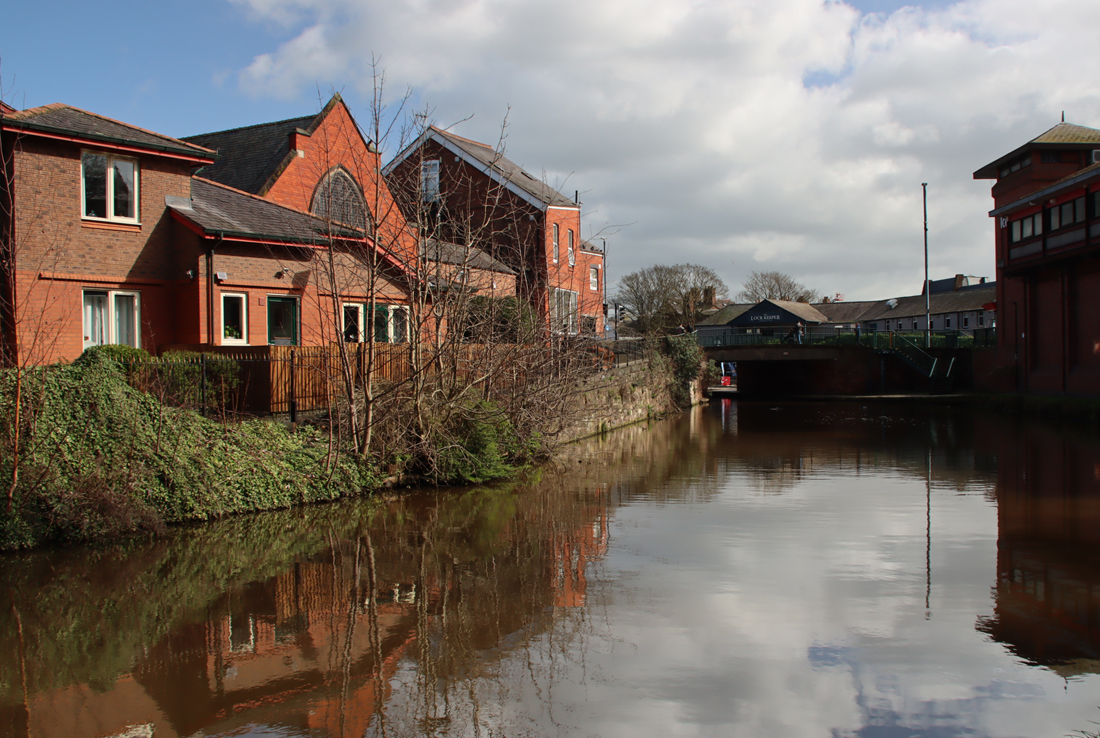
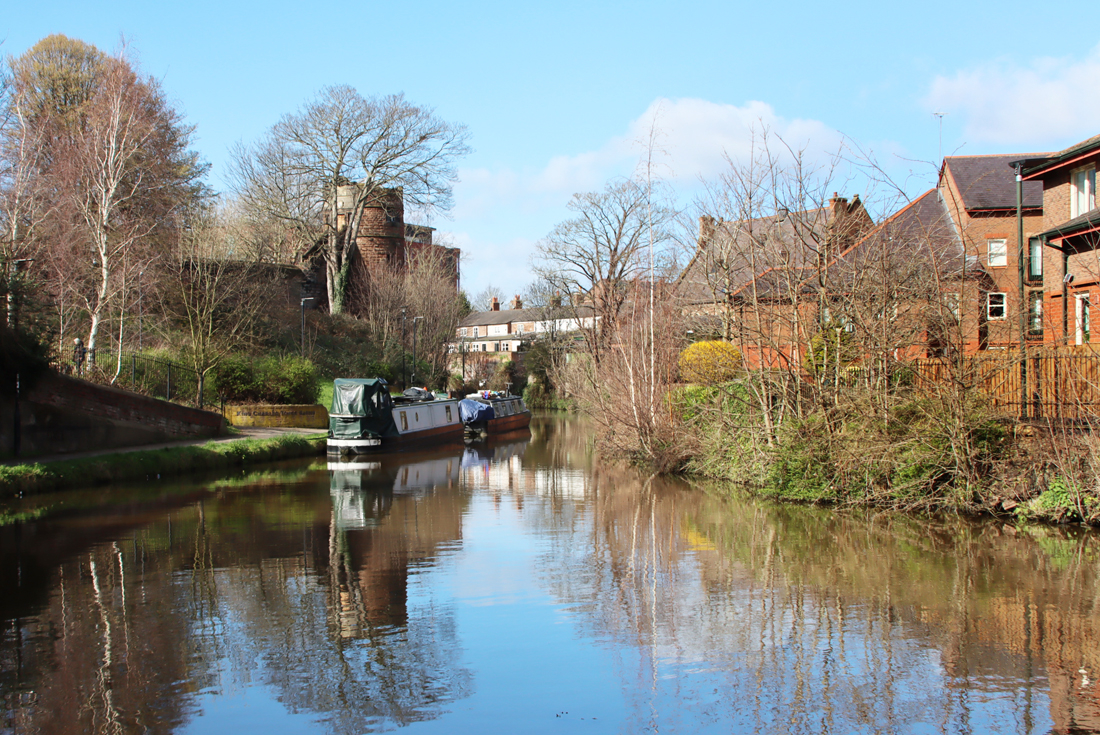
As you leave the Tower Wharf Basin complex, you walk under the railway bridge and turn left into a section known as the Turning Basin, made particularly wide to enable horse-drawn vessels to negotiate the sharp turn into the basin.  There is a turning hook on the wall just under the Raymond Street Bridge that was also there to help vessels make the turn.  If you look up to the south (or your right, heading out along the canal) note that the canal follows the line of the city walls.

Looking back at the turning basin at the entrance to Tower Wharf Basin

The other end of the basin, leading to the locks

The other end of the basin, leading to the locks

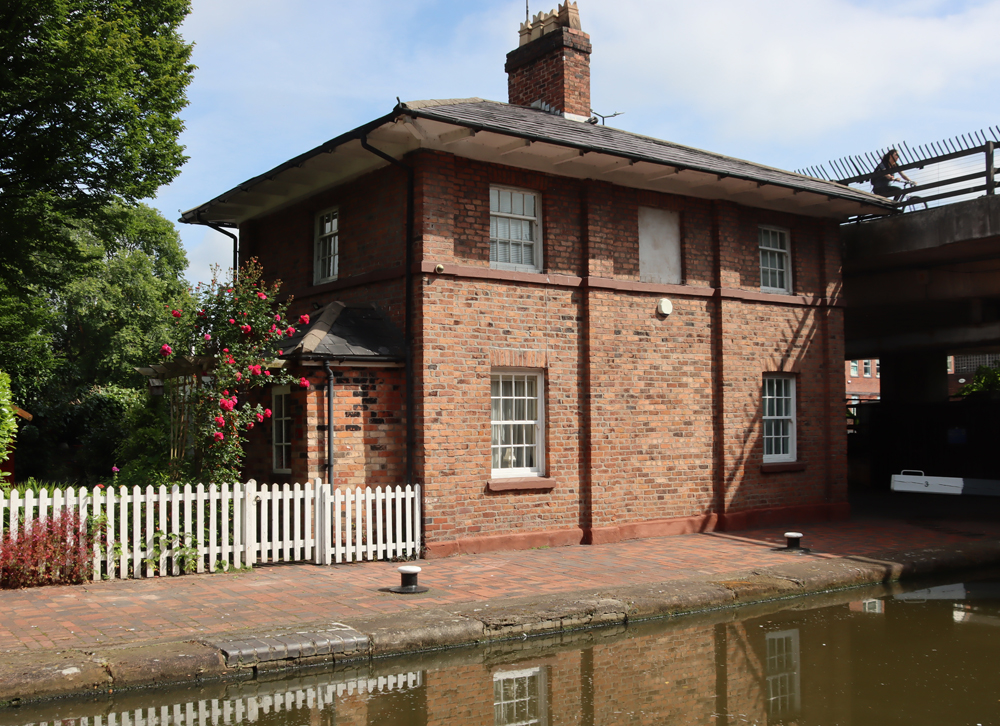
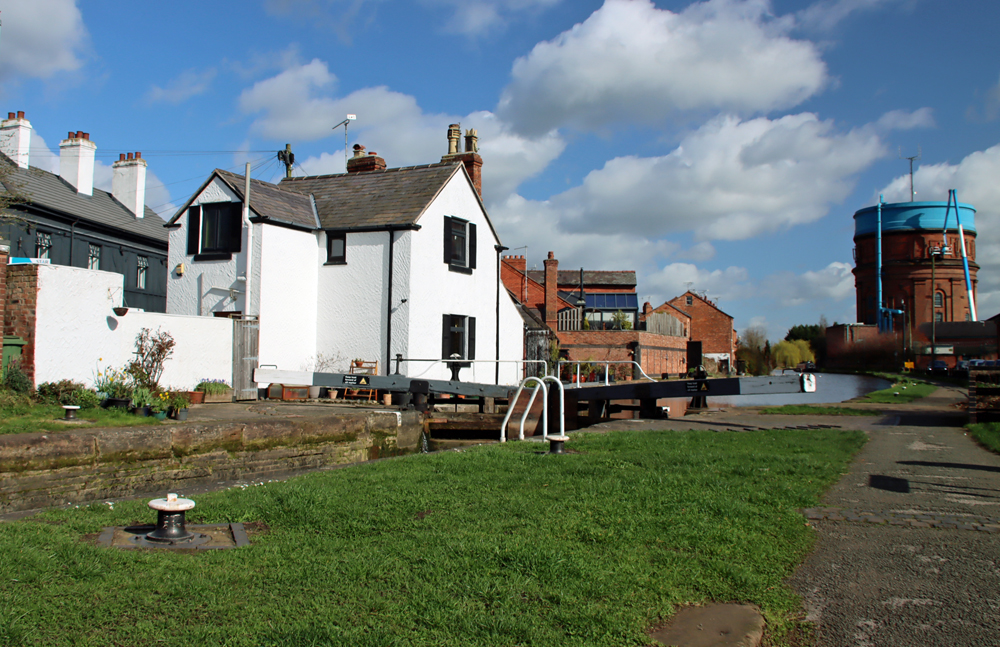
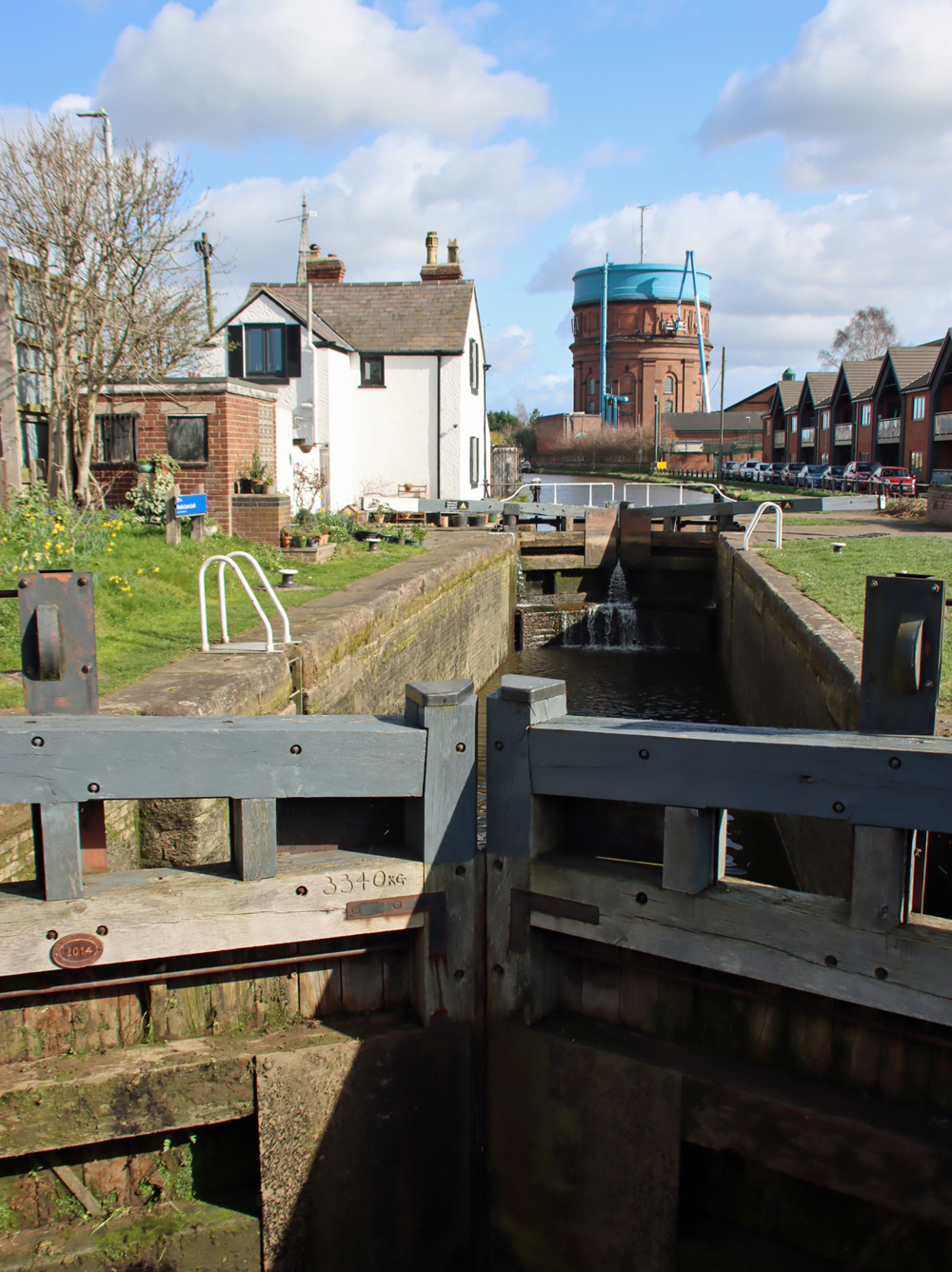
Before the Ellesmere Canal Company introduced the Wirral Branch, there used to five locks that went all the way up to the Dee Basin, which has now largely been filled in and used for modern housing.  When the new branch was added, the bottom two locks were demolished and the canal diverted north.  The three remaining locks are still fully functional today and allow vessels to navigate a 33ft (10m) drop/rise.  At the top of the locks is a square house with a prominently overhanging roof eave, again one of Telford’s designs.  At this point today the canal runs under the St Martin’s Way ring road before carrying on along the foot of the northern stretch of the city walls.

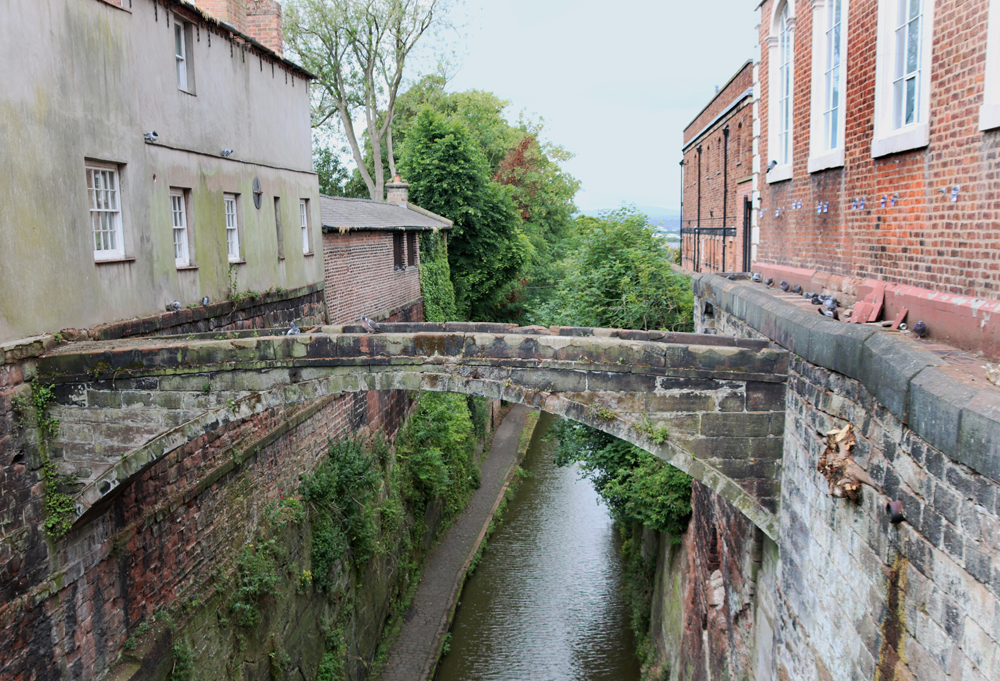
After passing a row of modern house on your left you will notice two bridges overhead, the first tiny.  This is the somewhat battered-looking Grade II listed Bridge of Sighs, probably built in the 18th century. Although it is named after the magnificent one in Venice, the similarity lies in the fact that both were used for carrying prisoners, in this case from the prison to the chapel in the Bluecoast School to receive their last rites prior to execution.  The next bridge carries Upper Northgate Street over the canal, some sdfdsf ft / sdfsd m above.


The tiny Bridge of Sighs over the canal, followed by the Northgate Street bridge

Bridge of Sighs

Bridge of Sighs, Chester, shown from Upper Northgate Street

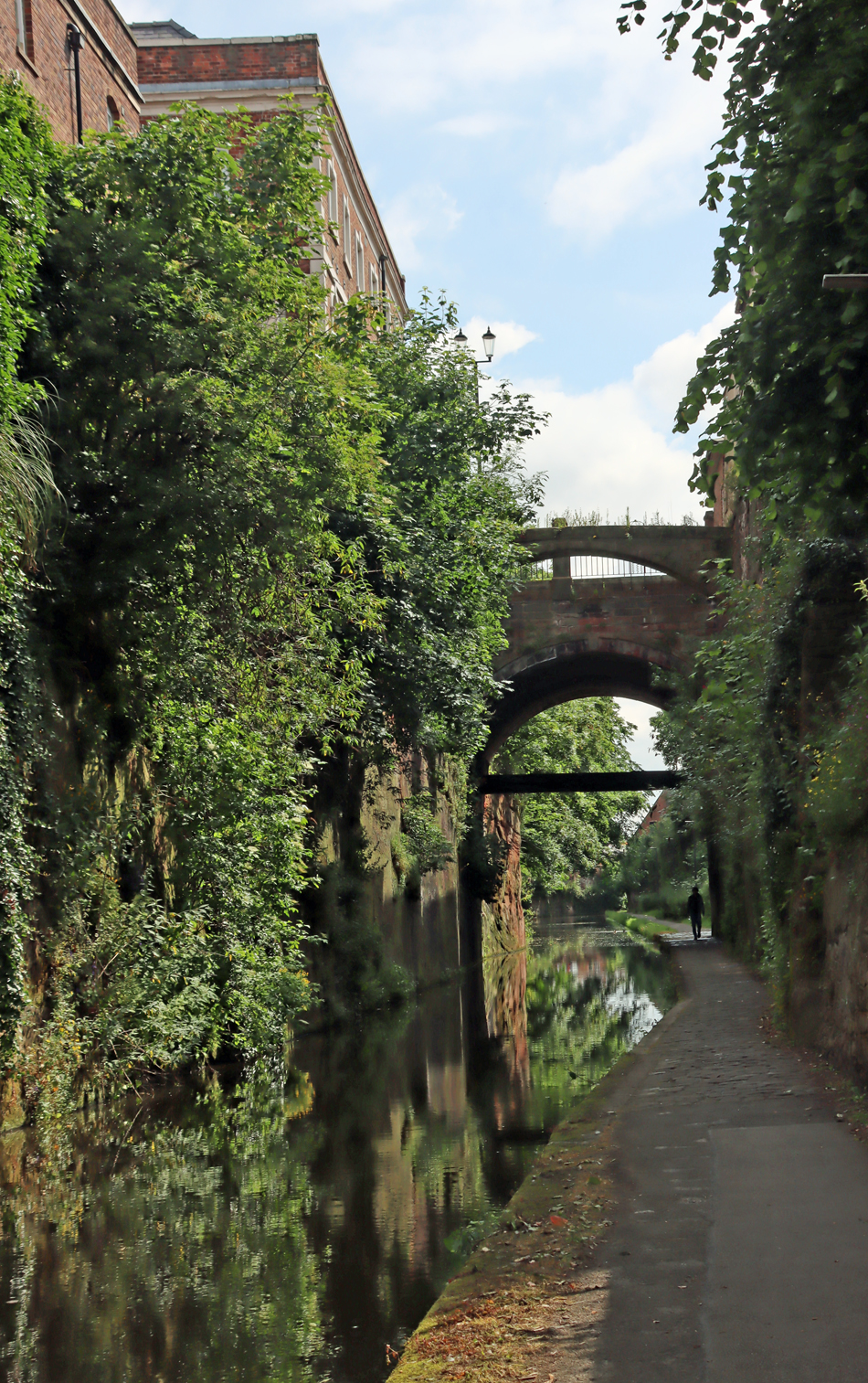
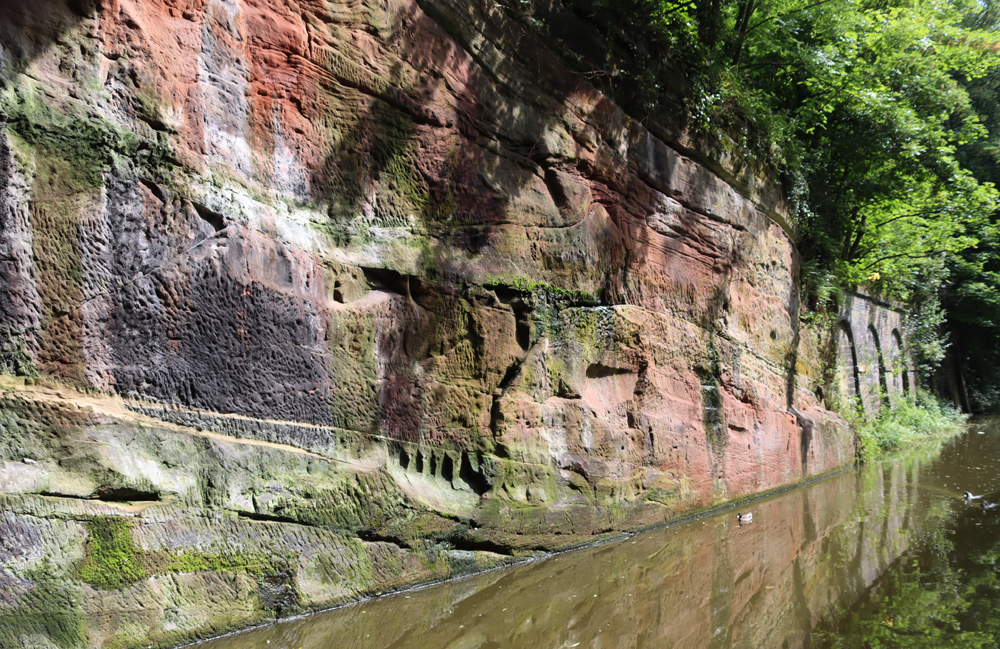
Triassic sandstone through which the canal was cut

Triassic sandstone through which the canal was cut, allegedly following the line of a Roman ditch

The canal passes the King Charles Tower as the canal and city walls part company, the canal briefly heading southeast and then due east.


The back of the Memorial Chapel next to Abakhan on Gorse Stacks

The back of the Penri Chapel next to Abakhan on Gorse Stacks. The Iceland on Frodsham Street is on the right

Looking back to the city walls and the King Charles tower above the canal. It is at this point on the reverse leg of the walk that there is a path up to the walls, which leads back to the Little Roodee car park.


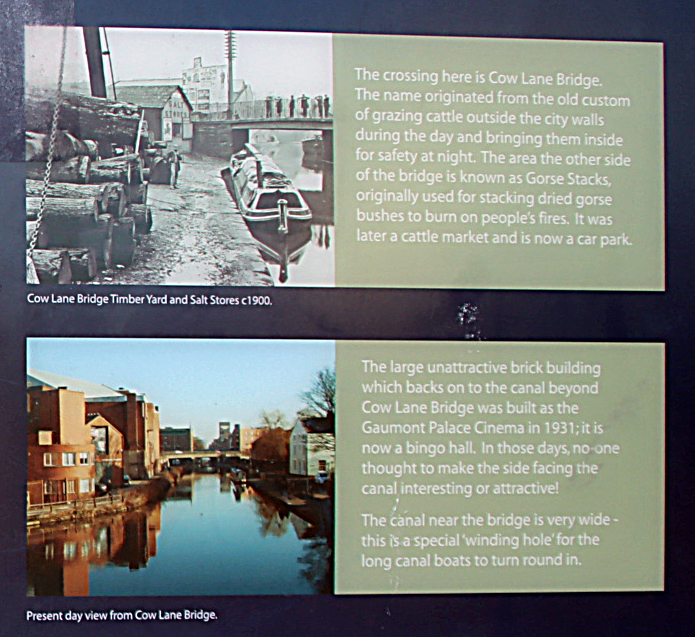
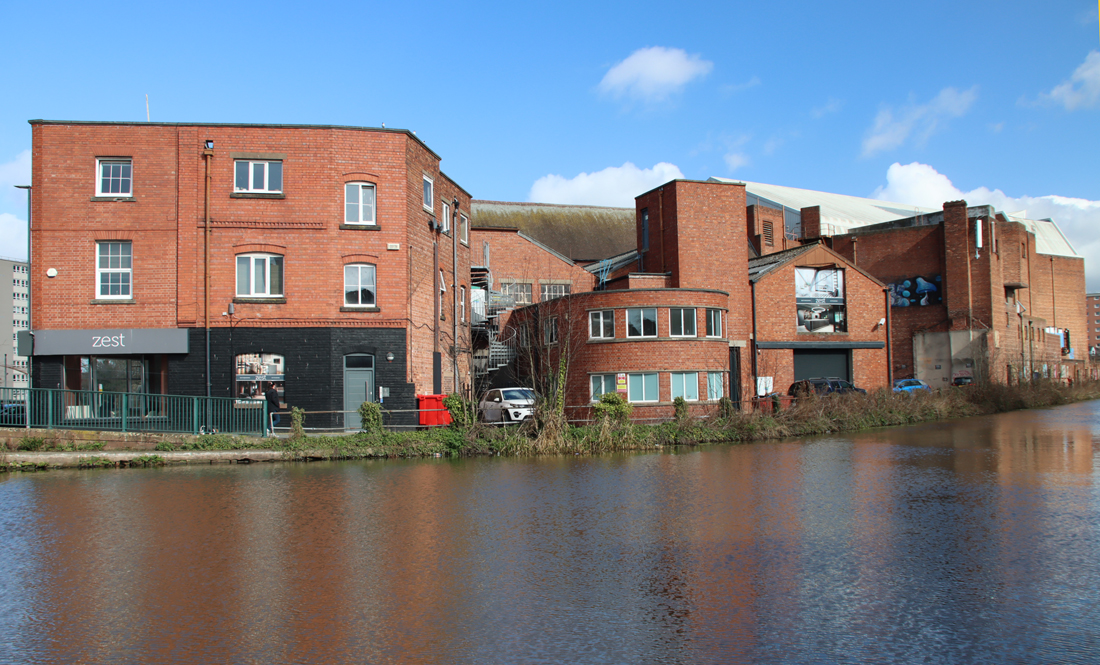
Signage at Cow Lane Bridge


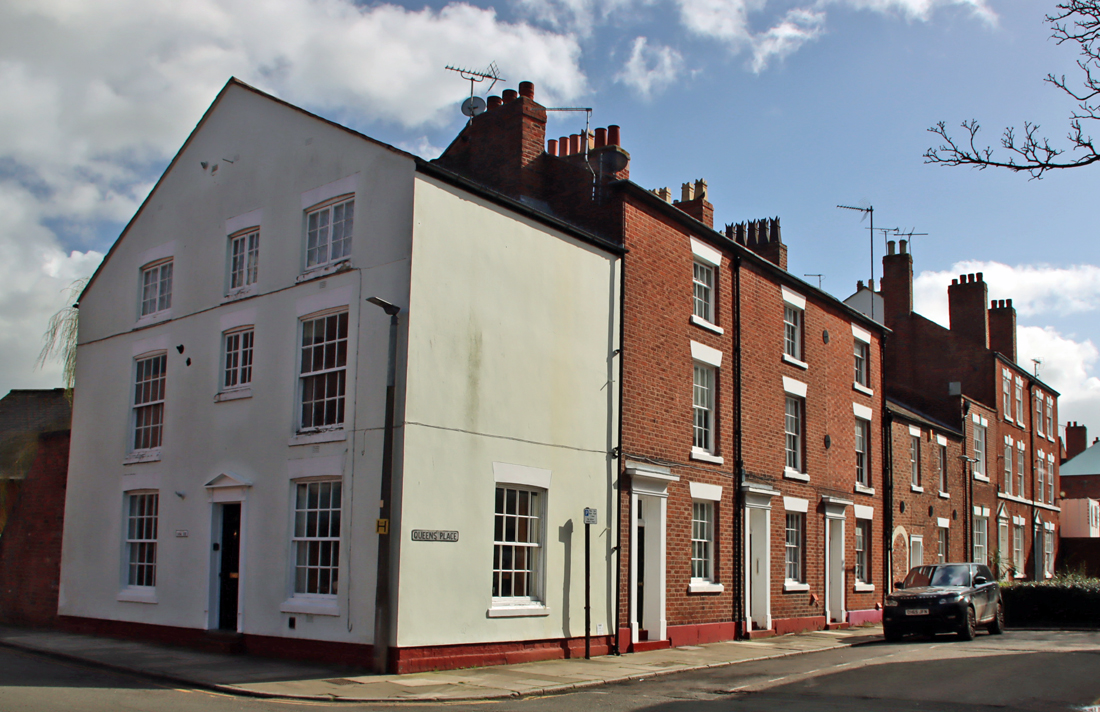
Queen's Place

Queen’s Place


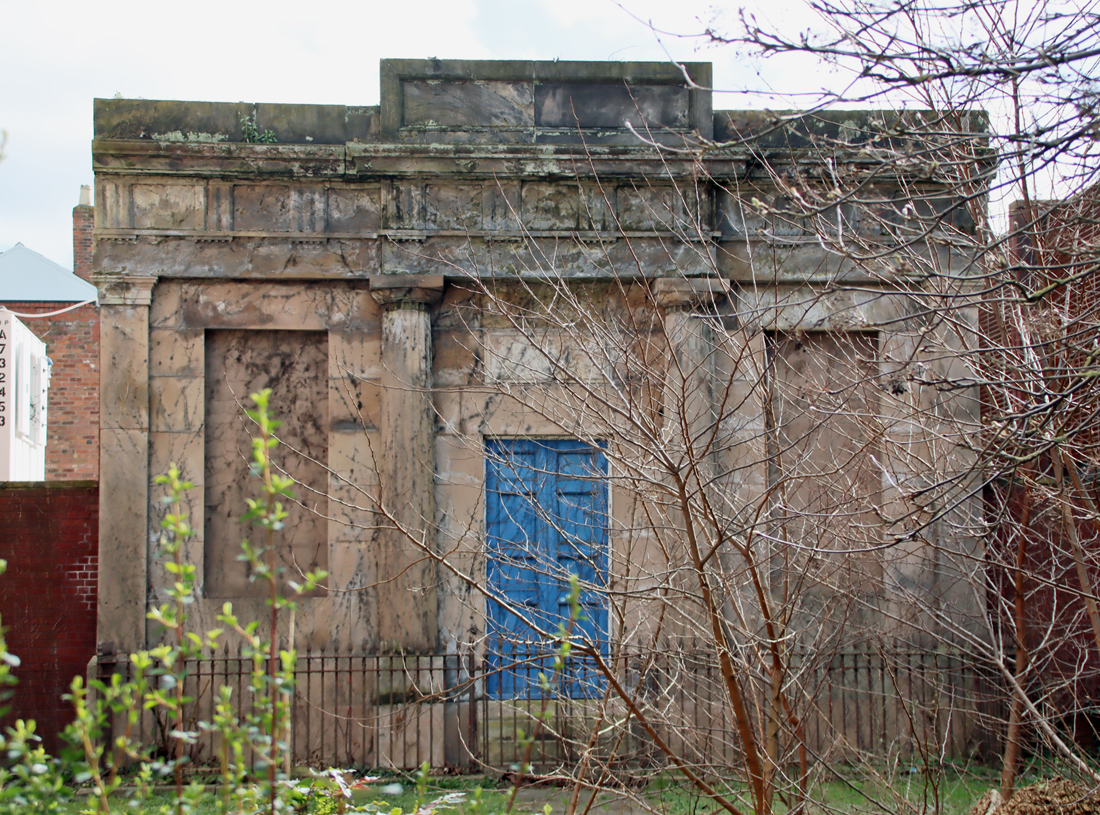
This unexpected structure at the end of Queen’s Place is just a facade with no building behind it, the remnant of a lecture hall once attached to the 1777 Independent Chapel

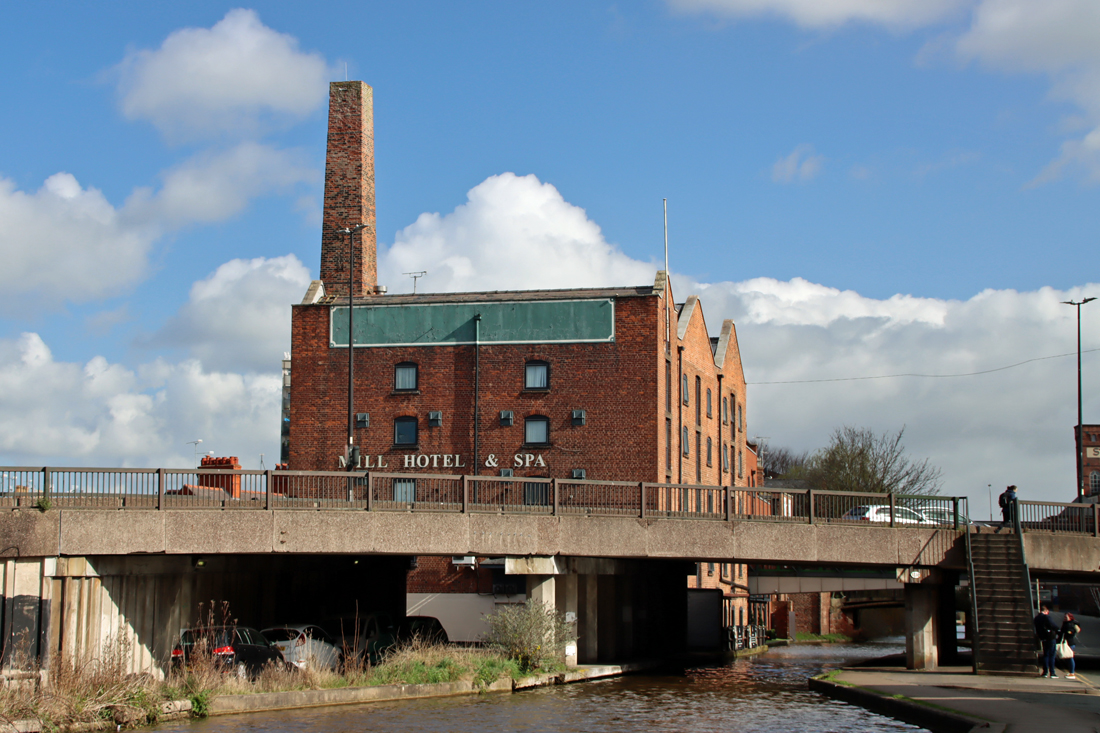
The original Griffiths Corn Mill is now the Mill Hotel and Spa

The original Griffiths Corn Mill is now the Mill Hotel and Spa

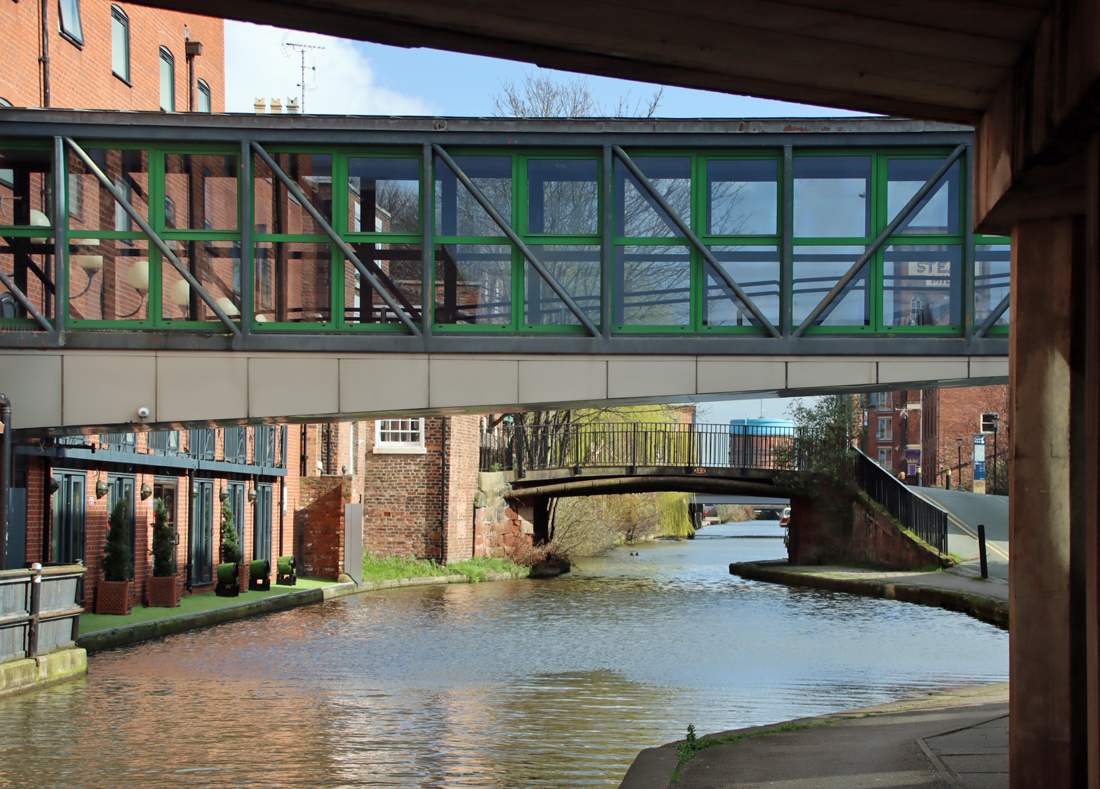
Footbridge

Covered footbridge linking two parts of the hotel, with the Hoole water tower beyond


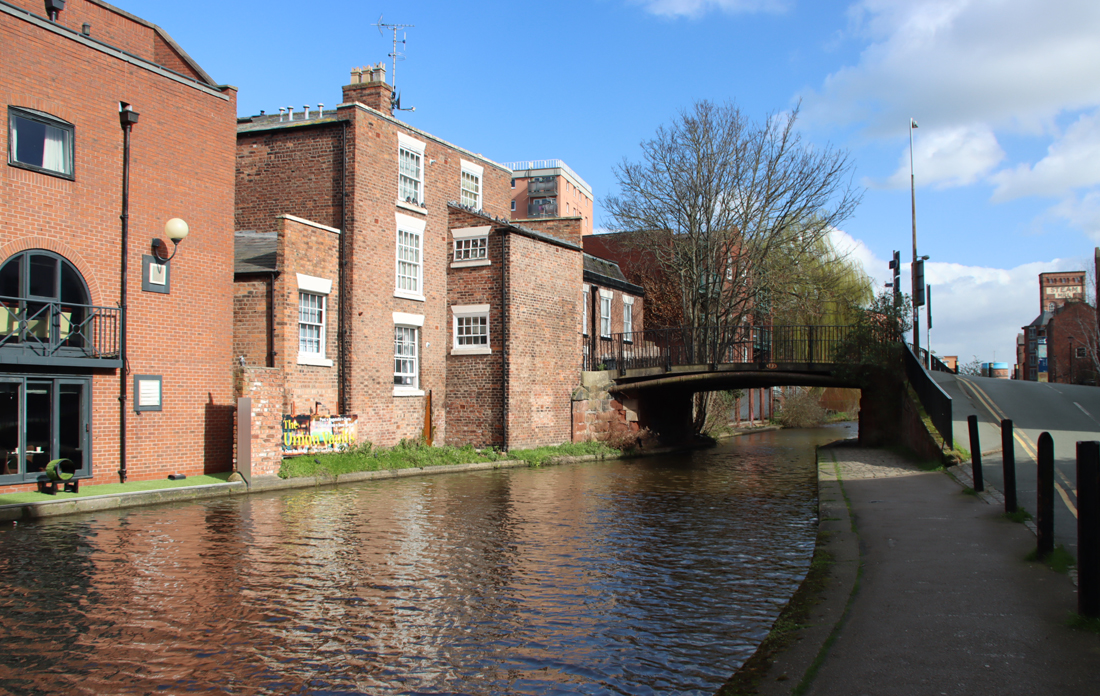
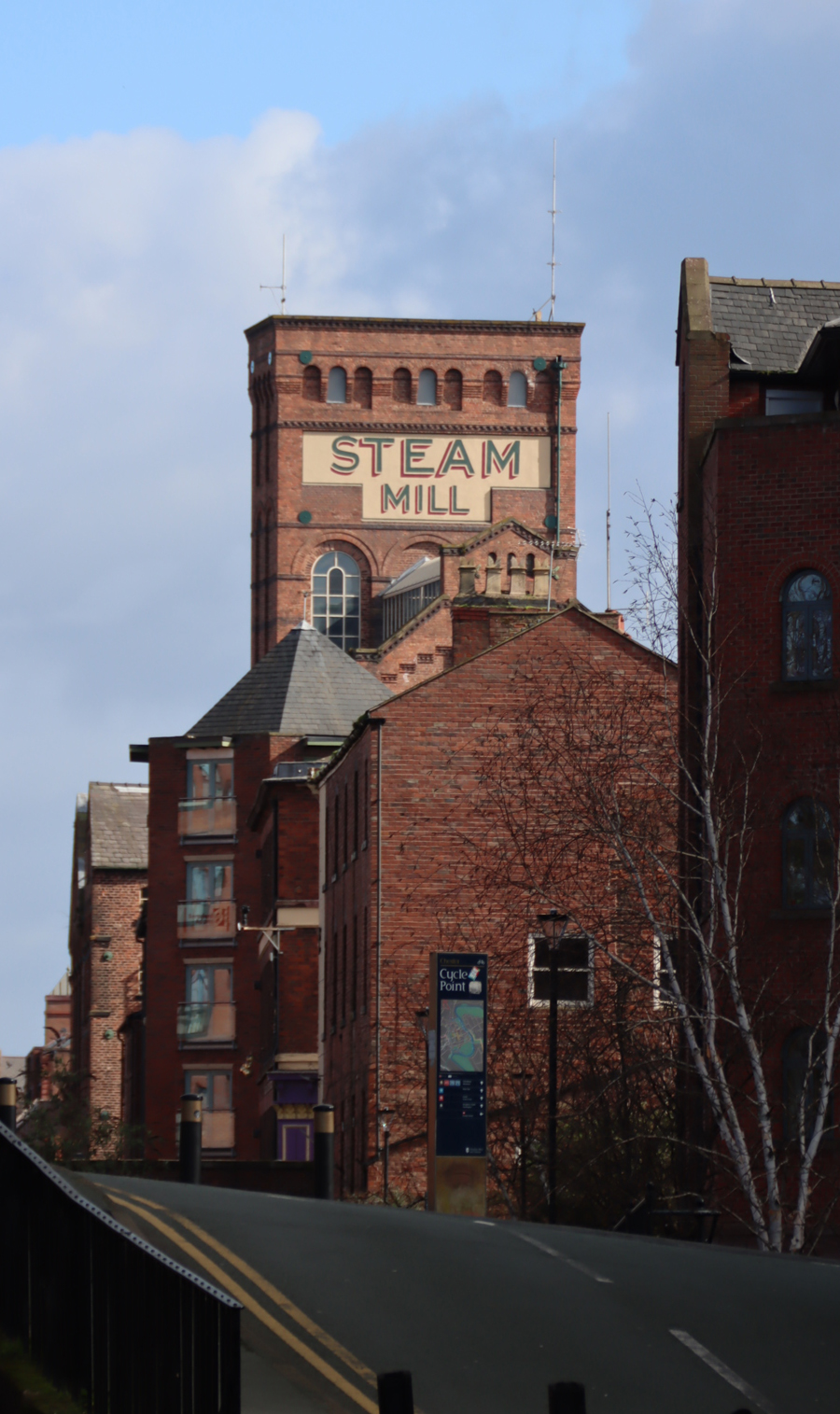
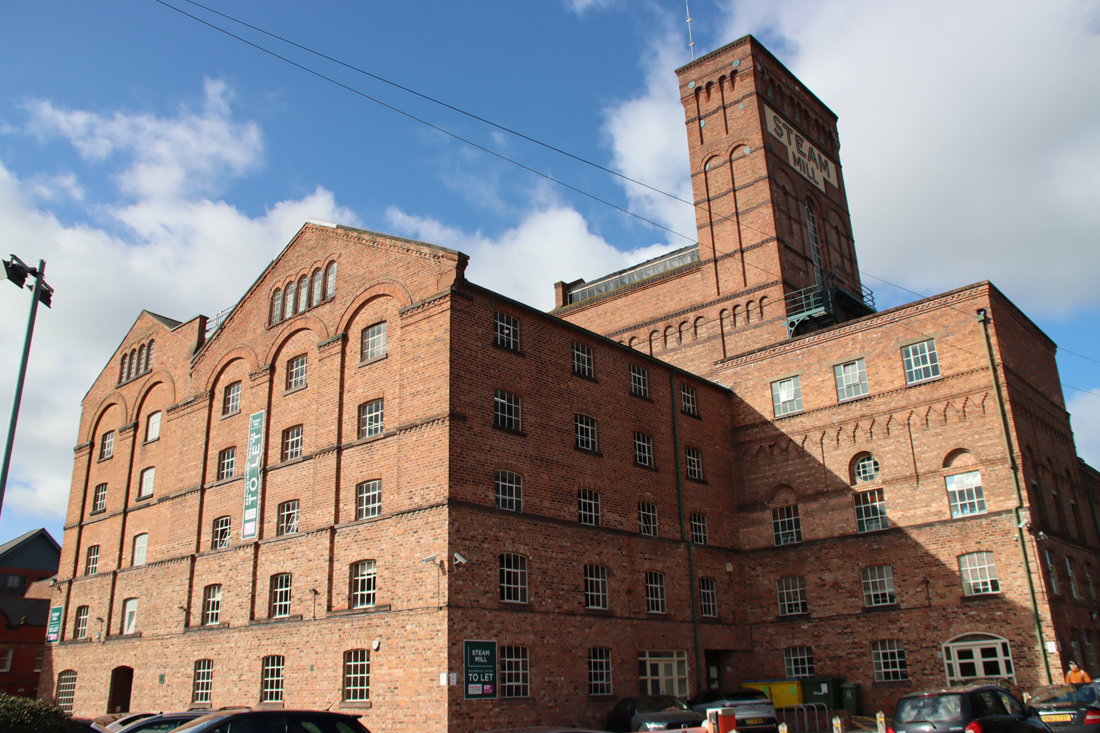
Steam Mill

The Grade II-listed Steam Mill building was built in 1786 as one of Britain’s first steam-powered flour mills. The listing details can be found on the Historic England website

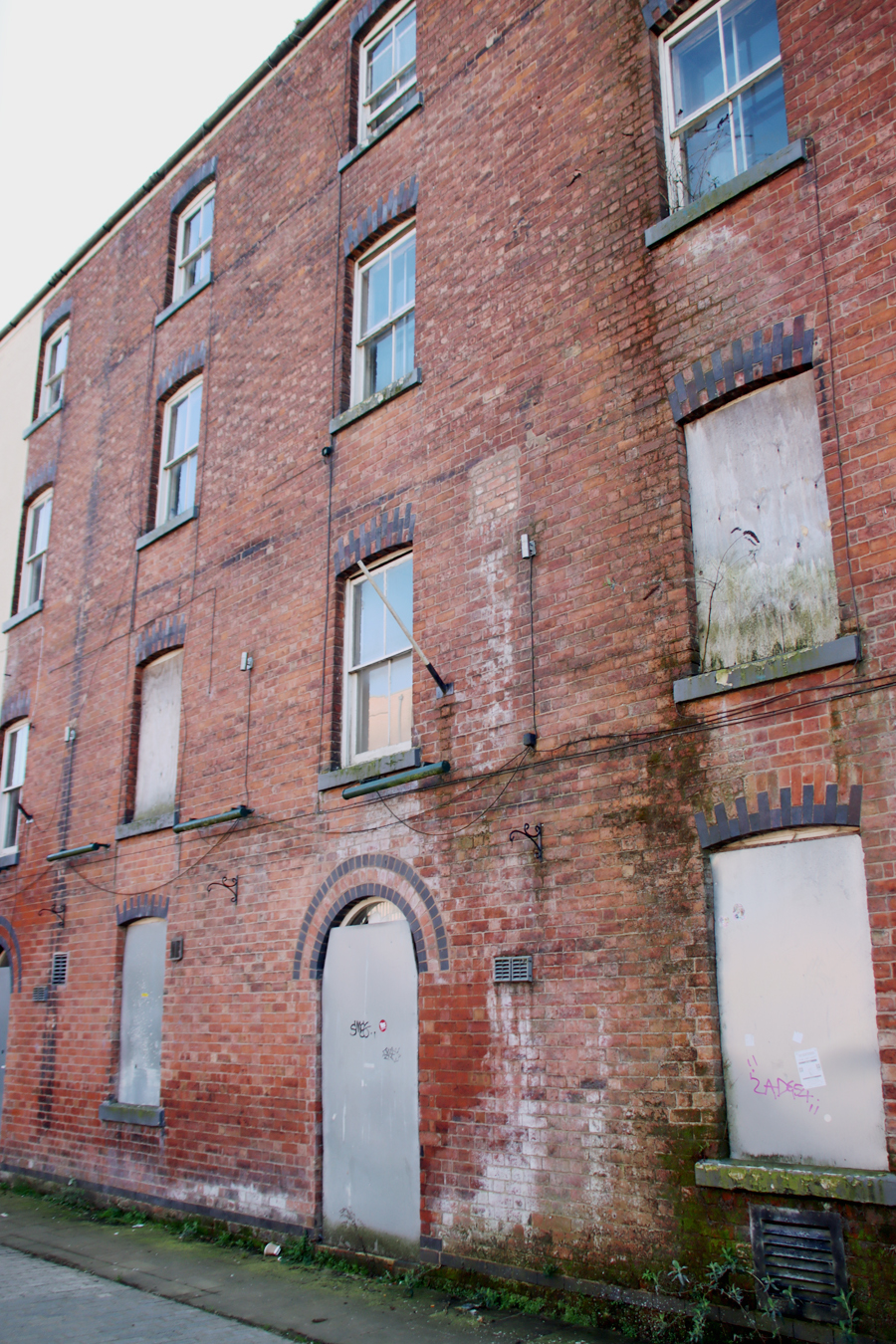
This canalside building near the Union Canal Bridge is in a very sorry state.

This was a busy area, with industrial and commercial enterprises moving in to take advantage of the proximity of the canal.  There are a number of very fine buildings to spot here, and if you follow Stuart Shuttleworth’s walk (see video below) he takes you into some of the surrounding streets to explore some of the relevant buildings behind the canal.

Union Canal Bridge. Details are available on the Grace’s Guide industrial history website.

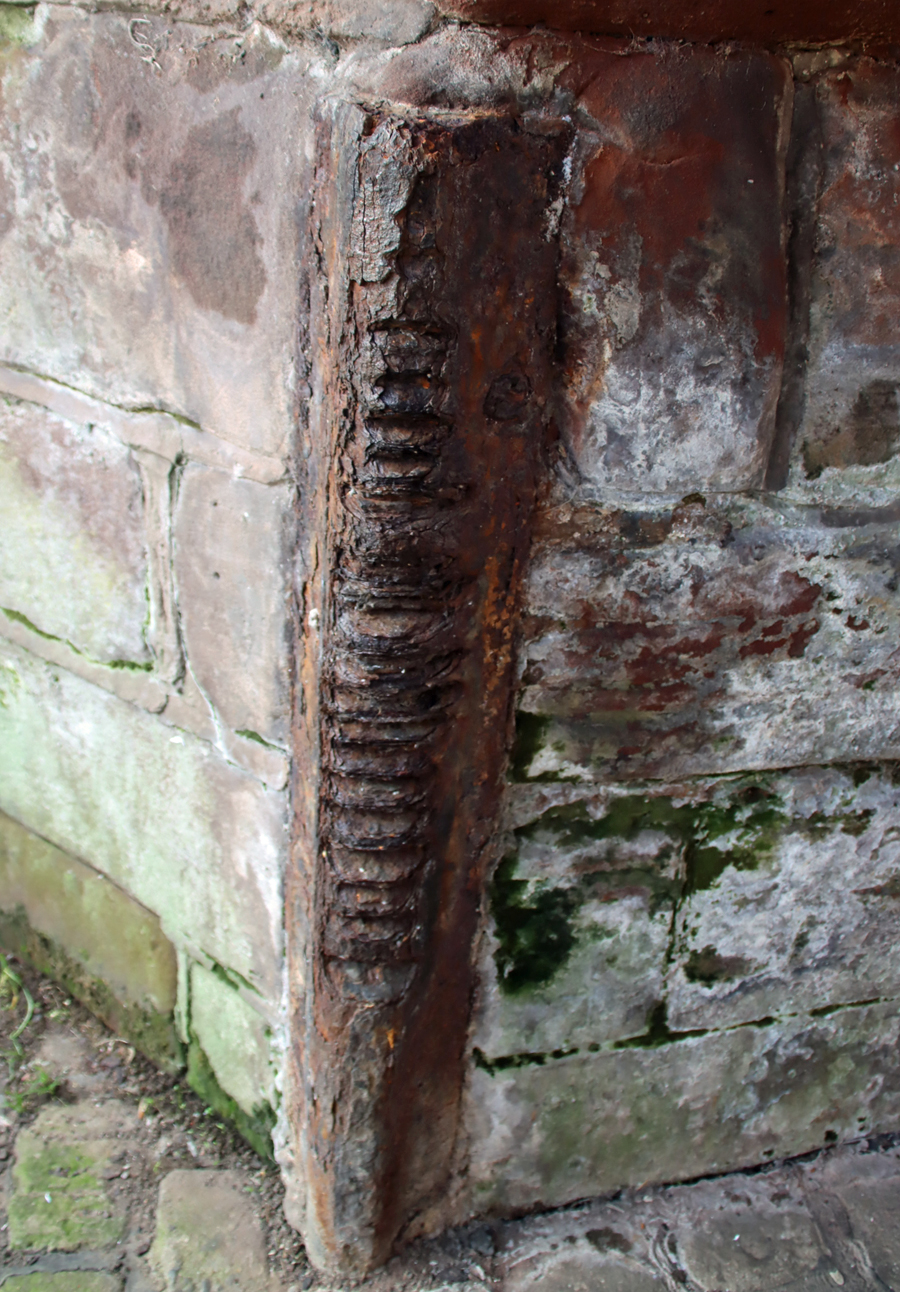
One of the protective iron uprights on the Union Bridge stonework, with rope markings from the barges pulled by horses

City Road Bridge (1863) by J. Mowle and Co.

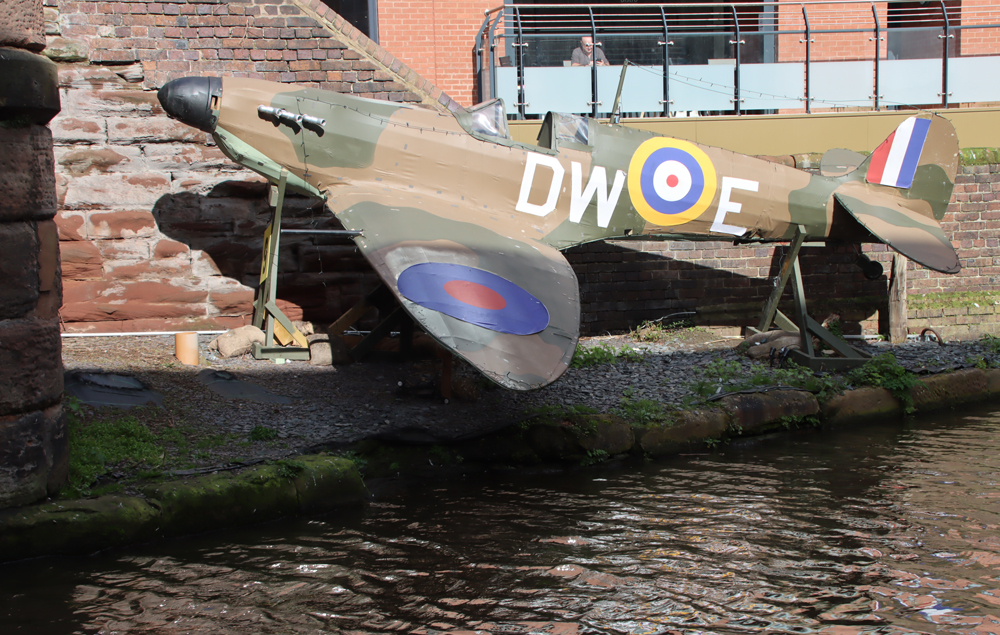
Replica Spitfire, apparently once used as a raft

Replica Spitfire, apparently once used in a raft race

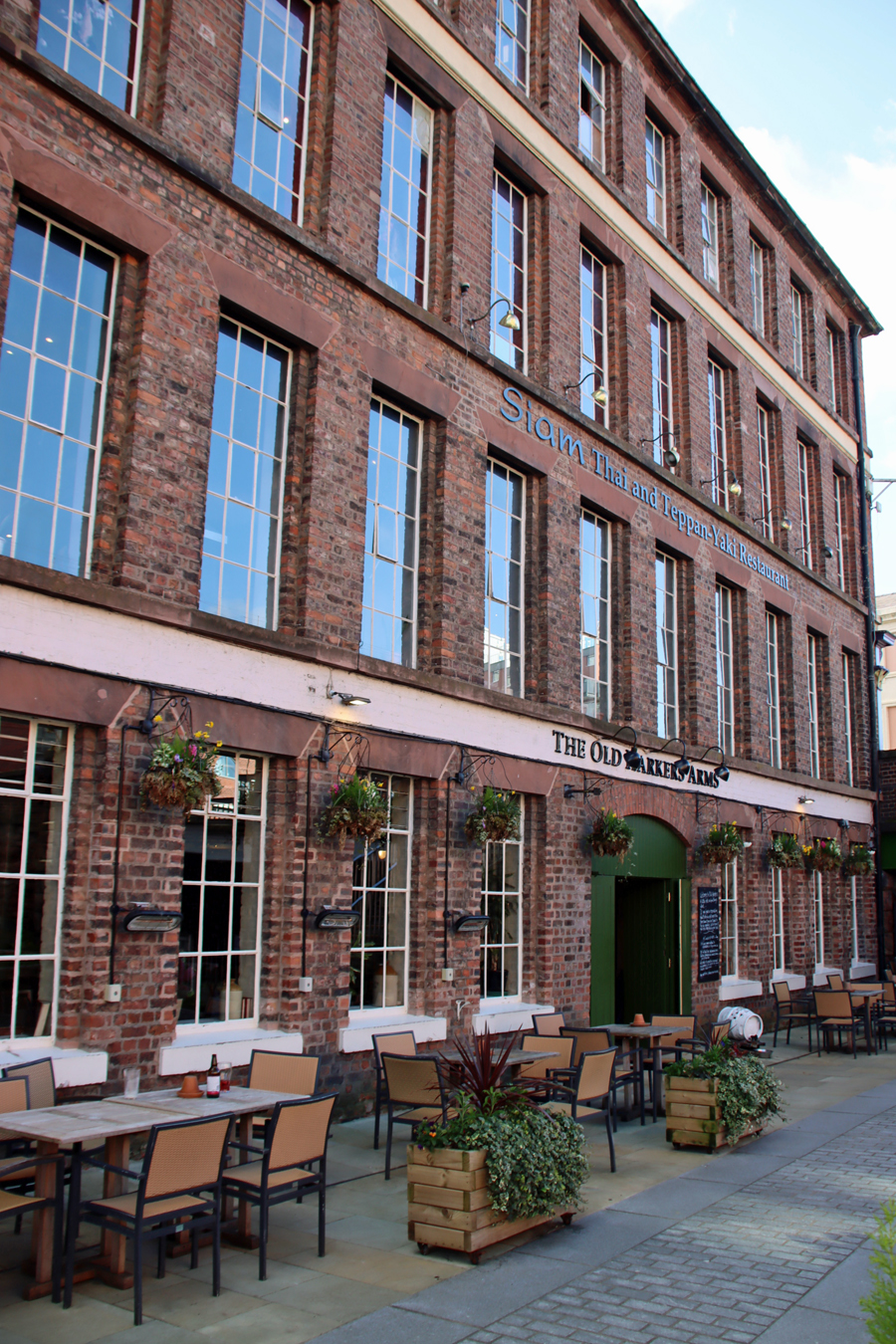
Old Harker's Arms

Looking back to the Old Harker’s Arms


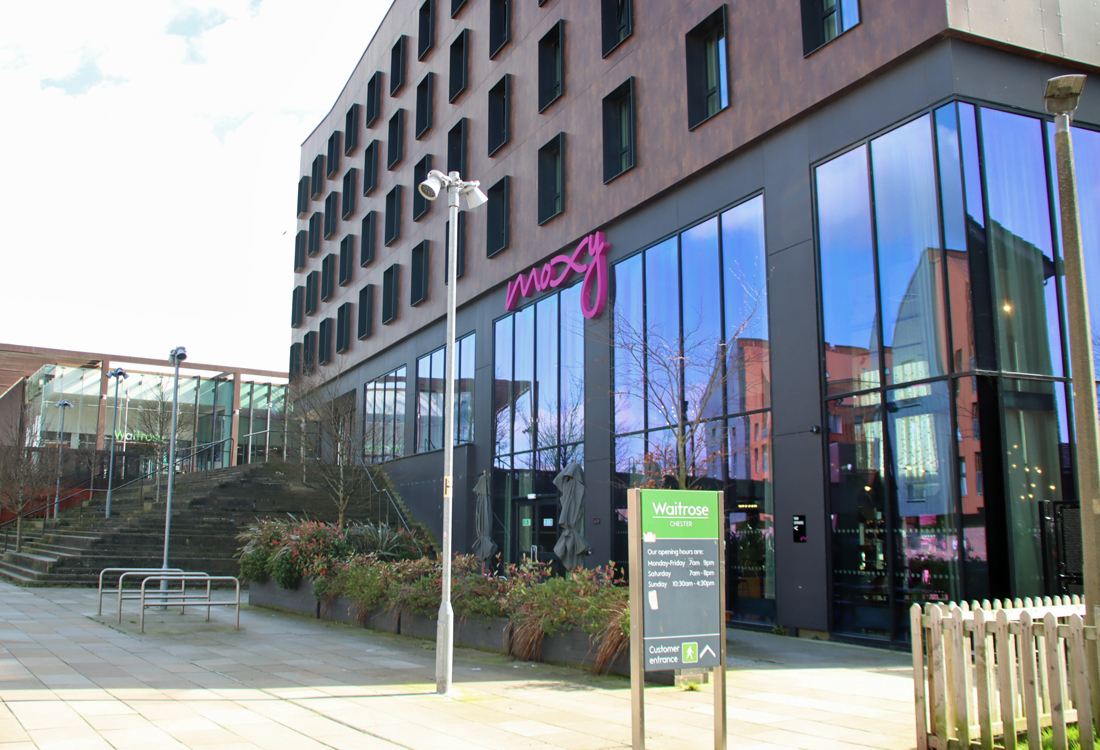
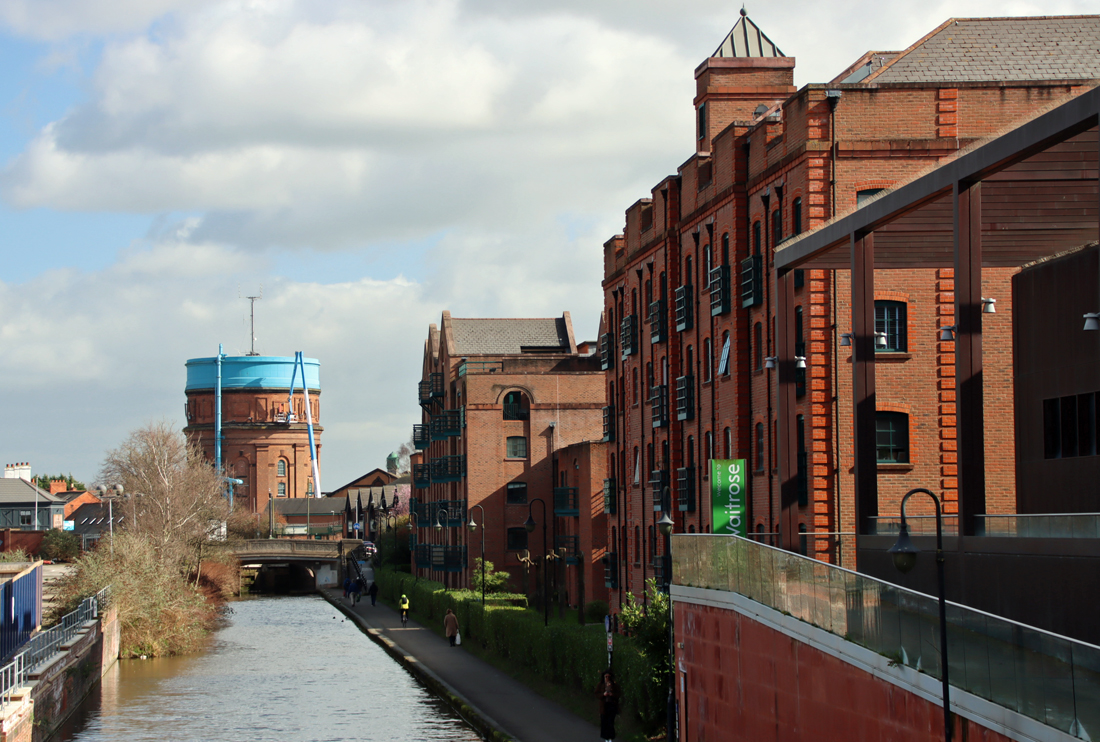
Moxy Hotel with Waitrose beyond

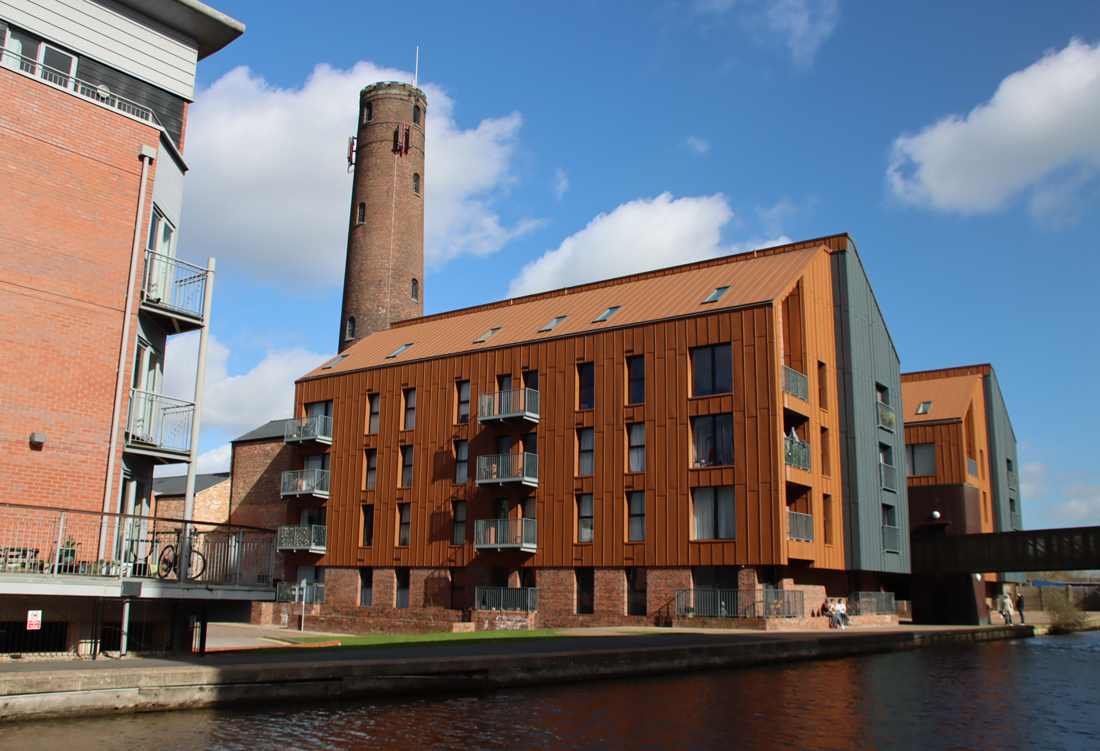
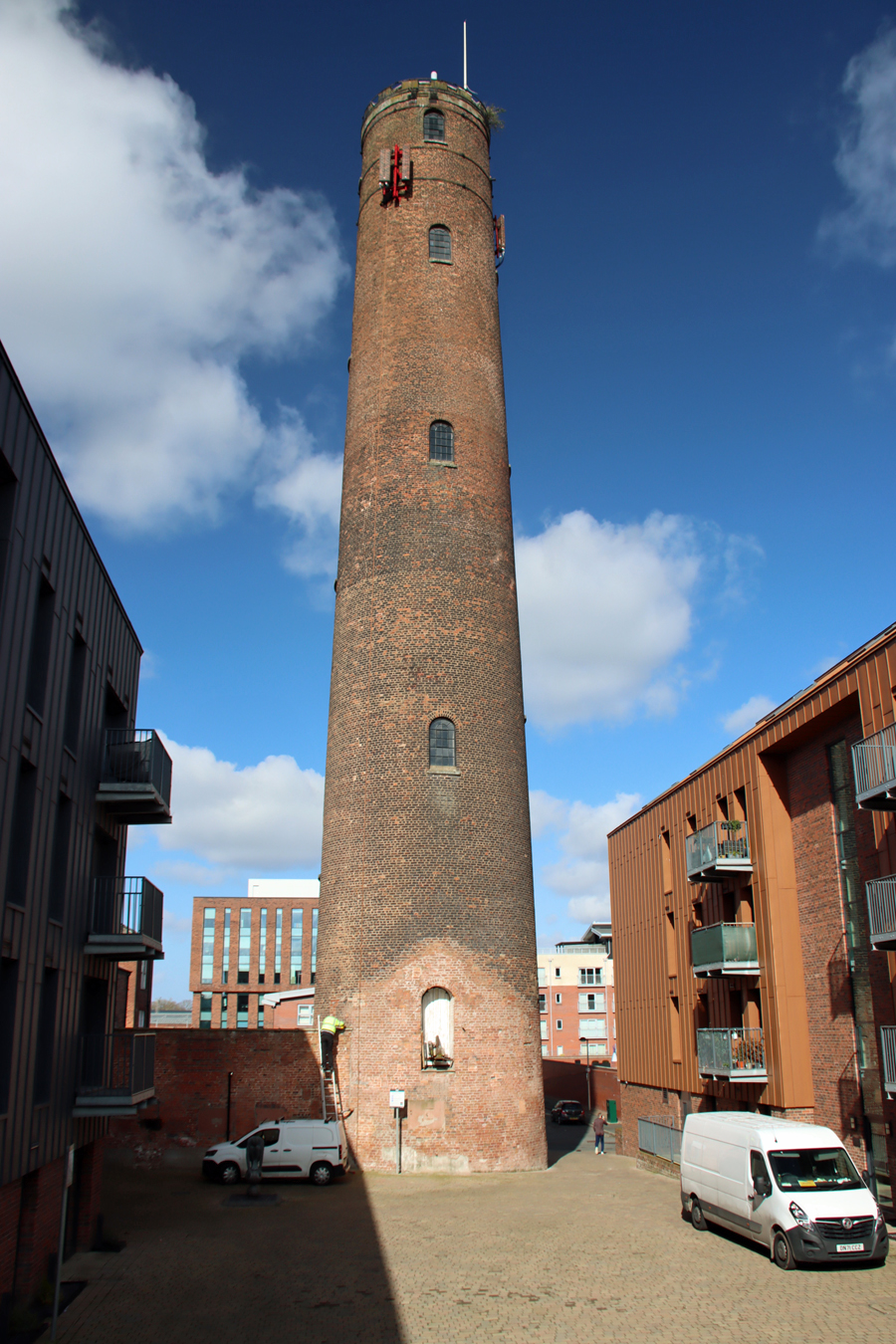
The Chester leadworks shot tower. Information about the works and the tower on the Historic England website

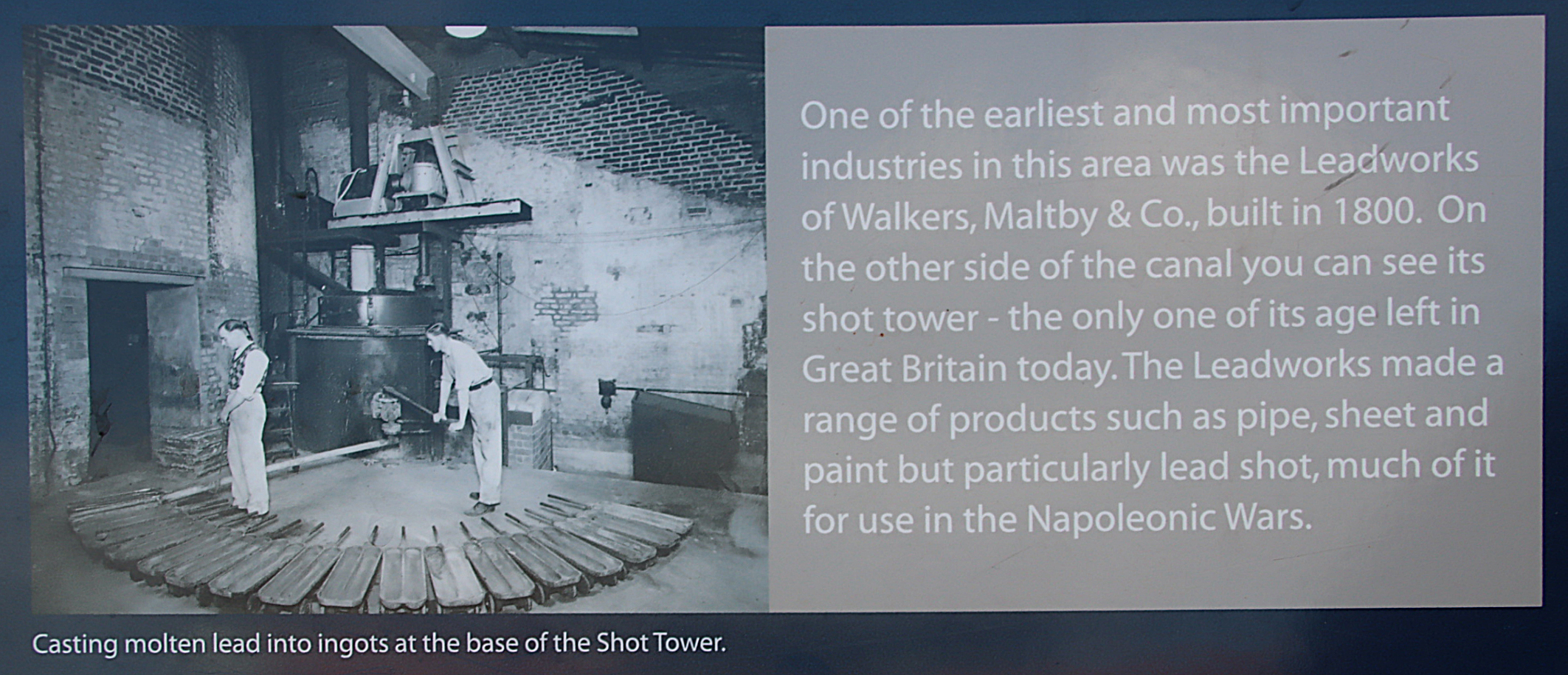
Signage along the canal showing original photograph of the leadworks

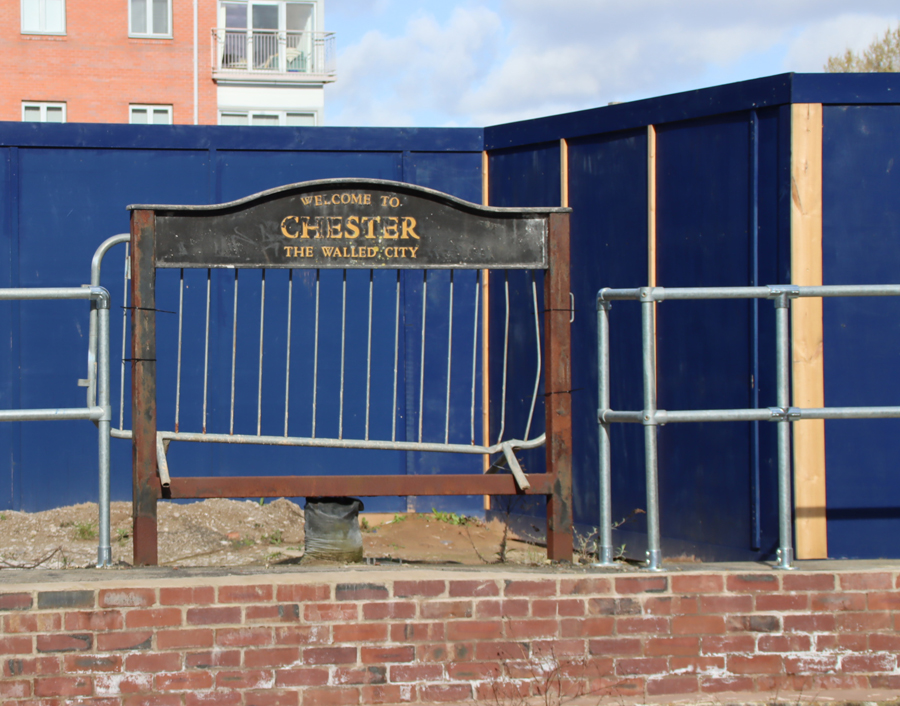
Sign on the edge of the canal, and in front of a building site for “luxury retirement apartments”

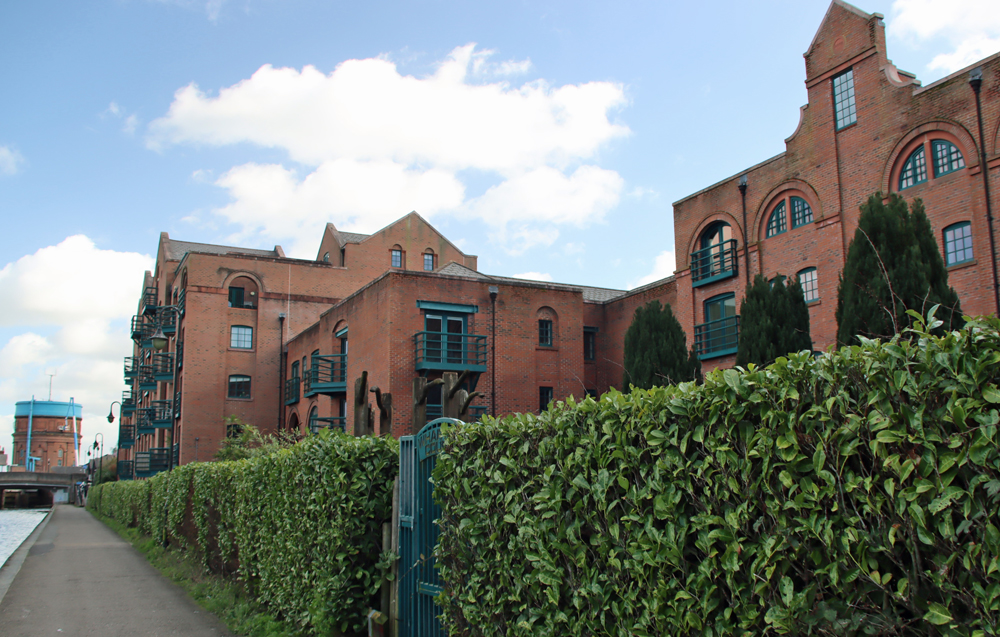
Wharton Court

Wharton Court

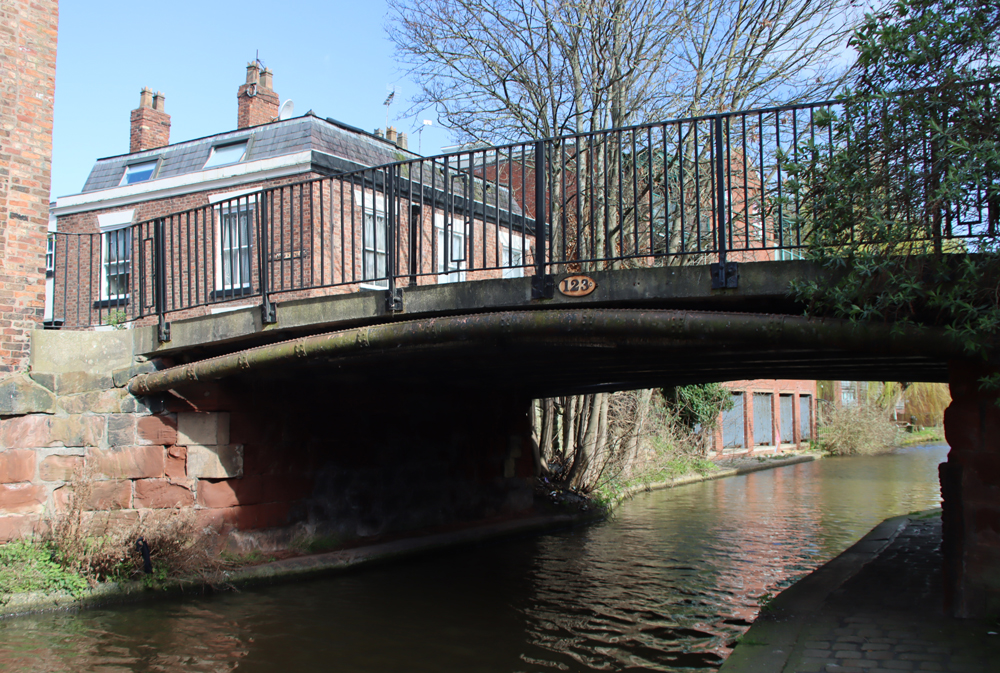
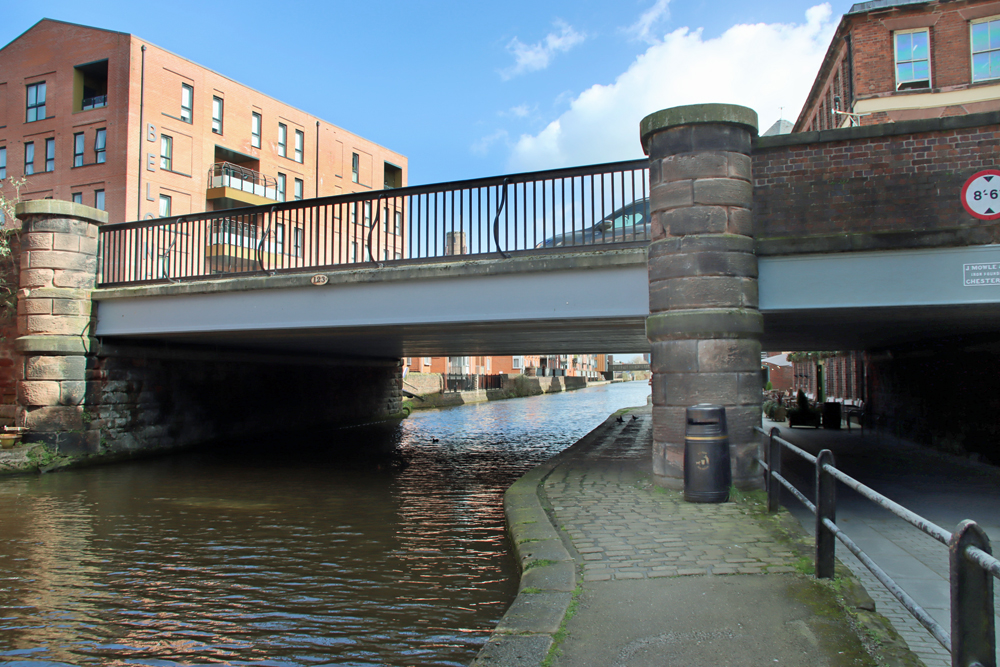
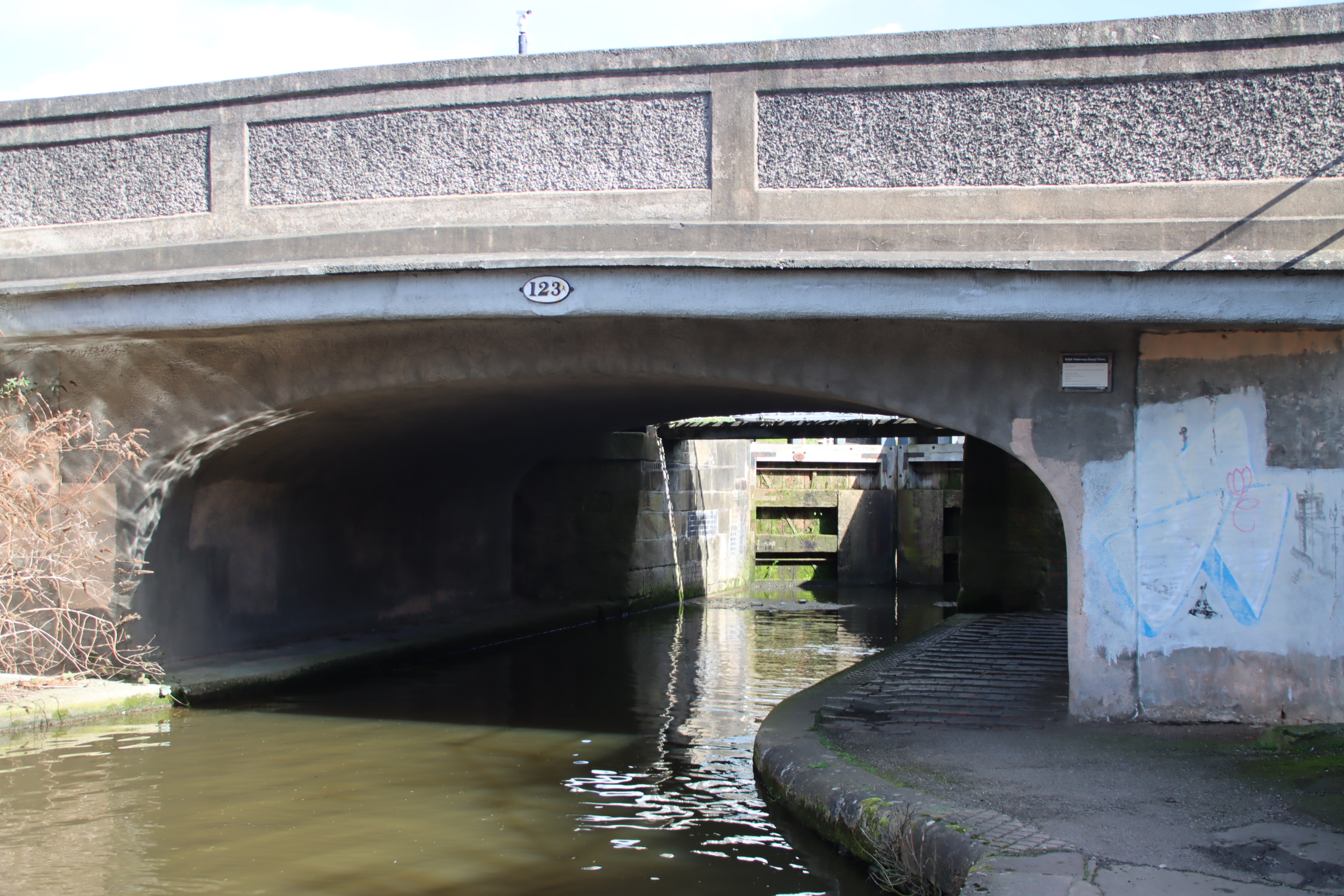
Hoole Lane Bridge, 123A

Hoole Lane Bridge, 123A

Hoole Lane Lock

Hoole Lane Lock

Hoole Lane Lock

Hoole Lane Mission Hall. Information at Hoole History and Heritage Society

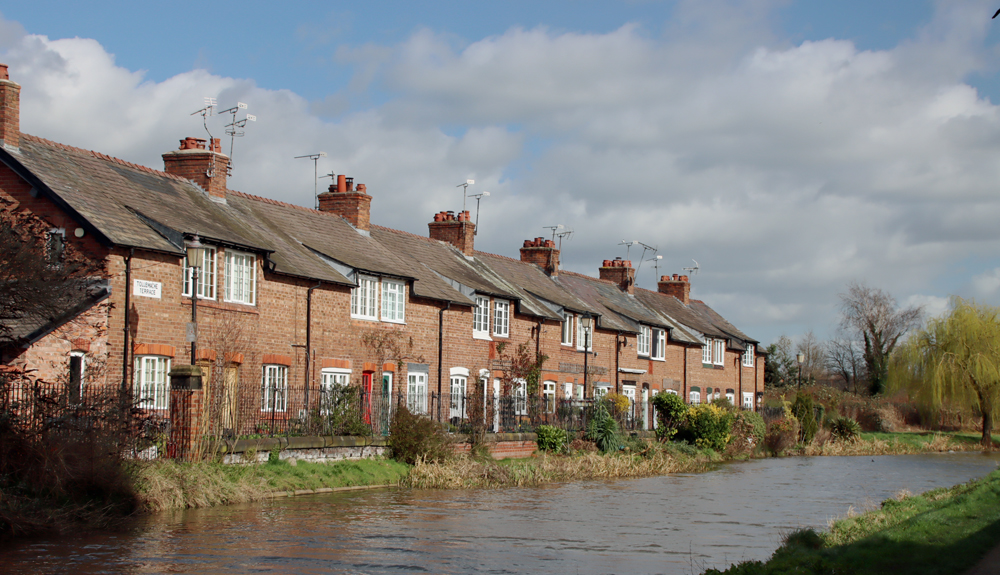
Tollemache Terrace

Tollemache Terrace

Chemistry Lock and sluice, Grade II listed. More information on the Historic England website

Towards the Bridge Inn (the white building)

Towards the Bridge Inn (the white building)

Tarvin Lock

Tarvin Bridge Lock

Chester and Boughton Hall Cricket Club

The view of the canal as it moves out of Chester towards Waverton and beyond


Starting the return leg of the walk at Tarvin Bridge Lock, next to the cricket club

Walking back into Chester, past the Boughton water tower.  See details on the Historic England website.

The point on the towpath at which I walked up to the flight of steps to go up to the city walls and turn right to return to the car park.


Sources

The full list of sources are in Part 1


Walking the history of Chester’s canals, from the river Dee to Boughton #1 – Short History

This post is divided into two. Part 1 (this part) looks in brief at some of the history of the Chester city canals, mainly to untangle the complicated story of what is happening at the Tower Wharf Basin, where the Chester and Ellesmere Canals came together.  Part 2 is a mainly photographic account of the walk along the canals from the river Dee to the Chester Boughton Hall Cricket Club, just beyond Tarvin Bridge.

The pink arrows are my route from the Little Roodee car park to the start of the canal. The orange arrows are the route taken from the start of the canal at the river Dee to Chester Boughton Hall Cricket Club. Details of the walk are in Part 2.

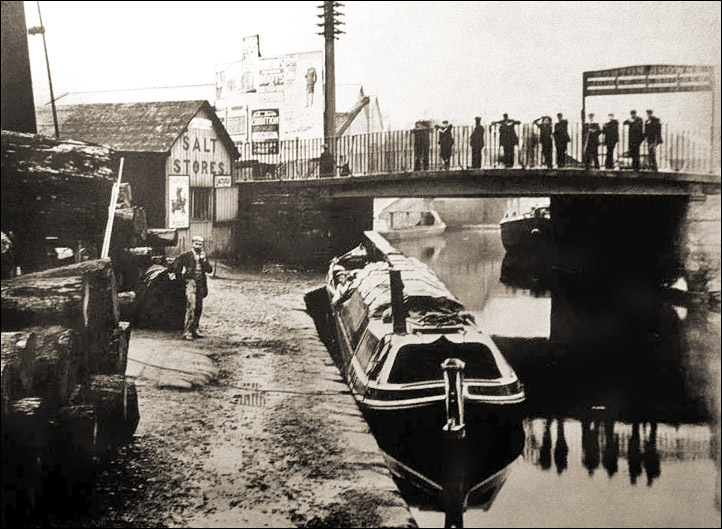
Cow Lane Bridge 1880s

Cow Lane Bridge in the 1880s. Source: chesterwallsinfo

This post begins with a short description of the history of the Shropshire Union Canal, describes why the intersections just beyond the Northgate staircase lock is so complicated, and goes on to describe the walk.

The Shropshire Union Canal runs today from the Mersey and the Manchester Ship Canal at Ellesmere Port, to Autherley Junction near Wolverhampton on the Staffordshire and Worcestershire Canal over a distance of 66.5 miles (107km).  Because it runs beyond the city walls, only making its presence felt to tourists where it crosses Northgate and along the base of the city walls, it does not feature on the city’s usual tourist routes.  Unlike Chester’s well known medieval, Georgian and Victorian architectural attractions, the canal is more directly a component part of the city’s industrial past, but is just as essential in the city’s story.

The history of the Shropshire Union Canal

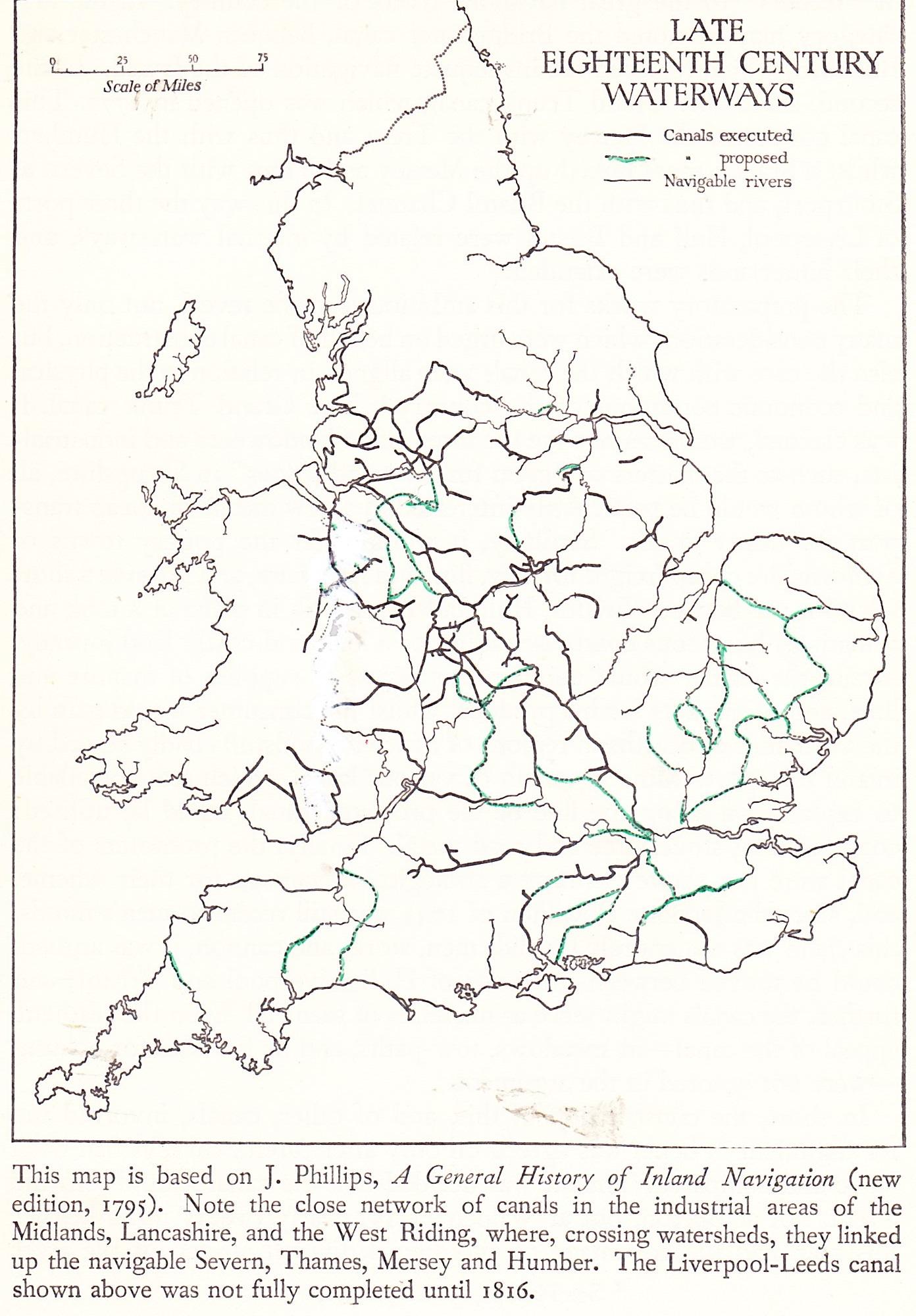
During the 18th century civil engineer James Brindley (1716-1772) was responsible for building over 365 miles of canals.  Brindely realized that any inland waterway network would need to connect to all the great navigable rivers that connected to the sea, including the Thames, the Mersey, the Severn and the Trent, incorporating other important navigable rivers like the the Avon and the Dee.  The network was a sprawling affair, but it revolutionized transport, avoiding roads that would become mired and impassable in winter, as well as unnavigable sections of rivers, and the riverine problems of tides, drought and flood.  Water into and out of the canal system was regulated and therefore predictable, and allowed year-round transport.  The advantages became very clear very quickly, and manufacturing and trading businesses began to locate themselves at critical points on the canal network.  Eagerness to invest in infrastructure resulted in a canal boom in the mid to late 1700s.  Each new section of canal required an Act of Parliament, subject to Royal Assent, and Act after Act was passed as the network expanded.

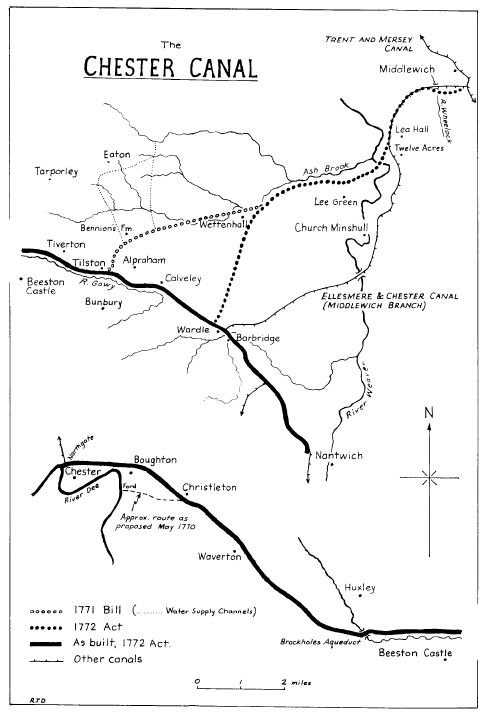
The Chester Canal. Source: Shearing 1985, p.150

The  execution of the canal project for Chester was deeply flawed.  Jumping on the canal bandwagon, entrepreneurs and investors envisaged a money-making venture that would bring Shropshire and Cheshire into the mainstream trade network with Birmingham, the nation’s canal hub and centre of industry, via a junction at Middlewich with the 1777 Trent and Mersey Canal.  Unfortunately, the builders of the Chester Canal did not have agreements in place to connect their new Chester Canal either to the Trent and Mersey Canal, which denied them permission to build a junction, or with the River Dee Company, which also put barriers in their way leading to several years of negotiation before a satisfactory solution was reached.  The Chester Canal, opening in 1779, was not built to Middlewich, where it had been planned for the Chester to join the Trent and Mersey, and instead stopped at Nantwich, segregated from the rest of the national canal network.  With little traffic carrying low-value cargoes, as well as a packet boat service, the canal was a fairly substantial failure.  In 1787 the Beeston staircase locks collapsed and there were insufficient funds to pay for repairs.  The Chester Canal hovered on the verge of bankruptcy.

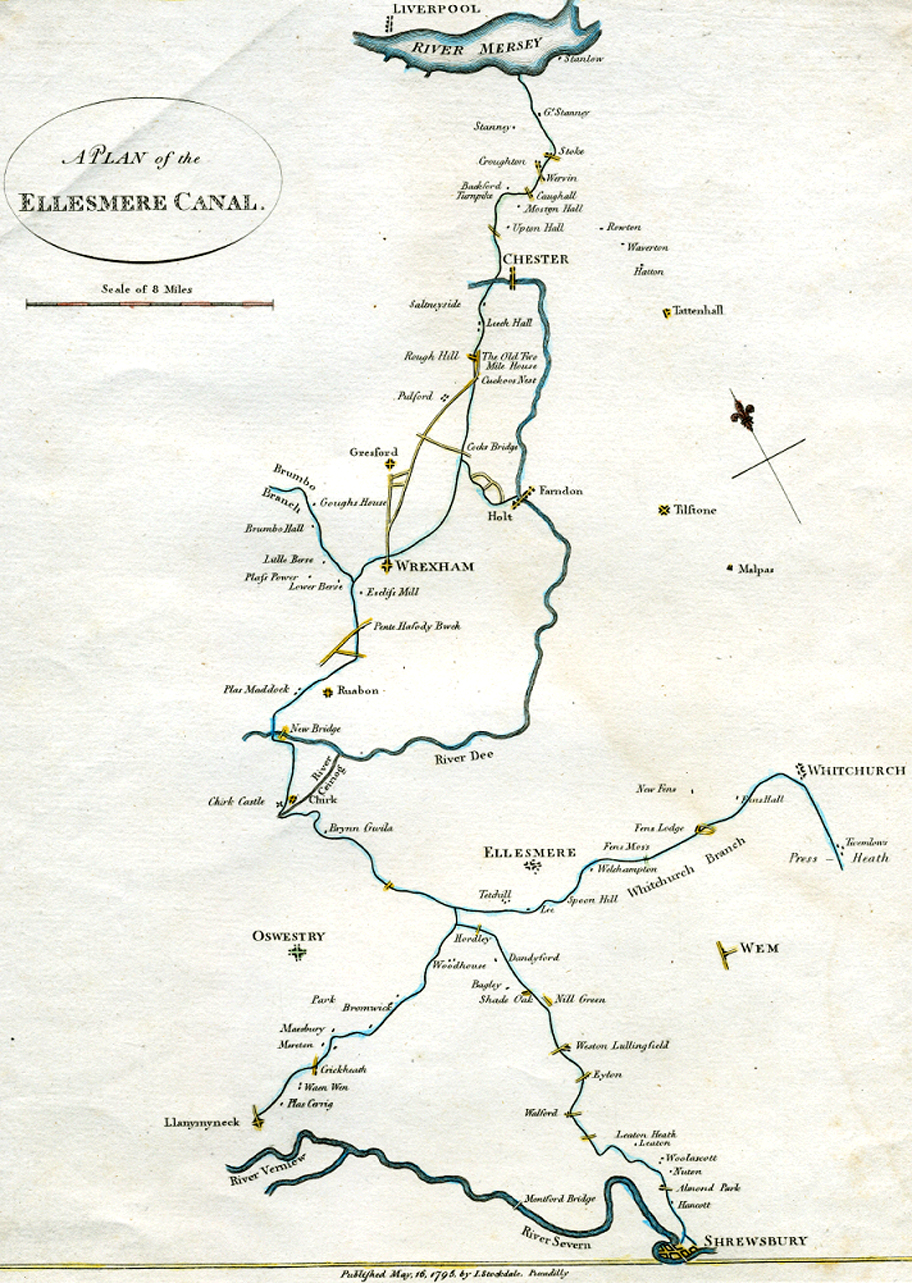
The complex arrangement of the Ellesmere Canal

The complex arrangement of the Ellesmere Canal and its branches is shown as thin blue winding lines. The thick blue line from Chester is the Dee. The yellow lines are roads. Click to see a bigger version. Source: Wikipedia

If it had not been for the 1791 Ellesmere Canal project, the Chester Canal would not have managed to limp on much longer.  The proposal for sections of canal to link the Mersey at Netherpool (now Ellesmere Port) to both the river Dee at Chester and the Severn at Shrewsbury was ambitious, but attracted sufficient support for a surveyor to be hired and possible routes to be explored.  The Ellesmere Canal proposal was presented to parliament and received its Royal Assent in April 1793.   Although shortages in funding prevented the realization of the full vision, shown right, Chester was at last brought into the national canal network. Part of this necessitated the addition of a new branch of canal from Chester to Ellesmere Port, which connected with the Chester Canal in what is now the Tower Wharf Basin.  The two companies merged in 1813, becoming the Ellesmere and Chester Canal Companh.  In 1833 the Middlewich branch was added, as the Chester Canal company had originally planned, and was connected to the rest of the network via the Trent and Mersey.
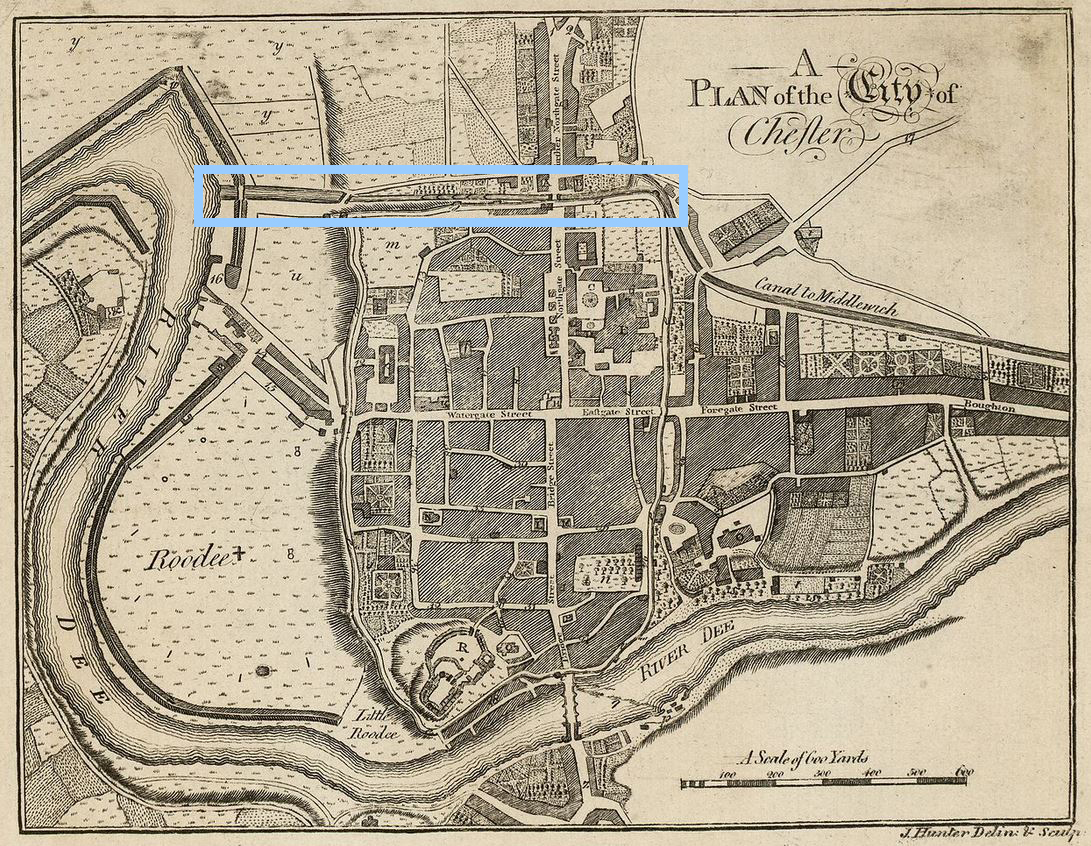
Hunter 1782 map with canal

Hunter 1782 map with the canal before the basins were added for the Wirral Line

These changes required major infrastructure changes in Chester itself that are still clearly visible today.  Starting from the former interface between the river and the canal, just off Sealand Road, the derelict remains of the river-canal lock are clearly visible as industrial archaeology.  The gates have long gone and this section of the lock and the branch that once lead into the Dee Basin, along Tower Road on the map below, on its way to the Dee Branch, is full of aquatic plant life.  As you walk along towards the Dee Branch, rounding the corner and passing under the bridge, you find yourself in the basin complex, the Ellesmere Canal Company’s solution to how best to incorporate the Wirral Line north to Ellesmere Port.  However before the Ellesmere Canal Company was involved, the Chester Canal simply ran straight ahead, running directly along the Dee Basin into a set of five staircase locks before heading east towards Boughton.
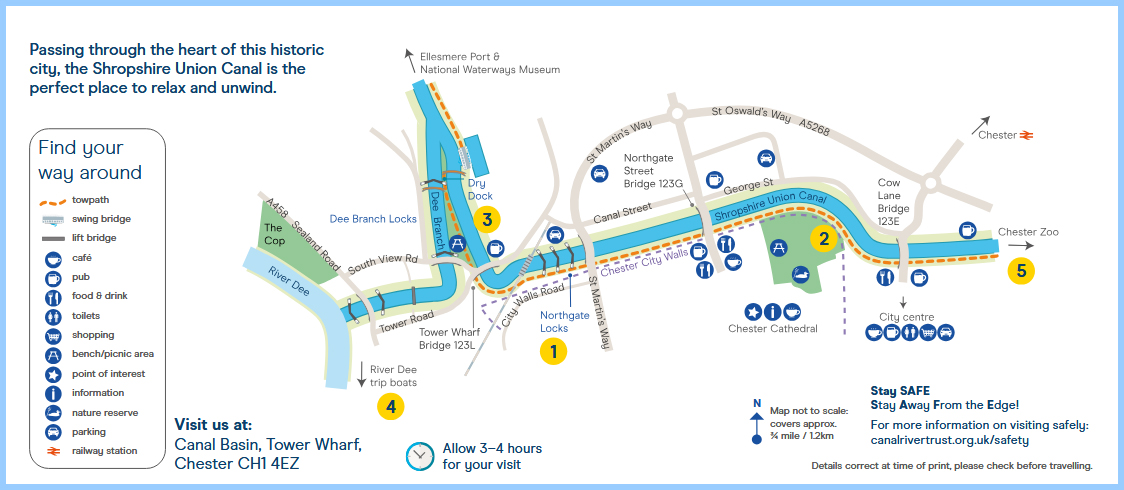
Canal and River Trust map of the basin and wharves, showing the complex arrangement of locks and basins required to incorporate the Wirral branch of the canal to Ellesmere Port.
 

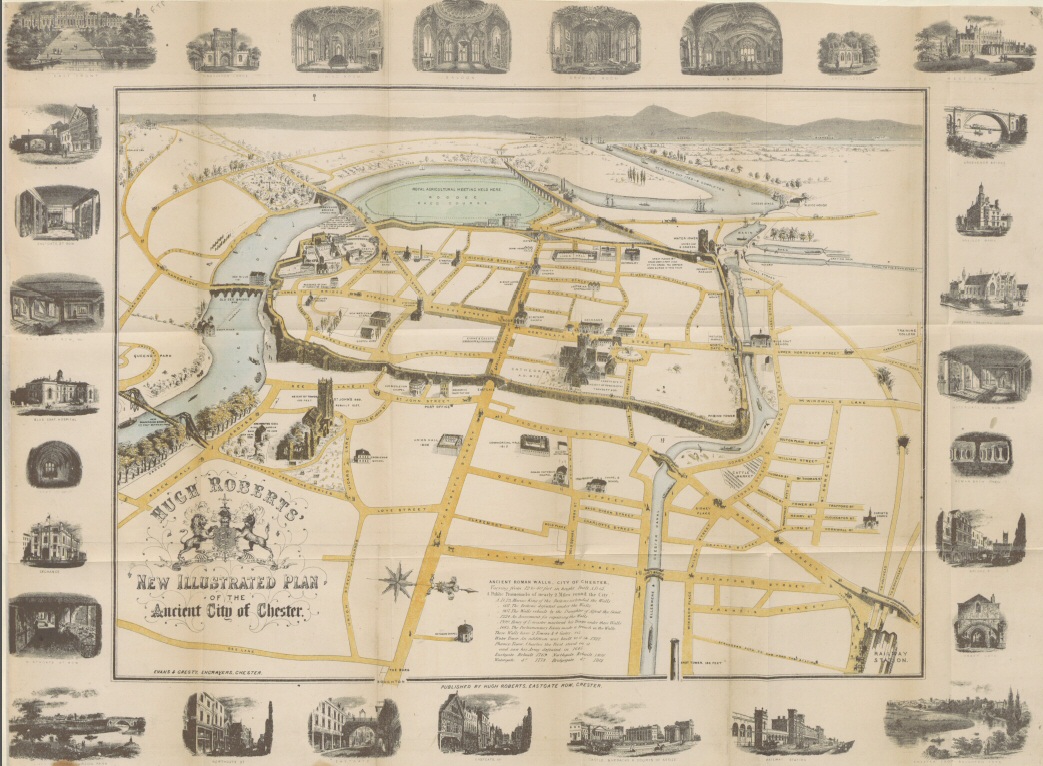
Map from the 1858 Roberts Chester Guide
Map from the 1858 Roberts Chester Guide, showing the big Dee Basin at the far end where locks connected it to the Dee. Click image to enlarge

The set of basins and wharves that became necessary when the Chester Canal was incorporated into the Ellesmere Canal Company’s plans capture the fascinating history of how the area’s canal system was forced to evolve.  Three different sections of the canal are involved in this complex arrangement, shown above.  The earliest of these phases belongs to the original Chester Canal, which begins at the river Dee and once headed straight along into a series of five locks that climbed the hill to the dramatic sandstone cut and onwards to Hoole and Boughton before turning south to Christleton and beyond.  The second phase is the Ellesmere Canal Company’s civil engineering work to incorporate the new “Wirral Line,” which headed in a roughly northerly direction out of Chester.  This now chopped off the Chester Canal at the base of the locks, demolishing two of the five locks, to create the Tower Wharf Basin.  The new arrangement cut off the canal from the river, meaning that another section of canal, called the Dee Branch, had to be created parallel to the main basin and accessed via a lock, to allow vessels to travel between the main line, the Wirral line and the Dee.  It is not an elegant solution, but it worked.  The rest of the canal is very straight forward as you walk towards Hoole, Boughton and beyond.  The historical interest in those sections of the canal is more about the bridges and the flanking architecture that grew up around the canal.

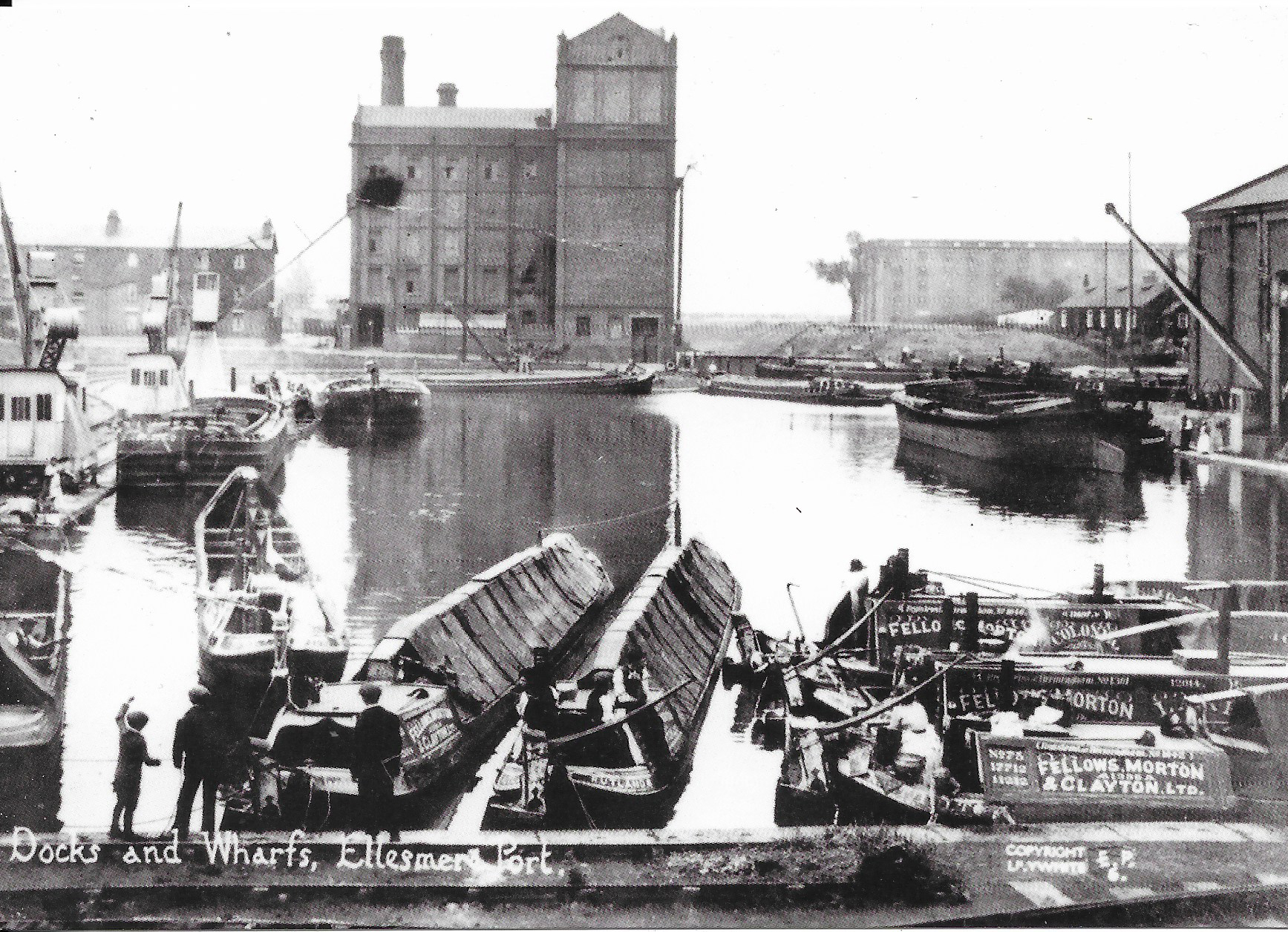
The docks at Ellesmere Port during the 19th century

The docks and wharves at Ellesmere Port during the 19th century, from the Ellesmere Port canal museum archives

In 1846 the decision was made to bring together the various canal and railway interests together under one umbrella organization, the Shropshire Union Railways and Canals Company, providing the different sections of canal from Ellesmere Port to Wolverhampton with a single name:  the Shropshire Union Canal.  In 1894 the Manchester Ship Canal opened, and the Ellesmere Port access to the Mersey was now via the new shipping channel.

In spite of canalization of the Dee in the 1730s was intended to make the rapidly silting river navigable and to make Chester competitive once again with Liverpool, but in spite of these measures silting continued and the river became impractical for serious commercial shipping and shipbuilding, particularly in the face of Liverpool’s rapid expansion.  The last ships were built on the Dee in the early 20th century, ending a centuries old industry, and the connection between the Shropshire Union and the river went out of use.

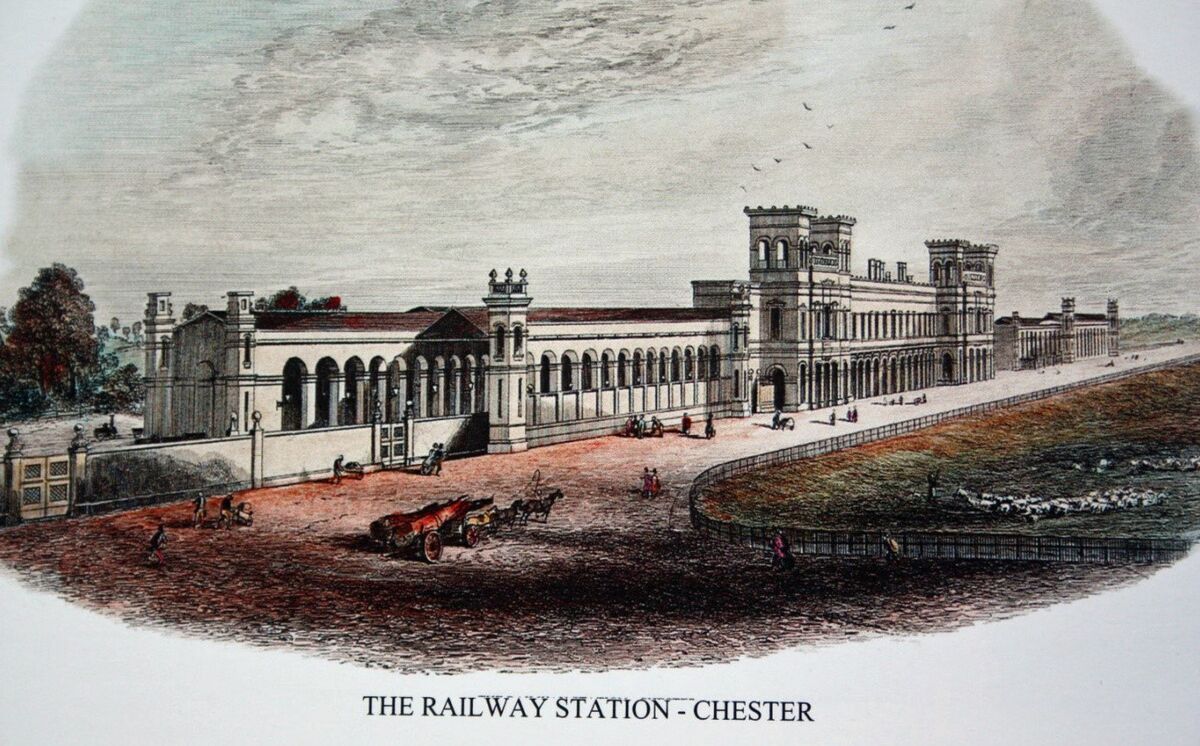
Chester Railway Station

Chester Railway Station 1848. Source: Hoole History and Heritage Society

The railway came to Chester in 1840, picking up some of the slack, but Chester’s days as a centre for trade and industry were over and the main financial opportunity that the railway brought was tourism.  The canal, however, continued to be used as part of the canal network, connecting to maritime trade via the Mersey.  Eventually, as rail replaced the canals, many of them became derelict, only reviving as leisure resources in the later 20th century.

The canal attracted many businesses along its edges, and today the canal preserves a considerable amount of commercial and industrial heritage, adding a welcome extra dimension to Chester’s historic legacy.  The canal network today is used for pleasure, mainly in the form of cruising, walking and cycling.  It still covers a vast region of England and Wales and is managed by a mixture of state organizations and by both regional and local charities.

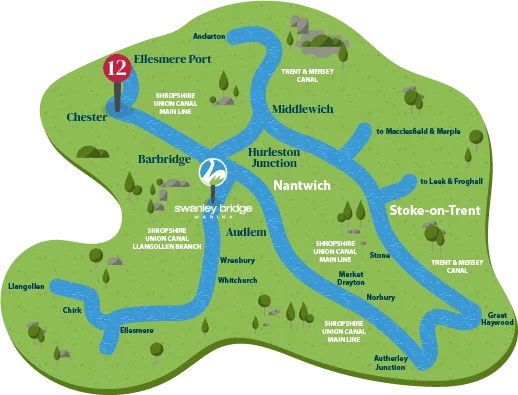
Schematic map showing how Chester relates to the canal network

Schematic map showing how Chester relates to the canal network today. Source: Swanley Bridge Marina

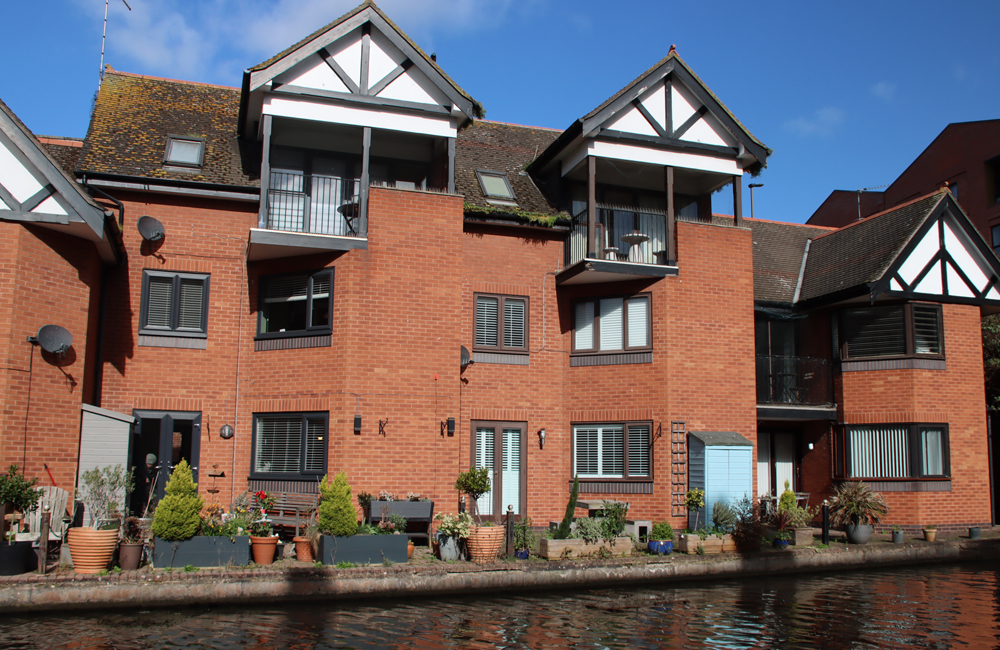
As canals have become attractive for residential development, new housing has also been erected, some developments more sympathetic than others, but all interesting.  The mixture is captured in the walk in Part 2. Apart from a few isolated examples, most of the warehousing that once flanked the basins and the canal has long gone, replaced by modern apartments, including student accommodation and retail outlets.

The Dee no longer connects to the canal network.  The lock between the river and the Dee Branch of the canal, lying just over Sealand Road, is completely derelict.  One of the locks further along is padlocked shut. The old swing bridge that had allowed vessels to interrupt road traffic to enter the canal network was replaced by the fixed road bridge in the 1960s.   Today the leg of the Dee branch of the canal running parallel to the Basin, once used for access to the river, is used for mooring privately owned narrowboats.

Signage at the canal basin showing information about Telford's Warehouse

Signage at the canal basin showing information about Telford’s Warehouse

I have kept this history brief, merely to introduce the walk.  Rather than reinventing the wheel, please see the Sources below, which contain much more information.  The three video links also provide an excellent overview, between them, of the canal, its history, and some of the buildings and businesses associated with it.  The first is by John Herson, one of whose guided canal walks I have done and thoroughly enjoyed, which focuses on Tower Wharf, the Canal Basin and the relationship of the canal with the Dee.  The second is by Stuart Shuttleworth and looks at the main line of the canal as it passes through Chester.  Together they form a brilliant introduction to the subject, showing the key places to visit.  At the end, underneath Sources, there is another video by “Pastfinder,” which is longer and explores what remains today in more depth, walking and talking at the same time, making it quite easy to retrace his footsteps.  There are some fascinating additional pieces of information in this.

John Herson:

Stuart Shuttleworth:


Sources:

A lot of information is contained in the two videos above and the one at the end of the post.

Other sources of information are as follows:

Books and papers

Carrington, Peter 1994. English Heritage Book of Chester.  Batsford / English Heritage

Martin, Richard 2018. Ships of the Chester Rivers.  Shipbuilding on the Dee from Chester to the Point of Ayr 1800-1942. Bridge Books

Mosse, J., David Lobband and Judith Pile 2023 (9th edition).  Collins Nicholson Waterways Guide 4. Four Counties and the Welsh Canals.  HarperCollins

Nicholson, R. 1989 (4th edition). Nicholson/Ordnance Survey Guide to the Waterways 2: Central. Robert Nicholson Publications and Ordnance Survey

Shearing, Edwin A. 1985. Chester Canal Projects: Part I. Journal of the Railway and Canal Historical Society. Vol XXVIII, no.3, November 1984. p.98-103

Shearing, Edwin A. 1985. Chester Canal Projects: Part II. Journal of the Railway and Canal Historical Society. Vol XXVIII, no.4, March 1985. p.146-154

Ward, Simon 2013 (2nd edition). Chester. A History. The History Press

Websites

Canal and River Trust
Welcome to Chester. Escape the city on this tranquil waterway (PDF)
https://canalrivertrust.org.uk/media/document/0z8YCnXdfYHg_am-LmUGSg/p22Wl115w_dWrQTRa-XYJd5Q5nl2UR6N17EY2G1JFyc/aHR0cHM6Ly9jcnRwcm9kY21zdWtzMDEuYmxvYi5jb3JlLndpbmRvd3MubmV0L2RvY3VtZW50Lw/0192bddd-4001-76ad-a95b-0ad3662ccdcc.pdf

Canal Routes
Chester Canal History
https://www.canalroutes.net/Chester-Canal.html
Chester Canal Route
https://www.canalroutes.net/Shropshire-Union-Canal.html#Chester-Canal-Route
Ellesmere Canal – Wirral Line
https://www.canalroutes.net/Shropshire-Union-Canal.html#Ellesmere-Canal-Wirral-Line
Shropshire Union Canal
https://www.canalroutes.net/Shropshire-Union-Canal.html

Cheshire West and Cheshire
Chester Canal Conservation Area Character Appraisal Ellesmere Port to Nantwich (PDF)
https://www.cheshirewestandchester.gov.uk/documents/planning-and-building-consultancy/total-environment/conservation-and-design/conservation-area-appraisals/canal-conservation-area-elesmere-port-to-nantwich-latest-version-261118.pdf
Chester Characterization Study
https://www.cheshirewestandchester.gov.uk/your-council/policies-and-performance/council-plans-policies-and-strategies/planning-policy/chester-characterisation-study

chesterwalls.info
Photographs of the Chester Canal Old and New, parts 1-5
https://chesterwalls.info/gallery/canalgallery.html

Chesterwiki
(with a lot of adverts interspersed)
Canalside
https://chester.shoutwiki.com/wiki/Canalside
Canal and Boatyard
https://chester.shoutwiki.com/wiki/Canal_and_Boatyard

Grace’s Guide to British Industrial History
James Brindley
https://www.gracesguide.co.uk/James_Brindley
William Jessop
https://www.gracesguide.co.uk/William_Jessop

Heritage Chester
Bite-Sized Wonder – The Lead Shot Tower
YouTube video

Historic England
Bridge of Sighs, Upper Northgate Street
https://historicengland.org.uk/listing/the-list/list-entry/1375967
Telfords Warehouse, Raymond Street

https://historicengland.org.uk/listing/the-list/list-entry/1375919?section=official-list-entry

Inland Waterways Association, Chester and Merseyside Branch
Chester Heritage Port Designation Document (PDF)
https://70cf2f03-3eb2-43c8-889f-b8f841fc3757.usrfiles.com/ugd/70cf2f_64e6633c34b9420f8c06a368857d1a42.pdf

UK Waterways Guide
Map of the Shropshire Union Canal
https://www.ukwaterwaysguide.co.uk/map/shropshire-union-canal/all-branches

“Pastfinder”:

Organist Jonathan Scott playing and talking about Chester Cathedral’s 19th century organ

Chester Cathedral organ pipes seen over the top of the choir

Chester Cathedral’s 19th century organ pipes seen over the top of the medieval choir

This is a really remarkable recording of Jonathan Scott playing the organ at Chester Cathedral, filmed by his brother Tom, who clearly understands what goes in to achieving the sounds that the organ, with Jonathan at its helm, is capable of producing.

The organ, which dates to the 19th century, has a rich, vibrant voice.  I often feel that the addition of organs to medieval churches and cathedrals destroys something (sometimes a considerable amount) of the internal harmony, with very little in the way of gain, but this video argues that at least in this particular case, there might be great compensation for architectural alterations.

This is an hour-long concert held in Chester Cathedral, beginning with the Overture to Mozart’s Magic Flute, in which the cathedral’s is being played by the remarkable Jonathan Scott, who talks about how the organ delivers its sound via keys, pedals and stops.  There is some great footage of Jonathan Scott’s finger work on all four tiered keyboards, and for me it was a particular revelation to see the amazing foot work required. I had no idea. There are also some great internal views of the cathedral on the video.  It is a truly illuminating insight into organ music.

YouTube channel Scott Brothers Duo: https://www.youtube.com/@scottbrothersduo


A guided walk to learn about the distinctive architectural creativity of John Douglas in Chester

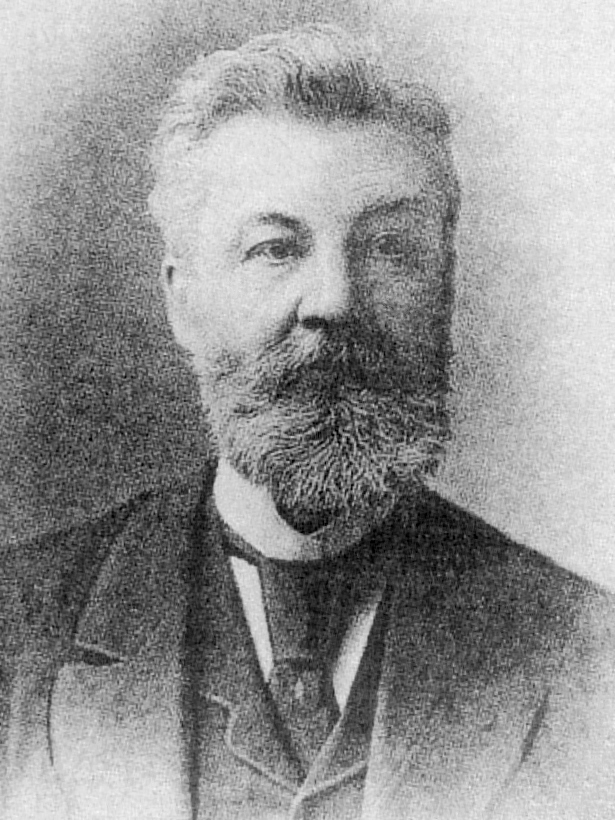
John Douglas. A photograph that apparently first appeared in “Building News” in 1890. Source: Wikipedia

For those who are interested in local heritage, it is probably not possible to live in or near Chester without knowing the name of the architect John Douglas.  John Douglas (1830-1911) was a prolific architect, working right at the end of the Victorian era but demonstrating a fundamental affiliation with Victorian architectural ideals.  According to Chantal’s research, between the buildings he built and those that he renovated and adapted, he contributed to over 500 buildings in Britain.  Not much is known about him, but he trained in Lancashire where a new middle class, rising in both wealth and influence, was creating an unprecedented demand for domestic, commercial and civic architecture.  His are some of the most imaginative and and engaging of Chester’s Victorian buildings, providing the city with an important additional layer of interest and texture.  He was also responsible for other local buildings at Eaton Hall (including Eccleston), Aldford and Port Sunlight, as well as many other UK locations.  Although never bowing to the past in his architectural inventions, Douglas incorporated elements of Chester’s earlier architectural styles into his unique creations, remaining sensitive to the original city whilst leaving a highly distinctive and creative legacy of his own.

Grosvenor Park Street

Our guide on the Heritage Open Day walk was Chantal Bradburn, art historian and head of Outreach at the University of Chester, who had done such a splendid job several days previously, introducing a large group of us to the Western Command at the Churchill Building.  Called “John Douglas in Chester,” this was a brand new walk, and a great idea to add it to the many events offered last week.  Instead of taking us on a route-march of every building that Douglas built in Chester, Chantal selected a representative few, which both captured different aspects of his work and at the same time demonstrated an underlying thread between them all.  By choosing a careful sample of Douglas’s total Chester output, she was able to impart far more knowledge about both Douglas and the individual buildings than if she had tried to include more, although she did finish up the tour with recommendations for other buildings to inspect nearby.  As with her Churchill Building talk, and perhaps even more so, it is impossible to do any sort of justice to all the facts that she imparted, and particularly to do any justice at all to her ability to contextualise the architecture within its social and economic environment, as well as discussing it in art-historical terms, so this is just a short taster of a really great guided walk.

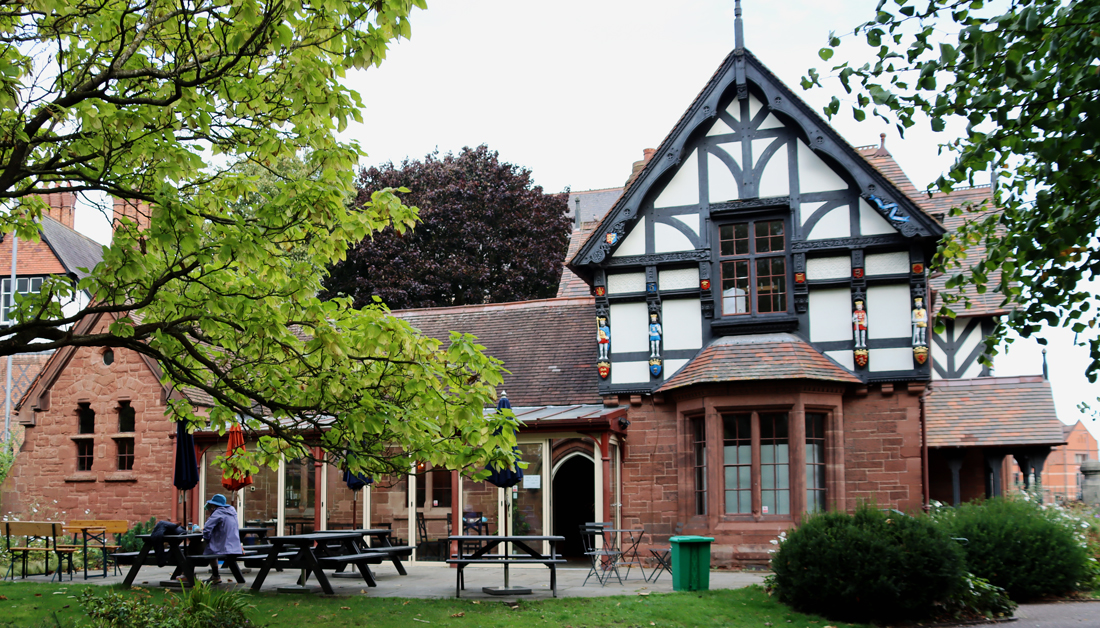
We started at the lodge in the Grosvenor Park, an obviously Victorian take on the Tudor half-timbered buildings that partly define Chester’s heritage, commissioned by the Grosvenor estate to provide a touch of additional elegance to the second Marquess of Westminster’s 1867 philanthropic donation of the land to create a park.

Grosvenor Park Lodge, Chester

Grosvenor Park Lodge

The Grosvenor Park Lodge by John Douglas

Grosvenor Park Lodge from the rear

Grosvenor Park Lodge from the rear

xxx

Grosvenor Park Lodge

Detail of carved woodwork on the Grosvenor Park Lodge: “Nobilitatis virtus non stemma character”

With Ruabon brick at its base and half-timbering at first floor level, it features sculptural elements and carvings that provide it with real charm.  Douglas apparently thought it entirely appropriate to add a medieval-style sandstone extension to his building, which as Chantal pointed out, reflects the multi-period character of many of Chester’s buildings.

It became clear as we proceeded on the walk that this willingness to go with the flow of Chester architecture by echoing some of its variety and diversity, without ever trying to replicate it, was a key characteristic of Douglas’s approach. He always preferred local materials, and this too indicates a real wish to connect with Chester’s earlier architectural heritage.  It’s great to see it being used as a café, providing a useful service on the edge of the park.

xxx


xxx

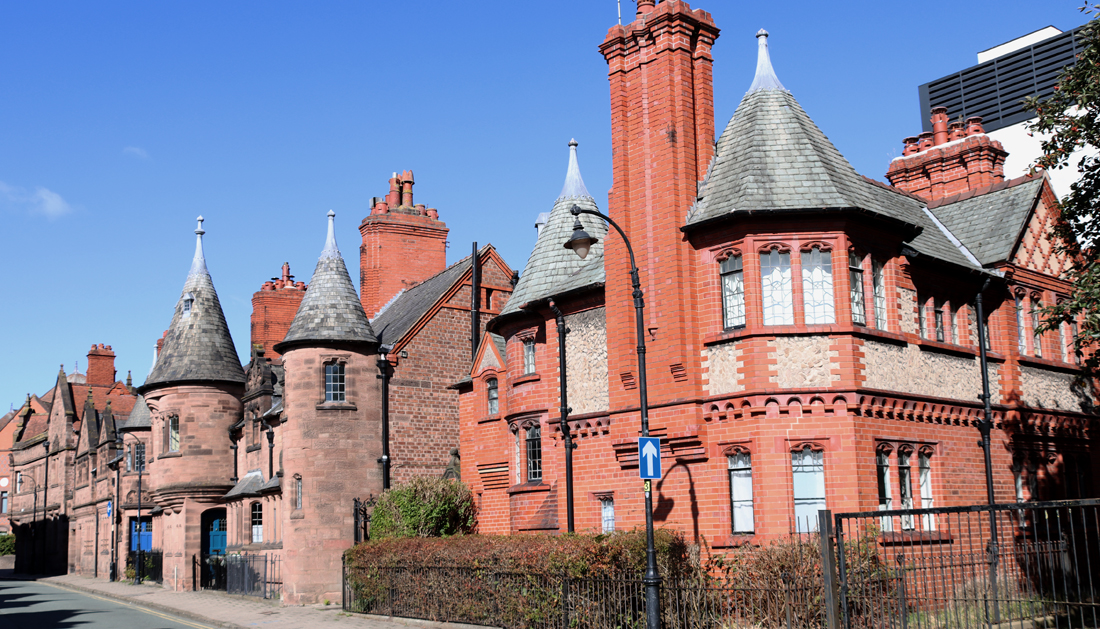
Our next stop was just over the road, on Grosvenor Park Street.  The 1872 Grade II* listed houses, numbers 6-11 on Grosvenor Park Street make up of a row of terraced houses and a Zion Chapel have long been a favourite of mine.  Together they are a fabulous, wildly imaginative mixture of different elements all of Ruabon red brick, including gothic style features, turrets, and a dozen other twiddly bits.  It is always wonderful to see how brick can be used to create elements that are more conventionally associated with stonework in this country.  Whether the mullioned windows, some with original leading, let in a lot of light I doubt, but they are wonderfully ornamental.  It was particularly interesting that Douglas built these houses on land that he owned, renting them out afterwards.  He did not skimp on materials or architectural design in order to make a bigger profit.  This set of buildings argues that he really cared about not only the quality of his own work, but about what he as an individual could contribute to Chester.FULL RUN HERE

xxx

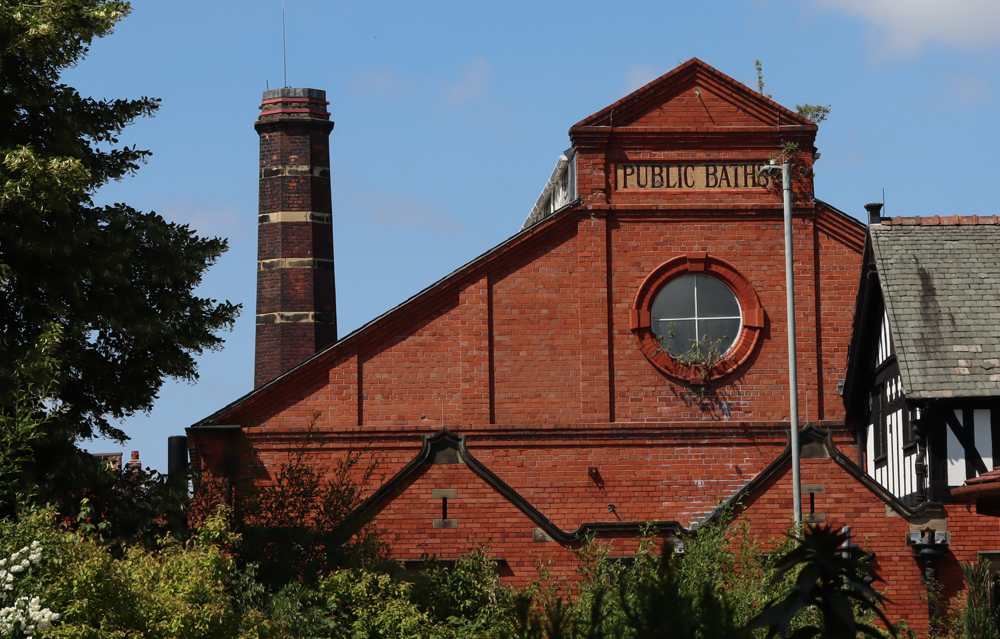
Perhaps one of his best known buildings in this part of extramural Chester is quite unlike either his lodge or his fantastic domestic extravaganza.  However, as Chantal pointed out, the Chester Public Baths are still in proportion, a good fit with the domestic buildings in this part of Chester in spite of its being a public leisure facility.  Chantal positioned the idea of swimming and the provision of a public baths in the social context of Victorian values and ideals, but made it clear that Douglas had put his own particular spin on the resulting building.  Both practical and decorative, it is a very fine example of a building that is at once distinctively Victorian but also takes admired aspects from Chester’s past.


xxx

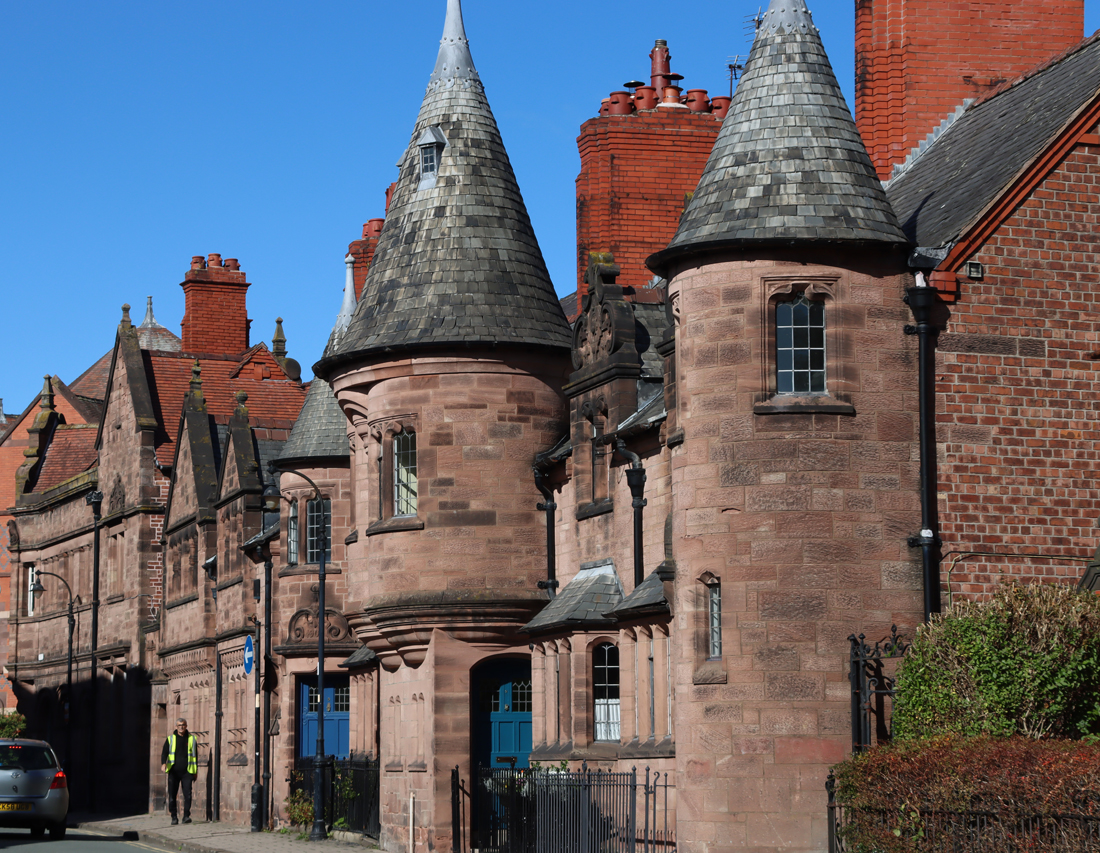
Further down Bath Street, I would not have guessed at first sight that the Grade II listed buildings on the right were another Douglas innovation, but the signs are there when you pause to look more closely, and particularly when you have Chantal’s expertise to provide detailed knowledge and insights.  Except for the building at the far south, nearest to the Baths, which is more typical of other Douglas buildings nearby, the main run of houses is built of buff sandstone, quite different in material, colour, and texture from other Douglas buildings and, for that matter, from anything else that I recall seeing in Chester.  It dates to 1903, quite late in Douglas’s life, and perhaps this accounts for some of the distinctive features discussed by Chantal.  There is an echo of the buildings on Grosvenor Park Street, but this has a much more monumental feeling to it and even with the decorative features and the short spires, seems less light-hearted and, in spite of the ornamental features, a little more monumental in feel.


If you follow the building all the way round the corner you will see that the houses link to a building built by Douglas to house Prudential Assurance.  It’s name today, Lombard House, reflects a later use by the eponymous bank.  To the left of the entrance, just around the corner, there is a charming female statue inset into a niche holding a snake and book.  This is Prudence, one of the four cardinal virtues (the others being Justice, Fortitude and Temperance), adopted by Prudential Assurance as their emblem in 1848 for her qualities of foresight, intelligence, thoughtfulness and knowledge.  Although more traditionally shown with a mirror representing self-awareness, a book is also part of her iconography, representing knowledge, wisdom and and good judgement.
xxx

xxx
Our final stop for the day took in two architectural features, bringing us into the city within the walls – the wrought iron extravaganza that sits on top of the Georgian East Gate, with its splendid clock, and the former Grosvenor Club building immediately to its west.  These both speak of late Victorian Chester’s ambition and its delight in ornament and display, giving an unmistakeably Victorian sparkle to this part of the city.  Chantal gave us details about the clock that I hadn’t heard before concerning its construction, as well as an entertaining factoid about the date of construction, reminding me that it is very easy to become complacent about even such a dominant landmark.  I had known nothing about the Grosvenor Club (including its name and purpose) so this too was a learning curve.

The Grosvenor Club by John Douglas

The Grosvenor Club

Grosvenor Club and Eastgate St

The Grosvenor Club on the right with the rest of Eastgate Street taken from the top of the East Gate bridge, under the clock.

When the tour was over, and Chantal had pointed us at other Douglas buildings in the vicinity so that we could investigate further on our own, she was still surrounded by a group of people asking many questions, and this had been the trend of the entire walk, with tons of information being imparted and lots of questions following.  Keep an eye open for this walk being offered in the future.  It’s a good one!

The nearby Parker’s Buildings

xxx

Grosvenor Park Lodge

Grosvenor Park Lodge detail

Thinking about John Douglas and his work over the following few days, and looking up other examples of his work, his buildings generally aim to provide an attractive environment of well-being, based on the idea that past and present reinforce one another in a very comfortable and attractive way.  Although many of the John Douglas buildings were impressive, and some of them were intended to be imposing, others were homes along streets that made use of vernacular features both from Chester, with inspiration taken from European cities, and from the medieval period onwards.  His preference for local materials is clearly demonstrated, and his love of decorative features is a real celebration of life.  He took a modern approach to architecture, incorporating traditional styles into his new interpretive schemes, as well as Germanic and French ideas that gave his work a rather more cosmopolitan edge than other architecture in the city, and in doing so added real value to Chester.  The best of the Victorian architecture of Chester simply oozes a sense of excitement and self-confidence about their lived present and their anticipated future, and John Douglas reflects this unfurling era with real exuberance.   His contributions to places like wealthy Eccleston and Aldford are also attractive, but perhaps Douglas is at his most appealing when contributing to Port Sunlight, the village built in the late 1880s by Lord Lever for his factory workers, contributing his skills with around 30 other architects, to create a very different type of community.  It must have been a real pleasure to live in one of his remarkable houses.  It is very nice to see that the ones that I have found to date seem to be very well maintained.  It is only a shame that subsequent architectural projects in Chester have only occasionally managed to live up to both his high standards and his creativity.


“Cheshire’s Archives: A Story Shared.” Great to learn about the new Cheshire Archives, opening next year

The Cheshire Archives building in Chester. Source: Cheshire Archives: A Story Shared

On Wednesday 17th September, as part of Heritage Open Day, Paul Newman from the Cheshire Archives and Tim Brown from the architectural firm Ellis Williams, explained to a well-attended audience at the Grosvenor Museum how the new archive project had been rolled out and what we can expect next year when the new Chester building opens.  I am dying to get my hands on the Cheshire Lunatic Asylum records that they hold, having already written a long screed about the asylum between 1854 and 1870 (across four posts here), so I was attending the event with a real sense of anticipation.

The Cheshire Archives, which since 1986 have been located in Duke St in Chester, closed in 2022, having won a Lottery grant to build two brand new buildings.  The former Duke Street premises of the Archives were in a set of lovely Victorian buildings, which were once warehouses of the legendary Browns Department Store, but the Archives were beginning to outgrow them.  The archive collections go back to the mid 12th century, and continue to be added today, representing different aspects of community life, working and domestic, at different periods.  As its role became more important, the Archive outgrew the building, with boxes that would reach 8km if laid end to end, and it had a number of environmental issues as well as providing less than ideal facilities for both staff and researchers.  Targets to reach a larger and more diverse audience were difficult, and it became clear that a move was the only realistic solution.

The new Crewe Cheshire Archives building. Source: Cheshire’s Archive: A Story Shared

An initial investment of National Lottery money to explore the project in 2020 was successful, and a full National Lottery Fund grant was subsequently allocated, with work began in earnest in 2022.  The locations in Crewe and Chester will spread the collection between east and west sides of Cheshire to provide accessible storage for the archive collections in conditions that are much more favourable. Outreach programmes will be more viable, reaching a much wider audience of different ages and backgrounds. Digital access will be much improved, with new ways to access local collections and historical data, including a postcode search and community-selected highlights referred to as “Gems.”  At the same time, the salt mines in Winsford will continue to store other records, which are available to order to either location with a one-week turnaround.  A permanent exhibition will be set up, and exhibition spaces will eventually be available for those using the archives.  The new offices will open in 2026, and the project will continue as a measuring and monitoring exercise into 2027.

Location of the site on Lightfoot Street. Source: Cheshire West and Chester

The architectural firm Ellis Williams, who had undertaken the ambitious and successful conversion of Chester’s Story House, was appointed to develop both of the new buildings.  Interestingly, although they have many of the same internal features, their appearance is very dissimilar.  Both have very modern appearances, but each has been adapted to its own immediate neighbourhood.  Initial design ideas were more radical, but certainly in the Chester case the emphasis soon shifted towards meeting planning requirements for some degree of continuity between the proposed new building and the surrounding architectural context and local character. Documents detailing some of the plans can be found here: https://www.cheshirestoryshared.org/home/the-plan

The new archive building in Chester will be located on the mainly residential Lightfoot Street, which runs along the railway line behind the Chester railway station.  This has created some challenges in terms of accessibility, and the Council were unwilling to sell the entire site, so parking is confined to 35 spaces.

A low wall with indented panels on Chester Lightfoot Street, which separates the archive site from the road. Source: Google Maps.

The site is divided from the road by a low wall with indented sections, and it was a planning requirement that this should be preserved.  The idea here is to knock through some of the indented panels, whilst leaving others in tact, replacing those that are to be knocked through with wrought iron artwork, so that the Archive site is visible through the panels, creating a linkage between both sides of the wall.  There is a slight slope of around 2.5m downhill from the road level, which requires stairs and slopes to enable ease of access.  Parking will include spaces for school coaches and there will be a loading bay at the rear.  The shape of the building itself will echo the twin-gabled shape of railway sheds and platform roofs, but is super-modern in design, and it will feature an “active frontage,” a term that refers to the integration of the building with the street onto which it faces.  Work began in 2017.

Inside, the two-storey Chester building will be split between a public-facing space on the ground floor and a more staff-orientated space on the first floor.  It will total 3000 sq ft (c.270 sq m).  The ground floor foyer, which although north-facing should be light-filled, will be an exhibition space, and will include a theatre area with movable walls, lighting and seating, to ensure maximum flexibility.  A help desk will be located at the rear.  The research rooms will have desks for research, with a total of six computers available at any one time (most people apparently bring their own kit) and there will also be a chill-out area.  The first floor will include, with archive storage in rolling racks, offices and meeting rooms.  Energy considerations have been factored in, making best possible use of the available technologies, and various levels of security and fire-safety measures are part of the overall plans.

The foundations have been established and work is underway on the lower level brickwork, whilst a steel frame and roof have also been erected.  Archaeologists from Oxford Archaeology had been given time to carry out an assessment, but found very little of interest beyond sundry 19th century railway features.  The resulting report can be found here.

The archives will probably be open for a 5-day week.  I should have asked whether this was Monday to Friday, or whether a weekend day would also be included, but it did not occur to me at the time.  I am really looking forward to visiting the new Cheshire Archives building when it opens in late summer 2026, and experimenting with some of their upcoming digital services.  In the meantime there is a website showcasing some of the Archive’s activities at Cheshire’s Archives: A Story Shared.

Thanks very much to Paul Newman and Tim Brown for not only delivering a terrifically informative presentation but for answering the numerous audience questions.


Claire Chatterton on the first 100 years of the Cheshire Lunatic Asylum at the Festival of Ideas

Claire Chatterton speaking at another presentation in 2024. Source: Festival of Ideas

Having spent a lot of time reading and writing about 18th and 19th century lunatic asylums in general and Chester’s public lunatic asylum in particular, it was a sincere pleasure for me to go to the Chester Town Hall to listen to Professor Claire Chatterton talking about the Cheshire Lunatic Asylum.  The asylum opened in 1829 with a building designed by William Cole, and although it expanded over a vast area over the decades, most of which has since been demolished, the original 1829 building still stands in the grounds of the Countess of Chester hospital, of which it is now a functioning part.

Professor Chatterton is an excellent speaker.  I recently listened to a daunting Radio 4 programme entitled “How to avoid death by PowerPoint,” and Professor Chatterton soared above all of the noted pitfalls, speaking with perfect fluency, bringing the audience along with her.  It was good to see that there was a good turnout, reflecting an interest not only in Victorian Chester, but in mental health care.  Professor Chatterton is a former mental health nurse, enabling her to comment with authority on a specialized and skilled profession that is not always well understood.  We were asked not to take photographs, so I have no images of the presentation (the photograph at the top of the page was from a previous presentation), but the accompanying graphics and text were very good.

Chester Lunatic Asylum 1831. Wellcome Institute Library. Source: Historic Hospitals, Cheshire

The scope of the presentation was the first 100 years of the asylum, taking it from 1829 to 1929, which Professor Chatterton made clear was a period of considerable change in terms of both mental health legislation and medical ethics.  The title of the presentation was “Tales from the Asylum: The First 100 Years,” and this captures an important aspect of the narrative, which placed emphasis not only on the general trends and policies of the time as they impacted the asylum, but on the individuals who ran the asylum, worked in it, and were contained within it.

Although the asylum had been established before counties were required by law to build asylums, making Chester one of a number of early pioneers in this area, there were clearly problems. Between 1829 and 1853 staffing of the hospital was somewhat thin on the ground, with no live-in staff and no night staff at all.  Criticism by a board of inspectors resulted in the appointment of a new Superintendent in 1853, Dr Thomas Nadauld Brushfield, who implemented new standards of management and care, including the banning, wherever possible, of mechanical restraints.  The professor described how Brushfield’s regime, between 1853 and 1865, appears to have been as humane as possible, with an emphasis on patient care rather than mere containment, but she also made it clear that the problems should not be underestimated, and whilst new admissions rose, the greater majority of patients could not be released.

The previous occupations of patients admitted in 1870

Professor Chatterton talked about the fragmentary nature of the available data from asylums.  It is a hard fact that even though these were publicly funded institutions, many of the archives were considered excess to requirements when the mental healthcare system was overhauled at different times.  Fortunately some of the documentation for the Chester asylum is held by the Cheshire Archives and Local Studies offices. These are closed at the moment for a major overhaul, but should be available for consultation once again in 2026.  Professor Chatterton was able to access some of them before the closure, piecing together some of the many stories from inside the asylum.

Professor Chatterton took us through some of the statistics that were produced in the annual reports that provide a fascinating wealth of information about patients, such as their employment backgrounds and the state of their health and any particular conditions from which they suffered on admission, as well as suggesting causes for mental health issues.  It is difficult, as the Professor made clear, to make comparisons from one asylum to another about what mental illness terminology actually means, because no reports define it and although the same terms might be used, definitions might differ, but some, like the end stages of syphilis (referred to as General Paralysis) are distressingly prevalent.  She took us through some of the general health problems confronted in asylums, some of which can be cured today but were, at that time, incurable.  It was often a bleak picture.

The Handbook for Attendants of the Insane. Source: Royal College of Nursing, “Out of the Asylum”

Unsurprisingly for the period, there was a division between male and female patients, who were divided physically within the asylum.  At first both the male and female staff handling patients were referred to as attendants, with men attending male patients and women attending female patients, but eventually the women became known as nurses, reflecting a degree of professionalization of this work within the asylums.  It took much longer for men to be recognized as nurses too.  Professor Chatterton gave examples of some staff, male and female, who had been pensioned off after suffering acute stress, partly due to the nature of the job, and partly due to long hours.  It was quite clearly one of those careers that took a heavy toll on those on the front line.  I was particularly sad to learn that the Reverend Congreve, who had run schools for those patients who wished to attend them, and had operated a mobile library, was one of those who died, having had succumbed to stress.

It was interesting to see photographs (and actual objects that Professor Chatterton brought with her) of items that were used by nursing staff in their daily work.  I had seen online scans of the annual reports produced by the asylum, but had never actually seen one in the flesh.  In my mind’s eye they were A4-sized, big and bold, but actually they were around A5 sized, like small booklets, which seemed far too understated for the importance of the job at hand!  Adverts for staff in the asylum were particularly interesting, showing top-level requirements and starting salaries.  The increasing professionalization of mental healthcare nursing was demonstrated by a number of publications that not only advised nursing professionals, but helped them with the exams that from the late 19th century they were expected to pass.   Psychiatric work eventually became one of the fields that the first women doctors could enter.

If you have the opportunity to hear Claire Chatterton speak in the future, I very much recommend it!  A great lecture, with thanks.

The 1829 Building at the Countess of Chester Hospital, the former lunatic asylum

Beyond the Walls: Chester circular river walk

xxx

The dotted green line is the only way on to the footbridge avoiding steps.

sdfsdf

For those with unwilling legs please note that in [squared brackets, and highlighted in bold], are alternative routes that avoid steps and any other observed challenges.  On the above maps the dotted line in green, is the only way of getting on to the Queen’s Park footbridge avoiding steps.

As well as the numbered sites, turquoise stars show other sites nearby that may be of interest.  Each of the numbered and starred features deserves a post in its own right rather than the short burst of text allowed for each, but hopefully there is enough to make the walk informative as well as enjoyable, and in some cases I have hyperlinked to sites with more useful details.

You can download the text of the walk, including the maps, as a PDF here (but without the introduction, the list of sources and without ink-hogging images).


The dotted green line is the only way on to the footbridge avoiding steps

xxx

Introduction

View through the chancel arch of St Mary’s Nunnery through to the Ship Gate. Grosvenor Park.

Together with the city walls, this is my favourite walk in Chester, incorporating some lovely riverside footpaths and green spaces beginning at the Little Roodee car park on Castle Drive.  The entire walk is on metalled surfaces, and is therefore very suitable for all seasons.  It starts with the Grosvenor Bridge, turning in to Overleigh Victorian Cemetery and taking it from there along the River Walk.

There is plenty to enjoy along the south bank of the Dee, with lovely and peaceful riverside walks separating points of interest such as Minerva’s shrine, Handbridge with the Old Dee Bridge and Weir, and the Queen’s Park footbridge. The Groves is the northern counterpart to the River Walk, with its Victorian grandstand and array of cafes, ice cream parlours and the southern stretches of the Roman-Medieval walls.  Back past the Old Dee Bridge, the walk takes in the former old Dee mills, the Gothic Revival hydroelectric station, the remains of the former prison’s outer wall, the Wheeler Building that houses the Riverside Museum and the Royal Infirmary stained glass, and then returns along the river bank to the Little Roodee.

Ice Cream parlour on The Groves

The walk takes in several periods of Chester’s architectural history, from the Roman, through medieval periods, skipping the early Stuart and Civil War years. The Bear and Billet public house on Lower Bridge Street represents the later 17th century, but most of the remaining architectural history on the walk resumes with the Georgian architecture of the 18th century, plunging headlong into ambitious Victorian expansion and alteration.  From a distance, seen from the Grosvenor Bridge, is the Art Deco water tower, which is a nice addition to the mix.  Two examples of the less fortunate periods of 1960s and 70s architecture that afflict Chester like a bad rash also appear, but although one of them is particularly bad (the “Salmon Leap” apartments on the Handbridge side of the Old Dee Bridge) the other is somewhat less objectionable (the ex-Cheshire County County building, now the University of Chester’s Wheeler Building).  A very modern building, nicely done on a budget, is the cafe in the Little Roodee car park with its environmentally friendly “green” roof.


The Walk

1) Roodee carpark, toilets and café

The Little Roodee Cafe

The walk starts from the Little Roodee car park on Castle Drive, which lies along the northern edge of the River Dee.  There are plenty of other places in Chester to park, and there is also the very reliable Park and Ride, but this is a useful place to start the walk, including a very nice café with excellent coffee and good snacks, with public toilets within the café (there are other public toilets on The Groves, opposite the bandstand, shown below).  The bottom of the car park provides a good viewing point for no.2, the Grosvenor Bridge.

For those wanting to explore the river walk to the east, circling the edge of the Roodee and over to the west of Chester, this is also an excellent starting point.

The postcode for the carpark is CH1 1SL or the exact location for the entrance to the car park is What3Words ///swung.statue.limp), which can be used in most SatNavs.  If you are coming in by Park and Ride, ask the driver tell you when the stop is approaching for Adobe (big black glass building) on the Grosvenor Road.  The return bus stop is opposite Adobe on the castle side of the road.

2) Grosvenor Bridge

The Grosvenor Bridge

For the best view of the bridge, head downhill in the car park towards the river and turn right towards the bridge, crossing under one of its vast arches.  Look back to see a great view of the the entire span.  For centuries the only bridge across the Dee at Chester was where the late Medieval Old Dee Bridge is now located, following the line established by the Roman bridge at the end of what is now Lower Bridge Street.  This was becoming seriously congested by the 18th century, when both the population and the economy were growing at a considerable pace, and a new bridge was an urgent requirement.  Local architect Thomas Harrison won the contract with his daring proposal for a 200ft (61m) single span that would not interrupt tall-masted river traffic.  It was not merely a new artery for Chester, but a statement of civic pride.  A plaque in the side of the bridge records that work began after an Act of Parliament was passed in 1825, and was paid for by a public loan of £50,000.  It was opened by Princess Victoria on 17th October 1832 (5 years before she became Queen), and was paid for by tolls on both the Grosvenor and Old Dee bridges until 1885, when the tolls were abolished.  The bridge remains a monumental and impressive sight today.

The Grosvenor Bridge shortly after construction. Source: Wikipedia

Retrace your steps and head back up the car park, passing in front of the cafe, and up the flight of steps to the Grosvenor Road, cross at the pedestrian lights, and turn left to walk over the bridge.  [If you want to avoid the steps, head to the other end where the car entrance is, turn left and walk up the road, Castle Drive, to the head of the steps on the corner, and cross at the pedestrian lights and turn left across the bridge].  

From the top of the bridge you can look right (or west) over the Roodee racecourse on the north bank of the river, and the impressive houses that formed the new middle class suburbs of Curzon Park which was developed in the 1840s to accommodate wealthy residents who wished to escape the narrower confines of the increasingly busy and commercial city. Some of the bigger of these buildings have been converted into apartments today.  Look left (east) and you can see the spire of St Mary’s Without The Walls, as well as the Handbridge water tower, a local landmark that is visible from various points in the Chester area, and was influenced by Art Deco designs.

Curzon Park

3) and 4) Three memorials in Overleigh Victorian Cemetery

After crossing the bridge, walk for perhaps 30 seconds and you will see a gateway on your left with wrought iron gates, one of which is open to provide access for pedestrians into the Victorian cemetery.  If you are on the opposite side of the road, there is a traffic island almost opposite to make it easier to cross.  Walk towards the information board and the bench, and pause.  The walk will continue downhill to the right, but we are briefly detouring to the left to see two of the most interesting of the memorials in the cemetery, one of which is a puzzle until you see it on the early 1850s engraving of the cemetery.

Entrance to Overleigh Cemetery

xxx

Overleigh Cemetery in the early 1850s. Source: Wikipedia

Overleigh cemetery was given the go-ahead by the Chester Cemetery Act in 1848.  The land was acquired from the Marquis of Westminster, who exchanged it for a shareholding in the company.  Work was forced to stop for seven months when the money raised was spent, and was not completed until new shareholders could be found.  The cemetery opened in 1850.  Like the Grosvenor Bridge, Overleigh Cemetery, was not merely the result of a Victorian efficiency drive and the desire to return a profit, but also a matter of improving the city in ways that demonstrated a profound interest in the character and status of the expanding city.  Although the cemetery was a pragmatic response to the inability of churchyards to meet demand, the layout and planting of the cemetery reflect country house garden and leisure park designs, with curvilinear drives, gothic revival architecture, a lake, plenty of of trees of different types and a rustic bridge.  Sadly, the only survivors of the architectural features from the 1850 design shown on the above engraving are the tall thin monument at far left, discussed below, and the rustic bridge at far right.  You can read more about the cemetery and its fashionable and elegant design on the blog here.

Now head left past the bench and stop a few seconds away in front of a nicely executed faux Grade II listed Gothic shrine featuring an effigy beneath tan elaborate canopy. It puzzled me that there was no inscription on the shrine, but the actual grave ledger lies flat in front of the shrine over the top of the actual grave, complete with the elusive inscription.  The shrine belongs to the Reverend Henry Raikes, who died in 1854, aged 72. The shrine was designed by architect Thomas Penson, who was the landscape architect for the entire cemetery and who built several buildings in Chester.  It was erected in 1858, funded by public subscription, the progress of which was frequently reported in the local newspapers.  As well as the former Chancellor of the Chester, Diocese Raikes was a philanthropist, a trustee and governor of the Blue Coat Hospital and one of the founders of the Chester “Ragged Schools” that provided education for pauper children.

The ruins of the Robert Turner memorial

Immediately to the right of the Raikes shrines, the second monument of note is the grave marker for Robert Turner (1790-1852), a Chester brewer and wine merchant who, in 1848 was Sheriff of Chester, a largely administrative but important function with the responsibility of keeping the peace, closely linked in to the work of the courts and the prison.  The memorial as it stands today looks very peculiar, a bit like a three-tier cake on space-rocket jet nozzles.  The clues to its original appearance actually still lie at its feet.  Three stone columns lie horizontally, when not semi-concealed by undergrowth.  Look at the engraving above and find the building at top right that looks like a little Classical temple.  This is how the Turner grave marker originally looked. It collapsed at some time in the past, and the tiered roof and although it has been considerably tidied up, reconstruction is no longer possible, and this strangely truncated form is all that is left standing of the memorial monument.

Retrace your steps past the bench and head down the hill until you reach a tall monument (4) in a triangular intersection of the cemetery drives and pause to have a look at it. 

This is not a burial monument but a memorial to William Makepeace Thackeray, 1790-1849, (uncle of the famous novelist) who moved from Denbigh to Chester to practice, and became a great success as a physician, and was renowned for his philanthropic and charitable works. He was buried in Chester Cathedral, but this memorial and its inscriptions celebrate his achievements, including “His attention to their charitable institutions / His consideration for the sick and needy / His kindness to the schoolboy and the orphan.” The memorial also serves as a useful anchor for the cemetery, a suitably impressive focal point that helps to give this part of the cemetery a sense of cohesion.  This is also a very good position to pause and take in the wonderful selection of mature trees, most of which were planted when the cemetery was first laid out.  There is a variety of species, and they were an essential part of the parks-and gardens style layout that was very popular in the Victorian period.

Head to the left. You will see the gateway pillars straight ahead of you.  This opens on to River Lane.  Turn left on to River Lane and turn right when you reach the end, heading east along the lovely River Walk.  The walk from Overleigh to Edgar’s Field is a nice one, consisting of a metalled road flanked by trees and shrubs, with fields to the south and views of the river, depending on the time of year, to the north.

You will emerge from the path onto a short residential road, Greenway Street, and opposite is another gateway, this time into Edgar’s Field. 

5) Edgar’s Field

The entrance to Edgar’s Field

Go through the gate into Edgar’s Field

Edgar’s Field is an open green space given to Handbridge by the first Duke of Westminster in 1892.  The name Edgar, so the story goes, refers to the early medieval King Edgar, great-grandson of Alfred the Great, who was crowned King of England in both Bath and Chester.  His Chester coronation was said to have followed a meeting near the field in AD 973, with leaders (either six or eight) from other regions  after which he was rowed by members of the visiting delegation to St John’s Church, just a little further upriver.  How much of this is legend and how much reality is anyone’s guess.

6) The sandstone outcrop 

Straight ahead there is a choice of going uphill to the right or sticking to the river walk on the left.

You will go right, but pause to look at the amazing sandstone outcrop.  This is a particularly nice piece of bedrock, formed of sedimentary layers laid down, during the Triassic period, 252 to 201 million years ago, when the landscape consisted of Sahara-like desert and abraided rivers.  This is also the period when the dinosaurs Pseuduchium Archosaur (ancestral to modern crocodiles and alligators) and Chirotherium are found, survivors of the Permian extinction (in which 95%) of dinosaurs were wiped out, and of which fossilized footprints have been found in the Triassic sandstones on Hilbre Island at the top of the Wirral.

Sandstone formations on Edgar’s Field

The various lines and colours visible in the Edgar’s Field rock represent the different layers of sediment (bedding) that were laid down by rivers and floods that were laid down as muds and have built up over time.  Nice features include both cross-bedding and slumping, geological features exclusive to sedimentary rocks.  Differences in colour reflect differences in the chemical composition of the sediments as they were laid down, a dramatic example of which is shown in the above photograph of the outcrop.  See more about the Cheshire sandstone in this PDF on the Sandstone Ridge Trust website.

Walk along the path to the right of the outcrop.  A second outcrop appears on your right, and on the face that looks over the big open green is the Minerva shrine, so leave the path and walk up the green slope.

7) Edgar’s Field and the Minerva Shrine

When you are standing in front of the shrine, you will find it very water-eroded.  It is carved directly into outcrop, one of only two known to be still in situ in Britain, and is a Grade II listed Scheduled Monument (1.45m high and 0.73m wide).  The sandstone surround is Victorian in date, added in the hope of preventing further erosion.

The Roman 20th Legion, the Valeria Victrix, arrived in Chester (Deva) in AD76, and in one form or another the Romans remained in Deva until around 380.  Although outside the Roman city walls, Handbridge was an important location because it was the quarry for the Roman town and its walls, the source of its red sandstone building blocks.  Further along the path on an interpretation board is a reconstruction of what the shrine would have looked like, originally with an owl on Minerva’s left shoulder, possibly holding a shield in her left hand, and a spear in her right hand.  Minerva was an interesting choice.  Although better known goddess of wisdom and knowledge, she also served as a protector for those engaged in defensive war, a subtle distinction from aggressive war that might well be attractive to those building protective walls.  The little cave to the right of the shrine was probably carved out to hold votive offerings.  The area around the shrine was excavated in the early 1920s, revealing both that the quarry was in use at around AD100 and that subsequently soil was imported to cover the quarry floor in the late-second century. Roman occupation remains dating from that time on were found on the site. The site was again used as a quarry during the Middle Ages, when Historic England speculates that the Minerva carving may have been re-interpreted in Christian terms and re-used as a Christian shrine.

It is worth walking down to the edge of the river, through the line of magnificent lime trees, to enjoy the excellent views over the medieval Old Dee Bridge bridge.  From there, follow the path for a short distance to the gates out of the park.  You now have the Old Dee Bridge on your left and Handbridge on your right.

8) Handbridge

Handbridge

Handbridge has always has an extra-mural personality of its own.  From the mid 12th century there were mills and quays at Handbridge, when parts of the district were owned by St Mary’s Benedictine nunnery, which seems to have taken over the entire manor by the 13th century.  In the late 14th century industrial activity seems to have been represented by the production of glass, and by the 15th century it is thought to have been a popular area of Welsh migrant settlement.  Welsh residents in the 16th century included a high percentage of the city’s brewers and ale sellers. In the Victorian era it became known as one of the poorer areas, with a high proportion of industrial worker.  Today Handbridge has gone upmarket and is now an attractive residential location with a villagey-atmosphere, with some excellent cafés and pubs for those looking to take a break at this point.  Both Spoilt for Choice and Brown Sugar cafés are great brunch/lunch stops, and the Old Ship Inn is a very fine pub.

Nathaniel Buck’s view of Handbridge in 1928. Source: MutualArt

9) The Old Dee Bridge 

Do not cross the bridge, because the walk continues on the same side of the river, but if you want to stand in the middle and admire the weir, discussed next, it’s an excellent place for getting a good view. 

The Old Dee Bridge

The oldest known bridge to cross the river at this point was Roman, carrying the Via Praetoria from the south gate over the river to link up with the Roman road network, with roads leading directly from Chester to the southeast via Whitchurch to Wroxeter (Vicronium) and the south to London (Londinium) and Caerleon (Isca), and along the north Wales coast to Holyhead (Segontium).  It must have been rebuilt several times over the 300 years of Roman occupation.  The current late Medieval bridge replaces an early Norman bridge, but apparently fell down during the floods of 1227 and had to be replaced.  The construction is interesting.  It is built of the usual local red sandstone, but for reasons unknown, instead of being evenly distributed along the length of the bridge, the arches are each of a different width, giving it a splendidly individual appearance.

The Bridgegate on the opposite side of the river is discussed below.

10)  The Weir

Staying on the same side of the river, cross the road and follow the line of the river for a few steps until you get a good view of the weir.
xxx

Very little is known about the weir itself.  It is generally agreed that it was at least Norman in date, but whether it was actually the elaboration of a Roman innovation is open to debate.  The Romans certainly built weirs, some of them very substantial, but at the moment there is insufficient information to determine the earliest date for it.  Walk a little further down by the side of the river and you will see that on the near side of the weir there are a series of very wide water steps, forming what looks a little like a stepped waterfall; this is a salmon leap, built to enable the fish to navigate their way upstream for spawning.  On an open day at the monitoring station last year I saw one of the salmon being caught for weighing and it looked huge!

The Salmon Leap

11) River monitoring station and ornamental water wheel

Probably the least attractive feature of the Chester riverside is a row of 1960s apartments that you will see from the north side of the river.  You now pass under the concrete overhang of these apartments. There are lovely views over Chester on your left, and you  will reach a small island with a building on it.  

River monitoring station

Water wheel reconstructed in 1988 by the Chester Civic Trust

This is the river monitoring station, where various tests are carried out on the water quality and the condition of the fish themselves.  I was lucky enough to be there on an open day last year when  an enormous salmon was pulled out for weighing before being returned to its journey upstream.  In front of it is a small water wheel, which was installed in the 1980s as a reminder of the former Dee mills that used to be a dominant feature of the medieval riverside and an all-important feature of Chester’s economy in the Middle Ages.  Beyond it is a small sluice that once regulated water into the narrow channel that forms the island.

Carry on walking along the Riverside Walk, enjoying the greenery, until you reach the footbridge, which passes above the path, but has a flight of shallow steps running up either side of it so that you can reach the bridge from the path. [The alternative approach to the bridge, avoiding the steps from the river walk up to the bridge, is a rather long way round and is shown on the above maps as a dotted green line that takes you along Queens Park Road and around Victoria Crescent].


12) The lovely Queen’s Park footbridge

In 1851 it was decided that Chester needed a second suburb, in addition to Curzon Park, to be named Queen’s Park, and this was developed throughout the 1850s.  This was also built on the south bank of the river, this time opposite The Groves.

In 1852 a suspension footbridge was built to connect Queen’s Park with Chester, becoming the Queen’s Park Bridge.  The predecessor of the current Queen’s Park footbridge was built in 1852. In 1922 this was taken down, and work began on a new suspension bridge that opened, with some ceremony, in April 1923.  For more information about the opening of the bridge and its contemporary conditions of use, see the entry on the Cheshire Archives and Local Studies blog.

Conceptually, the bridge is the polar opposite of the vast solidity and monumentality of the later 1832 stone Grosvenor Bridge. The 1923 bridge is superbly elegant with delicate lattice metalwork. This latticing and the suspension cables supply a light, airy feeling, which is something to do with the sense of it hanging freely rather than being solidly rooted in the riverbed.  It is a perfect partner for the light-hearted promenade known as The Groves, with its lovely buildings and the similarly elegant bandstand, which is still used today, and the little ice-cream turrets.  Pride in the achievement, common to so many Victorian enterprises, is declared in the panels at the top of the suspension towers, which give the name of the bridge and the date of its construction.  Just as on the Grosvenor Park Lodge, the bridge’s towers feature the shields of Chester’s Norman earls.

13) The Grosvenor Park

The understated river-side entrance to the Grosvenor Park at the end of the footbridge

Walking off the bridge on the Chester side you will see a flight of steps straight ahead of you.  Just before the steps, on your right, is the understated gateway into the Grosvenor Park. 

I have included the park partly because it surprises me how many residents and visitors seem to bypass it, and it is lovely on a sunny day.  The Grosvenor Park was the brainchild of Richard, the second the Marquis of Westminster, following the example of similar projects elsewhere.  Like many wealthy Victorians, he undertook a number of philanthropic projects, and in 1867 the park opened for the benefit of local Chester inhabitants.  Unlike many town and city parks this one was not paid for partly by subscription; it was, in its entirety, a gift to the city from the Marquis, who chose the designer of the successful Birkenhead Park, landscape architect Edward Kemp (1817-1891), to lay out his new public space.

Today it is a beautifully maintained space with a miniature railway operating in the summer, a rose garden, a couple of vantage points from which to inspect the views over the river and some lovely wide open spaces, together with the shade of trees for those who prefer a bit of cover, in which to relax.  Although this is not a formal park, in terms of the big municipal floral plantings that characterize some English parks, there are colourful beds dotted around and at the top left corner of the park there is a charming wheel-shaped rose garden that is lovely in the summer months, with a variety of colours, and some lovely scented species, with benches around its edges.  As in the cemetery, which had opened 17 years previously, the trees were seen as a major feature of park and there are some splendid specimens.  The pond may once have been ornamental, but is now surrounded by tall reeds, providing a splendid refuge for wildlife.  I have seen the rails for the miniature railway but not the train –  I really must find out when it runs!  There is plenty of seating throughout the park, and as well as permanent sculptural pieces, there are often temporary modern art installations dotted throughout, which may or may not be your cup of tea, but are always genuinely interesting, and usually reference the natural world.  Look out for information panels dotted throughout the park.  The lodge, discussed next, serves as a coffee shop during the summer.  It’s not on the map because it is closed in the winter.


Ferris wheel in the Grosvenor Park


14) Four Medieval monuments

The arch from St Michael’s Church

As you walk into the park along a metalled path, you will soon come to a set of three clearly medieval (as opposed to mock-gothic) monuments set back from the main path, with a little side path of its own.  These were all moved here from elsewhere in Chester, and serves as a miniature outdoor museum.  The first one that you encounter is a gothic arch from St Michael’s Church, which is still standing but was largely rebuilt in the 1840s by James Harrison, and it is possible that the gateway was removed at that time.

Next, following the side path is the little Jacob’s Well, originally installed on The Groves as a drinking fountain and at its base a water dish for dogs.  The keystone inscription is from the New Testament and reads “Whosoever drinketh of this water shall thirst again.”  Finally, and most impressive of the three, is the arch and flanking niches that once linked the nave of St Mary’s monastic church to its chancel, a sad reminder of the absolute total loss of St Mary’s medieval nunnery.  The photograph of it is below under no.27, where the nunnery is discussed.
xxx

Keep walking across the intersection, bearing right, and you will immediately come across the Ship Gate, which once sat to the west of the Bridgegate at the end of Lower Bridge Street providing pedestrian access  from the riverside to the city.  This was moved three times, first in 1831 to a private garden in the Abbey Square, next in 1897  to the Groves and finally in 1923 to its present location in Grosvenor Park.

The Ship Gate, looking back towards the St Mary’s chancel arch

Between the St Mary’s arch and the Ship Gate there is a path going uphill to the main park, with handrails, shown in the photograph above.  Walk up the slope to the main drive towards the statue at the end.

15) Viewing platform over the Dee

If you follow the main drive to the statue of Richard, the second the Marquis of Westminster, you will see, slightly to your right, a large viewing platform with seating around its circuit.  The view over Chester meadows towards Boughton was probably a bit better in the late 1800s, but is still good today.

16) Grosvenor Park Lodge

When the park was opened in 1867, it had a lodge at the main gate and this remains today, used as a café in the summer months.  It was designed by successful local architect John Douglas who is best known for the Eastgate Clock, but who built a great many buildings in different styles in Chester.  It was built in the popular half-timbered revival style over red sandstone.  The brightly coloured statuettes on black timbers on the lodge show King William I, who appointed Hugh d’Avranches, better known as Hugh Lupus as the first Earl of Chester from 1071 until his death in 1101.  Hugh is shown, together with the successive Earls of Chester, ending with John de Scot (from 1232 to 1237), who died without heirs, after which the earldom reverted to the Crown.  Various family shields show locally relevant themes including the golden sheaf of the Grosvenor family, the portcullis of Westminster and the Chester city coat of arms.

17) The Grosvenor Park Archaeological Excavation

Grosvenor Park Excavations in 2024

Near to the rose garden, to its east, and for several weeks every year since 2007, an archaeological excavation takes place using students of the University of Chester to investigate the complex historical narrative of this area.  The project was initiated to provide information about the Church of St John the Baptist, and the later use of the area, including a house documented to have been built in the late 1500s by Sir Hugh Cholmondeley which was later destroyed in the English Civil War.  At the same time, given the proximity of the Roman amphitheatre on the other side of St John’s, it was hoped that some information pertaining to  extra-mural activities under the Romans might emerge, and how the position and ruins of the amphitheatre, as well as the influence of the church, impacted on the later use and development of the surrounding area.  In 2025 the excavation took place between during May.  Visitors can see the excavation taking place, and the site directors and supervisors are very happy to answer any questions from the public.  An excavation Open Day is always organized towards the end of the excavation too.

18) The ruins of the east end of St John’s Church

Ruins at the east end of St John the Baptist’s

Leaving the park at the west, where the exit puts you on the path that leads back down to the footbridge, you find yourself at the east end of St John the Baptist’s Church.

St John the Baptist’s Church, marked with a green star next to the number 18, has a long and fascinating history, which is far too complicated to deal with here.  The current church was established in the 11th century outside the city walls and was the original Chester Cathedral and a collegiate church.  Its architecture is splendidly dominated by the Romanesque, featuring vast columns and gloriously rounded arches, has a wonderful if faint painted fresco, and contains a fine collection of early medieval stone funerary memorials.  Its monumental sense of indestructibility is somewhat misleading, however, as its tower came down in its entirety on Good Friday in 1881.

Without going into the church, however, you can wander around the ruins at the east end of the church.  There are plenty of information boards to explain what is going on, but the short version is that in the mid-1500s the church was too large for the congregation and the decision was made to truncate it by sealing off the eastern end which, deprived of its roof, rapidly deteriorated into ruins.  These ruins contain a splendid Norman arch, which once gave access to the chancel, as well as the usual gothic lancet (pointed) arches, shown in George Cuitt’s engraving below.  One of the other of the many features is the puzzling inclusion of an oak coffin at the top of one of the gothic arches, facing outward, shown above left.

The ruins of St John’s in the first half of the 19th century, showing a splendid Norman Romanesque arch in the foreground, which still stands, and a gothic lancet arch in the background.  By George Cuitt

19) The Anchorite Cell / Hermitage

The Anchorite cell in the grounds of St John the Baptist’s Church

Just downhill from St John’s, at the base of the steps [or thread your way back through the east end of the park by taking left turns, back to the entrance at the bridge], look over the fence on your right to see the lovely so-called anchorite cell, Grade II listed.

The lovely little building sits on an outcrop of red sandstone bedrock.  An anchorite is a religious recluse, someone who decides to retreat from all form of society, even monastic, to pursue a life of prayer and devotion. The building seems to correspond to a number of  references to an anchorite chapel and cell dedicated to St James in the cemetery of St John the Baptist’s church, opposite the south door.

The earliest story, unsubstantiated (and generally discredited), comes from the priest-historian Gerald of Wales (d.1223), who records that King Harold II was not killed at the Battle of Hastings, but was wounded and fled to Chester, where he lived at the cell (or hermitage) for the rest of his life.  British History Online says that this was the only such building that seems to have had a degree of permanence: “In the mid 14th century it held monks of Vale Royal (1342) and Norton (1356) and a Dominican friar (1363), and in 1565 a lease of property formerly belonging to St. John’s College included the ‘anker’s chapel’.”  The Freemen and Guilds of The City of Chester website mentions that at some point the building was used by the cordwainer guild (shoemakers) as a weekly meeting place “until they sold it in due course to a Mr Orange, and spent the proceeds on a party,” but provides no date.  It was expanded in the late 19th century, when the porch of the recently demolished St Martin’s Church, which was being demolished, was moved to form a new north entrance.  It was renovated in the early 1970s, but I can find no mention of how it is being used today.

20) and 21) The Groves

The Groves are a Victorian invention. The earliest section is The Groves East, which has some very attractive residential buildings facing the river, including an Italianate terrace, a Georgian-style terrace built in the early Victorian period and the revival half-timber rowing club boathouse, as well as cafés and pubs.  There are some good views over the riverside buildings on the edge of Queen’s Park, opposite.  Between 1880 and 1881 the western section that is most obviously a promenade area was laid out by Alderman Charles Brown.

As well as the lovely Grade II listed bandstand and delightful little octagonal ice cream huts, the city walls are particularly impressive here, towering above the river with some big chunks of bedrock at their base.  From here you can also enter the Roman Gardens (shown on the map with a green star), by following the line of the wall into a corridor between the wall and a restaurant.  Just about where the no.21 is marked on the above map is a flight of steps leading up to the walls.  These are known as the Recorder’s Steps, built in around 1720, linking the walls and the fashionable promenade to provide ease of access.  If you want to continue your walk by doing a circuit of the walls, this is a very good place to start, particularly as there is a map of the walls at the bottom of the steps.  The walls either side of the stairs are an interesting mix of different periods of construction, with one or two puzzling features.

The most attractive of all the public toilet buildings in Chester! The Groves West, opposite the bandstand.

As you walk towards the Old Dee Bridge, look over the river to see the concrete apartments under which you you walked earlier.  These, in the so-called Brutalist style, are the “Salmon Leap” buildings and  were built starting in the late 1960s until the mid 1970s, which look rather like a bar code.  In the interests of naming and shaming, they were designed by Liverpool architects Gilling Dod and Partners from Liverpool.  I recall that when I was visiting my parents once, many years ago, they were painted pink (salmon pink??), which was indescribably bad.

22) The Bridgegate

Nathaniel Buck’s Old Dee Bridge, showing the Bridgegate with the massive 1600 water tower as it was in 1728. Source: MutualArt

Today’s Georgian gateway, carrying the walls over Lower Bridge Street, is the latest iteration of the first gate built here by the Romans to defend access to the Via Praetoria.  By the Middle Ages all the bridge’s predecessors had been replaced by a medieval gateway that had a central pointed arch, which carried the walkway, and was flanked by two round towers.  This was quite an understated affair, but became considerably more noticeable when a tall, slender water tower was added to the west tower in 1600 to pump water from the river into the city (shown on the above image).  It was destroyed during the Civil War, but is recorded in earlier engravings.  The medieval Ship Gate, one of the architectural features preserved in Grosvenor Park, was a pedestrian archway giving access to the city Just to the west of the Bridgegate (towards the car park), which has already been mentioned in connection with the Grosvenor Park, where it was moved in the 1830s.

The Bridgegate, with the Bear and Billet on the other side of the gate

On the city side of the Bridgegate, on your left as you look uphill, is the Bear and Billet public house, which looks like one of the original half-timbered buildings but is in fact part of the revival of timber-framed buildings after the Civil War, in which multiple buildings were destroyed, and was built in 1664 for the Earl of Shrewsbury. See the picture near the end of the post in Sources.

As Chester’s population expanded during the 1700s, the increasing size of vehicles and the need for two-way traffic to pass into and out of the area defined by the walls resulted in the destruction and replacement of the medieval bridge.  The yellow sandstone Georgian arch that survives today was built in 1782 to a design by Joseph Turner (c.1729–1807), a successful local architect.  It supports a walkway that connects the two parts of the city walls that flank Lower Bridge Street.  Although not particularly imaginative, it is elegant in a typically Georgian way.

23) The Dee Mills and the hydroelectric station 

The Old Dee Mills in the 19th Century, with the Bridge Gate to its right and the Old Dee Bridge at its side. Source: Chesterwiki

The area around the Old Dee Bridge was busy from the Roman period onwards.  In the Middle Ages this part of the river was the site of several water mills, and mills continued to be built here until the last one burned down in 1895 and was knocked down in 1910.  In 1913 the site was used to establish a hydroelectric station, part of which survives in the form of the gothic-style building that sits below the bridge in the corner with the north bank, but this went out of use in 1951 and is currently vacant.  You can still see the hydroelectric station in situ on the walk, and the Ship Gate is still visible in the Grosvenor park (photograph further up the page at no.14), but the mill is only preserved in pictures.

The former hydroelectric station

24)  Prison wall

The remains of the west side of the river wall of the former prison, with its distinctive arches, next to the Wheeler Building.

Although it is captured in paintings and engravings, there’s almost nothing left of the former prison, although it was a very substantial building in its day.  Both the prison and the river wall with its inset arches can be seen on this painting below by prolific local artist Louise Rayner (1832-1934).  All that remains is the former river wall with its inset arches, and even this is a matter of noticing that it is there, rather than actually seeing it, even from the opposite side of the river, as it is hidden by extensive tree growth.  It is marked by the fact that it projects slightly into the river.  There are two places where the inset arches are visible, first by the railings opposite the Wheeler Building, where you can lean over and look back, and rather more accessibly there is small a section to the side of the Wheeler Building, which carries the path back up on to the walls, shown here.  Up until 1785 the prison was based in the Chester Castle dungeons, but by the mid-18th century it was very clear that this was no longer fit for purpose, and when it was decided to build a new prison, architects were invited to submit designs to a competition.  Thomas Harrison, who is mentioned below in connection with the revitalization of the castle, won the contract, and new riverside prison opened in 1793.  Less than a century later, in 1865, it was unable to cope with demand, and it was rebuilt, opening again in 1869.  It was demolished in 1902.

The Chester prison by Louise Rayner, showing the river wall along which we still walk today


25) The Wheeler Building, housing Royal Infirmary Stained Glass and the Riverside Museum

Objects from the collection of the Riverside Museum in the Wheeler Building

The University of Chester’s Wheeler Building, a vast block of a thing on your right as you head towards the Little Roodee car park, was built in 1857 as the former Cheshire County Council headquarters.  Although there is not much to say about it as a piece of architectural heritage, it does contain two really valuable items of local heritage interest.  On the first floor of Wheeler Building you can find the stained glass that was once installed in the Victorian Royal Infirmary (opened in 1761, closed in 1994 was converted for residential use in 1998), and about which you can read more on the Chester Archaeological Society blog here.  The Riverside Museum, which usually opens only once a month, is a permanent collection of curiosities from the world of medicine, nursing, midwifery and social work, in addition to an original letter written by Florence Nightingale from Balaclava.

Just past the Wheeler Building, you can walk up the path that follows a slope up the old prison walls onto the city walls for the last stretch of the walk. If you take the opportunity, you get some views over the river, and the best angle to see this side of the castle. [There are no steps upto and off this stretch of the walls, but if you have a wheelchair or buggy, there is a dogleg turn that may be difficult to negotiate]

26) The Castle

The Agricola tower

Chester Castle today is a bizarre and not terribly attractive mixture of Neoclassical and medieval when seen from the front.  The original castle following the Conquest of 1066 was a timber-built motte-and-bailey castle, but this was replaced by the medieval stone castle in the late 12th century.  The Neoclassical bolt-on was architect Thomas Harrison’s solution to the dilapidated state of the building in the Georgian period.

From the walkway along the walls you can see the square Agricola Tower, which dates from around 1190-1200, and this and the Flag Tower are the only survivors of this early stone-built castle.  The tower is opened at least once a year for visitors to see around the vaulted chapel and 13th century wall paintings that are thought to have been ordered by Edward I for his use of the castle as a base during his negotiations with the Welsh princes.  That’s high on my to-do list.

Leaving the walls, you can walk up to the entrance to the castle if you want to see the view from the entrance.  Otherwise, cross the road at the pedestrian lights, taking note of the big black modern building squatting on your right as you cross the road and go a short distance to the covered viewing point, where there are interpretation boards, and have a look over the Roodee.

Nathaniel Buck’s 1728 engraving of the castle. Source: chesterwalls.info


27) The Roodee and the site of St Mary’s Nunnery

The race course on the Roodee

Nathaniel Buck’s Prospect of the City of Chester 1728 showing The Roodee. Source: chesterwalls.info

The Roodee is now home to the Chester racecourse, with the earliest race here held in 1539, but it also formed the edge of a river port second in size to Bristol on the western coast of Britain, supporting a successful trade along the coast and across to Ireland, as well as a thriving shipbuilding industry.  The commercial value of the river began to decline at the end of the 18th century as the river began to silt up, and did not survive the 19th century.  However, the archaeology of the river at the Roodee dates back to at least the Roman period when there was a harbour at the river and excavations in 1885 revealed the remains of a jetty near the railway viaduct.  The above engraving by Nathaniel Buck shows the medieval tower, connected to the walls by a fortified walkway, which was once at the water’s edge, demonstrating how silting was impacting the port of Chester even at this stage.

Turn so that your back is to the Roodee.  Over the road was the site of St Mary’s Benedictine Nunnery. 

St Mary’s Convent was founded in 1140 and survived until the Dissolution in 1535,on the north side of today’s Nun’s Lane, which is the small road that runs along the top of the Roodee and the race course.  It was built just inside the city walls, a little to the west of the castle. This became quite a large monastic establishment with a relatively compact cloister around which were the usual domestic and administrative buildings along three sides, with the monastic church on the fourth side, and a larger separate courtyard with more buildings arranged around it. A double-cloister arrangement was not at all unusual in wealthy monastic establishments, but the nunnery was notable for its financial difficulties even though it owned and rented out several properties in Chester, and from the 13th century owned the manor of Handbridge.  The last surviving piece of architecture from the nunnery survives in Grosvenor Park, which preserves the red sandstone arch and flanking niches that once separated the church’s nave from its chancel.

Archway and flanking niches from the former St Mary’s Nunnery, looking through to the Ship Gate

The black glass and red sandstone building on the other side of Nun’s Lane, Abode (built in 2010), replaces the former police headquarters, which was an eyesore of a very different type, and between the police building being knocked down and Adobe being built, an archaeological excavation took place.  As well as what are thought to have been significant Roman discoveries, the remains of the nunnery were excavated, producing both architectural and funerary remains, as well as discarded objects.  Quite who was responsible for seeing that the excavation records were published I don’t know, but one of the great tragedies of Chester heritage was that the small company responsible for the excavations never did publish, and no-one seems to know where the excavation reports and any preserved materials might be located.

The remains of St Mary’s Nunnery in 1727. Source: British History Online

After the 1536 Dissolution, when the nuns dispersed, the land and buildings were granted to a member of the Brereton family, in whose hands it remained until the 17th century.  Its best known resident was Sir William Brereton, who was the Cheshire commander of the Parliamentary forces during the Civil War, when the buildings came under fire, were badly damaged and were never repaired.  As ruins on valuable land within the city walls they were soon replaced.  At the west end of the former site, architect Thomas Harrison, who has been mentioned several times above, built St Martin’s Lodge for his own use, now sympathetically converted into the gastro pub The Architect.

The walk is over!  Retrace your steps back over the Grosvenor Road into the car park, either via the steps on the corner, or down Castle Drive and into the main entrance, which avoids steps.
xxx

Final comments

I particularly like this walk because of the sheer amount of diversity that it introduces to the experience of Chester, beyond what you can find on a walk around the walls or a stroll around the main streets and the rows.  This is a slightly different slant on Chester, one that takes place nearly entirely beyond the walls, where there is space for promenades, open green spaces, a massive race course, a Victorian cemetery, river walks and of course some marvellous bridges and views over the surrounding area.  Neither urban nor suburban, this walk focuses on the in-between borderland of the riverside.

The shortlink for this post is: https://wp.me/pcZwQK-7BG

Braun’s Map of Chester, 1571 showing the RooDee with a grazing cow at left,  Handrbidge at the bottom, and the Old Dee Bridge connecting Handbridge with the Bridgegate. Source: chesterwalls.info


Sources

Books and Papers

The Bear and Billet

Boughton, Peter 1997. Picturesque Chester.  Phillimore

Carrington, Peter 1994. Chester. English Heritage

Cheshire West and Chester Council 2012.  Explore the Walls. A circular walk around Chester’s historic City Walls.  Cheshire West and Chester Council

Clarke, Catherine A.M. 2011. Mapping the Medieval City. Space, Place and Identity in Chester c.1200-1600.  University of Wales

Herson, John 1996. Victorian History: A City of Change and Ambiguity. In (ed.) Roger Swift. Victorian Chester.  Liverpool University Press

King, Michael J. and David B. Thompson 2000.  Triassic vertebrate footprints from the Sherwood Sandstone Group, Hilbre, Wirral, northwest England. Proceedings of the Geologists’ Association,
Volume 111, Issue 2, 2000, p.111-132

Langtree, Stephen and Alan Comyns (eds.) 2001. 2000 Years of Building: Chester’s Architectural LegacyChester Civic Trust

Laughton, Jane 2008.  Life in a Late Medieval City. Chester 1275-1520. Oxbow

Martin, Richard 2018. Ships of the Chester River. Bridge Books

Mason, D.J.P. 2001, 2007. Roman Chester. City of the Eagles. Tempus

Mason, D.J.P. 2007. Chester AD 400-1066. From Roman Fortress to English Town. Tempus.

Ward, Simon 2009, 2013. Chester. A History. The History Press


Websites

Based in Churton
Overleigh Cemetery in Chester, Parts 1 and 2 by Andie Byrnes
https://basedinchurton.co.uk/category/overleigh-cemetery/

British History Online
Religious houses: Introduction
https://www.british-history.ac.uk/vch/ches/vol3/pp124-127

The Cheshire Sandstone Ridge
The geology of the mid Cheshire Sandstone Ridge: Our landscape story
https://www.sandstoneridge.org.uk/lib/F715451.pdf

Chester Characterisation Study
St John’s Character Area Assessment
https://www.cheshirewestandchester.gov.uk/asset-library/planning-policy/chester-characterisation-study/e-chestercharacterisationstudystjohns.pdf

Chester Heritage Festival YouTube Channel
Four Minute Wonder:  The Sandstone Outcrop by Paul Hyde, 2024
https://www.youtube.com/watch?v=fxgoKh_4FXk
Four Minute Wonder: The Grosvenor Park Lodge by Paul Hyde, 2024
https://www.youtube.com/watch?v=Td67domdAWQ

Chesterwiki
River Dee Geology
https://chester.shoutwiki.com/wiki/River_Dee_Geology

Curiouser and Curioser: Tales from Cheshire Archives and Local Studies
A Grand Day Out in Chester: celebrating 100 years of the new Queens Park Suspension Bridge
https://cheshirero.blogspot.com/2023/04/a-grand-day-out-in-chester-celebrating.html

The Freemen and Guilds of the City of Chester
Cordwainers
https://chesterfreemenandguilds.org.uk/about/

Heritage Gateway
Post Dissolution Use of Former Benedictine Nunnery
https://www.heritagegateway.org.uk/Gateway/Results_Single.aspx?uid=MCH18993&resourceID=1004

Historic England
Roman quarry including Edgar’s Cave and the rock-cut figure of Minerva on Edgar’s Field, 150m south west of Dee Bridge
https://historicengland.org.uk/listing/the-list/list-entry/1014718
The Hermitage, The Groves
https://historicengland.org.uk/listing/the-list/list-entry/1375947

The Spoonster Sprouts
Brutalist Architecture in Chester: A Guide. By Tom Spooner, 15th July 2024
https://thespoonsterspouts.com/brutalism/chester-brutalist-architecture/

A Virtual Stroll Around the Walls of Chester
Old Maps and Aerial Photographs of Chester – Nathaniel Buck
https://chesterwalls.info/gallery/oldmaps/prospect.html

Wikipedia
Henry Raikes
https://en.wikipedia.org/wiki/Henry_Raikes


Upcoming

The Historic Towns Trust map for Chester should be a great aid to anyone planning their own heritage walk.  Although I have one on order it hasn’t arrived yet. You can find details on the Trust’s website where you can also order a copy:
https://www.historictownstrust.uk/maps/an-historical-map-of-chester


View of the City of Chester by an unknown artist, mid 1700s. Source: Victoria and Albert Museum, accession number 29635:57


Nathaniel Buck’s South West Prospect of the City of Chester, 1728. Source: Mutual Art

View from the East Groves to Queen’s Park

The Cheshire Lunatic Asylum 1854-1870 – Part 2.2

As I outlined in part 2.1, for part 2, just as in Part 1, I have again divided part 2 into two posts, 2.1 and 2.2, mainly because of the number of images used, which would take too long to load if I left it as a single piece.  This is the second part of part 2, part 2.2.  Part 2.1 is here.
xxx
xxx

Insights from the annual Visitor and Superintendent Reports for 1854-1870 contd.

Patients and their backgrounds

In the annual reports, patients are largely reduced to numbers.  Without exception the reports never give personal names of patients, only rarely referring occasionally to specific individual cases, such as suicides, escapes or, as in 1857, the birth of a child, and there are only a few clues in the annual report about who these people were.  One of the vital tables in this respect, which always appeared in the annual report, showed the occupations of each of the admissions for each year.  Given that this was mainly an asylum established for paupers, it is not surprising to find that most of the intake was from the lower-paid levels of Cheshire society, but the term “pauper” when applied to asylum patients did not always refer to very poor people. The term “pauper” covers a range of people.  Some were genuinely very impoverished, such as those transferred from workhouses, but others might be fully employed but without sufficient funds for their families to afford asylum costs.  This is probably one reason why there is a wide range of trades and professions represented, partly representing Chester’s diverse economic basis.   The variety of occupations might be more mixed when private patients from middle class families were admitted, or when patients were transferred from other asylums such as Staffordshire and Denbigh.   Two examples are shown below, one from 1855 and another from 1870.

Occupations of patients admitted to the asylum in 1855

The previous occupations of patients admitted in 1870

In every report the numbers of new admissions were listed both the symptoms with which patients were admitted in the tables accompanying the reports, together with the supposed causes in Table IX (until 1868).  The supposed causes are of interest, because they are specific to individual cases, and change annually, although recurring causes inevitably appear from one year to the next.  The following example is from the 1862 report about 1861:

Tables showing the types of mental illness and their supposed causes for 1861

The 1862 report for 1861 reported that the asylum was now capable of housing 500 patients, with the new extra capacity unused, resulting in the decision to charge private patients who were unable to afford more expensive solutions.  It was deemed that the admission of this new class of patients required a set of additional rules that would be applicable to these new more privileged patients.

A page from the 1867 Cheshire Asylum report

Occasionally something related to an individual patient is deemed important enough to report and these give some clues about the circumstances from which these patients came.  For example, in the March of 1862 a “deaf and dumb idiot” was admitted from a workhouse, and within three days had developed symptoms of smallpox.  A second patient soon showed the same symptoms and both had to be isolated from the rest of the asylum patients.  Again in 1862 a female patient gave birth, and this child was “subsequently removed to the Workhouse.”  In 1866 a woman died within six hours of having been admitted and the sad jury verdict determined that the death was due to natural causes “accelerated by ill-treatment, want of proper food and the miserable hovel she lived in.”  In 1867 a female was admitted with advanced Phthisis Pulmonalis,(pulmonary tuberculosis, also referrred to at the time as “consumption”) in a state of extreme exhaustion.  She gave birth a month later to premature baby, and both died. In the same year, a woman was taken to see her dying husband in her home near Middlewich, giving “no small degree a melancholy satisfaction to both, and probably was the means of saving the patient, a melancholic one, considerable subsequent distress of mind.”  One of the female inmates gave birth to a child, which, when a month old, was removed by the Relieving Officer, and delivered to the husband.  In another case of a childbirth within the asylum, both mother and child died.  There are very few other examples listed.

There are plenty of references in the Cheshire Asylum reports to areas outside Cheshire that had asylums of their own, but would send some of their patients asylums outside their immediate areas, including Chester, when they became full to capacity, thereby incurring associated charges.  An example from 1862 is the intake of patients from parishes in north Wales due to the Denbigh asylum being full.  The charges imposed for taking in these patients was used to improve conditions at the Chester asylum, enabling the purchase of “a large portion of the furniture required for the new buildings, but for which the Committee would have been under the necessity of applying for a further sum to supplement the grant of £500 already made by the Court of Quarter Sessions for this purpose.”

An excerpt from the 1855 list of items that were made in-house

It is discussed in part 2.1 (Ideology) how patients were put to work within the asylum partly to control costs, but more particularly to provide them with a sense of self and personal achievement. Women sewed and knitted, and sometimes helped out on the wards.  By 1867 all the clothes, shoes and bedding were being made within the establishment. The report for 1868 shed more light on this.  Of a total population (by the end of the year) of 255 men and 257 women, 120 men and 140 women were employed in productive activities in the asylum.  80-90 men worked in the garden and farm, 8 worked as tailors, 10 as shoemakers, 5 at other trades, and 55 in the wards and offices in unspecified roles.  100-110 women were engaged in sewing and knitting, 22 were in the laundry and washhouse, 9 were in the kitchen and offices and 30-40 assisted on the wards.

In 1870 it was recorded that “an excellent practice has lately been adopted” whereby every patient due to be discharged would be brought before the Committee so that they could be questioned about their treatment and asked if there were any complaints, following which they would have to sign a form confirming their statements.

The overall impression is one in which patients generally came from the lower levels of Chester’s social scale, with a few middle class patients, generally private, and that at the asylum they were integrated into a new community where they were cared for, and to which they could contribute.
xxx

Form of Mental Disorder

The Cheshire Lunatic Asylum Report of 1855 showing the main reasons for admission

One of the tables in each report showed the main “disorder” with which patients were admitted, with any complications.  They make for a fairly startling insight into just how varied and potentially difficult patient symptoms could be.  It is difficult to find precise modern analogies for the forms of disorder shown, not only because they were not always precisely defined in the 19th century, but because definitions could differ from asylum to asylum.

Forms of mental disorder with which new admissions were afflicted 1854 – 1867

The four main classes of disorder were Mania, Melancholia, Dementia and Amentia, the latter subdivided into Imbeciles and Idiots.  I have listed Amentia as a single class in the above graph, due to the lack of any clarification on how idiocy and imbecility were distinguished by the asylum.  Other causes could be added to the table as well.  In 1855, for example, intemperance (alcoholism) was specifically noted as a direct and dominant cause of insanity in new admissions:

Intemperance, as usual, appears to have been one of the most fertile causes of the disease, and this was more especially the case amongst the class of skilled artizans who received high wages. As shewn in table 10, in fourteen instances the attack of insanity was directly attributable to it; and undoubtedly in a large number of the other cases, habits of intemperance acted as a predisposing cause. It unfortunately happens that the offspring of such parents are extremely liable to insanity.

However those shown above in Table IX from the 1855 report, were the main categories up until 1867 when the format of the tables changed, and the “forms of disorder” table was changed.  Hill and Laugharne, looking at the Bodmin asylum data suggest that these conditions could be broadly understood as follows, although this is tentative, and reflects the difficulty that was found in categorizing mental illness in the 19th century.  Mania is thought to have represented manic episodes, for which they suggest that a test would be to look at the age at which the symptoms began to manifest themselves, expecting to find it appearing in patients aged between 10-30 years old.  Melancholia was more closely associated with what were later referred to as depression.  They find dementia more difficult to pin down but suggest that it may equate to schizophrenia, but if correct, this too would have manifested itself in younger patients.  Taber’s Medical Dictionary Online describes Amentia as “1. Congenital mental deficiency; mental retardation. 2. Mental disorder characterized by confusion, disorientation, and occasionally stupor,” but it was broadly associated with those who suffered from learning difficulties, described in the Chester asylum reports as “idiots” and “imbeciles.”

As well as the main forms of disorder, complications could have a considerable impact on any chance of recovery.  Although suicidal tendencies accounted for a considerable proportion of each year’s intake, as shown in the chart above, the greatest complication for any possibility of recovery was General Paralysis, which was one of the most common cause of death in the asylum.

Suicide, which is discussed further below, could be guarded against within the asylum, meaning that even when high numbers of patients were admitted with suicidal propensities, there was a very low rate of suicide within the asylum itself.

General Paralysis of the Insane (GPI), to give it its full title, also known as General Paresis, impacted men far more often than women and was the most frequent contributor to the number of deaths recorded in the asylum each year, with much greater numbers usually found among men than women.  As Kelley Swain illustrates, it was not understood in the 19th century, although not through want of speculation:

“Treponema pallidum” (in Swain 2018)

General paresis (or paralysis) of the insane (GPI) was crippling and terminal. It ended in loss of control over mind and body, often accompanied by grandiose delusions of wealth and power and, finally, paralytic death. There was no known cause. Could GPI be caused by overwork? Emotional labour? Mental strain? Sexual promiscuity? Drink? These were possible causes listed by William Julius Mickle in 1880. . . A disease of dissolution and disrepute, GPI was also considered a result of that most Edwardian horror: degeneration

In fact, GPI was the result of undiagnosed syphilis, a bacterial infection usually transmitted sexually, hence its association with disreputable activities.  No cure was found until the early 1900s, when the bacterium Treponema pallidum was discovered in Germany, leading to the manufacture in 1908 of a drug called arsphenamine later renamed Salvarsan.  GPI was a genuine problem for lunatic asylums like Chester’s.  Because it was incurable, and it required constant nursing attention, patients who were admitted with GPI took up vacancies at the expense of those who might be cured.  It was a massive dilemma. 

The seizures associated with epilepsy were originally thought to be outbreaks of madness, and were treated accordingly but by the mid 19th-century there was a much better understanding, particularly as a result of the work by neurologist John Hughlings-Jackson, of the causes.  In 1857 Sir Charles Locock successfully applied the first effective anti-seizure drug, potassium bromide, to epileptic patients.  For much of the later 19th century epileptics began to be treated as a separate class of patient, either in dedicated wards and buildings or in epileptic colonies.

A recurring theme in the reports, which has been mentioned before, was the frustration that patients were not admitted until their conditions were very advanced, considerably reducing the likelihood of recovery and filling the asylum with those who could not be nursed back to health and cured at the expense of those in need.

It too often happens that to save expense, or else from misplaced charitable motives, the patient is detained at home by his friends, with a hope that improvement may take place; and when it is too late for medical treatment to be of any service, he is removed to the Asylum, where he is likely to remain for life, a burden to bis friends, or to the township to which he belongs; whereas, had be been sent as soon as the malady had manifested itself, there would have been every probability of his speedy recovery, and of his being able once more to support himself and family by his own labour.

John Hughlings-Jackson (1835-1911). Source: Wikipedia

In 1857 the report for 1856 reinforced the point, drawing attention to the fact that of the forty seven who had been discharged as recovered, thirty nine of those patients had been admitted within three months of having been declared insane.

The confusion of mental illness with neurological disorders in the 19th century was understandable, and it was only through the work of medical pioneers like John Hughlings-Jackson that the two began to be seen as separate fields of medical research, with psychiatry and neurology both developing into essential branches of medicine.

There is almost nothing in any of the Chester asylum reports about what sort of treatments were applied, so it is not possible to track how treatment might have evolved.  Nor is there any information about how discharged patients were deemed to be “cured” or “relieved.”  Nor is it explained why, if they were not in any way improved, they were discharged anyway.
xxx

General health and disease

The physical condition of patients admitted to the asylum in 1870

A recurring theme in the reports draws attention to the weak condition and general ill health of new admissions that undermined the efforts of the staff to support new patients.  Many of those who died soon after admission were already in a poor state of health, in spite of being provided with good food and other stimuli.  Those referred from workhouses were often in a very bad way.  This was blamed in some reports on the Relieving Officer who was responsible, at parish level, for assessing paupers and their needs, and for delivering any suitable candidates to the asylums.

There was always the risk of a patient being admitted with a dangerous disease.  In 1864 a patient suffering from smallpox was admitted, which lead to a new bye-law authorizing the Medical Superintendent to reject infectious patients.  In 1865 this was acted upon when a potential patient was indeed refused admission.  On the other hand, there is no mention in the 1867 report for 1866 about any patients contracting cholera, which was an epidemic in that year.


Patients transferred from the Workhouse

The Chester Workhouse, on the edge of the Roodee, hemmed in on all sides. Sometime after 1840. Source: ChesterWiki

The relationship between the Chester workhouse and the Cheshire Lunatic Asylum is an important one and needs far more exploration than is possible here.  As Alistair Ritch has highlighted in his study of transfers between Birmingham are workhouses and asylums, there was a great deal of movement in both directions in England.  Following changes introduced by the 1834 Poor Law Act workhouses were required to move certain patients to local asylums:  “nothing in this Act contained shall authorise the detention in any workhouse of any dangerous lunatic, insane person, or idiot for any longer period than fourteen days” (section 45).  They were often in very poor condition by the time the decision was made to transfer them, both before and after 1834, making it very difficult to treat patients both for ill health and for mental illness.  In the other direction, those long-term residents of the asylum who were deemed to be both harmless and incurable might be moved to workhouses to make room for more acute cases.

In the 1857 report for 1856 the problem of workhouse admissions was highlighted, which provides a useful insight into the relationship between workhouse and asylum, and the problems in capacity that this represented for the asylums:

It appears that there are at this time more epileptic, idiotic, and chronic pauper patients in the different Workhouses of the County and elsewhere, than the patients actually
present in the Asylum; and as the Commissioners in Lunacy recommend that all these shall be brought into the public Asylum of a County, and also recommend that at least one acre of land for ten patients should be provided for their occupation, the quantity of land with that now proposed to be purchased would be in about that proportion, viz. 70 acres for 600 patients.

Dr Brushfield commented on the referrals from the workhouse in 1859, and how these were less likely to recover due to the lateness of the referrals, than those admitted early from other sources.  This is a recurring theme, but was raised particularly with reference to workhouse transfers.

It cannot be too often reiterated, that the chances of the patient’s recovery depends in the great majority of cases upon the circumstance whether the removal to the Asylum is early or late after the primary outbreak of the attack. The patients admitted to the Asylum during the past year, were 11s a class, of a worse description than usual; for instance, at the monthly meeting in October, the following extract was read from my Diary:-

“I beg to call the attention of the committee to the bad and incurable type of cases that are now being brought to the Asylum. Of the eleven patients admitted since the last meeting, there is only one where there is much probability of a cure being established, there are two cases of doubtful issue, and the remaining eight are positively incurable.  Seven of the eleven were admitted from workhouses, and four of this number had been the subjects of restraint.”

When a patient is sent to the Workhouse, which practice in some townships is the rule, considerable delay in the removal to the Asylum is too frequently experienced, and as a
sequence, the recoveries amongst those brought from workhouses are proportionately few, and the deaths many. The following table of the cases admitted into this Asylum during the past year, will bear out the correctness of these remarks.

By 1860 concerns about overcrowding at the asylum, there being no more male capacity and only  a few places available in the female wards, lead to a brief exploration of the various options, which included expanding the asylum yet again, shifting patients to other English asylums, and moving others to the workhouse.  Of the latter option it was suggested that workhouses represented the least desirable option, “it being a fact well known to all experienced in the treatment of recent acute cases too often results in retarding the discovery, or in causing the degeneration from a curable into a chronic incurable state.”  In the 1862 report for 1861 Dr Brushfield expanded upon this point:

In several instances where Patients, after having been quiet and harmless for many months, or even years, in the Asylum, have been removed to the Workhouse, they have, in the course of a short time, been sent back to the Asylum as “dangerous” either to themselves or to others, or to both.

In 1866 there were too few spaces for the number of patients referred to the asylum, and the only solutions were to transfer the new patients to other asylums, if any of those were lucky enough to have capacity, or to send them to workhouses.  As none of the asylums approached had any spare capacity, it is assumed that several of the Chester asylum patients were sent to the workhouse in spite of Dr Brushfield’s considerable misgivings.

The subject of the relationship between the Chester asylum and the workhouse would reward a research project in its own right.
xxx

The emphasis on recovery

Duration of insanity prior to admission asylum in 1855

The objective of the Cheshire Lunatic Asylum was not merely confinement but cure, although apart from a community and activity based approach to mental illness, it is by no means clear how recovery was to be achieved.  The reports are concerned to record and discuss recoveries, as well as the reasons why some patients could not be cured.  Some patients were too unwell to treat effectively when they were admitted to the asylum:  “It is lamentable to find that in such a large proportion of the cases admitted, medical skill is of no avail.”  There is a clear differentiation between those who have the potential for recovery and those who do not.  In the 1855 report this was because of complications due to epilepsy and general paralysis, a recurring theme in these reports, and also because, in some cases, mental illness was too far advanced into the “chronic stage” for any improvement.  The usual explanation for this is that admission came too late in their illness, as this example from the report, also for 1855, makes explicit:

Table XIII (13) from the 1855 report

It too often happens that to save expense, or else from misplaced charitable motives, the patient is detained at home by his friends, with a hope that improvement may take place; and when it is too late for medical treatment to be of any service, he is removed to the Asylum, where he is likely to remain for life, a burden to his friends, or to the township to which he belongs; whereas, had he be been sent as soon as the malady has manifested itself, there would have been every probability of his speedy recovery, and of his being able once more to support himself and family by his own labour. In table 13 it will be seen that out of the 52 cases discharged cured, 32 left the Asylum within six months from the time of their admission.

The report cites a case of one individual who was only kept alive by a stomach pump that administered food, and who died after five months.

This was reiterated in 1861 when Dr Brushfield wrote:

The proportion is wholly governed by the number of curable cases admitted, as of this
class 70 or even 80 per cent. are discharged recovered, hence the importance and necessity of sending the patients to an institution of this kind before the malady has assumed a chronic incurable form. In too many instances the Asylum, instead of serving the purpose of a hospital for curable cases, has simply become a receptacle for incurables.

The ordinary diet table for females from the 1870 report

In 1867 the 21st Report of the Commissioners in Lunacy to the Lord Chancellor was published, for the year 1866.  It listed all the asylums with which it was concerned, showing the data for the total number of inmates in the asylum at year end, and the proportion of those deemed to be probably curable and those deemed to be incurable.  Out of 481 patients (238 male, 243 female) only 13 were “probably curable” (5 males and 8 females) whilst 468 were “probably incurable. ” In the following year, 1868 the percentage of recoveries, 46.5%, was higher than in any previous years but no specific reasons are provided to account for the difference between these two sets of figures.

In spite of this gloomy prognosis, patients were fed well, if unimaginatively, three times a day, and for paupers, many of whom had probably had very little in the way of consistent and healthy diets, the provision of regular meals full of carbohydrates and protein was probably better than many of them had experienced, and was essential for any  hope of recovery.  The fact that the farm, on which many of the men worked, supplied a lot of the daily food supplies must have been a source of some satisfaction to male patients.
xxx

Discharges, deaths and escapes
xxx

Discharges partly reflected the success rate of the asylum, the overall aim of which was to return patients to society rather than retain them, so these were always displayed prominently in the tables and discussed in the text. A distinction was made between those who were considered to have completely recovered, those whose symptoms were relieved and those who had not improved.    Superintendent Brushfield was well aware of how the statistical tables could disguise some of the underlying information about recoveries and in his 1860 report for 1859 attempted to clarify the situation as regards curable versus incurable patients:

Of course the proportion of recoveries must depend upon the proportion of curable cases admitted, which varies much from year to year: for instance, during 1858 the admissions consisted of 43 curable and 47 incurable cases, whilst in 1859 the numbers were much more disproportionate, there having been 49 of the former and 70 of the latter. Of the 49 of the curable class 26 were discharged as recovered during the course of the year, and nearly two thirds of the remaining 23 are progressing favourably towards mental restoration.

Causes of death shown in the 1857 report, including 12 cases of General Paralyis, 10 cases of Phthisis (which sometimes followed General Paralysis) and two suicides

Deaths were inevitable, and were the result of a variety of causes.  In 1854 nineteen men and twenty women had been discharged, and there were a total of thirty deaths, a third of which were put down to “General Paralysis,” which was incurable and was the main cause of death over the entire period that these reports cover.  In 1870 this figure still remained high (15 men and 7 women)  In the 1860 report for 1859, Superintendent Brushfield highlighted the much higher than average number of deaths and some of its causes:

There was a considerable increase in the proportion of deaths and several circumstances contributed to swell the number. The mild winter of 1858, assisted in prolonging the lives of manv of our feeble cases for a few months, thereby lessening the mortality of one year to increase that of the next; whilst the severe weather that occurred during the middle of December last, operated very banefully on those suffering from great prostration of the mental powers, or organic bodily disease. The large number of aged persons admitted tended to produce a similar result. One-third of the number was due to general paralysis.

Tables from 1862 showing ages of patients who have died and the duration of their treatment before death

By 1870 a wider range of causes of death were being reported under different categories

In 1855 and again in 1857 one third of admissions had been recorded as suicidal, but although suicide attempts were occasionally recorded, thirteen years had elapsed before two were successful in the same year, noted in the report for 1857. This is in spite of the fact that some patients had been admitted not only having suicidal tendencies but having made serious suicide attempts prior to admission.  An example from 1857 describes how: “in several the attempts made were of the worst desperate description; and in two instances the patients at the time of their admission had extensive incised wounds of the throat which subsequently healed.”

New admissions with suicidal tendencies into the Cheshire Lunatic Asylum from 1854-1870


Overview of suicides in the report for 1861

In 1861 two patients had been admitted who had attempted suicide by cutting their throats, one of whom had been confined within the workhouse for two years previously.  The year’s only successful suicide lead to new measures to prevent a repeat:


For special notice is that of a male patient who committed suicide in the day time by strangulation. Every precaution appears to have been adopted with a view to guard against his known suicidal propensity. The open ironwork at the head of one of the old bedsteads, however, afforded him the opportunity he had sought. Nearly fifty of these bedsteads were in use when Mr Brushfield entered upon the duties of Superintendent in 1852. All since introduced have been of wood, and of a safe construction . . . It has, consequently, been deemed right to order an alteration, now in progress, in all the iron bedsteads, by the substitution of sheet iron for open work.

1870 was also a particularly bad year for those who were admitted having actually attempted to commit suicide, although there is no attempt to explain why this should be so, and no new suicide attempts were recorded after admission into the asylum:

Of the year’s admissions it was found that a large number had a strong suicidal propensity, and that several had made desperate efforts to commit self-destruction prior to their being brought here: the subjects of melancholia exhibited this proclivity in the greatest intensity.  Six cases were received into the asylum with their throats more or less severely cut, all of whom however recovered of their wounds,. except one – a male patient – who died five days after admission,  five days after admission, when a Coroner’s inquest was held upon the body, and the Jury gave a verdict to the effect that death was caused by self-inflicted injury.  None but those connected with Asylums for the Insane can form an adequate conception of the anxiety which this class of patients causes to the Medical Officers.

Escapes were only noted in the tables where the person had been missing for over a day.  There were several escapes in 1854, one in 1855, two in 1863, two in 1864 and one in 1870, which is a remarkably low number.  One escape attempt resulted in the escaped man drowning in a local canal; this was considered to be an accident rather than a suicide attempt.  This very good record was put down to the amount of freedom accorded to patients as well as their good treatment.
xxx

Re-admission

Re-admissions are not mentioned in every report but are interesting when they are, indicating that someone who had been discharged back into society had not been successfully reintegrated and needed to return to the asylum for treatment.  It is unclear what sort of medical or emotional support someone discharge might or might nor receive from the asylum, although there was a charitable fund for helping them financially. A list in the 1863 report for 1862 displays re-admissions versus admissions since 1842. The percentages indicate that this was a fairly high annual number:

One of the problems with these figures is that the re-admissions do not correspond directly to the admissions, as some of them were admitted from previous years. Other reports make it clear that some re-admissions were within the year covered by the report, but that others clearly represented lapses after many years, so that the percentage of re-admissions does not relate directly to yearly admissions.  The figures in this table are still interesting for two reasons.  First, they indicate that re-admissions were generally quite low for the 17 years concerned, particularly as there does not seem to have been much in the way of after-care, but they did occur.  Second, these figures had not been recorded in most of the preceding reports, although they must have been recorded somewhere for them to be included in the 1862 report.
xxx

Religion and education

The religious persuasion of admissions in 1867

Access to Christian services was considered important not only for the moral and religious wellbeing of patients, but also to reduce the potential tedium of asylum life.  The 1858 report for 1857 describes how a new residential chaplain was appointed:

The necessity of having Divine Service performed more frequently in the Chapel of the Asylum has recently brought under the attention of the Committee. After investigating the matter very fully, and finding that such services not only broke the monotony unavoidably connected with these Institutions, but exercised a more salutary influence on the patients, they appointed the present Chaplain, the Rev. R. Congreve, to be resident Chaplain, with a salary of £200 per annum, and an allowance of £50 per annum for a house, until the same could be provided for him. Divine Service will now be performed once every week day and twice on Sunday, instead of (as heretofore) once in the week and once on Sunday, and the Chaplain’s whole time devoted to the Asylum.

From 1858 the annual report occasionally included a section contributed by the Reverend Congreve, and it is one one of the aspects of asylum life on which the visiting commissioners of lunacy regularly commented in the annual report.  There were two services on Sundays, one on Fridays, and prayer readings every day in the Recreation Hall, as well as services on Christmas Day and on Good Friday.  A choir was made up of both attendants and patients, and Reverend Congreve reported that “all the Sunday evening when they return to the wards, you will find many of them joining together and singing some of the hymns.”  Holy Communion was also organized four times a year for a small minority of the asylum residents who required it (for example, in 1867 there were 14 who took advantage of this provision, out of a total number of 526 patients at year end).

In the report for 1863 it was noted that church attendances averaged from between 108 to 118.  In 1867 the church had reached its capacity of 300, made up of both patients and attendants, and many had to be excluded.  As a result, in 1868 the pews were reorganized to allow an additional 70 to attend.  During the closure for this alteration, “as many patients as could be trusted” were accompanied to Upton Church.  The average congregation after the reorganization was now 320, still including both residents and attendants.

The establishment of the fund for discharged patients in 1863

Reverend Congreve managed a charitable subscription fund called the Convalescent Fund, which was  contributed to by people from the local community to assist those who were discharged, which was designed to help them to re-establish themselves. There were occasionally concerns about this running very short of funds, but every now and again it received a generous contribution or legacy.  The report for 1867 describes how a a legacy of £100.00 was provided, making a substantial difference to the fund.

The chaplain also managed two voluntary schools, one each for male and female, as a form of leisure activity.  A schoolmaster was provided by the men, but women were taught by two nurses.  Over time as well as Bible study and reading, the school taught writing and basic arithmetic and one of the chaplain’s activities was to deliver books and periodicals to the patients, taking particular effort to make sure that those who had difficulty reading had material with plenty of illustrations.  In 1867 the school attracted 30 men and 30 women.
xxx

Personnel

Staffing consisted of a Superintendent, an Assistant Medical Assistant, a Matron, a number of male and female attendants and nursing staff.  These were supplemented by a bailiff, a head gardener and his staff, workshop artisans, the lodge keeper and his wife, and a porter.  The farm, which included both livestock and crop production, would presumably have been staffed quite extensively.

Within the asylum, efforts were made to ensure that women staff worked in the female wards and that male staff worked in the men’s wards.  Long-term employees were provided with pensions.  In 1854, for example, a resident steward was appointed, a new matron replaced the incumbent matron who was provided with pension after 15 years of employment, the head attendant retired due to ill health after over 20 years of employment.  Both were provided with a pension of £20.00 per annum.  The outgoing Medical Superintendent was granted a pension of 200.00 per annum.

Staffing levels are usually reported on within the report, and in 1861 there is a useful insight into staffing at the asylum at that time:

On the male side there are a, head attendant, 13 ordinary attendants, (there being at present one vacancy,) and a gardener and an engineer, each of whom has charge of patients during the day. On the female side, under the Matron there are 15 nurses employed exclusively as such, and a laundress, a cook, and a housemaid. The above are exclusive of the night attendants, one in each division, whose duties, during one night in about 13, are taken in turn by the ordinary attendants.

There had been a reference in the report for 1866 to note that “in most cases” attendants had maintained good standards, which looked somewhat as though some details were being glossed over.  In 1867, it was not deemed possible to ignore that “on one or two occasions” attendants had been charged with striking patients, although no-one was dismissed.  From this year there were repeated problems in this regard.   The report for 1867 also commented that female attendants were short by two due to the difficulty of hiring suitable personnel.  It was suggested that this might be due to the low starting salaries, and it was recommended that this might be increased.

The Handbook for Attendants of the Insane. Source: Royal College of Nursing, “Out of the Asylum”

In 1865 the problem of training frontline staff, both attendants and nurses, in lunatic asylums was recognized by the medical profession and a manual was produced for their use, the Handbook for Attendants on the Insane. It was known colloquially as “The Red Book.” The book cover on the left shows that this was the sixth edition, a measure of its success.  You can read a copy of it on the Wellcome Collection website here (the 1884 edition).  It was not until the early 1890s that training schemes and examinations were first set up for frontline staff at lunatic asylums by the Medico-Psychological Association (which later became the Royal College of Psychiatrists).

In 1868 “considerable difficulty” was experienced finding “efficient and well-conducted” attendants to fill vacancies.  The loss of the Head Female Attendant in that year due to ill health lead to the combination of her role with that of the Matron (it is not recorded quite what the matron made of this).  These staffing difficulties may contributed to the finding of the Lunacy Commission Visitors in that year that although men presented an acceptable appearance, some of the female patients to be “poorly clad and still more untidy, and as if ill-attended to.”  One woman complained of injuries imposed by the staff, still visible, that had not been escalated to the upper hierarchy for investigation.  Although her bouts of violent epilepsy meant that her injuries may have been accidental or the result of trying to pacify her, the failure to report the incident was a cause of concern.  However, it is clear that there were real problems with some of the staff.  In the same year, 1868, a few of the staff members were dismissed for “misconduct, wilful neglect of patients and incompetency” and the rules for staff were revised to ensure the regulation of conduct within the asylum and to ensure proper attention to patient care, but there were still occasional problems.

In spite of genuine efforts, in 1869 several male attendants were dismissed, one of whom was prosecuted for striking a patient and was fined £10.00 per costs, which he paid rather than being imprisoned for three months (to put this in perspective, the National Archives Currency Converter suggests that today this would be equivalent to around £626.00, or 50 days salary for a skilled tradesman).

The combination of low salaries and increasing numbers of patients apparently made it difficult to hire sufficient attendants who had both the skills and the physical and appropriate personal attributes to care for patients according to the values of the moral treatment approach.  The experience at most asylums was that as patient numbers grew, it became increasingly difficult to maintain this empathetic approach, and it would be interesting to know how Dr Brushfield fared after he moved to Brookwood, which at the time of his new appointment had capacity for 650 patients.


Asylum Deaths in Overleigh Cemetery

Family gravestone that includes the name of Ellen McLean Thurston, who died in the asylum at the age of 42. Photograph by Christine Kemp. Source: FindAGrave.com

Without access to the asylum’s records it is difficult to find out information about patients, why they were there and how they died.  I have not yet found out where Asylum patients were buried prior to the opening of Overleigh Cemetery in 1850.  However, a burial dataset from Overleight itself can, in some casesbe matched up to newspaper reports.  The contents of this section have been provided by Christine Kemp’s entries for in the Virtual Asylum Cemetery for Overleigh Old and New Cemeteries on the Find A Grave website, putting names to some of the anonymous statistics captured in the annual report.

Overleigh Cemetery opened in November 1850.  To date Christine Kemp (Friends of Overleigh Cemetery) has found records of 67 patients at the asylum having been buried at Overleigh between 1852 and 1900, as well as 3 from other asylums (Tranmere, St Mary’s Parish and Latchford).  The youngest if these was 15 and the eldest 77.  Two were suicides.  According to Chris’s research on the Asylum Virtual Cemetery, of the 67 known Asylum patient burials, 26 (39%) had no memorials and are in unmarked graves, some of them were buried in common graves (7, or 10.5%), and one of them was interred in a communal cholera grave. In five cases, patient burials are recorded on plots with memorials, but their names are not mentioned on those memorials. Given the size of the asylum and the numbers of deaths recorded in the annual reports, others must remain to be identified or were buried elsewhere.  Cremation was not a possibility in Chester until as late as 1965.

Causes of death are almost never shown on gravestones, but some of them refer to the suffering of the deceased in life.  The memorial for asylum patient Edward Edwards, who died at the age of 69 on the 26th January 1894, is an example of this genre and reads: “His Languishing Head is at Rest / Its thinking and aching are over / His quiet immovable breast / Is heaved by affliction no more.”

The understated gravestone of Edward (Ned) Langtry, husband of actress Lily Langtry. Photograph by Christine Kemp. Source: FindAGrave.com

Chris has managed to track how some of these people were employed in life, and most of those that she had were in fairly modest work, as one would expect from an asylum set up to assist paupers and those whose families could not afford their care. This agrees with the asylum records which show how patients were employed prior to being admitted.  A number were labourers, as well as the wives of labourers. Others are identified as a grocer’s assistant, a tailor, a porter, the wife of a wagoner, a pub landlord and the wife of a pub landlord, a sergeant major, a stone mason, a bricklayer, a mariner, the wife of a coachman, a “gentleman’s gardener,” a painter, a butcher, a fitter, a store and timekeeper, a char-woman, an engine driver, and a collier.

An unusual asylum patient was Edward (Ned) Langtry, the former husband of popular actress Lily Langtry, from whom he had separated in 1887.  In October 1897 he was found wandering after a bad fall in a state of delirium and was referred to the asylum by a magistrate, although he would probably have been better referred to hospital care.  He died in the asylum after nine days, suffering from “inflammation of the brain.”  His gravestone is a very understated affair, but the newspaper records that Lily Langtry sent a very impressive bouquet!  The full report of Ned Langtry’s death was reported in the Chester Courant, which can be seen on Chris’s entry on the FindAGrave website.

The asylum deaths reported in newspapers are useful exceptions, because most of the asylum deaths were not usually reported in any detail in the newspapers, such as the Cheshire Observer and the Chester Courant, unless the story was in some way sensational.  For example, another newspaper story reports on the death of asylum inmate Martha Miller who was buried in Overleigh Old Cemetery in an unmarked grave in 1879, and whose acts against her children makes for grizzly reading:

Grave of Martha Miller. Photograph by Chris Kemp (who marks the position of unmarked plots using bunches of flowers). Source: FindAGrave.com

She was the 3rd wife of Daniel Miller, Innkeeper of the Yacht Inn, Watergate Street, Chester. He had four living children from his previous marriages and two children with Martha, who was expecting their third. Martha had been in delicate health and had ruptured four blood vessels in the last nine months and had become quite despondent. On a Friday night in June she went to bed with two of her children from her present marriage, Alice aged 2½ yrs and Elizabeth Mary (Lizzie), aged 12 months. Shortly afterwards screams were heard by her stepdaughter Emma. Daniel broke down the bedroom door because it was locked, to find Martha had cut the throats of the children with a table knife, one fatally. She then had tried to commit suicide by the same means. Doctors were called for, who assisted with staunching the flow of blood. Martha who had become violent was put in a straitjacket and confined to the County lunatic asylum, Upton, Chester. Lizzie was taken to the infirmary where she recovered. Martha died at the lunatic asylum aged 30 yrs, after giving birth prematurely. At the Coroner’s inquest she was found ‘guilty of wilful murder’ of Alice Miller. Martha was buried on the 16th October 1879. Her baby daughter Martha, who was born prematurely in the asylum died just a few weeks after her mother on the 30th November 1879. (Source:- Cheshire Observer 21st June 1879 and Chester Courant 15th October 1879) [Researched by Christine Kemp and recorded on the FindAGrave website]

Another example is shoemaker Joseph Crawford whose death was reported in the Cheshire Observer on 14th November 1896.  He had been in the asylum for eight years, suffering from “chronic mania” and died suddenly, returning from church.  Interestingly, although the gravestone gives the name of his wife, who had died in 1882, and there was plenty of room for his name, and Chris has found a record of him being buried in this plot, his name is not mentioned on the gravestone.  Either there were no funds to inscribe the stone, or the manner of his death had lead any remaining family to decide to exclude his memory.

It will be very interesting to try to match the cemetery data with the asylum’s own records when the latter become available in 2026.  Although the Cheshire Archives and Local Studies listing of what they hold indicates that there are no burial records for the asylum, they do hold records of deaths, so it may be possible to extract information from the latter to tie in to the cemetery data.

I have assembled all the information that Chris has made available on her Virtual Asylum Cemetery in a 6-page table, which can be downloaded here, with accompanying notes.
xxx

Sample page from the table and notes showing Cheshire Lunatic Asylum deaths buried at Overleigh Cemetery, assembled from data gathered by Christine Kemp.

After 1870

The asylum continued to grow after 1870, and was still operating when it was absorbed into the NHS in 1948.  On 31st December 1870 there were 536 patients in the asylum.  In 1910 this had risen to 1000, 1500 in the 1920s and 2000 in the 1930s.  In 1895 a completely new hospital was added to the site to the north of the original 1829 building, designed by Grayson and Ould, freeing up the 1829 building to be used as the women’s ward.  In 1912 a new dedicated block was built for epileptics, which had a more domestic feel to it.

The former Parkside Lunatic Asylum in Macclesfield, which opened in 1871 as a second Cheshire county asylum, to ease some of the pressure on Chester. Photograph by Colin Park CC BY-SA 2.0. Source: Wikipedia

In the 1860s it became clear that the hospital, catering for the entire county, was simply unable to cope, and the decision was made to build a new asylum to serve the east of the county.  The Second Cheshire Lunatic Asylum, also known as the Parkside Lunatic Asylum opened in May 1871 to accommodate 700 patients, with additional buildings added later to absorb over 1500 patients by 1938.  The Parkside Lunatic Asylum’s architectural style and layout represent a completely different paradigm from that of the original Cheshire Lunatic Asylum building of 1829.  It was  designed by Robert Griffiths, who specialized in institutional architecture and was built of red brick with features picked out attractively in contrasting pale and black stone and dressings.   The design is in the Italianate style, looking rather like a downscaled version of Osborne House (built for Queen Victoria on the Isle of Wight between 1845 and 1851).  Instead of a single building linked by a main corridor, Parkside was built on the pavilion-corridor arrangement, with discrete blocks connected by multiple corridors.


Future research potential

The reports used here, the annual Report of the Committee of Visitors and Superintendents, have so many statistical tables that have only been touched on here, and I have simply presented what they contain.  There has been no attempt at analysis.  A well-structured project to analyze this data would reveal much more than I have been able to even hint at for the asylum in the mid-1800s.   In addition, I have not discussed the accounts that are presented in the same reports, and that would benefit from the attention of someone who is familiar with accounting methods.

Cheshire Archives and Local Studies contents listing of records available when the offices open in 2026

There are many untold stories that live outside the reports used here, from the chairmen, the committee members, the visiting committee members, the staff, patients and those local community residents who paid into the voluntary fund for discharged patients.  It will be fascinating to see what is available in the Cheshire Archives and Local Studies office in Chester when it reopens in 2026 so that the earlier and later history of the asylum can be investigated, and it may be possible obtain insights into some of the individual stories of those who worked at, were admitted to and who contributed to the asylum.

It will also be very interesting to try to match Cheshire Archives records with the the Overleigh cemetery and inquest data.  Although the Cheshire Archives listing of what they hold indicates that there are no burial records for the asylum, they do hold records of deaths, so it may be possible to extract information to tie the two datasets together.  For example, it should be possible to match admission and discharge names with those in Overleigh and track back to inquests and newspaper reports.

Screen grab of the header from the Riverside archives list

At the same time, it would be worth investigating the Riverside Museum in Chester, which also has archives that are relevant to the asylum, and although these have not been digitized a listing of its holdings can be downloaded here.   Objects at the same museum may also provide insights into the material culture of the asylum at different times.

Another aspect of the Riverside Museum is that it informs visitors about how nursing became professionalized.  Although this might seem like history from above, as nursing was part of the infrastructure of control, in fact nursing was itself in its very earliest stages.  The role of women in the operation of an asylum is an aspect of how asylums developed.  Each asylum had a matron, and there was one from the beginning at the Chester asylum, but quite what her role was in the asylum, and how many female staff she oversaw is not entirely clear. Female staff would have been needed for female patients.  How much of this was caring and how much enforcement would depend on the nature of the patient and her symptoms.  At what point female attendants became a professional female body of nurses, becoming more expert and informed throughout the 19th century, is unclear, but the professionalization of nursing provided women with the opportunity to take on roles that were not merely menial, although such roles of course existed, but could be increasingly skilled.  If the data is available, and it is a big if, research into the role of women in the Chester asylum might produce some very interesting results when combined with other data and compared with nursing in hospital infirmaries and orphanages.

I originally intended to do a search on the asylum via the British Newspaper Archive, but the reports were so rich that I ran out of both room on this post, and time, so I decided to leave that for now, and perhaps pick it up at another time.  The same can be said for the Reports of the Commissioners in Lunacy to the Lord Chancellor.

The abandoned Denbigh Lunatic Asylum. Photograph by Steve R. Bishop. Source Everywhere from Where You are Not

Other institutions also related directly to the Chester asylum.  Several asylums had a relationship with the Chester asylum, each exchanging patients when they reached capacity, and this would be worth investigating.  One of those asylums, the Denbigh asylum, would be worth an investigation in its own right, as would the Macclesfield Parkside Asylum that opened in 1871 in east Cheshire.

The role of the clergy in the Chester asylum is interesting, and the role of clergy in other asylums would also be well worth exploring for comparative purposes.  Perhaps most importantly, the relationship between lunatic asylums and workhouses was obviously of fundamental importance to both types of institution, with problems associated with how patients were transferred between them, and this would be a fascinating area of investigation.

Finally, It would also be really useful to tie in the history of Victorian Chester with that of the asylum and see if there is any way of tying the two together to find correlations.


Final Comments on the Cheshire Lunatic Asylum

The 1829 Building

The Cheshire Lunatic Asylum was built in an era of social reform, and evolved during a period when philanthropy and social conscience were translated, painfully slowly, into governmental intervention and the passing of new laws.  The 1829 Building represents one of many strategies to cope with the multiple challenges of all the symptoms of mental illnesses, which do not have, after all, a single identifiable cause.

One of the buildings once associated with the lunatic asylum, possibly the “villa” built for the treatment of epileptics in 1912.  Never a thing of architectural beauty, it’s still a part of the asylum’s heritage, and very sad sight in this condition.  As of April 2025 it is a hive of activity, and is perhaps being converted for new use

As the 19th century developed beyond 1870, asylums continued to grow and new custom-designed institutions could be absolutely vast.  It is clear that the buildings of the Chester Lunatic Asylum continued to grow and adapt to meet demand.  In the first years of the 1890s the decision was made to add a completely new building, which was built between 1892 and 1898 to the north of the original building.  This housed the male patients, whilst the original building was used for women.  In 1911 a separate building known as “the villa” was established near the chapel for epileptics, and other buildings were established after the First World War.  The site continued to be expanded in the late 19th and throughout much of the 20th century to meet growing demands for its services.   It is by no means clear, without access to the reports, what sort of ethos and approach was taken when the asylum’s population had become so big.

The new NHS took over the hospital in 1948 and in the 1970s it became a department of the new general hospital that combined the Chester Royal Infirmary and the City Hospital.  In 1984 it was renamed the Countess of Chester.  In 2005 its original function was replaced by the Bowmere Psychiatric Unit and in 2016 Ancora House (the latter for young people, shown at the end, a presumably deliberate modern echo of the 1829 Building).

The 2016 Ancora House, just behind the chapel, employs some of the same devices that were used in The 1829 Building, with a central, noticeable and colourful entrance flanked by evenly positioned rectangular windows on a long facade.  Even the sculpture outside is a throwback to attempts to make the surrounding estate more attractive.

The 1829 Building is no longer longer devoted exclusively to mental health care  but contains other departments too. Other parts of the Countess of Chester continue to offer psychiatric support as mental illness continues to be a problem for families, for state and for society.  The modern Ancora House which opened behind the 19th century asylum chapel in 2016 and is shown here has now taken over much of that role.

Chester asylum was an early adopter of many aspects of the “moral treatment approach,” particularly impressive in a public asylum. With access to the airing courts, gardens, and facilities for entertainment and social engagement, the   Its oversight committee and its superintendents seem to have had the interests of its patients at heart, even when the growing numbers of patients was clearly becoming a problem as the century proceeded.  I have not yet been able to follow its fortunes beyond 1870, and I do wonder if, like so many contemporaries, it became swamped with the sheer volume of patients, and began to abandon its attempts to create an empathetic and socializing environment.  That’s a project for another time.

There are several other lines of potential investigation, with many more avenues to pursue, covering a much longer timespan than the sixteen years of 1854-1870 covered here, and there is a lot of work to be done on this very important topic to understand mental healthcare in the 19th century and more recent periods in the Cheshire and neighbouring areas.  It would be lovely to see something like the Staffordshire’s Asylums Project set up for Chester.


Final Comments on parts 1 and 2

Cheshire Lunatic Asylum water tower, now on Frost Drive, in the middle of a modern housing estate

It has been an absolute voyage of discovery to learn about the development of lunatic asylums in England and Wales, and often thoroughly hair-raising.  The notoriously punitive asylums of the late 17th and early 18th century became more regulated, and reformist asylum owners introduced new “moral treatment” approaches that were far more empathetic, attempting to work towards cures.  Many of these approaches were incorporated into public asylums, and as early as 1853 the Cheshire Lunatic Asylum had abandoned the use of physical restraints, in accordance with new rules.  These approaches acknowledged that there was no cure-all solution, and that different symptoms required flexibility towards the provision of a range of treatments.

It still seems remarkable to me that as I was reading all the standard texts, as well as first-hand 19th century accounts about lunatic asylums, both public and private, the Cheshire Lunatic Asylum is almost never mentioned under any of its alternative names.  The first thing I do when I get hold of a new book is flip to the index, or if it is a paper saved as a PDF, do a word search, but Chester is almost never mentioned. It seems to have fallen between the cracks in the history of 19th century lunatic asylums, which strikes me as somewhat peculiar.  As a vast county lunatic asylum for paupers, growing every year, and battling to maintain standards with ambitions to restore its patients to society, it seems to have been something of a pioneer.  And yet it is almost never mentioned.

Page 487 from Conolly’s 1830 “An inquiry concerning the indications of insanity : with suggestions of the
better protection and care of the insane”

Reading the original texts of people like Samuel Tuke (1811), John Conolly (specifically his 1830 thoughts) and Robert Gardiner Hill (1838) and even the later reports for the Chester asylum, there is a sense of a brave new world, an innovation of care for the mentally unwell, and a profound interest in helping those who were suffering to find a route back to a conventional and peaceful life. The Cheshire Lunatic Asylum under Dr Nadauld Brushfield was a part of that trend to find answers and help rather than subjugate the mentally ill.

With hindsight, the approaches that seemed so pioneering, the product of real humanity and social conscience, were limited in what they could achieve and they have come under some criticism today.  First, it is suggested that they suffered from a normalizing attitude, failing to differentiate for treatment purposes between multiple possible causes of insanity, whether medical or psychological, treating all forms of mental illness as though they would respond to a single homogeneous approach. These ethically driven asylums have also been accused by influential writers like Foucault of trying to use coercion and incarceration to impose strict behavioural norms as a form of social control to conform to middle class values of decorum and self-control, although this seems to miss the point that patients in many asylums were no longer treated as sub-human but were given the dignity of being treated as coherent, thinking participants in a community and were provided with an opportunity to learn how to re-integrate.  However not all mental afflictions could be approached with those treatments.  As more people entered asylums a significant problem seems to have been one of resources.  The empathetic approach of moral treatment became far more difficult to apply to even those for whom it may well have worked.  At the same time, there was a change of direction to begin categorizing different types of mental illness to make the task of looking for solutions, remedies and cures far more scientific.  It resulted in some truly shocking approaches, most of which have now been abandoned.

There is a sense running through the 16 years of the reports used here that the Cheshire Lunatic Asylum, whilst experiencing problems due to overcrowding and occasional personnel issues, was a well-run and compassionate institution that suffered few suicide or escape attempts, and did its best to provide quality of life for its inmates.  Even so, care did not equate to cure and it is obvious that there was a long way to go before treatment was converted to remedies and solutions that endured.

Finally, the uncertainties regarding mental health today mean that the 19th century attempts to address these issues are all the more impressive, even when the challenges of implementation did not live up to what were often, although not always, very good intentions.  As I commented at the end of part 1, and since which time I have done a lot more reading on the subsequent 20th and 21st history of mental health, from the beginning of lunatic asylums governments have struggled to know how to cope with those suffering from mental illness.  Institutional care for patients suffering from mental illness is no longer a prominent feature of state responsibility, specialist institutions having been largely replaced by “care in the community” since the late 1980s when Prime Minister Margaret Thatcher, responding to an Audit Commission report in 1986, made it a reality.  This potentially deprives the mentally ill from a sense of community and support that institutions dedicated to their care might provide. Some social scientists and sociologists like Andrew Scull argue that apart from a very few exceptions like syphilis and pellagra, absolutely no consensus exists even today on what causes mental illnesses or how to handle most forms of severe mental instability: “A penicillin for disorders of the mind or brain remains a chimera.”  Whilst medicine continues to make advances all the time, and in spite of the fact that “mental health” is now one of the most over-used terms in modern society, the treatment of mental illness is still in need of much more investment and resources.


Afterthought – coats of arms associated with the asylum


This is the emblem included on most of the Reports of the Committee of Visitors and Superintendent of the Cheshire Lunatic Asylum, and a version of it appears on the pediment of the 1829 building.  Both versions show the Chester coat of arms at the centre, showing the usual three wheat sheaves, but the mottos differ.

In the report version, the crowned coat of arms has the words “Honi Soit qui mal i pense” around the three sheafs, meaning “shame on anyone who thinks evil of it.”  The text on which the arms rest reads “Antiqui Colant Antiquum Dierum” meaning “Let The Ancients Worship the Ancient Days.”

Pediment of the Cheshire Lunatic Asylum

On the pediment there is no text around the coat of arms, but beneath the motto on the pediment the text reads “Jure et dignitate gladii, a phrase often associated with the Chester coat of arms, meaning “by the right and dignity of the sword.” Sorry it’s a bit fuzzy – I took it with my smartphone when I was there for a jab!

Flanking the coat of arms in both examples are two dragons, each with wings and forked tails.  The dragons in the pediment only have two legs.  In  both versions each dragon holds a feather, the meaning of which eludes me, although I believe that this motif is usually associated with the Black Prince (Edward of Woodstock, son of Edward III, who had been invested with the earldom and county of Cheshire in 1333), and was later adopted by Henry VII.  If anyone can decipher this dragon-related symbolism for me, please get in touch!
xxx

Sources:

This second part of the piece on the Cheshire Archaeological Asylum depends almost completely on the annual Reports of the Committee of Visitors and Superintendent of the Cheshire Lunatic Asylum Reports for the years 1854-1870.  Thankfully, the Wellcome Collection website has the digitized records of the Reports produced between and 1855 and 1871 (relating to the years 1854 to 1870), which have been digitized and are available for download free of charge.

All other sources are listed on a separate page because of its length, covering both parts of the post, updated at the time of posting part 2 here:
https://basedinchurton.co.uk/heritage/sources-for-cheshire-lunatic-asylum/


The rear of the 1829 Building as it is today


==