The magnificent Grade 1 listed Parish Church of St Giles in Wrexham and its medieval context


On this page:

  • Introduction to the Parish Church of St Giles
  • Who was St Giles?
  • Medieval Wrexham
  • A brief history of the church
  • Highlights of a visit to St Giles
  • Final comments
  • Visiting details

You can download an image-free version of this post as a PDF, apart from a small site plan, so that the page count and, should you wish to print it, the ink consumption are kept to a minimum.  Click here to download.

Introduction
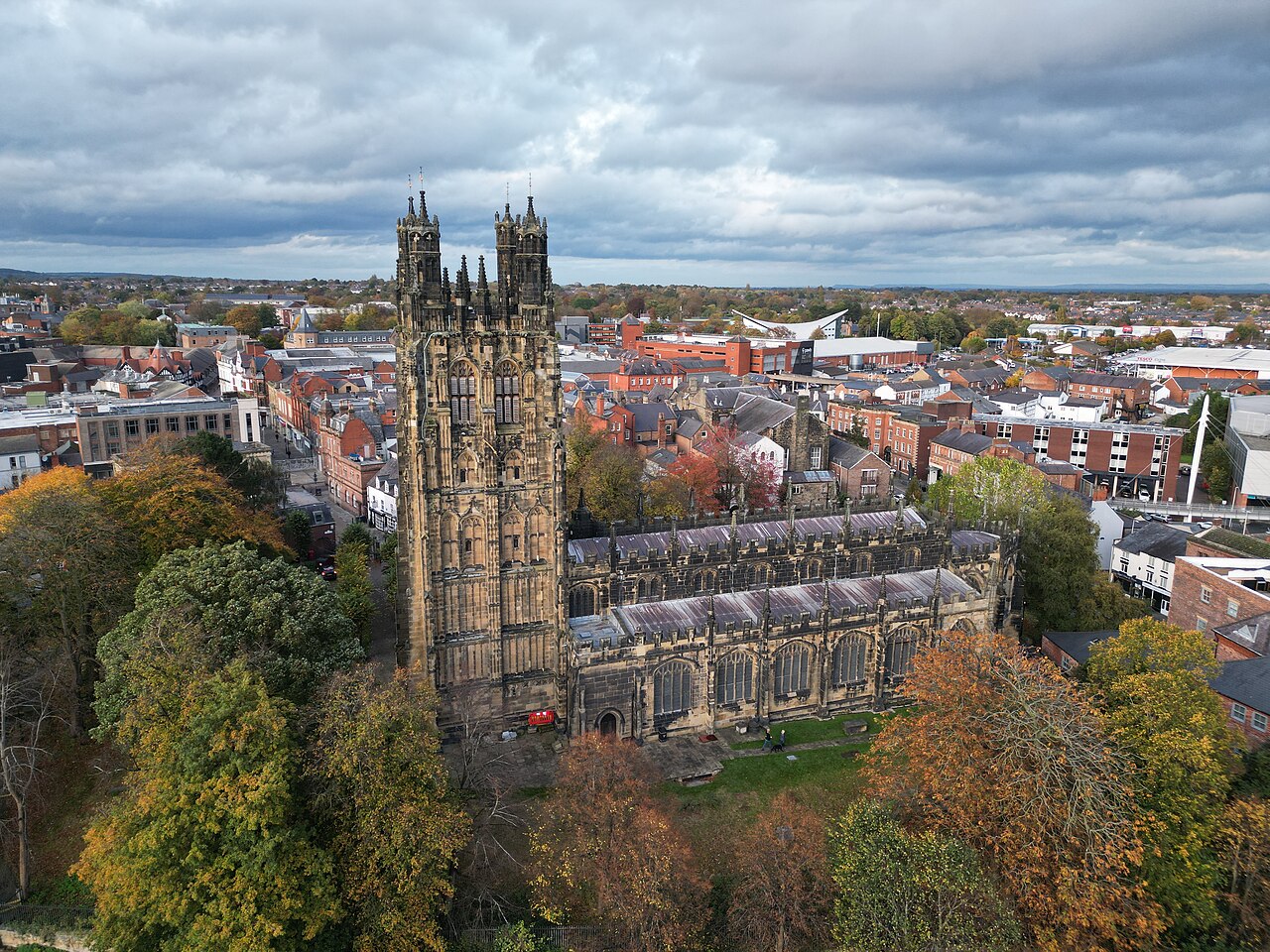
Aerial view of the Parish Church of St Giles

Aerial view of the Parish Church of St Giles from the south. Source: Wikimedia Commons

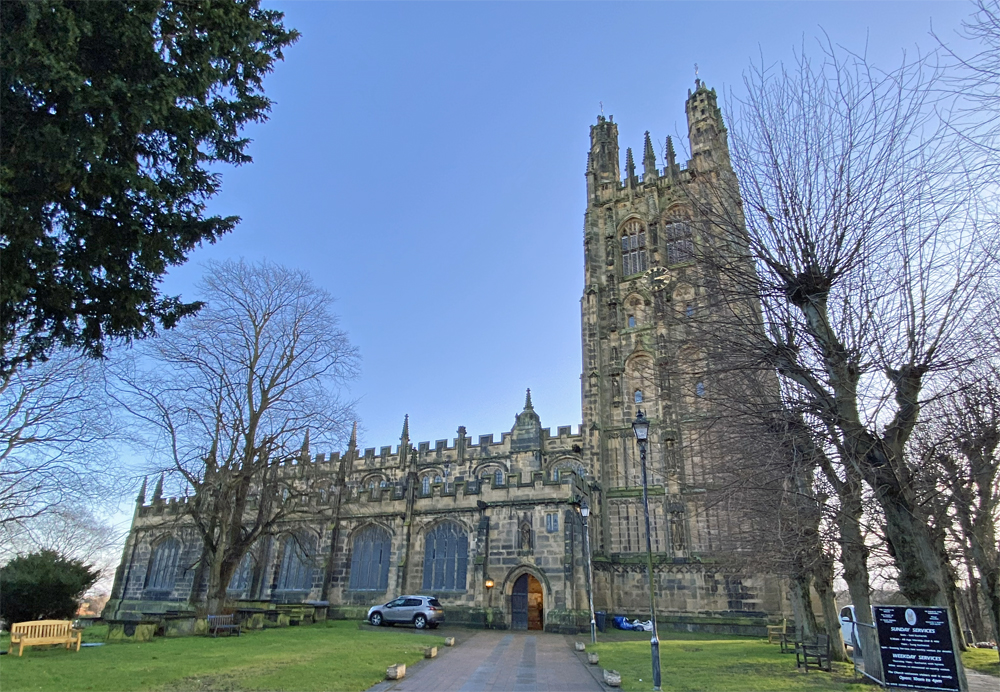
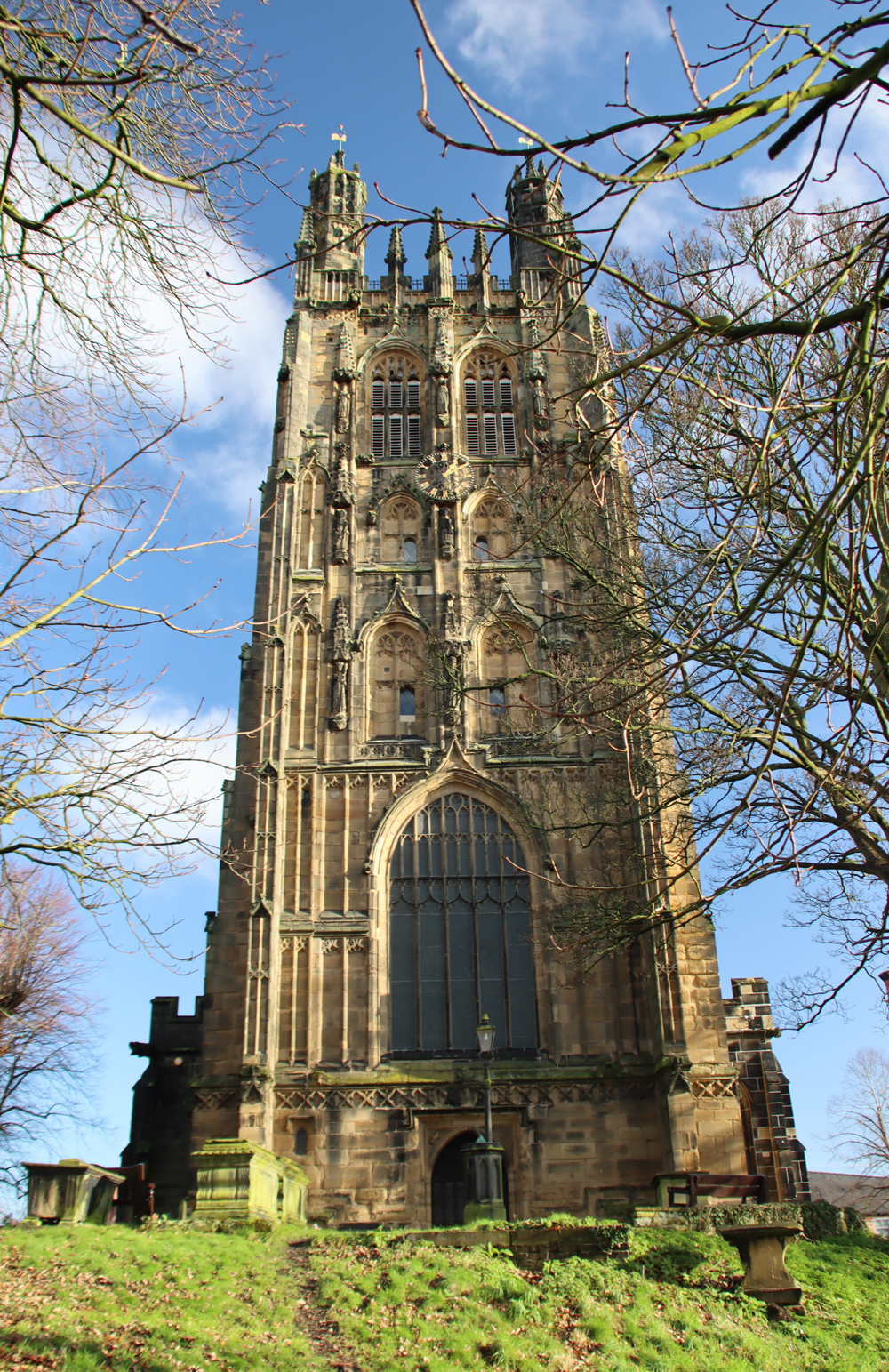
The Grade-1 listed Parish Church of St Giles, (or St Silin or Silyn in Welsh), was the heart of medieval Wrexham and is still the main architectural anchor of the town.  It is possible that it lies over the site of an earlier medieval church, perhaps dating to the 11th century.  Today’s church, built of local yellow sandstone, dates mainly to the late 15th and early 16th centuries.  It is a huge and impressive structure built in two main phases of the gothic style, with five vast windows on the north side and six on the south.  None of the glass is original, all dating to the 19th and 20th centuries, but some of it is very fine, and it all gives a sense of how the church would have looked originally.
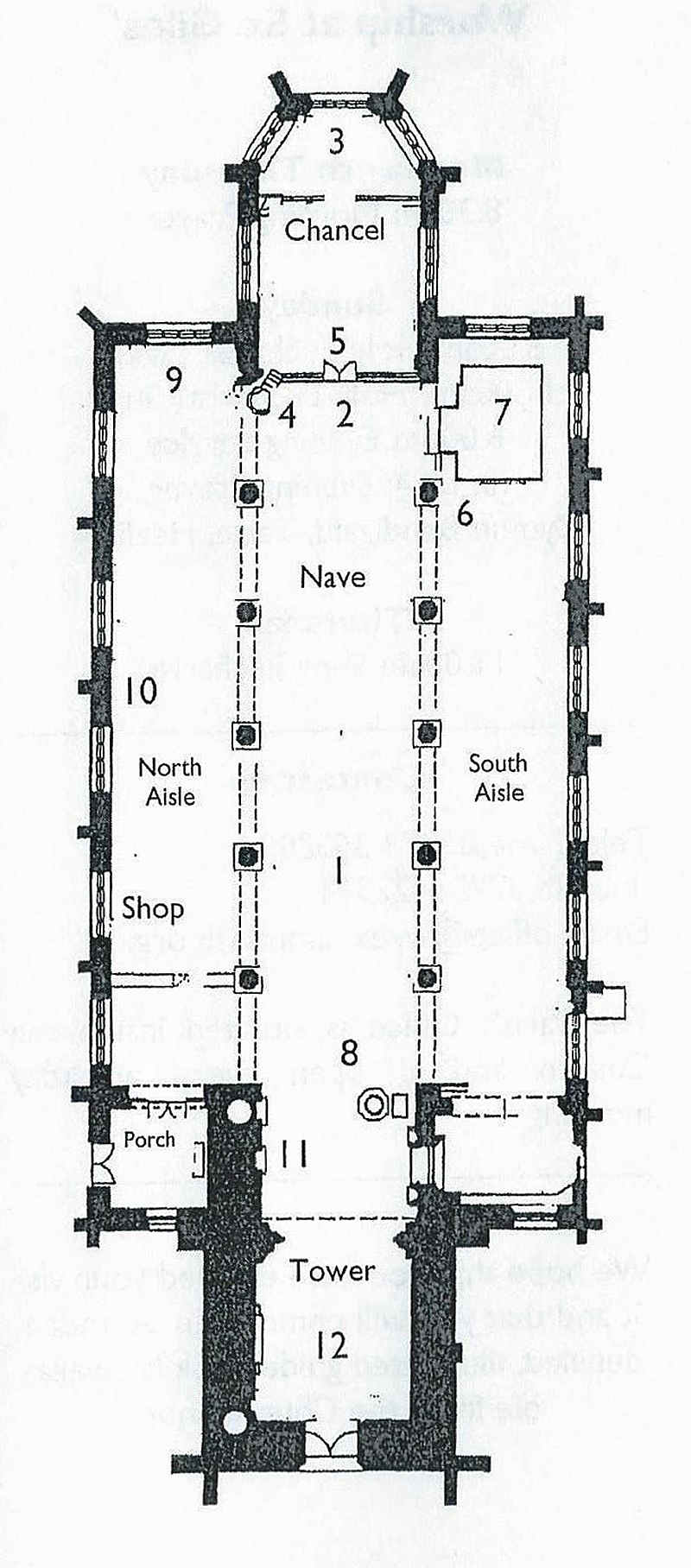
Plan of the church from the leaflet available on the table just as you walk in to the main church.

The tower at the west end and the polygonal chancel at the east end were both added in the early 16th century.  The famous tower and the roofs of nave and chancel are elaborately decorated with crenellations and sculptural features.  Only a fraction of the original churchyard remains, but you can still do a full circuit around the church and of the remaining grave markers there remain some fine chest-type grave markers.

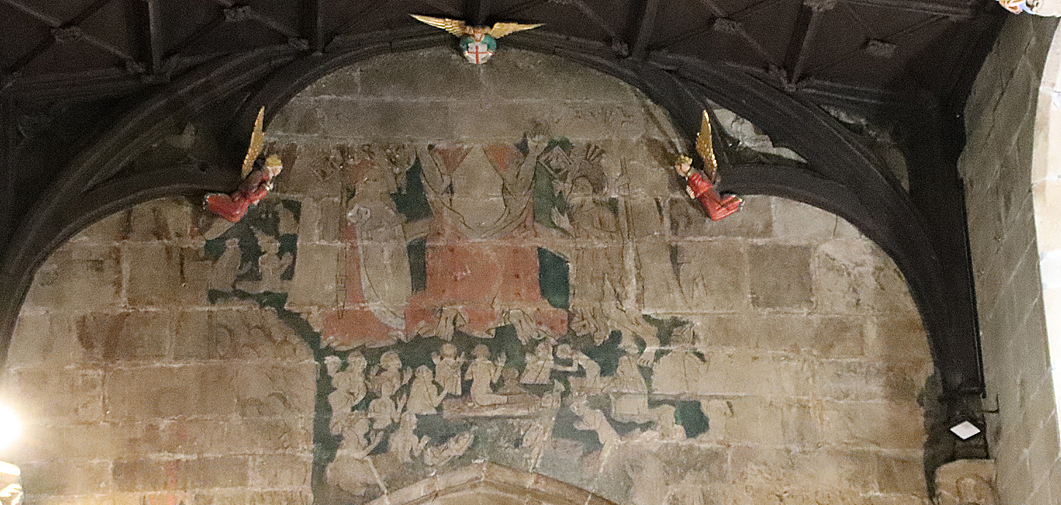
The interior is influenced by the window apertures of the Perpendicular Gothic, but the arcades themselves are more consistent with the earlier Decorative style. At the east end a polygonal chancel (5) with a three-sided apse protrudes (3), with the still remarkable remains of a Doom painting over the chancel arch (over 5). There is a 41m (136 feet) tall tower at the west end (12) that is visible from miles around, and from which the views are reportedly spectacular.

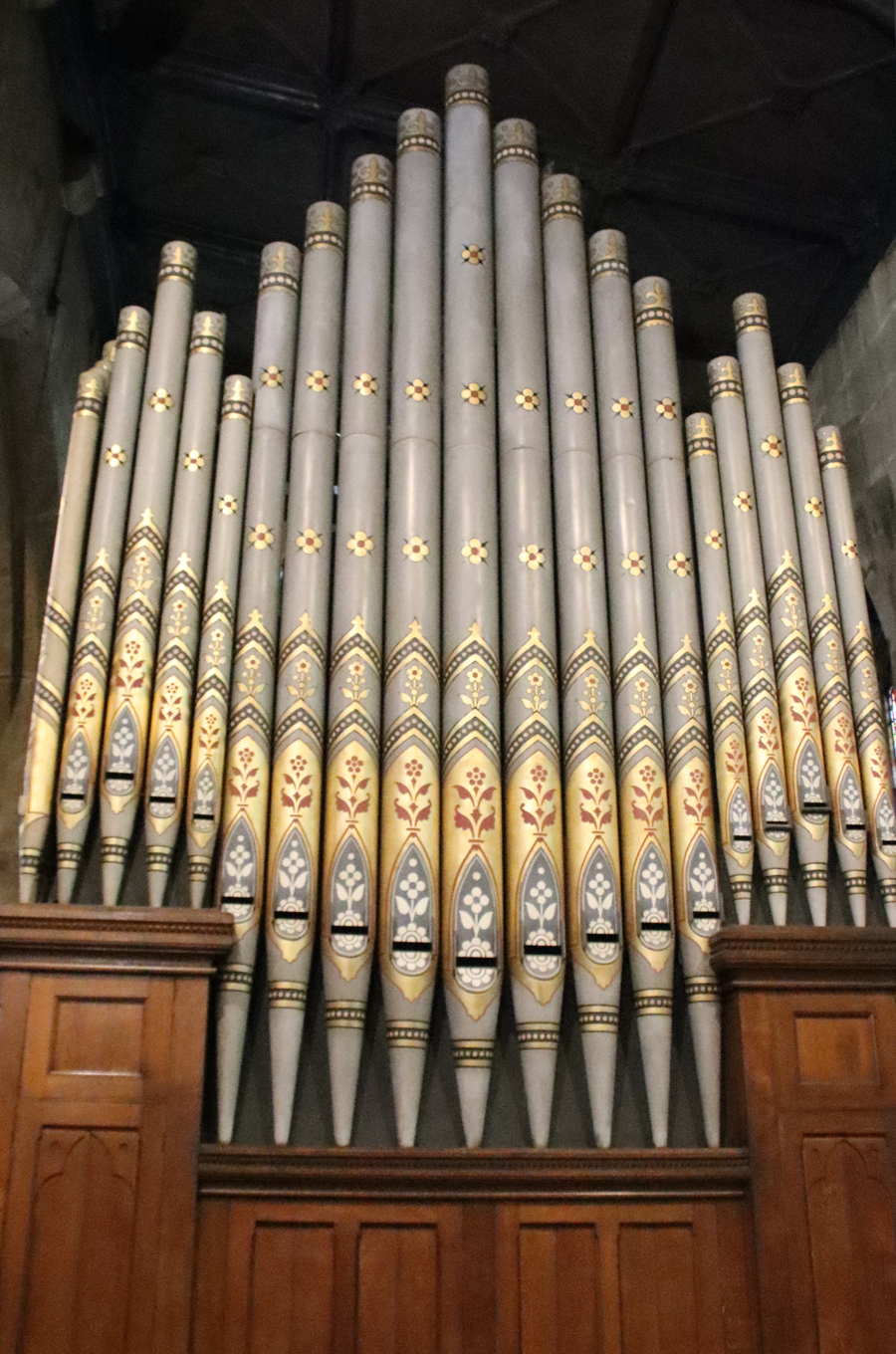
The plan today consists of a nave (1) divided from its flanking north and south aisles by an arcade of six arches.  Running along the top of the nave are the clerestories, a row of windows above the level of the aisles that let in light to supplement the stained glass. The east end of the north aisle (the side on which you enter, facing into the town), is now dedicated to the Royal Welsh Fusiliers (9).  Opposite this, the east end of the south aisle is fully occupied by the 19th century organ (7) where the medieval Lady Chapel was once located.  The organ dates to 1894 and its pipes are very nicely decorated, although it hides a stained glass window aperture and the original piscina.  At the western end of both aisles, and lying beyond them, connecting the nave with the tower, is the ante-nave, which is where the font (8) is located.
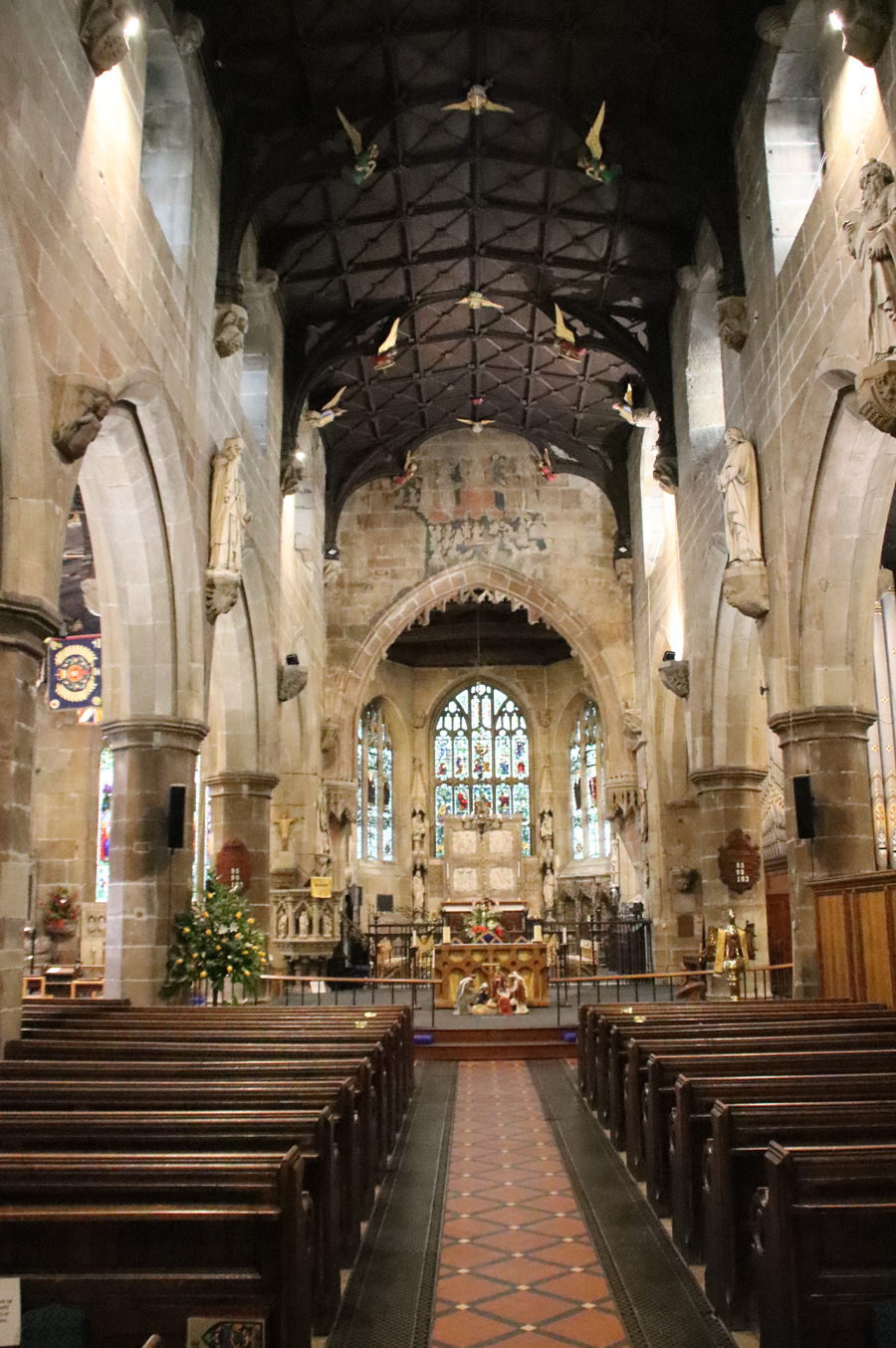
The nave, with the chancel beyond.

The nave, with the chancel beyond.

I have included a summary below of some of what is known about medieval Wrexham, the period that created the main architectural legacy of the church, mainly because I knew so little about it myself before visiting the church.  Hopefully it will also help others unfamiliar with Wrexham’s past to put it into some sort of context.  I have also included a list of features that I particularly enjoyed.  More formal lists of features are available in a leaflet on the table just beyond the north porch in the ante-nave, as well as in a comprehensive and invaluable visitor guide, with lots of photos, available from the church shop, but I have simply singled out the features that particularly grabbed my attention.

Apart from the font (possibly 15th century) stand-alone features such as the brass eagle lectern (16th century) are generally of post-medieval date.  The pulpit and pews are all Victorian and the choir stalls are missing, which is a crying shame as they were probably beautifully crafted with sculptural carvings.  Inevitably there were 19th century alterations and additions mainly by Benjamin Ferrey in 1866-7, with the chancel refurbished by T.G. Jackson in 1914 and again between 1918 and 1919.  For the most part, with notable exceptions such as the chancel reredos, these have been done quite sensitively, usually with the intention of restoring the appearance of the church rather than elaborating the original vision.
Who was St Giles?
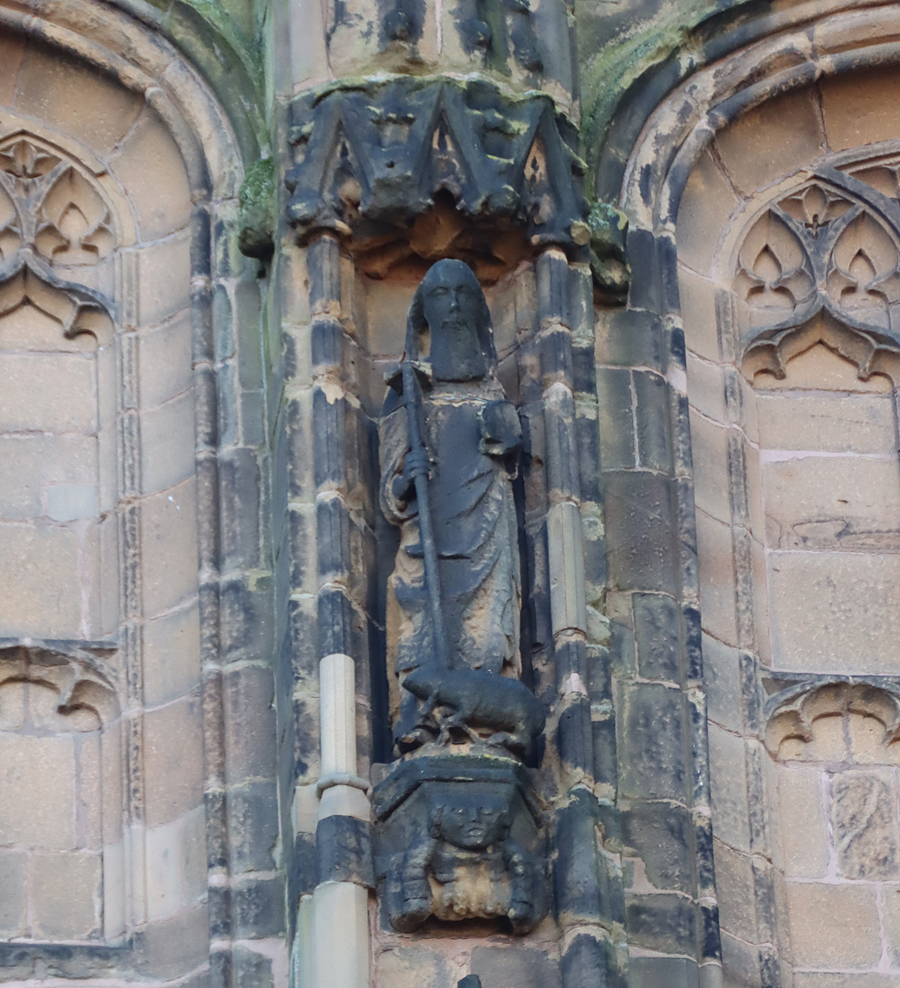
St Giles on the north face of the tower standing on a "grotesque" corbel

According to the guide book (Williams 2018), this is St Giles on the north face of the tower standing on a “grotesque” corbel.

St Giles, whose name in Latin is Aegidius, is one of two saints whose name is associated with the Wrexham parish church.  The other is the Welsh saint Silyn, whose name in Latin is also Aegidius, which may explain why the church has different names in English and Welsh.  An alternative explanation is that the church of St Giles sits over the site of a much earlier medieval church dedicated exclusively to Silyn.

St Giles was featured in the 13th century compilation of nearly 200 stories (hagiographies) of saints called Legenda Aurea (the Golden Legend), by Dominican Friar Jacobus de Voraigne, in which “legend” meant passages of text to be read out aloud.  It was designed as a handy tool for preachers who wanted rousing content for their sermons, a who’s who of revered Christian saints. It spread quickly even before the invention of the printing press in the mid 15th century, after which it went viral with over 80 editions printed, with four editions in English.  It remains an invaluable resource for understanding which saints were most appreciated throughout the medieval period, what was understood about them and how they were valued as models of divinely approved behaviour.  St Silyn was a purely native saint and is not included in the Legenda, but the description of St Giles indicates why he was so valued in the medieval period.
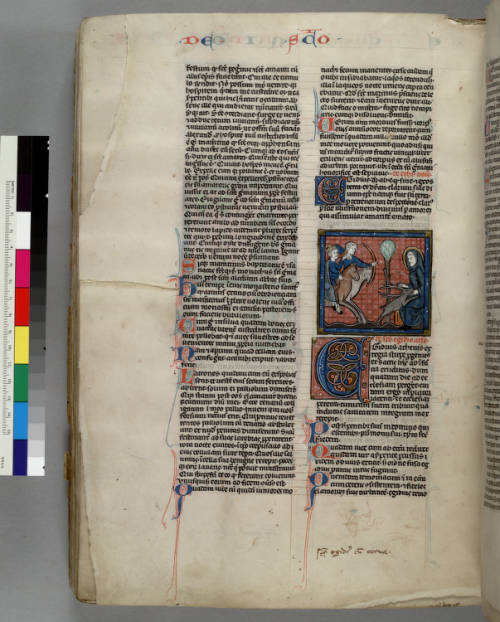
St Giles in the Legenda Aurea, Huntington Digital Library

St Giles in the “Legenda Aurea.” mssHM 3027 f.118v. Source: Huntington Digital Library

According to the Legenda, St Giles was an aristocratic Athenian, who died A.D. c.710. His earliest miracle took place when he gave his coat to a sick beggar who, as soon as he put on the coat, was cured.  On another occasion Giles prayed for a man who was bitten by a snake, and the poison was driven out.  He decided to leave his homeland to escape his spreading fame and head west, and was given passage by some sailors who were saved from wreckage by the saint’s prayers.  Having arrived in southern France, where he remained, he stayed for a while with a hermit, before moving away to become a hermit himself with a spring nearby and with the company of a doe who provided milk.

When the doe fled to him for protection during the local king’s hunt, Giles was accidentally pierced by an arrow let loose by one the king’s hunters.  Giles miraculously lived, but he prayed for his wound not to be fully healed so that he might experience how “power is made perfect in weakness.”  The king, duly impressed, established a monastery and convinced Giles to become its head, which became an important site of pilgrimage.
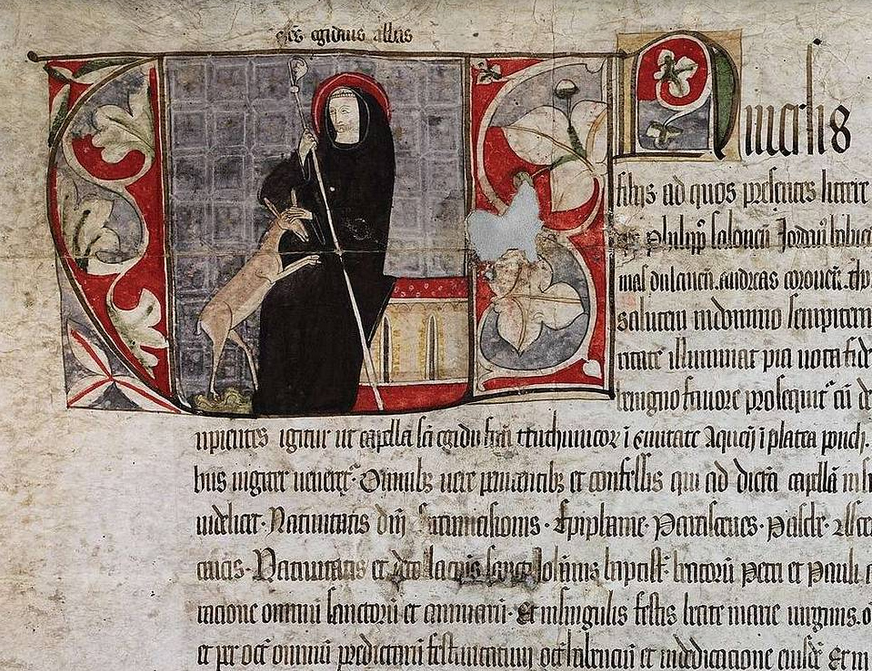
St Giles 1335

St Giles, Avignon 1335 (Indulgence from 15 archbishops and bishops for the St. Aegidius / St Giles Chapel of the Teutonic Brothers in Aachen). Source: Picryl (PublicDomain)

St Giles became the patron saint of the sick (particularly cripples and lepers), the poor and nursing mothers.  Books like the Legenda ensured that the inspirational story spread across Europe.  There are records of around 162 churches dedicated to him in England and at least 24 hospitals bearing his name.  A leper hospital dedicated to him was located in Chester beyond the Northgate.  He can be identified by his main symbols, a deer, an arrow, and sometimes an abbot’s staff.  His feast day is annually on September 1st.

St Silyn is far more elusive, although sometimes associated with St Tysilio, a Welsh monastic saint of the 7th century (broadly contemporary with St Winefrede of Holywell), whose cult was centred in Powys.
xxx

Medieval Wrexham
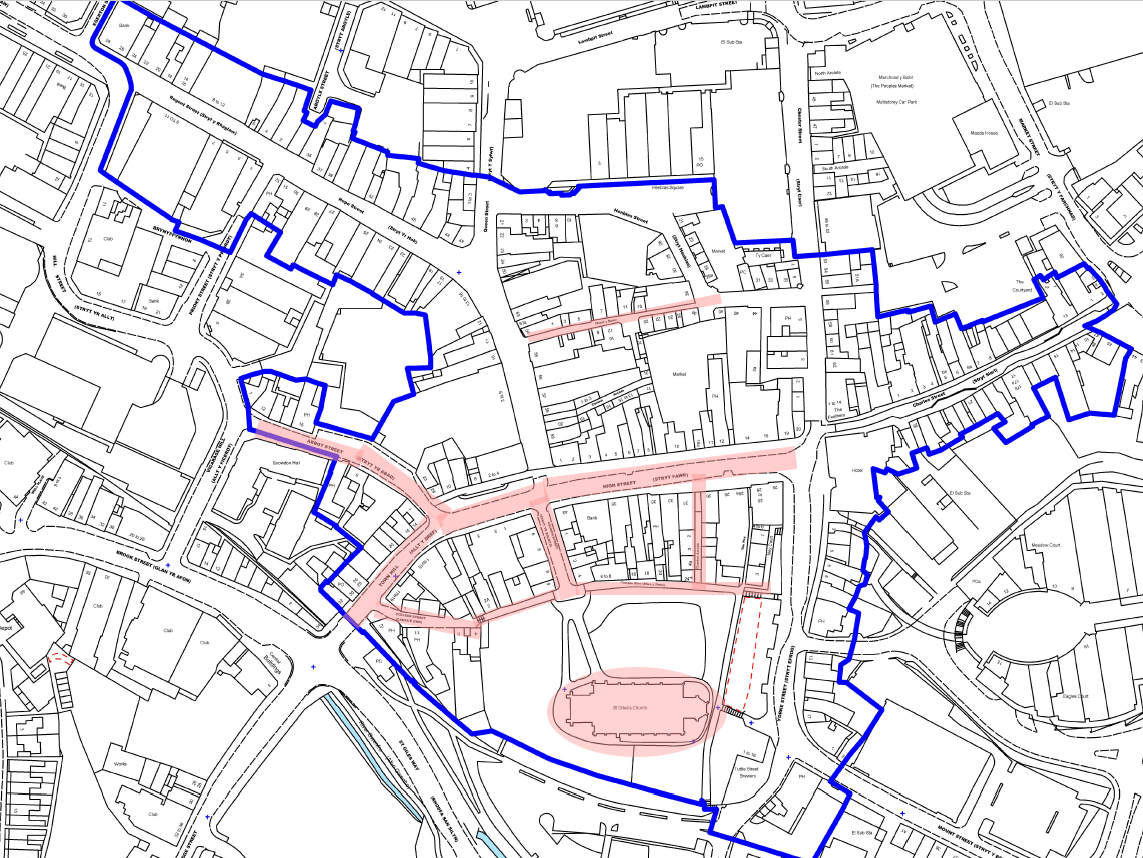
Wrexham Town Centre Conservation Area Character Assessment and Management Plan map 2009, with my annotations in pink to show the Parish Church of St Giles and roads that the report states were laid down during the medieval period

St Giles is a vast edifice, the visible architecture built mainly in the 15th and 16th century to house a large congregation in style, something that required a considerable investment in  its basic form, its ornamental embellishments and its furnishings.  Today the church is surrounded by a mixture of urban buildings from different periods.  Throughout Wrexham Georgian and Victorian buildings speak of 18th and 19th century confidence, but unlike Chester, where there are plenty of echoes of its medieval and Tudor past, there are scarcely any obvious indications of a medieval heritage.  However, a bit of hunting around in local resources (with thanks to the local history section at Wrexham’s public library) produced some useful information about the medieval townscape of Wrexham.

Valle Crucis, Llangollen

Valle Crucis Cistercian Abbey, Llangollen, founded 1201

The earliest sign of a settlement in the immediate area is a motte and bailey castle prior to 1161 located 1 km away at Erddig, called “de Wristlesham,” which must have supported a settlement, although it is now known exactly where the accompanying settlement was located.  The predecessor of today’s Wrexham was certainly founded by 1220 because it is at this time that Bishop Reyner of St Asaph allocated half of Wrexham’s income to Valle Crucis Abbey in Llangollen (established 1201), with the other half granted to them in 1227 by Bishop Abraham, also of St Asaph.  Prince Madog ap Gruffyd of Powys Fadog, the founder of Valle Crucis, added to its coffers in 1247 when he granted the abbey the tithes (a type of religious tax earned by parish churches) of the parish church of Wrexham, sealing the link between the town and the abbey, even beyond Henry VIII’s suppression of the monasteries.  By accepting the tithes, the abbey also accepted certain responsibilities to the church, including appointing its clergy and maintaining the chancel.

Seal of John de Warenne, 6th Earl of Surrey

Seal of John de Warenne, 6th Earl of Surrey. Source: Wikipedia

Wrexham’s history started to take a more recognizable and politically stable shape following Edward I’s shake-up of Wales after the defeat of Llywelyn ap Gruffydd (Llywelyn the Last), his brother Daffyd and their supporters in 1282-3.  This destroyed the 13th century challenge to England’s control in northeast Wales. As part of Edward’s plan to bring northeast Wales under English control, Wrexham became the centre of lordship of Bromfield and Yale within the cantref (administrative district) of Maelor under the lordship of John de Warenne, 6th earl of Surrey (best known for building the castle at Holt on the River Dee to the north, completed c.1315).  It is recorded that in 1316 Wrexham was spelled Wrightlesham, and was based in the current location with an accompanying church.  By this time there was a thriving community of 44 tenants who held 52 tenements, with several markets.   In 1330 the church tower fell during a storm, which must have created quite an impression on the town!
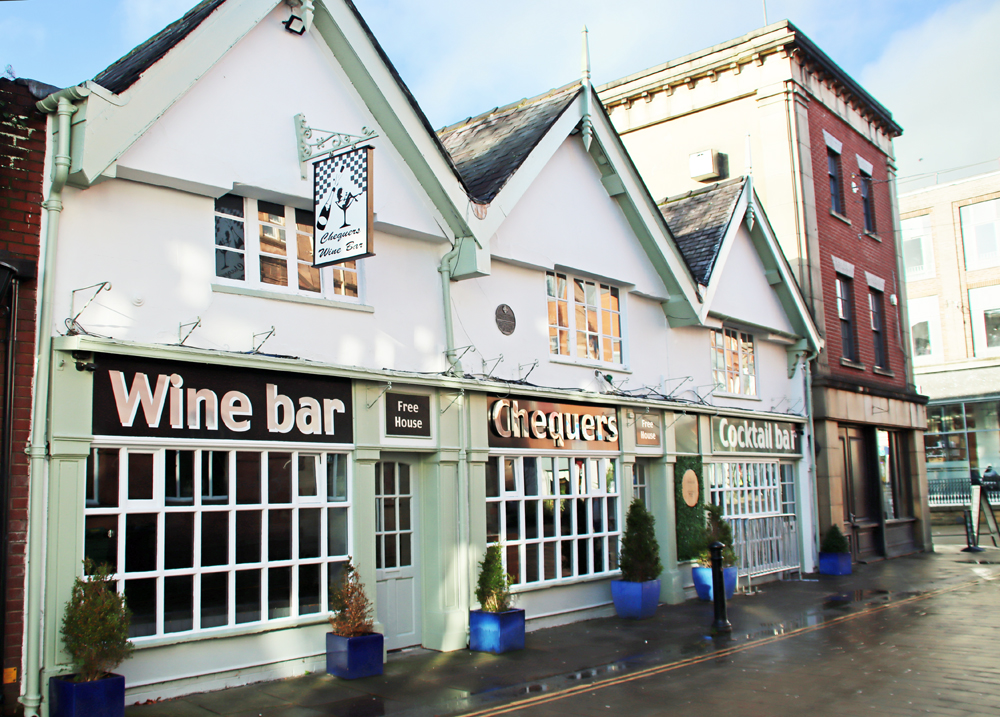
7-9 Church Street

The Grade 2* listed 7-9 Church Street, thought to date to the 1500s. Timber-framed, originally thatched, and possibly a single storey mid-medieval hall house, the oldest remaining buildings in Wrexham to which alterations were later made. A floor was added in the 17th century, and it was renovated in the 1990s

The growing importance of Wrexham was confirmed by the king’s grant of a market charter in 1391, permitting it to hold a weekly regional market and annual fair, becoming a focal point for trade and encouraging the growth of local manufacturing and service industries.  Based initially on agricultural activities, with land suitable for some cultivation and a lot of livestock herding, the town’s commercial status was given a boost in the 15th century with the development of coal mining, initially for local consumption, and iron production.  A leather tanning industry, together with all its associated skills, was also well established.

As well as almshouses at Llangollen Abad, a number of documents also refer to the abbey having almshouses in Wrexham, although their original location is not mentioned.  They were destroyed in 1589 by inhabitants of Wrexham, angry by the appropriation of all of the abbey’s properties and financial resources by incomers, and the buildings were converted to raw materials (brick, tile, wood etc) that could be carried off for use elsewhere.
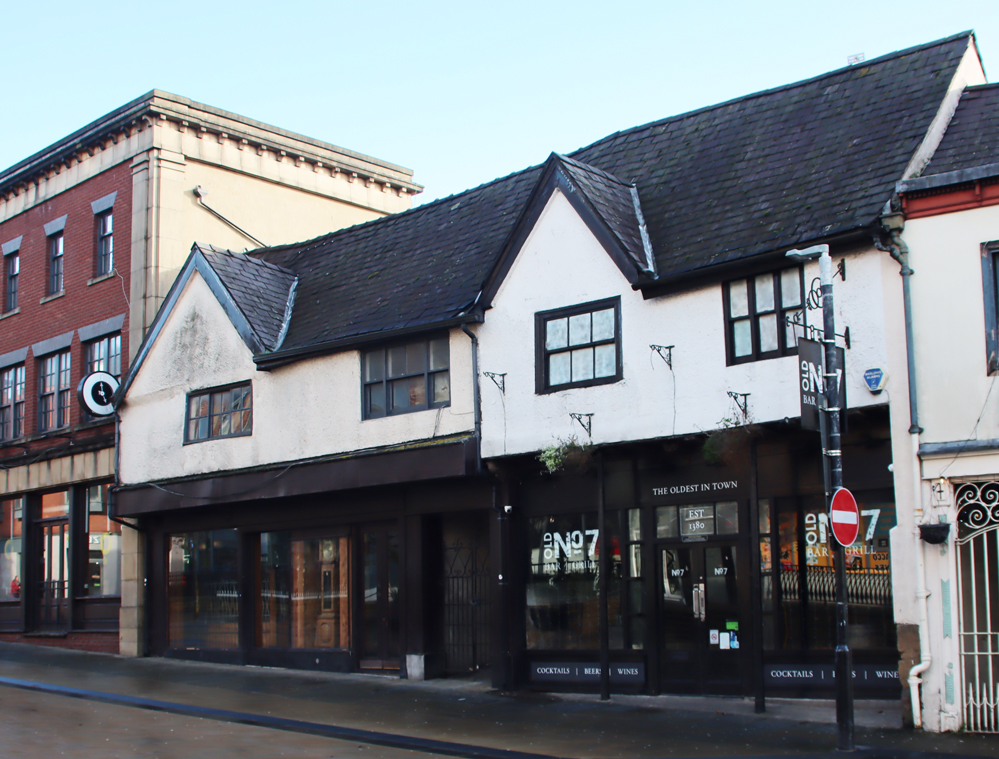
5 – 7 Town Hill, medieval, timber-framed buildings renovated in the 1990s

The revolt of Owain Glyndŵr in the first decade of the 15th century, unlike other unluckier towns in Wales, had no direct impact on Wrexham in terms of attacks and damage to property.  Its effect would have been felt, however, in terms of the disruption to economic activities, transport and communications.  In rural areas the attacks, resulting in loss of resources and income in some areas, would have caused great hardship, and would have led to the fluctuating availability of goods in the Wrexham markets.  Ripples of uncertainty would also have felt throughout the town, as the potential impacts of Glyndŵyr’s activities and the future of Wales, as well as concerns about the immediate fate of the town, would have been extensively debated.
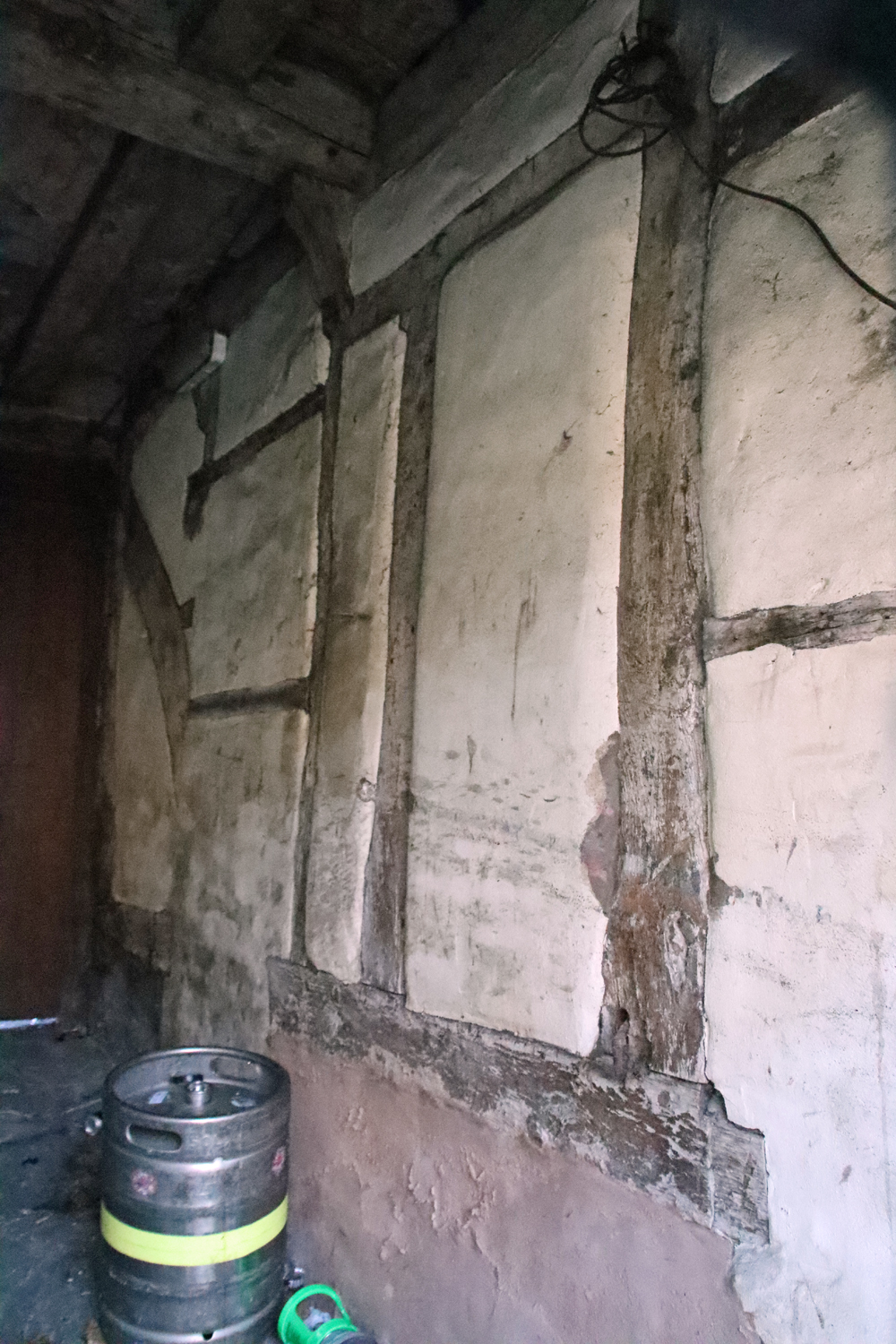
The timberwork revealed in the passageway between 7 and 9 Town Hill Street.

The medieval timberwork revealed in the passageway between 7 and 9 Town Hill.

Unlike Chester, the medieval and Tudor past of which is writ large on the cityscape, Wrexham’s early past is architecturally elusive, most of it demolished and replaced by much more recent buildings, roads and the former Ellesmere-Wrexham railway, its fugitive remnants hidden in nooks and crannies.  The main indicator of medieval Wrexham today is the arrangement of roads that once fanned out in all directions in a radial pattern from the church itself.  Original medieval roads, lanes and alleyways in Wrexham were very narrow, mainly straight, and were characterized by narrow, low buildings.  According to the Wrexham Town Centre Conservation Area Character Assessment and Management Plan report, the wider roads were those where market stalls lined the sides, such as  the High Street.  Other medieval roads and lanes are Abbot Street, College Street, Temple Row, Town Hill, and The Ney.  In 1643 around one quarter of the part of the town that was clustered around the market area was burned down.  It was quickly rebuilt, reflecting both the importance of the town and the funds available locally in the Stuart period, but the fire almost certainly took with it a number of medieval buildings.xxx
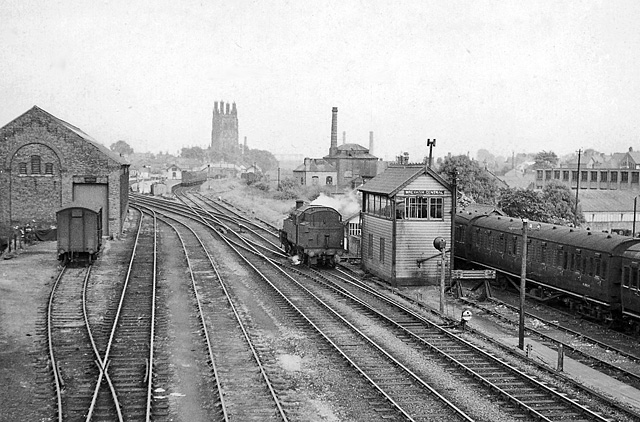
The Wrexham and Ellesmere Railway

The former Wrexham and Ellesmere Railway of 1895. The carriage in the distance next to a white building shows the Central Station (moved in 1998) and beyond is the church of St Giles, with one branch of the railway running to its south. This section of railway partially closed in 1962 and completely closed in 1981.  Source: Wikipedia

In spite of the 1643 fire, the 19th century railway that tore up part of the town, and the unsympathetic redevelopments of the 1960s, there are two complete medieval buildings remaining, although you need a sharp eye to spot them, on Church Street (no.s 7-9) and Town Hill (5, 7 and 9).  The Golden Lion pub at the north of the High Street originated in the 16th century.  Otherwise, remnants of medieval timber frames can still be found within some later buildings, the footprints of long thin burgess plots and footprints of shopfronts with yards, where only the yards remain.  Beneath the current ground level there is still potential for learning more about the medieval period:  “The medieval core remains a highly sensitive archaeological area.  There is a strong likelihood that remnants of buildings and deposits may be found in the excavation of land, provided this has not been destroyed by later structures” (Wrexham Town Centre Conservation Area Character Assessment and Management Plan 2009, p.9).
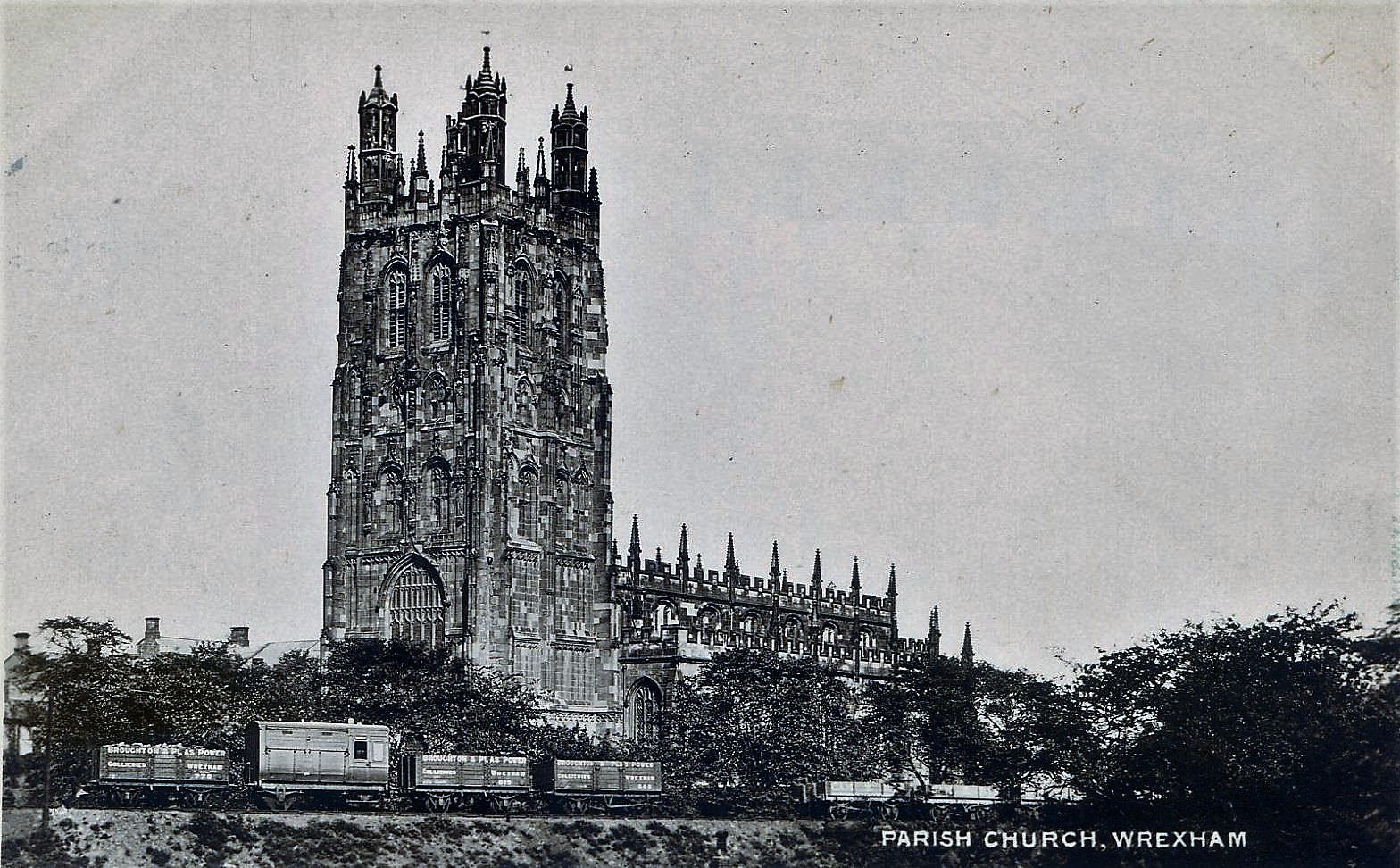
Railway passing just south of St Giles through what was once the southern extent of the churchyard. Source: Facebook

A brief history

The  Gothic church
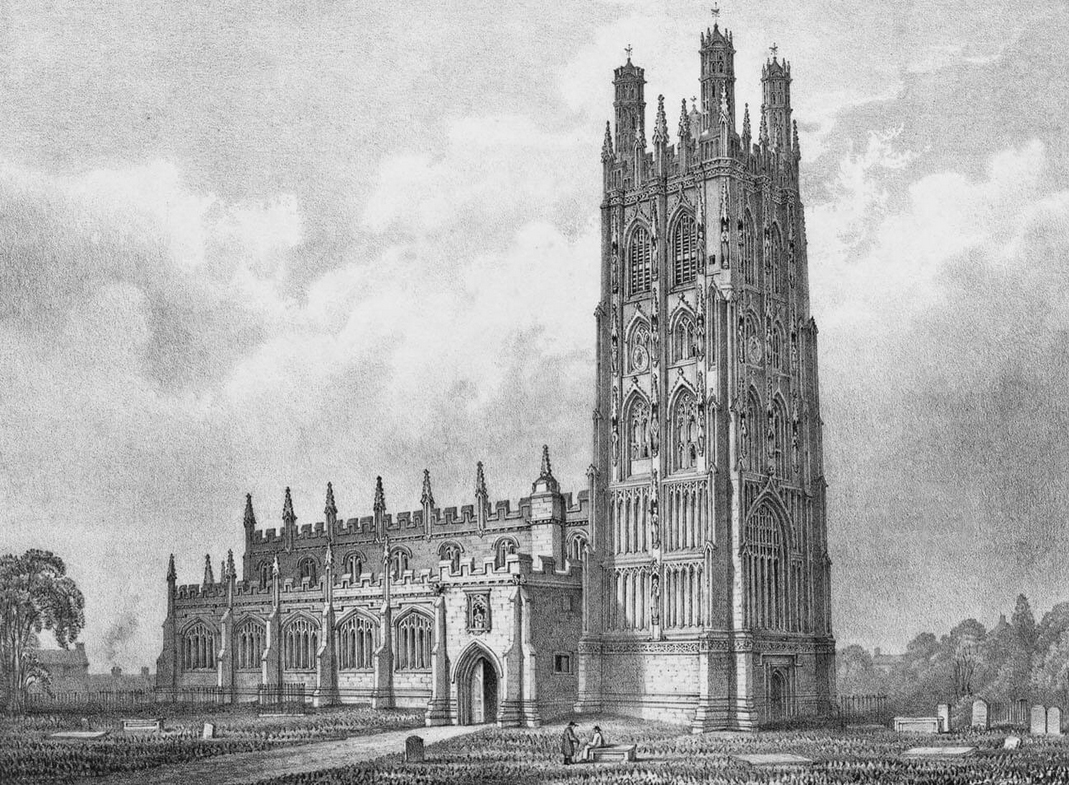
The parish church of St Giles in the first half of the 19th century by W. Crane. Source: medievalheritage.eu

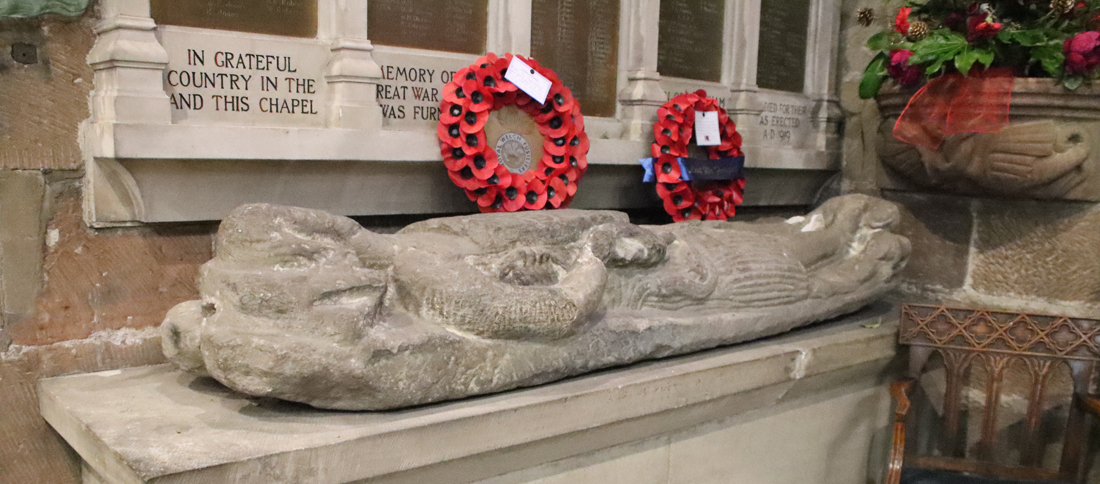
As mentioned above, the earliest reference to a parish church in Wrexham was in 1220 when the Bishop of St Asaph granted the monks of Valle Crucis Cistercian Abbey in Llangollen half of the income of Wrexham. In 1247, the Prince of Powys, Madoc ap Gruffydd, granted the monks of Valle Crucis the tithes of the parish church of Wrexham.  It is probably from this earliest period that the splendid stone effigy of Cyneurig ap Hywel dates.  The full-sized depiction of the Welsh knight shows him with long hair, no helmet, but with a sword in his left hand and shield over his body, showing a lion rampant and the legend in Latin “here lies Cynerig ap Hywell.”  It was found in the churchyard and moved indoors for its protection, now lying at the west end of the north aisle in the war memorial chapel.
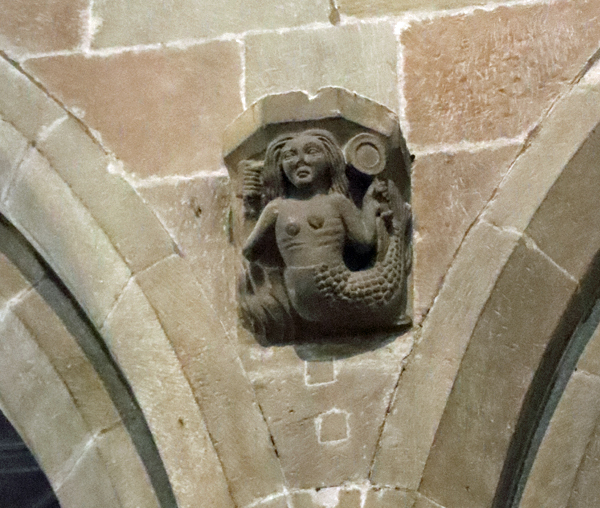
 

14th century corbel sculpture with a mermaid holding a mirror and comb

14th century corbel sculpture with a mermaid holding a mirror and comb facing into the nave on the north face of the south arcade (left as you walk down towards the chancel)

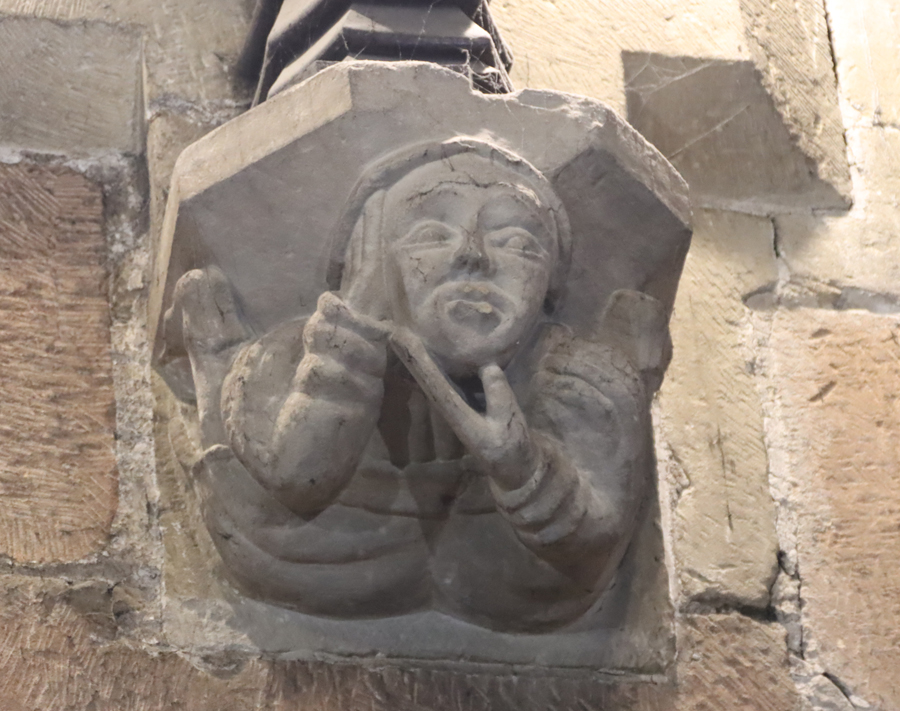
In 1330 on St Catherine’s feast day the church tower fell during a severe storm. It was widely believed that this was because the weekly market took place on a Sunday, angering either St Catherine or God, or both; subsequently the market was held instead on a Thursday.  The original church was largely rebuilt with an emphasis on the gothic Decorated style. The arcades with their very fine lancet-shaped arches and octagonal pillars date from this rebuild. Although some of the sculpted corbels were provided with their sculptural elements in the 19th century, others are thought to be 14th century, including a man with toothache in the north aisle, and a mermaid with mirror and comb in the south aisle (the latter very reminiscent of a medieval misericord in St Oswald’s church in Malpas).  Some of the mason’s marks within the church are thought to belong to this period.  There was no stone tower and no chancel, but it is thought that by the end of the 14th century a wooden bell tower had been added at the west end on the site of the fallen stone tower.
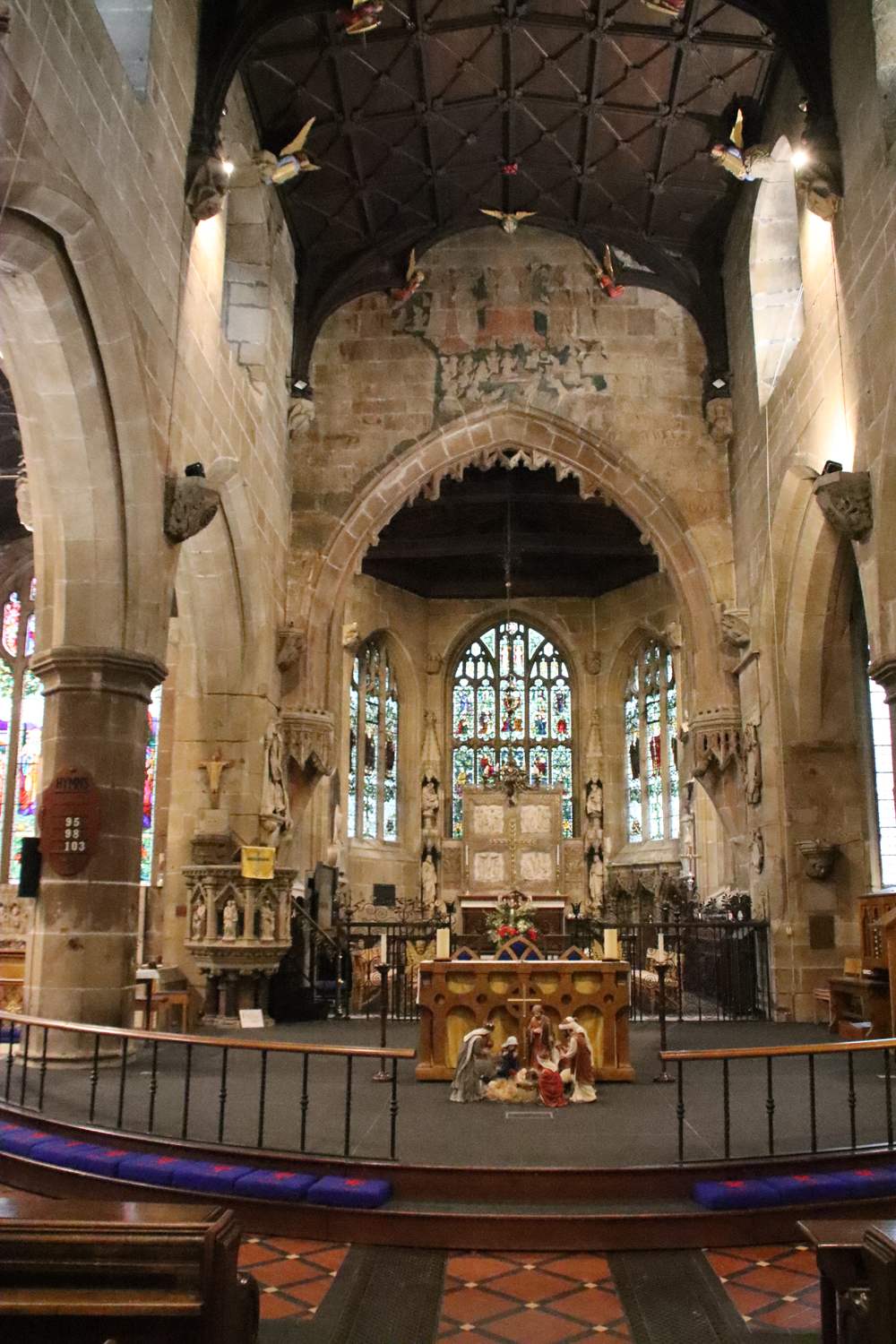
The east end of the church with the former east end window arch now serving as the chancel arch (see bits of tracery from the old window) and the Doom painting above. The three-sectioned apse lies beyond, behind an enormous stone reredos.The pulpit at left dates to the 19th century. The raised semi-circular dais in the foreground is modern.

In the mid 15th century, either in 1457 or 1463, the 14th century church went up in flames, and yet again the church had to be largely rebuilt, based on the footprint of the 14th century church, but adopting the new fashion for the Perpendicular.  A new roof was added.  Only a few elements of the Decorated style, such as the arcades, survived.  Likewise, the decorated corbels that supported the former roof, although they no longer had a practical function, were left in situ.

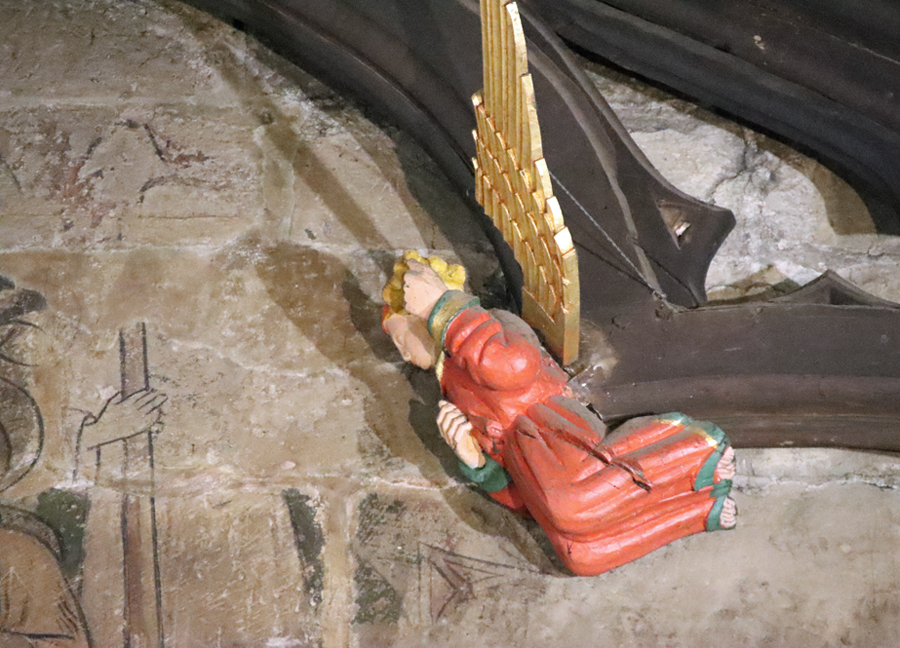
In 1506 a new set of works took place to transform the church into the structure seen today. The roof was again replaced, this time with a wooden camber beam ceiling, supported on corbels featuring armorial shields.  Sixteen brightly painted angels playing musical instruments or singing look down from the roof, and the glorious Doom painting was added above the chancel at this time (about which more below), with a small red devil’s face on the roof in front of it.  The north porch and a new chancel were added, and the new tower was completed in 1525, extending the length of the church and giving it a magnificent presence in the landscape. The extension of the chancel was achieved by taking out the former east window, which now forms the chancel arch, with part of the former window’s tracery still clearly visible.  The Perpendicular is usually a less lively version of the gothic aesthetic than the previous Decorated, and can be rather regimented and severe, but the sheer number of pinnacles, crockets, battlements, canopies, statues, sculpted corbels, bosses, angels, gargoyles and grotesques, both inside and out, but particularly the famous sculpted elements on the tower, provide the church with real energy.  The font (see further down the page) was certainly present in the 16th century, but its date is unknown.  It was lost during the Civil War, but was remarkably returned to the church in 1843.
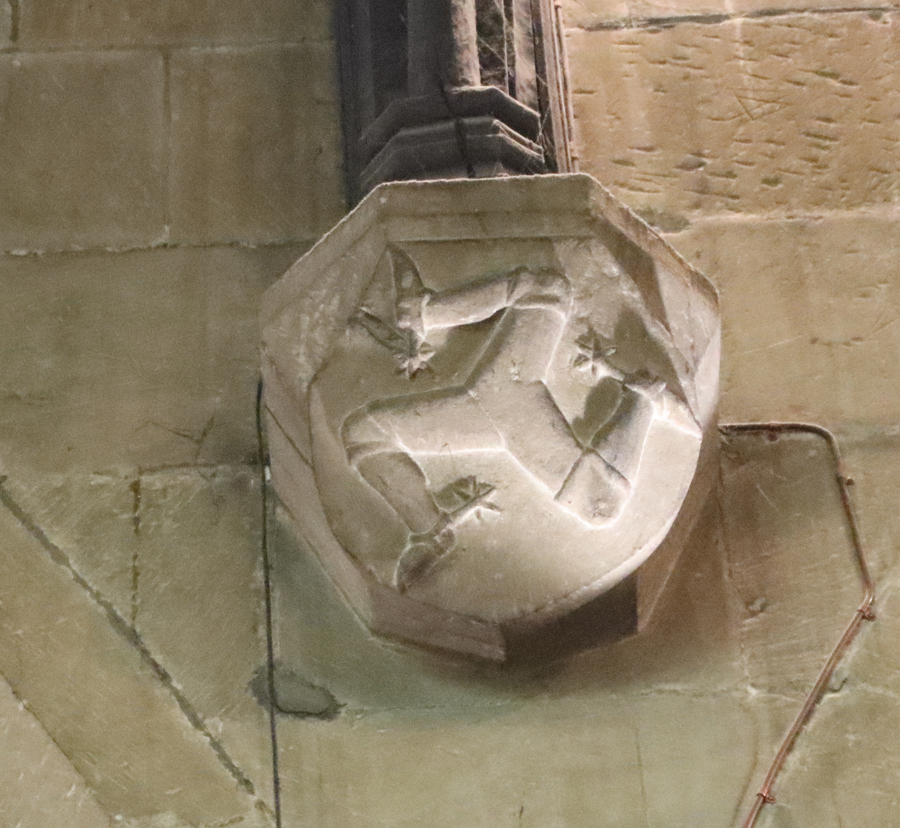
The legs of Man, associated with the Stanley family. South aisle, arcade.  Possible mason’s mark in the chiselled block at top right.

Although previous rebuilds had been the result of storm and fire damage, this time the 1506 works seem to have been the result of an investment in status, suggested by the proliferation of Tudor imagery throughout the church, including the Tudor rose and portcullis (associated with Henry VII) and the symbolism associated with the Stanley family (such as the legs of the Isle of Man) who are thought to have invested in a number of religious buildings in the area, including the parish churches at Gresford, Holt and Mold, as well as the superb chapel at the shrine of St Winefrede in Holywell.  The devout Margaret de Beaufort, mother of Henry VII, who married Thomas Stanley in 1482 is often credited with much of this work, but it is not always clear from documentation what form her or her family’s influence or investment took.  If the investment was not made exclusively by the Stanelys, it remains unknown how the financial injection was sourced and where from.
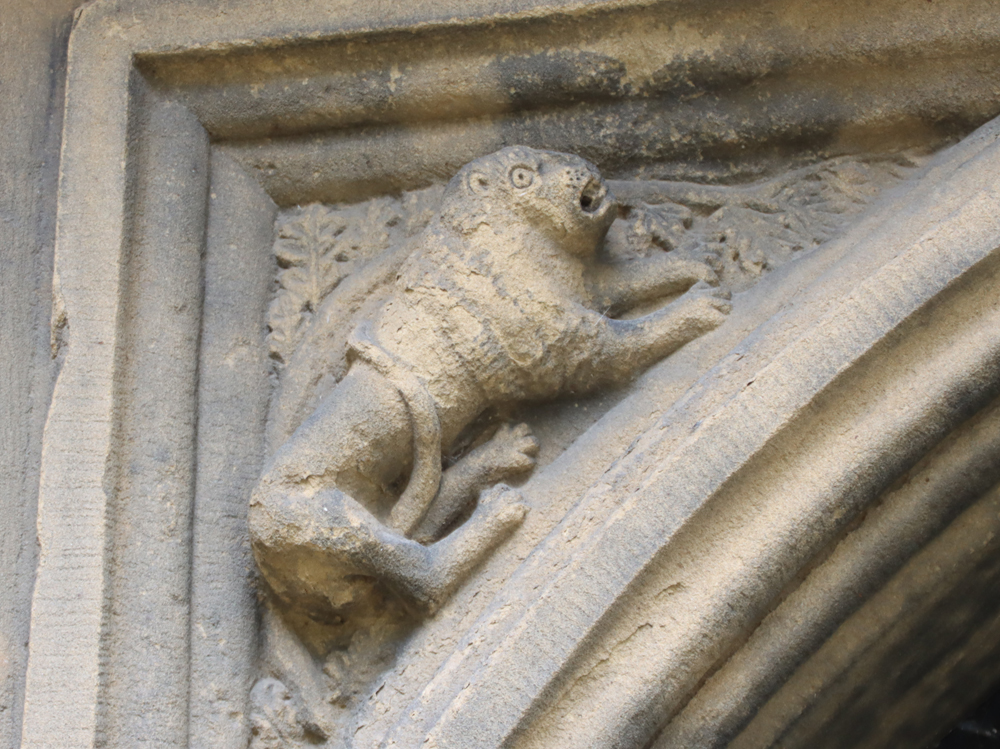
Decorated spandrel on the north porch, showing a splendid lion

Decorated spandrel on the 16th century north porch, showing a splendid, if slightly startled-looking lion

In Henry VIII’s Valor Ecclesiasticus of 1535, a valuation of all the monastic holdings in Britain, it is recorded that pilgrim offerings were being made to images in the church of St Giles (a property of Valle Crucis Abbey), amounting to £2.62.8d, which according to the National Archives Currency Converter is around £1029 in today’s money.  The entire contribution of St Giles to the abbey was recorded as £14 2s 8d (c.£6000 today) for temporalities (secular income such as farms, mills, tenant farmers, mines and quarries and sundry rural and urban buildings that could secure rents), and £54 16s 8d (c.£23,000) for spiritualities (income derived from religious sources such as church tithes and other revenue, pilgrim donations, oblations, and chantries).    It also showed how the abbey short-changed the vicars of its appropriated churches.  The abbot claimed £50 9s 2d (c.£21,000) from Wrexham’s parish church, but the vicar only earned £19 9s 8d (c.£8209 – c.39%).
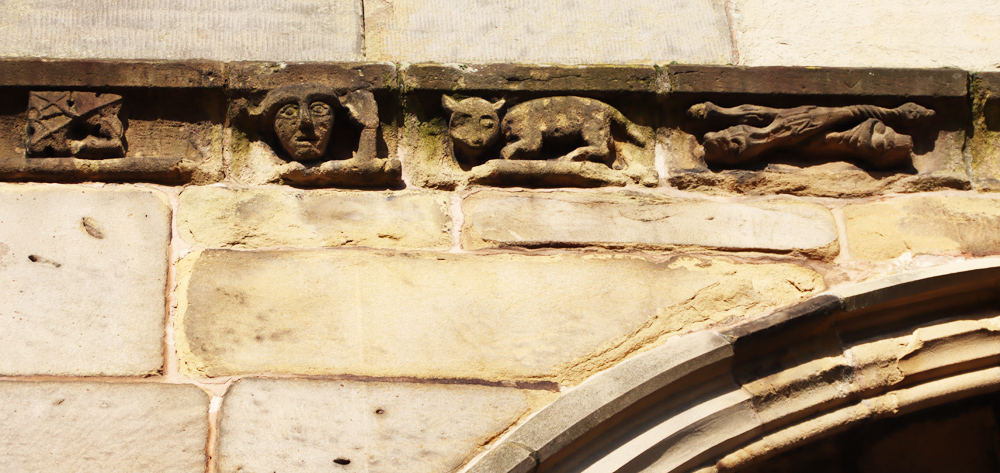
One of the interesting questions regarding the early Tudor period is what happened after Henry VIII’s dissolution of the monasteries.  The church and other Wrexham resources had become one of many possessions of Valle Crucis Abbey (founded 1201) during the 13th century, but after Valle Crucis had been dissolved, probably in January 1537, the abbey itself was granted by the king to a Yorkshireman, Sir William Pickering, causing significant local resentment from local landowners who had their own designs on the former abbatial property and its incomes.    Although some of the abbey’s land and properties were dispensed of, and most of its building materials stripped down and the church dismantled, many properties that provided incomes were retained by Sir William, including revenues from Wrexham’s parish church.  The income from St Giles for the year 1538-9 (in Appendix II of Derrick Pratt’s book on the subject of the dissolution of Valle Crucis) earned him £50.00 per annum (c.£21,000, according to the National Archives Currency Converter), one of five ecclesiastical incomes that he enjoyed, as well as those from secular properties.  Quite what this meant for how St Giles was administered, including who was now responsible for appointing the clergy, and how and what they were paid is not clear.

The 17th century and Civil War
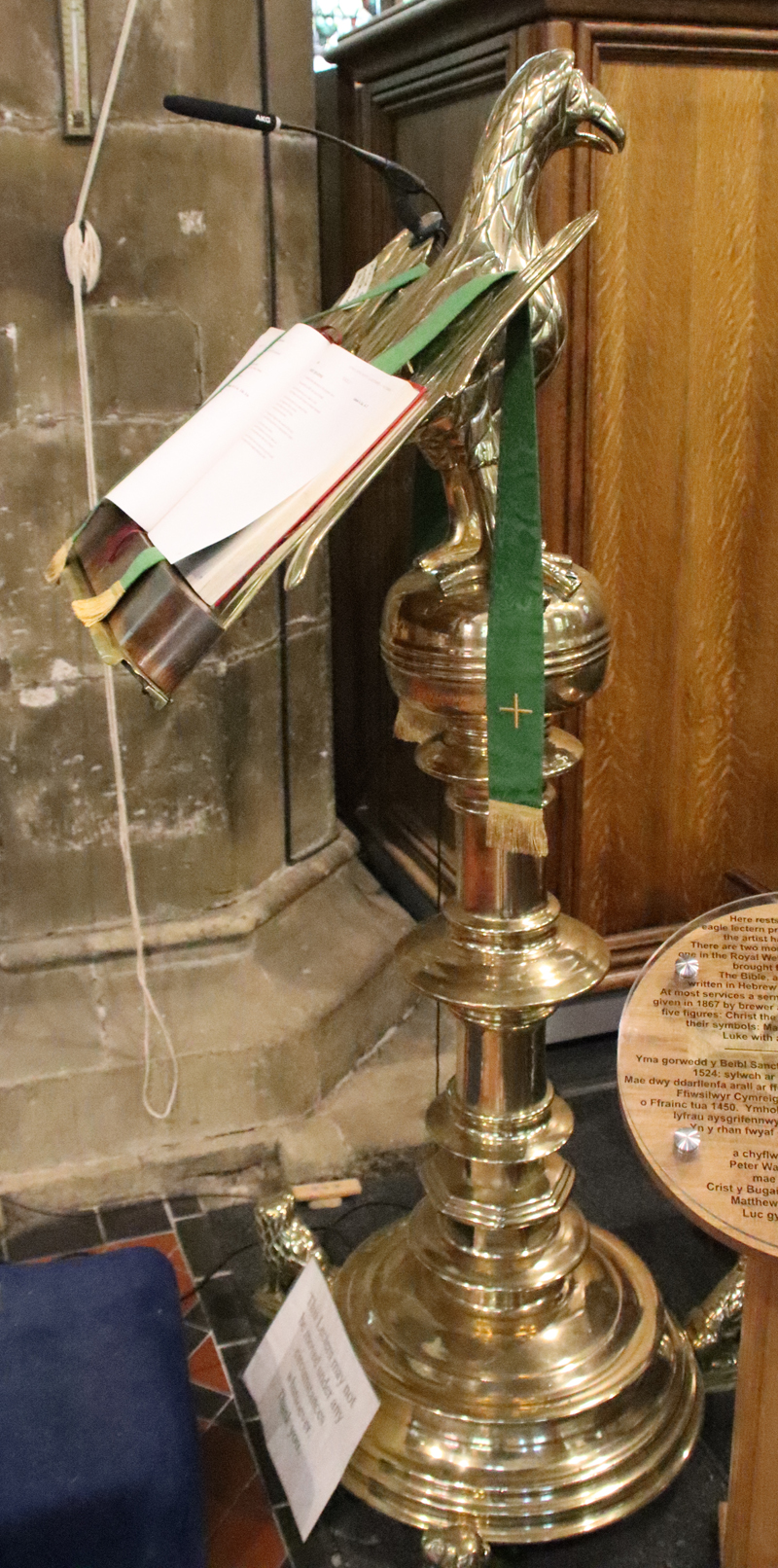
1524 brass lectern

1524 brass lectern with an eagle on a sphere supported on an ornate stand, with four lion’s feet at its base, which went on to support an original 1601 copy of the King James Bible. It is a surprising survivor of the Protestant attack on the church

The 17th century was a tumultuous period for the churches of England and the borders.  Many were targetted by Puritans determined to eliminate even a hint of pre-Reformation papism, finery and ritual.  The Puritans, suspicious of any rituals and richly ornate ceremonial objects and vestments that echoed elaborate Catholic practices, set about destroying the ornate and the rich.  Worship per se was not discouraged, but the Puritans demanded a purer and more modest relationship with God that reflected honesty and humility rather than wealth, artworks and ostentation.

The church of St Giles did not escape Puritan notice, although the damage could have been much worse.  The organ was destroyed in 1643, the font was removed and a tomb was opened.  John Rowland Phillips gives a vivid description in his Memoirs of the Civil War in Wales and the Marches, describing Sir William Brereton’s advance into Wales:  “In Wrexham they broke in pieces the best pair of organs in the King’s dominions, the lead pipes of which were converted into bullets.”  Phillips seems to feel that they should be congratulated for their restraint in not pillaging homes “purloining nothing save from churches and damaging nothing save what to them appeared superstitious and idolatrous.” (p.181).  It was actually the Bishop of St Asaph who, in 1662, ordered the removal of the rood-loft from the church.  Rood lofts were particularly targeted because they segregated the public from religious activities, instead of allowing them uninterrupted access to the clergy and their lessons.  The sense of mystery and ritual was being placed by unambiguous preaching and sermons.

It is thought that after the destruction of the rood screen, the chancel was segregated from the nave and used for secular, possibly administrative activities, whilst the nave was used by the vicar and congregations.  A surprising survivor of the Puritan visits is the 1524 brass lectern with an eagle on a sphere supported on an ornate stand, with four lion’s feet at its base, which went on to support an original 1601 copy of the King James Bible.  Presbyterian preachers were appointed to St Giles as vicars.

The 18th Century

In the early 18th century, Wrexham had not moved particularly far, in terms of its economic structures, from the medieval period, still based on agriculture, leather tanning and a nail-making industry, with some coal and lead mining.  However the area benefitted from the expansion of the Industrial Revolution, and in the late 1700s John “Iron Mad” Wilkinson opened the Bersham iron foundry in 1762 and the Brymbo smelting plant in 1793.  Even so, by 1801, Wrexham’s population was still only some 2,575 inhabitants, less than half the size of the population in 1841, suggesting that a slow start in the direction of industrialization soon gained traction.
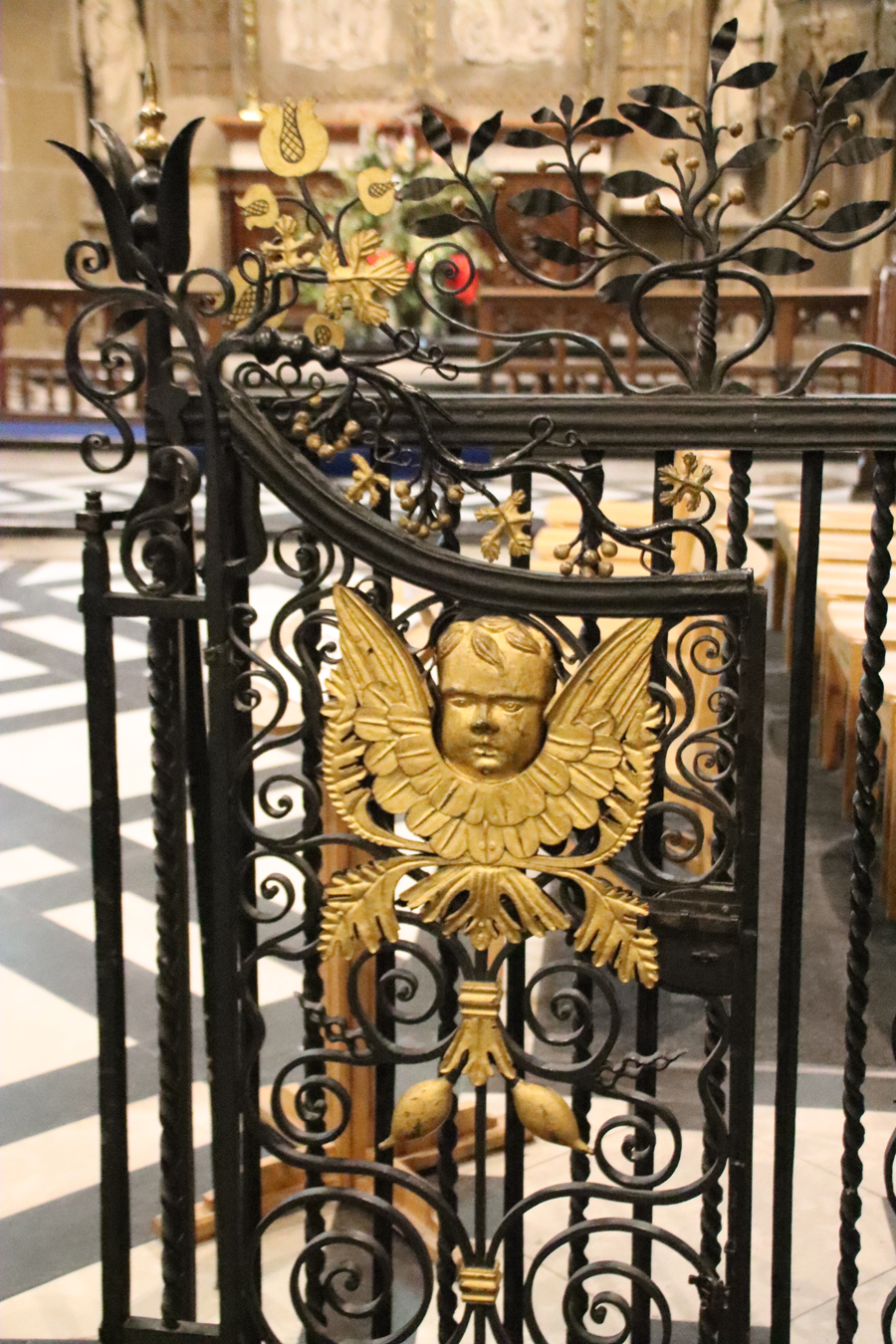
The low screen into the chancel by Robert Davies of Croesfoel

The low screen into the chancel by Robert Davies of Croesfoel

The church benefited from the generosity of Elihu Yale of Plas Grono, best known for his investments in Yale University in Connecticut, today one of the most prestigious American universities, founded in 1701.  His contributions to St Giles were a gallery at the eastern end of the nave in 1707, moved to the west end in 1718, but removed in 1779.  Also in 1707 he is thought to have paid for the installation of the low wrought iron screen that marks the entrance to the chancel, by Robert Davies of Croesfoel.  A Royal Arms of Queen Anne was added at his expense to the north porch in 1718.  Finally, Yale paid for a new organ to be added in 1779, to replace the one destroyed in 1643.  The chest tomb of Elihu Yale is still located at the west end of the church.

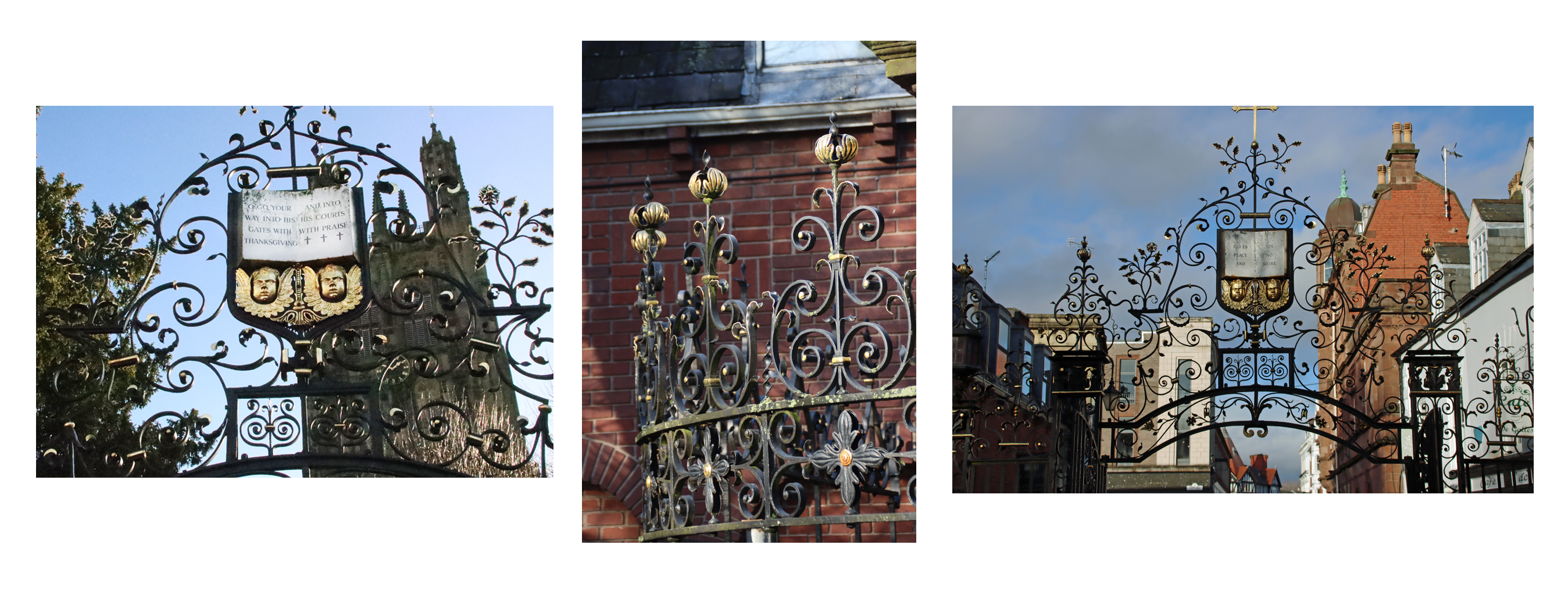
A magnificent addition to the church was the wrought iron gateway and flanking railings by Robert Davies (about which more below), who is also thought to have made the screen to the chancel.  They were installed in 1720 and attached to buildings on either side of Church Street, moved to their present position a century later in 1820.

In 1747 the most impressive of the church’s memorials was added.  Sculpted by Louis Francois Roubiliac, it commemorated the life of Mary Myddelton (on which more later).  In 1793 the pressure on the churchyard, where all Anglican burials were interred, was relieved when a new dedicated cemetery was laid out on Ruthin Road.

The 19th and 20th-21st Centuries – restoration and adaptation
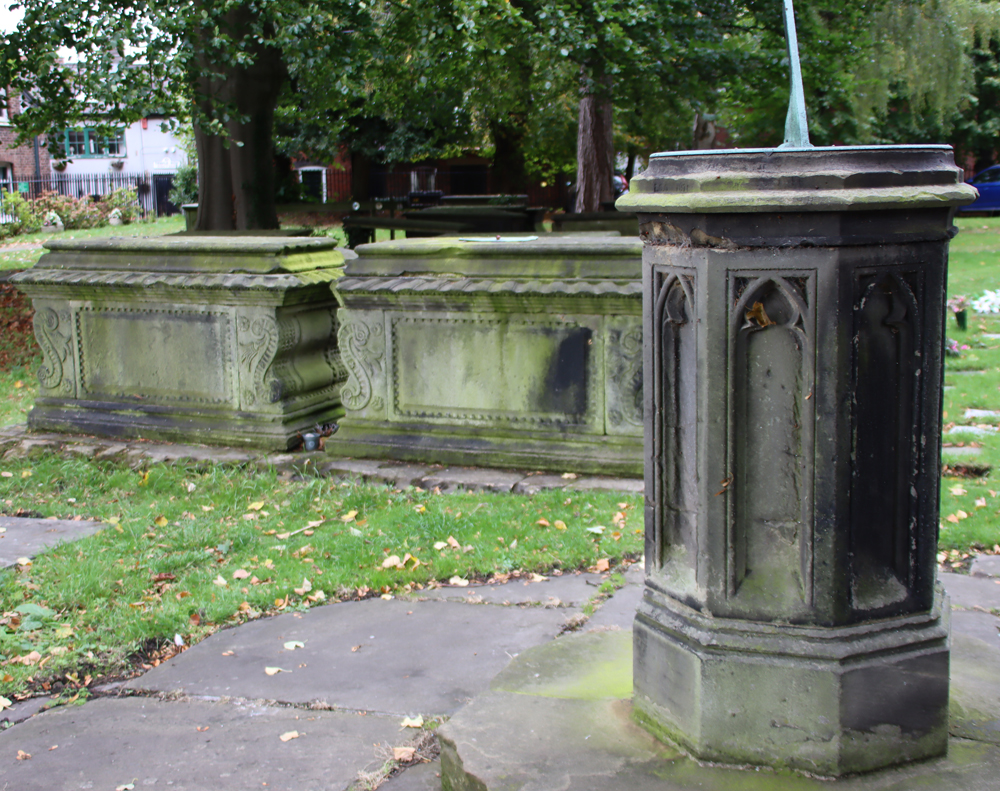
The rather chunky sundial was added to the churchyard in 1809

The 18th and 19th centuries marked considerable growth in Wrexham.  By 1841 the population had reached 5,854 and by 1881 it was 10,903.  This was a good period for the church, with the presence of large congregations ensuring its continued relevance and ongoing maintenance.  The presence in Wrexham of new wealth founded on industry, now including brewing, translated into investment in the town’s infrastructure and architecture, as well as the church’s structure and features.  Fortunately in the case of the church, much of the work carried out was sympathetic to the medieval building.  In 1809, the Grade 2 listed octagonal sundial was added to the churchyard, a gift from Edward Ravenscroft.  In 1822 new box pews were added so that the wealthy could purchase their own private places for attending services.  In the same year a new south porch was added.  Sadly for the medieval and later remnants of historic Wrexham, the railway ploughed through much of the town south of the church, taking most of the churchyard with it, opening in 1895.
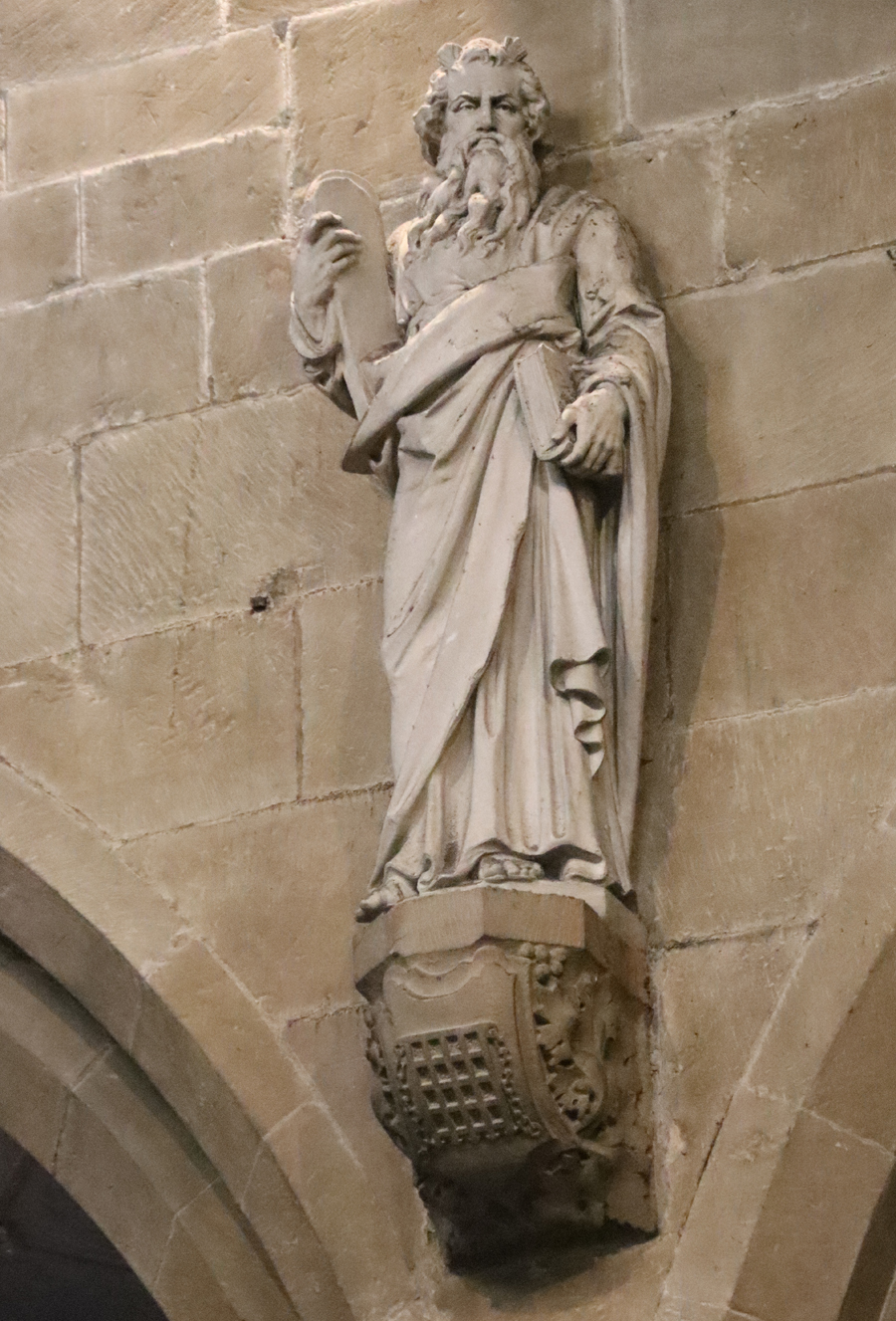
19th century statue of Moses

19th century statue of Moses with the tablets listing the 10 Commandments standing on a corbel that has a portcullis emblem, one of the armorial symbols of the Stanley family in the Tudor period

A major programme of church restoration was carried out, lead by Benjamin Ferrey in 1866-7, during which a wall painting of the crucifix was found in the north porch.  The family box pews installed in 1822 were removed in 1867 to make way for open pews and the giant statues on the arcades of St Augustine, St Paul and Moses were added in the same year, as was the stone pulpit gifted to the church by Willow Brewery proprietor Peter Walker, twice mayor of Wrexham).  The c. 1747 Roubiliac memorial to Mary Myddelton (more below) was moved to the north aisle in the same year, where it remains.  The 14th century corbels were fitted with new sculptural elements at the same time, although the mermaid holding a mirror in the south aisle and the man with toothache in the north aisle are almost certainly original.  The present organ, with its pipes colourfully decorated, was installed in 1894.  A ceiling boss showing St Giles was added to the north porch some time later, in 1901. The Robert Davies gates were renovated at around the same time.  The south aisle stained glass was installed sometime in the 19th century, five of them by well known stained glass designer Charles Eamer Kempe.  Most of the south aisle is now screened off at least some of the time for community activities, so it may not always be possible to see the windows.
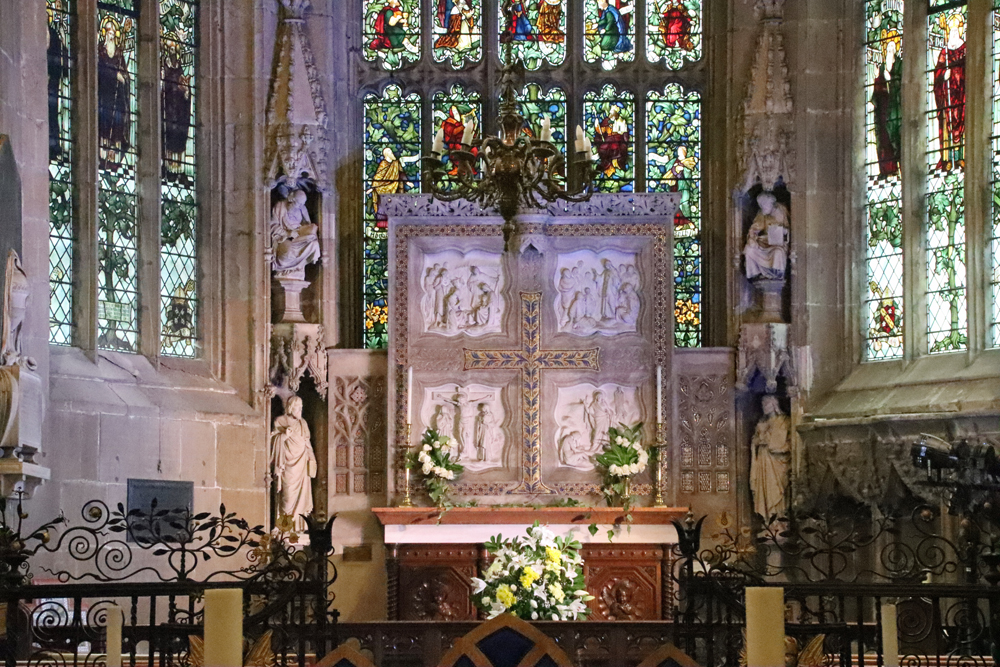
The 1914 reredos by Thomas Graham Jackson

The 1914 reredos by Sir Thomas Graham Jackson

The 1914 refurbishment of the chapel included the installation of the enormous alabaster reredos by Sir Thomas Graham Jackson showing four scenes from the life of Christ, and the three stained glass windows in the apse designed by Jackson and made by James Powell and Son.  The central window depicts the Jesse Tree (substantially hidden by the reredos) and on the left St Giles and the doe is also represented.
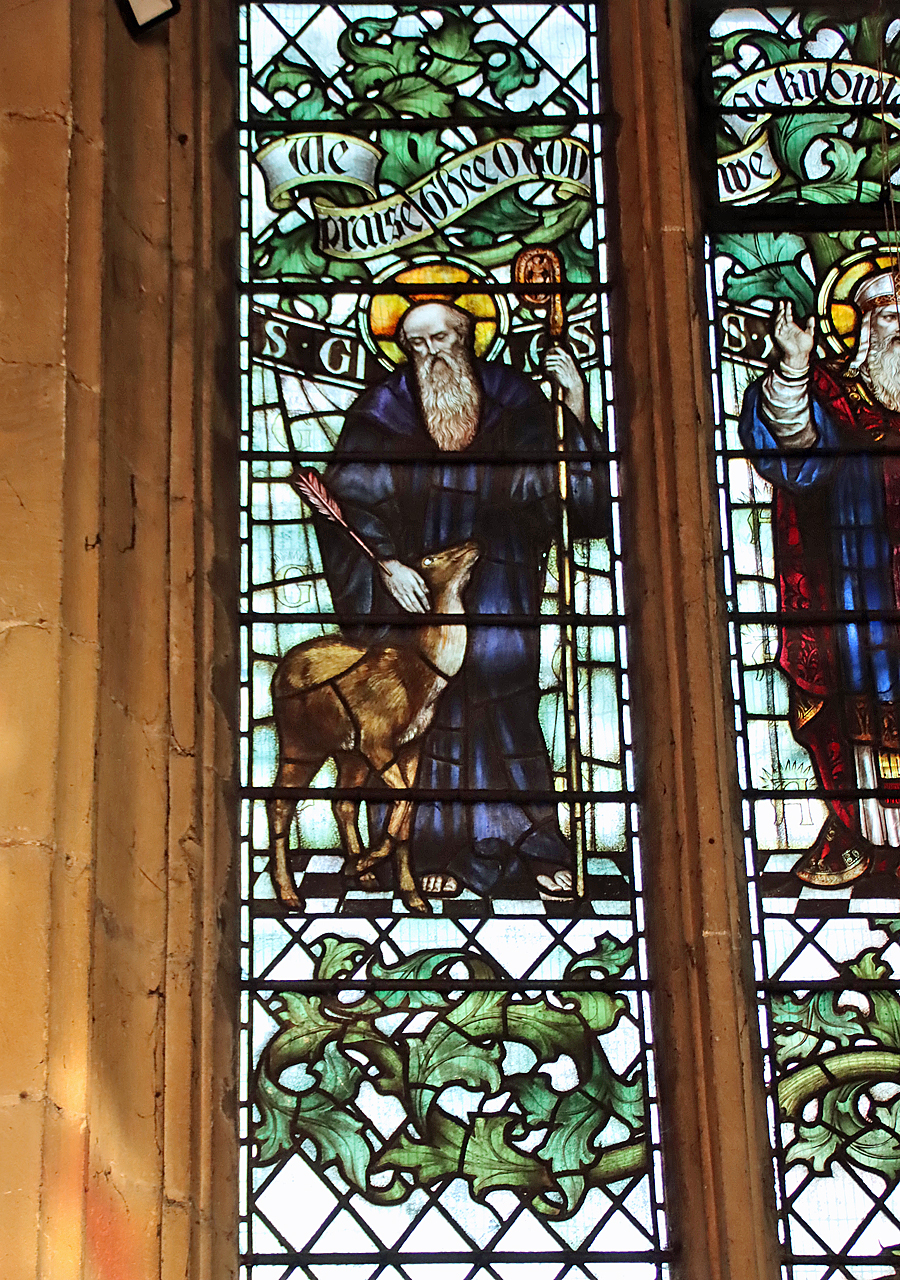
St Giles an the doe by Sir Thomas Graham Jackson

St Giles and the doe by Sir Thomas Graham Jackson, in the chancel, facing northeast

The charmingly decorated organ, built in 1894, was restored in 1984.  The next major work at the church was the re-ordering of the church in 2012, which created new facilities for administration, the congregation and visitors, including kitchen, toilets and a meeting room, the conversion of most of the south aisle into a screened-off community space and the re-positioning of the altar, pews and the removal of choir stalls so that the available space could be used more efficiently.
xxx
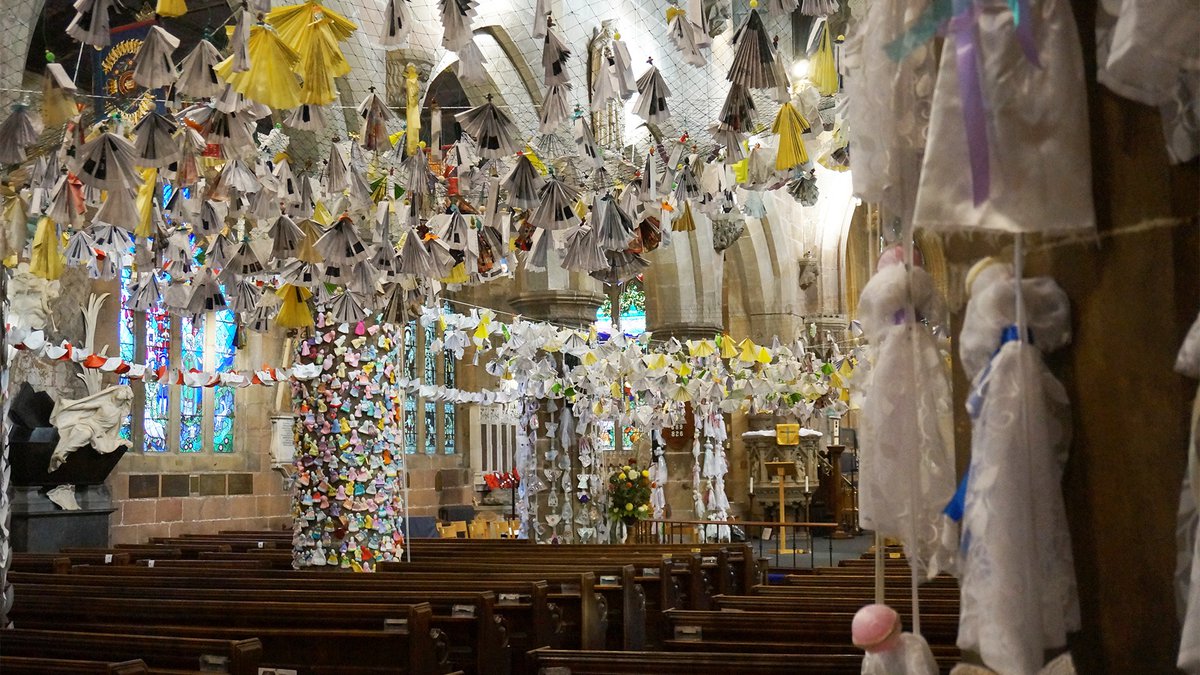
 

The Angel Festival at St Giles.

The uplifting Angel Festival at St Giles. Source: The Church in Wales

The church is still going strong today, with services, baptisms, weddings and funerals, as well as ongoing community activities, such as community lunches and regular events such as heritage talks, art exhibitions,  music concerts and Christmas and other seasonal celebrations.  Following the Coronavirus pandemic of 2019 and the losses experienced during the lockdowns, the church organized a remarkable commemorative event, with the making of over 6000 fabric and paper angels, each representing a death directly caused by Covid, all strung across the church.  The photographs from that time show that it was a remarkable sight, a touching commemoration of a terrible period that both involved the community and helped to support it.  As 2026 is the official celebration of the 1876 Year of Wonder, the church is celebrating with a special 1876 Liturgy Service on St. David’s Day on 1st March, together with a celebratory bell-ringing performance using the innovative Ellacombe mechanism that was installed in the bell tower in 1876.


Highlights of a visit to the church
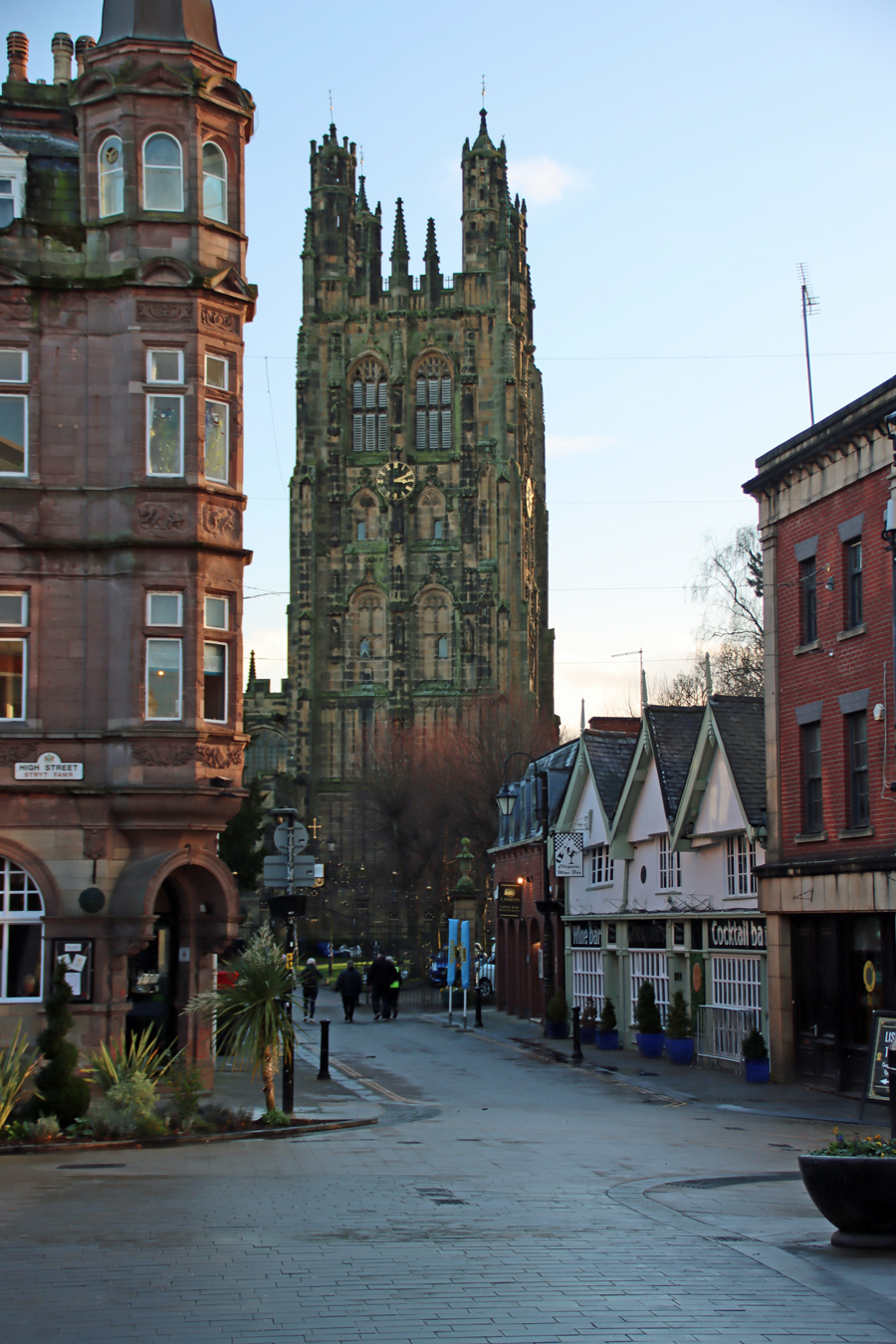
The church of St Giles approached from Church Street

The church of St Giles approached from Church Street, with the white medieval buildings, nos 7-9 Church Street on the right.

The leaflet and guide book, both available in the church, will give you their recommended features.  I’ve taken just a handful that struck me particularly for these highlights.

The main approach to the church is via Church Street.  This is recommended, as not only can you see the medieval buildings, numbers 7-9, on your right as you approach the church, but you enter the churchyard via the magnificently ornate gate and flanking railings painted in black and gold.  These were made by Robert Davies of Croesfoel forge near the local source of iron at Bersham, and were fitted to buildings on opposite sides of Church Street in 1720, only being moved to their present position in 1820.  The Davies brothers are probably best known for the stunning gates at Chirk Castle.  On the way in to the churchyard of St Giles the legend over the gateway reads O GO YOUR WAY INTO THESE GATES WITH THANKSGIVING AND INTO HIS COURTS WITH PRAISE,” and on the way out, the optimistic “GO IN PEACE AND SIN NO MORE.”

xx
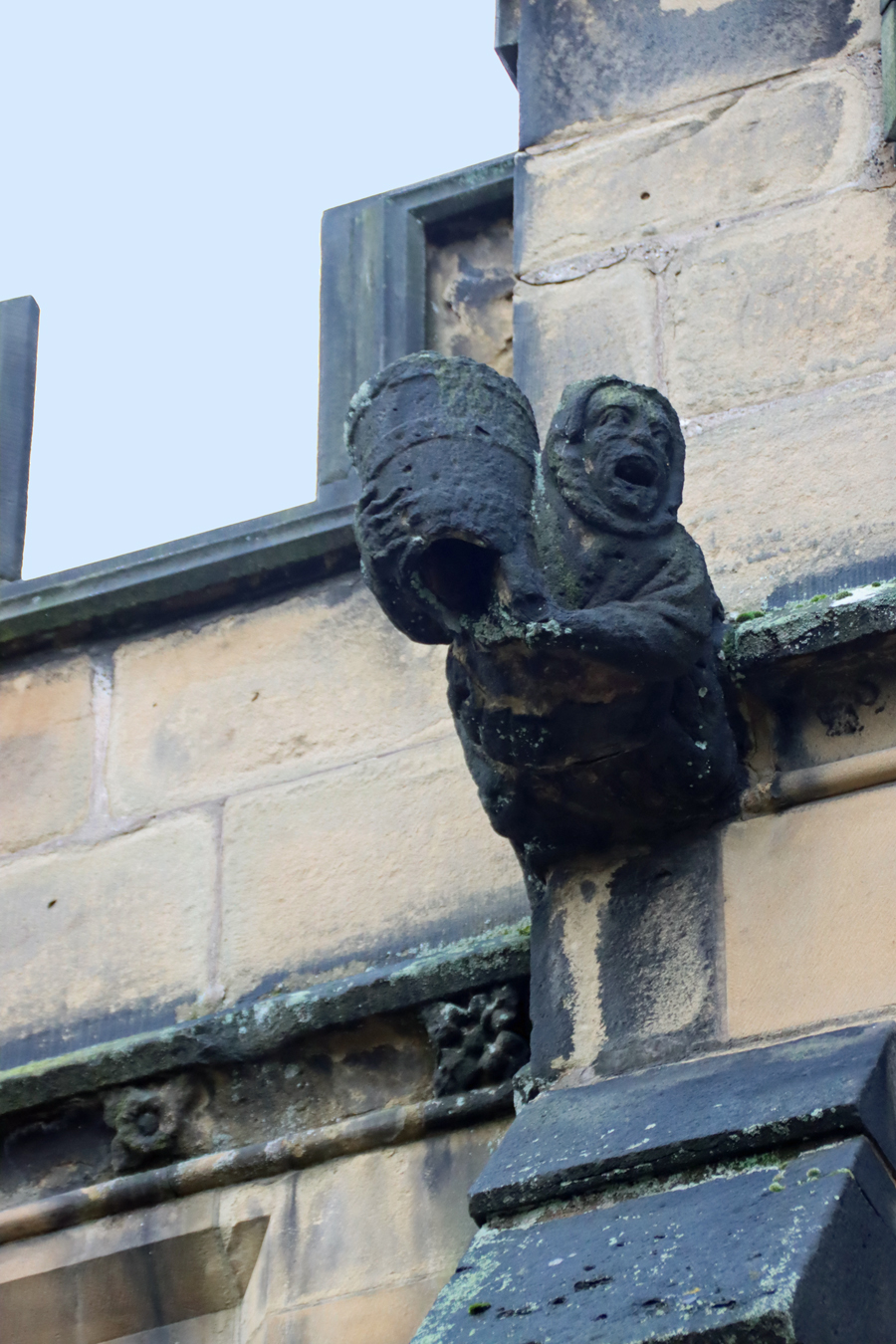
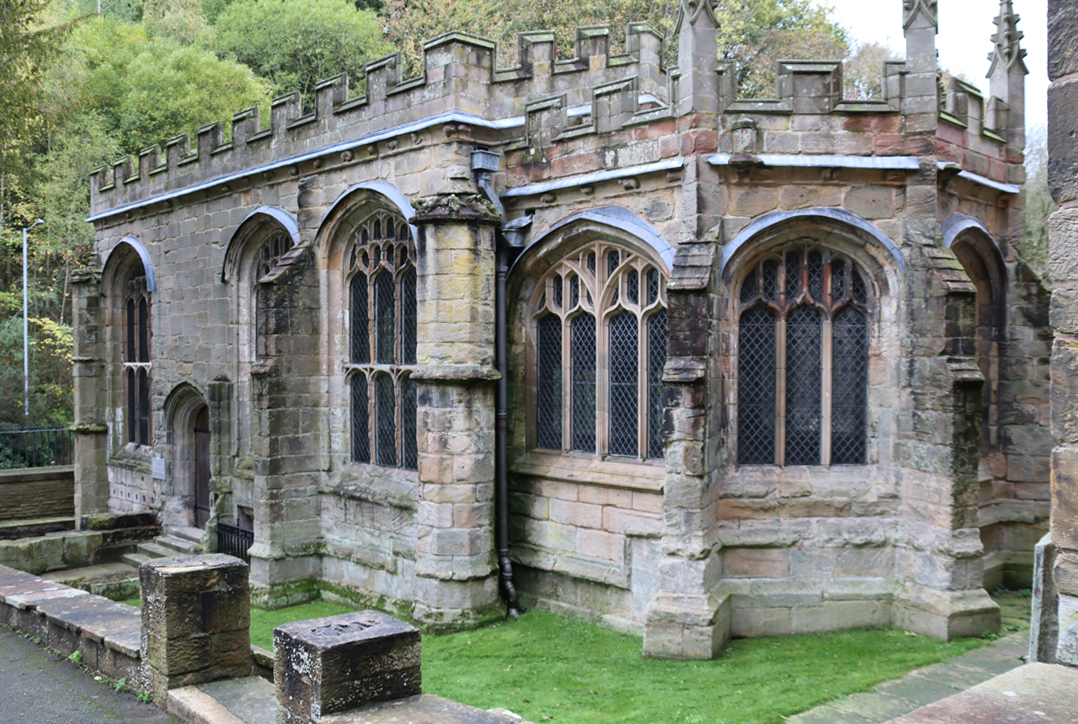
On the exterior of the church, there is a plethora of masonry features to admire – almost too many to get to grips with.  The 16th century north porch, through which you enter the church, is two-storey and features the Virgin Mary over the entrance.  Today’s 41m tall tower replaced the original tower that collapsed during a storm in 1330, and was built in the early 16th century.  It is impressively elaborate with statues in niches standing on sculptural corbels and topped with ornamented canopies, its top ornamented with plenty of pinnacles and crockets.  The aisles of the main building, feature huge windows with flattened arches along each side, topped with battlements and an army of gargoyles.  The exception, pointed out to me by one of the church volunteers (sorry – I forgot to as your name!) is a lancet-shaped arched window at the west end of the south aisle, which looks like the earlier Decorated arches that make up the interior arcades.  It is the only one of its type along the aisles, sitting to the east of the chancel, and is not visible from the interior where it is blocked by the organ.
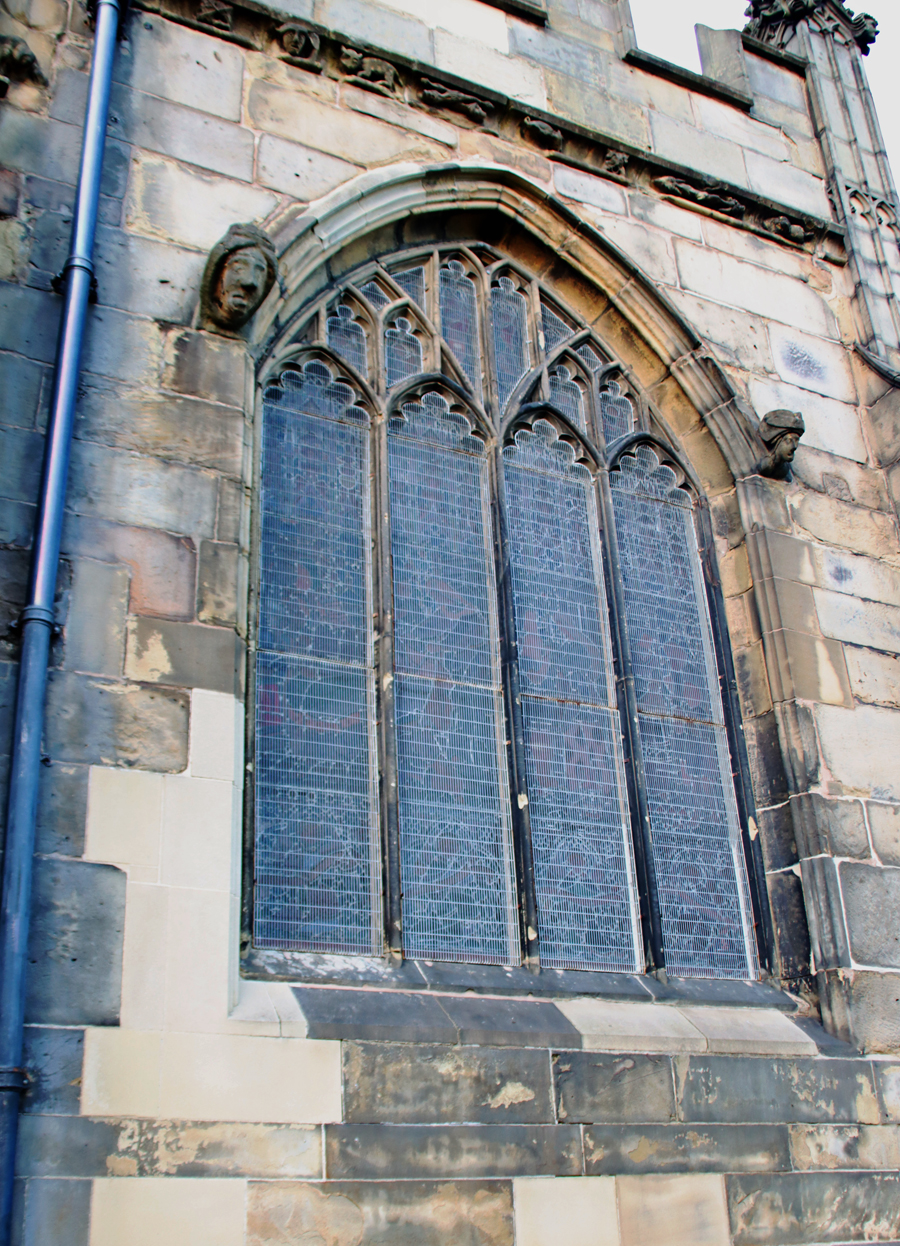
The anomalous window at the east end of the south aisle

The anomalous window at the east end of the south aisle

Continuing to walk to the east, the three apse windows each feature elegant ogee frames around the arched windows.  There is not much of the churchyard left, but some fine chest tombs are a reminder that this was once the burial place for all Anglican burials in Wrexham before the 1793 cemetery open on Ruthin Road.
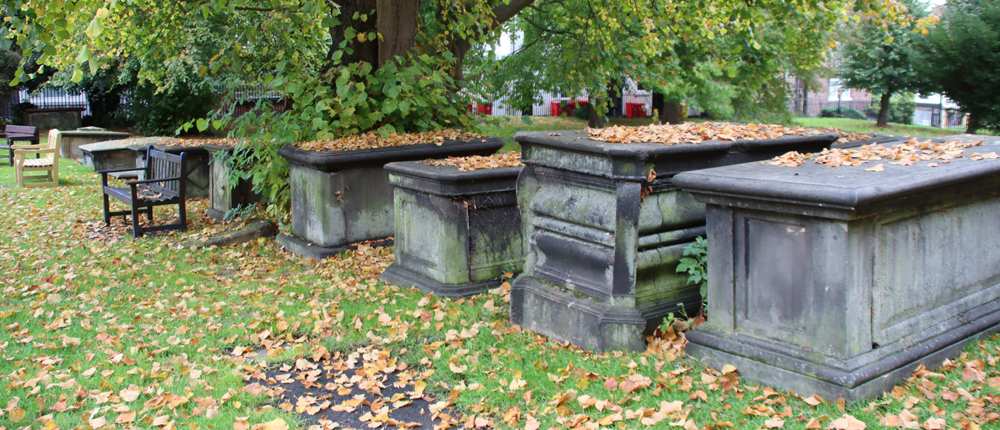
Chest tombs in what remains of the churchyard

Chest tombs in what remains of the churchyard of the parish church of St Giles
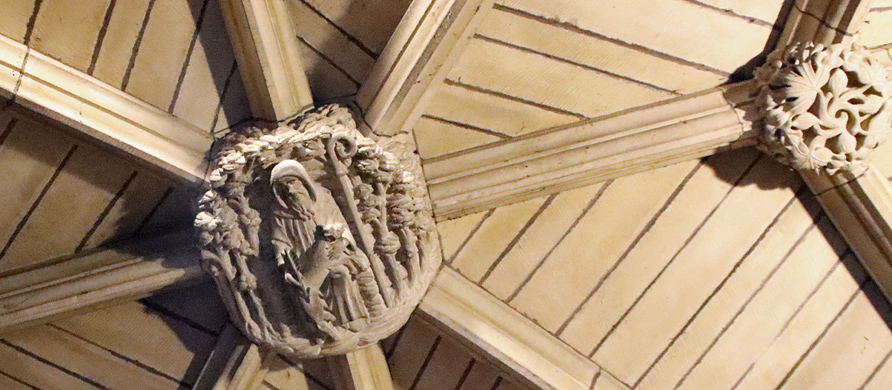
 

St Giles and the doe in the north porch

St Giles and the doe in the north porch, 1901

The two-storey north porch, through which you enter the church itself, was added in the early 1500s, and on the exterior has a niche with a sculpture of Mary and child.  On entering, you will see a vaulted roof with a number of ceiling bosses, the central of which, dating to 1901 is St Giles. Straight ahead, but very difficult to make out, there was a painting on the wall, thought to have been of a crucifix, but sadly only a few black lines remain and the original subject matter is impossible to make out.
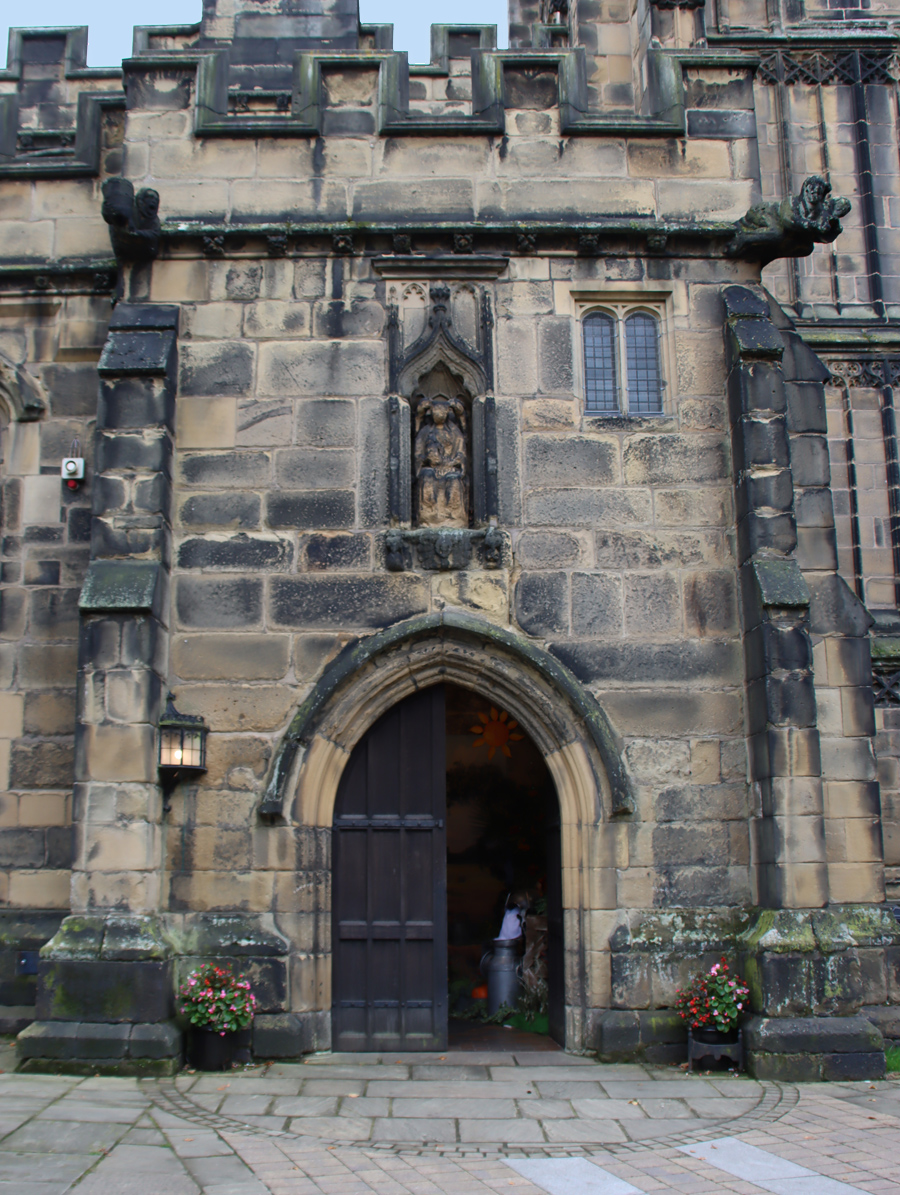
 

The North Porch

The North Porch

xxx
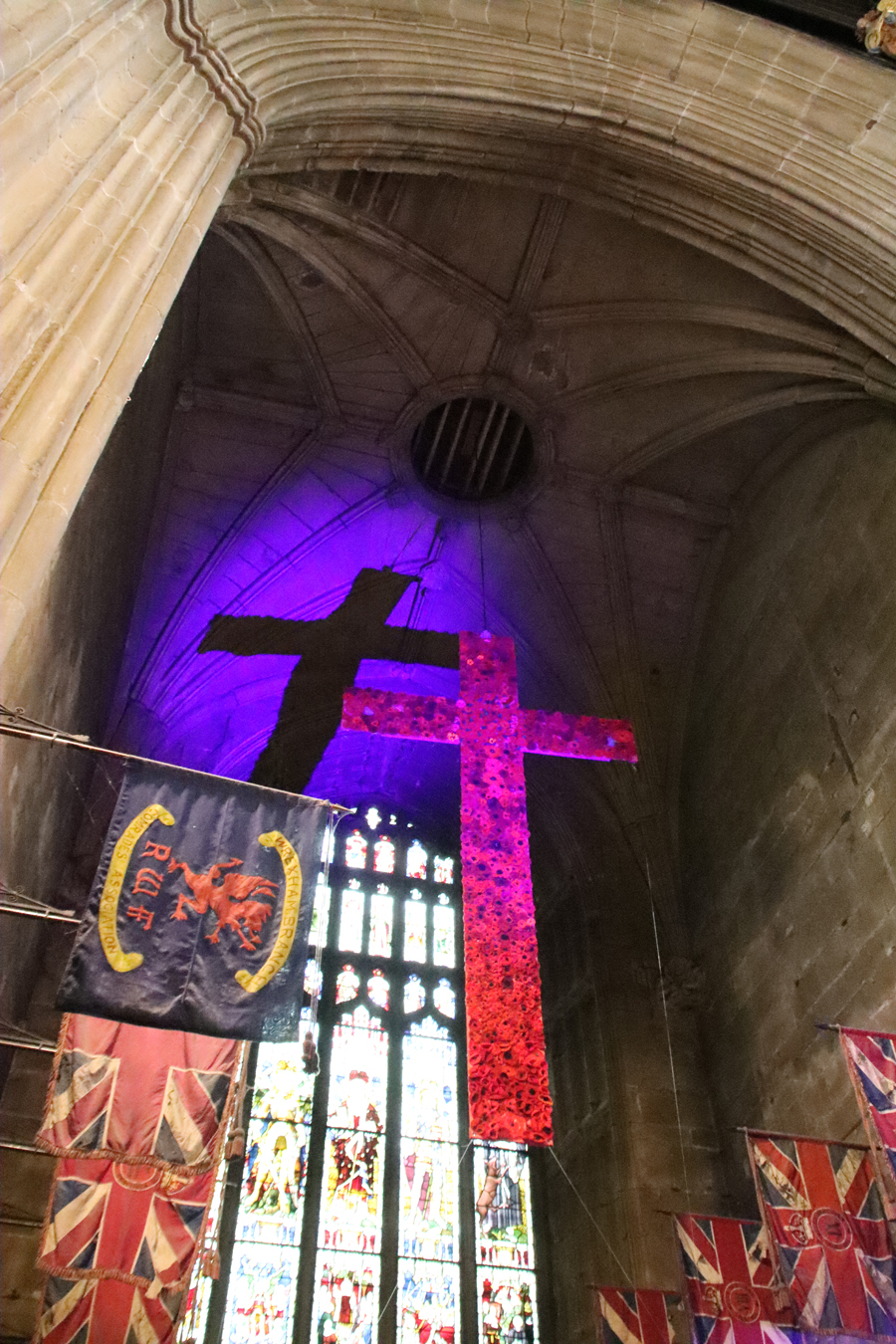
The entire north aisle (left as you enter the church), entered via a wooden screen at its west end, is designated as a chapel lined with marvellously colourful flags (regimental colours) belonging to the RWF.
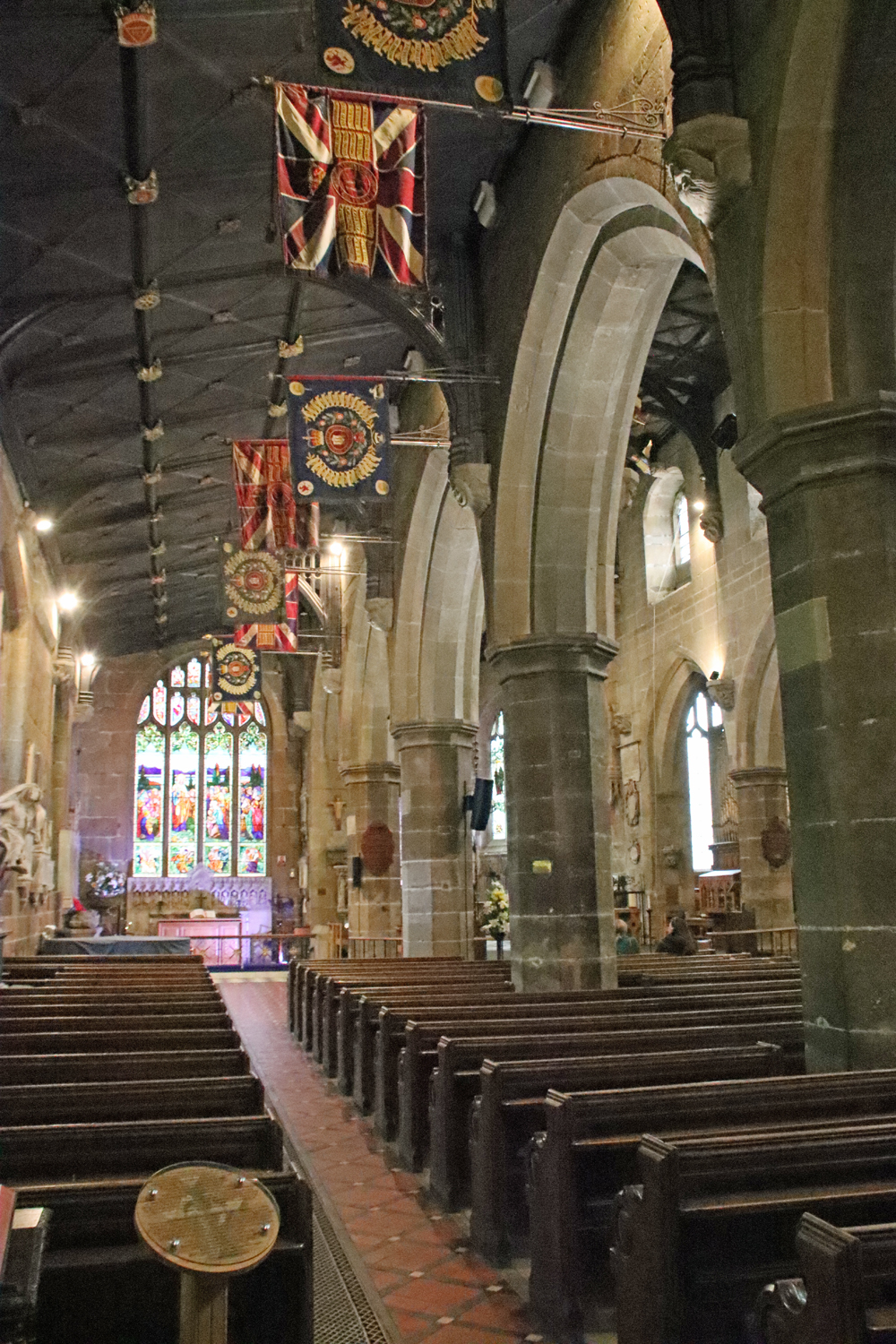
The north aisle
The north aisle

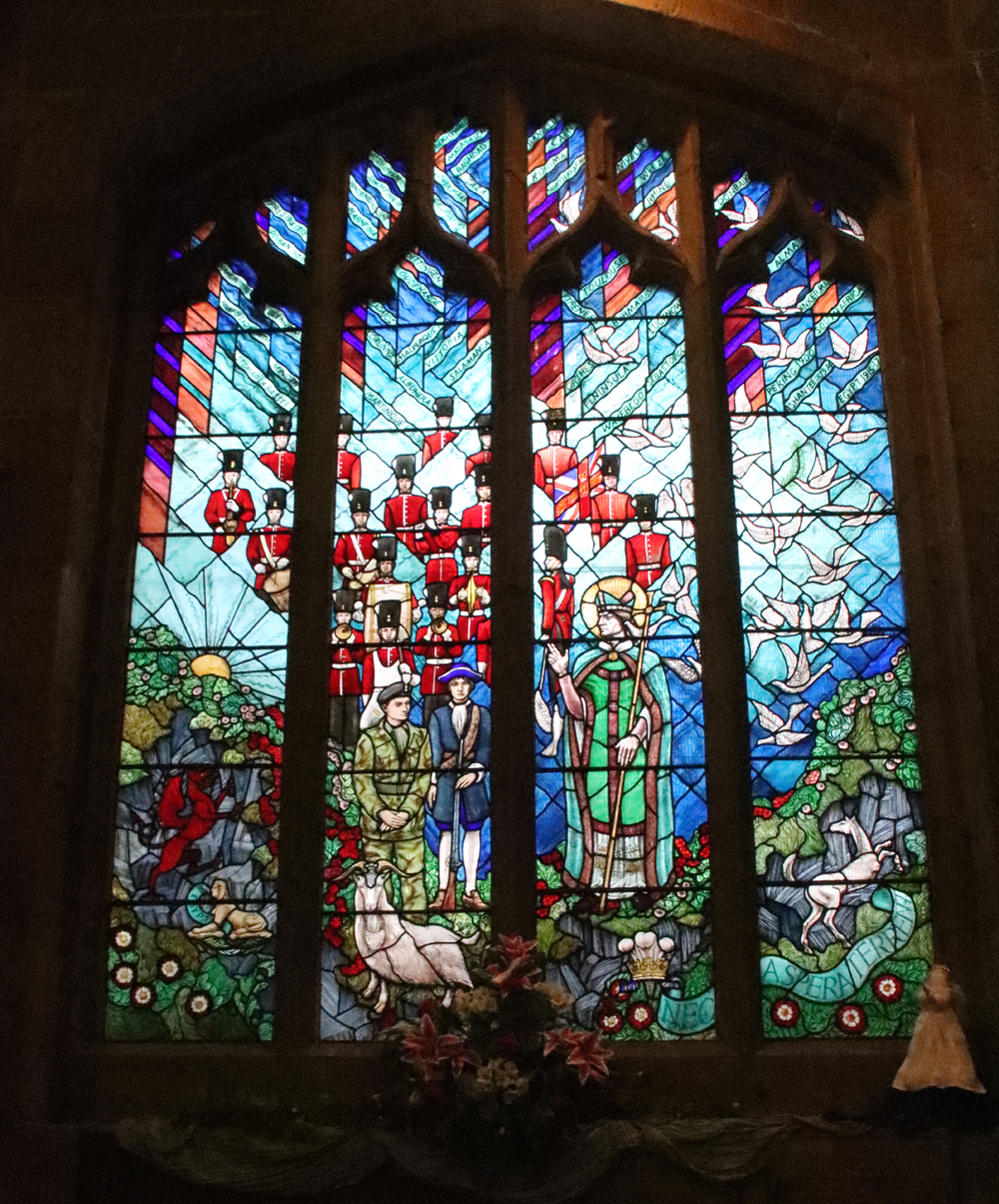
Royal Welch Fusiliers window by Joseph Nuttgens

Royal Welch Fusiliers window by Joseph Nuttgens

A window in the north aisle, dating to 1989, is a lively celebration of the Royal Welch Fusiliers by Joseph Nuttgens, showing different uniforms that have been used by the regiment between 1689 to 1989.

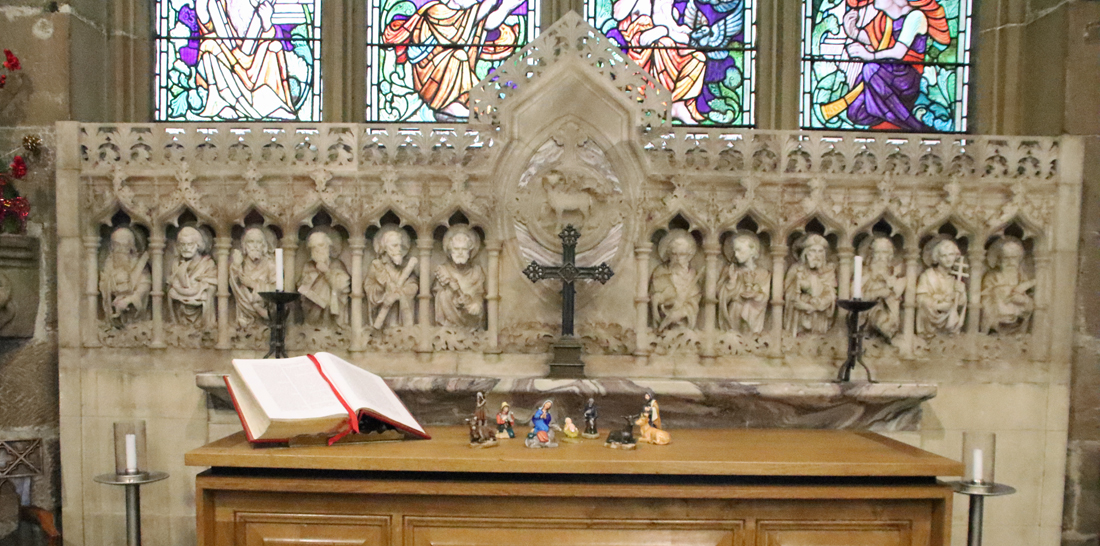
The end of the aisle, as you approach the chancel end, note the effigy of Cynerig ap Hywel, mentioned above.  The end of the aisle is now the Wrexham War Memorial Chapel, but was originally a chapel dedicated to St Catherine, whose image appears on the east side of the tower. The alabaster reredos shows the twelve apostles, with the 19th century window above showing the Sermon on the Mount. Note the 19th century ceiling decorated with colourful bosses. Although it was built during the 1847 restoration to resemble the roof in the main nave, the ceiling bosses all represent local organizations, some of which are still operating today.
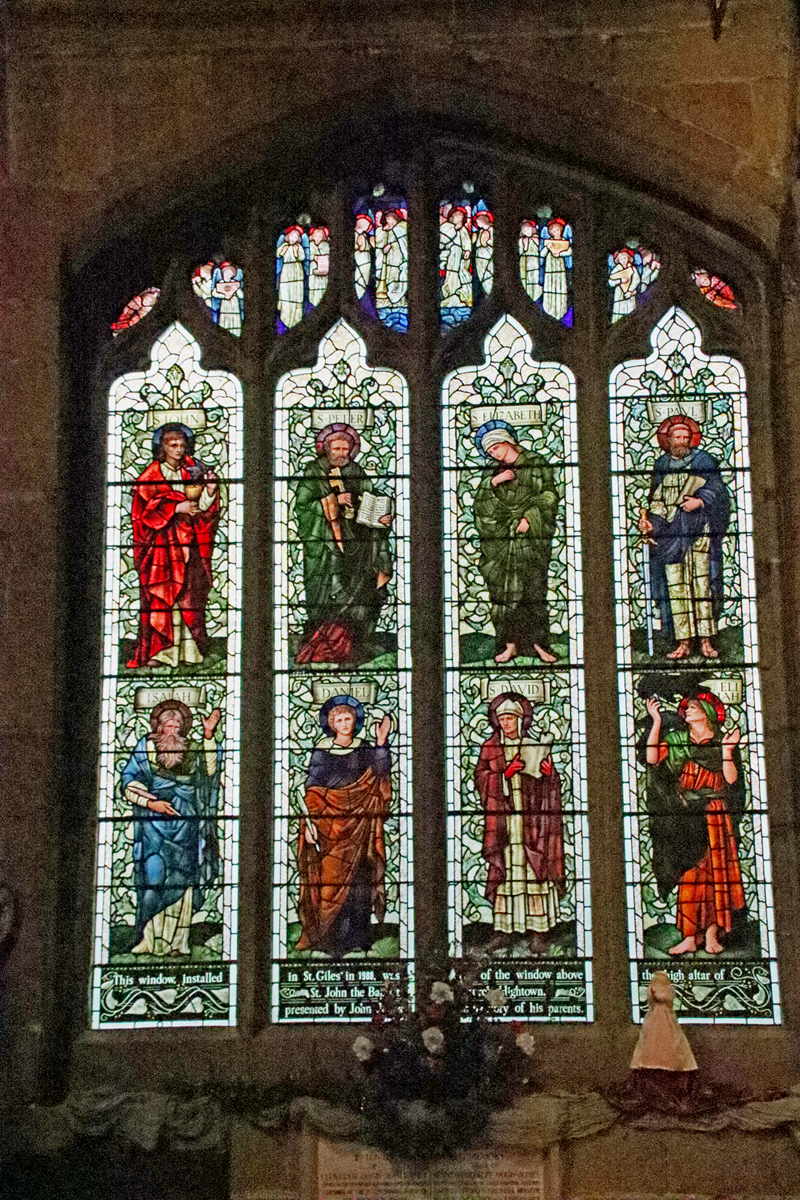
Inside, as you begin to walk down the north aisle note the 1910 Edward Burne-Jones stained glass on the left, which was moved from St John the Baptist Church in Hightown in 1988, prior to its demolition, originally presented to St John’s by the owner of the Island Green Brewery in memory of his parents.  With its Pre-Raphaelite palette of bright, rich colours and the almost androgynous holy faces, it is a particularly fine piece, showing eight saints from both Old and New Testaments. all on the background of green foliage (John, Peter, Elizabeth, Paul, Isiah, Daniel, David and Elijah).  The lights at the very top are filled with angels with crimson halos and blue wings.  The inscription at the base, with Art Nouveau foliage wending its way along the bottom, records the date of the window being moved, and the reason for its original installation.  It is easy to walk past stained glass windows without distinguishing between them, particularly in a church where there is so much of it, but there are some fine examples in the church of St Giles that are worth noting.  See a complete set of the St Giles stained glass on the Stained Glass in Wales website.
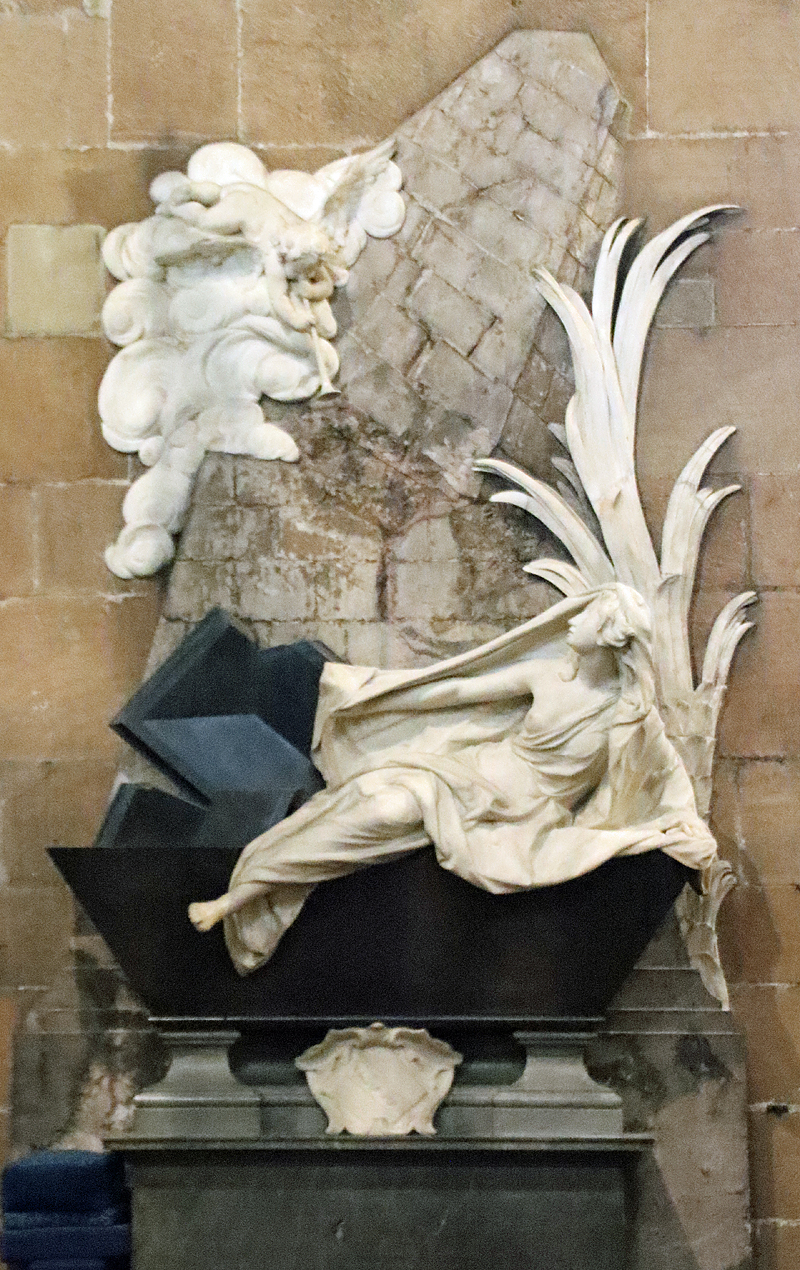
The Louis François Roubiliac memorial to Mary Myddleton c.1747

The Louis François Roubiliac memorial to Mary Myddelton c.1747

The north aisle also boasts a memorial sculpture by Louis François Roubiliac to Mary Myddleton (1688-1747) of the 17th century Croesnewydd Hall (still standing next to the Wrexham Maelor hospital).  Mary Myddelton was the daughter of Sir Richard Myddelton of Chirk Castle.  I normally don’t pay attention to memorials, as they are very rarely designed to blend in with the architecture and are often dreadful carbuncles on the face of beautiful buildings (Westminster Abbey is a prime example), but this one does require recognition, although to modern tastes it is extravagantly ornate and somewhat melodramatic.  It is a rather good contrast to the Doom painting over the chancel arch, showing a completely different style of interpretation of the same foretold event.  Roubiliac (1702-1762) was a highly regarded sculptor in his French homeland, coming second for sculpture in the Académie Royale’s Prix de Rome.  He moved to London in 1730, where he became very fashionable.  The subject shows the Day of Judgement.  An angel in a cloud blows his trumpet to summon the dead, and Mary Myddelton, discarding her shroud, climbs from her black stone tomb, which bears an indistinct inscription.  Behind her is a palm frond, signifying the Christian promise of everlasting life triumphing over death.  The toppling pillar or obelisk in the background represents diveine judgement and the final end of the material world.
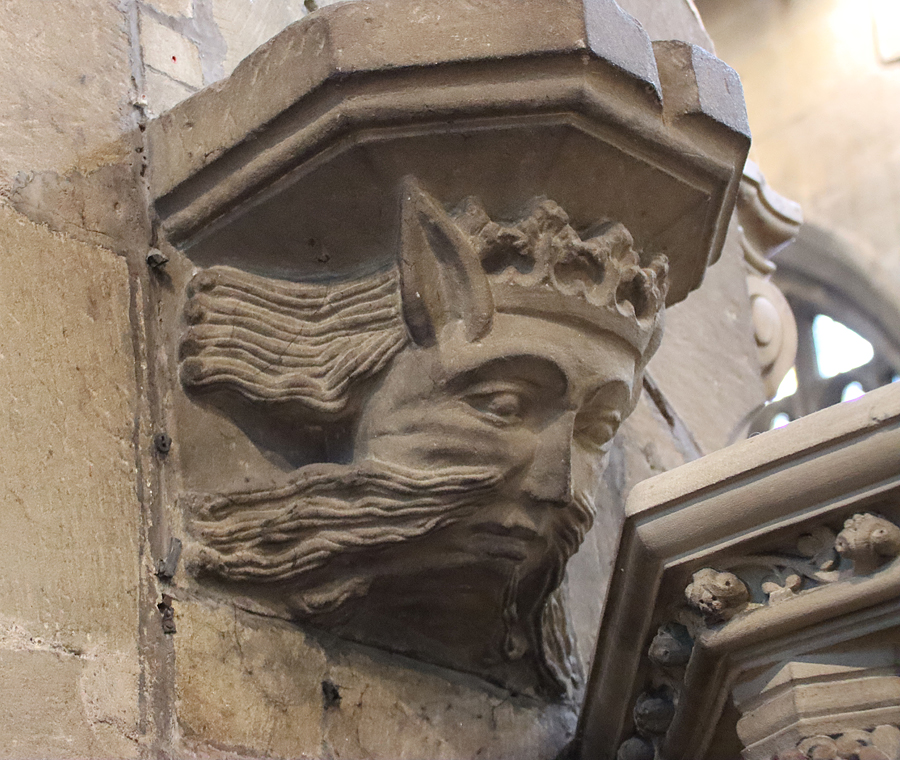
Corbel, perhaps Thomas Stanley

It has been suggested that this corbel represents Thomas Stanley, but quite why Stanley should have the ears of a donkey remains unexplained

Unlike most of the church, which reflects the late medieval fashion for the rather severe and highly linear Perpendicular style of gothic architectural design with flattened arches, the parallel arcades that separate the nave from the aisles were built in the earlier Decorative style, with elegant lancet-shaped arches supported on strong octagonal piers (columns). The livelier and more expressive Decorative style is also found in some of the corbel sculptures found throughout the church (bearing in mind that some of them are 19th century, built in the same style).  Original medieval examples include a man with toothache (north aisle) and a mermaid holding a mirror (north arcade, facing into the nave, photo further up this post), a man with donkey ears (behind the pulpit) and a lady, possibly Margaret de Beaufort (on the east side of the chancel arch, at the very top). The 19th century imitations have taken gothic examples as their models and are an imaginative collection that offer an insight into how the late medieval church originally looked.  In the 18th century the arcades were fitted with galleries, which somewhat minimized the elegant impact of the arcades, but were a curiosity in their own right.  They were removed in the early 19th century.
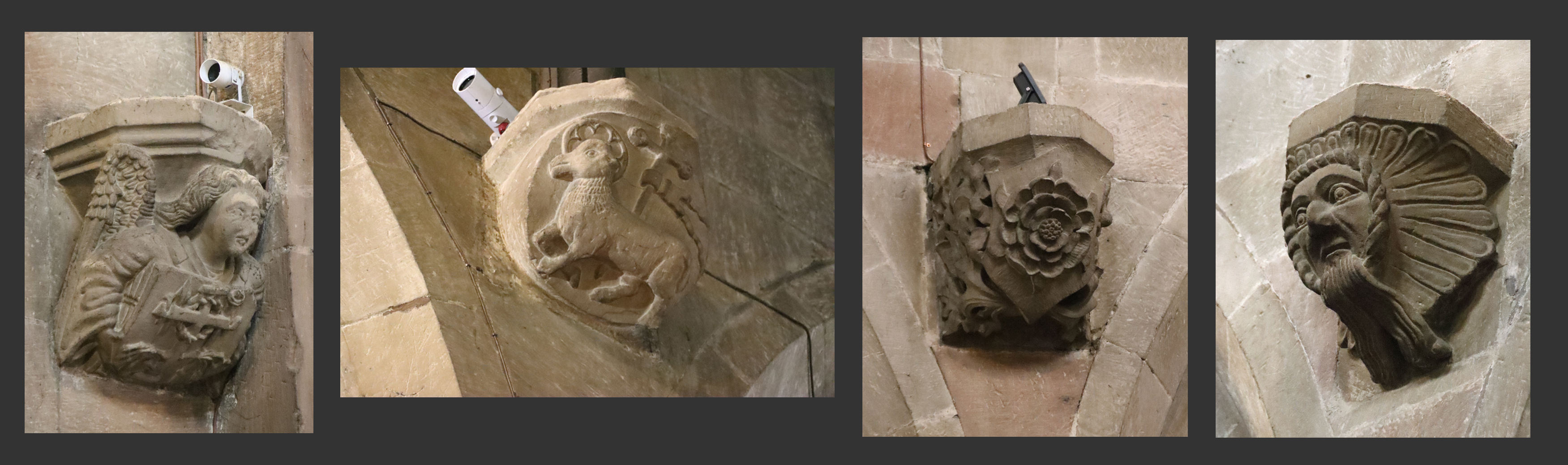


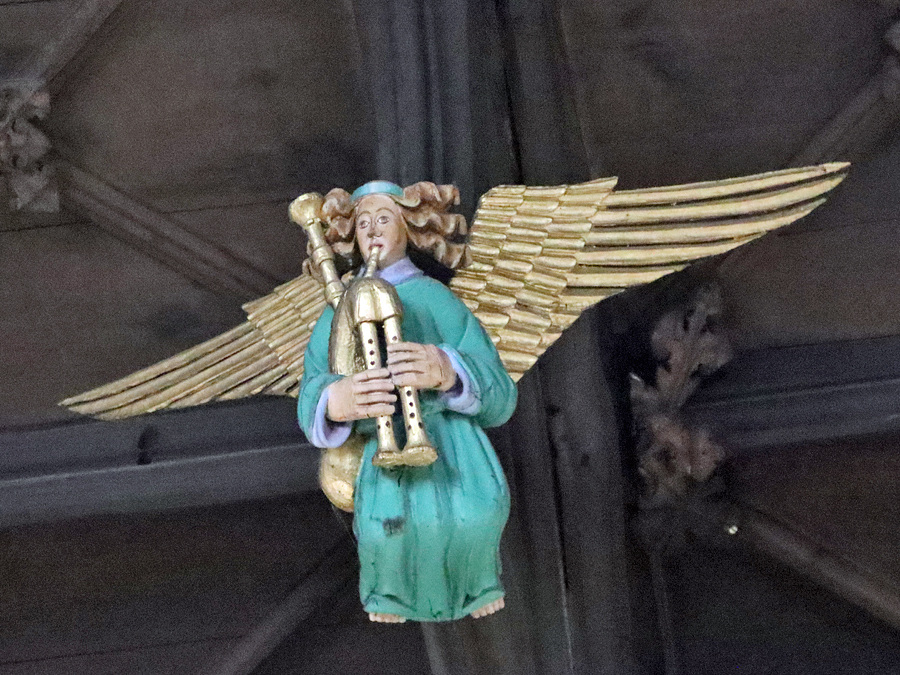
The 16th century camber beam roof features ornamental bosses and 16 splendid musician angels, each holding a musical instrument or singing.  In his guide to the church, Williams lists the instruments as follows: 10 playing citherns (similar to lutes), 1 with bagpipes, 1 with a double pipe (shown near the top of this post), 2 playing harps, and 2 playing an unknown instrument.  Follow the line of the roof towards the early 16th century chancel, and look at the chancel arch.  The arch was part of the wall at the far end of the church prior to the building of the chancel, it and once housed a vast stained glass window.  Look at the inner line of the arch (photo below) and you will see the remains of the tracery that once held the stained glass.
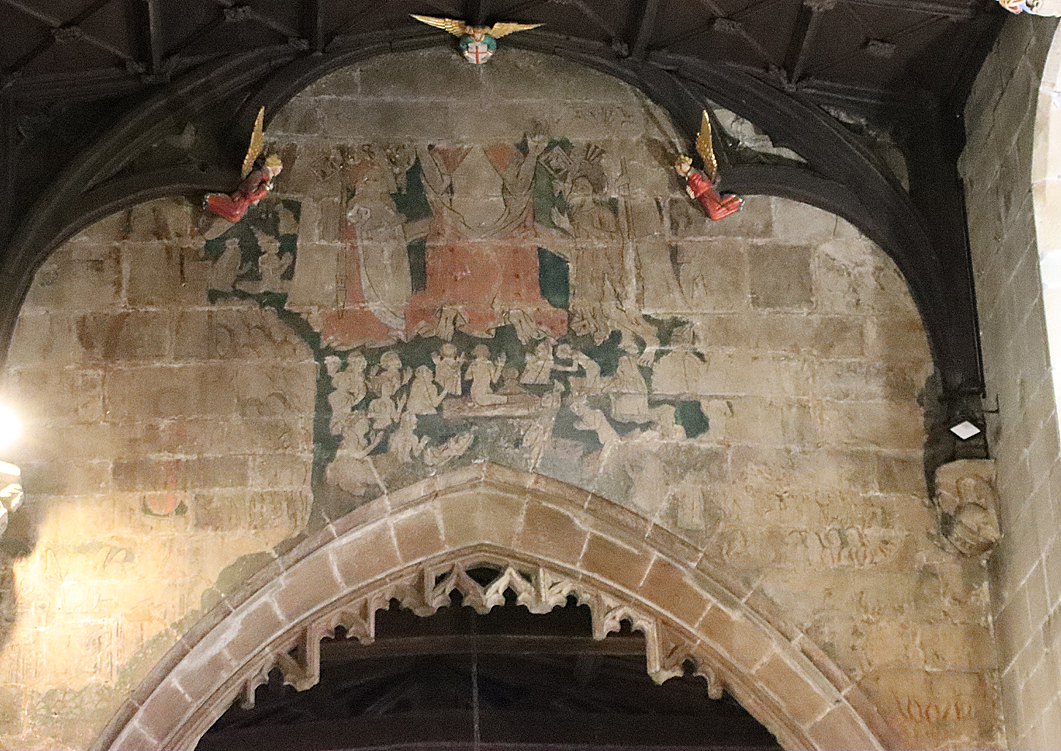
Above the chancel arch is one of the most remarkable features of Welsh church art – the fabulous Doom painting showing the Day of Judgement.  It is the most complete example known in Wales, thought to be contemporary with the chancel itself.  The central section is much better preserved than those flanking it, suggesting that the central portion may have been covered over at some stage for some time.  The clerestory windows were enlarged to cast light onto it and make it more visible to the congregation, to whom the warning of an impending Judgement Day was directed.  The central scene is missing its upper register, eliminating Christ’s head and shoulders, but the rest of the scene shows him presiding over figures emerging from coffins, the whole composition highlighted against a background of black merging into dark green.  Christ himself is seated on a rainbow, signifying the promise of redemption, and wears a red robe decorated with floral motifs.  Wounds on his hands and feet and in his side are visible.  To his right (the onlooker’s left) is the Virgin Mary in a cloak of ermine with her breasts exposed to indicate her role as mother.  On the opposite side is St John the Baptist in an animal skin, with the head still attached.  Either side of Christ are saints in robes of yellow or red, and beyond them angels with the symbols of the Passion – nails, pincers and lances.  Below this hierarchy of the divine are small naked figures rising from their graves, some in shrouds.  A mitred bishop and a crowned monarch make it abundantly clear that no-one is spared Judgement.  Hell is at the lower right, further down the side of the arch, with rows of barely visible figures and red flames licking upwards.
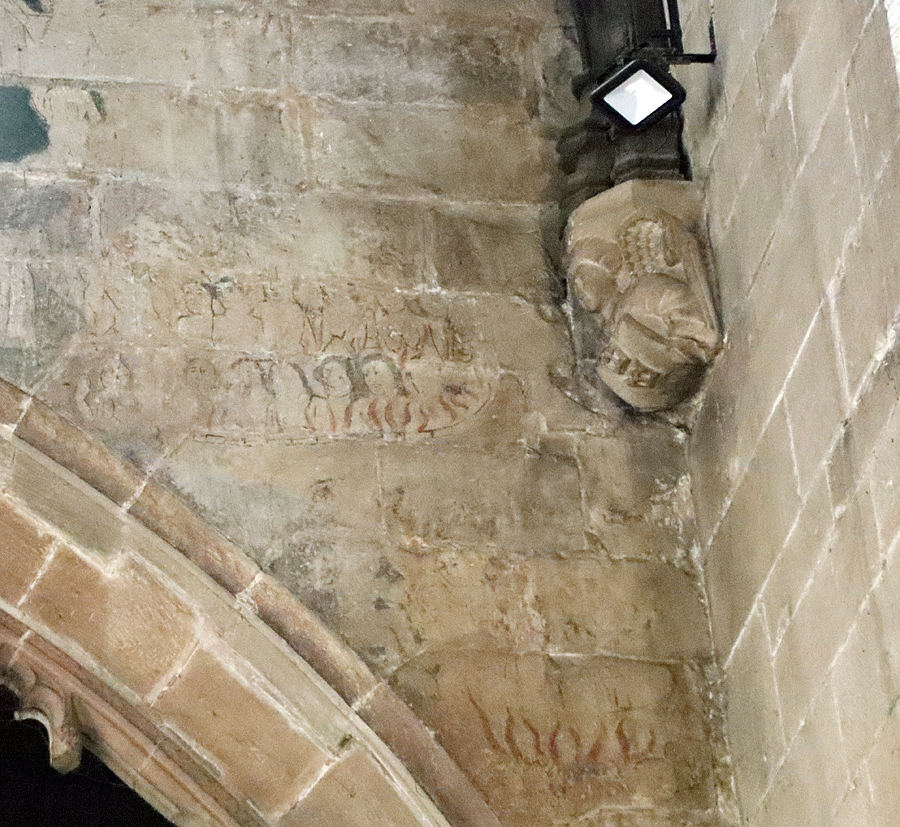
Faint remains of the painting at far right
Faint remains of the painting at far right

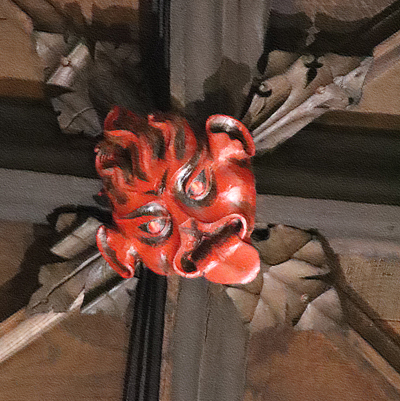
The Doom painting is flanked by two wooden painted angels, with another immediately above. Just before them is a small, bright red feature that looks like a conventional ceiling boss on the roof.  If you have binoculars or a long lens you will find yourself looking the devil in the face.

Within the chancel itself, with its triple-sided apse, is a very fine triple sedilia, for the clergy officiating over services, consisting of three recesses canopied arches set into the northeast wall of the chancel, where the clergy sat during services.  Above the canopies are highly ornamented panels between the pinnacles.  A piscina was sometimes positioned next to the sedilia, but in St Giles this remained in the nave and is now concealed behind the organ.
xxx
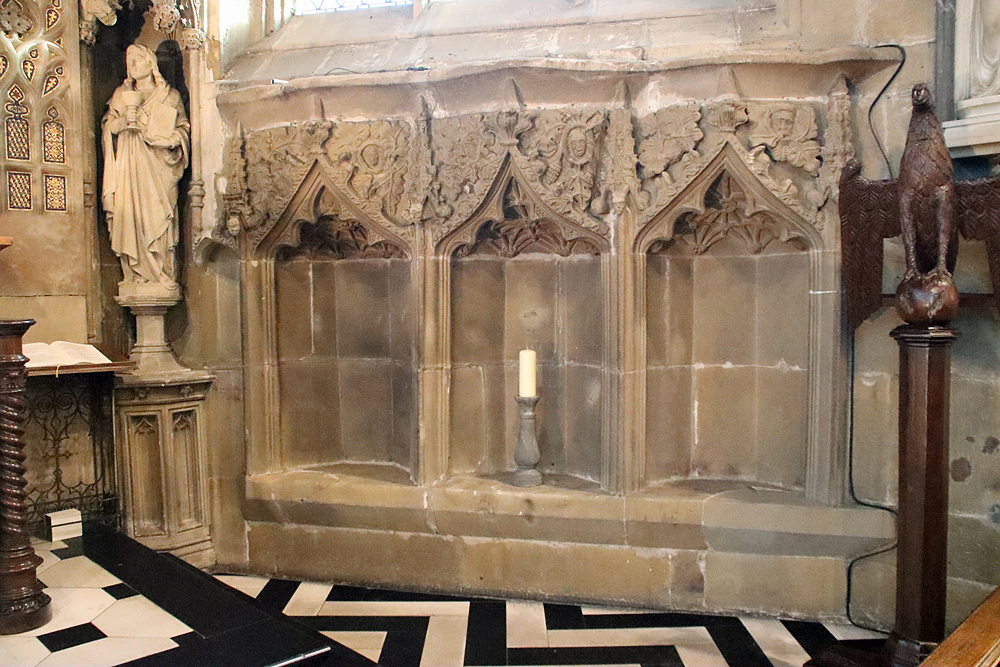
The Sedilia
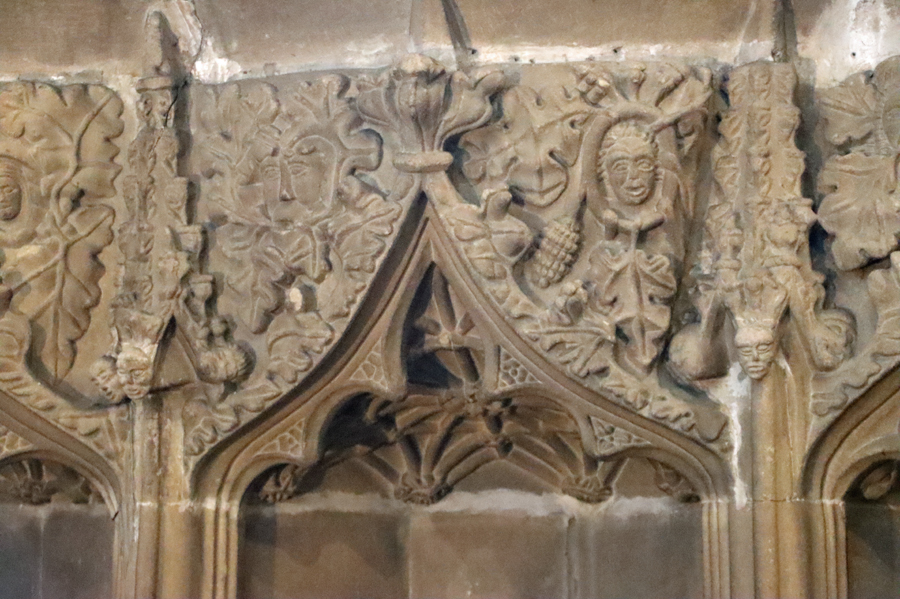
Detail of the carvings above one of the sedilia canopies

Detail of the carvings above one of the sedilia canopies


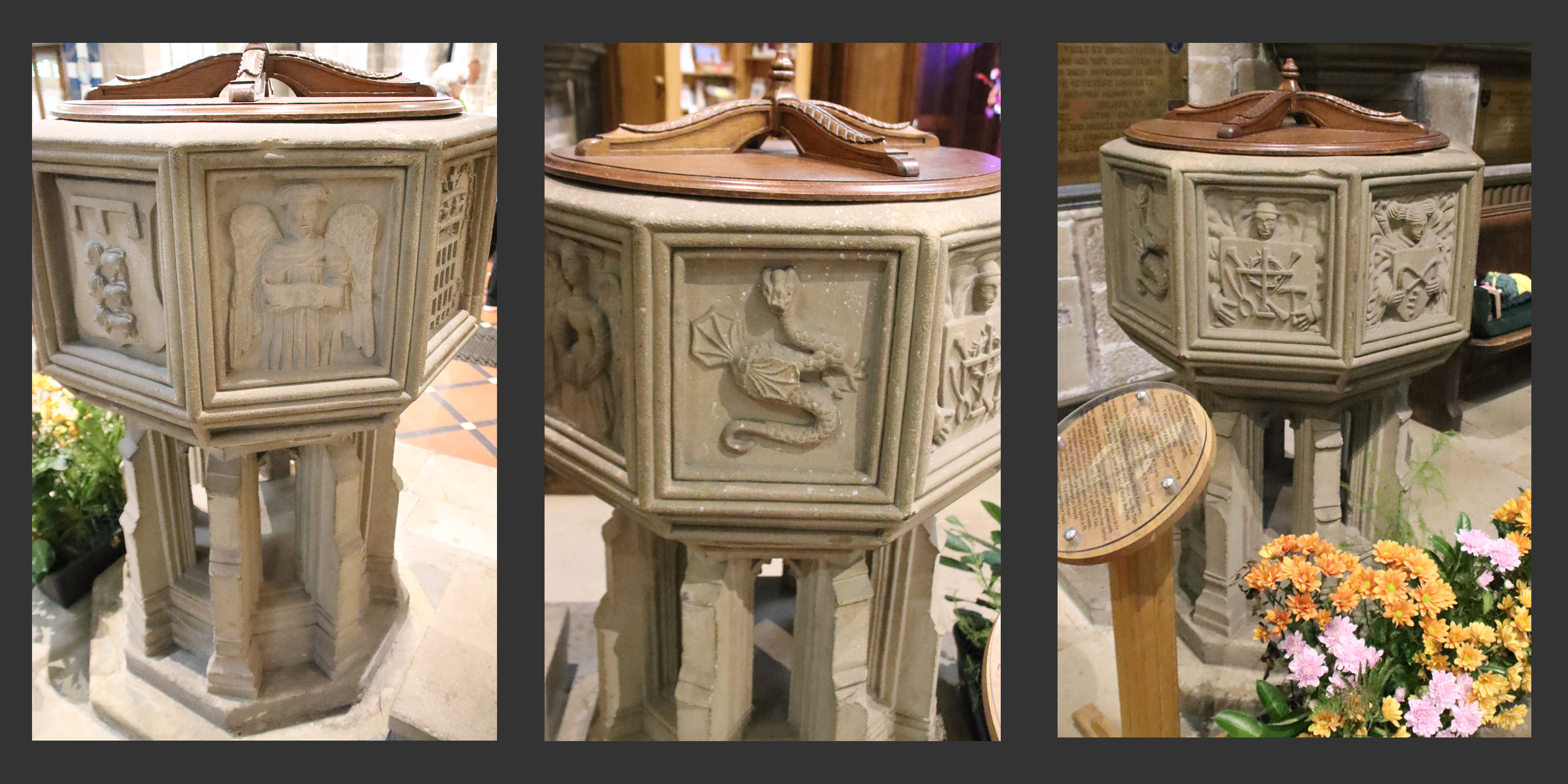
Don’t forget to look at the baptismal font in the ante-nave on your way back towards the tower.  It is octagonal, with a different motif on every face, and is very fine.  Its date is uncertain, but it was known to have been one of the fittings of the church in the 16th century.  It was lost during the Civil War, but was rediscovered in the early 19th century in Little Acton House (since demolished), returning to the church in 1843.
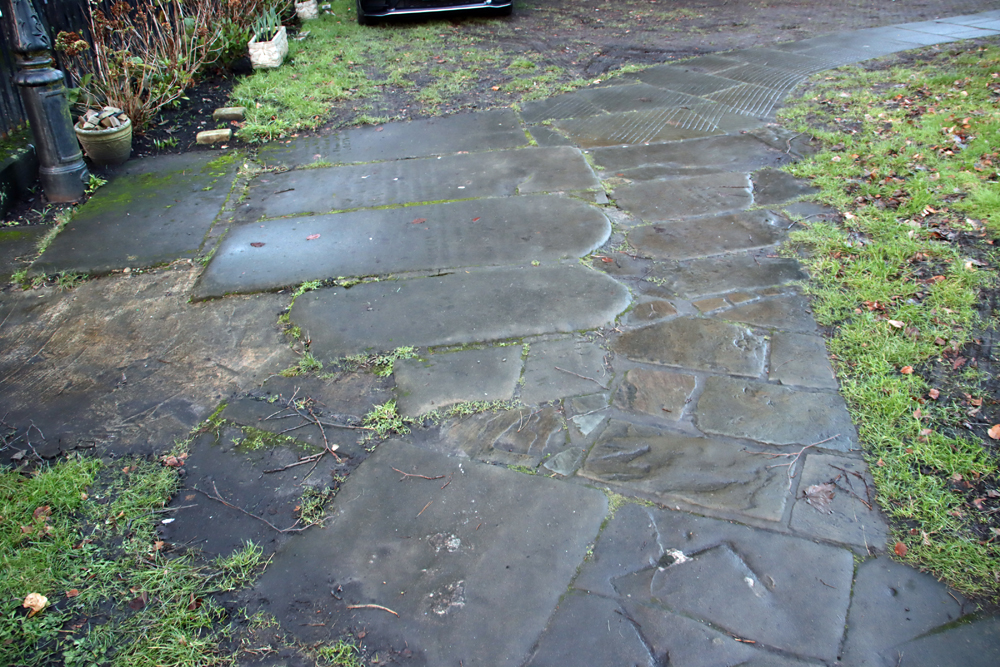
Walking around in the churchyard, keep an eye out underfoot because, as with many churchyards in the area, some of the gravestones have been put into practical use as paving stones.
 

Final Comments
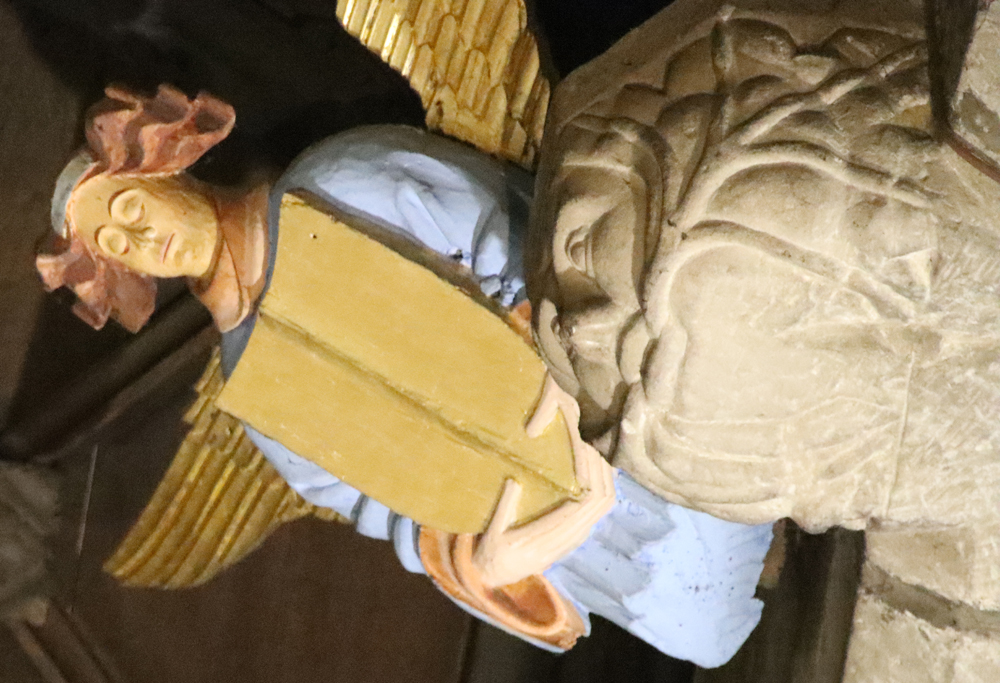
Wooden, painted angel holding a shield, and stone Green Man with foliage growing out of his mouth.

I have no idea why it took me so long to visit the Parish Church of St Giles in Wrexham, but I am very glad that I have not merely visited, but thoroughly familiarized myself with it over a number of visits, and enjoyed it.  As well as architectural magnificence, the church has real heart, and there is an unusual feeling of continuity between past and present.  Sadly, the 17th century fire, the 19th century railway and the painful decisions of the authorities during the 1960s have destroyed much of the older town’s heritage, as happened in many towns in England and Wales.  However, there remain some fine buildings dating to the 18th and 19th centuries, when the church was well used, providing good hints of what the town must have looked like.  Although the medieval town has almost vanished from modern view, the church itself speaks loudly about the importance of Wrexham to northeast Wales from the 13th century onwards.  It continues to feel like a living part of the community.  A very fine building, and a very fine legacy.

2026 is Wrexham’s commemoration of the 1876 Year of Wonder, with events to showcase Wrexham’s Arts, Culture, Industry and Commerce.  As well as marking the four-month long great Art Treasures Exhibition of 1876 and the first National Eisteddfod to be held in Wrexham, the Parish Church of St. Giles is currently celebrating the 300th birthday of their bells, so January 2026 is a good time to talk about the church, and to visit its architectural finery and get a sense of its importance to centuries of community life.
xxx
 

Visiting Details
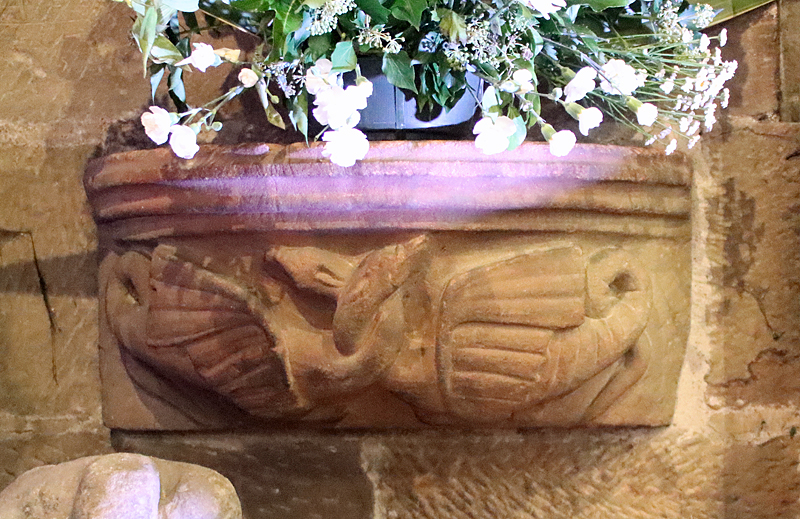
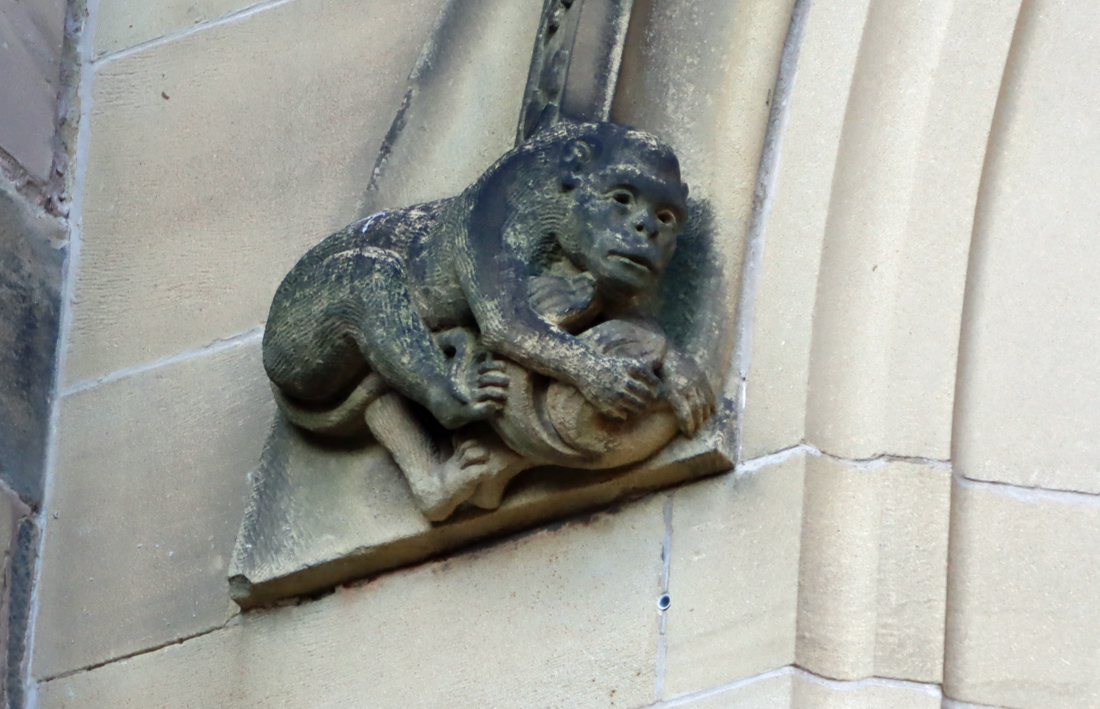
The Parish Church of St Giles is very welcoming to visitors.  It is heated, very well lit, with friendly volunteers on hand to answer questions, and is open every day to visitors except Sundays when it is confined to those attending services,or during weddings and similar events.  There is a small shop selling the guide book (including a 41-point self-guided tour on the back – Williams 2018), postcards and souvenirs. There are digital payment posts for taking card donations, which help to keep the church open and well maintained.  Outside, there is a path that enables you to do a full circuit of the church, which is well worth doing so that you can see some of the carvings, big and small, that line the upper levels of the walls and the roof pinnacles.

Binoculars are very strongly recommended.  There are some superb features to see in the interior including the roof itself, the Doom painting and features just above the arcade level which are very high up and cannot be seen clearly without binoculars or a telephoto lens.  Likewise, there are some splendid features on the exterior of the building, and in particular tower, which are not visible without optical assistance.
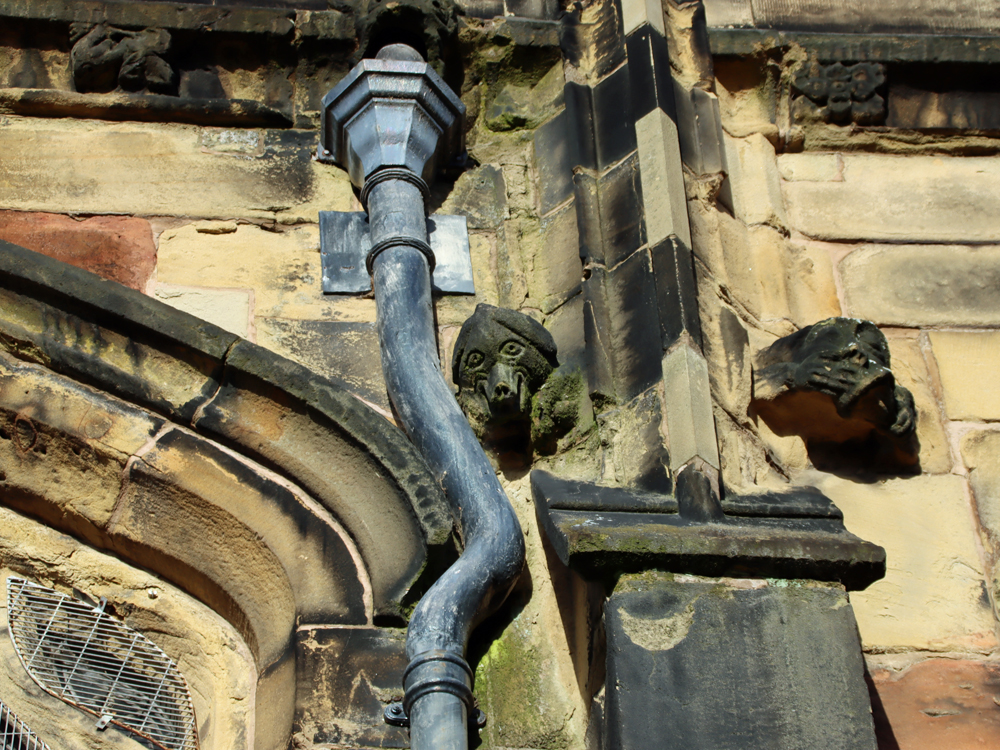
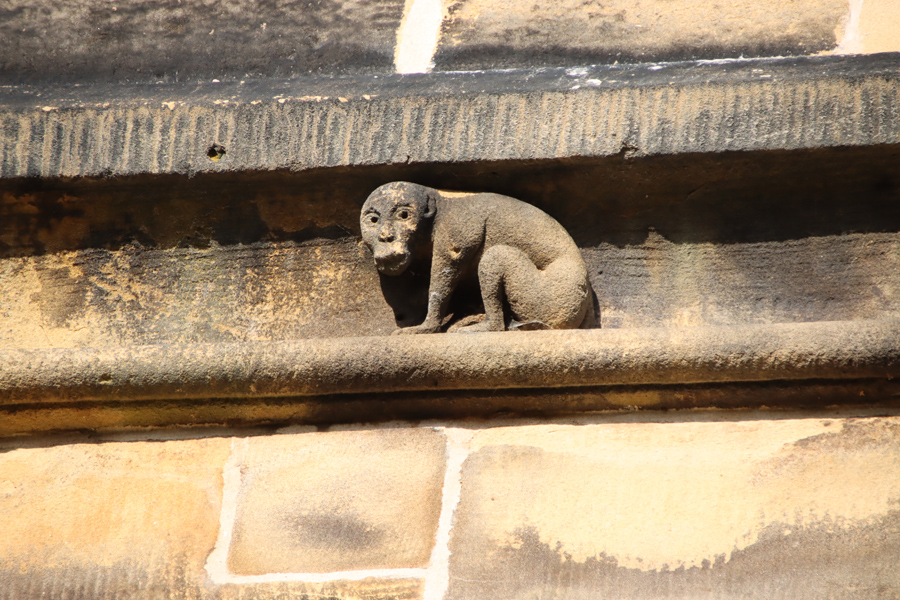
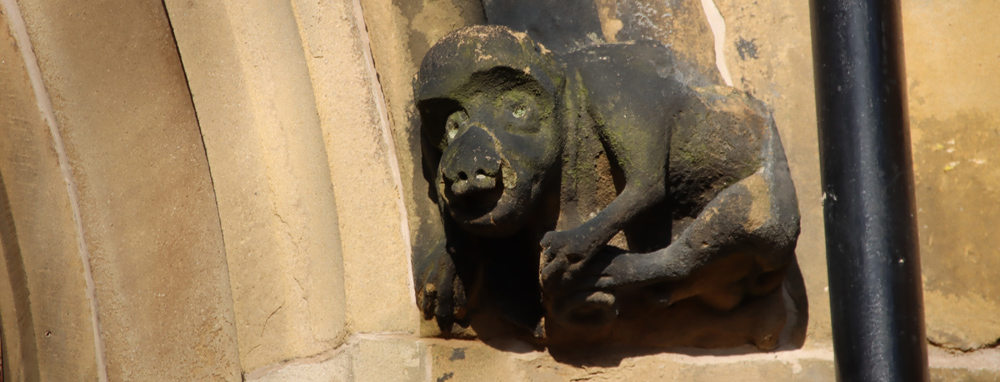
Small grotesques on the south side of the church.

Small grotesques on the south side of the church. I love the way the drainpipe has been carefully diverted around both the grotesque and the window.

The nearest car parking is behind the church in the St Giles Car Park off Tuttle Street (pay and display) – see fees etc here), for three hours maximum, with a capacity of 69 cars. You can walk out of the car-park straight up a flight of stairs into the churchyard.  The car park does fill up quickly, and parking to the north of the church is better for anyone with unwilling legs, to avoid stairs.  There is plenty of other parking throughout Wrexham.  I often park at the multi-storey car park at Tŷ Pawb on Market Street (What3Words address ///track.lazy.poppy), which is long-term but inexpensive (at least at the time of writing in January 2026) and has elevators (What3Words ///waddled.famed.filer).  On entry into the car park the system records your registration number and you need this to pay on return to the car park, so do make sure that you know what it is!  The pay point (which is thankfully indoors) is outside the pedestrian entrance to the car park and you have to enter your registration before you pay.  I have always found that there is always plenty of room there if other car parks are full.

xxx

Sources:

Leaflets available at the church
The Parish Church of St Giles, Wrexham n.d.  A Brief Guide to the Church. Leaflet with site plan.
(Also available online at https://stgilesparishchurchwrexham.org.uk/index.php/history)

The Parish Church of St Giles, Wrexham n.d. Stained Glass Window Guide. By Dr Malcolm Seaborne 1998


Books, booklets and papers
The foot of the tower, October 2025

The foot of the tower, October 2025

Ebsworth, David 2023. Wrexham Revealed: A Walking Tour with Tales of the City’s History. Carreg Gwalch

Evans, D.H. 2008.  Valle Crucis Abbey.  Cadw

Farmer, David 2011 (5th edition). The Oxford Dictionary of Saints. Oxford University Press

Hubbard, Edward 1986. The Buildings of Wales.  Clwyd (Denbighshire and Flintshire). Penguin Books / University of Wales, p.297-302

Palmer, Alfred, N. 1893. A History of the Town of Wrexham.  Woodall, Minshall, and Thomas.
https://archive.org/details/historyoftownofw0000palm

Phillips, John Rowland 1874. Memoirs of the Civil War in Wales and the Marches, 1642-1649, vol 1.  Longman, Green and Co.
https://books.google.co.uk/books?id=U28LAAAAYAAJ&printsec=frontcover&source=gbs_ge_summary_r&cad=0#v=onepage&q&f=false

Pratt, D., 1997. The Dissolution of Valle Crucis Abbey.  Bridge Books

Price, G. Vernon 1952. Valle Crucis Abbey. The Brython Press

Suggett, Richard with Anthony J. Parkinson and Jane Rutherfoord 2021. Painted Temples.  Wallpaintings and Rood-screens in Welsh Churches, 1200-1800.  RCHAMW. (Dual language, English and Welsh)

de Voraigne, Jacobus 1993 (with an introduction by Eamon Duffy 2012) . The Golden Legend. Readings on the Saints. Translated by William Granger Ryan. Princeton University Press

Williams, D.H., 1984. The Welsh Cistercians. Cyhoeddiadau Sistersiaidd

Williams, W. Alister 2001, revised 2010. The Encyclopaedia of Wrexham. Bridge Books

Williams, W. Alister 2018.  The Parish Church of St Giles, Wrexham. Published by the Parish Church of St Giles, Wrexham.  The best place to find all the most useful information in one place, with an excellent 41-feature annotated map on the back for those wishing to do a self-guided walk. Available to purchase in the shop at the church
xxx
Websites

Cadw
DE158 – Wrexham Churchyard Ornamental Wrought Iron Gates and Screen 
https://cadwpublic-api.azurewebsites.net/reports/sam/FullReport?lang=en&id=309

The Church in Wales
Angel festival for Covid victims attracts thousands. 13th January 2022
https://www.churchinwales.org.uk/en/news-and-events/angel-festival-for-covid-victims-attracts-thousands/

Civic Heritage
Wrexham Gateway, Wrexham. Archaeological Desk-based Assessment. July 2025
https://spawforths.co.uk/wp-content/uploads/2025/07/Archaeological-Assessment-Compressed.pdf

Clwyd Powys Archaeological Trust / Heneb
Wrexham Churches Survey: Church of St Giles , Wrexham
https://heneb.org.uk/archive/cpat/Archive/churches/wrexham/106012.htm

Heneb
Clwyd Powys Archaeological Trust – Historic Settlement Survey – Wrexham County Borough
https://heneb.org.uk/archive/cpat/ycom/wrexham/wrexham.pdf
Wrexham Churches Survey – Church of St Giles, Wrexham
https://heneb.org.uk/archive/cpat/Archive/churches/wrexham/106012.htm

Historic England
Sundial, Approximately 2 Metres West of Tower of Church of St Giles
https://historicengland.org.uk/listing/the-list/list-entry/1116496

historypoints.org
St Giles’ Church, Wrexham – audio file recording the bells
https://historypoints.org/index.php?page=st-giles-church-wrexham

Howard Williams Blog – ArchaeoDeath
Where can you visit Wat’s Dyke in Wrexham?
https://howardwilliamsblog.wordpress.com/2019/01/03/where-can-you-visit-wats-dyke-in-wrexham/

National Archives Currency Converter
https://www.nationalarchives.gov.uk/currency-converter/

Public Statue and Sculpture Association
Louis-François Roubiliac (1702–1762)
https://pssauk.org/public-sculpture-of-britain/biography/roubiliac-louis-francois/

Stained Glass in Wales (University of Wales)
Church of St Giles, Wrexham / Wrecsam
https://catalogue.stainedglass.wales/site/103

Welsh Government
Wrexham Town Centre Conservation Area Character Assessment and Management Plan. 2009
https://www.wrexham.gov.uk/sites/default/files/2023-04/wrexham-town-centre-cons-area-assessment.pdf 
Press release: Historic Church of St Giles nears end of essential conservation works. 8th August 2025
https://www.gov.wales/historic-church-st-giles-nears-end-essential-conservation-works

Wrexham’s Year of Wonder 1876 – 2026
https://wrecsam1876.co.uk/

Wrexham.com
Views of 1970s Wrexham From Top of St Giles Tower (most usefully including photos of the Wrexham-Ellesmere railway line that ran just under St Giles until sometime after the railway closed in the early 1980s)
https://wrexham.com/news/view-of-1970s-wrexham-from-top-of-st-giles-tower-100315.html

Wrexham Heritage Trail
Home Page
https://reesjeweller.co.uk/heritage/index.html
Map
https://reesjeweller.co.uk/heritage/mapsmall.html
Town Hill
https://reesjeweller.co.uk/heritage/town_hill.html
xxx
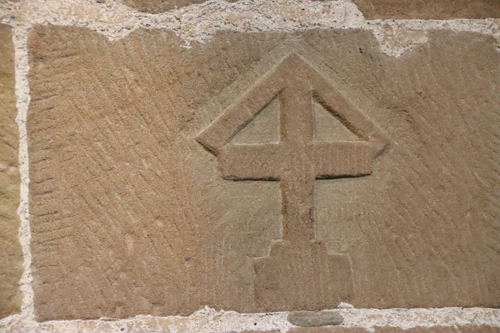
One of the carved crosses in the north aisle
One of the carved crosses in the north aisle

Reredos in the north aisle chapel

Reredos in the north aisle chapel showing the 12 apostles
 

Big Garden Birdwatch 23rd- 26th January 2026

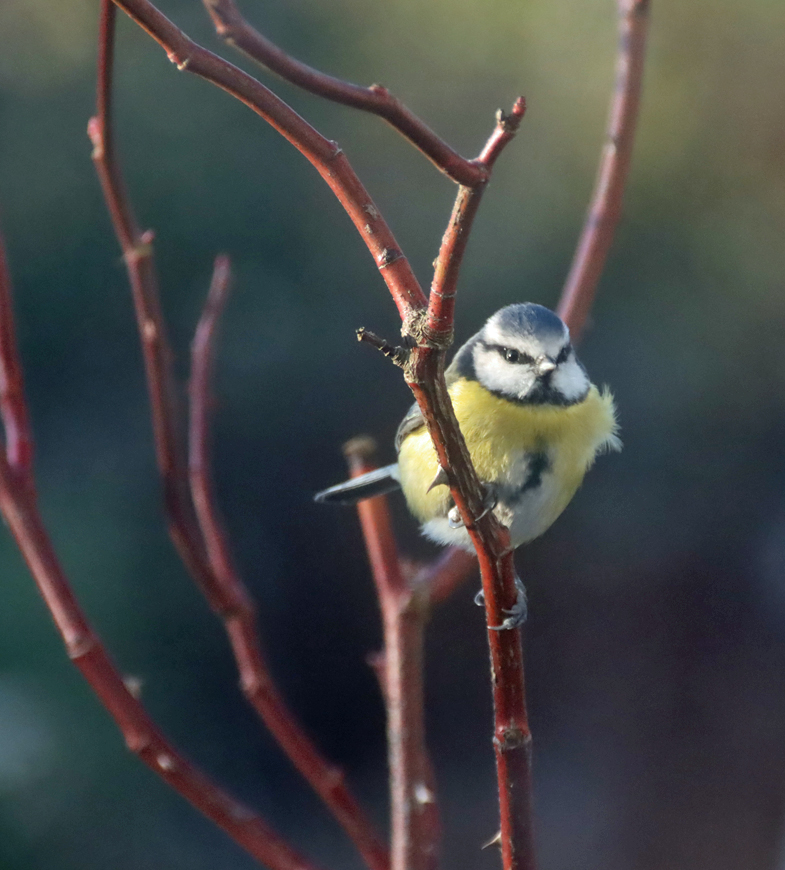
Blue Tit on a rose bush in my garden, January 2026

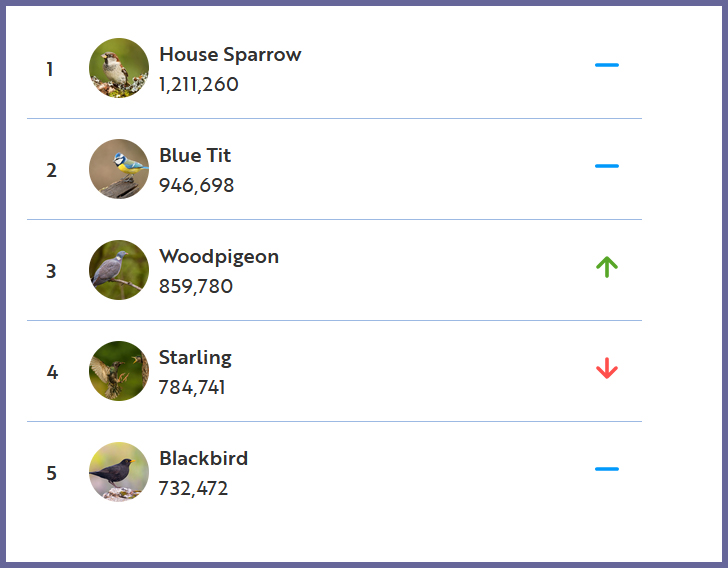
I have been doing the RSPB Big Garden Gardenwatch for about 10 years, but it has been going since 1979, collecting the same data each year so that the analysis of birds can be sensitive to time as well as geography, charting alterations in bird populations throughout the UK.  These changes can be considerable.  As climate change impacts both regional and highly localized environments, the distribution and numbers of different animal and plant species alter accordingly.  Overall the UK has lost 38 million birds in the last 60 years, and although House Sparrows were the “most spotted” bird during 2025, comparing actual numbers with previous years shows that this figure is down 64% since 1979. This means that House Sparrows are now on the red list, which is the highest level of conservation concern.

Most spotted in 2025

Most spotted in 2025, from the current Birdwatch webpage

You can enter your results online or by post, making it very easy to participate.  Instructions for participating are at the Big Garden Birdwatch page here, but it’s a simple task. On either 23rd, 24th or 25th January simply select a convenient hour to do some birdwatching in your garden, local park or wherever you settle yourself down.  The idea is to count only the maximum birds you see at any one time in that hour, and only those that land, not birds flying overhead.  You can download the bird identification sheet in English or Welsh here.


I’ve always vaguely wondered  why the survey is done in the winter, when we would all rather be tucked up indoors, but the answer makes a lot of sense:

Because that’s the time of the year garden birds need us most – if it’s really cold, it’s likely more birds will come into our gardens looking for shelter and food. This makes is easier to count the birds. Because the Birdwatch takes place at the same time every year, we can look back through the years to see if anything has changed.

I will be doing mine from the nice, safe warmth of the kitchen, from where I can watch the bird-feeders and the birdbath without suffering from hypothermia!

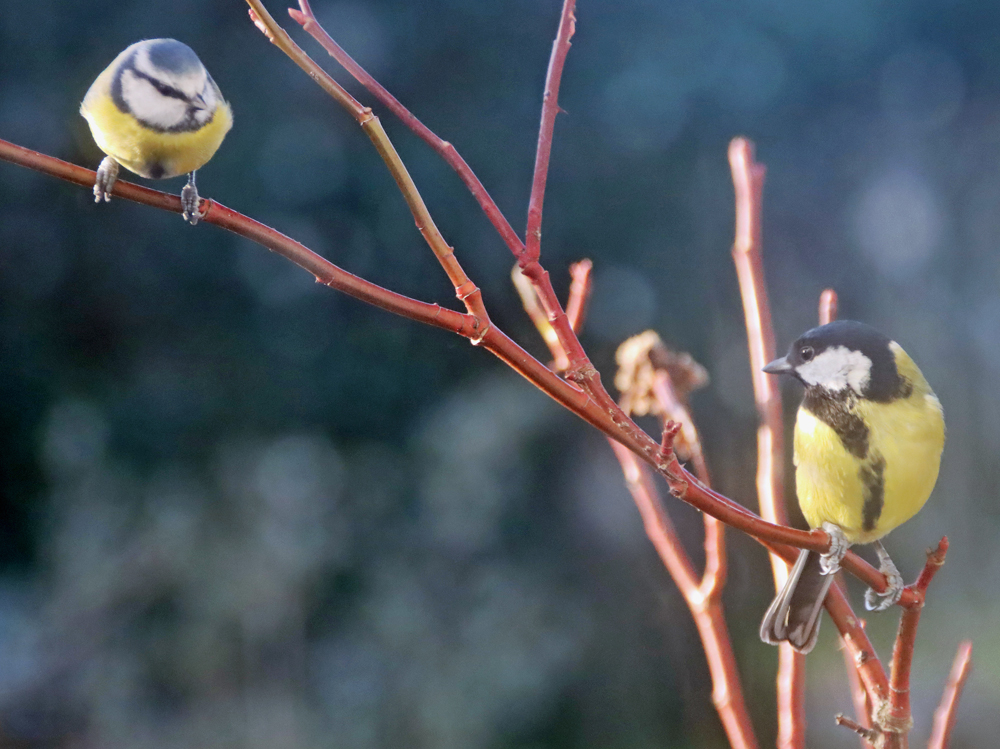
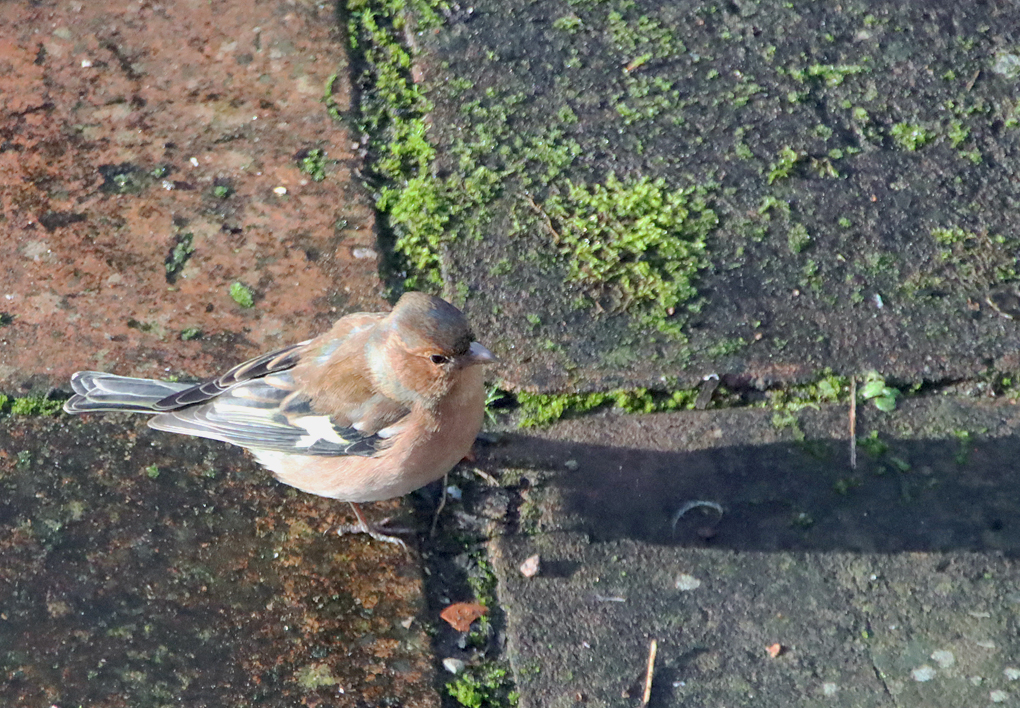
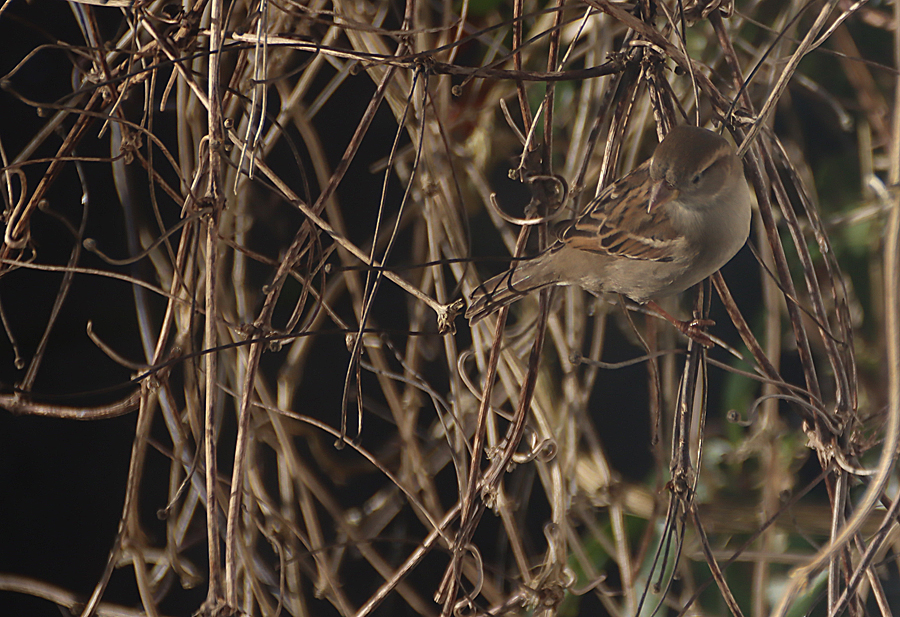
Most of the birds taking advantages of the bird feeders are small – blue tits, great tits, sparrows, the occasional dunnock, a few long-tailed tits, and quite a few very shy chaffinches.  It is impressive how the sparrows and chaffinches are so at home on the bird feeders, not as gymnastic as the tits, but perfectly happy perching on the outer cage.  Black birds and collared doves, and even some of the local community of jackdaws and the occasional magpie scavenge underneath the feeders because the small birds are all messy eaters and drop a lot.

Unexpectedly, a couple of weeks ago I was in the kitchen making a coffee and looked out of the window to see a Great Spotted Woodpecker, at first hanging nearly upside down on one of the bird-feeders but making a really good job of arching its neck around to get at the mixed sunflower hearts, dried mealworms, suet pellets and peanuts, before it adjusted itself into a more convenient upright position.  Gorgeous.  It has been back several times since, always on the bird feeder furthest from the house.  It answers the very puzzling question of why the bird feeder at the far end is always emptied much more quickly than the others, as the small birds don’t seem to mind where they feed.  I could never have imagined a more efficient vacuuming operation. I’ve heard it in my neighbour’s garden throughout the summer, tapping away at a tree, but only had fleeting glimpses of it.

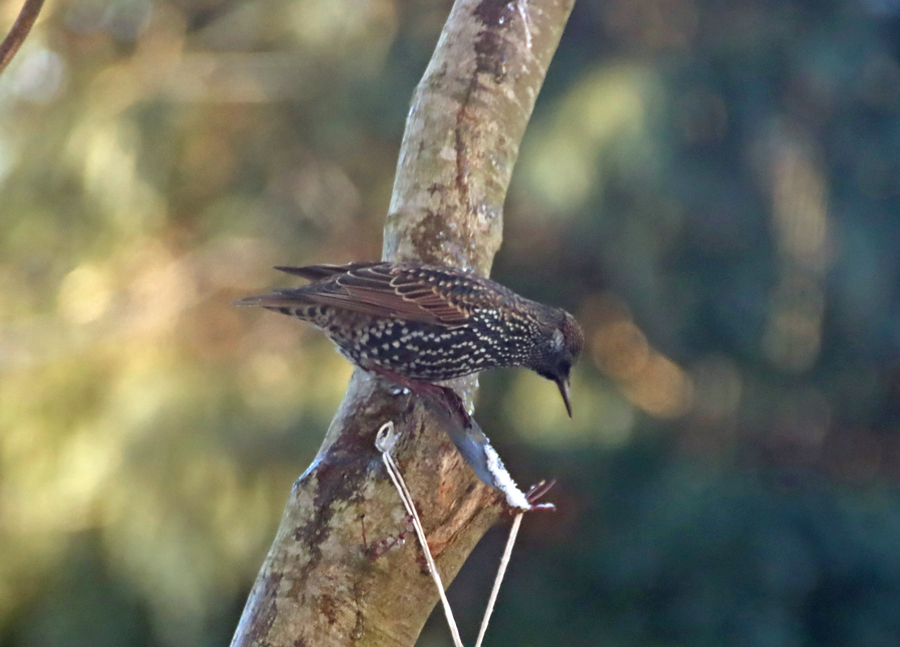
Most of my birdfeeders are like the one in the above woodpecker photo, but I have had great success with some very ugly ones that stick to windows with suckers, particularly with the robins and sparrows.  I take all the bird feeders down during the course of early spring, one at a time, so that my winter visitors return to fending for themselves, passing on their natural foraging skills to their young, so on the whole I don’t mind a bit of ugliness over the winter.  The window feeders supply the birds that don’t do well on the hanging feeders, particularly robins and sparrows, but the tits and finches also enjoy them.  A more surprising visitor is a single starling, which simply cannot get the knack of the hanging feeders.  I have never seen starlings in the garden before.  It is almost impossible to take a good photograph of anything in the window feeders, thanks to the suckers and the general mess that the birds somehow manage to make, but here’s my  visitor, taking up all of the available space.

Exhibition: The light and bright “Print International” at Tŷ Pawb, Wrexham

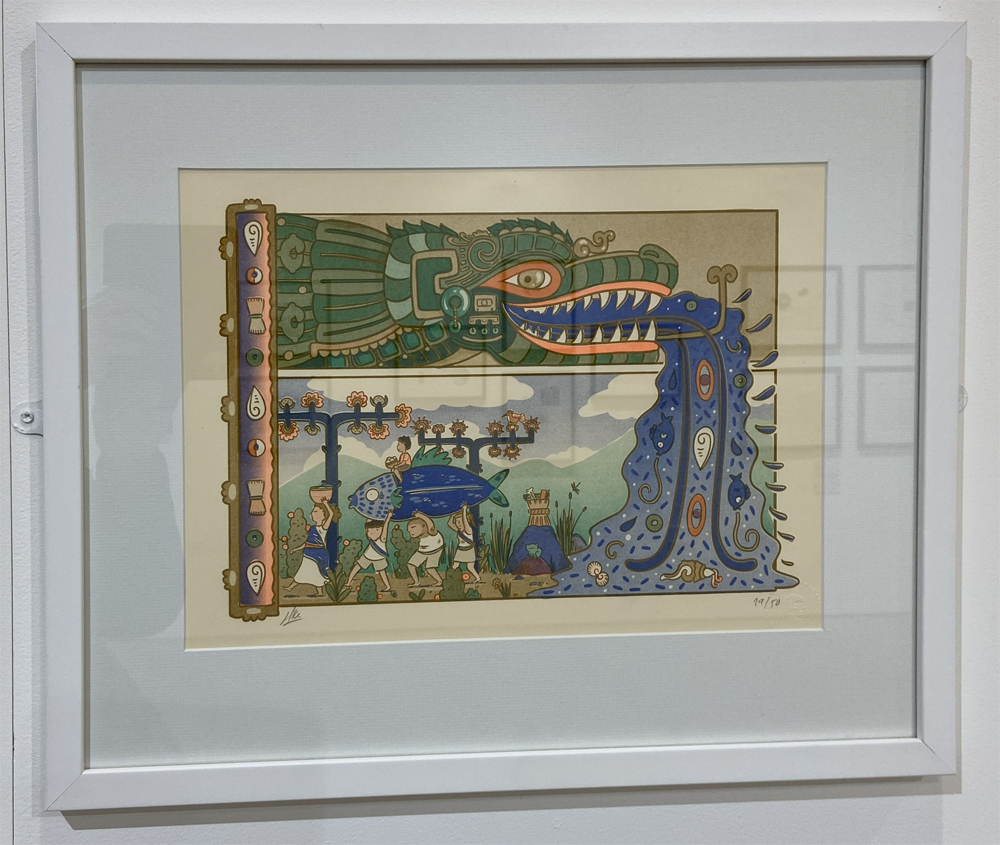
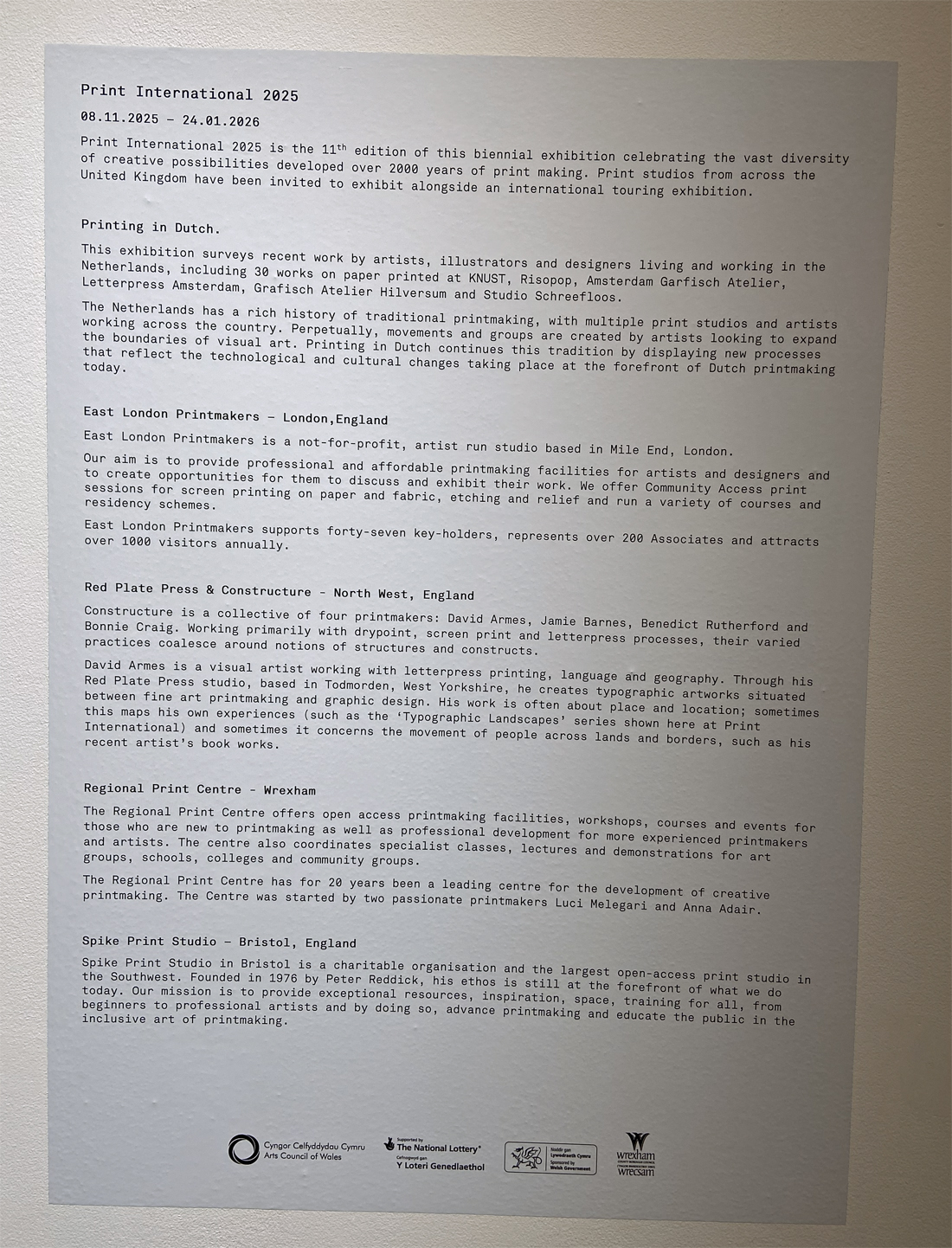
Currently on display in Wrexham’s Tŷ Pawb art venue is the Print International exhibition that ends on 24th January. Print is not something that I know anything about.  Combining art and craft in a creative marriage of aesthetic refinement and technical skills, it has always seemed even more out of reach, physically as well as conceptually, than the more direct relationship between the artist and her/his brush and pencil on paper.  All the teaching in traditional art history that I received back in the Jurassic seems to have left me more than somewhat ill-equipped to assess what print is all about.  All the more reason to go and see a selection of different techniques and a variety of aesthetic concepts and approaches in a single exhibition.

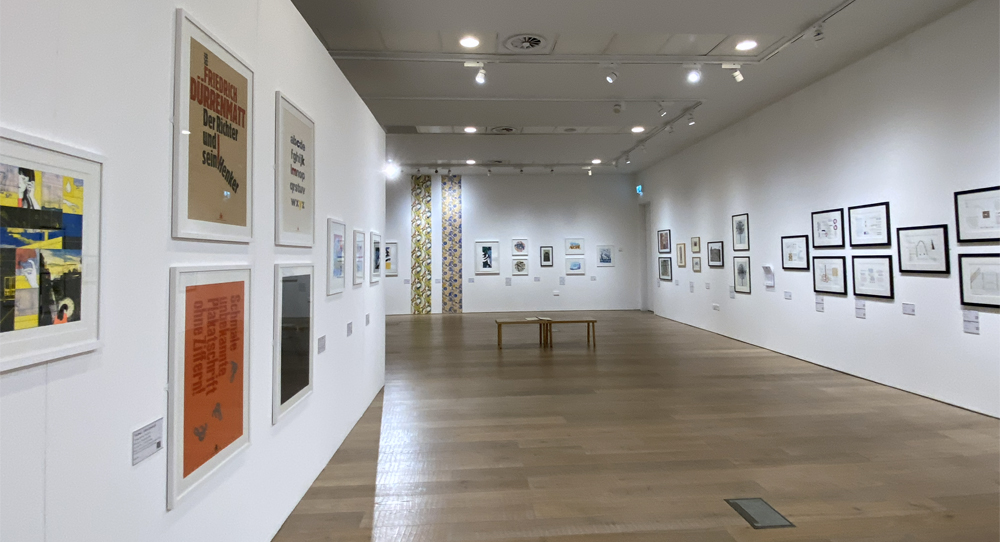
The gallery at Tŷ Pawb has been organized beautifully to display all the pieces to advantage, open and light-filled.  Whether you are very familiar with print as a medium, or a complete novice like me, the Print International exhibition offers the opportunity to engage with an enjoyable and appealing series of bright, light, clean, art works, happily counteracting some of the more greyscale and muddy aspects of winter’s usual offering.

Andrew Wilson. Broken Clock. Copper photogravure

The exhibition was not about explaining print as an art form.  The information boards described the different workshops and artists represented (see list at end), but chose to let the art works speak for themselves, which allows the viewer to assess each piece on its own visual merits, but does not help to demystify how the effects were achieved or why print may be just as powerful as a medium of expression as the more traditional and conventional forms of artistic output.  Divorcing print from other types of artistic medium, however, concentrates the mind wonderfully on what this medium has to offer.

As the Wrexham-Chester area tips more firmly into winter, what was striking was how light-filled and bright the exhibition was, the perfect anecdote to seasonal murk and mire.  It was the lightness of touch that struck me most in the prints on display, including the careful colouring, delicate and gentle in one corner of the room, bold planes of attention-grabbing colour in another, with plenty of stark and arresting monochrome to balance the brighter, lighter shades.  Multiple textures were also on display, with flat surfaces of colour, heavy linearity, spidery filigree, tactile surfaces and subtle washes.  Topics included the representational, pure pattern and pure abstract, and every combination in between. Very attractive experiments were made with text as an art form, as well as more conventional text- and icon-based posters.  If you are familiar with printing techniques, there are plenty of different approaches of these on display too.

The photos below were taken on my smartphone, so are a bit feeble (it and I don’t seem to have a particularly empathetic relationship), and the reflections don’t do them many favours with my shadowy image in some of them, but hopefully give a sense of what’s on show.  See more, with different prints from those below shown, on the Tŷ Pawb website, which also has details of opening times etc.

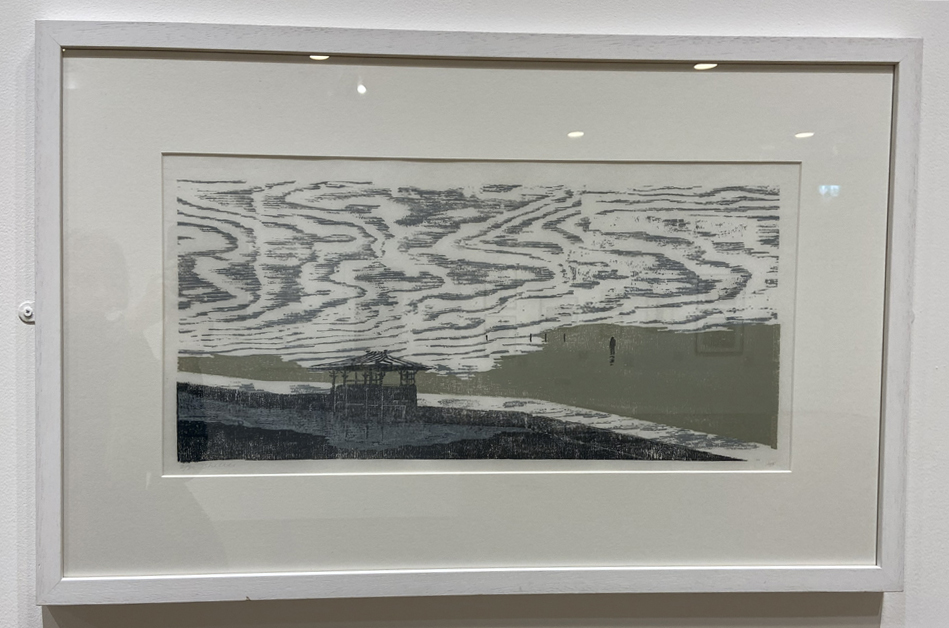
Martine Baldwin. Shelter. Woodcut

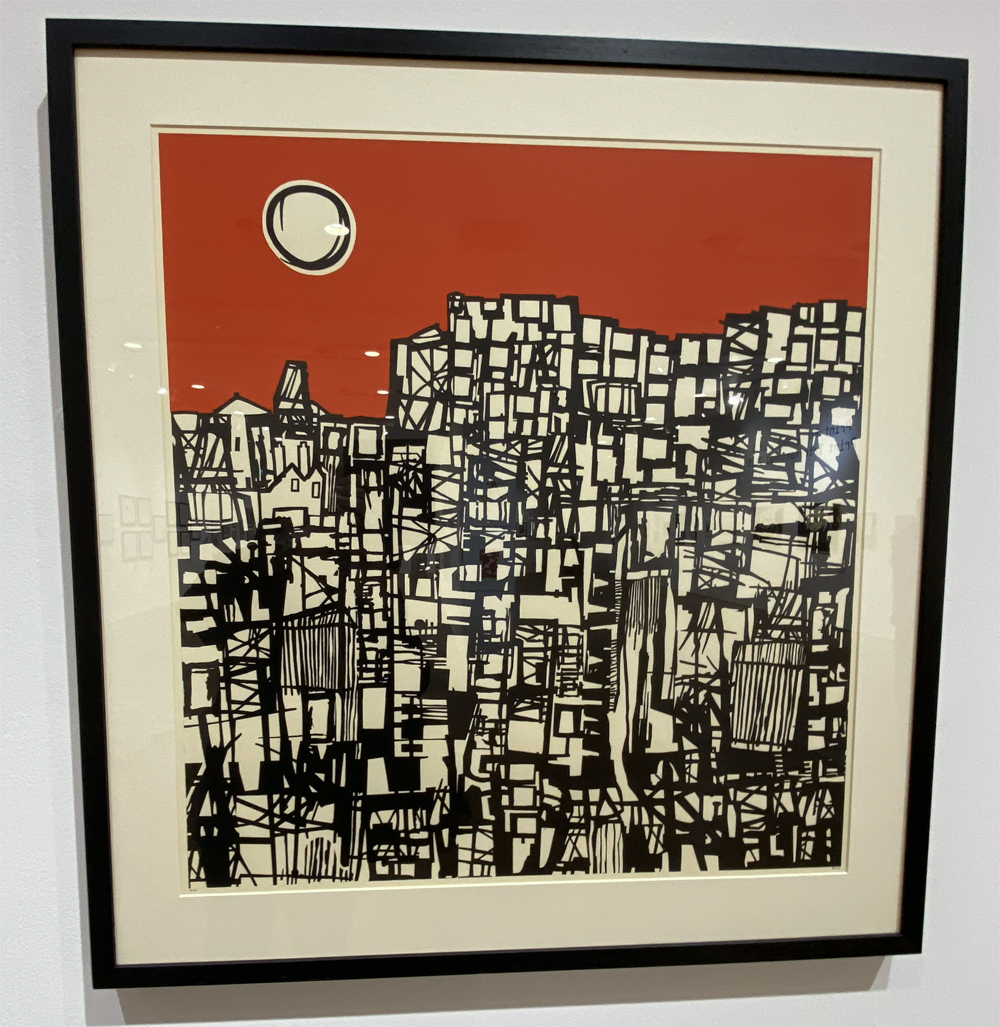
Paul Hogg. City. Screenprint

Tara Dean. New Growth (top) and From Here (bottom). Screenprint

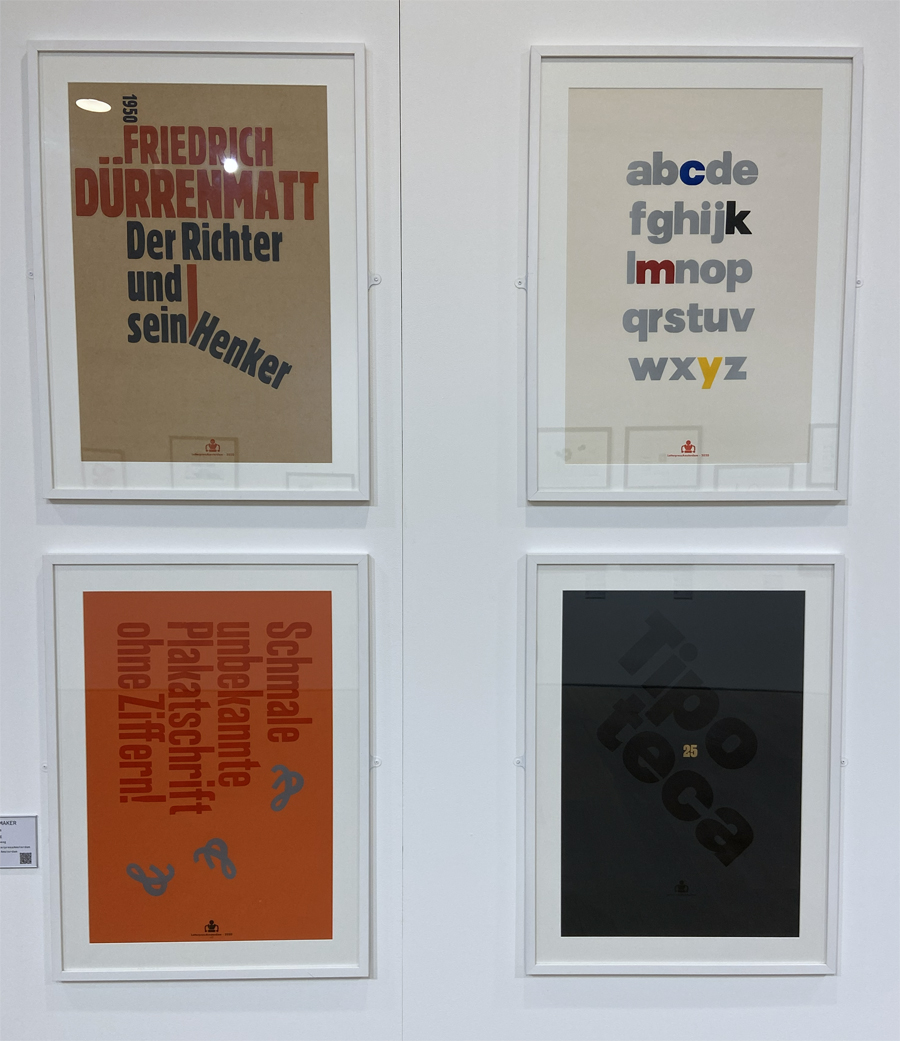
Thomas Gravemaker. Typographic Posters. Letterpress

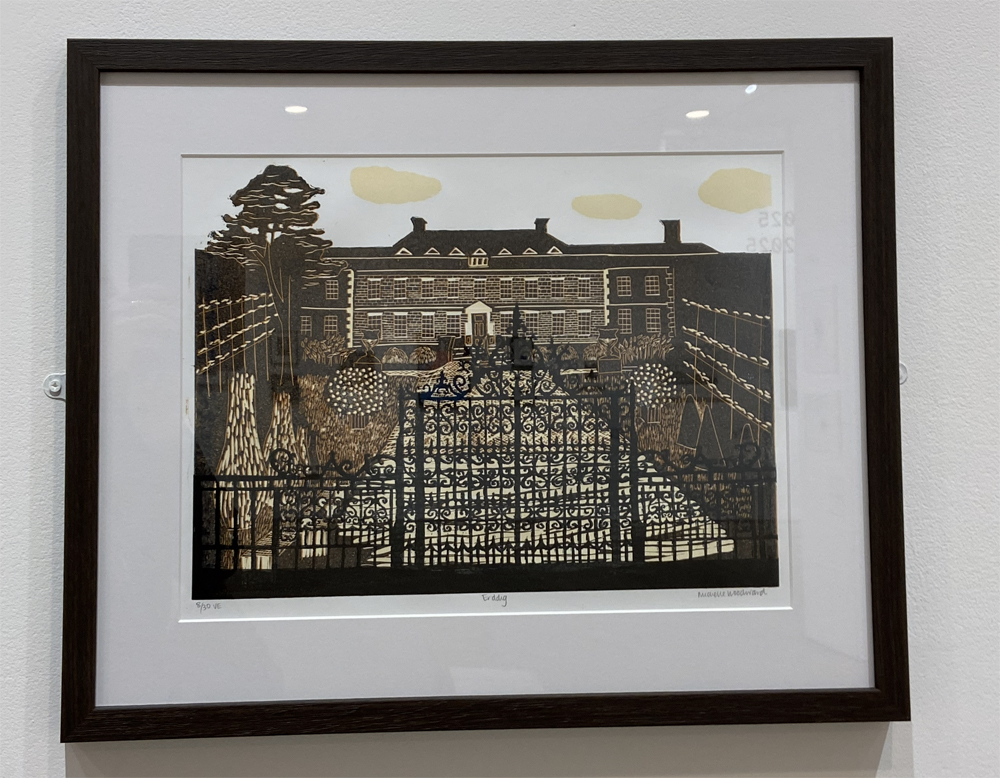
Michelle Woodward. Erddig. Lino print

Inga Eicaite. B-04. Etching


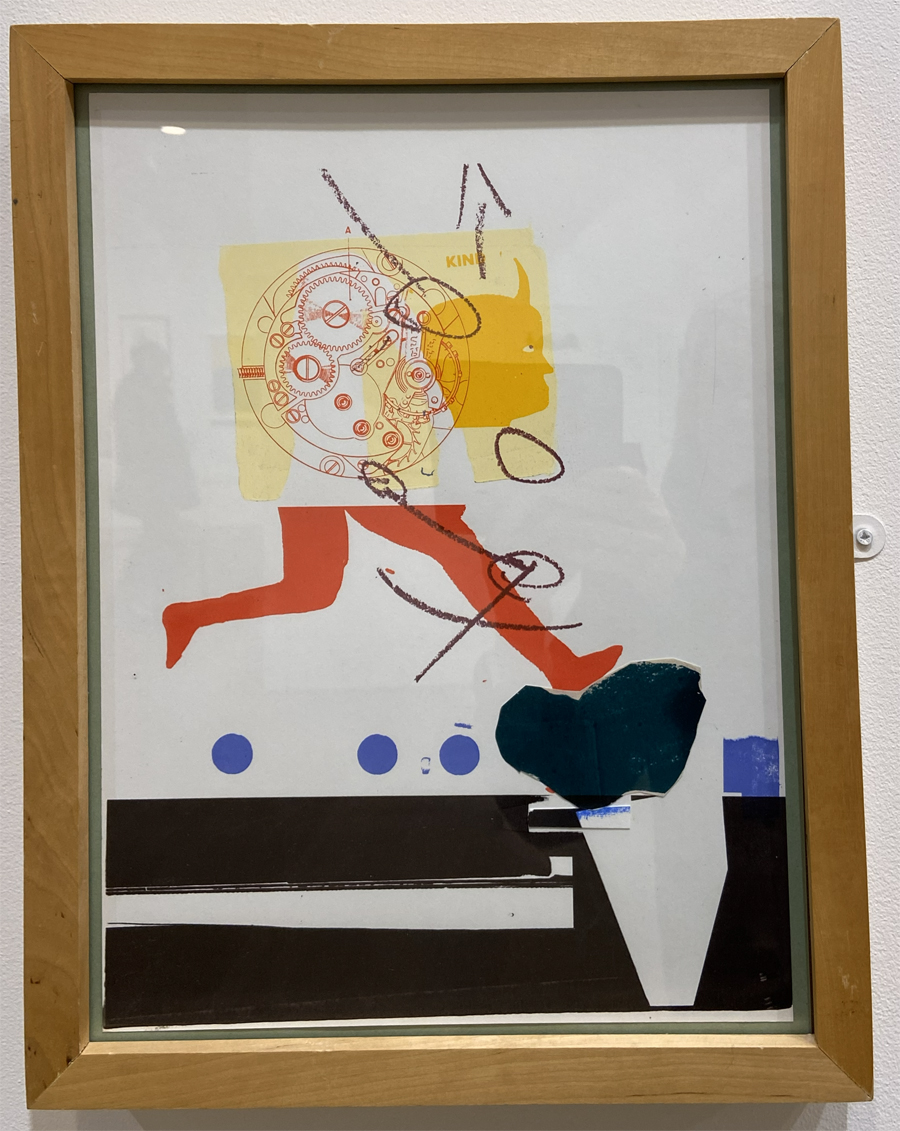
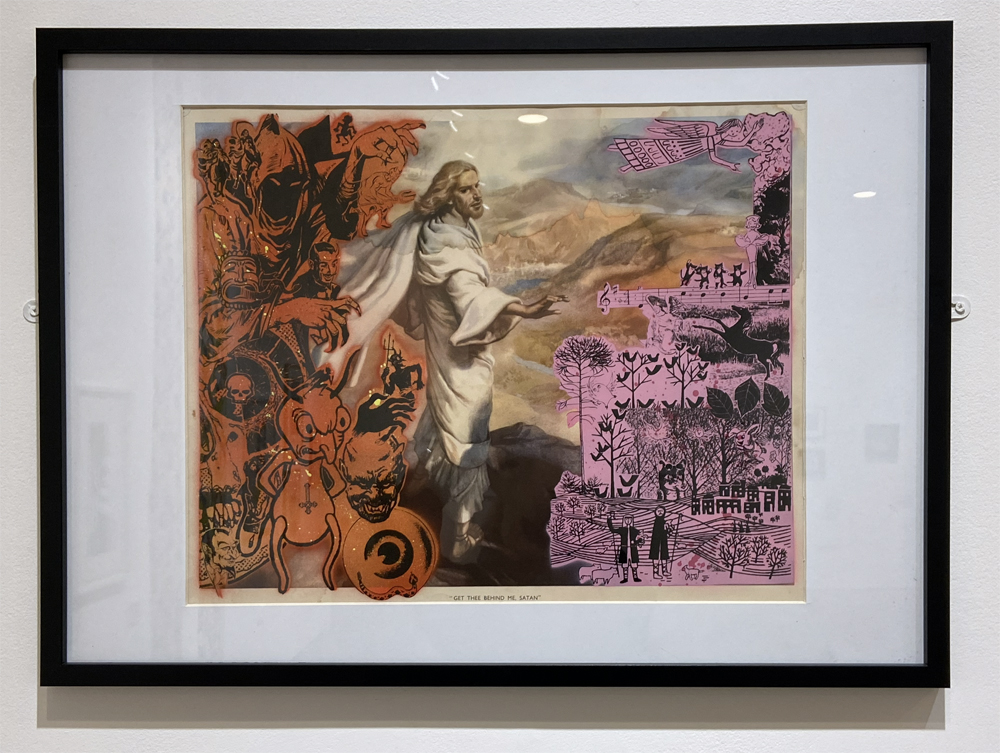
Matt Martin. Get Thee Behind Me Satan. Screen print and mixed media

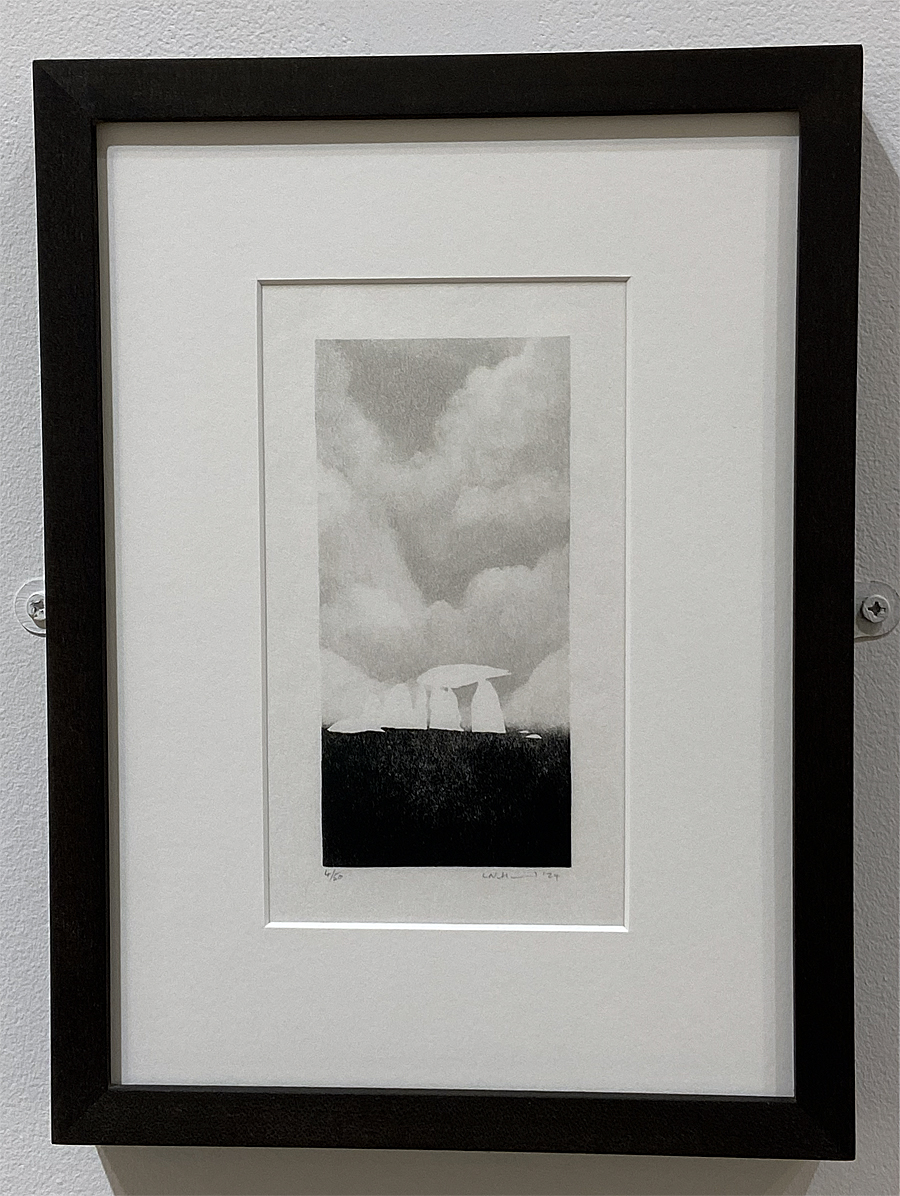
Lee Nutland. Skeletons I, Pentre Ifan. Copper photogravure

Nicola Scott. A touch of Eva n3a. Callagraph with watercolour

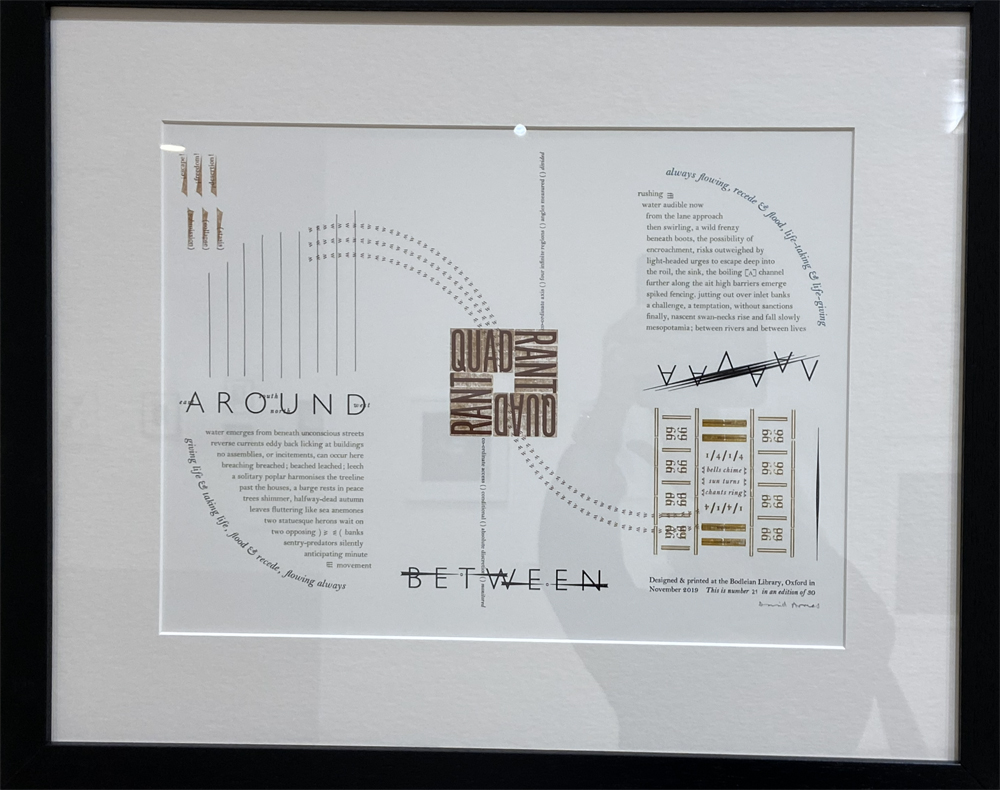
David Armes. Between Sun Turns. Letterpress

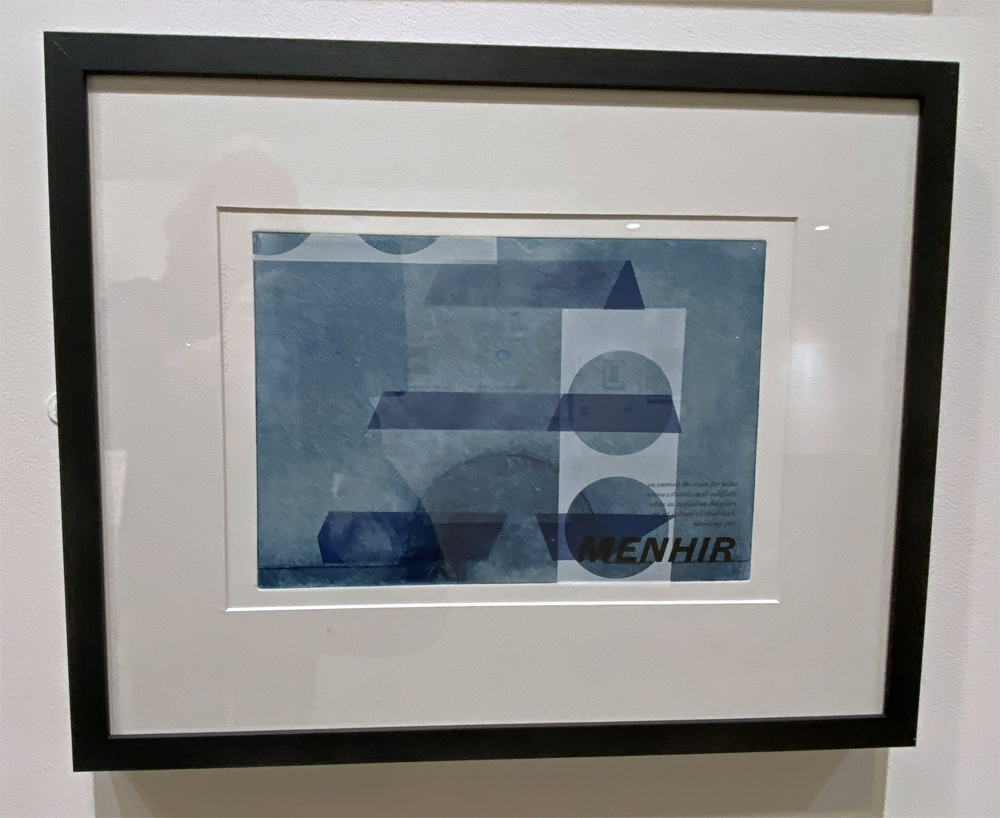
Aafke Metens. Deidad. Risograph

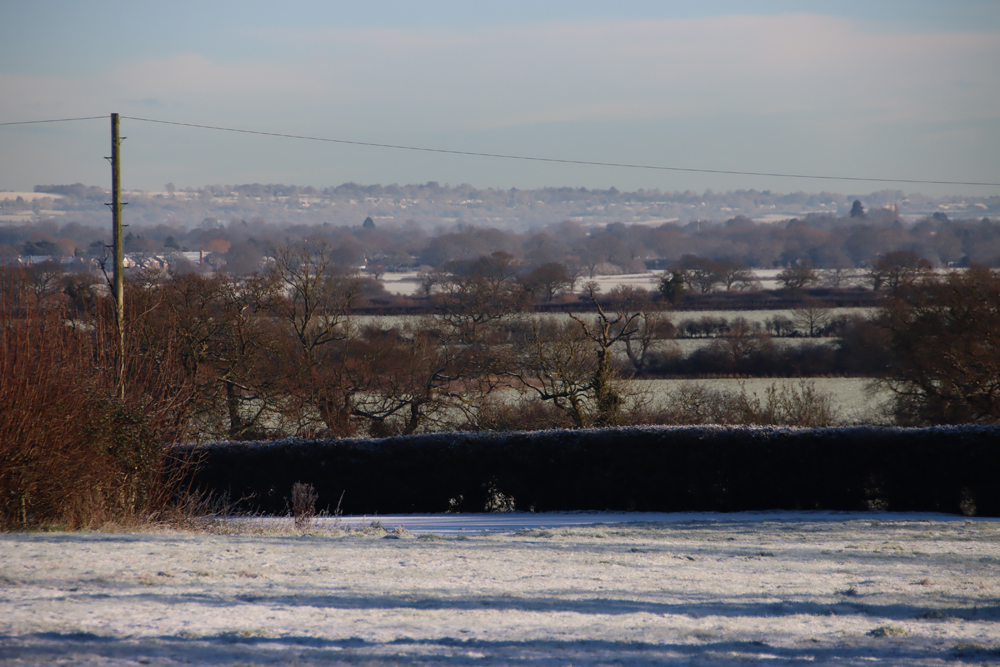
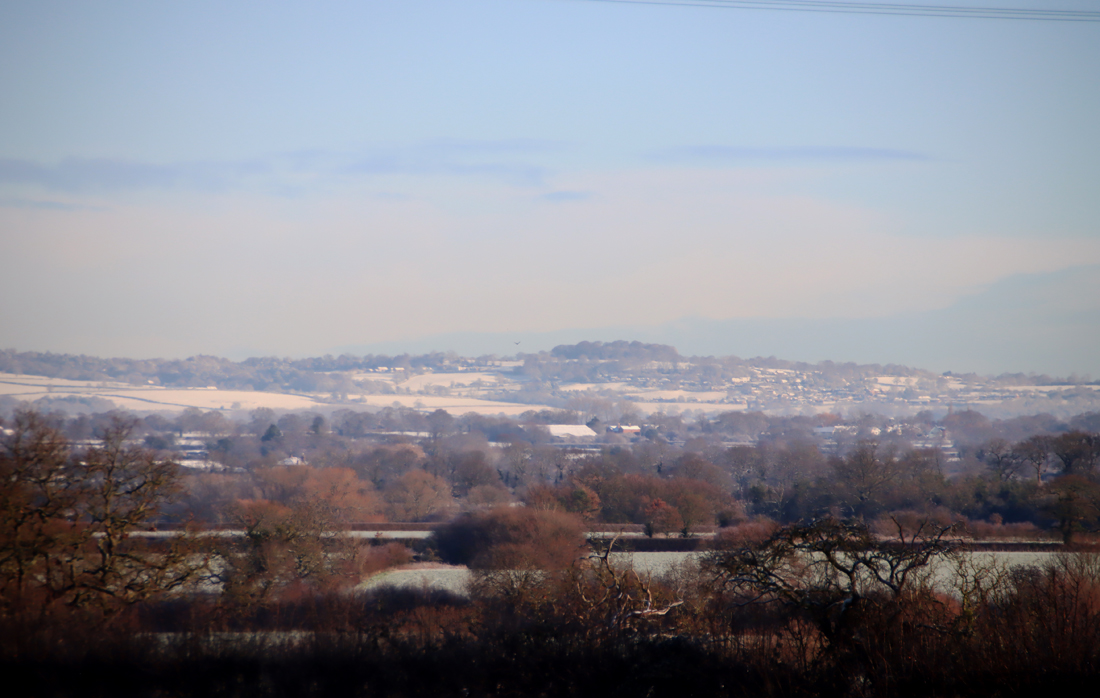
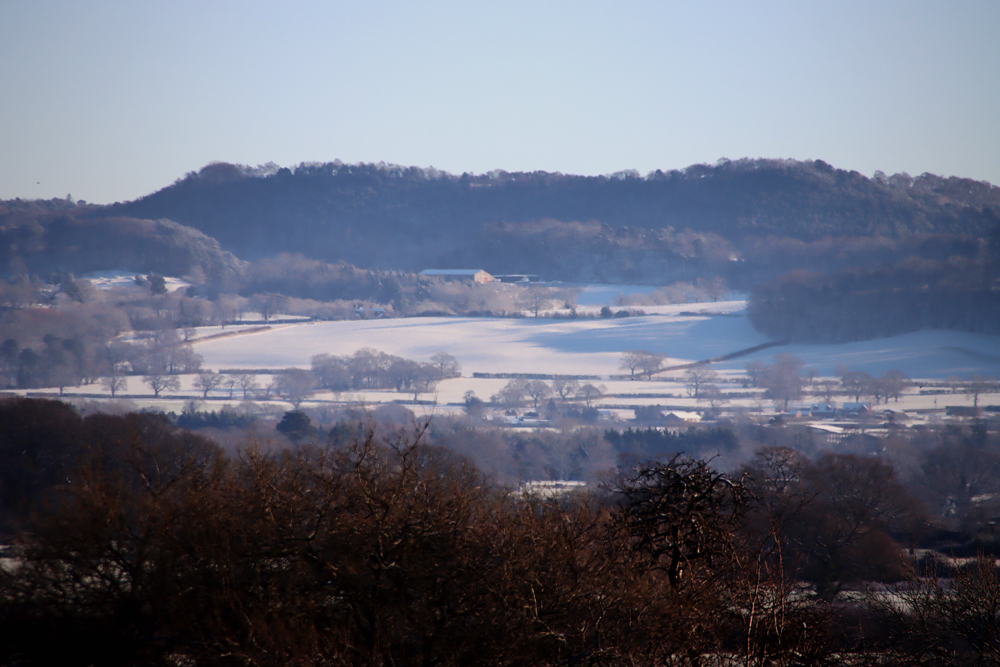
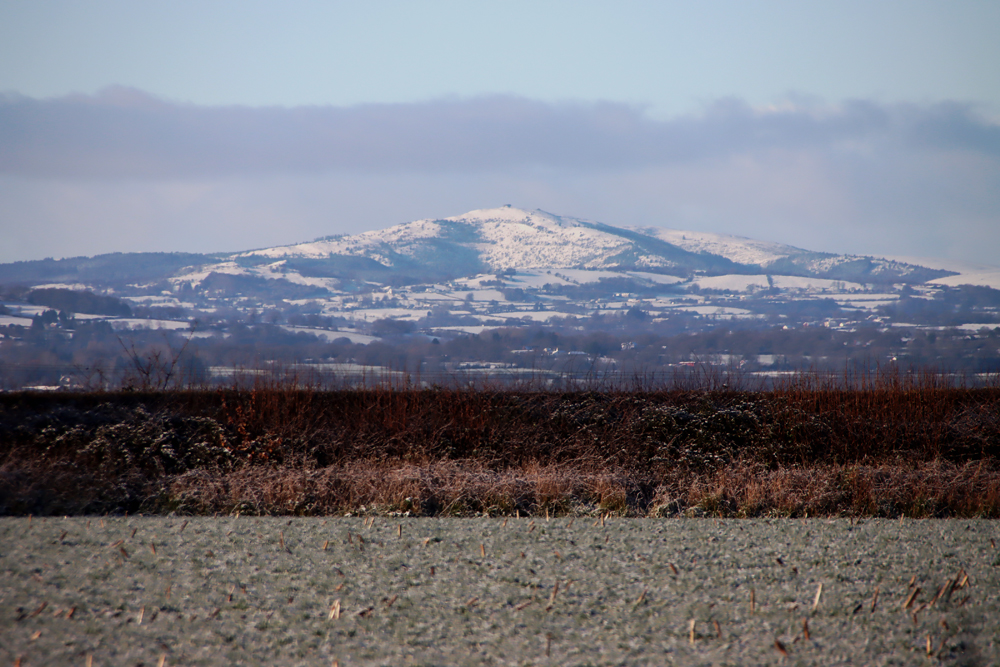
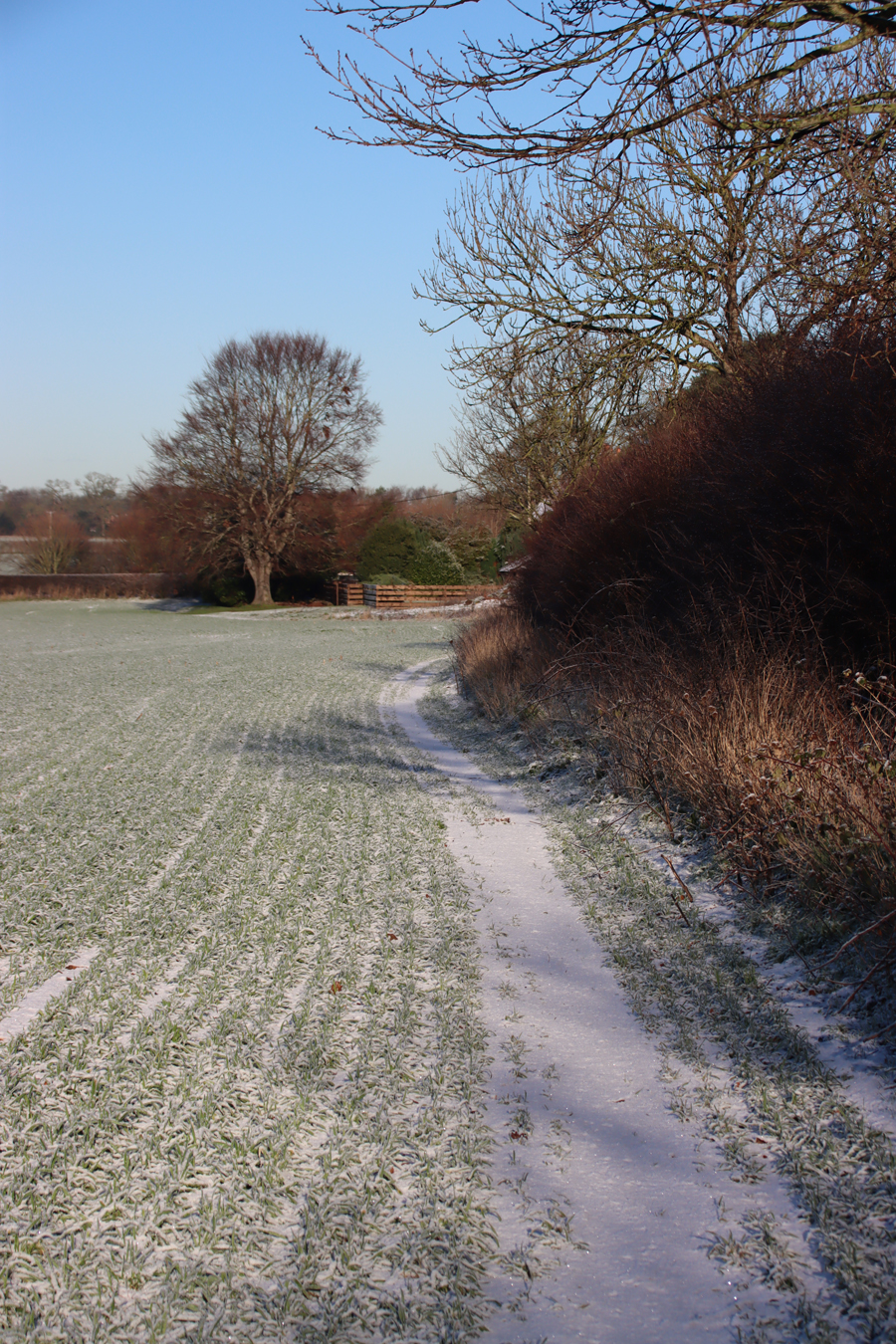
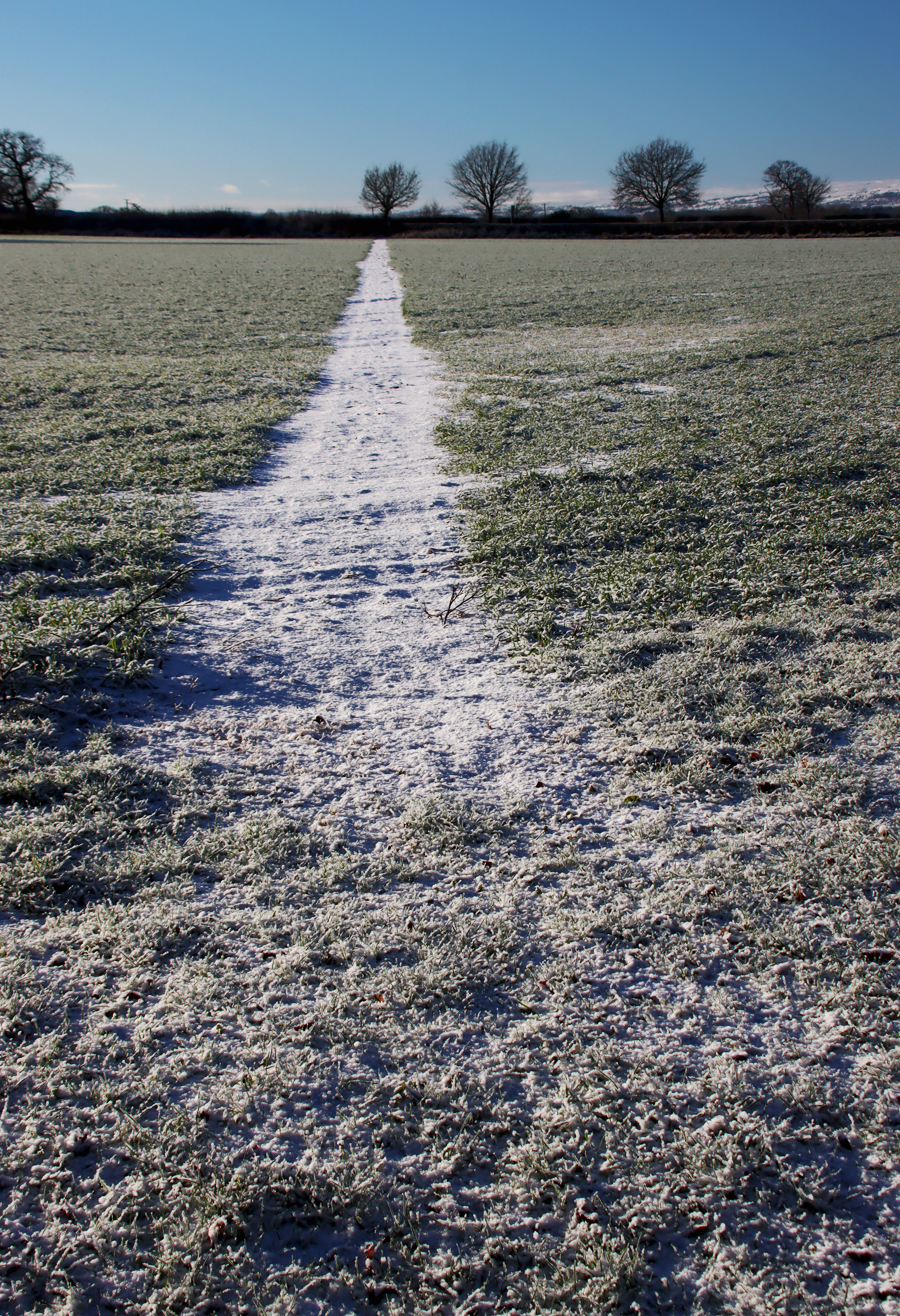
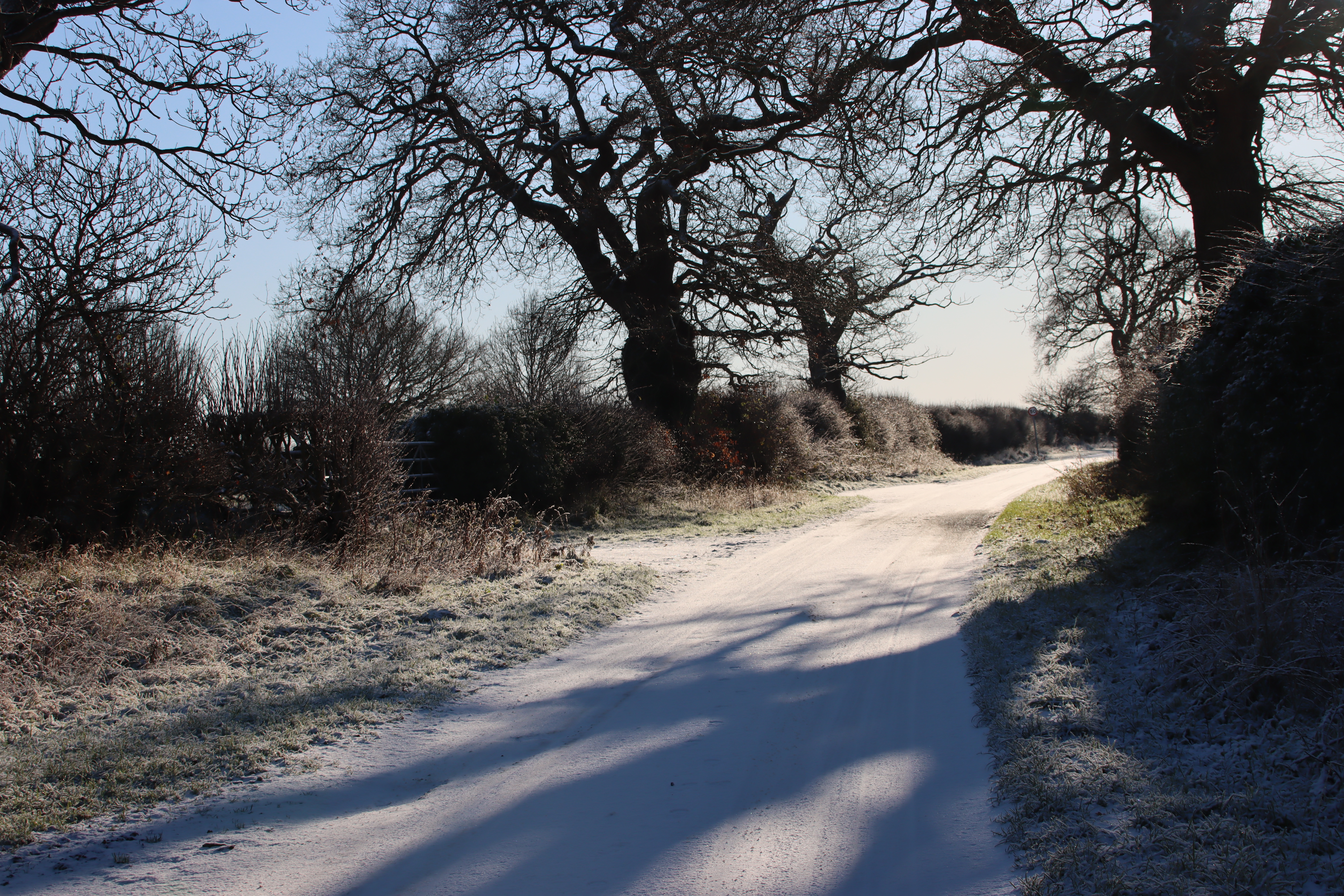
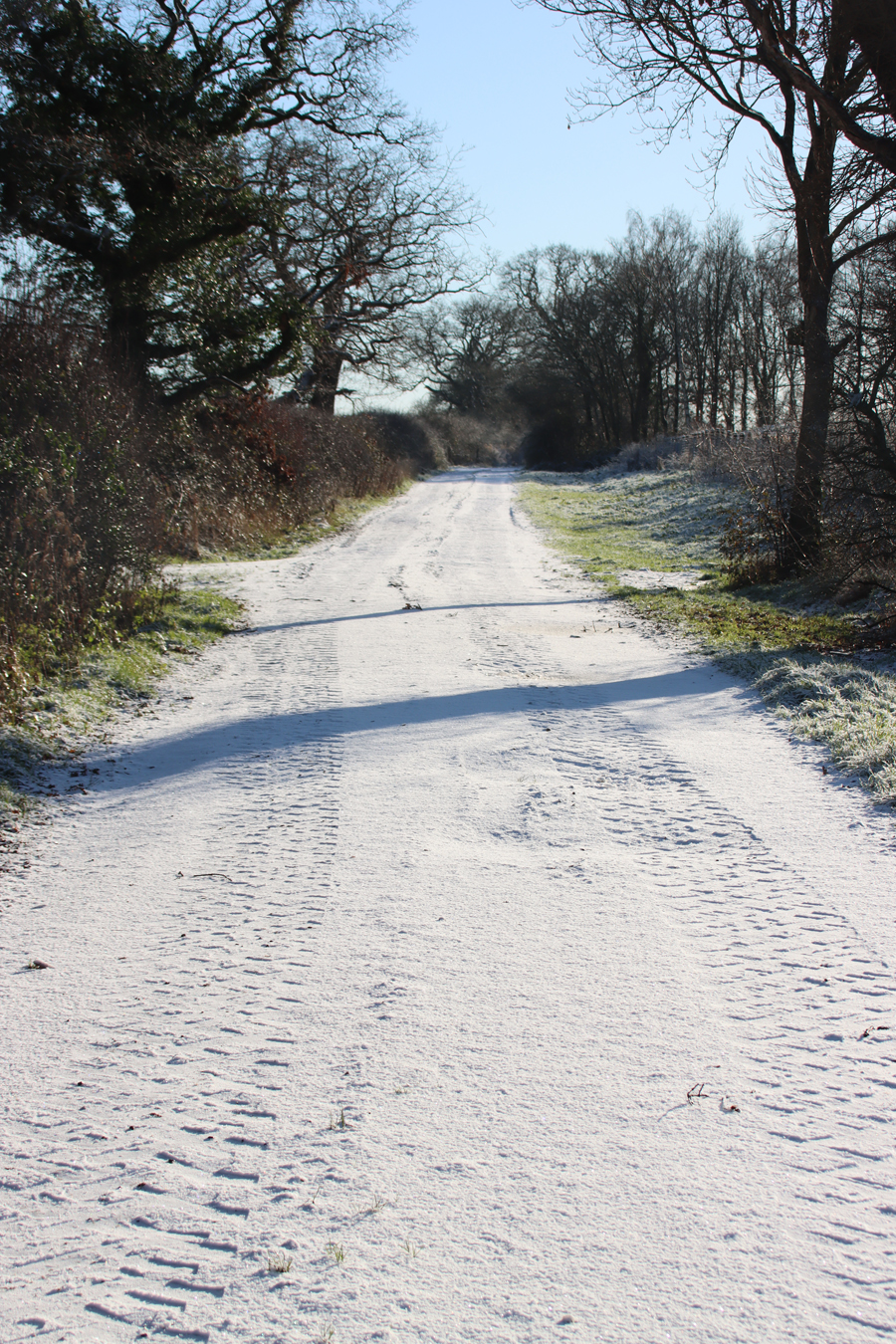
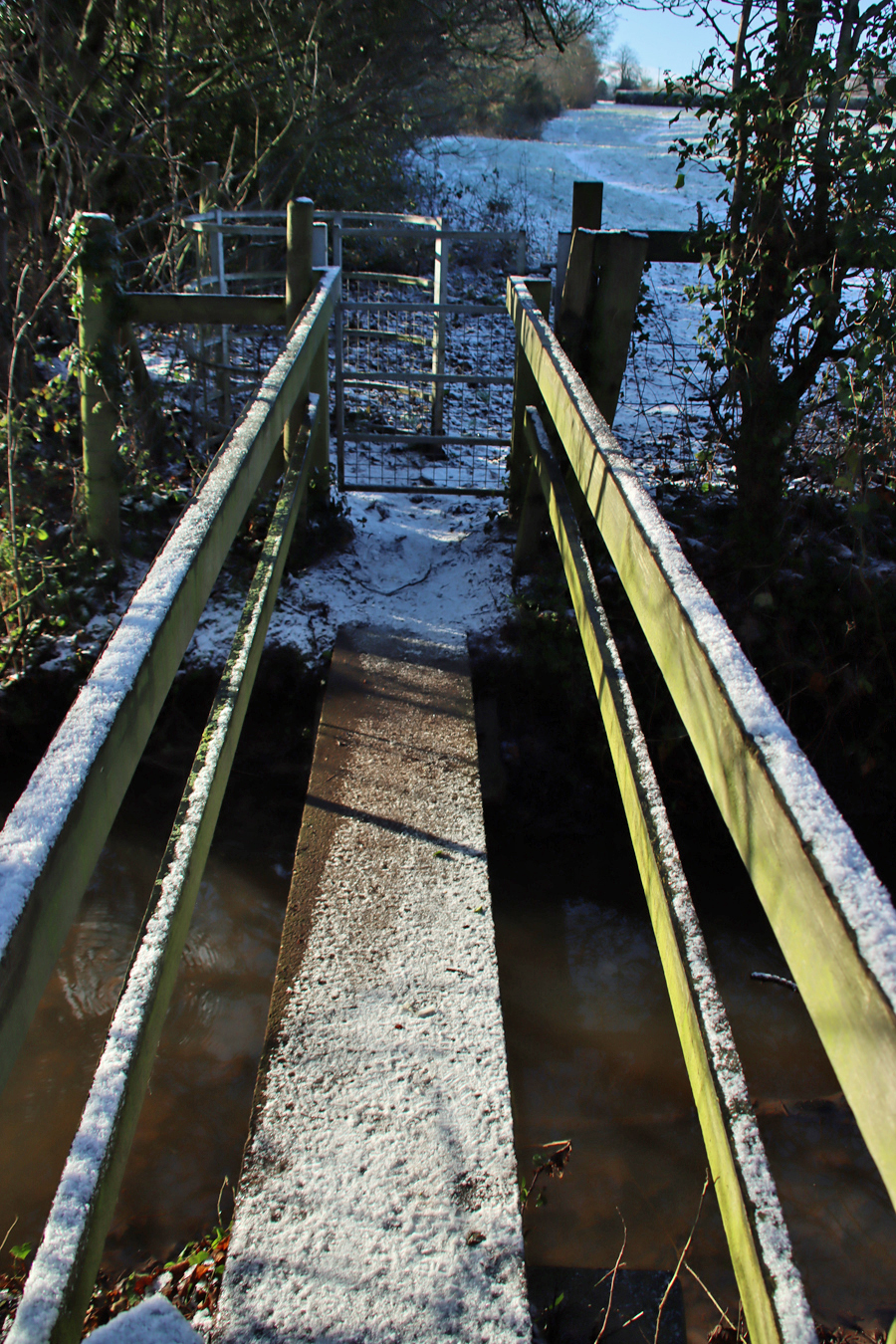
Snowy fields, copses and lanes between Churton and Aldford

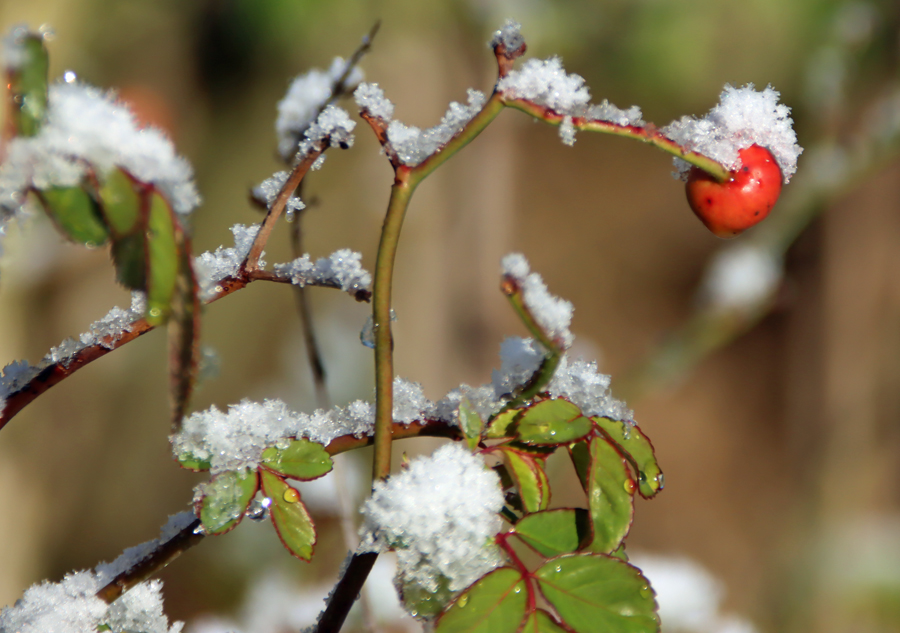
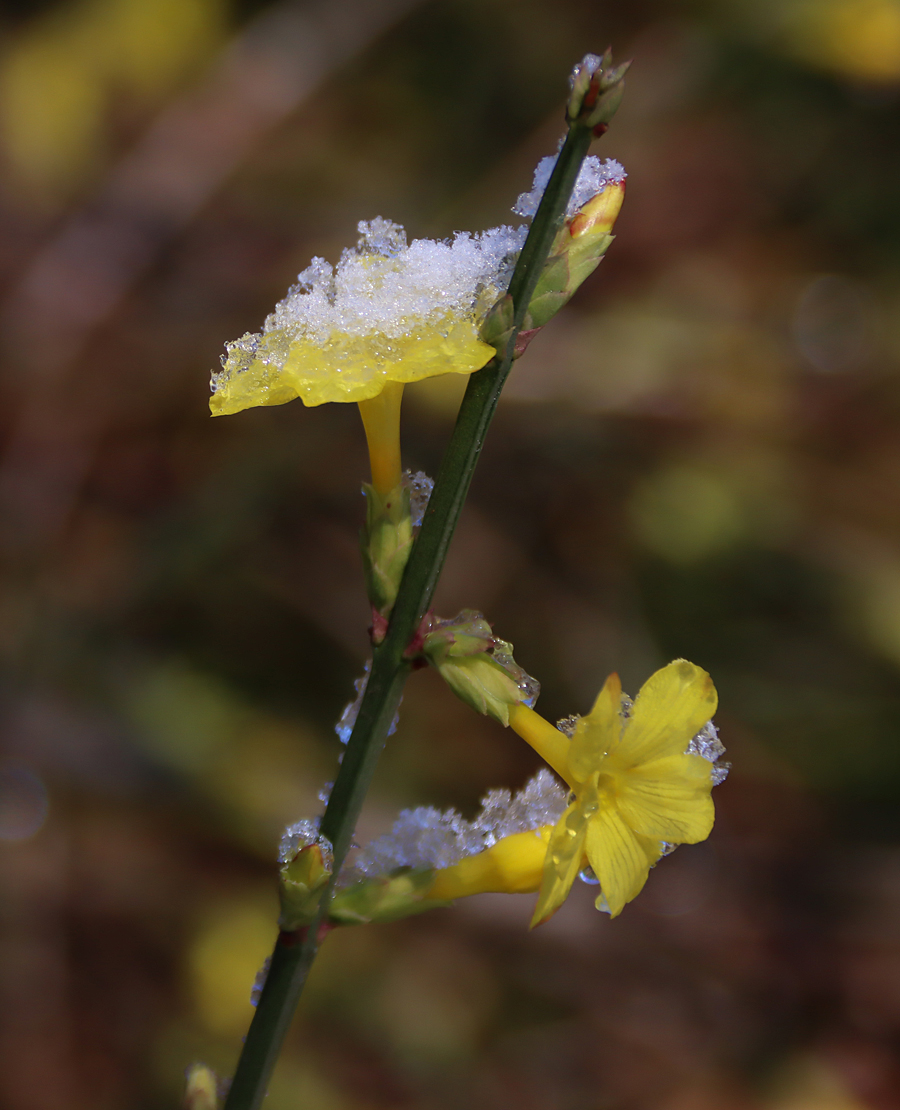
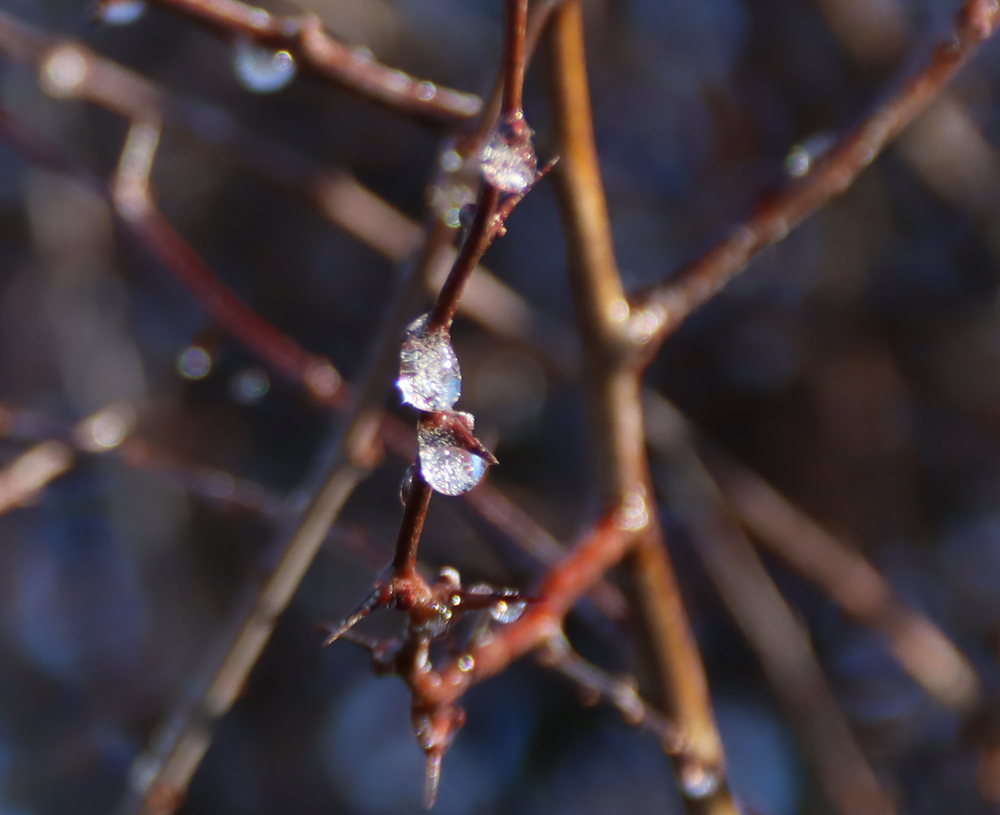
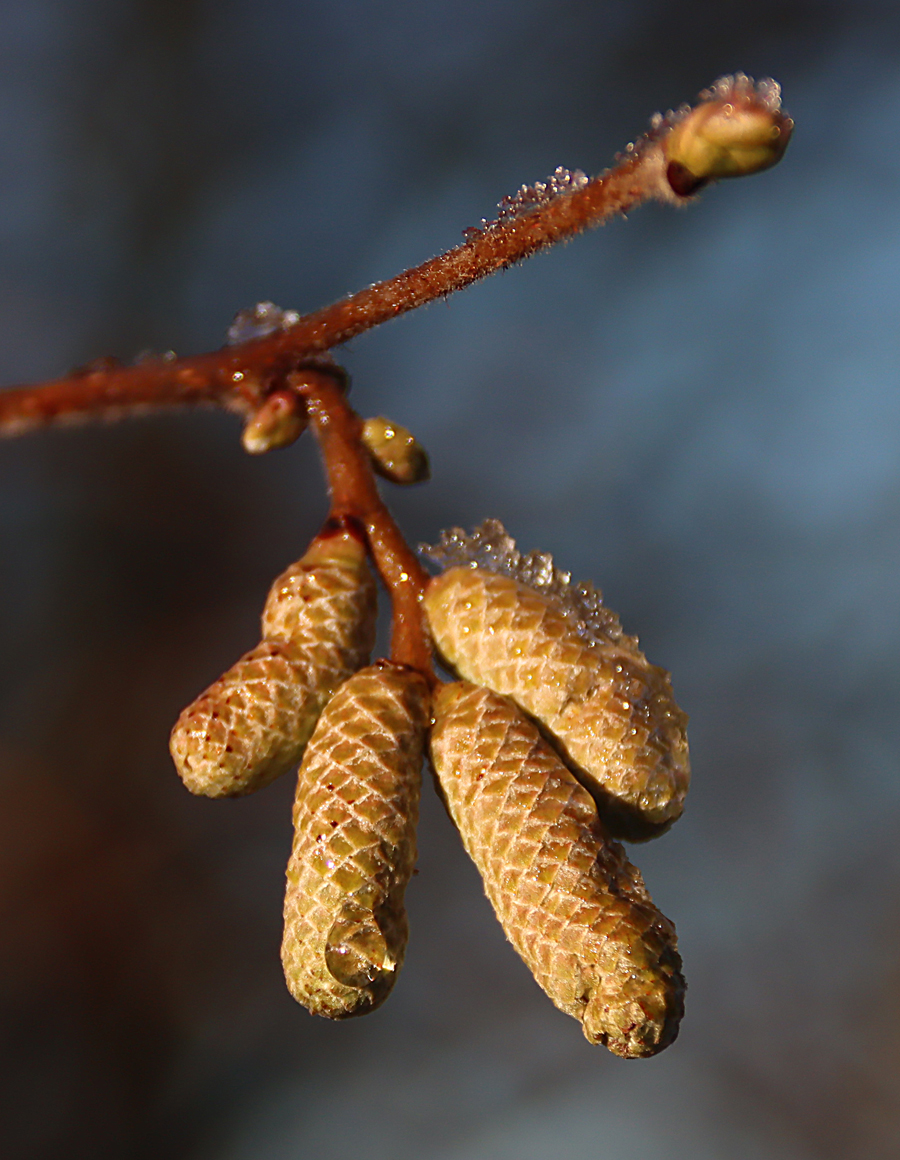
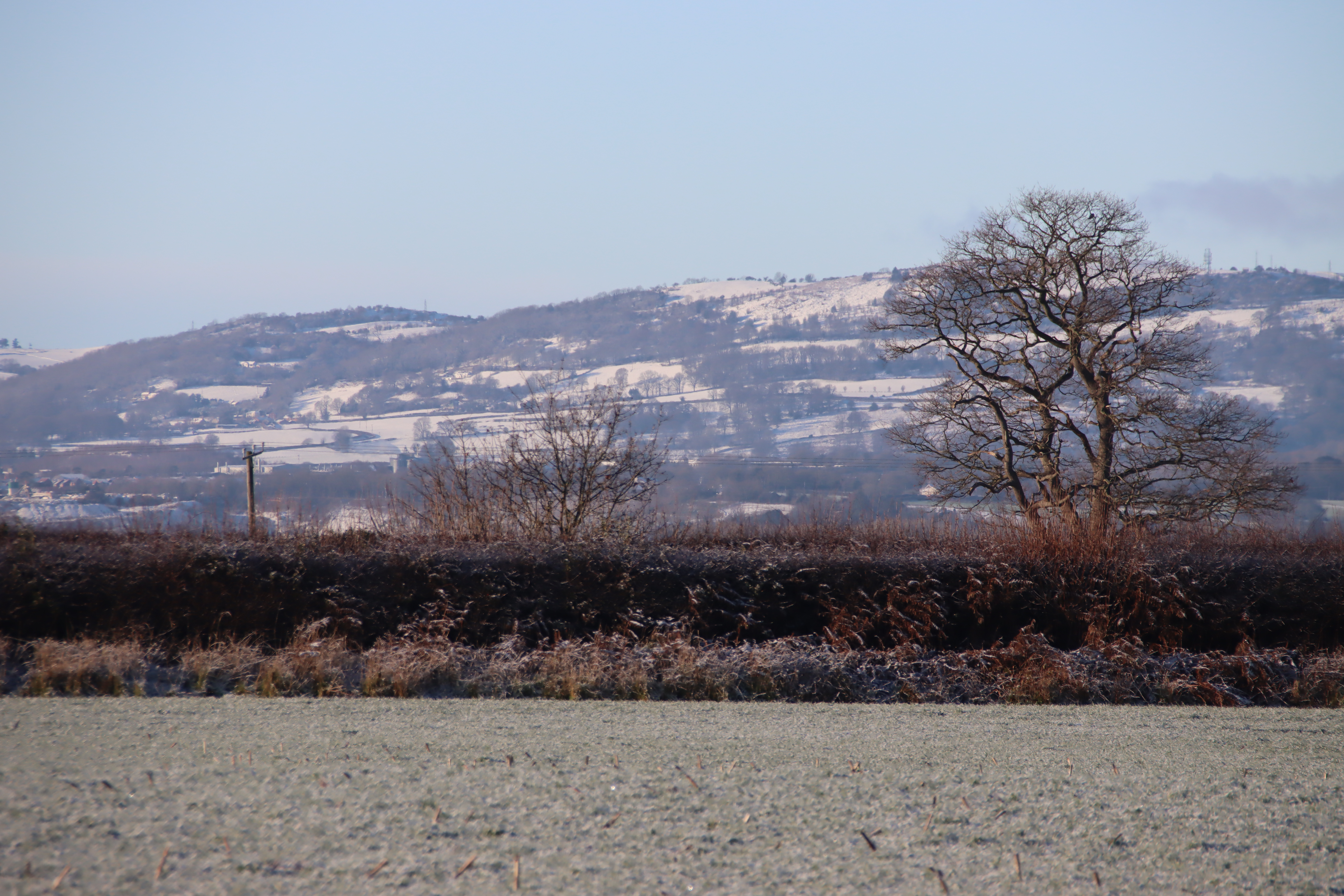
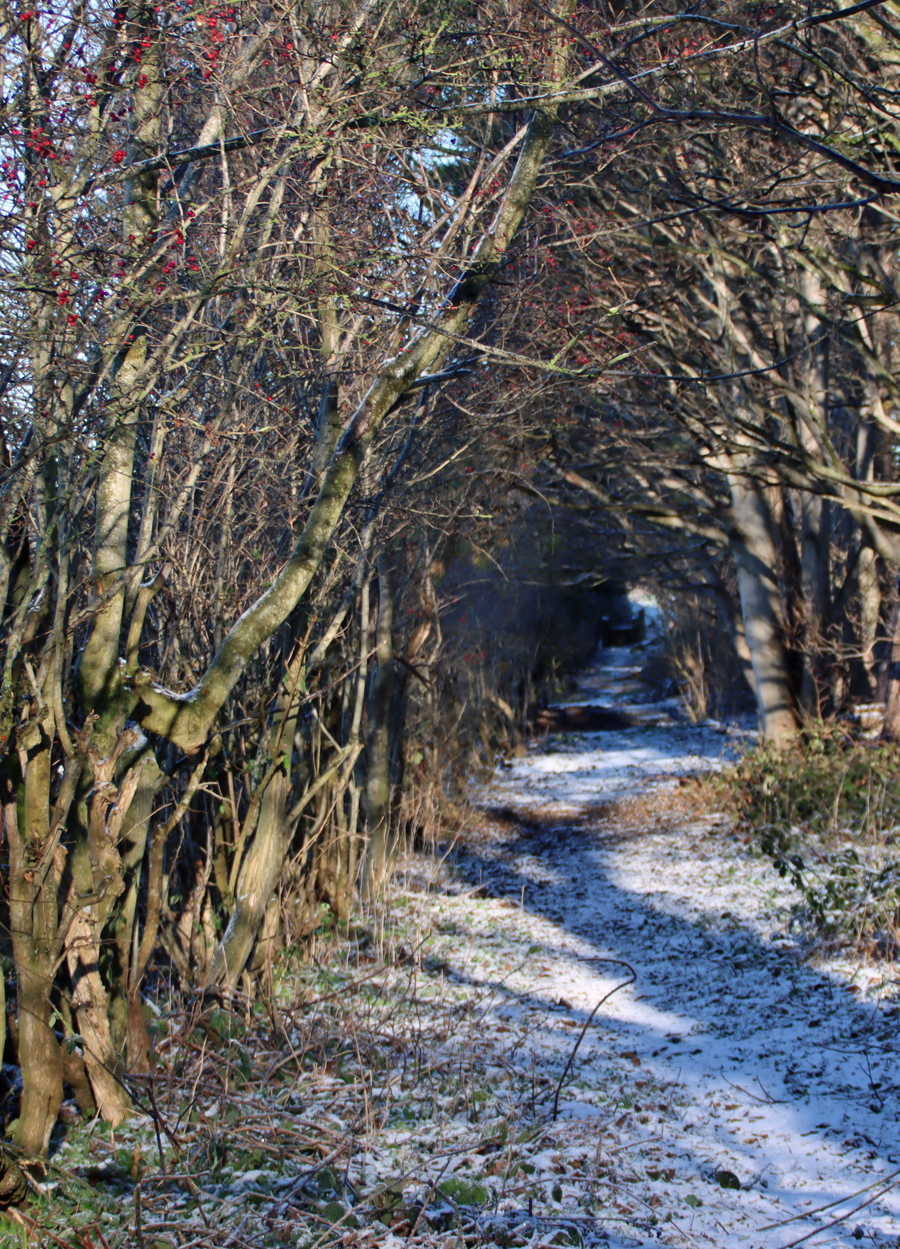
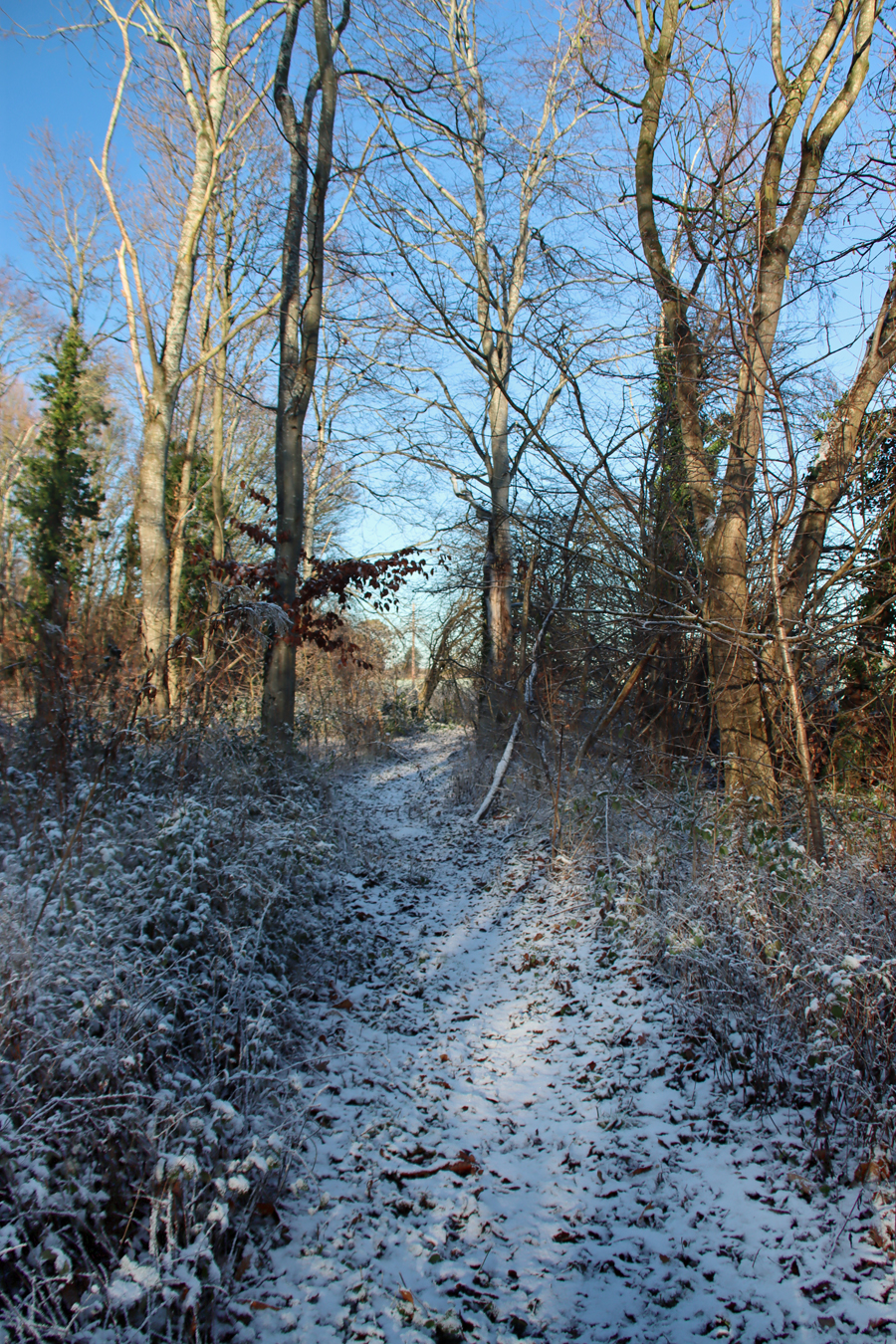
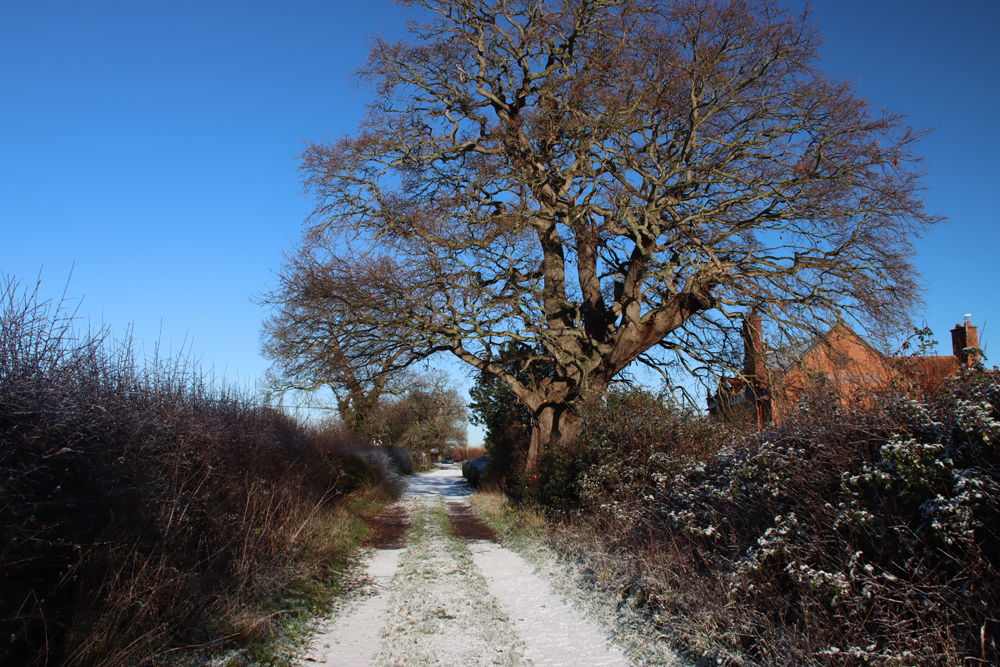
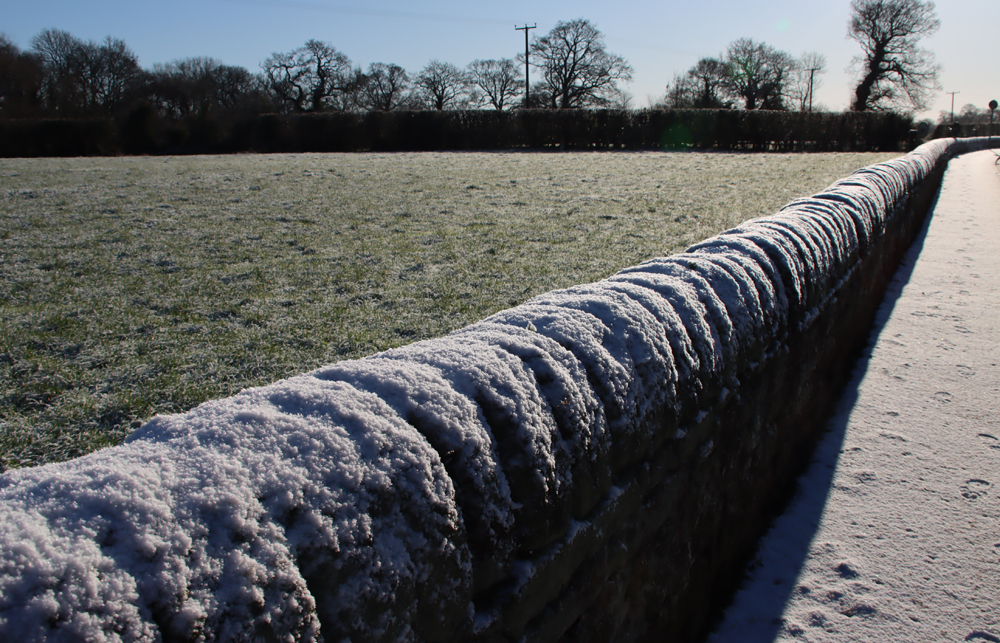
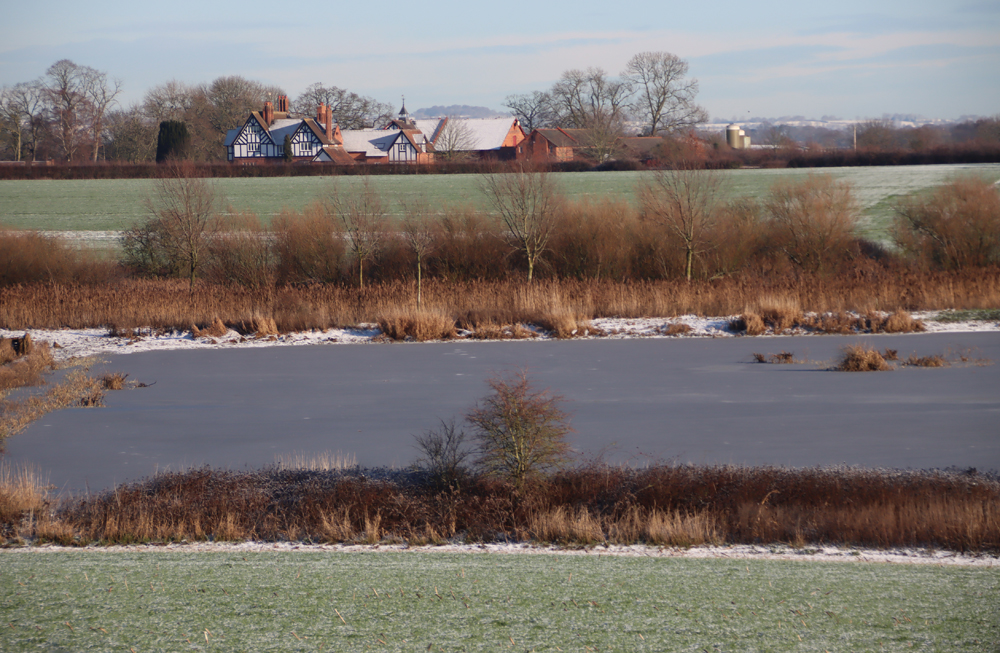
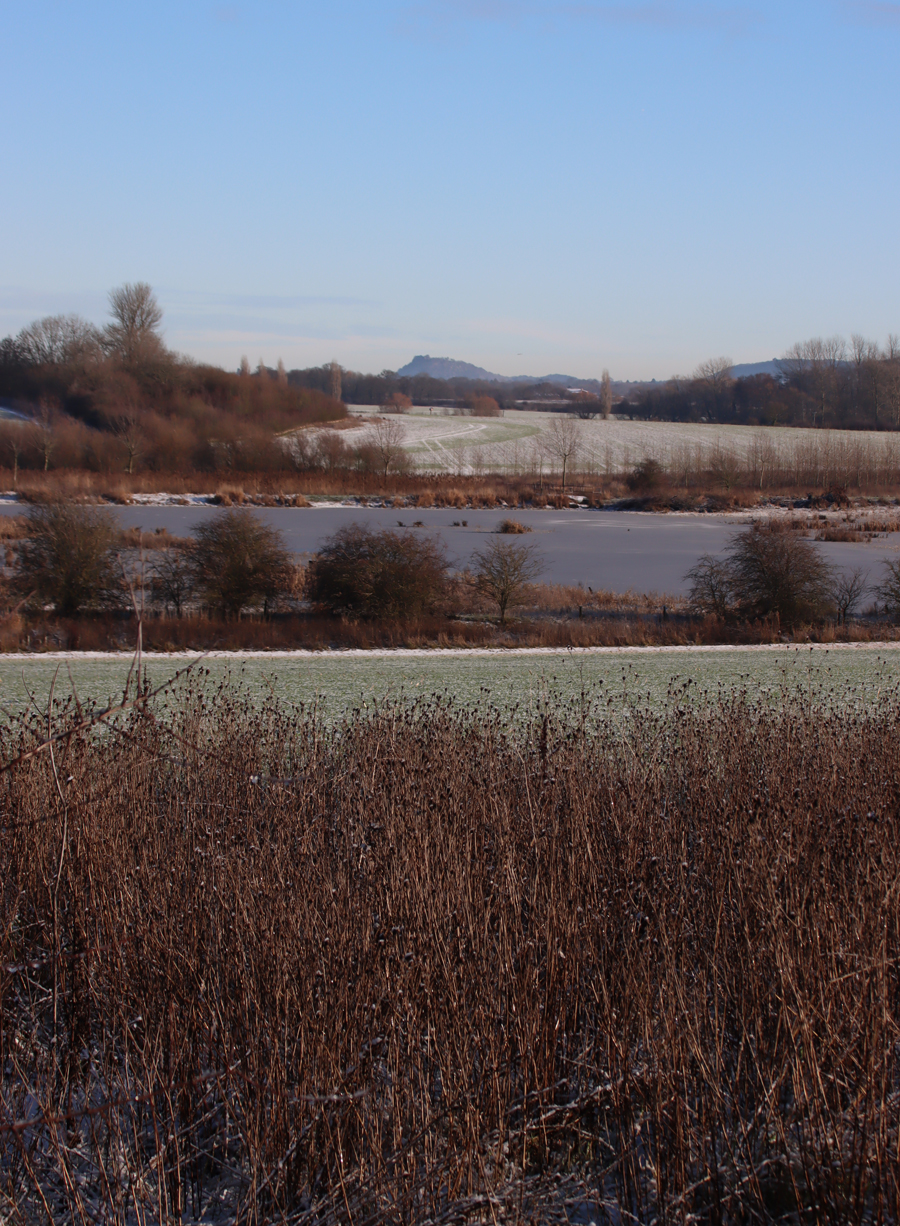
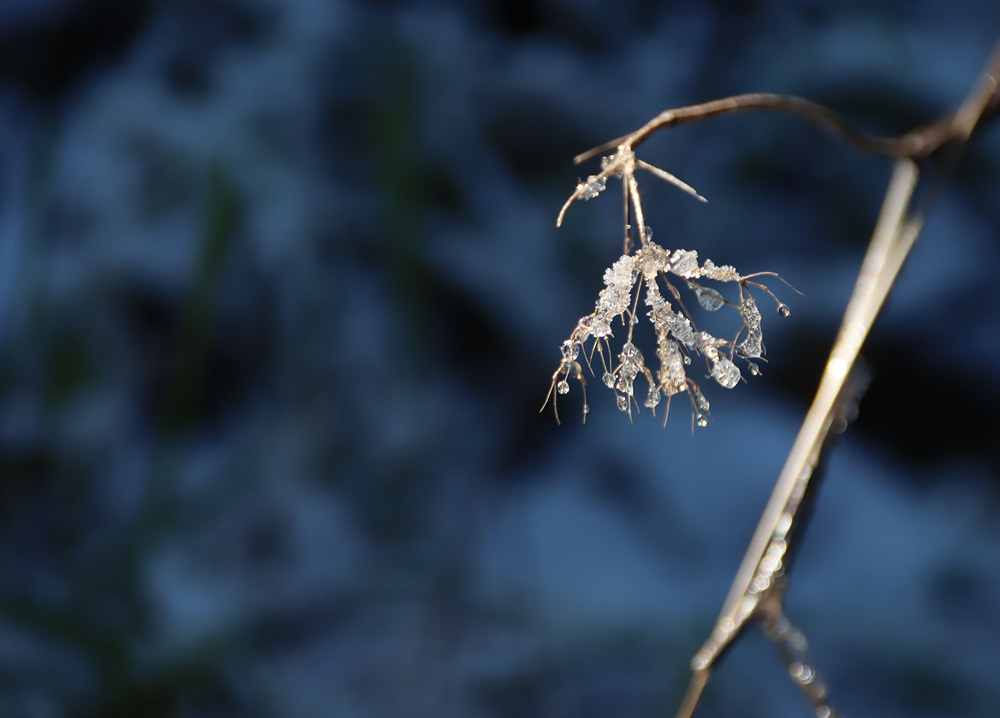
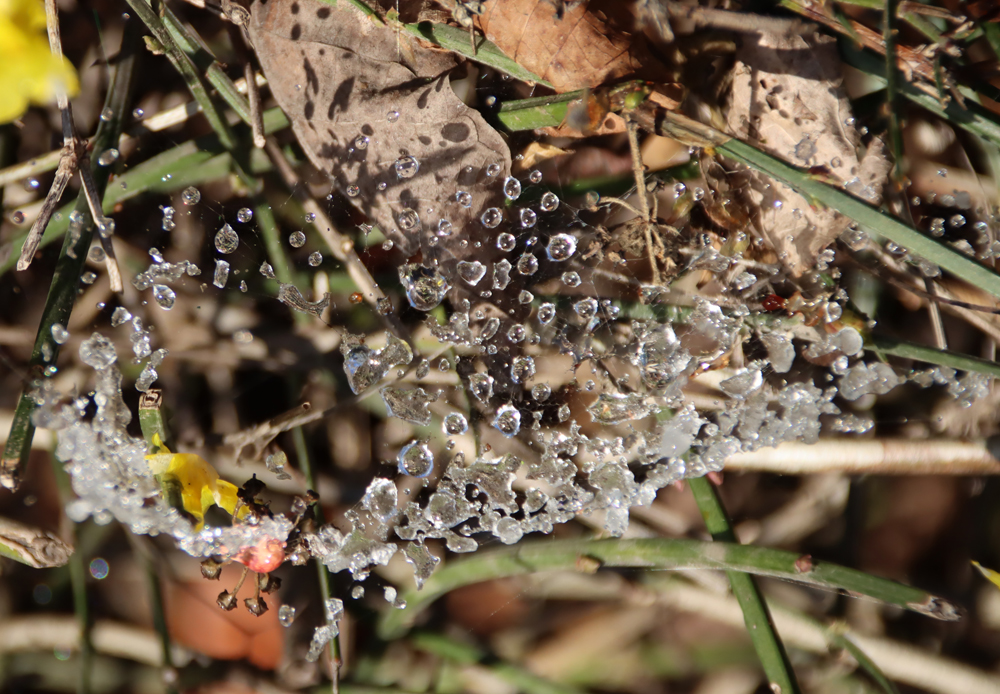
This is a pretty-pics post.  It was a beautiful sunny January day today, after quite a lot of snowfall overnight.  My garden was smothered in snow, and the car was fully shrouded.  Even so, the sunshine was very warm and it was beginning to melt when I left the house at something past 11am, heading for Aldford and returning via the Roman Road (marked on the map at the end as Churton by Aldford FP9), making a good circuit.  The views across the snow-covered fields to the hills to the east and west were lovely, but as always on these snowy walks, sometimes it is the close-up detail that is most lovely.

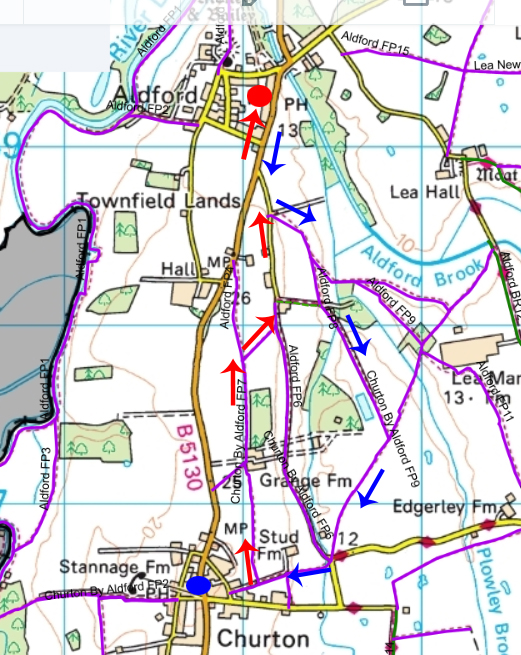
There is a map showing the route at the end. The whole walk, there and back, takes about an hour and a half, perhaps two hours if you are strolling rather than keeping up a brisk pace.  To see what much of the same walk looked like in April 2021, here’s the earlier post.  For those who like to include a destination on their walks, Churton has the attractive White Horse public house, and Aldford has the larger and venerable Grosvenor Arms.  Both do good food and are warm and comfortable.

If you are interested in the Roman road, it is marked as Churton By Aldford FP9 on the map at the end, along the blue arrow return section of the walk, and I have posted about the road and the walk along the road, in two parts, starting here.

View over the fields to Beeston Crag and the medieval castle

The Welsh foothills

The Welsh foothills


The Grosvenor Arms, Aldford

The first section of Roman road

A much clearer section of the Roman road, well used by farm traffic

The route taken from Churton to Aldford (red arrows) and back (blue arrows). The red dot marks the Grosvenor Public House, and the blue dot marks the White Horse. Source of map: Cheshire West and Chester Public Map Viewer.


An enjoyable visit to the Williamson Art Gallery and Museum, Birkenhead

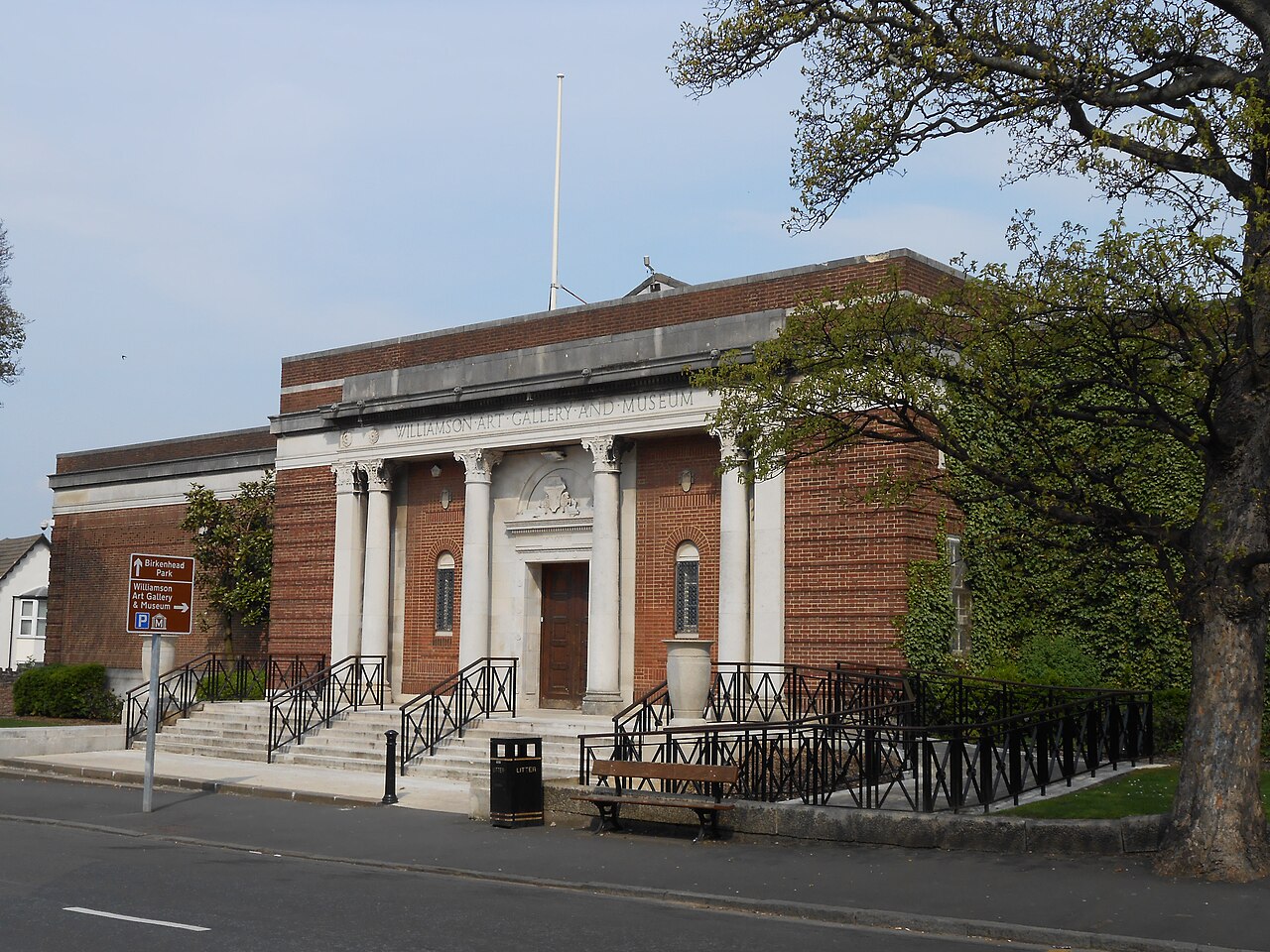
Williamson Art Gallery, Birkenhead

The Williamson Art Gallery in Birkenhead. Source: Wikimedia Commons

A traditional art gallery and museum in Birkenhead seems unexpected, but when the Williamson Art Gallery and Museum opened in 1928, Birkenhead had not yet fallen into the decline that eventually followed the 19th century economic industrial expansion created by the ship building industry.  The gallery was funded by philanthropists John Williamson and his son Patrick Williamson. John Williamson was a shop owner and merchant who became a director of Cunard when it formed as a public company, serving until 1902.  He was also on the board of Standard Marine Insurance and served on the Merseyside Docks and Harbours Board. His son does not appear to have had a career but co-operated with his father on philanthropic activities.  The museum’s design is a simple brick-built square, with a prominent facade that references Classical features.  The steps dominate in the above photo, but there is a ramp at the side for easy access.  The gallery is all on one floor, so this too provides ease of access.

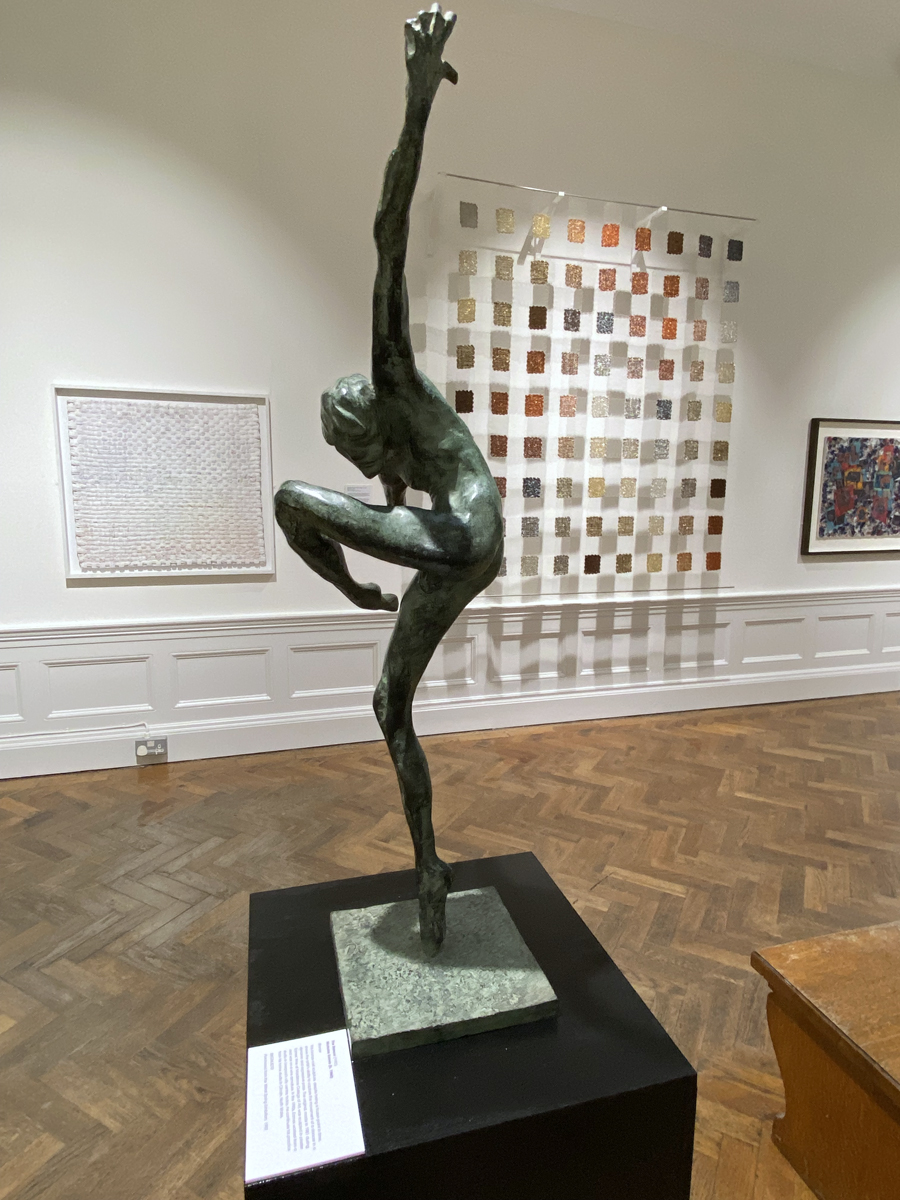
Nicholas Eames, The Dancer (1983)

Nicholas Eames, The Dancer (1983) with two textile works by Anna Sutton behind it

I visited with my friend Julian in December 2025.  We drove guided by the SatNav, which was needed as the Williamson is surrounded by something of a residential rabbit warren (with some very attractive Victorian terracing if you keep an eye open).  There is a free car park on Mather Road that had plenty of spaces.  Full visiting details, both for drivers and those using public transport, are at https://williamsonartgallery.org/visit/.  Apologies for the quality of the photos inside the gallery, taken on my smartphone.  As always in galleries there is reflection from protective glass in many of the photos, but hopefully they will give a good idea of the exhibits.

The gallery is all on a single storey, arranged in a square of linked galleries around what is now the café (with artworks on the walls) and a sculpture garden.  A pre-visit inspection of the site plan indicated that around half of it is used for permanent collections, whilst the rest is home to temporary exhibitions.  The twin focal points are, in the main, 19th and early 20th century and modern, including furnishings, ceramics, paintings, textiles, sculptures and, on this occasion, a modern video installation.  The inclusion of temporary exhibitions is probably very attractive to local people who have reason to visit on repeat occasions.

The first of the galleries that we visited was a temporary exhibition showing the results of the 31st exhibition of the annual Trinity Buoy Wharf Drawing Prize (2025).  The exhibition “celebrates the role and value of drawing with creative practice and provides a forum to test, evaluate and share current drawing practice.”   There is a wide variety of styles and subjects along a continuum from representational to abstract.   The skill on display was impressive, and some of the pieces were visually stunning.  The mainly monochrome entries drew attention to different combinations of line and texture, with the analytical, humorous and occasionally alarming all demonstrating the versatility of the medium.

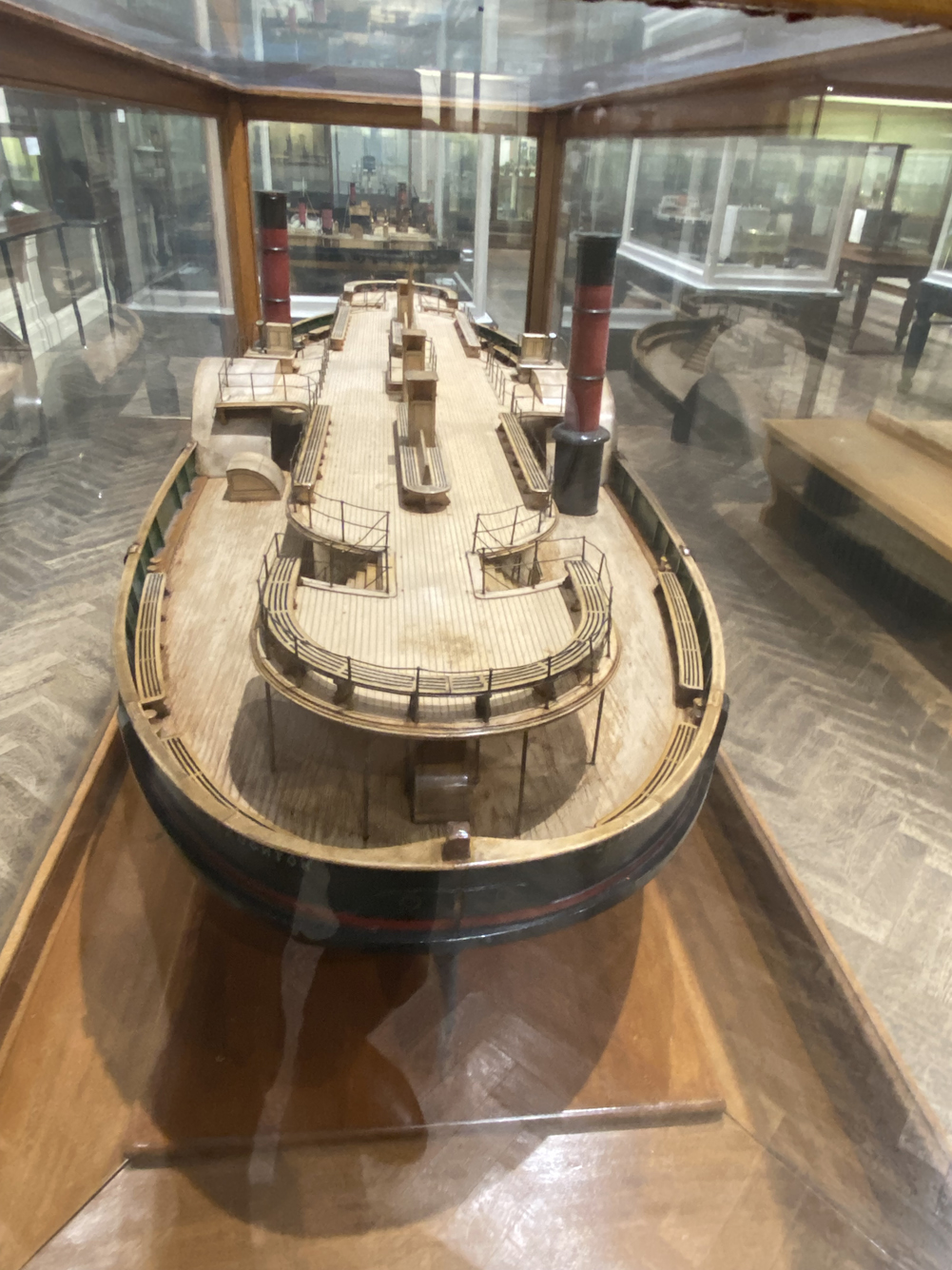
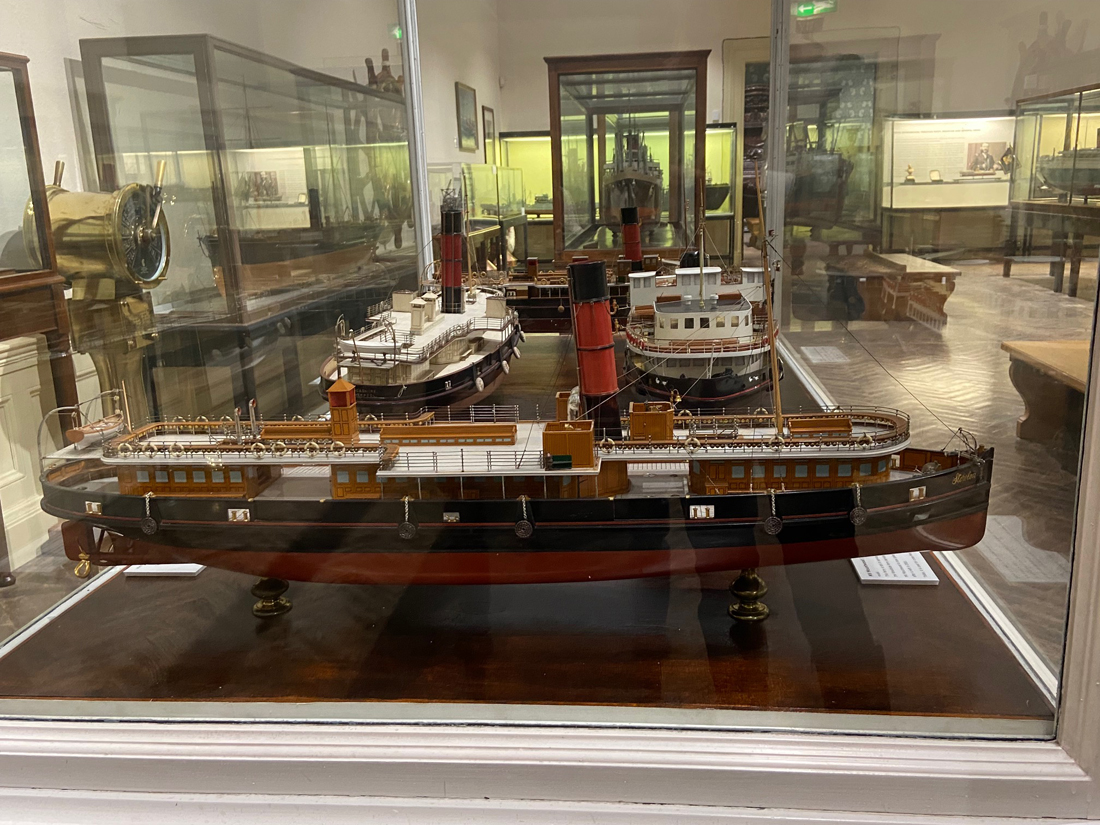
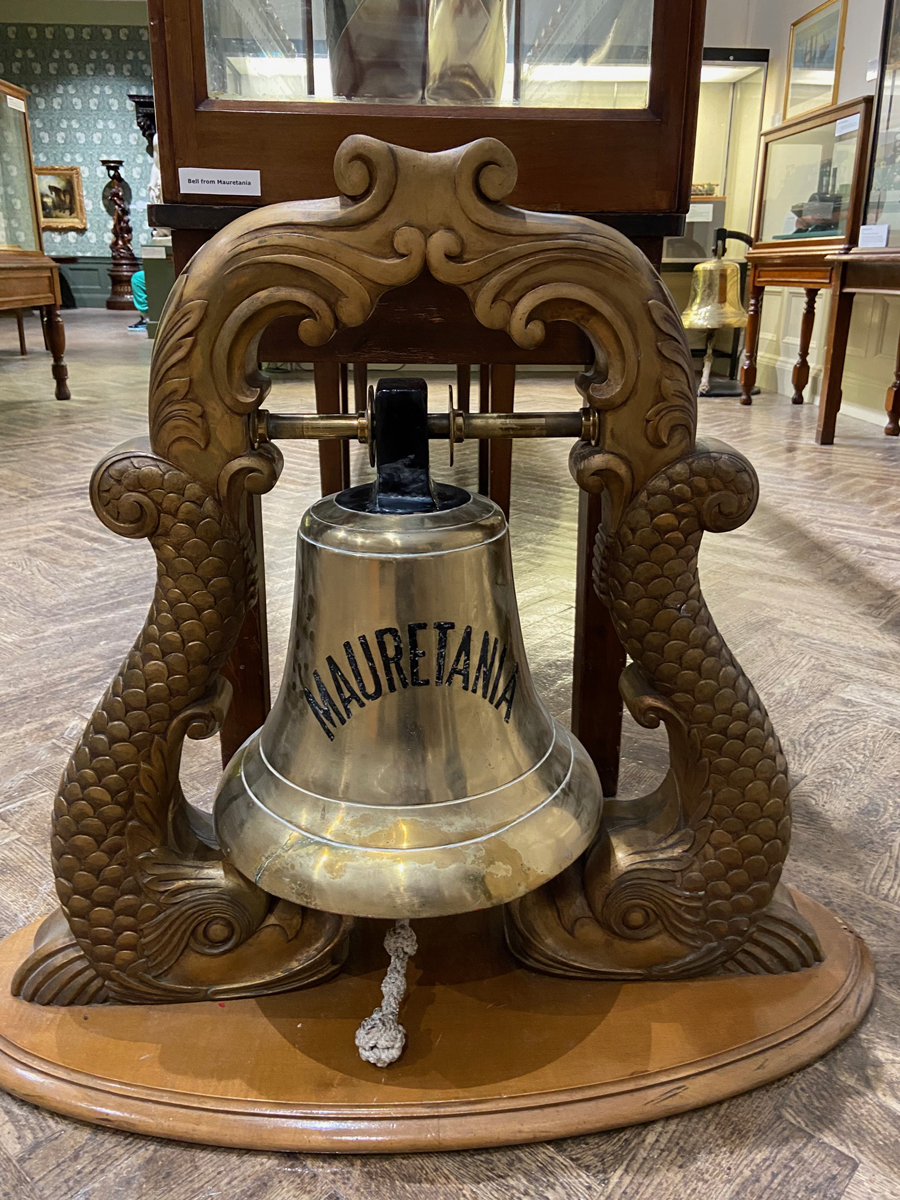
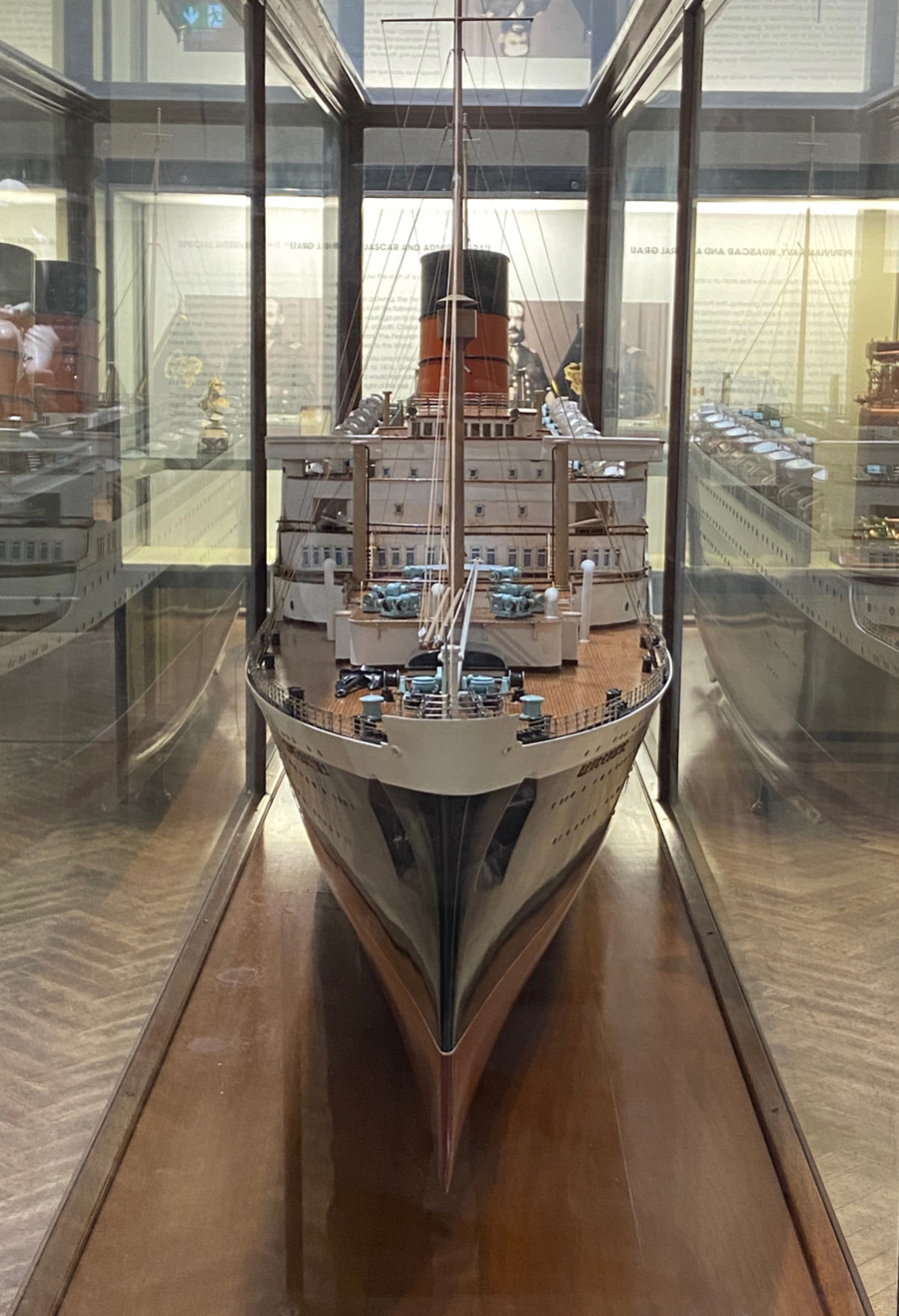
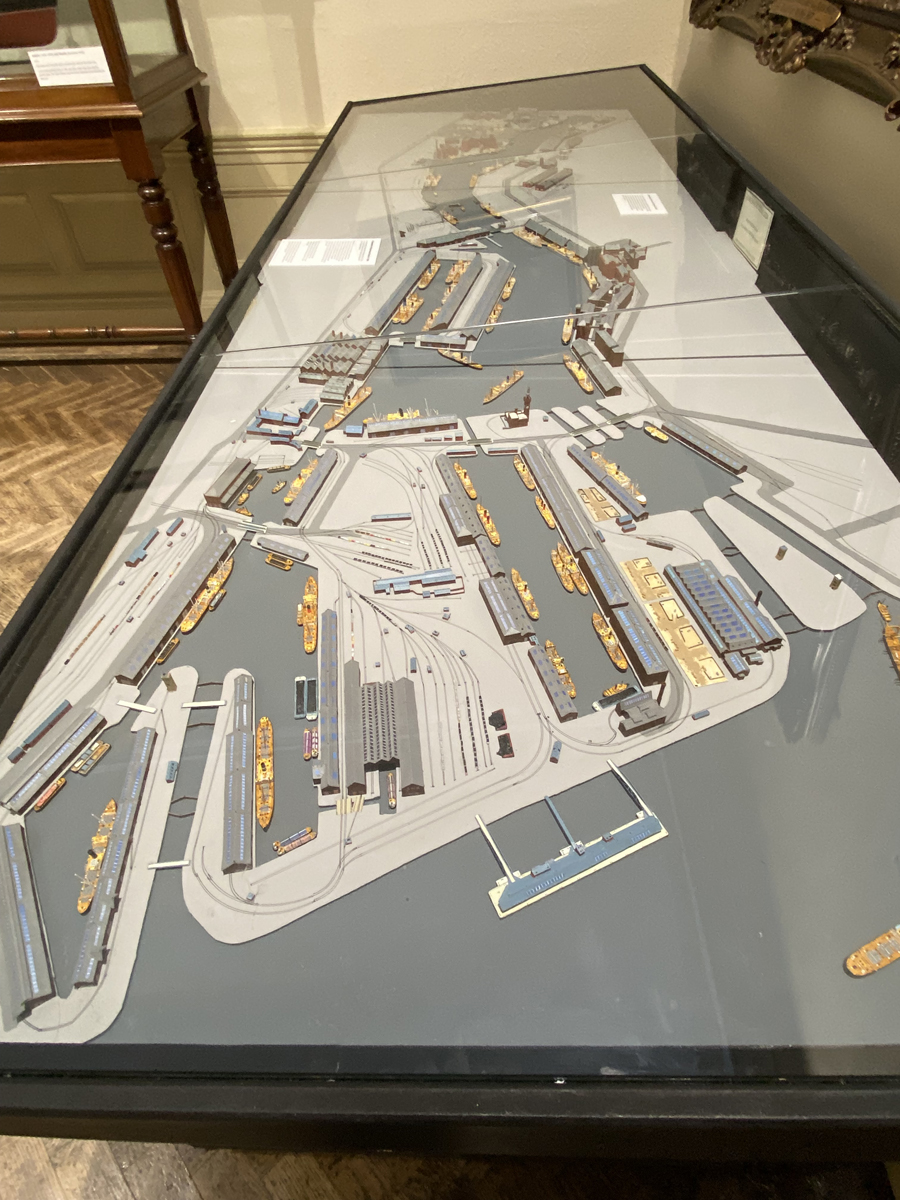
For me, the highlight of the permanent collection was the Maritime room, which is filled with models of ships built locally, as well as the actual fittings from some of the ships depicted by the models.  A model of the Birkenhead Docks is really evocative of the size and scale of the operation (shown at the end of the post).  The models of Mersey ferries are truly splendid, including a deliciously curvaceous Art Deco-flavoured example.  It was a genuine delight to see a model of the S.S. Mauretania, as well as objects that furnished her, because my grandad was quartermaster and helmsman on the ship.  It turns out that my friend Julian’s grandfather was a marine engineer, so there was a particular sense of connection for both of us with these beautifully crafted insights into Birkenhead and Mersey shipping. The whole room is redolent of local maritime history.  Given that the Liverpool Maritime Museum is disappointingly closed indefinitely whilst funding is being sought, this gallery in the Williamson offers the best available local insight into Mersey shipbuilding and shipping.

Models of some of the Mersey ferries

Models of some of the Mersey ferries

The ship's bell from the Mauretania

The ship’s bell from the Mauretania

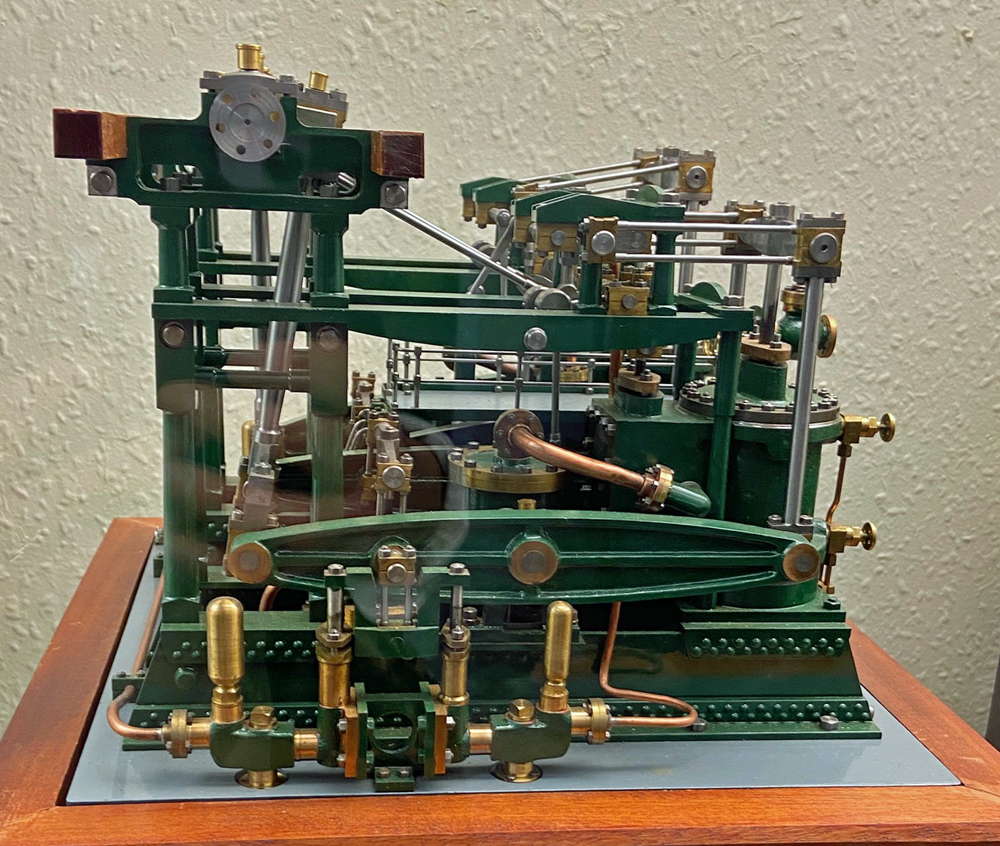
Side lever paddle steam engine

Side lever paddle steam engine, representing an engine of about 1840

Birkenhead Corporation Ferries poster

Birkenhead Corporation Ferries poster


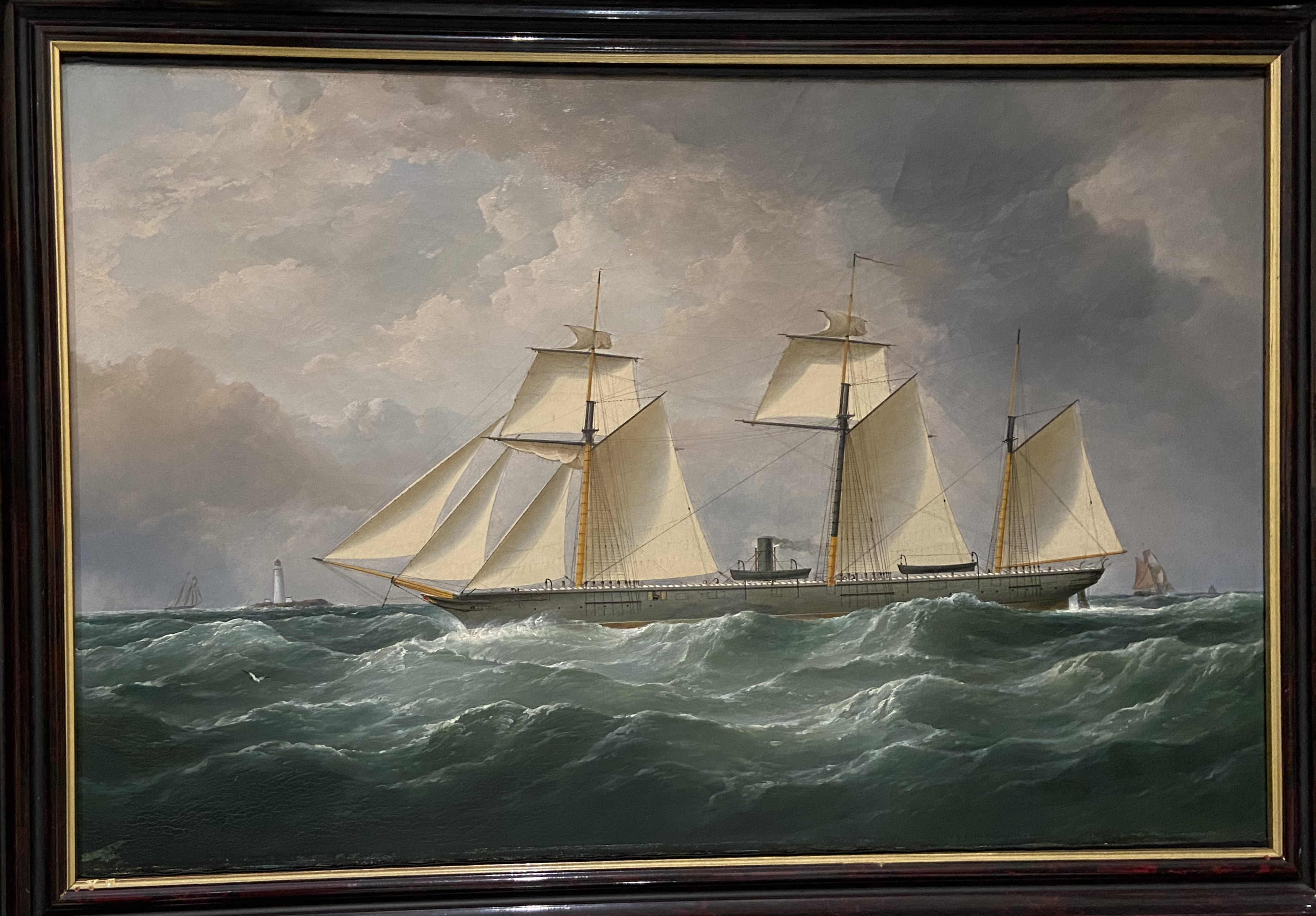
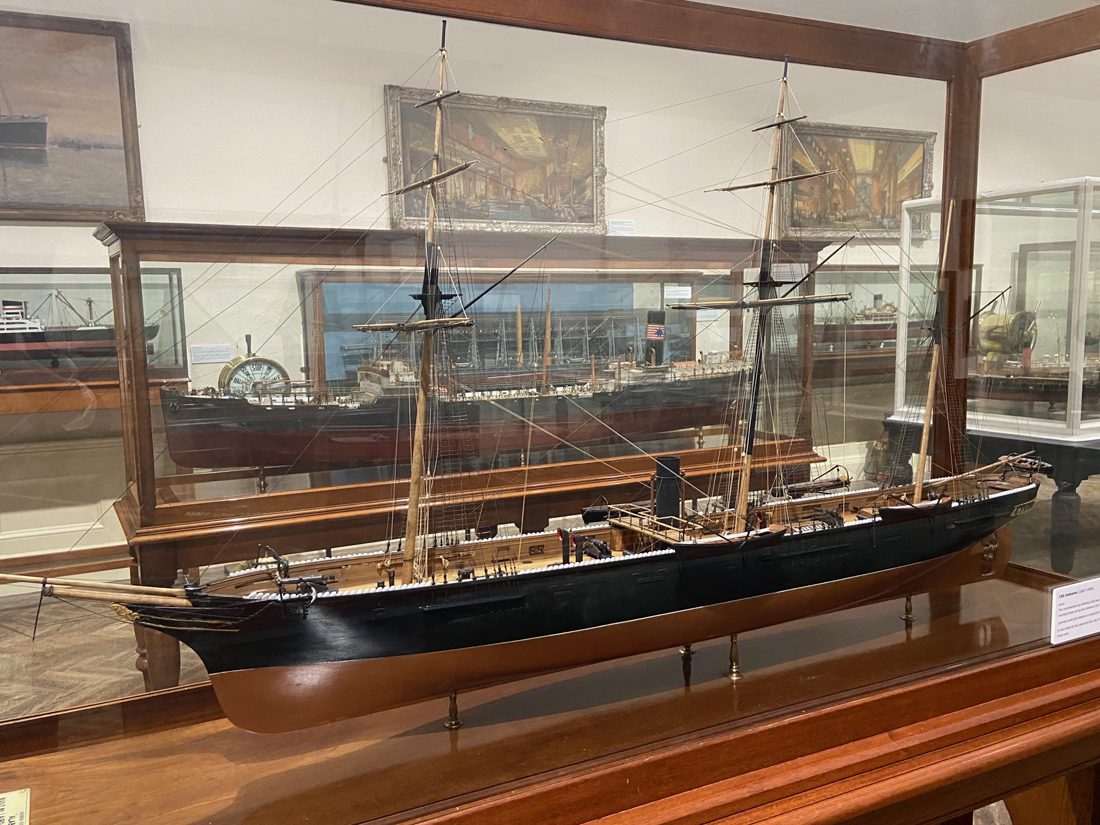
The C.S.S. Alabama, built Camell Laird’s shipyard, in theoretical violation of official Government neutrality in the American Civil War, is represented at the Williamson by both an oil painting and a model (the latter shown at the very end of this post).

Oil painting of the CSS Alabama by Samuel Walters (1811-1882)

Oil painting of the CSS Alabama by Samuel Walters (1811-1882), painted after 1862


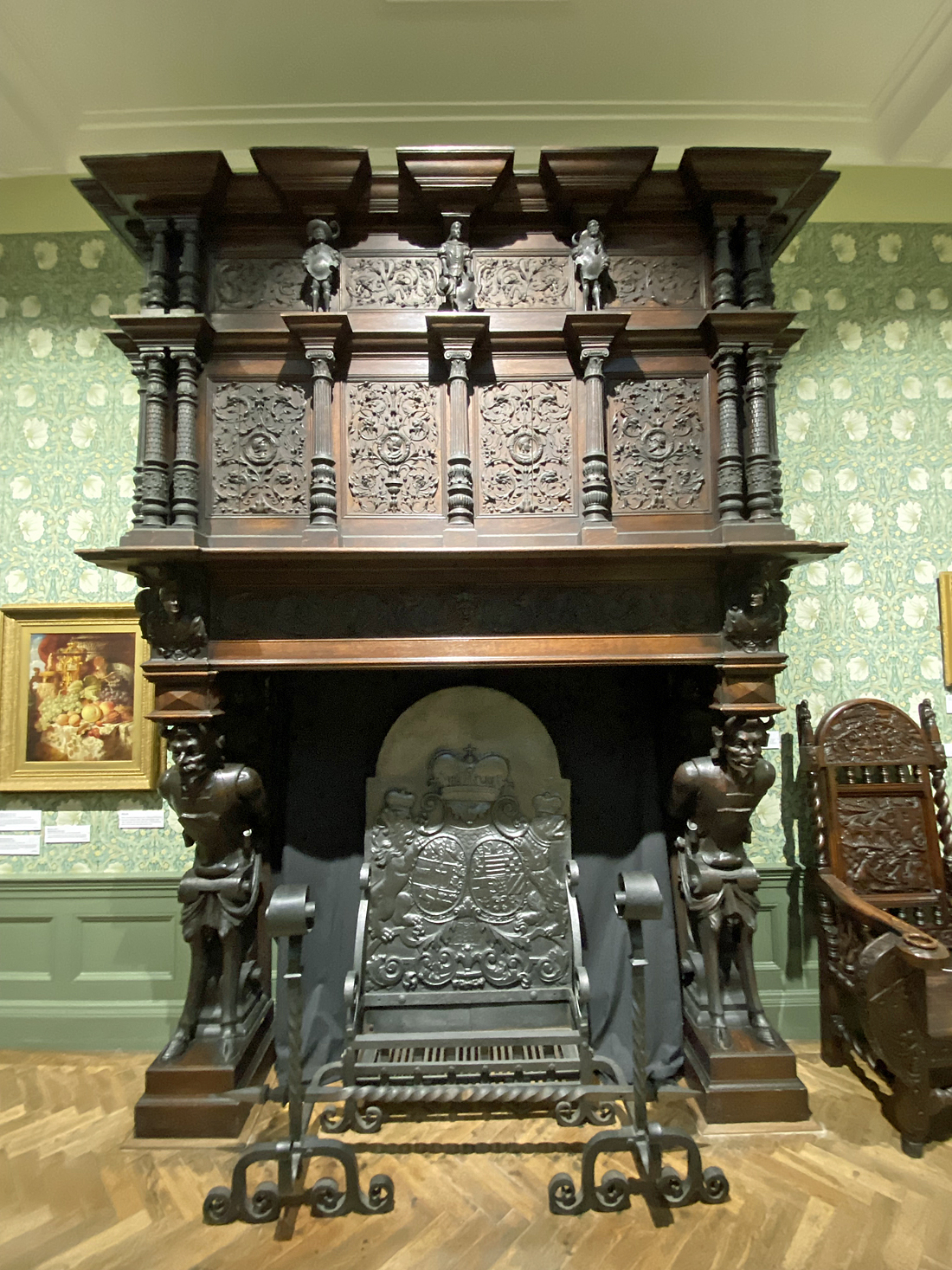
Piece of furniture from Arrowe park.

Piece of furniture, a sideboard, from Arrowe park. None of the Arrowe Park furniture can be ascribed to a particular carver or workshop.  Diana is at centre, possibly an earlier French panel.  The cupid-like boys flanking her represent food and drink.

Entirely in step with this growth of maritime industry and the rise of commerce, was Arrowe Hall.  The name is now associated with as a hospital, it was originally built in 1935 for John Ralph Nicholson Shaw, who inherited Arrowe Park from his uncle John Shaw, Liverpool Mayor and slave trader.    A small gallery is devoted to reconstructing one of the Arrowe Hall rooms, with some truly astonishing, beautifully crafted, enormous and aesthetically rather appalling pieces of furniture and ornamentation, a mish-mash of medieval, Tudor and Jacobean styles executed with enthusiastic Victorian panache.  The information board says that most of the pieces of furniture date to the 1880s, but were carved with earlier dates:  “This deceit, and staining the oak very dark, was meant to give the owner a heritage and respectability that they didn’t really have.”  The detail in the fireplace overmantel below shows considerable skill imitating earlier Renaissance style friezes. At the time of writing, the house is now a home for adults with learning difficulties.


sdfsd

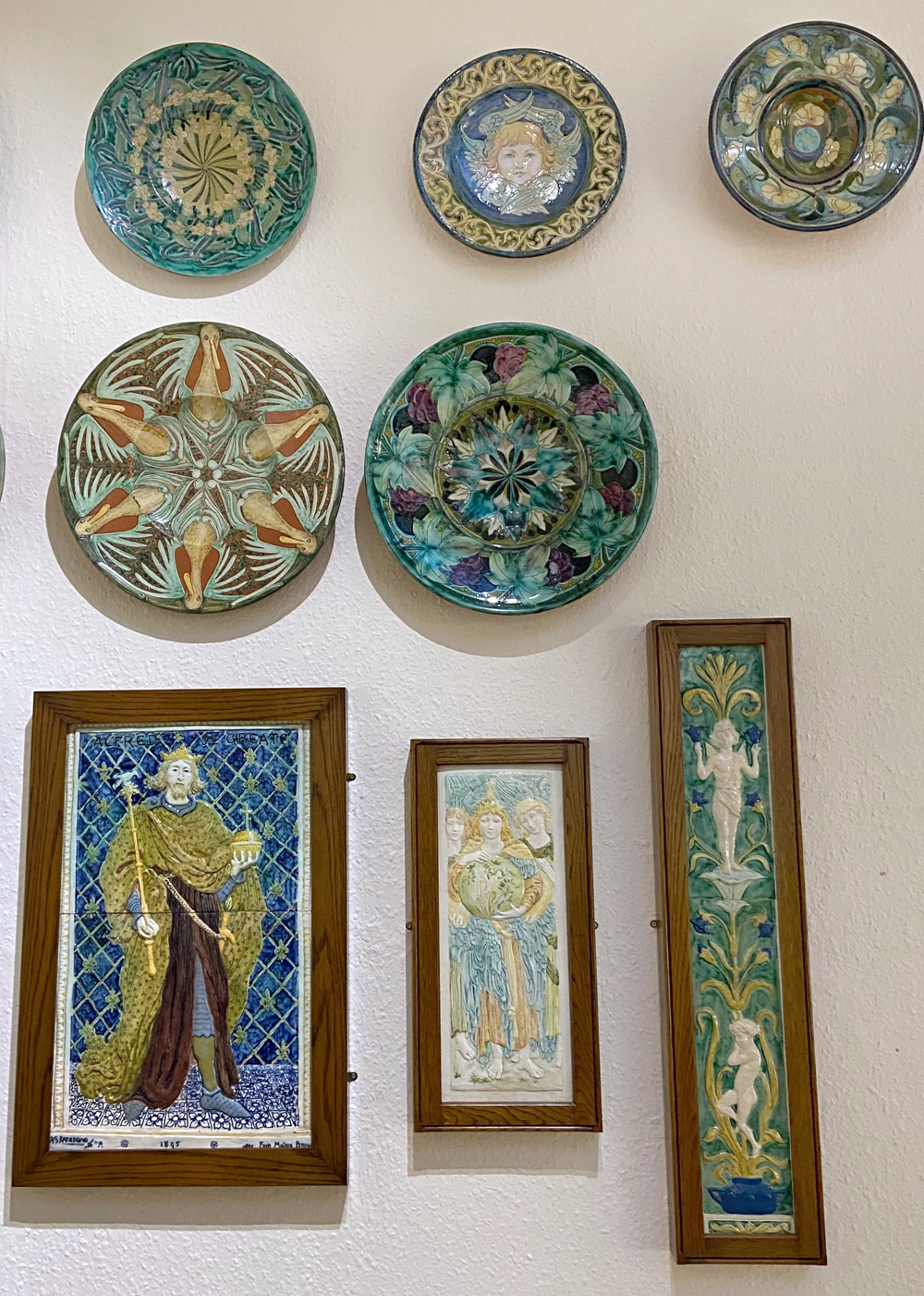
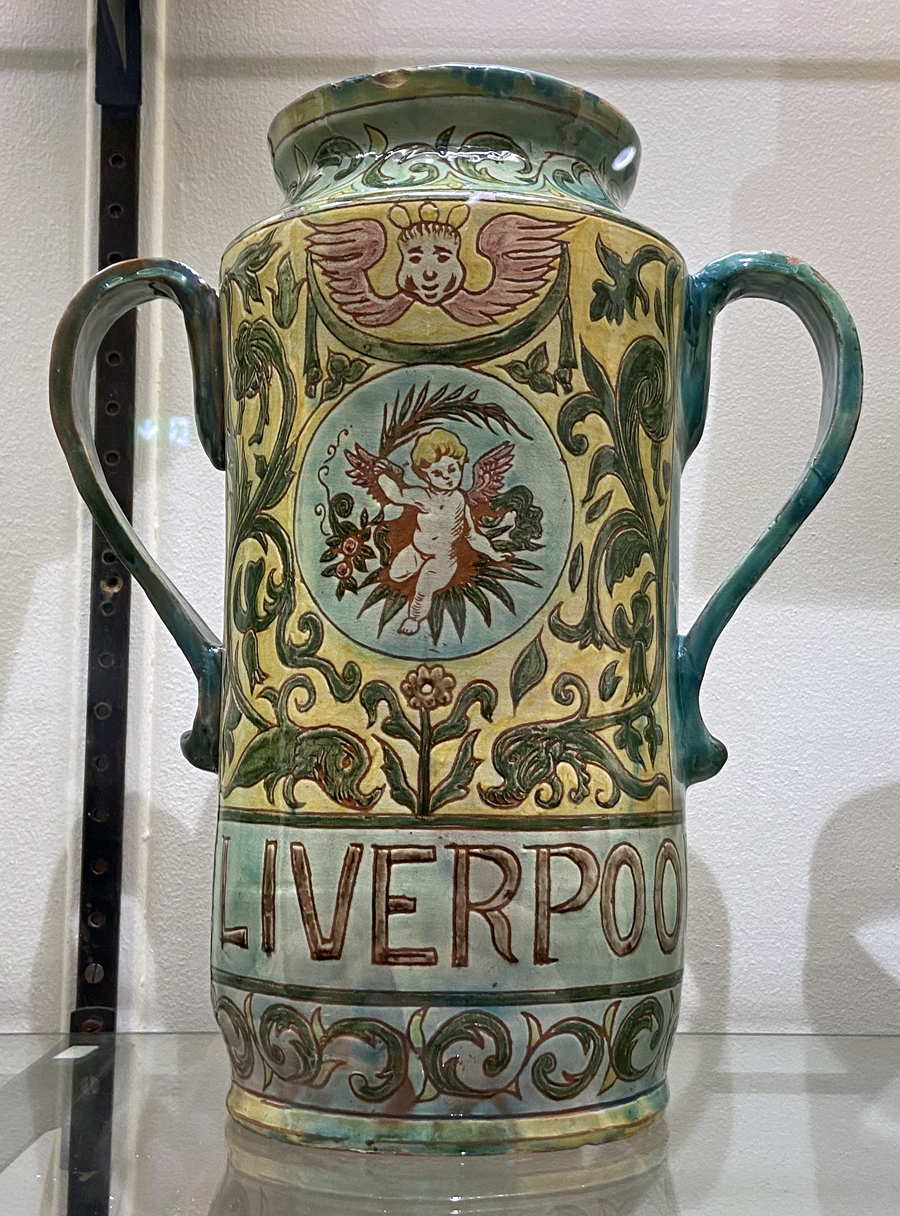
Pieces from the Della Robbia Pottery, Birkenhead

Pieces from the Della Robbia Pottery, Birkenhead

Similarly, the Della Robbia Pottery room is bound to split aesthetic opinion.  Della Robbia Pottery, taking the name from Luca Della Robbia (1400-1481), and on whose style it is loosely based, was a remarkably successful Birkenhead enterprise for a short period of time between 1894 and 1906.  It was established by Harold Rathbone (1858-1929), who worked with professional designers but also hired young people locally who he trained up.  It is lavish, ornate, brightly coloured, glossy, often with multiple textures and sculptural components.  Rathbone strained at the Slade School of Art and became a pupil of Ford Madox Brown, and the influence of the Pre-Raphaelites is clear in many of his pieces.  Many of the themes of pieces produced by the pottery feature angels, cupids and mythological figures, as well as elaborate and complex patterns.

sdsfds


xxx
xx

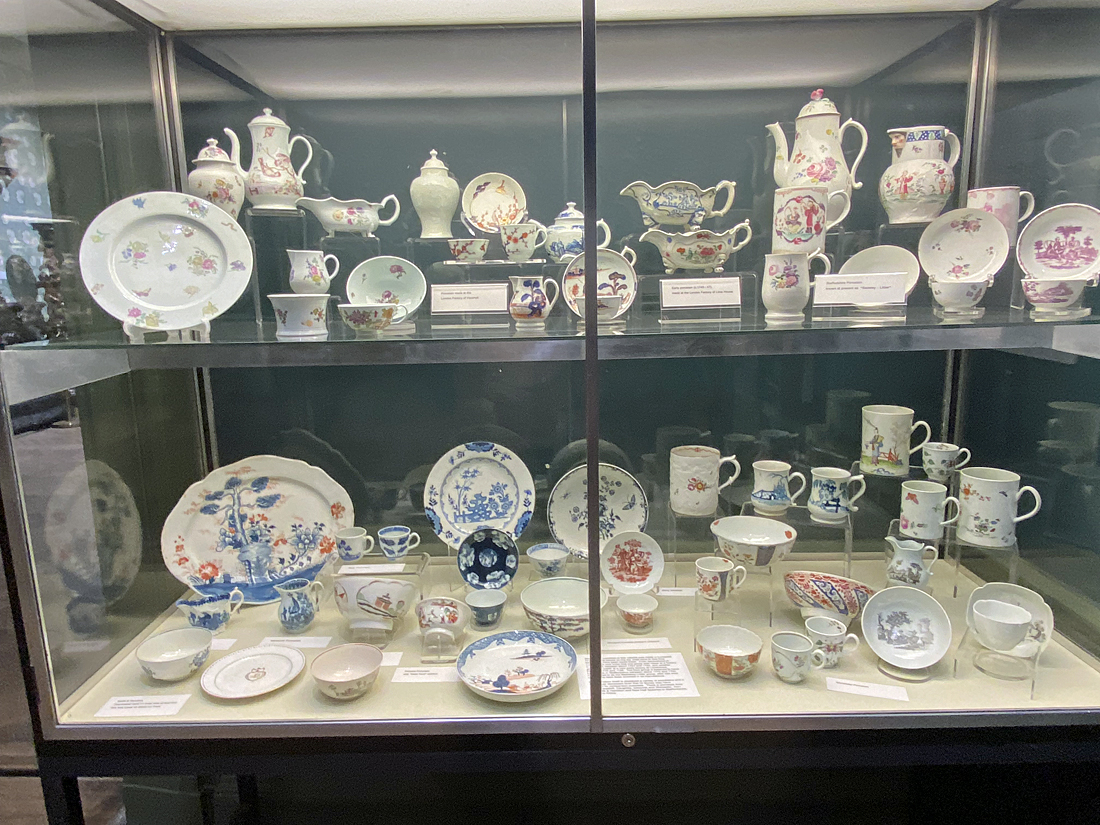
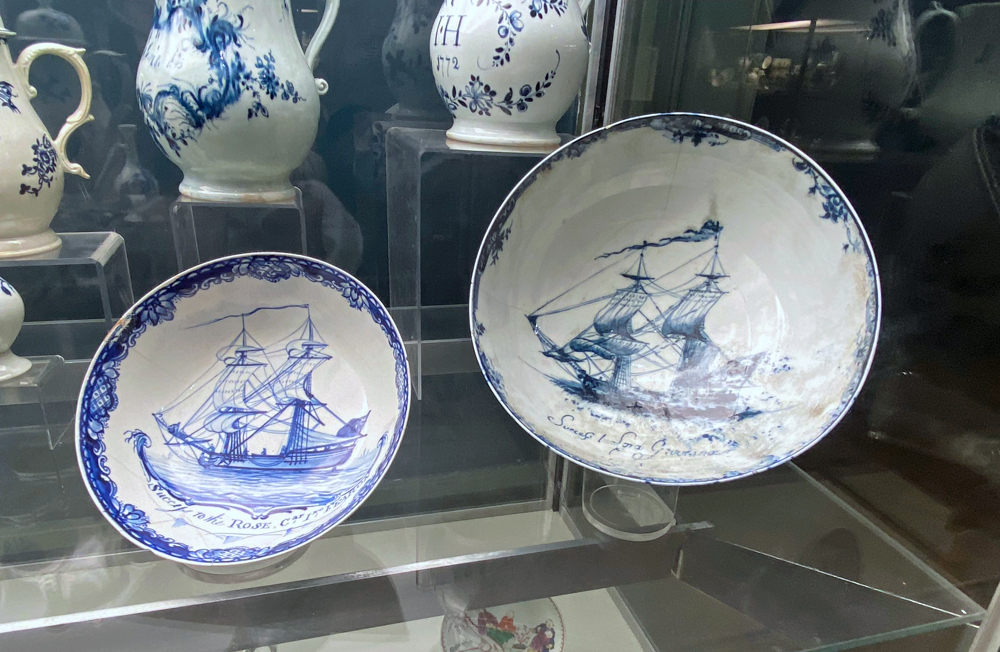
Another small room focuses on ceramics that were either made and used in Merseyside or were imports, brought back to the Mersey docks from the far east to meet the demand of local consumers.  Chinese ceramicists cottoned on very quickly to the types of decorative themes that were popular in the west, and produced specific types of design, including specific types of shape, for the European market. The mix is diverse, but there are one or two pieces that directly reference the maritime.  The influence of Chinese ceramics is very clear, made either locally or imported, in some of the examples, but there are more localized themes as well.  There were seven different sites in Liverpool that were making porcelain, all operating between the mid and late 1700s.  Unfortunately, none of the factories used manufacturing marks so it is difficult to determine which factory produced which pieces.

xxx

Maria Prymachenko - Autumn is Riding on Horeseback

Maria Prymachenko – Autumn is Riding on Horeseback

Paintings by Ukrainian children, produced since the start of the war, from the Sunflower Dreams Project were on display during our visit, alongside paintings by Maria Prymachenko.  The exhibitions produced by Sunflower Dreams are displayed in Britain, North America and Europe.  Although the Sunflower Dreams Project exhibition at the Williamson ended in December 2025, at the time of writing you can still find full details about the project, with samples of the paintings produced by this admirable initiative on https://sunflowerdreamsproject.org/.  Maria Prymachenko (1909-1977) specialized in Ukrainian folklore and was awarded a gold medal at the World Exhibition in Paris in 1937 for her wonderful, brightly imagined paintings.  She was largely forgotten after the Second World War, but there was a resurgence of interest in her work in the 1960s and she is now featured in a number of international museums.

Philip Wilson Steer. A Girl at her Toilet, 1892-3

Philip Wilson Steer. A Girl at her Toilet, 1892-3

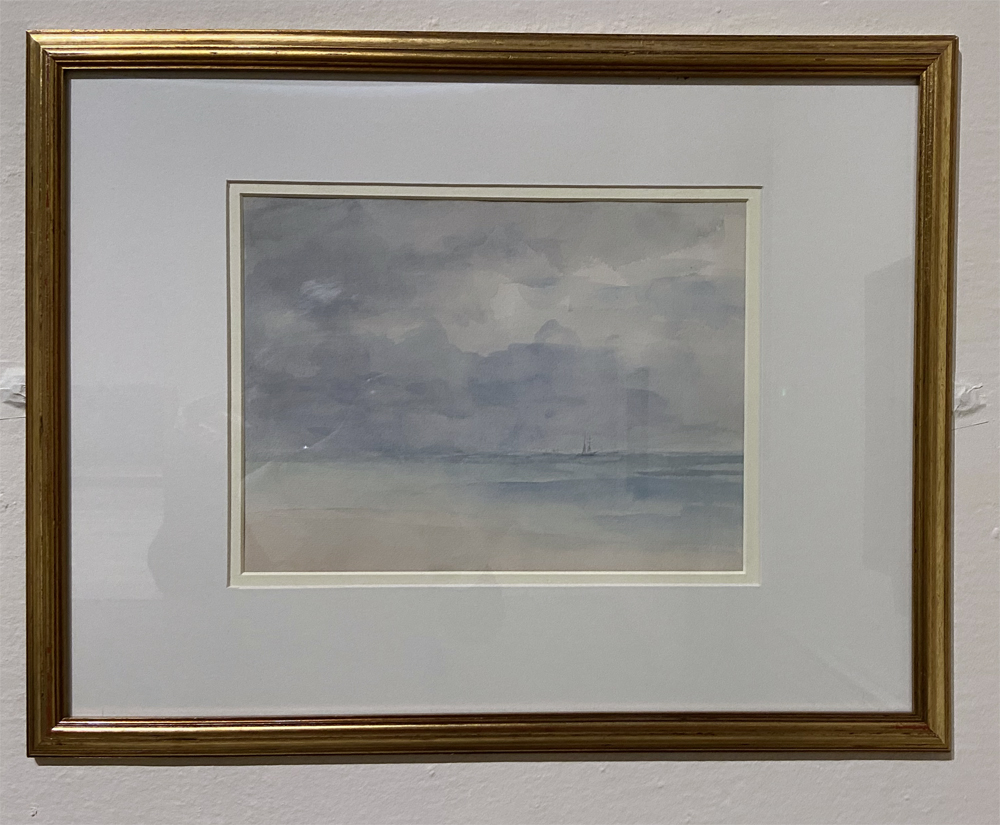
The painting collection on display during our visit strongly featured the landscape and seascape artist Philip Wilson Steer (1860-1942), who was born in Birkenhead, although grew up elsewhere.  He had spent time in Paris and was strongly influenced by the Impressionists and other contemporary artists.  In his A Girl at Her Toilet of 1992-3, the theme of women engaging in personal behind-the-doors activities, so popular with Impressionist painters, is given a more dramatic overlay of contrasting colours, clearly inspired by Éduard Manet.  the label says that the “intimate or even voyeuristic” tone of his painting was “ridiculed by English critics partly for the perceived indecency of his choices of subject matter.”  By complete contrast, his Seascape off Walmer of 1930 was painted as he began to lose his eyesight, retaining only peripheral vision by 1935 when he moved almost completely over to watercolour. The entire composition is made up of thin washes of pale blue that create a delicate, almost abstract seascape with a single small boat in the distance, creating the only sense of depth.

Seascale off Walmer, 1930 by Philip Wilson Steer, 1860-1942

Seascale off Walmer, 1930 by Philip Wilson Steer, 1860-1942

There were a set of paintings by Albert Richards (1919-1945), who has the sad distinction of being the youngest official War Artist to be killed in action in the Second World War, just two months before VE Day when the jeep in which he was travelling ran over a landmine.  He was born in Liverpool but moved to Wallasey when young, training at the Wallasey School of Art.

Albert Richards - Della c.1938

Albert Richards – Della, c.1938. Painted when the artist was attending Wallasey School of Art. Gouache on paper.

Many of the other paintings on display by other artists from the period, both watercolours and oils, are obviously influenced by more accomplished Impressionist and Post-Impressionist works, but are interesting  as examples of how local artists were influenced by the latest trends.

Temporary installation - Di Mainstone's "Subterranean Elevator"

Temporary installation – Di Mainstone’s “Subterranean Elevator,” which shows continually throughout the day. On until the end of January.

Because at least half of the Williamson is dedicated to temporary collections, a lot of the paintings are in storage.  None of the better known examples from the permanent collection were on display when we visited, including the glorious watercolour of Brunel’s S.S. Great Eastern beached on the Mersey for repair work by William Gawin Herdman in 1863 and the Joseph Mallord William Turner’s dramatic watercolour Vesuvius Angry, both of which I was really hoping to see.  I checked with the information desk after our visit, but the consensus was that they were both in storage.  The comprehensive and very nicely presented online catalogue shows what the Williamson holds, but it does not indicate what is or is not on display.
xxx

Charles Eyes 1767 Liverpool and Birkenhead

Liverpool and Birkenhead, attributed to Charles Eyes 1767, showing Birkenhead Manor and Priory. This photo is taken from the Williamson’s online catalogue at https://williamsonartgallery.org/item/1580053/

The café, with more paintings on the walls was producing some very good-looking meals and bakes, and the coffee was excellent.  One of the paintings was a very evocative one of pre-industrial Birkenhead showing the manor and the ruined priory, the sister paining of one in Liverpool’s Walker Art Gallery.  I couldn’t get to it without trampling some diners underfoot, so the picture to the right is taken from the online catalogue. There is also a small shop area with books against one wall, and a few postcards.  The sculpture garden, which can be reached from the café, looks interesting, but it was pouring with rain, so we abstained.

The Williamson represents Birkenhead and the Mersey, both past and present. The policy of the gallery is to mix its core collection of 19th and early 20th century art and decorative arts, with temporary exhibitions, often featuring contemporary works, and it is well worth keeping an eye on what their temporary exhibitions offer, either by checking the Williamson website or signing up to the email newsletter.


Frozen Fabric: Spectrum by Anna Sutton 1983

Frozen Fabric: Spectrum 1983 by Anna Sutton OBE (b.1935), British textile artist and designer. In this example she transforms a simple weave into a sculptural object, “merging textile traditions with minimalist abstraction.”

17th century Japanese temple bell, in the Arrowe Hall room.

17th century Japanese temple bell, in the Arrowe Hall room. If it ever goes missing, you will know where to look!

CSS Alabama

CSS Alabama


St Winefride’s striking fan-vaulted pilgrim shrine at Holywell, c.1480

Introduction

15th century fan vaulting in St Winefride's well

15th century fan vaulting in the under chapel at St Winefride’s well. late 15th – early 16th century

On Friday I took advantage of a sunny cold day to revisit St Winefride’s Well and its late Medieval chapels.  During the Middle Ages it was a major draw for pilgrims to north Wales,  with its shrine, beautiful bubbling spring and the Basingwerk Abbey a few minutes away.  St Winefride’s (Welsh Gwenfrewi) shrine and the Holywell (Treffynnon) parish church were granted in 1093 to St Werburgh’s Abbey in Chester for them to manage and from which to derive an income.  It was later consigned to Basingwerk Abbey.

Nothing is known about what sort of buildings preceded the late medieval building that we see today, but there are details about Saint Winefride, a list of some of the well’s most notable earlier medieval visitors and details about the measures that were taken to promote the interests of the shrine throughout its history following the Norman Conquest.  The role of the abbey in the success of the well can also be seen.

View of the chapel from the south. The chapel is over two floor. The fan-vaulted ground floor has three bays, with the central one containing the well itself. The upper chapel is fully enclosed and its entrance is on the same level as the entrance of the parish church.

An abbey with a pilgrim shrine had a range of opportunities for income generation, and St Winifred’s was famous for its powers of healing and provision of miraculous cures for centuries.  In around 1480 a wealthy patron, possibly Henry VII’s mother Lady Margaret Beaufort, invested in the shrine, providing the miraculous spring with a gorgeous, lofty fan-vaulted open-fronted chapel, as well as an enclosed chapel overhead.  Today both parts of the chapel are very well cared for, located on the edge of the Green Valley Park, which has a superb industrial heritage trail wending through it (see my earlier post here).  There is plenty of parking at both the well and at the abbey, described at the end of this post.

Fan vaulting with roof bosses. From left to right, the rebus of Elizabeth Hopton, two monkeys, a fleur de lys.

Fan vaulting with roof bosses in the lower chapel. From left to right, the rebus of Elizabeth Hopton (showing a rebus of her name, with a hop plant emerging from a barrel or tun); two monkeys, which may have a number of interpretations; and a fleur de lys (representing chastity, often used for the Virgin Mary but also suitable for St Winefride).

There’s a real sense of this being a costly but personal project, particularly in the vaulted lower chapel, which in terms of elaborate ecclesiastical architecture is tiny, although its height gives a sense of heading heavenwards.  Although no documentation survives to say who was responsible for funding the building, the Stanley family’s crests and symbols give an impression of a cherished project and the sheer amount of other imagery are reminiscent of cathedrals and large churches of the period.  It manages to be both impressive and intimate, which is quite a trick.  The chapel upstairs is more conventional in terms of both its size and its layout.  What I missed on my first visit is that the wooden ceiling supports all have sculptural elements sitting on their corbels, as well as more easily visible stone ones lower down.  In both upper and lower chapels, as well as the inherent beauty of the architecture, there is humour as well as religious, pagan, family and royal themes in the imagery.
xxx


xxx

St Winefride's well, c.1480

St Winefride’s well, in the star-shaped basin late 15th – early 16th century

St Winefride and St Beuno

There are a number of versions of the story of the miracle of St Winefride or Welsh Gwenfrewi (also spelled Winefred and Winifred), and her uncle and tutor St Beuno.  The earliest that remain preserved date to the 12th century, and excerpts have been translated and published by T.W. Pritchard in his detailed 2009 book about the well.

Modern stained glass in the little prayer chapel next to the main chapels

Winefrede and Beuno in the modern stained glass in the little prayer chapel for worshippers today, next to the main chapels. The palm represents the spiritual victory of martyrdom, whilst the crozier (staff) symbolizes teaching, wisdom and guidance.

Winefride was born towards the beginning of the 7th century in the cantref of Tegeingl, in northeast Wales, the only child of Tyfid and his wife Gwenlo, or Wenlo, who were landholders in the area.  One of the 12th century accounts says that Tyfid’s estate was made up of four manors.

Winefride had decided to renounce marriage and to dedicate herself to God and the teachings of Christ.  Christianity was well established throughout Britain, partly due to missionaries who were often commemorated as saints for their work.  One of these was St Beuno, who had moved to the area from mid Wales and was engaged by Tyfid to teach Winefride, in return for land on which to build a church.  St Beuo built a church in a valley called Sychnant (dry valley), which is now Greenfield Valley, Holywell, where the well is located.

Sculpted figure

Sculpted figure, possibly St Beuno

One day, Winefride was at home alone whilst her parents were attending mass at the church, and a local prince, Caradog, knocked on the door.  She suggested he return later, but he became determined to marry the girl (who was of course beautiful).  Pretending to go and get changed, she ran to the church.  Caradog, realizing that he had been deceived, set out in pursuit and when he caught up with her near the door to the church, decapitated her in a fit of rage.  Beuno, hearing the noise, rushed out of the church and, finding a terrible scene, began to pray for help.  His prayers were answered.   Caradog melted into the ground, never to be seen again, and Beuno picked up her head and placed it back on her neck.  She came back to life, with only a slender white scar showing where the injury had been.  Instantly a spring erupted at the spot where her blood had been spilled.  The stones in the spring were said to be permanently red, the moss that grew around it had an aroma of incense and the waters produced miraculous cures.  The story continues, but the abbreviated version is that Winefride became a nun, moving from Holywell to Gwytherin to oversee 11 nuns as abbess, where she died and was buried.

Statue of St Winefride within the lower chapel, dating to 1886

Statue of St Winefride within the lower chapel. The niche with its elaborate and intricate canopy is original, but the medieval statue was lost, and this dates to 1886

The basics of the story, a pure and noble virgin who died rather than surrender her virtue, is a familiar one.  The spring, too, erupting where pure blood was spilled, is not unique. When St Paul the Apostle was executed by decapitation his head is said to have bounced three times, and at each place where it touched the ground a spring erupted. The linkage of springs, wells and purity are long established, and the added connection with baptism gave water particular potency in Christian thought.  Interestingly, Winefride combined the virtues of a martyr saint and a confessor saint, having first died for her beliefs and then having been resurrected to live for those beliefs and values.

Miraculous events and morality tales of this sort became a form of oral history, a mechanism by which the ideology, morality, values and essential beliefs of early Christianity, were spread and understood.  The partly fictional “lives” of saints purporting to be biographies (hagiographies) were particularly popular when distributed after the innovation of printing in England in the 1470s. St Winefride’s story, written down and transmitted via word of mouth, the monasteries, and later by the printing press, became a popular saint  and her miraculous healing well became a pilgrim destination.

The remains of the shrine to St Winefrede in Shrewsbury Abbey

The remains of the later 14th century shrine to St Winefride, Shrewsbury Abbey showing St John the Baptist at left, St Beuno at right and Winefride in the middle.

In the 1130s an account by one of the monks of Shrewsbury Abbey states that the monks had “lamented that they were very deficient in relics of saints and applied their minds to the problem of obtaining some.”  One of the monks, during a spate of sickness, had a dream that St Winefride had appeared to him and said that the monk would be cured if a mission were to be sent to Holywell to say mass at her well.  Convinced that Winefride was their patron, they decided to retrieve her bones and take them to Shrewsbury.  In 1138, over 300 years after St Winefride’s death, a contingent of monks duly went to Gwytherin. They dug up and translated (transferred) Winefride’s remains from her grave and took them back to Shrewsbury, where a shrine had been built to receive her. Legend states that during the journey a spring appeared at Woolston near Oswestry, where her bier was briefly placed on the ground during the journey (a photo of this is shown further below).  A new shrine was built to house her relics at Shrewsbury Abbey in the late 14th century, a fragment of which survives and is shown above. It was destroyed during one of the attacks on the monastery.
xxx 

The Shrewsbury Abbey church

The Shrewsbury Abbey church (the rest of the abbey was demolished, now replaced by a road and a car park)

The Spring that feeds St Winefride’s Well

St Winefride’s well is built over the point at which an ancient spring, an underground stream, erupted to the surface, producing a quite dramatic spectacle of fiercely rushing water, particularly after rainfall.  That was not the same spring that is seen today.

St Winefride's well

St Winefride’s well

In 1917 mining activities at Halkyn cut through the stream, causing a change in flow direction so that the stream now emerges at Bagillt on the edge of the Dee estuary, causing both dramatic change to the industries along the valley and to the well itself, which dried up.  The current spring water that enters the star-shaped basin beneath the vaulted roof now bubbles delightfully, but this comes from another spring that was diverted for the purpose, and has none of the vigour or volume of the original spring.
xxx

The History of the Well

Hugh Lupus and the Abbey of St Werburgh

Romanesque elements surviving from the first Abbey of St Werburgh

Romanesque elements surviving from the first Abbey of St Werburgh

Today Chester Cathedral is a largely Gothic vision, with pointed arches and vaulting with roof bosses, but when it was built as St Werburgh’s Benedictine Abbey in around 1093 it must have been a superb example of the Romanesque curves and rounded arches brought to England by the Normans.  The abbey’s founder was Hugh d’Avranches (better known as Hugh Lupus, c.1047-1101), Earl of Chester, who had been appointed to Chester by William the Conqueror.

Holywell, including St Winefride’s Well and the parish church, were part of Hugh’s new territory. Earl Hugh gave Holywell to his wife, Adeliza, and she in turn awarded it to the abbots of St Werburgh’s Abbey.  A religious attraction like Holywell, with its miracle-producing shrine and its attached church cold produce a good income for an abbey, which took control of the tithes (a sort of religious tax) owed to the church, and to the oblations (gifts from pilgrims and visitors) to the holy shrine.

Transfer of ownership:  Basingwerk Abbey and subsequent transfers

The building that may have been part of the guest quarters at Basingwerk Abbey. Its burned timbers were dendro-dated, giving the roof a date of c.1385

Because it was located in a region that was a territorial bone of contention between the Welsh princes and the English kings during the 13th century, Holywell could be in either English or Welsh territory.  When Basingwerk Abbey was founded in 1131 by Ranulf II Gernon, Earl of Chester, it must have been a source of some discontent to the new abbot that such a rich potential source of income was sitting on the doorstep and benefiting a rival monastic order in Chester.

Fortune smiled on Basingwerk Abbey.  Holywell was granted to it in the 12th century.  It was briefly back in the hands of St Werburgh but in 1196 it was once again assigned to the monks at Basingwerk by the Welsh prince of Gwynedd, Llywelyn the Great (ap Iorwerth, c.1173-1240), who had pushed his frontiers east.  This gift was confirmed in 1240 by Llywelyn’s grandson Dafydd ap Gruffudd (and younger brother of Llywellyn ap Gruffudd known as Llywelyn the Last), who in a turncoat deal with Edward I had been given lands in northeast Wales following the Treaty of Aberconwy. Basingwerk then retained Holywell and its religious assets for nearly 300 years until Henry VIII suppressed the monasteries in the 1530s.  Although they suffered under Edward I’s final conquest of Wales, Baswingwerk and Holywell survived, which is more than either Llywelyn or Dafydd managed to achieve, being killed in 1282 and 1283 respectively.

St Winefrede Well at Woolston

St Winefride Well at Woolston. Source: Shrewsbury Orthodox Church

It is not known what the Holywell pilgrim shrine looked like throughout the changes of ownership between the two abbeys, as no descriptions or images survive.  The shrine and temple would have been built of wood in its earliest years.  In one of its doubtless numerous iterations it is quite likely to have looked something like the small pilgrim shrine at Woolston near Oswestry, shown on the left, also dedicated to St Winefride.  Wooden buildings were replaced by stone buildings when those buildings began to be well used. The first stone parish church at Holywell is thought to date to around the 14th century, and it is possible that the shrine was revamped at the same time.

Promoting the interests of the Holywell shrine

Statue of St Winefrede in a niche in the Henry VII Chapel, Westminster Abbey

Statue of St Winefride in a niche in Henry VII’s early 16th century Lady Chapel at Westminster Abbey. Source: Pritchard 2009, p.71

The task of ensuring the continuing success of St Winefride and the holy well, important both for monastic income and the economy of the Holywell, was occasionally given an official helping hand.

In 1253, for example, a request was made to the Cistercian General Chapter (the governing body of the Cistercian monastic order) to allow a “Feast of 12 Lessons” to be held annually on the saint’s Feast Day at Buildwas Abbey in Shropshire, and Basingwerk Abbeys, the two of which had become connected in a hierarchical relationship some time after Basingwerk was absorbed into the Cistercian order.  The normal feast was of 9 lessons (prayers and readings), and the fact that this was of 12 indicates the respect in which Winefride was held.  The request was authorized, meaning that St Winefride’s Feast was more likely to attract pilgrims to both of the abbeys as well as the Holywell shrine.

In 1398 the annual feast of St Winefride, which had been confined to north Wales and the Marches, was extended to the entire Canterbury area  by Archbishop Roger Walden.  In 1415 his successor Henry Chichele who had a particular interest in Welsh saints having been Bishop of St David’s, a centre for pilgrimage in south Wales, raised the profile of St Winefride’s cult still further.

Richard II established a chantry (payment to a member of the clergy in return for prayers and the saying of mass for the dead of a particular family) in 1377.  This was renewed annually by each subsequent king until the Dissolution, after which chantries and the mass were no longer legal.

An example of an Indulgence, this one issued in London. Source and details: Essex Records Office.

An example of an Indulgence, this one dated 1480 and issued in London. Source and details: Essex Records Office.

In 1427 the shrine’s popularity was assured when Pope Martin V granted indulgences over a ten year period for those who made the pilgrimage to the shrine and gave oblations to the chapel.  Indulgences were mechanisms for rewarding certain activities, mainly those that generated income for the Church, including pilgrimages, by reducing the time an individual spent in purgatory by a specific number of years and days.  In this case the time reduced was a year and forty days.  It was a way of trading off human fear of what followed death, but a ruthless way of raising funds, later famously condemned by Christian revisionist Martin Luther in his Ninety Five Theses.

The role of the well in the Middle Ages

North entrance to the under-chapel at St Winefrede's Well.

North entrance to the under-chapel at St Winefrede’s Well.  The barriers detract from the aesthetics but do prevent people falling in.

The well can be understood in a number of ways, all from different viewpoints.

From the point of view of Basingwerk Abbey, which had authority over the well and its shrine, it was both a source of prestige and income.  The prestige of having the miracle directly connected with an Anglo-Saxon saint was considerable, giving it a historical validity with real time-depth, with roots in the distant past.  Not only was Winefride a miracle-working virgin saint, but she had gone on to become a nun, and then an abbess.  Her credit and sanctity were flawless.  This status and prestige attracted pilgrims, and with them a source of potentially considerable income. The  importance of miraculous places of pilgrimage grew in the medieval period, and pilgrims not only brought donations (alms) but those with money also contributed to the local economy, meaning that the abbey was a contributor to that economy.  However, pilgrims could be a double-edged sword, as they also required some management to prevent them becoming a drain on the abbey’s obligation to provide shelter and food under the general heading of “hospitality,” to which the Cistercian order was committed and which included some form of accommodation and the supply of meals.

Rebus of Elizabeth Hopton's last name (a hop plant emerging from a tun, a type of Barrel

Rebus of Elizabeth Hopton’s last name (a hop plant emerging from a tun, a type of Barrel

From the point of view of pilgrims, miraculous venues offered a range of opportunities, depending on the motives for visiting.  The natural spring was said to have miraculous healing properties, and many will have travelled to be cured, whether rich or poor.  Others were engaged in a form of spiritual tourism, visiting all the most important shrines and relics either in a given area, throughout Britain and sometimes overseas.  Within the Welsh and border areas, Holywell was part of a pilgrim circuit with Basingwerk (with the Holywell shrine), St Asaph (Llanelwy, the church of the 6th century miracle-performing saint), Chester (with the Holy Rood of St John’s and St Werburgh’s shrine in the Abbey), together with other churches and monuments, and this could also be extended to reach the sacred Bardsey Island.

Archway leading to the steps into the well

Archway leading to the steps into the well

The medieval world was very concerned with the challenge of how to manage an afterlife that began with the terrors of Judgement Day and Purgatory.  Visiting saints’ shrines, or just being in close proximity to them, was a way of gaining proximity, at a little distance, to the divine, with the hope that some of it might, in some mystical way, rub off.  Just by touching a shrine, a little of the incredible divine energy could pass into a person; immersion in the spring that emerged from the spilling of a virgin saint’s blood must have seemed like being wrapped in the saint’s divinity.  This did no harm to nearby residents, who must have had a sense of the power of the shrine.

Likewise, monasteries that were filled to the brim with those devoted to Christian worship, whose virtue made them next in godliness to saints, were considered to be invaluable assets to those who lived in their vicinity.  The wealthy chose to be buried within monastic precincts, as close as possible to the most sacred areas.  In churches people wanted to be at the interior east end of churches or, if they were not sufficiently influential to be buried inside, as close outside to the east end as possible. The presence of the abbey so close to the shrine gave Holywell a particular religious vigour.

As well as religious benefits to outsiders, there were economic benefits to the local population.  Basingwerk Abbey had various agricultural (mainly livestock) and industrial (including silver mining) interests in the immediate area that would have employed many rural people, but as the medieval period shook off the manorial control that bound people to the land, the Holywell shrine offered potential for new opportunities, including hospitality and, if other pilgrim centres are anything to go by, the manufacture and sale of souvenirs.

Visitors and patrons in the Middle Ages

Pilgrim being carried to the healing waters of the spring

Pilgrim being carried to the healing waters of the spring. The 15th-early 16th century well shrine.

In the Middle Ages there was no clear dividing line between physical and spiritual health.  The idea of illness was embedded into the belief that the body was composed of a series of complex components that required balancing what were understood to be the essential fluids (blood, phlegm, black bile and yellow bile) with the elements (air, water, fire and earth) and their key characteristics (hot, cold, wet and dry) as well as astrology. Deficiencies and excesses in any one component might put the entire complex equation for stability and harmony in jeopardy.  When attempts to achieve balance these failed, and the person remained sick in body, mind or, for that matter, sin, pilgrimage was often seen as the most logical next step.  Pilgrims understood that this was a two-way street and that they would have to make some sort of sacrifice, part of which might be the difficulty of undertaking the journey, but gifts and promises of reform were also part of the negotiation.  Pilgrimages were undertaken for many other reasons too, but the healing properties of St Winefride’s shrine were probably the main attraction to most visitors.

Medieval ampulla for carrying liquids or earth from a pilgrim site

Example of a medieval ampulla used for carrying liquids or earth from a pilgrim site. Source: The Mobility of Objects across Boundaries

St Winefride’s recorded visitors and patrons are a roll-call of the celebrities of the era, the royal and the aristocratic, who were major marketing coups for Basingwerk.  Although those few known by name are listed below, the everyday participants along the pilgrim routes were more often ordinary people.  Reasons for their travels varied, including seeking to undertake a spiritual journey for personal improvement (perhaps one of many journeys);  to offer thanks for prayers that were answered; or to seek divine assistance for problems and maladies by asking a specific saint to intercede for them with God.  Some pilgrims also acted for those who were unable to attend themselves, offering prayers on their behalf, and returning home with garlands of the sacred moss or filling small flasks with the miraculous water.  These ordinary pilgrims from a wide variety of backgrounds always get lost in documented history, the Middle Ages being just as concerned with celebrity endorsements as the west is today, but were nevertheless the most essential components, the bread and butter raison d’être of a living shrine and the institution that managed it.

Ranulph II, Earl of Chester. Source: Wikipedia

Between 1115 and 1119 the second earl of Chester, Richard d’Avranches, son of Hugh Lupus made pilgrimages to the well.  With the shrine of St Werburgh within the Chester city walls, it might have been thought that he would look closer to home, but Richard is thought to have fallen out with the monks of the abbey.  In addition, it is not really a pilgrimage if it is only a ten minute walk, and Richard may have felt the need to make more of a gesture.  Ironically, a miracle took place during the pilgrimage, when Richard became cut off from his forces and his constable in Wirral prayed for assistance but as St Werburgh had been chosen rather than St Winefride, this was chalked up to a win for the Chester abbey.

In 1131 Ranulf II Gernons (1099-1153), fourth earl of Chester, founded the new Savignac (later Cistercian) Basingwerk Abbey somewhere in the area, presumably made of wood.  It is thought that it was moved to its current location in around 1157 to be rebuilt in stone, and this new location was very probably influenced by the presence of the nearby holy well, even though it was at that time part of the landholding of St Werburgh’s Abbey.

It is said that in 1188 or 1189 Richard I, the Lionheart (ruled 1189-1199), made a pilgrimage to Holywell.  Quite where he would have found the time is anyone’s guess.

Flint Castle

Flint Castle on the Dee Estuary, construction having begun in 1277

There is no record of Edward I (reigned 1272 to 1307) making a pilgrimage, but he presumably had no need to put himself to any real effort to visit either the abbey or the shrine, as by the 1270s he was already in the area.  In 1277 he began to build Flint Castle 6.9km/4.3 miles down the road from Basingwerk.  Whilst the castle was under construction it seems reasonable to assume that Edward was a frequent guest at the nearby monastery, and that he took the opportunity to visit the shrine.  In fact, Edward’s castle in Flint may have resulted in a busy time all round for the abbey, the church and the shrine, as the 100s of workers at the castle would have had at least some downtime and would doubtless have sought out a powerful religious shrine so close by.

In 1282 Edward’s armies returned to northeast Wales to engage with the Welsh princes once again, doing substantial damage to monastic lands in the process.  It is recorded that part of Holywell was burned, but it is not stated whether this was the village, the shrine or nearby buildings.  The abbey estates were certainly harmed, with the lost of crops and livestock, and Edward found himself compensating both Basingwerk and other Welsh abbeys that had come under fire during the fighting.  Pilgrims were presumably rather short on the ground at this time, but Edward and his armies probably formed part of the narrative of the abbey told to future pilgrims.

Miniature of Henry V

Miniature of Henry V, c.1411. Source: Wikipedia

According to chronicler Adam of Usk, Henry V (reigned 1413-1422) visited in around 1416, following his success at Agincourt, to give thanks, walking on foot to Holywell from the Shrewsbury abbey to which Winefride’s remains had been translated (moved) in 1138 from where she was originally buried in Gwytherin.  I have not found any reason why Henry would have singled her out to request support in battle, but apparently he prayed to her for assistance and his pilgrimage was an offering of thanks, which created a considerable stir.  Perhaps he had encountered the shrine as Prince of Wales during the military campaigns against Owain Glyndŵr that began in his father’s reign and which he ultimately suppressed.

The Earl and Countess of Warwick made gifts to the shrine in the 1400s there is is not stated that they ever visited.

Henry IV Bolingbroke (reigned 1399-1413) took the throne from Richard II (reigned 1377-1399), with Richard surrendering to Henry at Flint Castle in 1399.  It is possible that whilst he was in the area, Edward took the opportunity to visit St Winefride’s shrine, probably connecting with the monks at the same time.

In 1461 the Welsh bard Tudur Aled wrote that Edward IV (reigned twice in 1442-1483 and 1471-1483) had visited the shrine, but quite why is unclear.  He was a member, by descent, of the Mortimer family who had extensive properties in the Welsh Marches, in Chirk and Denbigh. There was, in fact, considerable resistance to Edward IV in areas of north Wales, including the rebellion of Owain Glyndŵr.  There is nothing in general events of that year that would seem to account for him being in Holywell, although Pritchard suggests that it might be connected with renewing the royal chantry, which seems like the most plausible reason.

St Winifrede's well by John Ingleby. Source: National Library of Wales via Zone47

St Winefrede’s well by John Ingleby (1749-1808) showing crutches slotted into the stonework above the spring.  Note the gallery at the left, and the mill wheel through the doorway.  Source: National Library of Wales via Zone47

Whether royal, aristocratic or of more humble origins, pilgrims continued to visit throughout the medieval period, and pilgrims continue to visit continue today.  As well as the sculpture on the left in the well chapel, showing a pilgrim being carried to the spring on an other man’s back (one in need, the other showing compassion) the visitor centre has examples of later wooden crutches that were apparently discarded after miracle cures had  been received.  In 18th and 19th century engravings crutches are shown slotted into the stone structure of the pilgrim shrine presumably as a record of successes and gestures of thanks (see the John Ingleby coloured engraving towards the end of the page).

For visitors to Holywell and the shrine in the post-medieval periods, which are not covered here, see the Early Visitors in Wales page dedicated to Holywell.

The late Gothic chapels

The patrons of the new chapels

Ceiling boss showing Lady Margaret and the Earl of Derby

Ceiling boss in the lower chapel allegedly showing Lady Margaret with her husband Thomas Stanley, the Earl of Derby

It has passed into tradition that the founder of the chapel that we see today was Lady Margaret, née Beaufort.  Lady Margaret was the mother, by her first husband, of the future King Henry VII who was the founder of the fan-vaulted Lady Chapel in Westminster Abbey, designed by Robert Vertue.  Lady Margaret, born 1443 had married three times by the time she died in 1509, her last husband being Thomas Stanley, Earl of Derby, a member of an important and wealthy local family in the Wrexham area.  She is thought to have patronized St Giles in Wrexham, St Mary the Virgin in Mold and St Chad’s in Farndon.  She sponsored two publishers, both of whom (possibly at her suggestion) published lives of St Winefride.  The involvement of the Stanley family, whether Lady Margaret was involved or not, is suggested quite strongly by the number of relevant carvings in the chapel, including:

  • A sculptural portrait thought to represent Lady Margaret and her husband Thomas Stanley (1435-1504), Earl of Derby (although with very little data, if any, to substantiate the identification)
  • Over the outside of the door to the gallery there is a the portcullis emblem that Henry VII (reigned 1485-1509) derived from Lady Margaret
  • The arms of Sir William Stanley (died 1495), brother of Thomas Stanley showing a wolf’s head enclosed in a garter (rewarded by Henry VII for his role in the Battle of Bodsworth of 1485 but executed in 1495 for conspiracy)
  • The arms of Sir William Stanley’s wife Elizabeth Hopton (died 1498) showing a barrel and a plant, forming a rebus – hop and tun – of her name
  • The 3-leg symbol of the Isle of Man reflects Sir John Stanley’s new title of Lord of Man, gifted to him in 1405 by Henry VII for his support during the War of the Roses
  • Other Stanley emblems including a stag’s head and eagle’s legs
  • Tudor emblems, including the dragon and greyhound in the spandrels of one of the doorways
  • The Royal arms of England and Wales at the end of the pendant ceiling boss over the spring
  • The coat of arms of Queen Katherine of Aragon (1485-1536), the wife of Henry VII’s son Arthur before Arthur’s death in 1502, featuring three pomegranates topped with a crown. Lady Margaret was her grandmother-in-law, dying in the same year as Katherine’s marriage to Arthur’s brother Henry VIII (reigned 1509-1547) in 1509

In addition, Henry VII chose to include a statue of St Winefride in a niche in the north apse of his own Lady Chapel in Westminster Abbey.  She is shown with her head on her shoulders, but there is also a small head on its side at her feet, sitting on the top of the well.

Lower chapel roof bosses.

Lower chapel roof bosses. Clockwise from top left:  Arms of Katherine of Aragon; Wolf-head shield of Hugh I or Richard d’Avranches (probably the latter); Either St Winefride or the Virgin Mary, very battered but originally two angels placed a crown on her head; the base of the pendant boss shows the royal arms of England and Wales whilst the pendant itself shows scenes from the life of St Winefride (very worn); the legs of the Isle of Man, off centre; greyhound and to its left dragon, both symbols of the Tudors (on opposing doorway spandrels).

xxx

St Winefride's Well. NLW 1129695. National Library of Wales.

St Winefride’s Well c.1790. NLW 1129695. National Library of Wales via Zone47 Zone47.

The construction of the two chapels, above and below, seems to have been overseen by Abbot Thomas Pennant of Basingwerk, who held the abbacy from 1480 – c.1522.  T.W. Pritchard has argued that there is evidence form contemporary Welsh bardic-style poetry to assign the patronage and building to Abbot Thomas, but the weakness in this interpretation is that the bards connected with, and often living at, monastic properties were often effusive, fulsome and sycophantic, and not necessarily truthful.  The poets were making no attempt to capture history, creating a highly partial view of the world as they experienced it in hyperbolic language as an art form. Nor is it at all clear whether Abbot Thomas would have known of the fan vaulting style, or where he would have found an architect to produce it.  On the whole, given that I have seen no argument that the above family-related topics were added at a later date, the data seems to favour the Stanley family as the creators of the chapel, with Abbot Thomas managing the build locally, and perhaps investing in some of its creation.  Without documentary data this remains uncertain.

The concept

Plan and elevation of St Winefrede's Well. Source: Journey to the Past

Plans and elevations of St Winefride’s Well, lower and upper chapels. Source: Journey to the Past (a collaboration between Bangor University, the University of Wales Centre for Advanced Welsh and Celtic Studies (CAWCS) and the Royal Commission on the Ancient and Historic Monuments of Wales)

The late Gothic buildings that we see today came late in the well’s medieval history.  The style, late Perpendicular, comes towards the end of the 15th and beginning of the 16th century, only a couple of decades before Basingwerk Monastery was suppressed in Henry VIII’s Dissolution, shortly after which Edward VI began a policy of suppressing Catholicism.  It is not know what the chapel and well looked like before this time, because there are no images or descriptions, but the new architectural conceptualization design, consisted of two parts, the lower fan-vaulted well chapel, and over the top of this a more conventional church-like structure with a nave, side aisle, chancel and stained glass windows, with more sculptural elements.  These are discussed further below.

Holywell upper chapel and parish church

The parish church on the right and the upper chapel of St Winifride’s Well on the left, showing their proximity

The design was governed by how pilgrims used both the well and the neighbouring church.  Pilgrims would arrive in Holywell at the abbey.  Some of them would take advantage of the abbey’s hospitality.  In the late medieval period the abbot was responsible for new stone-built accommodation for visitors, but there must have been provision previously, perhaps built in wood.  For those who wanted to stay elsewhere, the late medieval town would have offered alternatives.

The upper chapel, looking west

For pilgrims staying at the abbey, a walk to the holy well would have been guided by a monk who would lend monastic authority to the event.  On arrival at the shrine, pilgrims would have been taken up to the chapel to pray and receive guidance before they could proceed to the shrine itself.  The upper chapel was designed to hold large numbers of people in a church-like layout and environment.  It was only a few steps away from the parish church where visitors could also attend services.  The placing of the upper chapel over the top of the well was a clever way both of making the most of the steep hill, and of linking the well with the parish church.  The design of the three bays of the shrine took pilgrims in a procession that entered through one entrance, proceeded around the shrine and lead either out the other side.  There were steps down into the well itself.

Lower Chapel

The well with the ceiling pendant boss overhead, which showed scenes from the life of St Winefrede around it, and the Royal arms of England and Wales at its base

The well with the ceiling pendant boss overhead, which showed scenes from the life of St Winefrede around it, and the Royal arms of England and Wales at its base.

At the level of the spring is a tall, narrow open-fronted well chapel, with a lofty fan-vaulted ceiling on slender compound piers over three bays of which the middle, encompassing the well, is the largest.  The chapel defines a processional area where people could enter at one side, circle the star-shaped basin where the spring emerges, and light candles before and leaving at the other side.  One theory is that the almost star-shaped well represented the Pool of Bethesda.  A staircase led to a gallery where people could look down into the well.  A rectangular pool received the spring waters outside, in a similar way as it does today, but images from the 18th century suggest that the much greater volume also allowed it to run out of the other end of the pool as a strong stream flowing down the hill.

The fan vaulting had sculptural roof bosses wherever there were joints.  The opportunity was taken with nearly all of them, big and small, to create sculptural elements, some of which are shown below.  The main pendant roof boss, suspended over the centre of the spring well, has the royal coat of arms of England and Wales on the base, whilst the sides shown scenes from the life of St Winefride. The columns around the well are now broken, the remaining stumps at two levels shown in the photograph above, but once formed an intricate screen, with filigree-style details in the spandrels.  The string-course of decorated stone along the top of the well was also decorated in the same way.

The entire effect must have been very like a tiny, sublime cathedral in rural northeast Wales.
xx


xxx

The themes on the ceiling bosses and other areas of the lower chapel show some interesting choices.  As well as the heraldry relating to the Stanleys listed above, there are some ceiling bosses relating to Winefride, Beuno and other religious themes, other families, and plant and animal motifs.

Upper Chapel

The upper chapel

xxx

The upper chapel, looking east to the chancel

The upper chapel, looking east to the chancel

Over the top of the lower well chapel was an enclosed chapel, designed with a conventional nave and chancel, with one truncated side aisle, to which pilgrims could proceed following their experience at the spring to worship and hear services. The design of window openings and arches is Perpendicular with wide, flattened arches and tall mullioned windows that allow plenty of light into the space.  side aisle sits directly over the well, whilst the chancel at the east end extends beyond the space enclosed by the lower chapel.

The north aisle, overlooking the pool

The north aisle, over the top of the well and overlooking the pool. Only one aisle was built.

The camberbeam roof over the nave

The camber-beam roof over the nave

Modern stained glass window in the chancel

Modern stained glass window in the chancel

xxx
As with the lower chapel, the upper chapel has some rather wonderful sculptural elements, with much less emphasis on family symbolism, and much more on the sort of themes that are found in the margins of illuminated manuscripts, on misericords, and in the roof areas of churches.  They include scenes of everyday life; pagan, mythological and religious motifs; and two humourous grotesques.  The wood carvings, high in the chancel and the nave on stone corbels are difficult to see due to their height and the lack of light.  The stone carvings, which are lower down, are quite easy to make out.

My photos of the wood carvings were frankly diabolical.  I couldn’t actually see what I was photographing in the chancel, so just pointed the camera and hoped for the best.  Even after applying Photoshop, in some cases I am still none the wiser.  Apologies, therefore, that there are so few of them.  A torch would be a handy accessory if you are thinking of visiting.

Sculptural elements from the upper chapel.

Sculptural elements from the upper chapel.

The chapel was considerably altered in the 1700s but has since been restored to something close to its previous appearance.
xxx

The Dissolution of the Monasteries

The opening page of the Valor Ecclesiasticus, showing Henry VIII.

The opening page of the Valor Ecclesiasticus, which valued each of the main monasteries, showing Henry VIII. Source: Wikipedia

The suppression of the monastic houses from 1535 was Henry VIII’s multi-pronged strategy to gain a divorce from Katherine of Aragon, denied to him by the Pope (Katherine was fortunate enough to retain her head); to escape the authority of the Pope and the bishops and place himself as the head of the Church; to strip monasteries and priories of their valuables to raise funds for the Crown; and to release estates from formerly powerful monastic landholders, which enabled him to redistribute land, wealth and power, which he could use to generate money and to negotiate for long-term political support.  In order to assess the value of the nation’s monastic holdings, his hench-man Thomas Cromwell ordered the Valor Ecclesiasticus (a an assessment of the income and assets of each monastic house) and assessors were duly sent out to all parts of the kingdom.  All of those worth less than £200.00 were immediately suppressed, which included all the Welsh houses.  The remaining monks and nuns were dispersed, willingly or unwillingly.  They were often granted reasonably generous pensions if they left without a fight.  Abbot Nicholas Pennant, the last abbot of Basingwerk, clearly gave no trouble to the administrators because he left with a pension.  Monastic properties were sold, gifted or broken up and otherwise disposed of by Henry’s administrators.

All that remains of the monastic church at Basingwerk

All that remains of the monastic church at Basingwerk today

The impact on St Winefride’s Well was felt both immediately and incrementally thereafter.  With the loss of the abbey, the shrine no longer had monastic support and oversight.  Whatever funding, maintenance and care the shrine received were withdrawn.  The shrine would now be the responsibility of the church and the village.  Pilgrims were deprived of monastic hospitality.  With no monastic guidance to the shrine when they arrived, a lot of the ceremony and sense of a special occasion were removed, perhaps making a pilgrimage less attractive and rewarding.  Certainly the oblations (pilgrim donations) began to decline significantly.  At the same time, political and religious instability may well have deterred pilgrims.  The loss of the monks as managers of the abbey’s landholdings and industrial properties may not have been felt immediately, but whatever processes were in place may have required a new approach to estate management by those actually working the land and this may have had an impact on the local economy, particularly Holywell itself, undermining the economic stability and prosperity of the village at least for some time afterwards.
XXX

After Henry VIII

The Devil selling Indulgences. Jenksy Kodex, c.1500. Source: Wikipedia

Splendidly evocative depiction of the Devil selling Indulgences, from a Czech illuminated manuscript called the Jenksy Kodex, c.1500. Source: Wikipedia

Quite what Henry VIII planned for the future of the new Church of England is not clear. He probably had very little strategic idea himself, but it is certain that the Archbishop of Canterbury, Thomas Cranmer (1489-1556), an advisor to Henry, had plans, which included maximizing his influence has the clerical head of the Church of England. One of Henry VIII’s particular obsessions was the destruction of all traces of the veneration of St Thomas Becket.  For Henry VIII, Archbishop of Canterbury Thomas Becket (1119/20-1556) had been the ultimate Church challenge to “royal supremacy” in which the king rather than the Church held ultimate authority.  Becket was murdered over the question.  The horror with which Becket’s murder was received forced King Henry II to back down and make the peace with a powerful clergy who were backed by the papacy and who had ultimately won the day.  In Henry’s similar battle with church supremacy, with the Pope refusing to condone the annulment of his marriage to Katherine of Aragon, Becket was the embodiment of Church interference with royal right to rule without challenge.  There are only a few representations of Becket today in churches.

After Henry VIII died, Archbishop Cranmer had great influence over Henry’s young son, Edward VI (reigned 1547-1553) during Edward’s six-year reign.  The result was a Tudor clamp-down on Papism, its rules and its traditions, including indulgences, the veneration of saints, and the worship of icons, a policy that went through phases of persecution and lapses of energy.  Edward was not pulling his punches, as this excerpt from Edward VI’s Royal Injunctions of 1547, demonstrates, commanding

. . . that they shall take away, utterly extinct and destroy all shrines, covering of shrines, all tables, trundles or rolls of wax, pictures, paintings and all other monuments of feigned miracles, pilgrimages, idolatry and superstition, so that there remain no memory of the same in walls, glasses, windows or elsewhere within their churches or houses.  And they shall exhort all their parishioners to do the like within their several houses. [See University of Michigan in Sources]

The instruction to erase all reminders of the recent religion, focusing specifically on objects, is an impressive measure of Edward VI’s understanding of the power of objects and how they mediate people’s ideologies, beliefs and sense of both security and identity.  The enormous destruction of objects and art during the Reformation was a strategy to systematically erase the tangible links between people and their beliefs, suppressing in every sense the way in which people understood, expressed and experienced their sense of the connection between the physical and spiritual world in which they lived and which defined their existence.  The result was often exactly what Edward VI would have wanted.  It is astonishing that St Winefride’s chapels were able to escape.

St Winefride's Well with Holywell in the background

St Winefride’s Well with Holywell in the background, 18th century. Watercolour by John Ingleby. Source: People’s Collection Wales

After the Dissolution the well began to become the focus of Catholic (specifically Jesuit) sedition.  In Holywell, Basingwerk Abby had now been stripped of its roof lead, always the beginning of ruin, and although part of it is thought to have been occupied as a house for a while, it was ultimately abandoned.  However, the well and the accompanying church continued to be an illicit focus of Catholic devotion, and St Winefride’s chapel continued to be maintained and visited, often at enormous risk to both residents and visitors, sometimes resulting in imprisonment or execution.  Perhaps directly linked to this illicit expression of devotion, and a way of bonding with the shrine, are many, many carved pieces of graffiti, mostly alphabetic, some dates and a few unexplained pictograms.  That’s all another story, and a really interesting one for another day, but it is really quite remarkable that the shrine survived centuries of religious intolerance to eventually experience a revival of pilgrim and tourist attention in 18th and 19th centuries, at which time the buildings underwent restoration.

Lead repair of stonework along the side of the well


Final Comments

Ceiling boss in the lower chapel

Ceiling boss in the lower chapel

St Winefrede, a 7th century saint, is one of the best known saints in Wales.  The miracle-working shrine with its gushing natural spring became so popular and important throughout the medieval period that in the late 15th or early 16th century it was provided with a brand new pair of chapels, upper and lower, that provided a building of late gothic splendour to frame the well and provide spaces for experiencing the spring and for worshipping in a church-like environment.  It welcomed pilgrims, was an asset to its owners and contributed to the economy of Holywell itself.

The site was awarded the status of a National Shrine in 2023.  It continues to be a significant draw for both pilgrims and tourists, and makes for a very attractive day out when combined with both Basingwerk Abbey and the industrial heritage park, continuing to make its presence felt.

Visiting

With parking nearby, a visit to St Winefride’s Well can take no longer than an hour or so to visit, but it can be combined with the Greenfield Valley Heritage Park to make a full day out, particularly when the small town at the top of the hill is included in the trip.

On the map of Greenfield Valley to the right, the Holywell spring and chapel are at the very top (the car park is just down the hill at the What3Words address ///scanning.smarting.brisk or a lay-by just up the hill at W3W ///fidgeting.grain.nail). Alternative parking is at Basingwerk Abbey at the very bottom of the park, bigger than that for the chapel, at W3W ///assess.origin.flicks). There is also plenty of parking in the town at the top of the hill.

The other sites on the map shown here are described on the post about Greenfield Valley’s industrial heritage.  The church of St James has been closed on the three occasions when I have visited, but it lies behind the chapel, just uphill from it.  There is a cafe next to the abbey, on the bottom right of the map, but check the website listed below, because at the time of writing it is under refurbishment.

The Visitor Centre, ticket office and souvenir shop are on the left as you enter the grounds, and it is from here that you collect the key for the upstairs chapel as well (they ask that you leave your keys as a deposit).  The Visitor Centre is a single large room, with some excellent interpretation boards and some original objects on display (note that there is a sign saying that it is not permitted to take photographs in the Visitor Centre).

The spring and the fan-vaulted well chapel are on the same level as the Visitor Centre via a door to the left of the ticket office. The overhead chapel, which sits over the top of the well chapel, is a little way uphill, on the footpath along the road.  To reach it you need to go back out of the Visitor Centre and turn left up the road.  Turn left again along the path that leads from the road to the church. The door faces uphill.

There is a free leaflet with a map, which you can collect from the ticket office.  I have scanned it and posted it here for download as a PDF, but note that the leaflet was longer than A4, so I’ve split it up and arranged it in portrait rather than landscape to fit it on two pages.  My version is not a thing of beauty, so it would be much better to pick up the leaflet when you visit!

I strongly recommend that if you don’t have a telephoto lens or very good zoom function on your phone, you take binoculars so that you can get a much better view of the carvings on the ceilings in the lower shrine and on corbel tops in the upper chapel.  A powerful torch would certainly help too, particularly in the upper chapel.

Finally, do note that this is still a place of pilgrimage and prayer, and you may run into people having a quiet moment in front of the statue of Winefride within the lower chapel, or even having a dip in the outer pool.  A lady did so when I was last there on a freezing cold day, and after drying off she went pray in front of the statue just inside the entrance of the lower chapel.  I carried on with what I was doing, but gave her space.
xxx

Sources

Books and Papers

Joseph Mallord William Turner, Holywell: The Interior of the Cloisters, St Winifred's Well 1799


Joseph Mallord William Turner, Holywell: The Interior of the Cloisters, St Winifred’s Well 1799. Source: The Tate

Baker, Nigel 1998. Shrewsbury Abbey. A Medieval Monastery. Shropshire Books.

Barraclough, Geoffrey 1988. The Charters of the Anglo-Normal Earls of Chester c.1071-1237.  The Record Society of Lancashire and Cheshire, vol. CXXVI

Bartlett, Robert 2013. Why Can the Dead Do Such Great Things?  Saints and Worshippers from the Martyrs to the Reformation.  Princeton University Press.

Burne, R.V.H. 1962. The Monks of Chester. The History of St Werburgh’s Abbey. SPCK

David, Christopher 1969, 2002 (2nd edition). St Winefride’s Well.  A History and Guide

Farmer, David 2011 (5th edition). The Oxford Dictionary of Saints. Oxford University Press

Given-Wilson, C. (ed.) 1977.  The Chronicle of Adam Usk 1377-1421. Clarendon Press
https://archive.org/details/chronicleofadamu0000adam/page/n5/mode/2up

Garland, Lisa M. 2005.  Aspects of Welsh Saints’ Cults and Pilgrimage c.1066-1532. Unpublished PhD, King’s College London
https://kclpure.kcl.ac.uk/ws/files/2935809/420753.pdf

Gray, Madeleine 2007.  Welsh Saints in Westminster Abbey.  Transactions of the Honourable Society of Cymmrodorion 2006, New Series, 13 (2007), p.5-30
https://www.cymmrodorion.org/wp-content/uploads/2017/07/2_Welsh-Saints-in-Westminster-Abbey.pdf

Hubbard, Edward 1986. The Buildings of Wales: Clwyd (Denbighshire and Flintshire). Penguin

Pritchard, T.W. 2009. St Winefride, Her Holy Well and the Jesuit Mission, c.650-1930. Bridge Books

Tait, James 1920. The Chartulary or Register of the Abbey of St Werburgh. Chartulary of Chester, part 1. Chetham Society

Turner, Rick 2019. The Architecture, Patronage and Date of St Winefride’s Well, Holywell. Archaeologia Cambrensis 168, p.245-275
https://archaeologydataservice.ac.uk/archiveDS/archiveDownload?t=arch-3493-1/dissemination/168-2019/10-Arch_Camb_168_Turner_245-275.pdf

Webb, Diana 2000. Pilgrimage in Medieval England.  Hambledon and London

Williams, David H. 2001. The Welsh Cistercians. Gracewing


Websites

Based In Churton
Basingwerk Abbey
https://wp.me/pcZwQK-2Ju
Greenfield Valley (industrial heritage)
https://wp.me/pcZwQK-3eL
St Werburgh’s Abbey (multiple posts)
https://basedinchurton.co.uk/category/chester-cathedral/
A roof boss of Thomas Becket in the Abbey of St Werbergh (Chester Cathedral)

https://basedinchurton.co.uk/2023/07/14/a-ceiling-boss-in-chester-cathedral-the-murder-of-thomas-becket/

Early Tourists in Wales
Holywell and St Winifred’s well
https://sublimewales.wordpress.com/attractions/2231-2/

Essex Record Office
Salvation for sale
https://www.essexrecordofficeblog.co.uk/document-of-the-month-august-2017-salvation-for-sale/

Greenfield Valley Heritage Park
https://greenfieldvalley.com/

Greenfield Valley Café
At time of writing closed for refurbishment – check link below
https://greenfieldvalley.com/visit/greenfield-valley-cafe/

Heneb
Holywell
https://heneb.org.uk/archive/cpat/ycom/flints/holywell.pdf

Landmark Trust
St Winifred’s Well (Woolston)
https://cms.landmarktrust.org.uk/globalassets/3.-images-and-documents-to-keep/history-albums/st-winifreds-well-2025.pdf

Shrewsbury Orthodox Church
Saint Winefride (Gwenffrewi) (with a photograph of the St Winefrede chapel and spring at Woolston)
https://shrewsburyorthodox.com/local-saints/saint-winefride-gwenffrewi/

streetsofsalem
Monarchs and Monkeys
https://streetsofsalem.com/2014/03/26/monarchs-and-monkeys/

St Winefride’s Shrine and Visitor Centre
https://www.stwinefridesshrine.org/blank-1

University of Michigan – Digital collections
A collection of articles injunctions, canons, orders, ordinances, and constitutions ecclesiastical: with other publick records of the Church of England; chiefly in the times of K. Edward. VIth. Q. Elizabeth. and K. James. Published to vindicate the Church of England and to promote uniformity and peace in the same. And humbly presented to the Convocation.
https://quod.lib.umich.edu/e/eebo2/A79649.0001.001/1:7?rgn=div1;view=fulltext


Statue outside the shrine

Statue of St Winefride outside the shrine


Modern and Roman Repairs of a Samian Bowl in the Grosvenor Museum, Chester

A recent Bluesky post by Nina Willburger (drnwillburger.bsky.social) about a 1st century AD Samian ware vessel found in Ladenburg, Germany, repaired in antiquity with lead rivets, reminded me of one of my favourite objects in the Grosvenor Museum in Chester.

Repaired Roman vessel from Chester in the Newgate Room in the Grosvenor Museum, Chester

Repaired Roman vessel from Chester in the Newgate Room in the Grosvenor Museum, Chester

It is always a good moment in a museum, especially a small local one, when one looks into a display cabinet and finds something completely unexpected.  In the Grosvenor Museum in Chester, there is a high quality Samian bowl that was reconstructed in modern times with deliberately lighter pieces of matt clay added to make it perfectly clear what is old and what is new.  What is more interesting is that this elegantly decorated bowl was originally repaired in the Roman period with lead rivets, and this really seizes the attention.  It has no label, so there are no details about its date, provenance, history or subject matter, but it appears to show two hunting dogs facing towards each other with a stylized floral motif between them, with other stylized floral and animal forms circling the bowl beneath them.  This is a common type of subject matter for Samian ware.  Samian (terra sigillata) was the prestige table-ware of the Roman world.  It was manufactured between the 1st and 3rd centuries, mainly in Gaul (today parts of France, Belgium and western Germany), and has a distinctive reddish-orange and glossy surface, with a very fine fabric texture.  Although Samian could be undecorated, the most prestigious examples featured raised decoration, sometimes showing animal and floral motifs drawn from nature with more elaborate items representing gladiatorial events and simplified narratives drawn from Classical mythology.

Samian sherds from Silchester

Samian sherds from Silchester, a few of dozens rejected by Victorian excavators and thrown onto their spoil heap

Often all that is left of pottery at Roman sites are broken sherds that had been disposed of when a pot was broken.  It is a fact of archaeological work that during excavations archaeologists are always in the position of finding the component parts of objects, the broken pieces that once made up a whole item.  Today the majority of these are collected and weighed as a source of data about site usage, but in earlier periods of archaeological exploration, smaller and unremarkable sherds were often discarded.  More remarkable sherds have always been privileged for collection and recording, as demonstrated by the pages from the excavation report of the Holt tileworks shown below.  Where it is clear that sherds belonged to a single vessel attempts might be made to reconstruct the entire vessel, enabling the original appearance of an item to be understood by attempting to restore it to something resembling its original condition.  Because of its inherent beauty and complexity, Samian pottery is often the recipient of modern reconstructions. Professor Robert Newstead (1859-1947), curator of the the Grosvenor Museum, was responsible for many of the museum’s reconstructions, using a lighter shade of clay to make it clear that modern repairs had been made.

Samian pottery found at the Chester tileworks at Holt. Source: Grimes 1930

Samian pottery found at the Chester tileworks at Holt. Source: Grimes 1930

Fascinatingly, in several parts of the world high value vessels were often repaired during antiquity, enabling broken items to continue in use, although perhaps for a new purpose.  In recent years archaeologists and conservationists have shown considerable interest in preserving ancient repairs, recognising them as part of the life-history of an object, and an indication of how such objects were perceived and valued in the past.

Prehistoric repair of a Badarian pot. BM EA62175. Source: British Museum CC BY-NC-SA 4.0

Prehistoric repair of a Badarian pot. BM EA62175. Source: British Museum CC BY-NC-SA 4.0

In some parts of the world ancient repairs may date back to prehistoric periods.  In around 4400-4000 BC, for example, repairs of bowls of Egyptian prehistoric Badarian ware, a very finely made ceramic belonging to nomadic sheep herders, were often achieved by drilling broken pieces to provide holes that could then bound together with cord, sinew or strips of leather.  The Badarian pottery was some of the finest quality ware ever produced in Egypt, requiring considerable artistic flair and manufacturing skill, and was therefore certainly worth repairing.

A ceramic vessel may be broken in many ways at any point during its lifecycle from kiln, via transportation to purchase and usage and finally to breakage.  As Angelika Kuettner (Chipstone Foundation) explains:

The Samian bowl in the Grosvenor Museum, clearly showing the lead rivets

The Samian bowl in the Grosvenor Museum, clearly showing the lead rivets

Whether broken by shipment, cataclysmic weather event, a clumsy servant, a rowdy guest, unsupervised children or animals, or impassioned religious or political zealots, the owner of the ill-fated ceramic object then had to decide whether to repair the dish or dispose of it as waste, as something devalued to the point where it was completely worthless.

The reasons for repairing an item may depend on a number of variables, including such practical considerations as income and geography.  Perhaps the owner of the bowl could not afford to purchase a replacement, or there was nowhere nearby to purchase anything similar at the particular time of its breakage.  Perhaps the theme had particular significance and nothing equivalent was available locally.   As well as practical reasons for a repair, there may have been sentimental reasons attached to a vessel, either because it was connected with a special person or event, perhaps because it was a gift or a family heirloom.  It is even possible that the item was discarded by its owner when broken and retrieved by a servant in the household who took the opportunity to repair and own a luxury item.  There is no way of knowing what motives were involved in this or any other ancient repair, each one having its own story.  In this and other cases it is curious that the repair was so conspicuous, with no attempt at disguise, leading to the  appearance of a luxury item being severely compromised.

Lead ingot from a river jetty site at the edge of Chester racecourse dating to 74AD. Source: David Mason’s “Roman Chester. The City of the Eagles,” p.45

Lead ingot from a river jetty site at the edge of Chester racecourse dating to 74AD. Source: David Mason’s “Roman Chester. The City of the Eagles,” p.45

The repaired pieces of Samian in the Grosvenor Museum  were joined together using lead staples or rivets. As with the Badarian example shown above, the Samian repair technique required holes to be drilled into the object concerned before the rivet or staple could be applied.  There is a video at the end that shows how this may have been achieved.   Lead was used as a standard building material in Chester, for pipes and as waterproof lining for cisterns and reservoirs, and was mined from places like Halkyn mountain and Meliden near Flint, both in northeast Wales.  David Mason estimates that 39 tons or 50 wagon-loads for water pipes, and 34 tons or 43 wagon-loads for reservoir linings were used during the building of Chester.  Lead was readily available and would not have been difficult to source for the repair.  Research has demonstrated that decorated platters, dishes and bowls are by the the most frequently repaired pieces of Samian in Britain, at both military and civil centres.  Unsurprisingly, the number of repairs are highest in remote and upland areas

Bronze  cauldron at the Grosvenor Museum

Bronze  cauldron at the Grosvenor Museum

Another example of Roman repair work in the Grosvenor Museum is is a particularly nice  bronze cauldron in the Newstead Gallery, shown right.  According to the accompanying label, it was found in Chester’s Roman barracks by Professor Newstead, squashed almost flat, and was found to be made of a single sheet of bronze.  Fascinatingly, it had been repaired 14 times during the period of its use, indicating how much it was valued.  It was conserved and remounted by York Archaeological Trust in 2009, and looks stunning.  As well as this story of ancient repairs this demonstrates a very imaginative and evocative approach to using the remaining parts discovered in an excavation to provide a very evocative reconstruction of the original form.

Repairs of favoured objects have continued to be made throughout history, still to be found sometimes centuries later in people’s homes.  Stapling was common in the 19th century for the repair of valued ceramic items like the ornamental dish shown below.  Cleverly, the rivets are clearly visible on the underside but do not actually pierce the main surface when turned over.

Repaired 19th century dish

Repaired 19th century dish

A more extreme example is this piece of Kutani, obviously very much-loved by its owner judging from the number of rivets used to repair it.

The repair of a Kutani cup. Photograph by Helen Anderson, with thanks

The left hand image shows the multiple staples used in the repair of a Kutani cup, preserving the vessel so that the main design, right, can still be displayed. Photograph by Helen Anderson, with thanks


Kintsugi repaired vessel. Photograph by Haragayato. Source: Wikimedia Commons BY-SA 4.0

Interestingly, in spite of  easy access to endless retail products at relatively low cost today, we often choose to  repair items that we hold dear or which would cost too much to replace, rather than purchasing new versions.  Ceramics are stapled or glued together, like the 19th century dish above, and the now international fashion for a technique called kintsugi (“golden joinery”) pioneered in Japan has given new life to broken objects by combining gold with an adhesive agent to provide a vessel with an entirely new life-force whilst retaining something of its original essence.  This has become a skilled craft in its own right, and some kintsugi items now have a unique and precious value of their own. Having had a go at this with a lovely but broken dish that I found in my parents’ loft, I can attest to how much skill is required to produce something both beautiful and functional, skills that I apparently don’t have in any abundance 🙂

The Samian bowl in the Grosvenor Museum, showing both ancient repairs and modern repairs to allow reconstruction and provide a good sense of the original object

The Samian bowl in the Grosvenor Museum, showing both ancient repairs and modern repairs to allow reconstruction and provide a good sense of the original object

The repaired Samian bowl in the Grosvenor Museum, reveals both ancient repairs and modern reconstruction work.  Both are part of its life history.  There are just as many stories to be found in repaired items as in perfect ones, perhaps more.  Although we are often accustomed to seeing only the brightest, best and most complete objects in museum collections, sometimes it is those that were broken and then repaired or otherwise curated by their owners that give us a personal sense of a connection with the past.  Archaeology always includes unknowns, and there is never going to be an answer as to why this particular bowl was repaired, but it evokes a sense of the personal in a way that more perfect, undamaged objects in museum collections may not.

Discarded dinner set found in a ditch at Vindolanda

Discarded dinner set found in a ditch at Vindolanda on Hadrian’s  Wall. Source: Vindolanda Charitable Trust

Vessels that had been repaired, whether lashed, stapled and/or glued would probably never be able to carry liquids without at least some leakage, but they could happily carry dried goods, continue to have decorative and sentimental and even prestige value and to be considered by their owners to retain a useful life.

Just as interesting as all the Samian items that have been repaired, is a single remarkable case of disposal from Vindolanda, which engagingly provides evidence of one of the biggest temper-tantrums recorded in British archaeology.  The Vindolanda Charitable Trust website explains:

In our Museum at Vindolanda we have an almost complete dinner set of Samian Ware which was imported from the famous La Graufesenque potteries (near the modern French town of Millau at the southern end of the Gorges du Tarn). Using the potters stamps we have dated this collection to the late AD80s. The pottery had been broken in transit and was thrown, unused, into the ditch of the fort. . . . Imagine how disappointing it would be to finally get your delivery only for it to be broken!

It puts breakages received from Amazon into perspective.
xxx

Professor Newstead and some of his restored Samian items, in the Newstead Gallery of the Grosvenor Museum.

Professor Newstead and some of his restored Samian items, in the Newstead Gallery of the Grosvenor Museum.

At the end of the post see a nice video by Guy de la Bédoyère who, amongst other things, discusses the variable quality of Samian found in Britain and elsewhere; and another one that shows how, in the Roman period, mending holes may have been made in Samian using a manual drill that uses a simple but effective technology deriving from the use of spindle whorls.


Sources:

Books and papers

Albert, Kasi 2012. Ceramic rivet repair: History, technology, and conservation approaches. Studies in Conservation, 57(sup1), S1–S8.

Hsieh, Julia 2016. The Practice of Repairing Vessels in Ancient Egypt. Methods of Repair and Anthropological Implications.  Near Eastern Archaeology, Vol. 79, No. 4 (December 2016), pp. 280-283

Dooijes, Renske and Olivier Nieuwenhuyse 2007.  Ancient Repairs: Techniques and Social Meaning.  In (eds):  M. Benz and U. Kästner (red.), Konservieren oder restaurieren, die Restaurierung griechischer Vasen von der Antike bis heute (3rd suppl. to the CVA Germany), Beck Publishers, 15-20
https://www.academia.edu/13881341/Ancient_repairs_techniques_and_social_meaning

Garachon, Isabelle 2010. Old Repairs of China and Glass. Rijksmuseum Bulletin, 15th March 2010., Vol. 58 No.
https://www.academia.edu/10120934/Old_repairs_of_China_and_glass

Gosden, Chris and Yvonne Marshall 1999. The Cultural Biography of Objects. World Archaeology 31(2), October 1999, p.169-178

Grimes, W.F. 1930.  Holt, Denbighshire:  Twentieth Legion at Castle Lyons Y Cymmrodor.  Society of Cymmrodorion.

Kopytoff, Igor 1986.  The cultural biography of things: commoditization as process.  In (ed.) Arjun Appadurai. The Social Life of Things. Commodities in cultural perspective. Cambridge University Press

Mason, David J.P.  2001, 2007. Roman Chester. The City of the Eagles. Tempus Publishing

Ramakers, Hanneke  2013. Historic Repairs. Conservation Journal Autumn 2013 Issue 61
http://www.vam.ac.uk/content/journals/conservation-journal/spring-2013-issue-61/historic-repairs/

Willis, Steven 2004 Samian Pottery, a Resource for the Study of Roman Britain and Beyond: the results of the English Heritage funded Samian Project. An e-monograph. Internet Archaeology 17.
https://intarch.ac.uk/journal/issue17/willis_toc.html
Chapter 11, 1-7 – Samian Repaired
https://intarch.ac.uk/journal/issue17/1/11.1_2.html

Websites

BlueSky – Dr Nina Willburger
Fascinating glimpse into everyday Roman life
https://bsky.app/profile/drnwillburger.bsky.social/post/3m73bxsbs4k2n

Chipstone Foundation
Simply Riveting: Broken and Mended Ceramics by Angelika R. Kuettner, 2016
https://chipstone.org/images.php/742/Ceramics-in-America-2016/Simply-Riveting:-Broken-and-Mended-Ceramics

Field Museum
Restoring Pottery
https://www.fieldmuseum.org/science/research/area/conserving-our-collections/treatment/restoring-pottery

Alice T. Miner Museum
Conserving the Collection: Ceramic Repair Techniques by Ellen E. Adams, Thursday, August 26, 2021
http://minermuseum.blogspot.com/2021/08/conserving-collection-ceramic-repair.html

Vindolanda Charitable Trust
A Closer Look at Samian Pottery
https://www.vindolanda.com/blog/a-closer-look-at-samian-pottery


Exploring Maiden Castle Iron Age Hillfort, Bickerton Hill (mid-Cheshire Sandstone Ridge)

Introduction

Maiden Castle, Bickerton Hill, Cheshire

Artist’s imaginative interpretation of how Maiden Castle may have looked, based on information from both the site itself as well as from other excavated hillforts. As no excavations have taken place in the interior beyond the entrance area, the roundhouses and accompanying square structures are largely speculative.  Produced by the Habitats and Hillforts Project 2008-2012. Source: Sandstone Ridge Trust

Further to last week’s walk on Bickerton Hill, Maiden Castle sits on the route of the Sandstone Trail, on the northeast edge of Bickerton Hill (once known as Birds Hill), which is one of the Triassic red sandstone outcrops that make up the mid-Cheshire Sandstone Ridge.  It is the southernmost of six hillforts along the ridge (see topographical map below). A visit to the hillfort makes for a great walk with lovely views over the Cheshire Plain.

Traditionally hillforts were associated with the Iron Age, and in general the early and mid Iron Age periods, but modern excavations have revealed that many had their origins in the Late Bronze Age, that not all of them were contemporary, and some were re-used in the post-Roman period.  Some have a long sequence of occupation and abandonment, and many may have performed different functions, both in terms of geographical distinctions and even within localized areas.

Chronology of Sandstone Ridge hillforts. Source: Garner 2012

Chronology of Sandstone Ridge hillforts. Source: Garner 2012, p.9

All hillforts make use of the natural topography in order to provide their enclosures with good defensive potential, including good views over the landscape. Many strategic locations are also shared, either actually or conceptually, by medieval castles.

Some hillforts surround the very top of a hilltop, such as Beeston Castle on the Sandstone Ridge to the north (a location used by Ranulph III, 6th Earl of Chester, for his medieval castle), but others like Maiden Castle are located to take advantage of a natural drop on one or more sides to provide some of the defences.  These are usually referred to as promontory hillforts, and Maiden Castle is a good example. The built defences form a dog-leg curve that meets on either side of a slight projection over the steep drop of the Sandstone Ridge where it plunges down to the Cheshire Plain.  As well as reducing the amount of work required to provide defences for the site,  promontory forts could be just as visible as those that circled hilltops.  In the case of Maiden Castle, the height of the site (c. 698ft/212m AOD) and the views from its banks at the east of the hillfort also provide good views to the east.  Although it is at the highest point of Bickerton Hill, Maiden Castle only occupies a part of the high ground, presumably its size, smaller than most of its neighbours, sufficient for its needs.

Google Map of Bickerton Hill and Maiden Castle

Google Map of Bickerton Hill and Maiden Castle. The purple marker shows the centre of the hillfort. The ditches between banks are visible as the darker arcing lines

Maiden Castle, in common with other hillforts, had no obvious source of water, and could not therefore withstand a prolonged siege, assuming that it had a defensive role.  In addition, any livestock herded on the outcrop would need to be returned to a water source.  Springs were available along other parts of the sandstone trail, many of which are now dry, and some wells mark access to water today, including Droppingstone Well at Raw Head, under 3km away, and the medieval well at Beeston Castle (now dry), but there were no rivers or streams nearby.  The nearest is Bickley Brook, around 2km to the east.  However, it is likely that there was a lot of standing water and ponds as well as a diversity of small and possibly seasonal wetland habitats that supported different types of wildlife, with a strong avian component.   It is interesting that of all the hillforts on the Sandstone Ridge, only Maiden Castle did not neighbour a river or well-sized mere, nor a well-fed stream or small mere.

Topographical map of the Cheshire Sandstone Ridge, showing Maiden Castle at the south end. Source: Garner et al 2012

The question of a water supply draws attention to the fact that the exact role of hillforts in this part of the country is not fully understood.  The often massive ditches and banks, the latter supporting additional structures such as palisades, were quite clearly intended to keep one set of people (and their possessions) in, and presumably another set of people out.  Specialized entrance designs reinforce this idea of controlled and limited access.  At some hillforts slingshot stones, usually interpreted as evidence of warfare, have been found including at the Sandstone Ridge hillforts Woodhouse and Eddibsury, made of rounded sandstone pebbles.  However, whether warfare is the correct model for the role of Cheshire hillforts is by no means clear.  Localized disputes such as cattle and grain raiding might be a more plausible scenario than all-out warfare, with the hillforts perhaps (speculatively) providing places of retreat from farmsteads dotted around the surrounding plains at times of threat.  The scale of investment in these structures certainly suggests that whatever their role, they were seen as necessary for local security, and probably for conveying territorial ownership and status as well.  An experiment to test inter-visibility between hillforts in northeast Wales and Cheshire, called the Hillfort Glow was undertaken in 2011 by the former Habitats and Hillforts. Sadly, the Habitats and Hillforts website is no longer available, but the experiment was reported on the BBC News website.  Ten Iron Age hillfort sites were included (on the Clwydian Range, Halkyn Mountain, the mid-Cheshire Sandstone Ridge, and at Burton Point on the Wirral).  It suggests that if allied groups wanted to communicate a threat to neighbours, they could do so quite easily, with Burton Point on the Wirral, for example, visible as far always as Maiden Castle 25km (15.5 miles) away, as well as nearer sites on the Clwydian Range.

Maiden Castle defences seen from the edge of the ridge

Maiden Castle defences as they look today, at the far south of the hillfort, seen from near the edge of the ridge, with the dark shadow marking the ditch, facing roughly to the east.

If you visit Maiden Castle in person (see Visiting details at the end for how best to locate it), you will find that the enclosure ditch between the two lines of rampart is clearly visible, although considerably less impressive than it would have been in the Iron Age, and you can walk along it very easily.  The photograph here shows it in late autumn afternoon light, with the ditch clearly marked by the line of shadow.

Excavations and surveys

Varley 1940, Maiden Castle plans, p.70-71

Varley 1940, Maiden Castle schematic plans, showing Varley’s illustrations of the defences, the entrance and the construction of the banks, showing the stone facings, figs.11 and 12, p.70-71

The Maiden Castle hillfort was first excavated by William Varley, (a geography lecturer at the University of Liverpool) and J.P. Droop (who was also involved in the Chester Amphitheatre excavations) over two seasons between 1934 and 1935, published promptly by Varley over two years in 1935 and 1936, after which Varley moved on to Eddisbury Hillfort near Frodsham.  In 1940, as the first of a new series of history books, The Handbooks to the History of Cheshire, he co-authored Prehistoric Cheshire with John Jackson, with illustrations, photographs, fold-out maps and a bibliography organized by archaeological period.

Varley’s published excavations at Maiden Castle were carried out to a very high standard.  As with the later book, he included plans and photographs of the entire site with particular emphasis on his excavations, which were focused on the northern end and included the entrance, and both outer and inner ramparts.

Maiden Castle showing how the inner bank was turned inwards to form a corridor entrance. Source: Varley 1936, Pl.XLIII

Maiden Castle, showing how the inner bank was turned inwards to form a corridor entrance. Source: Varley 1936

The excavations were very informative, confirming that there were two ramparts separated by a ditch and suggesting an additional ditch surrounding the entire defences.  A possible palisade trench under the outer of the two Iron Age ramparts is the only indication that he found of a possible pre-Iron Age line of defences.  The inner rampart was built using timber and sand, and was faced with stone on both sides.  The outer rampart was formed of sand and rubble, with the outer side also faced with stone.  The inner rampart enclosed an area of around 0.7ha, with an entrance at the northeast formed by turning both sides of part of the inner rampart inwards, to form a corridor c.17m long and 0.8m wide.  A pair of postholes set within the entrance area may have been gate posts.  The entrance in the outer rampart was a simple gap, lined up with the inner rampart entrance.  Varley believed that so-called guard chambers (by then identified at some other hillforts) once flanked the entrance, marked by archaeological surfaces, one of which produced a piece of Iron Age pottery.  However, no structural remains survived to substantiate this interpretation.  The ditch between the two ramparts is clearly visible today, particularly at the south end, but Varley also identified another ditch on the far side of the outer rampart, which appears to have been confirmed by the LiDAR survey carried out in 2010. Varley’s plans and photographs have contributed to more recent research and remain a useful resource.

William Varley’s photograph of the entrance of Maiden Castle. Source: Varley 1940, Plate VIII

xxx
Although no further excavations were carried out until 1980, a number of topographical surveys were undertaken in an attempt to clarify matters.  The 1980 excavation, published by Joan Taylor (University of Liverpool) in 1981, was undertaken in response to damage unintentionally inflicted on part of the ramparts by walkers, which revealed some of the internal burnt wooden construction material.  This was an opportunity to re-examine the construction methods and to send some of the charred wood for radiocarbon dating, which produced dates in two clusters, which were later calibrated (a form of correction) by Keith Matthews, then with the Chester Archaeology Service.  The results indicated that Varley’s instincts that the inner rampart predated the outer one were correct, producing a set around 860-330 cal.BC for the inner rampart and a set of 380-310 cal.BC on the outer rampart.

LiDAR clearly shows not only the banks and ditches but also the damage inflicted by stone quarrying both within and beyond the hillfort enclosure. Source: Garner 2012, p.50

LiDAR clearly shows not only the banks and ditches but also the damage inflicted by stone quarrying both within and beyond the hillfort enclosure. Source: Garner 2012, p.50

No further excavations have taken place at the site, but a the Habitats and Hillforts project undertook a number of non-invasive surveys of the site, reported in Garner’s 2016 publication.  The results of a LiDAR survey were reported, revealing that considerable damaged from later stone quarrying to the ramparts and the interior, as well as across the rest of the hill. It additionally confirmed that there were trenches from when the army had a training base and firing range at the site in the later 20th century.  Finally, geophysical surveys were carried out by Dr Ian Brooks in 2011, again reported in Garner 2016, which included both resistivity and magnetometry surveys, the latter producing signs of three possible roundhouses, one of which made up a full circle, their diameters measuring 6.9m, 7.8m and 9.2m.  This is a good indication of the potential of the site for producing further information, even with the probable  damage to parts of the archaeological layers from quarrying (marked on the LiDAR image below as irregularly shaped depressions), but not much else can be concluded without excavation.

Possible roundhouses revealed by geophysical survey. Source: Garner 2017, p.58

Possible roundhouses revealed by geophysical survey, shown in red, with irregularly shaped pits produced by later quarrying for stone. Source: Garner 2017, p.58

Summary of the amalgamated data

The structural character of the site

Artist's impression of how the main entrance into Maiden Castle may have looked.

Artist’s impression of how ta simple inturned entrance may have looked, with a palisade on what remains of the ramparts and a walkway over the gateway, with roundhouses just visible in the interior.  Source: Sandstone Ridge – Maiden Castle heritage leaflet

The site is defined by an interior sub-rectangular space enclosed on the east by a pair of ramparts, each with an external ditch, and on the west by an angled section of the precipice that once met up with either end of the ramparts, creating a complete defensible boundary.  There are good indications that when it was first built there was only one rampart.  A stone-faced entrance penetrated the ramparts at the northern end, with a corridor-style inturned section of the inner boundary, with postholes flanking the entrance suggesting that the interior was protected by gates.  Although the interior has been badly damaged by quarrying for stone, geophysical investigations have suggested that roundhouses were present within the enclosure.  The site had immensely clear views to the west, and good views to the east.

This is quite a small site compared to others nearby.  For example, it is around half the size of Helsby hillfort to which it is otherwise similar in appearance.  One suggestion is that it is more akin to an enclosed farmstead than a place for community aggregation and defence.  Having stone-lined ramparts, the site would have been both visible and impressive, perhaps a statement about social identity and affiliation with the land around the hill. Still, the addition of a second rampart argues that defence was an important aspect of the design.

Chronology

Walking along the ditch between the ramparts at Maiden Castle

Walking along the ditch between the ramparts at Maiden Castle

There is only faint evidence of a Late Bronze Age predecessor for the Iron Age hillfort, although this might be expected because Beeston Castle demonstrated clear Late Bronze Age structural features, and Woodhouse, Kelsborrow and Helsby all produced possible evidence of Late Bronze Age construction.  The only evidence is a possible palisade slot under the outer of the two Iron Age ramparts.  However, the level of disturbance created by stone quarrying in the interior may well have eliminated earlier data.  Unfortunately there were no diagnostic artefacts to assist with the question of dating but radiocarbon dates obtained during the excavations during the 1980s suggest that the inner rampart predates the outer rampart, with three radiocarbon dates from the inner rampart spanning 860 to 330 BC whilst those from the outer rampart included one of 380-10 BC.

Economic resources

There are few sites in the immediate area that provide insights into the economic activities in which the local communities were engaged, and what the local land might have supported, both in terms of lowland and upland exploitation of domesticated and wild resources.  The soil surrounding the outcrop was generally poorly drained leading to damp, sometimes seasonally waterlogged conditions.  That on the outcrop itself was shrubby heathland, good for livestock grazing but not for cultivation.

Beeston Castle as it might have appeared in the Iron Age. Source: Sandstone Ridge leaflet

Beeston Castle as it might have appeared in late prehistory. Source: Sandstone Ridge leaflet

There is no data about livelihood management and farming activity available from Maiden Castle, and it is anyway most likely that economic activity took place in the fields below, although it is possible that a site like Maiden Castle would be used to store edible and other resources.

A good idea of what might have been available to the occupants of all the hillforts on the Sandstone Ridge comes from excavations at Beeston Castle, the next hillfort to the north.  Between 1980 and 1985 soil samples were taken during the excavations, focusing on areas most likely to provide information about the use of structures. 60,000 cereal items were recovered.  Emmer and spelt wheat dominated.  Spelt is more tolerant of poor growing conditions, requires less nitrogen to grow, has better resistance to disease and pests, is more competitive against weeds, more tolerant of damp soil conditions, including waterlogging, and can be used to make bread without yeast.  On the other hand, the processing stage is very labour intensive.  Emmer wheat is only reasonably tolerant of damp growing conditions, makes a denser bread that is higher in protein, and is a lot easier to process.  They can be grown separately or as a mixed crop.  Grains of hulled barley were also found at Beeston, but in smaller numbers, possibly due to it being much less tolerant than either emmer or spelt to damp conditions.  Oat was found in the samples, although it is not know whether this was a domesticated or wild crop.  Wild species in the samples that could have been used as a food source were hazelnuts and fruits of the Rubus genus (blackberry, raspberry and/or damsons) and fruits of the Prunus genus (sloe, cheery, and/or plum) and elder berry.

View towards the Clwydian Range across the Cheshire Plain

View towards the Clwydian Range across the Cheshire Plain

There is a dearth of lowland sites known in the area.  Standing on the top of Maiden Castle’s ramparts and looking to the east and west, with views across both the flat stretches of the western part of the Cheshire Plain and the more undulating topography to the east, it is not difficult to imagine Iron Age farmsteads dotting the landscape in a similar way to modern farms today, either enclosed in a ditch and bank arrangement, or simply unenclosed. Even so, a number of such farmstead settlements are known to the west of the Cheshire Ridge as far as (and including) the Wirral, together with some very rare examples of field systems.

The nearest lowland site is Brook House Farm, Bruen Stapleford, around 11km (c.7 miles) away as the crow flies.  Very little animal bone was found, probably due to the acidic soil, but included a pig tooth, a piece of sheep/goat/roe deer-sized animal bone, and a few fragments of cow teeth.  The poorly drained damp plain would not have been suitable for sheep, although entirely suitable for cattle and pigs.  It is worth bearing in mind that the sort of higher ground represented by Bickerton Hill would have been ideal for allowing sheep to roam and feed off upland grasses and shrubs, representing a rare opportunity in Cheshire, should it have been required, for this type of economic diversification, but they would have required access to water when feeding lambs or if used for milk production.  Lowland conditions would also have favoured the herding of livestock, and would have been suitable too for raising pigs and horses.

Brook House Farm. Structures 3 and 4. Fairburn et al 2002, p.14, fig. III II.4

Brook House Farm. Structures 3 and 4. Fairburn et al 2002, p.14, fig. III II.4

Just as today, the underlying geology and soils would have placed limits on what could be grown agriculturally on the Cheshire Plain.  At Brook House Farm plant remains included bread-type wheat emmer or spelt, and some hulled barley.  There was a relatively high proportion of grassland species, suggesting that damp slow-draining grassland may have dominated in the area, which would be more suitable for hay production and livestock grazing than crop cultivation.

The combination of crops and livestock using both lowland and upland areas would have been a good way of diversifying economic output, making the most of the environment, and spreading the risk that subsistence strategies would have faced, even when planning on creating a certain amount of surplus for over-wintering and for trade. It has often been suggested that hillforts may have had multiple roles either simultaneously or consecutively over time, and one of those roles may have been storage of surplus grains, preserved meats, salt and items for trade.

Assuming that those sites to the west of Maiden Castle (and the other west-facing Sandstone Ridge hillforts) had clear lines of visibility to the lowland sites on the Cheshire Plain, and vice versa, it would have been just as straight forward to establish visual communication between the lowland sites and the hillfort, as it was between contemporary hillforts.

Final comments

View across to the east from the outer rampart

View across to the east from the outer rampart

At the moment, hillforts and lowland settlements during later prehistory are not well understood in the Cheshire area.  This is partly because relatively few have been comprehensively excavated, but also because lowland sites are particularly difficult to locate.  Where sites are excavated, local conditions are not favourable to the preservation of organic materials, and most of them produce few artefacts.

The relationship between hillforts and lowland settlements is also poorly understood.  As more of these small farmsteads are identified and excavated, the picture should eventually become a lot clearer, but a number of sites have been identified to date not by crop marks but by accidental discovery during construction works such as pipe and cable laying and housing developments.  It could be a long haul.

In the meantime, sites like Maiden Castle, with their earthworks dating back over 2000 years, are a pleasure to visit and to get to grips with.  When there are stunning views into the bargain, there is a lot to love!


Visiting

Google Map of Bickerton Hill and Maiden Castle

Google Map of Bickerton Hill and Maiden Castle approached from the Goldford Lane car park.

This is a very enjoyable and popular place to visit, managed by the National Trust, and provided with two car parks, one on each side of the hill.  Although not well sign-posted, there is plenty of parking provided by the National Trust.  I used the Goldford Lane car park, which is well-sized (copy over from my walk).  The hillfort can be incorporated into a circular walk that includes Brown Knowle.  The views from the top of the ridge are superb.  See full details, including the leaflet that describes the route for the Brown Knowle walk at the end of my previous post about walking on Bickerton Hill, including a What3Words address for the car park.

Information about Maiden Castle at the site. Click to enlarge.

Information panel at the site about Maiden Castle and the heathland in which it sits. Click to enlarge.

Finding the hillfort is a matter of keeping your eyes open for the information plinth where the footpath opens into in a wide clearing with a bench and terrific views, at the highest point of the hill. It can be seen in the Google satellite photograph above as the scuffed area to the bottom left of the picture.  If you take the lower of the two paths from the car park, skirting the bottom of the hillfort, you will see the information board easily, but if you take the upper path along the ridge, it is actually facing away from you downhill and is easy to miss.

Walking the ditch between the ramparts is easy enough, but note that the banks are covered in low shrubs and brambles that make it quite hard going underfoot, as the ground is completely invisible and very densely covered in a tight network of shrubby material.  However, the views to the east are impressive from the outer rampart.  The same can be said for the interior, which is also covered with dense low shrubs and bracken.  The thought of excavating it makes me ache all over!

You can read much more about Maiden Castle and other archaeology, geology and landscape on the Sandstone Ridge in the sources below.


Sources

Books and Papers

Driver, Toby 2013. Architecture Regional Identity and Power in the Iron Age Landscapes of Mid Wales: The Hillforts of North Ceredigion. BAR British Series 583

Ellis, P. (ed.) 1993.  Beeston Castle, Cheshire. Excavations by Laurence Keen and Peter Hough, 1968-1985. English Heritage
https://archaeologydataservice.ac.uk/archiveDS/archiveDownload?t=arch-1416-1/dissemination/pdf/9781848021358.pdf 

Fairburn, N., with D. Bonner, W. J. Carruthers, G.R. Gale, K. J. Matthews, E. Morris and M. Ward 2002. II: Brook House Farm, Bruen Stapleford. Excavation of a First Millennium BC Settlement.  Journal of the Chester Archaeological Society, new series 77, 2002, p.9–57
https://archaeologydataservice.ac.uk/archiveDS/archiveDownload?t=arch-2910-1/dissemination/pdf/JCAS_ns_077/JCAS_ns_077_008-057.pdf

Garner, D. (and contributors) 2012. Hillforts of the Cheshire Sandstone Ridge. Habitats and Hillforts Landscape Partnership Scheme. Cheshire West and Chester Council.
https://www.sandstoneridge.org.uk/lib/file-234636.pdf

Garner D. (and contributors) 2016. Hillforts of the Cheshire Ridge. Investigations undertaken by The Habitats and Hillforts Landscape Partnership Scheme 2009–2012. Archaeopress
Abridged version available online, minus appendices (there is no index in either print or online versions, but you can keyword search the PDF):
https://www.researchgate.net/profile/Peter_Marshall14/publication/313797404_Hillforts_of_the_Cheshire_Ridge_Investigations_undertaken_by_The_Habitats_and_Hillforts_Landscape_Partnership_Scheme_2009-2012/links/58a6860aa6fdcc0e078652a7/Hillforts-of-the-Cheshire-Ridge-Investigations-undertaken-by-The-Habitats-and-Hillforts-Landscape-Partnership-Scheme-2009-2012.pdf?__cf_chl_tk=hzbN0_un1j_np6Me4Z0bWxtROgI9juclGR.5XFzS5iY-1764184426-1.0.1.1-RsTsNKNPcI.Zt7JSR8rdabCJKMfRvmSXkjpGJZHx31c
Some of the unpublished reports commissioned during this project, as well as some of the tables that are too small to read properly in the printed versions are currently available at http://bit.ly/2ghWmze.

Matthews, Keith J. 2002. The Iron Age of Northwest England: A socio-economic model.  Journal of the Chester Archaeological Society 76, p.1-51
https://www.academia.edu/900876/The_Iron_Age_of_North_West_England_A_Socio_Economic_Model

Schoenwetter, James 1982. Environmental Archaeology of the Peckforton Hills. (2-page summary). Cheshire Archaeological Bulletin, No.8., p.

Schoenwetter, James 1983. Environmental Archaeology of the Peckforton Hills.
https://core.tdar.org/document/6256/environmental-archaeology-of-the-peckforton-hills

Smith, M., Russell, M., and Cheetham, P. 2025. Fraught with high tragedy: A contextual and chronological  reconsideration of the Maiden Castle Iron Age ‘War Cemetery’ (England). Oxford Journal of Archaeology, 44: p.270295
N.B. – This refers to Maiden Castle in Dorset.

Internet Archive: https://onlinelibrary.wiley.com/doi/epdf/10.1111/ojoa.12324

Taylor, Joan. 1981. Maiden Castle, Bickerton Hill, Interim Report. Cheshire Archaeological Bulletin 7, p.34-6

Varley, William 1935.  Maiden Castle, Bickerton: Preliminary Excavations, 1934. University of Liverpool Annals of Archaeology and Anthropology, vol.22, p.97-110 and plates XV-XXII
Internet Archive: https://archive.org/details/annals-of-archaeology-and-anthropology_1935_22_1-2/mode/2up

Varley, William 1936.  Further excavations at Maiden Castle, Bickerton 1935. University of Liverpool Annals of Archaeology and Anthropology, vol.23, p.101-112 and plates XLIII-L
https://dn720408.ca.archive.org/0/items/annals-of-archaeology-and-anthropology_1936_23_3-4/annals-of-archaeology-and-anthropology_1936_23_3-4.pdf

Varley, William 1948.  The Hillforts of the Welsh Marches.  The Archaeological Journal, vol. 105, p.41 – 66
https://archaeologydataservice.ac.uk/archiveDS/archiveDownload?t=arch-1132-1/dissemination/pdf/105/105_041_066.pdf

Varley, William and John Jackson 1940. Prehistoric Cheshire. Cheshire Rural Community Council

Websites

BBC News
North Wales hillfort test of Iron Age communication
https://www.bbc.co.uk/news/uk-wales-north-east-wales-11832323

Heritage Gateway
Maiden Castle, Bickerton, Hob Uid: 68844
https://www.heritagegateway.org.uk/Gateway/Results_Single.aspx?uid=68844&resourceID=19191

Historic England
Maiden Castle promontory fort on Bickerton Hill 700m west of Hill Farm
https://historicengland.org.uk/listing/the-list/list-entry/1013293?section=official-list-entry
Hillforts. Introductions to Heritage Assets
https://historicengland.org.uk/images-books/publications/iha-hillforts/heag206-hillforts/

Natural England
https://nationalcharacterareas.co.uk/

National Character Area 61 – Shropshire, Cheshire and Staffordshire Plain
Key Facts and Data

https://nationalcharacterareas.co.uk/shropshire-cheshire-and-staffordshire-plain/key-facts-data/
Analysis: Landscape Attributes and Opportunities
https://nationalcharacterareas.co.uk/shropshire-cheshire-and-staffordshire-plain/analysis-landscape-attributes-opportunities/
NE556: NCA Profile: 61 Shropshire, Cheshire and Staffordshire Plain, PDF
https://publications.naturalengland.org.uk/publication/6076647514046464?category=587130

National Character Area 62 – Cheshire Sandstone Ridge
Description

https://nationalcharacterareas.co.uk/cheshire-sandstone-ridge/description/
Key Facts and Data
https://nationalcharacterareas.co.uk/cheshire-sandstone-ridge/key-facts-data/
Analysis: Landscape Attributes and Opportunities
https://nationalcharacterareas.co.uk/cheshire-sandstone-ridge/analysis-landscape-attributes-opportunities/
NE551: NCA Profile: 62 Cheshire Sandstone Ridge, PDF
https://publications.naturalengland.org.uk/file/5228198174392320

Sandstone Ridge Trust
Maiden Castle: An Iron Age cliff edge fort (2-page PDF leaflet)
https://www.sandstoneridge.org.uk/lib/file-323322.pdf
Circular walks that include hillforts of the Cheshire Sandstone Ridge
https://www.sandstoneridge.org.uk/discovering/walks-february.html


A stunning late autumn sun-filled walk at Bickerton Hill, with lovely views

On Tuesday I took advantage of the beautiful sunshine, wrapped myself up like the Michelin Man, and went on an Iron Age hillfort hunt – Maiden Castle on the National Trust’s Bickerton Hill, to be precise.  The hillfort is, as they often are, rather easier to get to grips with from the air and in plans and illustrations, but it was still really good to see it on the ground.  I have written up Maiden Castle on a separate post here.  The real joy of the day were the deep blue skies and the slanting late autumn sunshine as it cut through the spectrum of reds, copper-oranges and yellows, and put a great golden spotlight on the bright, emerald green of the Cheshire plain below.  Utterly stunning.

The walk leads from the car park up to the ridge that overlooks most dramatically across the west Cheshire plain towards the Clwydian Range, with views too across east Cheshire.  I walked up from the Goldford Lane car park, a gentle slope across red sandy soil and sandstone slabs to the ridge, and then walked first in one direction towards and beyond the hillfort, and then retraced my steps to go along the ridge in the other direction, before returning to the car.  An alternative is to do one of a number of circular walks, one of which is shown below.  Whichever route you take, it is really spectacular on a sunny autumnal day.  Visiting details at the end.


Click to enlarge

Google Map of Bickerton Hill and Maiden Castle

Google Map of Bickerton Hill and Maiden Castle

The hill was designated a Site of Special Scientific Interest (SSSI) in 1979.  Interestingly (and unfortunately) the former heathland environment underwent ecological change when cattle and sheep ceased to be  grazed on the hill during the 1950s, allowing birch, oak and endless swathes of bracken to gain a foothold, killing off the natural bilberries and heather.  Although very beautifully copper-coloured in the autumn sun, the bracken, Pteridium aquilinum, has a number of worrying ecological downsides to it, described here on the “Moorland Association” website.  Most of the silver birches and oaks are still very young, but in places the silver birch in particular forms dense clumps.  The National Trust has now initiated a project of long-term work to re-establish large areas of heathland on the hill.


Bickerton Hill nature conservation

Bickerton Hill nature conservation

Visiting is easy.  The hill is just south of the main Wrexham-Broxton-Nantwich road (the A534). There are two car parks, one on either side of the hill.  I used the one off Goldford Lane, which is a large free parking area, with a shallow slope uphill towards the ridge.  The What3Words location is ///device.emulating.upwardly.  The National Trust page for the site can be found at: https://www.nationaltrust.org.uk/visit/cheshire-greater-manchester/alderley-edge-and-cheshire-countryside/things-to-do-at-bickerton-hill#rt-visit-maiden-castle.

You can download a leaflet about the hill and the hillfort here, including what looks like an excellent walk taking in Brown Knowl, on the Cheshire Sandstone Ridge website: https://www.sandstoneridge.org.uk/lib/file-323329.pdf

The geology of the sandstone trail can also be investigated on the Cheshire Sandstone Ridge website at: https://www.sandstoneridge.org.uk/geology.html

My video from the top of the ridge:


Norman heritage on the doorstep: St Edith’s Church, Shocklach, near Farndon

Introduction

The tiny Grade-1 listed 12th century Church of St Edith (Historic England 1228322) is located just over four miles (c.6km) south of Farndon, retaining its lovely Norman arch.  Together with its mellow red sandstone walls, the twin bellcote, and its small churchyard it has considerable charm and personality.  It has been very well maintained, and a number of changes over the centuries were made, some later removed and some still in situ.

Although there are no signs that there was a village nearby, St Edith’s was built in the same period as the nearby twin motte-and-bailey castle at Castletown (see my earlier post here), and the two would have been part of the same set of community resources.  Given the state of the castle now, reduced to simple earthworks, the survival of the church seems all the more impressive.  It also probably served farms and hamlets in the general area, becoming the main place for regular get-togethers throughout the medieval period, particularly after the castle went out of use.

The biography of patron saint Edith is at best vague, but what is perhaps most interesting about her patronage is that she was an Anglo-Saxon saint, pre-dating the Norman Conquest (and the Norman arch), perhaps suggesting that the name was inherited from an earlier foundation on the same site.  Edith (or Eadgyth, Eadida or Edyva) is thought to have been an illegitimate daughter of King Edgar who became a nun at Wilton Benedictine Abbey in Wiltshire.  The Oxford Dictionary of Saints states that she was “conspicuous for her personal service of the poor and her familiarity with wild animals.”  She died at the age of 23, and miracles at her tomb resulted in a cult following.  Quite why she became a patron saint of a tiny rural church in west Cheshire remains unknown.

Building exterior

St Edith's Shocklach

St Edith’s, Shocklach

The Grade-II Norman arch is lovely, featuring chevron and cable designs, and was entirely in proportion to the Norman building.  Each end of the arch terminates in a little sculptural element, each depicting a human head, both are very worn.  Pevsner and Hubbard describe the arch as “very crudely decorated,” but the dismissive statement fails to acknowledge the considerable charm and authenticity of the ambitious archway on such a tiny church, as well as its determined fidelity to a particular stylistic paradigm. The main source of information about the church, Margery Waddams, who conducted research at the Chester Records Office, suggests that some of the upper chevron carvings may have been replaced.

Detail of the Norman arch

Detail of the Norman arch, right

Detail of the Norman arch, left

Detail of the Norman arch, left

The north wall is thought to date to the 13th century, although I have seen nothing to explain why the original wall might have been replaced.  There is a single sculptural grotesque above the former entrance, now a window.  Waddams suggests that there may have been a second Norman arch in the past in the south wall, due to the presence of “a small piece of chevron carving high in the south exterior wall which does not fit the present doorway.”  The chancel was added in the early 14th century.  An earlier arch is shown in the photograph above, although the date is uncertain.

North wall of the nave, with old entrance and grotesque

North wall of the nave, with old entrance and grotesque, thought to be 13th century

St Edith’s, Shocklach

Interior

Horse and rider carving

The interior consists of the original nave with a newer chancel on a slightly raised platform.  Some of the structure undoubtedly belongs to the 12th century, and there is a single carving that may date even earlier.  Located on one of the stone blocks of the north wall, close to where it meets the west wall, is an intriguing depiction of what appears to be a horse with a rider holding a shield. Although Waddams suggests that it was probably carved no earlier than the 17th century, the similarity to another carving at St Dochwy’s at Llandough, reported by George Bell in an issue of Country Life, may suggest an earlier date.  The article led the church to contact the author, who confirmed that such carvings are very rare in Wales and and that he has seen no others similar to those at St Dochwys or St Edith’s.  He points out that it could easily be an import from another site, and that it might (very tentatively) be as early as the 10th or 11th century in date.  The matter remains unresolved.

In the interior, according to the Historic England listing, the north wall of the nave may be 13th century, the chancel arch, the east window and the north doorway are, according to Pevsner and Hubbard, all features of the 14th century, although Historic England places the chancel in the 15th century.  Waddams points out that the top of the east window is missing, indicating that it has been cut to fit, suggesting either that it was taken down and refitted, or that it was brought from another church.  The 15th century stone font is still in situ, but was re-cut at a later date, probably in the 17th century.

Pevsner and Hubbard comment that “the odd west baptistery squeezed between the two buttresses looks a rustic c17 job” (Pevsner and Hubbard), a date also confirmed by Historic England.  Also from the 17th century and the pulpit has part of the base of an octagonal pillar, marked with the date 1678 in brass-topped nails. Some of the pews in the nave date to around 1697.

The font

Very endearingly, a pane of the east window is scratched: “I, Robert Aldersey, was here on 1st day of October 1756 along with John Massie and Mr Derbyshire. The roads were so bad that we were in danger of our lives”.

The arced plaster ceiling over the nave is 18th or early 19th century, very attractively decorated with little rosettes.   It slightly truncates the top of the original arch where it enters the chancel.  The communion rail dates to the same period, as does the “table of commandments” in the chancel (with the abbreviation of Jevhoval, IHVH, mis-spelled as VHVH) and a “Credence table” that was installed on the site of a recess that had been walled up in the past.

A major restoration took place in 1878, including the addition of a wooden floor above the original beaten earth floor, which required the shortening of the wooden door under the Norman arch.  Old high pews were replaced, and a gallery was removed.  In 1887 the celebration of Queen Victoria’s Jubilee sounds like a real celebration (the Vicar Edward E. Hodgson quoted in Waddams): “Children and people marched to the Church with flags and banners of the Cross singing. Service was held at 2pm fully Choral.  The Altar was decorated with 8 candles and 8 vases of flowers and floral cross, the windows with ferns etc.  The Children returned to tea at 3pm.  Adults had teat at 5.  Then sports, dancing with Brass Band, closed a thoroughly enjoyable day.”

Flanking the west end entrance to the babtistry, above the font, are the Royal Arms of George III, dated 1760, and the hatchment (funerary board) of one of the Pulestons, a local family, with their motto “Clarior es Tenebris” (More light out of darkness)

In 1903 two oak seats were presented to the church and placed in the chancel for the choir, whilst another six more oak seats were added to the nave.

Another major restoration took place in 1974, during which the small semi-circular window with its geometric stained glass was added at the west end below the bellcote.  To commemorate the year 2000 a new stained glass window was added to the north wall, directly opposite the Norman archway, based on the designs of children from the local Shocklach Primary School.  At the same time a new lighting system and an audio loop were also installed.

The church continues to remain in use, and organizes events throughout the year, based on the religious calendar, including the rushbearing ceremony.  In Pennine Magazine, Vera Adams describes the ceremony in the northwest:

Rushes have been used as a floorcovering for many centuries, and on  certain feast days fresh rushes were  strewn on the earth floors of churches.

A special festival, surrounding this  ancient custom, grew up in the north  west of England during the 17th century. In Lancashire, Cheshire and the  Calderdale area of West Yorkshire,  special rushcarts, pulled by a team of  stalwart men, were used to distribute  the rushes to the churches.  The building of rushcarts developed  into an elaborate ceremonial during  the 18th and 19th centuries, and great  rivalry grew up between the supporters  and the builders of different carts. This  was, at times, very intense and open  brawls occasionally broke out, due,  no doubt, to the amount of strong  drink which was consumed. This led  to some of the more puritanical clergy  refusing to allow the rushbearers into  their churches.

The two-wheeled rushcarts carried  bolts or bundles of rushes built, very  skilfully, into a tall pyramid, almost  like thatching, on top of the carts.  They were then decorated with flowers,  rosettes, scarves, ribbons, tinsel and  silverware. These trinkets were all  loaned by local people.

See Sources for the entire article.

Window below bells made during the 1974 restoration

Churchyard

The churchyard has always fully surrounded the church, but was extended twice, in 1905 (consecrated in the same year) and 1922 (consecrated in 1993).

The Grade II listed red sandstone cross shaft and steps is missing its top, with the cross-shaft, presumably the victim of the two periods of 16th or 17th century iconoclasm.  It stands on its original plinth of four steps.  The lower three are made up of several blocks (the lowest of which is 7ft x 7ft square (2.13m), and the top one 3ft by 3ft (0.91m).  A section removed from the top step was probably a kneeling platform.  The shaft of the cross is octagonal.  In the late 1890s it was found to be in a poor state of preservation as a memorial to the wife of the Reverend George Mathias, Esther Sophia.  It was restored with a base piece 14×14 inches (0.35m) square and 11 inches (0.27m) deep.  However, the idea was to restore it without succumbing to the temptation to make any attempt to otherwise improve upon it: “All this has been carefully done, no old stones having been misplaced, refaced, or in anywise injured.”

Oddly, there are only a handful of pre-20th century gravestones. I found none earlier than the 19th century, which include both table and chest types, the earliest dating to 1816.  Most churches founded in the medieval period that have continued in use in this area will usually have some 18th century gravestones as well.  Most of the the churchyard sloping away from the west end of the church is taken up with 20th century graves, dominated by the polished black style that remains popular in churchyards and cemeteries.

Visting

The church is not currently open to the general-interest public, although it is still a fully functioning church on a Sunday, but the exterior of the church with its Norman arch, charming bellcote and its peaceful churchyard makes for an enjoyable detour if you are in the area.  It is at What3Words address ///initiates.recent.diamonds, or at the very end of Church Road, just off the B5069 to the right, a few minutes before you arrive at Shocklach village if you are heading north to south.

Sources

The main source of information for this post was Margery Waddams, who went through the church records and undertook research at the Chester Records Office.

The letter from Graham Bell concerning the north wall carving is shown in a frame in the interior of the church.

Books, papers and articles

Adams, Vera 1984.  Rushbearing Revived. Pennine Magazine. Vol 5, No. 6, Aug/Sept1984
https://penninemagazine.wordpress.com/vol-5-no-6-aug-sept1984-rushbearing-revived/

Farmer, David 2011 (5th edition). Oxford Dictionary of Saints. Oxford University Press

Haswell, George W. 1899. Shocklach churchyard cross. Journal of Chester Archaeological Society, Volume VI, part 2
https://archaeologydataservice.ac.uk/archiveDS/archiveDownload?t=arch-2910-1/dissemination/pdf/JCAS_ns_006_02/JCAS_ns_006_02_163-166.pdf

Pevsner, Nikolaus and Edward Hubbard 1971.  The Buildings of England: Cheshire. Penguin

Waddams, Margery 2015 (revised version). St Edith’s Church, Shocklach, Cheshire. Printed by St Edith’s Church and available to purchase on site (8 page booklet)


Websites

Based In Churton
Shocklach Motte-and Bailey Castle at Castletown 
https://basedinchurton.co.uk/2021/09/14/shocklach-castletown-motte-and-bailey-castles/

Geograph
St Edith’s Shocklach
https://www.geograph.org.uk/photo/3064132

Historic England
St Edith’s Church
https://historicengland.org.uk/listing/the-list/list-entry/1228322?section=official-list-entry
Medieval cross in St Edith’s churchyard
https://historicengland.org.uk/listing/the-list/list-entry/1228350?section=official-list-entry

St Mary’s and St Edith’s (Tilston)
https://tilstonandshocklachchurch.co.uk/


St Edith's, Shocklach