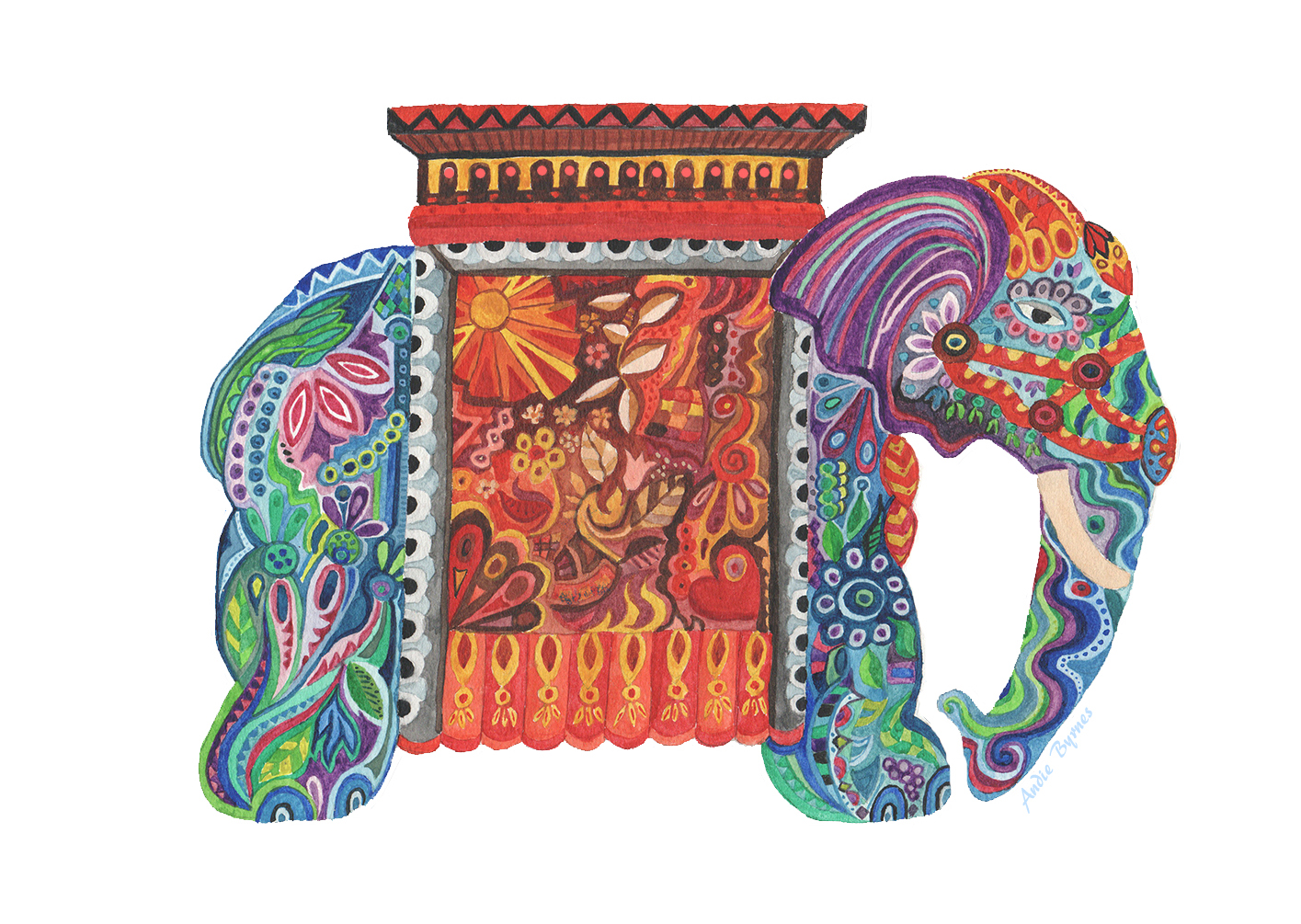
The superb Chester Cathedral Elephant
To celebrate World Elephant Day, Chester boasts splendid elephants in Upton at the zoo, as well as a medieval wooden carving in Chester Cathedral, a bronze sculpture opposite the Northgate visitor centre, and fluffy, cuddly elephant toys in the Northgate market hall.
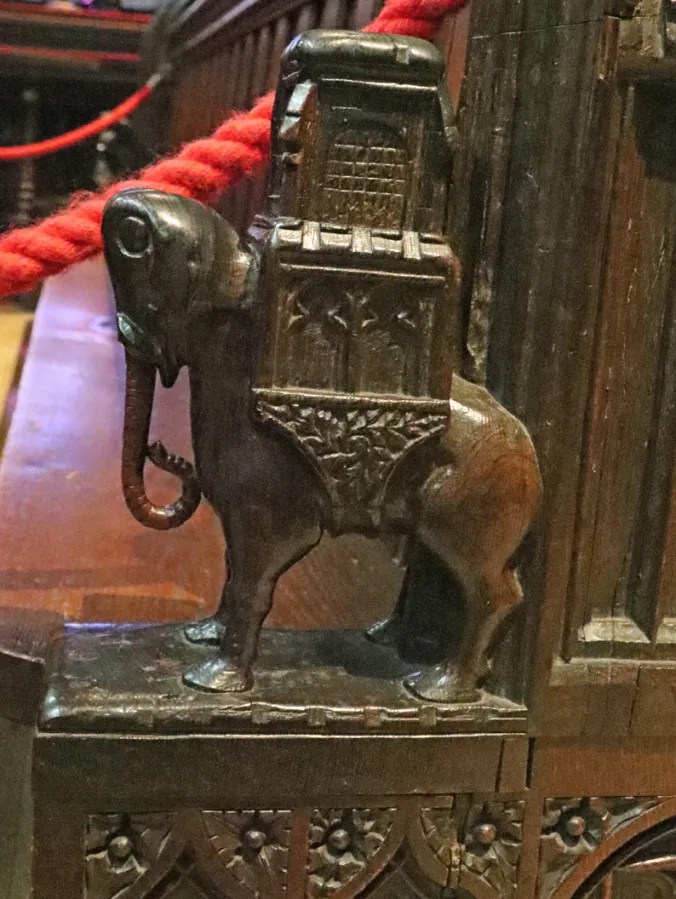
The earliest and most venerable of our pachyderm residents is the 14th century elephant in the Chester Cathedral choir (or quire), incorporated into a bench-end in the choir. It was part of the development in around 1380 of a new choir for St Werburgh’s Abbey, when it was still a Benedictine monastery. Many of Chester Cathedral’s misericords (carved hinged choir perches) were based on those at Lincoln Cathedral, but whatever the Lincoln carvers brought with the my way of the weird and the wonderful (and there is plenty of both in the Chester and Lincoln misericords), elephants were not among the imported designs, as there are no elephants in Lincoln’s choir. Several of the bench-ends are Victorian, but this is original. The choir is generally open to the public to visit, unless it is use for a musical event, and all of the carvings are magnificent. Even the Victorian replacements are very well done.
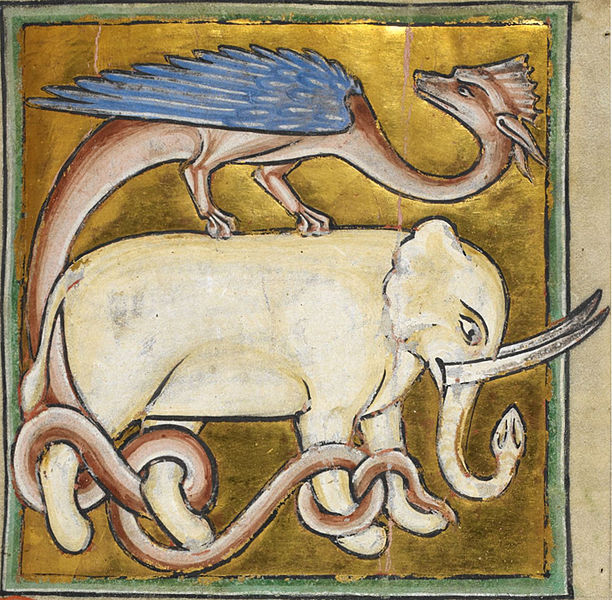
Elephant and wyvern. early 13th century, nature and myth entangles. Royal MS12 C XIX. Source: Wikipedia
The St Werburgh’s elephant is a magnificent, if slightly peculiar creature with delicate hooves, a strangely shaped head, ears that resemble curtains and enormous eyes that give it a rather surprised expression , as though it wonders what on earth it is doing in a medieval abbey. The answer to that hypothetical question lies in the zoological and mythological company in which the elephant finds itself. The monks clearly had a good eye for the unusual, as a quick inspection of the misericords will demonstrate. The carver may have seen a picture of an elephant in a bestiary, a book of real and mythical animals that could be used as a source material for subjects like these. It is probable that there was no clear dividing line between the imaginary creatures like wyverns, unicorns and dragons, and the more exotic animals that only a handful of people in the west had seen, like our elephant. There’s an excellent description from a bestiary manuscript Brit. Lib. Harley MS. 3244, fol.39), a short excerpt from which is as follows:
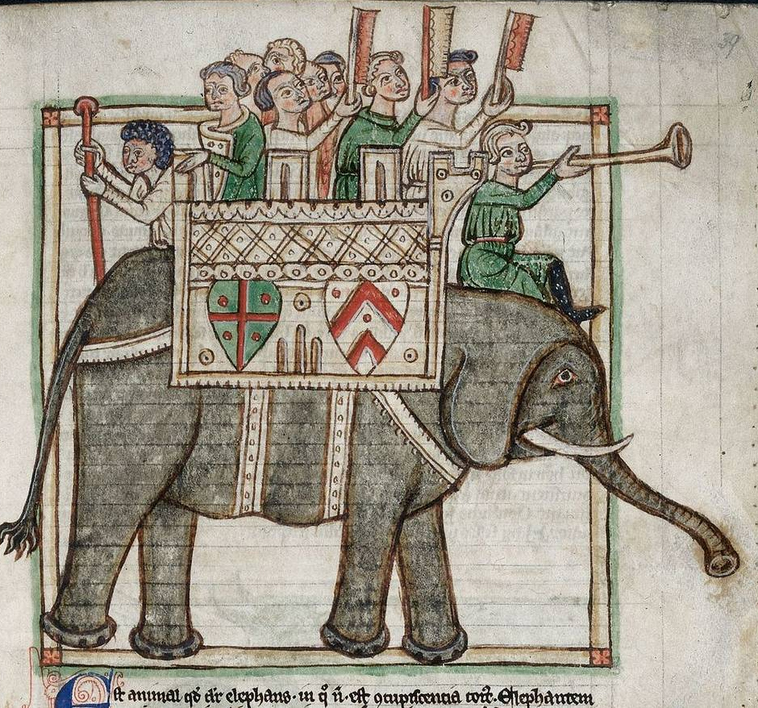
British Library Harley MS 2344, fol.39. Source: Picryl
They travel in herds, fear the mouse . . . they are pregnant for two years, neither do they reproduce more than once nor have several offspring but only one. They live, however, three hundred years. Moreover, if they want to produce young they go to the eat, near Paradise, and a tree there that is called the mandrake, and the elephant goes there with his wife, who first takes from the tree and gives some to her husband. And when he eats she seduces him and at once she conceives . . . Now the elephant is terrifying to bulls, yet it fears the mouse. This is its nature, that if it should fall, it cannot rise. Moreover, it falls when it leans against a tree in order to sleep, for it has no knee joints.
Carrying a howdah on its back, the Cathedral elephant is a great favourite with visitors.
In 1898 the Barnum and Bailey Circus organized a vast parade through the town, and this too featured elephants, as well as other circus animals and performers. Chester was one of the stops for the Circus’s European tour of 1898-1902. These are the “herd elephants” but apparently they were preceded by elephants carrying howdahs.
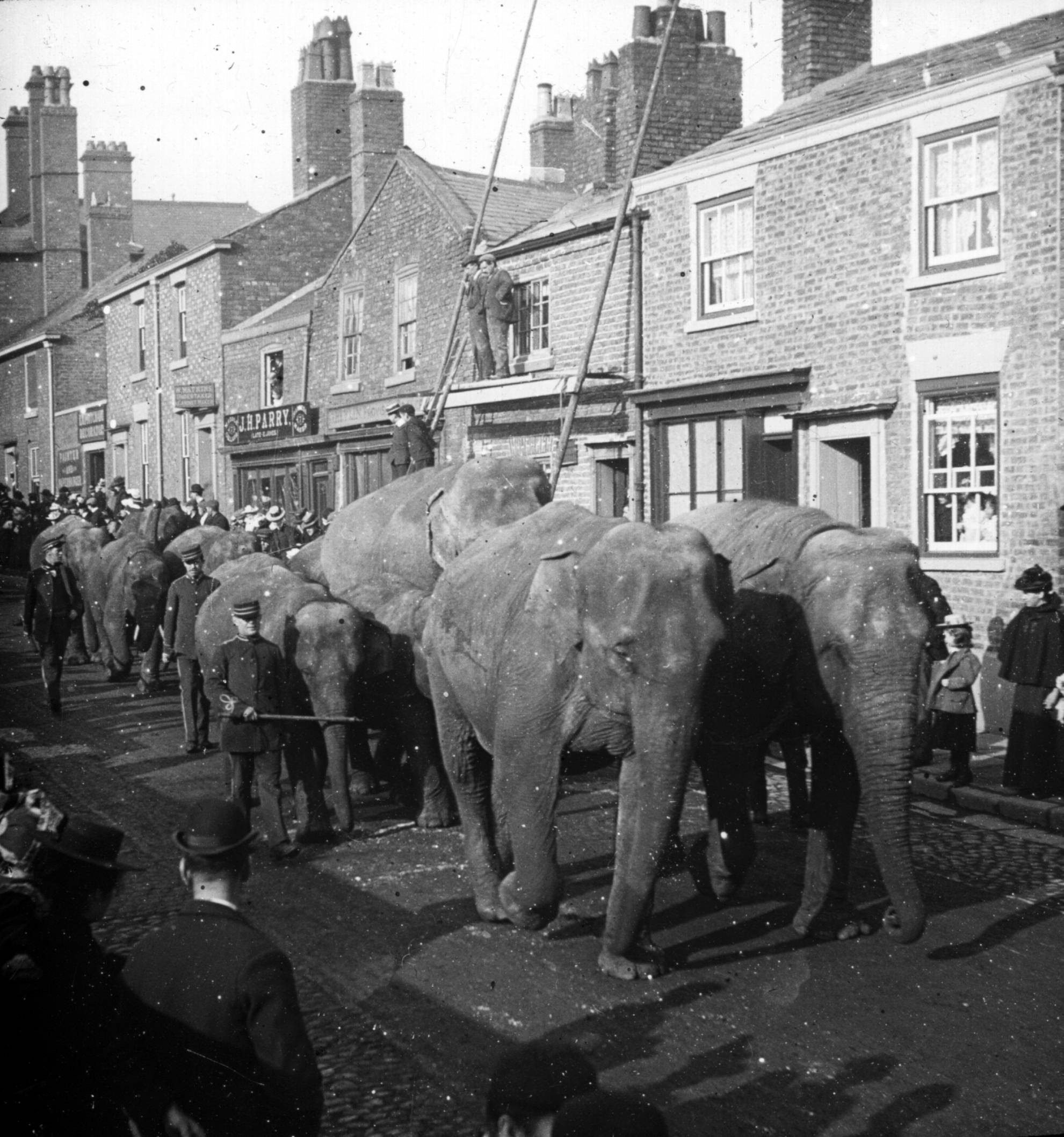
The 1898 Barnum and Baileys circus parade through the streets of Chester. Source: Chester History Hub at the Grosvenor Museum, via a post on their X.com account
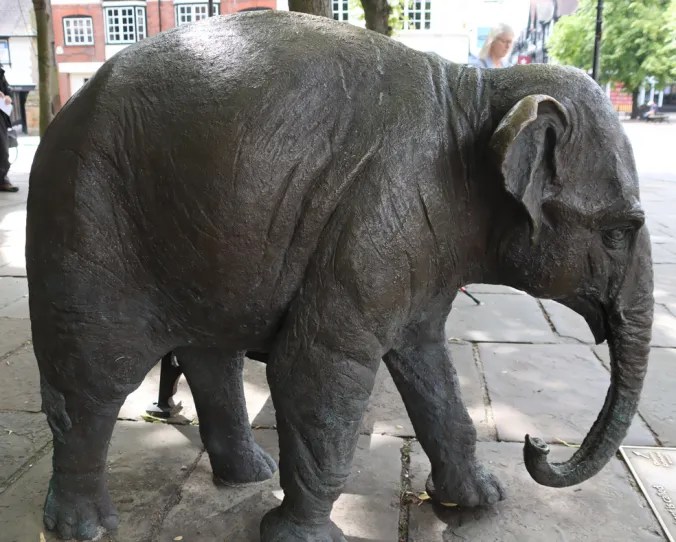
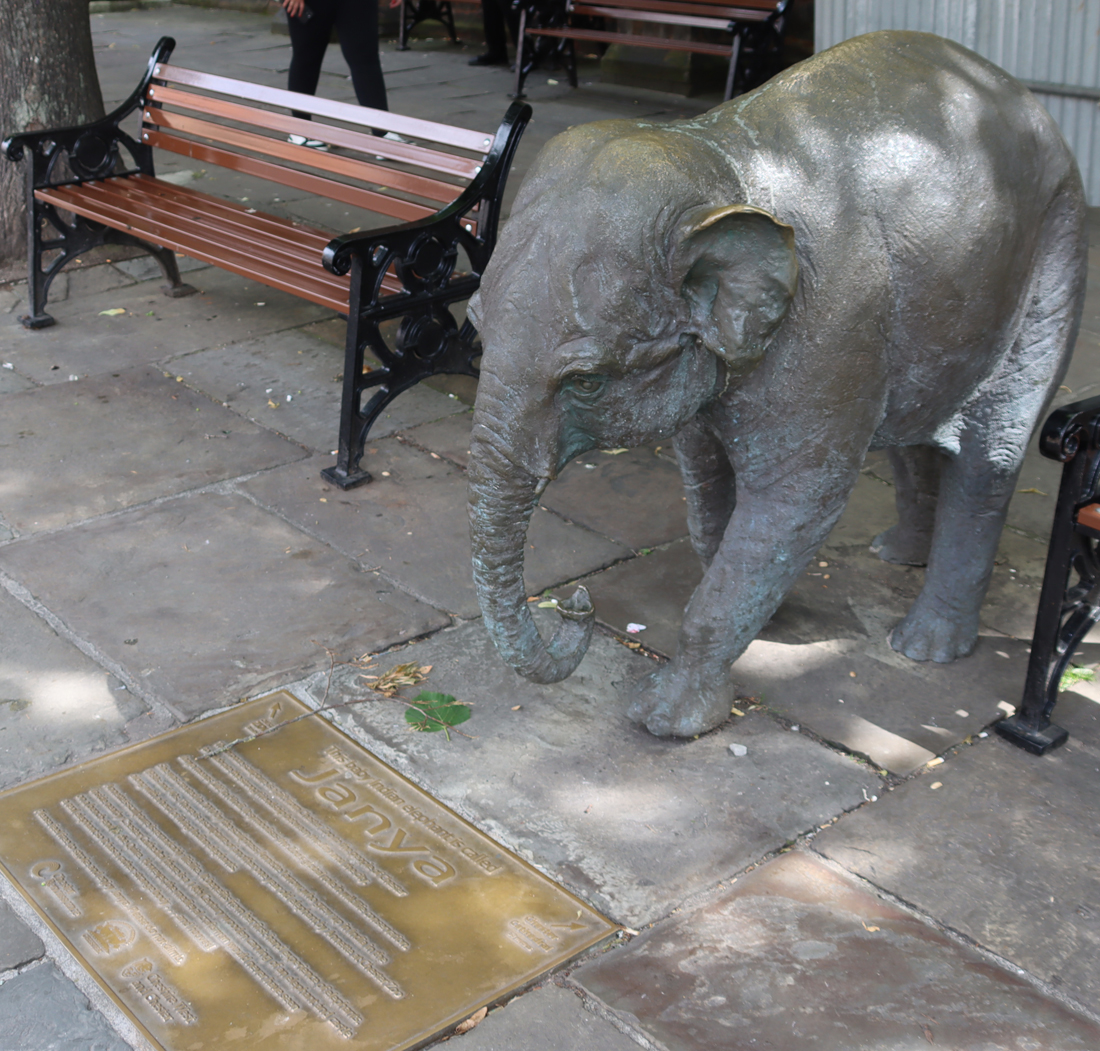 Just outside the cathedral and opposite the Visitor Centre is Janya, a small bronze elephant, just the right size for engaging eye-to-eye with a child or being patted by the many adults who do so. Northgate is a particularly eclectic part of the city, both in terms of its architecture and its various retail and leisure offerings. The original market square in front of the cathedral was home to the medieval market and the once housed the lovely 18th century Exchange building, which burned down in 1862. The addition of Janya to the edge of this space gave it a welcome lift, particularly as she was designed to be stroked and enjoyed (but not climbed). The plaque set into the pavement in front of the elephant explains that Janya means “life” in Hindi, and that “it symbolises the Zoo’s global role in wildlife conservation.” She was made in 2010 by Annette Yarrow, a gift from Chester Zoo to the city to celebrate the the “strong friendship between the Zoo and the city.” A reference is made to the Cathedral elephant, both in the text and in the small arrow pointing in the direction of the cathedral’s visitor entrance, implying an affinity between the zoo and the city’s older heritage. By showing a year-old elephant, it references the several success stories for the Zoo’s elephant conservation programme, described on the Chester Zoo website as follows:
 Pioneering new practices to further improve the welfare for elephants in zoos, sanctuaries and in the wild. This includes becoming the first UK zoo to have a multi-generational family herd, successfully utilising protective contact between elephants and keepers, and spearheading vital new research on behalf of the global conservation community to find a viable vaccine for a deadly virus that affects elephants in zoos and the wild, known as EEHV.
It’s a neat way of linking the city with the zoo, reminding visitors and residents alike that the zoo is not merely a tourist attraction but a centre of conservation excellence and a terrific local resource.
The Chester Zoo’s first two elephants arrived in 1941. Chester Zoo was established in 1931 when George Mottershead bought the house (Grade 2 listed and sympathetically converted to a pub in 2018) and seven acres of land. His aim was to build the first zoo without bars. According to the Chester Zoo website, it was a family run-enterprise, and very slow to take off, but eventually became a Chester fixture and great tourist attraction. In 1934 it became a charity, shifting its emphasis from the display of animals to wildlife conservation.
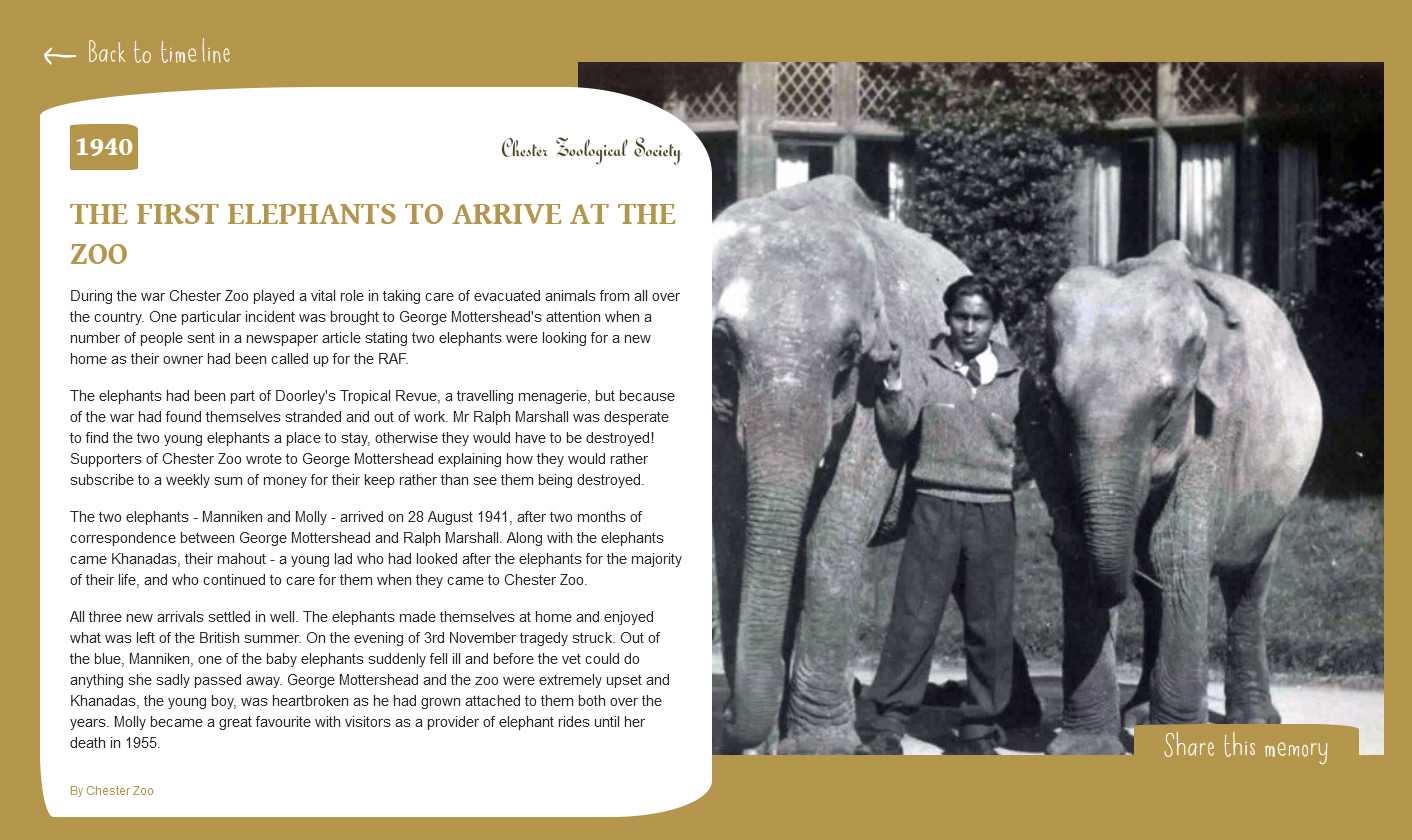
Molly and Manniken with handler Khanadas. Although this page has now been taken off the Chester Zoo website, or moved to somewhere where I cannot find it, the original source of this photograph was Chester Zoo
xxx
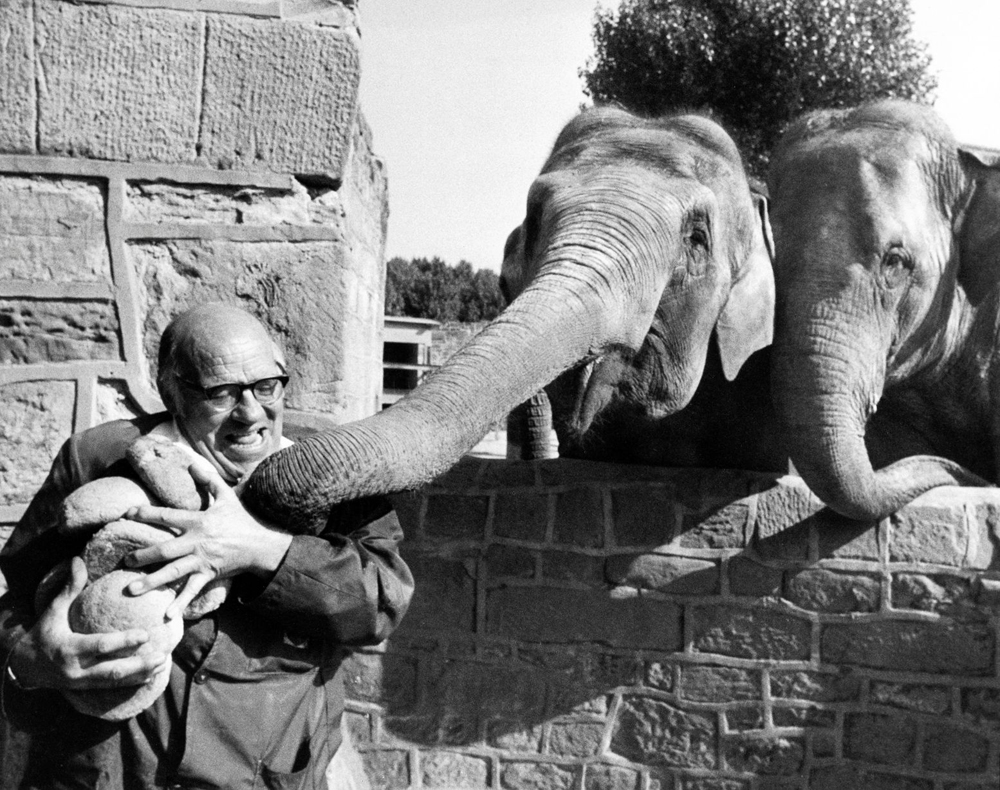
Charming photograph of Elephant Keeper Les Hill, September, 1977. Source: Absolut Elephant database
The elephants were Manniken and Molly. They were given a home when their owner, the proprietor of Doorley’s Tropical Revue, a travelling menagerie, was called up by the RAF for the war. Without anyone to care for them, their situation looked dire as without anyone to take them they would have had to be put down. The story came to the attention of zoo owner George Mottershead, and the pair arrived on 28 August 1941 with their young handler Khanadas, who had cared for them and remained with them at Chester Zoo. Very sadly, although they settled in well, Manniken suddenly died in November of the same year, but Molly lived on until 1955, a zoo favourite, providing rides for children. After the war, a new elephant house was built, made entirely of recycled materials from the surrounding area, including anti-tank blocks, pill-boxes and concrete slabs. A children’s radio presenter came along to open the new house, riding in on Molly, attracting 4000 visitors.
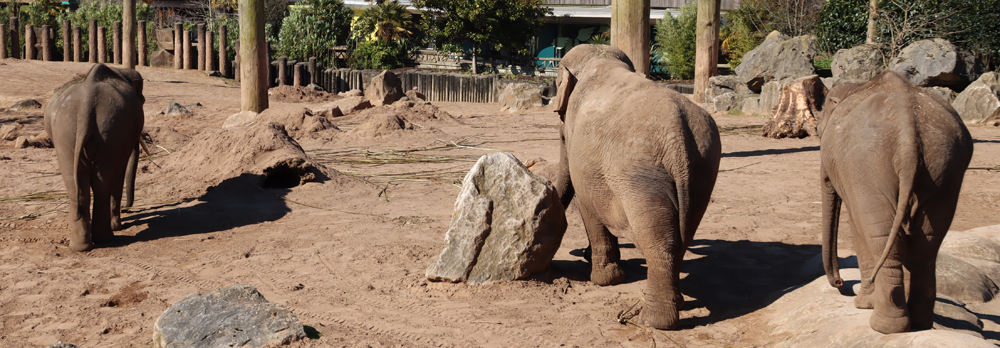
Chester Zoo elephants
xxx
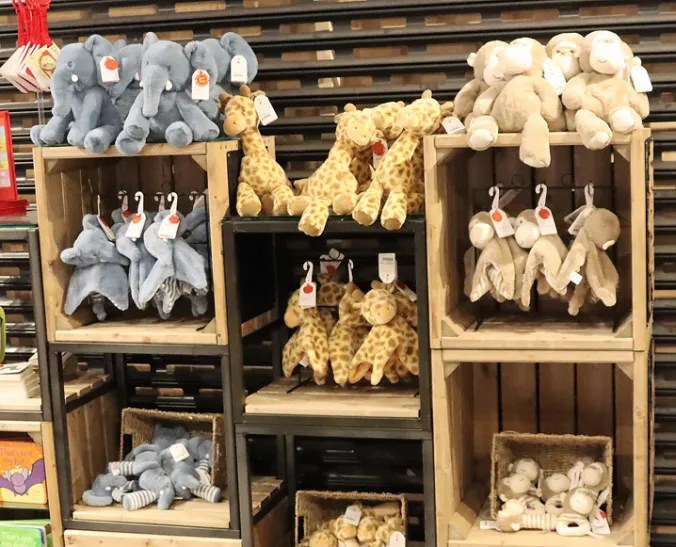
Fluffy toys (including elephants) in the Chester Zoo Shop in Northgate market
Much to my amusement, having just taken photographs of Janya before heading into the market to buy some seafood, I found myself looking at a shelf of fluffy little grey elephants. Chester Zoo has a shop in the new market.
If you have ever wondered when the first elephant arrived in Britain, there’s a nice piece by David Meadows on the Rogue Classicism blog about the purported first elephant to arrive in England, with Claudius in AD43: “First Elephant in Britain?”
Finally, there is a splendid set of collectible elephant toys shown on the Planet Diecast site.
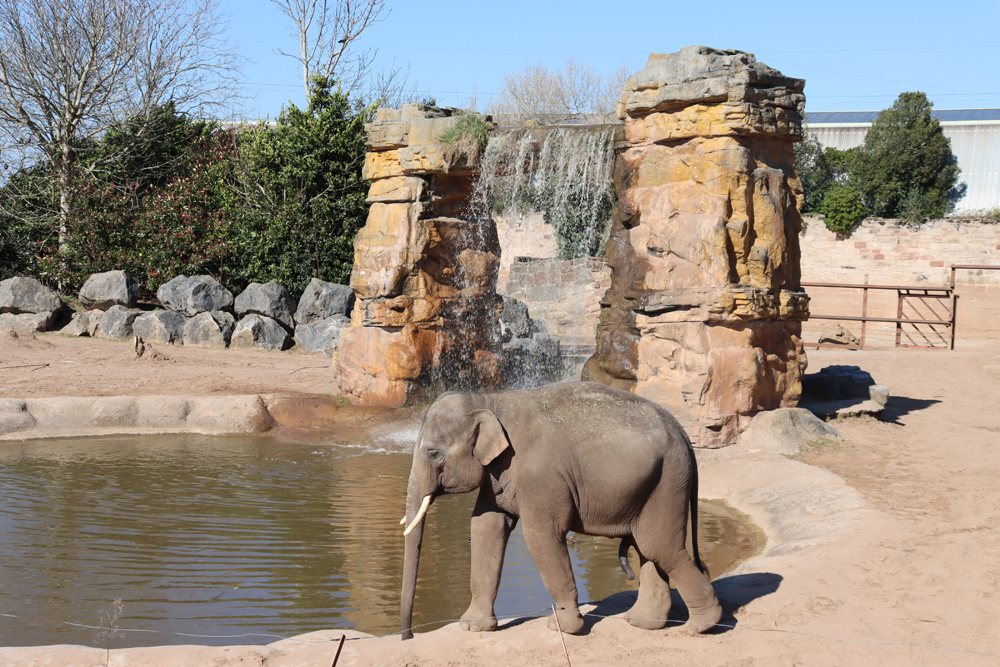
Chester Zoo, 18th March 2025
Sources:
Barber, Richard. 1992. Bestiary. MS Bodley 64. The Boydell Press
Baxter, Ron. 1998. Bestiaries and their Users in the Middle Ages. Sutton Publishing
https://www.researchgate.net/publication/340870845_Bestiaries_and_their_Users_in_the_Middle_Ages_Sutton_Publishing_1998_ISBN_0_7509_1853_5
Beal, Timothy K. 2002. Religion and Monsters. Routledge
Burne, R.V.H. 1962. The Monks of Chester. The History of St Werburgh’s Abbey. SPCK
Druce, George C. 1919. The Elephant in Medieval Legend and Art. Journal of the Royal Archaeological Institute, Vol. 76
https://bestiary.ca/etexts/druce-elephant-in-medieval-legend-and-art.pdf
Morrison, Elizabeth (ed). 2019. Book of Beasts. The Bestiary in the Medieval World. The J. Paul Getty Museum.
———
Absolut Elephant database
Chester Zoo
https://www.elephant.se/location2.php?location_id=42
Atlas Obscura
Why Did Medieval Artists Give Elephants Trunks That Look Like Trumpets?
Maybe not just because they didn’t know what elephants looked like. By Sarah Laskow February 10, 2017
https://www.atlasobscura.com/articles/medieval-art-elephants
Bodleian Library
MS Bodley 964 (Bestiary)
https://digital.bodleian.ox.ac.uk/objects/e6ad6426-6ff5-4c33-a078-ca518b36ca49/
Chester Zoo
https://www.chesterzoo.org/
medievalists.net
Matthew Paris and Henry III’s elephant. By Richard Cassidy and Michael Clasby
www.medievalists.net/2013/09/matthew-paris-and-henry-iiis-elephant/