 I’ll start with a time alert. Very sorry for the ridiculously short notice, but if you want to see the Georgia O’Keefe exhibition, a touring exhibition from the Hayward Gallery in London’s South Bank complex you will need to take a trip to Birkenhead before the exhibition closes next Saturday, the 25th July. Make haste! The O’Keefe exhibition is part of the Small Wonders. Reimagining British Art exhibition, also curated by the Hayward Gallery, and also on until Saturday 25th. The three in-house exhibitions are The Garden As A Muse also on until the 25th, Beyond the Brotherhood: The Legacies of the Pre-Raphaelites, on until 7th November, and Echoes of the Floating World on until 6th February 2027. All the exhibitions are free of charge and all are very well worth visiting.
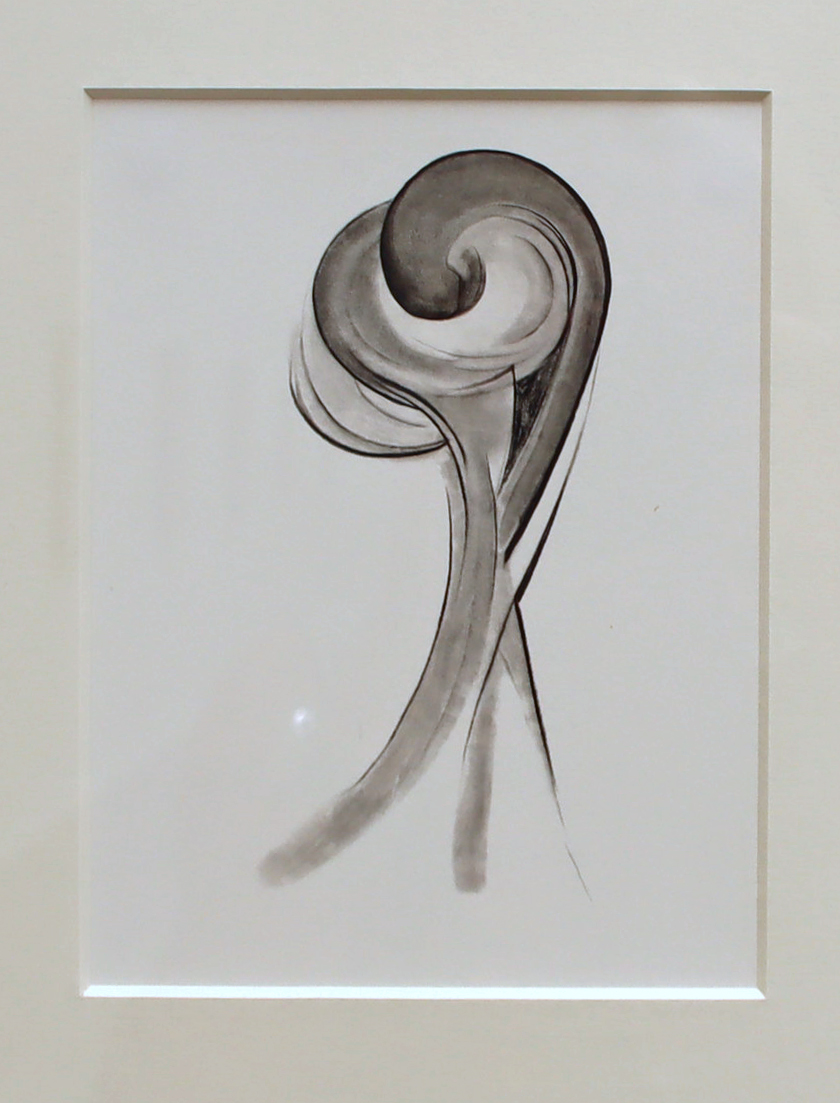
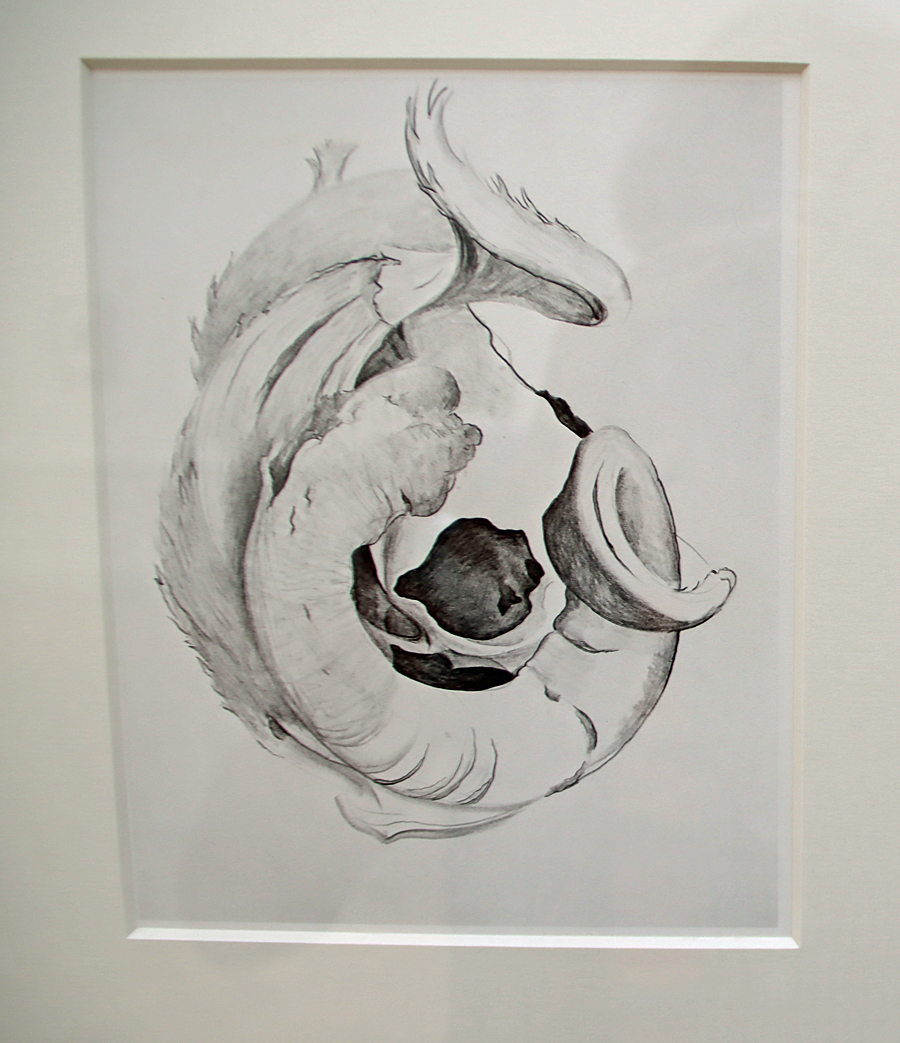
 If a Georgia O’Keefe exhibition comes to a local gallery it is a matter for celebration, and the Memories of Drawing exhibition offers 21 small pieces drawn by O’Keefe between 1915 and 1963 and prepared for publication with her agent and friend Doris Bry. Photogravures are images created by a sophisticated and highly accurate printing process. They are a complete delight, like fabulous little sound-bites, and it is wonderful to see them all together in one room. O’Keefe is best known for large, delicately rendered paintings and drawings of flowers, seashells, animal skulls and desert landscapes, which are so inherently vital and dramatic that they often appear to be in the process of metamorphosing into something much less easy to define. The photogravures display the concentrated essence of O’Keefe’s work, containing all the gorgeous draughtsmanship, the organic, the semi-abstract and sometimes wholly abstract, and each one is all the more fascinating for being so small and minimalist. All but two are in graded shades and textures of black and grey, and all share the sense that at any second they might shape-shift in tiny, imperceptible ways.
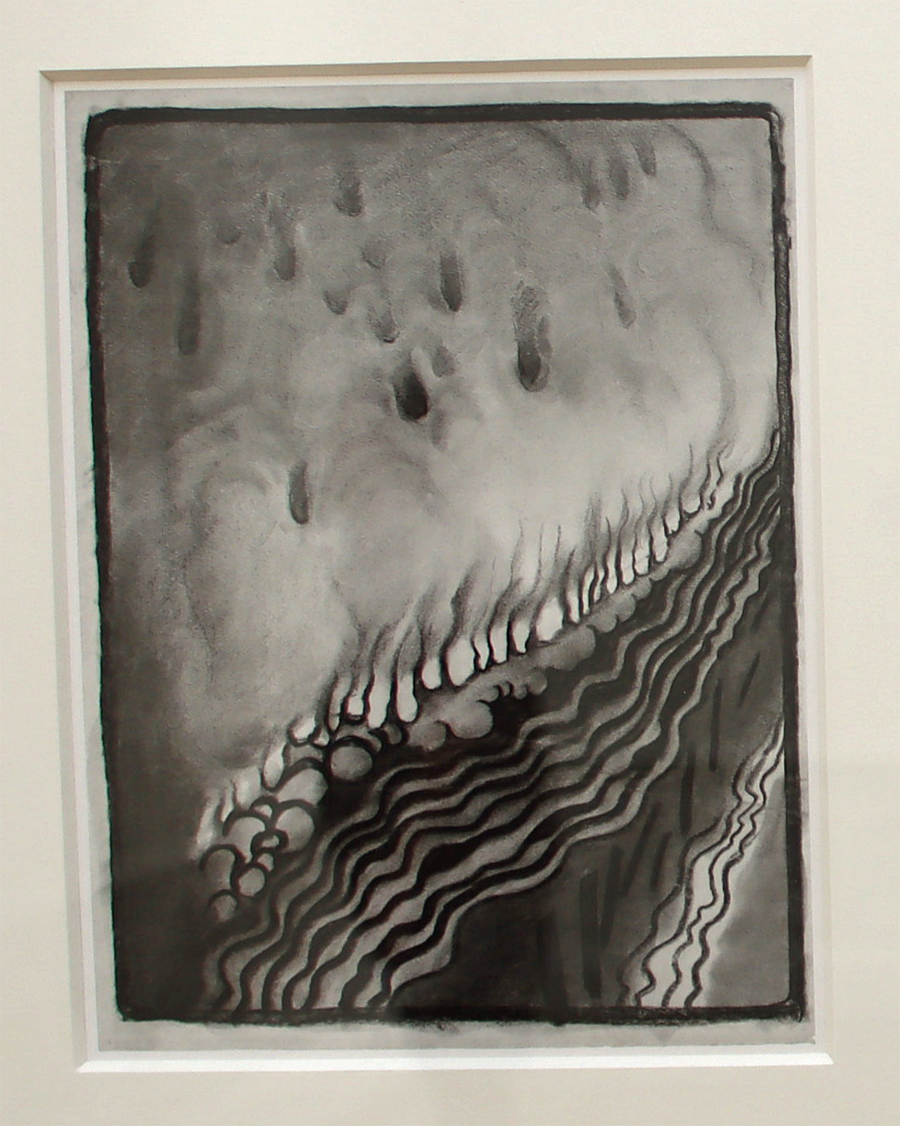
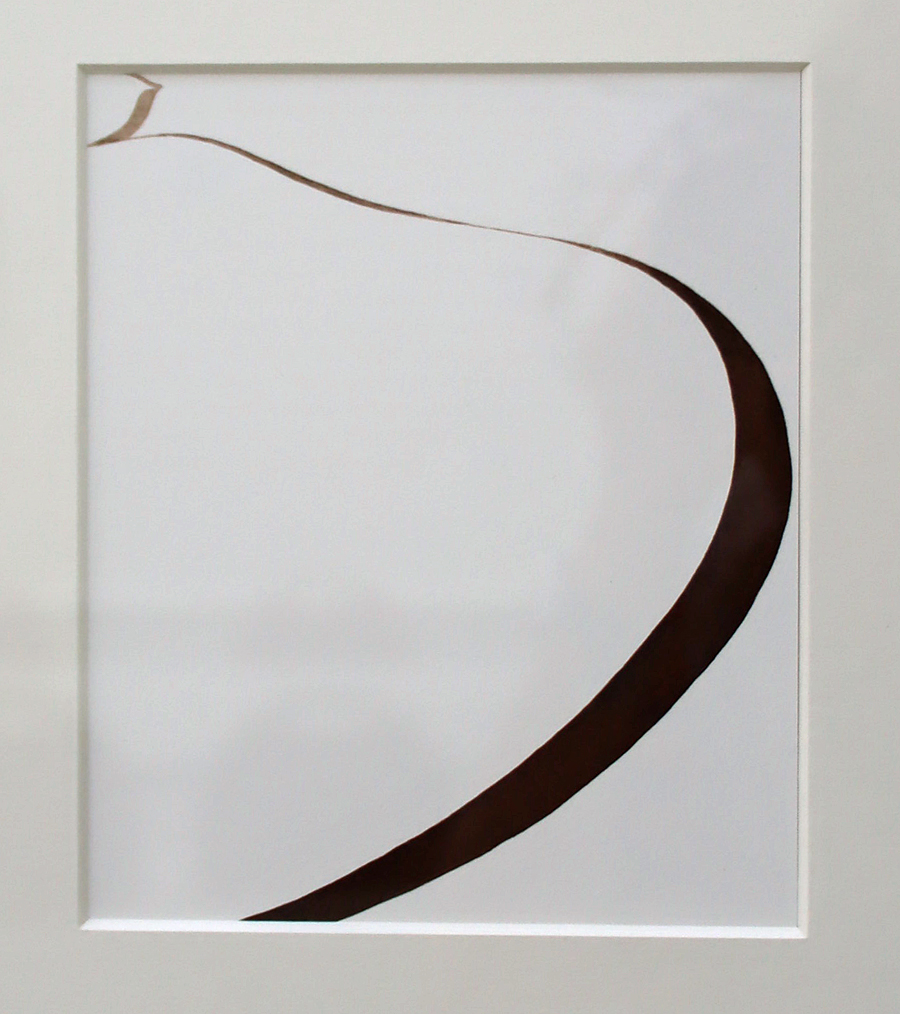
Georgia O’Keefe’s Drawing No.9 (1915)
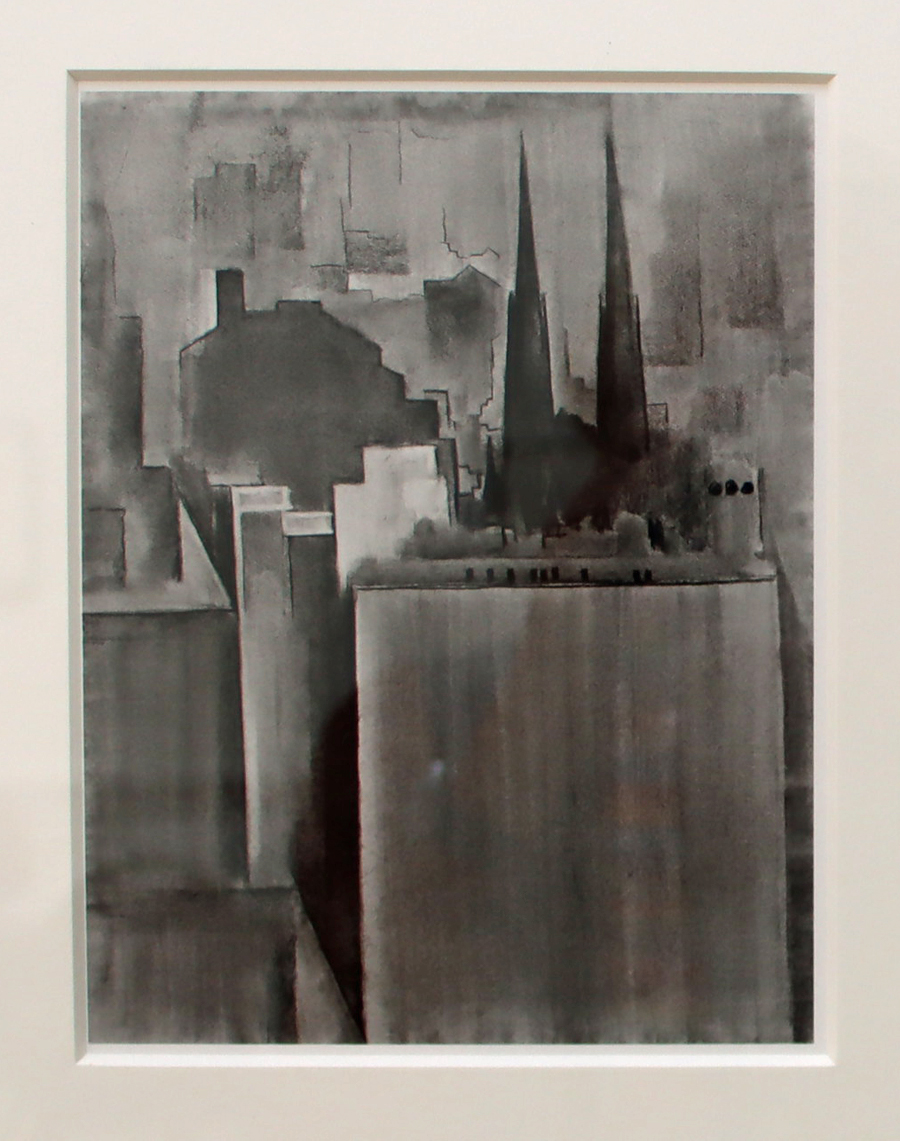
O’Keefe’s work is always dynamic and frequently seems to be alive; the photogravures capture that beautifully. The depth of O’Keefe’s dedication to the development of her artwork is demonstrated by “Blue Lines” (1916) of which she commented “It was in the fall of 1915 that I decided not to use any colour until I couldn’t get along without it and I believe it was June before I needed blue.” Her humour comes across vividly in “Drawing No.9” (1915 – shown right) about which she said “Well, I had the headache, why not do something with it?” From the barely-present representation of a seashell, “Drawing No.40” (1934) to the spiky, stark lines of a New York skyline “The City – New York Rooftops” (1930s), she is able, with real elegance and understated drama, to convey the complexity of both natural and unnatural worlds. My photos do absolutely no justice to the detail and texture in each image. You just need to see them for yourself. The exhibition is a treat – don’t miss it!
As if Georgia O’Keefe on her own was not enough, there is another visiting exhibition and three temporary mini-exhibitions drawn from the Williamson’s own collections.
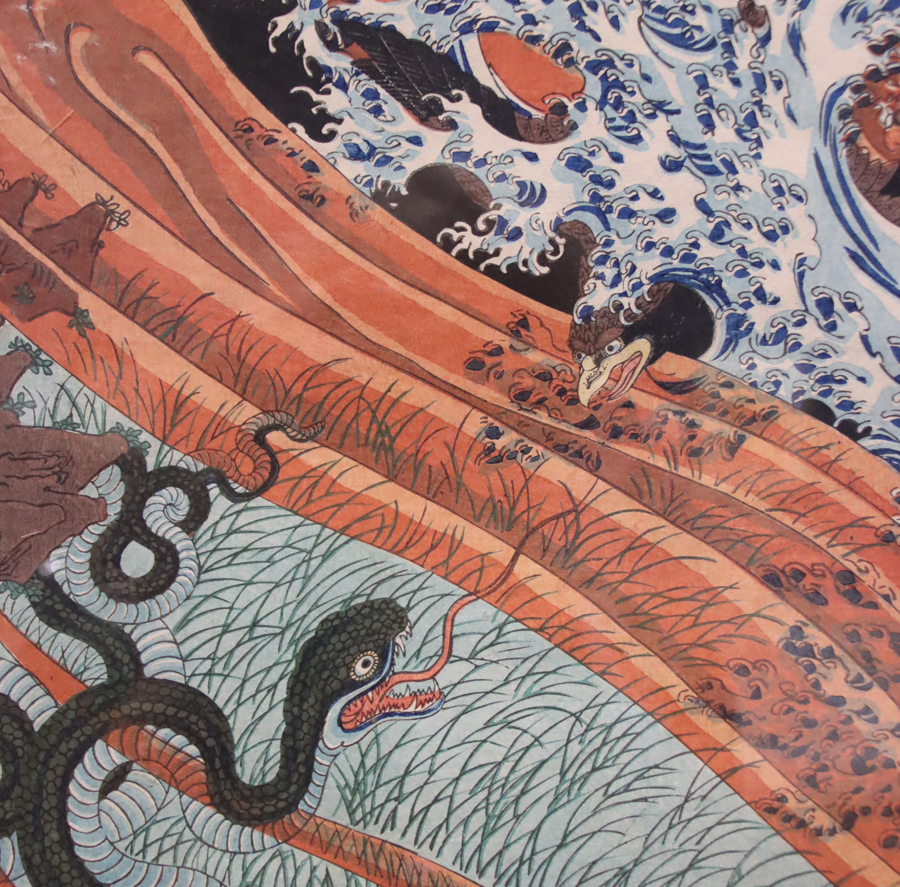
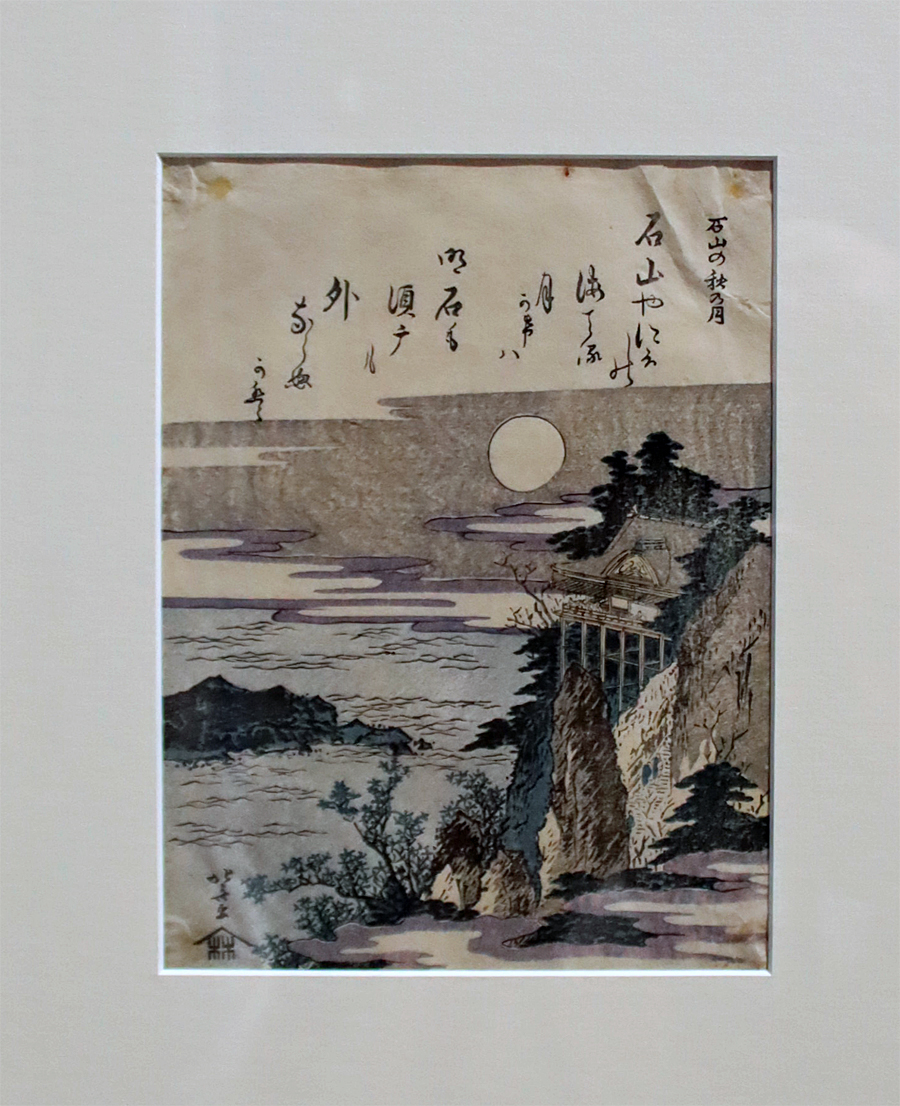
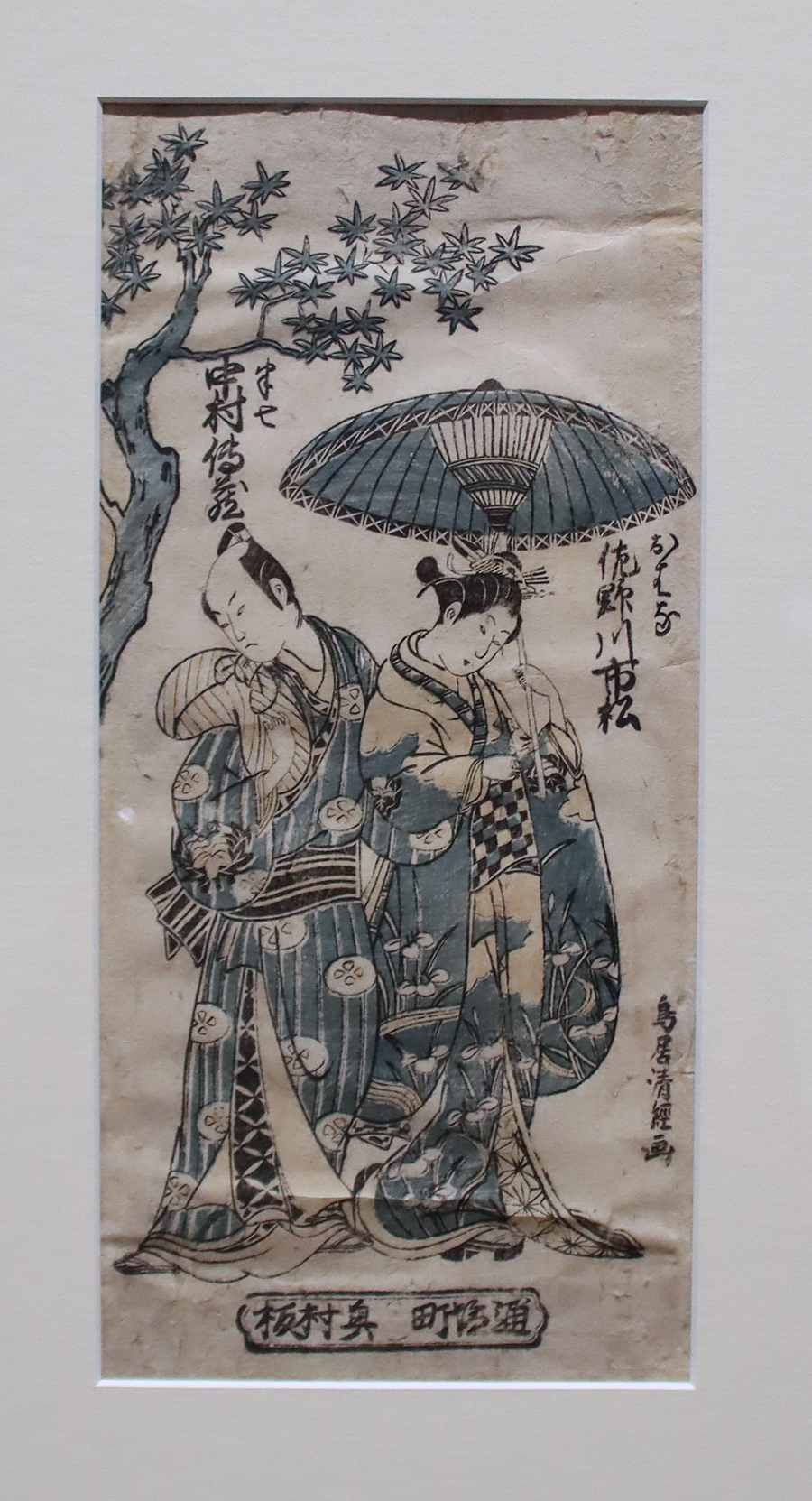
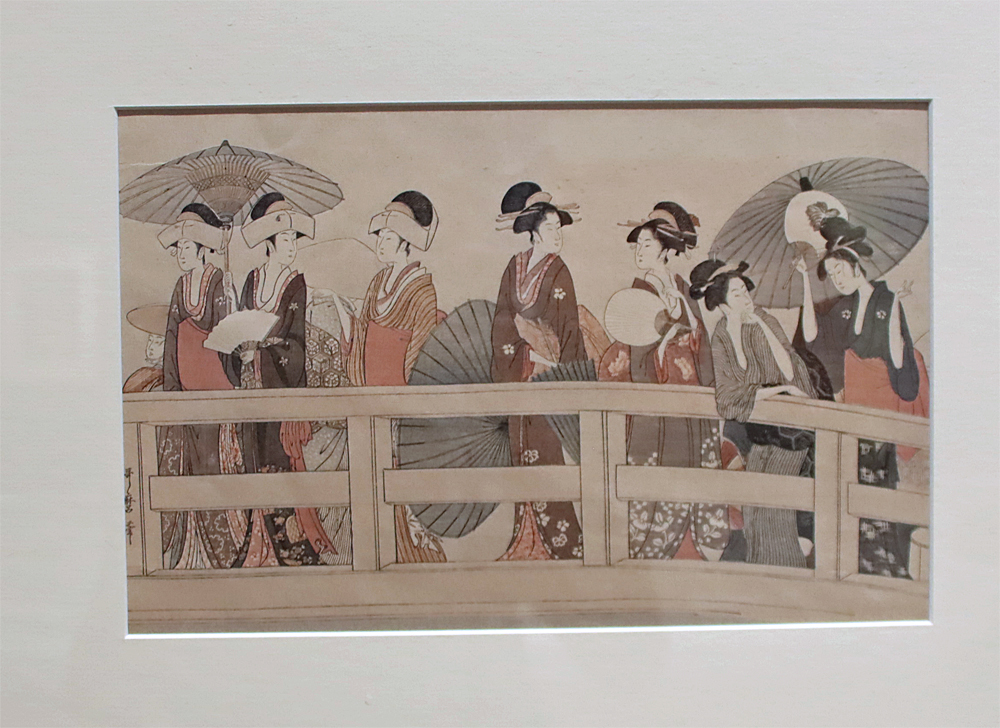
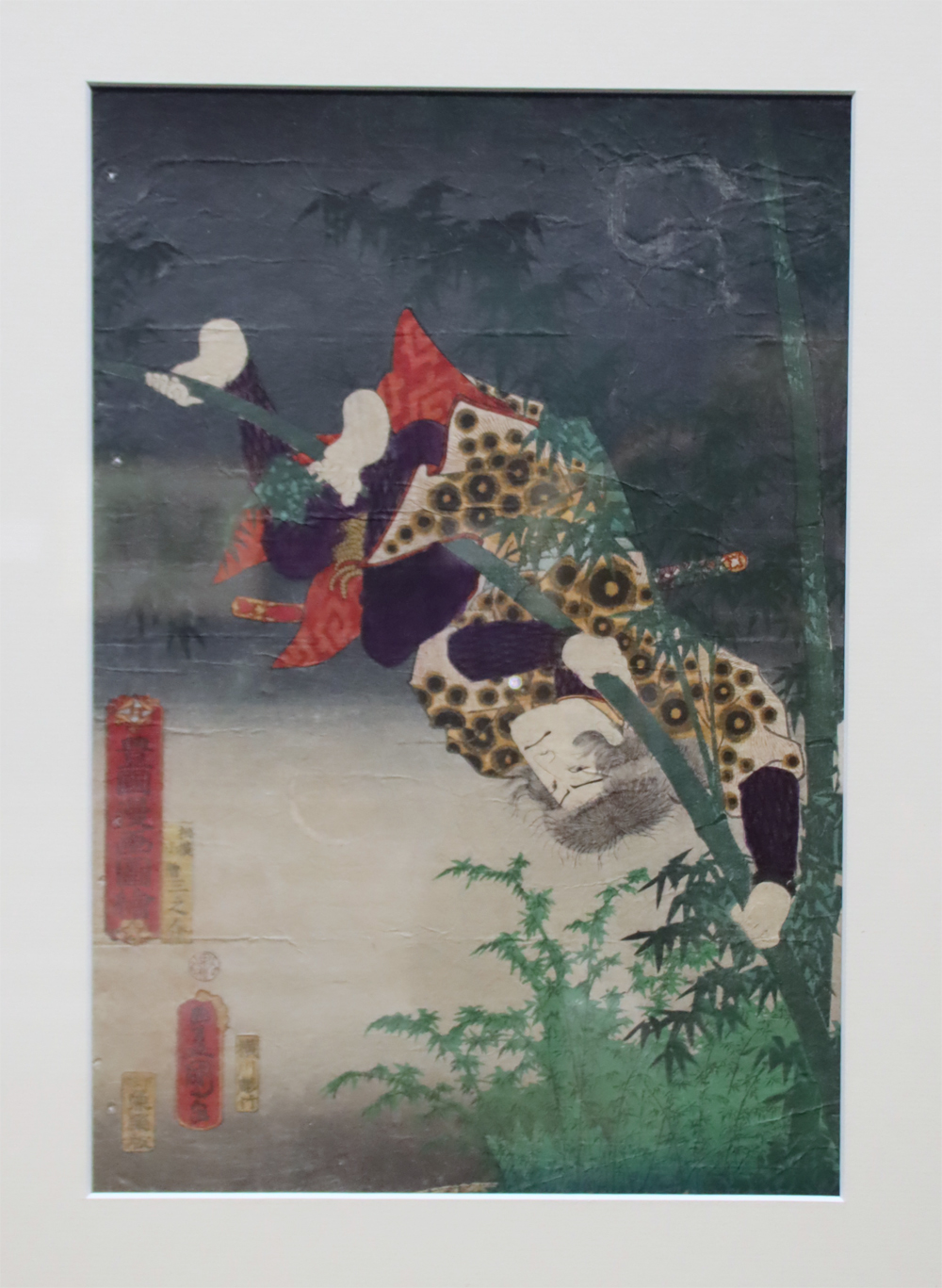
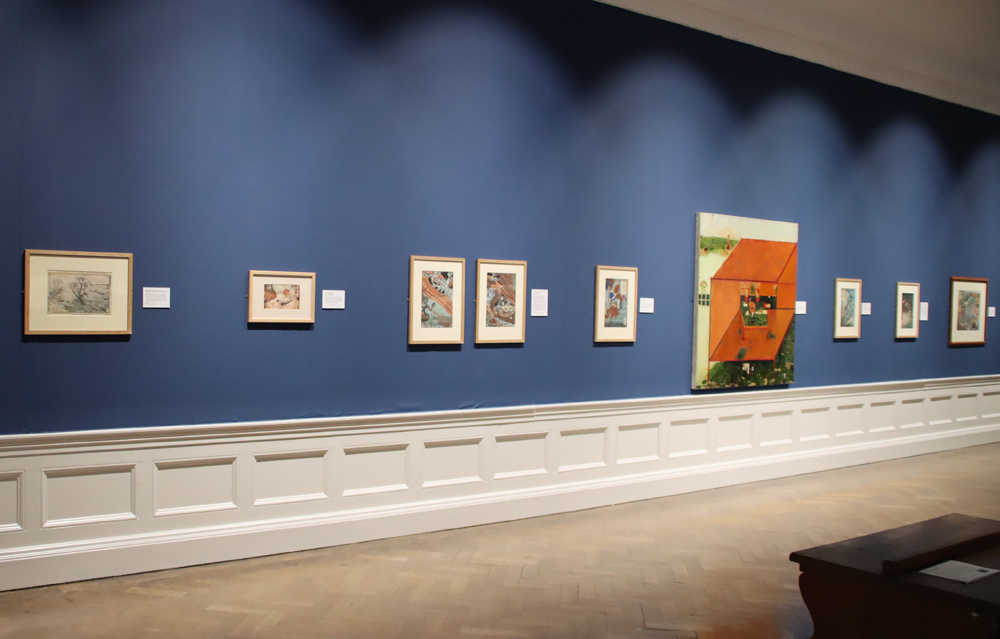 The Echoes of the Floating World exhibition, in one room focused on Ukiyo-e was a particularly lovely surprise. As the Williamson website says, “[t]heir motifs of flat perspectives, high vantage points, and bold colour distinctions, were a radical influence across European art” and the premise of the exhibition is to show the 19th century woodblock works juxtaposed against artworks that were influenced by the Japanese art. It was interesting to see the more modern artworks, with the surprising range of ways in which composition, colour and subject-matter were adopted and transformed.
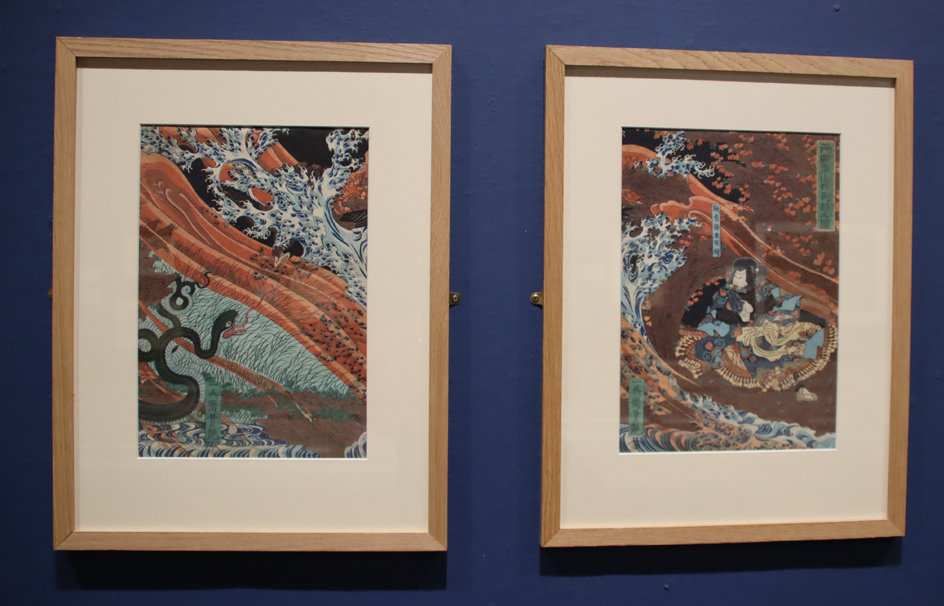 Of course the real stars were the Japanese works, with some very contrasting pieces chosen for the display. From almost monochrome examples, to highly coloured pieces, the exhibition managed, in a confined space, to give a very good sense of range of the style and expression produced by the woodblock artists. The oldest example of Ukiyo-e in the Williamson’s collections is a lovely depiction of a man and woman coloured only in mid-blue and black, dating to before the wider palette of colours became available. Images in full colour included rich and vibrant pigments, which complemented scenes that were full of motion and narrative intensity, as well as those that captured intimate moments of everyday life in subtle and delicate shades. A lot of people, right now in all this California-type weather, will relate to the splendid row of ladies with their parasols standing on a bridge over a river to help them cool down.
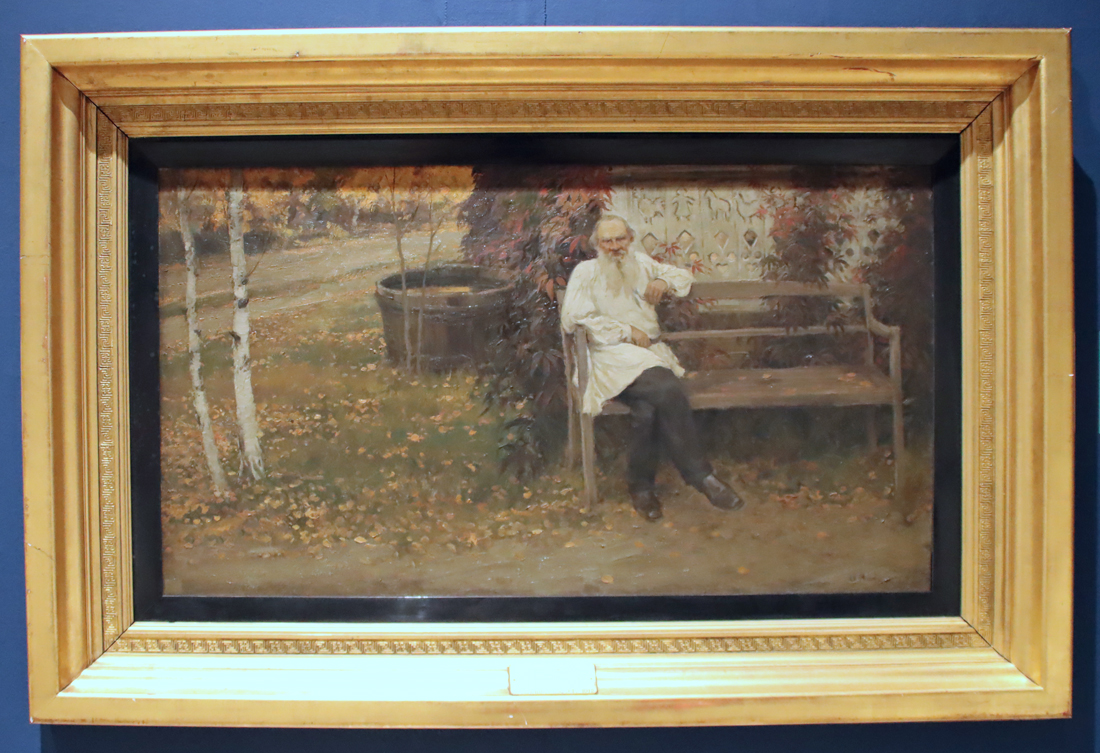
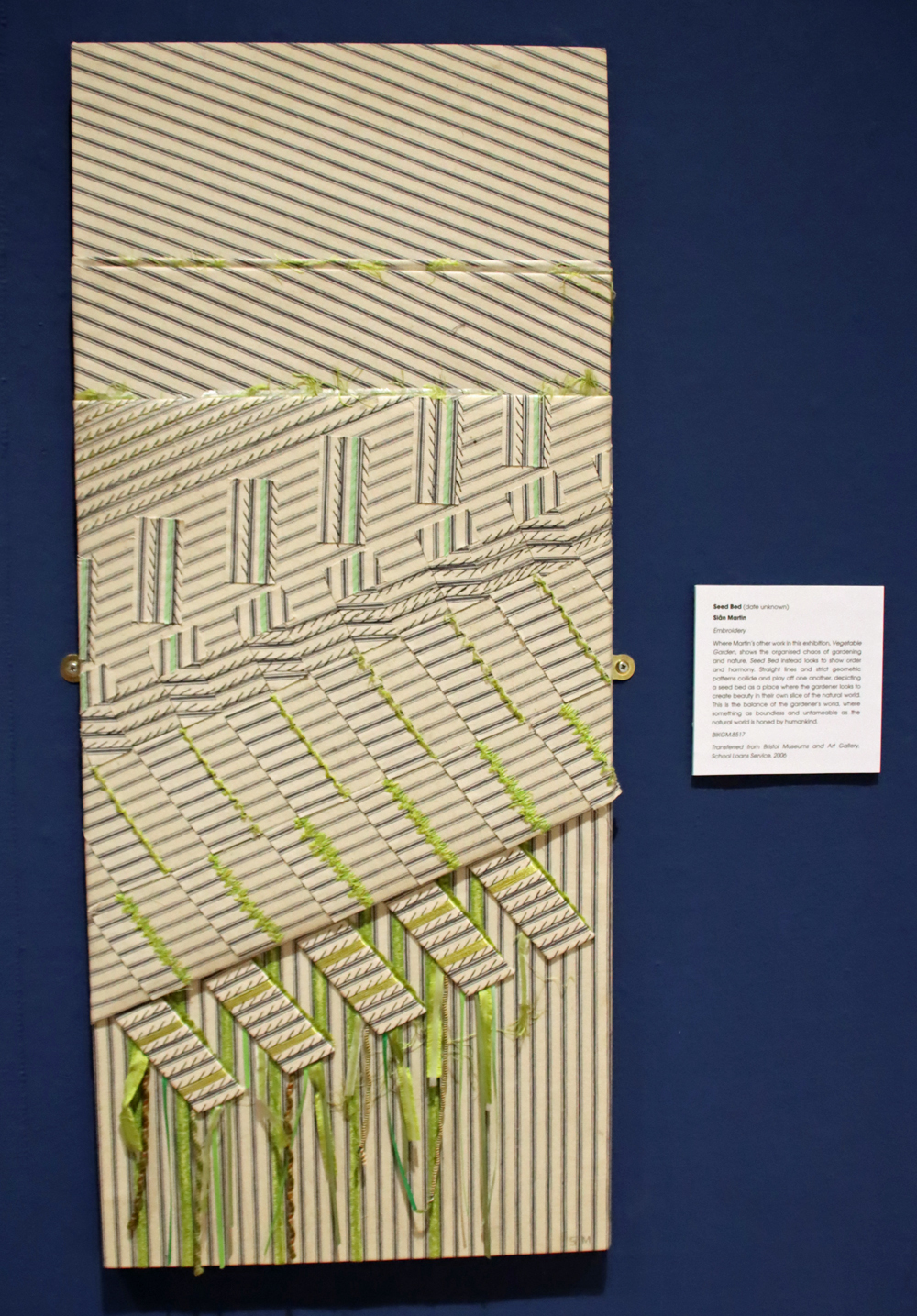
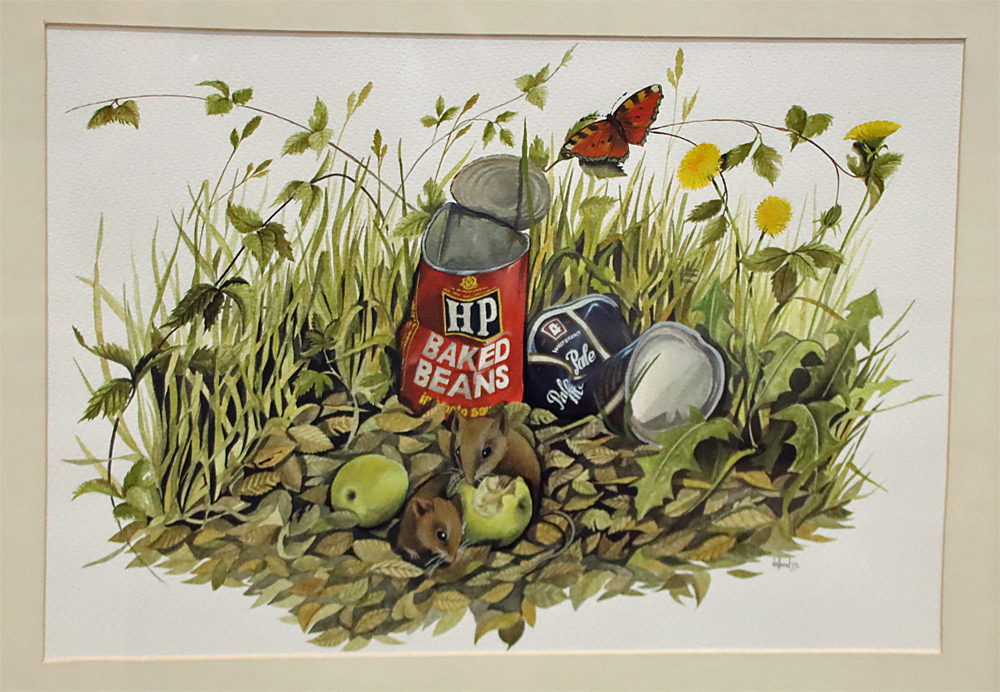
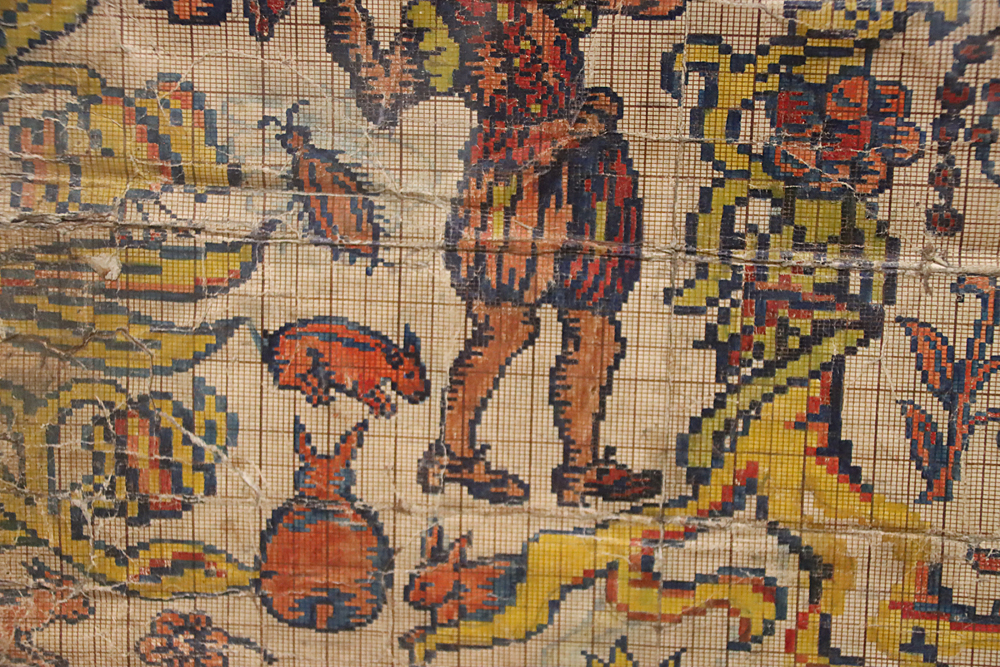 The Garden As a Muse exhibition “traces how artists across time have interpreted gardens not merely as physical spaces, but as symbols of creativity and solace. From delicate, nostalgic studies to immersive and grand paintings, these pieces reveal how gardens can function both as sanctuaries and laboratories of artistic experimentation.” As a thoroughly committed gardener I very much enjoyed this insight into different perceptions of what gardens can or should be. Sentiment was unsurprisingly present, but there was a thorough mix of styles and there were some very unexpected pieces too. I was particularly amused to find myself staring at Tolstoy who seemed improbably relaxed, although very dour. The two Arthur Lee textile designs, produced at their Birkenhead factory and mapped out with precision on graph paper were fascinating to see, ready to be converted into tapestry, embroidery and even printed fabrics. Sian Martin’s fabric-based abstract representations of such contrasting horticultural arrangements as seed beds and vegetable patches were incredibly effective. The entire ensemble of images was both witty and engaging, and nicely drew attention to the British fascination with garden places.
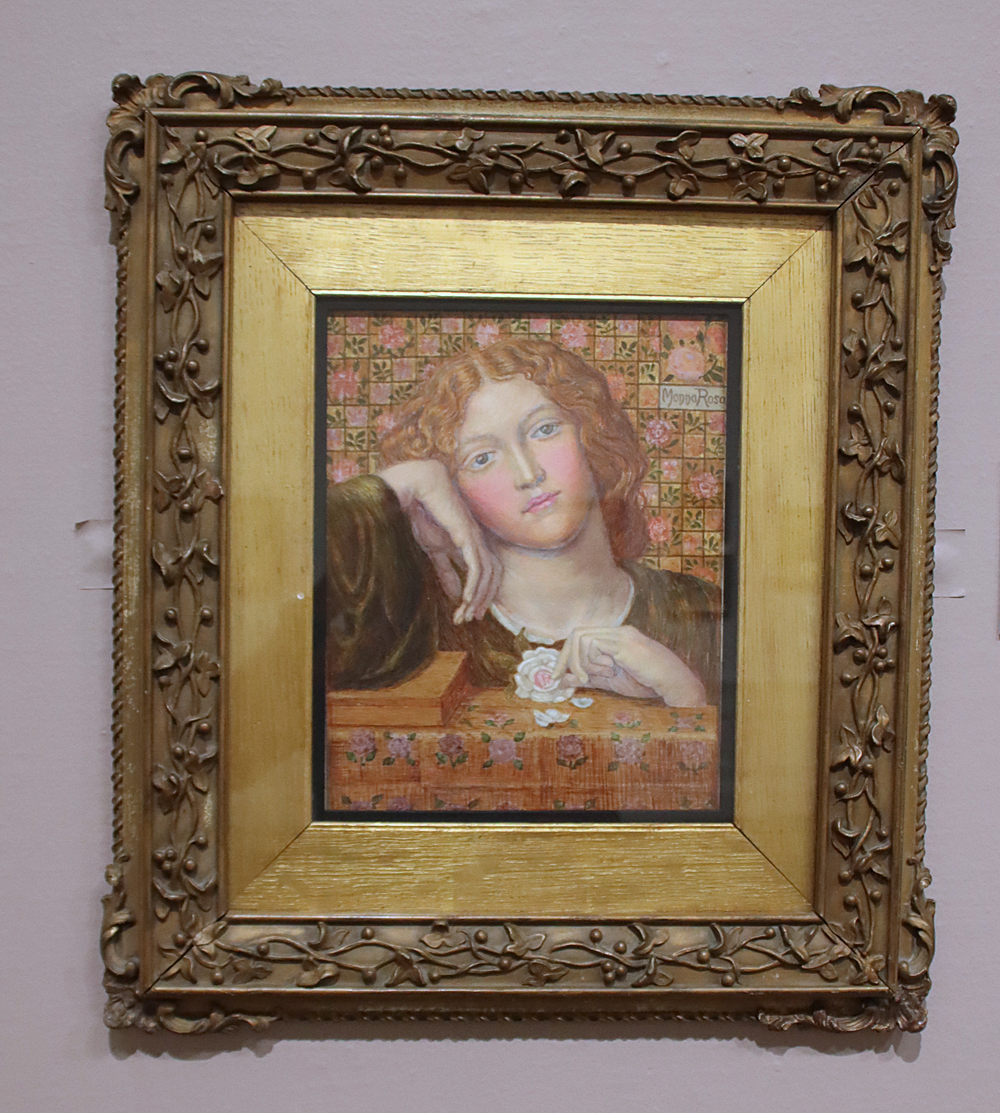
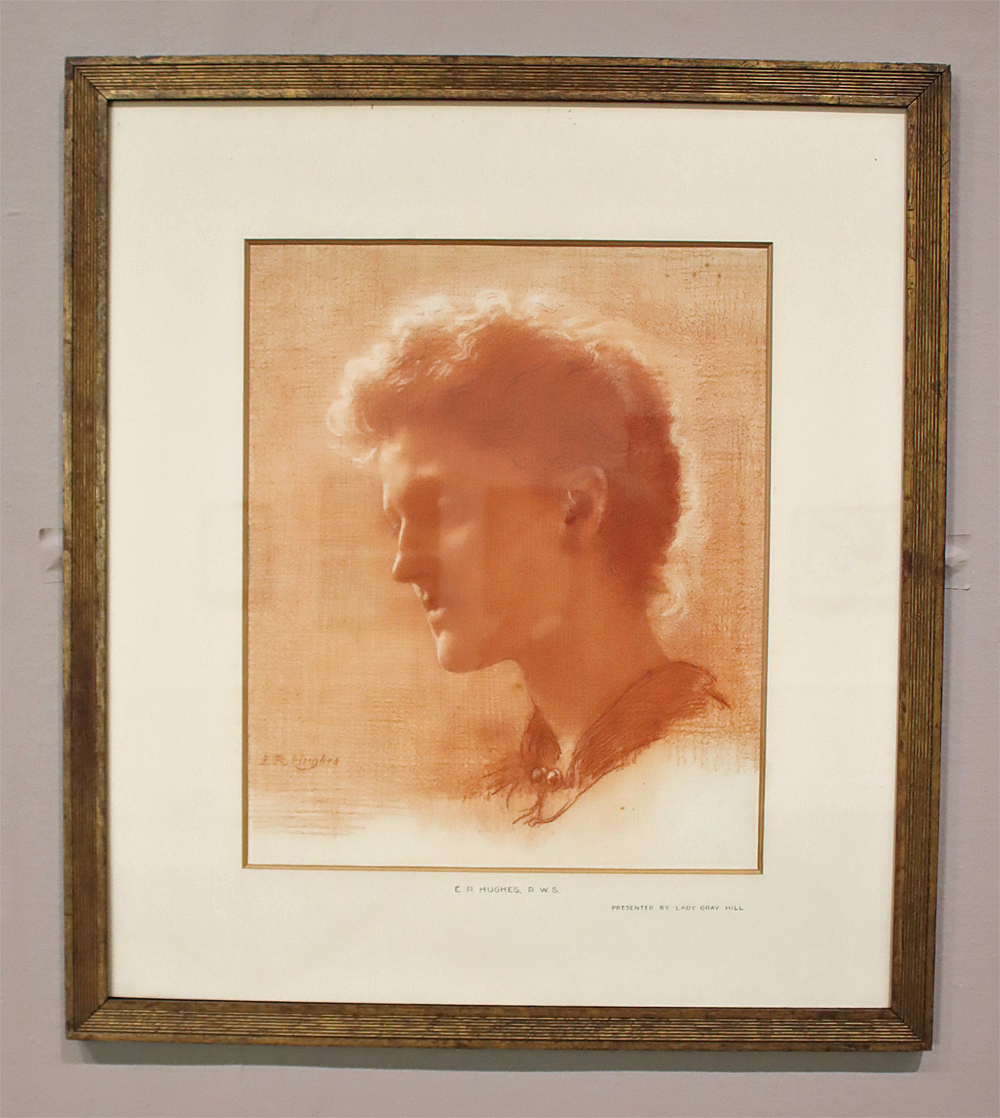
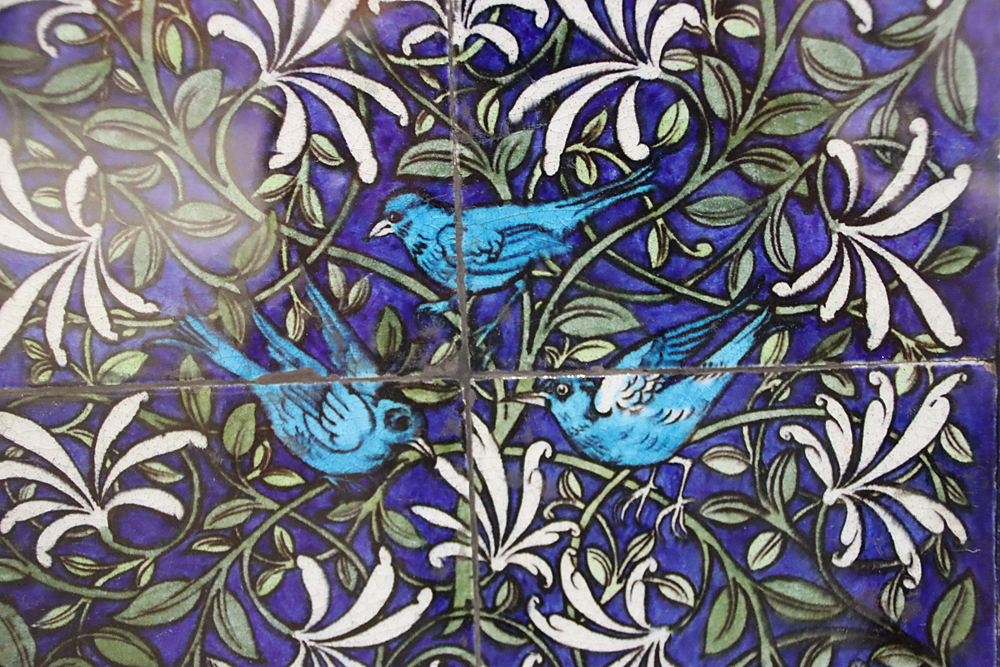
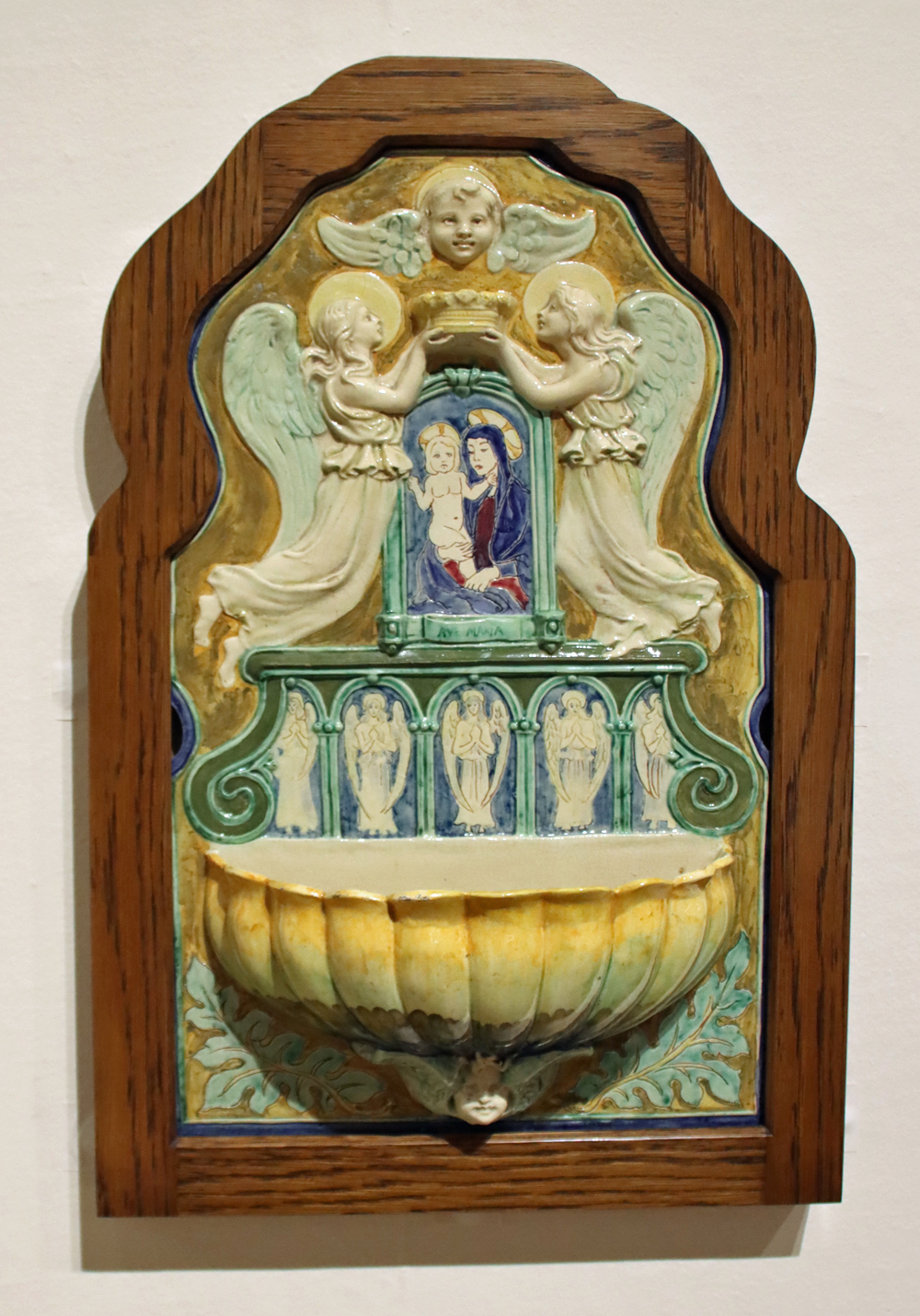
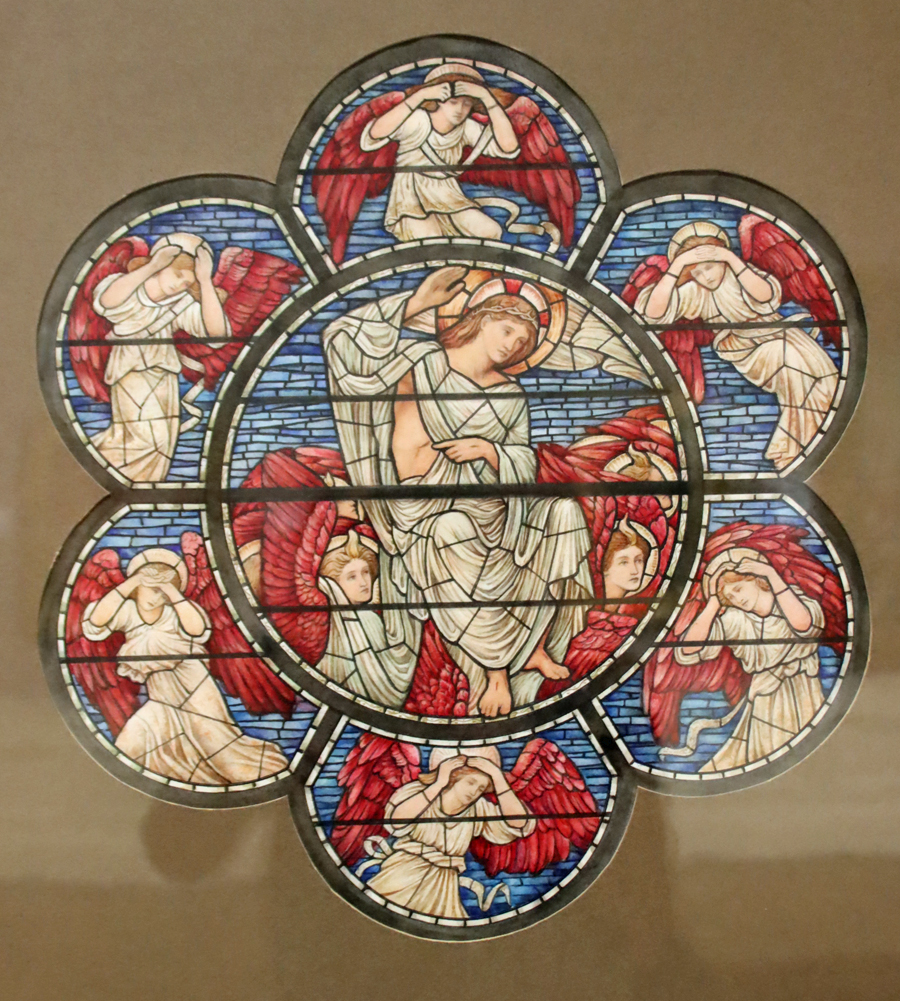
The Beyond the Brotherhood: The Legacies of the Pre-Raphaelites exhibition presents some of the original works produced by the Pre-Raphaelite brotherhood but also introduces some of their followers, who built on their legacy to create works of their own in the same broad style. This included examples from the so-called Liverpool School of landscape painters as well as elaborate pieces by the sculptors of Birkenhead’s Della Robbia Pottery Company, some locally produced stained glass, and it was delightful to find some William de Morgan tiles on display.
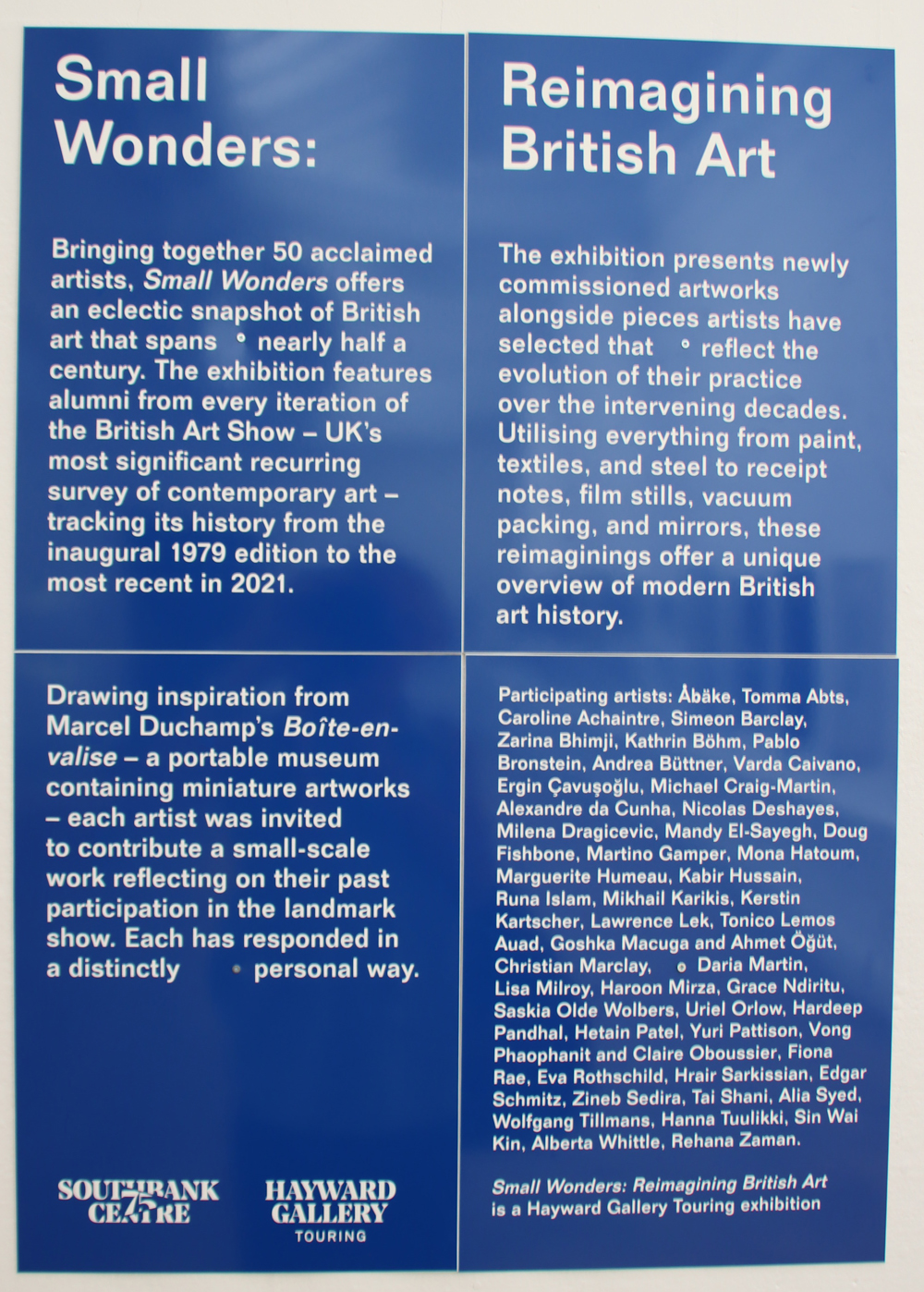
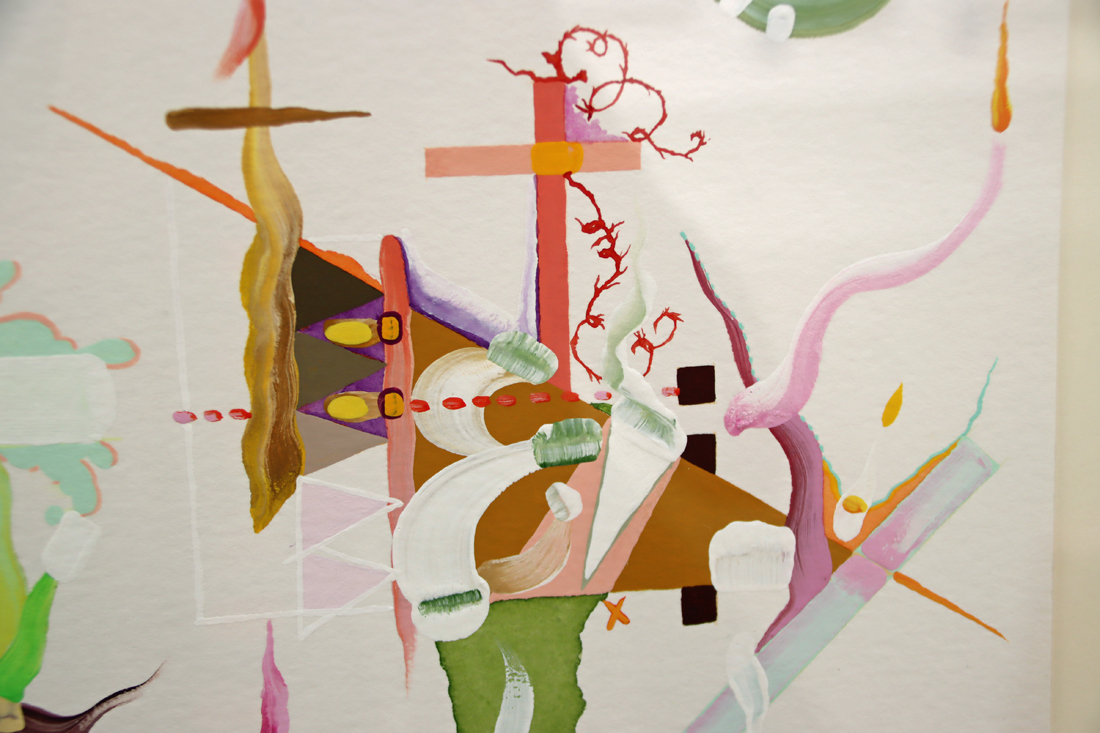
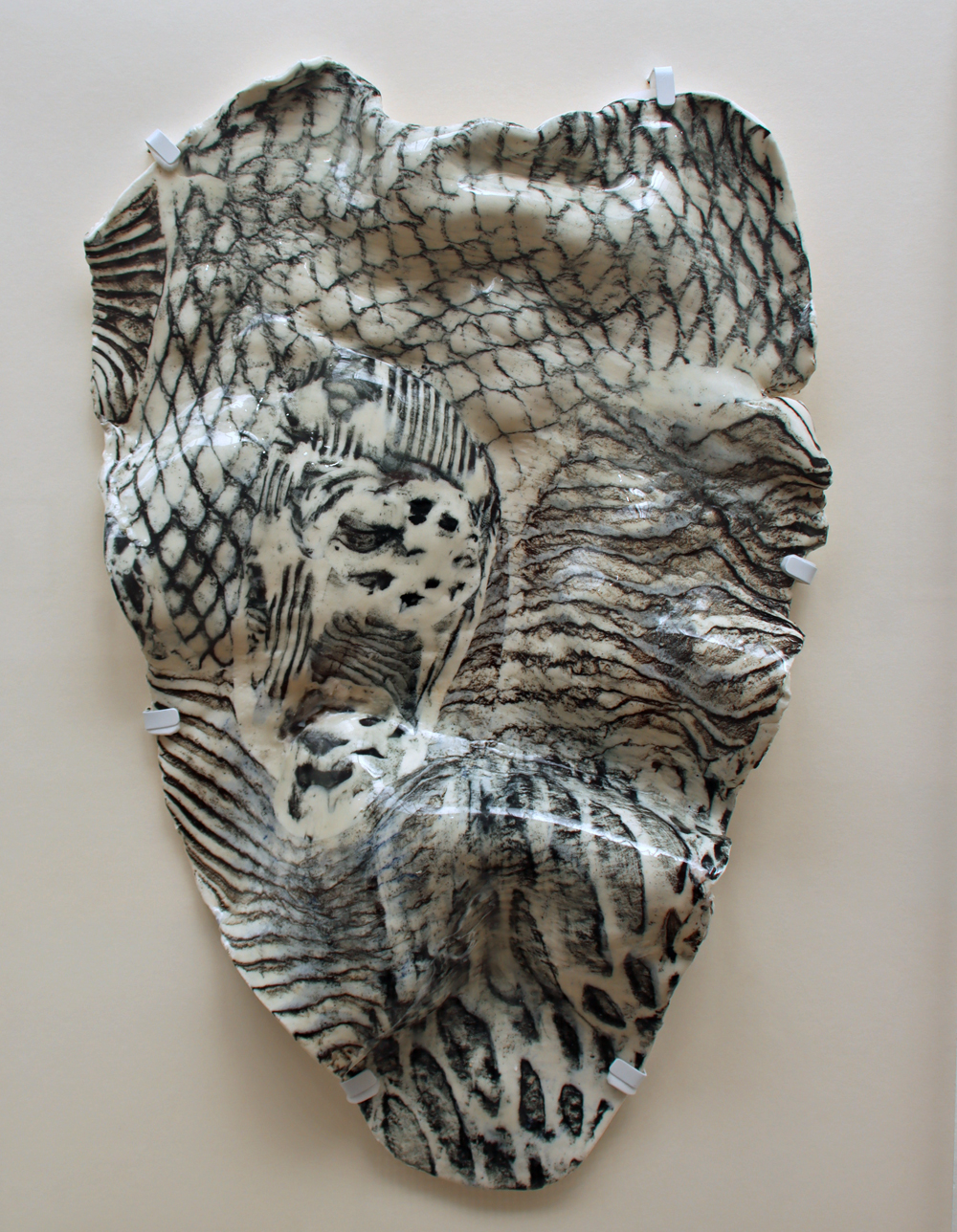
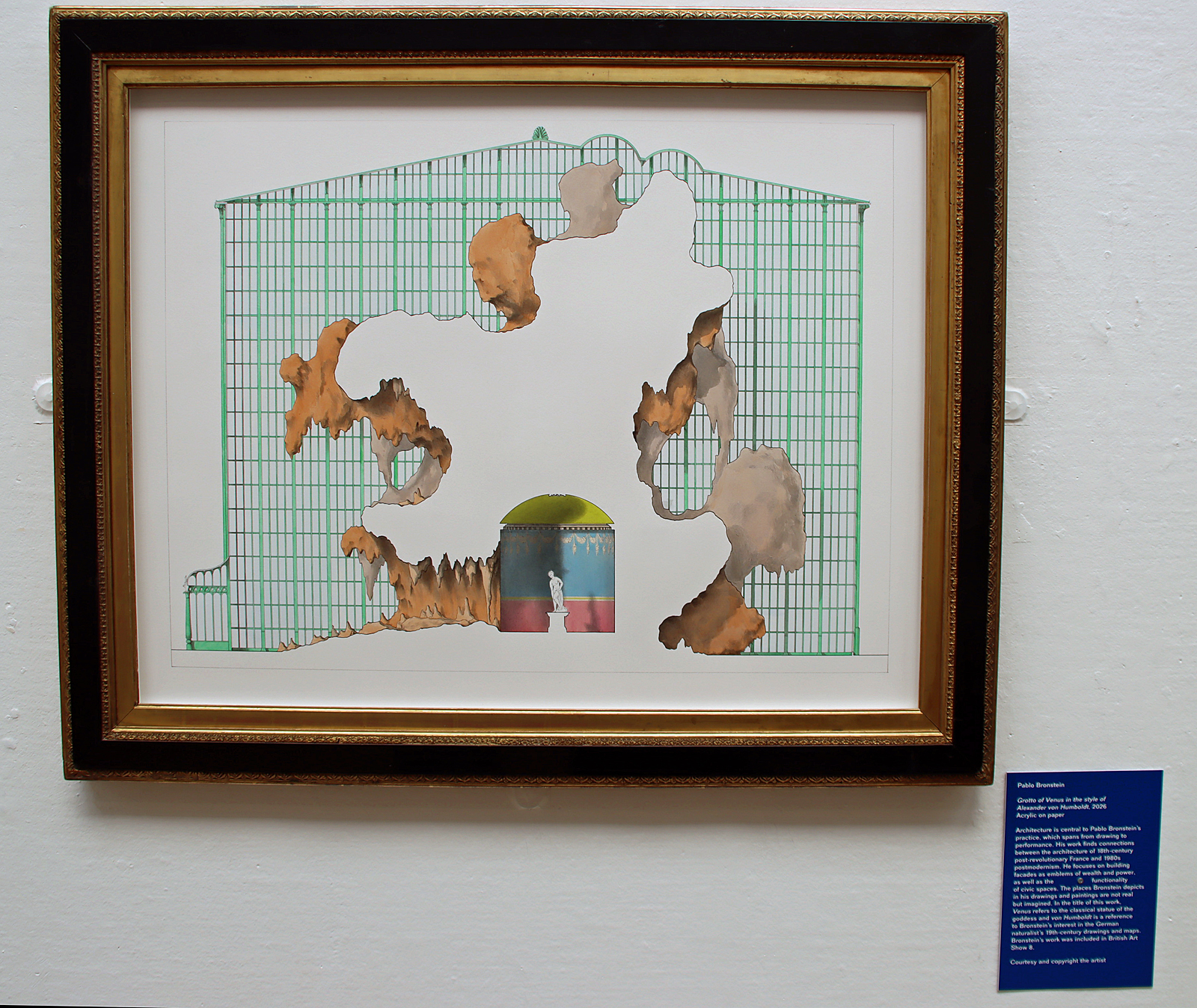
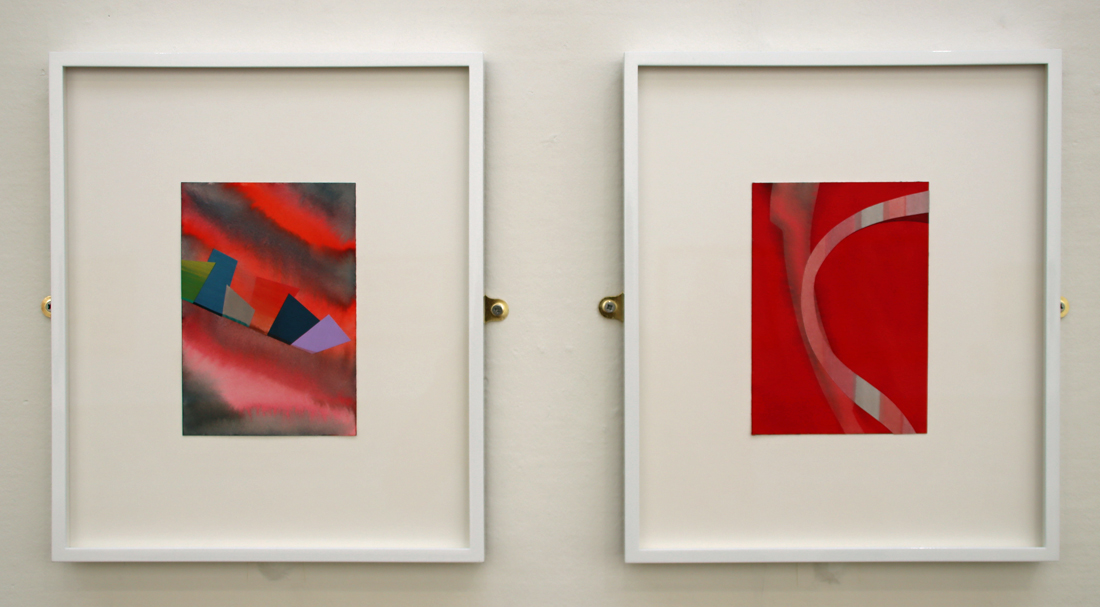
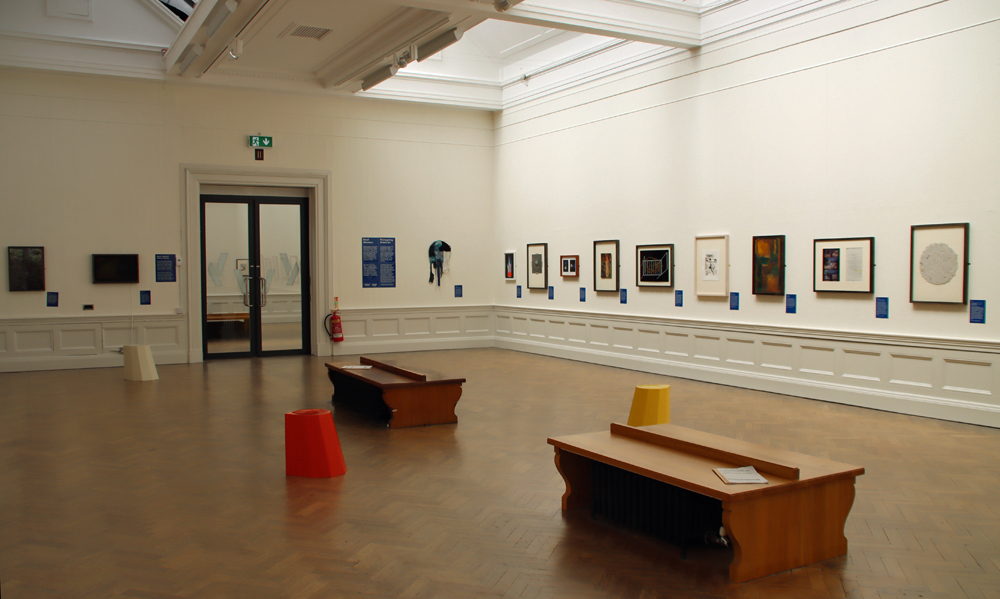 The Small Wonders exhibition was the most difficult to describe, mainly because I found so little about it relatable, which is unusual for me. It is a travelling exhibition curated by London’s Hayward Gallery, and brings together work by fifty artists, to provide a snapshot of British art over the last 45 years. I have been visiting and enjoying modern and contemporary art for decades, but although there are always some pieces that leave me cold, I found this was more frustrating than usual. Before I go on, I should say that I may be alone in my response to what is clearly a popular exhibtion.
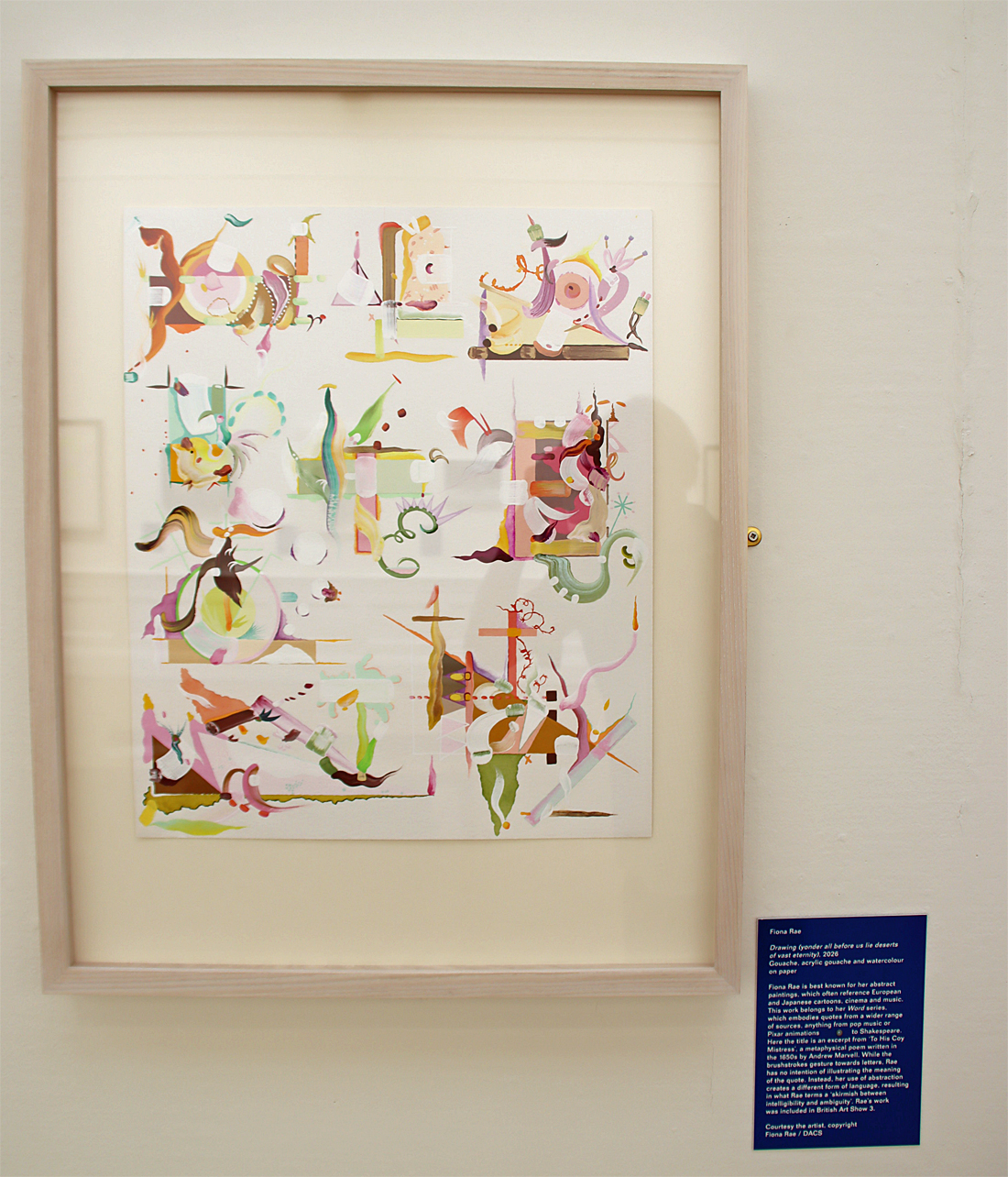
 One piece, which for me was engaging thought-provoking, was a video with a voice-over, but the rest were all static, framed artworks, although most of the artists, according to their biographical data, work in various forms of media including including 3-D installations and cinematic work. Perhaps the artists are better understood in other media but for me most of the artworks failed to engage me either emotionally or intellectually. I could see that there is technical skill and creativity, and found some of it visually attractive, but a lot of it was very derivative of previous styles and although the multicultural mix was a positive element, I found none of it deeply gripping. Apart from Saskia Olde Wolber’s video artwork “Centrifuge,” which was compelling for both its narrative and its constantly evolving organic semi-abstract imagery, there was nothing with sufficient depth for me to sink my teeth into, and I came away longing to have had a teachable moment, something from which I could have learned, or which had at the very least moved me to empathy, laughter, annoyance or simple admiration. But of course, to each their own. Having said all of that, I am sincerely grateful for being given the chance to see a London exhibition without having to travel to London to do it.
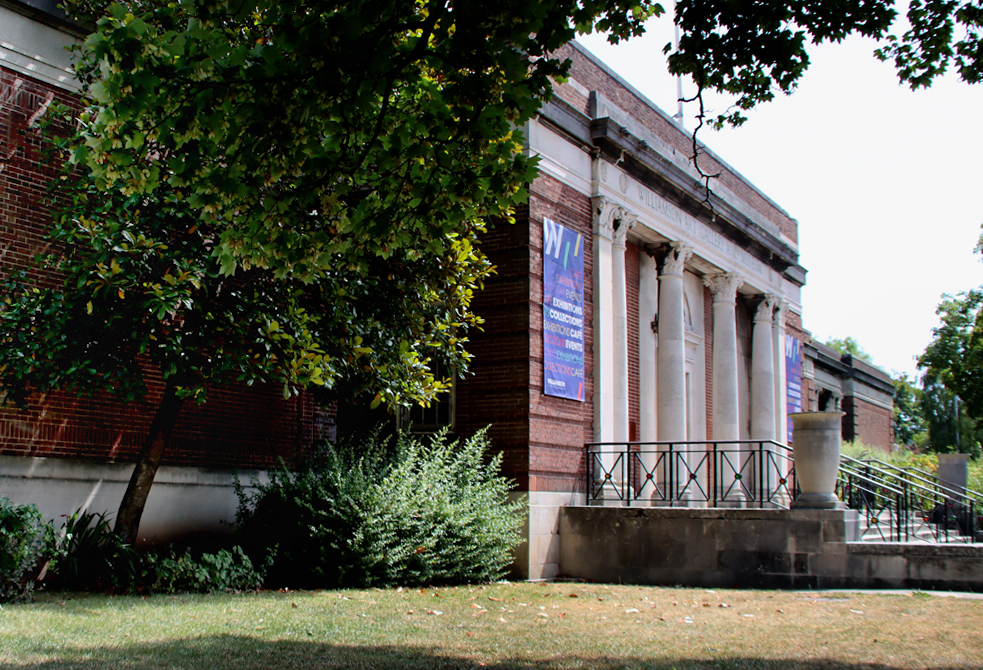
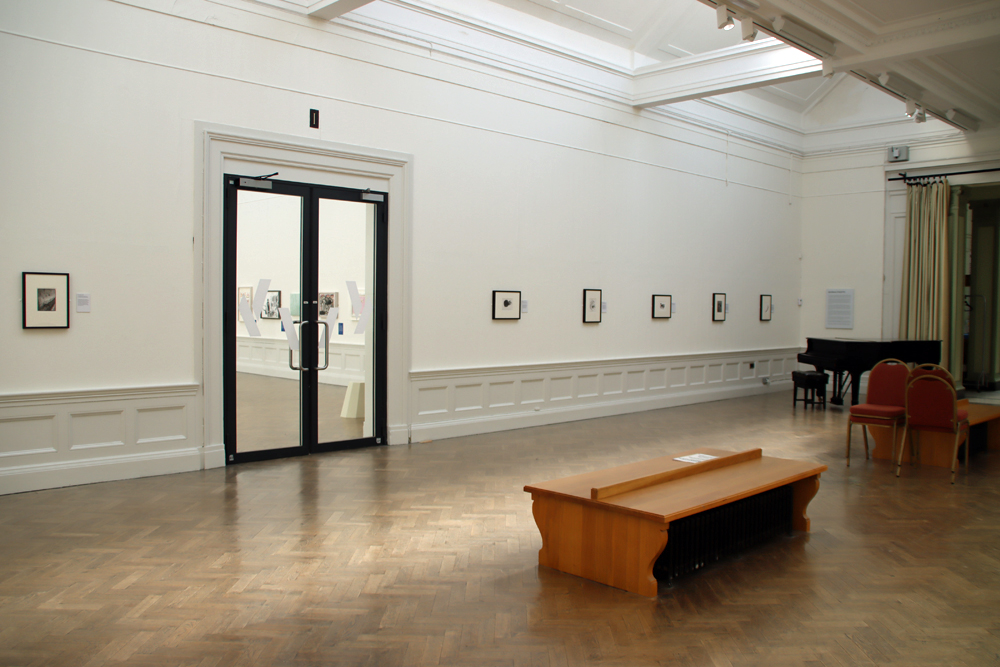 The Williamson is a splendid resource to have for the Wirral and so near to Chester. I very much admire their policy of retaining part of the museum for their permanent collection and the other, larger part for temporary exhibitions. It means that local people can always expect to come in and find something new to see, whilst those of us driving from elsewhere find that the trip is more worthwhile when there are new artworks to see from the Williamson’s own stores. You can find out more about the Williamson’s events on their web pages. I signed up for their newsletter after my first visit and that is an excellent prompt not to miss anything. You can sign up for it at the end of every page.
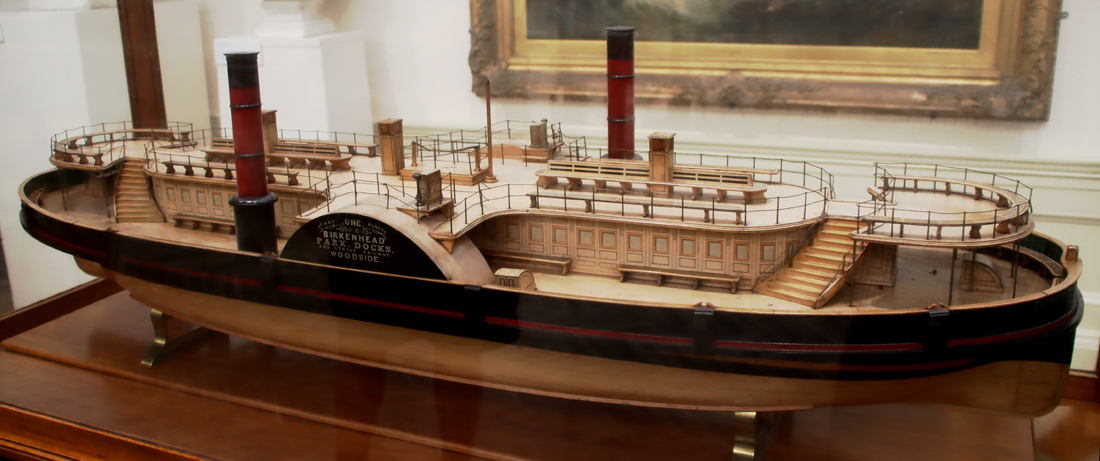
On my previous post about the Williamson’s permanent and temporary collections I mentioned the café. It is comfortable and spacious, with excellent coffee and some good-looking lunches being produced in large numbers, and as you imbibe you can enjoy more art because the walls of the café are used as additional hanging space for art works, and these too had changed since our last visit. And don’t forget to visit the model ships, which are stunning. Who wouldn’t want to cross the Mersey on a ridiculously curvaceous Art Deco ferry like this one? Bliss.
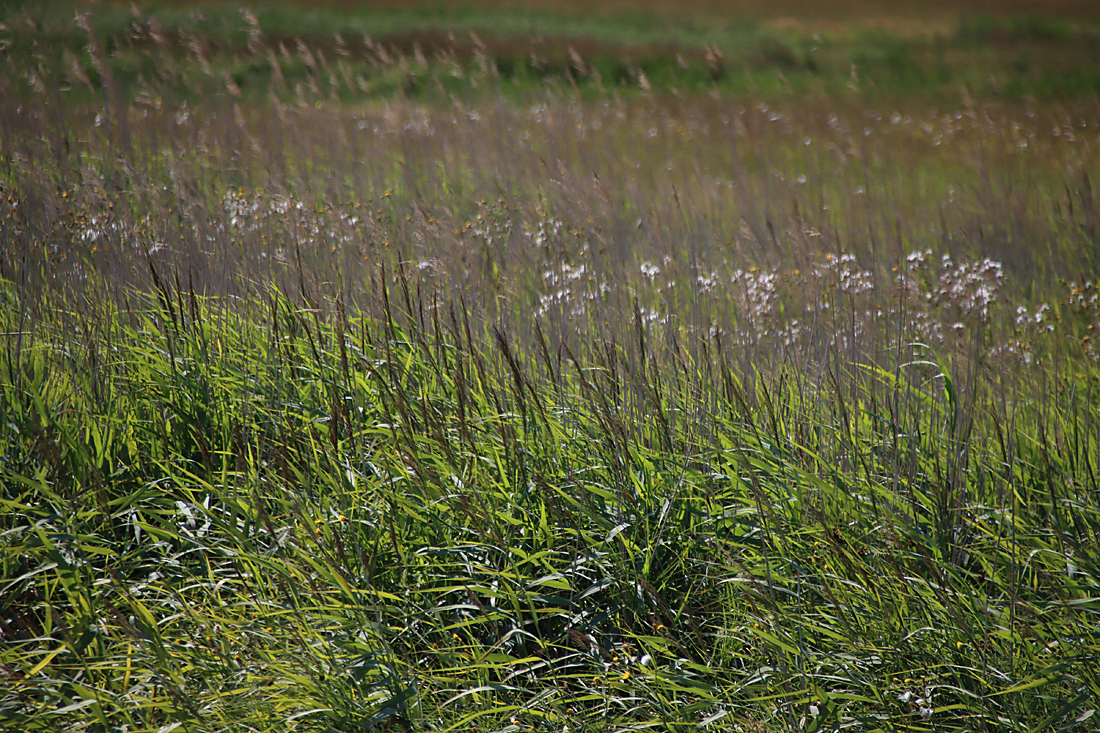
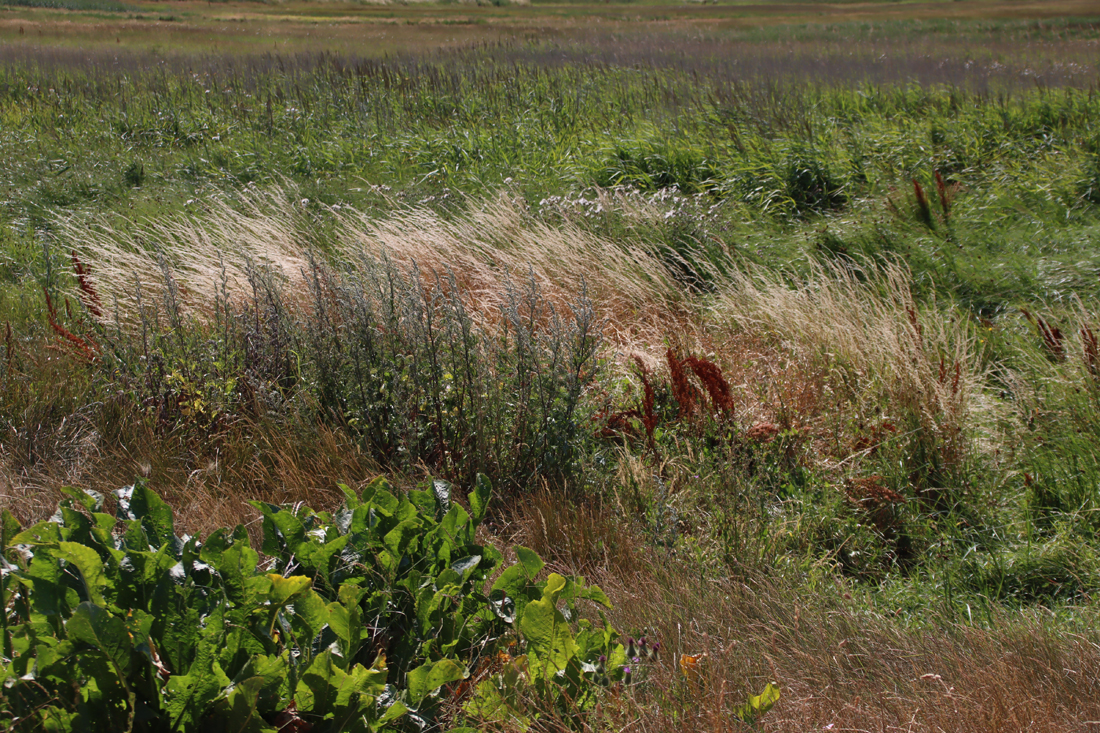
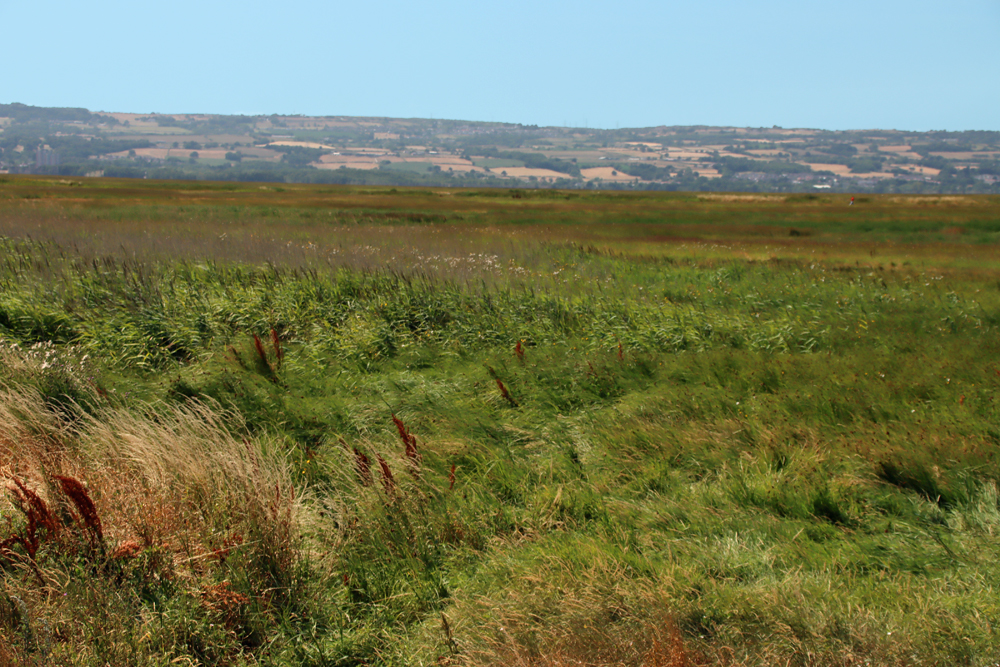 Because of that big yellow sun and the vast acres of blue sky, we opted for The Harp Inn at Ness, parking at Denhall Quay, both of which I posted about last week, and here too there was much loveliness to be enjoyed across the acres of green marshes reaching towards the Welsh foothills and Moel Fammau, with a fabulous breeze coming off the estuary. We were both ravenous, so ordered one haddock and chips with garden peas and one cheese and ham ploughman’s (the latter, mine, was absolutely huge and truly heavenly). It was a really super way to round off a superbly satisfying morning.