Ranulf III’s Beeston Castle #1 – Who was Ranulf?

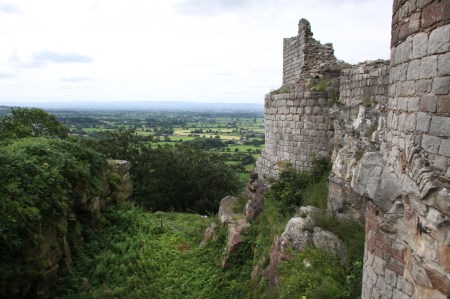
The approach to the inner ward (or bailey) seen from the bridge, with the vast ditch below, part quarry and part defensive device, and a slice of the superb panoramic view in the background.

The English Heritage Guidebook to Beeston Castle opens with the following statement:  “Standing on a rocky crag high above the Cheshire plain, Beeston is one of the most dramatically sited medieval castles in England.”  Organizations keen to puff off the virtues of their sites are often guilty of hyperbole, but in this case, the guide book speaks nothing but the truth.  On a bright mid-August day, with the sky a silvery pale blue, it was absolutely spectacular, both on the approach to the solidly impressive fortifications from below, and standing in the inner ward above the plain, gazing east to the Welsh foothills and northwest to the Pennines, with the floor of the world reaching out in all directions, lovely and fabulously impressive.  All this and history too.

This post has been split into two parts, with Part 1 looking at Ranulf III himself, and Part II tackling the castle itself, looking at how it was built, used and perceived, covering 600 years from the 13th to 19th Centuries.

If you would prefer to download parts 1 and 2 as single a PDF, please click here.

Ranulf III

Although Beeston Castle was altered several times since its original construction, it was the brainchild of Ranulf III (Ranulf de Blondeville), the 6th Earl of Chester and first Earl of Lincoln (1170-1232).  Ranulf’s castle building phase came fairly late in his very busy and dangerous life as the most powerful magnate in England.   The first work on Beeston Castle took place c.1220, only 12 years before his death, so this needs to be understood in the context of the rest of his life. 

Hugh de Kevelioc’s coat of arms, featuring five wheatsheaves.  Source:  Wikipedia

Ranulf was a descendent of the powerful Norman Marcher Lords installed by William the Conqueror to provide a buffer against the perceived chaos across the border in Wales.  Wales was at that time a set of territories controlled of powerful families headed by chieftains who were often in armed dispute with one another as well as with England  The Marcher lords, acting as guardians of the border, were incentivized with land, title and, perhaps most importantly, a great deal of autonomy.  Originally intending to shift the border further into Wales, the Marcher lords found the mountainous territory of the Welsh chieftains a serious impediment to progress and instead consolidated their positions in the lowlands.  However, the give and take of land and lives continued throughout Ranulf’s life, in spite of both reprisals and peace treaties.  It was not until after his death, during the reign of Edward I, that attacks by the Welsh chieftains were eventually squashed.  The loss of Crown lands in France by previous kings meant that Edward had had plenty of time to devote to the problem.
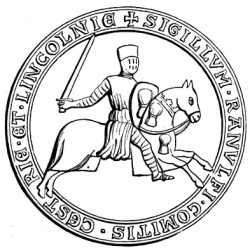
Ranulf’s official seal, reading “Seal of Ranulf Count of Chester and Lincoln.” The wheatsheaf emblems were later adopted by the Grosvenor family and can be seen on the outside of Churton-by-Aldford’s former school.  Source:  Wikipedia’s Ranulf III page

Ranulf, being of Norman stock, probably thought of himself primarily as Norman rather than English.  His mother was Bertrada de Montford, a cousin of Henry II from Evreux in eastern Normandy.  His father was the 5th Earl of Chester, Hugh de Kevelioc.  Hugh de Kevelioc was born in 1147, the son of Ranulf II, 4th Earl of Chester and Maud, the daughter of Robert the 1st Earl of Gloucester, who was an illegitimate son of King Henry I.  When his father died in 1181, Ranulf became a royal ward of Henry II and was sent to Henry’s court in Normandy, accompanied by his mother and four sisters.  When he came of age, knighted as Earl of Chester, he had inherited Chester Castle and the important trading port of Chester, together with valuable territories in Normandy until these were lost in 1204-5 by King John.  Sadly, there are no images of him.

Chester had been established as a palatine by William the Conqueror, granted special powers, removing it from of the direct control of the Crown, but Ranulf’s other estates could be redistributed at the whim of the king, to reward or punish, or merely reorganize.  Although Ranulf’s holdings expanded and contracted throughout his adult life he remained one of the most powerful men in England.  

Henry II
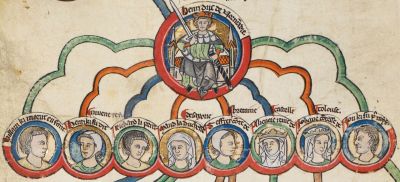
Henry II and his children.  From left to right – left to right: William, Henry, Richard, Matilda, Geoffrey, Eleanor, Joan and John.  Source:  Wikipedia

Ranulf, brought up in the court of Henry II, was loyal to the kings Henry II, Henry’s sons Richard I and (eventually) John, followed by John’s son Henry III.   These rulers were collectively known as the Angevin kings.  The period leading up to Henry II’s death was one of conflict, with his sons, Richard, Geoffrey and John turning on him due to the uncertainties of succession. 

At Henry II’s request Ranulf  married Constance of Brittany in 1189 at the age of 19, giving him the right to call himself Duke of Brittany.  Constance was widow of Geoffrey of Brittany, and mother of Arthur of Brittany who was next in line to the Duchy of Brittany.  Henry wanted to diffuse a situation in which Brittany was supporting his son Richard against him.  1189 was also the year in which Ranulf was knighted Earl of Chester by Henry.  Ranulf was now in control of his estates in England and Normandy.   Unfortunately, Ranulf and Constance soon developed a mutual loathing that lead to their separation within five years.  1189 was also the year in which Henry died and Richard I “the Lionheart” came to the throne, without further hostilities being required to assure the succession. 

Richard I

Richard I painted c.1250–55 by Matthew Paris in his Historia Anglorum. Source: Dorling Kindersley findout

Under Richard the Lionheart, the newly knighted Ranulf, connected to Richard via their relationship to Henry I, was given a role of key importance role in the coronation procession, carrying the jewel-encrusted crown.  Richard departed on crusade just a year later, having appointed a number of officers to oversee  his interests in England during his absence.   He also named his heir in case he perished during the crusade.  Instead of his younger brother John, he named Ranulf’s stepson, heir to Brittany, Constance’s son Arthur.  Unsurprisingly, Prince John’s nose was now firmly out of joint and he attempted to take the crown, supported by the king of France, Philip Augustus.  He was opposed by a number of powerful barons, including Ranulf.  Learning, weeks after the fact, of trouble at home, Richard decided to return, but he was humiliatingly delayed when he was recognized on the return leg of the journey, captured and held hostage in Germany.  Following an eye-watering payment Richard was freed, and his return settled the matter of John’s ambitions.  Richard underwent a second coronation just to push home the point.  Ranulf remained loyal to the king and followed Richard into war in Normandy and Brittany, where his estranged wife Constance was now stirring up rebellion.  In a rather botched attempt to split Arthur from Ranulf’s estranged wife Constance, both were ambushed in a trap set up by Richard with Ranulf’s help.  Constance was taken prisoner by Ranulf, who was now able to refer to himself one again as Duke of Brittany, but Arthur fled to the comparative safety of the King of France, Philip Augustus.

Whilst Ranulf was fixed in Normandy, Llewelyn the Great attacked and took Mold (then known as Montalt).  Mold was retaken but Ranulf’s trusted supporter, Ralph de Montalt, died in the conflict.  Ranulf was powerless to do anything about this, but it was just one more indication that something needed to be done about Wales.

Richard died in 1199 in a minor dispute (allegedly over rights to a Roman treasure), and with Arthur now allied with France, John succeeded to the throne. 

John

King John painted c.1250–55 by Matthew Paris in his Historia Anglorum. Source: TLS

Ranulf, having opposed John’s attempted coup, needed to prove his loyalty in the face of John’s notorious paranoia.  Ranulf was now about 29 years old.  He spent a lot of time early in the reign shifting between his territories in Normandy and England, while John reconciled himself with Arthur by naming him Duke of Brittany (ending Ranulf’s tenure) and Earl of Richmond.  The reconciliation was short-lived.  Arthur attacked Angers, taking a key Angevin castle, a terrible shock to John, who took instant revenge by taking the castle at neighbouring Le Mans, where Arthur’s mother Constance was staying.  He razed both castle and village to the ground. 

Arthur fled back to Philip Augustus.  Ranulf, joining John, swore loyalty to him at a big gathering in eastern Normandy in 1199, but John remained suspicious of him and it took time to win his trust.  This was not helped when, in 1200, Ranulf married Clemence de Fougeres, whose family had connections to both Brittany (via her father) and Normandy (via her mother).  John had a personal interest in Clemence himself, and was also concerned that Ranulf’s loyalties might be divided.  Ranulf doggedly pursuing his policy of demonstrating loyalty to John, stayed at court and accompanied the king on his travels throughout his territories. 

Arthur paying homage to Philip Augustus of France. Chroniques de St Denis, British Library.  Source:  Wikipedia

Constance, mother of Arthur, died in 1201 from leprosy.  Arthur, attacking another Brittany castle, was captured and imprisoned.  In 1202 he disappeared, probably having been murdered.  In response, Brittany rose up in revolt backed by Philip Augustus, king of France, who began to move against Normandy.  After an initial serious hiccough, when John charged Ranulf with treason, Ranulf was reinstated and his briefly confiscated estates returned to him.  He set about proving his loyalty during the campaigns in Brittany and French-occupied Normandy.

Staggered by the speed at which Philip Augustus was moving, and anticipating defeat, John left for England in December 1203, leaving his followers to defend his territories as best they might.  Ranulf followed shortly afterwards, similarly leaving his castles to defend themselves.   Although the war in France had continued in both John’s and Ranulf’s absences, Normandy was lost by 1205.  Ranulf, at court in England with John since late 2003, managed to weather the storms of John’s suspicions and continued to travel with the court, accompanied John in military expeditions to Poitou and Gascony and supported John in the face of the First Baron’s War.  Ranulf had, however, lost his five great castles in Normandy, together with the small private army that supported them. 

After another hiccough, when Ranulf’s loyalty was once again questioned in early 1205 by John, Ranulf again successfully challenged the accusations levelled at him.  Given John’s suspicions, it seems bizarre that only a year later John was so impressed by Ranulf’s loyalty that he rewarded him with so many titles and “honours” (estates) that he became the most powerful and wealthy man in England.  By 1208 Ranulf was not only Earl of Chester but also Earl of Lincoln, Earl of Richmond and had rights over Lancaster and Leicester.  The land and income associated with these honours were vast. 

Henry III

The coronation of Henry III. Source: Wikipedia

Following John’s death in 1216, the 46 year old Ranulf paid homage to the new king, the 9 year-old Henry III, and went to war in his name against Louis of France.  The king’s first Justiciar (effectively an acting regent) was Earl Marshall, a friend of Ranulf’s, and the transition seemed to go smoothly for Ranulf.  Fulfilling a promise to King John, Ranulf took an important part in the siege of Damietta in Egypt in 1218 during the 5th Crusade, returning after two years of battle.  He left Egypt in July 1220, arriving in England a month later.

Ranulf returned, having lost many friends to the crusade, to find that his friend Earl Marshall had been replaced as Justiciar by Hugh de Burgh, a long-standing enemy.  With two years of accumulated business to take care of, including repairs to some of his properties, he was kept busy with his own estates, but Henry also awarded him with new estates.  Disruptions over the rights to a number of castles involved Ranulf in military activity on behalf of the Crown in Northamptonshire, and then again on both his own and the Crown’s account at the Welsh borders, the latter at least partly resolved in the case of the Chester border with the marriage of Ranulf’s nephew John le Scot to Llewellyn’s daughter Helen in October 1223. 
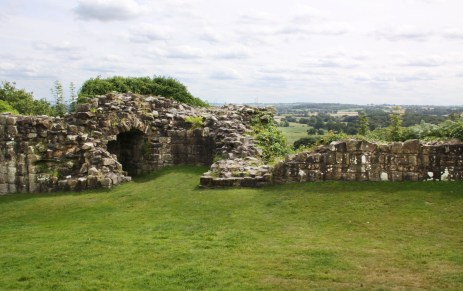
Section of the outer ward’s curtain wall with remains of one of the D-shaped towers

Ranulf soon embarked on a major programme of castle-building, rebuilding castles at Bolinbroke Castle in Lincoln, Chartley in Staffordshire and  establishing a new castle Beeston in Cheshire.  Of the three, Beeston was by far the largest.  Ranulf’s reasons for wanting these castles, particularly Beeston Castle, which competed in scale and ambition with those of the kings themselves, have been much debated.  It has often been assumed that Beeston Castle, which was started in around 1220, was erected as a deterrent to the Welsh princes, but this was apparently not the case.  Not only is Beeston too far east of the Welsh border for this to be practical, but before building his castle, Ranulf had made his peace with Llewellyn the Great, whose territories met Ranulf’s along the Welsh border.  He felt sufficiently safe after the signing of this treaty to leave on the 5th Crusade in 1218 without any risk to his territory from Wales.  Although there had been a brief disruption after Ranulf’s return, this was at least partially resolved by the marriage of his nephew John le Scot to Llewellyn’s daughter, sealing peace if not actual friendship between Llewellyn and Ranulf.   Nor does Wales explain his other two castle-building enterprises.
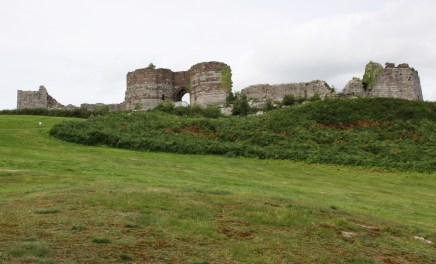
The approach to the gateway to the inner ward with remains of the curtain walls and D-shaped towers

Perhaps surprisingly, the English crown represented a far greater risk to Ranulf’s security than Wales.  Henry III did not assume control of his government and territories until 1227, seven years after Ranulf started the building works at Beeston.  During this period control remained with Henry III’s Justiciar, Hubert de Burgh,  Ranulf’s enemy.  Disapproving of the way in which so much Crown territory had been given away as favours under previous reigns, Hubert de Burgh had started to claw back land and assets wherever he saw weakness.  It was now that Ranulf started to make improvements to his existing properties and to build his three new castles: Beeston Castle in Cheshire,  Bolinbroke Castle in Lincoln and Chartley in Staffordshire.  The new castles were probably intended to be Ranulf’s insurance against a royal land-grab happening to him, mainly acting as a statement of political authority and independence.

The great ditch around the inner ward, used for quarrying building fabric for the castle, as well as defence.

By raising taxes, Ranulf could easily afford these great projects.  Iain Soden describes Ranulf’s properties at this time:

Ranulf continued to hold the largest number of lands of any magnate in England; with them came the bulk of the armed forces.  Besides his ancestral earldom of Chester, the Honour of Chester stretched right across the Midlands, out into Gloucestershire and across Staffordshire and Warwickshire into Northamptonshire.  Outlying lands attached to the honour lay as far south as Devon and as far north as Derbyshire.  His earldom of Lincoln was intact, stretching from Yorkshire to Leicestershire, white the honour of Leicester linked his norther n lands with those in Northamptonshire.  To these, of course, could be added the family lands.  His brother-in-law Ferrers held the earldom of Derby and now the honour of Lancaster while his nephew was Earl of Huntingdon.

As his castles were being built, Ranulf continued to be in attendance at court and again returned to battle in France in 1230, this time against Louis IX, remaining until 1231, with a successful outcome.  He returned to England later that year.

Ranulf died on 26th October 1232 at the royal castle in Wallingford, 12 years after he began work on Beeston Castle.  Consistent with the traditions of the time, when he died his body was eviscerated (internal organs removed) so that it could buried in three locations.  His entrails were buried at Holy Trinity Priory at Wallingford.  His heart was buried at Dieulacrès Abbey, the Cisterian monastery that he had relocated, in 1214, from Poulton, south of Chester and just north of Rossett, to Leek in the Midlands.  His  embalmed body was then returned to Chester and buried in the chapter house of the Benedictine Abbey, St Werburgh’s, next to his father and grandfather. He had no children.

Ranulf was a really fascinating historical figure, a powerful magnate, and a key figure in the lives of the Angevine kings.  Although he was swept up in the royal imperative to hang on to existing territories, retrieve lost ones, and acquire new ones, as well as meet the crusading demands of the Pope, he stands out as someone who was immensely powerful in his own right, loyal to the Angevine kings but perfectly confident to engage in strategic planning on his own behalf.  In spite of the skilled work of his biographers, who have delved into difficult contemporary documents, Ranulf as a personality remains elusive, lost in the accounts of military and courtly engagements, actions and deeds.  He respected, cared for and supported his friends, detested his first wife, apparently rubbed along well with his second one, and engaged in bitter conflict with one of Henry III’s key advisors.  He had a passion for hunting, a quick temper, was an excellent project manager, a compelling leader of men and was unafraid of exposing himself to the genuine horrors of war, often engaging in fearsome hand-to-hand combat.  There is the suspicion that his final phase of castle building had as much to do with vanity as a fear of having his estates confiscated, but that remains pure speculation. There is no surviving image of him to give an impression of what he looked like.

For anyone wanting to read more about Ranulf III, whose extraordinary and complicated life cannot be more than touched upon in a post of this length, Iain Soden’s “The First English Hero” is a good read, details of which are in Sources, at the end of this post.

Part 2 looks at the castle itself, both how it was used and how it was perceived, from the 13th to 19th Centuries.

Sources

Books and papers

Alexander, J. 1982. RANULF III OF CHESTER: An Outlaw of Legend?  Neuphilologische Mitteilungen, 83(2), p.152-157.
http://www.jstor.org/stable/43343443 (available free with registration)

Gillingham, J. and Griffiths, R.A. 1984. Medieval Britain.  A Very short Introduction.  Oxford University Press

Liddiard, R. and Swallow, R.E. 2007. Beeston Castle. English Heritage Guidebooks

Rubin, M. 2014.  The Middle Ages.  A Very Short Introduction.  Oxford University Press

Soden, I. 2021 (second edition). The First English Hero: The Life of Ranulf de Blondeville. Amberley

Ward, S. 2013 (second edition). Chester. A History.  The History Press

Websites

English Heritage
Description of Beeston Castle
https://www.english-heritage.org.uk/visit/places/beeston-castle-and-woodland-park/history/description/
Research
https://www.english-heritage.org.uk/visit/places/beeston-castle-and-woodland-park/history/research/
History
https://www.english-heritage.org.uk/visit/places/beeston-castle-and-woodland-park/history/
Sources for Beeston Castle
https://www.english-heritage.org.uk/visit/places/beeston-castle-and-woodland-park/history/sources/

Oxford Dictionary of National Biography (locked)
Ranulf (III) [Ranulf de Blundeville], sixth earl of Chester and first earl of Lincoln (1170–1232) by Richard Eales
https://www.oxforddnb.com/view/10.1093/ref:odnb/9780198614128.001.0001/odnb-9780198614128-e-2716;jsessionid=A550860211C96B6006DE6E8E327F88A1
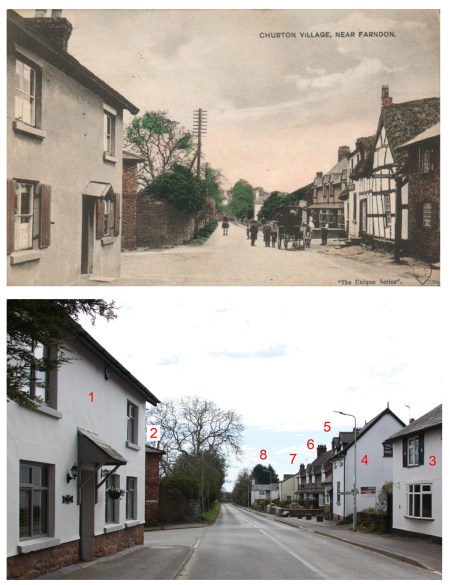
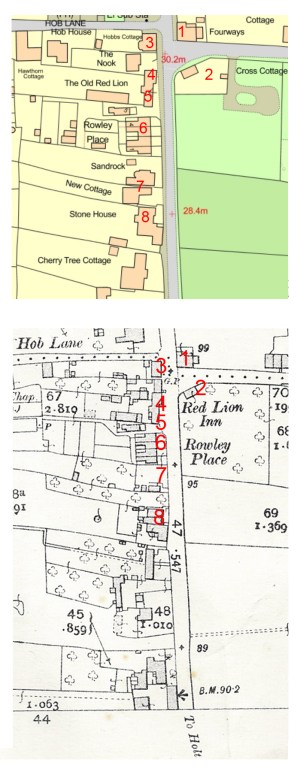
Comparing a Churton village postcard, the 1911 map and a modern photograph

1, Fourways. 2, Cross Cottage. 3, Hob Cottage. 4, The Old Red Lion, extension or combined with the earlier building?. 5, The Old Red Lion (former pub with half-timbered section, barely visible here but marked by three square planters). 6, Rowley Place (1-4). 7, New Cottage. 8, Stone House (formerly Stone Cottage and Lilac Cottage, now one house). On the other side of Stone House, and out of view in both postcard and photograph, is Cherry Tree Cottage, dating to 1610 and beyond it Wayside Farmhouse, Highway Farm and The Byre.

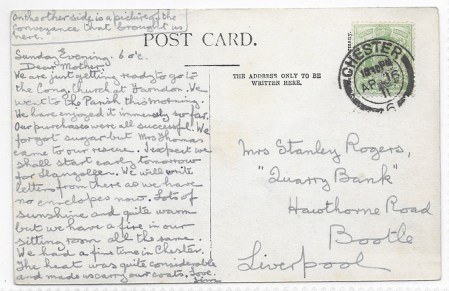
This is a tinted version of a black and white photograph used for this distinctive postcard of Churton.  I have seen several for sale on eBay, but all of them were unposted and unmarked, whereas I like to see the stamp, post mark, recipient address and to read the message.   This is a particularly good example.  The postcard was printed in Germany as many early postcards were. It has a Edward VII Halfpenny stamp (Edward VII came to the throne on the death of his mother, Queen Victoria, on 22 January, 1901, and died on 6 May 1910) and bears a Chester postmark dated April 16th 1911.  It was destined for an address in Bootle.  See the message at the end of the post.

On the photograph above and on the maps below, the red numbers have been added for ease of identification, but do not relate in any real-world way to the buildings themselves, none of which, apart from the homes that make up Rowley Place, were allocated Chester Road numbers, and all of which are known instead by their house names.  Several buildings are set back from the road today, and are not visible in the postcard, so have not been mentioned here but are shown on the top of the two maps below.  Note that numbers 4 and 5 refer to what make up the same residence today, but were clearly built at different times in the past.

Modern map of Churton from the Public Map Viewer, compared with the 1911 map (Cheshire Sheet LIII-3, a 1909 revision of the 1872-4 and 1897 -1898 surveys).  Between 3 (Hobbs Cottage) and 4 (part of the Old Red Lion), the thatched half-timbered house is still shown.
Many of the buildings and features shown in the photograph are still present today, but there is one notable omission. Eventually I hope to get to grips with the histories of individual buildings, including my own, but for the time being I have confined myself to playing “spot the difference” between the early 20th century postcard and the photograph I took in March 2021.

The most notable of the buildings that was in the postcard but is absent in the photograph is the half-timbered thatched building that sits between Hobbs Cottage (3)  and the Red Lion (4 + 5) on the photograph, a wonderful looking place that may date to the same period as Churton Hall Farm (in Pump Lane).  It was built directly onto the red sandstone bedrock, and has a small flight of stairs over the bedrock to reach the front door.  If anyone has any information about it, please get in touch.  Its site is now the driveway that gives access to The Nook, which is set back from the road.  A startling sight in the postcard is the regiment of telegraph polls, with seven rows of crossarms.

Almost completely hidden in the postcard is the Old Red Lion, which seems to have been thatched at that time.

Two buildings post-date the 1911 map:  Sandrock and New Cottage on the plot marked 7.   Most other changes are cosmetic, but like the the usual modernizations of window frames but a A  number of minor embellishments have been made to existing properties. The shutters have been removed from Fourways (1).  A sympathetic roof conversion has been fitted to  part of the former Red Lion (4), the porch over Fourways (1), has been changed for something a bit more effective and Hobbs Cottage (3) has been fitted with a small bay window on the ground floor and its brickwork has been rendered and painted.  A road sign for Pump Lane has been added to Cross Cottage since the photo in the postcard was taken (2).  At first glance I thought that the  same signpost pointing down Pump Lane to Coddington had been retained, but it has either been replaced or moved, because it is no longer in front of Hobbs Cottage.

Do get in touch if you have further insights.

As to transport, a novelty of the image compared to today is that there is no traffic thundering up and down!  Instead, there is a one man on horseback retreating down the road at a plodding pace, and a horse-drawn carriage with a small group of people around it, together presenting a very peaceful rural scene.  Ron Parker, who was born in the village, told me that when he was a child they used to play ball in the road.  Heaven help anyone who tried it now.

The note on the postcard was written on a Sunday evening at 6pm in April 1911 by one Jim (presumably Jim Rogers) to his mother Mrs Stanley Rogers.  It  says that they were just going out to attend the Congregational Church at Farndon, having been to “the Parish” in the morning.  This was presumably the Congregational chapel built in 1853, now a home named Chapel House.  The Parish church would have been either St Chad’s in Farndon or St John the Baptist Church in Aldford, depending on whether they were staying in Churton by Farndon or Churton by Aldford.  The two civil parishes were only combined to form a single parish in 2015.  The visitors had already been to Chester on a sunny day, when it was so warm that they had had to carry their coats, and on the following day they were making an early start for a trip to Llangollen.  It must have been quite a trek by horse-drawn carriage. Even with the warm weather, they were enjoying a fire in their sitting room on that Sunday evening.  Jim finishes the card by pointing out that “on the other side is a picture of the conveyance that brought us here”.

Churton seems like a rather remote spot for a holiday break, particularly when the means of getting there was horse and carriage, but that’s very much what this message appears to indicate.  It would be interesting to know the details of the end-to-end journey that ended in a horse and carriage ride into Churton.

If you own a used copy of this postcard (i.e. one that has been posted and has a stamp, postal mark and message), do share the details of it either by commenting here, or by getting in touch with me.  It would be good to build up a picture of the sort of experiences people had when they visited Churton, and to know why they visited in the first place.


Cheshire Proverbs 4: “When the daughter is stolen, shut the Pepper Gate”

“When the daughter is stolen, shut the Pepper Gate”

J.C. Bridge no.387, page 151


Source: Ballads and Legends of Chester by Egerton Leigh, 1867 (full book available online)

This proverb refers specifically to Pepper Street in Chester.  Pepper Gate was presumably located exactly where Newgate was built, along the line of the Roman walls.

Bridge devotes three and a half pages to the proverb, and there is a complete account of one version of the story in Egerton Leigh’s Ballads and Legends of Cheshire.  As Bridge says, the proverb is a local (and more amusing) version of locking the stable door after the horse has bolted.  In this case, it was a girl rather than a horse.  There are two versions of the story, one that claims that she was actually stolen (i.e. kidnapped) and the other that she engineered her own departure through the gate.  In the latter context, the word “stolen” perhaps refers to her lover’s persuasions, convincing her to leave her home and run away with him.  Bridge gives the latter version first:

A daughter of a certain Mayor of Chester was playing at ball – Nausicaa like – with other maidens one fine summer’s day in Pepper Street.  The Gate of the street was shut, but there was a small postern open, and through this the maid threw the ball – no doubt by design though it seemed at the time by accident.  She ran through the postern to get it, and found herself in the arms of her lover who was waiting.  he threw her on his horse, rode off with her and married her.  Hence the Gate was afterwards kept entirely shut. [Bridge, pages 151-152]

A postern is a secondary door or gate to the side of a much larger one, common in castle and church architecture.  Bridge’s reference to Nausicaa refers to a young woman in Homer’s Odyssey.  The daughter of King Alcinous and Queen Arete of Phaeacia is playing ball with her handmaidens whilst waiting for laundry to dry at the water’s edge, unaware that Odysseus has been shipwrecked on their island.  A ball landing in the water wakens Odysseus and although the handmaidens flee in fear, Nausicaa stands her ground.  However, unlike our Pepper Street girl, she never gets together with Odysseus, although there was obviously a lot of meaningful eye-contact going on.

A detail of the delightful (and useful) Chester 1599 map by Braun & Hogenberg, annotated to show Pepper Street and the gate. Source: Sanderus Antique Maps and Books

A thirteenth century story , quoted by Canon Morris, bears a resemblance to the proverb, but involves the daughter being taken by a young man, rather than her running away to him:  “A younge man in the somer season toke a Mayres daughter and bere hur out of Pepur strete as she was playnge at the baule amongst other maydens and youd wyth her awaye and after he maryed the same mayde.”

The identity of the Mayor, the girl and her lover take up much of Bridge’s text.  Again quoting Canon Morris, Bridge repeats a similar story relating to the 1570s in which the father was in fact an alderman, Rauff Aldersey, the daughter Ellen Aldersey and the lover Rauff Jaman, a draper, to whom she was married “by an unlawful minister.”  Both of the men accused of “enticing and stealing away” were said to have been punished with fines.  In both the 13th and 16th Century versions the gate was closed completely at first following this offense, and then, apparently following objections, was open during the day but closed at night.  In Morris’s version the gate is described as “Wolfe-gate or New-gate.”  All three names for the gate are recorded.

Looking around for more on this proverb, I found an online version of the book Ballads and Legends of Cheshire by Egerton Leigh, 1867, which you can download here.  In this version, rhyming and hugely entertaining, the girl is called Rose.  The full story is five small pages long in Leigh’s book.  The opening lines of the tale are shown right, which gives an excellent flavour of it.  I love the bit about girls being prone, at a certain age, to exchanging their dolls for a man with a beard.  A superb insight into teenagers of every era.  The ballad goes on to describe her as a very beautiful young woman:

Her long curling tresses, though dark as the night,
When kissed by the sunbeam shone golden with light.
Her eyes of that sort, should she once glance at you,
You’d forever to all peace of mind wish adieu

Her lover was no less attractive:

He was not the man for whom fair maids might say
That most disagreeable of short words Nay.
Young, noble and handsome and devil-may-care
With the brain to conceive and brave heart to dare
Amongst men a lion; with ladies a lamb;
A look that said, laughing, ‘Refuse me who can!’

According to the ballad, Rose’s father was seriously unimpressed by her suitor’s lack of wealth and was prejudiced against the match, hence the requirement for the ball-game elopement:

Backwards and forwards bounds the ball,
Pursued by nymphs it leaps the wall ;
Through Pepper Gate in crowds they run ;
Back to the street the ball is flung ;
Hotter and hotter grows the fun

And here, Rose is swept up onto her lover’s horse, Lochinvar-style, and the couple ride away into the distance.  Rose’s father was distraught:

Bad news flies fast, and Chester’s mayor
At once began his locks to tear,
Bustled for nothing here and there.
Swore his daughter he’d ne’er forgive;
Vowed her lover should never live !
Declared his wealth he’d leave the poor,
Nor Rose should never cross his door.

The Pepper Gate is blamed by Rose’s father, the mayor, for Rose’s departure, and measures are accordingly taken:

The case is put; it seemed quite clear
That the mayor’s daughter (Rosy dear)
Could not through Pepper Gate have run
Had not the bars been left undone.
They pass a law to close the gate
Through which the wild Rose sought her mate.

The residents of Chester, however, know that this measure is redundant, because Rose has already gone, never to return. It is done anyway, but is derided by the towns-folk:

The townsmen smile : say they, “What for,
“when steed is gone, close stable door ?
When stolen the daughter, all too late
It is to close the Pepper Gate.

In all of the different versions, the girl, whether Ellen or Rose, is long gone, and it’s a bit late to slam shut the gate through which she vanished.

The ballad describes Rose’s lover as Welsh.  Bridge also considers “the original Chester ‘Lochinvar’ ” to be Welsh, basing his suggestion on a Welsh proverb “Gurru, gurru, gurru i’ Caer I briodi merch y Maer” (Trotting, trotting, trotting to Chester to marry the Mayor’s daughter.”

Newgate (formerly, in previous guises, Peppergate and Wolfgate) in 1925. Source: The impressive “Chester: A Virtual Stroll Around the Walls” website (the Newgate page)

Proverbs are time-twisted and tangled, but the themes that emerge from the spaghetti become well-honed and much-tested forms of vernacular wisdom, and are always worth some pondering.  The bolting daughter has not survived in common parlance, but the bolting horse has become a shorthand for (for example) buying a burglar alarm only after the thief has stolen the family jewels.  Such phrases have become so embedded into language that only the first half of the proverb is usually needed to make the required point.  The phrase “shutting the stable door” is nowadays quite sufficient for anyone to know that something was done too late to prevent an undesirable outcome, be it a daughter eloping, a horse bolting, or the family heirlooms being whisked away for nefarious profit.

For more about J.C. Bridge and this Cheshire Proverbs series, see Cheshire Proverbs 1.


Hidden Holt: An illuminating must-visit exhibition currently at Wrexham Museum

Cover of the free English/Welsh booklet accompanying the exhibition published by Wrexham Heritage Service, 2021.

My thanks to Brian Payne of the Holt Local History Society for alerting me to the fact that the Hidden Holt exhibition has been launched at the Wrexham County Borough Museum, running until 29th January 2022.  I went last week my father, and we were both bowled over by how good it was.

The exhibition introduces the Roman tile, brick and pottery works that were spread across a number of fields to the northwest of Holt, next to the river Dee.  It uses an excellent combination of original artefacts, video,  information boards and both old and new photographs and diagrams to track the twin stories of the site itself and the history of its discovery and excavation.  Holt Local History Society has a long-standing interest in the Roman works, and commissioned the most recent geophysical survey work at the site, so it’s great to see their contribution to the story being celebrated.

The exhibition (free to enter) is in Gallery 3, to the left as you move beyond reception and the café to enter the display areas.  I’ve given an overview below, but I seriously recommend that you just go – it is a tremendous, professionally-produced and beautifully designed little exhibition with some superb objects on display and some excellent information boards that explain what you are looking at.  You won’t regret it.  If you’re in the mood, the café serves a great coffee and what looks like a rather delicious lunch 🙂

Survey and excavation

Arthur Acton –  page 5 of the booklet accompanying the exhibition.  Source: Wrexham Heritage Service, 2021

The story of how the site was recognized and investigated begins in the early 1600s when landowner Thomas Crue of Holt Hill suffered repeated damage to his plough on broken brickwork and eventually discovered a series of fifty 2ft-tall posts and recorded this in a letter now in the British Museum.  The letter was mentioned in the book Roman Cheshire by W. Thompson Watkins (1886).  Retired chemist and keen amateur historian Alfred Neobard Palmer read the book, and in 1905 decided to hunt for the remains that Crue had found.  He tracked down the original letter and accompanied by local vicar Jenkyn Jones, and with the permission of the landowner Mr Beard, he engaged in a series of fieldwalking expeditions that found plenty of fragments of Roman bricks, roof tiles and pottery over an area of some 20 acres.

Fold-out plan of the kilns at Holt, published by Grimes in 1930. (Scanned from my copy of “Holt, Denbighshire”)

Palmer was not an archaeologist, and the task of excavating the site was taken on by Wrexham solicitor and amateur archaeologist Arthur Acton.  Work began in 1907,  in Wall Lock Field, and continued until 1915.  Although he lectured prolifically about the site, Acton never published his work.  Fortunately some of his records survived, and he sold the finds to the National Museum of Wales.  After five years of admirable work, the Assistant Keeper of Archaeology at the National Museum, William F. Grimes who was better known as a prehistorian, published a comprehensive 235-page report on the site, complete with site plans, photographs and object illustrations.

Photograph and logo from the Archaeological Survey West website: http://www.archaeologicalsurveywest.co.uk/

Work did not stop there, and during the 1970s Geoffrey Bevan conducted both field walking activities and an excavation, finding Roman material that filled dozens of boxes, which were donated to the Grosvenor Museum in Chester.  Most recently, Holt Local History Society commissioned Archaeological Survey West to carry out a geophysical survey of the site,  to accurately fix the positions of the known buildings and to identify any unexcavated and previously unknown structures.  This was successfully completed in 2018, and demonstrated that the Holt complex was even bigger and more complex than Grimes, via Acton, had been able to determine.  There is, of course, the potential for future field research.

The exhibition

Piece of a colander manufactured at Holt, on display at the exhibition

The exhibition is based mainly around discoveries made during the Acton excavations, using the Grimes and later reports to explain what was found and what has been discovered since.  Between them, Crue, Palmer, Acton, Grimes, Bevan, Holt Local History Society and Archaeological Survey West have produced a history of what lies beneath those lush green fields, and this is what the exhibition introduces.

As usual usual the exhibition’s narrative is arranged in a clockwise direction, so turn left as you walk in to Gallery 3.  The exhibition begins with a video that explains the history of survey and excavation and then talks about the site itself.  It is well worth taking a seat and watching.  It lasts about 15-20 minutes and is chock-full of information with some terrific photographs, diagrams and artist impressions of what various structures may have looked like.   The technique of superimposing building plans over a modern aerial view of the fields is particularly useful for understanding how the site was composed and what each element consisted of.   From there, the excellently designed displays take the visitor through the site’s history.

Site plan of the Roman tile and pottery work displayed in the exhibition. Also in the excellent booklet accompanying the exhibition, full details in Sources below. Click to see a bigger version with fully legible text.  Source: Wrexham Heritage Service, 2021

The site was more elaborate than I realized, composed of a number of buildings as well as the kilns.  The image on the right is shown at full size in the exhibition, and shows how big a complex the Holt tile, brick and pottery works actually was.  This is a bang-up-to-date site plan, combining the information provided by Grimes in 1930 with the details obtained by Archaeological Survey West in 2018. What this and a lot of Acton’s photographs makes clear, is that the site was a fully integrated operation combining industrial, public and domestic architectural components. A senior manager had his own house, complete with hypocaust (under-floor) central heating, there was a public bath house, presumably for workers, a series of kilns for the manufacture of mainly tiles and pottery, and a barracks that may have housed workers, or alternatively a detachment of the Roman army based at Chester at this time.  The features shown in blue are unrecorded / unexcavated.  Those in dark brown are the building locations fixed in 2018, and those in paler brown those estimated by Grimes based on Acton’s work.

The main kiln plant at Holt, published by William Grimes in 1930. Scanned from my copy.

Although now the archaeological remains are covered with fields, Acton used photography extensively, and his site plans were detailed, many published by Grimes, and used in the exhibition to reveal and explain the different components of the site.  This is very helpful not only for understanding how the site worked as an end to end operation, but is invaluable for putting the objects into context.  Objects on their own tell a limited story, but when contextualized in terms of the buildings in which they were produced and used, come to life.  The exhibition does this brilliantly.

It was a good location for a tileworks.  Building stone was available in the immediate locality thanks to the Bunter sandstone, alluvial clay was available locally, woodlands were present for the provision of fuel to feed the kilns, and the river Dee provided direct access to Chester, 12 miles / 19km away, passing the civic settlement at Heronbridge.  The generally flat environment meant that building of roads was not particularly laborious.

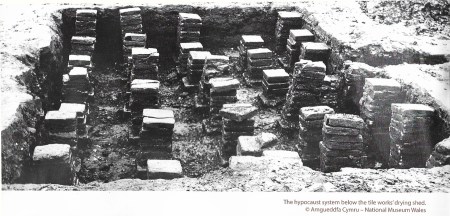
The visitor is taken step-by-step through the production process, explaining how the kilns and drying sheds  were built and how they functioned. The kilns formed two main units, a larger (139ft / 52m long, consisting of a row of six kilns) and smaller twin-kiln built on the natural bed-rock.  Each kiln was rectangular and tile-lined with an arched stoke-hole for access.  A round pottery kiln was also located on the edge of the main kiln complex.  The oven floor was fascinating, consisting of a raised floor of tiles plastered with clay that were pierced with holes that acted as vents.  I was fascinated to see that the drying shed was provided with a hypocaust, better known as the under-floor heating system that was used in villas and bath houses.  These, like the kilns, were stoked and kept hot to ensure that the tiles, pottery and bricks were dried through after firing.

The exhibition displays a number of artefacts, including a roof tile, a brick and a triangular atefix tile marked with the letters LEGXXVV, an abbreviation for the twentieth legion, known as Valeria Victrix (valiant and victorious).  The antefix tile, one of which is shown in the exhibition (photo left and illustration below) also shows Legio XX’s dramatic running boar symbol.   Legio XX was stationed at Chester from AD87, and the Holt works appears to have been established shortly afterwards, reaching its peak output at around AD135, and falling out of use in the mid 3rd Century.

Antefix tiles from Holt. Source: Grimes 1930

A display board shows the vast range of products that were made at the site, including floor and roof tiles, and a variety of different pottery forms.  There is a good explanation of how the roof tiles, called imbrex and tegula (plural imbrices and tegulae), worked.  A good memory for me – I dug up a lot of these tiles at my first ever dig in Silchester.  The arched imbrices, sit snugly over the upright edges of two facing tegula tiles, as shown in the above photograph, and the the triangular antefix tiles were placed to cover the ends of the imbrex.

Green-glazed ware found at Holt. Source: National Museum of Wales

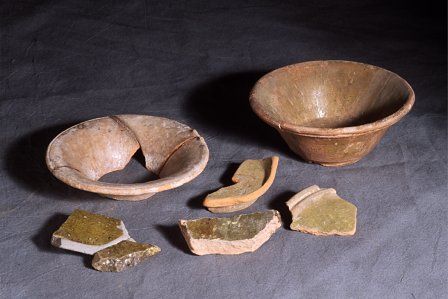
Examples of the pottery found at the site are on display, with some really fine examples, including ollae (jars), urcei (jugs), lagenae (flagons), cattili (plates), calices (drinking bowls), and testa (lids).  I particularly liked a partly preserved ceramic colander and a mortarium (the latter working like a modern mortar, but with bits of stone embedded into the interior base of the pot to create a rough surface for grinding spices and seeds).  Green-glazed pottery, a luxury ware that I had never come across before, was also made at the site.  It is rare in Britain, so it was excellent to see examples of it on show.  A photograph of the green glazed pottery found at Holt (from the National Museum of Wales website) is shown below.

The workers also turned their hands to other types of objects made from clay – one cabinet shows a marvellous piece of shaped water pipe that was manufactured at the site.

Section of water pipe manufactured at Holt

All of the output manufactured at the works was sent by boat downriver to Chester, the exhibition suggests that a short may have been dug out at Holt in order to make loading the ceramics easier, its course marked today by annual floodwaters that, as they recede, leave a line of floodwater in what could well be a Roman channel.

Samian pottery found at Holt. Source: Grimes 1930

Interestingly, the exhibition shows that even though huge amounts of pottery was being made on-site, there were particularly favoured types of ceramic being imported.  Samian (terra sigillata), a truly gorgeous luxury dark red ware that has moulded decoration on its lustrous surfaces, was found in surprising quantities.  This was usually imported from south-eastern Gaul (France); a Roman experiment with samian production in southern England produced inferior pottery and was very short-lived.

Imported black-burnished ware was also found at Holt, which the exhibition explains was made in Dorset.  At sites in southern England it is common (we found bucket-loads of it at Silchester), but when found at northern sites, it was probably imported to fulfil a particular need or desire.  The works manager might have wanted high-status ceramics, and any soldiers at the site may have craved the comforts of home, but another option is that it was being imported for use by a nearby settlement.  One of the findings of the 2018 geophysical survey was the presence of a possible Roman fort or marching camp to the west of the site, suggesting that the site may have been on the edge of an unidentified vicus settlement, or village.

Coins on display in the exhibition.

The coins at the site are invaluable for their contribution to creating a timeline for development of the site, but are works of art in their own right.

The exhibition provides another insight into the inhabitants of the site by displaying some of the other objects they owned, like small pieces of jewellery made of bronze, manicure equipment, a beautifully crafted needle and a delectably delicate silver spoon.  These are objects that people chose and kept on them, intimate reminders that these were real people who lived complicated lives in which personal appearance had an important role.

Silver spoon from Holt on display at the exhibition. Source: Grimes 1930

A map at the end of the exhibition was riveting, showing how widespread Roman presence in northeast Wales actually was, showing everything from single find-sites to industrial sites like that at Holt, the settlements at Heronbridge and Plas Coch, and the villa at Rossett, the latter two sites both recent discoveries.  It looks as though there will be more Roman discoveries in the future, filling out a picture not merely about the activities of Romans in Britain, but on their interactions with local communities, something which remains poorly understood.

Museum details

The museum is an excellent resource, a small but modern with excellent displays and a lot of great information on professionally produced display boards into context. At the time of writing (August 2021) masks must be worn and you need to leave your name and telephone number with reception.  For opening days and times, plus directions, see the Wrexham County Borough website:
http://old.wrexham.gov.uk/english/heritage/wrexham_museum.htm

A booklet accompanying the exhibition is available both in the museum foyer and under the video screen in Gallery 3.  The cover and some of the pages from the booklet are shown at the top of the post, and full details are in Sources, below.   A leaflet, Holt: Legacy of the Legions, is also available from the museum, or can be downloaded.

It is a real shame that the Hidden Holt gallery is only a temporary feature, but Wrexham Museum has a lot more to see, and I will be posting about some its permanent displays in the future.

Sources:

Books and papers

Grimes, W.F. 1930.  Holt, Denbighshire:  Twentieth Legion at Castle Lyons.  Y Cymmrodor.  Society of Cymmrodorion.

Ward, M. 1998. A collection of samian from the legionary works-depot at Holt.  In (ed.) Bird, J. Form and Fabric.  Oxbow Monographs 80.
https://www.researchgate.net/publication/333155555_A_collection_of_samian_from_the_legionary_works-depot_at_Holt

Ward, M. 1998. Some finds from the Roman works-depot at Holt.  Studia Celtica 32:43-65
https://www.researchgate.net/publication/311789557_Some_finds_from_the_Roman_works-depot_at_Holt

Booklets / leaflets

Wrexham Heritage Service 2021.  Hidden Holt.  The Story of a Roman Site.  The Discovery of a Roman Legionary Tile and Pottery Works at Holt, near Wrexham.  (Booklet accompanying the exhibition in both English and Welsh)

Holt Castle Conservation and Interpretation Project.  Holt. Legacy of the Legions.  An introduction to the history of the Legionary Works Depot at Holt. (Leaflet, including site plan, available from the museum)
http://old.wrexham.gov.uk/assets/pdfs/heritage/holt_castle/holt_legacy.pdf

Websites

Hidden Holt
Wrexham Museum
https://www.wrexhamheritage.wales/?exhibition=hidden-holt-the-story-of-a-roman-site

Hidden Holt – Roman history revealed in a new Wrexham Museum exhibition
Wrexham Council News
https://news.wrexham.gov.uk/hidden-holt-roman-history-revealed-in-new-wrexham-museum-exhibition/

Holt Local History Society
https://holtlhs.weebly.com/

National Museum of Wales
https://museum.wales/

Roman Glazed Pottery from North Wales
National Museum of Wales
https://museum.wales/articles/1327/Roman-glazed-pottery-from-North-Wales/

The Pottery Kilns of Roman Britian by Vivien Swan (database)
https://romankilns.net/

Some photos from my 15 minute contribution to the Big Butterfly Count

A couple of weeks ago I posted about the Big Butterfly Count.  It goes on for another two days, so if you want to participate, have a look at their website.  It is an initiative to learn about what is happening with butterfly populations in the UK.  Well worth contributing.

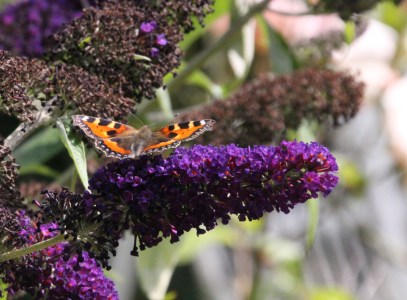
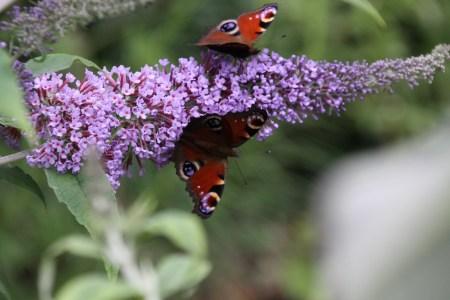
I’ve submitted my count for my 15 minute slot, staring fixedly at the bed in which my two buddleias reside, along with roses, poppies and various other floral beauties.  In 15 minutes the Black Knight buddleia won hands-down in both the butterfly and bee popularity stakes, and the scent of the flowers was almost overpowering.  Here are some of the photographs that I took.

It was interesting to note that apart from the comma, these showy, large butterflies were completely different from the ones that I saw the other day at the lower end of the footpath that heads to the Dee from Knowl Lane.  Those were small, more understated butterflies, enjoying the hedgerows, including gatekeepers, speckled woods, meadow browns and small coppers.  Photos of some of them are on my earlier post about that walk, but a lot of them refused to land and be photographed.

Small tortoiseshell

Comma

Peacock, conspicuously bigger than anything else that turned up

Small White

Holly Blue. I had just watered the rose bed, and the Holly Blue
seems to have landed to take a drink.

Red Admiral

I was amazed by how big the peacocks were, compared with other visitors. How super to be asked to do something so enjoyable that happens to be useful too.  The small whites were the dominant visitors, followed by the peacocks.  There was only one holly blue during the 15 minute section, although I see them quite regularly in a given week.  There was also only one red admiral.  Like the holly blue, they are not infrequent visitors to the garden, but I generally see more of them when out and about.  Their caterpillars like nettles, and I have gone to an awful lot of trouble to remove all traces of nettles from the garden.


Lovely footpaths through the fields between Churton and Farndon – Part 2

The return leg of the walk from Churton to Farndon, starting at Brewery Lane. Source of map: Public Map Viewer

The return leg of the walk from Churton to Farndon described in Part 1, heading back from Farndon to Churton, was just as lovely in the mid-July heatwave, but was not the same, and had some added extras.   It all looked very different from today’s endless drizzle, but at least the garden is deliriously happy.

On the return leg of my walk, instead of retracing my steps along Townfield Lane, I turned into Brewery Lane, just a little further to the north, which turned out to be a short stretch of road behind Brewery Motors with some nice views.  It segues into a the public footpath that is narrow but very safe underfoot before it joins up with the track along which I had originally walked into Farndon.  The footpath offers  a novel view over a gate of the wildflower field at the Barnston Monument to its east.  I have marked the route on the map on the left (from the Public Map Viewer website), a shorter route than on the first leg.  The red dots are explained in Part 1, marking the approximate positions of possible prehistoric sites.

At Knowl Plantation, a track is marked on the Public Map Viewer that skirts it to the west instead of heading back up the footpath to the east.  It links up with the Knowl Lane footpath that leads to the Dee.  After I returned home I realized that on the Public Map Viewer although marked as a track it is not shown as a public footpath, so I am not sure if it is actually a right of way, but I was careful to stick to the edges and do no damage.

Dove’s foot’s crane’s-bill, its leaves declaring it to be a form of geranium.  Like the speedwell below, all along the edge of the corn, it spreads in huge swathes.

Common field speedwell, which grows everywhere in great, low carpets.

Thistledown, spreading itself in carpets along the path and hanging in the nearby trees

Redshank

When I was a child, anything that looked like a flower, with lots of petals arranged around a clearly defined core, was accordingly categorized in my head as a flower, but anything that failed to look sufficiently floral was always a weed.  Redshank came firmly into my childhood  weed category.

Elder (Sambucus)

Reaching the main footpath back to Churton, that leads from the Dee to Knowl Lane. I was enchanted to be surrounded by butterflies.  They stubbornly refused to settle, and the few that did settle sat with their wings firmly closed, so there were very few photographs, but it was a lovely experience.

Small heath butterfly

Gatekeeper

Common red soldier beetle  (Rhagonycha fulva) on hogweed flowers

Comma

Speckled wood

It was on the return leg of the walk that that I noticed three lovely flowers on this walk that I had never seen before.  The tiny, tiny violas shown below, the flower just a few millimeter high (just a little bigger than speedwell flowers) is the field pansy (Viola arvensis).  They behave much like speedwells, spreading on straggling stems, but there were much fewer flowers per plant, and I only saw a small number of them.

Field pansy in company with common field speedwell

The Hedge Woundwort below, Stachys sylvatica, is a member of the Lamiaceae (mint) family.  It looks very like the common spotted orchid, but the leaves are wrong.  With the orchid, the leaves are smooth-sided and long and sprout from the base, but the woundwort has jagged- or serrated-edged leaves that are much shorter and sprout from all along the stem.  With the Hedge woundwort, the colour leans more towards purple or red than towards the common spotted orchid’s pink, and the woundwort lacks the “wings” that top the orchid flowers.  The distinctive white markings are thought to attract bees to help with pollination.

Hedge Woundwort

This creeping and climbing perennial, here wrapping itself around a blackberry bramble with a lovely pink flower, is White Bryony (Bryonia dioica).  It is not uncommon as a garden weed, and is beast to eliminate as it has long, deep tubers that have to be pulled out in their entirety to kill the plant.  In the wild, however, they are lovely, colonizing hedgerows and scrubland, spreading by coiled stem-tendrils that latch on to the stems of other plants to enable it to travel in all directions.  When it has finished flowering, the white/yellowish-green flower is replaced by a small red berry.

White Bryony

At no point on either walk can one actually see the river from the footpaths, so this is a matter of enjoying the fields in their own right.


The Big Butterfly Count 2021

The Big Butterfly Count runs i Britain between 16th July to the 8th August, so we are just in time to join in.  Every year I do the Big Garden Birdwatch, counting birds that land in the garden in a given hour.  It ran this year in January 2021, before I moved to Churton, but I’ll be talking about that next year when it comes around again.

I had not, however, heard of the Big Butterfly Count.  It was reported in the latest edition of the magazine New Scientist, so I fired up my web browser to get the details.

The Big Butterfly Count “is a UK-wide survey aimed at helping us assess the health of our environment simply by counting the amount and type of butterflies (and some day-flying moths) we see.”  The idea is to sit in a promising spot (for example, in your garden, in a park or along a footpath) for 15 minutes and take note of everything you see in that time.

You will need to register for an account, which is free, after which you can download and print off a butterfly identification chart (which also lists the species in which they are interested), and then send in your results.  You can do this via a free smartphone app or via your web browser (computer, tablet, etc).

I am going to spend my 15 minutes in front of my Black Knight buddleia, which is a great butterfly attractor.  A tremendously good excuse for abandoning the weeding and mellowing out with the wildlife 🙂  I had to chase out a peacock butterfly from the living room only this morning.  On a recent walk there were many types in the hedges flanking the footpath section of Knowl Lane at its western end as it approaches the Dee, and I suspect that I will find that the species that prefer those hedges and the ones gracing my garden will be very different.

Find out the details on the Big Butterfly Count website.


Early morning mist over my favourite tree

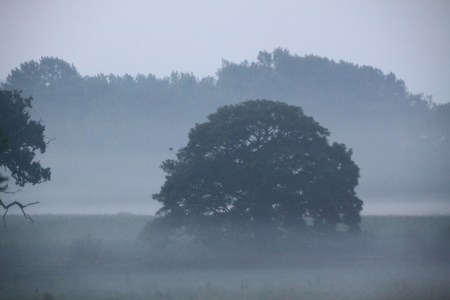
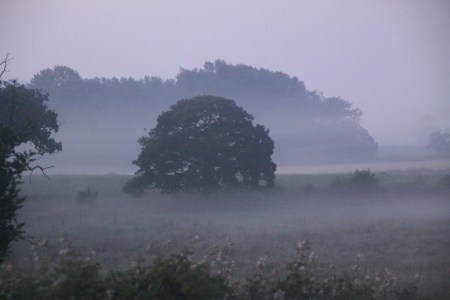
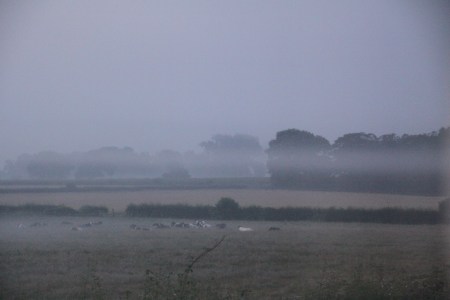
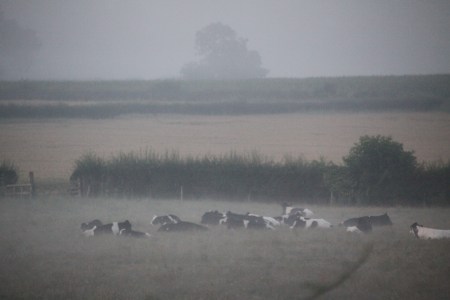
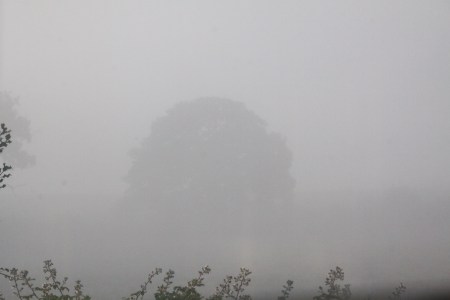
My favourite tree is over the road, usually visible from the room I use as a home office, often list up in full golden sun, sometimes pink in the sunrise or sunset, but occasionally shrouded in mist.  The mist always fascinates me because sometimes it forms in thin bands hanging bizarrely over the fields, but at other times it forms dense sheets.  First thing on Wednesday morning I watched the tree and the neighbouring field, complete with recumbent cows, drifting in and out of bands and sheets of mist that continually changed along a narrow colour continuum between pure white and pale grey that included faint shades of pink and olive green.  At about 5.30am the tree became almost invisible behind a discrete, almost impenetrable mantle.  Eventually a silver sun slowly lifted the pale, gentle veil and the monochrome scene was gradually transformed into its everyday guise.


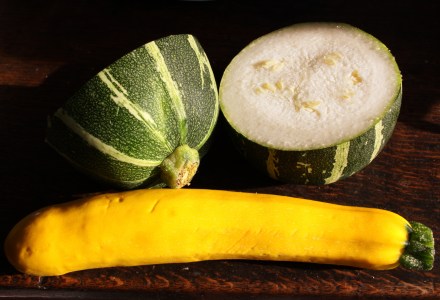
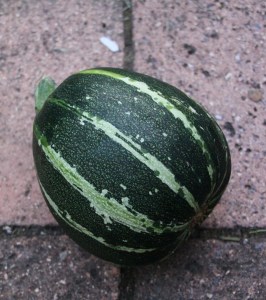
Courgettes grown by 9-year-old Harry at the Aldford Village Store

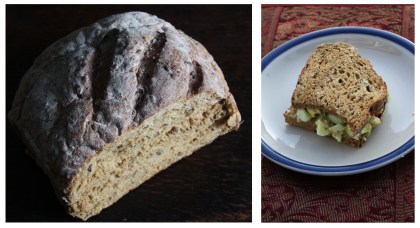
Chatwin’s bread bought from the Aldford Village Store, and a sandwich made with warm home-made tarragon mayonnaise.  The tarragon mayonnaise is warmed by stirring freshly boiled and chopped eggs into it.  For the basic mayonnaise recipe see my earlier post

The managers of the Aldford Village Store, Emma and Will Jones, opened the Aldford Village Store in 2018.  Most Sundays I go up to the store to collect a loaf of brown bread.  It is by far the best brown bread in the area, rich, malty and slightly sweet and so fresh-tasting that it is almost moist, but with more than enough texture for the bread knife to go through it without a fight.  Utterly delicious and a wonderful compliment for egg mayonnaise (made with Churton honesty eggs of course).  The brand is Chatwins, a company based in Nantwich, established in 1913 and at that time their deliveries were made with horse and cart.  It’s not locally-made bread, but it tastes great.

One cannot quibble in any way about how local the store’s courgettes are.  Last Sunday, a basket in the shop had a great crop of green-striped globes and long banana-shaped yellow courgettes, and a label attached to the basket proclaimed them to be “Harry’s.”  I instantly formed a stereotypical vision of an elderly but upright smiling fellow with a deep sun tan, battered broad-brimmed hat, dungarees and probably a pitchfork (I grew up amongst Americans), who had been lovingly tending his courgettes for the last six or more decades.  Nope.  When I asked the friendly girl on the till who Harry might be, it turns out that he is the 9-year old son of the managers, Emma and Will.  Brilliant.

According to his Dad, who I was speaking to a couple of days later when I popped in with my father, Harry is saving up for a Lamborghini, not because his is interested in the brand’s celebrity status, or is impressed by the price tag, but because it is the epitome of fine engineering, and that is what fascinates him.  At a pound per courgette, that’s at least 160,000 courgette sales for a basic Lambo Huracan, 240,000 courgettes for the Spyder version and a horrifically substantial number more courgettes for the insurance, tax and ongoing servicing, and that’s without factoring in the start-up costs of seeds, compost, and his time 🙂   I love courgettes, but I’m not sure that I can eat that many, although we do have until his 17th birthday to try.

To honour Harry, here’s the first of three posts about what I cooked with Harry’s courgettes.  This first one is based on my Mum’s recipe, and has been one of my favourites forever.  Mum’s recipe was for stuffed marrow, but it translates beautifully for Harry’s stunning globe courgettes.

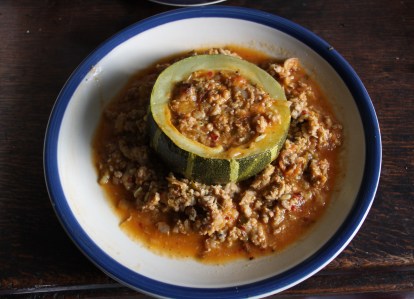
Stuffed Globe Courgette, with thanks to Harry Jones

Oh that globe courgette! What an absolute beauty.  Harry had grown various sizes that were for sale in the store, and this one was about the size of a small galia melon.  I sliced it in half and removed the soft centre, together with the seeds, using a spoon.  I chopped this ready to put it in the sauce that I was just about to cook.

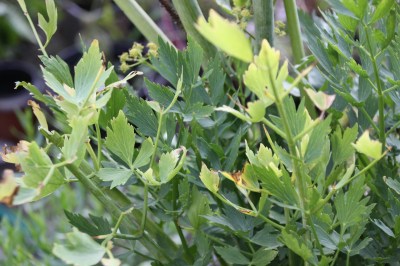
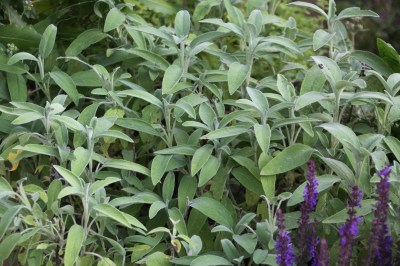
Next, the stuffing and the sauce are both done in the same pan, because the stuffing is also the base of the accompanying sauce.  This is a two-part process.  The first part is simply sausage-meat (or sausages removed from their skins), a finely chopped onion onion, a little finely chopped garlic, the scooped out middle of the courgette, and a lot of sage (fresh or dry) gently all fried in olive oil.  A little liquid is added to prevent it drying out, either hot chicken stock or a mix of chicken stock and white wine.  I also add fennel seeds, just because I love them.  On this occasion I also had lovage growing in the garden and the diced remains of a fennel bulb from the Bellis farm shop in Holt, which always has them, so these went in too.

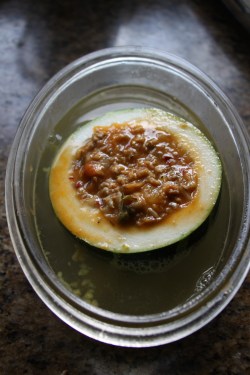
This rather wet stuffing is used to stuff the marrow, and you will have a lot left over.  The stuffing dries a little when cooking, particularly as 5 minutes before the end of the cooking time you grill it to let it brown slightly.  After heating this stuffing through, I spooned it carefully into the scooped-out reservoir in the courgette half.

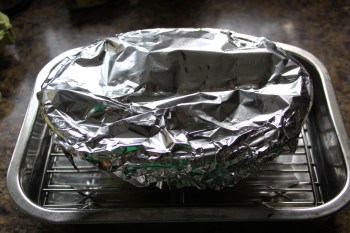
To cook the courgette, it is placed in an oven-proof dish full of hot (just off the boil) chicken stock, which is then placed in an oven, either with either a proper lid or a foil tent.   I used an ancient oval Pyrex bowl and covered it in foil and put the whole thing in a baking tray in case the the stuffing leaked.  I take the foil off and grill the whole thing five minutes before serving.  A little butter stroked over the top helps it to brown and crisp, but is not actually necessary.  Normally I do this recipe with marrow rings, which takes about half an hour once the marrow rings are in the oven.  Cooking an entire half globe was always going to take longer, and it took an hour on 220C (static, not fan), plus the five minutes for grilling.

Lovage

The second part of the saucepan process is the sauce that is served alongside the stuffed courgette.  This is done by adding peeled tomatoes and, if you like a bit of heat, chillis to the stuffing.  The chillis can be either fresh or dried.  I find supermarket tomatoes almost completely tasteless, so I use the ripest vine tomatoes that I can find, add a squirt of tomato paste and then a good glug of Big Tom (a spiced tomato drink).  If you don’t mind tinned tomatoes, those would work but I gave up using them a long time ago as they are far too sweet for me.  I also add more hot stock or stock + white wine to the mix, because this is the sauce and needs to be rather more fluid than the stuffing.

Sage

As to quantities, I’m dreadful at writing out recipes, but I used a whole 450g pack of Waitrose sausagemeat as I wanted to make sufficient to freeze down for future meals.  For that amount of sausagemeat, I used a medium-large onion, two cloves of garlic, and added the herbs and liquid to taste.  The first part of the sauce doesn’t want to be too liquid,  as you are going to use it as stuffing, so the trick is to add it in increments and just stop it sticking.  When you start adding stock and tomato to the sauce, it becomes much more liquid, and that’s just a matter of taste.  Again, just add the tomato and stock incrementally until it looks the way you want it to.

The idea of separating out the stuffing and the sauce is to give the stuffing a mild, distinctive flavour all of its own based on the sausagemeat and sage.  In the second part, the addition of tomatoes, chillis and other herbs provides a lovely bold Mediterranean contrast when both are on the plate. You could grate Parmesan cheese over the top, or (before grilling) breadcrumbs for crunch.  I find it sufficiently filling in its own right, but Mum liked it served with a salad and my father likes it with plain white rice to soak up the juices.

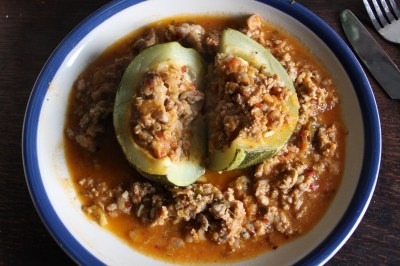
It is not an elegant dish.  At least, I’ve never found a way of making it look particularly presentable on the plate, but the flavours rock.  If you are wondering why the stuffing and the sauce look the same in my photographs (congratulations on spotting the far from deliberate mistake), it is because I screwed up.  On this occasion, I forgot to separate the process into two parts and ended up putting the various tomato combinations into the sauce before I had stuffed the courgette with the basic mix, so found myself stuffing it with the tomato-enriched sauce.  That is because I often serve the part 2 version of the sauce over pasta and was working on auto-pilot.  I was more than a little miffed with myself, because it is much better if the two-part process is followed.

The outer peel or rind on the globe courgette is chewy but edible, but on another occasion I would peel it before cooking it.  To serve it, I halved the half-globe.  Short of eating it with a spoon, I wasn’t sure how else to tackle it!  But however it looks, it still tasted terrific, and the Mediterranean feel made it summery.

If you have any sauce left over, it freezes brilliantly, and goes wonderfully over tortellini.  If you have been defeated by the amount of courgette or marrow that emerged from the oven, this can be finely chopped into the sauce before freezing.

I rubbed lemon into the other half of the globe to stop the surface browning, and wrapped it in foil.  It is now in the cold draw in my fridge, awaiting another bout of courgette creativity.

Thank you Harry!

Ferrucio Lamborghini

Sources:

Aldford Village Store
(No website, but they do have a Facebook page):
https://www.facebook.com/aldfordvillagestore

Chatwin’s
https://www.chatwins.co.uk/

Cheshire Live
New village store at Aldford will sell day to day groceries and much more
https://www.cheshire-live.co.uk/news/chester-cheshire-news/new-village-store-aldford-sell-14786194


Lovely footpaths through the fields between Churton and Farndon – Part 1

I have been meaning to do this walk every since I moved here in February, but there is so much to do in the garden that I feel guilty abandoning it on nice days when I really should be working at it.  The stickiness of the otherwise delectable heat-wave meant that digging holes for plants and weeding on an industrial scale was becoming seriously unpleasant, so today I abandoned ship and walked the footpaths to the west of Churton, through the fields to Farndon. It was idyllic.

The route taken from Churton to Farndon. The red blobs are the approximate locations of (top) the proposed prehistoric barrow cemetery and (below) the proposed Neolithic long barrow.  Source of map:  The Public Map Viewer, rather untidily stitched together by me.

This is part one of the walk (Churton to Farndon).   The slightly different return leg of the walk (Farndon to Churton) is described in Part 2.

In both directions, this is going to be an incredibly useful way of avoiding Chester Road to walk into Farndon.  I did once walk in to Farndon along Chester Road and it felt incredibly unsafe as the pavement is so narrow, it was very overgrown and the traffic moves so fast.  On that occasion I cut my losses and took the bus back.

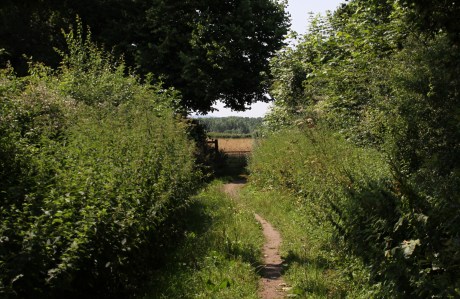
This route through the fields is a perfectly viable alternative with lots to see and some lovely views, although it will be interesting to see how soggy it becomes underfoot in autumn and winter.  A track called Knowl Lane extends from Hob Lane and eventually turns into a footpath that heads through a plantation and reaches the Dee.  There are two footpaths off it to the left (south towards Farndon).

I went into Farndon via one and came back on the other.  The route is shown on the map above, thanks to the Public Map Viewer.  A Barnston Estate signboard next to the first turn shows the route of the footpath and has some of the details about the wildlife to be seen.  This footpath is shown on the Public Map Viewer as a track, and it is indeed used by tractors to move from field to field, which means you may find yourself flattening yourself into a hedge to let one or more pass.  Other than a tractor on the way out, and two on the way back, I saw no-one.  Perfect peace.  I took far too many photographs.


Once out in the fields, there were lots of wild flowers, three of which I had never encountered before, all described in Part 2, and there were butterflies and bees were everywhere, as well as great carpets of wind-transported furry seed fluff that was new to me.  The views towards the Welsh foothills were gorgeous.  The fields were full of young sweetcorn, displaying every shade of green that one could possibly imagine, wonderful in the sun, occasionally swaying in the slightest of breezes.


One field was planted with wheat, a great sweep of palest gold, each ear so beautifully and precisely structured that it looked almost artificial, the whole field organizing itself like a military review.  It was a superb contrast to the floppy sweetcorn plants that, no matter how regularly spaced, still managed to look rakish, jaunty and determinedly laid back.

Proposed barrow cemetery at Knowl Plantation. Source: Google Maps (location marked by the Megalithic Portal)

In theory, this route passes two prehistoric sites, which I was keen to track down.  Both sites are known only from aerial photographs, having been completely ploughed out, but sites are not just about physical presence but context within the landscape, and that’s something one can only get a real feel for by going to the location.  The Knowl Plantation site is described on the Megalithic Portal as a “nucleated Bronze Age barrow cemetery consisting of four ring ditches.”   I’ve had a look at various aerial photographs (see above, for example), but it’s not terribly promising so far.  If it is indeed a site, it is on a fertile slope that runs down to the Dee with views over the Welsh foothills.

A proposed Neolithic long barrow next to the radio mast at Bowling Alley Plantation is rather more convincing, with a lot of other interesting pits and ditches visible from the air in the surrounding field.  It too was always going to be invisible from the footpath.  Still, when I rounded the corner to the field in which it is supposed to be located I laughed out loud: the corn was growing so tall that I couldn’t actually see anything of either the field or the view, in spite of climbing a gate.  It must overlook a very similar view to the Knowl Plantation site.  Winter will be more informative.  The Google Maps aerial view of the site is to the left, and today’s view of the field in which it is located is below.  I really need a drone to be my eyes with some of these sites!  I will be writing soon about the area’s prehistory, some of it verified (by survey and excavation) and some speculative (like the aerial photograph shown here), and will talk about what one might make of it all.

Field in which the possible remains of a Neolithic barrow are located

Happy, but a bit heat-weary, I stopped for a fizzy water and a divine flat white in Lewis’s, sitting outside on the terrace and watching the world go by.  I was updating some notes as my coffee cooled down, but I am like a truffle hound where clotted cream is concerned and looked up to see that the chap at the next table was being served a scone with strawberry jam and, of course, clotted cream.  It looked utterly irresistible.  I am so relieved that I didn’t see it on the blackboard when I went it, or I would have been there for a lot longer, and progress back to Churton would have been a great deal slower.  Next time.  Nice to see the progress being made opposite at The Raven. 

Suitably revived following my coffee, I secured some of the Farndon butcher’s (Griffiths) truly excellent pork and apple sausages (second only in my estimation to his pork and leek sausages) before wandering down to look at the Dee and then returning back up the hill to head back through the fields.  My return course followed a slightly different route, using some other footpaths, which I will post about soon.  Just as super.  In all, it is a superb walk that will be an excellent route into Farndon, at least in drier phases, and will provide a very nice insight into the changing seasons.


Himalayan balsam ((Impatiens glandulifera), a relative of the busy Lizzie but over head height, and a pernicious weed in the wrong place.

Sources:

Megalithic Portal

Churton Long Barrow
https://www.megalithic.co.uk/article.php/mapserve/mapserve/asbmap.php?sid=5584&desktop=true

Knowl Plantation
https://www.megalithic.co.uk/article.php?sid=40380