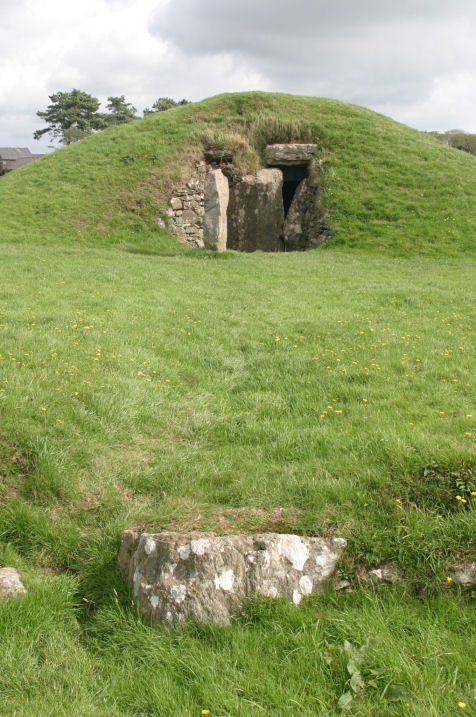
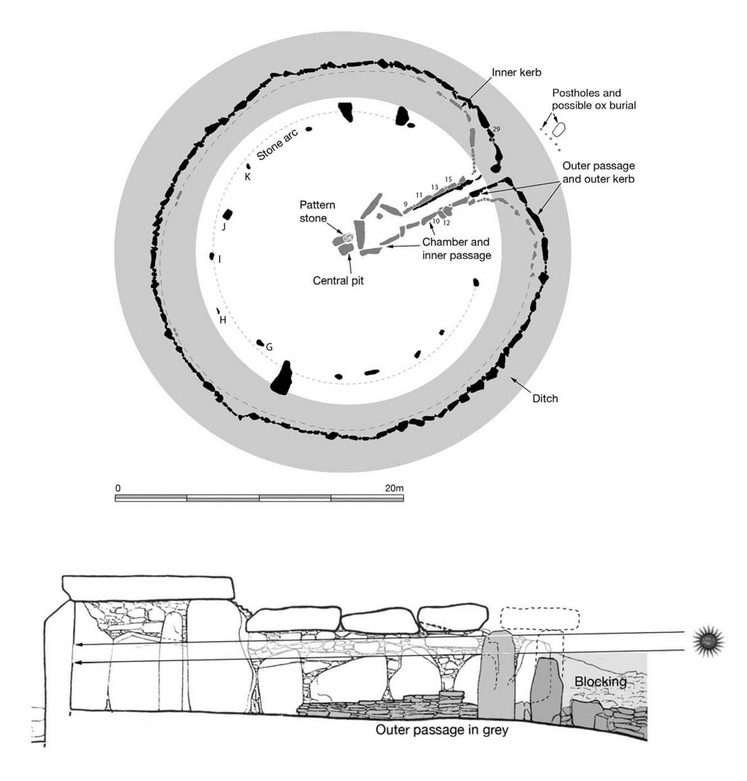
Plan of the Bryn Celli Ddu Neolithic tomb on Anglesey, by Steve Burrows, showing a section through the tomb and marking the line of the mid-summer solstice (typically on or around the 21st June), the longest day of the year, with the sun rising to filter through the passage, lighting up the chamber (see video at end). Image source: medievalheritage.eu
Today, 20th March 2026, is the Vernal Equinox which, astronomically speaking, is the first day of spring in the northern hemisphere. As my birthday, which falls towards the end of March, is usually accompanied by wind, rain and, on one memorable day on the M25, a snow blizzard that stopped traffic in its tracks, it usually takes me a while to accept that the longed-for spring really has actually arrived, in whatever guise it chooses to present itself. Fortunately, this year we have had some glorious spring days, two of which were spent with a happy heart at Little Moreton Hall and Moel Fammau, and the daffodils and hyacinths are fabulous.
Although there is plenty of evidence of archaeological sites being aligned to take advantage of specific astronomical events in Britain, particularly during the Neolithic and Early Bronze Age, most notoriously aligned to the mid-summer solstice, the phenological signs will have been of greater significance for the annual cyclical activities of hunters, farmers and traders, a period of evaluation and preparation following the completion of the winter’s work-streams. Marking multi-textured passages and cycles of time at different scales would have been of critical importance for making decisions and minimizing risk in seasonal livelihood management, but it was clearly incorporated into more spiritual and funerary aspects of life.
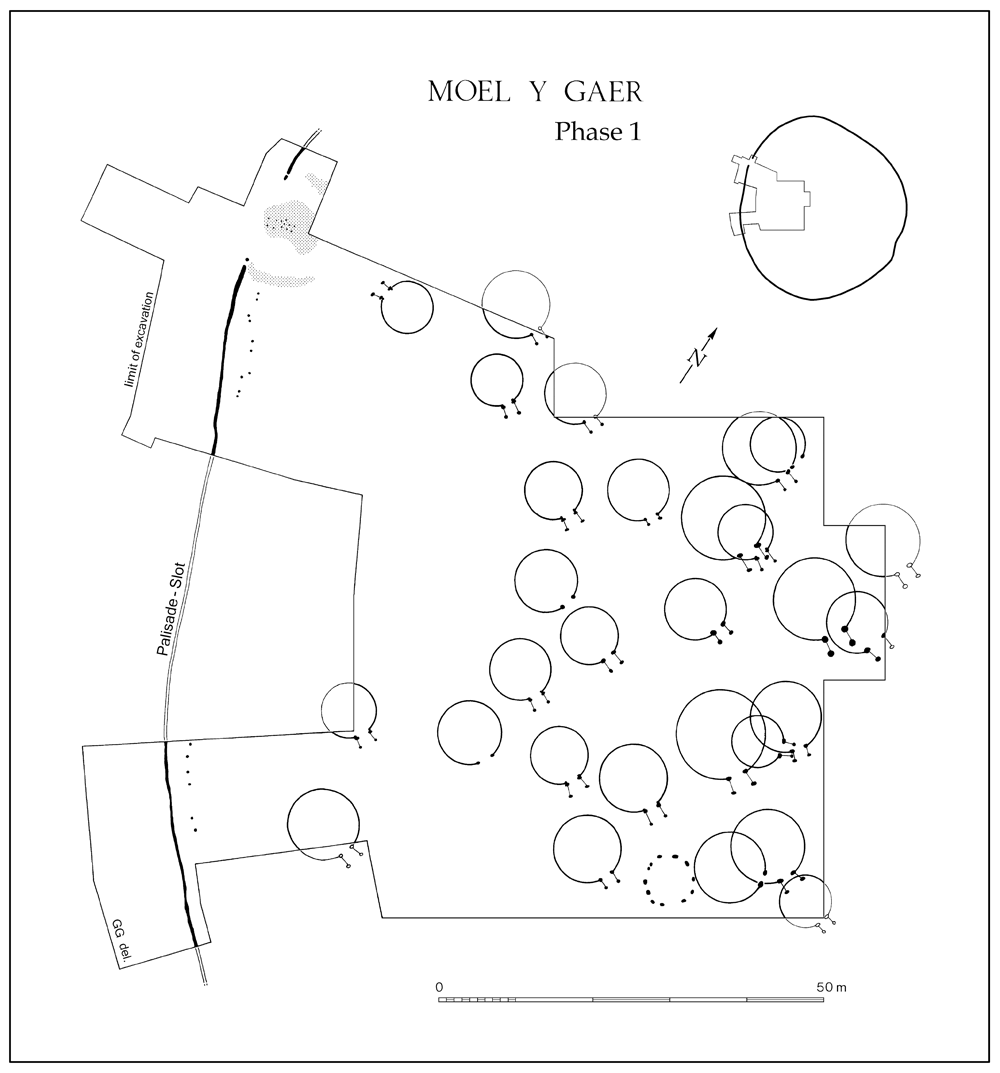
Section of the Iron Age hillfort Moel y Gaer Rhosesmor, on the Clwydian Range in northeast Wales, showing the orientation of roundhouses in Phase 1, with the majority of entrances with porches facing to the southeast. Although this orientation could be due to avoidance of prevailing winds, or to permit views across to the main hillfort entrance, it has been suggested that southeast roundhouse entrances may have allowed early morning entry of the sun into the house, moving around the interior to mark the passage of time throughout the day. Image source: Guilbert 2018
I have been reading throughout the winter about Britain’s Iron Age and, as always with archaeology and early history, the sense of different perceptions and experiences of linear, cyclical and punctuated time all working in complex relationships with one another, has been striking. The Iron Age does not provide as many hints about the ways in which communities connected with the cosmos as earlier periods, particularly in the Late Neolithic and Early Bronze Age. In spite of the lack of funerary and ceremonial data, however, in many parts of Iron Age Britain indications can be found that mark the passage of time. The agricultural basis of its livelihoods and the ideological and religious ideas that flowed around seasonal variations suggest two of probably multiple temporal schemes, the cyclical arrival and departure of seasons and the more cumulative course of those cyclical seasons every successive year as one generation eventually succeeded the next. More punctuated events are captured too, in the form of individual acts captured in the archaeological record, which themselves become part of how life was experienced.
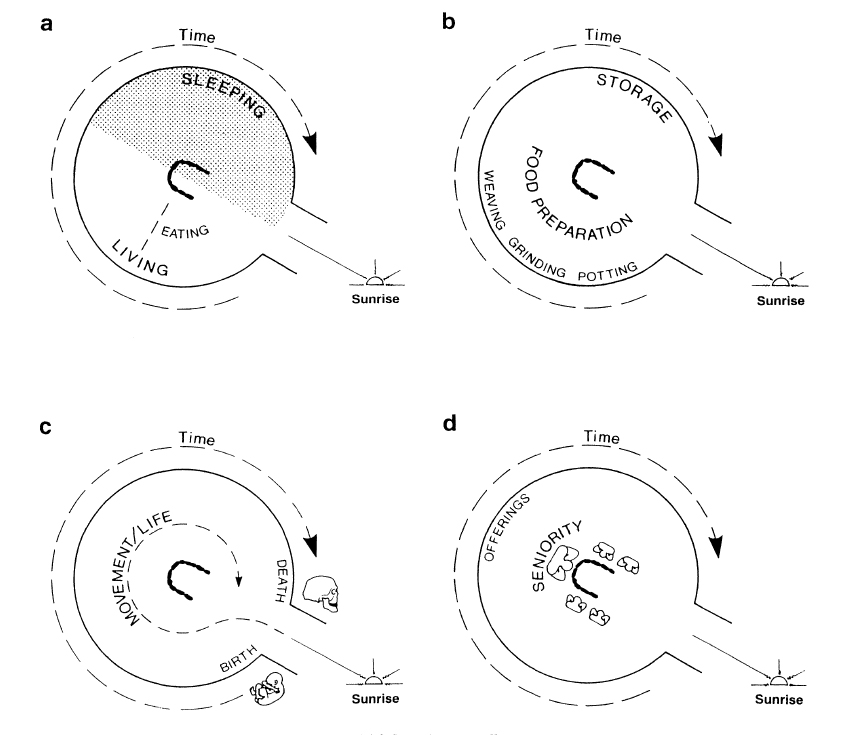
Alternative theories of roundhouse use by Parker Pearson and Sharpies 1999: “Interpretations of the use of space in British Iron Age roundhouses: (a) Fitzpatrick’s sunwise scheme (Fitzpatrick 1994); (b) an extension of Fitzpatrick’s scheme in the light of wheelhouse layout; (c) the sunwise pattern of movement within the house, including the metaphor of the human life cycle round the house; (d) the organization of seniority around the central hearth).” Source: Parker Pearson and Sharpies 1999, image drawn by Adrian Chadwick)
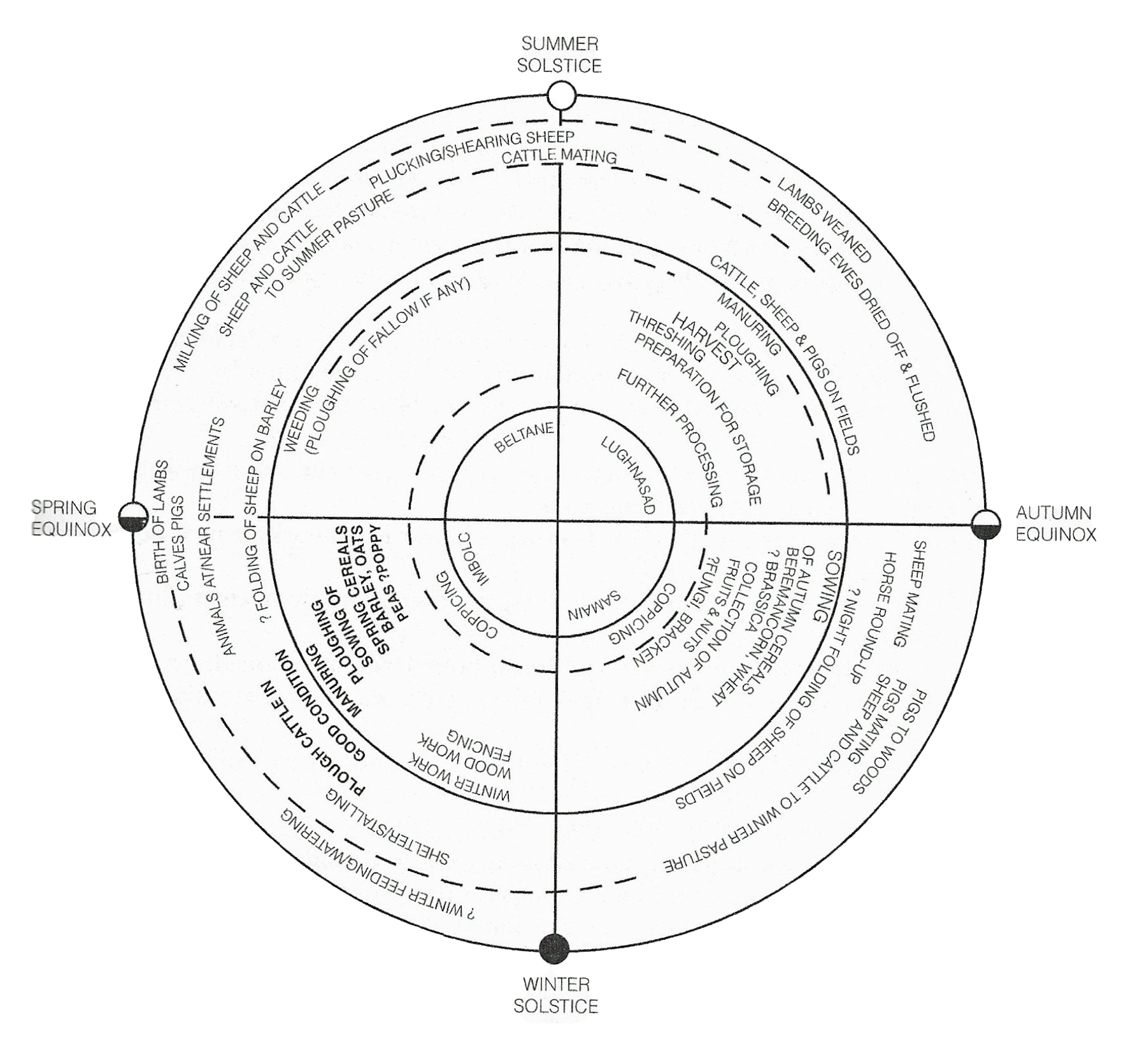
The farming year: a reconst5rcution based on evidence from settlements at Iron Age Danebury and region. Source: Cunliffe 2005, p.419, fig.16.5
There are three ways of defining seasons that are officially recognized as valid measurements of seasonal episodes: astronomical, meteorological and phenological. The technical, astronomical measurement of the seasons, based on and solstices. The equinoxes are the times of year when the sun appears directly over the equator, resulting in nearly equal proportions of day to night, and during the March equinox the sun appears to rise precisely in the east.
Where astronomical seasons are based on the strict observation of the arrival of equinoxes and solstices, meteorological seasons simply divide the year into four handy chunks of three months each, with spring occupying March, April and May. This means that whilst astronomical spring begins on 20th March, meteorological spring starts even earlier, on the 1st March, which seems ridiculously counter-intuitive, given that many of us are still shuddering from February’s machinations in spite of some of the pioneering courage of the brave early spring bulbs.
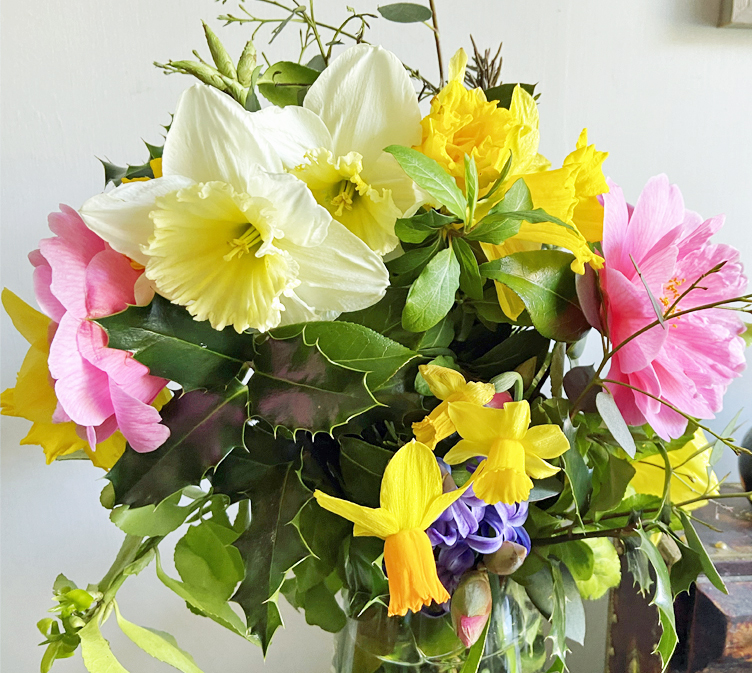
Phenological seasons are far more a matter of the senses, based on the observation of the natural world, with new shoots and bright new leaves accompanying bluebells, camellias and early blossom to give a finger-in-the-air impression of seasonal transformation. This year my early-flowering dwarf daffodils, crocuses and dwarf irises were even earlier than usual, arriving at the same time as the snowdrops in mid February, but all of them looked a little self-conscious and rather put out, surrounded by the decaying brown stems of last summer’s offerings, left as they were to shelter insect life. Spring felt more present when the camellias came into flower, and the rest of the daffodils decided to join their tiny relatives. The feeling that spring has or has not arrived is a phenological response to the eventual arrival of spring, and in the past had a direct impact on how people responded in every aspect of their lives.
It is interesting (and rather a relief) that even today in the modern west, where so many aspects of our existence are so standardized, regulated and thoroughly systematized we have three officially recognized ways of marking seasonal transitions, acknowledging their essentially liminal character.
The orientation of Iron Age roundhouses, showing that the majority are orientated between the east and southeast. Source: Oswald 1997
Sources:
Books and papers:
Cunliffe, Barry 2005 (4th edition). Iron Age Communities in Britain. Routledge
Fitzpatrick, A., 1994. Outside in: the structure of an Early Iron Age house at Dunston Park, Thatcham, Berkshire. In Fitzpatrick and Morris (eds.), p.68-72.
Fitzpatrick, A. and E. Morris (eds.) 1994. The Iron Age in Wessex: Recent Work. Trust for Wessex
Archaeology.
Oswald, A., 1997. A doorway on the past: practical and mystic concerns in the orientation of roundhouse doorways. In Gwilt, A. and Haselgrove, C. (eds.), Reconstructing Iron Age Societies: New Approaches to the British Iron Age. Oxbow Monograph 71, p.87-95
Parker Pearson, Mike 1999. Food, Sex and Death: Cosmologies in the British Iron Age with Particular Reference to East Yorkshire. Cambridge Archaeological Journal 9:1, p.43-69
Parker Pearson, Mike and N. Sharpies, with J. Mulville and H. Smith, 1999. Between Land and Sea: Excavations at Dun Vulan. Sheffield Academic Press
It is not much of a surprise that the pyramids of Egypt, together with the later obelisks, were pointing unambiguously at the sun, whatever the time of year.
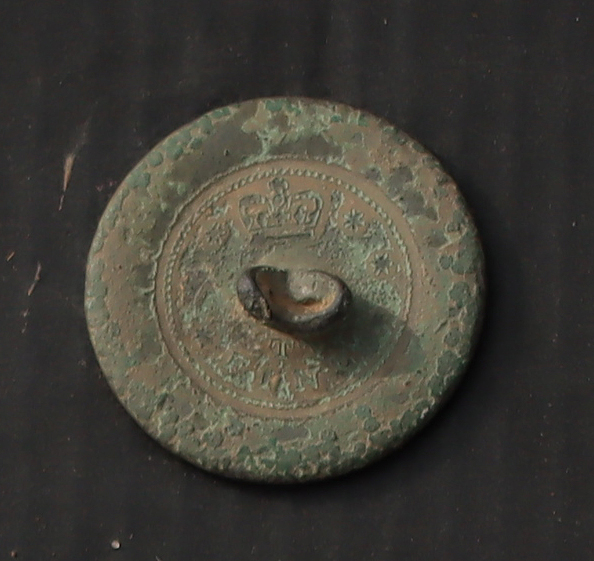
Button with an emblem of a crown at the top, little stars flanking it and elsewhere around the circuit, and text at the base
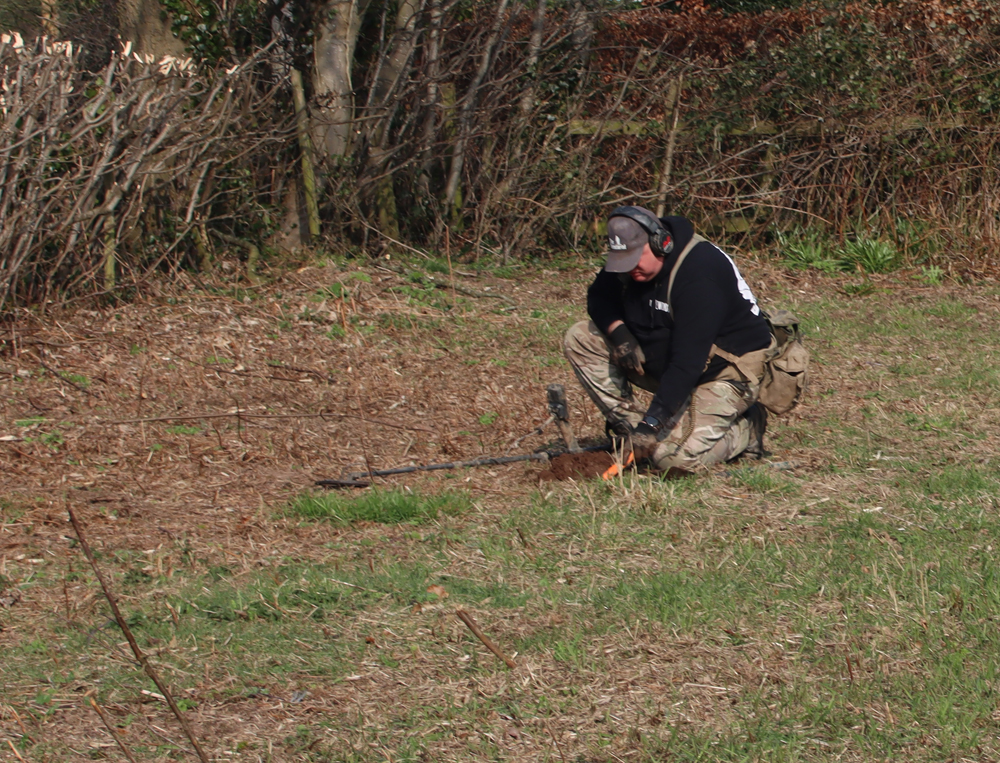
Not only have I never done any metal detecting myself, but I have never seen it being carried out either. I was lucky enough to have my first exposure to this activity with Rob Jones, famous in these parts for finding the superb Roman lead ingot near Rossett, now in the Wrexham Museum, which lead to the discovery of the Rossett Villa (being excavated late this year by DigVentures after initial work was completed at the site in 2021). With Helen Anderson, who organized the day with Rob and very kindly invited me along, we met at the field near Churton which is owned by Helen’s family, so we had no problem with obtaining permission. Rob did all the hard work, whilst Helen and I basked in the sunshine, diligently dry-brushing the thick red earth off anything that Rob found, irrespective of how old or recent it might be.
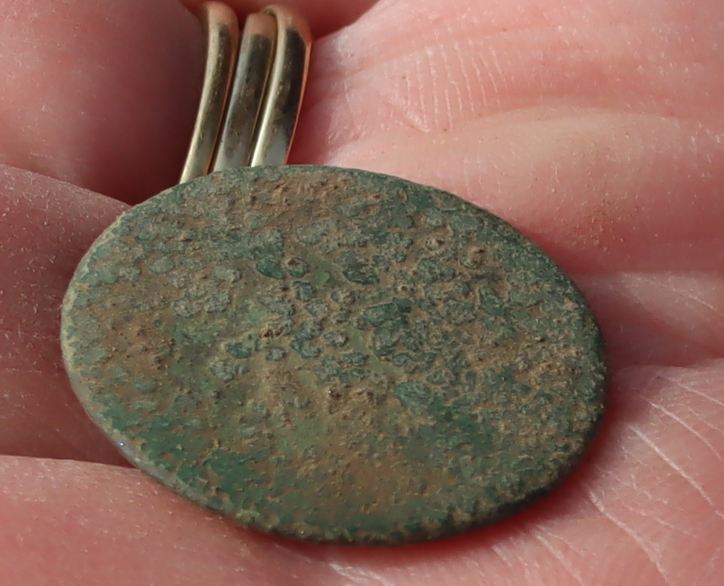
The other side of the button above
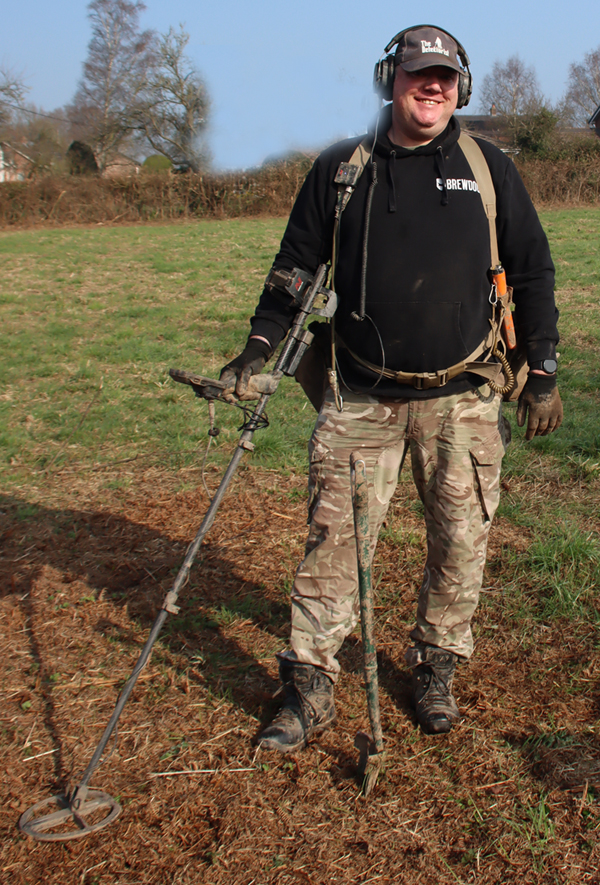
Rob Jones in situ at the field, very kindly agreeing to pose!
Rob has been a metal detectorist since 1996, and in 2020 was awarded the The Searcher Magazine‘s ‘Most Significant Find Wales’ award for his discovery of the Rossett Roman ingot. He works closely with the Portable Antiquities Scheme, reporting all his finds so that they can be included in the PAS database, and (with luck) helping to identify previously unidentified sites. He has worked as an on-site expert with archaeological projects at, for example, the Rossett villa and Basingwerk Abbey in Holywell, supplementing archaeological survey and excavation activities and helping to identify potentially rewarding places to investigate.
The field near Churton was naturally less promising than either, not having been home to either Roman or Medieval buildings, but it had the merit of being virgin territory, never having been built on or investigated before. Although under ridge and furrow in the Middle Ages, it has been largely unused for the last few decades. We had no real idea what the field might reveal, but it turned out to be a right old mix, even though the field was, in Rob’s terms fairly “quiet.”
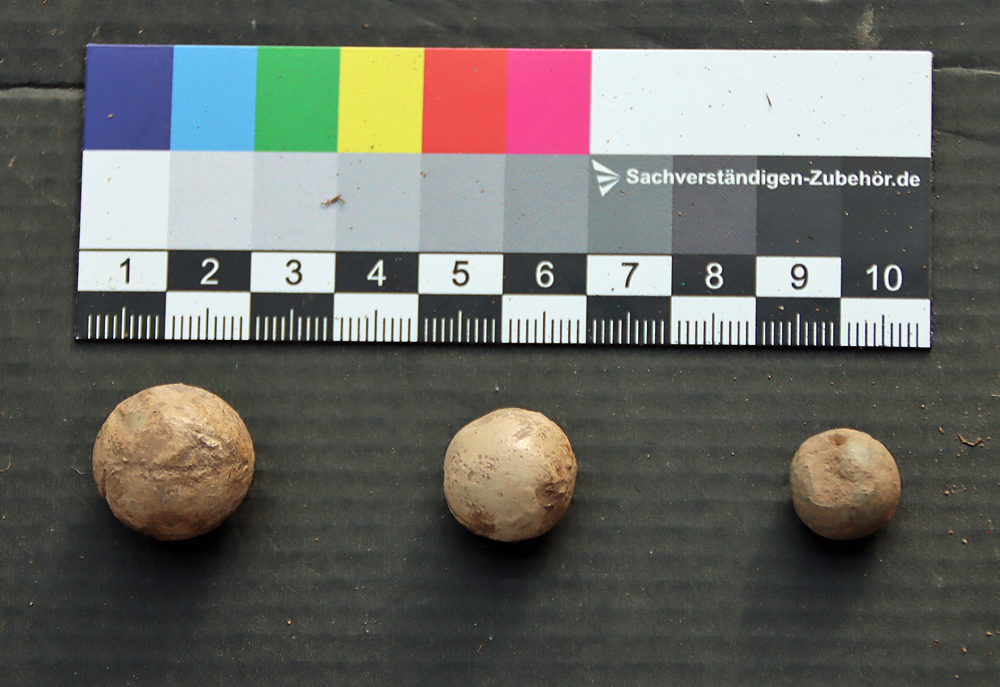
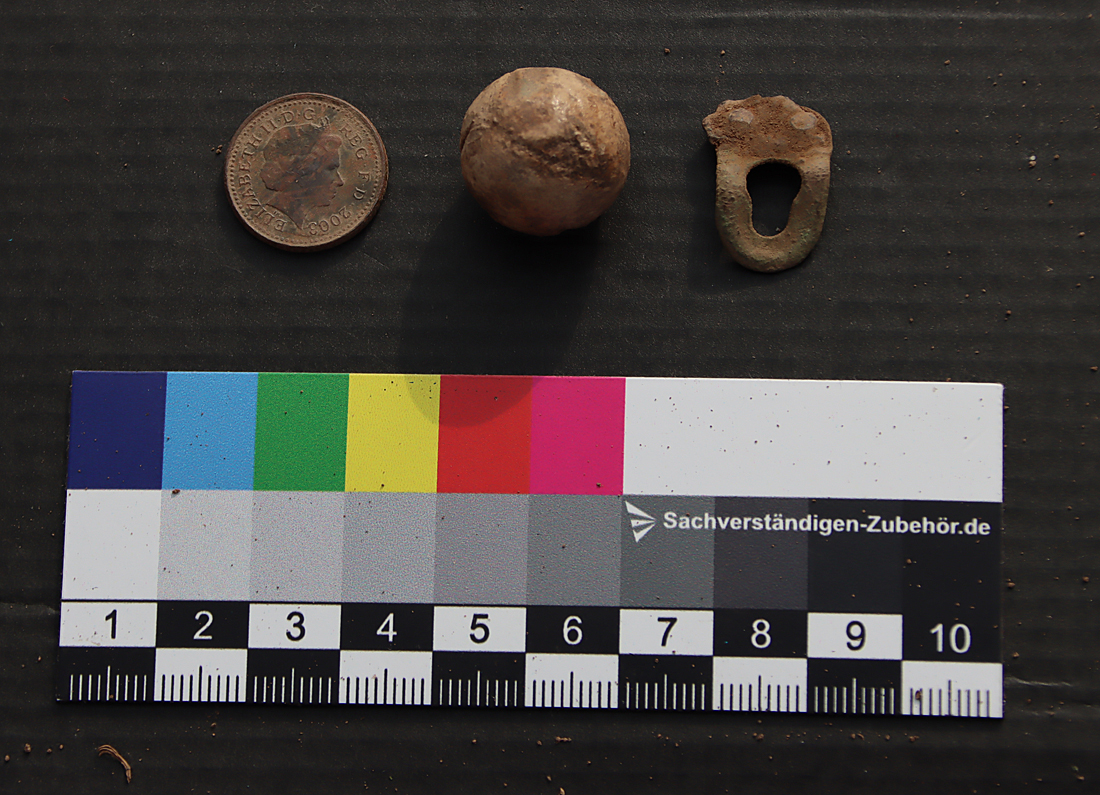
17th century musket and pistol balls
We were all delighted by two lead musket balls and a smaller pistol ball (above), probably dating to the 17th century, all of them found in one small patch of the field in quick succession. Even though they are small, the little spheres are noticeably heavy in the palm of the hand. Both the local churches in Farndon and Holt, on opposite sides of the river, both named for St Chad, have musket ball shots in the masonry due to the offensives of the opposing forces that used the churches as their bases. I have posted about both – the post on the Grade-II* St Chad’s in Farndon (5 minutes down the road from Churton) here, and the one on the Grade-1 listed St Chad’s in Holt here.
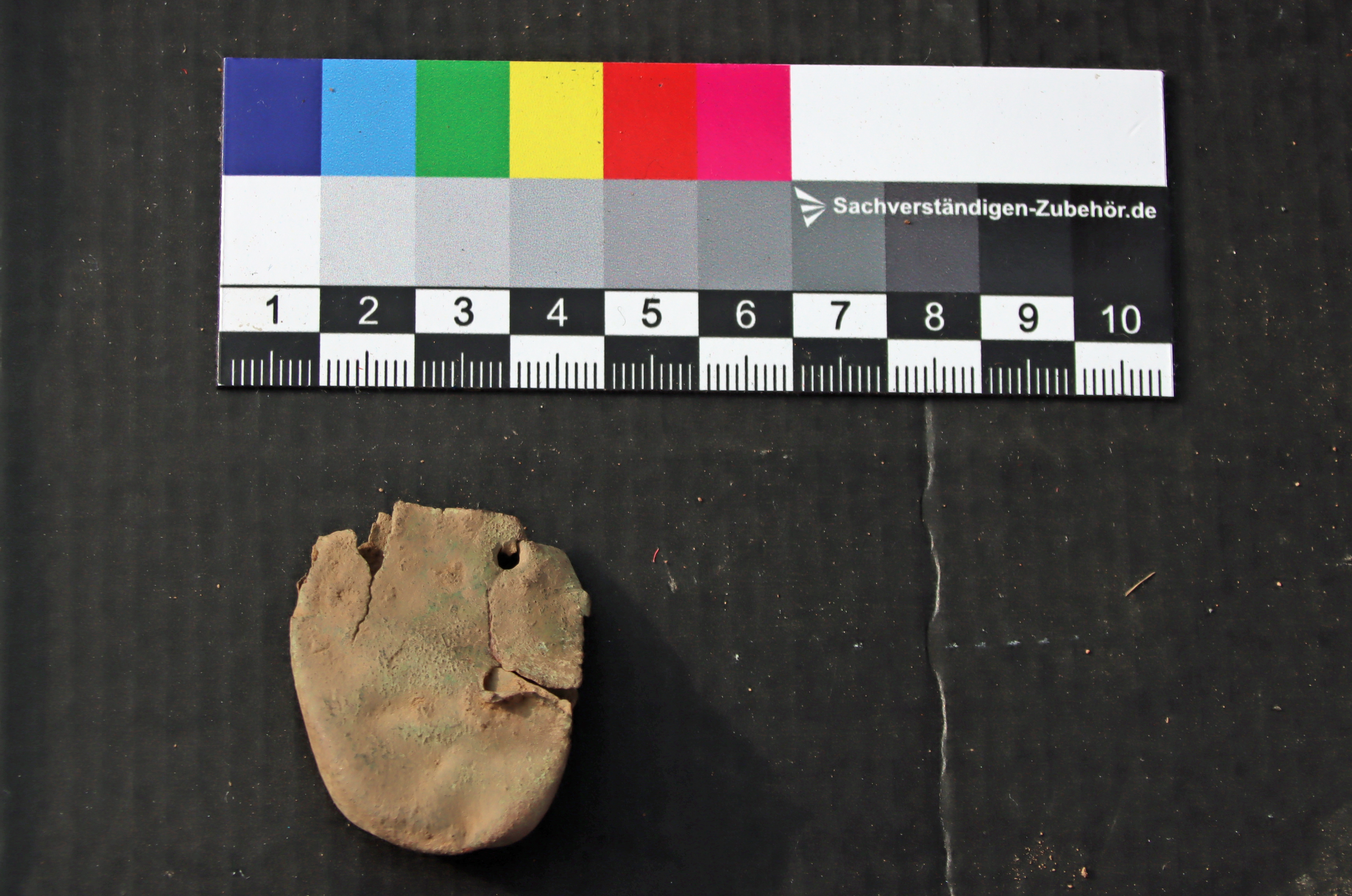
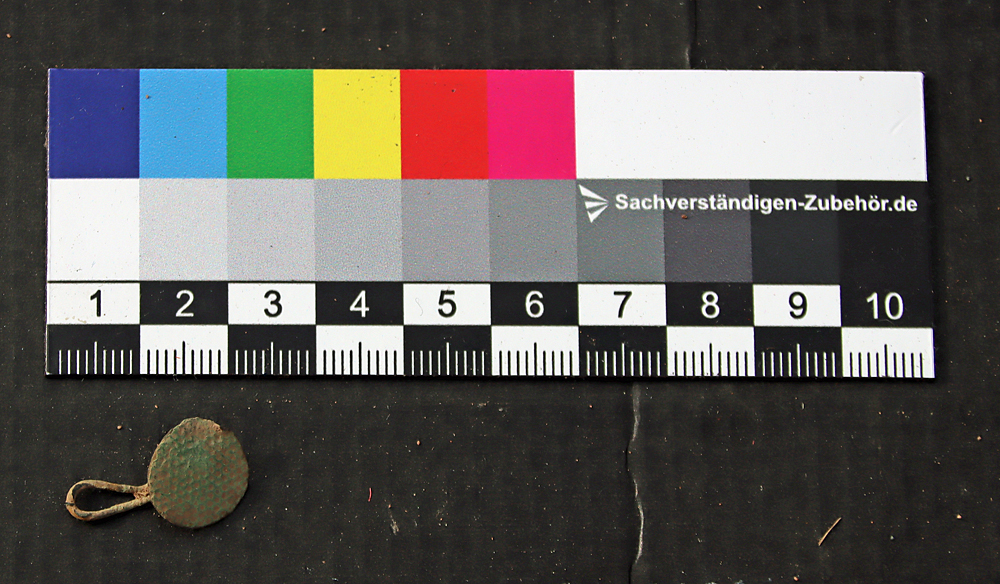
A very intriguing object was what appeared to be a very small pouch, with holes at the top, perhaps for attaching to clothing. It would be good to know more about what this was used for.
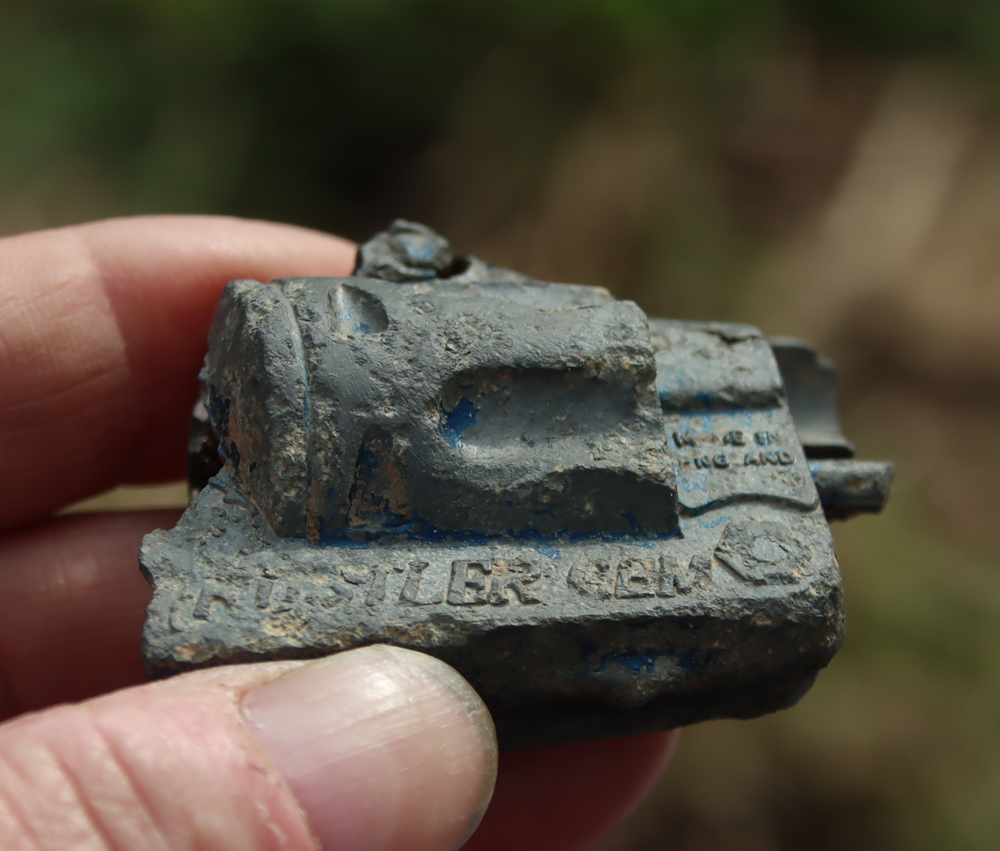
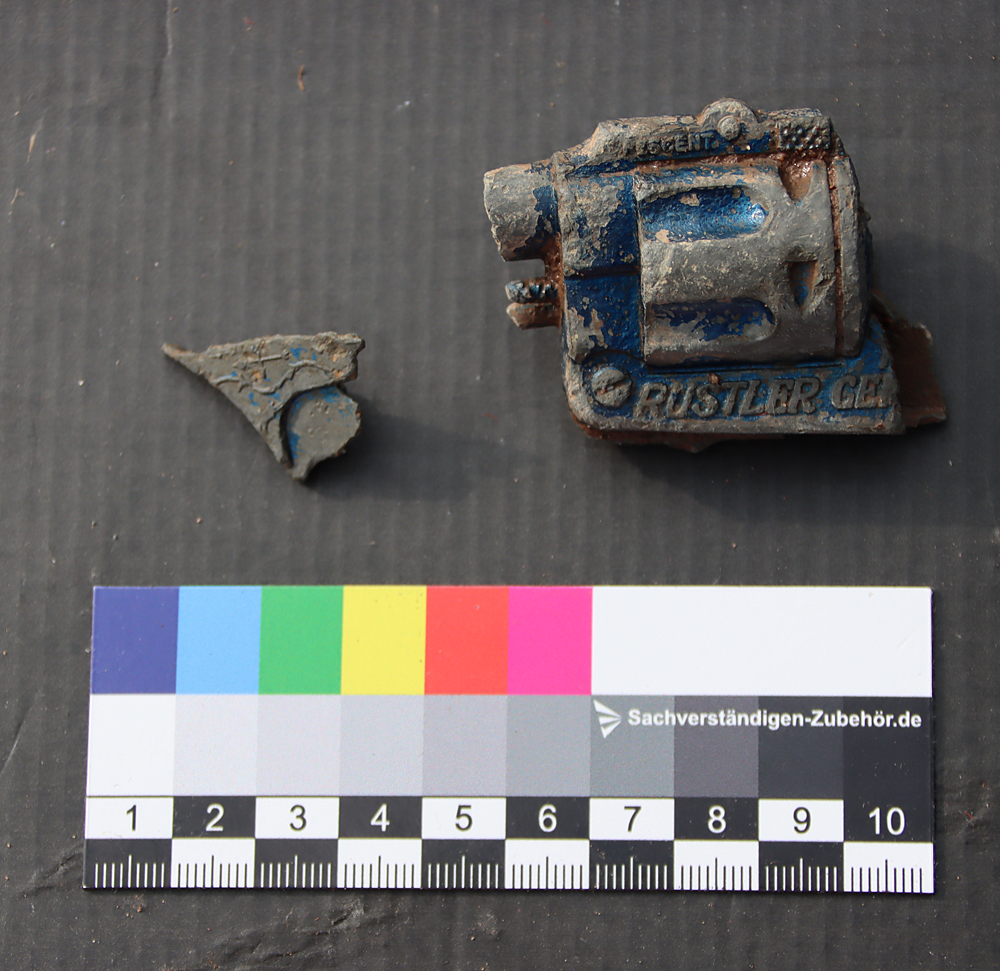
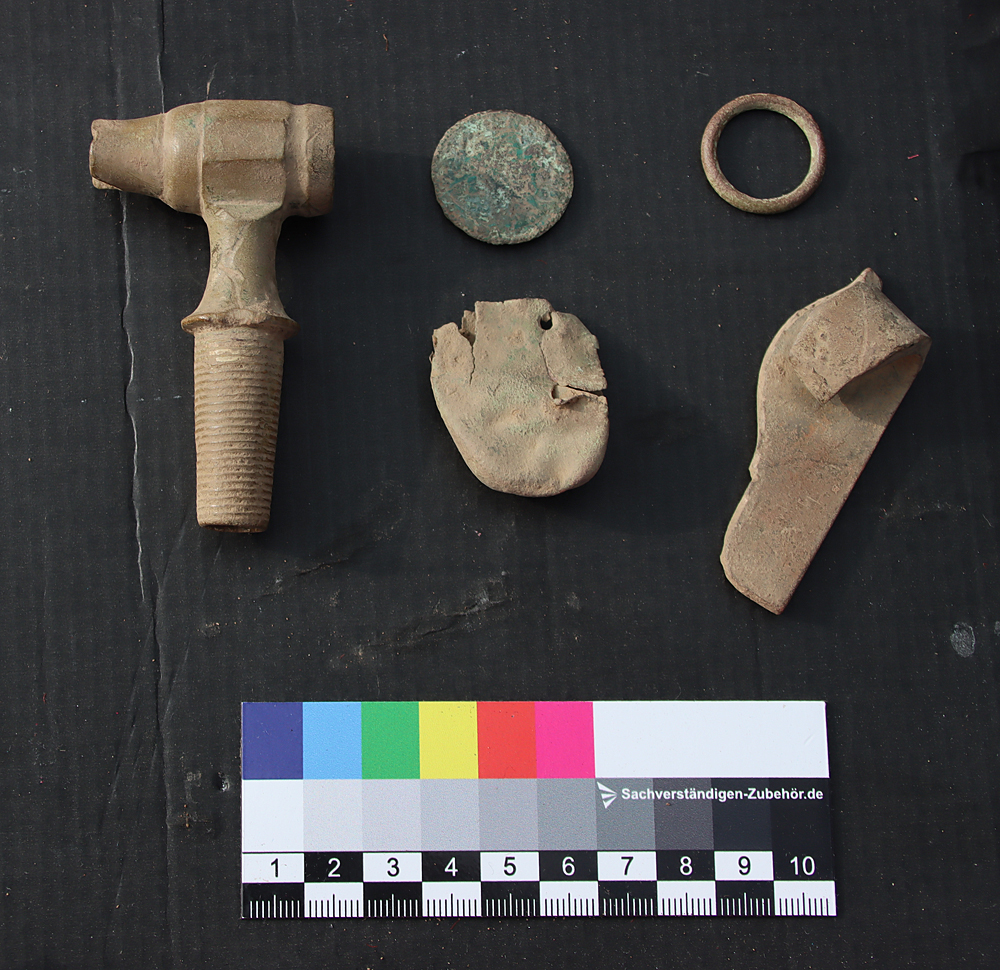
One of the most entertaining of the finds was a piece of a toy gun, nicely made and originally painted blue, with the words RUSTLER GEM clearly visible.
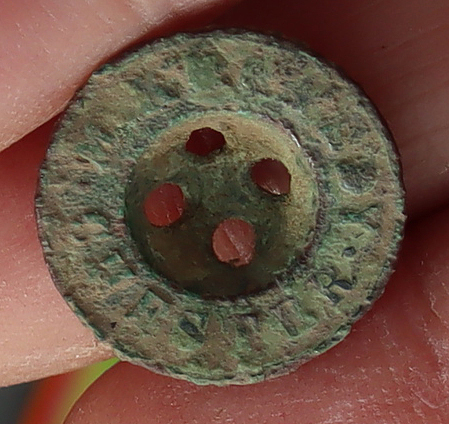
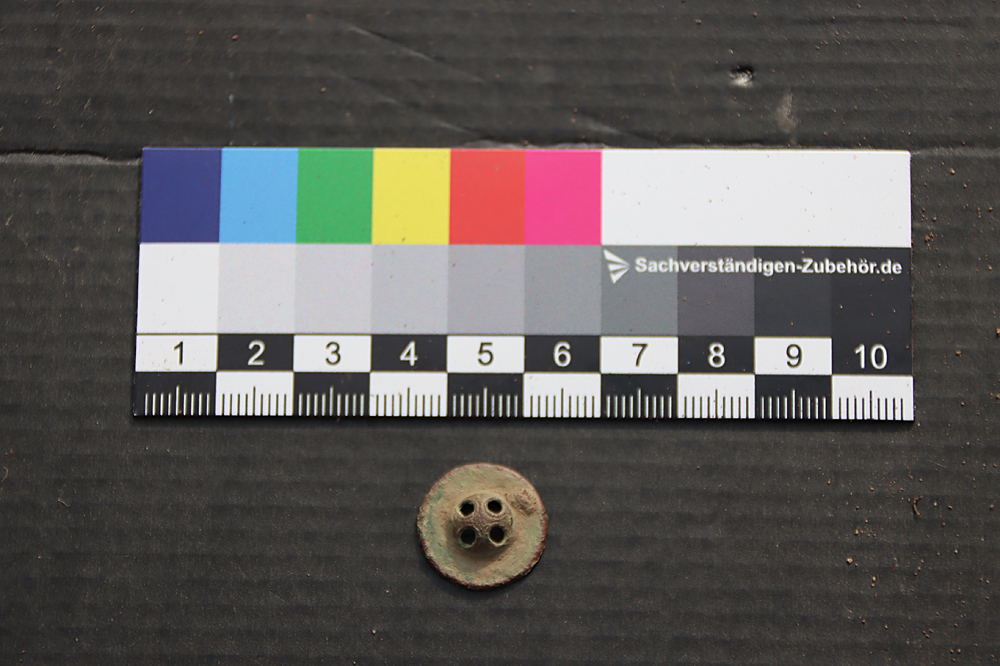
A small button with four holes, the shape of a flying saucer, was surrounded by lettering, the bottom half of which clearly states “Chester,” with the rest too worn to be read, apart from a possible M. at the start (an initial?) and a clear DY at the end, perhaps preceded by an E. A brief lurch around the Internet suggests that these are typical on suits and waistcoats of the late nineteenth and early 20th centuries, and are marked with the name of the tailor.
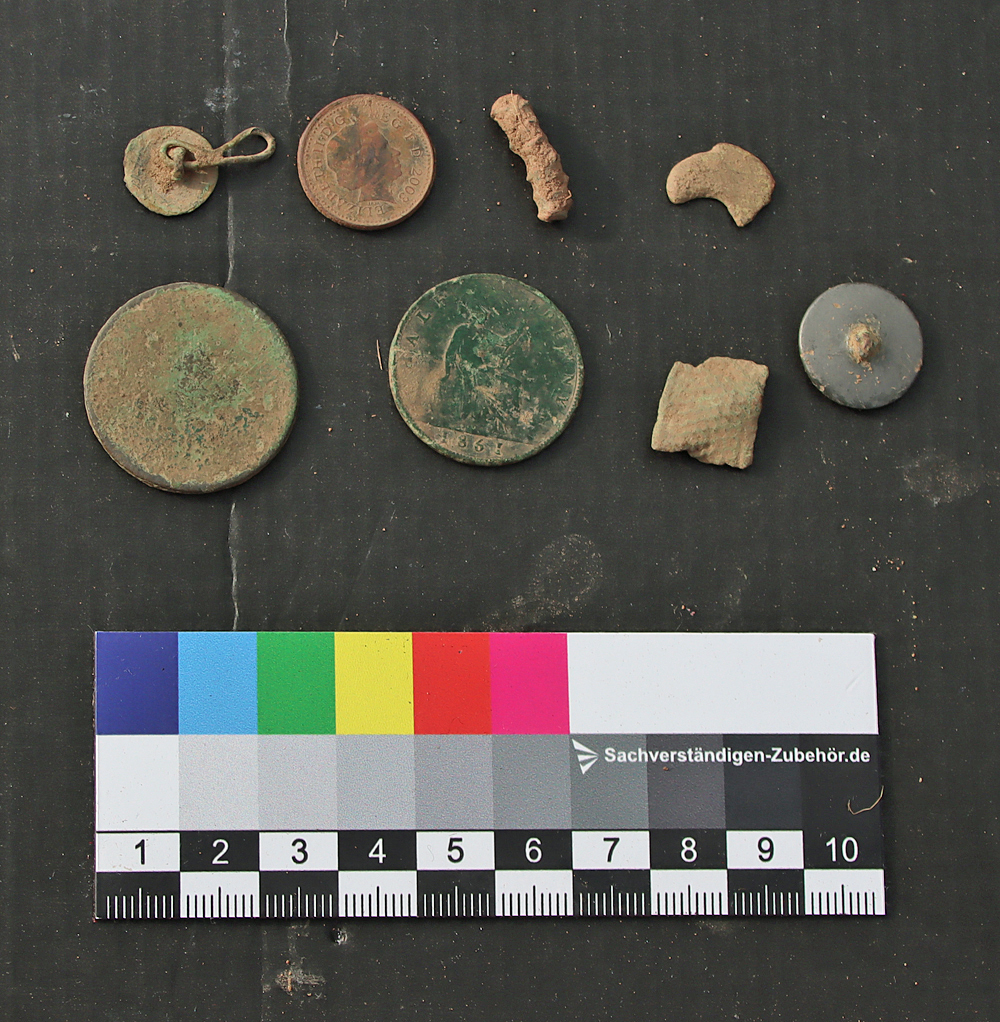
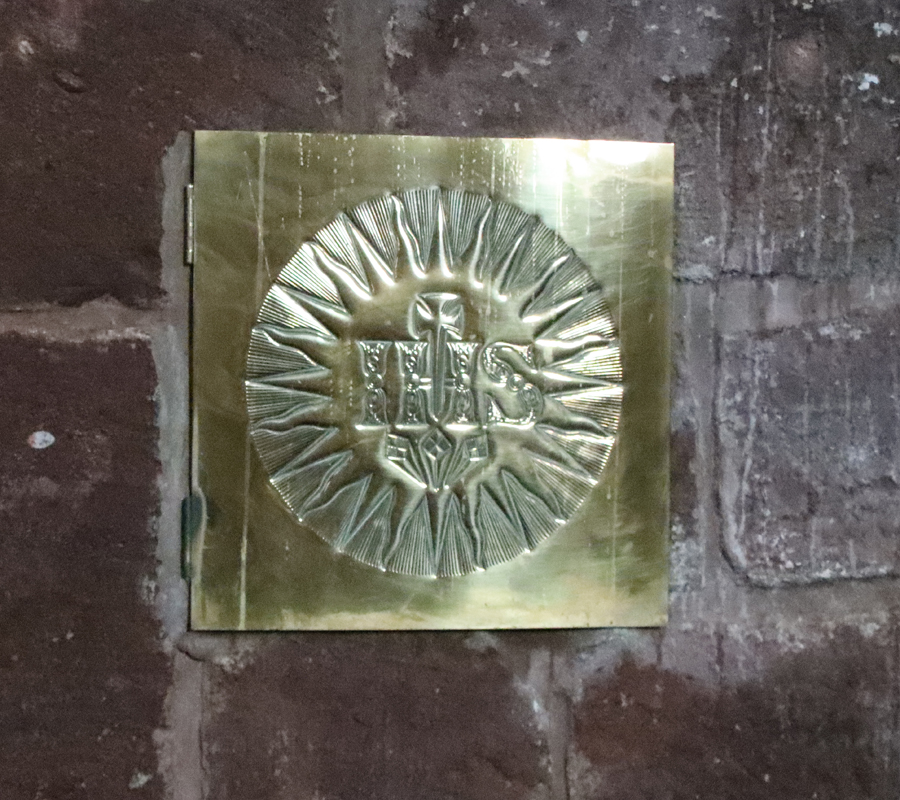
Another button with a metal loop has a crown engraved on the loop side, together with other emblems and some indecipherable text, and is perfectly plain on the other.
A broken pair of cufflinks, with only one face remaining, was rather charming, and a piece of thimble was the sort of thing that only an experienced detectorist would have recognized.
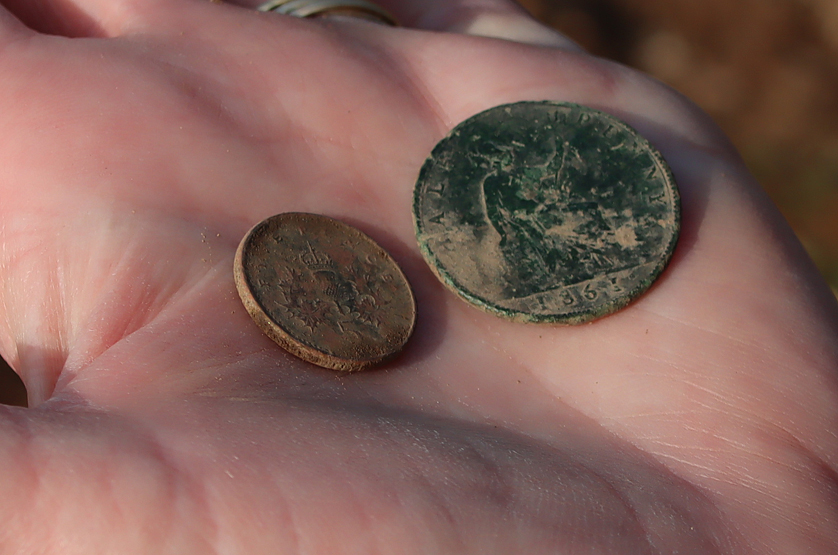
The oldest coin we found was a penny dating to 1861, and there was also a 2003 five pence piece!
The Rustler after cleaning
The other side of the Rustler Gem
The pouch with two holes at the top, function unknown.
Top left is the half cufflink. Bottom right is the piece of thimble.
Other bits and pieces were a mixture of broken bits of modern equipment and pieces that were largely unidentifiable but, as they were found, each piece was welcomed back into the world with equal enthusiasm, brushed free of damp earth, photographed and bagged up for further examination. There was almost nothing else other than metal, although we did poke around in the holes made, and kicked out all the available mole hills to see if there was anything non-metallic. It was remnant, random stuff of everyday life, but no less rewarding for that.
The other side of the cufflink, showing the lightly ornamented face
The four-holed button showing “Chester” at the bottom and indecipherable text at the top, possibly a tailor’s name, apparently beginning with an M. and ending with DY (perhaps preceded by an E).
Many sincere thanks to Rob for taking the time to spend the day with us, and also for showing us how a metal detector functions, with different fittings available to improve sensitivity, and how a separate pointer probe helps to focus in on the object that the detector has identified after the hole has been dug. Rob even has a special customized spade for making small holes, not unlike a long-handled bulb planter but far more robust. The metal detector is a far more subtle piece of equipment than I had anticipated, and it was an education to see it in action. And many thanks to Helen for inviting me! Truly fascinating, and such a fun and mellow day.
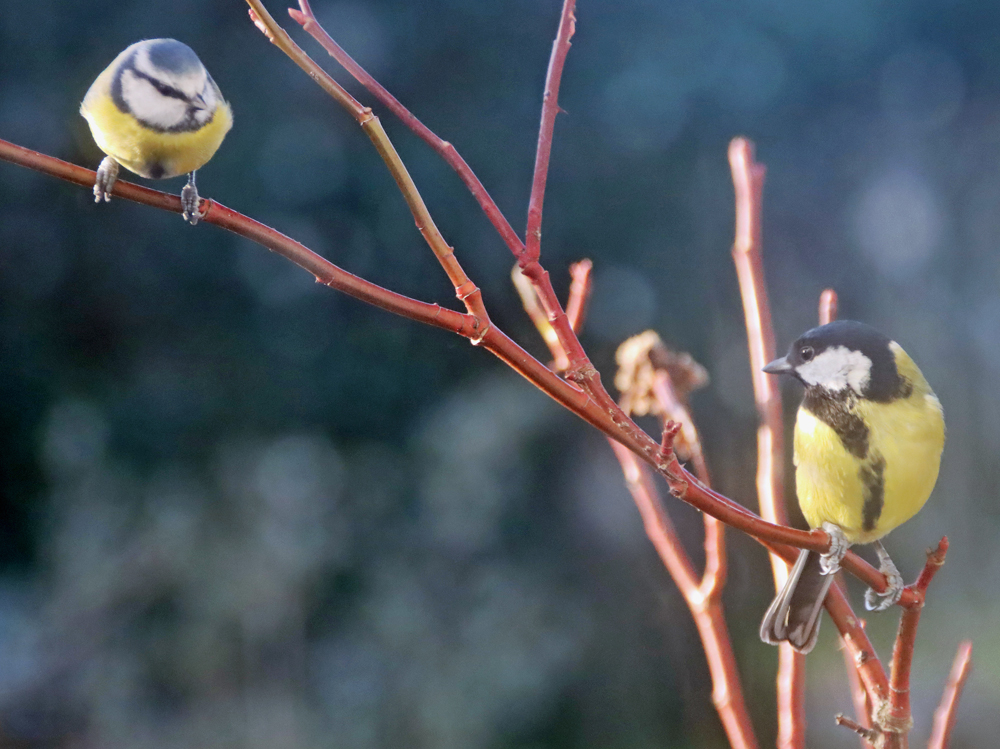
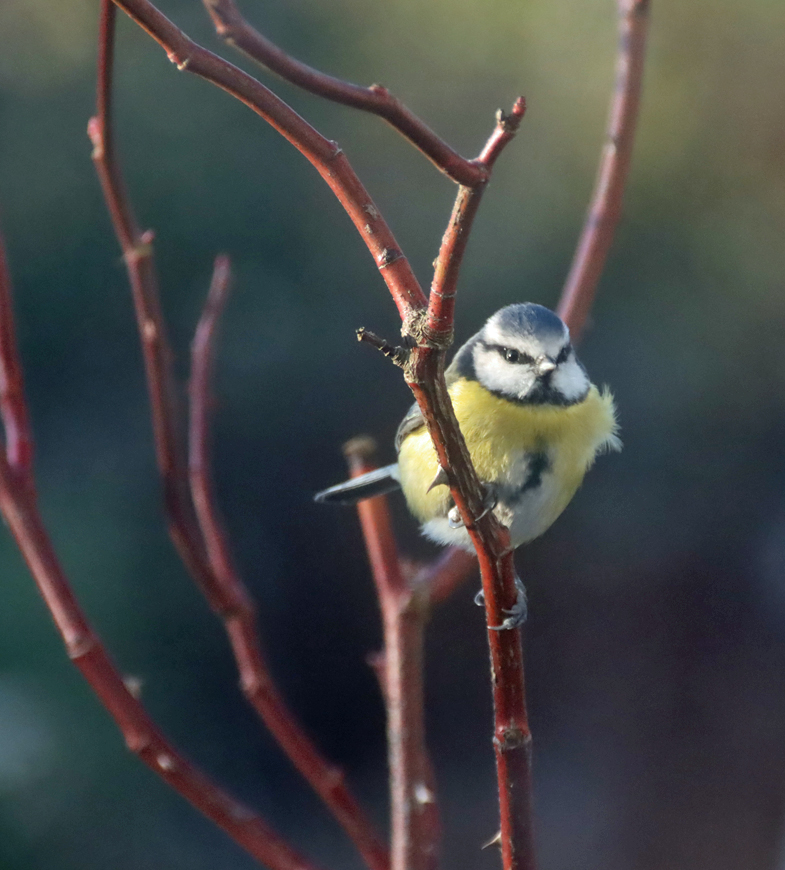
Blue Tit on a rose bush in my garden, January 2026
I have been doing the RSPB Big Garden Gardenwatch for about 10 years, but it has been going since 1979, collecting the same data each year so that the analysis of birds can be sensitive to time as well as geography, charting alterations in bird populations throughout the UK. These changes can be considerable. As climate change impacts both regional and highly localized environments, the distribution and numbers of different animal and plant species alter accordingly. Overall the UK has lost 38 million birds in the last 60 years, and although House Sparrows were the “most spotted” bird during 2025, comparing actual numbers with previous years shows that this figure is down 64% since 1979. This means that House Sparrows are now on the red list, which is the highest level of conservation concern.
Most spotted in 2025, from the current Birdwatch webpage
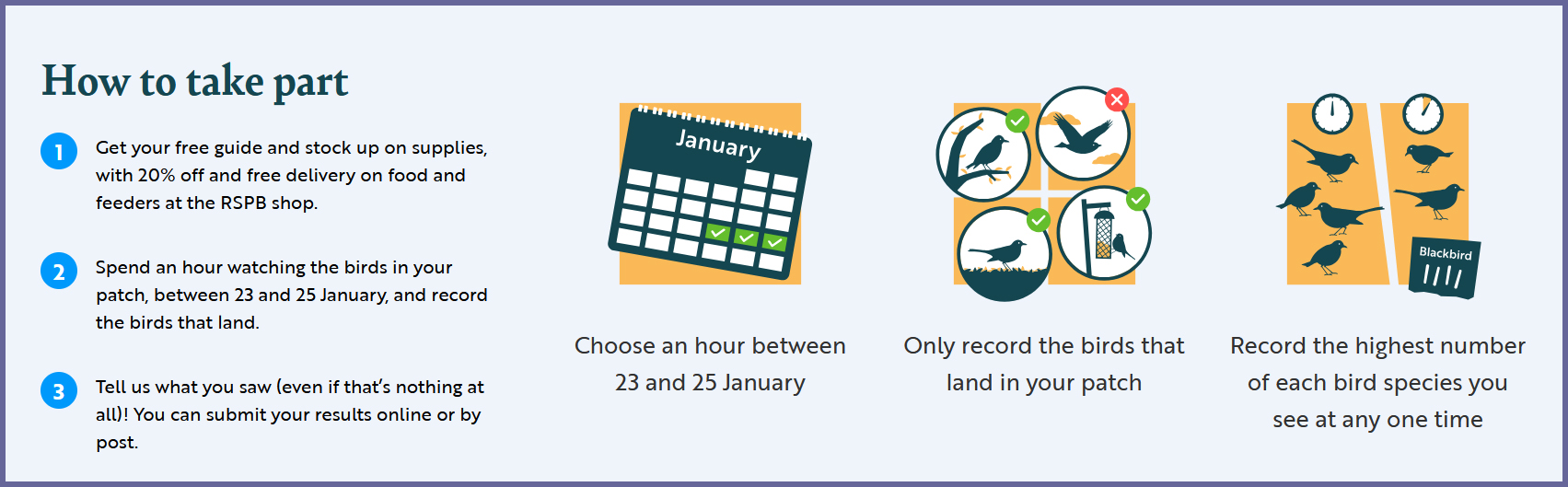
You can enter your results online or by post, making it very easy to participate. Instructions for participating are at the Big Garden Birdwatch page here, but it’s a simple task. On either 23rd, 24th or 25th January simply select a convenient hour to do some birdwatching in your garden, local park or wherever you settle yourself down. The idea is to count only the maximum birds you see at any one time in that hour, and only those that land, not birds flying overhead. You can download the bird identification sheet in English or Welsh here.
I’ve always vaguely wondered why the survey is done in the winter, when we would all rather be tucked up indoors, but the answer makes a lot of sense:
Because that’s the time of the year garden birds need us most – if it’s really cold, it’s likely more birds will come into our gardens looking for shelter and food. This makes is easier to count the birds. Because the Birdwatch takes place at the same time every year, we can look back through the years to see if anything has changed.
I will be doing mine from the nice, safe warmth of the kitchen, from where I can watch the bird-feeders and the birdbath without suffering from hypothermia!
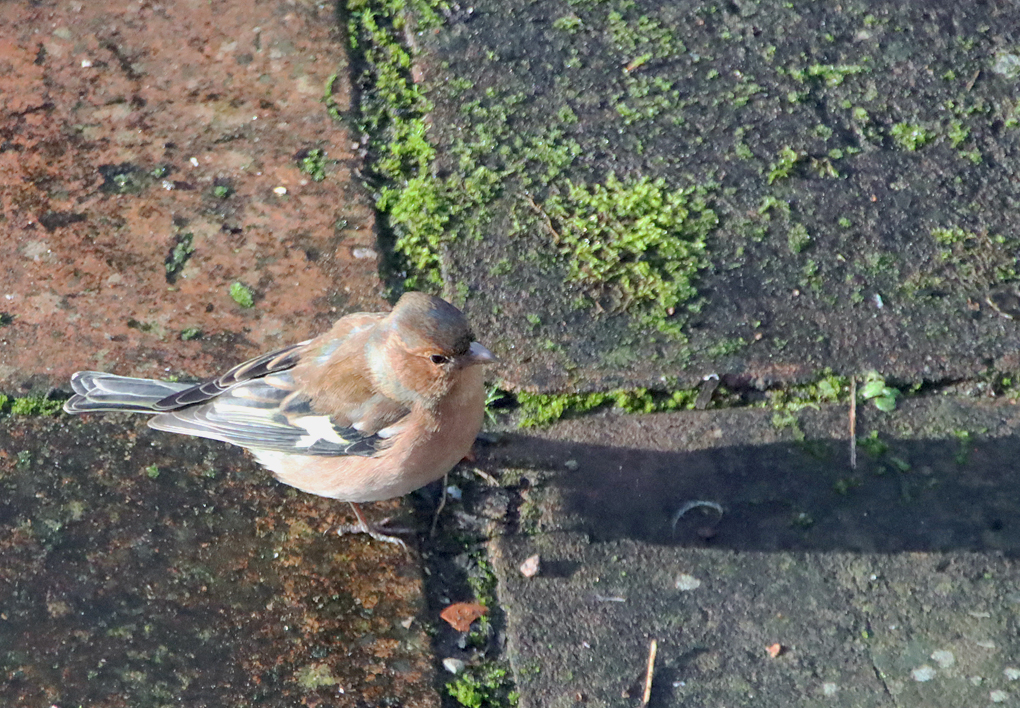
Most of the birds taking advantages of the bird feeders are small – blue tits, great tits, sparrows, the occasional dunnock, a few long-tailed tits, and quite a few very shy chaffinches. It is impressive how the sparrows and chaffinches are so at home on the bird feeders, not as gymnastic as the tits, but perfectly happy perching on the outer cage. Black birds and collared doves, and even some of the local community of jackdaws and the occasional magpie scavenge underneath the feeders because the small birds are all messy eaters and drop a lot.
Unexpectedly, a couple of weeks ago I was in the kitchen making a coffee and looked out of the window to see a Great Spotted Woodpecker, at first hanging nearly upside down on one of the bird-feeders but making a really good job of arching its neck around to get at the mixed sunflower hearts, dried mealworms, suet pellets and peanuts, before it adjusted itself into a more convenient upright position. Gorgeous. It has been back several times since, always on the bird feeder furthest from the house. It answers the very puzzling question of why the bird feeder at the far end is always emptied much more quickly than the others, as the small birds don’t seem to mind where they feed. I could never have imagined a more efficient vacuuming operation. I’ve heard it in my neighbour’s garden throughout the summer, tapping away at a tree, but only had fleeting glimpses of it.
Most of my birdfeeders are like the one in the above woodpecker photo, but I have had great success with some very ugly ones that stick to windows with suckers, particularly with the robins and sparrows. I take all the bird feeders down during the course of early spring, one at a time, so that my winter visitors return to fending for themselves, passing on their natural foraging skills to their young, so on the whole I don’t mind a bit of ugliness over the winter. The window feeders supply the birds that don’t do well on the hanging feeders, particularly robins and sparrows, but the tits and finches also enjoy them. A more surprising visitor is a single starling, which simply cannot get the knack of the hanging feeders. I have never seen starlings in the garden before. It is almost impossible to take a good photograph of anything in the window feeders, thanks to the suckers and the general mess that the birds somehow manage to make, but here’s my visitor, taking up all of the available space.
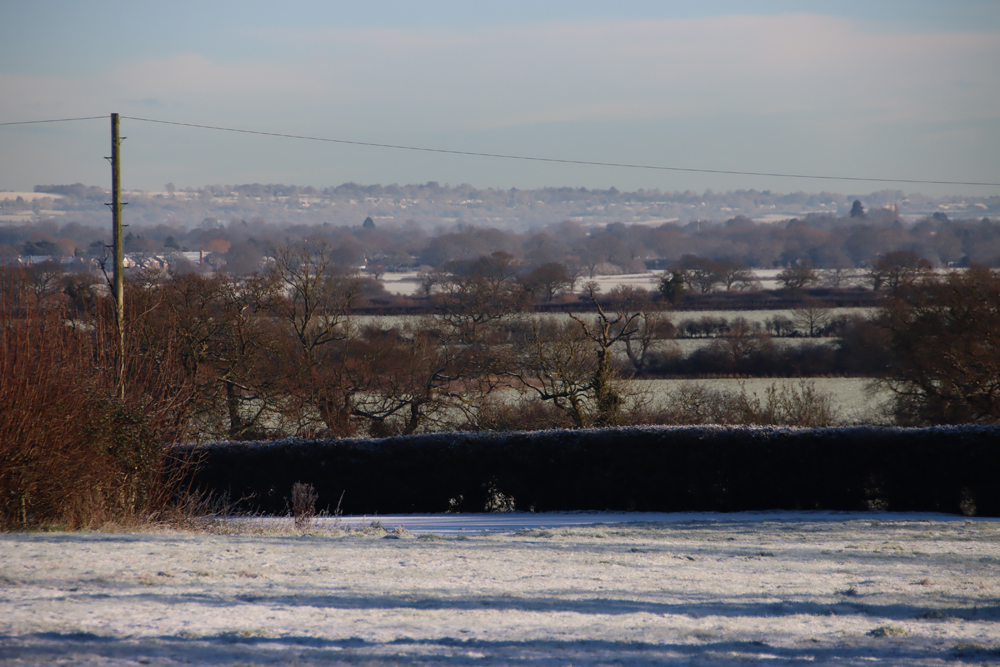
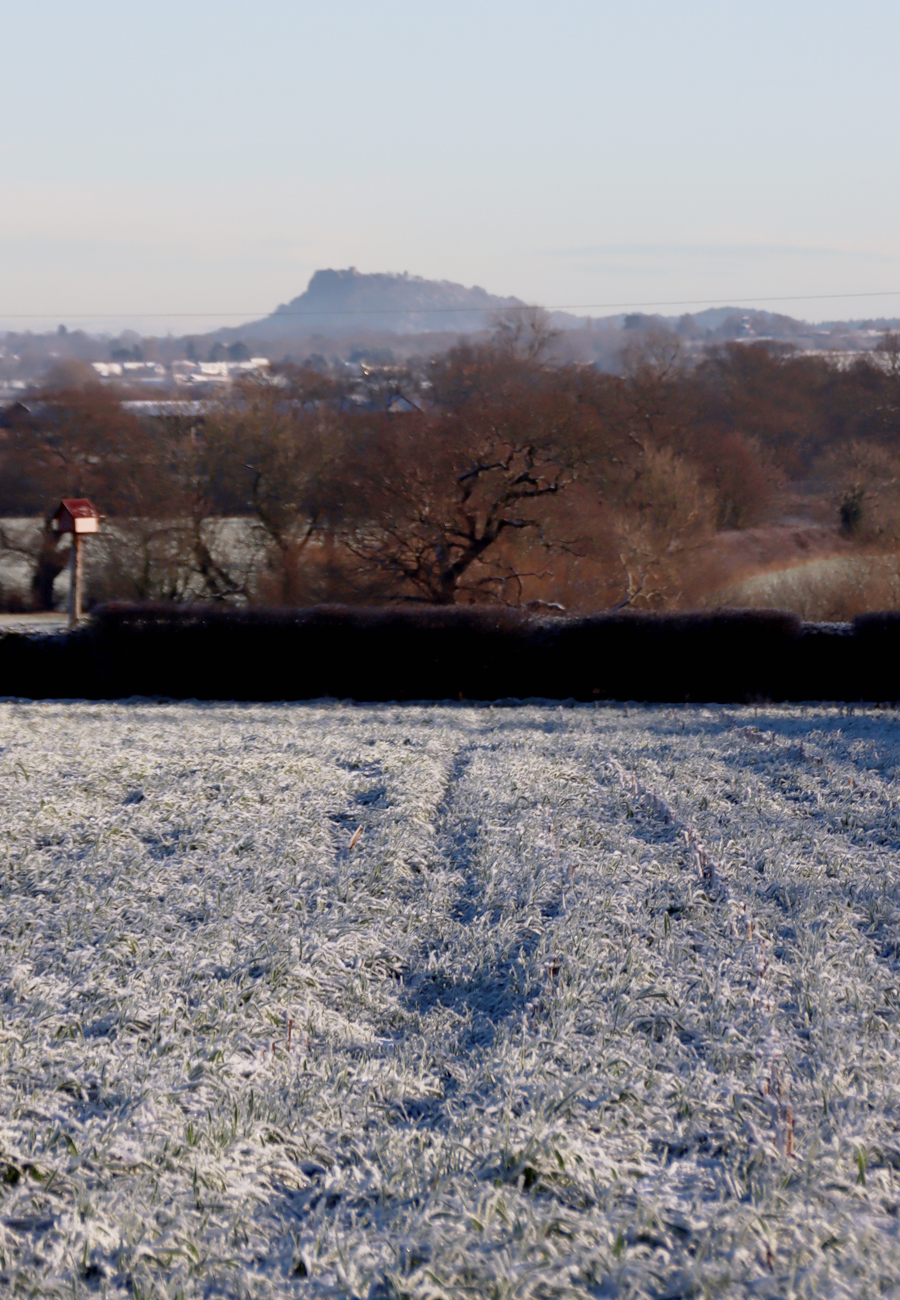
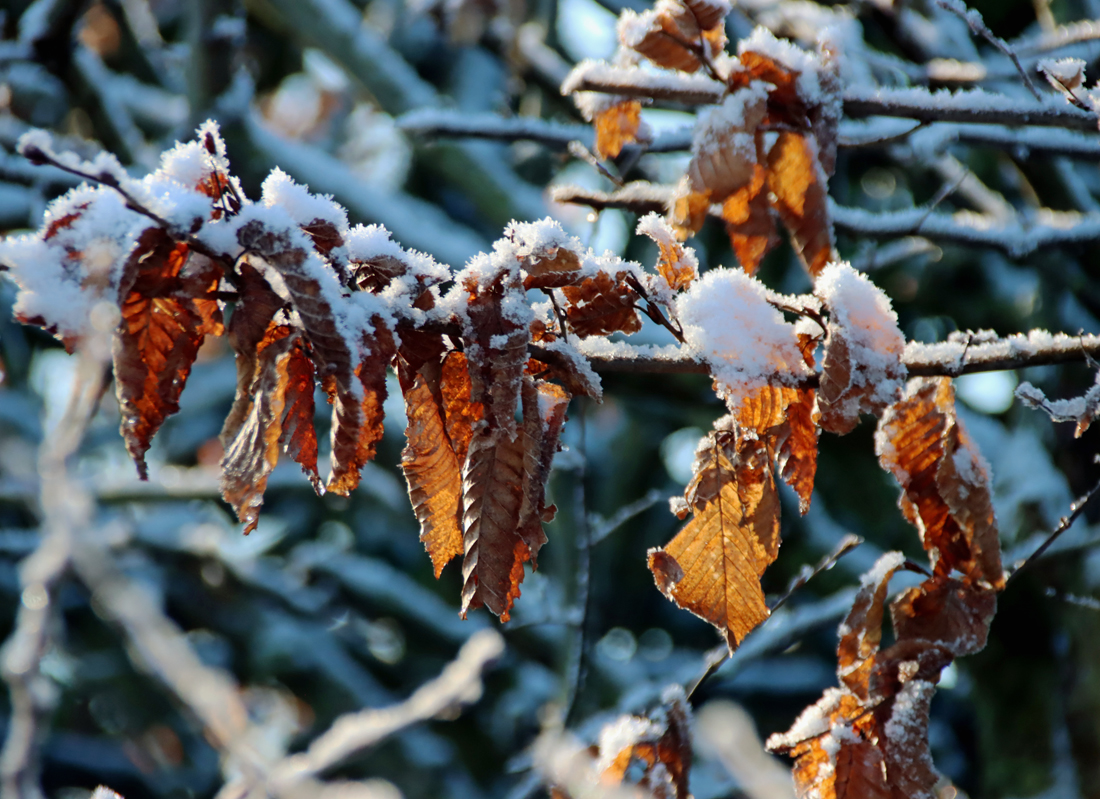
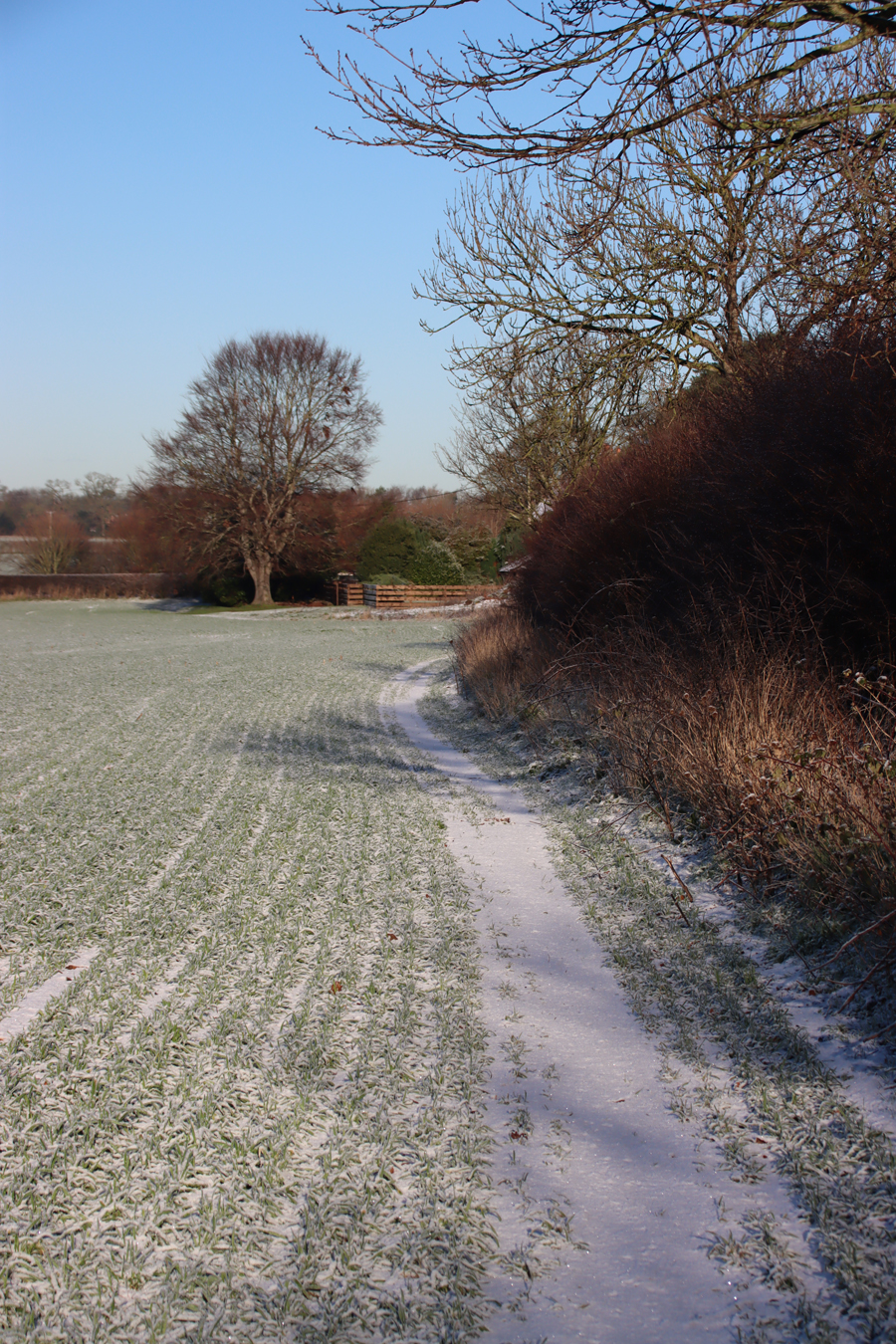
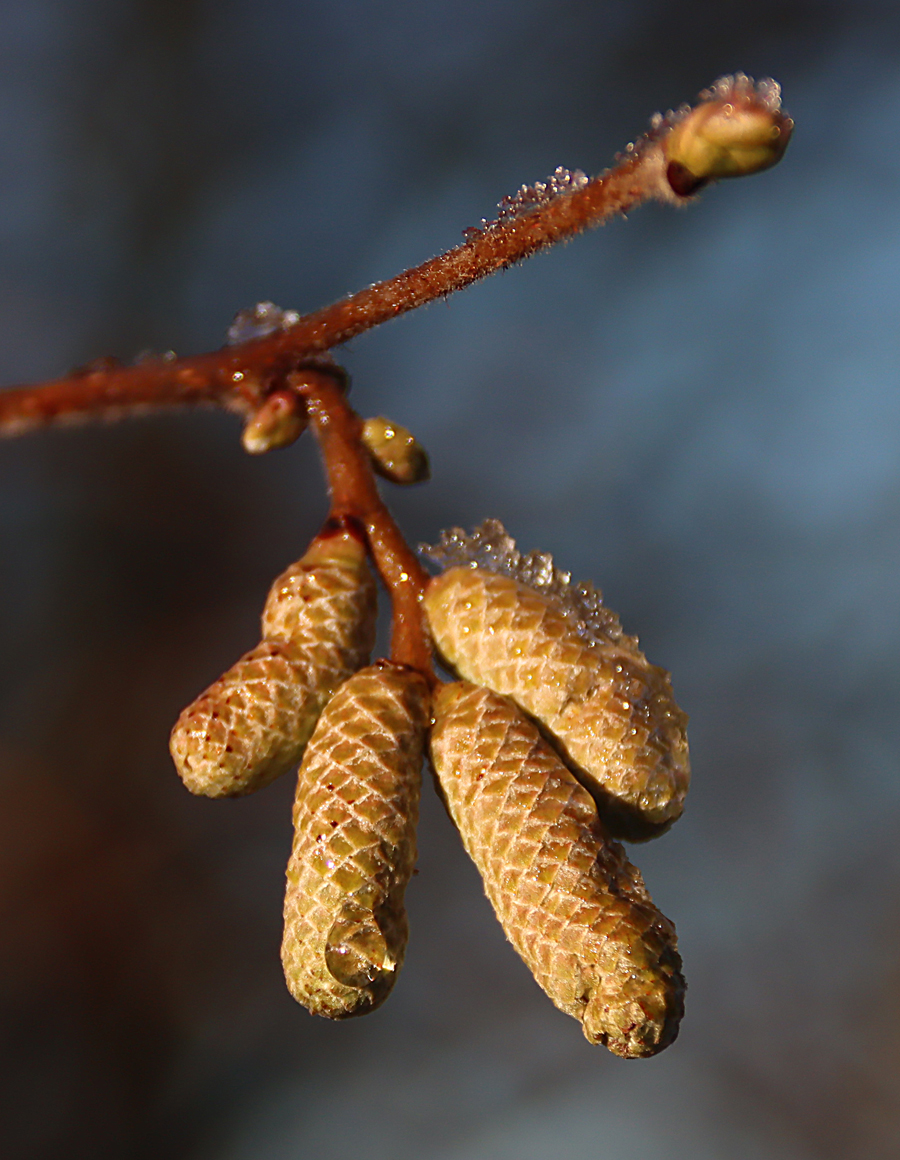
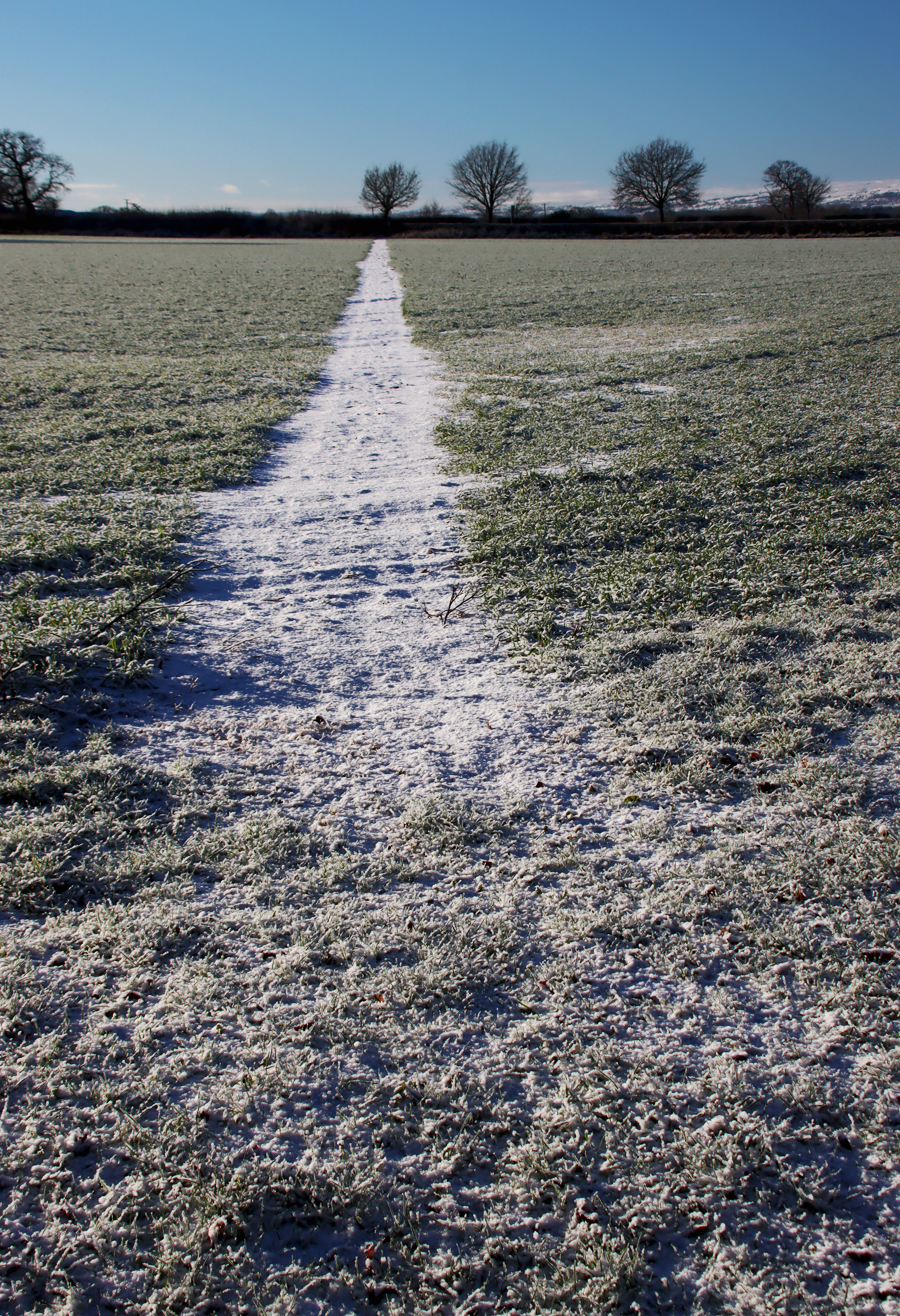
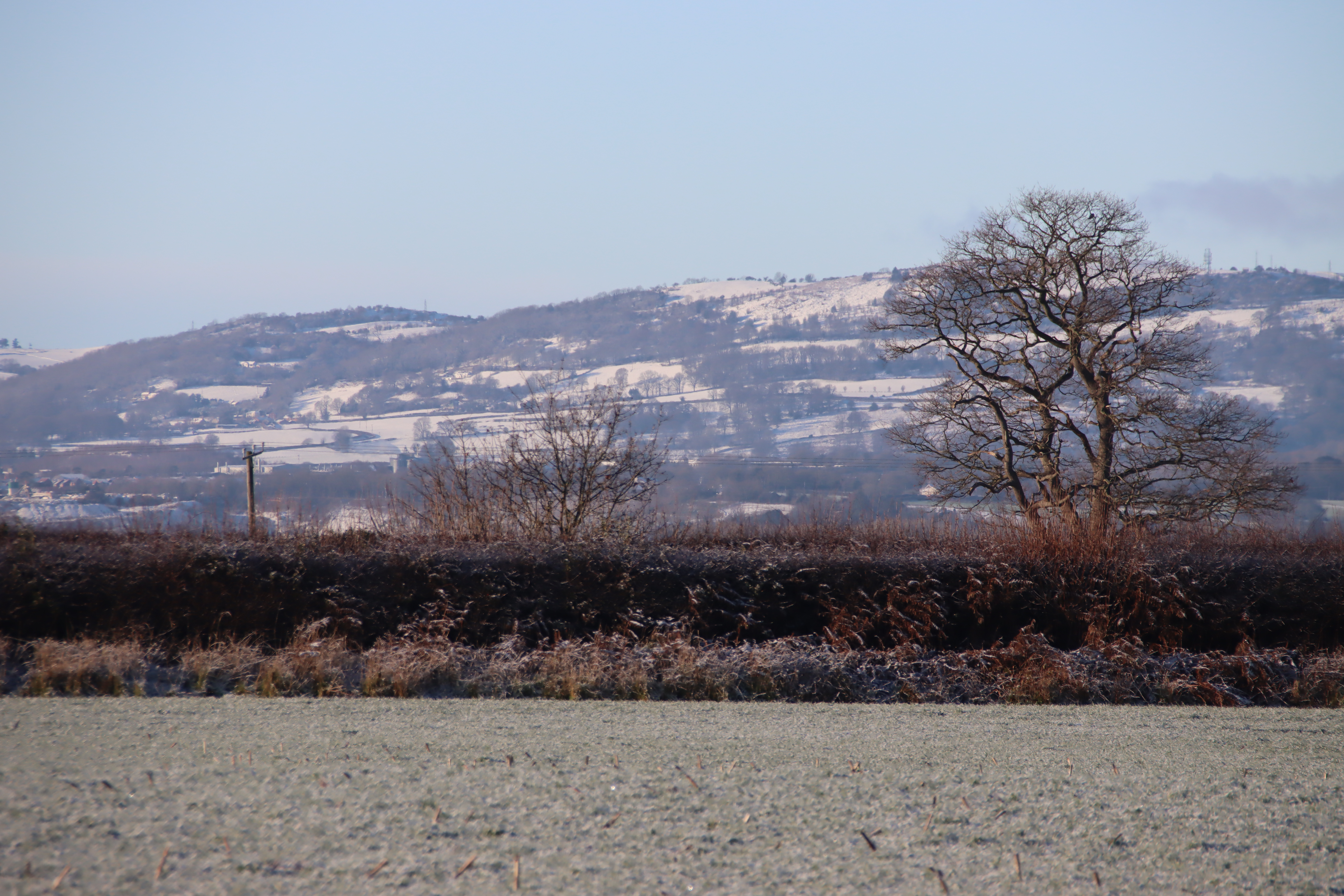
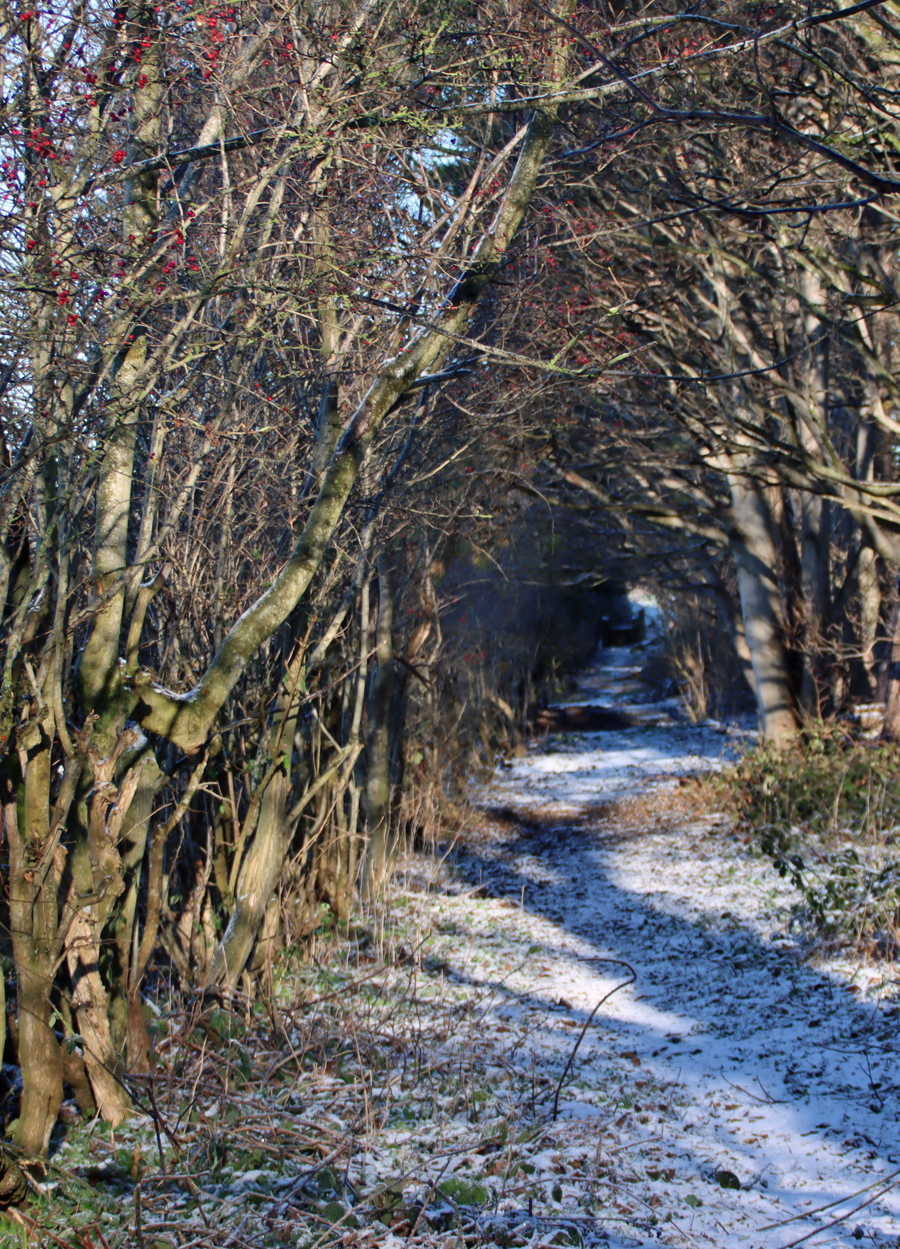
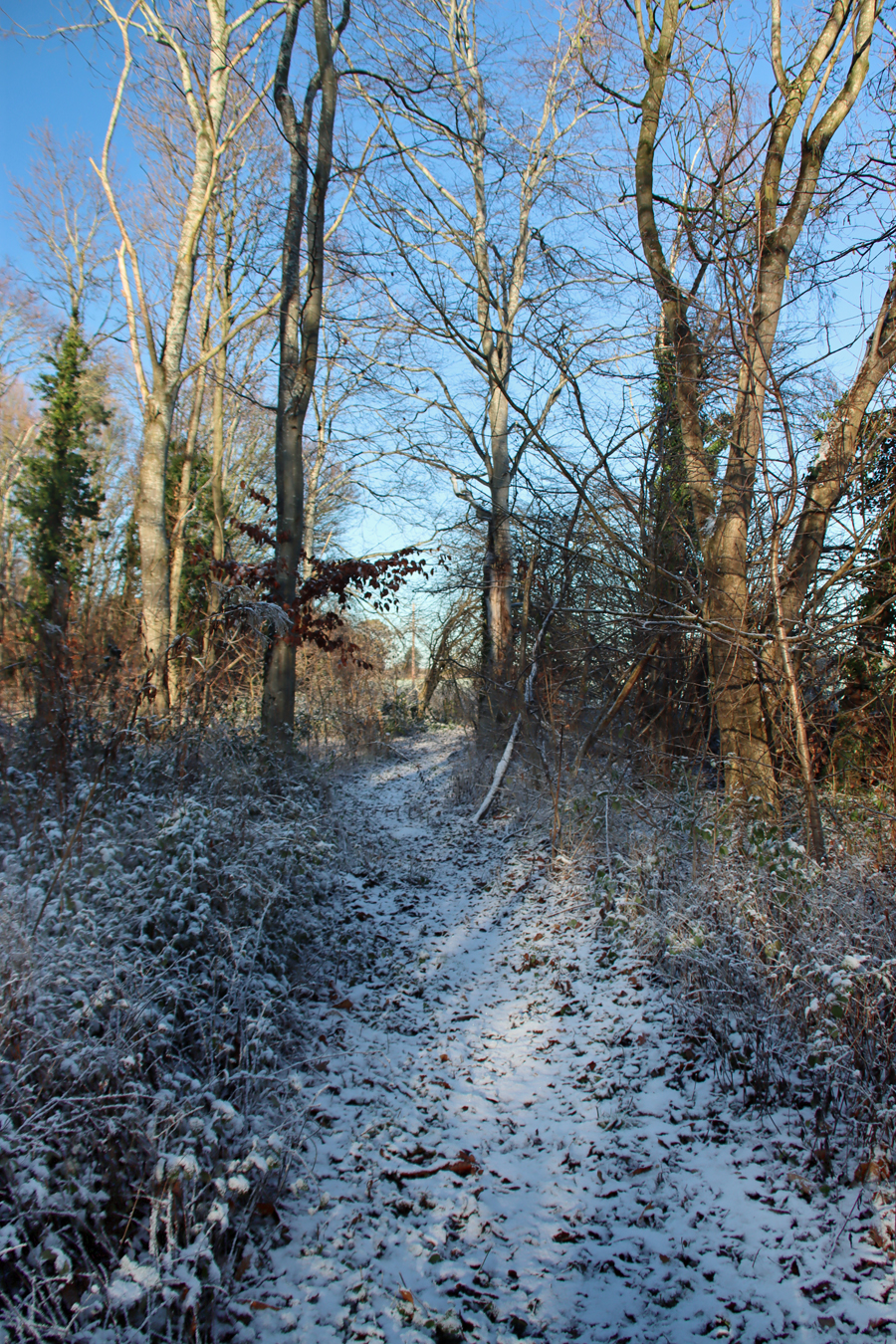
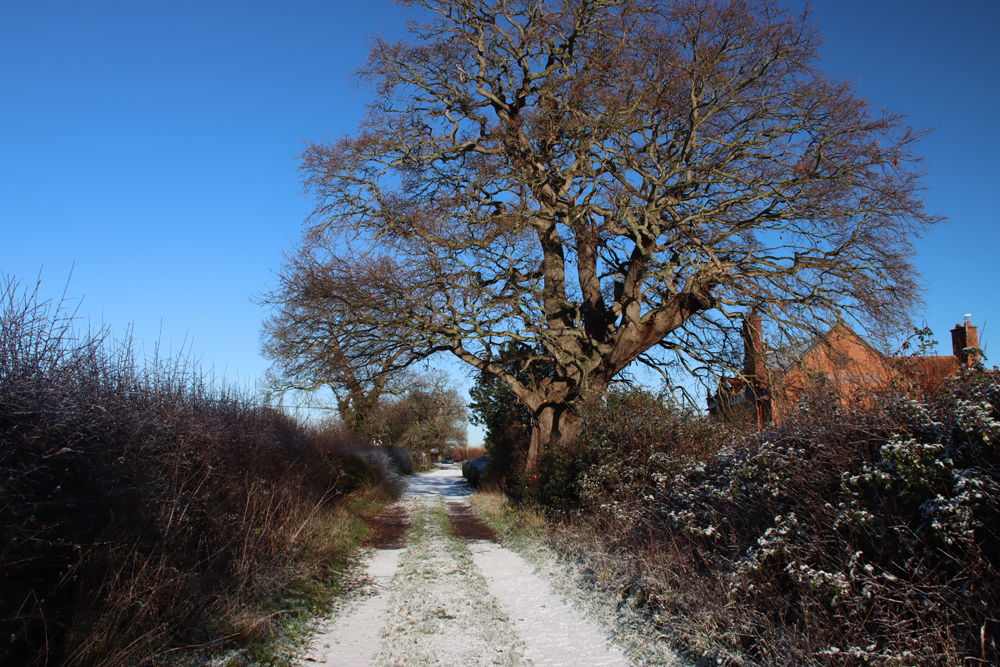
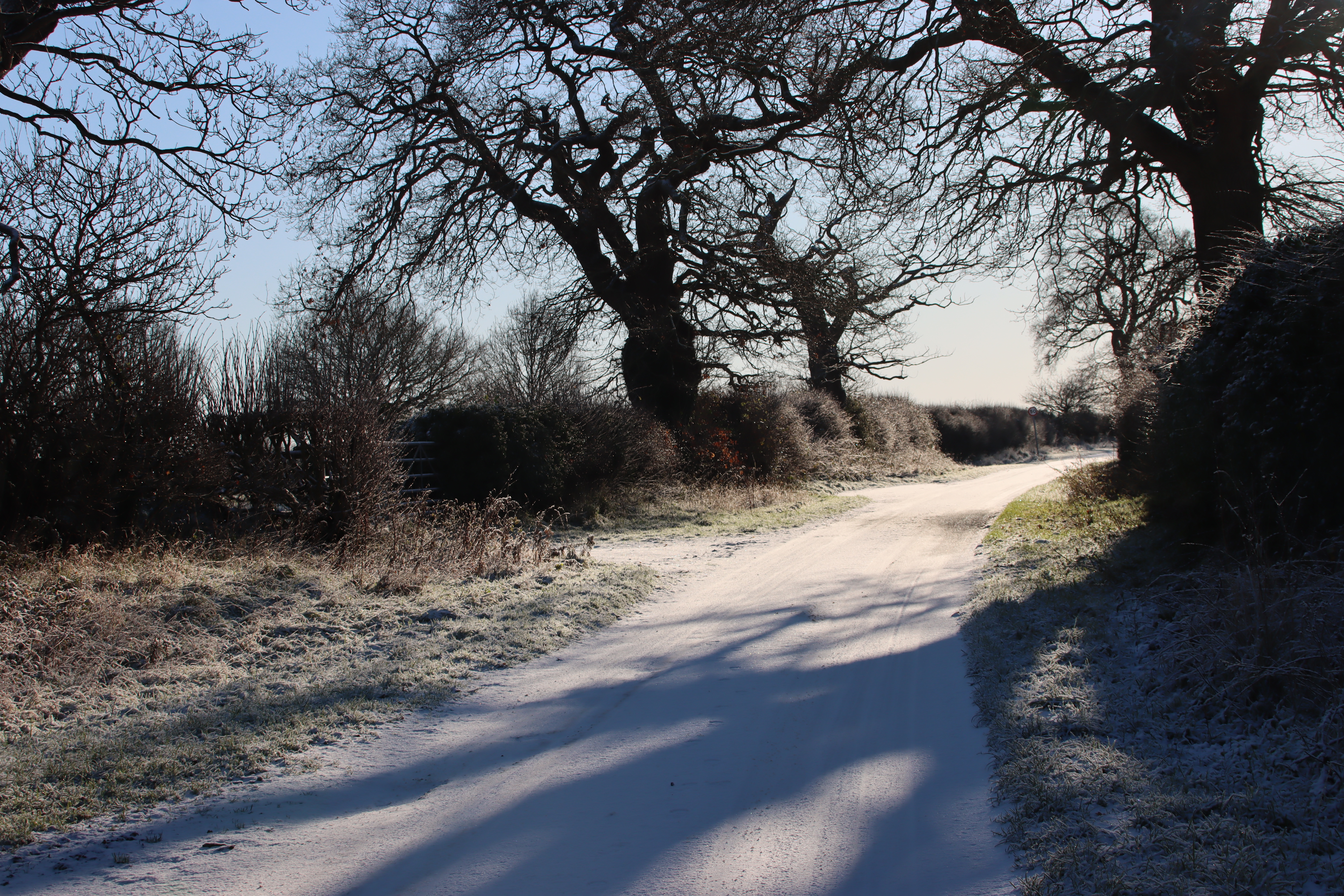
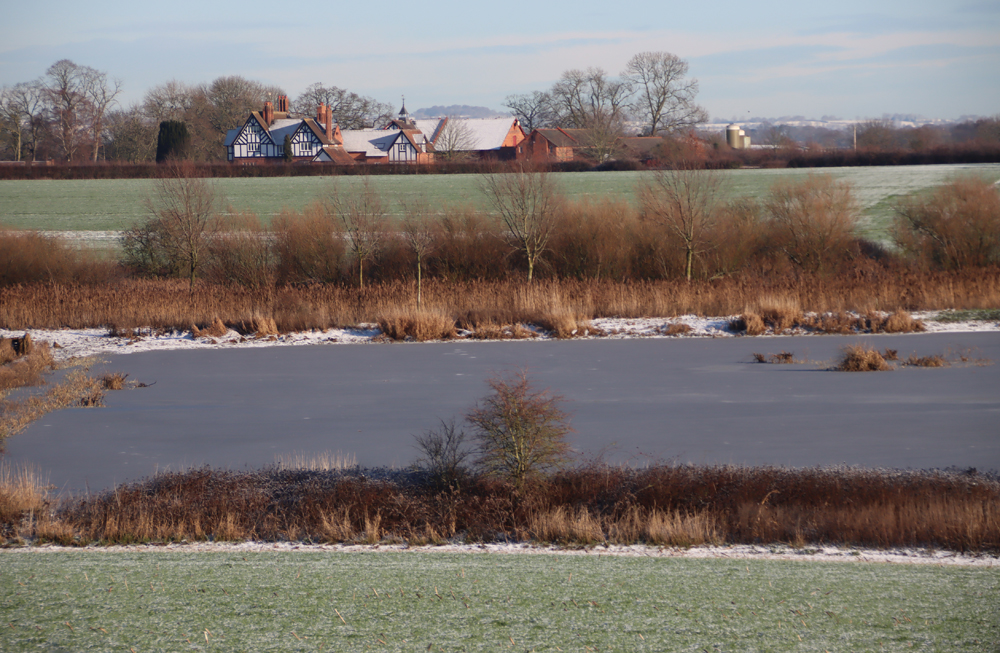
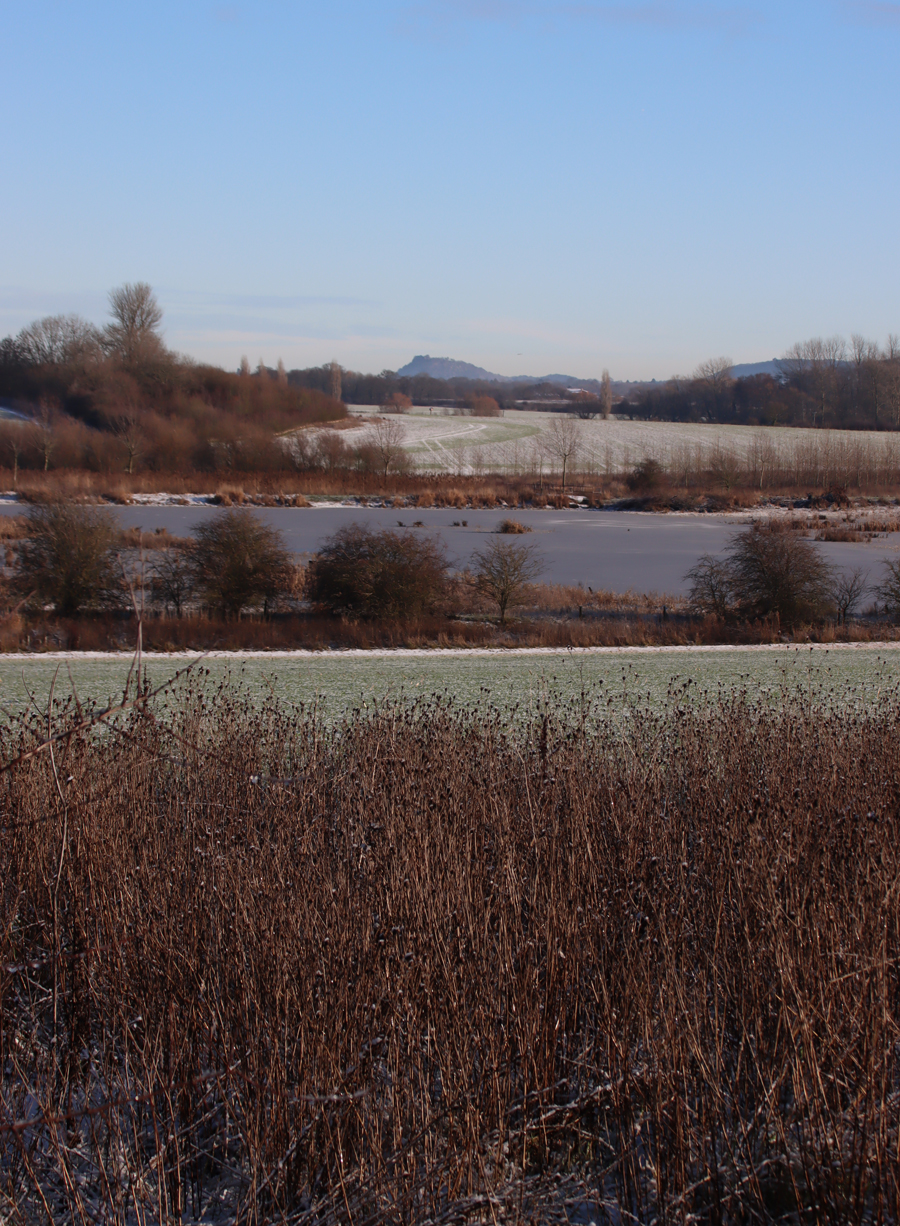
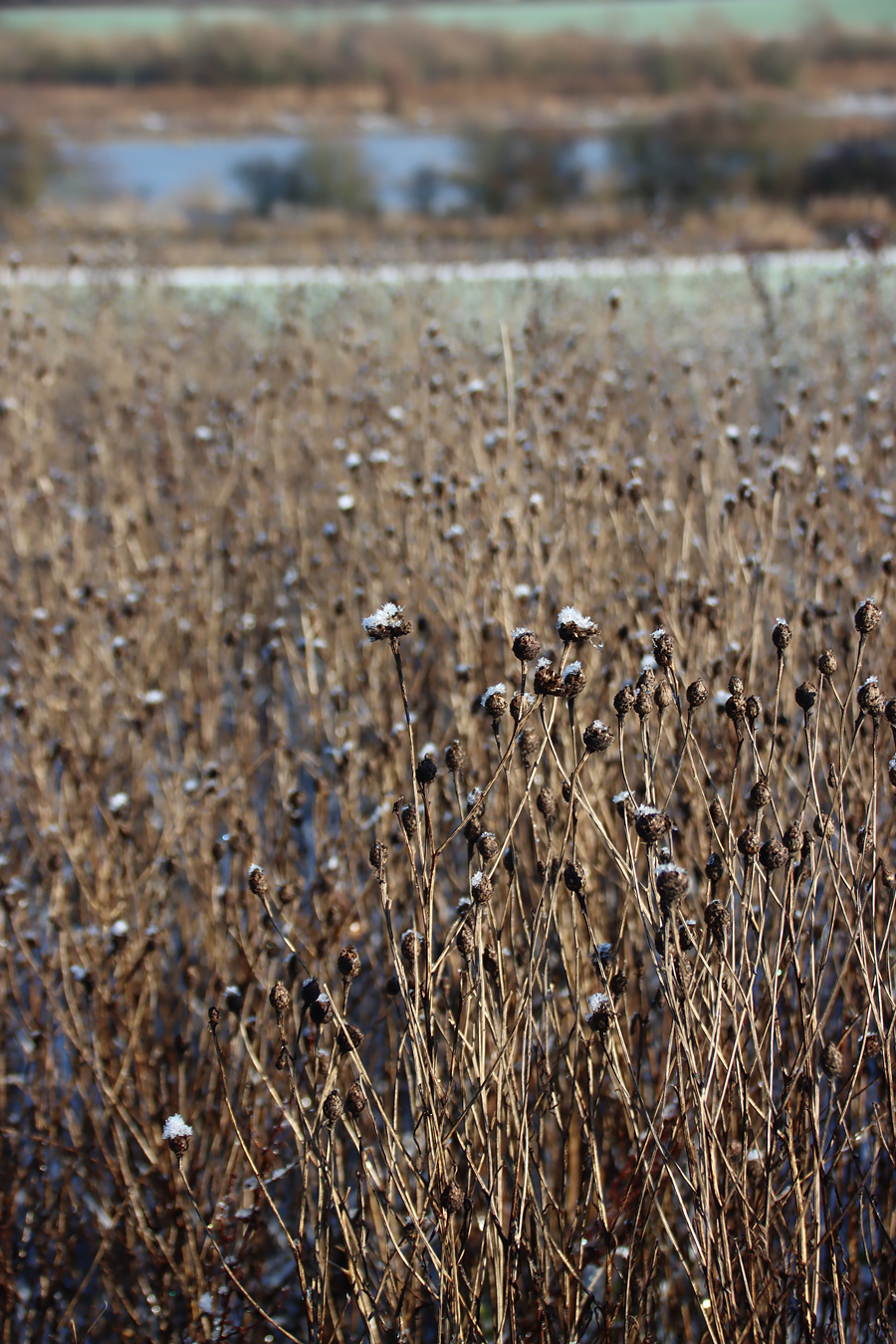
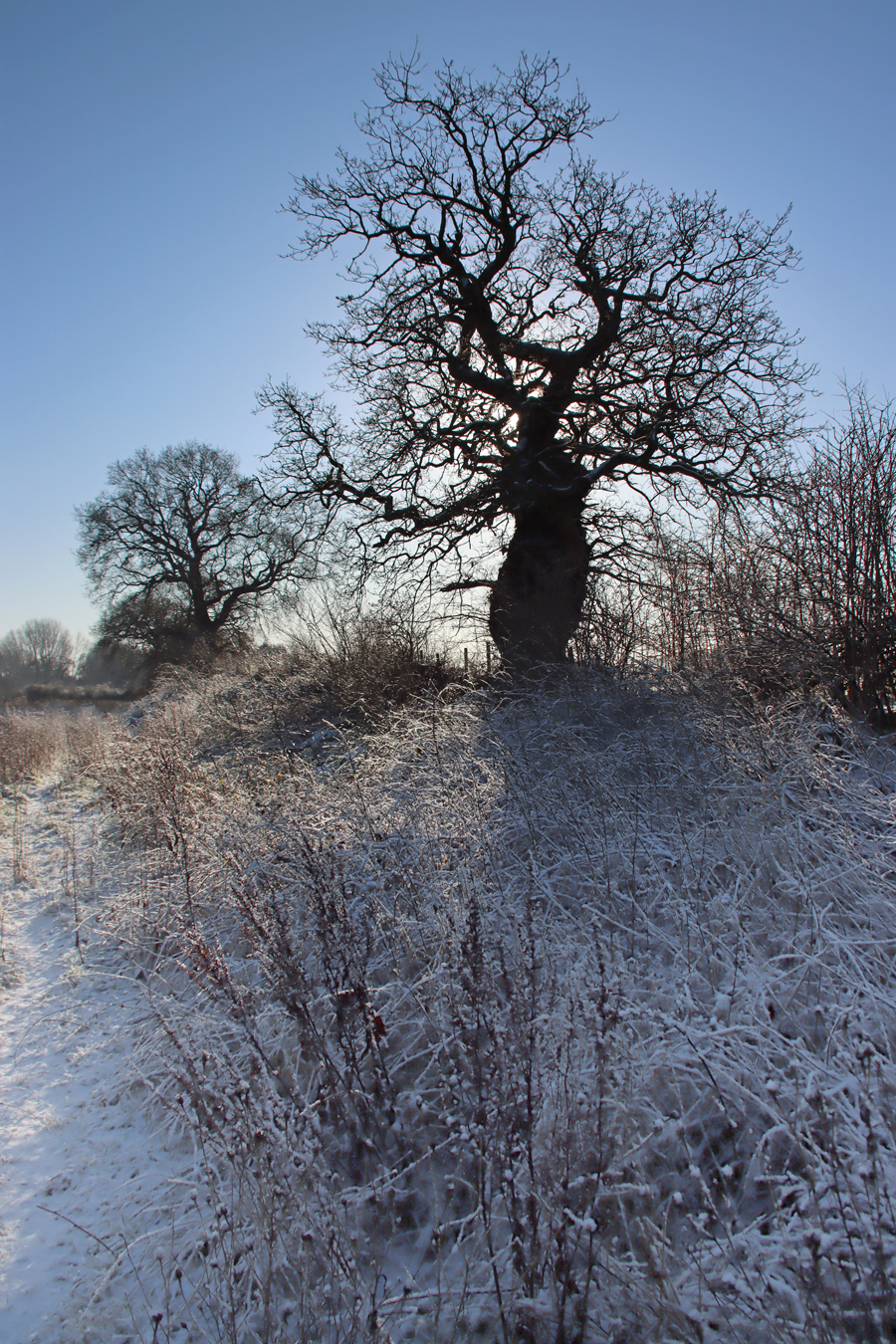
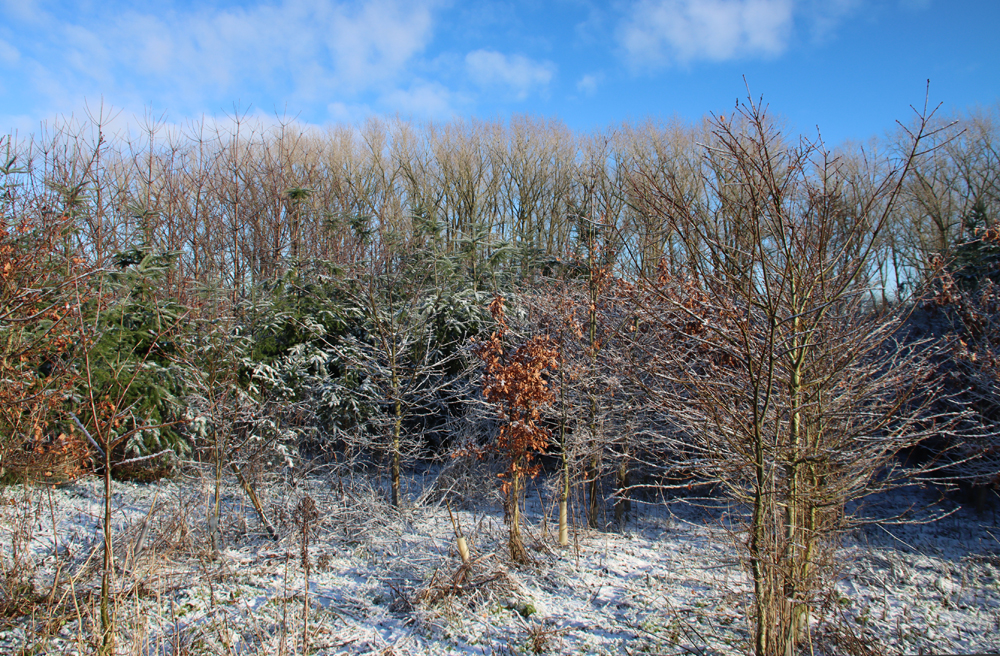
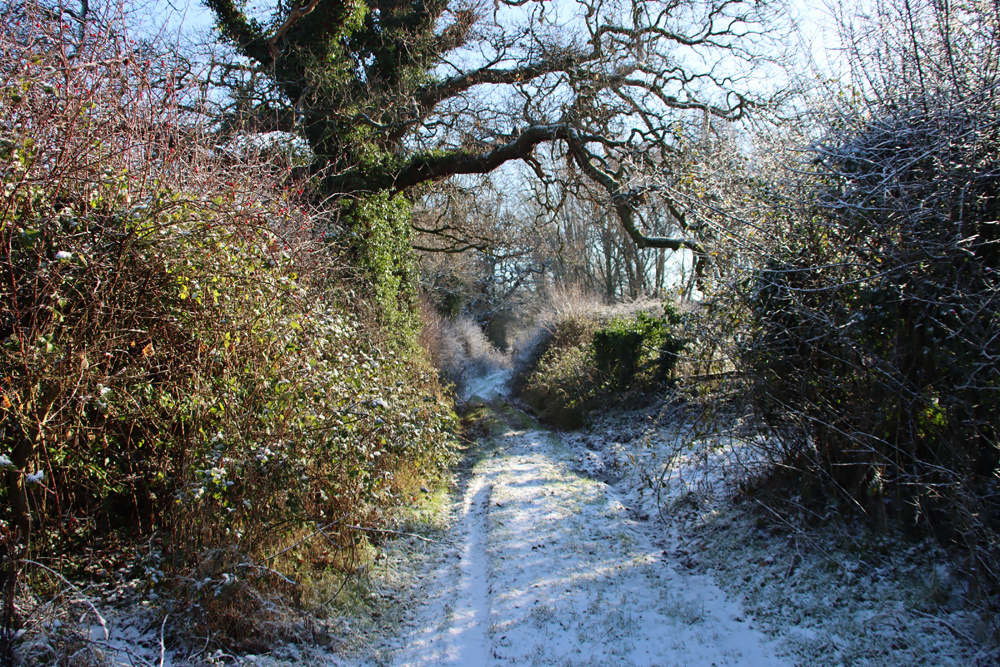
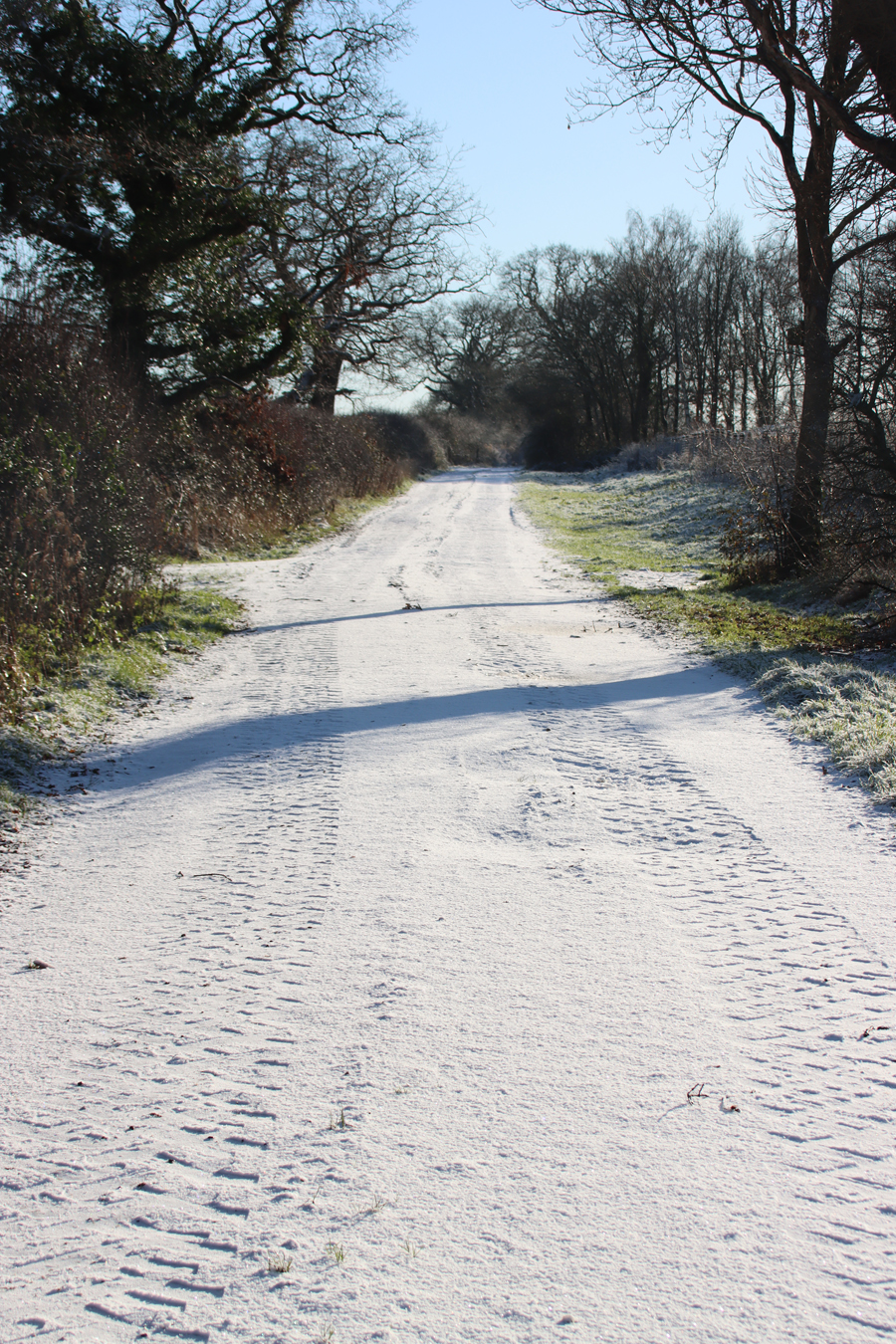
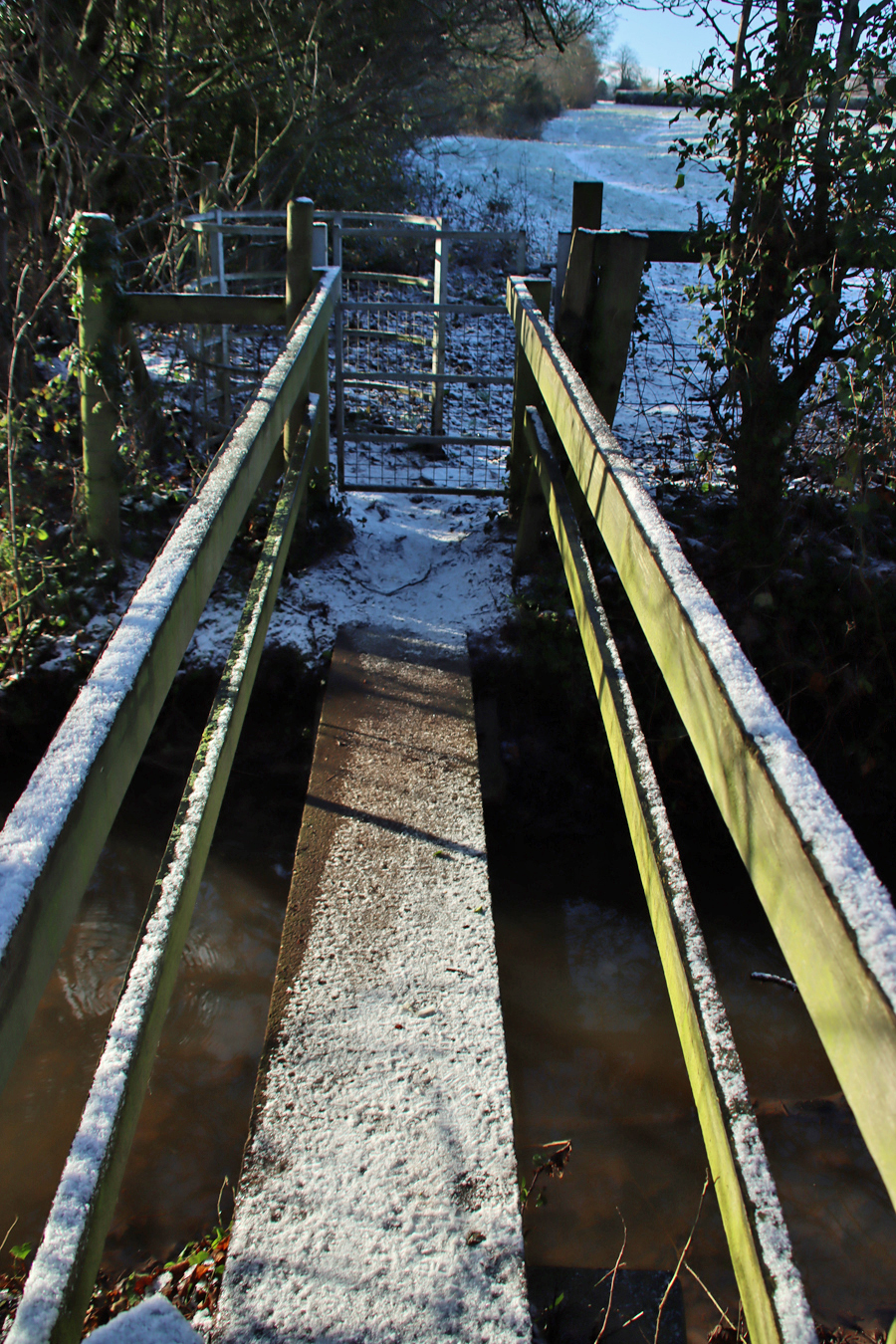
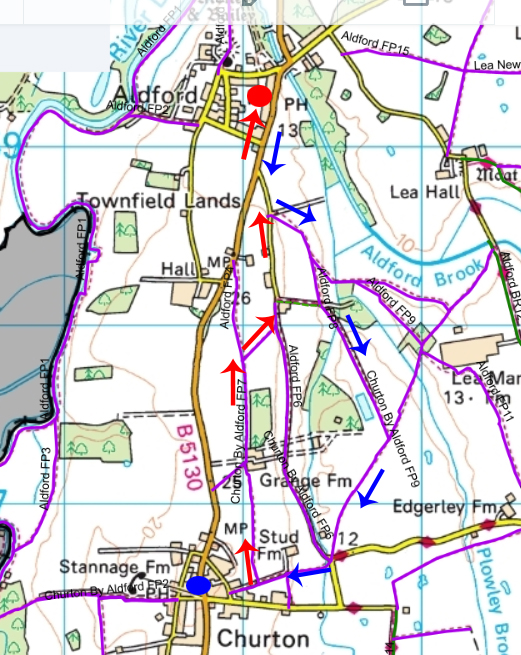
This is a pretty-pics post. It was a beautiful sunny January day today, after quite a lot of snowfall overnight. My garden was smothered in snow, and the car was fully shrouded. Even so, the sunshine was very warm and it was beginning to melt when I left the house at something past 11am, heading for Aldford and returning via the Roman Road (marked on the map at the end as Churton by Aldford FP9), making a good circuit. The views across the snow-covered fields to the hills to the east and west were lovely, but as always on these snowy walks, sometimes it is the close-up detail that is most lovely.
There is a map showing the route at the end. The whole walk, there and back, takes about an hour and a half, perhaps two hours if you are strolling rather than keeping up a brisk pace. To see what much of the same walk looked like in April 2021, here’s the earlier post. For those who like to include a destination on their walks, Churton has the attractive White Horse public house, and Aldford has the larger and venerable Grosvenor Arms. Both do good food and are warm and comfortable.
If you are interested in the Roman road, it is marked as Churton By Aldford FP9 on the map at the end, along the blue arrow return section of the walk, and I have posted about the road and the walk along the road, in two parts, starting here.
View over the fields to Beeston Crag and the medieval castle
The Welsh foothills
The Grosvenor Arms, Aldford
The first section of Roman road
A much clearer section of the Roman road, well used by farm traffic
The route taken from Churton to Aldford (red arrows) and back (blue arrows). The red dot marks the Grosvenor Public House, and the blue dot marks the White Horse. Source of map: Cheshire West and Chester Public Map Viewer.
Although this is a great area to live, one of the things I still miss about living in London is a wide range of top-class take-away food restaurants on the doorstep. The whole process of ordering it online, dropping in and having a chat whilst waiting to collect it, carrying it tenderly home whilst inhaling the stunning aromas, and then pouring a big glass of wine to kick back and munch and slurp accompanied by a good movie was wonderful. My takeaways were always something to seriously, seriously enjoy.
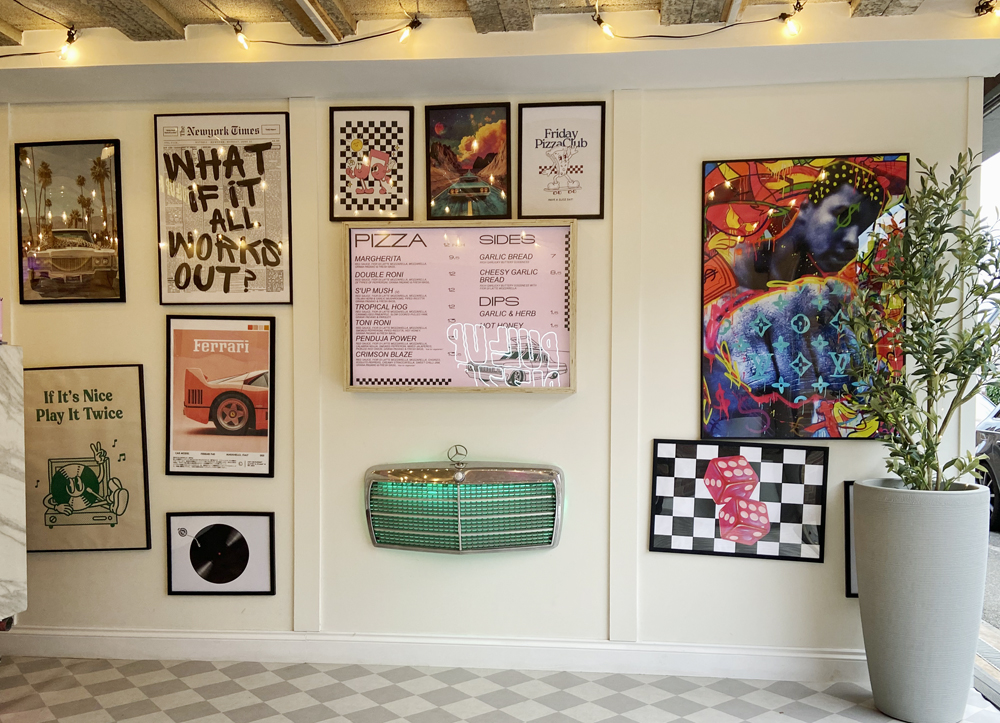
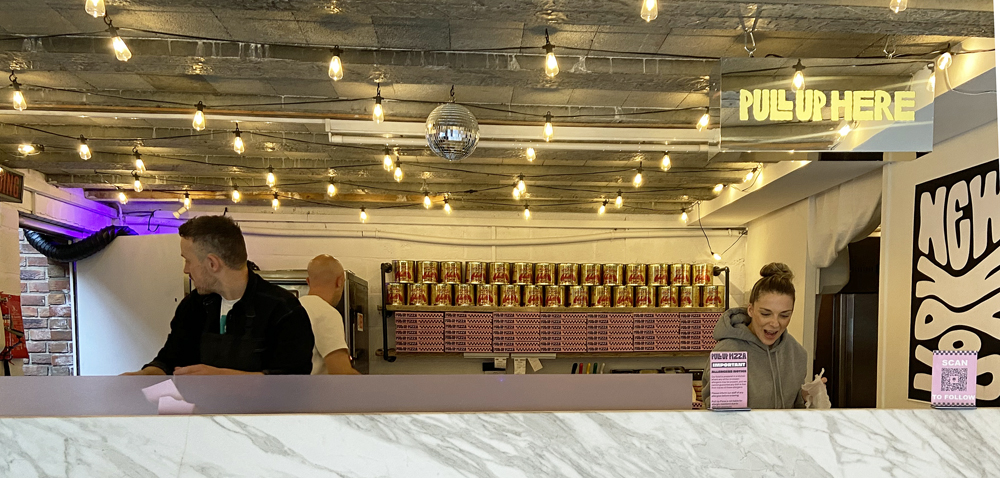
Enter Pull Up Pizza in Farndon (Harbledown House Garage, Churton Road, Farndon), a splendid fortnightly pop-up, every other Friday, that has brought a large dash of cosmopolitan sparkle to the village, and produces pizzas to order on the premises that quite simply make your heart sing. Mucho mucho happiness. The upmarket take-away has arrived, and in style. The magicians are husband and wife team Will and Charlie, with Jonny and Chris, who form the power-team that produce this excellence, working like crazy, making time for quick chats with big smiles.
I first noticed it on Friday two weeks ago when I passed the garage entrance on my way home, a little way up from the post office/pharmacy in Farndon as you head north on Churton Road towards Chester. To my surprise the garage entrance was wide open, filled with light, and there was a busy pizza-making operation in full swing. I immediately abandoned my plans for making a fiddly cheese soufflé, ditched the car, and entered a nirvana of bright music, a chatty, friendly atmosphere and the most gorgeous aromas emanating in my direction. Fifteen minutes later I walked out with an exciting pink and black pizza box, the proud possessor of a Penduja Power. Oh the bliss! I could barely wait to get home to lift the lid as the aromas began to do serious injury to my will-power. The Penduja, with a crispy crust, thin base, chunky slices of jalapeño and thickly spread nduja, has a serious kick to it, with smokiness from the pepperoni, whilst both the creamy fior di latte mozzarella and pure mozzarella ensure that there is just the right balance of flavour, with subtle undertones and divine ultra-spicy overtones, all accompanied by gorgeous hits of fresh basil. It really was love at first glorious bite ❤️.
Pull Up Pizza’s “Penduja Power” with a guilty slice missing
I was so busy enjoying my small chunk of heaven that I forgot to photograph the thing. This meant (oh dear, oh dear) that I had to go back this Friday to buy another one. And you know what? I had already been so completely overpowered by the alluring scents by the time I arrived home that I had devoured a slice before I remembered that I was supposed to be taking a photograph of it – again! This could have gone on forever, so here’s the photograph of the pizza decanted onto a very large pre-heated plate with (ahem) one slice missing. Please note that before I had wrestled it with inelegant haste from its box it was actually a thing of real beauty and perfection.
Although they can take walk-in orders when they are not snowed under with online orders, the whole operation is based on the premise that pre-orders will enable them to respond with maximum efficiency to make their pizzas to order, ready for collection at a certain time. They emphasize that checking ordering before cut-off times is essential, so signing up to their newsletter (a maximum of three emails a month) or checking their website or Instagram page is essential. For example today’s cut-off for all evening orders was 3pm, and order collections began at 4pm and ended at 9pm. For full details of how it works see the Pull Up Pizza website, but basically you can either order via Instagram or if you don’t have an account, you can just click the Order Pizza Now button on the aforementioned website, which is what I did. Customers select a fifteen minute timeslot from a drop-down menu and pay in advance, and it all seems to work like an absolute dream. There are a number of different payment options, including debit card, credit card and Apple Pay, and of course you receive an order confirmation.
This is a real pop-up. When they close down, everything is on wheels so simply pushes back out of the way to re-create the garage space. It was really good to see people coming and going, chatting to the proprietors and generally enjoying the spectacle and the anticipation of great pizza and garlic bread (oh the scent of that garlic bread!). If you arrive early there is a bench inside where you can sit and wait. There is parking on the road immediately outside as well as on the main Farndon high street, and of course there is free parking at the Memorial Hall on Church Lane.
I am a serious pizza nut, so it is a matter of some celebration that these guys have established Pull Up Pizza so close by. My major challenge is to wean myself off the Penduja Power and try one of their other pizzas, all of which are listed on their website. I foresee a Crimson Blaze on the horizon. The fact that they are only open once a fortnight holds out some hope for my waistline actually continuing to be a waistline. Wishing them all the best for a really great future – it’s such an enterprising idea, and so well executed. xxx
Not for the first time I am writing about somewhere that I really ought to have talked about a long time ago because it is so near to me, in this case the Grade II* listed St Chad’s Church just down the road in Farndon. It is a lovely church, with a rather unexpected history, surrounded by a churchyard and enclosed by an irregularly shaped curving wall. Apart from the tower, there is very little of the medieval church remaining, having been almost completely rebuilt in 1658 following the damage inflicted during the Civil War, but it followed a broadly gothic template and is charming in its own right with a number of nice features, some influenced by the gothic, and others departing in interesting directions. It is particularly well known for the Civil War window installed by William Barnston.
St Chad’s Farndon
The congregation traditionally included those who were on the English side of the river, with burials from Churton-by-Farndon and Churton-by-Aldford, Crewe-by-Farndon, Barton, Leche, and Caldecott, and other nearby villages and farms. After 1866 residents of Churton-by-Aldford were often buried in at the Church of St John in Aldford.
During the summer I posted an account of St Chad’s Church in Holt, opposite Farndon on the other side of the river Dee, with its medieval links to Holt Castle and the Lordship of Bromfield and Yale. It is larger and more elaborate than St Chad’s in Farndon, and the two churches each has its own distinctive character with a lot to offer the visitor. Both churches were involved in the Civil War, due to the importance of the crossing here, and both bear musket ball damage as a result, but Farndon’s St Chad’s came off much worse than St Chad’s in Holt. xxxxxx
According to Bede (writing in the 8th century) St Chad was one of four brothers who entered the church in the 7th century, and started his training at Lindisfarne Monastery under St Aiden. He was ordained in Ireland and became a leading light in the Anglo-Saxon church, rising through the ecclesiastical ranks on the kingdoms of Northumbria and Mercia and under King Wulfhere, one of the earliest Christian kings. He was appointed Bishop of Northumbria, including York, and became the first Bishop of Lichfield in the new diocese of Lichfield, at the heart of Mercia. Mercia was one of seven British kingdoms of 7th century Britain and occupied most of central England. Chad died in AD c.672 and was buried in Lichfield Monastery, now Lichfield Cathedral. Regarded as a pioneer who helped to spread Christian teaching in and beyond Mercia, he became a popular icon during the Middle Ages in the Midlands and its borders. xxx
The Medieval Church
It is remarkable to think that the Civil War obliterated so much of the medieval church in 1643 that most of it had to be rebuilt in the 17th century. The Domesday book records a village priest, as well as two other priests locally, strongly suggesting the presence here of an earlier church, probably wood-built.
Today’s church has a nave and tower that are thought to have followed the original medieval footprint dating to the14th century building. All that obviously remains of the 14th century is the tower, of which three storeys date to around 1343. Everything else appended to this basic structure on north, east and south sides are later in date. Although you enter the church through an 18th century yellow sandstone porch, the thick wooden door itself is actually medieval, a quite astonishing survival.
Lines of the old roof of St Chad’s in Farndon marked on this photograph in white.
Inside, looking towards the tower from the nave, you can see the converging lines at which the old church roof met the tower, considerably lower down than the current roof, and terminating further down than the current arch. This suggests that the medieval church was both shorter and darker. Within the tower there are three chambers with one each for bell-ringers, another for the clock-works and the belfry itself, containing the bells, originally three, at the top.
In the north aisle in the interior of the church is a 14th century funerary effigy showing a knight in armour holding a shield carved with a Latin inscription reading “Here lies Patrick of Barton. Pray for Him.” Sir Patrick holds a sword in his other hand, and has some form of animal at his feet, now too badly worn to be identified with any certainty. This effigy is one of three that was found, but the other two were ground down to make white sand. Although Sir Patrick survived this particular indignity, he was used as a step into the belfry in in the 1900s, which accounts for the wear and tear to his face and the animal. Latham says that one of the other effigies was inscribed with the word “Madocusdaur” and a third was inscribed with a wolf.
John speed was the Farndon tailor’s son and was baptised in St Chad’s in 1552. There’s a good biography of him on the New World Cartographic website explaining how Speed followed his father into tailoring at a time when fashion was of growing importance, doing very well in the business, whilst at the same time pursuing his interests in history, geography, cartography, antiquities and genealogies. It was not until he moved to London that he gained a patron and was able to abandon tailoring and launch a new career. His map of the County of the Palatine of Chester was completed in 1610-11, and was used by both sides during the Civil War. He died in 1629 and is buried in London. xxx
The Civil War
Musket ball and cannon ball marks in the walls of the medieval tower.
The tower in Farndon’s church shows musket-ball and cannon shot damage to the exterior, to the right of the main porch, but the fact that the rest of the church had to be rebuilt in 1658 makes it clear that it experienced a much worse time of it than its counterpart in Holt. In 1643 the commander of the Cheshire and Lancashire Parliamentarian troops used Farndon and its church as a headquarters and barracks, assembling a force of around 2000 to force their way across the bridge, through Royalist defences. The subsequent fighting entered the churchyards at both Holt and Farndon. During the fighting in Farndon churchyard the roof was somehow set alight. In spite of the damage to the roof, the Parliamentarians reoccupied the church until they were ousted in winter 1645. xxx
The 17th Century Rebuild
Apart from the tower at the west end, the current red sandstone church with its slate-tiled roof is largely the result of the post-Civil War rebuild in 1658, presumably re-using some of the original medieval stonework. The main body of the church consists of a nave with clerestories (a run of windows above the nave below roof level to allow in light) and two aisles, terminating in the chancel at the east end. The 5-bay arcade separating the nave from the aisles consists of round piers (columns) with simple capitals and pointed arches. Over 40 different mason marks are dotted throughout the church, each one identifying a separate mason, giving a hint of the scale of the workforce required to rebuild St Chad’s. There used to be a musician’s gallery at the tower end, but this was removed in the 19th century.
Mason’s mark on the arch between the nave and the tower
The nave of the 1658 nave, arcade and overhead clerestory. The entrance to the Barnston chapel is shown at lower far right.
The new church was taller than the old one, with the clerestory and the large Gothic-style lancet windows letting in much more light. The tower was provided with a new top section at this time.
Adding to the footprint of the old church, the Barnston family, major landowners in the area, built a small chapel off the chancel end of the south aisle, for their private use and to bury and commemorate family members. According to the church’s history booklet, there are records mentioning Barnstons in Churton during the reign of Henry VI in the 15th century. In the 17th century William Barnston was a major contributor to the rebuild of the church, and requested that he be buried under a gravestone in the south aisle of the church that has already been placed ready. His 1663 will left a substantial bequest to the church for its upkeep. He died in 1664.
The Civil War window, St Chad’s, Farndon
An adviser to Charles I at the Siege of Chester, William Barnston was responsible for the famous Civil War window in the chapel. What surprises most people who see it for the first time is how small it is, but it is full of details that show Royalist participants, including Barnston himself, and a variety of items of contemporary clothing and equipment used in the Siege of Chester. Pevsner and Hubbard say that the technique is “decidedly Dutch” and Latham adds that “Its artist took his design for the armour from a military work by Thomas Cookson (1591-1636) and for the bottom border from prints by Abraham Bosse (1632).” My photo, left, is very poor due to the lack of light, but have a look at the Visit Stained Glass website for a much better image and a close-up of the depiction of William Barnston.
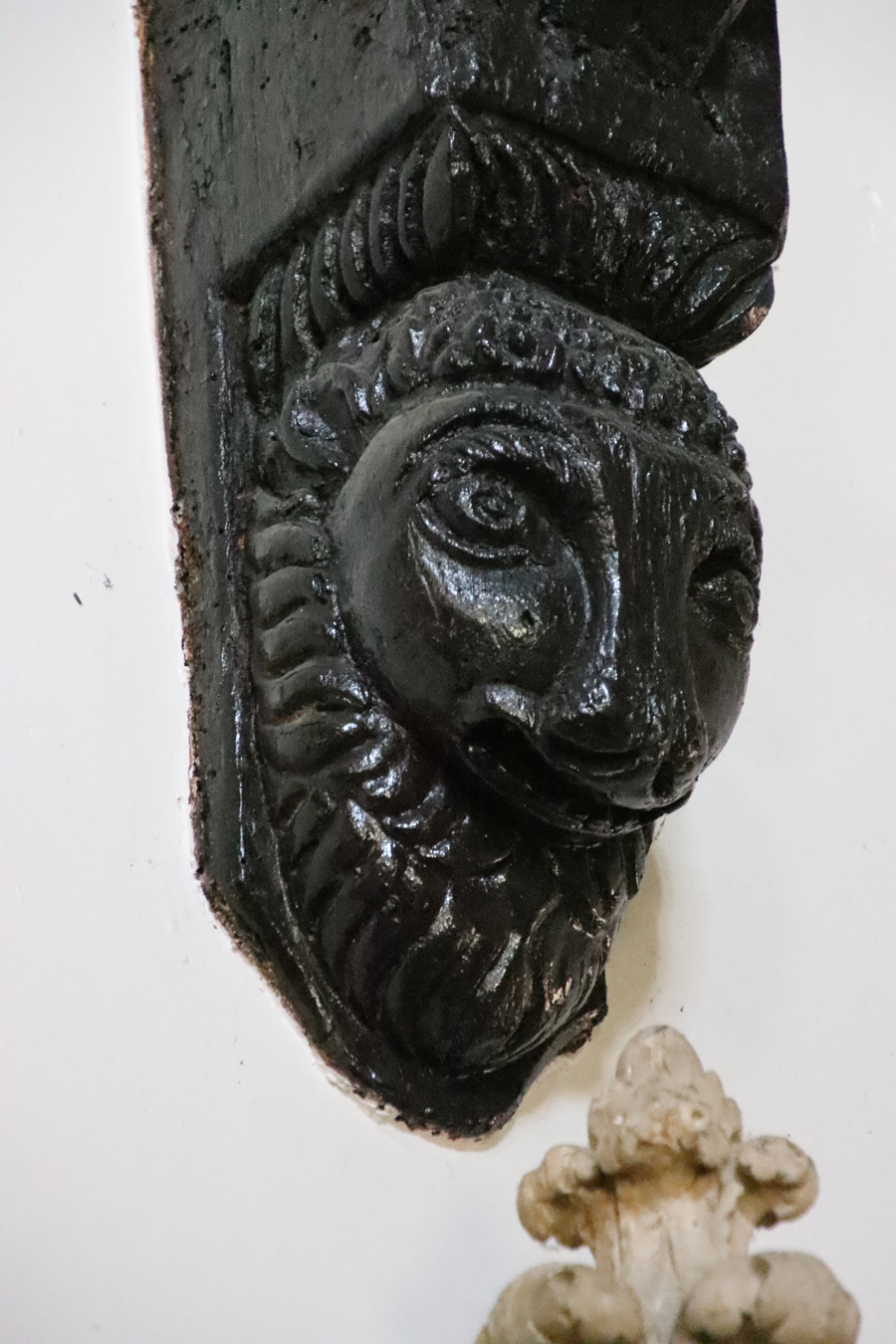
There are many features of interest to look out for in the 17th century church. In the south aisle there is a rather fine sculpted wooden beam support. The church’s booklet questions whether it is a human or an animal but it looks very like the lions with curly manes that are familiar from Tudor and Jacobean carvings. It is surprising that it is on its own. The damaged medieval font was repaired by Samuel Woolley of Churton but the current octagonal font is thought to date to 1662, replacing the repaired one. XXXxxx
18th, 19th and early 20th century alterations
Georgian style porch, St Chad’s
According to Frank Latham, by 1735 “St. Chad was surrounded by green fields and the houses were few and far between,” and the Massie family seems to have been important to the congregation at this time, with six pews allocated to Richard Massie Esq., and his family. He adds that the east wall was demolished in the 18th century and shifted 10ft (c.3m) further to the east, providing a much larger chancel. Towards the end of the century repairs to the roof were made between 1793 and 1798. Today the red sandstone church is entered via a Georgian-style porch built in yellow sandstone, although I have seen no mention of a precise date for this, and inside there is a large 18th century oak chest that housed the church plate and the parish records.
Memorial to Francis Fletcher 1782
The eastern end of the church was remodelled to include today’s chancel in 1853, not by the Barnstons this time but by the Marquess of Westminster. The carved reredos behind the altar shows the Last Supper and was installed in 1910, with the carvings on the pulpit were added in 1911, showing St Chad accompanied by the usual pulpit team of Saints Matthew, Mark, Luke and John, represented by their emblems. In 1927 the original three bells were joined by another five. The church booklet says that they were rung to mark nationally important occasions, including the defeat of Napoleon in Egypt in 1799, and his defeat at Trafalgar in 1805.
Of the various memorials, one that may be of interest to those familiar with the Barnston obelisk just outside Farndon, is the marble memorial to the Major Roger Barnston (died 1847) in the Barnston chapel. The obelisk in the field on Churton Road, now a natural burial ground, is also a memorial to Major Barnston (died 1847) discussed on the blog here,
The north aisle, like nearly all churches in this area, used to have a clear run to the end of the nave, but the presence of an organ since the 19th century regrettably meant that a gallery just in front of the tower’s arch, where musicians located, became redundant and was removed. The present organ dates to 1949.
St Werburgh and St Chad stained glass in the chancel
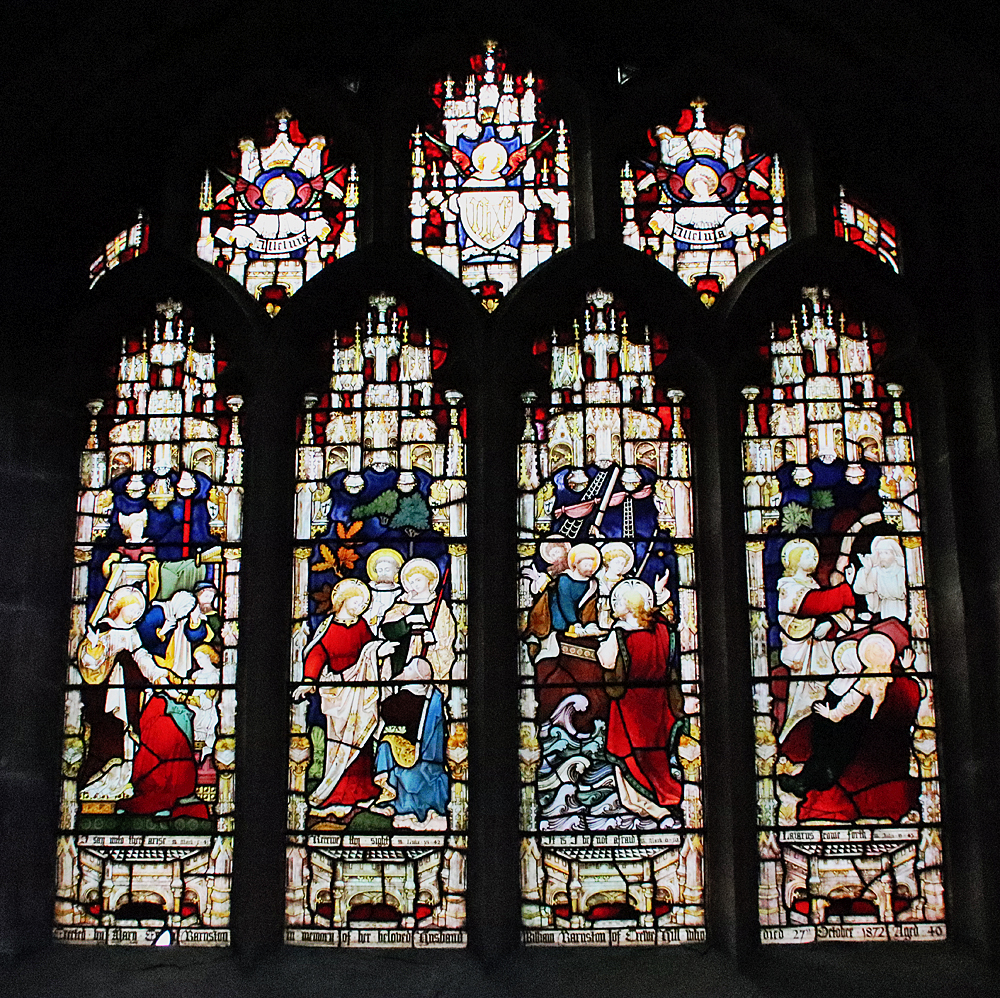
The windows are often round-topped, set within rectangular frames that give the exterior an unusual appearance. Exceptions are the large east window behind the altar, installed in 1858 and showing the Sermon on the Mount, installed in memory of church benefactors William and Anne Plumpton, and the south window in the Barnston chapel, both gothic-style.
Most of the stained glass is interesting for the contrasting styles. Following the Trena Cox: Relections 100 exhibition in Chester last year I have become quite interested in 19th century stained glass. On the north side of the chancel, to the left as you face the altar, is a window showing St Chad and St Werburgh (to whom Chester Cathedral was dedicated when it was a Benedictine monastery), by Trena Cox. A look at Aleta Doran’s website devoted to Trena Cox confirmed that this was one of hers, from the 1950s (1953 to be exact). Those windows immediately opposite are similar in style but were clearly crafted by a different artist and show St David (patron saint of Wales) and St Cecilia. Most of the other stained glass was added in the 19th century, with many of the larger window openings being decorated with romantic takes on the gothic, whilst smaller ones are more minimalist. It was a little sad not to be able to learn something about the makers of the glass either at the church or after a hunt through my books and around the Internet.
Window dedicated to the memory of Harry Barnston installed by his sisters after he died in 1929, in somewhat Pre-Raphaelite style
Stained glass in the Barnston chapel, emulating gothic tracery and themes
At the rear (south side) of the building you can see a substantial addition at the west end (near the tower) and I assume that this was a 20th or 21st century add-on, presumably acting as a vestry and storage. xxx
The Churchyard
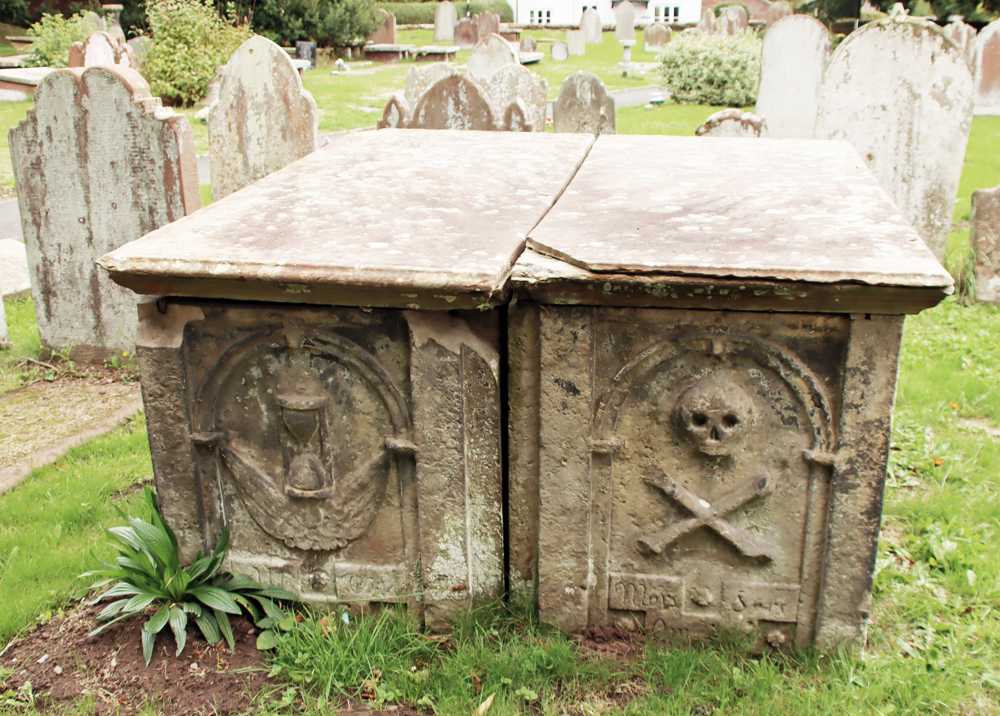
The churchyard includes a mixture of different types of grave, including chest, table and ledger tombs and vertical headstones, some accompanied by kerbs, mainly of good quality yellow sandstone. A particularly fine example is a Grade II listed double-chest grave made of yellow sandstone and dating to the early 18th century :
West ends of tombs have recessed round-headed panels; that to north contains an hourglass, that to south a skull and crossbones above an inscription Mors S… Omnium [i.e. Mors Sola Omnia,” meaning Death Conquers All]. North side of north tomb has a square central panel containing an encircled quatrefoil in a lozenge with a vertical panel right and a decayed panel left. The east end of each tomb has a fielded panel; south side of south tomb has 3 fielded panels in bolection moulded borders (Historic England – list entry number 1228746)
It was sobering to notice just how many of the chest grave inscriptions commemorate infants and children. I always spend an hour or so reading grave inscriptions and don’t remember seeing so many very young children commemorated, often from the same family in the same generation. As you would expect, the earlier graves are nearest to the church, although unusually many of these are on the north side, which is normally the last to be filled.
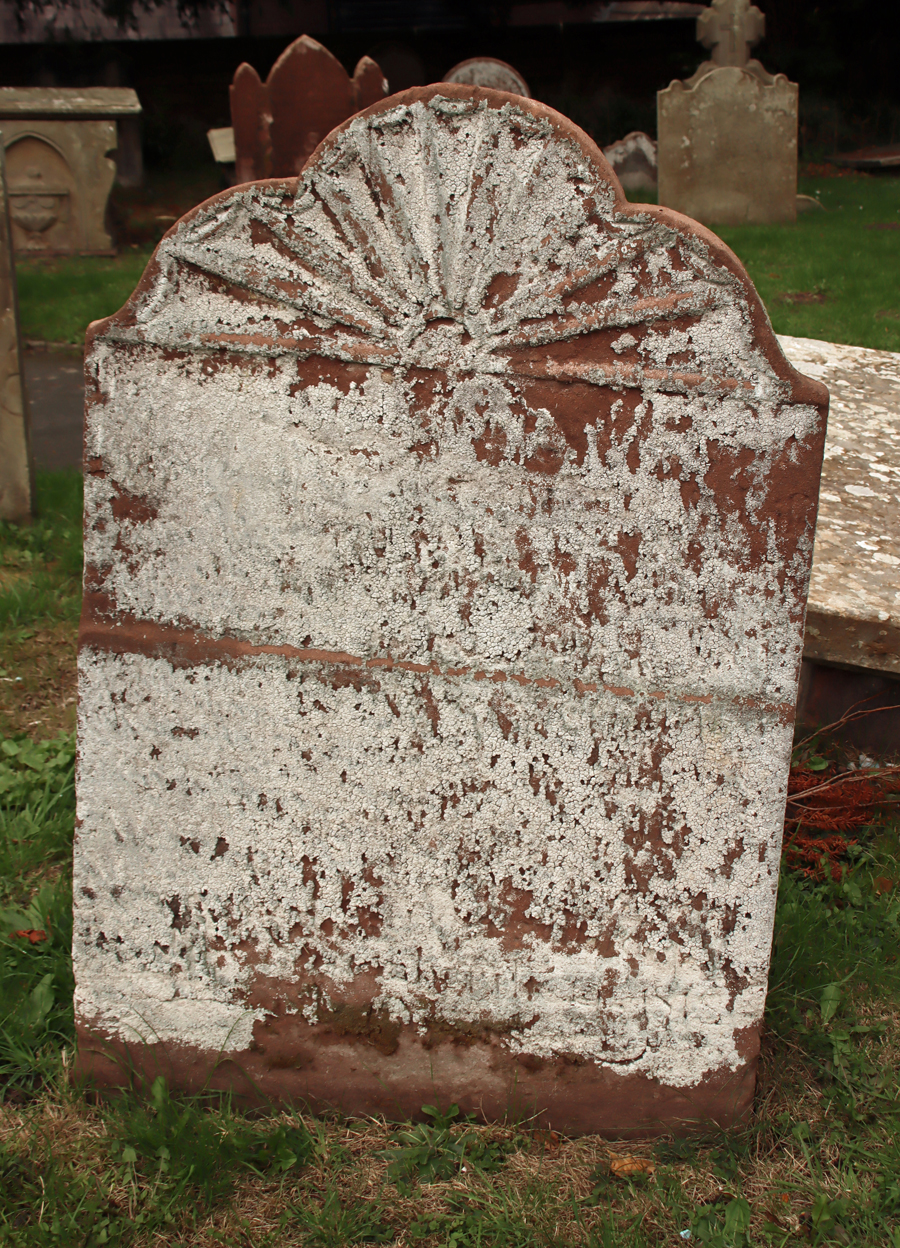
Red sandstone gravestone covered in yew berries
Moving away from the immediate area surrounding church building, to its south, the traditional upright gravestones of the later 19th century begin to dominate, with many examples of 19th century funerary symbolism on the headstones. Although many of the headstones are lancet-shaped and much of a muchness in terms of size, there was clearly a lot of choice available in terms of the symbolic motifs that decorated the tops of the graves.
Art deco style headstone
Through a small gate beyond the headstones, the churchyard has been extended for modern use. The 1922 War Memorial in the form of a stone cross commemorates eighteen men killed in the First World War and four in the Second World War. xxx
Final Comments
This medieval church, almost completely rebuilt in the 17th century, has a character of its own, reflecting various periods of restoration and intended improvement, with a strong gothic influence throughout. There are many more features than those described above, including benefaction boards, a list of incumbents, and memorials, and the church booklet produced by Cheshire County Council in 1989 is a good guide.
The church website contains no information about visiting, and the Facebook page hasn’t been updated since 2019, but at the moment the church has an open door policy. On my two recent visits (October 2025) I was able to walk in. There is a contact page on the site, so if you are coming from any distance it might be worth double-checking.
It is splendid to have two really impressive churches, one either side of the river connected by a splendid 14th century bridge, with very different personalities and features, and both very well cared for and open to visit.
Sources:
Books and papers
Cheshire County Council 1989. The Parish church of St Chad, Farndon. (10-page booklet available for purchase at the church)
Latham, Frank 1981. Farndon. Local History Group
Pevsner, Nikolaus and Edward Hubbard 1971. The Buildings of England: Cheshire. Penguin Books
Rain has such narrow shoulders it will get everywhere
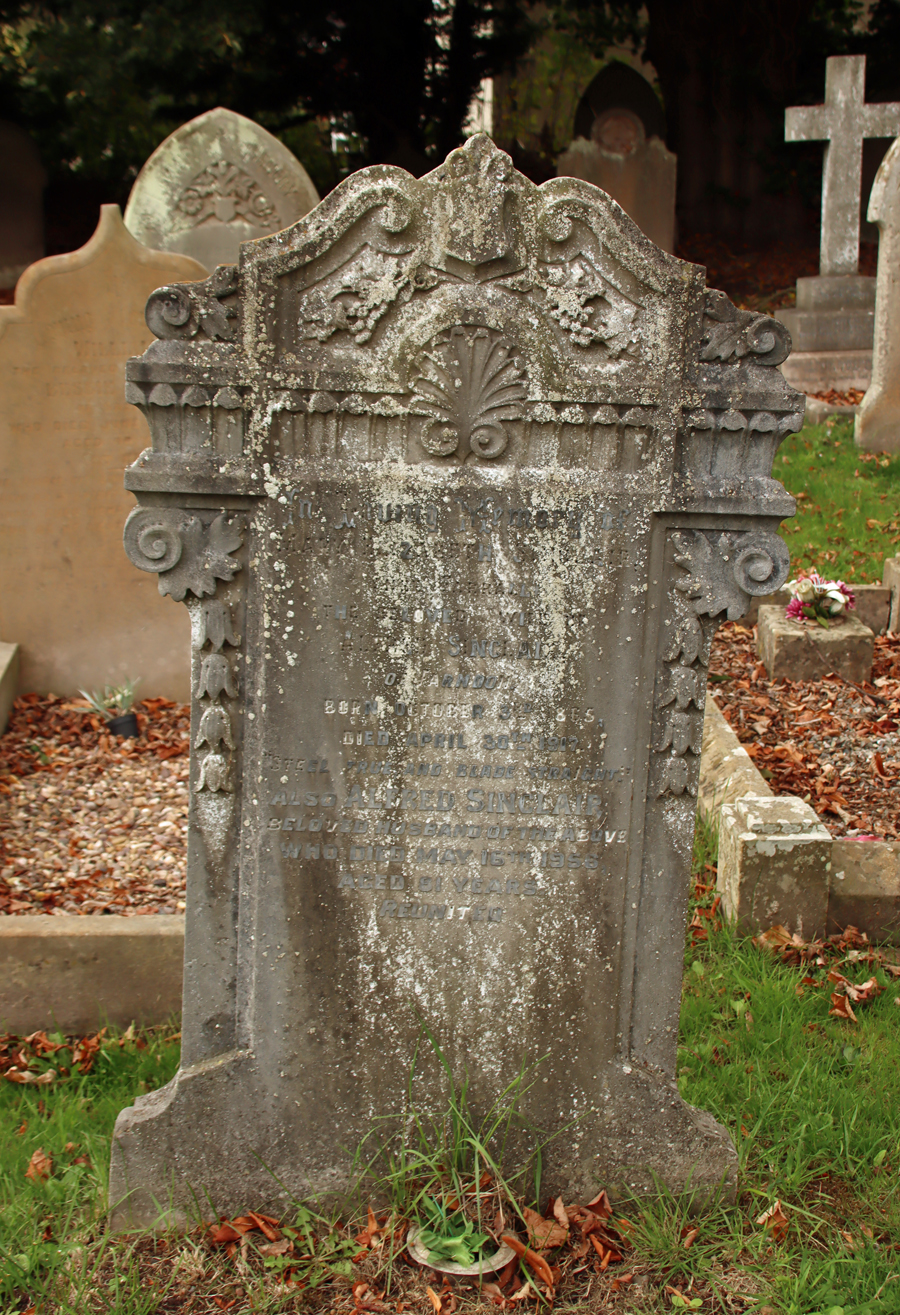
J.C. Bridge no.274, page 105
Beeston hill, seen from Churton, under a very black cloud
And oh boy. When it rains around here one is left in no doubt on the subject. It comes down in dense sheets of uncompromising verticality, bouncing when it hits pavements, roads and patios and it pools morosely wherever it gets the opportunity, seeping into every nook and cranny. The river Dee builds ominously between its banks, eventually overflowing into its floodplain, drenching footpaths and edging its way ominously towards the little hairdresser at the foot of Holt and isolating the new house above the footpath on the Farndon side of the bridge.
I lived in Aberdyfi on the mid-Welsh coast for two years immediately prior to coming to West Cheshire after leaving London, and I thought that I would never see such thoroughly determined rainfall ever again. But most Aberdyfi houses are on the side of a steep hill, mine included, and all the rainwater had the courtesy to run downhill and deposit itself into the sea. Cheshire, being flat and often poorly drained, is different. The wellington boots that I bought for mudlarking on the Thames foreshore when I lived in London have come into their own for use on what I once thought of as dry land. In west Cheshire, dry land is a very movable feast.
Joseph Bridge offers no comments about this proverb, presumably believing, very justifiably, that this one speaks for itself. Not all of them do, even when Bridge seems to think that they are perfectly transparent, but this one is completely unambiguous to a resident on the Welsh borders.
I started this series on Cheshire Proverbs a couple of years ago and then, during a big rearrangement, lost the Joseph Bridge book on which it was based: Cheshire Proverbs and other Sayings and Rhymes Connected with the City and County Palatine of Chester. I found it the other day, and even though there has been a big gap between the previous proverb in the series and this one, it seemed worth reviving. If you would like to know about his proverbs, sayings and rhymes, you can see the Introduction to the series here. Other proverbs in the series are listed here, at the very end of the Archaeology, Heritage and Art page.
It is a very long time since I dug anything out of the garden worth posting about, but here’s a fun one from the other day. Unlike the gollywog sherd (object 9), which took me a moment to figure out (mainly because I was holding it upside down) this made itself understood as soon as I turned it over. It’s a very small piece, just 6cm long, but its provenance is beyond question: Llanfairpwllgwyngyllgogerychwyrndrobwllllantysiliogogogoch. This is the broken remnant of what was obviously a souvenir item from the village whose only claim to fame is having the longest place name in Europe. The village is located on Anglesey, next to the Menai Straits. The placename is marked on Ordnance Survey maps as Llanfair Pwllgwyngyll and local shorthand refers to it as Llanfairpwll, whilst a wider use as often Llanfair PG.
A souvenir from Llainfairpwill that may be the type of object from which the sherd in my garden came. Source: eBay
According to Wikipedia the name was an invention composed of local landscape features to produce the country’s longest railway sign and roughly translated means “[The] church of [St.] Mary (Llanfair) [of the] pool (pwll) of the white hazels (gwyn gyll) near to [lit. “over against”] the fierce whirlpool (y chwyrn drobwll) [and] the church of [St.] Tysilio (Llantysilio) of the red cave (gogo[f] goch)”. Various elements have occasionally been translated differently. The inventor remains anonymous, but obviously had a good grasp of local topography.
Souvenirs have been popular since the mid-18th century when travel became an important rite of passage for wealthy young men, but it became particularly popular after the Second World War when transport costs fell and travel became a popular activity for a much wide cross-section of society. “Simultaneously, the souvenir, gift, and keepsake industry was receiving a boost from the proliferation of new materials (like plastic) and the globalisation of mass production. Attractions of all sizes could now offer visitors custom merchandise–serving as sentimental keepsakes and promotional material.” (The Mint Museum of Toys).
I assumed that a web search would produce 100s of souvenir types showing the Llanfairpwll name, but in fact there are very few. The most popular appears to be a decorated Welsh hat (like a very large thimble with a rim), with the town name along the top of the rim and the town shield or other motif on the crown of the hat. That fits for this piece, which is completely flat except for a small upright piece that is difficult to explain in any other way. An example is shown above. Other icons that evoke specifically Welsh cultural identity in souvenirs are red dragons, love spoons, Celtic knotwork and occasionally harps (although the latter is perhaps more commonly associated with Ireland). xxx
Llanfairpwllch stationboard with the name framed in green and the approximate pronunciation below. Source: Wikipedia
For anyone new to this occasional series on objects extracted from my garden during everyday gardening activities, see the History in Garden Finds page. These are not objects used in the garden, but objects, usually fragments, lost or disposed of in the garden and found during digging, troweling and planting.
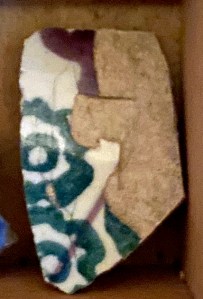
Spongeware motif showing squirrels and generic floral motifs, from a garden near Chester
For anyone new to this occasional series on objects extracted from my garden during everyday gardening activities, see the History in Garden Finds page. These are not objects used in the garden, but bits of objects, usually fairly small fragments, lost or disposed of in the garden and found during digging, trowelling and planting.
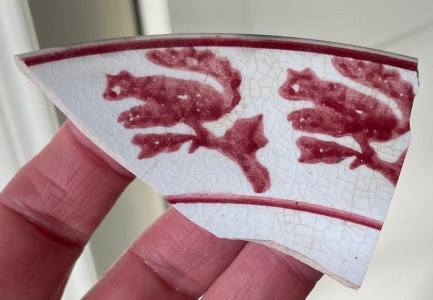
It would have been surprising if there had been no spongeware found in the garden, because it was ubiquitous in the 19th century, which most of the other garden fragments date to. What is surprising is that only two small pieces turned. This is a tiny number compared to other low-cost standard blue and white transfer work that has emerged from my garden, such as willow pattern and mocha ware. So I have supplemented my own pieces by those found in my friend Helen’s garden, a few miles outside Chester. Helen’s pieces are particularly nice, with a row of squirrels around the edge of the plate.
Sherd from my garden in Churton
If, as a child, you ever made shaped potato and sponge stamps at school, dipping them into paint and stamping them onto paper to create patterns and pictures, you will be very familiar with the idea behind the process. Instead of being painted or placed onto the object as a transfer, the patterns and other images were stamped with a sponge shape that was attached to a wooden handle, that made repeat patterns easy to achieve, but were also suited to scenes featuring individual subjects and motifs. Once the pattern was applied, the pottery was fired, which hardened the pottery and set the glaze, fixing the pattern.
An interview on the Bo’Ness Pottery website with Margaret Finlay who worked from 1916 to 1927 at two Scottish potteries describes how she carried out spongeware decoration:
Q. Could you describe fully what work you did?
A. I was in the Sponging and you had a wheel. The base was on the floor and there was a stack up from it and there was a round wooden thing on the top and when you worked that you worked it with this hand and you did your sponging with this one, and you had an arm rest and you could do your colourings with the plates for the different coloured stuff you had. You had a bit sponge in every one of these things and you put it on your pattern on this hand and then changed it over to this one and you could put that on with the sponge. Every time you worked it you turned the wheel round with your fingers underneath and you turned it round and got the pattern on. If you were going to put lines round plates or anything you had a wee brush, long to a point and you put your arm on there (the rest) and you turned this round (the wheel) and when you were turning this round this was going all the time and your hand was making the line round it. We used to have bowls lying beside us and when this sponge was about finished with you used to wash it then re-do it for the next plates that came on or the dishes that came on.
Detail of the squirrel plate
Spongeware objects featured a much more informal type of design than transferware, giving them a rustic, home-made appearance that became very popular in Britain, some parts of Europe and particularly in the U.S. and Canada. It was almost certainly first produced in southern Scotland, in potteries around Glasgow and Edinburgh from around 1835. Manufacturing of spongeware spread to England and Wales by the end of the 19th century, including Staffordshire, and in some parts of the U.S. Spongeware went out of fashion in around 1930, but was revived in the 1970s, and continues to be manufactured today.
The other piece of spongeware from my Churton garden
It is almost impossible to track it back to particular potteries and to date it, for a number of reasons. First, it was almost never marked with the pottery’s stamp. This is partly because it was so mass-produced that pottery’s were not interested in claiming any credit for it, and partly because it was only made during periods of difficulty, when potteries were producing it only as a quick win for quick sale, and had no wish to attach their names to it. Second, popular styles could be retained in production across a number of potteries for several years, meaning that it is impossible to attach stylistic trends to certain potteries or time periods. Finally, the sponges were often designed by itinerant potters who sold them in to established potteries, and the same designs could turn up at different potteries at different times. 19th century spongeware appears on plates, cups and saucers, and jugs.
Squirrel plate from Kelly et al, pl.33, p.19. No pottery mark was made, so no details are known.
The earliest spongeware designs seem to have consisted on loosely geometric dots and circles as well as indeterminate shapes. These were followed by generically botanical forms. The earliest spongewares featured blues and reds, followed by greens. Animals, birds and identifiable plants soon became popular, and purples and browns were added to the palette. Pink, yellow and other colours were less popular, although black features from the 1870s. By the 1870s improvements included hard-edged sponges allowing greater precision in designs. During the First World War patriotic themes became popular.
None of the sherds found in my garden or Helen’s can be pinned down to a pottery, an area or even a date. I had hopes of the squirrels, but although Kelly et al show one (page 19, pl.33) it too is unmarked and the authors were unable to narrow it down to a particular place or time.
Modern small mug with red squirrel motif, from Brixton Pottery, from their portfolio of 500 spongeware designs, and 60 pottery shapes
Sources
Books and Papers
Brooks, Alisdair M. 2000. The comparative analysis of late 18th and 19th century ceramics – A transatlantic perspective. Unpublished D.Phil, University of York, June 2000 https://etheses.whiterose.ac.uk/10888/1/326550.pdf
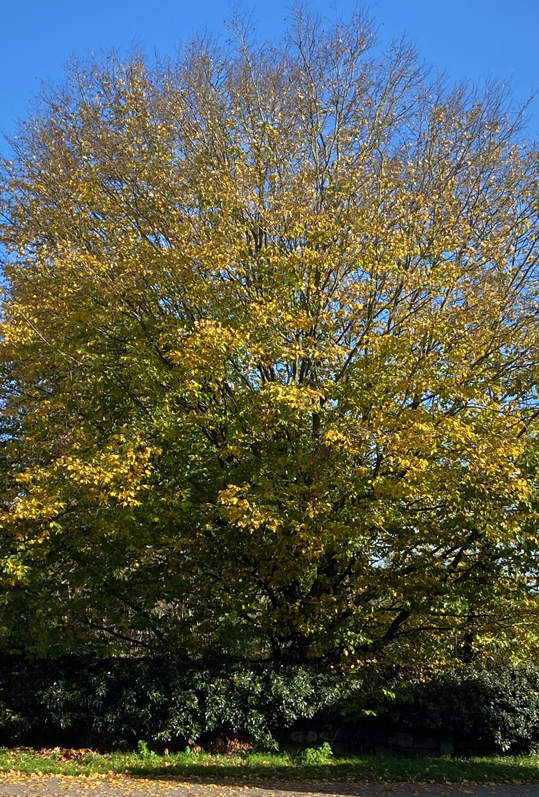
Autumn sun and brightly coloured leaves are always a joy at this time of year, right up until the point that they drop in huge numbers and need clearing off the garden lawn 🙂
Because it was so warm, my destination was The Grosvenor pub, a self-indulgent extension to my terrific short break in the Ironbridge area of Shropshire last week. It is always such a treat to be able to sit outdoors at this time of year.
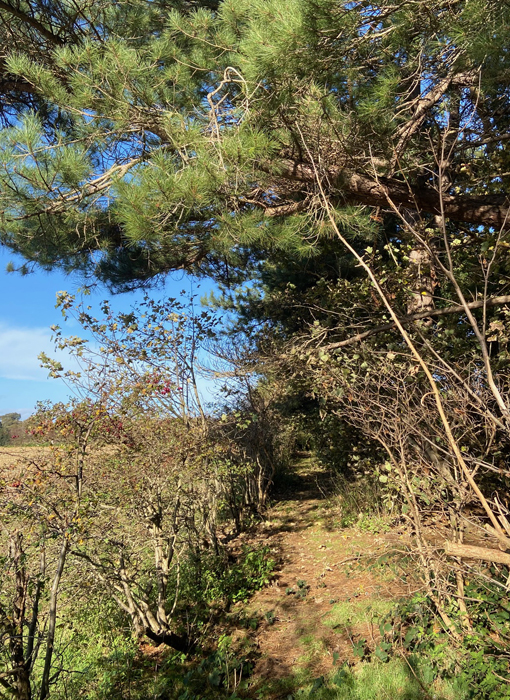
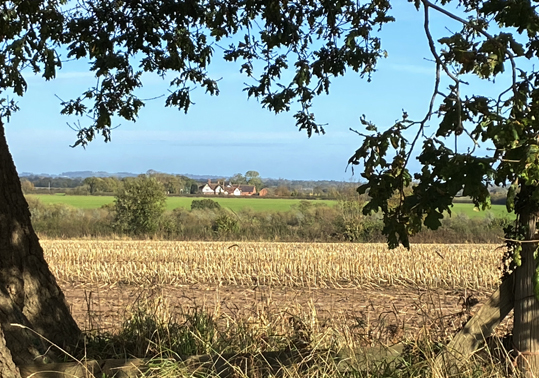
The map of this walk is at the end of the post, and is a very simple one. It takes around 40 – 45 minutes to walk through the fields to Aldford from Churton, so it is a short walk, and always a good fall-back when I don’t want to be bothered with the car. The harvested fields, mainly used for growing corn, can be very soggy at this time of year with nothing but wet earth under foot, but it is always an easy and attractive option on a sunny day when the leaves are changing colour. It was fine on the field edges, although distinctly squelchy underfoot crossing diagonally from footpath FP7 to FP6. Half of the route is the metalled B-road Lower Lane, which gave the hiking boots a bit of a break from the sludge.
Irritatingly, I did not have my camera with me, so these were taken on my iPhone and many don’t bear close scrutiny. ===
=====================
======
===
===
After a very enjoyable lunch in the sun at the Grosvenor Arms, I had a wander around the village and returned back to Churton using the same route. Normally I go back via the well-signposted FP8 footpath, but having investigated on my way to Aldford, deemed it far too muddy and waterlogged to make the attempt in anything other than wellies. In the dry, this is a nice return route and takes in a chunk of the Roman road that once ran east of Churton (about which I posted here).

 Phenological seasons are far more a matter of the senses, based on the observation of the natural world, with new shoots and bright new leaves accompanying bluebells, camellias and early blossom to give a finger-in-the-air impression of seasonal transformation. This year my early-flowering dwarf daffodils, crocuses and dwarf irises were even earlier than usual, arriving at the same time as the snowdrops in mid February, but all of them looked a little self-conscious and rather put out, surrounded by the decaying brown stems of last summer’s offerings, left as they were to shelter insect life. Spring felt more present when the camellias came into flower, and the rest of the daffodils decided to join their tiny relatives. The feeling that spring has or has not arrived is a phenological response to the eventual arrival of spring, and in the past had a direct impact on how people responded in every aspect of their lives.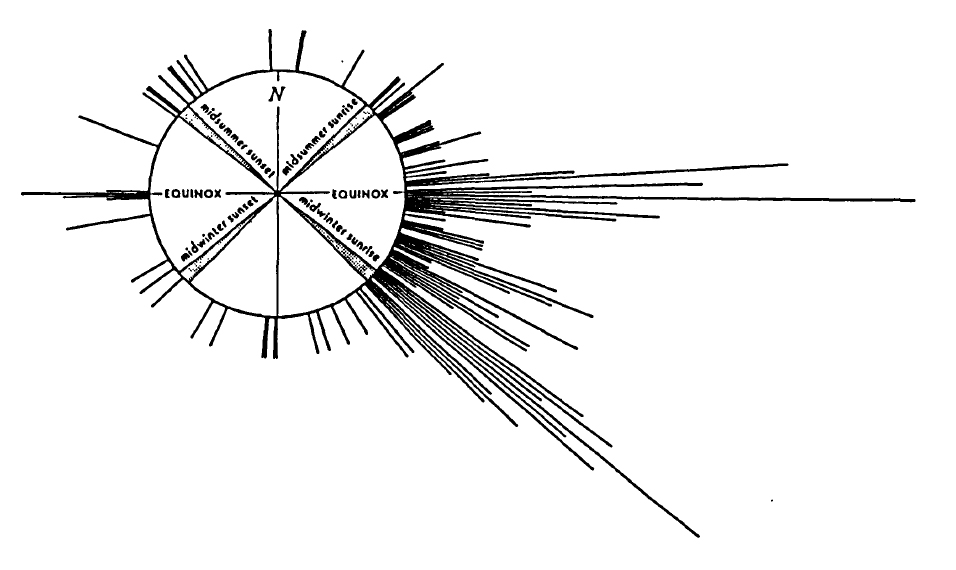
















































 Based in Churton

