When I was driving back home from Peterborough after a visit to the small city’s stunning Romanesque cathedral (see part 1) I took a detour to see the exquisite Grade 2 listed Georgian St Matthews Church on Rutland Water, also known as Normanton Church, near Oakham. It is about half an hour’s drive from Peterborough. The interior was unavailable due to a wedding, which was a shame as I have a real weakness for Georgian churches, but it is always good to see a church earning its keep today. Even without seeing the interior, it was well worth the detour just to enjoy the sight of the ridiculously lovely church on its little artificial island.
Source: Normanton Church before the flooding of the valley. Source: Rutland Photographic
The church used to sit on dry land, overlooking the Rutland valley on the site of a medieval church. This was largely rebuilt in 1764 by Sir Gilbert Heathcote, although the original tower was retained. The new tower and the western portico were built in the 1820s. I particularly like the way that the open architecture of the tower provides visibility of the views beyond, helping it to blend in with its environment. Even though the church and its tower were built in two separate phases, the integrated whole works splendidly.
The future of St Matthew’s looked very precarious when plans were made for the Rutland valley to be flooded to create a reservoir to meet the demands of a growing population, which was carried out in the 1970s. It was predicted that the water would reach the level of the little church, even though it sat on land near the top of the valley, submerging its foundations. It was only rescued from watery decay when there was a public outcry.
You can read the brief story of its salvation at the Normanton Church Wedding website, but essentially the bottom of the church was filled with rubble and provided with a concrete floor to stabilize it against water damage at its base. With a little isthmus from this artificial island connecting it to the land at the edge of the lake, the church was once again accessible and, unsurprisingly given its charming personality and its wonderful scenic setting, is a very popular wedding venue and visitor attraction. It is quite simply delightful.
The history of the church is shown on the Historic England website, apparently via Pevsner, as follows:
Former church. 1826-9 and 1911. By Thomas Cundy, Sen. and Jun., and J.B. Gridley of London. Ashlar and balustraded slate roof. W tower with W portico and nave with apse. Now entirely filled to half-way up previous wall height for the purposes of the reservoir which encircles church. In classical style. Portico, vestibule and tower of 1826-9 with semi-circle of 4 Ionic columns for the portico and 2 piers and 2 further columns in antis either side outside the vestibule. Balustrade above vestibule and tower over. This is open and on circular plan with 4 free-standing Corinthian columns in NE etc. directions, with Corinthian entablature over and sloping roof with pine cone finial: the whole close to the towers at St. John’s, Smith Square, Westminster. Nave and apse of 1911, by Gridley, of 3 leaded windows either side. Stone shouldered architraves with chamfered lintels and prominent keystones. Windows framed by order of Ionic pilasters with entablature and balustrade over. Niche on E end. N doorway with 2 leaved door. Inside, the nave cove has 3 arches with decorated coffers and the apse simple plasterwork. Pevsner.
There is a large car park for visits to the church and other lake attractions, with barriers, and has a pay point. The church is along a short walk from the car park, along a metalled path, which takes about 5 to 10 minutes.
This is a slight departure for this blog, the usual premise of which is that every visit can be accomplished in a day, there and back, from where I live in Churton. The visit to Peterborough required a stop overnight. I have always wanted to see the Romanesque cathedral at Peterborough, which is a former Benedictine abbey. I set out by car early on a Wednesday in November 2023 and stayed one night in Peterborough near the town centre, visiting the cathedral both on the Wednesday afternoon and again on the Thursday morning. On my way home on Thursday afternoon I visited the lovely Normanton Church. The routes taken and other visiting details are at the end.
Peterborough Cathedral is covered in part 1 (here) and a very brief snapshot of Normanton Church on its custom-made plinth on Rutland Water is in part 2. Needless to say, I have barely skimmed the surface of the cathedral’s history.
Introduction
South transept
Peterborough Cathedral is somewhere I have wanted to visit from the moment that I laid eyes on photos of it in a book. It has an almost split personality with its magnificent and unique 3-bay Gothic frontage, its sublime Norman-Romanesque interior, the stunning painted nave ceiling and the almost organic delicacy of the fan vaulting in the date eastern extension.
The abbey was terminated in Henry VIII’s dissolution of all the monasteries, but like Chester Cathedral was fortunate to escape some of the indignities of this process when it was converted to a cathedral. The building that visitors see today, dedicated to St Peter with St Paul and St Andrew, is the third abbey. The first abbey, Medeshamstede, was destroyed by Danish invaders. The second abbey church, built over a century after the demolition of the first, burned down by accident although the cloisters survived. The third abbey church was started from scratch, and is remarkable for the survival of the magnificent Romanesque vision. All three abbeys were built on the same site, and there is some evidence for a Roman building beneath them. The three phases are described very briefly below. For detailed descriptions see one of the guide books available, or the cathedral website’s History page (details in Sources at the end). If you go in person, I recommend the guided tour.
The 7th Century Abbey – Medeshamstede
Artist’s impression of Medhamstede, shown on an information poster in the cathedral
Bede’s 8th century Ecclesiastical History says that the first abbey on the site, Medehamstede, was established in the 7th century, and it is now thought that it was founded in around 654, and was probably built of wood. A later phase may have seen the rebuild of the wooden walls in stone, imported from a quarry to the west. Very little is known about the building and its phases, although the artist’s impression to the right is a useful suggestion of what might have been on the site. The first abbey was very isolated, deliberately divorced from human settlement to provide a suitable environment for contemplation and prayer.
The River Nene in Peterborough
Perched on the side of the River Nene and on the edge of the marshlands and mudflats of the Fens, it was an ideal location for peaceful contemplation and prayer. For this and subsequent abbeys on the site the nearby marshy Fenlands provided one of the best resources for freshwater fish in England, offered a rich habitat for wildfowl and supported reed beds that provided the raw materials for thatching roofs. The land also had the farming potential required for an expanding self-sufficient and isolationist community, providing summer pasture for livestock, and later on, when improved techniques of land drainage were mastered, the opportunity for agricultural development. Communication links were provided by the River Nene and the nearby Roman road.
The monastic community would have been organized along very austere lines adhering to the so-called Celtic tradition of monasticism. The abbey became an important early religious centre, and founded a number of daughter houses in Leicestershire, Northamptonshire, Kent, Surrey, and Bermondsey (now in southeast London), which were important vanguards of the spread of Christianity. I
The Hedda Stone
Housed today in the cathedral chancel / presbytery is the Hedda Stone shown above, a large and beautifully sculpted piece of limestone belonging to this period of the abbey’s history, showing Christ, Mary and the Apostles. It is carved on both sides and pierced with holes that have no generally agreed purpose. It is quite easy to miss, so do make a point of finding it, as it is delightful.
In 870 the abbey was plundered and destroyed during a Danish attack on the east coast, and the site, now abandoned, became part of the Danelaw territory.
The 10th Century Abbey – Gildenburgh
Plan of Saxon and Medieval Peterborough showing the outline of the second church. F is the site of the gate stormed by Hereward and the Danes. It is thought that E is the old marketplace, replaced by the new town in 1133-1155. The motte is thought today to have been built by Abbot Thorold. Source: Current Archaeology 89, 1983
In the 10th century, Æthelwold of Winchester had a vision of Christ in which he was instructed to rebuild the abbey of St Peter. He was assisted in this challenge by Dunstan of Canterbury and by King Edgar and Queen Ælfthryth. It was consecrated in the early 970s by Dunstan as a Benedictine monastery (i.e. one following the guidelines for monastic life developed in the 6th century by St Bendict of Nursia, Italy). From fairly early on it was decided to provide it with a defensive wall, making it a fortified settlement or “burgh.” The church was laid out along traditional lines with a nave, two transepts and a chancel at its east end. It must have been provided with a belfry, because Æthelwold provided 10 bells for the church. Although there were no sources of stone and wood close to the site, these were imported from Barnack and Rockingham Forest respectively.
The prestige of the monastery rose when it acquired an important relic, the right arm of Oswald, a Saxon king and saint who was noted for his kindness to the poor and whose arm, with which he handed out so many alms, survived, perfectly preserved, after he was killed in battle. The monastery’s position was again strengthened in 1041 when one of the monks, Æthelric, was chosen as Bishop of Durham. The selection of the abbey as the final resting place for Ælfric Puttoc and subsequently Cynesige, both archbishops of York was an indication of how well regarded the abbey was in the 11th century. Like many Benedictine monasteries, it became a major landowner, becoming wealthy and both economically and architecturally ambitious, accumulating books for a library, and fine objects for its ceremonies and liturgies. It was so rich that it became known as the golden burgh, Gildenburgh.
Reconstruction of the abbey precinct at the time of Hereward’s attack. Source: Peterborough Abbey
The second abbey was still standing proud when William the Conqueror landed in England. Its abbot, Leofric, died in the Battle of Hastings. Abbot Brand, who followed him, was also Saxon and supported opposition to the Norman invasion. This opposition was punished with heavy taxation, and when Brand died in 1069 the abbey was put into the hands of an abbot, Thorold, loyal to William. In the event, a local Saxon rebel, Hereward, had found an ally in King Swein of Denmark, and in 1070 the Saxons and the Danes marched on Peterborough and plundered it. Although the arm of St Oswald was saved by the prior (second in command) the rest of the treasure vanished with the rebels. The abbey itself was badly damaged, and what survived was occupied by the abbot and sixty knights and significant portions of land that had once formed the basis of the abbey’s wealth was now allocated to many of those knights, filling the formerly rebellious countryside with loyal Normans.
When Thorold died in 1098 he was replaced by two successive abbots who had very little impact, but the third abbot to be appointed, in 1107, was Ernulf who was prior of Canterbury, a scholar with a good understanding of political manoeuvring, who had plenty of ambition for his new posting. He began by rebuilding the damage to the cloister buildings that had been largely destroyed by Hereward. In 1114 Ernulf moved on to Rochester and was replaced by Abbot John de Séez.
In early August 1116 when a fire broke out in the bakery and took most of what remained of the abbey church with it, although Ernulf’s new claustral buildings survived beyond the abbey church. A new church was now not only desirable but necessary.
Today’s abbey, established in the 12th Century
The Romanesque architecture
Plan of Peterborough Cathedral. Click to expand. NB – the “sanctuary” is referred to in most of the Peterborough Abbey literature as “presbytery” so I have stuck with the latter throughout. Source: Sweeting 1899, Project Gutenberg
Abbot John de Séez oversaw the construction of a stunning new Romanesque building, complete with a vast vaulted presbytery. The scale of his ambition saddled the abbey with such an enormous financial and logistical commitment that it took 120 years to complete. Masons who had worked at Durham were brought in to ensure that the most up to date civil engineering techniques were employed, and what unfolded was a mixture of magnificent vision and superb skills. The church was laid out on the usual cross-shape, with a long nave, side transepts (containing chapels) and a shorter east end. The south wall of the church (the righ thand side of the plan) made up the north wall of the cloisters, the administrative and domestic buildings were located, arranged around a square garden called the garth.
Entering the nave, the interior is light-filled and breathtaking. With windows on three levels, light pours in. Cromwell’s soldiers destroyed the medieval stained glass, and the plain replacement glass allows in much more light than the stained glass would have permitted. Of course it does help that the cathedral has installed artificial lighting, but even allowing for the changes, the layers of window and the soft, faintly reflective pallor of the Barnack limestone walls must have provided a degree of light that was remarkable in the Middle Ages.
View from just inside the west entrance to the end of the presbytery, with the pulpit in the foreground, and the modern rood (crucifix) hanging over the entrance to the Victorian choir
Because there is no surviving pulpitum (a stone division between nave and choir in monastic churches) or rood screen (again, between nave and choir), there is a very rare almost uninterrupted view from the west end entrance to the restored stained glass windows at the east end. In spite of the 19th century marble edifice that sticks up in the middle of the presbytery, the impression of a vanishing point is dramatic and gives a real sense of the length of the building. The walls soar upwards too, meeting a unique and fabulous painted ceiling.
On the death of Abbot John, the new Abbot Benedict, from Canterbury, persisted with the same vision. This is interesting because at Canterbury new ideas from France, captured in the Gothic style, were being implemented, but for whatever long-lost reason, Benedict retained the Romanesque plan that Abbot John had initiated, including semi-circular apses at the east end, one of which survives within the rectangular “New Building” that surrounds it. This apse is a rare survivor as most British churches had their apses removed for replacement by rectangular extensions such as Lady Chapels and similarly prestigious expansion projects. Benedict extended the original design west by two bays, and if you stand at the west end and look at the arches of the aisles you can clearly see the difference.
Blind arcading in the north aisle beneath the great arches of the windows
The nave and the two transepts contain the bulk of the easily visible Romanesque architecture. That within the east end presbytery is more difficult to view. The long nave with its side aisles is monumental. The massive arches of the aisles, with characteristic geometric decoration, are supported on vast octagonal piers. They are topped with another set of arches, each of which contains twin arches separated by slender columns topped with square capitals. The top level features rather smaller central arches, each flanked by even smaller blind arcades. The transept ends are simpler, each with three levels of of arches, each of the same size, with unpainted roof panels in the same lozenge shapes as those in the nave.
The lost cloister and infirmary
Artist’s impression of the cloister on an information board in the remains of the abbey cloisters.
Today’s cathedral was once the abbey church, and is a wonderful survival, but it was only one part of the monastic establishment. A cloister was always an integral part of the monastic establishment, with buildings along three sides of a courtyard or garden, with the church making up the fourth side. This cloister was usually on the south side of the church, sheltering it from the worst weather and providing it with seasonal sun. The central part of it was often a garden of some description, called the garth. The buildings arranged along the three sides included the refectory, where the monks ate, the dormitory where they slept and the chapter house where they held daily meetings. Some of these buildings could be very elaborate and ornate, particularly the chapter house.
If you leave through a door in the south side of the cathedral (on the right as you head from the entrance towards the end of the nave) or turn right in front of the cathedral and head down a narrow pathway, you will find yourself in what remains of the cloister. There is some very fine stonework left behind, giving a hint at the magnificent buildings that once stood here, and many of the changes that the buildings clearly underwent. The buildings were robbed for building materials following the Civil War.
Cloister wall, where it meets the abbey church
Beyond the cloister was the infirmary. Many monastic establishments were furnished with an infirmary, mainly to take care of the elderly and unwell within the monastic community, but most of these are long gone, and again there is some attractive gothic arcading that indicates where the monastic ifirmary was located, to the east of the cloister. It was built by Abbot John de Caux in around 1250. It is worth mentioning, because it gives some idea of the scale of the monastic operation at Peterborough.
Relics
The 12th century Becket Casket (Height 29.5cm; Width 34.4cm; Depth 12.4cm). Source: V&A Museum
No important abbey was viable without relics of saints, which gave it great spiritual credibility, prestige and integrity. Amongst the valuable relics collected were the arm of the Saxon saint Oswald of Northumbria. More prestigious by the 12th century were the bloodstained objects directly connected to the murder on 29th December 1170 of St Thomas Becket of Canterbury (the reliquary for which survives in the V&A museum). A 12th century genuine British martyr, canonized in 1173, was a remarkable thing, and the snaffling of authenticated relics for Peterborough was a real coup. Benedict did not witness the martyrdom, but he became an ardent collector and collator of Becket miracles. Becket had actually been to Peterborough, visiting with King Henry II in 1154. A chapel was built to St Thomas at the abbey gate in 1174 to hold this and other relics, allowing pilgrims access to monastic relics without permitting them to disrupt the abbey church itself.
Painted walls and woodwork
Romanesque cathedrals in Europe often preserve painted decorative patterns on walls and ceilings, some emulating red mortar, but only faint hints survive in Britain. Fortunately, some very delicate paintwork in Peterborough survives. As well as imitation mortar, and some lovely swirling curves, there is a truly charming section on the ceiling with tiny red flowers that may have been intended to evoke the Virgin Mary, who is often associated with red and white roses.
Within the apse, at the rear of the Presybytery, accessible from the New Building ambulatory, there are coats of arms painted on the white walls. Given that the eye is inevitably drawn first to the Hedda stone and the enormous marble high altar, it is easy not to notice the paintings. I have been unable to find out anything about them either in the literature I have to hand or on the Peterborough Cathedral website, but they probably belonged to wealthy benefactors of the abbey or the later cathedral.
The chapels in the south transept were provided with wooden screens to provide access and entry, and provide privacy. Remarkably, some of the decorative painting on these also survives.
The west front, the porch and the Lady Chapel
The Romanesque building did not escape the fashion for Gothic style embellishments. Tracery in the window arches, for example, is Gothic, and the Romanesque interior was topped and tailed with a remarkable Early English west front and a stunning fan-vaulted rectangular ambulatory around the central semi-circular apse at the east end.
The unique 3-bay frontage was started in 1195 but progress was halted when King John, and England as a whole, were excommunicated from the Catholic church in 1209. When the crisis was over, building resumed under Abbot Hugh, and it is thought that he made some changes the original design. The result is three 29m high arches at the front, the central one narrower than the two flanking ones. Inset into these are further arches. Flanking the arche tops and and built into the triangular gables above were a total of 22 figures looking out from the front, although many have crumbled and have now replaced. The three at the top of the gables are Saints Paul, Peter and Andrew. The figure at the very top of the central gable is St Peter, overlooking the entrance, and marking the transition from the impure outdoor world to the heavenly space within.
Following the 13th century fashion for adding a Lady Chapel to a church, dedicated to the Virgin Mary, one was built at Peterborough 1272-1286 to the north of the presbytery, accessed from the north transept, and was still standing by the 17th century, when it was taken down during the Civil War. It was in the Gothic style and was probably elaborately decorated and furnished.
A later Gothic porch, dating to 1375, protrudes from the middle of the west front. I was inclined to be more than a little judgmental about the porch, which looked like a very misguided vanity project, but I stand corrected. It was found that the central arch of the west front was beginning to tip forward, and the engineering solution was to create a wedge to prop it up. The structurally necessary wedge was designed as a Gothic style galilee porch with perpendicular windows, and although it breaks up the magnificent frontage, has done a great job of preventing its collapse.
The 15th century “New Building”
The so-called “New Building,” a sublime gothic vision, is in fact an eastward extension of the Romanesque cathedral. The New Building was probably built between 1496 and 1508 by star architect John Wastell of Bury St Edmunds (later responsible for the fan vaulting at Westminster Abbe, under the abbey’s superior, Abbot Robert Kirkton. This was no mere add-on, but a fabulously imagined and beautifully crafted piece of fan-vaulted delight. The abbot who took the gamble of gluing on an extension to a perfectly conceived Romanesque delight lived up to the legacy of his predecessors. The ceiling bosses, some of which are shown in the above photograph, were carved with both secular and religious themes showing coats of arms, symbols of the saints, and other familiar subjects. The job of the extension was to enclose the central semi-circular apse within a rectangular extension, providing a low-level ambulatory around the inner sanctum, which rises above it, for ceremonial processions. Ambulatories often contain additional chapels, but the cathedral’s architecture remains largely uninterrupted and therefore retains the impact of the fabulous fan-vaulting, which is one of the largest examples in England.
Ceiling boss showing the instruments of the passion
The New Building also, of course, delivered some fairly glossy feathers to the cap of the abbot who was so pleased with himself that he incorporated his name, a partial rebus, into the building itself. Abbot Robert Kirkton was not a self-effacing man – his initials are also conspicuous in the elaborate Prior’s Gate that he built and which celebrated key royal figures in the form of their heraldry, and ornamented with Marian roses, managing to be both obsequious and self-congratulatory.
Prior’s Gate by Abbot Kirkham
The unique 13th century painted ceiling
Magnificent painted ceiling of the nave
Deserving a post in its own right, the wooden ceiling is a marvel. Unique, it was started in around 1238 and was finsihed sometime in the 1240s. It is made up of a series of lozenge-shaped panels, which one painted either with a small scene or with leaf and floral motifs. The repeating pattern of the lozenges is dramatic from below. Interpretation of the scenes has established that the individual subjects are arranged into a series of core themes, but there is much that it still unclear. Obvioulsy religious scenes like the Creation, The Lamb of God, Saints Peter and Paul and the Anti-Christ are accompanied by historical clerics and kings, music, astronomy and the liberal arts. A scene showing a money riding backwards on a galloping goat whilst holding an owl is a representation of folly. John Foyles dedicates several pages to the ceiling in his book and there is a book about it by Jackie Hall and Susan Wright for those who want to delve deeper (see sources at the end).
Unpainted wooden ceilings over the apses are also arranged in lozenges, and are very fine in their own right.
Lozenge-shaped framed painting on the ceiling of the nave., showing St Paul holding a sword in his right hand and a book in his left (panel C7). The sword evokes the means of his martyrdom (beheading) and the book represents his epistles.
The Tudors before the Dissolution
The main contribution of the Tudors to the cathedral are the tombs of Katherine of Aragon, who died in 1536 and Mary Queen of Scots in 1587.
Katharine of Aragon had been married to the heir to the English throne, Arthur, elder brother of the future Henry VIII. When Arthur died, Henry VIII married his widowed sister-in-law. When the marriage failed to produce the necessary male heir, Henry decided to annul the marriage. Unable to obtain papal permission to do so, he split from the papacy and established the Church of England. Katherine was shuffled off to Kimbolton Castle, where Henry hoped that if she was out of sight of the public, she would also be out of mind. When she died she provided, on Henry’s orders, with a tomb in Peterborough Abbey, the nearest important ecclesiastical building to Kimbolton. Here she was identified as the widow of Henry’s brother Arthur. This was presumably Henry’s excuse for not granting her a place in Westminster Abbey. Deposited under the floor up against the south side of the presbytery, where she would be close to God, she was provided with a monument above the grave. This was destroyed in the Civil War, but the grave beneath remainsin situ, marked by a stone slab and gold lettering.
The Dissolution
The opening page of the Valor Ecclesiasticus (the survey of monastic establishments that paved the way to the Dissolution), showing Henry VIII. Source: Wikipedia
The New Building had only just been finished in the first years of the 1500s when Henry VIII fell out with the Catholic papacy. Henry, having found a way to both dissolve a marriage that produced a daughter but no male heir to his throne, and simultaneously remove papal authority over both his personal affairs and the management of the church, also found that being the head of his own Church of England enabled him to raise substantial funds by laying claim to all the properties and goods of the monasteries, priories and friaries, by simply denying their ongoing right to exist. The Dissolution caught up with Peterborough abbey in 1539, which had survived the first round of closures that took place in 1536. The abbot at the time was John Chambers, and he was unusually fortunate. He took no part in the protests in Lincoln or the Pilgrimage of Grace, and although initially pensioned off his meek resignation to the inevitable was rewarded. Whether it was because of the creation of new dioceses at this time, or because Henry VIII’s first wife Katherine of Aragon was buried here in 1536, the abbey escaped demolition and was converted instead to a cathedral in 1541 with John Chambers as its first bishop. Of all the 100s of abbeys, priories and friaries that were dissolved by Henry VIII, only a handful were converted to cathedrals, of which Chester Cathedral is another example.
Fifty years later Peterborough was again the royal choice of burial place for an embarrassing queen. Executed in 1587, Mary Queen of Scots was buried on the opposite side of the presbytery from Queen Katharine. She remained there for 25 years until her son, James I, removed her remains to Westminster Abbey.
The Civil War
Peterborough, from Speed’s 1610 map, shortly before the Civil War. Source: Sweeting 1899, Project Gutenberg
During the English Civil War of 22 August 1642 – 3 September 1651, each side attempted to use the medieval castles to gain advantage. The result was that many 13th century castles were slighted (demolished) to prevent re-use at the end of the Civil War. Castles were fair game, but religious institutions were also targeted because they represented a different threat – the challenge to Puritan religious belief. Henry VIII had rejected Catholic authority, but his Church of England was established for convenience, and the Church of England contained many lingering aspects of its Catholic ancestry. Oliver Cromwell’s soldiers were given free reign to obliterate any of the artistic signs of lingering tendencies to papism to force through reform. What they could reach they either maimed or destroyed. What they could not reach they sometimes hit with musket fire.
One of three surviving misericords at Peterborough Cathedral
At Peterborough, as in so many places, the medieval stained glass was demolished. Some of the stained glass windows at the east end today was formed of the fragments that people picked up and saved after the Puritans had left. The painted ceiling over the east end apse was shot with muskets, but somehow the ceiling over the nave was missed. The choir stalls, together with the misericords (the so-called mercy seats once in the choir stalls, all of which were carved with fascinating scenes on their undersides) were also destroyed at this time. Only three of the misericords survive (at Chester there are 48 misericords, which gives some idea of the level of destruction at Peterborough). The survivors are preserved in a chapel on the south side of the nave near the entrance, a sad reminder that something quite spectacular has been lost. The high altar was also destroyed. The cloister buildings were used as the raw materials for nearby Thorpe Hall.
The 17th and 18th centuries
This sub-heading would normally be an exercise in naming and shaming, but, amazingly, the abbey has not suffered the usual indignities of an important ecclesiastical building during this period. There are no 17th and 18th century monuments jostling for position on the walls to undermine the sense of coherence and uniform splendour. The soaring nave in Westminster Abbey, utterly spoiled by truly awful funerary memorials, is a good example of how badly a beautiful building can be dramatically undermined by later insensitivities. Although some of the monuments in Peterborough Cathedral were damaged during the Reformation, there seem to have been restrictions on the number permitted.
The biggest surviving monument is baroque, dedicated to wool merchant Thomas Deacon, former high sheriff of Northamptonshire and founder of a charity school for 20 boys. He died in 1730. His wife, who died 10 years later, is also commemorated on the monument. I would much rather that it had not been built in the cathedral, at the entrance to the New Building, because it is such an alien presence, but it is a particularly fine example of its type.
The Victorians
Two of the most active restorers of the Victorian period were Sir George Gilbert Scott and John L. Pearson. Unfortunately, although their ideas of restoration included the valuable rescue and repair of serious damage and decay, it also involved what they clearly thought of as improvements to the original vision of earlier architects and artists. Enthusiasts of Chester Cathedral and Valle Crucis Abbey in Llangollen will probably have Gilbert Scott’s name ringing in their ears.
The crossing
In the late 1800s the tower was on the verge of collapse and it was Pearson who was responsible for dismantling and rebuilding it, a massive undertaking that saved the cathedral from irreparable harm. His work altered the 14th century tower but was done to blend in with the existing architecture. The twin sets of choir stalls, to the east of where the originals were located, the cathedra (bishop’s throne) and the pulpit are also Pearson’s work, and although clearly not medieval, are a skilled emulation of a medieval style quire. Pearson’s, however, was the evil genius that created the temple-like marble high altar within the presbytery as well as the cosmati floor leading up to it.
Cosmati floor
Gilbert Scott was responsible for the painted ceiling over the apse, which he claimed at the time was based on the damaged example that he was replacing. It is unmistakeably Victorian in its rendition and colouring.
Gilbert Scott’s ceiling in the apse
In this period the circular cast iron Gurney stoves were added, manufactured by The London Warming and Ventilating Company who bought the patent registered in 1856 by Goldsworth Gurney, surgeon turned engineer. The stove looks like the filter in my wet-and-dry vacuum cleaner, with ribs standing out from a central cylinder, distributing heat in a full circle. It was fired by anthracite, and the entire thing sat in a trough of water, helping to add humidity to the air. Peterborough cathedral retains several of them, and they are in many other cathedrals too. The Peterborough ones are powered by either as or oil, and they do a stunning job.
Modern additions
There has been some restoration work in the last few decades, but the emphasis has generally been on preservation rather than modernization. For example, many of the badly decaying figures on the west front were replaced by Alan Durst between 1949 and 1975.
A particularly noticeable modern addition is a hanging rood – a red crucifix with Christ in gold affixed to it, suspended from the ceiling at the east end of the nave, added in 1975. This hangs above the line that the rood screen would have taken across the nave. Up against the south side of the presbytery some very fine gold lettering, was put in place to mark the burial place of Mary Queen of Scots, which works well. In the New Building, someone has seen fit to place framed photographs on the walls between the fan-vaulting columns, which really doesn’t do the architecture any favours. The entrance to the west end has automated glass doors, which add to the light, and there is of course the inevitable gift shop on your left as you enter. Outside, Thomas Becket’s chapel is now a tea room.
Final Comments
The Romanesque is so comparatively rare in Britain, that this stunningly coherent and unfettered example is a particularly amazing treat. When the decision was made to extend the east end in a contrasting style, the slender, delicate columns and fan-vaulting of the New Building provided contrasting but additional brilliance. Moving through the building from the Norman to gothic gives the sense of being in an ecclesiastical time machine, a transition from one perfect world to another.
There is so much more to be said about the abbey and its features, inside and out, so much that has been missed out here. If you decide to visit, you won’t be disappointed.
Visiting
View from the choir to the east end
I am accustomed to driving to southeast London, so rather than looking at other options I took was my usual route, zipping down the A41, the M54, the M6 and the A14. From the A14 the A605 goes straight to Peterborough and I was there, end to end with no delays, in just over three hours. The A41 is always the joker in the pack because it is a long way from Chester to the M54, there are very few sections of dual carriageway and it can be difficult to overtake if you find yourself behind something slow. The A5 to Shrewsbury and the M54 is sometimes quicker.
The cathedral opening times are on the website, where any special events and closures are shown. Although I had done some top-level background reading I was lucky enough to arrive half an hour before a Highlights Tour was due to start, so I had a wander around on my own and then returned to the entrance for the tour. I failed to get my guide’s name, which is particularly sad as I had her to myself, November being a quiet time of year, and we had a great chat. She was splendidly knowledgable, encouraged my stream of questions and added multiple layers of detail and interpretation to my visit.
There was full-on white frost resembling snow over the days that I visited, and it was exceedingly cold, but thanks to the deployment of multiple Gurney stoves in the cathedral (fabulous heat-generating monsters like the ones in Chester Cathedral), I actually had to take off my top layer. It is the first cathedral I’ve ever visited that actually felt cosy!
For those who are dealing with unwilling legs, Peterborough as a whole is on the flat. The cathedral has very few steps to negotiate, automated doors provide access to the cathedral, a ramp is provided to get into the chancel from the New Building to visit the Hedda stone, and there are a great many places to sit down even beyond the nave.
I returned home via Normanton Church (see my short post with photos), for no better reason than it looked pretty and I do love a well-proportioned Georgian church, so my return journey was different, following the A606 to Melton Mowbray (I didn’t stop but it looks interesting), the A6006 and the A50 to Stoke on Trent and Nantwich, and the A534 home. Thanks to a convoy of lorries on the A6006 it was slow going but it was a spectacularly beautiful day and the unfamiliar landscape showed to terrific advantage in the sunshine. The A50 is dual carriageway, very unlovely but a smooth run. The drive from Peterborough to Churton, via Normanton Church, took me just over four hours (not including the time wandering around at Normanton).
Sources
Books and papers
Pair of figures believed to be Roman, possibly late 2nd century. In the west wall of the south transept
Biddick, Kathleen. 1992. The Other Economy: Pastoral Husbandry on a Medieval Estate. University of California Press
Foyle, Jonathan. 2018. Peterborough Cathedral. A Glimpse of Heaven. Scala
Higham, Jack (Revd. Canon). 2001. Peterborough Cathedral. The Pitkin Guide. Pitkin
Selkirk, Andrew and Selkirk, Wendy 1983. Peterborough. Current Archaeology, no.89, vol.VIII, October 1983, p.182-183
Sweeting, W.D. (Revd.) 1899 (second edition). The Cathedral Church of Peterborough. A Description of its fabric and a Brief History of the Episcopal See. G. Bell and Sons Ltd. https://www.gutenberg.org/files/13618/13618-h/13618-h.htm
Book about the nave’s painted ceiling (which I have not read, but is listed here for those who would like to find out more)
Jackie Hall and Susan Wright (eds.) 2015. Conservation & Discovery: Peterborough Cathedral Nave Ceiling and Related Structures. MOLA———
Creature wheeling two women in a barrow towards a hellmouth. All Saints’s Gresford
Apologies that it has taken a couple of weeks for part 3 to appear. The subject is so massive and it seems impossible to do it justice in a blog post but eventually that big, accusing Publish button just has to be clicked 🙂
Part 1 introduced misericords and described some of the themes captured in the choir of St Werburgh’s Abbey (Chester Cathedral). Part 2 described the misericords at Gresford, Malpas and Bebington. This 3rd and final part addresses who might have been responsible for the themes chosen, who may have paid for the misericords, why they were contained within the most sacred part of the church and how they might be understood. Finally I have added some visiting details for the cathedral and the three churchs, plus a list of references for all three parts.
Selecting the misericords
How were the topics selected and by whom; who carved them; and who paid for them?
Each misericord showed a different subject matter, and whether there were 48 (as at Chester) or 14 (as at Gresford) there could be great diversity in the themes selected. The patron saint of an abbey or church might dictate the subject matter in a single misericord, like the miracle of St Werburgh at Chester, but this accounts for only one misericord of any one corpus. Some themes are commonly found throughout misericord collections and are evidently part of a popular repertoire or corpus of themes. As Anderson says in his survey of gothic art, “The subjects of misericords did not have to be consistent, so any good design, from whatever source it came from, could be used on them,” but particular themes and ideas were probably favoured in each different establishment, leading to a different character and ambience from one set to another. The enthusiasm for certain themes will have changed over time, reflecting both popular and intellectual fashions, but all were chosen from similar types of source material.
Folio 49v from the Smithfield Decretal showing a fox, with mitre and crozier, preaching to a flock of birds. Source: British Library
Manuscripts were an obvious source of ideas. Bestiaries such as the beautiful MS Bodley 764, referred to in parts 1 and 2, provided a wealth of ideas, as did travelogues. Both Old and New Testaments, missals and hagiographies (biographies of saints, often at least partly fictional) were also alternative sources. The Golden Legend by Jacobus de Voragine in the 13th century was a particularly popular account of the lives of saints, which even today is a good read. The marginal scenes shown on various religious illuminated manuscripts including psalters (books of psalms) and books have hours (personal books for private worship) probably supplied others, which included so-called drolleries and grotesques. The Luttrel Psalter and the Smithfield Decretals are good examples. Contemporary chivalric romances, popular narratives and collections of stories like the 14th century French Cy Nous Dit (which contained versions of the tales of Tristan and Isolde, Alexander carried over the edge and the exploitsof the knight Yvain – all of which are at Chester) were good sources of stories with a moral thread. Towards the end of the Middle Ages it has been demonstrated that some themes were inspired by woodcut images that were circulating in Europe following the success of the printing press in the mid-15th century.
Image and supporters copied from earlier examples. The model for the central image was first carved at Lincoln in the 1370s (top), then reproduced with much more gusto and exuberance at St Werburgh’s Chester in the 1380s (middle) and finally, with much less energy than either, at St Mary’s Nantwich in the 1390s (bottom). All sourced from Christina Grössinger, The World Upside-Down, p.47 (see Sources at end)
Carvers almost certainly brought ideas with them from other abbeys, cathedrals and churches, which they could share with their new employers. Some topics are clearly copied from one ecclesiastical establishment to another, probably introduced by carvers who moved to new building projects as they became available. Sixteen designs in Chester were based on those from Lincoln, and six in the the impressive parish of St Mary’s church in Nantwich, were copied from Chester. The herons on a misericord in St Werburgh’s, for example, were very nearly clones of a misericord at Lincoln Cathedral, although the supporters are different. An even more striking example is a crowned head with wild hair and beard, flanked by two heads in profile. This appears first in Lincoln Cathedral, then at St Werburgh’s Abbey in Chester.
Although St Werburgh’s may have been expected, by virtue of its proximity, to have provided the inspiration and basic model for the later examples at Gresford, Malpas and Bebington, none of the misericords are copies of surviving Chester examples. There are indeed shared themes, but there are no attempts at replication. This suggests that in each case the choices made drew on other sources for their ideas, perhaps reflecting the time gap between the Chester and later misericords, or otherwise reflecting local choices or preferences.
——— ———–
Who would have been involved in the choice of themes?
Abbot with staff and book. MS. Ludwig IX 6 (83.ML.102), fol. 222v. Source: Getty Museum
It is not known exactly how the topics depicted on individual misericords were chosen, but there are a number of possibilities. At an abbey or independent priory, the superior (abbot or prior) and the senior personnel may have dominated the decisions, but individual monks from the larger monastic community may have contributed to the selection process too. External patrons, whose financial input would have been necessary for a project on the scale of the Chester quire are likely to have wanted to contribute to their own favoured themes. In a parish church both the senior clergy and the bishop would probably have dominated the decision process, but external, private financial contributors such as local landowners may also have had a vested interest in the selection of themes. Multiple sources of finance, each perhaps buying a vote in the selection process, would help to explain the diversity of the subject matters chosen both within a single choir, and the differences from one church to another.
It is sometimes suggested that misericords were the brainchildren of the craftsmen who carved them, indulging themselves with creative and sometimes (to the Victorian mind) off-colour designs without any direct input from the clergy. Being confined to the choir in the most sacred part of the church, however, it seems unlikely that anything could have been selected and installed without the permission of a head cleric, such as the abbot in the abbey, or a parish priest (or his bishop) in a church. It also seems implausible that an abbot or bishop would sit back and allow expenditure to be used unchecked on fantastic frivolities that would have to be accounted for to both superiors and inferiors alike. Although carvers probably suggested certain popular themes based on their own experience, the misericords and their themes must have been sanctioned at the highest levels.
Who carved the misericords?
Stained glass portrait, thought to be Master Carpenter Hugh Herland. Source: Upchurch Matters
Remarkably little is known about the wood carvers who created these remarkable vignettes. For prestigious projects carvers seem to have moved from building to building. Christina Grössinger identifies a single London workshop as having been responsible not only for the Chester and Lincoln wood-carvings, but also for those that at St Katherine’s in Stepney (London) and the former Carmelite friary in Coventry. John Harvey had formerly identified the hand of famous Master Carpenter Hugh Herland, who worked on a number of royal and prestigious college projects in the 14th century, at Lincoln and particularly Chester, but Grössinger rejects this suggestion, and a quick look at Herland’s list of responsibilities for the decades in which the Lincoln and Chester misericords were made (1370s and 1380s respectively), suggests that he was probably far too busy on prestigious works elsewhere to oversee these two projects as well. Present in Chester between 1377 and 1411, however, was William Newell the king’s chief carpenter who was probably involved with the work on the choir, at the very least in an advisory capacity. For a Benedictine monastery like St Werburgh’s it was important not merely to raise the status of the individual abbey, but to contribute to the prestige of the Benedictine order as a whole, particularly in a period when monastic orders were becoming much less influential in society and politics. Whoever was responsible for overseeing the project, many carpenters will have contributed to the misericords and canopies, and both the designs and the work are certainly exquisite.
St Andrew’s, Bebington
The preference for the most prestigious carvers available in the country suggests that where prestige was important and the finance available, only the best carvers would do and could be hired from places at considerable distance from the institution concerned. The impressive churches of Malpas, Gresford and Bebington would not have had the same scale of financial resources, nor the same ambitions for national prestige reached for by the abbot Chester abbey, but quality was still important. Carvers were more likely to have been sourced closer to home, but even so the skills required may still have required importing specialists to oversee and ensure high quality. In his paper on the carvers of the Oxford colleges, Gee says that during the 14th century the pay for a Master Carpenter, was around 4d monthly. For a nationally recognized and prestigious Master Carpenter of whom the above-mentioned Herland is an example, this rose to around 1s. There was therefore a wide scale of pay for different levels of skill and creativity. work.
Who paid for them?
Canopies above the choir stalls in Chester Cathedral
Elaborate choir stalls with misericords were luxury items for a church, raising the prestige of the incumbent clergy and the establishment as a whole either nationally for an abbey or cathedral, or regionally for a collegiate or parish church. They were, in functional terms, unnecessary but for some monasteries and churches, the investment may have been important for institutional and social reasons, reinforcing the position of the church in the wider community at a time when ecclesiastical influence was in decline. Status and vanity projects always come with a substantial bottom line, and the funds would have been acquired from a number of different income streams and one-off sources.
A monastic establishment like St Werburgh’s might have any number of income streams. The Benedictines, the longest established monastic order of the Catholic tradition in Britain, had been endowed with enormous estates and resources. Monasteries were amongst Britain’s greatest landowners, owning huge swathes of the rural landscape. This level of royal and significant magnate investment had trailed off by the early 1300s, so monastic establishments were forced to make the most of the property they already owned and attempt to secure smaller but still significant bequests and investments, and one-off donations for special projects. Ongoing sources of funding included tithes (funds appropriated from churches that it adopted), the often impressive output of produce sold from a network of monastic farms, private bequests in wills, and contributions by living benefactors. Appropriating churches, and securing their income, was increasingly important throughout the later medieval period. Chantries were also an excellent source of income for urban monasteries. These were financial foundations set up by individuals to pay for an ordained monk, or several monks, to recite multiple prayers for himself/herself after death, as well as for his or her family and ancestors; These were invaluable income-generators for monasteries. Pilgrim shrines could also be very lucrative for monasteries with appropriate relics, particularly if they were reputed to perform miracles.
Probable burial places of some of the medieval abbots in the cloister at St Werburgh’s, Chester
The abbot and monks themselves, might contribute to prestigious projects. Although the earliest Benedictine monastic orders had been based on vows of poverty, and the reforming orders of the late 11th and early 12th centuries renewed these vows and intentions, by the late 14th century the Benedictine monks had lost their ambition for poverty, and were rarely self-effacing. Although it was a particular thorn in the side of Henry V in the early 15th century, abbots and their monks might well be considerably wealthy in their own right. This was in spite of St Benedict’s proscription against the ownership of private property in the Rule on which the Benedictines were supposed to base their monastic lives. An abbot’s subordinates too might have access to personal wealth. To ensure his own personal legacy an abbot of an important urban monastery might invest in a prestigious project that, in the case of St Werburgh’s included not only the choir stalls but the elaborate and intricate canopies above. The abbot would probably be able to secure contributions from his community of brethren as well, and would certainly attempt to secure donations from beyond the cloister. For those both within the community and those outside it, there was the hope that by contributing their mite to the glorification of God, they might serve less time paying for their sins in purgatory. Even where in-house monastic funding was available, the gifts of patronage might be important to elaborate monastic improvement, and for a project as immense as the St Werburgh’s quire, significant investment would have been welcome.
In an urban environment although there might be additional opportunities for securing funds, there might be competition with other establishments. For example, St Werburgh’s charged for burials within its cemetery, and was in competition with other ecclesiastical establishments in Chester to secure those payments. However, there was a particular prestige to being buried in a monastic context, and more importantly the possibility of being as close as possible to the divine. Any wealthy Chester resident who wanted to be buried within the of the abbey precinct, and particularly the abbey church itself, would have to pay a very steep price for the privilege.
Elaborate and costly wood carving on the screen at the entrance to the choir at All Saints’ Gresford.
Perhaps more intriguing are the sources of the investment for the three parish churches. These might also include tithes, which were a type of tax due from every household to fund the parish church (in the form of produce for much of the Middle Ages), if there was any surplus remaining after the clergy had been paid and church costs defrayed. Another form of income were chantries that were set up in parish churches as well as monasteries, particularly the more prestigious parish churches. These too might provide an income from which a surplus could be saved for special projects. A more promising source of sufficient funds for a was likely to be bequests and donations made by a number of particularly wealthy benefactors and patrons, either individuals, families or organizations. For parish, collegiate and cathedral churches crowd-funding by the congregation might have been a possibility. Although most of the congregation was excluded from the chancel, (within which the choir was located), Nicholas Orme makes it clear that wealthy and influential parishioners, as well as choristers, might be given access. These more privileged members of the congregation would have access to any work within the chancel to which they contributed either large one-off gifts or piecemeal funding, even if they were not primary benefactors or members of founding families. It is also possible that access to the chancel was an incentive for anyone who had the money to invest in ecclesiastical projects. Access to the chancel, and burial within its confines, were highly desirable as this was the closest that most people would come to the divine prior to death. If the parish priest was independently wealthy, he too much contribute to the costs, as might the bishop.
Little of the abbey church survives at Basingwerk
A different possibility is the purchase, wholesale or piecemeal, of the misericords from another building. If an abbey or priory church went out of use, a set of choir-stalls might become available for purchase at a fraction of the price of commissioning a new set from scratch. A parish church with wealth of its own, or with patrons who wished to make a mark, might benefit from the unexpected windfall. The Dissolution of the Monasteries under the reign of Henry VIII from 1535 to around 1540 liberated many church furnishings for purchase by less exalted establishments. In Lancashire, for example, choir stalls from Whalley Abbey found their way into a local parish church, whilst in Lancaster itself the misericords may have come from a nearby Premonstratensian establishment. There has been a suggestion that the Gresford misericords might have been sourced from Basingwerk Abbey at Holywell following its 1535/1536 dissolution. However, the impressive Monastic Wales research portal states that the choir stalls from Basingwerk actually went to St Mary’s on the Hill in Chester, presumably complete with misericords, a claim echoed in the ChesterWiki page for the church (but unsupported by any citation) as part of a general refurbishment. I have not seen the original sources and their arguments for either proposal. If the stalls were once at St Mary’s on the Hill they are not there now. Gresford All Saints’ seems, anyway, to have had both the ambition and the funds if it wished to comission its own choir stalls during the 15th century when the church was substantially remodelled. ———
The role of misericords
A sense of meaning
All Saints’, Gresford
In spite of the genuinely fascinating and academically impressive work carried out on the subject, there are no definitive answers about how a corpus of misericords is best understood. There is so much variety and as Gombrich observes, for some of these images “[t]here are no names in our language, or categories in our thought, to come to grips with this elusive dream-imagery in which ‘all things are mixed’. . . It outrages both our ‘sense of order’ and our search for meaning.” The overtly religious themes on some misericords are accompanied by far less obviously appropriate scenes including on the one hand horror, myth, fantasy and the monstrous and, on the other hand, humour, farce, ribaldry, Colish’s “red thread” of satire and, perhaps, some very early forerunners of schadenfreude and even burlesque. Misericords are one of the few ecclesiastical contexts in which the lower echelons of society can be observed. The acrobats at Gresford have already been mentioned in Part 2, and entertainers and sports of various sorts are common.
St Werburgh’s Abbey, Chester
In spite of the difficulties it is irresistible to try to address some of the questions. For example, why was highly irreligious imagery, some of it very funny, included in the most sacred of ecclesiastical spaces? Why were naked human private parts, women beating men, foxes lecturing geese, upright cats, writhing dragons, strange beasts, wildmen and ugly monsters shown side by side with, on the one hand, lowly peasants and jesters and, on the other hand, saints, angels, kings and heraldic symbols of the nobility?
Whilst parts 1 and 2 demonstrated how individual misericords can successfully communicate certain stories and convey specific ideas, an entire corpus of misericords is rather more interesting as a sum of the various parts, presumably containing somewhere within it the religious, ideological and cultural motivations, the very heart of why these carvings existed in the first place.
A framework for living
Alchemic approach to four humours in relation to the four elements and zodiacal signs. Book illustration in “Quinta Essentia” by Leonhart Thurneisser zum Thurn (gen. Leonhard Thurneysser). Source: Wikipedia
From today’s perspective, the world of the Middle Ages encompassed a very different set of experiences, and this has to be factored into any attempt to understand medieval imagery. These many challenges of the Middle Ages were understood within a descriptive and explanatory framework that helped to give a sense of order. As well as the overarching structure provided by Christianity, there was a framework for neatly organizing existence into manageable chunks. The natural world was divided into four primary elements: air, fire, earth and water, with air opposite earth and water opposite fire. The human body was divided into four “humours,” and the human condition was divided into four “states.” All were characterized in terms of heat and moisture, and were influenced by both the four seasons and the 12 astrological points of the zodiac. In Christian terms, the presence of the devil and his demons, the reality of purgatory and hell, and even the performance of saintly miracles were all aspects of a world that for most people, were a reality in which the supernatural was entwined with the everyday. Structuring the world in this complex way formed a model for understanding it and operating within it.
There were also less structured but equally useful mechanisms for coping with a life in which more nebulous anxieties and worries did not fit neatly within the conventional framework. The supernatural had its own role, which did not always dovetail smoothly with other explanatory models. Superstition, the rumblings of magic and divination and the presence of evil in the dark corners of the supernatural all had a role to play.
The realities of medieval life
The central theme of this misericord is a two-bodied monster with a single head. The supporters are also monsters, their tails connecting them to the misericord.
Everyday life in the later Middle Ages, and the 14th century in particular (the century in which the Chester misericords were carved) was hard. The 14th century was not merely a matter of political change and social unrest, but incorporated the Great Famine of 1315-17 the arrival of the terrible Black Death of 1348-1350, and the recurrence of plague outbreaks in 1361-2, 1369, 1374-9 and 1390-3 during which thousands of people died and entire villages were permanently abandoned, and following which economic challenges inevitably occurred. Other notable events included the relocation of papal power from Rome to Avignon in 1309; the Ordinances of 1311, which imposed limits on Edward II’s power; Robert de Bruce’s defeat of Edward II at Bannockburn in 1314; a period of political and military turmoil followed by Edward II’s forced abdication and probable murder in 1327; Scottish independence in 1328; the beginning of the 100 Years War in 1337 under Edward III, which brought with it periods of purveyance and heavy taxation; the 1341 parliamentary crisis; the 1351 Statue of Labourers (Edward III’s attempt at wage-fixing); the death of Edward III in 1377; the Papal Schism of 1378; John Wycliffe’s anti-Catholic writing (inspiring his Lollard followers) and his vernacular English editions of the Bible in the mid to late 14th century; the Peasants’ Revolt of 1381; and the removal of Richard II from the throne in 1399. For Cheshire and northeast Wales, the appointment of Edward III’s son the Black Prince as Earl of Chester in 1333 and Prince of Wales in 1343 were also particularly relevant. A great many more dates could be added to this brief and selective list, but this is probably sufficient to highlight the social and political turbulence of these decades. The late 14th century misericords in British monasteries and churches, with their often threatening and subversive themes may say as much about social anxiety as spiritual fervour.
Lion fighting a dragon flanked on each side by a wildman (wodehouse), one riding a wyvern and the other killing some form of dragon-like creature. St Werburgh’s Abbey, Chester
Writing about the monsters, hybrids, wildmen and grotesques populating the margins of the Luttrell Psalter (dating to the 1320s-30s), Michelle P. Brown could also be commenting on the 14th century misericords when she says: “They reflect the neuroses of a society in flux, one rightly concerned in the face of political corruption, international warfare, civil war, famine and demographic decline.” Some of these anxieties and concerns are translated into analogous images on the misericords, which became vehicles for representing the extreme aspects of both familiar realities and potential realities that link life as it is lived and the “other.” Here the familiar meets the unfamiliar in the liminal, teetering right on the edge of the unknown beyond where mermaids, dragons, wyverns, unicorns, strange humanoid beings and the unknown lurked. These territories on the edges and margins of observable reality are places of high risk, where strange beings and actions are not only possible but plausible.
This was obviously not a simple matter of juxtaposing conventionally opposing ideas like saints-and-angels versus devils-and-demons. In the medieval period the there was a recognition of the border spaces between the sacred and the profane, the religious and the domestic, a blameless life and a misspent one, good and evil, life and death, death and rebirth. This in-between existence is space that is neither hell nor purgatory and might act as a reminder that between this world and that occupied by the divine, there was significant uncertainty.
Bearded man at St Andrew’s, Bebington. Source: Dominic Strange, World of Misericords
Although the unusual, the mythical and the allegorical stand out, ordinary people may also be represented. They do not feature prominently at either St Werburgh’s or Gresford’s St Oswalds, where most of the original misericords are present, but ordinary people occur on misericords outside the Chester area. The obviously religious themes interlock with scenes of everyday life, some allegorical, some empirical, some scurrilous. Michael Camille suggests that misericords are like the Mystery plays in that they allow “anecdotal details and the depiction of social manners” including folk stories and fables and scenes of domesticity and seasonal activities. The inclusion of peasants engaged in hard work, such as those shown in the Labours of the Months, (the most complete example of which is at a church in Ripple, Worcestershire, shifted there from Whalley Abbey after the Dissolution) may represent a dependence on the annual cycle, but may equally capture the nature of the social order itself, with saints at the top and serfs at the bottom, all equally important at least in God’s eyes.
Woman as a tornado of anger with cowering man, flanked by two very cross characters. Chester St Werburgh’s
As Grössinger says, however, most of the everyday people shown on misericords are engaged not in the domestic realm or in serious pursuits, but in “a subversive view of everyday events that can both entertain and teach.” These depictions include acrobats, contortionists, hunting, wrestling, feasting, brawling, bear-baiting and music making. When ordinary people begin to behave in a challenging way, there may have been a great deal of unease about the reality of God’s creations humans being less than perfect specimens who were unable or unwilling to use free will for good. Misericords depicting women beating men, foxes preaching to geese, gymnasts displaying their private parts, may well represent the use of derision and humour to mediate the uncomfortable realities of everyday social discord, another aspect of the subversion of an idealized view of life. This was perhaps just as true of medieval creative thinking as it is of today’s, and ties in with an explanatory framework in which both monsters and monstrous behaviours were part of God’s creation, and should be included in any understanding of reality as it is perceived and the liminal areas beyond our immediate vision or geographic location.
The lovers Tristan and Isolde. St Werburgh’s, Chester
Heroic, chivalric and romantic tales bear testimony to the rewards of idealized behaviour in the face of such challenges, but clearly comment too on the risks confronted by good people who encounter evil, temptation and other dangers. These narratives offer approaches to handling danger and mechanisms for defeating fear and the fearsome.
Interestingly, the misericords do not tend to focus on the image of death itself and only rarely give death a voice, unless it is to remind the onlooker of Christ’s sacrifice for humanity. Demons, hell and people being delivered to the hellmouth are certainly represented, but these are more a threat to the living, teetering on the edge of the abyss, than a characterization of death itself. Depictions of skeletons, the personifications of death, fairly unusual, even in the 15th century when the Danse Macabre (and John Lydgate’s derivative Dance of Death) and cadaver monuments, and in particular transi tombs, became popular.
Fox preaching to cockerel and geese. All Saints’, Gresford
Finally, there is always the matter of tradition. Whilst the 14th century misericords at places like Lincoln, Chester and Nantwich may have been a response to the difficulties of the times, it is quite likely that much later misericords were seen more in the light of a connection with the historical integrity of the church, the honouring of an ecclesiastical tradition and a form of validation of more modern works, as well as a resistance to ecclesiastical change, by reference to the past.
Why were carved misericords incorporated into sacred spaces?
View of the choir from steps to the central altar, Gresford All Saints’. The carved screen divides the sacred space of the choir, the choir-stalls and the misericords from the public nave beyond.
In a church the choir is divided from the long nave, where the congregation gather, by a screen. Perhaps the dangerous and threatening was best contained and restricted within the choir, where religious rituals were concentrated, and where the clergy and monks could contemplate and learn from the disruptive and unsettling scenes before (and under) them. It must have been accepted at some point that the inclusion of irreverence and crudity sitting alongside religious themes had a useful role and would not, most importantly, be offensive to God. If the themes were essentially a coping strategy consisting of fashionable morality tales and derisive warnings against bad behaviour, such forms of expression probably needed to be safely contained, segregated from those who might misinterpret them and retained for the benefit of those who could contemplate them and understand their role. Acknowledging risk and conceptualizing it in the form of margins and misericords was a way of bringing a wit and energy to the unknown world of the “other” that sat beyond the edges of medieval life, but it was not suitable for everyday consumption.
One of the Victorian replacements at Chester St Werburgh’s showing one of Aesop’s fables, the fox and the stork.
It is worth remembering that at least in the context of monastic establishments and collegiate churches, and probably in the greater majority of the parish chancels, the choir was the domain of men alone. It is all too likely that the more risqué of these themes were considered far too warm and witty for delicate female sensibilities and, in the majority of cases, for their inferior intellects too. Confining such scenes to the choir would normally guarantee an exclusively male audience.
Context: Themes that reflect the misericords in other forms
Delightfully grotesque creature, one of many clinging to the walls of All Saint’s, Gresford. Its beautifully chosen red sandstone skin against the pale yellow masonry makes it particularly ghastly!
Very briefly, where misericords are found, it is worth having a look around to see what other types of similar imagery may exist both within the church and on the exterior. The subject of architectural gargoyles and related grotesques has already arisen on this blog in connection with Gresford All Saints’ church, where the twisted, deformed, ugly and bizarre look down on gathering congregations and passers by, marching in sequence along the string-course, spewing out water, or apparently poised to pounce from window corbels and string courses. There was no limit to medieval imagination, and the exteriors of many medieval churches display some of the most extraordinary and creative monsters anywhere in the late medieval world.
Pilgrim and bench end, St Werburgh’s Abbey, Chester
Interior imagery includes choir-stall arm rests, bench-ends and bench-end carvings and sculptural components such as corbel supports. In some big ecclesiastical establishments the ceiling bosses and vaulted arch corbels are also used to capture the mythological, the fantastic and the entertaining. Camber bream ceilings may be accessorized with sculptural components in wood or stone where the ceiling beams meet the walls. Baptismal fonts sometimes display elaborate imagery, and where original medieval floor tiles remain, these too often display images and symbols. Medieval stained glass, where it survives, although better known for its display of the great and the good sometimes captures subjects from the margins. These may or may not be contemporary with misericords, but add to the story that successive generations of clergy and congregations could read in their place of worship.
Together, all these carved forms, whether in wood or stone, formed a complex ecclesiastical world in which miracles, judgement, purgatory and the apocalypse were the stuff of fact, and in which saintly shrines channelled divine power, and where the unregulated performance of domestic solutions were probably manifestations of harmful superstition and demonic magic inspired by the devil. The messages of risk and uncertainty, coped with by following Christ’s example and ameliorated by belief in the love of God, were carried throughout the church, inside and out. xxxxxxx
Final Comments
Over the three posts in this small series I have barely touched the surface of what misericords meant to churches and their clergy and why they merited their cost. That is partly because the topic is so rich and the corpus in Britain alone so massive. There have been many attempts to get to the root of what the misericords, in each corpus, are intended to do, what role they are designed to perform. It is possible in each place to pick out key themes in misericords, including religious and miraculous scenes; domestic, seasonal and everyday activities; kingly and knightly pursuits and adventures, many of them referencing popular chivalric romance and courtly love; the fantastic, monstrous, mythical and legendary; and the seriously crude and scatological. The medieval interest in the “other” is very conspicuous.
All Saints’, Gresford
Misericords did not shy away from even the most bawdy elements of human existence, challenging the binary, recognizing the complexities of Christian lives. Rather than simple black and white contrasts of good versus evil, the misericord vignettes capture an entire kaleidoscope of social and cultural perception and commentary. It does not matter in which order the overall message is read, but it does matter that it incorporates a deeply felt form of reality beyond the immediately observable, which may offer both opportunity and risk. Whether amusing, tender or shocking, misericords have the ability to tell a moral tale, carrying real impact in their didactic role, encouraging introspection and self-awareness.
Arm rest. St Andrew’s, Bebington
Between life as it was lived every day, the the supernatural as it was imagined, and those strange foreign lands and invisible realities with with strange monstrous beings, there was plenty to worry medieval people. These are sources of potential anxiety and stress that paid no respect to social standing. Misericords represent the diversity and unending variability of living things and their experiences, both natural and supernatural along the entire continuum of human and divine life. Although sometime based on stories captured in manuscripts, and sometimes loose copies of paintings and prints from northwest Europe, the misericords have a voice of their own. Approaching them as embodiments of layered meaning can add depth and richness to each individual piece, but they are equally appealing for their visual splendour, and can be appreciated simply for their beauty, mischief, boldness and charm.
Visiting (as of December 2023)
The layout of the choir stalls and description of their misericords. Source: Stephen Smalley 1996 (see “Sources” at end)
On my multiple visits to Chester Cathedral in 2022 and 2023 the misericords have usually been available to view. Although they are sometimes roped off, particularly when an event is upcoming, you can usually go between the lower choir benches to lean over and see some of the misericords, and there are usually cathedral staff around to ask if you can get a little closer. On my visits to Gresford and Malpas, the misericords were accessible to view when the church was open to visitors and not being used for services and events. St Andrew’s in Bebington can only be visited by appointment (see below) but again the three misericords are on unrestricted display.
None of the locations have obligatory entry fees, but Chester always has someone at its reception requesting a voluntary donation into a big perspex box (or by swiping a debit/credit card). There is also a gift shop and very good café in the former abbey refectory, which is a wonderful space in its own right.
Swordplay. St Oswald’s, Malpas
Gresford, Malpas and Bebington do not have reception staff, but as village churches they are even more in need of voluntary donations. Given how beautifully these churches are maintained, it is well worth giving them support.
Gresford All Saints’ and Malpas St Oswald’s are still open for services, weddings and funerals, as well as community activities, but are generally also open daily for visitors. You can park outside All Saints’ on the road. At St Oswald’s it is better to find the car park, just five minutes away, and walk.
Bebington St Andrew’s is only open for Sunday services and other formal events, and visiting is by appointment only. My thanks to the office for making arrangements for me to visit. I’ll be writing up the entire church on another occasion. There is plenty of parking on the road when the church is not in use for services, weddings etc.
I have included the What3Words location for those with the app installed (it works beautifully with the free Google satnav). Check the individual websites for services, opening times and other details:
Bebington St Andrew’s. The church’s main website is here, but does not have a heritage section. Instead, the church’s own heritage pages at can be found here, but are not working properly at the time of writing (December 2023)
My thanks again to Dominic Strange and his World of Misericords website for allowing me to use so many of his images. He is an absolute star, and his website is a fabulous resource, one of the best examples of how websites can really contribute to research projects.
Each of the three posts in this short series was originally a lot longer, and some of the references below relate to those chunks that I cut out, but in case the full bibliography is of interest, I’ve left it unaltered. I have not managed to track down all the references that I might have found of use, so there are gaps. If you are looking into misericords and want the references that I have noted down for future reference but have not used here, just let me know and I will email them over.
Books, booklets and papers
Anderson, M.D. 1954. Misericords. Medieval Life in English Woodcarving. Penguin
Anderson, M.D. 1971. History and Imagery in British Churches. John Murray.
Asma, Steven T. 2009. On Monsters. An Unnatural History of Our Worst Fears. Oxford University Press
Avilés, Alejandro García 2019. The Visual Culture of Magic in the Middle Ages. In (eds.) Sophie Page and Catherine Rider. The Routledge History of Medieval Magic. Routledge, p.402-431
Barber, Richard. 1992. Bestiary. MS Bodley 64. The Boydell Press
Beal, Timothy K. 2002. Religion and Its Monsters. Routledge
Bennett, Carol. 2015. Lincoln Cathedral Misericords and Stalls in St Hugh’s Choir. Lincoln Cathedral.
Bildhauer, Bettina. 2003. Blood, Jews and Monsters in Medieval Culture. In Bildhauer, Bettina and Mills, Robert (eds.), The Monstrous Middle Ages. University of Wales Press.
Bildhauer, Bettina and Mills, Robert. 2003. Introduction: Conceptualizing the Monstrous. In Bildhauer, Bettina and Mills, Robert (eds.), The Monstrous Middle Ages. University of Wales Press
Broughton, Lynne. 1996. Interpreting Lincoln Cathedral: The Medieval Imagery. Lincoln Cathedral Publications
Brown, Michelle, P. 2006. The World of the Luttrell Psalter. The British Library
Burne, R.V.H. 1962. The Monks of Chester. The History of St Werburgh’s Abbey. SPCK.
Camille, Michael. 1992. Image on the Edge. The Margins of Medieval Art. Reaktion Books
Clifton-Taylor, Alec. 1974. English Parish Churches as Works of Art. B.T. Batsford Ltd.
Colish, Marcia L. 1997. Medieval Foundations of the Western Intellectual Tradition 400-1400. Yale University Press
Davies, Owen. 2012. Magic. A Very Short Introduction. Oxford University Press
Dickinson, John. 2008. Misericords of North West England. Their Nature and Significance. Centre for North-West Regional Studies, University of Lancaster.
Fry, Nick. 2009. Chester Cathedral. Scala
Fudgé, Thomas. 2016. Medieval Religion and its Anxieties. History and Mystery in the Other Middle Ages. Palgrave Macmillan
Gombrich, E.H. 1979, 1984. The Sense of Order. A Study in the Psychology of Decorative Art. Phaidon Press Ltd.
Green, Richard Lancelyn (revised by Roberts, Alan) 2018. St Andrew’s Bebington. St Andrew’s Heritage Committee
Greene, J.Patrick. 1992. Medieval Monasteries. Leicester University Press
Grössinger, Christa. 2007. The World Upside-Down. English Misericords. Harvey Miller Publishers
Hardwick, Paul. 2011. English Medieval Misericords. The Margins of Meaning. The Boydell Press, Woodbridge
Hardwick, Paul. 2017. Chaucer’s Friar John and the Place of the Cat. The Chaucer Review, 52(2), p. 237-252
Harte, Jeremy 2003. Hell on Earth: Encountering Devils in the Medieval Landscape. In Bildhauer, Bettina and Mills, Robert (eds.), The Monstrous Middle Ages. University of Wales Press
Harvey, John. 1947. Gothic England. A Survey of National Culture 1300-1550. B.T. Batsford
Hiatt, C. 1898. The Cathedral Church of Chester. A Description of the Fabric and A Brief History of the Episcopal See. George Bell and Sons. Available on the Internet Archive
Jones, Bethan. 1997. All Saints Church Gresford. ‘The Finest Parish Church in Wales’. The Friends of the Parish Church of All Saints Gresford.
Jones, Malcolm Haydn. 1991. The Misericords of Beverley Minster: A Corpus of Folkloric Imagery and its Cultural Milieu, with Special Reference to the Influence of Northern European Iconography on Late Medieval and Early Modern English Woodwork. Unpublished PhD thesis. https://pure.plymouth.ac.uk/ws/portalfiles/portal/38446601/303331.pdf
Laird, Marshall. 1996. English Misericords. John Murray
Luxford, Julian. 2005. The Art and Architecture of English Benedictine Monasteries, 1300-1540. A Patronage History. Studies in the History of medieval Religion Volume XXV. The Boydell Press
Orme, Nicholas. 2021. Going to Church in Medieval England. Yale University Press
Page, Sophie. 2017. Medieval Magic. In: Davies, O, (ed.) The Oxford Illustrated History of Witchcraft and Magic, Oxford University Press, p.29-64
Riches, Samantha J.E. 2003. Encountering the Monstrous. Saints and Dragons in Medieval Thought. In Bildhauer, Bettina and Mills, Robert (eds.), The Monstrous Middle Ages. University of Wales Press.
Rider, Catherine. 2012. Magic and Religion in Medieval England. Reaktion Books.
Roberts, Alan. 2018. St Andrew’s Bebington. Church and Churchyard Tours. St Andrew’s Heritage Committee
Ryands, T.M. (no date). An Illustrated History of St Oswald’s Malpas.
Smalley, S. (with additional research, Fry, S.) 1996. Chester Cathedral Quire Misericords. The Pitkin Guide. Chester Cathedral
White, Carolinne. 2008. The Rule of Benedict. Penguin.
Williams, David. 1996. Deformed Discourse. The Function of the Monster in Medieval Thought and Literature. Liverpool University Press.
Woodcock, Alex. 2018 (2nd edition). Of Sirens and Centaurs. Medieval Sculpture at Exeter Cathedral. Impress Books
San Francisco State University Ywain and Gawain. (Editors: George W. Tuma, Professor Emeritus of English, and Dinah Hazell, Independent Scholar, hosted by the English Department, San Francisco State University) https://www.sfsu.edu/~medieval/romances/ywain_gawain_rev.html
Although quite literally freezing cold, the sun was stunning yesterday so on the spur of the moment, having just run an errand to Rossett, I plotted a route to the National Waterways Museum at Ellesmere Port on the Wirral. It’s very easy to find, being just off the M53. I have been meaning to visit ever since I moved to this area. It is one of those places best done in dry weather, because there is as just as much, if not more, to see outside as indoors. Visitor information details are at the end.
Background History
The museum occupies the 19th century canal and port complex, re-using the lovely brick-built buildings for exhibits and displays and using sections of the docks and basins for a number of fascinating canal and waterway vessels. Ellesmere Port was the largest Inland Waterway dock complex in the United Kingdom. The name Ellesmere Port refers to the town of Ellesmere, where many of the decisions about the Shropshire Union canal network were made. There was no Ellesmere Port until the port was established in 1796 as a small base at the Mersey end of the Shropshire Union Canal.
The Shropshire Union Canal was one of a number of canals built at different times which, in 1846, were amalgamated into a single operational network. The earliest part of this network was the Nantwich to Canal section. The earliest part of the system was the Chester Canal which ran from Chester to Nantwich in 1772. It was not until 1793 that a section connecting Chester to the Mersey was built, with its terminus at Ellesmere Port. The section from Nantwich to Birmingham, the Birmingham and Liverpool Junction Canal, was the main north-south artery of this network, and was not completed until 1835, joining the national canal network for which Birmingham was the central hub.
By 1802 as well as a series of locks with a lock keeper’s house, there was also three basins, wet and dry docks, a small wharf, a clerk’s house and a canal lighthouse. Over subsequent decades additional wharves were added and warehouses, workshops and sheds were built. A scheme by Thomas Telford for a dock and entrance for seagoing vessels was completed in 1843, significantly improving the port’s suitability for transhipping. During the 1850s the most important cargo was iron, followed by ceramics from the Potteries, and substantial facilities were provided for both.
The opening of the Manchester Ship Canal in 1894, and the simultaneous improvement in facilities at Ellesmere Port significantly improved the prosperity of the port. Unfortunately this was something of a swansong for the canal port, and In 1921 the Shropshire Union Canal Company sold its fleet of barges and the commercial viability of the canal and the port for freight handling came to an end. The railways replaced the canals throughout Britain, with many of the former wharves and ports falling into disuse and dereliction. Ellesmere Port managed to survive until the 1950s and became a museum in the 1970s.
More details of the history of the port, (together with some of the business and industries it attracted, the development of the surrounding settlement and details of the drainage of Stanlow marshes by German prisoners of war in the First World War), are available in Vince Devine and Jo Clark’s excellent survey (see Sources at end).
The Museum
The derelict port buildings became a museum in the 1970s after a heroic effort by a group of volunteers, and is now a conservation area with nineteen Grade II listed buildings. It was originally known as the North West Museum of Inland Navigation and had various other names until it became The National Waterways Museum, with its emphasis on inland waterways, both rivers and canals, although coastal vessels are also included. As well as boats and exhibition and display spaces, the site is also home to the Waterways Archive, and education centre, conference facilities, a shop and café and other amenities, all located within the port buildings.
Map of the museum. Sorry it’s a bit crumpled, but there does not appear to be a clean version online. Click image to expand.
Entrance is via the ticket office that sits between the shop and the café. There is a 5 minute video to watch if required, and then access to the rest of the museum is on the other side of the shop, which sites on the side of the canal entrance to the port. There were obligingly two narrowboats moored further up the quayside, hemmed in with ice, and this is a very good place to orientate oneself with the help of the excellent map that comes with your entry ticket. It’s quite a complicated site, with several buildings containing exhibits, so the map is invaluable.
I started out by walking over the bridges towards the Exhibition Hall, former warehousing, taking in some of the historic boats moored up alongside the quays in the Upper Basin.
The big former warehouse, called the Island Warehouse, has displays on two floors. The ground floor is a vast collection of objects connected to the waterways, including bits of engine, windlasses, tillers, rudders, sack barrows, buckets and lamps and a zillion other objects, parts and bits. There’s very little information on display, although a QR code promised more details about some of the objects via your smartphone (I had left mine in the car by accident).
A really wonderful find on the ground floor was a long glass cabinet containing a prehistoric log boat found in Baddiley Mere in Cheshire, and made of a single, hollowed-out trunk of oak. This is a nationally important object and it was splendid to see it. I had no idea it was at Ellesmere Port. Sadly, the cabinet was hemmed in on all sides with other objects. It was also covered in dust and the glass sides reflected the surroundings, so it was difficult to get close or see it properly and impossible to photograph well. I do wish that it was on the first floor exhibition area, where it could be seen and appreciated properly. According to the Heritage Gateway website, it is on loan from the Grosvenor Museum.
The prehistoric log canoe, which could be rather more conspicuously and sympathetically displayed.
—————-
The first floor is a more formal exhibition area. There is a cut-away narrowboat called Friendship with its painted bow and stern and a tiny little cabin, the unimaginably small living quarters of the narrowboat’s operator and his family. A delightful pleasure boat, the 1954 Amaryllis, glows with glossy mahogany and polished brass. My favourite was an example of a long, slender boat called a “starvationer,” designed to run on the 46 miles (74km) of subterranean canal tunnels in the Duke of Bridgewater’s Worsley coal mines. Other cabinets have model boats and ships showing a range of different types and sizes. A couple of cabinets have examples of canal art associated with narrowboats. Items commonly found in the dock and canal port are included. There’s even a working model of the Anderton Boat Lift. Information boards provide plenty of detail.
A “starvationer”
Sack chute
Out on the other side of this building, back outside, there are more boats. Some of the boats that are usually out in the summer are under cover for winter, still visible but not as accessible. This is particularly true of the valuable wooden narrowboats like Gifford and the ice-breaker Marbury. Being under cover, they are also easier to work on. The ongoing care and repair of wooden boats is a major part of the out of season work at the museum, and there information boards explaining what is being done to each.
The ice-breaker “Marbury”
Walking to the left, a splendid ship hull rests in a giant covered cradle, the remains of the Mersey flat barge Mossdale. According to the signage she is the only surviving all-timber Mersey flat. She was initially named Ruby, in which guise she carried cargoes of up to 70 tons, towed by steam tug on canal, river and along the coast. In spite of her flat base she was very stable. She was sold in 1920, after which she carried pottery, grain, flour and sugar along the Bridgewater canal.
Mossdale
Beyond this is the splendid Pump House with its 69ft (21m) chimney built in 1873. This was closed to the public on the day I visited.
Heading back, the next place to visit is Porters Row, four terraced houses, each one fitted out with furniture, accessories, wallpaper, technology and kitchen equipment that would have been found in dock workers’ homes of the 1830s, 1900s, 1920s and 1950s. This is such fun, a really evocative way of getting a sense of how past objects were deployed in ordinary homes, although some were clearly more prosperous than others, one with a piano, and more remarkably one with a organ!
Beyond and downhill (reached via a ramp, or by locks if you are in a boat) is the Lower Basin containing more boats, with the rather well disguised Holiday Inn hotel beyond.
Crossing to the other side of the port, there is another set of buildings that includes the old stables (for the horses that pulled the unpowered narrowboats), the blacksmith’s forge (still operational), and the Power Hall, which is a display of ship engines, one of which can be operated via a push-button.
FCB18 – a barge made of concrete
On the other side of the Power Hall are two more boats, one of which, the barge FCB18, is fascinatingly made of concrete, which is a crazily counter-intuitive concept. But there it is, happily afloat. The information signage says that she was built in 1944 during the war, which was a time of steel shortage. Concrete was readily available and cheap, and although steel was still required, only 18 tons was required, as opposed to the 56 for a steel barge with a carrying capacity of 200 tons. Unfortunately, the resulting barge was heavy, difficult to steer, and brittle.
The other boat is Basuto, looking like something built of rusty Meccano, but again, still afloat in a sea of green weed.
Back up towards the exit is a sign pointing you to the slipway with its blue-painted wooden winch house, and from here you can see over to the channel that connects the Manchester Ship Canal to the River Weaver and Ellesmere Port. When you leave the museum, you can turn left along the road that passes between the museum and the car park, and walk along the channel’s edge towards the Holiday Inn, where there are some great swing bridges and more canal-side buildings, including a unique port lighthouse.
The above is just a sample – there’s lots to see. A great visit.
Visiting Information
A dry day is preferable for a visit, because there is a lot to see outside, and the buildings themselves are part of the attraction. Opening times are on the Canal and River Trust website here. At the time of writing (January 2024) the entrance fee was £11.75 for an adult, which seems quite steep but the ticket lasts for a year, and I will certainly be making use of mine for another visit. Other entrance fees are on the museum’s website on the above link. There is a nicely presented shop with books, toys and canal-themed ornaments, and a bright, comfortable café. Outside there are plenty of picnic benches, and a play area. The museum was amazingly quiet. Given the bright sunshine I thought that it would be fairly busy, but the cold was obviously a deterrent, the docks being frozen solid.
I was warned at the ticket office about icy surfaces, which takes on a particular resonance when you are walking along the edges of frozen expanses of water with almost no-one around. But they had done such a good job with the salt and grit that even in the cold shadows there was no ice on which to slip.
For those with unwilling legs, there are ramps nearly everywhere. In the Island Warehouse there is an elevator to the first floor, but this was out of order when I visited so it might be a good idea to phone first if you need it. There is a lot to see on the first floor, so it would be best to go when the elevator is working. The Pump House was closed, but this appears to be accessible only via a short flight of steps (5 or 6 steps). Otherwise, as far as I could see, the whole site seemed to be fully accessible for wheelchair users and those with unwilling legs.
From the “Farndon Ward Matters” newsletter (Cllr Adrian Waddelove). It looks as though we are stuck with the dreadful thing for the time being. See also the final paragraph about the proposed closure of Sandy Lane in Chester.
In Part 1 of this 3-part series, the subject of misericords in choir stalls was introduced, the four churches covered in this three-parter were identified, and the St Werburgh’s Abbey (Chester Cathedral) misericords were discussed. Part 2 takes a look at the misericords in the smaller churches of Gresford All Saints’, Malpas St Oswald’s and Bebington St Andrew’s. References for all three parts can be found at the end of Part 3.
——–
Chester, Gresford, Malpas and Bebington (continued)
Basic data about the misericords at the four churches
The misericords carved for St Werburgh’s Abbey (Chester Cathedral) were discussed in Part 1. All Saints’ church in Gresford, St Oswald’s at Malpas and St Andrew’s in Bebington were considerably more modest in scale than St Werburgh’s Abbey, but all were impressive when measured against other parish churches in the region, and obviously had access to relatively substantial funding. The table above was also posted in part 1 and provides some of the vital statistics of all four sets of misericords.
All Saints’, Gresford
All Saints’ Church in Gresford
All Saints’ Church in Gresford is unexpectedly big for such a small and unimposing village. The stone church was founded in the 13th century and underwent a major revamp in the 15th century, and is still busy today. I have written about All Saints’ on two previous posts, one about the history of the church in general, and the other about the 15th century gargoyles and grotesques that inhabit its exterior. It has been suggested that the misericords were sourced from Basingwerk Abbey at Holywell in north Wales and added to All Saints’s after the abbey was dissolved in the early 1500s, but although this remains a possibility, it is also probable that All Saints’ was sufficiently well provided for to pay for its own misericord carvings.
Choir stalls at Gresford All Saints’
Neither the All Saints’ guidebook nor the CPAT survey suggest a date for the misericords, and the church’s web page does not mention them. Based on the presence of a preaching fox, a theme thought to represent mendicant friars who were only present from the 14th century, they must have carved after the late 14th century. It is also very probable that they post-date those at St Werburgh’s (1390) as there was nothing else nearby to provide a model. Although the Gresford misericords could plausibly have been associated with the major rebuild of the church in the 15th century, when two new aisles were added and many other changes were made, Dominic Strange’s misericord timeline places the misericords in the late 15th or early 16th century, over 100 years after the Chester misericords. If correct, it demonstrates the durability of themes that were popular in earlier periods.
Sketch plan of the Gresford misericords.
The choir stalls provide a good example of a three-sided arrangement in a squared U-shape. In total there were originally fourteen misericords, four on the north, four on the south and two lots of three on the west. The latter flanked the entrance from the nave to the choir. Today two are blank, either because they were never completed, or because they were removed due to inappropriate content or severe damage (I can find nothing to help determine which). Some are quite badly damaged, but the entire group indicate great skill and include some varied topics.
The choir, Gresford All Saints’
The misericords are separated by arm rests that curl up the sides of the chairs and along the backs, each one featuring a small human figure at the front of the arm rest. Exceptions are at the corners between the north and west rows and the west and south rows, which feature fantastic beasts.
As in St Werburgh’s, a fox is dressed as a friar but this time he is in a pulpit preaching to chickens and geese, demonstrating that this theme was of interest not merely to monastic establishments but to churches as well. The allegedly venal of some elements of the mendicant cause may be the theme here. The earliest mendicant friars were poor and itinerant, begging for alms. By the later middle ages they were comfortably established in friaries of their own, the recipients of patronage, gifts and wills. The apparent hypocrisy was a source of grievance for the clergy beyond the seclusion of the cloister. The parish priest may also have felt threatened by the powerful public sermons and the more evocative style of engagement with the general public delivered by the friars. In the parish church, as well as in the heart of the monastery, friars might be seen as a threat to the role of the conventional clergy, to be satirized, derided and, if possible, undermined.
One of the more puzzling themes that occasionally appears on misericords (but is missing from Chester, possibly due to removal in the Victorian period) is the revealing of male nether regions. At Gresford this is given a context. The misericord shows an acrobat hanging over a pole held by two men, ostentatiously exposing his undercarriage, apparently during a performance, possibly a form of slap-stick entertainment. Quite what these were doing on misericords is uncertain, although there is a lot of speculation on the subject. Whilst there may have been a warning against lewdness and impurity, it is difficult to deny that at least some of these depictions were intended to include a degree of crude humour.
A badly damaged misericord shows two cats, both standing on their hind legs in front of something that is now missing but appears to show a mouse hole at the base, with a tiny mouse with pointed ears to its right. The cats are holding hands, with one apparently leading the other. The leading cat seems to have been holding something in its outstretched paw. Perhaps the upright stance reflects the cat’s commanding, self-possessed and often self-satisfied view of its position within its own universe. An alternative interpretation is that when animals are shown adopting human behaviour, it is a reminder of human failings. Similarly standing on their hind legs are the cats in MS. Bodley 764 (folio 50r), which also shows cats on the hunt.
Wheelbarrows feature quite frequently in misericords, and one of the Gresford misericords shows two women seated side by side in a wheelbarrow being pushed towards the open jaws of a monster’s head by a creature with staring eyes and a forked tail. The cavalcade is followed by a man. All the participants in the scene stare out at the onlooker. The open jaws of the monster represent the gateway to hell. This is a much simpler version of a well-known example at St George’s Chapel, Windsor Castle, which shows two monks being wheeled towards the hellmouth by either a demon or the devil himself, leading to the suggestion that the two wimpled women on the Gresford misericord may be nuns (but bearing in mind that wimples were not exclusive to nuns). The supporters appear to be small rodents, but it is difficult to see how they might relate to the central narrative.
A splendid winged griffin, facing left, is positioned between two delicate unicorns, one of which is missing its head. The griffin has the head and wings of an eagle, the body of a Lion and is four-legged. Like the lion, which can exert its power for either good or evil, depending on the context. When Alexander the Great encounters the enclave of griffins in his voyage to the end of the world, the creature is a true monster, ugly, frightening and vicious. On the other hand it is a pair of griffins that carried Alexander over the edge of the world. The griffin is often used to represent rival ideas and can, in different contexts, represent such opposing individuals as Satan and Christ. The griffin also represents the combination of the opposing elemental forces of air (eagle) and earth (lion). It is difficult to know what, in this context, the griffin is intended to convey. The presence of unicorns, which are often associated with Christ, may either be supportive companions, opposing forces, or hapless victims, and there is nothing to help determine which. The supporters are decorative flowers.
Another misericord, also quite unlike its companions, seems to refer to the gargoyles and grotesques so strongly featured on the exterior of the building. It may have had no specific symbolic meaning. It is a monster’s face with vaulting emanating from its head. The vaulting may be intended to evoke the magnificent screen that separates choir from nave at All Saints’, although the flowers at the intersections on the misericord are not present on the screen. Perhaps it is intended to bring indoors the collective message that the gargoyles and grotesques were communicating from the exterior of the church (discussed briefly in an earlier post).
Some of the All Saints’ misericords are very badly damaged, leaving the core subject matter very difficult to identify. A particularly frustrating example is the misericord whose central subject matter is completely missing. Flanking it there is a wonderful winged angel on the left and, on the right, a lady in an elaborate dress kneeling before a personal altar with the soft folds of her dress flowing behind her on the floor. Perhaps this was either the Annunciation or the Coronation of the Virgin, particularly as there are no other overtly religious stories included in the All Saints’ corpus.
Another badly damaged misericord shows a woman on a four-legged animal, the head of which is missing and is therefore unidentifiable. It is short, has particularly bandy legs and ill-defined feet, none of which suggest a horse. Two carvings, one in front of the woman and animal, and one behind, are lost. The one behind is almost certainly another figure in a long garment, but the one in front may or may not be.
Some of the misericords contain no narrative or obviously symbolic component. One misericord has no central subject matter and no obvious sign of damage, with just two images as supporters, right on the edge of the underside of the seat. These are two three-quarter partial heads, almost sketches, looking towards one another. The meaning of this, if there was any, is lost. If there was a central carving, there is not even a shape left to suggest a subject matter. It is possible that it was carved at a much later date to replace one of the original misericords that might have been damaged or whose subject matter was considered inappropriate. These lost stories are very frustrating.
St Oswald’s Church in Malpas. Photograph by Alan Marsh. Source: Historic England
St Oswald’s Church in the village of Malpas was founded in the late 1300s. The church underwent a similar modernization in the 15th century to that at Gresford, including a similar camber beam roof. It has a great many features that continue to impress, particularly the spectacular tomb effigies of the 15th and early 16th centuries, but its remaining misericords are disappointingly confined to three choir stalls.
There is a set of three choir stalls with three misericords, in a single row, still displayed in the choir area in St Oswald’s. The visitor guide to the church says that there were “at least twelve” 15th century choir stalls with misericords, with only nine surviving and six “much restored.” Given that there are only three on display, it is something of a puzzle as to what happened to the remaining six of the nine surviving. There are no descriptions of any of the misericords, and nor does the booklet say where the surviving misericords (other than the three still in the choir at Malpas) are located today.
The remaining row of choir stalls at St Oswald’s with the misericords hidden beneath the seats.
The choir stalls have carved armrests, although they less elaborate than those at Gresford, and have no carved bench ends. This may suggest that carved choir stalls were never a very important component of the chancel at St Oswald’s, or that the funds required for a more ambitious project were not available. All three remaining misericords are described here, with the disclaimer that they represent only a very small sample of the original corpus. Two of the three are damaged.
I particularly like the mermaid. Mermaids appear on many misericords in Britain. Mermaids resembled Greek sirens, representing both the temptation and lust that men might find hard to resist on the one hand, and the dangers represented by the deformation of the human image in the form of a hybrid creature on the other. They were usually shown, as at Malpas, with bared breasts, with a comb in one hand and a mirror in the other, warnings not merely of seduction but of the vice of vanity. The Malpas mermaid looks down and seems to be moving gently to her right. Her tail has been lightly carved to suggest fish scales. Her bare chest is distinctly flat and smooth, unlike most misericord mermaids, perhaps to avoid encouraging carnal thoughts amongst the Malpas choristers. She holds the comb in her left hand, which rests on her thigh (separated from her upper arm by breakage), and the mirror in the other, overlapping one of the supporters. Both supporters are three-lobed leaves.
A winged monster has one head, shown facing outward, but two bodies that are shown in profile either side of the head. This is probably the simplest and least worked of all three, with minimal details carved into the image, although there are shallow markings to suggest the scaled nature of the wings, and clawed feet. The face is shown in more detail, with three protrusions from the head, which may or may not depict serpents. It is clearly a monster with affinities like the wings, tails and claws that are shared with dragons. Dragons, wyverns and related monsters may represent paganism, power, uncontrolled violence or lust, the Devil himself and unspecified evil and sin that must be confronted and neutralized, or at the very least rationalized. As such creatures are usually associated with remote, often hostile landscapes, they may also represent fear of the unknown. It may also offer a shifting geographical component, so that the dragon may be feared in the remote landscape but is only confronted when it threatens human habitation and safety. The three-lobed leaf supporters are nicely done, with clearly defined edges. A much more elaborate version of a single-headed and double-bodied monster is shown in the Luttrell Psalter (folio 195v), but is evidently part of the same family of images familiar and available to medieval illuminators, carvers and sculptors.
Single-headed two-bodied monster from the Luttrell Psalter (Add MS 42130 f.195.v). Source: Groteskology
Finally, two knights are shown engaged in an athletic, almost balletic fight with swords. Of the three this is by far the most complex, compositionally. At first glance it is very difficult to see exactly what is going on, and whose limbs belong to whom, vividly capturing movement. The pointed shoes, generally confined to the well-to-do, emphasize the mobility and athleticism of the figures. Perhaps it refers to a scene from a chivalric romance, such a the Chester examples that show scenes from stories of Yvain and Tristan and Isolde. Again, the supporters are foliage.
St Andrew’s, Bebington
St Andrew’s, Bebington
As I was just about ready to hit the Publish button on this post I had a whizz through Dominic Strange’s Timeline and Gazetteer, which revealed that St Andrew’s in Bebington on the Wirral possesses misericords in three choir stalls, plus two that have survived being separated from their choir stalls, now serving as corbels. Although the church is not open except for Sunday services, weddings etc., Karen from the church office very kindly arranged for me to visit when volunteers were working there.
Choir stalls in St Andrew’s, Bebington
It is particularly nice to have found these misericords because, as with St Oswald’s in Malpas, the misericords at St Andrew’s rarely appears in books about misericords, always overshadowed by Chester Cathedral and Gresford All Saints’. It is clear that they should be included here not only because they are local and under-sung but because they show some themes that are not shown in the misericords at the other locations discussed in these posts.
The pelican in her piety
Dominic Strange places all five misericords in the 15th century. The guidebook to the church, by Richard Lancelyn Green, says that there were originally twelve of them, with six surviving until 1847 when they were split up due to damp and dry rot. Presumably the other six were discarded. Initially, in 1871, they were split into pairs and then, in 1897, three of them were reassembled into the row that survives today in the chancel, just to the side of the main altar. Two of them have been removed from their original choir stalls and are deployed as corbels but there is no mention of the sixth 1847 survivor.
At the far left of the choir stall is the pelican in her piety plucking her breast (shown above), already described in connection with Chester in part 1, but flanked here with foliage.
The head of a man with beard and hat or other form of head covering may or may not be a portrait. Many misericords show human faces, some characterized by particular expressions or actions, but many contain no clues about the significance. The supporters feature pomegranates. Pomegranates are associated with numerous ideas from antiquity onwards. The symbolism attached to them ranges from fertility, regeneration and good luck to representing the shedding of the blood of Christ and as a symbol of the church and its congregation. Without knowing quite what the man’s head represents it is difficult to interpret the entire message of the misericord.
The third in the row is a splendid dolphin flanked by equally splendid seahorses, presumably designed by someone who had seen neither dolphin or seahorse. The dolphin is a rather terrifying looking creature, but there seem to be no negative narratives associated with it. The bestiary in MS Bodley 764 includes the dolphin, but attaches no special meaning to it, stating that “they follow men’s voices, or gather in shoals when music is played . . . if they go in front of the ship, leaping in the waves, they appear to foretell bad weather.” The only other misericord dolphins that I’ve seen in my online travels are at Norwich Cathedral and St Laurence’s Church in Ludlow.
The remaining two misericords, now used as corbels, show what may be a bull’s head, and a sow with a litter. You can see them on the World of Misericords website. The sow with a litter is a theme also featured on one of the St Werburgh misericords. MS Bodley 764 is quite clear on the negative connotations: “The sow that was washed and returns to her wallowing in the mire is filthier than before; and he who weeps for his admitted sins, but does not desist from them, earns a graver punishment, condemned by his own misdeeds which he could have prevented by repentance; and he descends as if into murky waters because he removes the cleanness of his life by such tears, which are tainted before the eyes of God.” Sows represent unclean spirits and are often associated with gluttony and, more disturbingly, heresy. And in the medieval mind, where heresy lurks, paganism may be lurking nearby.
Contributors to knowledge
Even in such small numbers, the churches at Malpas and Bebington contribute to the body of information about Medieval misericords, helping to build up a database of knowledge about the themes that were of interest to those who commissioned them for the most sacred parts of their monasteries and parish churches. Unless an early report describing or illustrating some of the other misericords emerges, the legacy of those who commissioned, funded and carved the misericords at Malpas and Bebington are confined to just these three and five examples respectively. Although the themes were represented elsewhere, none of the topics shown replicate any of those surviving at St Werburgh’s.
Other churches in the region with misericords
Grapevine misericord at Nantwich St Mary’s. Source: Dominic Strange, World of Misericords
The above are the only churches with misericords in the Wrexham-Chester area, but there are others in the general region. For example, there is a set of fourteen dating to the late 14th century in St Mary’s Nantwich to the east, in the town centre. There are 20 dating to the late 15th century in St Asaph’s Cathedral to the west in north Wales. Another set of sixteen dating to the late 15th century can be found in St Bartholemew’s in the village of Tong to the southeast (where the A41 meets the M54). Finally, there are two fine sets of 15th century misericords (the first of sixteen in 1425 the second of twelve in 1447) in St Laurence’s church in Ludlow.
Part 3 wraps up the series, looking at who was involved in the creation of misericords, how they were paid for, and why they featured so frequently in the most sacred part of a church, often hidden from view but containing a mixture of messages that in each case contributed to the sense of a church’s identity. Visitor details and references are also added at the end of part 3.
I first encountered the fabulously inventive misericords, an integral part of some church choir stalls, in Chester Cathedral, founded as St Werburgh’s Abbey. At the abbey they were installed in the late 14th century, and in all cases, from the late 12th to the early 16th century the choir stalls were located in the holiest section of a church, where sacred liturgies and rituals were performed.
Two choir stalls from St Andrew’s Bebington. On the left the hinged seat is in the down position, hiding the misericord beneath. On the right, the seat is tipped up, leaning on the seat back, and reveals the carved misericord on the underside of the seat (my photo Creative Commons licence CC BY-NC-ND 4.0)
Misericords are hinged wooden seats set into the choir stalls. When folded down to provide seating, the seat has a plain, flat surface, but when folded up to rest against the seat back, a small platform on the underside of the seat allows the standing chorister to rest his rear end. The word misericord derives from the Latin misericordia (mercy or pity) and for the tired or aged monk or chorister looking for some respite for weary and arthritic legs, it probably was mercifully welcome.
The central theme of this misericord is a two-bodied monster with a single head. The supporters are also rather wonderful monsters, the one on the right also a double-bodied creature, the one on the left possibly a wyvern (Chester Cathedral, my photo Creative Commons licence CC BY-NC-ND 4.0)
In some cases, these misericords were decorated with elaborate carvings. They are flamboyant, skilfully carved and conceptually clever, covering a variety of themes, with individual scenes capturing a seemingly bottomless pit of information about medieval ideas, anxieties, beliefs and even humour. They consist of a central scene and two “supporters.” The central scene is the main subject matter, and the supporters may relate to it, but may simply perform the job of ornamental complements. Although many western European countries also display misericords, the supporters are a British feature. The earliest misericords known in Britain date to the 13th century, with the most complete examples being at Exeter and Salisbury.
The themes of misericords may be religious, mythological, fantastical, domestic, seasonal, humorous, crude and even scatological. Unlike gargoyles, and the figures on arm rests and bench ends, which are individual sculptures, the misericords often make up quite complex scenes, and may be have a narrative component. Particularly skilled carvers produced sophisticated forms and structures which not only engage the viewer but stand out as works of art in their own right. Whilst some were evidently intended to amuse or surprise, others were layered with meaning, creating galleries of real character and adventure.
Misericords, just one component of the choir stalls, are usually accompanied by carved arm rests and often magnificent bench-ends, and in the wealthier establishments sit beneath elaborate canopies, as at Chester Cathedral, making up a fascinating ensemble of images, ideas and aesthetics. Arm rests sit between each of the choir stalls, often running partially up the side of the stall too, creating the sense that each choir stall was an individual unit, and are often carved, usually into human, animal and imaginary figures. Bench ends are panels at the ends of each row of choir stalls, and desks, in front of choir stalls, for holding books and music were also decorated. Panels were carved with scenes and they were topped with little carved sculptural elements called finials. Other sculptural features complemented and supported them.
The bigger, most prosperous establishments could afford more ambitious creations, in terms of both the quantity and quality of the misericords, but smaller establishments with suitably generous patrons often have some excellent and surprising examples to offer. One of the features of British misericords that is not often seen in Europe is the addition of secondary carvings called supporters. These are sometimes purely decorative, and sometimes contribute to the central subject matter.
The u-shaped choir at All Saints’ Gresford with choir stalls and misericords at north, south and, with a gap to allow access from the nave, the west (my sketch Creative Commons licence CC BY-NC-ND 4.0).
Rows of choir stalls with misericords, each with a row of narrow desks in front of them for holding music and manuscripts, face one another across the choir, as at Chester Cathedral. In some cases there may be a third set of choir stalls at the west end, up against the screen that separates choir from nave to form a squared U-shaped choir, as at All Saints’ in Gresford.
Inevitably some establishments had misericords which have now been lost. Peterborough Cathedral retains only three of what must have been an impressive collection of misericords rivalling other great ecclesiastical establishments.
Part 1 introduces misericords and explains what they are. Examples from Chester Cathedral are discussed. Part 2 looks at the examples from Gresford All Saints’, Malpas St Oswald’s and Bebington St Andrew’s. Part 3 looks at who chose the themes on misericords, where the ideas came from, who paid for them, and why some often profane images were housed in such sacred places. Also in part 3, some final comments are followed by visitor details and a full list of the references used for all three parts.
All three parts are already written. Part 2 has now been posted on the blog and Part 3 will be posted shortly. If you would like to see the list of references before part 3 is posted, please get in touch and I will email them.
On these posts, some of the photographs are mine, but others, particularly for Chester Cathedral where I didn’t use flash, have been taken from Dominic Strange’s remarkable World of Misericords website, with Dominic’s permission and my sincere thanks. His copyright statement is here. Please see the captions for the correct attributions. I have included some images from all the churches discussed, but to see the complete medieval corpus of each, do visit Dominic’s site, which has complete images from all the churches mentioned in this post, plus a great many other monastic churches, cathedrals and churches in Britain and Europe. This is the type of ever-growing online resource that makes the most of the web as a platform for building shared resources from which both professionals and enthusiasts can benefit and to which they can contribute. xxxxxxxxxxxx
Chester, Gresford, Malpas and Bebington
St Werburgh’s Abbey in Chester was the first of these four medieval churches to have misericords installed along with their choir stalls. Chester, being an abbey with massive financial resources, had 48 misericords of which 43 survive. All Saints’ in Gresford had 14, St Oswald’s in Malpas 12, and it is unknown how many there were at St Andrew’s in Bebington. A summary of the vital statistics is shown below.
Basic data about the misericords at the four churches
Chester
Chester Cathedral. (my photo Creative Commons licence CC BY-NC-ND 4.0)
Chester Cathedral was founded as St Werburgh’s Benedictine Abbey by Hugh Lupus in c.1092 but the choir stalls and their misericords were not installed until the 14th century, in about 1380. The delicately crafted choir (or quire) was the exclusive domain of the monks and their daily rituals, visited only rarely perhaps by the most generous of the abbey’s patrons. The monks were called to the choir seven times a day and once at night. The object of the exercise was to honour and worship the glory of God. This makes the choir the spiritual heart of a monastery. And yet it is here that profane and irreverent images of many misericords were also resident, as fully integrated components of the monks’ devotional and liturgical lives.
The timing of the new choir stalls is particularly interesting as it follows a period of enormous national hardship, beginning with crop failure and famine, and climaxing with the Black Death. The abbey clearly had funds at its disposal, even during such a difficult period, because the choir represents an enormous investment. With its choir stalls, desks, benches and elaborate canopies, all carved in oak, the choir’s components were not merely functional. Today the choir and its many flourishes are valued not only for the considerable skill demonstrated by its carvers and for its considerable aesthetic merit, but for the symbolic character of many of its representational carvings.
The layout of the choir stalls and description of their misericords. Source: Stephen Smalley 1996 (see “Sources” at end). Click to enlarge.
Although Chester Cathedral appears at first glance to have a complete set of medieval misericords, 5 out of the 48 were, as mentioned above, replaced by Victorian restorers either to replace damaged ones or to replace those that were considered to have inappropriate themes, such as nudity or poor taste. It is not known what happened to the missing misericords, but they were probably destroyed at the time. Given that the Puritan soldiers of the English Civil War defaced many features of Chester Cathedral in 1645 it is astonishing that the 48 survived so long.
The St Werburgh’s Abbey examples are justifiably famous, very similar to the examples at Lincoln Cathedral, built a decade earlier, which probably provided some templates for Chester, and with which they may have shared a workforce. Shown to the right is the layout of the misericords and the topic of each one, copied from a small and invaluable booklet that used to be sold in the cathedral shop. It is now presumably out of print and has become very difficult to source (thanks for the loan Katie!). Note that those misericords shown in italics are Victorian replacements.
The themes present at Chester’s St Werburgh Abbey are a phenomenal mix, so only a few can be picked out to represent some of the ideas on show.
Obviously religious themes and personalities are often in a minority on misericords, but where a monastery or church is named for a particular saint, a misericord may be dedicated to that saint. The Anglo-Saxon saint Werburgh was an 8th century nun and abbess from the Midlands. One of the misericords focuses on St Werburgh’s miracle. There are various versions of the story but all agree that geese were damaging the convent fields. Werburgh ordered them to be gathered up before commanding them to leave. The convent steward, Hugh, was angry with the geese for devastating his field of corn. One version says that whilst Werburgh was away Hugh captured and cooked one of the geese, and when she returned the remaining geese had refused to leave, forming a delegation to inform her of the event and ask for her help. Werbugh ordered that the bones and feathers of the carcass should be gathered up, and the missing goose was reborn. The supporter to the left shows Hugh and Werburgh rounding up the geese. In the centre Werburgh resurrects the goose, which flies away with its companions. On the right supporter Hugh is on his knees, repentant, and is forgiven by Werburgh.
Coronation of the Virgin in Chester. Source: Dominic Strange, World of Misericords
The infrequency of religious topics is perhaps due to a general feeling that it as unsuitable to a) hide them away and b) sit on them. However they do occur and at Chester another obviously religious topic that requires no interpretation is the Coronation of the Virgin. The Chester example is not the carved equivalent of a delicate Fra Angelico, being a rather chunky rendition, but it has real charm and the supporters, cittern-playing winged angels, are lovely. The Virgin and Child is the subject of another misericord. St George and the Dragon is another popular religious topic for misericords, an action scene that shows an uncompromising approach to demonic danger, but the one at Chester is Victorian.
The rear end of Yvain’s horse captured in the portcullis in Chester. Source: Dominic Strange, World of Misericords
Popular romance stories provide the theme for some misericords, such as the 12th century Arthurian story “The Knight of the Lion” by Chrétien de Troyes about Sir Yvain. A snapshot from the story is captured on a really entertaining vignette. The central scene shows a walled town with its entrance arch flanked by two slender towers. Look closely, and you see that the rear end of a horse faces you. As Yvain chased his opponent into the gatehouse, the portcullis was activated by a secret device as Yvain’s horse stepped on it. The portcullis dropped, narrowly missing Yvain and chopped the horse in two. The portcullis at the other end of the gatehouse also dropped, trapping Yvain. All of this, and the rest of the story, would have been immediately recognizable, without showing Yvain himself, from the image of the half-horse on the outer side of the portcullis. The horse’s arse approach to a story that had plenty of other events from which to select probably raised many smiles as well as evoking the rest of the story. The supporters show another aspect of the tale involving two men-at-arms.
Alexander in Flight in Chester. My photo Creative Commons licence CC BY-NC-ND 4.0
Alexander the Great, very small part history and a much greater part legend and fiction, was a very popular character in the Middle Ages. At Chester a misericord captures the notorious “flight” of Alexander. The great leader, having reached the edge of the world, wished to explore the unknown beyond, rising both to the heights and to the depths. Perched on what looks like a piece of wood in this misericord is his throne, supported on ropes held by two griffins. Fully equipped to take flight, he was carried over the edge of the known world to explore the unknown.
Alexander in Flight shown in the mid-15th century Talbot Shrewsbury Book, officially known as Royal MS 15 E VI (folio 20v). Source: British Library.
Having acquainted himself with the unknown world, and finding nothing left for him to conquer, Alexander returned to the known world. Alexander’s flight to the unknown may be more favourite story than morality tale, although it can also be taken to represent the folly of all-encompassing ambition. Alexander goes on to conquer Babylon and build himself a massive golden throne. In Babylon, he dies. As David Williams says “Alexander is both the force that battles the monsters as he attempts to extend civilization to the ends of the earth, and he is the monster itself, demolisher of cities, reviser of history.” The misericord’s supporters also show griffins. Griffins are discussed further with reference to a splendid example at Gresford in Part 2.
Angry woman berating a cowering man in Chester. Source: Dominic Strange, World of Misericords
Scenes of domestic life on British misericords include some startling vignettes of women attacking men, presumably their husbands. The marvellous example at Chester involves a woman with a dress resembling a tornado, sweeping her much smaller, cowering husband aside with a wooden implement, apparently in a garden or rural setting. The Chester Cathedral Quire Misericords booklet describes this as “fighting couple,” which seems like something of an understatement for a scene showing a whirlwind of fury breaking loose. Some of these many British and European woman-abusing-man misericords have been interpreted as depicting the physical, carnal and uncontrolled aspect of women. It has also been suggested that some of them may represent male anxiety in the face of increasing female emancipation. Perhaps, in the male-only environment of the choir, a humorous subtext was that the monastery is a much safer place for a man than a marital home. The supporters, which appear at first glance to be floral, have angry faces at their centres, reinforcing the message of conflict and hostility.
A page from the 13th century MS Bodley 764, showing the tigress with the mirror at the top (see below). Source: Bodleian Library, Oxford
Real world animals, fish and birds shown on misericords, either local or exotic, are frequently very beautiful, but often have symbolic roles as well. “Bestiaries” were encyclopaedia type books produced in the middle ages that not only produced information about animals (some of them mythological or imaginary) but also put them into religious context. An example is the fascinating bestiary now known as manuscript MS Bodley 764 available to view on the Bodleian Library website or available in print, translated by Richard Barber (see Sources at the end of Part 3). This describes characteristics of familiar, exotic and mythological animals, many of which appear on misericords. There is also the splendid Medieval Bestiary website, an excellent resource that lists animals (again, real, exotic and mythological) and examines medieval perspectives on each, including their symbolic value.
The MS Bodley 764 bestiary says that a familiar British bird, the heron, symbolizes “the soul of saints or the elect, who, scorning the turbulence of this world, lest they should become ensnared in the traps of the devil, raise their minds above things to the serenity of heaven where they could see God face to face.” A Chester misericord shows two fabulous herons, their necks sinuously curved and their heads facing upwards as though feeding off the underside of the misericord. They are flanked by supporters that are less easy to interpret, but possibly representing demonic influences: a winged dragon with claws on one side, and on the other side a man-headed dragon with beard and an elaborate hat, scaled body and hooves.
The knight stealing a cub and deceiving the tigress with a mirror. My photo Creative Commons licence CC BY-NC-ND 4.0
An exotic animal displayed on a misericord was the tiger, something impossible for most people to experience, much like a unicorn, but known to be the living product of distant lands. In this particular narrative it is at the heart of a morality tale, which is described in the bestiary. A knight lies flat on his horse’s back, holding a stolen tiger cub in his left hand. From this apparently perilous position he reaches to the ground and drops a mirror in the path of the tigress that pursues her stolen cub. The tigress stops when she sees the mirror, believing that her own reflection is the stolen cub. Together, the knight and the mirror represent demonic trickery and deceit, whilst the inclusion of the tiger provides an exotic flavour to the scene. Admittedly the tiger doesn’t look like a tiger (no stripes either on the misericord or on the blue creature in the bestiary, shown in MS Bodley 764 above) but this was a well known scene that would have been familiar to educated medieval onlookers.
Some animals have specifically religious associations. The “Pelican in her Piety” is a recurring theme and is shown on one of the misericords at Chester, as well as one of the associated carvings, representing the sacrifice of Christ to redeem humanity. The pelican, attacked by her hungry children (representing ungrateful humanity), retaliates and accidentally kills them. Remorsefully, she pecks her own breast until she bleeds, and this revives her chicks (representing Christ’s sacrifice for humanity).
The unicorn, his head cradled in the lap of a virgin whilst killed by a knight. My photo Creative Commons licence CC BY-NC-ND 4.0
Mythological animals on the Chester misericords also often have specific ideas associated with them, which may sometimes be an odd blending of imaginary animals with Christian ideas. For example, there is a carving of a really lovely unicorn with a curly mane, its head in the lap of a woman (above). Even as it lies there it is attacked and killed by a man in armour with a sword. The woman is a virgin, and the voluntary submission of the unicorn symbolizes its respect for her pure condition, like the Virgin Mary, whilst the killing of the unicorn represents Christ’s sacrifice and the martyrdom of the innocent. The supporters show a wyvern with scaled wings, and one with bat wings, probably demonic characters representing the eternal threat of evil. This scene is a popular one, not confined to misericords. Below it is an illustration in a manuscript, showing exactly the same components.
The 13th century Rochester Bestiary: British Library, Royal 12f. XIII, fol.10v. Source: Wikpedia
Animals mimicking human actions normally incorporate a particular comment on the human world, often derisive or satirical. In St Werburgh’s Abbey, the wily fox in a friar’s habit, preaching to a woman, possibly a nun, probably represented the new mendicant friars preaching to the gullible general public. The orders of friars in Chester were Franciscans, Dominicans and Carmelites. These were the new kids on the block in the 13th century who, unlike the established Benedictine monks, were preaching in the streets, and mingling with people where they lived and worked, diverting donations to their own establishments and raising questions about the value of monks who were hidden away. These scenes at several churches demonstrate Benedictine contempt for the mendicants, putting a clever and often amusing spin on their activities (the friar-foxes are often shown preaching to geese and cockerels), but almost certainly demonstrate a certain amount of anxiety about how their popularity would impact the conventional, secluded monks in their cloisters. Another, closely related interpretation is that the fox represents the anti-establishment Lollards, deeply troubling to the church in the 14th century.
Mythological people also have a place on misericords. Wildmen are a popular subject, of which there are three examples at Chester, each dealing with a slightly different theme. A Wildman (or wodehouse) is distinguished from other men by being covered from head to foot with a curly or shaggy pelt. Only the bearded upper face, hands and feet are fur-free. Wildmen were nearer to nature than to civilization, and accordingly had powers over the natural world. One of the examples, known from a number of sites, shows a lion (often God) fighting a dragon (often Satan) with the supporters showing Wildmen riding, and thereby controlling, dragons. A second example, shown here, shows a Wildman (with head damaged) riding a lion, holding its chain in one hand. The pair are flanked by two different types of dragon or monster. Wildmen riding dragons and lions represent nature tamed, but may also suggest the taming of passions like love and lust.
Scene from the romance of Tristan and Isolde. My photo Creative Commons licence CC BY-NC-ND 4.0
Finally, some churches have scenes that are unique or found only rarely. Chester has a misericord showing a scene from the early 13th century Arthurian romance of Tristan and Isolde (or Iseult), which it shares only with Lincoln Cathedral. The misericord at Chester shows the lovers in front of a tree with a dog at their feet. In or behind the tree is Isolde’s justifiably suspicious husband King Mark, spying on the lovers. Tristan’s dog at the feet of the lovers represents loyalty and love in most versions of the tale, but in one version of the story it is revealed that blind loyalty can be dangerous, when the dog betrays the disguised Tristan by recognizing him. One of the difficulties of deciphering a scene like this is that there may be several versions of a popular story that include the same lead characters and supporting roles, but with different narrative twists and outcomes.
Sow and piglets. Source: Dominic Strange, World of Misericords
The misericords at Chester help to demonstrate the variety of themes and ideas that were in play in the Middle Ages, and successfully demonstrate the imagination, creativity and skill that went into the misericords in a prestigious religious institution. They do not capture the complete range of typical subject matters that might be found on misericords throughout Britain. Five of them are, of course, missing, either because of damage or, perhaps more likely, because the Victorian restorers considered their themes to be inappropriate. Even so, the massive variety of misericord subjects chosen across the many ecclesiastical institutions in Britain point to different interests and ideas in the many places in which they appear.
Emulating their more prestigious cousins much smaller churches could also follow ecclesiastical fashion and demonstrate, on a more modest scale, their ability to produce fine misericords and other sculptural elements of their own. In Part 2the twelve of fourteen misericords at Gresford, and the remaining examples at Malpas (three of twelve) and Bebington (five of twelve) are discussed.
Copied from Farndon Ward Focus, the newsletter produced by Paul Roberts, Liberal Democrats:
I’ve had a look at the Chester and Cheshire West’s online planning portal, and the planning application number is 23/02584/LBC, for the “subdivision of existing dwelling to form one additional dwelling with associated internal and external works.” There is a general description on the Details tab, 20 documents on the Documents tab, and no feedback yet on the Comments tab. You can find the application at: https://pa.cheshirewestandchester.gov.uk/online-applications/applicationDetails.do?activeTab=summary&keyVal=RZHG4VTEI5Y00
On the top of a small hill formed of sandstone and grit, with good surrounding views, and relying partly on steep drops for its primary defence, Caergwrle Castle is ruined but contains the remains of well-built stone walls and a defensive ditch that is still quite deep in spite of the build-up of both castle and natural debris.
Caergwrle Castle, also known as Hope Castle and Queen’s Hope, was started in 1278 by Dafydd ap Gruffydd with support from Edward I. Dafydd was the brother of the better known Llywellyn ap Gruffydd (or Llywellyn the Last) who was the last native Prince of Wales to be recognized by the English crown. Both Llywellyn and Dafydd were grandsons of Llywelyn the Great. For a description of the ongoing conflicts between the Welsh factions represented by Llywelyn the Great, his children and grandchildren on the one hand, and the English crown under Henry III and Edward I on the other, see the post on this blog, in which I have made a stab at summarizing the complex background history.
Caergwrle Castle, c.1795 by John Ingleby showing the natural defences provided by steep drops at the west and south. Source: National Library of Wales, via Wikipedia
Today the main visible features of the site consist of an outer double ditch and some surviving sections of curtain wall and towers. The loss of masonry was partly due to the slighting of the site in 1282 when Dafydd abandoned it, but it was also severely damaged by accidental fire in August 1283. Although it passed through various hands thereafter, no attempts to restore it were made, and much later it was subjected to extensive stone robbing for building projects in the valley below. Given the indignities imposed on the castle in the past, what remains today is really quite impressive. The main source for this post is John Manley’s 1994 Excavations at Caergwrle Castle, Clwyd, North Wales: 1988-1990 (full details and a link to the PDF in Sources at the end of the post).
Dafydd ap Gruffydd, Edward I and Caergwrle Castle
North Tower
The fortifications enclose an area some 110m x 120m. The scale of the castle is entirely consistent with its Welsh-built siblings of the 12th and 13th centuries. When compared with Edward I’s contemporary and enduring monsters at Flint, Rhuddlan and Denbigh, Caergwrle Castle looks very modest. The castle was started in 1278, just one year after the foundation of Edward’s first castles in Wales at Flint and Rhuddlan. Welsh political power under Llywelyn ap Gruffudd had been pushed back to Gwynedd in the west, and although Llywelyn was still permitted to hold the title Prince of Wales, with Edward’s consent, this title was nominal, a mere consolation prize, and Llywelyn’s territory, power and status had been terminally undermined after his defeat in 1276, agreed in the Treaty of Aberconwy.
Daffydd had been a wildcard in the Anglo-Welsh conflict. Embittered by being denied his rightful inheritance by his brother Llywelyn ap Gruffydd, in 1263 Daffyd sided with Edward’s father Henry III against Llywelyn. Welsh law of the period demanded that when a landholder died, his property should be divided between his heirs, but when Gruffydd ap Llywelyn died, Llywelyn seized control over land that should have been divided between all four brothers, and it is not surprising that Dafydd felt betrayed and infuriated by Llywelyn’s usurpation of his birthright.
Northeast Wales, showing the cantrefi of Rhwfoniog and Dyffryn Clwyd
Following his support of Edward, and in the aftermath of the Treaty of Aberconwy, Dafydd was rewarded by Edward with lands in northeast Wales (specifically the cantrefi of Rhwfoniog and Dyffryn Clwyd), but he was aggrieved that the treaty failed to grant him his ancestral lands in Gwynedd. Llywelyn was permitted to retain all of western Gwynedd, which Dafydd felt again denied him the territory that he should have inherited from their father. John Manley suggests that this was deliberate, encouraging a perpetual conflict between the two men, creating a psychological barrier that would discourage any attempt at an alliance between them against Edward, as well as a geographical buffer between Llywelyn’s Gwynedd and England. Edward contributed token funds to the construction of Caergwrle Castle, and may have loaned Dafydd architectural advisors to assist with the design. Manley draws a number of parallels between Edward’s castles and that of Caergwrle, including corner towers, D-shaped towers, and the massive walls.
Curtain wall between the north tower and the east tower
Any real hopes that Edward’s might have had that these measures might help to seal the peace were frustrated. Edward’s castles and the accompanying towns, all of which were being populated by English migrants, reinforced Edward’s foothold, and he must have known that the resentment generated by his annexation of Welsh land was a real risk. Although Caergwrle Castle was built with Edward’s blessing and aid, ostensibly to defend Dafydd’s newly acquired territories against potential hostilities from native aggressors, slippery Dafydd turned against Edward in 1282.Dafydd’s uprising must have taken Edward by surprise in a way that an uprising from Llywelyn or any of the other Welsh landholders might not have done.
The well
Confronted with his brother Dafydd’s rebellion, Llywelyn ap Gruffydd, stuck between a rock and a hard place, threw in his lot with his brother rather than honouring the peace treaty with Edward. He was killed in battle on 11th December in 1282. Dafydd adopted the title Prince of Wales but by early 1283, Edward I’s vast English army had hemmed in the Welsh heartland and Dafydd’s ambitions were clearly doomed.
In the event, Caergwrle escaped involvement in the rebellion. Although Edward sent a detachment to secure it, the castle had already been abandoned by Dafydd and “slighted ” (i.e. deliberately damaged to prevent easy re-use). Dafydd shifted first to Dolwyddelan Castle in southwest Conwy whilst the English took Bangor, Caer-yn-Arfon and Harlech. Castell-y-Bere, near the coast in mid-west Wales, was the last of the Welsh strongholds to withstand Edward’s armies, falling in April 1283. Faced with such a comprehensive annihilation, Dafydd fled. He was captured later that year and was tortured and put to death. The grizzly design of Dafydd’s death is some measure of how personally Edward had taken this new revolt. Llywelyn’s battlefield death was probably a lucky escape.
Never one to waste a resource, Edward ordered repairs to be carried out to Caergwrle Castle, as he did at a number of the other Welsh-built castles that he conquered. This policy improved his grip on Wales at a cost that was minimal when compared to the eye-watering expense of his newly founded state-of-the-art castles. Manley gives details of the accounts kept by John of Lincoln at the castle between June and November 1282, recording payments to men working on the castle. Amongst the personnel receiving payments were officials, knights, archers, crossbowmen, carpenters, masons, diggers and sundry workmen. As with Edward’s newly established castles in Wales, Caergwrle’s restoration was to be accompanied by a new town and populated by English migrants. The road layout was established, and when the castle was gifted by Edward to his wife, Queen Eleanor, a licence to hold a market was granted, but the plans for an English migrant settlement at the foot of a newly fortified Welsh-built castle were never completed.
In 1283 a fire broke out at the castle whilst Edward and Queen Eleanor were in residence, and even though excavations failed to produce evidence of a catastrophic fire, the castle was so badly damaged that it was apparently decided that additional resources should not be invested in extensive repairs. Even when Madog ap Llywelyn rebelled in 1294 the castle was not refortified. Madog, a distant cousin of Llywelyn, apparently undeterred by Edward’s uncompromising treatment of Dafydd, decided to test the king in one final 13th century uprising. The rebellion was suppressed. Nearly a century later the castle was ignored by both sides during the rebellion of Owain Glyndŵr in the early 1400s. During the 17th Century Civil War it was not one of the Welsh castles refortified for housing garrisons and storing supplies. In all these cases, it was probably decided that the castle was too ruinous, too small or in an unsuitable location – or a combination of all three.
Features of the 13th century castle
Caergwrle Castle. Plan showing the excavations 1988-1990 shaded in grey, the standing remains in black, and the outer enclosure to the east. Source: Manley 1994, Fig. 3, p.87
The main source of information about the castle is the 1994 report of the three-season excavation that took place between1988 and 1990 (see Sources at the end of the post). This detailed account by John Manley and contributors clarified the relationship between many of the visible and hidden remains to build up a partial picture of how the castle was designed and developed and what sort of diet the workers and inhabitants enjoyed.
The castle is strategically well positioned on a hilltop with near-vertical drops to the west and southwest. It sits above the river Alyn, and would have had excellent views over the surrounding area. Today the views are partially hidden by woodland. The river is not visible from the castle today, but runs along the base of the hill to its east, providing a readily available source of potable water during times of peace.
A suggested reconstruction of Caergwrle Castle from the east, showing the vulnerable aspect of the castle, defended with the help of a deep ditch. Source: Manley 1994, fig.23, p.129
As you approach the castle along the footpath from the road below, you find yourself confronted by a wooden stair-stile that crosses a ditch, as shown in the reconstruction on the left and on the plan below. This was once a double ditch, the outer one much shallower and less easy to see today. The ditches were an important component of the castle fortifications, providing protection on the side of the castle that was not protected by the steep drop.
The red dot shows the usual visitor entry to the castle, via the footpath that begins next to the war memorial. The yellow dot shows the usual exit, which allows you to walk back down via a footpath through the wooded area.
Having crossed the ditch, you enter with castle with the North Tower on your right, with a tiny section of curtain wall beyond; and the east-facing curtain wall on your left, with the round stone top of the well clearly visible at the foot of the wall. The wall is linked to the East Tower via the remains of an archway. Another small section of wall connects the East Tower to the South Tower. Opposite you, the original western curtain wall is missing in its entirety. Even given the ruinous nature of the castle, it is easy to see how solidly it was built, with thick, tall walls and impressively big towers, showing the influence of Edward’s architects and civil engineers.
Manley identifies six different styles of wall construction at Caergwrle. Masonry that could be most finely worked was used in prestigious areas and for specific architectural features, whereas internal walls, which would have been plastered anyway, were far less refined. Between the inner and outer wall faces, the interior was filled with rubble. A large quarry was identified to the northwest of the castle, and part of the hilltop itself was probably used during work to level the surfaces.
The North Tower, once D-shaped, is thought to have included a staircase and latrines. Below ground level was a storage basement or dungeon. Above, on the first floor, is evidence for a large fireplace. This is linked to the East Tower by a section of curtain wall terminating in an arch. The sandstone-faced well is clearly visible today, and right up against it excavations revealed that a lean-to building once stood against the wall. The once D-shaped East Tower, right on the edge of a steep slope down to the valley, was , and is also thought to have housed a latrine, as well as other chambers. The South Tower was a substantial round structure, although this is difficult to see from what remains today. Where the East Tower meets the section of curtain wall leading to the South Tower was a bread oven made of local sandstone, a common feature in medieval castles, its internal diameter around 3m. It is uncertain whether this belonged to Dafydd’s castle, or to Edward’s rebuild. The excavation discovery of mortar mixing and metal working areas as well as the very basic nature of the internal structures “make it difficult to imagine that the interior of Caergwrle castle looked like anything other than a building site between 1278 and 1283.”
Metal objects found at the site. Source: Manley 1994, fig15, p.113
Finds from the castle, found during the excavations included a small amount of medieval pottery, all hand coiled (none of it wheel-thrown), representing jugs, jars, pots and bowls. Comparisons with assemblages from Beeston Castle suggest a 13th century date, consistent with work carried out at Caergwrle by both Dafydd and Edward. Iron objects were few and far between but interesting, including construction materials, tools and weapons, and there were a few items of copper alloy. Five coins were found, including three from the reign of Edward I. Animal remains include cattle, sheep/goat (being difficult to distinguish archaeologically) and pig as well as wild species such as fish, bird and roe deer, suggesting a fairly broad range of meat dishes.
Combining all the data from the architecture and excavation, Manley conclude that Caergwrle was intended to be defended by spear “thrust or thrown” rather than by crossbow or longbow.
Visiting
Caergwrle Castle is free of charge to access and is open all year round. It is a popular destination for local dog-walkers, families and children, in spite of a moderately steep route up from road level. There is no information about the castle at the site. The surviving display frames, probably erected following the excavations in the late 1990s, are still standing but are empty.
Although the surrounding region is rural, the castle sits within woodland above a very built-up extended ribbon development of shops and housing along the busy Wrexham Road, and is easy to miss in the car. I used my Google SatNav to let me know when I was passing, which notified me just in time for me to spot a sign on the right (I was heading south to north) marking the way up. This way up is next to a conspicuous war memorial on the side of the road, just short of a Spar corner shop. You can find the pathway up on What3Words in your SatNav at ///fencing.chariots.prom. I parked on a nearby road, but I later noticed, when driving past it after my visit, that there was a car park for the High Street further along.
The walk from the road up to the castle is trouble-free, but moderately steep, starting with a metalled ramp and then wood-boxed steps. although it only took me about 10 minutes, if that, to walk from bottom to top. It is probably slippery in wet weather. The top is grassy and the track to the castle is quite muddy at this time of year, and there is a stepped stile to climb into the castle. If taking unwilling legs into account, the steepness and stile might be deterrents, There is a seat half way up that may help if not already occupied.
I combined this short visit with a walk at the lovely Waun y Llyn country park, approximately 15 minutes away by car, providing some splendid views over the surrounding lowland hills on a fine day.
Sources
Books and papers
Davies, J. 2007 (3rd edition). A History of Wales. Penguin
Davis, Paul R. 2021. Towers of Defiance. The Castles and Fortifications o the Princes of Wales. Y Lolfa
After all the rain last night, which was truly torrential, I was somewhat surprised to wake up to bright sunshine and a topaz sky this morning. A treat for mid November. Planning to walk through the fields behind Churton towards Farndon, before turning right down Townfield Lane to the Dee, I decided that it was a moment for seriously waterproof footwear. Not walking boots but welly boots. It was a good instinct. The fields were sodden and marshy, the tracks muddy and mired due to tractors, and the picturesque but unadopted Townfield Lane was a series of lane-wide pools. The short section of footpath leading north from the lane along the river bank to the field next to the river was only just clear of the flood waters, which were moving fast and forming fascinating eddies.
I always like the Churton-to-Farndon fields following harvest, because of the linear stubble that draws the eye into the distance and focuses attention on individual trees that, at this time of year, are full of bright warm colours. The deep chestnut brown of the fields provides a beautiful foil for the silvery stubble, the blue skies and the autumnal leaves. The mirror-like reflections in the standing water were a pleasure in their own right. Today really was a water walk.
The biggest surprise was spotting a cormorant (or is it a shag?) at the very top of a tall tree by the side of the river (see photo at end of post). Cormorants and shags are right at home on the coastal estuaries of mid-Wales, and are frequent visitors to the Thames and its former docks in London, both places where I used to live, but I never did learn to tell the difference between them, and I have never seen one this far inland. It seemed right at home. …….. ………
…….. —–
View from the Dee at the end of Townfield Lane across the fields to the Barnston Memorial.
It would have been good to turn this into a circular walk by continuing north along the side of the Dee and taking the footpath from the Dee straight through the plantation onto the track extending directly from Hob Lane in Churton, but the footpath back to Hob Lane through the plantation of trees is usually bad news in even averagely showery weather, with seriously thick, sometimes impassable mud, so I simply retraced my steps on this occasion. The circular walk is very much a summer activity after a period of very dry weather.
If you don’t like squelching through wet mud and soggy grass, or paddling through big areas of standing water, this is not a good walk following heavy rainfall, even on a beautiful day. On the other hand, it cast a very familiar local walk in an entirely new light. After heavy rainfall I would advise that this is not a walk for those with unwilling legs, although my father (he of a notably unwilling leg) had no problems with it in dry periods in the spring and summer. Today it was far too slippery and sludgy.

 When I was driving back home from Peterborough after a visit to the small city’s stunning Romanesque cathedral (see part 1) I took a detour to see the exquisite Grade 2 listed Georgian St Matthews Church on Rutland Water, also known as Normanton Church, near Oakham. It is about half an hour’s drive from Peterborough. The interior was unavailable due to a wedding, which was a shame as I have a real weakness for Georgian churches, but it is always good to see a church earning its keep today. Even without seeing the interior, it was well worth the detour just to enjoy the sight of the ridiculously lovely church on its little artificial island.
 You can read the brief story of its salvation at the Normanton Church Wedding website, but essentially the bottom of the church was filled with rubble and provided with a concrete floor to stabilize it against water damage at its base. With a little isthmus from this artificial island connecting it to the land at the edge of the lake, the church was once again accessible and, unsurprisingly given its charming personality and its wonderful scenic setting, is a very popular wedding venue and visitor attraction. It is quite simply delightful.
 Former church. 1826-9 and 1911. By Thomas Cundy, Sen. and Jun., and J.B. Gridley of London. Ashlar and balustraded slate roof. W tower with W portico and nave with apse. Now entirely filled to half-way up previous wall height for the purposes of the reservoir which encircles church. In classical style. Portico, vestibule and tower of 1826-9 with semi-circle of 4 Ionic columns for the portico and 2 piers and 2 further columns in antis either side outside the vestibule. Balustrade above vestibule and tower over. This is open and on circular plan with 4 free-standing Corinthian columns in NE etc. directions, with Corinthian entablature over and sloping roof with pine cone finial: the whole close to the towers at St. John’s, Smith Square, Westminster. Nave and apse of 1911, by Gridley, of 3 leaded windows either side. Stone shouldered architraves with chamfered lintels and prominent keystones. Windows framed by order of Ionic pilasters with entablature and balustrade over. Niche on E end. N doorway with 2 leaved door. Inside, the nave cove has 3 arches with decorated coffers and the apse simple plasterwork. Pevsner.


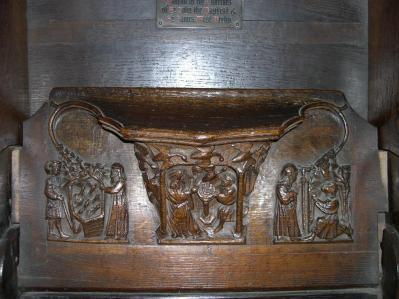
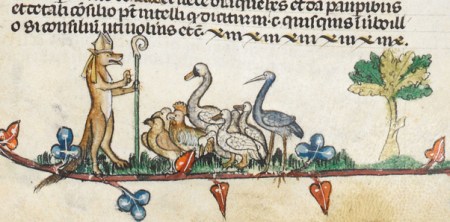


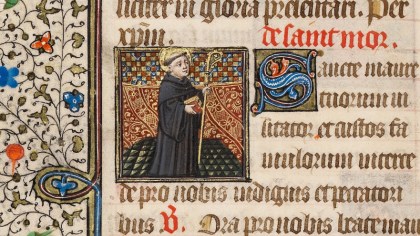


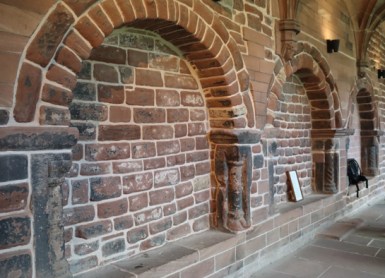


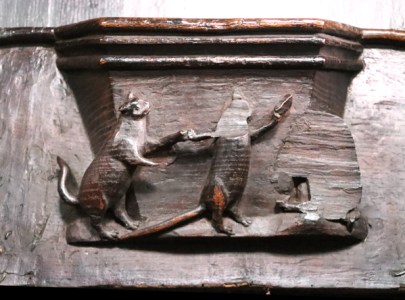

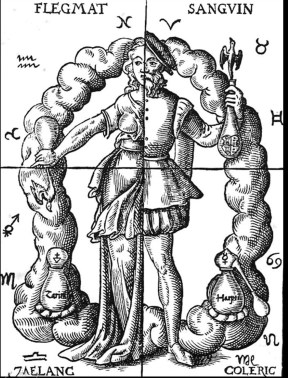


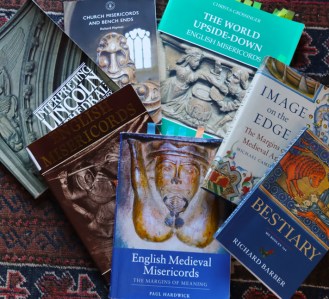




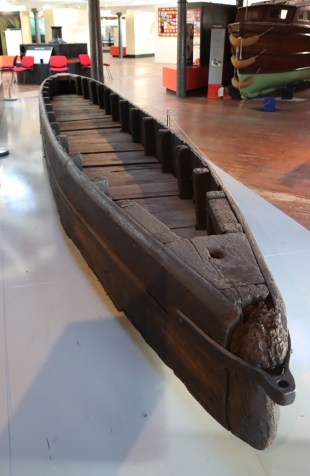

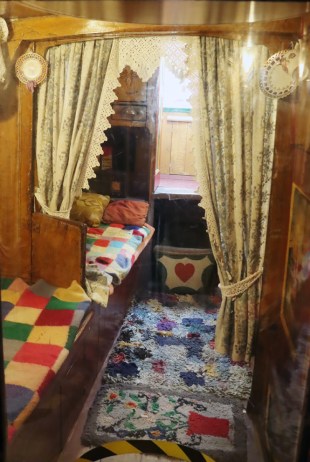




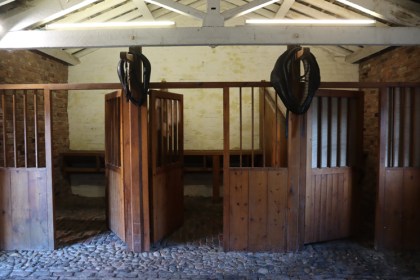


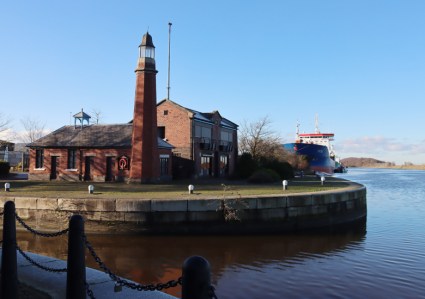


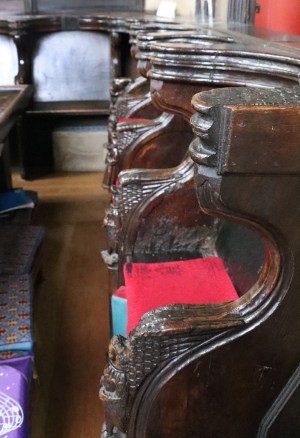


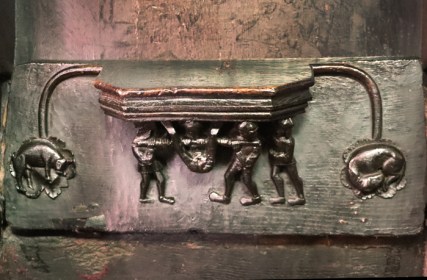

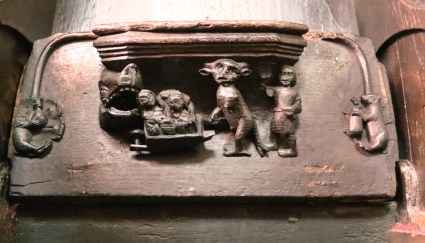
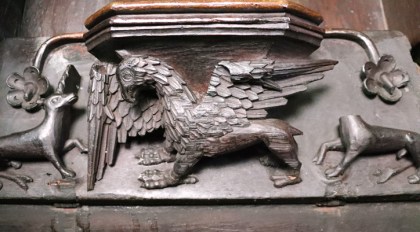

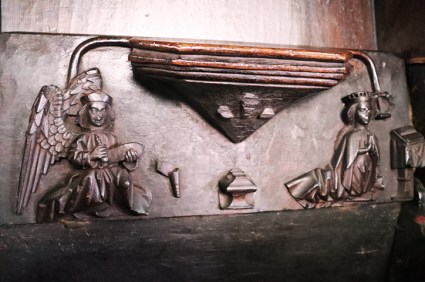


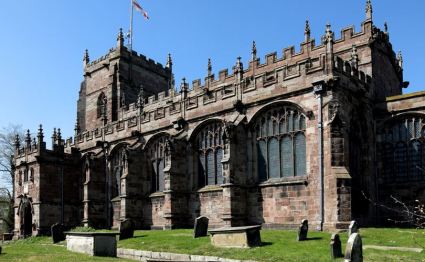


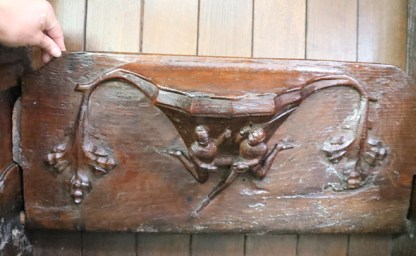

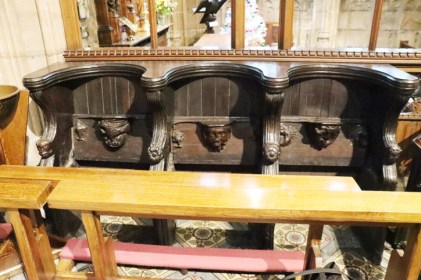


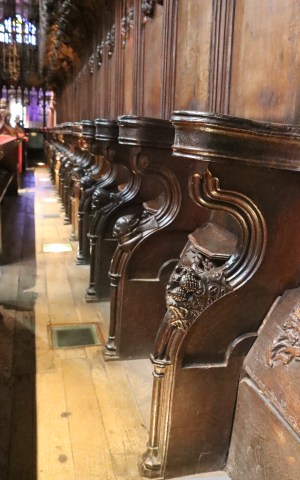
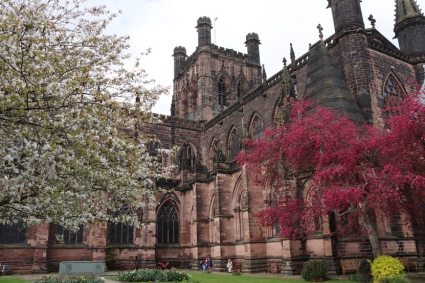

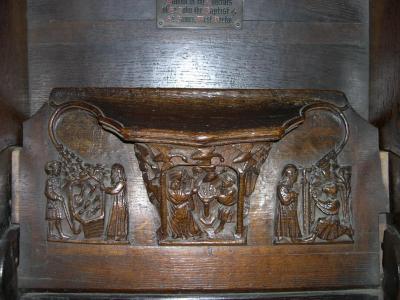


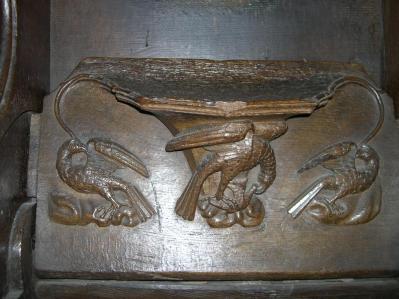

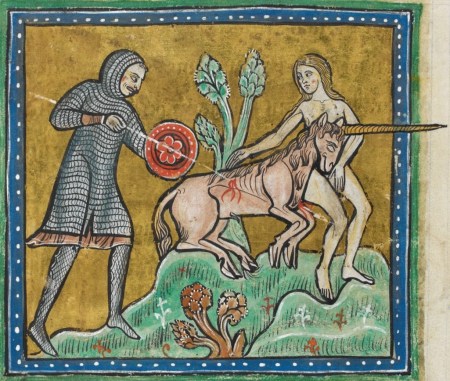
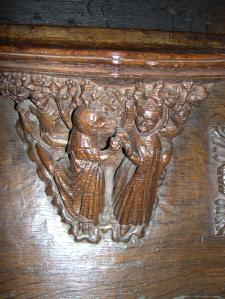

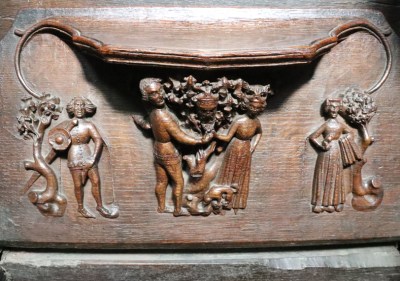


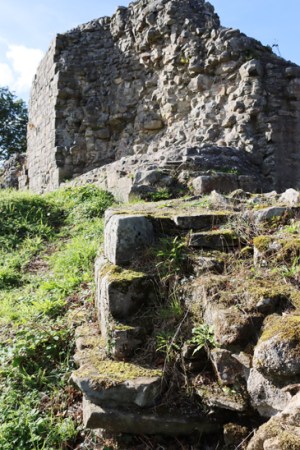





 Based in Churton
_illustration_Alchemic_approach_to_four_humors_in_relation_to_the_four_elements_and_zodiacal_signs.jpg)

