Introduction
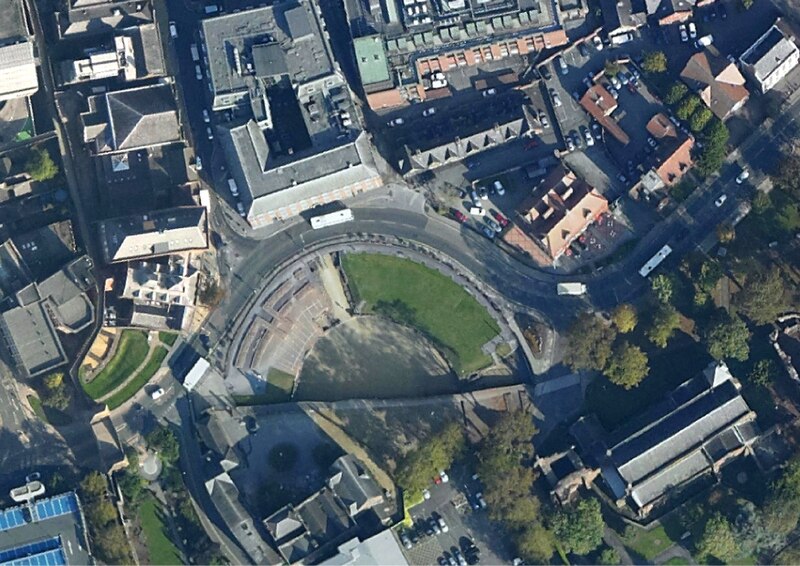
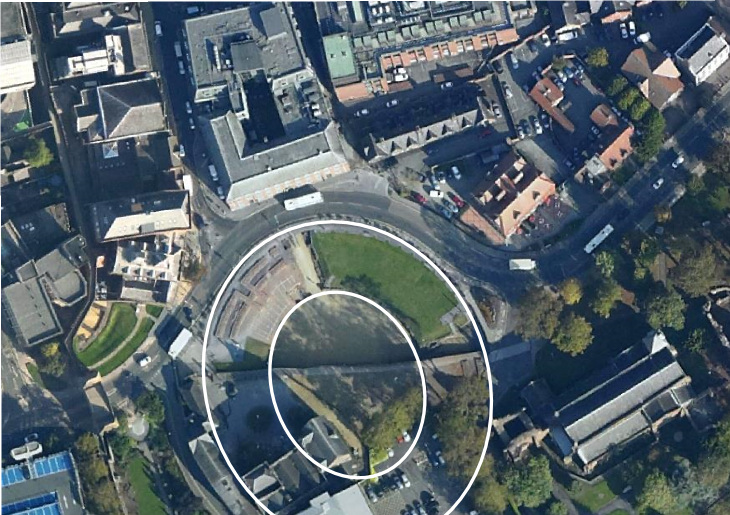
Aerial photograph of the half of the Chester amphitheatre that is visible. The rest lies beneath derelict buildings and car-parking. Image source: Environment Agency via Wikipedia
Partly as a result of the Gladiators of Britain exhibition last year and the Chester Amphitheatre – An 8000 year Story exhibition this year (closes 12 July 2026), both at Chester’s Grosvenor Museum, there has been a lot of recent interest about the development of the Chester amphitheatre. The Gladiators project focused attention on the Roman period but the current exhibition looks at 8000 years of how the chunk of land on which the amphitheatre sits was used from early prehistory onwards. Of these various periods of use, one of the most interesting is the discovery of a section of an Iron Age settlement and field management, representing a number of phases of the Middle and Late Iron Age. These phases were found, together with earlier prehistoric material, during the last of three seasons of excavation that took place between 2004 and 2006, included in volume 1 of the amphitheatre publication produced by Tony Wilmott and Dan Garner in 2018 (see Sources at end).
xxx
The challenges of locating the Iron Age in West Cheshire

Artist’s impression of Maiden Castle on the mid-Cheshire Sandstone Ridge. Produced by the Habitats and Hillforts Project 2008-2012. Image source: Sandstone Ridge Trust
The Iron Age in West Cheshire was first recognized at hill-top sites known as hillforts in Britain, characterized by banks and ditches surrounding an internal space, but it has been amply demonstrated in other parts of the country that lowland settlements, some enclosed with a bank and ditch, formed the settlement focus of farming livelihoods. It has always been difficult to identify such lowland sites in the West Cheshire area, for reasons discussed below, although the presence of six hillforts on the mid-Cheshire Sandstone Ridge strongly implied that there must be corresponding lowland sites on the land to east and west.
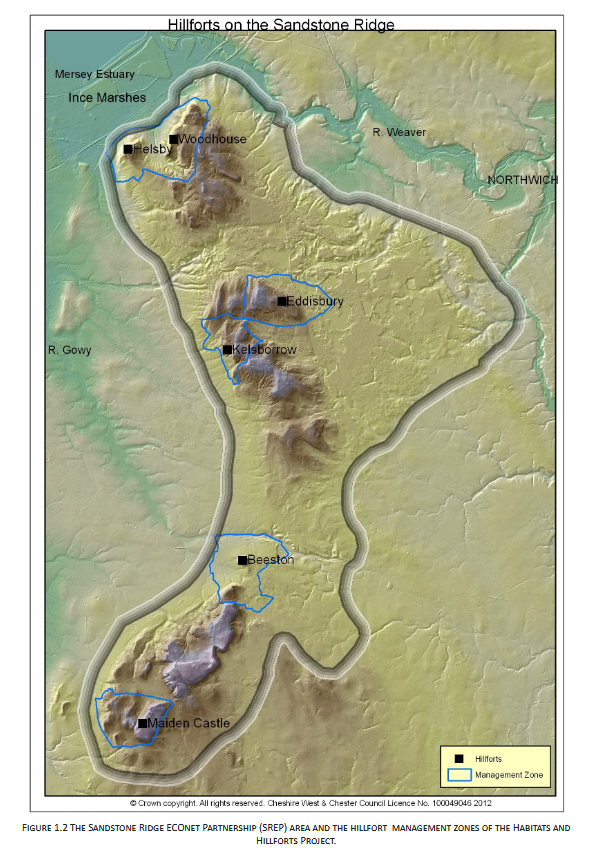
Hillforts on the mid-Cheshire Sandstone Ridge. Image source: Garner 2012, p.4.
In 1982, in response to this absence of known lowland sites in the fields around the hillforts on the Sandstone Ridge, James Schoenwetter used proxy botanical data from nearby waterlogged contexts to search for evidence for agricultural activity contemporary with the hillforts. He found evidence that strongly suggested that lowland agricultural settlements must have been present in the vicinity of Peckforton Mere, near the Sandstone Ridge. However it was was not until 2001 that the nearest settlement to the mid-Cheshire sandstone ridge was found at Bruen Stapleford near Tarvin, during the laying of a Transco gas pipeline. Since then a small number of sites have been surveyed and/or excavated across West Cheshire and the Wirral, with other possible sites awaiting survey and excavation. The Iron Age levels at the Chester Amphitheatre, were revealed in 2006.
Quite apart from the urban and suburban sprawl of Chester and the Wirral on what was once rural land, finding the lowland sites in West Cheshire has been complicated by the composition of the soil in the Cheshire Basin, the nature of the archaeology itself, and the reduction of funding for research archaeology over the last few decades.
Aerial photography has been of great value for identifying sites in some parts of the country, but the moisture-retaining boulder clays deposited across the Cheshire lowlands by the last glaciation mean that the outlines of structures and enclosures, which show up in other areas as crop-marks, cannot always be seen in this region. It is only during periods of drought that crop marks are likely to put in an appearance.
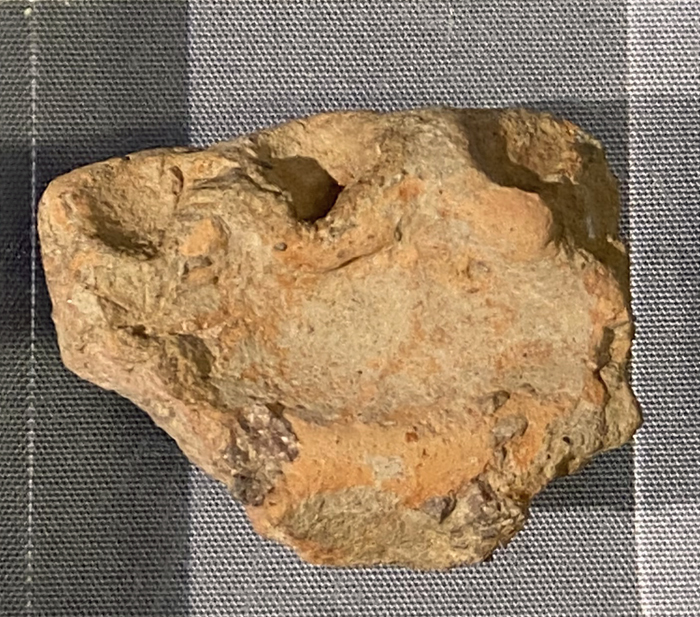
VCP rim-sherd found in one of the roundhouse (Building 1) gullies at the amphitheatre, on display at the Grosvenor Museum
Field-walking (the survey of ploughed fields on foot, collecting all artefacts found) also faces serious challenges. The boulder clays of the Cheshire Plain boulder are acidic, meaning that organic materials (plants, bone and antler, foodstuff, textiles, leather etc) and metals have often disintegrated in the past and are only very rarely found today. Field-walking tends to rely on pottery and stone artefacts, and although both often survive in local conditions, by the time of the Iron Age smaller stone tools were no longer in use, with only larger stone items like querns and pounders (grain and pigment grinding objects) and anvils (for metalwork) remaining in use. It is also a problem that the Iron Age in the West Cheshire region is largely aceramic. Pottery often present at other Iron Age sites in Britain, is usually absent in this immediate area, with only a particular type known as Very Coarse Pottery (VCP), used for producing and transporting salt from the East Cheshire brine springs, consistently found in the region.
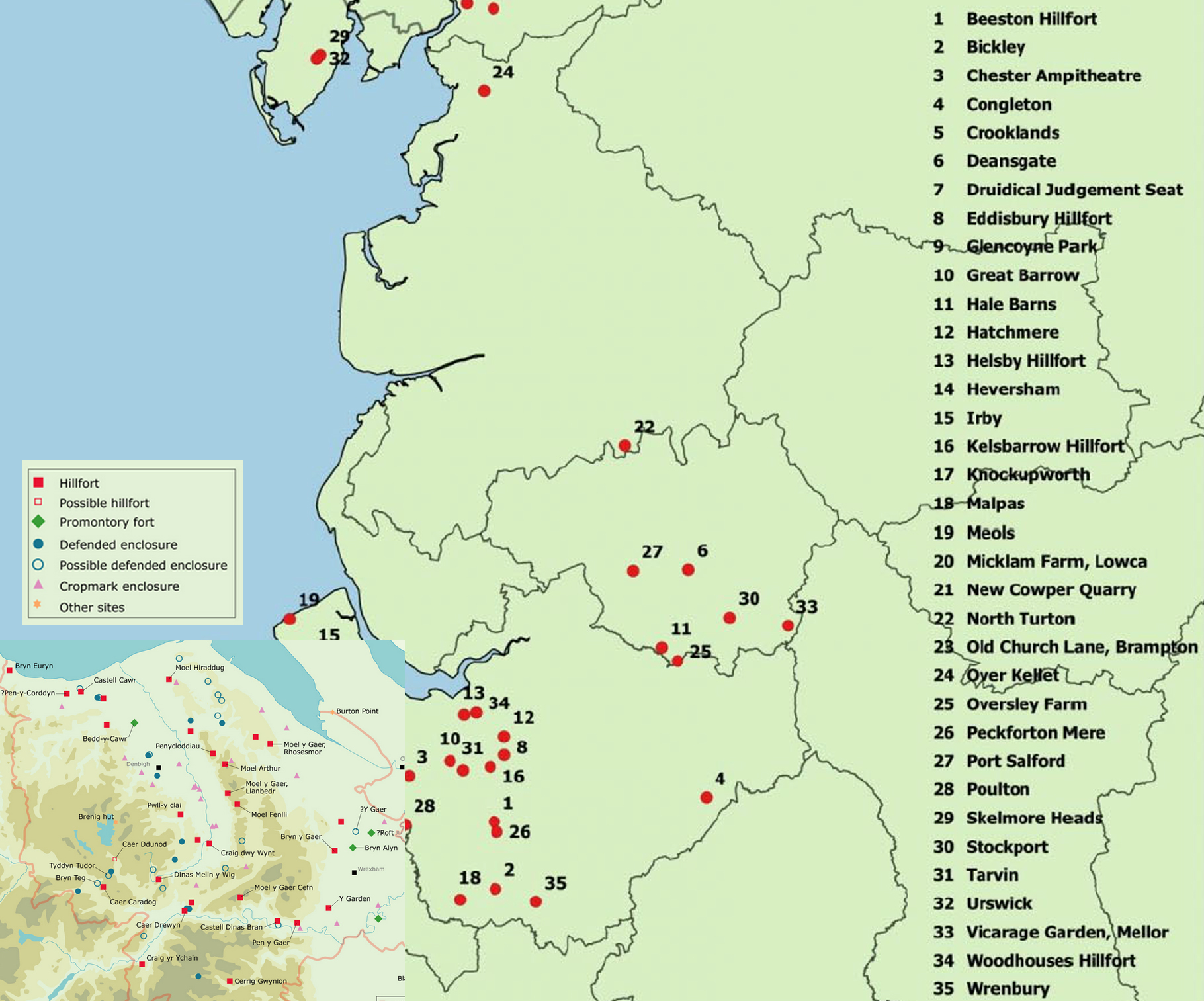
Composite image of two maps showing the distribution of Iron Age sites in northwest England and northeast Wales. Sourced from Ritchie 2018 and Nevell 2025 (click to enlarge)
Because of these challenges, individual objects found in the area are most often found by metal detectorists who report their findings to the Portable Antiquities Scheme. The last time I checked there were 43 findspots dating to the Iron Age in West Cheshire, although not all can be dated with precision.
Most of the Iron Age lowland sites discovered have been the result of developer-led watching briefs and funding for excavation and publication. This simply means that instead of excavation being guided by archaeological research projects and survey activities, sites are usually found when, for example, new buildings are erected, cables or pipelines are laid down and new quarries are opened. Archaeologists are assigned to maintain watching briefs on such projects, funded by the developer in question, in case archaeological features are identified. Watching briefs have been responsible, for example, for the Late Prehistoric discoveries at Bruen Stapleford near Tarvin (where a gas pipeline was due to be laid), Saighton Camp at Huntington (in advance of a new housing estate), and Puddington Lane sites 129 and 154 at Burton on the Wirral (where sections of an offshore power cable were being laid). A 2026 article in British Archaeology (the publication of the Council for British Archaeology) by Sarah Wolferstan states that nearly 98% of UK archaeology is now developer-funded.
Large scale evironmental and heritage conservation projects are few and far between, but in this region included the Heather and Hillforts project that first oversaw the exploration, survey and excavation of both the uplands in northeast Wales in the early 2000s, and in a later phase the mid-Cheshire Ridge between 2008 and 2011, with the archaeological work overseen by Dan Garner, resulting in two main publications made available in 2012 and 2016.
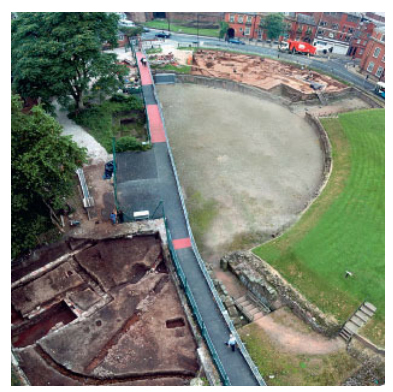
Chester Amphitheatre under excavation in 2004. Source: Wilmott and Garner 2018, fig 26, p.24 (Kindle edition)
The Chester Amphitheatre Project was a special project. Unlike the above examples, the Chester Amphitheatre was the focus of a very welcome three-year project that was initiated for research purposes. In 2000 it was deemed that the deteriorating state of the amphitheatre needed to be addressed, and English Heritage issued a call for tenders to produce a conservation plan together with costings. Discussions between English Heritage, Chester City Council and a number of specialists resulted in the Chester Amphitheatre Project in 2003. Excavations took place between 2004 and 2006, led by Tony Wilmott and Dan Garner and funded by English Heritage and Chester City Council.
xxx
Settlement features in the West Cheshire Iron Age
The structures that make up Late Prehistoric settlement sites in Britain, enclosed and unenclosed, are usually round-houses and four-posted (or “four-poster”) buildings. In West Cheshire none have produced evidence of enclosures (banks and/or ditches) surrounding the settlements, but none of the sites has been fully excavated meaning that whether or not any of them were enclosed is currently unresolved. The remains of field systems, sealed beneath early Roman levels, are of great interest, providing clues to the agricultural activity that formed the basis of Late Prehistoric livelihoods.
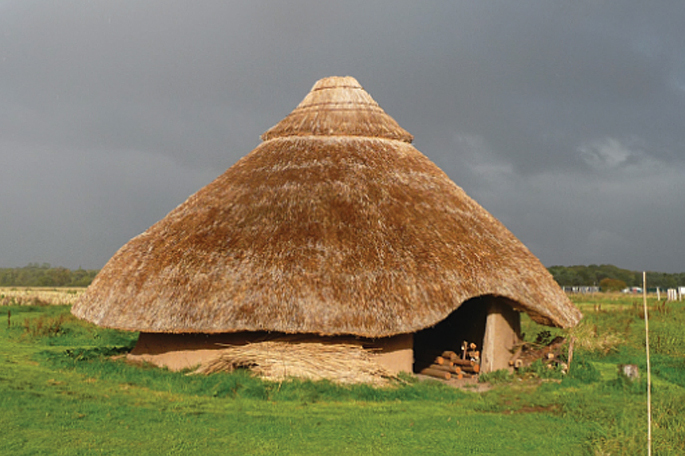
Reconstructed Iron Age roundhouse on private land at the site of an excavation on the west side of the river Dee at Poulton, south of Chester. Source: Cootes et al 2020 (see Sources at end of post)
Roundhouses in the area are defined by circular gullies or ditches, sometimes single and sometimes double (concentric). The largest roundhouse in this area reach was Bruen Stapleford’s Structure 3, with a diameter of c.19m but smaller examples are more usual, with the smallest clustering around 7.5-8m, with the amphitheatre roundhouse measuring c.8.4m diameter. Gullies can either be complete, leaving a gap for one or more entrances, or interrupted. Outer gullies are often interpreted as drains or eavesdrips to collect rainwater run-off from the roof. The inner gully is often a foundation trench for posts or stakes, which will have performed the job of anchors for the walls, which may have been made of wattle-and-daub (long slender branches woven together and then coated with clay or equivalent), planks, or an alternative construction material that has so far not been observed, such as turf. Alternatively, the outer gully may hold the walling material, whilst the inner gully may hold weight-bearing posts to support the roof timbers. The interior may have additional features, such as hearths or shallow pits. The activities that took place in roundhouses are still not well understood in spite of including “house” in their names. Whilst some may well have provided accommodation for group/family members (depending on how family and social units were defined and organized), others are likely to have have been used for a number of other activities related to farming, craft and/or community activities.
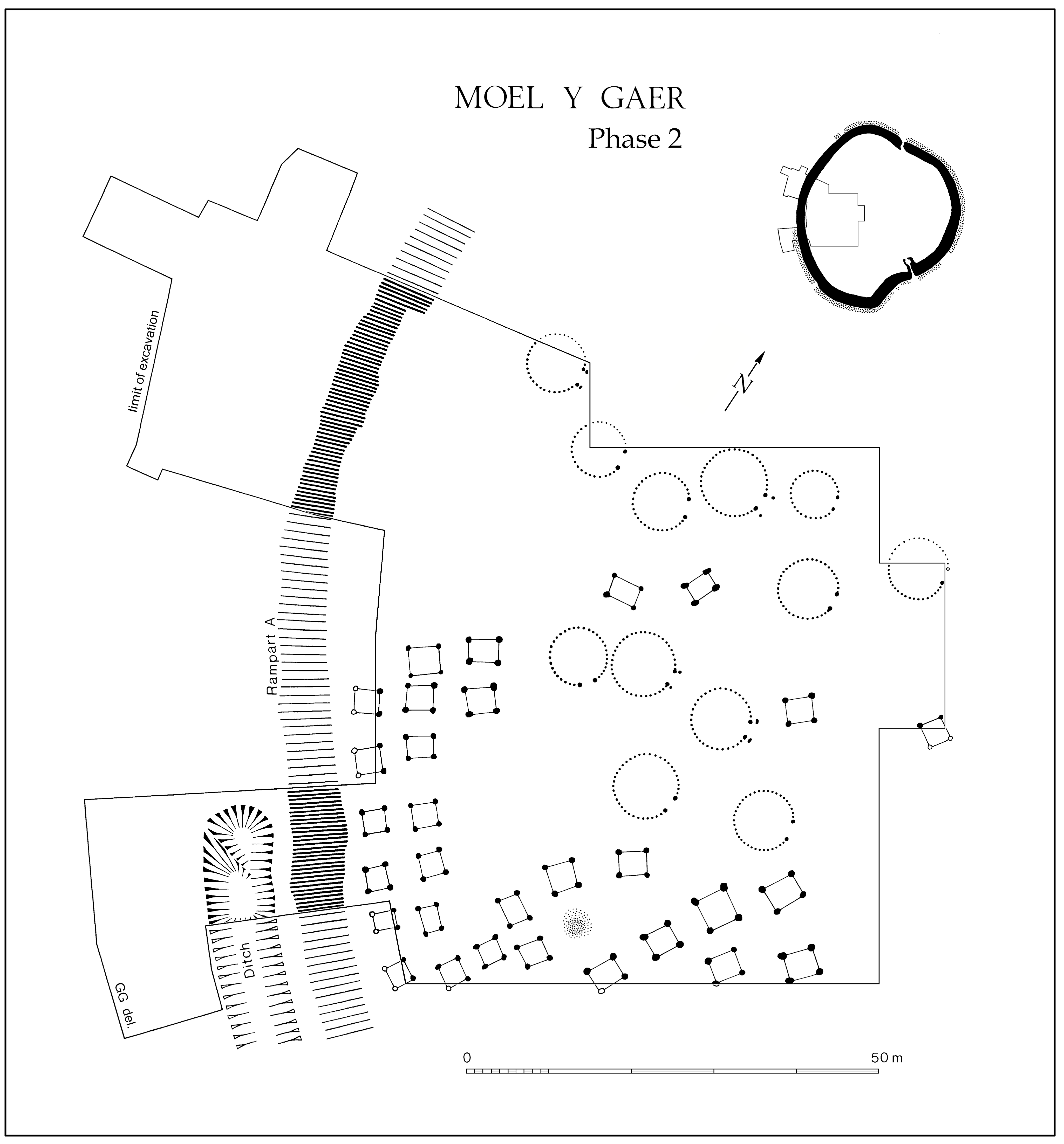
Moel y Gaer Rhosesmor hillfort, phase 2, showing both roundhouses and four-posters. Image source: Graeme Guilbert 2018, Internet Archaeology Journal
Four-posted buildings are even more elusive in the West Cheshire and Wirral areas, but happily two phases of one four-poster was found at the amphitheatre, and another was as at the Chester Business Park excavation in Huntington, another lowland site. They are also represented at the upland Beeston Castle hillfort. A particularly good example outside the immediate area is Moel y Gaer Rhosesmor hillfort (phase 2) in Flintshire. these structures are often described as “possible granaries,” but this is only one possible interpretation of their role within a given site or region. They are usually quite small, and either square or rectangular around 3.5 x 3.5m or 3.0 x 3.5m on average, and although they may well have stored cereal grain, particularly where there is sufficient evidence to suggest this purpose, they could also have stored other goods such as animal hides, wool and textiles, salt, and preserved foods, and some may not have been used for storage at all. For example, Janice Kinory suggests that one possible interpretation of for four postholes is that some of them could have been hanging frames, rather than buildings, used for maturing slaughtered and/or cuts of butchered livestock. Adrian Chadwick raises the possibility that some of them could have been excarnation (exposed funeral) platforms. As with roundhouses, they may have had multiple roles and it is only by excavation of the organic and inorganic remains associated with them that the uses of these buildings will continue to be clarified and refined.
fdf
The Iron Age beneath the Chester Amphitheatre
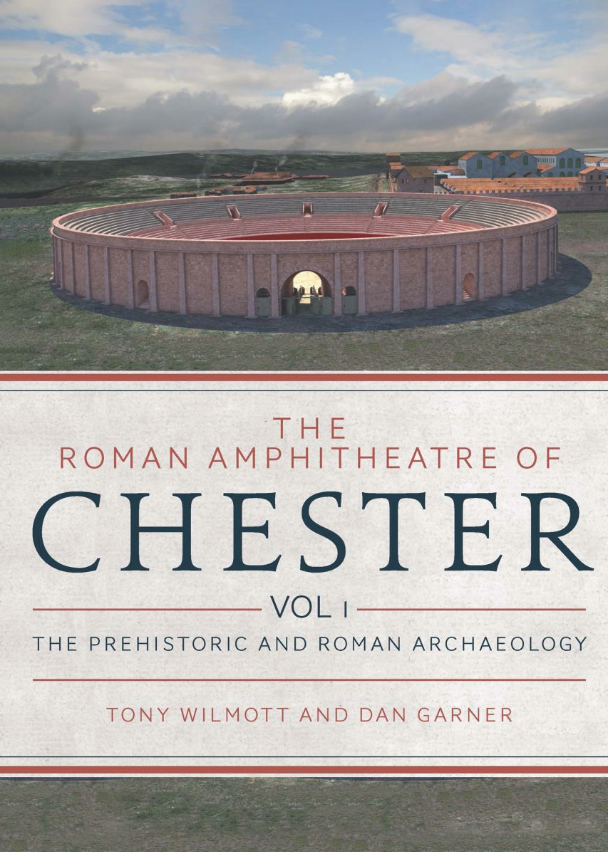 Because Late Bronze Age and Iron Age lowland sites are elusive, it is always exciting when a new one is discovered. The Chester amphitheatre is one of Chester’s best known landmarks, and the 2004-2006 excavations (Wilmott and Garner 2018) were expected to provide information primarily about the Roman and post-Roman uses of the site, so the 2006 discovery of Iron Age activity underlying the Roman amphitheatre, a short distance from the river Dee, provided a very welcome insight into the Chester area and environs prior to the arrival of the Roman legions. Most significantly, the Iron Age finds included not only structural evidence and a small number of artefacts, but also two distinct phases of field system, providing information about the development of field-management methodologies in the region. The source of the amphitheatre’s Iron Age data used in this post is in Part 2, Before The Amphitheatre, in the 2018 publication by Tony Wilmott and Dan Garner (see “Sources” at the end of the post). Some of the images shown on this post have also been taken from the Kindle version of the same publication. See image captions for details of all image sources.
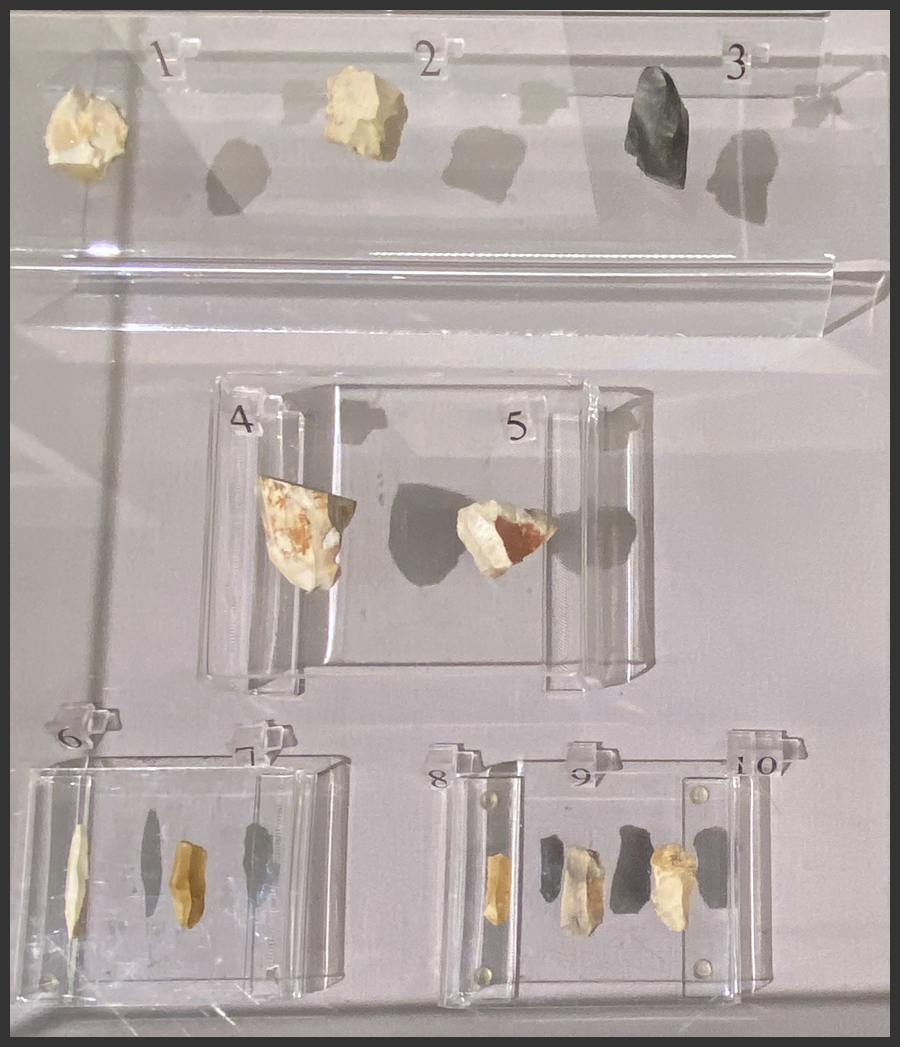
Mesolithic stone tools and cores from the amphitheatre site, Phase 1a on display at the Grosvenor Museum’s “Chester Amphitheatre – An 8000 Year Story” exhibition, found during the Wilmott and Garner 2018 excavation
The amphitheatre site had been surveyed and excavated several times previously, beginning in the early 1930s, discussed in detail by Wilmott and Garner 2018, but this was the first of the amphitheatre excavations to produce evidence of Iron Age occupation underlying the Roman levels.
The amphitheatre site has been divided into a number of periods, phases and sub-phases, of which Period 1 represents all the prehistoric phases, of which phase 1a consists of ephemeral data from the Mesolithic to the Early Bronze Age (not included here, but extensively described and illustrated in Wilmott and Garner 2018, providing an important contribution to the understanding of earlier prehistoric presence in the area); phases 1b and 1c, which date to the Middle Iron Age and include structural elements and evidence of ard cultivation respectively; and phase 2, which produced evidence of Late Iron Age cord-rig cultivation. Later periods, not listed here, describe the history of the Roman amphitheatre.
The phases of Period 1 (Prehistory):
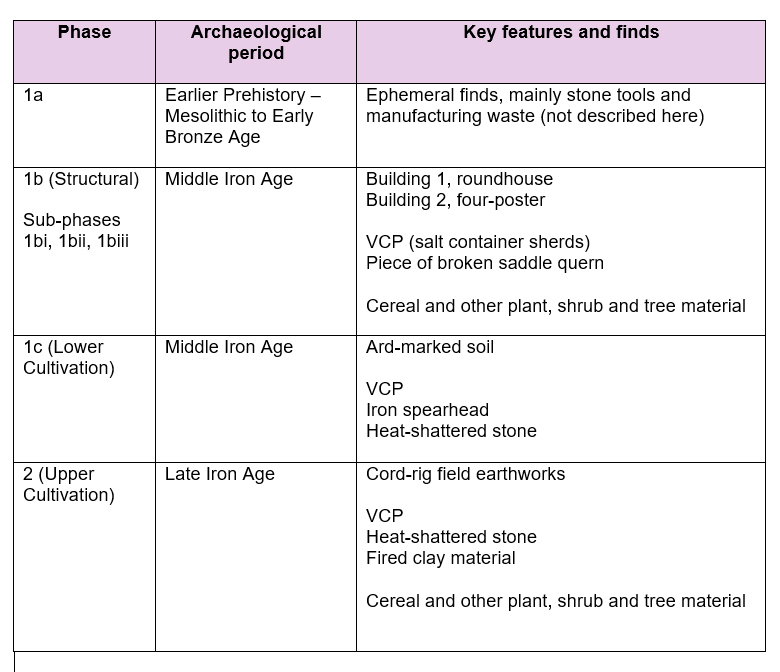
Amphitheatre Period 1 (Prehistory) phases, with radiocarbon dates indication that periods 1b – 2 covered the period c.400BC to the pre-amphitheatre Roman period.
Phase 1b (Middle Iron Age, 400-200 Cal.BC)
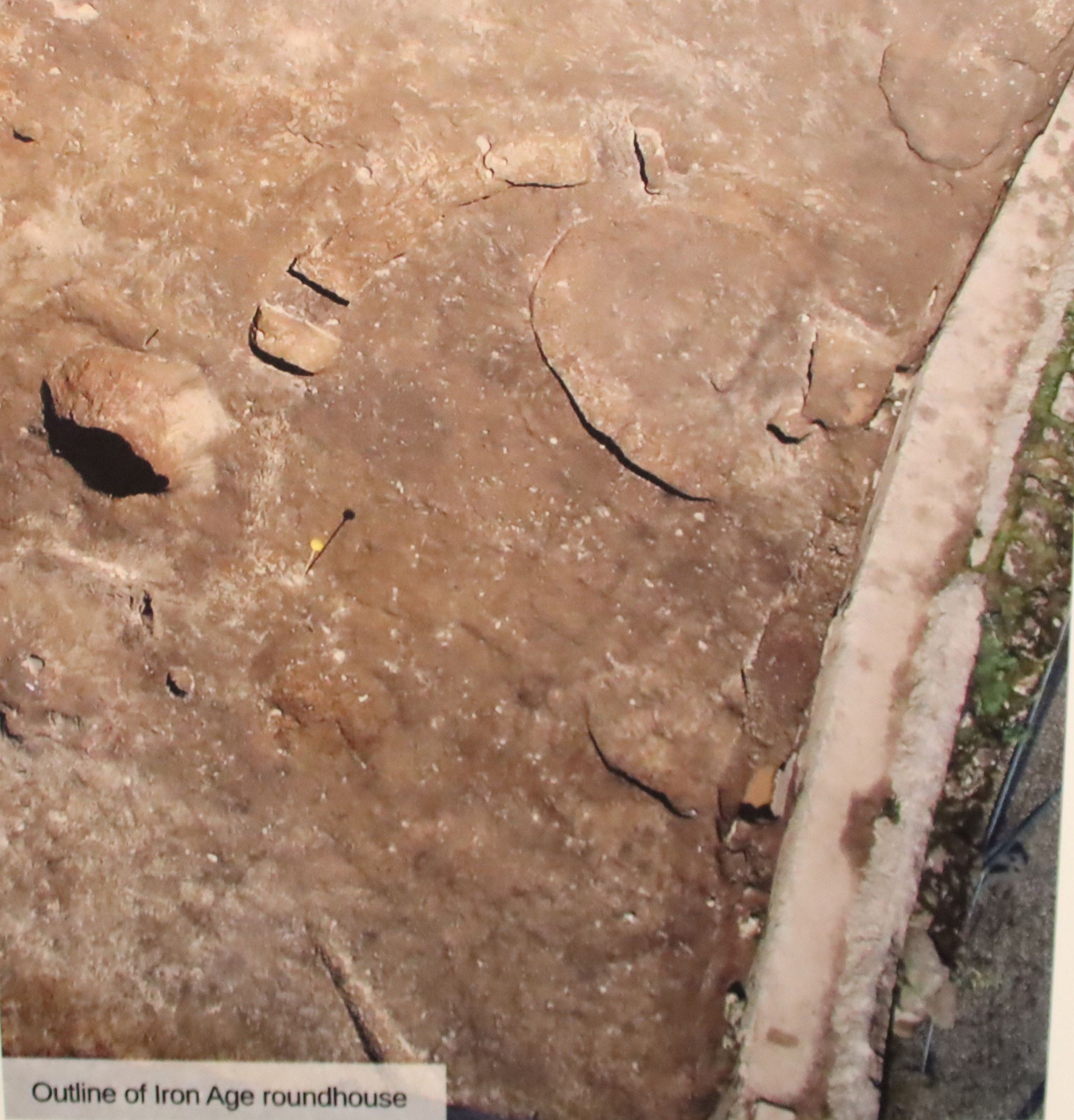
Part of the roundhouse under excavation. Source: Grosvenor Museum’s “Chester Amphitheatre – 8000 Years of Stories” exhibition, from the Wilmott and Garner 2018 excavation
Phase 1b includes the only Iron Age settlement features found during the excavation, consisting of a single roundhouse (Building 1) and a four-posted building that was built in three phases (Building 2).
Building 1, was defined by two concentric gullies that made up part of a curvilinear structure that would have been about 8.4m in diameter if it had been complete. The inner gully was probably a construction trench for the walls of the house. A rim-sherd of VCP was found in one of the gullies. A shallow pit was found towards the centre of the building measuring c.1m x 0.75m and 0.07m, its function unspecified. Plant remains were collected and sampled, containing very few cereal remains, representing hulled barley and a glume base of spelt wheat. Buttercup, sheep’s sorrel, and vetches and other wild species. may have been used as floor covering, animal fodder or bedding.
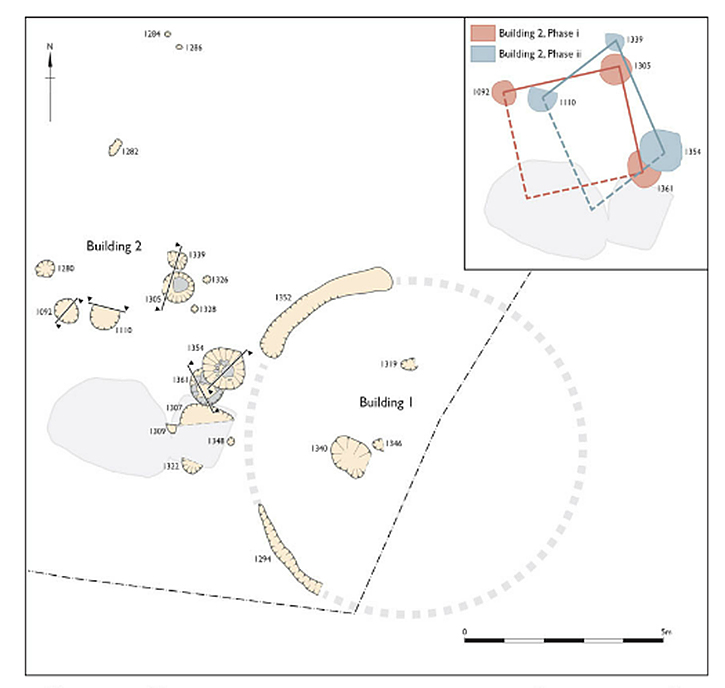
The Chester Amphitheatre Iron Age, part of Buildings 1 and Building 2. Image source: Wilmott and Garner 2018, fig.33 p.44 (Kindle version)
Building 2 comprised three postholes representing two sides of what the excavators interpreted as a four-posted building, erected in two phases as shown on the illustration above. It is only the second example of a lowland site with four-poster identified in the West Cheshire area (the other is at the Chester Business Park site). In Phase i of Building 2 the structure measured 3.5×3.5m. The postholes suggest that at least two of the posts were around 0.4m diameter and most of them had stone packing material to support the posts. Plant remains were found in all three of the main postholes, including remains of spelt wheat, a small amount of emmer wheat, and low amounts of barley. There were also abundant weed seeds, plenty of small grass seeds, a sloe stone and charcoal containing oak and lesser amounts of alder and hazel. Charcoal in Building 2 postholes, which is also found spread elsewhere on the site, suggests Building 2 appears to have been destroyed by fire in phase i, either deliberately (which has been proposed at, for example, the Iron Age roundhouse at Prestatyn) or accidentally. In Phase ii the four-posted building had shifted position, suggesting that phase ii was a replacement building, its footprint overlapping with the older structure. It also had three postholes, but is thought to have been rectangular, measuring c.3.5 x 4m. Postholes from phase ii (again with processing waste dominating over actual grains) contained spelt wheat, emmer wheat, grasses and charcoal dominated again by oak with smaller quantities of alder and hazel. In this phase the post packing material was so disturbed that it is suggested that the building was deliberately dismantled by the removal of the posts, something seen at other sites in Britain possibly including Prestatyn, where it was thought that the roundhouse was probably deliberately dismantled (before being set on fire).
Phase iii of Building 2 is far less easy to understand. It consists of a sub-circular cut that truncated posthole 3. It appeared to be lined with red clay, and although showed no signs of burning, a later fill was charcoal-rich, suggesting a hearth. The plant remains were dominated by the by-products of spelt wheat processing. Features that could not be connected to the structure included a pair of stake-holes and a single posthole, with another stake-hole nearby.
All the Building 1 and Building 2 levels were sealed under Period 1’s, Phase 1c, the ard-marked soil.
xxx
Period 1, phase 1c (Middle Iron Age)
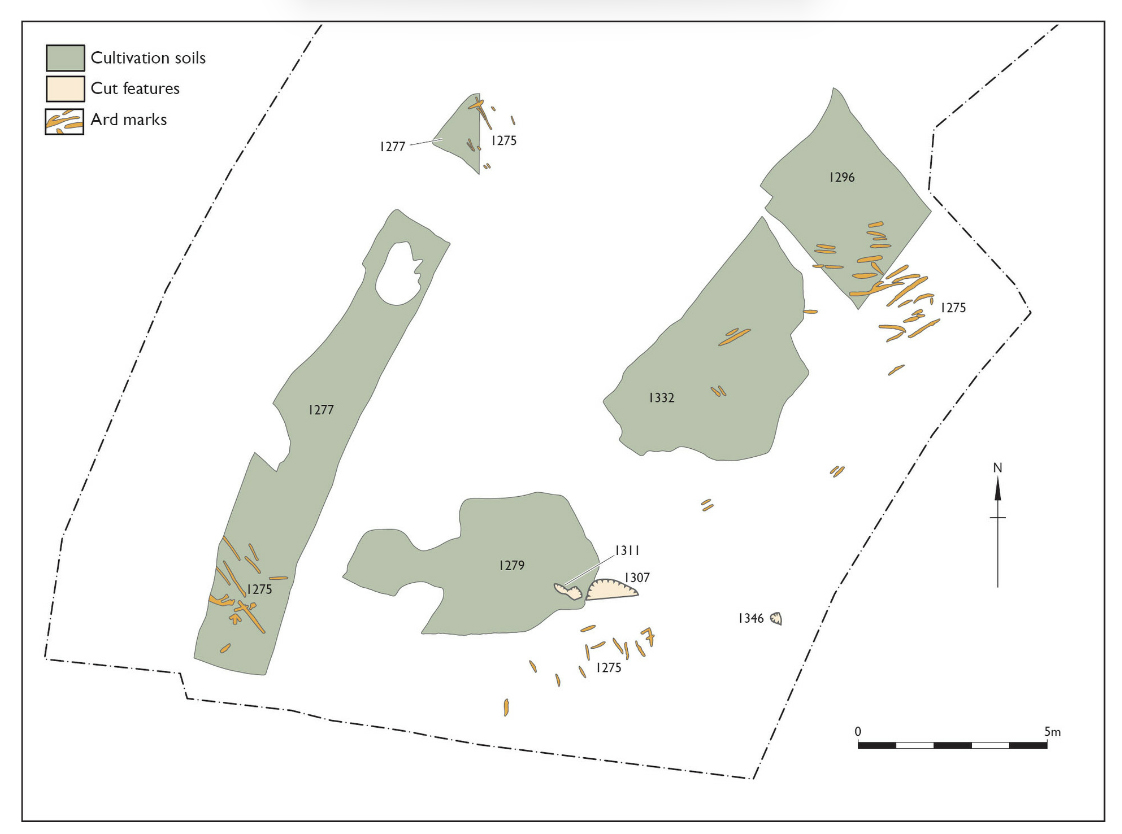
Amphitheatre cultivation and ard marks Phase 1c. Image source: Wilmott and Garner 2018, fig.34 p.46 (Kindle version)
Phase 1c, the lower level of cultivation at the site, represents patches of Middle Iron Age cultivation, with marks in the ground thought to have been made by an ard. An ard is a predecessor of the plough, also known as a scratch-plough, a simple tool, usually pulled by livestock, that carves a shallow line into the soil rather than turning and lifting it like the later and more sophisticated plough. The marks are associated with a number of different patches of cultivated land within the amphitheatre that post-date the Phase 1b round-house and 4-poster, and are not associated with known structures.
Period 1, phase 2 (Late Iron Age)
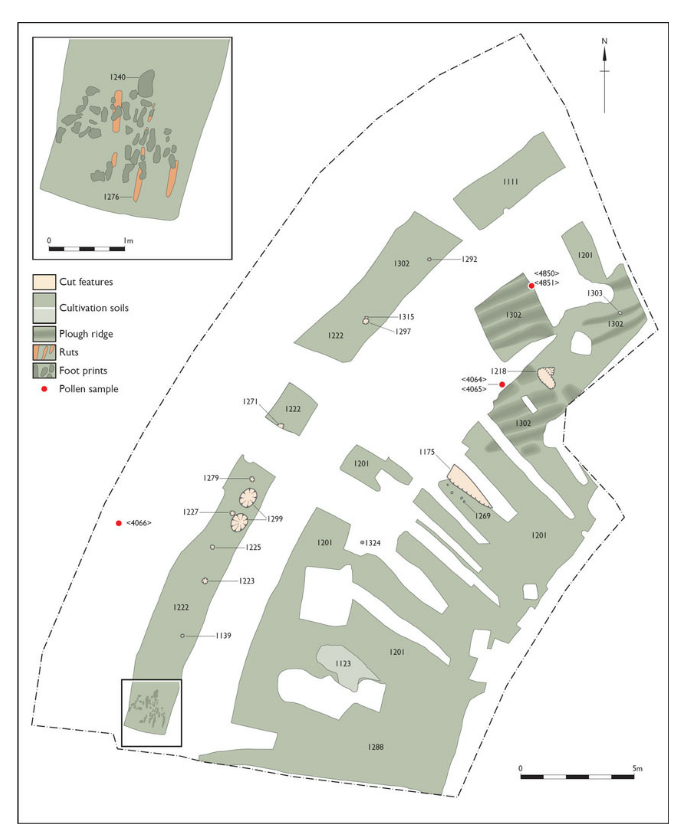
Cultivation soils and cord-rig earthworks of Period 1, Phase 2, with features of the Roman Phase 3. Image source: Wilmott and Garner 2018, fig.36, p.48 (Kindle version)
Phase 2 consists of an upper level of cultivation soils showing a distinctive cord-rig arrangement of parallel low banks and shallow furrows, providing raised rows for planting, and ditches for drainage, over an area at the north of the site some 15 x 6m in area. An east-west alignment of 11 ridges was recorded, c.0.64m apart. These undulating earthworks “are a dramatic archaeological discovery, and represent the evidence for arable cultivation immediately prior to the construction of the first amphitheatre, in the last phases of the pre-Roman period” (Wilmott and Garner 2018, p.47).
The Chester Amphitheatre cord-rig is the first to have been recorded south of Northumberland. To the southwest another type of earthwork consists of a pair of circular depressions, the function of which remains unknown. Burnt vegetation, including possible turves, may be indicative of land clearance and digging the burnt material back into the soil to be cultivated.
sdfds
The Iron Age livelihood at the Amphitheatre
The occupants of the settlement located themselves very close to the river Dee, with access to both water and an excellent route for communication and travel. One roundhouse, two phases of a four-poster and two phases of field management data do not necessarily represent a full settlement and farming system. Because the excavation was limited to the amphitheatre itself, It is possible that beyond these boundaries, either destroyed by later roads and buildings or lying beneath them, a more extensive community settlement could have existed.
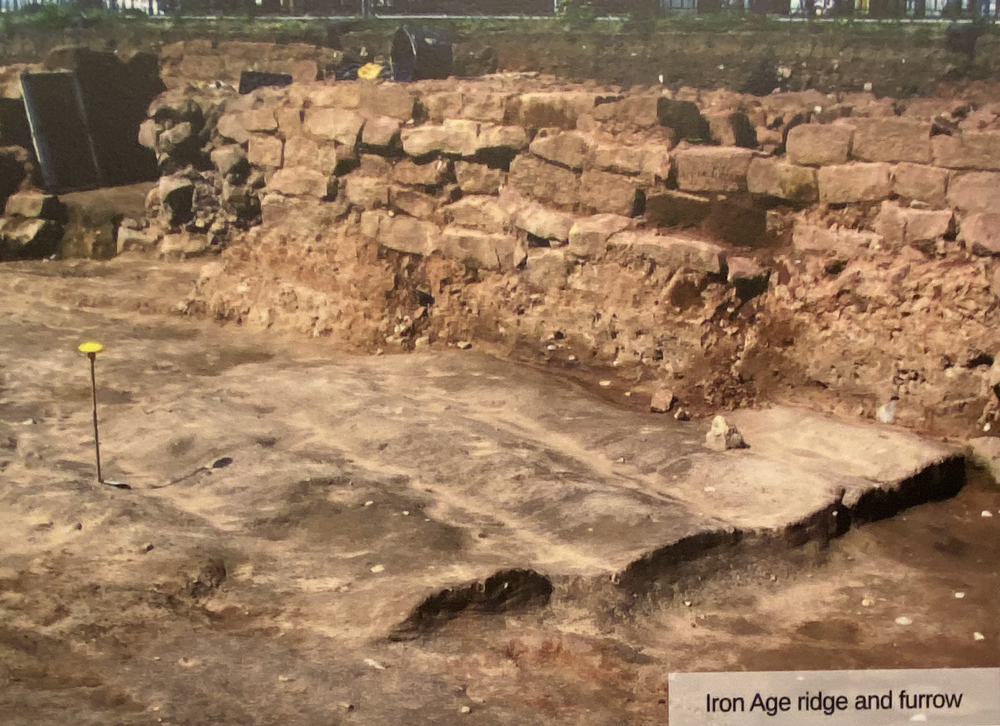
Photograph of the excavation showing a section of Iron Age cord-rig field system ( photograph from the “Chester Amphitheatre – an 8000 year story” exhibition, from the Wilmott and Garner 2018 excavation)
Field systems, many of them enclosed, were an increasingly familiar aspect of Late Prehistoric landscape management throughout Britain. The presence of a clear chronological sequence of field management approaches is particularly helpful, suggesting improved efficiencies and the desire or the need to apply new techniques to improve output, marked by the replacement of Middle Iron Age ard-marks by Late Iron Age cord-rig earthworks. Burnt plant rhizomes and possibly turves in phase 2 may have been turned into the ground to help fertilize the field, and heat-cracked stone that found on cultivation levels, mentioned below, may also have been part of general refuse spread on fields as fertilizer.

Spelt crop. Image source: Waldkorn
The plant remains at the site include cereal grains and chaff (the inedible parts of the plant), and together with the field-working marks indicate that this was agricultural land. The best represented of the cereal remains was spelt wheat, which became increasingly popular over emmer wheat during the course of the Iron Age, perhaps due to its greater tolerance of poor, marginal soils, cold and damp conditions, its ability to do well without large amounts of fertilizer and its resistance to pests and diseases. Other types represented are emmer wheat and hulled 6-row barley in smaller amounts, as well as indeterminate remains. As well as grains, the chaff produced during processing could be used for, amongst other things, animal fodder and fuel. There is also evidence of quantities of brassiceae, (the mustard and cabbage family). Weeds suggest a broadly grassland environment, some of which may have been used for roofing, flooring and animal fodder as well as other uses. Wood found at the site, invaluable for buildings, fencing, fuel, tools, weapons, handles, containers and a variety of other objects and furnishings, mainly includes oak, alder/hazel and willow.
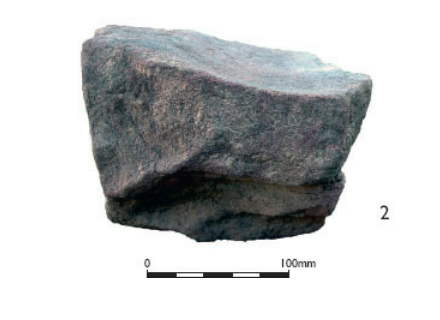
Red sandstone saddle quern piece. Image source: Wilmott and Garner 2018, fig.42, p.63 (Kindle version)
A broken red sandstone fragment of Middle Iron Age saddle quern is a nice find (shown above), also relating to agricultural activities. It was found in a post-hole in phase 1b, with its grinding surface worn to a characteristic shallow dish-shape. Similar fragments have been found at other sites in the region, with a whole example found at Beeston Castle hillfort. Querns were traditionally used for grinding cereal grain and seeds, but could also be employed for working pigments into powder. As suggested below for the VCP, it is possible that fragments of tools and equipment were inserted into structural features as tokens of some sort. A quern fragment from the Chester Business Park site was found, for example, in what has been interpreted as a former Iron Age well.
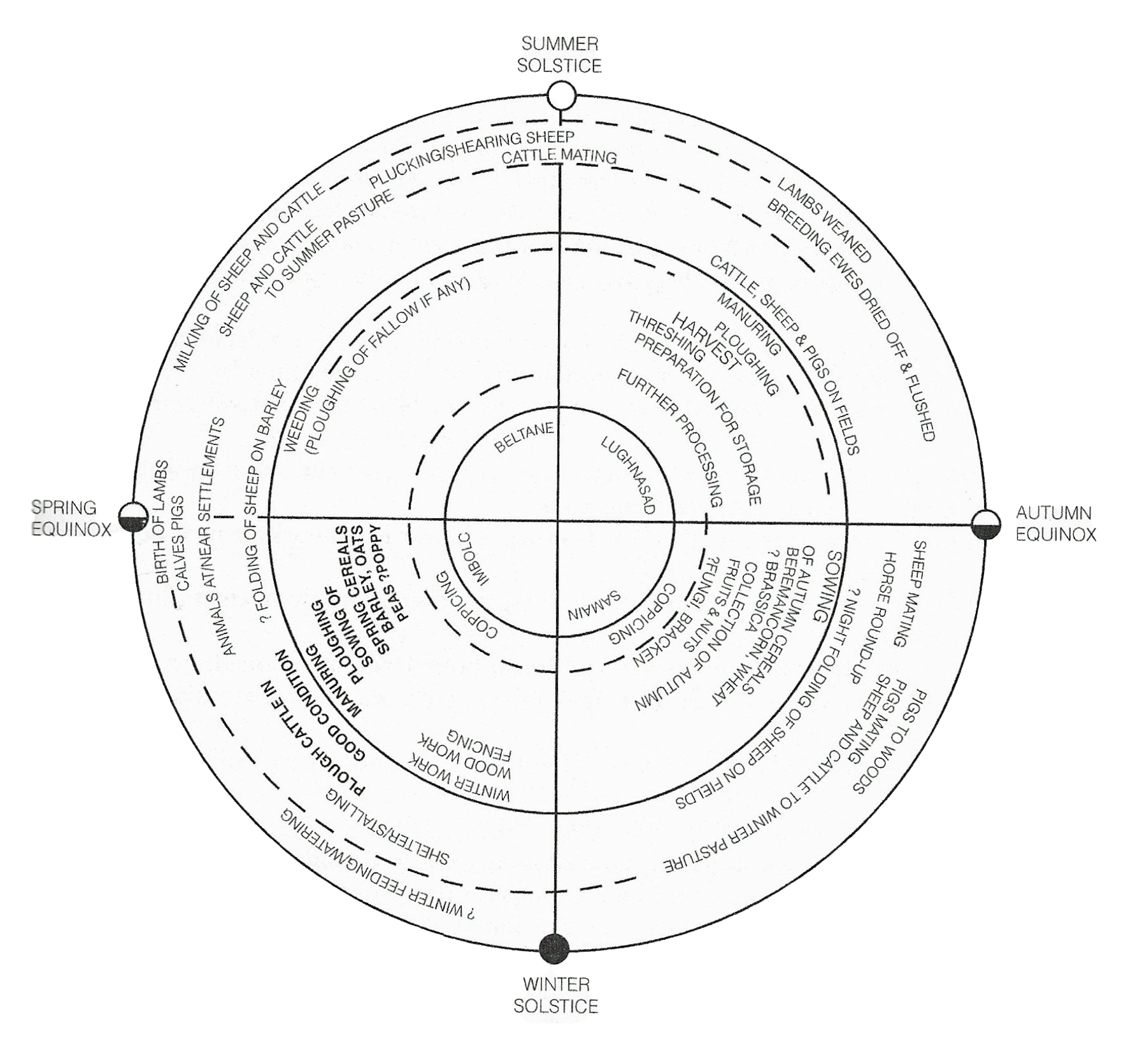
The farming year: a reconstruction based on evidence from settlements at Iron Age Danebury (Hampshire) and region. Source: Cunliffe 2005, p.419, fig.16.5. Click to enlarge.
Even though domesticated animal remains have not been found at the amphitheatre from prehistoric phases (although they are plentiful in the Roman phases), they would have been necessary to provide fertilizer for the crops, and evidence at other sites in the region have usually been seen as indicative of a mixed cultivation and livestock herding strategy. At Poulton near Rossett (30km south of Chester) for example, where preservation has been much better than any other Late Prehistoric sites in the area, the trifecta of cattle, sheep/goat and pig is indicated by the animal bones, which could have been employed not only for meat and fertilizer and, in the case for cattle and sheep/goat for dairy products, but also for hides for tanning and sheep’s wool for textiles. Sheep and goat are very difficult to distinguish archaeologically, but both would have been viable. A dog burial at Poulton suggests that at least that particular animal had value in everyday life.
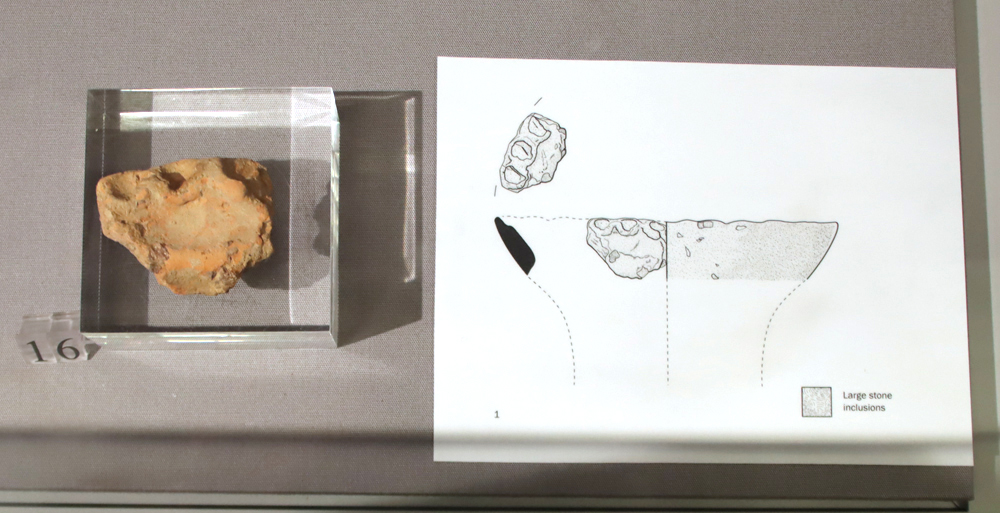
Chester Amphitheatre VCP sherd. A particularly nice piece with a decorated rim. No complete VCP vessel has been found in Britain, but sufficient sherds have been found to show that it has a relatively narrow base and a flaring rim. Displayed at the “Chester Amphitheatre – An 8000 Year Story” exhibition
Pottery was generally not found in West Cheshire and Wirral sites from the Iron Age, although it is found in Late Bronze Age levels, and has been found north of the Mersey. The exception to this is Cheshire Stony VCP, Very Coarse Pottery, which is found in varying quantities in the area. A particularly nice single piece of VCP rim sherd, with “pie-crust” decoration and 71 body sherds, were found at the amphitheatre, with the rim sherd shown above found in the gully of Building 1. VCP was used in the region for transporting salt, and may be indicative that the people at the amphitheatre settlement were importing salt from the salt brine springs in the Middlewich area. In her 2012 study of VCP Janice Kinory, building on the work of Elaine Morris, suggests that sometimes both single and more numerous sherds deposited in post-holes or gullies could have had a symbolic function, indicating the importance of salt itself, the value of social connections with salt producers, or the importance of the pottery itself to families and/or communities. The piece of VCP with “pie crust” decoration along the rim is similar to an example found at Poulton in Structure 2.
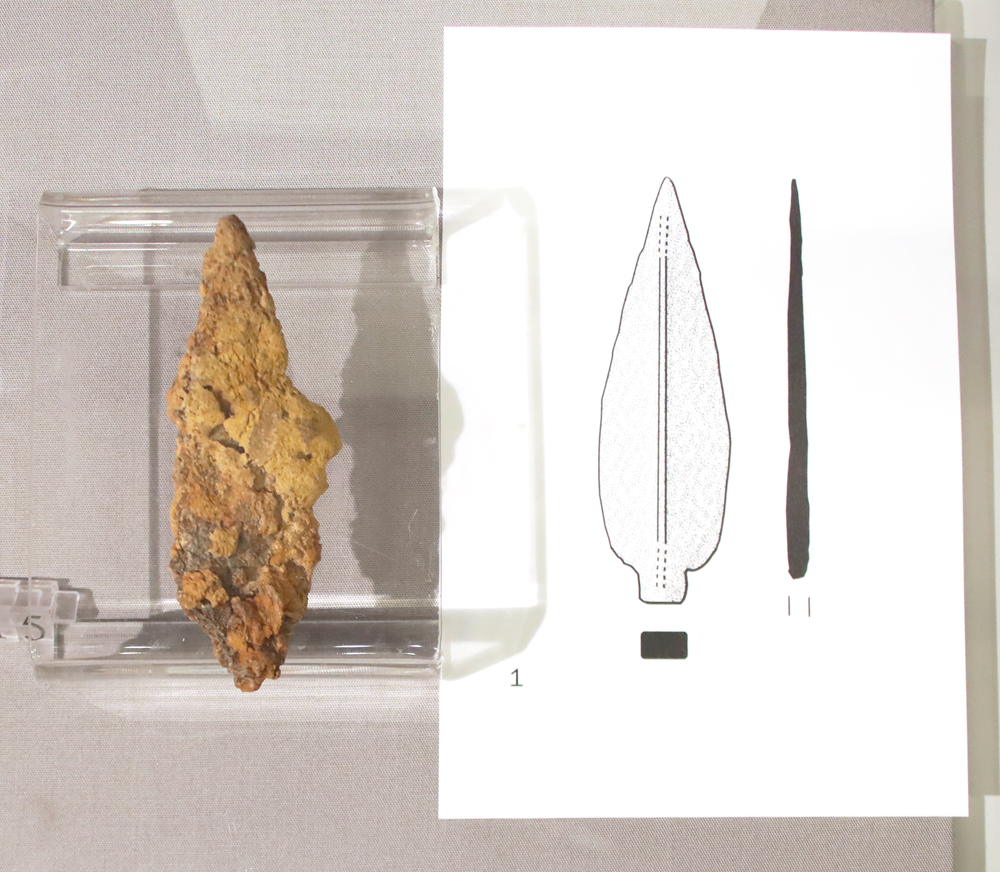
Corroded spearhead. On display at the “Chester Amphitheatre. An 8000 Year Story” exhibition at the Grosvenor Museum
The single, highly corroded iron spearhead is sadly the only metalwork to be found in Period 1, and there is no evidence to suggest that any metalworking took place. It was originally leaf-shaped, an elegant design that was common in the early Roman period as well, but this spear-head was found securely stratified in phase 1c in the lower of the two cultivation levels.
Fired clay, which is often found at Iron Age sites, was found in small quantities, of two locally available clay types, but its purpose at the amphitheatre is unknown.
Heat-shattered stone is a feature common on the local sites, and the amphitheatre produced 56kg of it from prehistoric levels, mainly local sandstone. Some dates from a Phase 1a (early prehistory) pit, but the main concentrations were in the cultivation areas during phases 1c and 2. At other sites in the area it is generally found within settlement structure features, but that may well be a reflection of the fact that only at Saighton Camp at Huntington has an excavation of a contemporary field system taken place in the West Cheshire area. The function of heat-shattered (or cracked / affected) stone has been much debated, with a number of plausible suggestions, including use for heating up or boiling water for various activities including tenderizing meat and cooking. Their presence on cultivated levels may suggest that, as with fields in other regions, they could have been spread on fields along with other refuse as fertilizer.
xxx
Final Comments
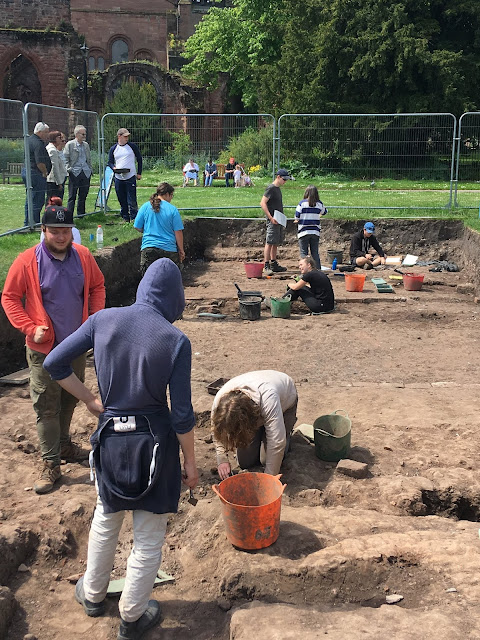
Excavations exploring the amphitheatre environs in the Grosvenor Park are ongoing. Image Source: CAER blog 2019
As with most excavated sites dating to Late Prehistory in the West Cheshire and Wirral areas, the amphitheatre has added more invaluable data to the slowly accumulating knowledge regarding the period in this region.
Although most archaeological and historical evidence in Chester is from Roman and medieval periods, the presence of Iron Age predecessors in the city suggesting that this may have been a farming locale before the arrival of the Romans, is an exciting find. The site was used both during the Middle and Late Iron Age periods, a period of up to 400 years, during which field management techniques improved.
There is always the possibility that as parts of Chester’s built environment are replaced with new planning developments, such as the upcoming Northgate 2 housing project, other Iron Age remains will be found beneath Roman levels. The ongoing excavations in Grosvenor Park, to the east of the amphitheatre may eventually reach the lower levels contemporary with the amphitheatre finds. With more excavated sites within the region there is also the hope that it will be possible to assemble sufficient data to characterize the Late Bronze Age and Iron Age periods in West Cheshire and the Wirral, and to differentiate more fully between this and other regions in the Northwest and further afield.
Sources
Books and papers
Blockley, Kevin 1989. Prestatyn 1984-5. An Iron Age Farmstead and Romano-British Industrial Settlement in North Wales. BAR British Series 210.
Brück, Joanna 2008. Chapter 11. The Architecture of Routine Life. In Joshua Pollard (ed.) Prehistoric Britain. Blackwell Publishing, p.248-267
Chadwick, Adrian M. 2009. The Iron Age and Romano-British Periods in West Yorkshire. Research Agenda. West Yorkshire Archaeology Advisory Service.
https://www.wyjs.org.uk/media/1271/iron-age-and-roman.pdf
Collens, Jill 1999. Flying on the Edge: Aerial Photography and Settlement Patterns in Cheshire and Merseyside. In Mike Nevell 1999 (ed.) Living on the Edge of Empire. Archaeology North West, Volume 3 (Issue 13 for 1998).
https://www.academia.edu/14506084/Living_on_the_Edge_of_Empire_Models_Methodology_and_Marginality_Late_Prehistoric_and_Romano_British_Rural_Settlement_in_North_West_England
Or
https://www.castleshawarchaeology.co.uk/documents/anw13-living-on-the-edge-1999-ebook.pdf
Cootes, Kevin; Rea Carlin, Janet Axworthy, Matt Thomas, Roxanne Guildford, and David Jordan 2020. Tales of the unexpected: Uncovering an Illuminating Iron Age Settlement at Poulton. Current Archaeology 366, September 2020, p.18-25
https://www.researchgate.net/publication/351840056_Uncovering_an_illuminating_Iron_Age_settlement_at_Poulton
Cootes, Kevin; Janet Axworthy, David Jordan, Matt Thomas and Rea Carlin, 2021a. Poulton Cheshire: The excavation of a lowland Iron Age settlement. Journal of the Chester Archaeological Society, vol.91, 2021, p.103-178
https://researchonline.ljmu.ac.uk/id/eprint/25824/1/JCAS_ns_091_Cootes_IA_Poulton_Offprint.pdf
or
https://files.core.ac.uk/download/pdf/648373506.pdf
Cunliffe, Barry 2005 (4th edition). Iron Age Communities in Britain. Routledge
Fowler, P.J. 1981, 1983 (2nd edition). The Farming of Prehistoric Britain. Cambridge University Press
Garner, D. (and contributors) 2012. Hillforts of the Cheshire Sandstone Ridge. Habitats and Hillforts Landscape Partnership Scheme. Cheshire West and Chester Council.
https://www.sandstoneridge.org.uk/lib/file-234636.pdf
Garner D. (and contributors) 2016. Hillforts of the Cheshire Ridge. Investigations undertaken by The Habitats and Hillforts Landscape Partnership Scheme 2009–2012. Archaeopress
Abridged version available online, minus appendices (there is no index in either print or online versions):
https://www.researchgate.net/profile/Peter_Marshall14/publication/313797404_Hillforts_of_the_Cheshire_Ridge_Investigations_undertaken_by_The_Habitats_and_Hillforts_Landscape_Partnership_Scheme_2009-2012/links/58a6860aa6fdcc0e078652a7/Hillforts-of-the-Cheshire-Ridge-Investigations-undertaken-by-The-Habitats-and-Hillforts-Landscape-Partnership-Scheme-2009-2012.pdf?__cf_chl_tk=hzbN0_un1j_np6Me4Z0bWxtROgI9juclGR.5XFzS5iY-1764184426-1.0.1.1-RsTsNKNPcI.Zt7JSR8rdabCJKMfRvmSXkjpGJZHx31c
Garner, Dan 2024. Chester Business Park 2003: A summary of the excavation of a late prehistoric and Roman rural site. Journal of Chester Archaeological Society 94, p.63
Guilbert, Graeme 2018. Historical Excavation and Survey of Hillforts in Wales: some critical issues. Internet Archaeology Journal 48
https://intarch.ac.uk/journal/issue48/3/index.html
https://intarch.ac.uk/journal/issue48/3/box1.html
Johnston, Robert 2008. Chapter 12. Later Prehistoric Landscapes and Inhabitation. In Joshua Pollard (ed.) Prehistoric Britain. Blackwell Publishing, p.268-287
Kinory, Janice 2012. Salt Production, Distribution and Use in the British Iron Age. BAR British Series 559.
Morris, Elaine L. 1983. Salt and ceramic exchange in Western Britain during the first Millennium B.C. University of Southampton, Doctoral Thesis
https://eprints.soton.ac.uk/437245/1/Morris.pdf
Mytum, Harold and James Meek 2020. Experimental archaeology and roundhouse excavated signatures: the investigation of two reconstructed Iron Age buildings at Castell Henllys, Wales. Archaeological and Anthropological Sciences.
https://www.researchgate.net/publication/339595363_Experimental_archaeology_and_roundhouse_excavated_signatures_the_investigation_of_two_reconstructed_Iron_Age_buildings_at_Castell_Henllys_Wales
Nevell, Mike 1994. Late prehistory pottery types from the Mersey Basin. In Peter Carrington (ed.) From Flints to Flower Pots. Current Research in the Dee-Mersey Region. Chester City Council, p.33-42.
Nevell, Mike 2025. Northwest Regional Research Framework: Later Prehistory
https://researchframeworks.org/nwrf/resource-assessments/later-prehistory/
Ritchie, Matt 2018. A Brief Introduction to Iron Age Settlement in Wales. Internet Archaeology 48. https://intarch.ac.uk/journal/issue48/2/1.html
Schoenwetter, James 1982. Environmental Archaeology of the Peckforton Hills. Cheshire Archaeological Bulletin, no.8, 1982, p.10-12
Schoenwetter, James 1983. Environmental Archaeology of the Peckforton Hills.
https://core.tdar.org/document/6256/environmental-archaeology-of-the-peckfo
rton-hills
Wilmott, Tony and Dan Garner 2018. The Roman Amphitheatre of Chester. Volume 1, The Prehistoric and Roman Archaeology. Oxbow [available on Kindle, although not all of the tables of data are fully legible – page numbers cited in the text refer to the Kindle version]
Wolferstan, Sarah 2026. Oral and performance storytelling for archaeological engagement and research. British Archaeology, July – August 2026, p.51
Wood, P. N. and D.G. Griffiths 2022. Excavations at Chester. Roman land division and probable villa in the hinterland of Deva. Excavation at Saighton Army Camp, Huntington. Archaeopress Roman Archaeology 93
https://www.academia.edu/121134097/Excavations_at_Chester_Roman_land_division_and_a_probable_villa_in_the_hinterland_of_Deva_Excavation_at_Saighton_Army_Camp_Huntington_Chester
afdsfsd
Websites
Based In Churton
Chester Amphitheatre – An 8000 year story: Exhibition at the Grosvenor Museum
https://basedinchurton.co.uk/2026/05/21/chester-amphitheatre-the-grosvenor-museum-exhibition-and-the-university-of-chesters-upcoming-vr-experience/
The small and rather puzzling Burton Point promontory fort on the Wirral
https://basedinchurton.co.uk/2026/04/11/the-small-and-rather-puzzling-burton-point-promontory-hillfort-on-the-wirral/
Exploring Maiden Castle Iron Age Hillfort, Bickerton Hill (mid-Cheshire Sandstone Ridge)
https://basedinchurton.co.uk/2025/12/01/exploring-maiden-castle-iron-age-hillfort-bickerton-hill-mid-cheshire-sandstone-ridge/
The three official first days of spring: astronomical, meteorological and phenological
https://basedinchurton.co.uk/2026/03/20/the-three-first-days-of-spring-astronomical-meteorological-and-phenological/
Denbighshire Countryside Services
Heather and Hillforts of the Clwydian Range and Llantysillio Mountains
https://www.denbighshirecountryside.org.uk/files/13491026-2854.Heather%26Hillforts_PT_72.pdf
Heather and Hillforts Landscape Project
[N.B. – most of the document links are broken]
https://heatherandhillforts.co.uk/index.php/en/about/about-the-project
Historic England Introductions to Heritage Assets October 2018
Field Systems
https://historicengland.org.uk/images-books/publications/iha-field-systems/heag204-field-systems/
Hillforts
https://historicengland.org.uk/images-books/publications/iha-hillforts/heag206-hillforts/