
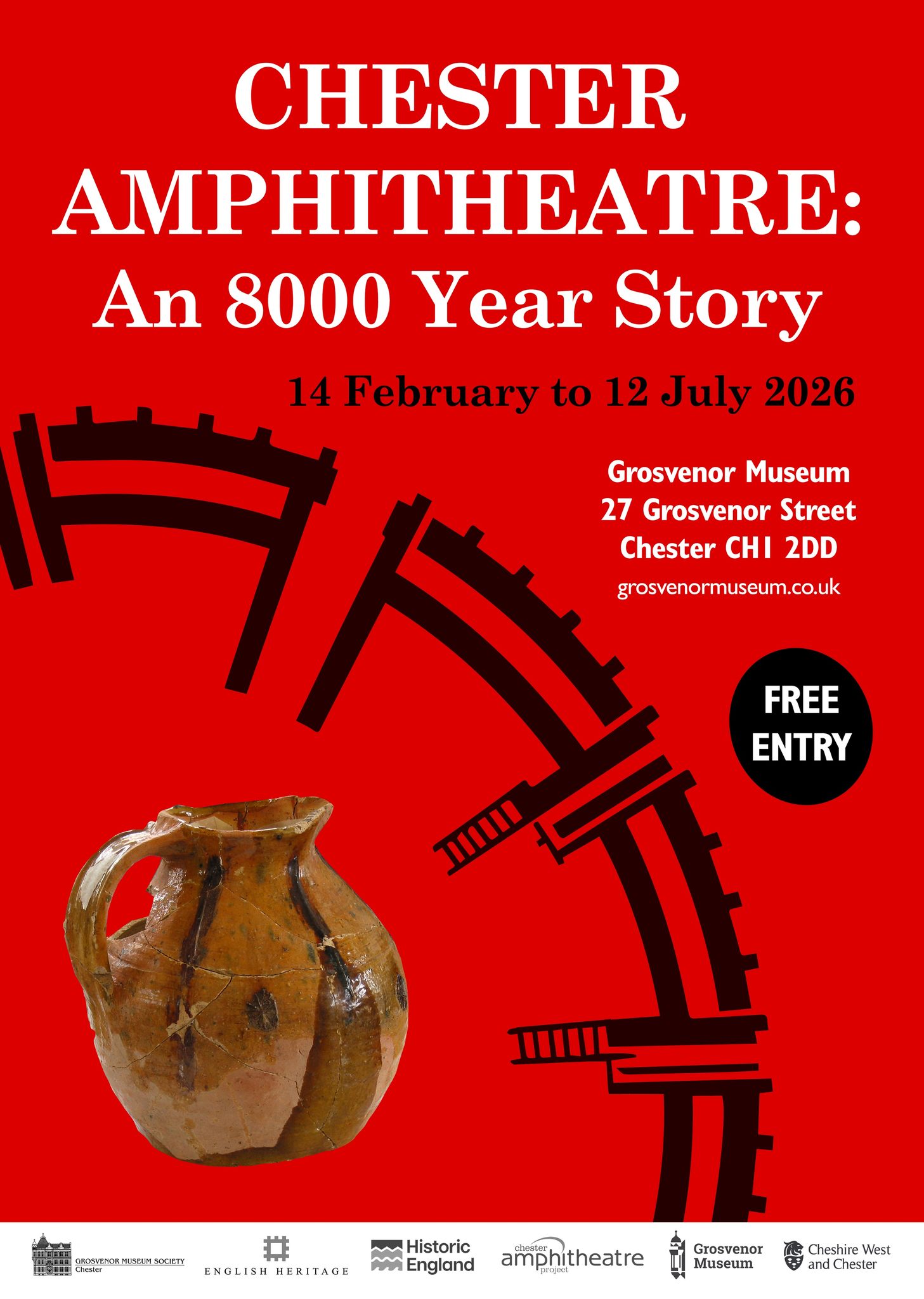
 After a successful expedition in to Chester, which included an excellent coffee break with 3-D artist Julian Baum (Take27), I went to see the Grosvenor Museum’s Chester Amphitheatre – An 8000 year story exhibition, running until 12th July, in which one of Julian’s reconstruction images is included. Julian has also been working on the Our City, Our Story: Deva Victrix project under the auspices of the University of Chester, run by Dr Caroline Pudney (Senior Lecturer in Archaeology), which explores how Virtual Reality (VR) and the application of Artificial Intelligence (AI) can contribute to an interactive experience of the amphitheatre. This project was showcased in Chester on Saturday 23rd May. I mention Julian Baum’s work not merely to give him a shameless (although well-deserved) plug, but because the work he contributed to last year’s Gladiators of Britain, the current Chester Amphitheatre exhibition and the upcoming Our City, Our Story VR and AI project are examples of how the trend from static and video reconstruction towards more interactive experiences can complement traditional approaches to provide richer visitor experiences, discussed further below.
The “Chester Amphitheatre” exhibition
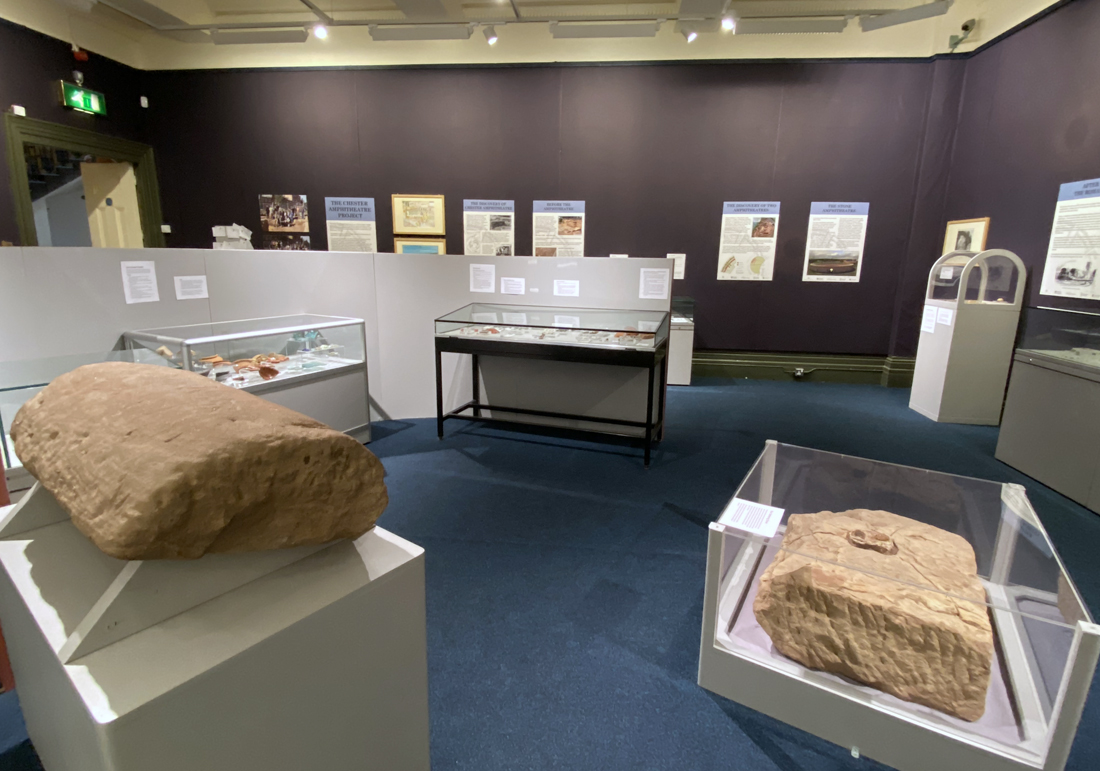
The Chester Amphitheatre exhibition is a stand-alone exhibition, complete in its own right, but for those who attended Gladiators of Britain (about which I posted, with a description of the amphitheatre on the blog here), the continuity of themes between the two exhibitions works very nicely, although as the name of the current exhibition indicates, this is not just about the Roman period. This multi-period approach to the amphitheatre is the exhibition’s major strength, providing an excellent sense of how the same chunk of land has been used from the post-glacial period until the present day. Apologies for the poor photographs. I accidentally left my camera at home and they were taken with my elderly iPhone. As anyone who follows the blog will know, I am rubbish with the thing!
 The exhibition space, in Gallery 1 on the ground floor, is well thought out and very elegantly laid out, with a combination of interpretation boards on the walls, artefacts displayed in well-lit cabinets and clear labelling to identify individual objects. It begins with details of the excavations, from which an understanding of the site was obtained, and then follows a chronological path, beginning with the Mesolithic (meaning Middle Stone Age, the period that starts in the post-glacial period).
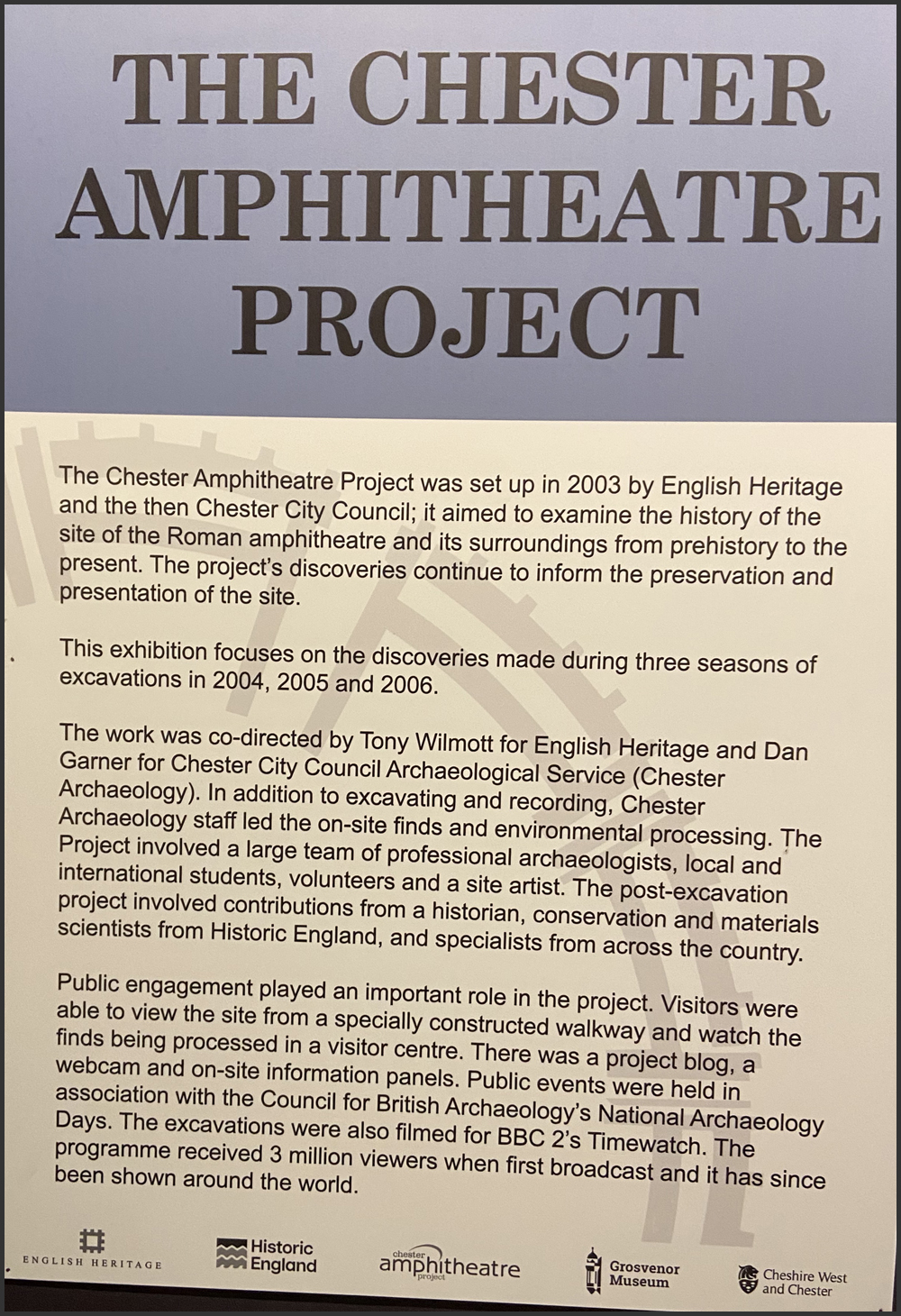
The site was first explored in the early 1930s by Professor Robert Newstead, curator of the Grosvenor Museum at the time, and Dr J.P. Droop. Although it had been assumed, on the basis of other legionary sites in England, that an amphitheatre had existed at Deva, its location was unknown, and it was not until a new road was laid out in 1929 that Roman remains were found and the amphitheatre was identified. The road would have sliced across the top half of the amphitheatre, but following the discovery of Roman remains was thankfully re-routed to run around it instead of across it, allowing the site to be preserved and enabling further excavations to take place. The most recent of those was the excavation project established by English Heritage and the former Chester City Council, lead by Tony Wilmott and Dan Garner between 2004 and 2006, published in 2018. These excavations resulted in a re-evaluation of the Roman amphitheatre and its phases, and provided invaluable information about both its pre-Roman and post-Roman periods.
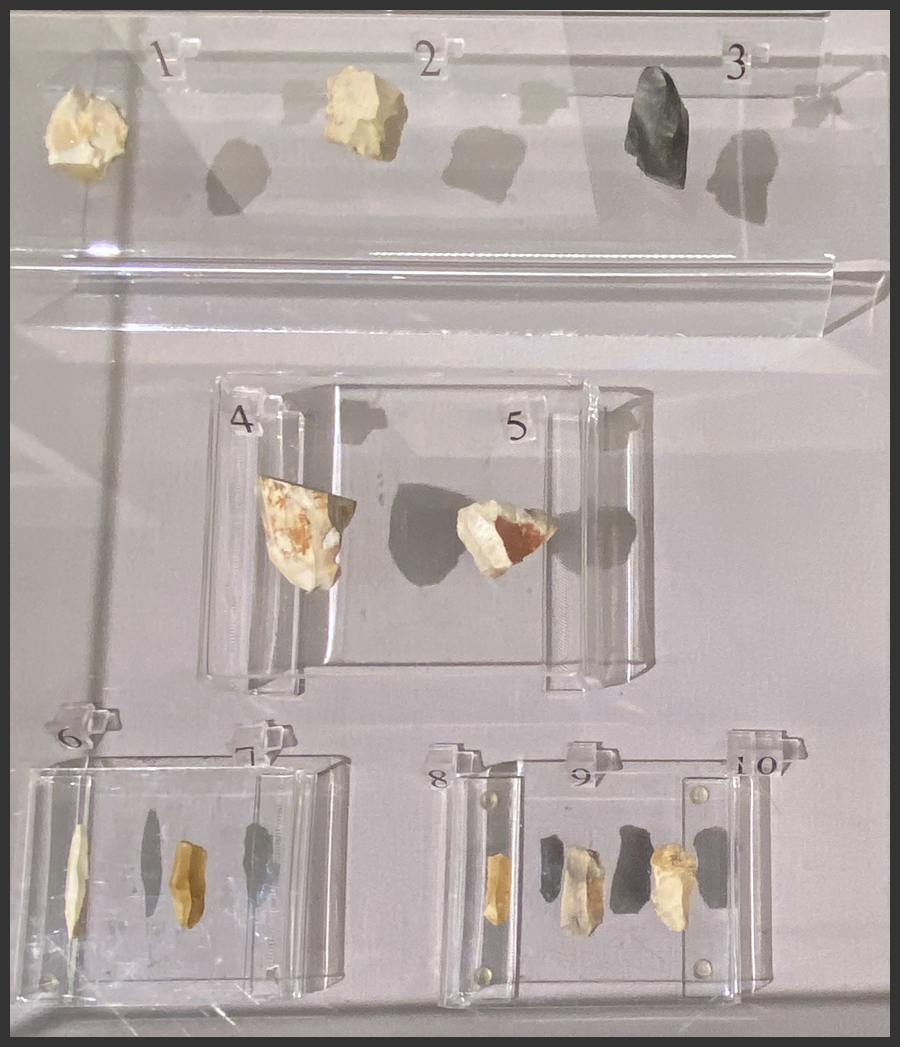 It is one of the interesting aspects of work into the later prehistory of West Cheshire, that wherever an archaeologist happens to poke a trowel, at both hillfort and lowland sites, earlier prehistoric material is likely to be found. The type of material often found is epitomized by the finds at the amphitheatre. The Mesolithic was characterized by very small stone tools called microliths, and a selection of these were found on the amphitheatre site, together with waste products from the manufacturing process, showing that the tools had been made on the spot. Neolithic and/or Early Bronze Age tools, again made of stone, are also represented and these too are found all over the Cheshire area.
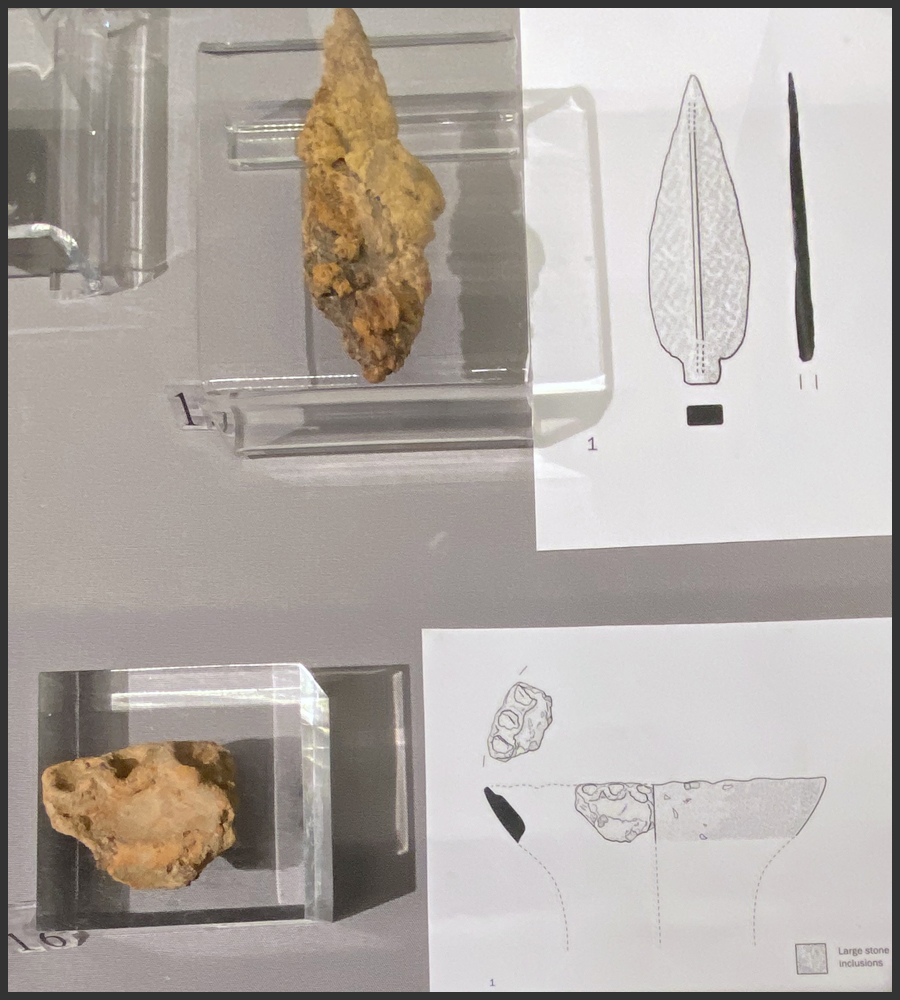 One of the most exciting discoveries of the excavation was the previously unsuspected presence an Iron Age settlement, made up of round houses and rectangular buildings, as well as portions of a cord-rig field system, very like medieval ridge-and-furrow. Two photographs show details of one of the foundation features of one of the round-houses and a section of cord-rig as they were found during the excavation. There is a particularly nice sherd of specialist pottery on display, known as VCP (Very Coarse Pottery), that was used for producing and transporting salt. A highly corroded spear tip was also discovered, one of the few pieces of Iron Age metalwork to survive in the area due to the highly acidic soil. Both are shown to the left.
xx
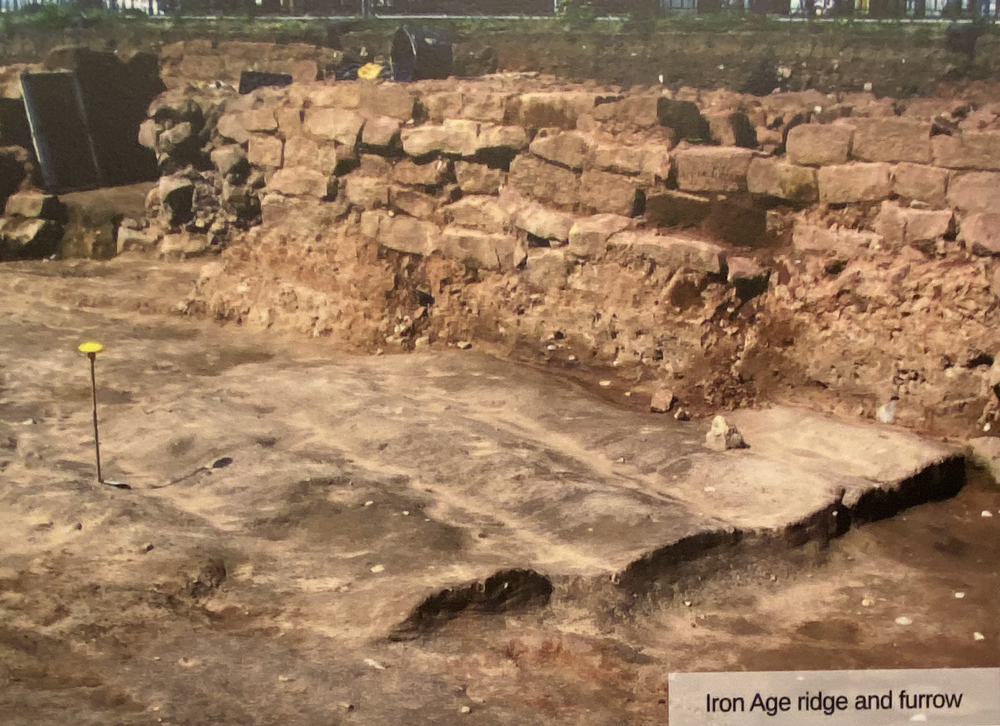
Photograph of the excavation showing a section of Iron Age field system
xx
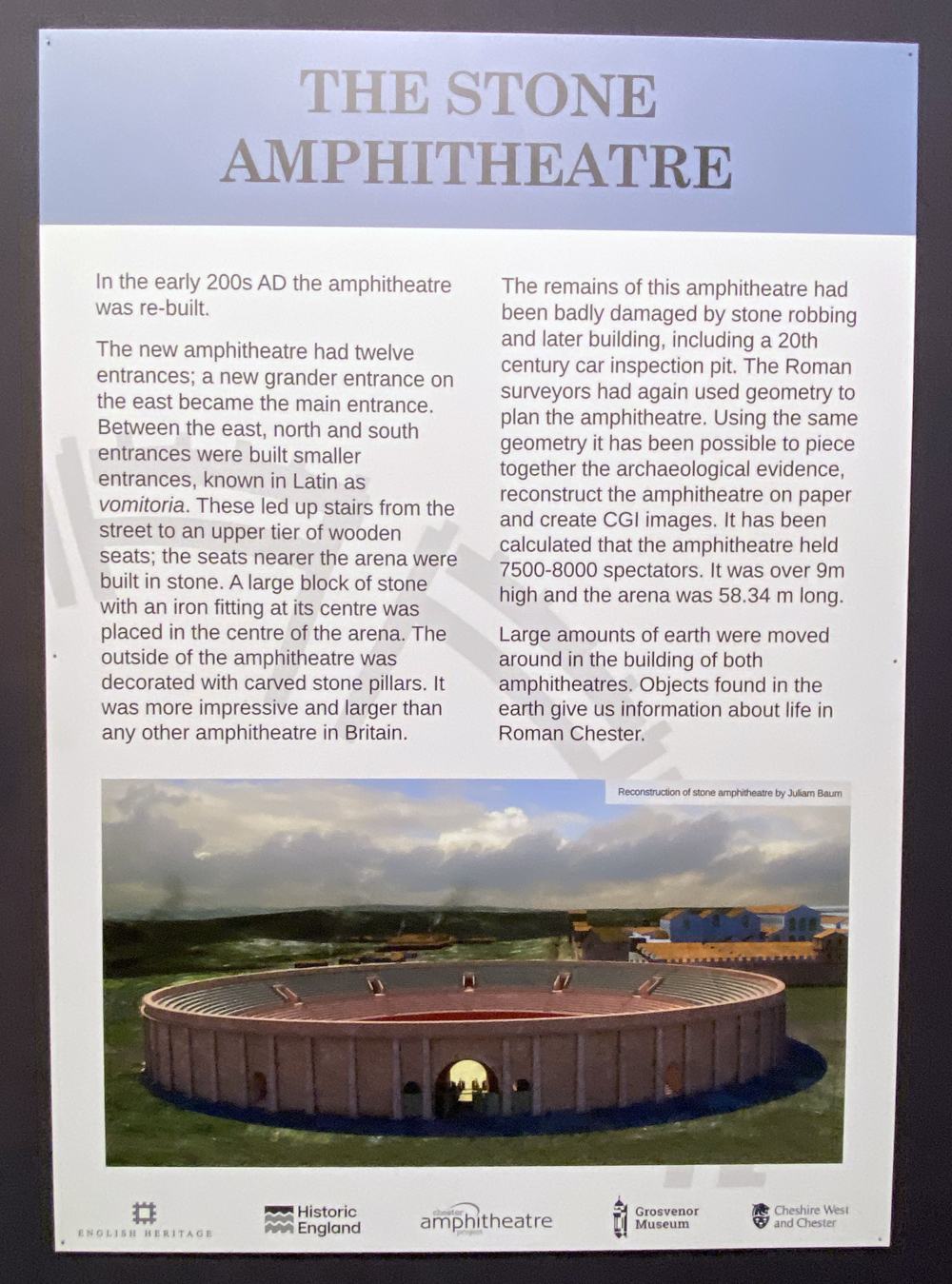
Chester Amphitheatre exhibition
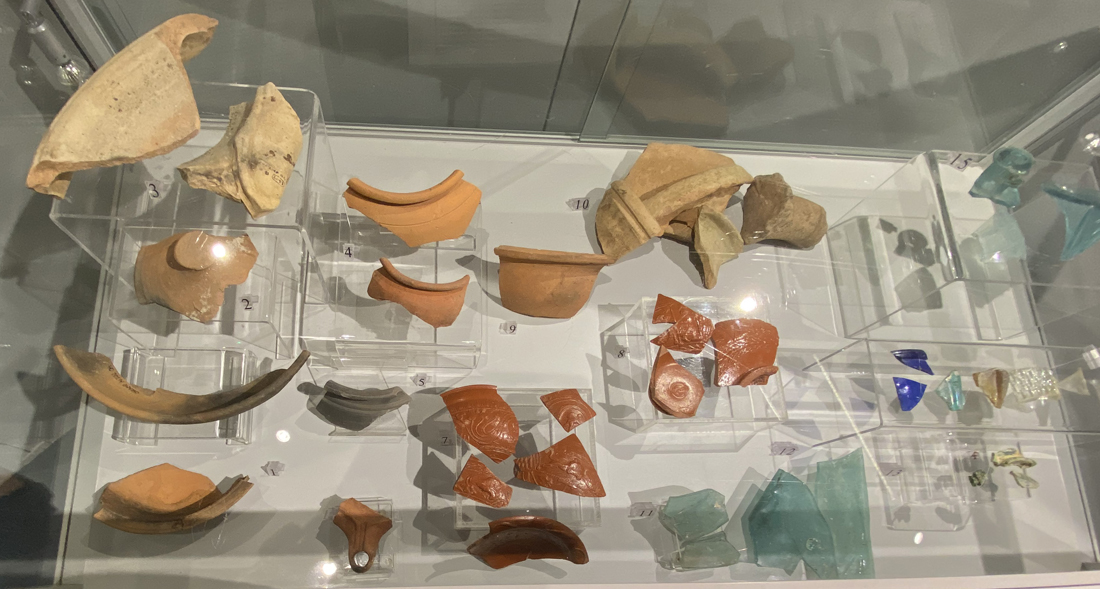
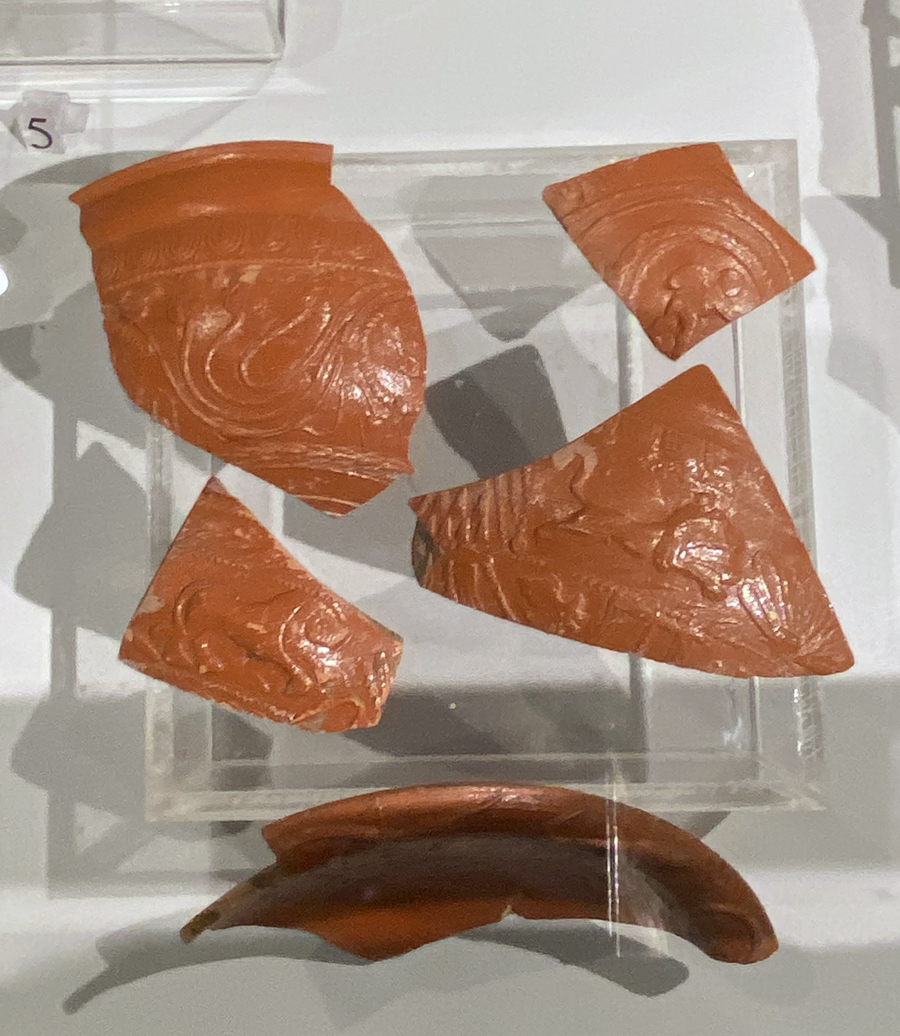
The Roman amphitheatre is inevitably the main focus of the exhibition, which is unsurprising given its scale and duration. Now understood to consist of two main phases, having been expanded in its second phase, it was in use from c.AD 74/75. It is estimated that the second phase of the amphitheatre could have accommodated up to between 7500-8000 spectators and it is to this phase that two of the larger objects in the exhibition belong: the tethering stone to which wild animals would have been tied, and a coping stone (rounded stone topping for a wall) that contains the inscription “SERANO LOCUS,” roughly meaning “Serano’s Place,” possibly an attempt to lay claim to a particular seat that sat behind the low wall. The many other Roman artefacts on display include ornaments, gaming pieces, pottery (samian ware, grey ware, orange ware etc) and other items made of metals and glass.
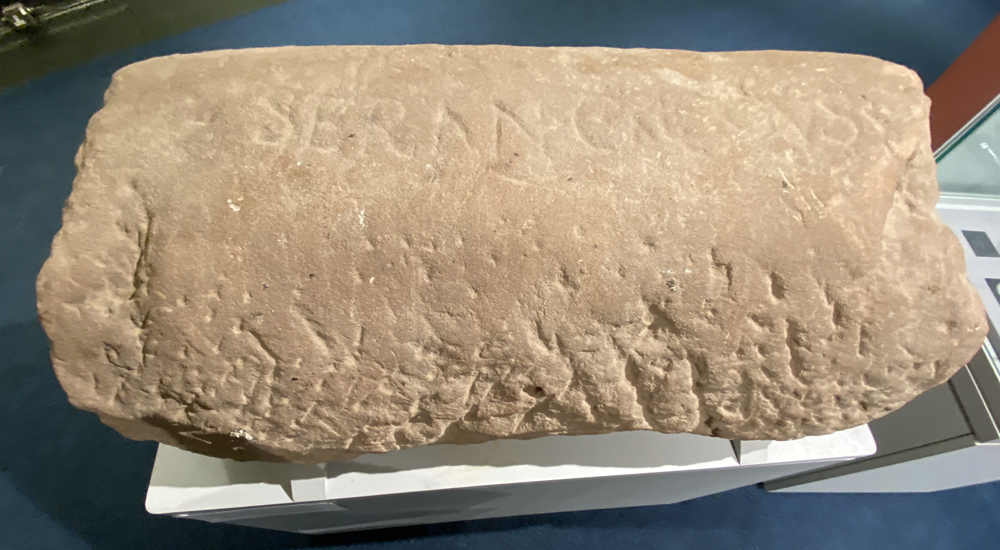
Capstone engraved SERANO LOCUS
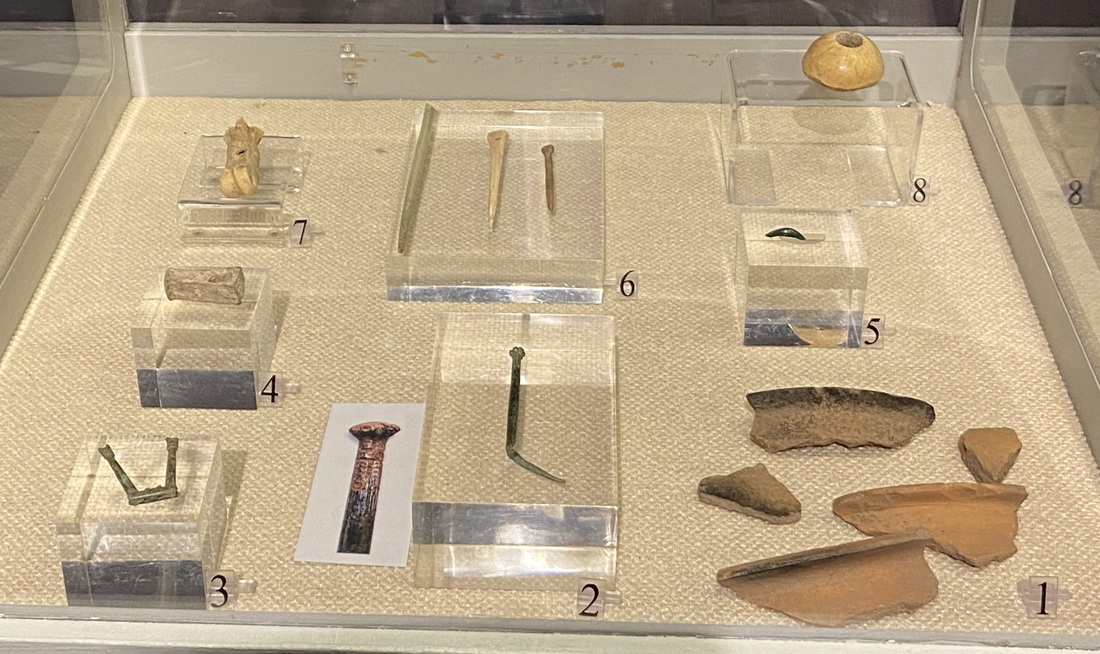
Saxo-Norman artefacts
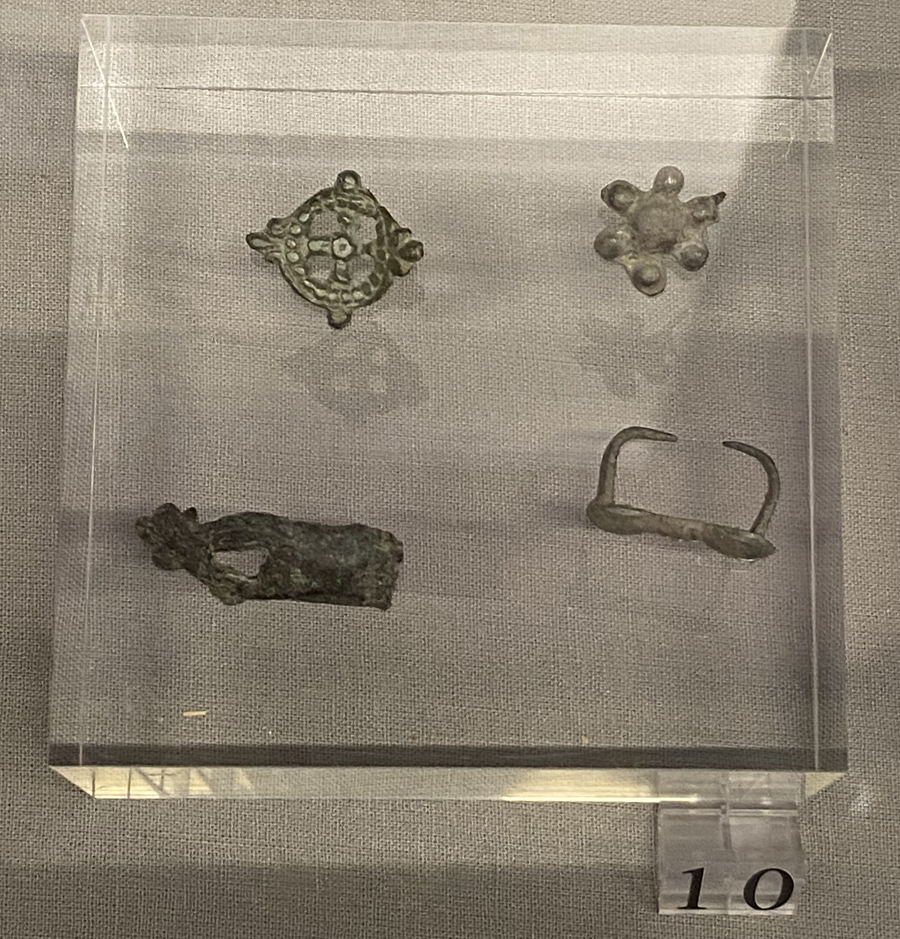
A display of Saxon-Norman objects demonstrates that there may be some degree of continued use of the amphitheatre’s space after the Roman abandonment of the site, albeit for a completely different purpose.
The excavations have also helped to clarify some of the medieval structures associated with the Romanesque St John the Baptist’s Church (at one point Chester’s cathedral) and how its churchyard encroached on the original amphitheatre during the Middle Ages. The other side of the churchyard’s footprint, extending into the Grosvenor Park, is currently under excavation by West Cheshire Museums and the University of Chester.
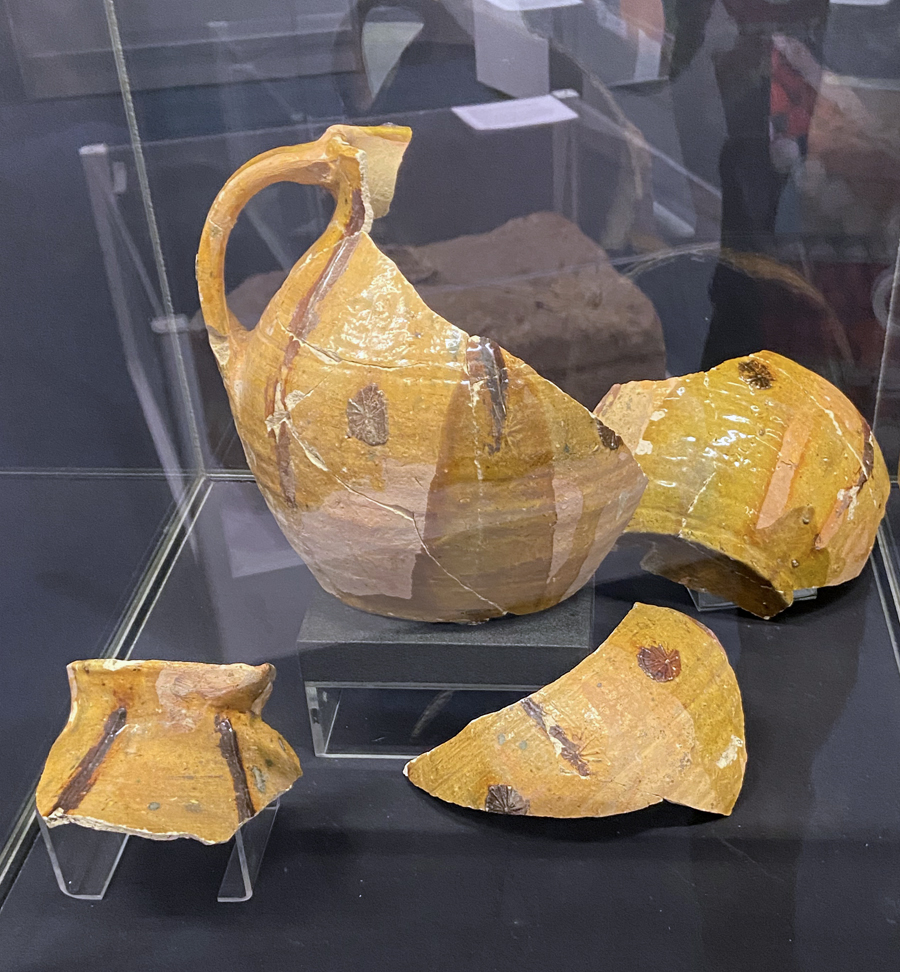
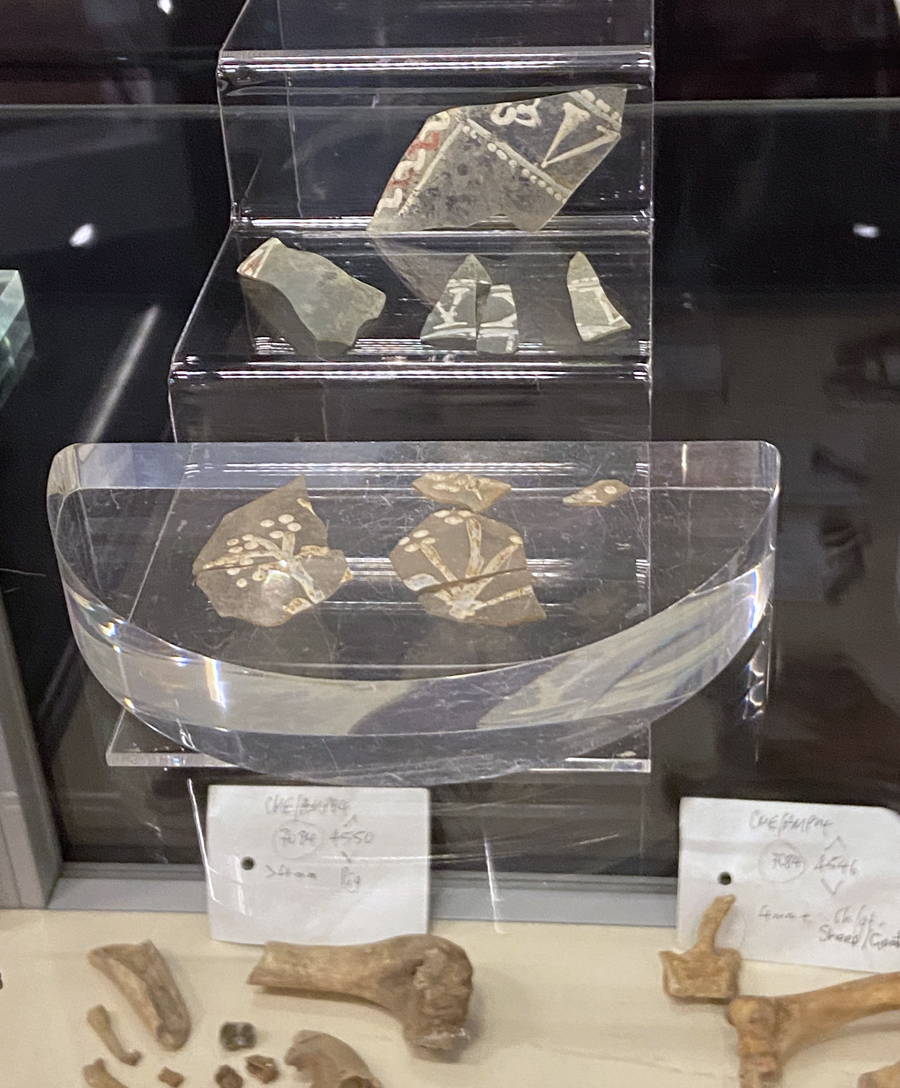
Medieval jug
xx
Post-medieval finds demonstrate how, as the amphitheatre was gradually lost due to stone robbing for other buildings, the accumulation of debris and ongoing building works as Chester continued to expand beyond the walls, the former amphitheatre site continued to be occupied, and broken objects continued to be abandoned, as they are today. A particularly nice find was a pit dug in Tudor times, containing a fascinating array of broken, discarded items. Civil War finds included lead gun shot and the remains of gunpowder holders. There is even a fabulous packet for a loaf of bread with a pre-decimalization price printed on it, with bright, happy colours, a splendidly cheery tiger and the strapline “The Swinging New Bread.” Very 60s! See below.
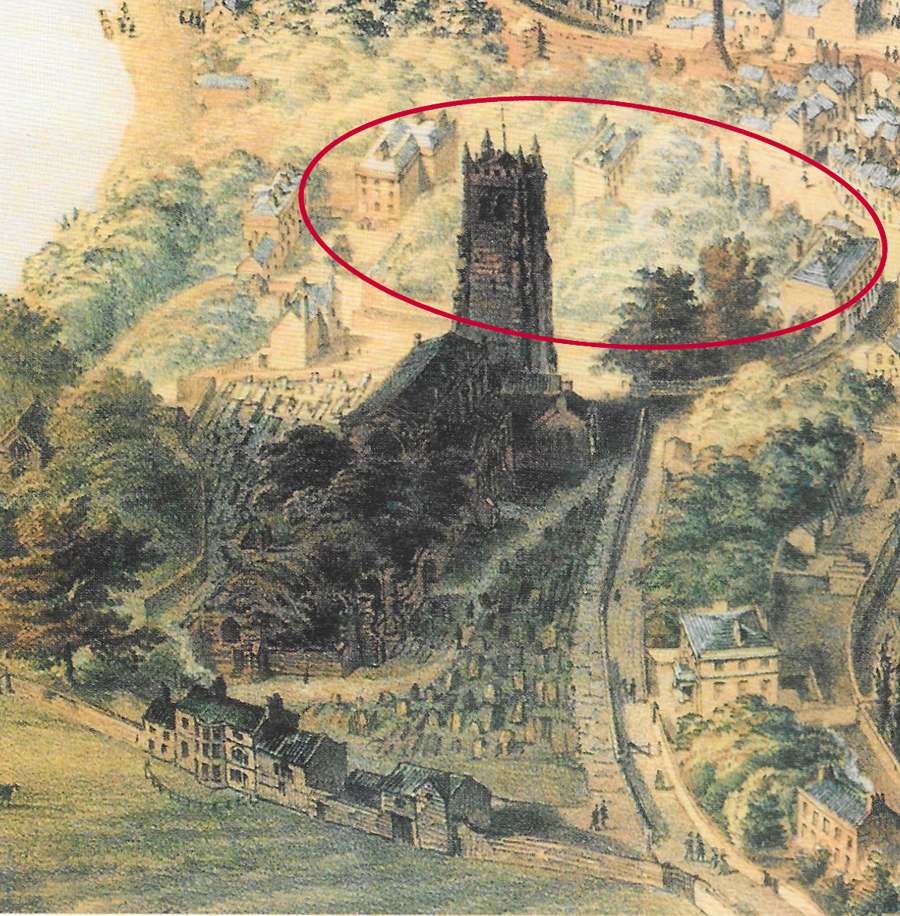
Detail of John McGahey’s 1852 painting of Chester from an air balloon (with my rough indicator of location of amphitheatre in red show how completely the amphitheatre area was covered over).

The Chester amphitheatre’s tethering stone
xx

Brilliant bread packet, pre-decimalization (which was implemented in 1971)
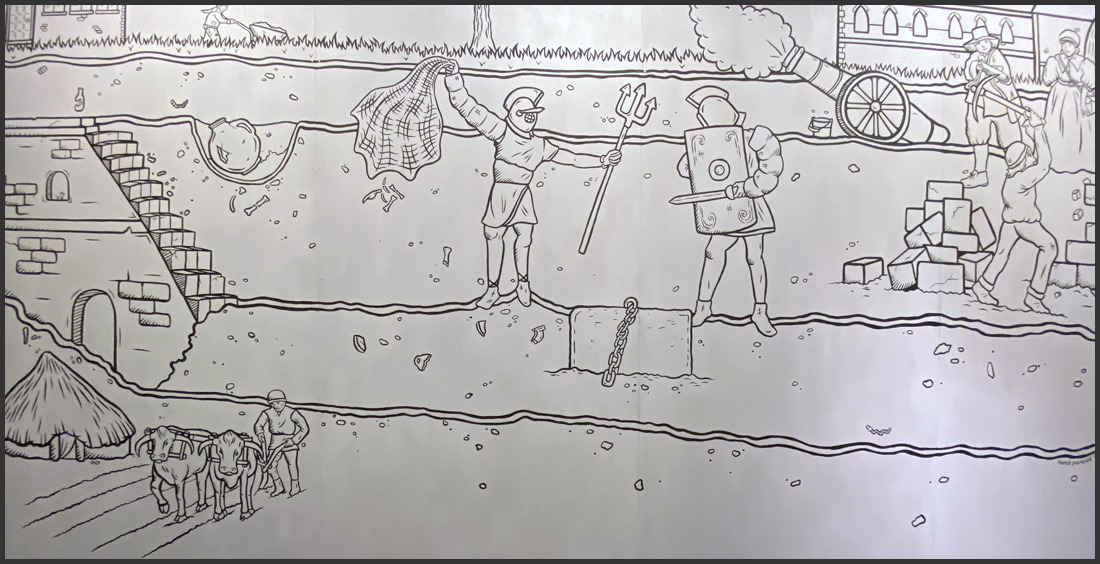
The amphitheatre through the ages, an excellent illustration by India Hackett covering an entire wall of the exhibition, demonstrating how different periods are captured in the vertical stratigraphy of the site, including a Civil War canon, the tethering stone on the Roman level, flanked by gladiators, and the Iron Age roundhouse and fields being ploughed beneath.
The Chester Amphitheatre exhibition at the Grosvenor Museum runs until 12th July 2026. Access to the exhibition is free of charge. For the Grosvenor Museum’s opening times, see their website for information here: https://grosvenormuseum.westcheshiremuseums.co.uk/
The University of Chester’s Virtual Reality approach to the same amphitheatre site during the Roman period (Our City, Our Story: Deva Victrix in VR), was showcased for the first time on Saturday 23rd May, 11am – 4pm in Exchange Square (Northgate St). Julian Baum and other key members of the project team, were all on hand to provide insights into how visitors of the very near future will be able to interact directly with virtual Romans in a reconstruction of their original setting. Feedback is seen as part of the project design and when people filled in the feedback forms, was very welcome.
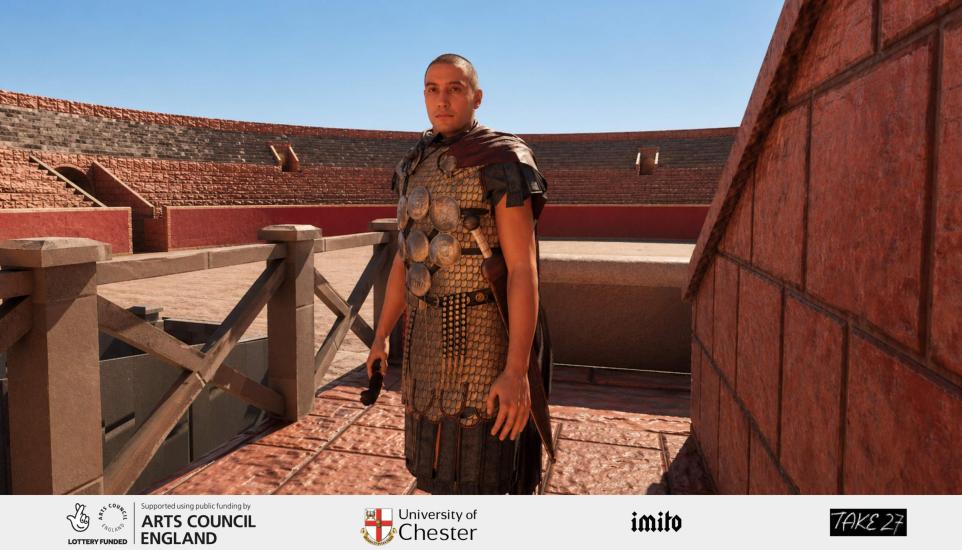
Image from the “Our City, Our Story: Deva Victrix in VR” project.
Accuracy has been of great importance to the project. The VR model of the amphitheatre itself, for example, is derived directly from the data unearthed in the excavations that are the subject of the museum’s exhibition and was developed by Julian in conjunction with Tony Wilmott, one of the site’s excavation directors. The animated Roman residents of Deva Victrix, developed by VR company Imito, help to bring the amphitheatre to life, allowing visitors to participate and interact with Roman soldiers and other characters.
Although the museum exhibition and the VR project are separate entities, run by the museum and the university respectively, the two approaches, traditional and virtual, have the potential to work in tandem and to complement each other very well. The current museum exhibition presents the physical and tactile raw data (artefacts and architectural components) and uses interpretation boards to create an empirical understanding of how data is translated into knowledge about the amphitheatre. Nothing can replace artefacts as evocative components of the past, but the information derived from them can be handled in a number of different ways. Although running as a separate project, the VR approach demonstrates the potential for a more interactive and immersive exposure to a vision of the past that allows a relationship with history to be formed, however briefly. The combination of artefacts and displays of the information they impart, supported by immersive experiences, may provide a glimpse of the future of how history could be communicated and how people may begin to explore their past in a variety of different ways.

Julian Baum’s reconstruction of the fortress at Chester and the outer buildings in the mid 3rd Century.
 Based in Churton