Category Archives: History

The historical background to Edward 1’s castles in northeast Wales

The southeast tower of Edward I’s 1277 Flint Castle on the Dee estuary, complete with modern viewing platform at the top, reached by a modern spiral staircase. My photo.

This post started off as a modest little piece about Flint Castle accompanied by some nice photos (now posted here), with the intention of following up with other posts about Rhuddlan and Hawarden castles (all three started by Edward I in 1277). It quickly became clear that the background history that lead up to the establishment of Edward I’s castles in northeast Wales in such quick succession was far too complicated (and interesting) to condense into a couple of paragraphs.  All three castles deserve context, so before posting about each castle in turn, this post looks at the complicated relationship between England and Wales that led to Edward’s ambitious and enduring Welsh castle-building programme.  This is inevitably a wildly simplified story, focusing on only the key players and either ignoring or fuzzing over those details of English and Welsh history that have no or little bearing on the story of  Llywelyn ap Gruffudd’s ambitions, Edward I’s debts and the resulting construction of Edward’s castles in Wales.

On the English side of the story, the royal succession of Henry III and Edward I is very straight forward, although marriages and changing aristocratic loyalties during this period are often a cat’s cradle of shifting allegiances.  On the Welsh side, there are an awful lot of Llywelyns, Grufydds and Dafydds, particularly in the next few paragraphs, not only because sons were often named for their fathers and other male relations, but because their last names were the first names of their fathers.  Hence, Llywelyn ap Grufydd means Llywelyn son of Grufydd and Grufydd ap Llywelyn means Grufydd sone of Llywelyn.  Hopefully the family tree below will help with the potential confusion of similar Welsh names, and will also indicate which English and Welsh generations are contemporary. In purple is the Welsh male line at the heart of political dispute. In grey is the English line of royal inheritance. Other colours are used to show others who are connected to these lines.

Ancestry of Llywelyn ap Grufydd, also known as Llywelyn the Last (shown at centre, lowest level). Key players in the Edward I’s castle expansion into Wales are outlined in red.  I have missed off Henry III’s wife (and Edward I’s mother), who was a French noblewoman, Eleanor of Provence (d.1291).

Henry III at his coronation. Source: Wikipedia

In the next few paragraphs I have also colour coded the generations of the Welsh players in the text immediately below to indicate generations. Llywelyn ap Iowerth (Llywelyn the Great) the Great is purple, the next generation is green and their children, including Llywelyn ap Grufydd (Llywelyn the Last or II), are orange

Between 1218 and 1240 peaceful relations had been established and were maintained between Llywelyn ap Iowerth (Llywelyn the Great) and Henry III, but the situation deteriorated after Llywelyn the Great’s death.  Llywelyn the Great died in April 1240 of natural causes, leaving two sons, his legitimate son Daffydd ap Llywelyn by his English wife Joan and his illegitimate son Gruffud ap Llywelyn by Tangwystyl.  Llywelyn the Great had disinherited Gruffud ap Llywelyn in 1220 to ensure that Daffydd ap Llywelyn would succeed him, an arrangement that was rubber-stamped by the Pope, thanks to the intercedence of Henry III.  When Dafydd ab Llywelyn inherited his father’s seat, Henry re-organized. 

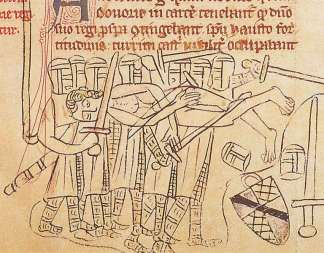
Llywelyn the Great on his deathbed, with his sons Gruffydd and Dafydd in attendance. By Matthew Paris, in or before 1259. Source: Wikipedia

Dafydd’s disinherited half brother Grufydd ap Llywelyn was handed over to Henry III for imprisonment in the Tower of London, together with his son Owain, to prevent any attempt to oust Dafydd and destabilize Gwynedd, and Dafydd’s own rights were severely curtailed. Grufydd died at the Tower in an escape attempt in 1244. 

Frustrated by his lack of freedom, Dafydd formed an alliance with other Welsh leaders against Henry III.  In 1245 Dafydd died of natural causes in 1246, but his sons continued the dispute until 1247 when the Treaty of Woodstock re-established peace.  Dafydd had died without an heir, and Grufydd’s four sons inherited Gwynedd, all that was left of Llywelyn the Great’s legacy.  This fragmentation of power suited Henry III perfectly.  Under Welsh law, the land could have been divided four ways between the sons, and inevitably became the source of ongoing dispute.  In the short term most of Gwynedd was divided between two of Grufydd’s sons:  Llywelyn ap Grufydd (Llywelyn the Last or Llywelyn II) and Owain. A third brother, Dafydd, was also a minor beneficiary.  

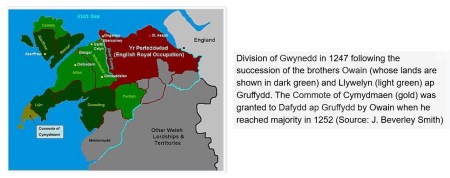
The Treaty of Woodstock came with a price to Gwynedd, which was required to make a provision of knights and foot soldiers to England and, most wounding, to relinquish the vast area of northeast Wales known as the Perfeddwlad (the Four Cantrefs), which lay between the Dee and Conwy rivers.   Henry must have hoped that this would provide him with a permanent foothold in Wales.  He passed the Perfeddwlad to his son Edward, and built two new castles to protect his territory at Dyserth (northeast of Rhuddlan) and Deganwy (just north of Conway).  The remainder of Gwynedd was divided between Llywelyn the Last and Owain ap Gruffudd, with a promise to re-divide Gwynedd when Dafydd ap Gruffudd came of age.

Map showing north Wales immediately after 1247. Click to enlarge or see on the following page. Source: Wikipedia

Drawing of a stained glass window in Chartres Cathedral showing Simon de Montfort. Source: Wikipedia

At the same time Henry III’s interests in what is now France were under review, and brought Simon de Montfort, who later had an important role in Welsh history, into the picture.  Simon de Montfort, earl of Leicester had been appointed guardian of Henry’s duchy of Gascony in what is now France in 1248, a position of enormous trust and responsibility.  de  Montfort was married to King John’s daughter, Henry III’s sister Eleanor, reportedly a love match.  Unfortunately, Simon de Montfort was ill-suited for a task in which diplomacy rather than brute force was required, and when conflict broke out in Gascony, covertly supported  by Alfonso X of Castlile (now part of Spain), de Montfort responded not with negotiation but with military might.  The way out of a rapidly escalating situation was to come to reach a diplomatic compromise with Alfonso X.  In return for Alfonso X abandoning any claim on Gascony, a marriage was arranged between Alfonso’s half sister Eleanor and Henry’s son Edward, a condition of which was that Henry would endow Edward with lands worth £10,000 annually.  Edward and Eleanor were married in November 1254 and Edward found himself master of Gascony, all royal lands in Ireland, the earldom of Chester, Bristol Castle, manors in the Midlands and, significantly for this story, all the royal lands in Wales.  Edward, continually finding his independence squashed by Henry, was still subject to the king’s will in these territories, but they gave him a sense of purpose.
——–

The rise of Llywelyn the Last

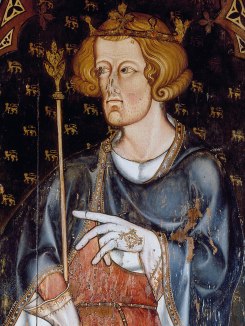
Edward I, from Westminster Cathedral. He was known as “Longshanks” and when his body was exhumed in modern times for research purposes, it was confirmed that he was 6ft 2″ (1.8m) tall. Source: Wikipedia

Wales remained subjugated and relatively unproblematic for the English until the three brothers who had inherited Gwynedd, came into conflict with each other.  Llywelyn ap Grufydd (Lywelyn the Last / Llywelyn II) emerged triumphant and proceeded to take over the entire of Gwynedd.  His success appears to have given him him confidence to sent up to Henry III.  In November 1256 Llywelyn advanced on and took the Perfeddwlad (the Four Cantrefs), besieging Henry’s castles at Deganwy and Dyserth.  Financial constraints prevented Edward from assembling an army immediately, while Llywelyn was gathering supporters by returning lands to the dispossessed.  Now at full steam, he headed south on a land grab from the powerful Marcher lordships that straddled the English-Welsh borders and had taken over much of south Wales.  Edward, with castles in Carmarthen and Cardigan, now sent an army, which Llywelyn eliminated with ease in June 1257.  A second army was sent by Henry and Edward, which met the Welsh in north Wales in August 1257.  Initial English successes were reversed by the failure of supplies to arrive to sustain the English, and Henry retreated, taking the army with him.  Llywelyn had won the latest fight for control in Wales, and Edward was yet again frustrated by his father’s lack of support, a recurring theme in the relationship between the king and his son.

By March 1258, Llywelyn’s triumphs had earned him great popularity in Wales and gave him the confidence to style himself Prince of Wales.  His triumph over some of the Marcher territories, however, pushed those aggrieved earls to align with Edward’s interests, and whilst Llywelyn was still congratulating himself, trouble was brewing at his new borders.   Edward, in the meantime, was raising money by mortgaging some of his properties to the wealthy Marcher lords, and in doing so gained some independence from his father.  Both Edward and Llywelyn were able to take a breather and reinforce their positions whilst Henry III was again struggling with his brother-in-law, the clever and slippery Simon de Montfort, this time accompanied by some of his most powerful peers.  Initially, this was handled diplomatically, and the outcome was the remarkable Provisions of Oxford of 1258, a form of bloodless coup that created a council of 15 to mitigate the power of the king, reinstating some of the principles of the Magna Carta.  Whenever the king’s seal of authority was used, it was only when the council of 15, or parliament, had agreed.  At the same time, Henry was engaged in establishing long term peace in France, negotiating the Treaty of Paris, in which he withdrew his claims to Normandy, Anjou, Poitou and Maine, whilst securing Gascony.

Seal of Henry III. Source: Wikipedia

Edward, eternally frustrated by his father’s refusal to share his ambitions, found something of a kindred spirit in Simon de Montfort, not least in their joint opposition to the Treaty of Paris.  The treaty was dependent on the agreement of Henry’s sister, de Montford’s wife, and this was withheld until December 1259, when de Montfort eventually relented.  Whilst Henry was safely away in France, Edward and de Montfort attempted to hijack the annual council, in spite of Henry’s specific instructions that the council should await his return.  It looked as though war might break out, prevented only by Henry’s return to England.  Edward’s authority was stripped from him by his father, and de Montfort was imprisoned pending trial.

Attention was soon focused elsewhere however, when in 1260 Llywelyn, impatient of the delays and determined to gain English recognition and promises of security for his position, attacked the royal castle at Builth in Powys and annihilated it.  It was a very risky strategy, and could have led to English invasion.  Indeed, Edward was poised with an army in Chester for precisely this task. Llywelyn was lucky.  Henry III called off the attack, and a two year ceasefire was put in place.  Edward was furious and drew closer to Simon de Montfort.  Together, they approached the earl of Gloucester and in the October of 1260, they mounted a bloodless coup against Henry III and took over the parliament.  When peace was re-established, however tensely, Edward departed for France, apparently to recruit followers.  Henry III, meanwhile had been scheming and in 1261 received a letter from the pope that allowed him to dissolve the Provisions of Oxford, and with it the council.  All the much-needed reforms that had been introduced were swept aside.

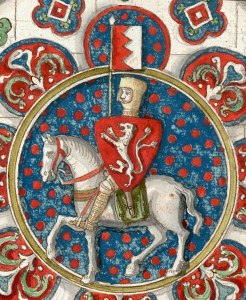
Arms of the lords of Gwynedd. Source: Wikipedia

Whilst English politics were continuing to unravel, Llywelyn was on the simmer again, frustrated that the two year truce had been not been replaced by a permanent peace and recognition of his position.  In particular, he was nursing a sense of betrayal that lands in south Wales granted to him in the truce were being attacked by the Marcher lords.  In 1262 Llywelyn was on the march, and was soon claiming new territories in the far south.  It is difficult to imagine what Llywelyn thought he could possibly achieve by antagonizing some of the most powerful and independent lords in the land, but author Marc Morris suggests that he may have seen a copy of a letter written by Henry III that stated that the truce was a mistake and that lands ceded to Llywelyn, at least for the duration of the truce, should be recovered by the Crown.  The letter exists, could have been shown to Llywelyn to make mischief, and would certainly provide a plausible explanation for Llywelyn’s offensive.

The death of Simon de Montfort. Source: English Heritage

By the time that Edward returned, accompanied by French knights, the Marcher lords and those disaffected by Henry III’s cancellation of years of reform had reached breaking point.  Henry was unrealistic if he thought that the nation would sit by and watch him restore his unfettered and unpopular rule.  The Marcher Lords turned to Simon de Montfort who was in exile, but returned in April 1262 to lead them. They gathered in Oxford to renew their commitment to the 1258 Provisions, warning that anyone who failed to follow suit would be in the line of fire.  This message was directly primarily at Henry III.  They were refused and, fully prepared, now launched into open armed rebellion.  The royal family were defeated and submitted in London in July 1262.  Unfortunately, Simon de Montfort was better at leading rebellions than running a country, and in spite of the council being reinstated, political and social chaos followed.  The king of France was brought in as an arbitrator, and ruled in favour of Henry III, determining that the Provisions should again be set aside, but this failed to satisfy the rebels, and resulted in outright war.  It was by no means a foregone conclusion who would win, and in 1264 it looked as though de Montfort was teetering on the edge of triumph after the Battle of Lewes.  In 1265, however, at the Battle of Evesham the royalists overcame de Montfort’s armies, and de Montfort himself was killed.

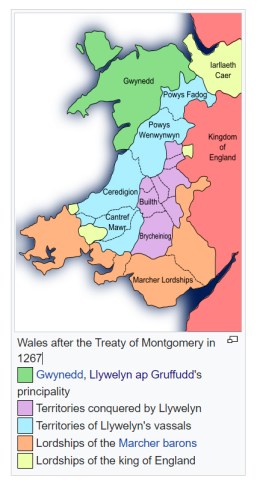
Wales after the Treaty of Montgomery in 1267. Source: Wikipedia

Llywelyn took advantage of the chaos to resume hostilities in support of his own ambition, retaking the Four Cantrefs in 1263, and in the process destroying Henry III’s castles of Deganwy and Dysterth.   Amongst many other mistakes made by de Montfort was the formation an alliance with Llywelyn, formalized in the Treaty of Pipton in June 1265.  Although Simon de Montfort was defeated and killed in battle only weeks after the treaty was signed, Henry III was advised to honour the Pipton agreement in the Treaty of Montgomeryshire in 1267.  This not merely achieved peace, but also secured a significant financial contribution from Llywelyn for the privilege.  With the principality of Wales now formed, Llywelyn the Last was officially recognized as Prince of Wales, with the right to homage of all the Welsh lords, and became a vasal of the king.  It was the first time an English king had recognized a Welsh prince as Prince of Wales, but the cost to Llywelyn’s estates was a massive 25,000 marks (£16,666.00) payable in instalments. The National Archives Currency Convertor estimates that this figure is equivalent to £12,000,000 in today’s money.  He was also required to settle land on his brother Dafydd. 

Unsurprisingly, although Llywelyn had made his peace with Henry, the Marcher lords were not so sanguine about the land that they had lost in the negotiations.  In particular the powerful Marcher lord and earl of Gloucester, Gilbert de Clare, was angered by the loss of land in Glamorgan, and in 1268 went into what were now Llywelyn’s territories and began to build a castle.  Concerned that this blatant act of defiance would undermine the Treaty of Montgomery, Edward returned to the negotiating table, and ruled in Llywelyn’s favour.  It would have been difficult to have done anything else, given the terms of the treaty.

Edward left on crusade in 1270, leaving Wales in the care of trusted caretakers, visiting the formidable French castle Aigues-Mort, which made a considerable impression on him.  Back in Wales, with the treaty backing his position, Llywelyn entered Glamorgan in 1271 and destroyed de Clare’s castle, reclaiming his land.  He reckoned without de Clare who, in spite of the ruling, took advantage of Edward’s absence and responded in kind, retaking the land and making a new start on the great castle of Caerphilly.  Other Marcher lords, who must have been watching with interest, began to snatch bits of their own former territories back from Llywelyn, matters made easier by Edward’s absence on crusade and in Gascony until 1274 and Henry III’s apparent apathy on the matter.  Edward’s English magnate caretakers were far more sympathetic to the Marcher lords than they were to Llywelyn, and stood by whilst the Treaty of Montgomery was violated.
————–

The ascent of Edward I and the decline of Llywelyn

Edward’s two year absence in a somewhat abortive crusade took place only after he had raised the finance for the expedition, with great difficulty.  Henry III died on 16th November 1272 at the age of 65.  Having narrowly survived an assassination attempt, Edward returned without haste, pausing to resolve issues in his Gascon estates, arriving in England on the 4th August 1274.  His coronation took place on the 9th August 1274.

Coronation Throne of Edward I. Source: Westminster Abbey

One might have thought that with Edward’s return, Llywelyn would have had half a chance of arguing for the enforcement of the Treaty of Montgomery and the restitution of lands that had been awarded to him under that treaty.  Instead, Llywelyn’s response to Edward’s return led not to resumption of the status quo but to renewed conflict between the two.  Author Marc Morris puts this down to the state of the finances of both parties.  Llywelyn had paid 5000 marks of his debt of 25,000 marks (£16,666) from the Treaty of Montgomery, and the rest was payable in annual instalments of £3000 a year, which was far more than the Welsh economy could generate, even without Llywelyn’s own costs as ruler of Wales.  He had stopped paying in 1271, in violation of the treaty, and was three years in arrears by the time of Edward’s coronation.  Letters to Llywelyn in 1272 demanding a resumption of payments failed to achieve this objective.  As a matter of pride, he said that the stoppage in payments was for political reasons, rather than poverty, and he may indeed have felt some justification due to the violations of the treaty by the Marcher lords.  Attending the coronation would have put himself in the position of having to answer directly to Edward for the outstanding money, and Llywelyn clearly decided not to run the risk.  He did not attend the coronation.

Edward had his own pressing financial problems.  He needed the money owed by Llywelyn to pay off his own debts, incurred mainly during his crusade.  When Edward called Llywelyn to court to pay homage to him as the vassal of a newly appointed, and Llywelyn declined to appear, he realized that this source of income was in jeopardy, and that the peace with Wales might also be under threat.  Although Edward could muster an army, it would have been costly, and such an outlay was something he must have been keen to avoid, particularly as it would have been difficult to enforce the repayment of the debt.  A diplomatic solution was more attractive, and might see the resumption of payments, even if the sum was lower than had been originally agreed.

A planned meeting between the two in Shrewsbury had to be cancelled when Edward became ill.  No-one will ever know for sure if Llywelyn would have turned up, but in the light of later events it seems unlikely.  At the same time, Llywelyn’s popularity within Wales was on the wane, and he discovered that he had become the target of a well organized plot to remove him from power.  It was led by his brother Dafydd, with particular support from Grufydd ap Gwenwynwyn, lord of Powys.  Dafydd was a permanent source of simmering resentment against his brother’s rise to power at his own expense.  The lands allocated to him in the Four Cantrefs had clearly not satisfied him.  It was not the first time that Dafydd had switched sides, and it would not be the last.  Realizing that Llywelyn had discovered the plot, both Grufydd and Dafydd fled to England, where requests for their return to meet Welsh justice were rejected.  In 1275, Edward again made arrangements to meet Llywelyn, this time in Chester, where Llywelyn could make the required homage and discussions could begin.   Again, he chose a border town that would have been easy for Llywelyn to reach.  Llywelyn was near the border when he wrote to refuse the meeting, saying that he felt unsafe in England, which now housed those who had plotted against him.  A week later Edward left Chester, angry both at the slight and the waste of his valuable time, but was still reluctant to force the issue and put peace in jeopardy.

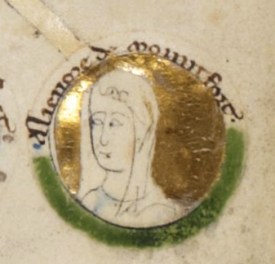
Eleanor de Montfort, daughter of Simon de Montfort and, from 1278, Princess of Wales. Source: Wikipedia

It was Llywelyn who tipped the balance.  Single, and aged 50 years old, with no son, and with the treacherous Dafydd as his heir, he decided in 1275 to get married.  He had left it late, but he might have had the choice of the best Welsh families for a bride.  Instead, he chose an English one, and his choice seems reckless in the extreme, as it was certain to upset and infuriate Edward.  It did.  Llywelyn’s chosen bride was none other than Simon de Montfort’s daughter Eleanor.  The earl of Leicester, Simon de Montfort, once Edward’s friend, had become his enemy prior to his death at the Battle of Evesham.  Perhaps Eleanor’s connection to the English royal family as the niece of Henry III, by marriage, gave Llywelyn dynastic pretensions.  Whatever the reasons for the marriage, Eleanor, living in exile in France, was en route to marry Llywelyn when agents captured the ship in which she was travelling, and took her to Edward who kept her captive in Windsor for three years.  Llywelyn’s lack of judgment is difficult to explain.  Edward lifted restrictions on the Marcher lords regarding the lands taken by Llywelyn in the Treaty of Montgomery and gave Llywelyn one final chance to pay homage in Westminster, at the annual parliament.  Llywelyn, for the third time, failed to appear.  In spite of Llywelyn’s offers and demands, peace was at an end, and war was inevitable.

In 1276 Llywelyn was declared a rebel and early in 1277 Edward’s war machine had started up and was on the move, spreading from Carmarthen in the south and Chester in the north. To undermine Welsh resistance, permission was given to the Marcher Lords to reclaim territories that they had lost.  Edward himself, arriving in the frontier town of Chester in July 1277, complete with 800 mounted knights, ships carrying 700 sailors and over 3000 foot soldiers, prepared for war against the prince.  Chester, loyal to Edward, provided a convenient launch-pad for the invasion, With very little delay, Edward took his army into Gwynedd.  At Rhuddlan, his infantry was joined by another 12,000 soldiers, although by August, possibly because they were dismissed due to supply chain issues, only half remained. 

Map of the Welsh Cantrefi. Source: Wikipedia.

During the campaign, Edward initiated his  castle building programme, starting at Flint in June 1277, with Rhuddlan and Hawarden following soon afterwards. During previous encounters, Edward had found that his main bases of influence, from which military action could be initiated, were insufficiently close to the Welsh border.  These included, from north to south, Chester, Shrewsbury, Montgomery and Hereford.  Whenever the armies of Henry III or Edward I marched, they found themselves isolated from their home bases.  Part of Edward’s strategy was to build bases on the edge of Welsh territory, and the within it, and to ensure that there were good lines of communication between these bases, all the way back to the English centres of power.  Edward’s vision was that castles were only as strong as the network that connected them, and that these castles should serve him not merely during times of war, but at all times.  Of the first of the new ring of castles, only Builth could not be reached by sea.

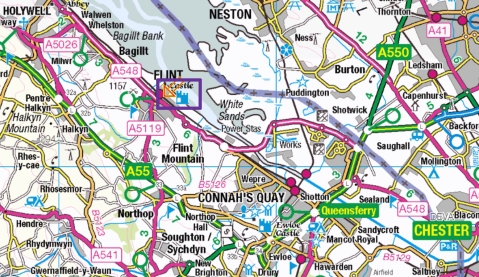
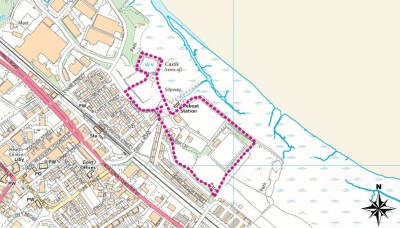
The priority at Flint in its initial phase was to create a road from Chester to the site, and surround the site with enormous ditches that could be defended.  Although the castle was accessible by water, from both Chester and the coast, and at a push by foot across the tidal sands from the Wirral, Edward wanted to be able to access his new castle without unnecessary risk on horse and foot, and accordingly ordered the construction of a wide road from Chester to Flint.  Flint was to be Edward’s first permanent foothold in north Wales, and there were to be no difficulties with either access or communication.  Castles at Rhuddlan and Hawarden soon followed, and the Flint road was extended in to reach them.  My post looking at Flint Castle in more detail is here.

Llywelyn, with perhaps 300 mounted men, and nothing in the way of a naval fleet, was vastly outnumbered.  After losing the Four Cantrefs, he retreated to the mountains of Snowdonia, intent on using the terrain and guerrilla tactics to counter Edward’s advances.  But Edward had learned from his previous experience in Wales in 1257.  Llywelyn slowed Edward down, but he could not turn him back, particularly when Edward’s ships cut off the island of Anglesey, and with it Llywelyn’s primary source of grain.  The grain not only denied Llywelyn his primary source of feeding his troops, but also provided Edward with the resources he needed to feed his own army. 

Llywelyn at last paid homage to Edward, and here is shown sitting to the left of the king’s throne, with Alexander of Scotland at the king’s right.

Llywelyn submitted in November 1277 and Edward left the field and returned to Rhuddlan (shown below) where his second new castle was being built, also started earlier in 1277.  The Treaty of Aberconwy of that year swept away Llywelyn the Last’s principality, leaving him with Gwynedd and his now somewhat meaningless title of Prince of Wales.  Daffyd was rewarded for his loyalty to Edward with a small territory comprising Rhufoniog and Dyffryn Clwyd, two inland cantrefs of Perfeddwlad (the Four Cantrefs), which he considered to be small recompense given his ambitions to take over at least part of his brother Llywelyn’s principality.  Edward retained the other two of the Perfeddwlad cantrefs, Rhos and Tegeingl, both on the coast.  Flint, Rhuddlan and Hawarden castles together would protect the invaded territories in northeast Wales, replacing Henry III’s castles of Deganwy and Dyserth, destroyed by Llywelyn in 1263.  On Christmas Day in Westminster Llywelyn at last made homage to Edward.  It must have been a bitter pill.

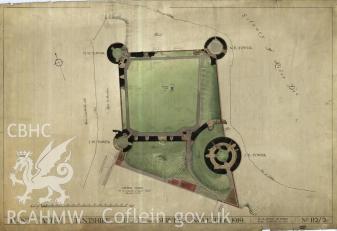
Plan of Flint Castle. Source: Coflein

The castle building project continued unabated, whilst Flint and Rhuddlan castles became both administrative hubs and new royal towns (bastides), as well as military outposts, providing a much-needed link between Chester and the more distant outposts that were next on Edward’s ambitious agenda.  At a recent tour of St Werburgh’s Cathedral in Chester, cathedral expert Nick Fry explained that at least some of the stone masons had been removed from work on the St Werburgh’s (at that time a Benedictine monastery) to work on Edward’s castles, delaying modifications to the cathedral for a considerable period.

The idea of establishing towns around castles, allocated considerable commercial privileges as incentives to English traders, was an idea adopted from Gascony, where Edward had already founded a number of new defended towns, known as bastides.  These reinforced the network of castles with economic as well as military foundations, and established enclaves of English commerce and tradition within Wales.  Flint and Rhuddlan were two of the earliest examples.

Edward was sufficiently convinced by Llywelyn’s apparently passive response to the Treaty of Aberconwy to release Eleanor in 1278, to permit the marriage to go ahead, and to pay for the marriage feast in Worcester.  In spite of these promising signs, matters deteriorated between the two.  In particular, Llywelyn’s claims over a territory, Arwystli, currently lying within the territory of his rival Gruffudd ap Gwenwynwyn were, during 1280 and 1281, brought under Edward’s jurisdiction, and remained unresolved for at least four years, whilst severe repression was carried out in the rest of Wales, parts of it once Llywelyn’s realm.  Llywelyn’s brother Daffyd appears to have had less specific but more regular causes for complaint.  One of the most grinding and ongoing wounds of all Welsh lords was being subjected to significant portions of English law, which was felt to undermine both Welsh rights and national identity.  
asdfdsfs

Renewed hostilities between Llywelyn and Edward 1282-3

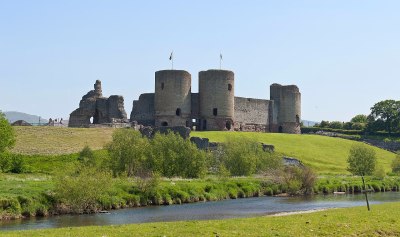
Rhuddlan Castle. Photograph by Julie Anne Workman. Source: Wikipedia

In 1282 it was neither Llywelyn nor Edward that was the instigator of the dispute that followed, in spite of ongoing tensions between the two.  In March 1282 Llywelyn’s brother Dafydd ap Gruffudd, feeling that his contributions had been insufficiently rewarded by Edward, and seriously aggrieved by his treatment both at the hands of his neighbours on royal land and by the authorities in Chester, decided to take action.  Dafydd once again switched sides and, not messing around this time, attacked the English castles and towns of Hawarden, Flint and Rhuddlan, supported by a number of Welsh lords who acted in their own right.  Llywelyn was not among Dafydd’s initial supporters, but he joined forces with his brother later in the same year.  If I had found myself in Llywelyn’s situation I’d have thought twice about sticking any fingers into a pie of Dafydd’s making.  Perhaps Llywelyn felt he had to choose either to engage or be swept aside in the event of Dafydd’s victory.  He had very recently lost his wife in childbirth, and with no male heir, and now 60 years old he may well have thought he had very little to lose.  Whatever his thinking, it was a mistake.  In spite of the  arrival of the Archbishop of Canterbury, John Pecham, who attempted to negotiate for peace, no compromise could be reached.  Edward’s subsequent suppression of the uprising came at a high cost for Edward’s own treasuries, his armies, and included the personal loss of friends and collaborators.  Under such circumstances it was inevitable that when Edward prevailed, the results would be uncompromising.

Aerial view of Denbigh Castle, a Welsh castle which was rebuilt by the English in 1282. Source: Cadw, via Wikipedia

Llywelyn was killed in battle on 11th December in 1282 and Dafydd assumed the title Prince of Wales, but by early 1283 Edward I’s vast English army had the Welsh heartland hemmed in and troops were being supplied by ship from Ireland.  Dafydd based himself at Dolwyddelan Castle in southwest Conwy whilst the English took Bangor, Caer-yn-Arfon and Harlech.  Castell-y-Bere in Gwynedd, not far from the west coast, was the last of the Welsh strongholds to withstand Edward’s armies, falling in April 1283.   Dafydd was captured in June 1283.  Whilst other lives were spared by Edward, Dafydd’s betrayal rankled.  He was tried for treason, tortured and put to a spectacularly grizzly death in Shrewsbury in October 1283, whilst Edward’s programme of castle building continued uninterrupted.  In 1284, Edward returned to Wales in march to inaugurate his statue on how royal lands in Wales, including Llywelyn’s Snowdonia, would be managed and how law should be administered.  He took no revenge against the Welsh people, but there was now no doubt that future transgressions would not be permitted and that the harshest reprisals would greet anyone who attempted to resist.
——-

After Llywelyn

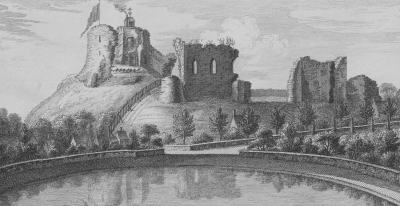
Hawarden Castle in 1742 by Samuel Buck

More and much greater castles than Flint, Rhuddlan, and Hawarden were built in north Wales.  Aberystwyth, the southernmost in the arc of coastal forts was started in late 1277.  Denbigh and Harlech  were started in 1282, Caernarfon and Conwy in 1283, and both Chirk in northeast Wales and Beaumaris on Anglesey were  started in 1295.  The castles were eye-wateringly expensive to build, and Edward was able to extend his network only with the assistance of  loans from the Ricciardi Bank of Lucca in Tuscany, supplemented by magnates loyal to Edward who invested in castles in their own right.  The castles were connected not only by purpose and personnel, but by a growing network of roads, and were not merely a visual message to the potential insurgents of north Wales, nor simply used as operating as bases from which to launch potential counter-offensives, but a valuable communication network. One of their most important functions, just a day’s ride apart from one another, was to strengthen England’s ability to move freely between England and Wales, as well as keeping England informed, via Chester, about what was happening in Wales.  

Castell y Bere in the Dysynni valley, southwest Gwynedd.  Aerial photograph with my annotations showing key components of the castle (Source of photograph: Coflein website)

During the advance of Edward’s armies, control was reinforced throughout north Wales.  Welsh castles were either destroyed by Edward’s forces, or rebuilt and garrisoned for Edward’s own purposes, establishing additional military presence at relatively low cost.  An example is Castell y Bere in Gwynedd, which was built in 1221 by Llywelyn ab Iorwerth (also known as Llywelyn Fawr, or the Great, c.1173-1240).  It was the site of Dafydd’s last stand.  The castle having survived the assault, it was reinforced by Edward. My write-up of Castell y Bere is here.

With Llywelyn dead, and Edward with no distractions elsewhere, Wales had lost its momentum as a Welsh principality once and for all.  Wales belonged to Edward and the Marcher lords.  All other landholders held their lands in sufferance, and now knew to keep their heads down.

With Llywelyn dead in battle in 1282, and Dafydd captured, tortured and killed in 1283, there was no Prince of Wales, and there no serious opposition to Edward.  Llywelyn had died without a male heir, and his baby daughter was sent to a convent in England.  Dafydd’s daughters were also sent English to convents and his sons were incarcerated in Bristol Castle, where they died.  Their brothers Owain and Rhordri survived, but Rhodri had sold his claims to the crown to the English and lived out his life in comfort.   Owain, who had once been in dispute with Llywelyn for a share of Gwynedd, had been imprisoned by his brother.  When he was released in 1277 he made no attempts to join forces with either brother against Edward, and died in around 1282.  Rhodri’s grandson Owain Lawgoch had been brought up in England, and had a successful career as a mercenary, but a downturn in his fortunes lead him to contemplate pressing his own claims in Wales, but he was assassinated before he could take any action in 1378.

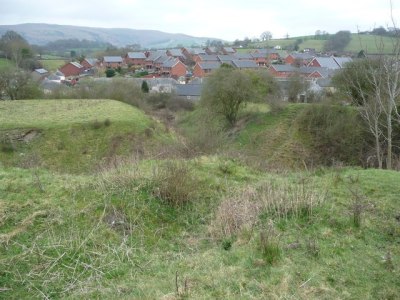
The sad remains of Builth Castle, Powys. Source: Photograph by Jeremy Bolwell, Geograph

A last-ditch rebellion by another would-be Prince of Wales, Madog al Llywelyn in 1294, a distant relative of Llywelyn the Last’s, took a year for Edward’s armies to suppress.  Edward I gave the title Prince of Wales to his own son, Edward of Caernarfon, who was invested on 7 February 1301, at the age of 16.  Although another, albeit short uprising had to be put down by Edward II in 1316, it was not until the early 15th century, when Owain Glyndŵr led a new rebellion, that serious conflict once again arose between Wales and England.
dafsdfs

Final comments

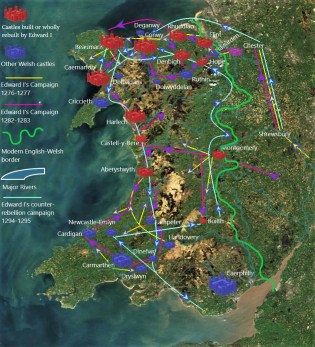
Map of Edward I’s campaigns in Wales. Source: History Matters at the University of Sheffield

Henry III had been both a weak and unpopular king, whose poor leadership led to the 1258 Provisions of Oxford, whereby a council of 15 men acted as a filter for all of Henry’s decisions, denying him what he saw as his divine right to sole and unfettered rule.  In 1254, Henry III’s eldest son Edward had been married to King Alfonso X’s daughter Eleanor of Castile.  To fulfil the terms of the marriage contract, Henry had granted Edward lands in Britain, including the royal estates in Wales, that made him the second biggest landholder in Britain.  Although his father was still in overall control, Edward had a new sense of himself as a leader and protector of the lordships within those territories.  It was not long before Edward began to get the measure of Llywelyn, but with Henry III still making the decisions, Llywelyn probably had little idea of the differences between father and son.  Although Edward had been involved in a number of armed conflicts, and schemed against his father, he only seems to have gained real independence when on crusade.

Edward returned after his father had died, to take possession of a land in which the only really active thorn in his side was Llywelyn.  Henry III, after failed attempts to engage Llywelyn with military might, had resorted to the lower cost and less demanding diplomatic approach to conflict with Wales.  When Edward went to war in anger against Llywelyn in 1277 and 1284, Llywelyn was defeated.  Edward on this occasion was magnanimous, and paid for Llywelyn’s wedding to the daughter of Simon de Montfort in Worcester.  Had matters ended there, Llywelyn might have lived out the rest of his life dissatisfied but with nothing more than internal disputes to tackle, but when his brother Dafydd, with support from other important Welsh leaders, attacked Edward’s castles, Llywelyn joined him.  Edward gave no quarter.  When he went to war in Wales, he did not have it all his own way, and had he not had the Cinque Port ships to blockade Anglesey, he might not have prevailed, but when he did prevail he took no chances.  He neutralized male heirs, mainly with imprisonment, and he placed Welsh daughters into English convents, where they could not produce sons who might grow up with a sense of injustice that could lead to thoughts of rebellion.  He and his own son, Edward II, fought off two other rebellions, but it was not until Owain Glyndŵr in the early 15th century that another serious Welsh uprising was attempted.

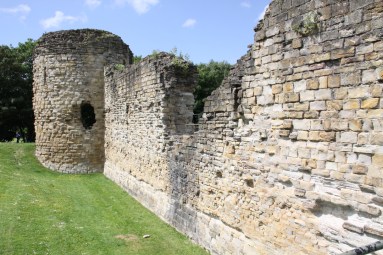
Flint Castle, southwest tower and curtain wall

Whilst writing this, I frequently wondered what it must have felt like to be Edward I, the descendant of kings who ruled in England and, thanks to their Norman ancestry, over swathes of what is now France.  He had all the strength, confidence and strategic insight that both his grandfather King John and his father Henry III lacked, and he had plenty of ambition, but King John had lost much of England’s continental territories, and thanks to the Treaty of Paris, in which Henry III gave up even more, in 1274 Edward inherited a much smaller kingdom than his own father had inherited.  Ironically, as a personality Edward probably had more in common with Llewelyn the Last than he did with his father.  Both were experienced military leaders, well organized and ambitious men who believed in themselves. They were born into worlds where conflict was the norm and territory could be seized.  They were also both sovereigns in their own lands, and believed absolutely in their right to rule and extend their rule.  These very similarities might suggest that war rather than diplomacy was the most likely outcome when Edward turned his focus to Wales, but in fact diplomacy punctuated military engagements up until 1282.  Neither brother survived this encounter with Edward, and Edward took advantage of the power vacuum in Wales to squash Welsh ambition for good, bringing Wales firmly under the English crown.  Key to this strategy was his castle building programme.
——–

Sources

The most usual sources have been highlighted in bold

Books and papers

Davies, J. 2007 (3rd edition). A History of Wales. Penguin

Jenkins, G.H. 2007. A Concise History of Wales. Cambridge University Press

Morris, M. 2008. A Great and Terrible King. Edward I and the Forging of Britain. Penguin

Rowley, T. 1986. The High Middle Ages 1200-1550.  Routledge and Kegan Paul

Saul, N. 1997. The Oxford Illustrated History of Medieval England. Oxford University Press

Vening, T. 2012. The Kings and Queens of Wales. Amberley

Walker, D. 1990. Medieval Wales. Cambridge Medieval Textbooks

Websites

Aberdovey Londoner 
Castell-y-Bere (1221-1295) in the Dysynni Valley, west Wales (Andie Byrnes)
https://aberdoveylondoner.com/2018/10/31/a-visit-to-castell-y-bere-1221-1295-in-the-dysynni-valley/

Exhibition: “The Tailor’s Tale” at Tŷ Pawb gallery, Wrexham

Image source: Tŷ Pawb website, with original image © Amgueddfa Cymru (National Museum Wales). The giraffe is sublime, but the panther is bliss.

The Tailor’s Quilt, by James Williams. Click to see the larger, clearer image. Image source: Tŷ Pawb website, with original image © Amgueddfa Cymru (National Museum Wales).

The Tailor’s Tale exhibition, at the Tŷ Pawb gallery in Wrexham, is on until September 24th 2022.  It is a rare opportunity to see the mid-19th century “Tailor’s Quilt” without having to go to south Wales to see it in its usual home.  The exhibition is showing at the same time as the exhibition Blanket Coverage, in the same gallery, about which I have already written here.

The Tailor’s Quilt was made by master military tailor James Williams of Wrexham (c.1818 – 1895). It is on loan from the St Fagan’s National Museum of History in Cardiff.  The museum bought it in 1935 from Williams’s grandson during the economic depression, where it joined a national folk art collection, which now has over 200 examples of Welsh quilting and patchworks.   

As well as the quilt itself, which is a complete joy, the exhibition features modern art works, including designer clothing and accessories by Sarah Burton (fashion house Alexander McQueen) and fashion designer Adam Jones;  a range of items  by Mark Herald, based on the quilt and commissioned by Tate Britain; and a set of four small pieces by Quilter’s Guild of the British Isles members Judy Fairless, Anne Gosling, Barbara Harrison and Helen Lloyd.  It is one of the pleasures of The Tailor’s Tale, that 19th and 21st century approaches to patchwork and quilting by local textile specialists can be seen side by side, with all the implications of social and economic change that each implies.
afdasfsd

The Tailor’s Quilt

First, a bit of terminology.  A quilt is generally defined as at least two layers of fabric with padding, called wadding, between them, all stitched together either with straight lines crossing each other to form squares or diamonds, or in more elaborate designs.  A patchwork consists of pieces of fabric sewn together.  A patchwork quilt is a patchwork that has been provided with a wadding and backing, and has been sewn together at multiple places across the surface to connect all three levels, to form a patchwork quilt.  The Tailor’s Quilt, technically, is a patchwork, because it is made up of different fabrics sewn together but is not sewn over to join all the layers together.  It is made using the intarsia method, as described by Dr Clare Rose of the V&A:  “This technique, also known as ‘cloth intarsia’, ‘mosaic needlework’, ‘inlaid patchwork’, ‘inlay patchwork’ and ‘stitched inlay’, involves cutting motifs out of wool cloth and stitching them directly to each other with no seam allowances and no backing fabric.”  Features like the panther’s very smug smile, are picked out in silk thread.

James Williams, Draper, located opposite another draper and a boot maker at the gates to the church. Source: @Tiffypox on Twitter

As modern as it looks, and as imaginative as it is, the Tailor’s Quilt was crafted by James Williams in his downtime over a period of 10 years between 1842 and 1852, using leftover fabrics from the suits and military outfits that he made, as well as from textile sample books that were no longer of use.  It is truly astounding for its scale, imagination and the splendid combination of representational scenes and abstract designs.  The quilt is surprisingly huge, and framed behind glass it is a real presence.

It is thought that Williams was born in 1818.  His name is listed in trade directories between 1850 and the year of his death in 1895.  A photograph survives of his shop sign with the church in the background, which is supposed to show a shopfront on 8 College St., Wrexham.  I went to have a look to see if the original building is still there.  The view shown left, which shows a sign with the legend “J. Williams Draper,” cannot possibly be College Street, which approaches at a very awkward side angle to the church tower.  This is without question Church Street.  Perhaps Williams moved from one premises to another at some point in his business life.

A view down Church Street today.

The Tailor’s Quilt measures 2.34m high by 2m wide (7.6 x 6.5ft) and contains over 4,525 pieces of material.  It is far bigger than I was expecting, even knowing the measurements.  It uses a fairly limited but perfectly harmonized palette of colours, drawn from what Williams had to hand.  It shows scenes from the Bible such as Adam naming the animals, Noah’s Ark,  Jonah and the whale (fabulously, with only the legs showing out of the whale’s mouth), and Cain and Abel, with the sky filled with lightning.  It also features motifs symbolizing Wales (a leek), England (a rose), Scotland (a thistle), and Ireland (a shamrock).  Giving the composite scene a really modern twist, the Menai Suspension Bridge and Cefn Viaduct (with a steam engine and two carriages passing over it) are also prominently featured.  The significance of the Chinese pagoda seems to escape most commentators, but perhaps (speculating recklessly) it was inspired by Chinese ceramics, which had become mainstream in 19th century Britain at the time. Part of the fun of the piece, with a huge, self-satisfied black panther dominating the composition, is looking for the vignettes and enjoying the details in each one.

Image source: Tŷ Pawb website, with original image © Amgueddfa Cymru (National Museum Wales).


The combination of abstract, symbolic and representational takes time to absorb, and it works perfectly both on the level of the detailed vignettes and as a complex composition that instantly creates an attractive and appealing impression.  It is difficult to imagine how, over a 10 year period, Williams was able to keep hold of the compositional elements to create something so beautifully balanced and proportioned. 
As the Tŷ Pawb website puts it, “The quilt is now widely regarded as one of the best surviving examples of Welsh folk art.”

It was exhibited at the Art Treasures Exhibition of North Wales in 1876 and the National Eisteddfod in 1933, both held in Wrexham, and in the British Empire Exhibition in Wembley in 1925.  Although its travels were put on hold for conservation work, it is now fit for travel once again, and was displayed in the Victoria and Albert Museum’s Quilts 1700-2010 exhibition in 2010, and was loaned to the Wrexham Museum for a temporary exhibition in 2017.  Its return to Wrexham at Tŷ Pawb in 2022 is very welcome.

Modern Responses to the Tailor’s Quilt

One of the reasons that this exhibition is so appealing is that it explores how The Tailor’s Quilt influenced and inspired other artists working in the same medium. It offers an opportunity not merely to see a sublime example of the genre, but to see how modern textile artists have incorporated design elements of the quilt in their own work.

The most original of the contributions is that made by fashion designer Adam Jones, who was commissioned by Tŷ Pawb to make a quilt of his own to be displayed adjacent to the Tailor’s Quilt.  It works superbly, because Adam Jones has a style that is quite unlike that of James Williams.  His bright, often garish clothes are attention-grabbing and regularly make use of clashing colours, textual elements and pub-themed motifs to make often loud, sometimes kitschy and frequently humorous statements.  Adam Jones is from Froncysyllte near Wrexham, but is now based in London.   Although there are garments from Adam’s collection in the exhibition, to demonstrate some of his creative range, his quilt is particularly interesting in this context.  It combines the inspiration of the Tailor’s Quilt with a unique vision of Wrexham, its football team and pubs, and has its own intense personality.  The composition is set against a bright, shiny red background (Wrexham FC’s dominant colour), and is full of references to Wrexham, and in particular Wrexham Lager.  Contrasting textures, like lace and towelling, and everyday objects like a butcher’s apron and a pair of gloves are intertwined with abstract geometric shapes inspired by the Tailor’s Quilt.  Instead of all four nations, Wales is given pride of place with the dragon at its base.  Flanking Jones’s quilt are huge photographs of the quilt with local people, one man sitting on it, another draping it around her shoulders, removing textile art from the clean walls of the gallery and taking it back to its spiritual home.  Great fun.

fasdfs
Painter and printmaker Mark Herald was commissioned by Tate Britain to create some pieces based on the Tailor’s Quilt for the Tate’s shop.  Mark’s sketchbook is displayed here, together with some of the items that he created for Tate Britain (some of which are currently for sale in the Wrexham Museum, a short walk away).  His pieces include pictures, mugs, plates and bags.  He takes motifs and themes from the Tailor’s Quilt, gives them a bright hit of colour, and arranges them in harmony on the new surfaces.  They work superbly, echoing the Quilt, the motifs unmistakeably lifted from its progenitor, but given a bright, modern twist on the surface of everyday objects.  Although none of his other works are shown in the exhibition, a quick web search shows why Tate Britain chose him.  His own artworks are similarly full of light, often referencing the animal world, full of bright colours and dynamic shapes.


The name that pops up repeatedly when you do a search on the Tailor’s Quilt is clothes Sarah Burton, Creative Director of the fashion house Alexander McQueen.  Sarah Burton was inspired by the Tailor’s Quilt on a visit to St Fagan’s Museum, and incorporated its themes into her Autumn/Winter 2020 collection.

Her work provides yet another contrast.  Just as the Tailor’s Quilt is the product of a professional tailor working in Wrexham, and Adam Jones’s quilt and clothing specifically reference the small town environment of the 70s and 80s that were part of his upbringing, Sarah Burton’s clothing is self-consciously aimed at the catwalk and is the product of the couture design world.  Angular shapes and big panels of fabric are imprinted with motifs lifted directly from the Tailor’s Quilt, but given a new colour palette and an entirely new feel.

Four small pieces exhibited together are by Judy Fairless, Anne Gosling, Barbara Harrison and Helen Lloyd, who each made a piece as a response to the Tailor’s Quilt for the Llangollen Quiltfest in 2017.

From top left, clockwise: Ann Gosling “What a busy life I lead;” Helen Lloyd. “Jump,” Barbara Harrison, “The world around me,” and Judy Fairless, “All Stitched Up”

Although every exhibition has a curator and a team of skilled assistants, the general public does not often hear much about them.  This exhibition was the brainchild of the late Ruth Caswell, to whom the exhibition is dedicated.  She was a very remarkable and award-winning costumier, designer, artist and teacher, as well as a skilled curator of exhibitions, of which this was her last.  The Tŷ Pawb website explains how she started out:

Ruth moved to London in the 1960s, when she met and married her husband actor Eddie Caswell. Ruth said: “When we married and moved to London, we had only £12.50 to our name so I made clothes in my back bedroom and sold them in Kensington Market on a stall next to Freddie Mercury’s. I delivered them on the 73 bus each Friday and they sold instantly.”  Ruth’s clothes were photographed for Vogue and worn by model Jean Shrimpton.

There is a video in the exhibition showing Ruth talking at fascinating length about textile design, and her enthusiasm, eloquence and generosity of spirit are very evident.
rewrwe

Final Comments

Quilting and patchwork, as craft activities, have a long tradition in domestic contexts, either for daily use or to mark special occasions from the Medieval period onwards.  The Tailor’s Quilt, imagined and hand-stitched by a professional tailor, was very much the product of a professional skill, but was also created within a domestic context.  The exhibition makes it clear how craft activities are now gaining traction in the fields of design and textile arts, featuring on catwalks and in art galleries.  The liminal position held by textile arts for at least a century, is slowly being eroded, and textile is coming of age in a number of commercial contexts where they are recognized as both design and art.

It was a particular stroke of genius to organize The Tailor’s Tale and Blanket Coverage at the same time, and provide them with a single space to share.  Whilst quite different in their content and their style of display, both raise questions about how textiles are regarded today, and what they bring to the world of art.  Both of the exhibitions, the one exploring the impact of a single magnificent piece (the patchwork quilt) and the other exploring the multiple facets of a single genre (blanket weaving), work beautifully both in isolation and together.

With this new exhibition, the Tŷ Pawb gallery has again provided the perfect venue for bringing together modern art and local history, whilst also exploring more universal themes.  The exhibitions The Tailor’s Tale and Blanket Coverage run at Tŷ Pawb until September 24th 2022 between 10am and 4pm Monday to SaturdayEntry is free of charge.


Sources:

Books and papers

Jones, J. 2016. Welsh Quilts. Seren

Rose, C. 2011. A patchwork panel ‘shown at the Great Exhibition.  V&A Online Journal, Issue No. 3 Spring 2011
http://www.vam.ac.uk/content/journals/research-journal/issue-03/a-patchwork-panel-shown-at-the-great-exhibition/#:~:text=This%20technique%2C%20also%20known%20as,allowances%20and%20no%20backing%20fabric.

Ty Pawb handouts, 2022.
– Artist Biographies
– Ruth Caswell

Websites

175 Heroes
Ruth Caswell
https://175heroes.bradfordcollege.ac.uk/ruth_caswell.html

Build Hollywood
Your Space or Mine: Adam Jones
https://www.buildhollywood.co.uk/work/adam-jones/

National Museum of Wales
Patchwork Bedcover
https://museum.wales/collections/online/object/4ce80b8d-182e-3822-8038-54080af6b0b8/Patchwork-bedcover/

Tŷ Pawb
https://www.typawb.wales
The Tailor’s Tale / Blanket Coverage at Tŷ Pawb 02/07/22 – 24/09/22
https://www.typawb.wales/exhibitions/the-tailors-tale-blanket-coverage/

Based in Churton
Exhibition write-up: The luxuriant “Blanket Coverage” at Tŷ Pawb gallery, Wrexham. By Andie Byrnes
https://wp.me/pcZwQK-2F8

A Visit to Cholmondley Castle Gardens

On a bright, sunny day that turned out to be seriously hot, we decided to go to Cholmondeley Castle Gardens.  It’s a great place to go on a hot day because there are lots of open areas if you like the sun, but a lot of leafy shade beneath the trees to keep you cool.  I had no idea that it was so near to the Chester-Wrexham area, just to the east of Bickerton.  I had never been there before, although it was a favourite of my parents.  The castle is not open to the public, but the gardens are, albeit only a few days a week (so do check before you go), and are very impressive.

We parked at the far left of the car park field (see map at end) and entered through the gate at the corner of the field and the drive, which allows you to enter on the flat.  Along the front of the field there are other points of access too, one of which leads straight up a long slope towards the castle and offers a great view.

Cholmondeley Castle itself is the brainchild of a vivid imagination, a hotchpotch of ideas assembled in 1801-02 and added to later in the 19th century.  The castle is not open to the public, but the gardens, which are open several days a week, reach right up to the edge of the castle’s own private garden area, giving a great view of the exterior.  According to the website, the Cholmondeley family have occupied the site since the Norman period, but the current castle replaces an earlier hall, a decision by George James, 4th Earl of Cholmondeley.  It was designed by local architect William Turner of Whitchurch, and was extended in 1817–1819.  In 1828 turrets designed by Sir Robert Smirke were added, and the castle has not been much changed since.  It was occupied by the current earl’s mother Lavinia until her death in 2015, and is not now permanently inhabited.

The garden consists of naturalistic water features, formal gardens, a 19th century celebration of classical ruins, all set within an arboretum.  It has an awful lot going for it.

The large ponds are not neat and formal rectangles, but look natural, whether or not they are, with large colonies of water lilies on the water, and water-loving plants along their edges.  They feature small mock-temples, some of them on artificial islands, which are clearly not authentic but are a lot of fun, typical of a lot of 19th century and earlier celebrations of classical architecture.  The first of these that you reach from the car park is the Temple Garden Pond.


The formal border, called the Lavinia Walk, leading from the Temple Pond via a rose garden to a small circular domed pavilion, is sensational, with a glorious mix of penstemon, alstromeria, roses, phlox, eremerus, rudbeckia, crocosmia, salvia, delphiniums, dahlias and lots of other brightly coloured species, some of them climbing parallel rows of round-topped obelisks that flank the path.

The second pond, the Folly Garden Pond and surrounding garden, is another aquatic treat, connected to the Temple Pond.  As well as some magnificent hostas, apparently untroubled by slugs, and a lovely cornus kousa in a shade of deep rose pink, is a walnut grove and some wonderfully scented, heady meadowsweet.  Slender, brilliant electric blue damsel flies were a wonderful, shimmering, endlessly shifting light show.

As well as these main areas of focus, there are some fun architectural and structural features between the main run of gardens, some excellent walks in the wooded and grass areas that sit between the main footpaths, and some superb flowering shrubs dotted everywhere.  This is the sort of garden that has a central focus in the form of a formal garden, but also provides considerable rewards in return for wandering around to get a full sense of the place.

The trees, which in a traditional estate garden would be a narrow range of species dotted around parkland, such as at Chirk Castle, are far more closely spaced and include many varieties, and are an essential part of the garden landscape at Cholmondeley, a proper arboretum.  Dotted around are some enormous and gorgeous hydrangeas, and in one meadow, tellingly named Orchid Meadow, we spotted beautiful wild orchids (shown left).  In spring, the Tower Hill Woodlands contain a bluebell walk and plentiful rhododendrons, there’s a laburnum grove to the east of the Lavinia Walk and running along the line of the Ha Ha is a daffodil walk.

One visitor that we met said that he was disappointed that the once manicured grass on slopes and borders surrounding the main area was no longer being cut, and was being allowed to run wild.  He speculated that this was due to the rise fuel costs.  At the same time, it looked as though some areas were being redeveloped.  Like all managed gardens, whether big or small, they all undergo change as new ideas are incorporated or new needs have to be accommodated.

There are details of some of the species to see on the Cholmondeley Castle Gardens website on The Gardens page.  Something that looked like giant rhubarb (and I do mean giant, shown on one of the above photos around the lake) with thorny stems turns out to be Brazilian giant-rhubarb or, more formally, Gunnera manicata.  I was particularly pleased to find that the row of trees that flanked the drive just as we approached the car park were identified on the website: Tibetan Whitebeam, or more formally Sorbus thibetica ‘John Mitchell’ (which has an RHS Award of Garden Merit).  It is quite sensational with large oval leaves, light green on one side and almost white and slightly furry on the other.  We missed both its flower (spring) and fruit (autumn) but even without either they were still very eye-catching.

As you drive in to park up, you pass a sizeable lake, and there are additionally lakeside walks, as well as a picnic are and children’s play area, all accessible from the main car parking area.  From the tearoom, the drive continues behind the castle, and a 20 minute walk away is the St Nicholas Chapel.


Visitor Information

The opening times and ticket prices are updated on the Cholmondeley Castle Gardens on the Your visit page.  It is not particularly well sign-posted so I would suggest that you either prepare in advance or use GPS.

We were handed a very useful map on arrival, shown left,  which ensured that we did not miss anything of the gardens, and which also shows potential disabled access.  My creased copy is shown left, but you can download a pristine copy from the Cholmondeley Castle Gardens website here.

Parking is at a field on the approach to the castle.  Disabled parking is at the tea room, which can be reached by continuing past the main parking zone, along the lane and through the stunning white gates to the tea room and the disabled parking is behind the tea room.

The tea room itself was  overwhelmed with visitors when we were there, and was unimpressive.  It was a hot day and as well as being airless and steaming inside the tea room, the girl on the ice cream counter could not take payment, so customers had to take their rapidly melting ice creams and stand at the end of the queue for drinks and meals to pay for them, which took some time.  It was all a bit of a sticky, disorganized mess.  On the other hand, the outside seating, on the usual wooden tables with attached benches, located in both sun and shade, with views over the garden and towards the ornate gate, was very pleasant.

If the weather is nice, I’d opt for a picnic on a groundsheet under the garden’s trees, which several people were doing, overlooking the water.  It all looked like a very mellow option.

I am not sure how friendly the gardens are to wheelchair users and those who have any difficulty walking. The map shows metalled lanes and gravel parks that are in theory friendly to both, but if you want to see the main attractions of the gardens there are some gradients and stairs that might pose problems or, should you be looking for ways round, may be difficult to circumnavigate.


Farndon milepost of 1898

I’m still collecting mileposts that are found along the Chester to Worthenbury turnpike (about which I have posted in two parts, starting here).  The mileposts post-date the original Chester to Worthenbury ones, of which none survive, but they are still a lovely bit of heritage  When I originally wrote the piece, it was in the middle of summer and although I set off confidently with a map that marked the location of the surviving 1898 mileposts, I could only find two of them.  Since then I have been finding them and adding them to a post about the 1898 mileposts.

This is one that I wasn’t looking for, because it is not on the official Chester to Worthenbury turnpike.  I spotted it out of the corner of my eye on a rare occasion when I was driving through Farndon along Barton Road, and this was only because the bridge was closed and I found myself driving through Farndon to get onto the bypass.  The exact location is, using What3Words: ///warned.tower.mascots, which you can see on a map at https://what3words.com/warned.tower.mascots.

I remembered it a few days ago and went back to photograph it.  Many thanks to whoever does such a splendid job of sculpting the hedge behind it so that the whilst the hedge still looks great, the milepost is perfectly protected and easy to spot, and looks absolutely super.  If only they were all so well cared for.

I’ve added it to my post about the other 1898 mileposts in this area, which I am happily continuing to find new mileposts for.


New Chester Walking Tour: Women of Chester

Chester Visitor Information Centre. Source: Experience Chester

On the Chester Heritage Week’s tour of the Medieval features of Chester Cathedral by Nick Fry, Green Badge tour guide Katie Crowther was in attendance and mentioned that she was leading a new weekly tour themed around Cestrian women, “Women of Chester”, bookable in person in the Chester Visitor Information Centre.  So on Sunday 3rd July at 1130, I presented myself punctually to join the hour-long walking tour outside the Visitor Information Centre, geared up for sun, cold, and/or rain.  Although slightly cool, it stayed dry and it was a very good day for an outdoor walk.

The Green Badge is only awarded to Chester tour guides after a lengthy course and a tough practical exam, so is a good indication that you’re in safe hands.  Katie is one of life’s natural communicators, avoiding any temptation to swamp visitors with paralyzing volumes of data, and instead delivering an information-packed and enjoyable tour in an entirely digestible and memorable way.

The introductory talk took place midway between the Visitor Information Centre  (itself incorporated into the 19th Century Town Hall), behind St Werburgh’s Cathedral, with a randomly placed Roman column in view.  It was a well-mixed architectural locale for the enormously helpful potted history of Chester, providing the key chronological framework onto which the rest of Katie’s narrative was neatly hooked.

Tombstone of Curatia Dionysia

This is not a tour about famous women married to famous men at the top of Cestrian society.  Nor is it a feminist agenda.  Instead, it is part ancient history, part social history, delving into how political, cultural and economic life shaped the lives of women who, in turn, responded to the drivers of Chester life in different ways.  In short, the tour has tentacles that reach into most parts of Chester’s rich and varied past.  As well as looking at women who, in sometimes surprising circumstances, have performed conspicuous and/or leading roles in Chester life, the tour also looks at those who fell foul of religion, convention and tradition, and suffered for it.  

Roman women are the earliest to be recorded in any detail in Chester, and are particularly visible on Roman tombstones, representing the upper echelons of Chester’s Roman society, those who experienced the most comfortable contemporary life.  By contrast, a horribly unfortunate woman accused of witchcraft in the 17th century suffered terrible conditions in the local prison whilst others were burnt at the stake. 

St Werburgh pilgrim’s badge. Source: British Museum

Two of the earliest women who are known to have played a pivotal role in Chester’s history, were Anglo-Saxon.  It is remarkable that the revolutionary diplomat and strategist Aethelflaed (c.870-918), daughter of Alfred the Great and wife of Aethelred, Lord of Mercia, is so unrecognized in Chester that almost no mention of her is made.  She came came to Chester during the illness of her husband to take on a critical role in the defence of Mercia against the Vikings here, and was remarkably successful.  The second Anglo-Saxon name that is intimately tied to Chester is St Werburgh, who died in about 699.  Her remains were brought to Chester Hanbury in Staffordshire at some time between 875 and 907 by the aforementioned Aaethelfaed, raising the profile of Chester as an important Christian centre and destination for pilgrimage.  Chester Cathedral is still dedicated to her.

Sylvia Brown. Source: CheshireLive

Amongst some of the many other women of Chester with great stories was one who kept an evocative record of what it was like to be under siege within the walls during the civil war; an 18th century pioneering commercial and retail entrepreneur; a mayor; a sheriff and two women who lost, respectively, three and four sons in the Second World War.  Of course, Queen Victoria visited, and a famous Chester landmark is dedicated to her, although there is kink in the tail of this story that raises a smile.  Suffrage and music hall provide equal, if more than slightly contrasting examples, both of women’s attitudes and of attitudes to women. Coco Chanel adds more than a touch of glamour to Chester’s story.  Sculptress Annette Yarrow’s life-size female elephant calf called Janya is a fun way of highlighting the connection between the city and Chester Zoo and is a great presence.  For those of us living in Churton, there is even a link to Churton Lodge!  I won’t repeat any of the specifics, partly because I couldn’t possibly do justice to all the information imparted (particularly some of the funnier stories), but also because it would spoil the experience.

The walking tour ranges freely around Chester within the city walls, going up on to the walls for a chunk of the talk, and taking in a number of both famous and lesser known sites along the way.  We also walked through the town, which retains the original Roman plan and in turn gave definition to the Medieval and modern town.  As well as describing women in terms of Chester, and Chester in terms of the women who, though often invisible, helped to define it, the tour gives an excellent sense of the variety of architectural styles, old and new, and the use of space within the walls.  Again, I won’t spoil the experience by saying which sites we visited or why, but there is something for everyone in the tour.

In terms of accessibility for those with unwilling legs or with wheel chairs or push chairs, there are disabled and wheeled options that avoid stairs.  If your legs are fairly co-operative but hesitant, the number of staircases you have to tackle is minimal, with a couple of short flights of stairs up to and down from the city walls and the rows, all with good banisters to hold on to.   If in doubt, ask on the day, and the guide will sort out either wheel-friendly or leg-friendly options.  Apart from some slightly uneven pavements and the cobbled abbey square, there is nothing more challenging to tackle.

Coco Chanel. Source: medium.com

The “Women of Chester” walking tour is well worth an hour on a nice quiet Sunday, with lots of other places to visit afterwards to turn it into a day out.  The tour offers a different slant on Chester’s history and it takes you to some interesting and sometimes unexpected parts of Chester’s heritage.  The entire group of us, leaning perilously over a section of city wall to achieve a good view of a section of the wall immediately below us that had been rebuilt using Roman tomb stones, must have been a most peculiar sight!  Some of those wonderful carved tomb stones, rescued in the 19th century, are now in an excellent display in the Grosvenor Museum.

It was a good outing, with a lot to make us smile.  

The “Women of Chester” walking tour has been  developed by three of the Green Badge guides, shown in the photograph to the right, and they take turns to guide this tour, so that each of them usually only delivers it once in every three weeks, ensuring that for each of them the material remains fresh.  As new information is discovered it will be incorporated into the tour, meaning that it will be updated over time.  At the same time, women who made a mark on Chester are being incorporated into a new database that it is hoped will provide a foundation for future research projects.

You can follow the Green Badge tour guides on Twitter at @visitchester and you can ask for more details about the Women of Chester tours on Twitter at  https://twitter.com/WomenofChester


An impressive exhibit of decorated Roman tombstones in Chester’s Grosvenor Museum

Introduction

Chester’s role as an important Roman military headquarters surrounded by a growing settlement, known as Deva, is very well understood, but there is not a great deal to see on the ground.  This means that Chester’s Roman legacy is largely preserved in excavated archaeological remains, some of which are on display in local museum spaces.  There is a small gallery of Roman objects in the Grosvenor Museum in Chester showing a wide variety of artefact types, from elite pottery to drainage pipes, but to display some of the large number of Chester tombstones, a special exhibition space was was created for them in a dedicated room in the museum, showing them off to great effect.

The display opens with a Roman style couch under a canopy, setting the scene for a walk down a path between the tombstones, emulating one of the Roman roads heading out of Deva.  The walls behind the tombstones capture the sense of the surrounding landscape, part military installation, part civilian settlement, and part rural vistas.  The tombstones are organized either side of the “road,” each one facing out towards the visitor.  Low level information boards, great for wheelchair users and children, show useful illustrations of key examples, together with translations of the texts.

In the discussion of tombstones below, each example is accompanied by an RIB (Roman Inscriptions of Britain) number.  Each inscription in Britain has been given a unique number.  When I was at university studying the Antonine Wall, the Roman Inscriptions In Britain were recorded in print, but this was obviously the sort of content that was best suited to a database, and one of the best online resources for Roman Britain is Roman Inscriptions in Britain online.  As a resource it has been developed and expanded, and the user interface is excellent.  If you want to know more about any of the tomb stones mentioned below, this is a great place to start, with translations, illustrations and further references all available.

Burials and memorials

Altar RIB 3149, found at the Chester amphitheatre

The Romans disposed of their dead in a variety of ways that included both inhumation (deposition in the ground) and cremation.  Wealthier Roman inhumation burials in Britain were traditionally accompanied by this sort of memorial, and might include tomb stones and commemorative slabs.  In terms of how they were used, tombstones are much like the grave stones and chest-like tombs found in Christian churchyard cemeteries today, but dedicated to different deities and with far more elaborate scenes depicting the owners of the graves engaged in activities that showed them in activities that they enjoyed, or which highlighted particular qualities.

Collectively, these memorials are a useful source of information about Roman life and death in Britain, but individual memorials also have the potential to tell their own stories about the owners, the way in which the owners wanted to be remembered and the ideas with which they wanted to be associated.  Although the Grosvenor Museum’s display primarily features tombstones, there are some altars too.  Altars could be found in similar contexts, but might also be found in homes, public buildings and at religious sites.  The above example from the museum’s exhibit, RIB 3149, was found in a room behind the amphitheatre arena’s wall during excavations in 1966, and reads, in translation, “To the goddess Nemesis, (from) Sextius Marcianus, centurion, in consequence of a vision.”

Roman cemeteries

Roman Chester with modern roads superimposed (click to enlarge). Source: British History Online

The area around the fortress was under military control and the location of the cemeteries was decided by the Praefectus castorum (camp prefect), who decided where civilian quarters and various facilities were to be located.  Roman law was very strict on the matter of refusing burial with in urban and residential areas.  Roman cemeteries were built outside towns and cities, and depending on the size of the urban centre there might be a number of them.  The earliest tombstones and altars were erected along the sides of roads, but more formal cemeteries would have been established over time.   These will have been destroyed as Chester spread out in all directions during subsequent centuries.  Most of the stones in the museum, sculpted or inscribed, or both, had therefore originally come from one or more Roman cemeteries, and were probably dumped somewhere together to make space for urban spread.

Plan of part of the Infirmary Field excavation. Source: Chester ShoutWiki

One cemetery was revealed during rescue excavations carried out between 1912 and 1917 by Professor Robert Newstead.  It was located at Infirmary Field to the west of the fortress, the site of a planned new wing for Chester Royal Infirmary.  The presence of a possible cemetery  had been known since the mid 19th century due to the discovery of burials adjacent to the Infirmary in 1858 and 1863.  During his excavations Newstead found that the cemetery contained men, women and children who, judging from the objects in graves, were both military and civilian.   

The tombstones in the walls

Section of the Chester City walls thought to be Roman, sitting on bedrock above the canal.

The high sandstone walls that surround the city of Chester were originally established in the Roman period, but were built upon in subsequent periods to repair damage and to raise the overall height of the walls.   There are only a few places where Roman phases can be clearly identified with confidence, such as that shown on the right.  The repair of the walls over time incorporated both newly quarried stone, and whatever stone was lying around from earlier collapses.

Although tombstones and altars are known from various locations around Chester, most of the Chester tomb stones in the Grosvenor display are from a cache found incorporated into the Chester city walls, completely divorced from their original funerary context, but would once have come from one or more cemeteries. The re-use of ancient building materials is common the world over.  In ancient Egypt, the Pharaoh Horemheb re-used painted blocks from palace buildings of the heretic Pharaoh Akhenaten as rubble fill to create the thick walls of his monumental gateway at the temple of Karnak on the Nile.   In both the Chester and Karnak cases, these items used as building materials have enormous historical value to us today as information about the past, but were simply unwanted rubbish when they were employed as building materials.

Plate A from Cox’s publication of his excavations in 1891

In 1883 the Chester City Surveyor Mr Matthew Jones was overseeing repairs to a section of the lower courses of stonework in the walls and the fill behind them near to Morgan’s Mount.  As they prepared the site for the work he realized that he was looking at pieces of Roman stonework and that one was clearly part of a tomb stone, and he retrieved what he could see.  Although no further investigations were carried out in1883, further repair work was required in 1887 between Northgate and the King Charles Tower, this time rather more extensive, and more Roman funerary pieces were found.  Again, they had been used to repair the lower courses of the wall.  So many were found this time that it was decided to extend the work and locate more of Chester’s Roman heritage.  The Chester Archaeological Society, founded in 1849 (and still going strong today), was brought in to supervise the investigation of the wall to the west of the Northgate between 1890 and 1892.  Taking all the finds from 1883, 1887 and the 1890-92 excavations, more than 150 stones were found, of which the Grosvenor exhibit is a tiny sample showing some of the best of the examples.

Key features of tombstones

Tombstone of Flavius Callimorphus and Serapion. RIB 558

The earliest tombstones and altars known from Chester date to the 1st century.  For example, the tombstone of Flavius Callimorphus showing him with his son or nephew Serapion (aged 42 and 3 ½ years old respectively) was discovered at the Roodee in 1874, in situ over a grave, and was erected by Flavius’s brother Thesaeus (RIB 558).  These are Greek names which may indicate that they were freedman and/or traders who had settled in Chester.  Flavius is shown reclining on a funeral couch, and the elaborate nature of the decoration indicates that this was a wealthy family.  Within the grave were two skeletons accompanied by a gold ring and a coin of the emperor Domition, dating to the latter half of the 1st Century A.D.  Callimorphus and Serapion, the former lying on a couch with the latter in his arms, shown in the photograph to the left.  On a small table in the foreground is a bird, which is a metaphor for the journey into the afterlife.  Next to the table is an amphora that may or may not suggest that Callimorphus was an importer of wine.  Although it is speculation that he was a wine importer, the family names indicate that they were of eastern Mediterranean origin, where Greek was preferred to Latin, and could well have been traders who settled locally.  The name Serapion is of particular interest, as it refers to the god Serapis, who was venerated during the Ptolemaic (Greek) and subsequent Roman occupation of ancient Egypt.

Altar from Watergate Street. RIB 445. Source: British Museum BM 1836,0805.1.

Amongst other Roman finds, a 2nd Century A.D. stone altar was found in lower Watergate Street when Georgian terraces were built in 1778.  It was dedicated to Fortuna Redux (Fortune, who brings travellers home safely, including soldiers and traders) and gods of healing and health Aesculapius and Salus.  It was raised by freedmen and slaves of a Roman imperial legate, perhaps a provincial governor, who has the longest recorded name in Roman Britain:  Titus Pomponius Mamilianus Rufus Antistianus Funisulanus Vettonianus.  This is the only example shown here not on display in the Grosvenor Museum. It is now in the British Museum (BM 1836,0805.1; RIB 445)

Nearly all the memorials on display in the Grosvenor are made of red sandstone.  The quality of the stone chosen was important, both for engraving scenes and text, and for durability.  The raw material selected was not the most locally available sandstone, but according to Wilding was sourced some 8 miles away where better quality red sandstone was available.

The tombstone of Caecilius Avitus, RIB 492. On the left is the original as it was found. On the right is the replica with its bright paint, both on display in the museum.

The stones would originally have been brightly painted, which is a strange thought.  A cemetery would have been a colourful place, new memorials brighter than older ones, creating a dazzling visual spectacle.  At the entrance to the Grosvenor Museum exhibit there is a facsimile of one of the Chester grave stones showing how it might have looked in full colour, and when compared with the original unpainted version that is also on display, it is a completely different entity.  It shows an optio (junior officer who was an accountant-adminstrator, second in command to a centurion) called Caecilius Avitus, wearing a cloak, a staff of office, a legionary sword and  a writing tablet (RIB 492).  It is like seeing the Lady Chapel in Chester Cathedral, painted to show how it would have looked in the Medieval period, or the glorious 17th century decoration of Rug Chapel at Corwen, near Llangollen, both of which are similar eye-openers, revising how we look at past objects and architecture.  To modern eyes, so accustomed to seeing the past in subtle monochrome, the bright paintwork of Caecilius’s tombstone is almost shocking, but Roman life was anything but dull, either at work or at play, and the colours of the stones reflected this multi-hued existence.

Between the moment of death and the burial itself there were ceremonies, rituals and processions that marked the transition from this world to the next.  For the very rich, this could be ostentatious and elaborate, involving music and theatrical performances, but for the poor it was a much more mundane affair.  Often a Roman might provide for their funeral in his or her will, but if not the responsibility fell to the person who inherited the rest of the property of the deceased.  When the deceased was buried, graves could be visited by the living, and at the end of February during the Feralia festival offerings were made to dead ancestors at their graves.

Tombstone of Curatia Dinysia. RIB 562, described below

Popular themes on the Chester tombstones are dedications to certain deities, symbolism surrounding the afterlife and depictions of the deceased lying along a banqueting couch.  Reclining on a couch was a popular eating position used by wealthy Romans, and the couch represents a banquet in the afterlife, indicating eternal wellbeing.  Some objects in scenes may hint at the profession of the deceased.  Where an inscription is included, in Latin, the names can give an indication of the origins of the individual.

Text on tombstones is always highly abbreviated, which would not have been a problem for literate contemporaries (or for researchers today) because the abbreviations were standardized and the texts were highly formulaic.  Many of the inscriptions begin DM, standing for Dis Manibus (To the spirits of the departed), and finish HFC, standing for Heres Faciendum Curavit (the heir had the stone made). The heir often adds his or her name and relationship to the deceased.  Between these topping and tailing devices there may be additional information about who died including, for example, the name of the deceased, the age at which they died, who erected the stone in their honour, the place from which the person originated, the role that the person performed, a legion or auxiliary unit in which a soldier served and the number of years for which he served.

The Grosvenor Museum tombstones

Showing some of these features is a woman reclining on a couch, framed within two columns and an arch. She is shown in the photograph immediately above.  Her name is Curatia Dinysia (perhaps a mason’s error for the name Dionysia), holding a drinking cup, with a three-legged table in the foreground (RIB 562).  Sadly the head and face are damaged. She sits between two garlands or swags of ivy leaves, sacred to the deity Bacchus, each of which supports a dove, signifying the release of the soul.  Above this scene, incorporated into the architecture of the arch, are two tritons (half men, half fish, like male mermaids, but sometimes shown with horse forelegs) blowing trumpets, representing the journey to the Isles of the Blessed where Bacchus resided.  The drinking cup, probably filled with wine, may also reference Bacchus.  As with Calimporphus and Serapion, the name Dinysia/Dionysia is  thought to be Greek.   The inscription reads, in translation, “To the spirits of the departed, Curatia Dinysia lived 40 years; her heir had this erected.”

The illustration on the right is by Dai Owen (Grosvenor Museum 2010)

Another woman is shown on a very worn tombstone, also cleverly recreated by illustrator Dai Owen (RIB 568).  The woman’s name is damaged, but ends “-mina”  She reclines on the banqueting couch with the familiar three-legged table in the foreground, a drinking cup in hand and a ring on the little finger of her left hand.  Most remarkably, behind her, on the the high-backed couch, is a giant sea shell flanked by dolphins, again a reference to her journey to the Isles of the Blessed.  Only part of the inscription has survived, with the DM of Dis Manibus (to the spirits of the departed) legend just beneath the three-legged table, and the end of the lady’s name just below that at far right.

Tombstones featuring women are usually found in this sort of military context, where many were wives, (more rarely mothers or daughters) of soldiers, and could communicate their own status alongside their husband’s, making statements about their own identity.  It is good to have these as they are a distinct minority. Allason-Jones, for example, estimates that inscriptions dedicated to women make up only around 10% of the total inscriptions found in Roman Britain.  These represent only the middle and upper echelons of those living in Roman areas.  As with low status men, those women who could not afford any form of memorial have been lost.

The auxiliary cavalryman (equitis) Aurelius Lucius, who has a Latin name, but was probably not of pure Roman origins is an interesting case (RIB 552).  Aurelius is shown with a moustache, beard and big hair.  Again, he is reclining on a couch, and like Curatia Dionysia, he holds a drinking cup in one hand, whilst in the other he holds a scroll of paper that represents his will.  Behind his legs are his plumed helmet and the top of his sword, and in the foreground is a small three-legged table and a boy holding a detached head.  Auxiliaries were often recruited from conquered lands and were not Roman citizens.  After 25 years in service they could apply for Roman citizenship. The uncharacteristic hair and the severed head, perhaps a war trophy, may refer to a background from one of these conquered regions, but Aurelius also chose to depict himself in a traditional Roman pose, with a traditional Latin inscription.  Perhaps he had become a citizen, incorporating his career as a foreign cavalryman but opting for a Roman afterlife.

One of the most remarkable of the Grosvenor’s tombstones is this rider on a horse carrying a flying standard.  It is thought to represent a a Sarmatian from an area now occupied by southern Ukraine and northern Romania.  The Sarmatians were nomadic hunters and pastoralists, excellent horse breeders and riders and formidable warriors.  No inscription survives, but he was almost certainly an auxiliary, as the Sarmatians were conquered in AD 175, and some are known to have been present in Britain.  Although none are known from Chester, there were Sarmatians in a regiment deployed at Ribchester in Lancashire, and it is not unlikely that a detachment of that regiment was present in Chester when this individual died.  The tall helmet is distinctive, and he holds a standard which he holds in both hands.  If he was indeed Sarmatian, this would have been topped with a fearsome dragon’s head with brightly coloured fabric flying to its rear.  When wind ran through the dragon’s jaws at speed, it made a terrifying noise to put fear into the hearts of the enemy.  His sword is in its scabbard at his side.

Another cavalryman is depicted on a scene that has lost its inscription, other than the letters DM (Dis Manibus) (RIB 550).  It is very worn, and the top of the head and the hand (and whatever it is holding) are missing but the scene is full of energy.  The horse, with its bridle and a blanket serving as a saddle clearly visible, is galloping with its mane blown back, and the rider’s legs hold tightly to its flanks.  The rider’s right arm is raised above his head, probably holding a spear, whilst his left hand, hidden from view, holds the rein or the bridle.  Trodden beneath the hooves of the horse is a naked victim who lies gripping a six-sided shield that has demonstrably failed to protect him.

Marcus Aurelius Nepos and his wife. RIB 491

A rather more domestic scene is provided by Marcus Aurelius Nepos and his wife.  The stone is right at the rear of the exhibit, and the inscription is difficult to see (it was not particularly clearly engraved in the first place) and is confined to the left, beneath the figure of Marcus Aurelius, centurion of the XXth Legion Valera Victrix, who died aged 50 years old.  There is a space beneath the figure of his wife for an inscription, but for reasons unknown this was never added.  As it was she who commissioned the stone, she was clearly still alive when the carving was made and may have left the space for an inscription of her own when she herself died, but perhaps she died elsewhere.  Marcus Aurelius is bearded, carrying a staff and has a prominent belt, a cloak over his shoulders with a small brooch attached.  His wife is holding a cup, and lefts the hem of her dress with one hand to reveal the skirt beneath.  Not visible in the photograph is an engraving on the side that shows a mason’s hammer and set square and the words SVB ASCIA D[edicatum], meaning “dedicated under the axe,” perhaps a formula to deter vandals. The tombstone dates to the 3rd century AD.

RIB 560. Tombstone of the child slaves Atilianus, Antiatilianus and Protus

The tombstones with elaborate or contained scenes are plentiful, but are still a minority in the context of British funerary memorials, representing only the most wealthy purchasers. Some tombstones merely showed a little decorative work to accompany the text.  This example (RIB 560), although still very fine, was provided with ornamental features but no elaborate scene.  It was dedicated by a master to three young slaves.  It reads, in translation, “To the spirits of the departed, Atilianus and Antiatilianus, 10 years old; and Protus, 12 years old.  Pompeius Optatus their master had this made.”  It is possible that the 10 year olds were twins. Although the thought of slavery always sits uncomfortably in today’s world, it should not be forgotten that in a period when slavery was the norm, it was by no means uncommon for masters and slaves to develop relationships of mutual affection and respect.  Perhaps that is what we are seeing here.

sdffsa

Final Comments

Architectural detail showing a male gorgon, with four snakes emanating from each side of his head.

The tombstones described above represent only a a small sample of the total number of engraved stones preserved from Chester.  Of those that were not tombstones, some were pieces of altars and others were fragments of bigger pieces of architecture, many of which also came out the 19th century excavations in the Chester walls, some showing Roman deities.  They are out of the scope of this post but, do watch out for those too in the display if you visit the museum.

The tombstones are particularly evocative and hopefully the small sample provided here gives an idea of what sort of themes were common, and how people like to have themselves depicted.  Death in the Roman empire was an integral part of a soldier’s life, and in the military life of Chester, death had its own role and its own places, with its own objects and iconography.  Most of the individuals represented here were of relatively high status, except for the slaves of their master Pompeius Optatus, but they came from a variety of backgrounds, all either stationed here or drawn here for commercial reasons by the military stronghold, and it is good to be able to see some of the variety that made up Deva society.

19th century illustrations from Chester Archaeological Society reports of the tombstones and other engraved stones excavated from the walls (click image to enlarge). Sources, left to right: de Gray Birch 1887, Watkin 1887, de Gray Birch 1888, Jones 1887, all in the Journal of the Chester Archaeological Society volume 2 (references below).

fdfsdfsd
For those who are interested in seeing something of Rome under foot in Chester, to supplement what can be found in museums, there are a number of guided tours available (some lead by Roman Centurions!).  If you prefer a self-guided tour, the Royal Geographic Society’s “Discovering Britain” website provides one, which can be downloaded as a a PDF or as an app for your mobile device: https://www.discoveringbritain.org/activities/north-west-england/trails/chester-trail.html.


Sources:

Those that were of particular use for this post are shown in bold

Books and papers

Allason-Jones, L. 2012.  Chapter 34, Women in Roman Britain. In (eds.) James, S.L. and Dillon, S. A Companion to Women in the Ancient World. Wiley

Bell, C.E. 2020. Investigating the Autonomy of Power: Epigraphy of Women in Roman Britain. Dissertation Submitted for the Master’s Degree in Archaeology, University of Liverpool
https://www.academia.edu/44879704/Investigating_the_Autonomy_of_Power_Epigraphy_of_Women_in_Roman_Britain

Brock, E. P Loftus. 1888) The age of the walls of Chester, with references to recent discussions; The discussion on the above paper; Mr Brock’s reply to the various speakers. Journal of the Chester Archaeological Society 2. Vol 2, p. 40-97.
https://archaeologydataservice.ac.uk/archiveDS/archiveDownload?t=arch-2910-1/dissemination/pdf/JCAS_ns_002/JCAS_ns_002_040-097.pdf

Cox, E.W. 1891. Notes on the sculptures of the Roman monuments recently found in Chester. The Historic Society of Lancashire and Cheshire, vols.43044, 1891-92, p.91-102

Eckardt, H. 2014. Objects and Identities. Roman Britain and the North-Western Provinces.  Oxford University Press

de Gray Birch, W. 1888. Notes on a sculptured stone recently found in the North Wall of the city of Chester. Journal of the Chester Archaeological Society 2. Vol 2, p. 25-39.
https://archaeologydataservice.ac.uk/archiveDS/archiveDownload?t=arch-2910-1/dissemination/pdf/JCAS_ns_002/JCAS_ns_002_025-039.pdf

de Grey Birch, W. 1888. The inscribed Roman stones recently found at Chester, during the second series of repairs to the North Wall.  Journal of the Chester Archaeological Society, vol.2, p. 98-131.
https://archaeologydataservice.ac.uk/archiveDS/archiveDownload?t=arch-2910-1/dissemination/pdf/JCAS_ns_002/JCAS_ns_002_098-131.pdf

Grosvenor Museum 2010. A Guide to Roman Stones at the Grosvenor Museum Chester. Illustrations by Dai Owen.

Henig, M. 2002.  Tales from the Tomb. In (ed.) Carrington, P.  Deva Victrix; Roman Chester Re-Assessed  papers from a weekend conference held at Chester College 3-5 September 1999.  Chester Archaeology
https://archaeologydataservice.ac.uk/archiveDS/archiveDownload?t=arch-2910-1/dissemination/pdf/CAS_DevaVictrix/CAS_DevaVictrix_075-078.pdf

Jones, I. Matthews. 1888. Official report on the discoveries of Roman remains at Chester, during the first repairs to the North Wall, in 1887. Journal of the Chester Archaeological Society 2. Vol 2, p. 1-10.
https://archaeologydataservice.ac.uk/archiveDS/archiveDownload?t=arch-2910-1/dissemination/pdf/JCAS_ns_002/JCAS_ns_002_001-010.pdf

Mason, D.J.P. 2007 (2nd edition). Roman Chester. City of the Eagles. Tempus

Thompson Watkin, W. T. 1888. The Roman inscriptions discovered at Chester, during the first repairs to the North Wall, in 1887. Journal of the Chester Archaeological Society 2. Vol 2, p.11-24.
https://archaeologydataservice.ac.uk/archiveDS/archiveDownload?t=arch-2910-1/dissemination/pdf/JCAS_ns_002/JCAS_ns_002_011-024.pdf

Wilding, R. 2006. Graham Webster Gallery of Roman Stones at the Grosvenor Museum, Chester: Explore the Hidden Mysteries of the ‘lost’ Roman Gravestones.


Websites

Roman Inscriptions of Britain (RIB)
https://romaninscriptionsofbritain.org/

Chester Archaeological Society
Professor Robert Newstead F. R. S. Lecture given to Chester Archaeological Society, 5th December 2009.  By Elizabeth Royles, Keeper of Early History, Grosvenor Museum
http://chesterarchaeolsoc.org.uk/wp-content/uploads/2016/11/LRoyles-NewsteadLecture_05-12-09.pdf

Roman Baths
You can decode tombstones at the Roman Baths, Bath
https://www.romanbaths.co.uk/sites/roman_baths/files/heritage/SECONDARY%20SCHOOL%20Decoding%20Roman%20tombstone%20leaflet_0.pdf

Encylopedia Britannica
“Sarmatian.” The Editors of Encyclopaedia, 29 Mar. 2018. https://www.britannica.com/topic/Sarmatian

Heritage Festival Tour: Chester Cathedral’s Medieval Architecture by Nick Fry

The Grade 1 listed Chester Cathedral. .

As part of Chester Heritage Festival, this tour of Chester Cathedral lead by tour guide and cathedral expert Nick Fry took us through the architecture of what was the Benedictine abbey (then known as St Werburgh’s) from 1092, when it was founded by Earl of Chester Hugh d’Avranches (known as Hugh Lupus), until 1539, when it was closed by Henry VIII.  The abbey was saved from most of the indignities inflicted on other suppressed abbeys by its conversion to a cathedral in 1541, when the wide-ranging architectural changes being implemented by the abbey’s Benedictine inhabitants were brought to a close.  This tour was the story of the abbey, rather than the later cathedral that underwent its own changes and was particularly fiddled around with in the Victorian period.

Viewed through a later gothic arch, the Romanesque arches just beneath the former roof level, with re-used Roman columns, look very attractive but archaic

Nick talked us through how, between 1092 and 1539, the abbey underwent a number of architectural innovations, from its Romanesque origins, through the innovations of gothic design, to its final days as a monastery. Key Romanesque features are rounded arches, and columns that instead of being incorporated into the arches stand slightly apart from them.  The gothic was innovated in France, specifically notable at Saint Denis in Paris, but spread rapidly to Britain, and its influence is visible in the the increasingly formal, elaborate and technologically more efficient pointed arches, rib vaulting and decorative window tracery.  

The talk was wrapped up with master mason Tom in the abbey garth, the central square garden around which the abbey cloisters were arranged.  Tom was an excellent speaker and talked us through the tools of the trade and the key characteristics of the raw materials used for different parts of the building, demonstrating the use the tools, and his skills, on a piece of ornamental sandstone on which he was working.  Both the tour by Nick Fry and the masonry demonstration by Tom Livingstone were excellent.  

The Romanesque is distinguished by its curves and its monumental solidity.  There are only pieces of it remaining from the former abbey, before the monks started to modernise, but enough to give an idea of the different architectural paradigm of the period.  The north transept is remarkable not merely for its Romanesque arches and windows, but the re-use of Roman columns in their manufacture.  This portion of the cathedral looks the most instinctively old, and gives the best idea of what the rest of the abbey must have looked like, with a footprint not that much different from the cathedral’s.  The small windows were typical of the Romanesque, as bigger windows would have undermined the strength of the walls that was required to support the big arches. Another section that preserves the Romanesque is the cellar (above ground; undercrofts were under ground) that is now used as the ticket office and reception, with great, stumpy pillars with scalloped decoration supporting vast ribs over which many layers of material provided the vaulted ceiling.  Other Romanesque features have been incorporated into the later gothic architecture, primarily doorway arches, in some cases seamlessly, in other cases rather peculiarly.  See Buildwas Abbey in Shropshire for an idea of what St Werburgh’s Abbey may have looked like in its Romanesque phase.  There is also an excellent 3D artist’s reconstruction of a typical Romanesque Church, which is very reminiscent of the north transept at Chester Cathedral, on the Historiographies On the Evolution of Art website.  

Romanesque arches in Chester Cathedral

Looking in particular at the rounded arches of the north transept one can understand why the Romanesque must have seemed suddenly old fashioned and under specified when the senior members of the monastery saw the new gothic features, enabling slender, seamless columns, soaring arches and vast windows with complex tracery.  The photograph to the right shows one of the earliest experiments with the gothic arch, a slight point at the top of the streamlined arch over a more ornate decorative arch below.

One of the earliest gothic arches in the abbey with a curving profile but a pointed tip, sitting over an elaborate decorative feature. The slender columns, however, stand proud of the stonework, a very Romanesque trait.

Nick emphasised that because abbeys were designed as homes not primarily for monks but for God, they had to be the biggest and best that the available money could buy.  The possibilities of the gothic, allowing the light of God to enter the cathedral, and elaborate decorative features to be added, were all in the interest of this celebration of the divine. This is quite different from the Romanesque conceptualization where the darkness of the church, forced by the small windows that could be no bigger due to the strong walls required by the arches, added to the mystery and unknowable nature of the divine.  I suspect that the new gothic designs were probably also in the interests of the incumbent abbots and the abbey, as a place of prestige, pilgrimage and conspicuous display.  The redesign started at the east end and worked towards the west.

The advantages of the gothic were not merely dictated by fashion, devotion and prestige, but were technologically superior as well, meaning that they offered significant improvements over the Romanesque for the master masons who both designed and built ecclesiastical buildings, vaulted spaces using multiple supporting ribs requiring less raw materials to make the magnificent ceilings of, for example, the slype, the vestibule, the chapter house and the Lady Chapel.

The Early English gothic Lady Chapel, painted during the 1960s in the colours that would have adorned it when it was built c.1270

There are three main periods of British gothic architecture – Early English (roughly 1190-1260), Decorated (c.1260 – 1360, itself sometime subdivided into the Geometrical and the Curvilinear) and Perpendicular (c.1350 – 1500s).  Nick made it clear that although they are traditionally assigned to certain date spans, there are really no clear divisions between them. Although the Early English is broadly earlier than the Decorated, which was itself followed by the Perpendicular, there were overlaps, with older styles sometimes maintained in the face of new fashions and innovations.  There are examples of all of these in the cathedral, although the perpendicular is confined to one window; the fashion-conscious plans for St Werburgh’s Abbey were cut off in their prime by Henry VIII.

The Early English is exemplified by the Lady Chapel, where a daily mass was held in honour of the Virgin Mary at a period when her cult was particularly popular.

The Decorated is most evident in the quire stalls, each one unique, made of thousands of pieces of beautifully carved oak, which took twenty master craftsmen a mere two years to complete in situ. The craftsmen were probably also responsible for the quire stalls in Lincoln Cathedral, to which they are very similar.  There are also windows in the south transept chapels and the south wall of the nave that feature elaborate tracery from this phase.  The glass is all modern, the Medieval stained glass having been destroyed, but the finely worked tracery reflects the taste for increasing decorative complexity.

The Perpendicular is confined to the big stained glass window at the west end of the cathedral, with mullions (upright stone dividers) that extend all the way from the base of the window to its top, the emphasis on long, tall shapes that soar heavenwards.

A window in the Decorated style at right (south wall) and Perpendicular style (west end, over main entrance)

The abbey was designed and built by master masons, who had at their disposal a repertoire of ideas and visualizations that they could build into stone.  There are portraits of two of them high in the quire, one of them bearded with his plans folded in his lap.  Abbeys on this scale take decades to build, and as fashions change are almost always under reconstruction, with older sections being replaced and new sections added.  Matters were complicated during the gothic period of the abbey by Edward I, who had his own priorities.  Although Edward was conscious of the role of abbeys in Medieval society, compensating Welsh abbeys for the damage inflicted during the conquest of Wales, this respect did not prevent him raiding the master masons of Chester Cathedral for his castle building projects in the late 13th century.  Similarities between the abbey architecture and that of Caernarfon castle considered to be indicative of the presence of the same master masons at both.  This discontinuity of design and build shows in a number of  flaws and oddities in the cathedral today, which give the building real personality.

The arches on the right (south) were built in around 1360, 130 years earlier than those on the left (north).

One of the remarkable features of the cathedral today is to be found in the abbey nave, where the two parallel lines of arches flanking the main body of the nave, which at first glance appear to mirror one another, were in fact built 130 years apart.  The interruption between them was thanks to the Black Death of the mid 14th century, which plunged the nation into both humanitarian and economic crisis.  Only 130 years after the first set was built on the south side could the project be completed on the north side, which says something about the attitude of the abbot.  The abbot and master mason between them, as Nick pointed out, could have decided to implement an entirely new design in order to put their own personality on the nave, but they decided to emulate the original design, with only some of the decorative flourishes on the capitals showing major differences.   The earlier decorative details on the south side are simpler and more subtle, those on the north side more elaborate.

We finished the tour in the garth (the garden at the heart of the abbey complex), where mast mason Tom Livingstone gave us an excellent lecture on how the Medieval masons designed the stonework in the abbey, and how this work was then implemented.  The range of tools, including chisels and mallets, was remarkably small given how sophisticated the carving needs to be.  Tom said that the essential skill in a mason’s armoury was being able to chisel perfectly straight lines.  The question of whether a circle is a curve or a million straight lines is not one a mason needs to worry about – the answer is always a million straight lines.  Tom showed us how different methods of quarrying created different marks on the stone, and why different grain types were more suitable for certain architectural roles.  Tom’s own kit contains chisels reinforced by tungsten carbide and nylon as well as pear wood mallets, because without a blacksmith to hand, the original tools, blunting constantly, would require frequent repairs that would be very inconvenient.  I would really like to see more of the team’s work in action.  You can follow Tom and the members of the team on Twitter at https://twitter.com/chesterworks

If you get the chance to go on one of Nick Fry’s guided tours, I recommend him.  There is nothing dry about his talks, which are both informative and humorous and stuffed full of fascinating details about architectural quirks and unusual features.

Thanks too to Green Badge Guide Katie Crowther, who let me know that this tour was being organized.

My previous post about Chester Cathedral, under Katie’s guidance in March 2022, takes in the Anglo-Saxon origins, the Benedictine abbey years and the cathedral years.


A walk from Telford’s Horseshoe Falls to the outskirts of Llangollen

Photograph taken from the top of the path leading from the car park, looking down at the Horseshoe Falls

The Horseshoe Falls are just outside Llangollen, a remarkable and lovely feature developed by Thomas Telford as part of his solution for supplying the Llangollen canal with water.  As the name suggests, it is a semi-circle of falling water, actually a man-made weir, which combines human symmetry with the natural beauty of water.  It looked spectacular in the sun, more art than engineering.

I usually make my comments about accessibility for people with uncooperative legs at the end, but in case the above photo makes you think I have lost my mind to categorize it as suitable , this is because there are other ways to approach the falls than from the top of the hill, approaches that are completely on the flat along the canal towpath.  Bear with me; clarity will emerge 🙂

Map of the Horse Falls area. Source: Pontcysyllte Aqueduct website

I had not set out to do this walk yesterday (Friday), and was actually on my way back from Valle Crucis (open once again to the public, but closed Tuesday and Wednesday each week), and was not ready to go home, so decided to drive down the road to the car park for the Falls, which is clearly signposted, and do a short walk to find out what it was like with a view to returning for a longer walk on another day.  The car park is pay-and-display but it is only a pound for the entire day, payable by cash or by swiping your debit card.  There are also public toilets.  I imagine that it gets quite busy at the weekends.

It is a short walk from there up a very slight slope along a metalled path to the top of the hill, from which the valley unfolds below.  There is an information sign here too.

I covered the basics of the building of the canal on earlier my post about the fabulous Pontcysyllte aqueduct, which you can find here, so won’t repeat that on this post, but the Horseshoe Falls deserve an explanation in its own right.  To secure water from the Dee, which ultimately comes from Lake Tegid at Bala, Telford gained permission from the owner of the lake to take off water  from the Dee for the new canal. The water had to be diverted from the Dee into the Llangollen canal by means of a feeder channel, some 1.8 miles long.  The distinctively shaped weir helps create a pool of water that can be pumped into the feeder channel. 

This link between the river and the canal required the installation of a pumping station by the side of the pool below the weir.  It was replaced by a new  Meter House or “valve house” in 1947, which still stands.  A massive pipe, 20ft long and 3ft in diameter runs 8ft below the ground to supply the Dee water to the Llangollen canal feeder.  This flow is released and slowed by means of guillotine valves which are controlled from the valve house.  By using the water of the Dee as it fell from Snowndonia via Lake Tegid, over 11 million gallons of Dee water a day, is fed into the Llangollen canal, eventually emptying into Hurleston reservoir, just north of Nantwich, where the Llangollen Canal meets the Shropshire Union Canal and contributing to the greater canal network. It was completed in 1808.

asfafas
It is a short and not particularly steep walk down to the falls from the car park, and the hillside is, at the moment a sheer delight, with the slopes covered in giant buttercups, purple thistles and daisies, with a few blue speedwells dotted in amongst them.  Once down at the falls, you are at the source of the Llangollen canal, a remarkable thought.   The valve house for the canal is at your left, and the footpath runs both left (east) and right (west).

I cannot yet comment on the footpath heading west, but if you head left, towards Llangollen, you find yourself immediately on a wide, level path, the towpath, which runs deliciously between the canal on your left and the Dee on the right.  The canal is very narrow at this stage, just a feeder, and not navigable.  The Dee too changes character, from a wide, deep run of uninterrupted river to fast, impressive rapids channelling itself through large slabs of natural rock.  Although the towpath runs above the level of the Dee, there are paths down to the river, and people were sunbathing on the huge slabs and paddling in the water.

The sound of the river coursing over the rocks is glorious, and a fabulous contrast to the peaceful, mirror-surfaced channel of canal that runs along the base of a solid wall of local rock, infiltrated by all sorts of rock-loving plant species and overhung by trees.  The canal widens as it goes, but remains un-navigable because, even where the canal is sufficiently wide and deep, there is no winding point (an indent where narrow-boats can turn around.  Long, sinuous weeds signal the direction of flow in the apparently motionless water, and fish, swimming against the current, hold a stationary position.  With the sun on it, when not mirroring the vegetation and sky above, it appears gold and velvet brown.  There are bridges all the way along, some modern and metal, but there are also traditional stone canal bridges, clearly numbered, with ramps for horses.  There is also an impressively substantial bridge spanning both the canal and the river.

One bridge is a delightful exception, and very unexpected.  The Chain Bridge Hotel contains within its Dee frontage, access to a small but perfect suspension bridge that provides access from the tow path to the railway station on the other side of the river, and some height above.   There is a small car park at the hotel, which can be used by the public.  I didn’t stop for a for a drink or a bite to eat, but the views from the terrace, over the bridge and the Dee rapids, are excellent.  This would probably be a good place to start and end your walk (particularly if the food is any good) if your legs like things simple, because the whole walk is on the flat.

I didn’t go much further because it was already getting rather late and I had other things to do.  I suppose I must have walked for about half an hour, with breaks to take photos, and then turned and walked back. Another way of tackling the walk would be to start in Llangollen and walk out towards the Horseshoe Falls.  This would be a much longer walk, and one for another day,  and again on the flat all the way along the towpath.  I am looking forward to it.

I went some way past the Motor Museum, which was to the right and below the level of the towpath.  The walk was particularly good on a day like yesterday, with hot sun and a light breeze.  At this time of year, with leaves on the trees, the towpath is in dappled shade, perfectly warm but not too hot.

Here are the rest of the photos:
dafsdfds

Exhibition: “Tales from Terracottapolis” at Tŷ Pawb gallery, Wrexham

Tŷ Pawb, meaning “Everyone’s House,” is a small but well thought out community and arts hub in the heart of Wrexham.  I had never been to Tŷ Pawb before, simply because I didn’t know of its existence.  Although I have been permanently installed in Churton for over a year now, I am still finding my way around.  The photographs below are my own unless otherwise stated in the caption.

Ty Pawb in Wrexham. Source: Wrexham Leader

For those who have never encountered Tŷ Pawb, it was formerly a covered market with a car park on top.  Apparently the market was hanging on to life by a thread before it was closed and as usual with this sort of change, the plans unsurprisingly met with some resistance. Often, the words “arts” and “community” when put together in the same sentence are enough to set any number of warning bells ringing, but in this particular case, there has been a strong dose of common sense and a real feel for the town thrown into the mix. The car park and the open space occupied by the market are still there, but the exterior and the former market space have been given a very smart and modern facelift.  Small retail units and a food hall and modern benches and chairs making it an an excellent place to meet and grab a bite.  It is an impressive initiative, and looking at it today, it seems to be working very well.

Source: Ty Pawb

The  gallery fits in very nicely into this arrangement.  The market space with its creatively designed modern signage and bright frontages and furnishings give the whole place a contemporary edge, which segues nicely with the inclusion of the gallery, which is so well blended into the space that at first we couldn’t see it.

We were there to see Tales from Terracottapolis.  It is on until 4th June (open Monday to Saturday, 10-4, free of charge), and I recommend it wholeheartedly.  It is a small exhibit, a single gallery, but makes brilliant use of the space with its excellent light.  Using objects from the Wrexham Museum and elsewhere, together with art works from a number of local artists, it combines 19th Century with 21st Century ideas to explore the local production of architectural flourishes and glazed tiles that formed the character of an older, more confident and prosperous Wrexham.  Some of the decorative twiddles, like capitals, finials and long decorative panels, could be ordered from catalogues, but others were custom made.

There is an excellent video that provides the background to the industry, and explains how the terracotta was made, from kneading the clay by hand via being formed into moulds before firing, a highly skilled process from beginning to end.  It would have been really great to be able to re-see the video online.
asfsdfsdfsd

The front part of the gallery, where you walk in, is dominated by the modern pieces, many of which are very striking and engaging, and which aim to complement the story of Wrexham’s brick, tile and terracotta industry by offering new responses to it.

The first thing that draws the eye is The Brick Man by Antony Gormley, best known for his Angel of the North. It is (or would have been) one of his most tactile pieces, and a true celebration of brick.  This is a scale model of a piece that was originally planned as a 120ft (36.5m) monument in the run down Holbrook area of Leeds, near the Leeds City Station.  There was some public outcry against it, which is such a shame, as it resulted in the planning application being rejected by city planners.  As well as the scale model, itself a solidly impressive celebration of brickwork, there is an archive of documentation following the sources of the statue, from the original proposal to the official rejection of the the proposal.

There is a fascinating letter from the Partnership Manager of the British Railways Board, who supported the idea of the project, to a disgruntled objector, which really hits the nail on the head for me.  You can click on the image to see a legible version.  I am often amongst the first to grumble about inappropriate and poorly thought out modern sculpture installed in urban or rural locations as some form of random art statement, because such initiatives can actually alienate people from art and frequently undermine the impact of the heritage in which they are being installed.  By contrast, The Brick Man actually had real merit (originally, I typed “legs”), not only as an art work, but as a way of contributing to urban regeneration, both by drawing attention to the monument and the area, and by attracting visitors.  It is also a good piece of art, which is important.  I was previously unaware of The Brick Man, and it was a really good opportunity to see the scale model and some of Gormley’s original plans.

Display of pottery sherds by Paul Eastwood

Immediately on the right as you walk in to the gallery is a section of wall covered by rows of ceramic sherds that the artist, Paul Eastwood, had collected from riverside locations during lockdown.  It was so familiar, looking eerily like some of the stuff I have been collecting from my garden, and posing exactly the same sort of questions.  Eastwood, based in Wales, specializes in capturing how memory is created through objects and language and, in this case, what abandoned sherds tell us about the people who discarded them and the places they were found.  There were other pieces of his work on the same wall.

A set of large stand-alone pieces in the main space of the gallery, hanging panels and tall curving sections, captured the images of walls and arches, surface-traced like brass-rubbings from the derelict walls of buildings that had produced the bricks, moulded works and tiles.  I had not worked my way round to these Lesley James pieces when I was welcomed to the exhibit by one of the curators, who pointed them out to me, and I was glad she had as I would certainly have missed their textural connection with the 19th century manufacturers:

Lesley James surfaces traces

At the far end of the gallery is a floor-to-ceiling map showing the location of all the major brickworks.  It is an excellent way of showing just how important the area was for the production of bricks, tiles and terracotta.

In this section of the gallery, the focus shifts from present to past, and some of the marvellous tiles and moulded terracotta pieces are located here, together with the video.  This is where the exhibition makes a slight gear change from modern art gallery to beautifully displayed items of heritage.  Both flanking the map and at its foot, are examples of locally made bricks, each one marked with the name of the works that produced it, with a key to identify which name related to which manufacturing works.  In Farndon, on Brewery Lane, there is a Llay Hall brick more or less randomly incorporated into the left side of the road, all on its own, face up.  I have no idea what it is doing there, but it was great to see two of its relatives on display, from Llay Hall Brickworks in Sydallt.

sdfsadfasdf

J.C. Edwards ceramic tiles, rescued from a condemned property on the Air Products factory site in 1989, and restored and reconstructed in 1993.

The main manufacturers represented at the exhibition are Dennis Ruabon Ltd and  J.C. Edwards of Ruabon, both important local producers of bricks, tiles and terracotta.

J.C. Edwards tiles were particularly valued and were installed locally at Liverpool’s Pier Head, and at the Lever Brothers village Port Sunlight on the Wirral, and were bought from as far away as Singapore, Egypt, Panama and India.  Edwards also provided the floor tiles for the kitchens on the Titanic. There is at least one of his tiles in the British Museum, designed by Lewis Foreman Day.

Examples of Dennis Ruabon Ltd terracotta work can be seen locally in Chester at the Westminster Motor Car and Coach Works and the Central Arcade in Hope Street, Wrexham.  Further afield, the Grand Metropole Hotel in Blackpool and Wellington House, at Buckingham Gate in London are high profile examples of  Dennis Ruabon Ltd work.  Whilst Edwards specialized in brickworks based on the Etruria Marl unique to the area, Dennis had interests in a variety of industries, including  quarries, coal pits, waterworks, brickworks and a tramway.

Tiles by J.C. Edwards

Tiles by J.C. Edwards, Henry Dennis, Monk and Newell and the Pant Works

The use of clay pressed into moulds was an excellent way of enlivening buildings, giving them celebratory flourishes without all the costs involved in stone masonry.  The use of moulds that could be re-used many times, enabled manufacturers to produce catalogues for architects, from which their customers could choose appropriate features, which not only made decorative flourishes affordable, but resulted in their proliferation, particularly on roofs.  Once you have seen the items on display, as well as those more elaborate versions shown in the video, it encourages you to look up in places like Wrexham and surrounding villages to spot the terracotta work that gave many local towns a real sense of pride.

Dennis Ruabon Ltd chimney

The layout of the works was elegant and well thought out, with each item widely spaced from the next, allowing it to be appreciated without distraction.  The combination of modern art works and 19th century heritage objects worked beautifully.

All the signage was in Welsh and English, and there was a  handout introducing the modern artists whose works were on display, together with  the 19th century manufacturers J.C. Edwards and Dennis Ruabon Ltd.  I picked up the Welsh version, assuming that it was bilingual; presumably there was an English version as well, so if you don’t read Welsh, look out for it.  I was rescued by Google Translate 🙂

The friendly and helpful curator of the exhibition, whose name I failed to catch, told me that over 2000 people had visited since the exhibition opened in March, with a number of them either former workers or their families sharing experiences.  Certainly, from my own perspective of things I have found in my garden, the Llay Hall brick randomly set into the side of a lane in Farndon, and my enormous affection for 19th century tiles in general and the Westminster Car and Coachworks (now the public library) in Chester in particular, it was very easy to relate to this exhibition.  The modern art pieces also work really well, balancing the older pieces and offering a new way of looking at this type of heritage, as well as engaging the visitor in their own right with thoughts about how heritage can be remembered, explored and, when necessary, lamented.

There was a school party arriving as we left, and on the table by the door I noticed that there was a pile of A4 sheets showing illustrations of three different statues, with an empty space for children to add their ideas for a monumental work.  We flipped through the completed sheets, and they were brilliantly inventive.  They made me remember what it was like to be a child with all that flying, chaotic, no-holds-barred imagination.  I particularly liked the giant robin with a big mouth in its side were its wing should be, complete with a healthy set of teeth.  The giant jelly fish statue was also rather terrific, but they all had something to offer.  Some were surprisingly very abstract.  It was a marvellous idea.

The gallery is a welcoming place, completely unintimidating. I both admired and enjoyed the entire feel of the place.  My only actual grumble about  it is that apart from seating for watching the video there was no seating in the gallery for those who have less than perfectly functioning legs, or who just want to sit and soak up the exhibits.

Practicalities:

The gallery is open 10-4, Monday to Saturday and the exhibition is free to visit.  We didn’t investigate what else the gallery has to offer, so it would be worth checking what else is available and whether there is a ticket charge if you want to visit anything other than the exhibition space (Gallery 1).  Full details for visitors and future exhibits are at https://www.typawb.wales/plan-your-visit.  You can also follow them on Twitter at https://twitter.com/TyPawb

We parked in the multi-storey carpark on Market Street, which has lifts down to the ground floor where the gallery and the food /retail space are located.  It was easy to find, and unlike some multi-storeys, the spaces were generous.  Do not leave your carpark ticket in the car – the pay station is on the ground floor outside the doors to the elevators, and access to the elevators requires you to put your car park ticket into a ticket reader by the side of the door.

Tŷ Pawb has been shortlisted for Art Fund Museum of the Year, the winner of which will be announced in July 2022.  Here’s hoping!
afadfs

Source: Ty Pawb

Sources:

Ty Pawb
Exhibition: Tales from Terracottapolis
www.typawb.wales/tales-from-terracottapolis

Exhibition handout in Welsh:  Chwedlau o Terracottapolis 19/03/22 – 11/06/22


More re Wrexham’s brick, tile and terracotta manufacturing history:

Wrexham Leader
There was gold in the red of Dennis Ruabon
https://www.leaderlive.co.uk/news/20131331.gold-red-dennis-ruabon/

Old Bricks – History at your feet
Ruabon Area
https://www.brocross.com/Bricks/Penmorfa/Pages/ruabon1.htm

Coflein
Hafod Red Brick Works; Dennis Ruabon Brickworks, Rhosllanerchrugog
https://coflein.gov.uk/en/site/40776/

Wrexham History
Henry Dyke Dennis and the Red Works, by John Davies
https://www.wrexham-history.com/henry-dyke-dennis-red-works/

Pontcysyllte
Brickworks
https://www.pontcysyllte-aqueduct.co.uk/object/brickworks/

Hansard 1803 – 2005
Brick and Tile Industry, Wrexham Area: Motion made, and Question proposed, That this House do now adjourn.—[Colonel J. H. Harrison.] – Mr. J. Idwal Jones (Wrexham)
https://api.parliament.uk/historic-hansard/commons/1958/jun/10/brick-and-tile-industry-wrexham-area


More on Ty Pawb:

Ty Pawb
“About” page
https://www.typawb.wales/about/

The Guardian
Tŷ Pawb review – an art gallery that truly is everybody’s house. By Rowan Moore
https://www.theguardian.com/artanddesign/2018/sep/01/ty-pawb-review-art-gallery-everybodys-house-wrexham-market

Architect’s Journal
Something for everybody: Ty Pawb art gallery by Featherstone Young
https://www.architectsjournal.co.uk/buildings/something-for-everybody-ty-pawb-art-gallery-by-featherstone-young

Wrexham Leader
Ty Pawb, Wrexham, shortlisted for Art Fund museum of the year
https://www.leaderlive.co.uk/news/20126804.ty-pawb-shortlisted-museum-year/


More on artists in the exhibition mentioned in this post

Paul Eastwood
https://www.paul-eastwood.net/

Lesley James
https://www.lesley-james.com/

Antony Gormley
https://www.antonygormley.com/


Valle Crucis Abbey #5 – The monastic community

This follows on directly from Part 4, which looked at what is known about the patrons, abbots and priors at the Cistercian Valle Crucis Abbey near Llangollen.  Parts 4, 5 and 6 were originally written as a single piece, but grew to excessive proportions and had to be split into three (the third part, looking at how life was lived on a daily basis, will be Part 6).  At the same time, this post looks a little different from its predecessors.  When I was writing this Valle Crucis remained closed.  As I have been unable to take any new photographs to accompany this post,  I have mainly used artists’ reconstructions, showing visual interpretations of various monastic sites, all similar to Valle Crucis in terms of basic operations.

Introduction

Modern view of Valle Crucis by J.Banbury. Source: Medieval Heritage website

Because patrons and abbots were important people, not merely locally but sometimes with wide-ranging national and international duties, historical records often mention them.  For Valle Crucis details can be pieced together to create a narrative, admittedly fragmentary, about those individuals and their roles both within the abbey and beyond its walls.  This was attempted in part 4.  For the wider monastic community, however, matters are rather more difficult to piece together.  It is probably a measure of the success of a monastery that a community was sufficiently stable not to draw attention to itself.  When nothing happened, there was nothing to report.  When trouble occurred, records might be preserved.  For example, under Abbot Robert of Lancaster there were clearly ructions within the Valle Crucis community, because a papal letter to the abbey stressed that the monks must obey the abbot.  It can also be inferred that under the disastrous Abbot Robert Salusbury there was profound discontent, as over half of the remaining community abandoned Valle Crucis in favour of other monasteries.  A good illustration of a Cistercian community that came to light rather too often for the Order’s comfort was Hailes Abbey near Cheltenham, where many misdemeanours were recorded.

In spite of the limitations of surviving records from Valle Crucis, the rules governing life in Cistercian abbeys, which were enforced throughout the Cistercian network, indicate how life should have been lived. During an annual meeting at Cîteaux (the General Chapter), which most of the Cistercian abbots attended, some existing rules were reinforced, others were changed as the world in which the Cistercian Order existed changed, and the outcomes were recorded.  These documents, combined with the telling architectural changes to the abbey itself, help to capture some of the details about how life would have been lived at Valle Crucis by the greater part of the community.

Valle Crucis in 1800. Source: Wikipedia

Although the founder, patrons, and the abbot and prior were ultimately the drivers of financial security and good management, it was the role of the monastic community as a whole that enabled monastic orders to flourish and proliferate.  The spread of monastic houses throughout Britain provided an ecclesiastical footprint that was itself a measure of the importance of prayer to the secular community.  The prayers of monks were the key to secular salvation.  In a sin-obsessed world, one way of mitigating the unenviable outcomes of personal sin in the afterlife was to invest in prayer.   Richard Southern sums up the situation beautifully:

Founders and benefactors saw in the ‘cowled champions’ of the monasteries the spiritual equivalent of secular soldiers.  The monks fought battles quite as real, and more important, than the battles of the natural world; they fought to cleanse the land from supernatural enemies.  To say that they prayed for the well-being of the king and kingdom is to put the matter altogether too feebly.  They fought as a disciplined elite, and the safety of the kingdom depended on their efforts. (R.W. Southern, Western Society and the Church in the Middle Ages, 1970)

This provides the essence of monastic value to the living.  Even though the Valle Crucis monks were isolated within their cloisters, and only certain of its community interacted with the outside world for practical reasons, their prayers were an essential part of the profit and loss equations of spiritual life.  Cistercian houses, once founded, might benefit from donations, gifts and sources of regular income from those who wished to purchase a better quality life after death, but essentially they were committed to maintaining themselves by economic endeavour, and this meant that the monastery was part of an economic network of production, markets and re-investment of revenue that defined much of life in the Middle ages.

Choir monks

Cloister and lavatorium of Tintern Abbey in south Wales. Reconstruction by Terry Ball. Source: Medieval History website

The main body of the monastic establishment was made up of choir monks, who were supervised by the abbot and the prior.  St Benedict’s Rule required an initial twelve monks for the founding of a new abbey, equating to the number of Christ’s apostles, and these monks and the abbot were provided from Strata Marcella. All the monks in Valle Crucis appear to have been of Welsh origin at this time, and probably were for most of its duration.

The main body of the monastic establishment was made up of choir monks, who were supervised by the abbot and the prior.  St Benedict’s Rule required an initial twelve monks for the founding of a new abbey, equating to the number of Christ’s apostles, and these monks and the abbot were provided from Strata Marcella. All the monks in Valle Crucis appear to have been of Welsh origin at this time, and probably were for most of its duration.

Cymer Abbey. Source: Cadw signage at Cymer

Politically and culturally, if not linguistically, it would have been difficult to incorporate English monks into a Welsh community.  In so far as language was concerned, Latin, required for membership of the Cistercian Order, could have been used as a lingua franca, but politically and culturally matters might have been rather more difficult.  Before the conquest of Edward I, the Welsh monasteries had a strong sense of Welsh identity and at different times Valle Crucis contributed to contemporary Welsh histories and hosted Welsh poets. Politically, even though the Cistercians as an Order had provided Edward I with financial support, and even though Welsh monastic patrons changed sides from time to time, at least in the 13th century the Welsh Cistercian monasteries of mid and North Wales were solidly behind Llywelyn ap Gruffudd  of Gwynedd (c.1223 – 1282).  In a letter to the pope in 1275, the Cistercian abbeys Aberconwy, Whitland, Strata Florida, Cwmhir, Strata Marcella, Cymer and Valle Crucis all supported Llywelyn against charges made by the Bishop of St Asaph.  This emphasis on Welsh personnel may, from time to time, have resulted in recruitment difficulties, particularly after the succession of plagues that followed the arrival of the Black Death in the mid 14th Century.  Even following Edward I’s conquest of Wales, the close association of Valle Crucis with Welsh poets in the 14th and 15th centuries argues that a Welsh outlook was never fully diluted at Valle Crucis.

14th century psalter (book of psalms) of Sir Geoffrey Luttrel.  Sou8rce: British Library, Catalogue of Illuminated Manuscripts, MS Additional 42130, via Wikipedia

The Cistercians did not accept children as novices into their community, a practice that had once been common in the Benedictine order where children were accepted as “oblates” (offerings) by their parents at least until the practice was abolished by the 4th Lateran Council of 1215 of Pope Innocent III in Rome.  The term can be confusing today because it survives in the Benedictine order, but now refers to laity who, outside a monastic house, are affiliated to it and supportive of it.  St Benedictine himself had supported the practice of accepting child oblates, but the Cistercians believed that choice was an essential factor in the moral standing and ongoing stability of the Order.  New entrants had to be at least 15 years of age, with a year’s novitiate before making their vows at the age of 16.  After the Black Death of the 14th century, when many brethren had been lost and new recruits were harder to find, the minimum age was dropped to 14 years by the General Chapter of 1349, and the year’s novitiate could be shortened providing that the novice could recite the psalms by heart.

Although in theory the monks all had equal status, reflected in shared dormitories and communal refectories, and all were subject to the same rules and disciplinary action, there were inevitably complex layers of experience and interaction within the abbey walls, based on  age, seniority, skills, experiences, roles and personality.  Although some of a monastery’s monks may have entered as novices, others much later in life either in response to a calling, or as a form of retirement.  Senior monks might act as guides to novices and younger brethren, whilst patrolling the cloister to maintain silence, and minimize social contact.

Manual work beyond the cloister might include working with crops in the fields, or with livestock, employment in crafts, gardening, and general DIY, essential to the maintenance of abbey and abbey precinct buildings and fittings.  This work took place once or twice a day depending on the time of year, and was envisaged by St Benedict not merely as a good discipline, but an aspect of daily living that would prevent boredom.  During the harvest it was all hands on deck, and many of the monks were excused at least some of the offices in order to participate.

Cistercian monks gathered daily in the chapter house, as an artist’s reconstruction shows here at Shap Abbey. Source: English Heritage

Life within the cloister was by no means a uniform, undifferentiated existence, and it was by no means unknown for disagreements and conflicts, which the senior monks, the prior and the abbot were required to resolve.  Daily meetings in the chapter house were part of the system of maintaining harmony and discipline within the monastery, at which time disciplinary issues were discussed and punishments for any infringements were handed out.

There are very few details about the monks at Valle Crucis.  What few references to them suggest that at various times, if not always, the community of monks was Welsh.  During the tenure of Abbot Robert Lancaster in the early 15th century papal correspondence to the monastery reminded the monks of their vows of obedience to the abbot, implying that there were difficulties within the Valle Crucis community, perhaps because the abbot was dividing his attentions between the abbacy and the bishopric of St Asaph, which he held simultaneously.

Although Cistercians were only supposed to leave the monastery on important business, and only abbots ever travelled very far afield, very few monks ventured far afield.  They were not permitted to go on pilgrimage or seek cures at holy shrines, but there is one record of a monk from Valle Crucis called Richard Bromley arriving in Rome in 1504, towards the end of the abbey’s life, as a pilgrim.

Obedientiaries

Although no two abbeys were exactly alike, and a lot depended upon the financial resources available to the community, as well as the individual talents of the abbot and the brethren, there is a commonality of community organization between them, including the allocation of roles, obediences, to individual monks, called obedientiaries.  This was a Benedictine tradition, not unique to the Cistercians, but which was formalized within the Cistercian’s own rules.

Benedictine monks in the cellar at Dunfermline. Source: Historic Environment Scotland

Obedientiaries were monks within the abbey who were allocated particular roles in order to assist with the smooth running of the community.  Although some tasks were rotated amongst the brethren, it made sense for the abbot to ensure that some continuity was adhered to for important tasks, particularly in positions where contact with the outside world might be required, and particularly high standards of self-discipline might be depended upon.  The use of obedientiaries was not a Cistercian invention, and although there were differences from order to order, many of the same functions inevitably overlapped, and they changed over time as the demands of individual abbeys changed.  Some of the key positions are as follows:

  • Cellarer  A key official who was responsible for the community’s centralized stores, both food and drink.  Of all the obedientiaries, this individual is likely to have had regular contact with the lay brethren and, when they were no longer employed, the outside world.  the cellarer was also responsible for interacting with the abbey granges, the farms that supplied the monastery with its food for consumption and its surplus.  It is notable that in 1212, when the Cisterican Order asked for senior staff to be exempt from outside obligations to the Pope Innocent III’s crusades and missionary activities, the cellarer was singled out amongst the senior staff, together with priors and sub-priors, that the Cistercians wished to retain
  • Precentor.  In charge of church services, the hymns, chants, prayers and antiphons (the latter song alternating between two parts of the choir). He might be supported by an assistant, the succentor
  • Sacrist, responsible for the church, its maintenance, as well as the care of the vessels and implements used in the liturgies and the vestments that were kept in the sacristy.  He was also responsible for time-keeping, using a bell or tabula (the latter a wooden board) to mark the offices and draw the monks to the abbey church.  As mechanical clocks were not invented until the late 13th century, and were even then very expensive, monastic time-keeping relied mainly on the sun, stars, and occasionally water clocks.
  • Guestmaster, responsible for welcoming and taking care of any guests, from dignitaries to pilgrims.  Hospitality was an important part of the Benedictine vision, and separate quarters were usually provided within the abbey precinct but beyond the cloister until the 14th century, when VIPs might be accommodated within special apartments within the east range of the cloister.
  • Infirmerer.  Where an infirmary was one of the monastic buildings, the infirmerer was in charge, overseeing the care of unwell and ailing monks.  Although they were standard components of Cistercian abbey complexes, there is some question about whether Valle Crucis included one or not.
  • Novicemaster.  The brother who oversaw the induction, ongoing care and overall wellbeing of the novices who entered the abbey, prior to taking their vows.
  • Refectorer. The brother in charge of the refectory, or dining hall, responsible for laying and clearing the tables, usually assisted by other brethren.
  • Kitchener. The brother who oversaw the kitchen, working closely with the refectorer and the cellarer to ensure that the monastery was fed according either to Cistercian guidelines or the abbot’s preferences.  Meals prepared for the abbot’s table, guests, the choir and lay brethren and for the infirm might be rather different for one another. There was also a safety element, as all meals were cooked over a fire, and it is thought distinctly possible that the mid 13th century fire at Valle Crucis originated in the monastic kitchen in the south range
  • Porter, who managed the gatehouse, responsible for permitting or barring entry to the monastic precinct.  The porter would also have been the first point of interaction with the monastic precinct for visitors, before they were handed over to the guest-master.  In the Benedictine Order there was also an almoner, who was responsible for allocating alms to the poor, but in Cistercian establishments, the porter doubled up as almoner. Quite how many visitors of this type would have been in the neighbourhood of Valle Crucis is yet to be determined.

Peter Dunn reconstruction of a kitchen in full swing at Rievaulx. Source: English Heritage

There is an assumption in the above that sufficient monks would have been required to complete all the daily tasks, and also that there were sufficient brethren available to fulfil these and other roles when required.  In the case of Valle Crucis, which may never have exceeded 12 choir monks,  life would have been less complex even when working together with the lay brethren; after the 14th century, when the lay brethren had vanished and the abbey leased out rather than working its lands, life was probably even less complicated.

Although the abbey was essentially silent whenever possible, the interaction required between these different roles would have sat outside that guideline, meaning that realistically, different levels of negotiation, conversation and silence would have been the daily norm, with strict silence only practised at certain times in specific places.

A chunk of the abbey’s budget was traditionally divided between each the obedientiaries to cover the costs of their activities, each given what was deemed to be an appropriate amount to manage their monastic duties.  It is not known  if all of these roles would have been fulfilled at Valle Crucis.  Although it is assumed that there was probably a gatehouse, nothing of it survives.  Similarly, if there was an infirmary at the abbey, no trace of it has been found.

Stairs built into the relocated pulpitum, perhaps once leading to an organ loft. Source: RCHAMW

The governing body of the Cistercians resisted musical instruments until 1486, when the General Chapter at Cîteaux decided that the organ was an acceptable adjunct to an abbey church.  It is thought that there was an organ loft late in the abbey’s history in the vicinity of the pulpitum, so an organist would evidently have been a member of the community, answerable to the precentor.

Even without a full-sized organ, beautiful musical accompaniment could be achieved by a portable “portative” organ, which is one of a number of instruments that could be used when an abbey could not afford an organ.  A portative organ can be seen in use by virtuosa Catalina Vicens in the YouTube video at the end of this post, producing the most unexpectedly rich, and enchanting sound, truly fabulous, slightly raw.  I’ve never heard anything quite like it.

Some monks were also given particular roles of responsibility within the monastery, known as obediences, each representing an aspect of monastic life, discussed below.

What is interesting is the degree to which the monastic organization formalizes functions, with both internal and external interactions formalized just as job descriptions are today.  Knowing what someone should be doing and how they should be doing it would have helped the abbot to monitor both the performance of the monastery as a whole and the effectiveness of the individual monks that contributed to its smooth running.   By ensuring that those with particular skillsets were put into suitable roles, the abbot could allocate his resources efficiently.  The founding monks were presumably chosen from the mother abbey with a view to fulfilling at least some of these roles from day one.  Young novice monks would have learned from their elders, and those who entered the community later in life might have brought other relevant experience and skills with them.  Balancing the books must have been a constant headache for the abbot, his prior and the cellarer.

Ordained priest-monks

Artist’s impression of one of the chapel pairs at Valle Crucis, based on the existing architecture, in the north and south transepts. By C. Jones-Jenkins

The two pairs of chapels in the Valle Crucis transepts were completed in the late 13th century, and were for the performance of mass by ordained priests.  The trend in abbey life for monks began to be ordained as priests met the specific need of conducting masses for the dead.  Although this was originally strictly forbidden by the early Cistercians, it became one of the important income streams of abbeys.  Donation of funds were made by those wishing to have masses said for themselves and their families in perpetuity.  Masses could only be conducted by those who had been trained and received the sacrament of Holy Orders, ordained by a bishop.  As masses were usually held daily, separate chapels became increasingly important within the abbey church to prevent interruption of other monastic activities, and were at first usually located in the transepts.  Valle Crucis only ever had four, but other monasteries might extend their abbey churches to add more.

Lay brothers (conversi)

Hailes Abbey showing the nave of the abbey church with conversi (lay brethren) divided from the more rarefied area occupied by choir monks.  By Peter Urmston. Source: English Heritage

The Cistercians were faced with a dilemma when the order was established.  Although the reforming order wanted to engage in both work and prayer (ora et labora) in good balance they also knew how much physical work was required to work the lands required to support a monastic house.   An early Cistercian document (Exordium Parvum XV, translated in Waddell’s Narrative and Legislative Texts, p. 435) expresses this dilemma very clearly:

Having spurned this world’s riches, behold! The new soldiers of Christ, poor with the poor Christ, began discussing by what planning, by what device, by what management they would be able to support themselves in this life, as well as their guests who came, both rich and poor, whom the Rule commands to welcome as Christ. It was then that they enacted a definition to receive, with their bishop’s permission, bearded lay-brothers, and to treat them as themselves in life and death – except that they might not become monks – and also hired hands; for without the assistance of these they did not understand how they could fully observe the precepts of the Rule day and night.

The lay brethren, conversi, were given a year, as novices, to make up their minds before they took the vows that bound them to the abbey and its estates.  The coversi were were not literate and were therefore not qualified to enter the abbey as fully fledged choir monks, but were an essential part of the Cistercian vision of economic self-sufficiency, and lived in a dormitory opposite that of the choir monks on the first floor of the west range.  They were not tonsured (the top of the head shaved), and were usually bearded.  They usually outnumbered the choir monks, particularly in abbeys with large land-holdings.  This model, based on the traditional manorial management of land, allowed the choir monks to remain within the monastic precinct, whilst the lay members of the community farmed and otherwise worked the monastic estates, and undertook general repairs of the monastery itself as well as related buildings and granges.  Of great importance, some of them were also the interface between the cloister and the outside world for matters concerning grange management, the replenishment of the monastery’s stores and the sale of any surplus at market.  Both choir and lay brethren were considered to be integral to Cistercian monasticism.

Artist’s impression of conversi in their refectory, showing lack of tonsure and beards. Source: Cistercians in Yorkshire

The conversi were apparently attracted by a number of features that were preferable to the alternative of working for a secular manor.  For one thing, they were members of a community that not only valued them, fed them and clothed them, but looked to their spiritual well-being.  For hard-working farming labourers who had little time to worry about such matters, this may have been a real draw.  In addition, in the face of poverty, the monastery provided security and stability.  Although their commitment to the abbey was directed towards sustaining it physically and economically rather than spiritually, the commitment of the lay brethren to the monastery’s lands was fundamental to the spiritual well-being of the monastery.

The use of conversi as farmers and herdsmen had gone into decline by the end of the 13th century.  There is some debate as to why this should have occurred.  The usual view is that the Black Death of 1349 largely wiped out the lay brethren, and this may well have been the case, but there is also an argument that lay brethren were becoming increasingly dissatisfied with their lot, and that some of the abbeys were already moving towards leasing out their lands  by the mid 14th century, meaning that it was possible that the role of the conversi was already being undermined before the arrival of the plague.

Corrodians 

Corrodians seem like something of an anomaly in terms of the general running of a Cistercian establishment.  In return for a financial contribution or property, including land, a man might  buy a corrody, a type of pension, and retire within the monastic community.  They were common within the Benedictine order, a convention adopted by the Cistercians.  In return for corrodies, the corrodian would receive specified amounts of food, drink and clothing. It was not a glamorous way to see out life, but it offered safety, stability, some degree of company, the care of the monks during illness, and, immediately to hand, the provision of the last rites.  Proximity to all that monastic activity was also, as death approached, a step closer to salvation, as was burial within the monastic precinct. 

An example from 1530 is one John Howe who, in return for £20.00 (in modern terms £8,825.54 /4 horses /16 cows, according to the National Archives Currency Convertor) was entitled to a bed chamber, candles, food and drink twice daily, and items of clothing which were laundered at the monastery.  Given the date, only six years before Henry VIII suppressed the monasteries in 1536, if John Howe was still alive at the time, he must have felt seriously aggrieved and may not have had the funds to find himself a new care home, unless he was able to persuade the authorities to compensate him.  Even then, it is unclear where he could have gone.

Final Comments on Parts 4 and 5

Monks in procession through Rievaulx Abbey in the 14th century (artist’s impression). Source: English Heritage

The religious life in an early Cistercian abbey was a combination of church services (liturgical offices and masses for the souls of the dead), scholarly activity and some manual labour.  Monks were generally not allowed to leave the monastic precinct, and unless they left to form a new monastery, might spend their entire lives in the company of their brethren.  It was important, therefore, that life in a Cistercian abbey was highly regulated, because rules and routines held the community together and allowed for transgressions and disputes to be resolved, usually by a mixture of encouragement, punishment and an awful lot of prayer.  In spite of attempts to maintain the standards of the Cistercian Order, there was a slow erosion of standards.

Although Valle Crucis was designed as a closed unit, like other Cistercian monasteries, there were limits to the extent to which this could be achieved.  Abbots and their seconds-in-command, priors, had rather more freedom because they were required to venture into the outside world on abbey business.  At least two abbots at Valle Crucis combined the job with the bishopric of St Asaph, a strange division between the cloistered life of the monastery and the more public life of the diocese.  This must have had an impact on the community as a whole, which must have been more dependent on the prior than was usual.  In so far as the rest of the community was concerned, individual monks might be thoroughly cloistered within the abbey, but others would have to interact with the outside world in order to maintain the abbey’s economic self-sufficiency. 
The combination of being withdrawn from the world, but simultaneously enmeshed in its political, economic and social complexities required dedicated interfaces between the monastery and the world beyond, not always a comfortable idea for monastic houses.  This apparent conflict between a mandate for seclusion and necessary connections with the world beyond the cloister was a defining feature of Cistercian abbeys.  Initially resolved by the incorporation of conversi into the monastic community, difficulties were presented when the conversi were no longer available.
fasfsadf

Next 

Part 6 will take a look at everyday activities at the monastery, to give an idea of how the monks lived their lives from day to day and year to year.

All parts of this Valle Crucis series of posts are available, as they are written by clicking on the following link: https://basedinchurton.co.uk/category/valley-crucis-abbey/.

Sources for all parts

The bibliography for all of the Valle Crucis posts are in Part 1.
adsfsdfsd