Whilst looking for something else, I stumbled across the following page on the Cambrian Archaeological Association website, which has some impressive videos from the Darganfod-Discovery Conference 2021, some of which are relevant to North Wales and the Marches. https://cambrians.org.uk/talks/darganfod-discovery-2021-talks/
Presentations from Darganfod-Discovery 2021 – a day dedicated to fascinating recent work on the archaeology of Wales and the Marches, held in conjunction with Cardiff University on 10th April 2021. This online conference is the first of a new series that showcases work supported by the Cambrian Archaeological Association Research Fund as well as providing an opportunity for early career academic and independent researchers to present research on Wales and the Marches.
Lectures on the above page include:
Prof Gary Lock of Kellogg College, Oxfor
‘Moel y Gaer, Bodfari, a small hillfort in the Clwydians, Denbighshire’. (CAA Research Fund project)
Eirini Konstantinidi, PhD researcher at Cardiff University
‘If the dead could talk: a taphonomic approach to Neolithic mortuary treatment in the caves of Wales’.
Adelle Bricking, PhD researcher at Cardiff University
‘Life and death in Iron Age Wales: preliminary results from histological and stable isotope analysis from Dinorben and RAF St Athan’. (CAA Research Fund project)
Dr Rachel Swallow, Honorary Research Fellow at University of Liverpool
‘A square peg in a round hole: new interpretations for the eleventh-century northern Anglo-Welsh border, as told by the misfit Dodleston Castle in Cheshire’.
There are other great lectures too, but those listed above are specific to north Wales and Cheshire.
Whether the visitor is an adult or a child, the prehistoric copper mine on the Great Orme’s Head next to Llandudno in northwest Wales is one of the best days out in Wales, and not only for those with a love of prehistory. A visit carries with it a real sense of adventure and discovery, and it is an almost unique experience.
The Great Orme mines, which became one of the most successful mining operations in Bronze Age Britain, were worked at the mine-face by both adults and children. Metallurgy revolutionized many aspects of industry and society in later prehistory before the arrival of the Romans. As the use of bronze (a mixture of copper and tin) spread throughout Britain and Europe the Great Orme became part of a European network of metal distribution. Objects made with raw materials from the site were found not merely in Britain but as far away as the Netherlands, Sweden, Poland and France, indicating how important this supply of copper became be when combined with tin from southwest England to make bronze.
Some prehistoric copper mines in Britain have only been recognized in the last few decades, partly because they were worked in more recent times, disguising earlier mining operations, and partly because they do not stand out as obviously as other archaeological sites. By contrast, the most familiar Bronze Age sites in north Wales are those that stand out clearly in the landscape, including round barrows (earth mounds) and cairns (stone mounds) in their 100s. Stone circles, stone rows and menhirs (standing stones) are also found, and occasionally a lucky find will produce a settlement site. Thanks to a number of research projects, four major concentrations of copper mines have now been identified, one of which is in Ireland, two of which are in Wales, and one in northwest England. These are now adding to the body of data not merely about copper mining but about the Bronze Age as a whole. Many are still the subject of ongoing investigation.
The Great Orme. Llandudno is clearly visible where the Great Orme begins, forming a crescent, the end of which is marked by the Little Orme to the east. On the right, heading west, is the opening of the river Conwy. By Jay-Jerry. Source: Wikimedia Commons, CC_2.0_Generic.
The Great Orme mining enterprise, which operated from around 1700-900BC (Early Bronze Age to Early Iron Age), was at its busiest for a period of over 200 years between 1600 and 1400 BC (c.3600 to 3400 years ago). In order to sustain itself for that long, the mines required, as an absolute minimum: a) a food-producing economy that could sustain a large group of miners on a permanent or semi-permanent basis, b) the knowledge, technical ability, and labour to tunnel through limestone, c) the technical ability and skills to process the ore, d) a long-term supply of wood for fire-setting and furnaces, e) a market for its products, and f) the development of long-distance connections to acquire the tin that was needed to make bronze and to distribute the finished product to its purchasers. There was also certainly a requirement amongst the miners and smelters, just as there were amongst other members of society, to address their religious needs and their sense of identity. These issues will all be touched on briefly below.
Location of the Great Orme’s Head. Courtesy Google Maps
This post will cover the following topics, all very briefly
Vital Statistics
The earliest British copper mining
Discovery and excavation at the Great Orme
Why copper and bronze?
The geological source of the Great Orme copper
Mining the ore
Processing the ore
Manufacture of copper and bronze tools
The development of the Great Orme Copper mines over time
The miners of the Great Orme
The copper and bronze trade in Britain
The end of Bronze Age copper mining in Britain
Final comments
Visiting
Sources
Some of the vital statistics
Part of the opencast mines and, at the base of the steps, access into the tunnels of the underground mines
The vital statistics for the Great Orme copper mines are sufficiently eye-popping to give a sense of how remarkable the mines were during the 500 years in which they were operational. Bearing in mind that they are still under investigation, and will be for years to come, the following figures, summarized by Steve Burrow of the National Museum of Wales in 2011, are merely guidelines, as they will have shifted upwards since then. Burrow refers to the development of the bronze industry out of the beginnings of the copper industry “the first Industrial revolution,” and when you consider the figures for the Great Orme alone you can see why this claim can be made, as they represent a considerable demand for a new product.
The opencast mines were dug from above, top-down, rather than horizontally through tunnels. This left great upright remnants of hard rock behind, now rather eerily resembling some devastated dystopian city. The soft rock could be removed with simple bone picks and hand-held hammers and it is estimated that using this tools the mine eventually covered an area 55m long, 23m wide and 8m deep. It has been estimated that 28,000 tonnes of rock had been removed from it, in order to gather the copper ore it contained, before it was exhausted.
A simplified plan of the mines in 1992, before further investigations took place. Source: Burrow 2011, p.86
In the underground mines where miners tunnelled through the rock horizontally following seams of ore, 6.5km of tunnels had been investigated by 2011, with 8-10km more anticipated, and it had been discovered that the mines reached a depth of 70m over 9 separate levels. An estimated 12,600 tonnes of ore-bearing rock were removed from them (on top of that removed from the opencast mines). The illustration on the right provides an impression of how the mines were understood in 1992 and although this picture has been considerably expanded in the last 32 years, it demonstrates very nicely how the vertical shafts and horizontal tunnels were connected and how ambitious the tunneling was.
Of the tools found, over 33,00 either whole or fragmentary bone objects were found, used as picks and shovels, and over 2400 stone hand-hammers and mauls were discovered, some of which can be seen on display at the site in the Archaeology Store. The smallest of these could be hand-held, but the largest at over 20kg would have to have been incorporated into some sort of swinging device in order to smack it into the rock. See below for details of these and other tools.
The magnificence of these numbers becomes entirely plausible on a visit to the mine when something of the extent of both opencast and underground mining operations can be experienced in person.
The earliest British copper mining
Neal Johnson’s useful visual timeline of the Early Metal Age, showing how bringing together excavated data can help archaeologists to understand when and how technological, economic and social changes occurred. Source: Neal Johnson 2017, p.7, fig.2 (in Sources at the end of Part 1). Click to enlarge and read clearly.
In the 19th century Three Age system, the Stone Age is followed by the Bronze Age, which is followed in turn by the Iron Age. The Three-Age System was devised in 1836 by Christian Thomsen, Danish archaeologist and curator of the National Museum of Denmark who developed the scheme for his guidebook to the museum’s archaeology collection. The scheme was very influential, and Thomsen can be commended for attempting to make chronological sense of an archaeological record that had was poorly understood at this time. Although these are now recognized as very crude categorizations, which exclude certain vital components of material data, they continue to be used and do represent the basic chronological truth that for hundreds of thousands of years utilitarian tools were made of stone and only then, in quick succession, by copper, bronze and iron.
Richard Bradley’s dating of the Chalcolithic and Bronze Age
In more recent systems, a Copper Age, or Chalcolithic, is inserted between the Neolithic (New Stone Age) and the Early Bronze Age and as Neal Johnson’s helpful timeline above shows, a far more nuanced understanding of this period of prehistory is now possible, incorporating pottery and the soft metals gold and silver. There has also been a shift away from materials and objects towards understanding the people and the behaviours that they they help to represent. The Bronze Age itself has been subdivided into three main phases, which reflects social and economic differences as well as changes in raw material usage and tool types. Richard Bradley assigns the dates shown in the table to the right, above, to the various sub-periods of the Bronze Age, and in regional schemes these can be modified to suit local findings.
The Moel Arthur axehead hoard. Source: Frances Lynch, The Later Neolithic and Earlier Bronze Age in Prehistoric Wales, p. 101, figure 3.7
Copper mining was introduced from Europe. Two possible sources are viable for its arrival in Ireland and England. One is central Europe which was a major early producer, and the other is the Atlantic coast, with Iberia a plausible source of copper working to Killarney in southwest Ireland, where the earliest Irish and Britsh mines are found. The early Ross Island copper mine was in use from around 2400BC, and is the earliest of the Irish and British copper mines, whilst Mount Gabriel was in use from around 1700BC.
In Wales the earliest copper objects to be found in Britain are axes, but they were not made in Wales. A broken copper axe thought to be from south Gwynedd, and a collection of three copper axes from Moel Arthur are well known examples. On the basis of metallurgical analysis they are thought to have been imported from southwest Ireland. Copper axes were modelled on stone tools but were soon followed by an entirely new form, for which no precedent in stone is known, called a halberd. It is thought that it may have been designed as a weapon, either actual or symbolic, but what is of primary interest here is that the value of copper for inventing new and special designs was being recognized at this time.
Chronology for Bronze Age mines in Britain. Source: Williams and de Veslud, 2019. Click image to enlarge to read more clearly
Dates for the Great Orme extend from c.1900 to 400 BC (Early Bronze age to Early Iron Age) but the main activity took place towards from the middle of the Early Bronze Age until towards the end of the Middle Bronze Age. The phases described by R.Alan Williams in 2019 identify a main period of activity between c.1600 and 1400BC. This “mining boom” peak coincides with the well-known Acton Park phase of metal production, first identified at Acton Park in Wrexham, which will be discussed on a future post. The decline of metal working at Great Orme began to take place between 1400 and 1300 BC. A “twilight period” lasted into the Early Iron Age. Note that that Ross Island had already gone out of use by the time the Great Orme was opened, and that many of the other Early Bronze Age mines in mid-Wales and northwest England were also coming to an end by this time. Some of the Irish mines survived into the Middle Bronze Age, but the Great Orme was he only site to continue into the Late Bronze Age.
Discovery and excavation of the Great Orme mines
Today it is recognized that Welsh copper mines are to be found concentrated in mid- and north Wales, the biggest of which were the Great Orme and Parys (Anglesey) mines, just 20 km apart. Both were exploited for copper during the 18th and 19th centuries, and it is at this time, both in Wales and at Alderley Edge in Cheshire, that the earlier mines were first recognized and recorded when the miners found that their new shafts were colliding with pre-existing ones. Antiquarian interest in some of these much earlier mine shafts resulted in some speculative reports about how old they might be.
In the case of the Great Orme, the first modern excavations took place in 1938-1939when Oliver Davies, an expert on Roman mining in Europe, headed up a committee for The British Association for the Advancement of Science. The remit of the committee was to investigate early metal mining. In mid and north Wales it investigated mines on Parys (Anglesey), Cwmystwyth (Ceredigion), Nantyreira (Gwynedd) and the Great Orme’s Head. Although their attempts to date the mines assumed that they were probably “Celtic” (i.e. more recent than they actually are) the project successfully raised an awareness of prehistoric copper mining in Wales.
Building on this initial research, the amateur archaeologist Duncan James carried out some excavations in the Great Orme area in the 1970s, and was able to obtain an radiocarbon date that indicated a Bronze Age date. In the 1980s Andrew Lewis for the Great Orme Exploration Society and Andrew Dutton for the Gwynedd Archaeological Trust both undertook survey and excavation work that made considerable advances in knowledge about the copper mines. Work by Simon Timberlake and the Early Mines Research Group greatly expanded knowledge of copper mining in the north- and mid-Wales area as a whole. Since the 1980s work has continued to be carried out at the Great Orme and elsewhere, and a number of post-graduate research projects, some of which are available for download on the Research page of the Great Orme official website, have focused on particular aspects of the mines and related topics. Most recently, the important PhD research undertaken by R. Alan Williams at the Great Orme was published by Archaeopress in 2023, and contains the most up to date information.
Why copper and bronze?
Simple stone reduction process from core to tool. Source: Grace 1997
Before the introduction of copper, the main materials for making tools were stone, wood and bone. Whereas these were worked by reduction (knapping pieces of stone off a core or carving wood and bone to make shaped tools), copper was created by melting well-ground malachite using a pestle and mortar until it underwent a process of change, becoming molten. This was poured into a mould to cool and create an object. This is discussed further below. It was not an entirely alien production process, having something in common with kiln-fired pottery, which had been made since the Neolithic, but it was a new approach to tools-making.
Copper was not as strong or resilient as stone, and its primary value was the production of a particularly thin and very sharp blade. Although stone tools could be very sharp, it was impossible to achieve the thin edge of a cast metal. This edge was particularly useful for tree felling and branch cutting, as well as the shaping of wood. Although it would blunt quickly, because the metal was so soft, the blade could be easily sharpened after use. When damaged, it could be recast with other broken objects and used to create new tools. However, because of its softens its uses continued to be limited. In some cases, its value as a prestige item may have exceeded its value as a functional tool.
Group of damaged bronze objects probably originally destined for recycling.
Copper came into its own when blended with 10% tin to make bronze, which represented a new world of possibility and innovation. By lowering the melting point of copper, the addition of tin made copper easier to handle and the resulting bronze was harder and stronger than copper, just as sharp, and less prone to damage. Although the earliest bronze forms copied copper objects, designs soon emerged that represented significant departures from stone and copper antecedents, including adzes, halberds, knives, pins, ornaments and in the later Bronze Age swords and shields. Like copper it could be recast and moulded into new shapes, providing them with a very long-term life cycle that outlived the lives of individual tools, conferring a particular and unique value on metal tools. Where a stone tool would be reworked so many times that it had to be discarded, and a pot once broken could not be safely mended, metal could achieve a form of eternal life. Many of the hoards of broken tools that have been found in Britain were clearly grouped together and retained in order to be recycled in this way, although others were clearly deposited in special locations for more spiritual purposes, perhaps partly because of this unique quality.
Bronze Age stone arrowheads from Merthyr Mawr Warren, Bridgend, Wales. Source: National Museum of Wales
Stone, wood and bone continued to be important in the Bronze Age. Stone tools in particular, became the heavy-duty implements that complemented the new metal equipment. Pestles and mortars continued to have an important role in the processing of cereals, pigments and ores, and small arrowheads continued to have a value in hunting during the Early Bronze Age. Bone was still used for small, thin needles and pins, and wood was still vital for hafting tools of bone and stone. In the longer term, although stone retained a role in many parts of life, copper and bronze took over many of the roles that many organic materials had previous had for the manufacture of tools.
The source of the Great Orme copper
The Great Orme is a grey limestone promontory surrounded on three sides by the sea. It emerges from the main coastline of north Wales at Llandudno, and is the same rock system that sits so dramatically along the western edge of the Clwydian Range above Llangollen. In a paper on the Great Orme research page, Cathy Hollis and Alanna Juerges explain some of the processes that took place to produce the mines on the Great Orme, of which the following summary is a much-simplified version. Go to the above link to see the detailed overview.
The Great Orme limestone is a sedimentary rock formed of the accumulated remains of billions of calcium carbonate-secreting organic sea creatures that died and were laid down with rock salts in warm, shallow tropical seas during the Lower Carboniferous (c.335-330 million years ago). These include shellfish, foraminifera and corals, some of which can be seen as fossils in sections of the limestone on the Great Orme. There are multiple layers of the limestone on the Great Orme, often clearly visible, and each represents different phases of sediments as they were laid down. Around 330 million years ago this deposition of carbonates stopped, and the landmass of which the Great Orme was a part was eventually buried beneath a kilometer of other materials. In the late Carboniferous and early Permian periods, a collision between two shifting tectonic plates lead to folding and uplift of the landscape in north Wales, with faults torn across the Great Orme.
The faults allowed molten rocks, minerals and gases to escape. Amongst these escapees was dolostone, which in some places on the Great Orme altered the character of the limestone, becoming dolomite,or dolomitic limestone. The copper ores for which the miners were searching were found in veins that cross-cut the dolostone, meaning that they formed after it. This formation probably occurred during a new period of tectonic activity that was responsible for the uplift of The Alps and other European landmasses, including the Great Orme. The ores found their way into these new faults, and as this period of tectonic activity ended, and the atmosphere began to cool the molten materials, they slowly solidified where they lay. On the Great Orme, chalcopyrite was the copper ore that had inserted itself into seams of the limestone, and this was oxidized and became malachite. It was the malachite that was used for the manufacture of copper objects. Because much, but by no means all, of the limestone on the Great Orme was dolomitized, this created conditions that were favourable for mining. This new rock was much softer than the parent rock and some of it was highly friable and quite easily removed by bone tools.
The extent of the Devensian ice sheets. Source: Nicholas Flemming 2002
A further relevant process was the geomorphological activity that took place during the last Ice Age, the Devensian. The Irish Sea ice sheet that covered North Wales during the Devensian dragged down the surface of the Great Orme’s Head, scouring it of its upper surfaces as the ice sheet made its relentless way south. When the ice sheets finally retreated at around 11,000 years ago, Wales had been reshaped and re-profiled, and the the copper-bearing seams of the Great Orme had been exposed. The horizontal and vertical cracks in and fissures the limestone were further expanded by the subsequent action of rainwater erosion, groundwater and ice as the rock was subject to continual weathering.
For anyone interested in a full understanding of the geology, there are references at the end of this post in Sources.
Mining the ore
The copper mining process on Mount Gabriel at a similar date, by William O’Brien 1996, p.32 (see Sources at end).
As an industrial process, malachite had to be extracted first and then processed. Malachite is not the only ore that can be used to make copper metalwork and bronze, but is one of the simpler ones to process. As William O’Brien discusses, following his excavations at the Mount Gabriel copper mine in southwest Ireland, this requires prospecting, organizing mining teams, collecting raw materials and applying existing skills for the manufacture of tools to enable the extraction of ore and the specialized conversion of that ore to metal. O’Brien has put some elements of these workstreams into a diagram shown right, which gives a good sense of some of the processes involved (click image to enlarge). Although there are differences at the Great Orme, what this demonstrates very effectively is that there are three connected flows involved. The first, on the left of the diagram, is the collection of raw materials and the preparation and manufacture of tools and equipment. The second is the extraction cycle, and the third, in two stages, is the processing of ore.
Mining tools
The tools left behind in the Great Orme mines were mainly made of bone and stone, but there is evidence in the form of markings in the stone of bronze picks and chisels. Metals were almost certainly recycled rather than abandoned. Pottery was probably used for some tasks, although not much evidence of it is found at the mines, which suggests that other, more lightweight, less fragile and larger forms of carrier were preferred, made of basketry, leather or textile (such as sacking). All organic materials that are vulnerable to decay over time and are only very rarely found on archaeological sites and usually only in exceptional environmental conditions.
By far the greatest number of tools, over 33,000 of whole and fragmentary pieces, were made of bone. Over half of these were cattle bone, and the rest were a mix of sheep, goat, deer and wild boar or pig, mainly ribs, limbs and shoulder blades. The long thin bones were used as picks, whilst the wide-based shoulder blades were used as shovels. Many of them were bright green when they were found, stained by the malachite.
Some of the stone hammers and mauls used in the mines, held today in the archaeological store on the site.
The majority of the stone tool collection is represented by over 2400 vast stone hammers with have been battered into their present shape by usage. At least some of them were thought to have fallen from nearby harder outcrops that were more durable than the softer local sedimentary rocks. Many of these were found on the local beaches, where they had been rolled and rounded. They varied in size from pieces that could be held by hand to enormous “mauls” that could be up to 20lbs in weight and would have been employed using some form of sling so that the stone could be swung into the rock face.
Possible reconstruction of the hafting of a Copa Hill maul from mid Wales showing how it may have been used in a sling. Source: Burrow 2011, p.90
Opencast shaft mining
Helpful artist’s impression from the Great Orme mines of what the opencast mine would have looked like.
The earliest phase of Great Orme mining was opencast mining that took place in the Pyllau valley, as shown in the artist’s reconstruction left, on one of the information boards. The scoured landscape that the retreating ice-sheets had revealed permitted the prospectors to recognize the malachite-rich seams in the limestone, and to access it with relative ease by open cast mining. The techniques was to mine from the top down, removing the soft dolomitic limestone from in between the pieces of harder original limestone, creating the bizarre-looking landscape that remains today. This could be done using picks and shovels manufactured from bone, aided with hand-held hammerstones. A series of ladders, lifts and pulleys were probably required as the mines shafts became deeper, ready for copper processing on the surface. Eventually these stone shafts were exhausted and if the mines were to continue to provide copper, underground mining was the only solution.
Underground tunnel mining
“Deads” in one of the galleries on the tour
Underground mining would have been very hard. Over the centuries eventually nine levels were excavated out of the limestone (of which two are included on the visit).
Some of the tunnels, like most of those shown in this post were tall and thin, allowing people to move down them upright in single-file. Some were significantly smaller, long and thin that could only be mined lying down by the smallest members of society – perhaps women and certainly, given how tiny the passages were, children. Others were opened out into large galleries like caverns, one of which is thought to be the largest surviving prehistoric man-made underground excavation in the world. One of the hollowed out galleries on the visit is filled with what are known as “deads,” the large fragments of waste rock left behind after ore had been extracted. It made more sense to backfill exhausted tunnels and galleries with waste then to remove it laboriously to the surface, where disposal would still have been a problem.
There were three methods of excavating malachite in the underground mines. The first continued to be bone picks for softer rock, the dolomitic limestones, but harder rocks eventually had to be mined as well. Harder rocks were excavated by a combination of fire-setting and stone tools. Stone tools, described above, included hand-held hammers and large mauls that would have been fixed in a sling in order to swing it at the mine face, both requiring the the input of energy and strength in a very difficult environment filled with stone dust and sharp fragments.
Simulation of a fire in one of the narrow shafts that head off horizontally from the bigger tunnels, thankfully without the smoke
Fire-setting added to the discomfort and raised the risk of serious injury. It consists of gathering a large pile of dead wood, which was placed against rock faces to be mined in order to make them more brittle and easier to work. Sometimes water could be added to the hot rock to help with the fragmentation process. The smoke created by the fire in such small spaces with no ventilation carried the risk of suffocating anyone in the vicinity, as well as the possibility of lung disease. Presumably the mines were vacated during this process, but the risk must still have been high for those who set the fires. In the long term, lung damage both from the smoke and the dust and fragments of stone must have been an ongoing problem.
Processing the ore
Cleaning the ore
The site of the ore cleaning site at Ffynnon Rhufeinig. Source: Wager and Ottaway 2018
In order to ensure that few impurities entered the smelting process, and that a good quality copper was obtained, the ore mined from the Great Orme had to be separated from the general waste material around it, called gangue. This stage in copper manufacturing is called beneficiation. When an ore was mined it was still attached to bits of rock and dust, and this had to be removed. This involved grinding, cleaning and sorting. Pestles and mortars were used to grind down the ore, and examples have been found at the Great Orme. Once it had been reduced, the mixture of rock and ore had to be sorted both by hand and eye, and usually by straining through running water. Once the cleaning process had been completed, it might be re-ground into a powder that could then be smelted. On the Great Orme a cleaning site was discovered and excavated at Ffynnon Rhufeinig, a natural spring that was run into a series of channels and ponds. the site was a kilometer away from the mines themselves, and it is suggested that the wider landscape was used during the Early Bronze Age phase of the site for processes connected with the mines, other than mining itself.
Copper smelting
Location of copper smelting site at Pentrwyn, Great Orme. Source: Williams 2014
Once the ore was sorted and cleaned, it underwent a process called smelting. Smelting is a term that refers to an ore being converted to a metal by the application of heat up to and beyond melting point. This took place above ground, and required specialized skills and equipment. So far only one smelting site has been identified at the Great Orme, dating to around 900BC, well after the copper mine’s main period of maximum exploitation, at a location some distance from the mine itself at Pentrwyn on the coast. Copper can be found in a number of different forms, some more difficult to process than others, but the malachite (copper carbonate) at the Great Orme required a relatively simple production methodology.
Display of prehistoric smelting equipment in a shelter on the pathway at the top of the opencast mine at the Great Orme.
After the ore had been cleaned, a furnace had to be built and prepared. The furnace was often formed by a pit with short walls. To this a clay tuyère was fitted, which was a tube that interfaced between the furnace and a pair of bellows. The bellows helped to raise the heat by blowing oxygen to feed the flames. This was an important factor because malachite needs to be between heated to between 1100 and 1200ºC before it will become molten. It runs the risk of mixing with the copper ore to become copper oxide, which cannot be used for metal production, so charcoal was also added into the furnace. The charcoal burns much hotter than wood, so contributed additional aid to the heating process but at the same time releases carbon dioxide as it burns, which helps to neutralize the impact of the oxygen on the ore, enabling it to become copper. The ore was heated in the furnace within a crucible, which is a vessel that will handle the high temperatures required for melting metals. The melted metal was then poured into a mould made of stone, pottery or bronze.
Bronze smelting
Bronze was a transformation of copper and tin into something entirely stronger and more resilient than either. It usually consisted of 90% copper and 10% tin, although later cocktails produced slightly different results. Tin lowers the melting point of copper, making it easier to convert the copper ore to liquid form. There were two methods used at the Great Orme. The first was by combining both copper and tin ore in a single smelting process. The second was adding tin or or to copper that had already been melted. As with copper, the Bronze was then moulded to form different tools and weapons.
The excellent video below shows a copper palstave under construction from the crushing of the ore using a pestle and mortar, via the smelting of the ore, to the moulding of the molten metal to the trimming of the final tool.
The manufacture of metal tools
Copper axe and stone mould from Durham. British Museum WG.2267. Source: British Museum
The earliest casting moulds in which the tools were formed were made of stone, and were open, with no top half. An example of an open stone mould from north Wales was found at Betws y Coed. The making of moulds became in itself a skilled task, creating the exact shape in stone that was required in the finished metal object, and they could create much more complex forms. Later,moulds could be made of clay or bronze. Once the copper or bronze had been poured into the mold and allowed to cool slowly, the object hardened and could be removed from the mould, to be finished by breaking off any excess metal and sharpening the blade. Initially only solid items like flat axes and more complex palstaves (such as the one shown below) were made.
A palstave found at the Little Orme
Two parts of moulds for a palstave were found in three miles from the Great Orme in 2017 by a metal detectorist, shown below
Palstave moulds found near the Great Orme in 2017. Source: BBC News
Soon hollow or socketed objects were made as well, with the use of double-moulds and by inserting cores made of clay or other materials, which created a new way of hafting tools. and as these and the the socketed axe below shows, additional features like functional loops and decorative components could be added if required.
Bronze socketed axe head from Pydew, in the hills above Llandudno Junction, to the southeast of the Great Orme north Wales.
Socketed axe head on a haft, found at Must Farm, Cambridge. Source: Cambridge Archaeological Unit
The copper miners
An opening into one of the tiny shafts that only children would have been small enough to work
The early opencast miners would have been fit enough to undertake physical labour, and the first open cast mining required both knowledge and some basic skills, but once the knowledge was acquired, the rest would have been well within the capability of a farming or herding community. The veins of malachite sandwiched within soft limestone had to be recognized, and a strategy for extracting it and processing it had to be learned, but the ores could be excavated from soft dolomitized limestone using bone picks. The use of bone for tools rather than stone means that although it would have been a laborious task, it was not as back-breaking as tunnelling through solid rock.
This clearly changed. As the mining activities plunged underground and tunnels had to be excavated in the limestone to give access to the malachite, the miners must have been selected for more than merely strength and fitness. As stated above, it is entirely likely that women were employed in the task, being smaller than most men, and it is unquestionable that children were employed to excavate the slender warrens that only such small bodies could excavate and navigate. The community must have been in a position to replace its miners, because this was not merely back-breaking work, but dangerous too.
Damaged vertebra from the skeleton of an 18-year old found in a cave burial on the Little Orme. Source: John Blore 2012.
The risk to lungs and life from smoke, dust and rock particles has already been mentioned. Other dangers potentially included the collapse of walls and roofs, poor ventilation and the difficulties of lighting. No evidence has been found so far to show how the mines were illuminated, although there are a number of alternatives possible. As the mine went deeper, nearing the groundwater level, there may also have been danger of flooding. Wet stone from constant dripping in rainy and weather and falling rock must have been responsible for their fair share of bruises, cuts, head injuries and bone breaks, a potential problem where minimal medical knowledge was available and when infections could result in serious difficulty.
Long-term repetitive strain and stress injuries must have been common as well, leading to defects, as well as certain debilities and disabilities. A burial of four skeletons in the North Face Cave on the Little Orme, contemporary with the mines, shows that one of the individuals had sustained serious compression damage to his vertebrae, perhaps a result of extensive mining activity over a long period.
Visitor centre reconstruction of one of the Great Orme settlements.
Although a number of settlement sites have been recognized on the Great Orme, not all of them were necessarily associated with the mines, although the characteristic round houses would have been the type of settlement familiar to the miners. It has been suggested that the mines may only have been worked on a seasonal basis, at least in the first decades, and that the miners belonged to farming communities whose main settlement sites were elsewhere, or that they were nomadic pastoralist who were either fully mobile or transhumant. Later on, when the mines were more intensively worked, more permanent lodgings may have been required. It is also possible that over the entire span of time during which the mines were used, settlements shifted positions.
Visual representation of domesticate bone elements found in the mine. Source: James 2011.
The miners were not ill-fed, if the available evidence represents ongoing dietary possibilities, and there is nothing to suggest that there is any reason why they would not have been well sustained for the hard work undertaken, although conditions were certainly unpleasant. Sîan James has carried out post-graduate analysis of the bones found at the mines, which give some insight into what types of meat were consumed there. Sîan James’s research carried out at the Great Orme on the animal bones indicates that over cattle, which represent over 50% of the faunal remains, were butchered elsewhere and were brought to the site in manageable joints or portions. Sheep/goat (difficult to distinguish from one another in the archaeological record) and pig are also represented, making up the other half of the domestic species. No fish bones were found and only a handful of shellfish remains were discovered. Coastal resources were obviously not much used, if at all, at least at the mine itself. The picture that emerges is that the miners, at least whilst they were at the mines, relied on animal husbandry. They either maintained their own herds, were provided meat by their communities or acquired it by exchange with other groups.
Mining is an extreme form of landscape modification and management that impacted not only the immediate area of the mines themselves, but the surrounding landscape. Fire-setting and smelting would have required trees for burning on a much larger scale than previously known, and the miners would have required livestock in the vicinity for both food and raw materials. There can be little doubt that just as humans modified the Great Orme, the miners and their surroundings became entangled with the identity of the mining community and those connected with it. Although settlement and associated community activities may have been mobile, the mines were a fixed point on the Great Orme and an anchor that remained the same over multiple generations. The transmission of specialized craft knowledge from one generation to another may have differentiated the miners and smelters as a group apart, in either a good way, as valued contributors to the local wealth, or in a negative way, as an isolated minority alienated from normal community living. There is no way of knowing.
Drilled amber bead from the North Face Cave burial on the Little Orme (from one of the visitor information signs).
Although it is beyond the scope of this post, understanding who the miners were is a matter of looking not only at the mines and the resources that supported them but at the burial sites and other monuments in the surrounding landscape that incorporated their ideas and beliefs. Their own burial monuments inhabited this space. On the Great Orme there are Bronze Age round cairns as well as a stone row and a possible stone circle. On the Little Orme the North Face Cave revealed the remains of four individuals buried at the time that the mines were worked, aged from 4 to 18 years old. A drilled amber bead was found with one of the burials. The Great Orme is dotted with the sites of those who came before. Neolithic sites and earlier Bronze Age sites are common here and throughout the uplands of north Wales, and the miners would have been aware of them. The landscape was inhabited not merely by the miners and by pastoralist herders but by their distant and recent ancestors, making this a spiritual as well as an economic landscape.
The Little Orme to the east of the Great Orme, seen from the Great Orme just above the copper mines. Llandudno follows the crescent of the bay between the two promontories.
From left to right. The Mold Cape superimposed on a digital sketch, which could be man or woman (Source: British Museum Partnership Programme); Photograph of the Wrexham County Borough Museum hologram of the reconstructed head of Brymbo Man (my photo); The recreated grave and capstone with original skeleton and grave goods of Brymbo Man in the Wrexham County Borough Museum (my photo).
There is a potential link between the Little Orme North Face Cave with the Bryn yr Ellyllon cairn. As well as the gold cape and other fine objects, numerous amber beads were found. One of the Little Orme burials was also accompanied by an amber bead, shown above. Amber beads are in themselves evidence of communications over long distances as amber was not available locally. It was sometimes washed up on beaches of northeast England, but otherwise had to be sourced from the Balkans and central Europe.My earlier series about two burial monuments in northeast Wales at Bryn yr Ffynnon (containing the remains of “Brymbo man” and a very fine Beaker) and Bryn yr Ellyllon (containing the Mold gold cape and other luxury objects) touches on some of these ideas.
The copper trade – selling and travelling
Trade and/or exchange
From a visitor centre sign showing the Voorhout hoard of bronze metalwork found in the Netherlands. 13 out of 17 of the objects were made with materials from the Great Orme
At the Great Orme the movement of goods falls into two parts. The first concerns the acquisition of tin for the manufacture of bronze from southwest England. The second concerns the distribution of metal or metalwork overseas.
The distribution of raw materials and tools in Britain was not unprecedented, and was a well known aspect of the Late Neolithic, where good quality flint from southern England (the uber-workable material for making small stone tools), and completed stone axe heads from Cumbria and north Wales, for example, had been conveyed from their geological sources to areas where they were unavailable. However, the linkages formed during the copper trade were new.
The copper trade probably started in response to local need, but by 1600BC it had upped its game to meet both a national and international need for bronze, which is made by the addition of tin. Tin is only available in a very small number of locations in southwest England, and the two, copper and tin, had to be brought together. Because the proportions of bronze were usually 90% copper to 10% tin, it made sense for the tin to be brought to the copper mining operation to be worked, and as a base for bronze mining the Great Orme became particularly successful. Given the relative locations of southwest England and the Great Orme, is is probable that the trade in tin was sea-based.
River routes showing how Group I shield-patterned palstaves made of Great Orme ores may have been distributed throughout Britain. Source: Williams and de Veslud 2019. Enlarge to see more detail
There is a question about why, at 1600BC the Great Orme was suddenly more productive than it had been before. One possibility is that other mines were exhausted at this time, some having been worked since the Chalcolithic and throughout most of the Early Bronze Age, but more data is required on this subject. Another is that It also needed a market for its products, and the development of the Acton Park industry (dating to around 1500-1400BC) created sufficient demand to sustain a well-placed mine with good connections to other areas.
As an economic enterprise, the Great Orme needed to ensure that its product arrived in the areas where there was demand. Using two types of data, a 2019 study investigated how Great Orme metals reached other parts of Britain and the continent. First, the researchers, Williams and Le Carlier de Veslud identified that a metalwork tradition known as Acton Park (named for its type site in Wrexham), made of Great Orme metals, was found in particular concentration in both the Fenlands of southeast England and in northeast Wales as far as its borders with England. The Fenlands help to demonstrate the reach of Great Orme metalwork to the east coast, whist the industry in northeast Wales presumably benefited from its relative proximity to the mine. A second object type, the Group I shield-pattern palstave, has also been used to help determine other locations where Great Orme metals were found, together with the routes that distributed them. The palstaves were found throughout most of Wales and southern Britain, as well as overseas, and the main concentrations seem to align with river systems, suggesting that the palstaves were distributed either by boat or by pack animals along river valleys.
Map at the visitor centre showing some of the European areas to which the Great Orme copper was sent
The presence of Great Orme copper and bronze overseas is particularly good evidence of sea-borne trade or exchange. Items such as the Voorhaut hoard from the Netherlands have been found as far away as Denmark and Sweden in the northeast, Poland in the east and in France, perhaps taken along the rivers Seine and the Loire in France.
In archaeology it is often unclear how both sides of an exchange may have operated. It is clear that metals were being manufactured and traded, but it is not quite as clear what the Great Orme miners were receiving in return. One possibility is that they were receiving livestock and cereals, but although this is certainly viable as one income stream, it seems to understate the value of the products being sold. Another option, which does not rule out the first, is that jet and amber, both of which are found in graves in north Wales were being sent west into Wales from the east coast, where these raw materials can be found, as prestige goods in return for Great Orme metals.
The only remaining bead, out of around 300, of a necklace of amber beads from the Mold Cape burial Bryn yr Ellyllon. British Museum 1852,0615.1. Source: British Museum
People are also often a little difficult to see clearly in archaeological data, but the metalwork industry of the Great Orme must have had more than miners and metallurgists to sustain it. It seems likely that when the processed metal and the finished artefacts were sent overseas, this must have involved middle-men who were not responsible for digging out the mines and smelting the ores, but were concerned with securing the tin from the southwest and sending the required products to wherever there was demand and payment. It has been suggested that the owner of the Mold Cape at Bryn yr Ellyllon near Mold, which included amber as well as gold, may have benefited from the wealth of the copper trade in order to be in a position to be buried with such luxurious objects, removing them from circulation in the living world.
As well as miners and middle-men there must have been additional people involved in the network who carried the metalwork from the Great Orme to where they were needed, perhaps returning with scrap metal for recasting. Although these people are usually, if not always impossible to identify with any confidence, they certainly existed. Some of them may have carried goods by pack animal, others by inland boats and coast-huggers, still others by vessels that were capable of crossing between England and the continent.
The end of copper mining in Britain
After the Early Bronze Age most of the copper mines went out of use in Britain and Ireland at around 1500-1600BC. The Great Orme was the exception, lasting until c.1300BC. As Richard Bradley says, it is not well understood why this and other changes in British mining occurred, “but they form part of a more general development in the distribution of metalwork which saw quite rapid oscillations between the use of insular copper and a greater dependence on Continental sources of supply.” A possibility suggested by Timberlake and Marshall in 2013 is that the decline in production, if not associated with the exhaustion of British mines, may have been the arrival of plenty of recycled metal from the continent, and particularly from The Alps at around 1400BC.
Final Comments
The above account is a description of the Bronze Age mines, and it was marvelous to read up about them. The copper mines at the Great Orme are one of the most vibrant places in Britain for getting a sense of people and their activities in our prehistoric past. Assuming that you are not claustrophobic and don’t mind being underground (about which more in “Visiting” below), this is a superb and revelatory experience. There is a strong sense of the lengths to which people in the Middle Bronze Age would go to supply the demand for copper. The sheer scale of the enterprise, as you literally rub shoulders with the past, is astounding. There is real feel of intimacy about the experience that is difficult to replicate at most other prehistoric sites in the UK. A visit is a powerful way of connecting with the miners, and a nearly unique insight into at least one aspect of Bronze Age living. Fabulous. Don’t miss it.
Visting
The beginning of Marine Drive, seen from the Llandudno pleasure pier
The Great Orme is one of a great many places of substantial interest in the area, and is easily fitted into a visit to the Llandudno and Conwy areas. Don’t miss Marine Drive, the road that runs around the Great Orme and allows you to get up close and personal with both the geology and the coastal scenery. If you like walking, the Great Orme has many footpaths, some of which take in other prehistoric sites as well as the nice little church of St Tudno, and if you like Medieval history the nearby Conwy Castle and the city walls along which you can walk, are simply brilliant. Conwy’s Elizabethan town-house Plas Mawr is one of Britain’s most remarkable Elizabethan survivors and is absolutely superb.
One of the Great Orme trams, also showing one of the cable car towers too. Photo taken just above the copper mine.
There is plenty of parking at the mines, but if you fancy taking the tram from Llandudno, which is a great option, the half way station is a five minute walk away. The mines are closed off-season so check the website for when they re-open. This year, 2024,they opened for the season on 16th March.
I visited at the end of March, not a peak time of year for visitors, and at 9.30am, which was opening time. I was literally there alone. By the time I returned to my car at 11.30am, having gone after my visit for a short walk to find a Neolithic burial site, it was beginning to get quite busy. There was what was a long stream of children being herded by adults headed for the visitor centre as I was driving away, and although I am sure that they had a splendid time, I’m very glad that I had made it out before they had made it in! If you don’t like crowds, I would suggest that avoiding school holidays and weekends would probably be a good idea.
Initially you go in via the visitor centre. The Visitor Centre is small but provides a very good introduction to the mines. There are information boards that do not go into great detail but still do an excellent job of introducing a complex subject, and there is a small cinema with a video running on a loop, which is a very helpful introduction to the mines. There are also relevant objects on display that provide a good insight into the job of the copper mines.
The visit to the mines is a circular route that includes both the inner mines and a walk above the open cast mines. In total, inside and out, it takes about 40 minutes. Initially the visit takes you underground, along the narrow horizontal shafts that were dug during the Bronze Age, with even smaller and narrower tunnels visible along the route, which would have been too small for adults to work.
A note on claustrophobia and people with uncertain footing. If you are not good in confined spaces, read on. When they give you a non-optional adjustable hard hat to take in this is not a silly precaution to make you feel like an explorer – the head shield is very necessary. I bumped my hard-hatted head several times against the tunnel tops, and was very glad of the protection. The photo on the left is Mum in 2005, (not the most flattering view) and you can see that her red hard hat was necessary in one of the shorter stretches of tunnel. Underfoot you can be confident of a good, even surface, but it can be wet because limestone drips continually after rain. Sensible footwear is required. There are help buttons positioned around the walk, so there is the ability to call for help in an emergency, but this is not a place for someone who dislikes confined spaces or is worried about underfoot conditions. There is a flight of around 35 steps at both start and finish.
When you emerge from the tunnels, you follow the wide path that takes you above the opencast mines where there are more information boards and videos to see about both the Bronze Age mines and the 19th century mining works that first discovered the evidence of the prehistoric mining works, and this gives you an insight into a completely different type of mining.
The route takes you back to the car park via the archaeological stores and the small gift shop. There was no information booklet for sale when I was there, and there were no general background books for sale either (unless my truffle-hound ability to sniff out books failed me). For anyone wanting to read up in advance, see my “Quick Wins” recommendations at the top of my list of Sources, just under the video below.
Sources
Quick wins
The list of books, papers and websites below shows the references that were used for this post, but that was a matter of cobbling together the story from many different sources. The official website for the Great Orme mines is a great resource for some very specific research papers but there is not a lot of background information.
If you want to read up about Bronze Age mining and the Great Orme’s Head in advance and don’t have the time or inclination to your own cobbling, here are a couple of recommendations. Shire always does a good job of finding authors who can present a lot of information succinctly and informatively, and William O’Brien’s Bronze Age Copper Mining in Britain and Ireland is no exception, being both short and stuffed full of very digestible information about the Great Orme and several other mines, although just a little out of date having been published in 1996. There is a very good summary of the Great Orme mines in Steve Burrow’s well-illustrated and informative 2011 book Shadowlands, an introduction to Wales for the period 3000-1500BC (don’t be put off by the silly title – it is a National Museum of Wales publication, excellently researched, well written and well worth reading from beginning to end). Another good summary of the Great Orme can be found in Frances Lynch’s chapter in Prehistoric Wales published in 2000. The best detailed single reference for anyone who has academic leanings is the really excellent but seriously expensive Boom and Bust in Bronze Age Britain: The Great Orme Copper Mine and European Trade by R. Alan Williams (Archaeopress 2023), based on his PhD research at the Great Orme, but you can get the gist of some of his ideas in the 2019 Antiquity paper, Boom and bust in Bronze Age Britain by R. Alan Williams and Cécile Le Carlier de Veslud, which is currently available to read online free of charge: https://tinyurl.com/2d54yhax. Full details of all the above are shown below, in alphabetical order by author’s surname.
Books and papers
Where publications are available to read free of charge online I have provided the URL but do bear in mind the web address can change and that sometimes papers are taken down, so if you want to keep a copy of any paper, I recommend that you download and save it.
James, Sîan E. 2011. The economic, social and environmental implications of faunal remains from the Bronze Age Copper Mines at Great Orme, North Wales. Unpublished PhD Thesis, University of Liverpool, March 2011. Great Orme research page https://www.greatormemines.info/wp-content/uploads/2022/12/Sian-James.pdf
Johnson, Neal. 2017. Early Bronze Age Barrows of the Anglo-Welsh Border. BAR British Series 632
Johnston, Robert. 2008. Later Prehistoric Landscapes and Inhabitation. In (ed.) Pollard, Joshua. Prehistoric Britain. Blackwell, p.268-287
Lynch, F. 2000. The Later Neolithic and Earlier Bronze Age. In. Lynch, F., Aldhouse-Green, S., and Davies, J.L. (eds.) Prehistoric Wales. Sutton Publishing, p.79-138
O’Brien, William. 1996. Bronze Age Copper Mining in Britain and Ireland. Shire Archaeology. [Concentrates mainly on the site of Mount Gabriel, southwest Ireland]
Wager, Emma and Ottaway, Barbara 2019. Optimal versus minimal preservation: two case studies of Bronze Age ore processing sites. Historical Metallurgy 52(1) for 2018 (published 2019) p.22–32 https://hmsjournal.org/index.php/home/article/download/31/29/29
Williams, Alan R. 2023. Boom and Bust in Bronze Age Britain. The Great Orme Copper Mine and the European Trade. Archaeopress
Williams, C.J. 1995, A History of the Great Orme Mines from the Bronze Age to the Victorian Age. A Monograph of British Mining no.52. Northern Mine Research Society
On a recent visit to the National Waterways Museum at Ellesmere Port on the Wirral, I noticed a long, dusty glass cabinet with what looked like a big length of seriously traumatized tree trunk inside. Having seen pictures of logboats that looked just like this, but never having seen one on display, I went to have a closer look. Sure enough, it was the Baddiley Mere logboat. In its presumably temporary display position it was hemmed in by other objects and difficult to reach and the cabinet was seriously dusty making it difficult to view properly. Happily an information poster was clearly displayed explaining that this is a nationally important piece of English heritage.
Baddiley Mere Log Boat at the National Waterways Museum, Ellesemere Port, not really living up to its full potential as an exhibit and an artefact of national importance.
Finds of logboats or dugout canoes (properly known as monoxylous crafts) are comparatively rare, and their survival is always due to environmental conditions that favour their unexpected preservation. The Baddiley Mere log boat is one of a short list of survivors to have been found in the boggy conditions of Cheshire, all of which are discussed below. In western Europe, log boats have been found in the Netherlands, Germany, Switzerland, France and Scandinavia as well as Britain and Ireland. In Britain, many were found at the end of the 19th century and the beginning of the 20th century, often due to land drainage and water cleaning activities, including all of the Cheshire examples. This post lists the Cheshire logboats, and puts them into the context of British logboats in general.
The environments that preserved the logboat
Artist’s reconstruction of the Poole Harbour logboat, which dates to the Iron Age. Source: Wessex Museums
The relatively small number of logboats discovered relates partly to accidents of survival and partly to accidents of discovery. If you were to look at a distribution map of logboat locations (had I been able to find one), you will be looking at where logboats were found, not the full geographical range over which they were used. Organic remains like bone, wood, leather and reed are so much less commonly preserved than the durable tools made from stone, ceramic and metal that Linda Hurcombe refers to organic objects that must have dominated the human toolkit throughout prehistory as “the missing majority.” Differential conditions of preservation for organic remains means that logboats are only found in very specific environmental conditions.
It is almost certain that logboats were a standard part of the riparian kit during later prehistory, if not before. The waterways were an important communication network over considerable distances, but even when used for purely local activities, boats would have been useful for getting around, crossing rivers and for fishing and capturing wildfowl. The remarkable example of eight logboats found at Must Farm in Cambridgeshire near contemporary eel-traps and hurdle weirs creates a picture of experiments with slightly different forms of boat, in use for everyday activities in the fenland area.
The Carpow logboat in Perth, Scotland, as it was found.
The distribution of logboat finds is confined in Britain to waterlogged environments where oxygen, which enables decay, has been eliminated, and where these waterlogged environments have been preserved for 100s, sometimes 1000s of years. These anaerobic conditions only exist under certain conditions but may be found in meres, swamps, marshes, fens, carrs, riverbanks and deeply silted river and lake beds. Peat deposits, especially waterlogged ones, may be acidic, which hinders bacterial decay and helps to preserve organic remains. Waterlogged acidic conditions are ideal for preservation of wood and plant remains. As organic remains decay rapidly, even something as large as a log boat would have to be buried with anaerobic sediments very quickly, making preservation even more of a challenge.
Discovery is always by accident, at times when activities are taking place to drain or clean waterlogged environments, to dredge silt, to dig up peat, or where hot summers or longer-term climate change desiccates waterlogged areas, exposing wooden items. Other organic items that are found preserved include trackways, platforms for buildings, tools and objects made of bone, wood, leather and reed, and even fabrics.
Cheshire Logboats
The short list below shows the Cheshire logboats, prehistoric and early medieval that I have been able to find information about.
Table of logboats from Cheshire. Click to expand to read more clearly
The Baddiley Mere logboat, now in the National Waterways Museum in Ellesmere Port (and formerly in the Grosvenor Museum, Chester), can be visited. The Ciss Green example has been in the Congleton Museum from the museum’s opening in 2002. I have been unable to find if the others are still preserved.
Baddiley Mere
The log boat was found in Baddiley Mere (about 15 miles south west of Nantwich) in 1911, when the water quality in the mere, a glacial lake, was being improved for supply to Nantwich. Baddiley Mere is part of a group of wetlands in the south-west of Cheshire, that lies between between Cholmondeley and the Shropshire border, and they can be associated with areas of peat and other waterlogged deposits.
It was found in peat deposits at around 6ft c.1.83m) beneath the surface, embedded in the anaerobic conditions that ensured its preservation. It is formed of a single piece of oak and is nearly 18ft (5.5m) long by just under 3.3ft (c.1m) wide. It weighs 458kg. Its slightly distorted shape is due to shrinkage after it was removed from the waterlogged conditions. In 1929 a preserved paddle, about 4ft long (1.21m) was found near the findspot and may (or may not) have been associated with the boat. Rust was found in a hole in the boat, thought to be from a nail. A vertical hole at one end is thought to have been for a mooring rope or for fastening a pole into position.
The Iron Age date suggested by a piece of rust in a nail hole may be indicate that the boat does not predate the Iron Age. There was not a lot to rule out a later date in terms of the features of the logboat itself, but a radiocarbon date suggested a late prehistoric date.
The Baddiley Mere logboat was apparently on display in the Grosvenor Museum until at least 1974, so must have been moved to the National Waterways Museum at Ellesmere Port sometime after that date. See the end of this post, just before Sources, for a link to a TikTok video of Professor Howard Williams talking about the Baddiley Mere logboat.
Warrington 1 and 2, Arpley Meadows
Arpley Meadow Logboat March 1884 by Charles Madeley. Source: Madeley 1894
In 1894, just a year after the discovery, Charles Madeley wrote about the discovery of two logboats during the construction of the Manchester Ship Canal:
The construction of the Manchester Ship Canal has been, in one respect, a great disappointment to those who dwell upon its banks. It was only natural to expect that the excavation of so great a cutting for thirty-six miles, through the soil of the Mersey valley, could not fail to result in large discoveries of relics of the former inhabitants of the district, and numerous additions to the contents of our museums. But these anticipations were speedily relinquished on the advent of the steam navvy, whose rapid evolutions and wholesale manner of procedure obviously offered little prospect of the preservation of any but the largest objects which might be in its way. Of such large objects, however, two very interesting examples were the two canoes which were found, not in the course of the canal itself, but on the banks of the Mersey, during certain subsidiary operations at Arpley, in the township of Warrington. . . .
Early in September, 1893, during the completion of the new course for the Mersey which was cut across the Arpley meadows, the dredger came upon an obstruction, which proved to be a dug-out canoe, over ten feet in length. Later, on the 28th March, 1894, another and larger canoe was discovered, at a point 600 yards further east and close to the west end of the present Walton Lock. Each canoe lay 20 to 25 yards north of the former bank of the River Mersey, and at a depth of about eighteen feet below the surface of the ground. On their discovery both canoes were carefully removed and preserved, under the direction of Mr. William Burch, C.E., the Ship Canal Co.’s engineer for this section, and Mr. H. Davenport, who was in charge of the dredging operations when the first discovery was made. The canoes were eventually presented by the Canal Company to the Warrington Museum.
Arpley Meadow logboat September 1893. Source: Charles Madeley 1894
The 1893 logboat (Warrington 1) was the bigger of the two (shown above right), and shows a number of interesting features, described in detail by Madeley. Its length was unbroken and measured 12 feet 4 inches (c.3.8m) long. The width was irregular, 2ft10ins (c.87cm) at the stern and ; the greatest width, near the stern, was about 2ft3 1/2 ins (69cm) from midsection to bow. The depth was also slightly irregular, at around 15ins (38cm) at the stern and 12ins (31cm) at the bow. The timber of the base is around 2ins (c.6cm). Two internal ribs remain on the floor of the boat, as shown in the above diagram. The ends of the boat are rounded, inside and out, both in plan and section, but it not known whether there was what Madeley refers to as “a projecting nose,” like that on the smaller canoe. At each end there is a section of gunwale and at the stern end some timber waling fastened down with four trenails an inch (c.2.5cm) in diameter. Indentations in the stern suggests the presence of a plank perhaps serving as a seat or a standing platform at the stern end, clearly visible in the top of the sketches.
The 1894 Walton Lock logboat (Warrington 2) was discovered (shown above left) and this was smaller and of a slightly different form. It measures 10 feet 8 1/2 ins (c.3.30m) in length and was probably about 2ft 9ins (c.84cm). Its depth was about 14 inches (c.36cm) and the rounded bottom was in places as much as 4 inches (c.11cm) thick. It features “an overhanging nose or prow, the remains of which project some three inches beyond the stem.” The bow has a vertical auger-hole on the starboard side, which may suggest a waling-piece similar to that other logboat. The timber was oak and “very free from knots.”
Radiocarbon dates listed by Switsur suggest that they are Anglo-Saxon, placing them in the second half of the first millennium A.D.
One of the Warrington logboats found at Arpley, although it is unclear which one. Source: Festival of Archaeology 2022
The Heritage Gateway entry record is as follows:
Logboat found in dredging the Mersey opposite the Corporation Electric Works in 1908. It is 10 ft 3 inches long (3.14m) x 2 ft 8 ins (0.80 metres) wide and 1 ft 7 inches (0.48 metres) deep ). One side and some of the bottom have been lost. Made from oak it has a radiocarbon date of around 875 AD.
Logboat found in 1922 in works on the north bank of the Mersey at the Corporation Electric Works. Boat is 11 ft 6 ins (3.5 metres) long with part of the bow broken off. 2 ft 11 ins (89 cm) wide and 20 ins (50 cm) deep. It was covered by 20 ft (6 metres) of river sand, mud and earth. Found in association were two rows of alder stakes forming a fore-runner of the later ‘fish-yards’ or traps It has a radiocarbon date of around 1072 AD.
Warrington Logboat 5, Arpley
The Heritage Gateway entry record is as follows:
Logboat dredged from the old river channel near its junction with the diversion at Arpley in 1929.It is 11 ft long (3.35metres) x 2 ft 4 ins wide (71 cm) and 22 ins deep (56 cm).It is damaged and may have been longer.The find spot is only a few yards to the east of the find spot of Warrington logboat 2. It is made of oak and has a radiocarbon date of 958AD.
Warrington Logboat 7, Walton Arches
The Heritage Gateway entry record is as follows:
Logboat dredged from the Mersey, west of the central pier of Walton Arches in 1931 though it probably came from the vicinity of the junction of the river diversion where other logboats have been found. It is 13ft 6ins long (4.11 m) x 2ft wide (61 cm). Made of oak it dates to 1090 AD.
Warrington Logboat 11, Gateworth
Piece of the Gateworth logboat. Source: Festival of Archaeology 2022
The Heritage Gateway entry records this piece of a logboat as follows:
Logboat found in 1971 at Gateworth sewerage works, near Sankey Bridges. The boat is made from elm and was found at a depth of 3.3 metres in coarse sand. The end is rounded and has a protruding ‘beak’ through which there is a horizontal hole. A radio carbon date of 1000AD has been given.
Cholmondeley 1 and 2
The discovery of the logboat found in a peat bog below Cholmondeley Castle was found in 1819 and published in the Chester Chronicle in the same year. It was reported to be 11ft c.3.35cm) long and 30 inches (c.76.2cm) wide, but very little additional information is available on the subject other than that it was hollowed out of the trunk of a single tree. Although initially believed to be Iron Age in date, it is more likely to be of a similar date to other Cheshire logboats that lie in the date range from the eighth to thirteenth centuries AD. A second Cholmondeley logboat is mentioned on the Heritage Gateway website, but the link to it is broken (SMR/HER 525/2).
Ciss Green Farm, Astbury, near Congleton
The Ciss Green Farm, Astbury logboat on display at the Congleton Museum. Source: Wikipedia. Photograph by Ian Dougherty ex oficio Chairman of the Board of Trustees Congleton Museum
Found in 1923 by farmer Charles Ball during gravel digging near the source of Dairy Brook, the Ciss Green logboat was found near Asbtury, and was stored in the basement of the Manchester Museum until it was eventually moved to the new Congleton Museum in time for the museum opening in June 2002, where it was one of the star attractions. The Museum website does not appear to mention it, so I do not know if it is still there.
Its original measurements are unknown because one end was broken off, but it was made of oak and was nearly 12ft long (c.3.66cm) when found It had a square cross-section with vertical sides. Two holes in the boat have have held oars. Although it was assumed to be prehistoric when it was found, Switsur’s radiocarbon dating puts it in the Anglo-Saxon period at around 1000BC.
Oakmere, near Delamere
In September 1935 an oak logboat was discovered by during extraction of water from Oakmere in September 1935, which lowered the level of the mere. Frank Latham’s local history book on Delamere happily contains a first hand account of the discovery by the gamekeeper George Rock, who had lived there since 1910. Rock noticed what was the prow sticking up out of the shallow water and recognized that it was something man-made. He reported it to his employer, and in due course Professor Robert Newstead of Liverpool University was brought in to supervise excavations.
The Oakmere logboat at the time of its discovery. Source: Cheshire Archaeology News, Issue 4, Spring 1997, p.2
The logboat was found to be lying on a bed of glacial gravel and silt. At that time it survived to its full length of c.3.6m (dsfdsfds) with a width of 0.79m (sdfsdf) but following removal from its waterlogged habitat, which had preserved it, it became fragmentary. Newstead published a paper about it stating his opinion that it was at least 2,000 years old, probably associated with the nearby Oakmere Iron Age hillfort. Eventually radiocarbon dating carried out by Professor Sean McGrail provided a date range between 1395 and 1470 AD.
A site visit described on the Heritage Gateway website found that both the vegetation and the shoreline had altered considerably since discovery and it was therefore impossible to identify the exact find site. Apparently the landowner Captain Ferguson, who had photographs of the boat as it was found, “waded into the lake and endeavoured to identify the site by means of photographs of the boat in situ. He used detail which was between 250 and 600 metres distant, and was identifiable on the ground and on the photograph. He estimated that the find site was at SJ 5731 6768.”
The canoe was sent on loan to the Grosvenor Museum and then in 1979 or 1980 it was sent on loan to the Maritime Museum at Greenwich. The National Museums Greenwich Collection Search website confesses to owning a piece of logboat from Llyn Llydaw, but makes no mention of one from Cheshire, so its current location remains unknown.
Other submerged wooden constructions
Other significant constructions made of wood have been found in Cheshire in waterlogged environments such as at Lindow Moss in Wilmslow and Marbury Meres near Great Budworth, both of which produced evidence of prehistoric trackways, another important means of communication and local resource exploitation. At Warrington, during the works for the Manchester Ship Canal, pilings were found that suggested the presence of a wharf, although it is unclear if these were contemporary with the logboats found.
—-
Dates
List of radiocarbon dates from the north of England. I have highlighted those from Cheshire in pink. Source: Switsur 1989, p.1014. N.B. Switsur also gives dates for the rest of England, Wales and Scotland on subsequent pages.
Although their simple design and overall similarity of appearance often lead to the assumption that the logboats are prehistoric, it has been demonstrated by radiocarbon dating that log boats were far more common during the Anglo-Saxon and later Medieval periods, whilst in Scotland they may have been in use as late as the 18th century.
In his 1989 paper on the dating of British logboats, from which a table of the logboats from the north of England is shown right, Roy Switsur comments:
The general condition of the vessels together with lack of bark or sapwood seems to make dendrochronology [tree ring dating] of less practical use for these objects than at first imagined, so that, thus far, the chronology for the boats has depended on radiocarbon measurements. 14C determinations of several early craft from England and other regions of Europe have been published and reviewed . . . and these have shown that some of the boats originate as late as the Medieval period.
Graph showing the distribution of radiocarbon dates for British logboats of all periods. Source: Lanting 1998, p.631
An additional difficulty with logboat dating is that early attempts to preserve boats that were taken out of bogs and meres in the late 19th century and early 20th century used substances that changed the composition of the wood and made radiocarbon dating difficult if not impossible.
The earliest example is not a boat but a paddle made of Betula (birch) that would have accompanied a boat, found in 8th millennium BC contexts in the Mesolithic environs of Star Carr. In his 1998 survey of logboat dates in Europe Lanting estimates between 350 and 400 recorded logboats in Britain and Ireland, but of these the prehistoric examples are a very small minority, with the majority of the earliest dating to no earlier than the Neolithic, most appearing in the Middle Neolithic to the Early Bronze Age (dates in the 4th millennium BC).
——–
The manufacture of a logboat
A reconstruction of how the Poole logboat may have been built. Source: Berry et al 2019 e-book
Most surviving logboats were constructed from the trunks of the oak, probably because of the hardness and enduring properties of the wood. However, it is probable that many other types of tree were also used for boat construction, as suggested by the elm example from Warrington. Even though softer woods would have been less durable and more prone to damage, they would have been easier to hollow out and carve into shape. Unfortunately softwoods are much less likely than hardwoods to survive as well after deposition.
The skills required for the hollowing out of tree trunks would have represented a fairly mundane activity, although the cutting down of a live tree for use of a whole trunk would have meant different things at different times. A paddle dating to the 8th millennium BC at Star Carr in the Mesolithic was made at a time when wood was plentiful and had not yet been cleared for agricultural activities. By the later Bronze Age and Iron Age the use of a whole live tree for a single boat would have represented more of a pause for thought. Cut marks are preserved on some boats, suggesting how they were carved and what sort of tools might have been used.
A logboat from Must Farm Cambridgeshire, showing features within the hollowed out section. Source: Must Farm Flickr page
All of the boats described as log boats are carved from a single piece of wood, which in Britain is usually oak. Some may have been burned to assist the shaping processes. Although many were not elaborated any further, some were carefully shaped to improve their movement through the water, and some were provided with additional features to improve the usability of the logboats. Even those of a similar date may have very different features in terms of bow and stern shape, holes and fittings. Most have been found in association with inland waterways, lakes, meres, marshes and estuaries, where the shallow and calm waters were suitable for such vessels, and were almost certainly fabricated as near to the shoreline as possible to prevent the very heavy boat having to be dragged too far.
The means for propulsion would have been made at the same time. Logboats could have been either rowed, punted with a pole, or paddled, and a small number of paddles have indeed been found, but not in unambiguous association with logboats. The annual lighter (unpowered barge) races on the Thames show the power of using a combination of oars to row with a paddle at the rear to steer.
It would be surprising if an enterprising person or group had not made the attempt to manufacture a copy of one of these boats, and sure enough The Promethsud Project at Butser Experimental Farm made a logboat using a tree that had come down in the 1987 storms. More recently, the BBC in October 2023 reported that an experimental build was underway in Northamptonshire, part of a £250,000 Heritage Lottery project. Replicas of traditional Bronze Age tools and techniques are being used, including fire, and it is hoped that the two logboats will launched later in 2024.
Experimental reconstruction of a Bronze Age logboat. Source: BBC News
In his book Making, Tim Ingold draws attention to the creation of objects and built environments as a process in which people become involved with materials,during which objects become part of a seamless relationship with their makers. As cultural items, fully integrated both into ways of thinking as well as ways of doing during manufacture, lifetime and at the point of disposal, logboats would have been tied in to perceptions about materials, landscapes, waterscapes and the ability to travel.
Potential uses of logboats in daily life
The uses to which the logboats were put were central to livelihood management, such as fishing, traversing rivers, and travelling over short distances. As mentioned above, the Must Farm Bronze Age logboats were associated with eel traps and river captures, demonstrating how the management of waterways was incorporated into resource management techniques.
The truly remarkable state of preservation of fish traps found in association with logboats in Must Farm, Cambridgeshire. Source: Excavator Francis Pryor’s “In The Long Run” blog.
It has been calculated that the well known Carpow logboat could have carried up to fourteen people, or with a crew of two, around one tonne of cargo. The Brigg logboat was found in an estuary inlet in the river Humber (Hull) where it has been suggested that it could have been employed in carrying heavy cargoes such as grain, wood and perhaps iron ore, as well as having a capacity for up to twenty-eight people. These figures give a good indication that log boats really could make a difference for communities that, as well as fishing, wanted to move resources around including, for example, foodstuffs, ceramics, construction materials and people.
Major riparian connections showing how the river network links from Wessex, the Thames valley and the Humber estuary. These are just as valid for prehistoric, Saxon and Medieval periods. Source: Bradley 2019, p.20
More ambitiously, logboats could have been used for longer distance travel, forging and maintaining links between communities in different areas, exchanging gifts or commodities like salt, heavy objects like stone querns, or exotics (items not available locally), or helping to reach valley-based livestock herds, or move communities to new habitats as part of a mobile livelihood system.
There are independent measures of the value of log boats to communities. Even in some prehistoric periods, sacrificing an entire tree for one vessel would have represented something of a commitment, if not a sacrifice. Most communities would prefer to use branches from slow-growing live trees like sturdy wide-beamed oaks for construction work, only killing off the whole tree if it was necessary for particularly large buildings and other important structures. This suggests that the logboat was deemed to be of sufficient value for the sacrifice of a mature live tree to be worthwhile.
That logboats were valued on an ongoing basis has been demonstrated by the extensive repairs that were made to them. Prior to conservation the Carpow logboat was carefully recorded, including taking an inventory of all its features, including the repairs that had been carried out on it.
Repairs that had been made to the Carpow logboat were carefully recorded during conservation. Source: Woolmer-White and Strachan (ScARF)
Bob Holtzman’s tabulation of all the known repairs of logboats, published in 2021, and his analysis of these findings, has recently highlighted that repairs are another lens through which logboats can be understood. He identifies 73 repaired logboats incorporating 128 repairs, dating from the Middle Bronze Age to the post-medieval period. His typology of repairs clearly indicates that every form of damage that could be imposed on a logboat had a corresponding solution, and that considerable trouble was taken to ensure the longevity of these vessels, some repairs being rather ad hoc, whilst others were far more skilled and permanent. You can read his paper online for his full analysis (see Sources below).
Preserving and conserving logboats
Removing sugar crystals from the logboat following preservation. Source: Wessex Museums
Not only do waterlogged conditions make the discovery of logboat and other large wooden items difficult, but ongoing preservation becomes tricky once the item is removed from the waterlogged conditions that preserved it. Many early logboat finds were removed from their waterlogged contexts and put proudly on display, but began to dry out. Cracks formed and fragmentation began to occur, as well as decay. Attempts at preservation were often unsuccessful, and where successful changed the chemical makeup of the vessel, and made radiocarbon dating difficult if not impossible.
Items have to receive special treatment in order to remain above ground. Decisions have to be made about whether it is best to treat the item in order to retain it in for display in a museum, which can be costly, or to return it to the waterlogged conditions in which it was found. Various techniques have been tried. The Carpow boat from Scotland was kept wet as it was recorded but another solution was needed for long-term display It was decided to use a waxy polymer called polyethylene glycol (PEG) which would replace the water in the wood. The boat was submerged in the solution, in three pieces, in a specially made tank, after which it was freeze-dried, which converted the water turning into ice enabling its removal as a vapour. Prior to these measures, the logboat and its contemporary repairs had been recorded in detail using high-resolution digital photography and 3D scanning. The Poole Harbour logboat was also initially kept in water to prevent it drying out and disintegrating, but in the 1990s conservators from York Archaeological Trust came up with the idea of preserving it in over six tons of sugar solution before being dried out in a sealed chamber. The excess white sugar crystals that covered the boat had to be removed manually.
The Medieval Giggleswick Tarn logboat. Source: Leeds.gov.uk
A rather different problem was presented by the Medieval Giggleswick Tarn logboat (North Yorkshire), originally discovered during drainage works in 1863, “which was blown to pieces during a Second World War air raid” in 1941. It was not until 1974 that the fragments of the ash-built vessel were sent to the National Maritime Museum at Greenwich where they were examined and partially re-assembled, and dated to c.1335AD. The Giggleswick Tarn boat was luckier than the Brigg (Hull) logboat which was destroyed in the bombing of the museum where it was on display, suspended from the ceiling, in 1943. In the latter case, all that survives of the boat is the information that was recorded before it went on display.
Prehistoric logboats as special objects
One of eight Bronze Age boats found at Must Farm in Cambridgeshire was decorated, suggesting that particular care was given to the appearance of the boat. Logboats that were used for longer distance journeys and the forging of new connections with other communities have had a special status. Some boats may have been specially created for this purpose, giving them additional prestige and kudos.
Decorated Bronze Age logboat from Must Farm in Cambridgeshire. Source: Must Farm Flickr page
Normally objects that are found isolated and abandoned were discarded at their place of use when no longer needed. They might be deliberately disposed of in middens, broken and swept to the edges of settlements, could be lost to flood or fire or simply dropped by accident and never recovered by their owners. However the deposition of hoards of Late Bronze Age and Iron Age metalwork, like that in Llyn Cerig Bach (Anglesey), and the discovery of an Iron Age preserved body in Lindow Marsh, are associated with the idea of ritual deposition (i.e. deposition of bodies and items connected with specific rites of passage and religious ceremonies). In later prehistory there is often a connection with lakes, rivers and bogs.
The idea that some of the prehistoric logboats might belong to this latter category has been explored by a number of writers, including Joanna Brück, who describes them as objects that had crossed boundaries, and entered liminal spaces, becoming associated with ideas of transformation in the process. In this they might have required a special “ritual decommissioning” process to ensure that any embedded danger or risk associated with the places through which it had past was neutralized, transforming it from active to inert. Logboats may therefore have equally have been lost by accident, or deposited deliberately when, for whatever reason, they went out of use. It is not always easy to tell which was which, but Panagiota Markoulaki makes the attempt in her 2014 PhD thesis (see Sources below), which is available online for anyone wishing to pursue this subject further.
There is a possibility that a small number of prehistoric the logboats discovered were used mainly or exclusively for ceremonial purposes. A logboat from Lurgan in Co. Galway which is over 46ft (c.14m) in length was far too long for practical purposes, being almost impossible to navigate, and may have been used in ceremonial contexts.
Other logboats may have been used as models for burials, or even incorporated into such burials. Boat-shaped burial mounds are known in Britain, and some burials appear to emulate the shape of logboats, with one from Oban (Scotland) apparently having a re-used logboat at its centre. These date to between 2200 and 1700 BC.
Final Comments
Artist’s impression of the Carpow logboat transporting people across the river Tay. Source: Woolmer-White and Strachan (ScARF)
I started this piece after seeing the Baddiley Mere boat knowing almost nothing about logboats, and certainly nothing helpful. It was fairly slow going without access to an academic library, but thanks to some good some excellent papers shared online, some very useful online articles and the occasional references in books hanging around the house, I have finished up with a real appreciation for what is still a developing field of research.
The 19th and early 20th century discoveries, although marked by enthusiasm and good intentions, were often problematic. Many did not think to consider the context within which objects were found, meaning that logboats were often divorced from any associated objects or structures. A failure to understand the likely outcome of removing logboats from their waterlogged environments led to fragmentation of the wood, and sometimes complete disintegration. Attempts at preservation were variable in their success rate, and some altered the wood so profoundly that later scientific techniques like radiocarbon dating could not be employed. Still, they are to be commended for their appreciation of what they found, and their attempts to preserve both the objects and, in various publications, the knowledge that they had of the objects.
The Carprow (Perth, Scotland) logboat, which dates to around 1000BC, showing the well-sculpted interior. Source: Perth Museum and Gallery
It is a common misconception that most logboats are prehistoric. The same basic manufacturing method, using a hollowed out tree trunk, gives the illusion of contemporaneity, but the similarities are misleading. Although many of the 19th and 20th century discoveries of logboats were simply assumed to be prehistoric, radiocarbon dating, and some dendrochronological determinations have indicated that most of them are more recent and prehistoric logboats are in fact rare. The small number of Cheshire examples were early and later Medieval, with only one lying in the realms of later prehistory. In other areas the date range can extend as late as the early 18th century, although these very recent examples are also uncommon. As a whole, the small number of prehistoric logboats do not provide a sufficient sample to lend themselves conveniently to statistical sampling, and this applies even to the somewhat larger of Anglo-Saxon and Medieval examples.
Possible catamaran-style arrangement of two logboats, suggested by researchers working on the Medieval River Conon logboat. Source: AOC Archaeology Group
Although they look the superficially same, the tools with which they were made and with which they were associated will have differed considerably over time, and no two boats were the same. Even during the Bronze Age at Must Farm, the designs changed and new features were added whilst others were discarded, demonstrating that over time there was no generic logboat, and each had its own shape, features and fittings. Whilst some of the underlying considerations will have remained the same from one century to the next, the skills and tools available will have moved on, and in some cases the underlying needs for logboats and how they were thought about will have been very different. Landscapes and population densities, economic opportunities, social hierarchies and belief systems will have born little resemblance from one period to the next, and it as well to remember that similarities in appearance of logboats disguise huge discrepancies of lived experience. This pull and push between similarities and differences over very long periods is part of what makes the logboat so interesting.
Types of repairs to logboats, by Bob Holtzman 2021
It is good to see a number of publications tackling some of the complexities head on, both for academic and public consumption. The excellent book and e-book The Poole Iron Age Logboatedited by Jessica Berry, David Parham and Catriona Appleby is, for example, a fine example of a publication dedicated to a single example, using all the data available to follow, where possible, the life history of the object from tree to discard.
Technological advances are helping studies. For example, improvements in lighting, laser scanning and new photographic techniques have enabled more accurate capture of surface details, which in turn is helping researchers to understand how different types of tools and techniques were employed in the making and maintenance of logboats, enabling past methodologies to be recreated.
New academic studies are beginning to move beyond the vital building blocks of logboats as typologies and tables of dates to build on this work and consider logboats as integral to both economic and social activity, involved in different levels of livelihood and experience. Looking at how logboats are built has emphasised the role of communities in securing the wood and forming it into the correct shape, creating a communal resource and a shared experience in the process. Some researchers have considered how log boats may be involved not only in everyday activities but as components of mobile livelihood patterns and cross-community contacts. Some researchers have considered logboats in terms of their role in ceremonial and funerary activities, demonstrating that the same themes involved in the humdrum of everyday life are woven into the more esoteric aspects of self-identity and awareness. Others are looking at the significance and social context of repairs or the types of decision and activity required in the final discard of a logboat. Each new thread of research contributes not only to what is known about logboats, but to what is known about the societies and communities that produced them.
Although many of these studies focus on prehistoric examples, there is no reason why the same questions and approaches should not be applied to early and later medieval examples. Instead of being isolated from their contemporary economic and social contexts as something exceptional that requires special explanation, logboats are being repositioned at the heart of our understanding of different periods of the past and the reasons why such boats may have continued to be so attractive. Although the Cheshire logboats represent only a small part of the jigsaw, each one is unique. Both as a group and as individual activists, they too have much to contribute to the overall picture.
Hurcombe, L.M. 2014. Perishable Material Culture in Prehistory. Investigating the Missing Majority. Routledge
Ingold, Tim 2013. Making. Anthropology, archaeology, art and architecture. Routledge
Kröger, Lars 2018. Within the network of Fluvial ports. In: L. Werther / H. Müller / M. Foucher (ed.), European Harbour Data Repository, vol. 01 (Jena 2018)
McGrail, S. 1978. Logboats of England and Wales. National Maritime Museum Archaeological Series 2, British Archaeological Reports, British Series 51 (volumes I and ii), National Maritime Museum Archaeological Series 2. Archaeopress
McGrail, S. 2010. An introduction to logboats. In D. Strachan (ed) Carpow in Context. Society of Antiquaries of Scotland, p.1-8.
Mowat, Robert J. C., Cowie; Trevor; Crone Anne and Cavers, Graeme 2015. A medieval logboat from the River Conon: towards an understanding of riverine transport in Highland Scotland
Proc. Soc. Antiq. Scot. 145 (2015), p.307–340
By Andie Byrnes and Helen Anderson, August 4th 2023
The discovery in 1991
The Holt inscribed fragment, now in the Grosvenor Museum. Photograph by Dr Roger Tomlin, University of Oxford, with many thanks for allowing Helen to use it.
In 1991 artist and archaeology enthusiast Helen Anderson was driving over the Farndon-Holt bridge, about 11 miles (c.18km) south of Chester, when she noticed some activity and bare soil surfaces in the normally grassy nearby field associated with the Roman tile-works and its ancillary buildings overlooking the Dee. She had recently started to focus on Roman archaeology and to visit Roman sites, and although she had spent her childhood locally in Churton, she had only recently been reading about the Holt tileworks site for the first time. She had been intending to go and look at the site but hadn’t yet done so, and thought this might be an interesting opportunity to go and see it. She received permission from the landowner to walk over the newly-stripped surface of the field.
On the recently exposed soil surface that day, as well as sundry fragments of imbrex and tegula (roofing tiles), two of which were marked with cat and dog paw-prints and one with a finger print, she found the wonderful piece of inscribed brick shown in the photograph above right. Here is Helen talking about discovering the piece:
As I was walking through the field, which had been stripped for turf that was still being rolled and loaded, I saw a large piece of orange tile lying on the muddy surface, picked it up, turned it over and found what appeared to be writing on the underside. I could hardly believe my eyes – it was an extraordinary and quite eerie moment! My immediate thought was who I should tell about it. Later, gently cleaning it in the kitchen sink, the excitement of the incised letters appearing clearly as the soil washed out of them was something I will never forget. It felt a bit like time travel.
Aerial view of the farmland at Holt next to the River Dee where the tile-works were located
The piece was clearly broken, with a bit of the inscription missing. Helen returned to Holt a few days later, to show it the to the farmer and to see if the rest of the fragment was lying about in the field, but by then it had all been rotovated – if she hadn’t picked up the brick it probably would have been further damaged. She reckons the gods must have been with her that day!
This was six years before the establishment of the Portable Antiquities Scheme, so after after showing the find to the landowner, who gave Helen permission to keep the object, Helen sent photographs to the British Museum. The resulting correspondence offers a terrific insight into how an understanding of the significance of the object was reached. It emerged that the fragment of Helen’s brick on which the inscription was made was re-used as a form of notepad to make a quick record. At first it was thought that the fragment was a tile, but it is more likely to be a piece of lydion or sesquipedalis; these look rather like tiles because they are very thin compared with modern brickwork. Some of the letters have been sliced off at the far right, but what we are looking at is part of a coherent piece of text, a list with signatures. It was a small-sized record, containing only a few details. It measures 32cms, by 30cms, and is around 6mm thick.
Helen hard at work at the Rossett Roman Villa excavation in 2021. Photograph courtesy of Dr Caroline Pudney, University of Chester
The inscription is now recorded in various books and papers contributing to knowledge about Roman activities and everyday life in the Chester area. Although Holt is just over the Welsh border, the tiles and bricks were created for the Roman occupation in Chester.
Following very fine lunches at Pant Yr Ochain near Gresford and the White Horse in Churton, where we pored over both the artefacts and documents that Helen has assembled, including her original correspondence with Catherine John and Roger Tomlin, we decided to write a post about the inscribed fragment. Helen has now been investigating the Romans in the Chester area for three decades, and as her knowledge has grown she has excavated as a volunteer at Chester amphitheatre, the Heronbridge Roman settlement, and most recently the Rossett villa. All the documentation cited here has been provided by Helen.
First, a quick look at the Holt tile-works, which produced the inscribed brick.
The early 20th century discovery of the Holt Tile-works
The Holt brick and tile works site was recognized in the early 1600s when landowner Thomas Crue of Holt Hill suffered repeated damage to his plough and was forced to investigate. He discovered that his plough was encountering a series of fifty 2ft-tall posts, and his finding found its way into the book Roman Cheshire by W. Thompson Watkins (1886). This was noted by retired chemist and keen amateur historian Alfred Neobard Palmer who, in 1905, decided to hunt for the remains that Crue had found, accompanied by local vicar Jenkyn Jones, having sought permission from the landowner. A series of field-walking expeditions followed, uncovering plentiful fragments of Roman brick, roof tile and pottery over an area of some 20 acres.
Fold-out plan of the kilns at Holt, published by Grimes in 1930. (Scanned from my copy of “Holt, Denbighshire”)
Palmer was not an archaeologist, and the task of excavating the site was taken on by Wrexham solicitor and amateur archaeologist Arthur Acton. Work began in 1907 and continued until 1915. Although he delivered numerous lectures about the site, Acton never published his work. Fortunately a portion of his records survived, and he sold the excavation finds to the National Museum of Wales, where William F. Grimes used the data to compile a comprehensive report, complete with site plans, photographs and object illustrations. Work did not stop there, and during the 1970s Geoffrey Bevan conducted both field walking activities and an excavation, finding Roman material that filled dozens of boxes, which were donated, this time, to the Grosvenor Museum in Chester. Helen’s field-walking in 1991 added the inscription to the list of important finds, and in 2018 Holt Local History Society commissioned Archaeological Survey West to carry out a geophysical survey of the site, to fix the positions of the known buildings and, with luck, to identify any unexcavated and previously unknown structures. This demonstrated that the Holt complex was even bigger and more complex than Grimes, via Acton, had been able to determine. There is, of course, the potential for future field research, and recent work in Farndon, summarized on local historian Mike Royden’s website is beginning to expand the story over to the other side of the Dee.
What was the Holt tile-works like?
Site plan of the Roman tile and pottery work displayed in the Hidden Holt exhibition. Also in the excellent booklet accompanying the exhibition, full details in Sources below. The features shown in blue are unrecorded / unexcavated. Those in dark brown are the building locations fixed in 2018, and those in paler brown those estimated by Grimes based on Acton’s work. Click to see a bigger version with fully legible text. Source: Wrexham Heritage Service, 2021
The 20th Legion, Valeria Victrix, of the Roman army, was stationed at Chester, Roman Deva, from AD87, and the Holt works appears to have been established shortly afterwards to supply the fort and settlement at the legionary fortress. Holt’s industrial activities reaching their peak output at around AD135, and began falling out of use in the mid 3rd Century. The site was clearly a fully integrated operation combining industrial, public and domestic components.
A senior manager had his own house, complete with hypocaust (under-floor central heating), there was a public bath house, a series of kilns for the manufacture of tiles, bricks and pottery, and a barracks that may have housed workers, or alternatively a detachment of the Roman army based at Chester at this time.
The hypocaust below the drying shed. Source: National Museum of Wales
The main kiln plant at Holt, published by William Grimes in 1930.
The kilns formed two main units, a larger (139ft / 52m long, consisting of a row of six kilns) and smaller twin-kiln built on the natural bed-rock. Each kiln was rectangular and tile-lined with an arched stoke-hole for access. A round pottery kiln was also located on the edge of the main kiln complex. The oven floor consisted of a raised floor of tiles plastered with clay that were pierced with holes that acted as vents. The drying shed was provided with a hypocaust, of the same sort used in villas and bath houses. These, like the kilns, were stoked and kept hot to ensure that the tiles, pottery and bricks were dried through after firing.
Map marked by Helen to show the approximate findspot of the inscribed fragment
All of the output manufactured at the works was sent by boat downriver to Chester on the river Dee. It provided direct access to Chester, 12 miles / 19km away, passing the civic settlement at Heronbridge. The generally flat environment meant that building of roads, where needed, was not exceptionally laborious. —–
Helen wrote to the British Museum in April 1991 describing how she had found the fragment, and enclosing a high resolution photo in which the inscription could be seen clearly. The first person to reply to Helen’s letter to the British Museum was Catherine Johns F.S.A., at the time Curator of Roman Britain in the Department of Prehistoric and Romano-British Antiquities in the British Museum in London. In a letter dated 18th June 1991, Catherine Johns begins “Thank you for your letter and the excellent photographs and drawing of the inscribed tile from Holt in your possession. This is an interesting and important find.” She goes on to explain that the inscription is in cursive Latin, “that it is to say, it is handwriting rather than formal lettering.” She was unable to translate the text, which is a specialist task, and sent it to Dr Roger Tomlin of Wolfson College, University of Oxford. She warned Helen that the fragmentary nature of the text might impede translation. She finished by suggesting that Helen might consider presenting the piece to the National Museum of Wales, where most of the Holt material excavated in the early 20th century is held.
Helen then received a letter dated 25th June 1991, only a week after the letter written by Catherine Johns, from Dr Roger Tomlin. Dr Tomlin explained that it was by no means straightforward to decipher and transcribe the fragment, partly because of the several examples of handwriting inscribed, and the fact that it was clearly incomplete. He suggested that this was a record of expenses, with the star symbol indicating the unit of payment in denarii, and that several individuals were involved. He referred to the inscribed brick as “a welcome addition” to the corpus of Roman inscriptions in Britain. In a later letter, dated 1st July 1991, he thanked Helen for offering to take the the object to him in Oxford, for translation, whilst on a family break, and expressed the hope to meet up with Helen to discuss it. He suggested that the fragment was probably part of a lydion (or sesquipedalis), rather than a tile, a brick used for bonding-courses. When Helen met Dr Tomlin for coffee, he departed on his bicycle, in typical Oxford style, with the inscription propped up in the bicycle’s basket. ———
The inscription
The same photo of the inscribed tile found by Helen Anderson in Holt in 1996 as above, shown again so that you can review the cursive text Copyright Helen Anderson
The brick was inscribed in the still-soft surface of the wet clay before firing. The translation of the inscription by Dr Tomlin is a great example of the sort of scholarship and academic detective work that go into understanding a single object. The inscription was abbreviated, typical for this sort of note, where space was limited and standardized abbreviations were recognizable to all. As already noted, the slab was broken, possibly by ploughing, so parts of the inscription are missing, but this apparently presented few problems for Dr Roger Tomlin.
Just by looking at it, you can see that there is more than one person’s handwriting, and that’s because each person wrote his own signature. All three were men, named 1) Junius, 2) Maternus and 3) Bellettus. The final s is missing in each case due to the break. In the official transcription below, Tomlin has completed words where he knows them. The slab is a record of expenses they had incurred, but does not say how they were incurred. Junius was paid at least 4 denarii, probably more, but the break carried the other details away.
Notes about the inscription on the left, on the back of the photo above, followed ultimately by the publication of the inscription in Tomlin 2018, p.290
Front cover of Tomlin’s 2018 “Britannia Romana. Roman Inscriptions and Roman Britain.” Oxbow Books (see Sources below)
Dr Tomlin wrote about the inscription in the journal Britannia, vol.26, 1995, p.387, where it is numbered no.28 (and Helen’s role in the discovery is referenced in the footnotes). It was later included in Tomlin’s comprehensive Britannia Romana, published in 2018, which lists over 400 epigraphic inscriptions from Roman Britain. The inscription is listed on page 290 as number 11.14. Dr Tomlin observed that the three men listed were probably legionaries (although he does not rule out in the 1995 publication that they may have been auxiliaries). He says that two of the three names were commonplace Roman names, and the third, Bellettus, may have been a variant on the name Bellicus, which he describes as “popular in Celtic-speaking provinces.” All three signed their own names, meaning that they were literate.
Tomlin is particularly interested in the word sumtuaria, which is missing its p, and is the plural of the noun sumptuarium. The word is very rare, with the only example known by Tomlin appearing on a legionary pay-sheet in Masada, Israel, where it refers to food expenses. Tomlin speculates that this was a record of expenses that were to be reimbursed by headquarters at a later date, but he does question how this was supposed to work when the record took the form of a brick (which, after all, could not be divided between the three men!)
Roman soldier’s payslip from Masada, Israel. Source: Arkeonews.net
This find, recording something of the lives of three men who lived in Roman Holt, has something of the air of the Vindolanda tablets. The thin leaves of wood used at Vindolanda on Hadrian’s Wall recorded many aspects of everyday life, also written in cursive. A selection of them are on display in London’s British Museum. One of them had a similar content to the Holt example, showing a list of people who owe money. Although it is incomplete and undated, it was possible to identify Vitalis the balniator or bath house keeper and Tagomas, one of a number of cavalrymen from northern Spain who appear on the list (also mentioning the latter’s contubernalis, or unofficial wife).
Text from vindolanda showing a list of people who owe money. Source: Vindolanda.com
————–
Publications mentioning the brick
The inscription became something of an emblem of local Roman social history, being referred to not only in academic publication, but also heritage newsletters and leaflets in Chester. Dr Tomlin suggested that it be included on the Roman Inscriptions of Britain website, and it has very recently been added to the site here, where it has been given the identifier Brit.26.28.
Here are two examples of publications aimed at the general public, collected by Helen, that mention the find and give a good idea of how it was regarded:
Source: Revealing Cheshire’s Past series: From Farms to Fortress leaflet, page 6 Industrial Activity. Cheshire County Council
Connecting with the past
The inscribed brick in the Grosvenor Museum, Chester. Copyright Helen Anderson
You can see the inscribed fragment today in the Grosvenor Museum in Chester, where it is on display in the ground floor Newstead Roman gallery, thanks to Helen requesting that it be displayed locally rather than in the National Museum of Wales in Cardiff. Not only would it have been difficult for local people to visit it easily in Cardiff, but the tile-works were directly connected with the legionary fortress in Chester, so this seemed like the perfect home for the inscription. Generations of local schoolchildren can have their imaginations fired by seeing the handwriting of several different Romans who lived here nearly 2000 years ago.
Helen explains that her own children were so excited and proud of her discovery of this piece of heritage that they persuaded her that it should be on loan to the museum rather than donated. Her children are now grown up with families of their own, and she has since donated it outright, deciding that it’s a piece of history that belongs to everyone.
If anyone wants to chat with Helen about the find, you can contact her via Twitter: @Helenus_. You can also contact Andie on the Contacts Page, via Twitter @BasedInChurton, or leave a comment (the Leave a Reply link is immediately under the title of the post).
Other posts on this blog about Roman Chester and Holt can be found here. ———-
Final Comments
The object that Helen found in a field in Holt, during a short window between when turf was removed and new grass sown, has multiple identities. Archaeologically and historically, it is one of a number of records of Roman Britain that together provide insights into Roman settlement and industry and particularly contribute to the narrative about the Holt tile-works. At another level it is both a clue about record keeping in Roman Holt, and an ephemeral glimpse into the everyday life of three literate Roman men who were working at the tile-works and were claiming expenses. Today, as well being a significant part of the Roman display in the Grosvenor Museum in Chester, it has made a claim for a position in Helen’s own family history. Not a bad set of achievements for one inscribed object found lost in a field. One wonders if the three soldiers ever did receive their expenses?———————
Sources:
Letters (in the private archive of Helen Anderson)
From Catherine Johns, Curator, Department of Prehistoric and Romano-British Antiquities, British Museum. To Helen Anderson, dated 18th June 1991
From Dr Roger Tomlin, Wolfson College, University of Oxford. To Helen Anderson, dated 25th June 1991
From Dr Roger Tomlin, Wolfson College, University of Oxford. To Helen Anderson, dated 10th July 1991
Books and papers:
Grimes, W.F. 1930. Holt, Denbighshire: Twentieth Legion at Castle Lyons. Y Cymmrodor. Society of Cymmrodorion.
Tomlin, R.S.O. 1995. 11.14 Holt (? Bovium), in (eds.) B. C. Burnham, L. J. F. Keppie, A. S. Esmonde Cleary, M. W. C. Hassall, and R. S. O. Tomlin Roman Britain in 1994. Britannia, Vol. 26 (1995), p. 325-390
Tomlin, R.S.O. 2018. Britannia Romana. Roman Inscriptions and Roman Britain. Oxbow Books (Chapter 11, no.14, p.290-1)
This is the last in a 4-part series about the Late Neolithic – Early Bronze Age in northeast Wales, with special reference to Bryn y Ffynnon, Brymbo (where Brymbo Man and a very fine Beaker were located) and Bryn yr Ellyllon, Mold (where the gold Mold Cape/s and accompanying artefacts of bronze, copper and amber were found). The Introduction and an overview of how the two sites were found are in Part 1. Discussions of Bryn y Ffynnon and Bryn yr Ellyllon are in Part 2 and Part 3 respectively.
Left to right: The process of the reconstruction of the face of Brymbo Man from the Bryn y Ffynnon grave. Source: Wrexham Borough Museum. One of the geophysical surveys from the field in which Bryn yr Ellyllon was found. Source: Tim Young 2013. Screen-grab from British Museum video showing school children looking at the Mold cape. Source: British Museum video at the end of this post
This final part, Part 4, takes a closer look at some of the themes touched on in the previous discussions. I have not attempted to provide a summary of the Early Bronze Age, which is done very well in numerous books, a number of which are recommended in Final Comments, the rest listed in the Sources in Part 1. Here I have cherry-picked key issues that are relevant to discussions about the Early Bronze Age in northeast Wales.
Introduction to Part 4
Other types of site
The arrival of the Beaker phenomenon
Negotiating the role of the dead in the world of the living
Copper and gold in northeast Wales
Lost Data, Missing Data
Why do these sites and their associated ideas matter?
The Late Neolithic and Early Bronze Age, c.2900-1400BC, are usually discussed together due to their similarities. The Bryn yr Fynnon site that was found in Brymbo, and the Bryn yr Ellyllon site found near Mold both belong to this period, but each represents different approaches to the same tradition of burying the dead with or without barrows or cairns and in stone cists with grave goods. In northeast Wales the archaeological remnants that define aspects of Late Neolithic and Early Bronze Age life are largely funerary, with very little in the way of settlement data, which provides a distinctly lop-sided view of livelihoods. There are only a small number of other site types in northeast Wales and these are very rare.
Other types of site
As explained in Part 1, so much data about the Late Neolithic – Early Bronze Age of northeast Wales comes from round barrows and cairns. Although they are easily dominant, they are not the only types of sites belonging to the period. A wide variety of site types are found in other parts of Britain, although funerary data dominates everywhere. There are isolated examples of some of these other types of site in northeast Wales.
Penbedw stone circle to the northwest of Mold, off the A541. Not open to the public. Source: Coflein
Stone circles are dotted throughout north Wales, but are concentrated mainly in the northwest and are rare in northeast Wales. Timber circles are now being recognized throughout Britain, but they are rare in Wales and none have so far been identified in northeast Wales. Timber rots in our damp climate, so stone circles are better represented but it is becoming clear that timber circles were just as prevalent, if not more so, in areas where wood was readily available. Dating of stone and timber circles is uncertain but they were built somewhere in the 3000-2000BC range, may be large or small and are thought to have served a ceremonial role.
Henges are rare throughout Wales. They consist of circular spaces contained by outer banks and inner ditches with entrances, and were sometimes used to enclose earlier sites like stone and timber circles. Dating is uncertain here too, but they span the period of somewhere around 2600-1750BC.
Settlements are only rarely identified and are usually very ephemeral, usually consisting of little more than scatters of domestic debris including pottery sherds, stone tools, small pits and some signs of hearths. Only very occasionally does an excavation produce signs of a structure, which are often circular or broadly oval.
Stone cists (stone-line graves) without round barrows or cairns are by no means unknown. Although in some cases the barrows and cairns have been removed in modern times, there is some evidence to suggest that in some cases the cist was never provided with a mound. Brymbo could fall into either category.
Round barrows without burials are also found. This implies that although the two sites discussed here have a funerary component, the barrow might have an important role of its own too, perhaps indicating territory, ancestral links with the landscape or an affinity with a broad set of ideas connected with how humans lived in and used the landscape, and built up relationships with the landscape and environment.
Cremation is the dominant funerary tradition in the latter part of the Early Bronze Age, from around 1850 to around 1500BC. Secondary depositions in earlier round barrows, such as the one in Bryn yr Ellyllon are common, but cremations may be unassociated with any enduring monument.
There are several other types of site in Britain during this period but so far none of them have been identified in northeast Wales.
The arrival and spread of the Beaker phenomenon
Map of findspots of, amongst other things, Beaker burials, showing how they were largely confined to lowland positions in northeast Wales. Source: Lynch 2000, fig. 3.2, p.86
The skeleton found in the Bryn y Ffynnon burial in Brymbo was interred with two objects. One was an undistinguished flint tool, lightly worked on both sides. The other object was a very fine Beaker, a style of pottery that was introduced from Europe and began to spread throughout Britain as part of a new tradition that initially included not merely a single burials under round barrows, but also came with distinctive, new types of grave good. This new funerary convention clearly represented very different ideas to those in the previous periods. The Brymbo Beaker itself was discussed in Part 2. The entire Beaker period is sometimes referred to as the Chalcolithic (copper-stone age).
As Frances Lynch’s 2020 map (right) demonstrates, Beaker sites cluster along the borders and coastal areas, but do not penetrate the inner areas of Wales, although Wales is smothered with round barrows and cairns, as shown on one of the maps in Part 1.
The earliest European Beakers and associated objects appeared in Britain during the Late Neolithic – Early Bronze Age and were very distinctively shaped and last between around 2500 and 2200BC. It is now generally agreed that Beakers mark the arrival of people from various parts of western Europe, who brought their own distinctive traditions with them. This European origin for the Beaker tradition has been researched by a number of multidisciplinary groups including the Beaker People Project and the Beakers and Bodies Project. These research projects have used conventional analysis supplemented by radiocarbon dating and by strontium and oxygen isotope analysis on human bones, the latter discussed briefly in Part 2, to help investigate the origins and spread of the Beaker phenomenon.
All known Beakers in Wales in 2000. The Brymbo Beaker is number 14 (Step 5). Source: Lynch 2000, fig.3.13, p.116-7, based on a 1972 scheme by Lanting and Van der Waals.
Why did these European visitors or migrants come to Britain? There are two popular arguments, which are not mutually exclusive. The first is that already peripatetic individuals, perhaps traders, were attracted by the news of the ceremonial centres of Wessex, such as Avebury and Stonehenge, which have no exact parallels in western Europe. On the other hand, it is possible that these vast monuments were a response to the incursion, rather than a reason for it. A second is that individuals came either to sell copper objects to indigenous groups, impressing them with the sharpness of blades and the durability of tools that could be recast when exhausted, or to search for new sources of copper.
Whatever motivated people to venture from Europe into Britain, bringing new burial approaches and ideas with them, the consensus is that the Beaker phenomenon spread through Britain after what archaeologist Stuart Needham refers to as the “Fission Horizon” at 2200BC. Perhaps these early metal users impressed indigenous people with both the utility and magic of early metalwork and different ways of conceptualizing life and death, and the transition from one to the other. The widespread dissemination through Britain produced geographical clusters such as those in northeast England and Scotland, but the new burial tradition became ubiquitous everywhere. As Beaker style burials found their way into new areas, communities demonstrated their own interpretations, cherry-picking what they wanted from the European tradition until it had become something adapted for local needs, preferences and beliefs.
The spread of the tradition is usually, although not exclusively, thought to have been by emulation rather than ongoing immigration. The reasons for the adoption and spread of these novel approaches to funerary practice and the ideas that produced them, is still poorly understood, but may have much to do with personal identity and how it is received by the dead, and conferred by the living. In northeast Wales burials were usually isolated or in pairs, rather than in the clusters that can be found elsewhere.
Negotiating the role of the dead in the world of the living
As prehistorian Richard Bradley points out, using a handful of remarkable graves containing exceptional artefacts cannot be taken as representative of the greater majority of sites that have either more modest grave goods or no objects at all, but although they are untypical, the burials at Brymbo and Mold illustrate a point about all funerary sites of the period, which is that no two round barrow burials is the same. Although there are recognizable similarities between most sites (such as round barrows or cairns, central stone-built cists, crouched skeletons, grave-goods and secondary burials), the objects accompanying the dead represent multiple ideas and choices. The perception of objects as mediators of human activity is well attested in all areas of modern, historical and prehistoric lives, and the selection of objects, or the absence of them, represents choices being made within broader funerary traditions. When a living person dies, they still have a presence and a role until they have undergone some sort of transformation process, to mark the change of status. A family, group or community may find itself trying to redefine itself in relation to the loss, even if they believe that the deceased is headed for an afterlife, and the objects deposited with the dead may have been part of that process.
Because of our own hierarchical society it is easy but not always wise to assume that the burial of a single person in a marked grave reflects a clearly delineated social role, such as king, queen, chieftain or priest. When a grave is accompanied by something as rich as the Mold cape, that can be a challenging idea, because it feels instinctively as though the cape and the person belong together, the one conferring status on the other, both reflecting the dead person’s position in life. On the other hand, what would it say about our own society if the Queen had been buried with the Crown Jewels? It would certainly suggest that something startling was happening within the royal family, the monarchy and the nation.
Tutankhamen. Photo by Jon Bodworth.
In Part 3, Bryn yr Ellyllon and the Mold cape were compared to the burial of the Egyptian pharaoh Tutankhamen, as an analogy. The burial of valuable objects may sometimes be more about disposing of earlier ideas than celebrating the them. The Tutankhamen burial illustrates how it is the living who bury the dead, and the living may have firm views on what aspects of the living world should be disposed of at the same time. A burial may reflect a lot of complicated ideas that may therefore have very little to do with an individual’s status in life, and the role of someone in death may be very different from the position or status, if any, that they held in life.
There are many different models of appropriate funerary behaviour. In the Medieval period, for example, Jewish communities often adhered to the Old Testament’s view that “the rich and poor meet together in death,” indicating that material goods were only valuable to the living, often resulting in few if any grave goods and minimalist grave markers.
In the case of the Late Neolithic – Early Bronze Age, although a specific burial rite and the objects interred with the dead represent conscious choice based on the meaning of that object both in terms of a living community and in terms of how that community re-positions itself after a death, it is very difficult to know whether it is the identity of the living or the dead or the relationship between the two that is being worked through.
None of this directly addresses the questions of what the Beaker meant in one grave, or why such a remarkable collection of items was buried in another, but it does suggest there are many ways of understanding what objects are doing in graves in prehistory. Whatever the value and meaning of the objects chosen to accompany the dead, both resided not in the material alone but in how the material had been modified and objectified to become embedded with ideas that were connected to the identity of the dead, or to the object’s role as a link between the living and the dead, and to the ideas of physical and spiritual transformation.
Copper, bronze and gold in northeast Wales
The Moel Arthur axehead hoard. Source: Frances Lynch, The Later Neolithic and Earlier Bronze Age in Prehistoric Wales, p. 101, figure 3.7
Because the copper mines of the Great Orme were referred to with reference to Bryn yr Ellyllon, and because the cape was made of gold, and other objects of copper and bronze were present in the grave, a brief overview of how metals were acquired in northeast Wales seems pertinent. The earliest known worked source of copper within easy reach of Wales is in southwest Ireland at Ross Island at around 2400BC, associated with European Beaker pottery, and possibly the result of one group’s prospecting activities. The earliest Bronze Age (often referred to as the Chalcolithic) is represented in northeast Wales mainly by finds of thick-butted flat axe heads with high copper content in non-funerary contexts, including those from Halkyn, Moel Arthur, Iscoed Park and Caerwys, dating to between 2500 and 2300BC some of which, such as the Moel Arthur hoard, were probably from Ireland. Later examples were made locally.
In northwest Wales the most important copper mine was Parys Mountain on Anglesey, which is better known for being worked extensively in the 18th and 19th centuries. On the western edge of northeast Wales, on the coast just west of Llandudno, were the Great Orme opencast and underground mines, radiocarbon dated to between 1700 and c.900BC, still operating several centuries after other copper mines in Britain had closed. There is an overlap here between the earliest phases of the Great Orme mine and Bryn yr Ellyllon, Mold. The opencast mines, where the copper was clearly identifiable green seams of the mineral malachite and relatively easy to access. The doleritized limestone and shales, surrounding the ore were soft and easily removed with bone tools. More resistant stone could be detached from outcrops by setting fires against the stone, causing it to crack it into manageable chunks. The fire-setting would have required large quantities of wood, and may have had an impact on the local environment.
Opencast mining was followed later by underground tunnelling of galleries for more difficult to reach seams, with galleries so narrow and low (some of which were no larger than 0.3m wide and 0.7m high) that it is thought that only child labour could have been used to work them. Tools from the Great Orme mines included hammer-stones and cattle bone tools (leg and rib bones used as pickaxes and shoulder blades as shovels) were found in their thousands, together with bronze fragments. The tunnelling probably coincided with advances in bronze, dependent on the knowledge of how tin could strengthen tools when added to copper (ideally with 10% tin to 90% copper). The tin was presumably sourced from Cornwall, although evidence remains elusive.
At the Great Orme there are no traces of a settlement or even a domestic refuse site, meaning that there are no clues available about how the mining activities fitted into other livelihood activities. It is not known, for example, whether specialized teams worked the early mines, or if all suitable members the community were leveraged. Nor is it known if this was, at least early on, a seasonal activity that was fitted in around other economic pursuits, or whether even when mining first began it was a year-round occupation. Later, as the mines went underground, the tunnelling alone would have been very labour-intensive, implying full-time operating, but at the time of the Bryn yr Ellyllon site, matters remain opaque.
Gold was not adopted until a requirement emerged for objects of beauty and prestige rather than everyday functionality. Gold is too soft to be of any practical use. Only stray items survive, presumably because terminally damaged items were melted down and worked into new objects. Several early examples are from Ireland and southwest England. Examples of Bronze Age goldwork from northeast Wales include the Mold cape(s), the Caergwrle bowl, and an object from Ysceifiog described as a waist tore. Gold could be found in mid and north Wales, and could be sourced from local streams in northeast Wales, with a possible source for the Mold cape gold mentioned in Part 3.
Lost Data, Missing Data
In the case of Bryn yr Ellyllon, by virtue of the fact that it was plundered rather than excavated, the site stands out as a one of Britain’s most hair-raising examples of how important formal, systematic excavation really is. The gold cape is lovely, but it is only part of a story that has so many missing components, including both skeletal remains and textiles that were mentioned in the contemporary correspondence but were not retained. It is agony to know that prior to 1833 the site was undisturbed and could have imparted so much valuable information about the Early Bronze Age in northeast Wales.
This issue is as relevant today as it was in 1833. Metal detectorists and archaeologists have been working much more efficiently together over the last two decades, and the Portable Antiquities Scheme works with the public to help map object findspots and identify potential sites, but damage to a site to locate objects may be irreversible. As the British Museum’s Neil MacGregor says
It’s why archaeologists get so agitated about illicit excavations today. For although precious finds will usually survive, the context which explains them will be lost, and it’s the context of the material -often financially worthless- that turns treasure into history.
It is even worse when formal excavations are not published. Even the most professionally conducted excavation is an act of destruction, and the precise recording of the site and subsequent publication are the only means by which the site can contribute to research. The site of Llong near Bryn yr Ellyllon, which produced a jet bead necklace, was the subject of an official excavation in the 1950s but was never published. This represents an unforgivable archaeological failing. it was left to Frances Lynch, some 30 years later in the 1980s, to try to pull together the essentials, but even given her excellent attempt to reconstruct the findings, the gaps are sad.
The Whitehorse Hill burial bracelet made of cattle hair and studded with tin. Source: Dartmoor National Park
Data is also lost thanks to the British climate and its destructive effects on perishable items, referred to by archaeologist Linda Hurcome as “the missing majority” on the grounds that by far the greater number of structures and objects in prehistory would have been made of perishable materials that decayed centuries ago. The textile at Bryn yr Ellyllon is one example, but a more vivid illustration is a burial on Dartmoor in Devon called Whitehorse Hill. At that site burnt bones were wrapped in a bear pelt and were accompanied by remnants of textile attached to calf skin, a basket, a cattle hair arm band and wooden studs.
Why do these sites and their associated ideas matter?
I started off asking why the burials containing Brymbo Man and the Mold Cape and their Early Bronze Age neighbours might matter. There are many answers to that question, and you may have a few of your own to add.
Recreating the past: adding to the bigger picture
Our knowledge of prehistory is fluid. The idea that the past is static is challenged every time a new site or object is found and explored in detail, and our understanding grows as new sites and objects contribute to the picture, and new research programmes examine whatever remains poorly understood and under-investigated. Sites and objects only really start to matter when they are put together with other sites dating to the same period to get to grips with the contemporary social and economic context, which can in turn be compared and contrasted with those of different periods to enable a better understanding of how change happens.
Neal Johnson’s useful visual timeline of the Early Metal Age, showing how bringing together excavated data can help archaeologists to understand when and how technological, economic and social changes occurred. Source: Neal Johnson 2017, p.7, fig.2 (in Sources at the end of Part 1). Click to enlarge and read clearly.
Change is one of the special domains of prehistoric archaeology, because prehistoric research deals in multiple decades and centuries rather than months and years. Archaeological research into livelihood management and change helps to offer ideas about what drives people to make changes in economic dimensions of their lives, and how this happens. It also helps us to understand how economic changes and the adoption of ideas, whether local innovations or arrivals from Ireland and Europe, can impact cultural changes (changes in the material record), which in turn reflect how people think, how they translate ideas and beliefs into new actions, monuments and objects. How these differ from one area to another, and across different topographical landscapes, is another line of inquiry, helping archaeologists to piece together regional identities.
Getting to know people who were rather like us
The separation of Britain from Europe at the end of the last Ice Age. Source: Richard Bradley 2019, p.10. fig1.5
Now that chronological frameworks for different regions in Britain are being refined it is possible to take up the challenge of learning how people lived their lives and expressed their ideas. Fully modern people, Homo sapiens sapiens, arrived in Europe some 40,000 years ago. When the ice melted following the last Ice Age completely severed Britain from the European mainland at around 6,500 BC. Although initially characterized by livelihoods based on hunting, foraging and fishing, with different phases marked by new tool technologies, the introduction of cereals and livestock that had originally been domesticated in the Near East provided British communities with additional means for differentiating themselves from their European neighbours. Even so, it is clear that by the Late Neolithic, cross-channel connections had been established and continued to be maintained throughout the Bronze Age and later prehistory.
Everyday lives during the Late Neolithic and Early Bronze Age were confronted with hurdles far more difficult than ours to overcome with the unsophisticated technologies available, and people had very little in the way of medicinal resources to treat injuries and health problems. Lifespans were shorter, options more limited, and ideologies and beliefs were different, but families and communities had the same problem-solving abilities, tackled daunting decisions about risks and opportunities, and had their own traditions about how to behave under any given circumstances. The objects that they made and modified might be simple tools for specific tasks but they might also have important roles a heirlooms, in creating identity, building up memories and negotiating the difficulties of rites of passage, including death. The people who buried the individuals in Brymbo and Mold and their contemporaries are recognizable versions of ourselves, and they have left a rich legacy of their past presence both on and under the landscape.
Almost wherever you go in northeast Wales, you are sharing the landscape with the prehistoric people who worked the land, engaged in long-distance trade, designed and manufactured both beautiful and utilitarian objects and built round barrows and other monuments, a surprising number of which have withstood the ever expanding agricultural and urban dimensions of modern life. The round barrows are very easy to find, even in Wrexham itself. This makes for a rich experience, with round barrows providing a real sense of how Bronze Age family groups or communities put their stamp ubiquitously on the uplands and lowlands of northeast Wales. Sharing the past in the present is an opportunity to hear and respect the many hundreds of prehistoric voices can be heard if we take the time to listen. The fact that the past requires quite a lot of unravelling is just part of the ongoing enjoyment.
Connecting with the interested public
Brymbo’s Bryn y Ffynnon and its occupant have become more important than the sum of their parts by helping to explain prehistory to the public in the Wrexham County Borough Museum. Both adults and children may be interested in prehistory but find it very difficult to find a way of approaching it. By reconstructing the tomb in the museum itself, and by giving the partial skeleton a moniker, “Brymbo Man,” and commissioning a specialist to give him a face based on what remains of his cranium, the museum has used the grave to form a bridge between the present visitor and the past world of Beaker burials. Videos and information boards, and exhibits with contemporary objects help to bring the Early Bronze Age of northeast Wales to life. It really is terribly well done.
Screengrab from a British Museum video about the Mold Cape, shown at the end of this post.
The Mold Cape is also great PR for the Early Bronze Age in Wales. It is a huge draw for tourists worldwide in the British Museum, and the source of fascination for British school children, as shown in the video at the end of this post. A single piece of truly remarkable bling is not representative of this or any other period, but if it draws attention and results in questions to be asked, and children wanting to know more, it is doing a very good job for raising an awareness of prehistory and its complexities in the here and now.
Final Comments
Frances Lynch, writing in 2004, commented: “It is difficult to clothe the bones of prehistory in flesh and blood, to provide people with a picture of society to which they can relate,” and this is clearly the case here. By choosing two remarkable sites, a Beaker burial that is right on the edge of northeast Wales and the Mold cape assemblage, I have picked two sites that are anything but typical. However, I hope that these two sites, each containing different levels of data preservation and each exemplifying different archaeological problems, have gone some way to explaining how fascinating prehistoric sites can be, both individually and as representatives of a bigger picture.
Two palstave axehead moulds found by a metal detectorist on Conwy Mountain near the Great Orme, and declared Treasure. Now in the collection of the National Museum of Wales. Source: National Museum of Wales, via the BBC News website
Prehistory often feels elusive, intangible, and really quite difficult to grasp, but as archaeologists employ increasingly sophisticated survey, excavation and post-excavation methodologies and approaches, and bring more scientific techniques to bear, prehistoric livelihoods and worldviews become infinitely more accessible. Well-presented museum displays, television productions and publications aimed at wide audiences help to support the public, of all ages, as they begin to discover not only what remarkable objects survive from prehistory, but to understand how they may help to tell us about the surprising complexities incorporated into prehistoric livelihoods. These exist in a past that is distant, but in which people are still easy to recognize, and whose livelihoods, interests, hopes, concerns and losses may be readily identified with today.
Further reading
The full set of sources (books, academic papers and websites) that I have used for all four parts are listed at the end of Part 1. If you are interested in learning more about the Late Neolithic – Early Bronze Age in Wales, Frances Lynch’s chapter The Later Neolithic and Earlier Bronze Age in the 2000 book Prehistoric Wales by Frances Lynch, Stephen Aldhouse-Green and Jeffrey L. Davies is a very useful introduction. Steve Burrow’s 2011 book Shadowland, Wales 3000 – 1500BC about Welsh prehistory published by the National Museum of Wales includes good digestible accounts of the period. Neal Johnson’s 2017 academic monograph Early Bronze Age Round Barrows of the Anglo-Welsh Border has some very good background information but focuses on round barrow clusters that are rarely found in northeast Wales. For a comprehensive academic overview on Britain’s prehistory, Richard Bradley’s 2019 wide-ranging The Prehistory of Britain and Ireland provides an excellent foundation course. All can be found in Sources at the end of Part 1.
Visiting
Both sites have been destroyed, so neither can be visited in the field, which underlines the importance of publishing what remains of known sites. We are fortunate that in both cases the objects from the site were preserved and can be visited in museums.
The Brymbo cist and capstone, the skeleton found within the cist and the objects that accompanied the dead are preserved at the Wrexham County Borough Museum. The Mold cape and associated objects are now held in the British Museum in London, and the cape has a prominent position in Gallery 51. Details of both museums are as follows:
Wrexham County Borough Museum
The excellent Brymbo Man display in the Wrexham County Borough Museum is free of charge to visit, as is the rest of the permanent museum display. The display includes some really good videos and information about the reconstruction of the Brymbo Man head and face, together with a holographic representation of the head. There is plenty of parking in Wrexham, and the museum is a short walk from the bus station. Hot and cold drinks, and some great cakes, snacks and lunches are available in the museum’s very attractive conservatory café. See the Wrexham County Borough Museum website for visiting details: https://www.wrexhamheritage.wales
British Museum, London
The Mold Cape is in Gallery 51. The British Museum’s permanent galleries are free to enter. Parking is well nigh impossible. The nearest Underground station is a 10-15 minute walk away, but there are plenty of buses that go past the front and back doors, and in London there are always taxis. Within the museum, coffees and lunches are available in the cafés and the upstairs Great Court Restaurant (expensive but good, often with exhibition-themed special menus), and there are plenty of pubs, cafés and restaurants nearby. The further afield you go from the tourist hot-spots, of course, the lower the prices become 🙂 For visiting details see the British Museum website for more information. https://www.britishmuseum.org/
Part 3: What we know about Bryn yr Ellyllon (and the Mold Cape)
Detail of the Mold Cape showing not only the embossed decorative themes, resembling beads, but also the holes at the top, by means of which a textile garment and/or reinforcing copper pieces could have been attached.
In Part 1 of this four part series, the early Bronze Age sites of Bryn y Ffynon (Brymbo) and Bryn yr Ellyllon (Mold) were introduced, the circumstances of their discovery described, and the two graves were set in the context of some of the early Bronze Age sites in northeast Wales. Part 2 discussed the Bryn y Ffynon (Hill of the Well) burial, probably better known as the grave of “Brymbo Man,” one of the star exhibits in the Wrexham County Borough Museum.
This third post follows a very similar format to part 2, and takes a detailed look at Bryn yr Ellyllon, sometimes referred to as “the gold barrow,” a grave that as well as the Mold Cape produced remains of what is thought to have been a second cape, as well as around 300 amber beads, some interesting bronze and copper objects and some traces of textile.
Unlike Bryn y Ffynnon at Brymbo, where some of the skeletal remains are preserved and provide important information about the individual and the burial rituals, the remains of the individual found under the big cairn at Bryn yr Ellyllon (Hill of the Goblins/Sprites/Ghosts) just outside Mold in the Alyn valley, were disposed of at the time of the grave’s discovery. This means that nearly all the focus is on the limited information available from the grave’s construction and, more helpfully, what the accompanying artefacts may reveal if they are to be considered in terms of knowledge rather than art.
Approximate location of Bryn yr Ellyllon just outside Mold, and just off the A541 to Chester (now no longer extant). Source: Coflein (annotated)
This post is structured as follows:
The grave, including both the primary and secondary burials
The grave goods
The skeleton
Funerary rituals
Dating
Who was the owner of the Mold Cape? Was he or she important?
How did the owner of the Mold Cape make a living?
Final comments on Part 2
The bibliographic sources for all four parts can be found at the end of Part 1.
The cairn, the primary grave and the secondary burial
Source: Frances Lynch 2003, table 3, p.28
The original the site of Bryn yr Ellyllon is in a field behind a row of houses just outside Mold and just off the A541. The river Alyn runs only a short walk away, at the end of the field. The cist (burial chamber) was concealed beneath a stone cairn (circular mound of stones), revealed when the stones of the cairn were removed for use as raw material to fill in a hole at the side of the road. A geophysical survey carried out in 2013 may have identified the original site of the cairn, suggesting that it was around 25m in diameter. The cairn was quite a large one, but according to Frances Lynch’s summary of cairns and barrows in the Flintshire and Wrexham areas (see table right), it is by no means the largest. Nothing is known about how the cairn was built. It is worth noting that the nearby and broadly contemporary Llong barrow was not merely thrown together but constructed in deliberate layers, and may have been expanded over time, subsequent to the initial burial. A sense of design is a frequent feature of the cairns and barrows built over cists, but the data here has been lost.
Unlike Bryn y Ffynnon at Brymbo, where any burial mound failed to survive, the Bryn yr Ellyllon site near Mold was marked by a burial cairn that performed the role of a conspicuous visual prompt, a device that connected the living, the dead and the landscape. The importance of this visual device was ongoing, as demonstrated by the later, secondary cremation burial also deposited in the cairn. Throughout northeast Wales and other regions, the sheer number of these sites suggest that it was important to broadcast ideas that were widely understood, perhaps in connection with both ancestry and territory.
Underneath the cairn it is thought that there was almost certainly a stone-lined cist, what landowner John Langford referred to as a “rough vault,” which contained the burial. This excerpt from John Gage’s 1835 report explains the doubts about the exact nature of the discovery:
I think, from the details set forth by Mr. Clough as to the state in which the things were found, that the chief deposit must have been protected from crushing weight. Is it not therefore natural to suppose that some of the large stones were so disposed that they formed something of a rude cistvaen, such as is frequently found in carns (sic), and that the labourers employed in levelling the mound, being unconscious of what they were about, did not remark it?
A rarely mentioned secondary burial appears to have been made within the cairn itself. The secondary burial is described as being two to three yards (6-9ft / 1.8 – 2.7m) “from the spot where he [the primary burial] lay.” As well as the distance from the cist within what is thought to have been a 25m diameter cairn (which puts it well within the cairn’s diameter), another reason for thinking that this urn burial was deposited in the same cairn is Reverend Clough’s comment that “examples of cremation and inhumation of human bodies are sometimes met within the same barrow,” implying that in this case too, both of the burials were contained within the same cairn.
To provide some sense of how cairns and barrows could have complex use-histories, this plan shows Barrow 1 at Trelystan, Powys, with its total of 6 burials in addition to the initial central inhumation (without grave goods). Source: Neal Johnson 2017, p.131, figure 90 (bibliography is in part 1)
In the Early Bronze Age, the re-use of a cairn for additional burials within the cairn itself is an important component of its use-history, and a common feature of Early Bronze Age cairns and barrows (see Trelystan Barrow 1, left). The second burial consisted of an urn, broken to pieces by the workmen, “and more than a wheelbarrow full of the remnants of burnt bones and ashes with it” (Gage 1835). The bones were identified at the time of the discovery as human by an experienced local surgeon. A general understanding of the term “urn” at the time included large and distinctively shaped vessels found in later Early Bronze Age and earlier Middle Bronze Age cremation burials, containing the cremated remains. The burnt wood was described as “like a sponge,” which “when pressed, discharged a black fluid”. As above, re-use may have been connected with ancestry, or with the continued importance of monuments as indicators of land-holdings. It is not known how many individuals were represented by this cremation.
The grave goods in the main burial
Confining comments to the primary burial in the cist, rather than the secondary urn cremation burial, the individual buried in the grave was accompanied by some spectacular grave goods, the famous gold cape, some additional gold pieces that may have been part of a second cape, around 300 amber beads, some bronze fragments and some fragments of textile.
Objects were not necessarily seen as passive by those that buried them, but as something containing meaning both individually and as an assemblage of artefacts by virtue of their links to the living. Often these links will have been positive, linking the deceased to the landscape and the multi-layered experiences of living. If, on the other hand, the meaning came to be perceived as dangerous or inappropriate, imbuing objects with a certain spiritual energy, then certain objects may have been seen as better off laid to rest with the dead, allowing new identities and ideas to emerge. Either scenario, as well as many others, is possible here.
The capes
When you see the Mold Cape at the British Museum or in photographs, you are looking at the outcome of tenacious conservation and restoration work. The cape was found in pieces of feather-thin crushed gold. On discovery, the landowner and the workmen divided it amongst themselves. The gold turned out to represent two objects. The first turned out to be an item of clothing, rather like a short, tight-fitting poncho, that was made from a single sheet of gold, beaten out from a golf-ball sized ingot, and punched with repeating motifs that appear, at first glance, to be thousands of gold beads of different shapes and sizes, all of which looked like multiple strings of necklaces. This is a sophisticated form of skeuomorph (an item made in one material to look like an item made in another material). Skeuomorphs often capture in a new form an older craft (for example basket designs on pottery) or an expensive object captured in a less costly material (for example pottery vessels imitating stone vessels). In this case, however, one of the most elite materials, gold, was used to capture and evoke the essence of other elite materials that made up bead necklaces (such as amber, jet, and even faience). It is an extraordinary piece of display.
The cape with holes in the top and bottom pointed out.
When the cist was uncovered, the finders made references to textile, “a coarse cloth or serge” or “braiding,” to which the cape could have been attached via the holes in top and bottom to make a much more complex garment than we see today, perhaps full-length. It has been suggested that the cape could have been lined with either leather or textile: “properly speaking, it is an ornament that was attached to the body garment beneath by means of holes pierced through the edges” (John Gage, 1835).
The extreme thinness of the gold represents an attempt to make this valuable material go as far as possible, and may have been reinforced with copper or bronze in key places to help it to maintain its shape. Reverend Clough observed that there were pieces of copper in the grave, “upon which the gold had been rivetted with small nails, and which had served as a stiffening or inner case of the armour.” This fragility means that the cape would probably have been used only for special occasions. Its design would have confined the upper arms to the side of the body, allowing only the lower arms to move. This again argues that it could only realistically have been used for special occasions, because the activities in which the wearer could participate would have been minimal. The British Museum’s Neil MacGregor likens the craftsman who made the cape to a Cartier or Tiffany, a world-class artisan, designer and producer of luxury goods.
The pieces of what are thought to have been a second cape, showing a different punched design. Source: British Museum
Pieces of gold sheet that were not part of the cape were also found, featuring a different, simpler punched pattern, and it is thought that these may have been part of another cape. Stuart Needham’s reconstruction above shows how one of these pieces might have been incorporated into a cape design. There is no suggestion that other parts of the cape would have been present in the grave to make up a second entire cape; they clearly were not. Recent studies of other incomplete objects in Early Bronze Age graves, particularly jet necklaces and ceramics, have led to suggestions that objects could be split between the worlds of living and dead, functioning in each case as heirlooms. This is discussed further in Part 4.
Other gold pieces belonging to one or other of the capes, as well as the only surviving amber bead. Source: British Museum
The gold in the main cape weighs 700g /1 1/2 lbs, which makes it the heaviest single gold object in Early Bronze Age Britain. The gold may have been mined and saved, or objects already in existence may have been melted down for recycling into the cape. Gold was found in rivers and streams in Wales and Ireland, but to collect this amount would have taken a considerable amount of time. Archaeologist and metallurgy specialist Stuart Needham attempted to locate the source of the gold employed in the the Mold cape. A potential location is the Afon Trystion and its tributary Nant-y-lladron in the Berwyn Hills, which produced low yields of panned alluvial gold. The highest concentration of panned gold was near the headwaters of the Nant-y-lladron, not far from a cluster of sites at Moel Ty-uchaf. In spite of the low yields, which may have been due to the exhaustion of the gold in prehistory, this remains the most probable source at the moment.
The beads
It is thought that around 300 amber beads were discovered when the grave was uncovered. Only one of those beads survives, and is now in the British Museum. Jewellery became more common in prehistoric graves during the Early Bronze Age, and bead necklaces made of different materials were popular in richer graves. Exotic materials became very desirable, including gold, jet and amber.
The only remaining bead, out of around 300, of a necklace of amber beads. British Museum 1852,0615.1. Source: British Museum
Amber has specific properties, apart from its colour and translucency, that were almost certainly of particular interest to those who assembled and worked into wearable ornaments. Although it looks hard, it is quite soft and easily worked. According to the Getty Museum:
It has a melting-point range of 200 to 380°C, but it tends to burn rather than melt. Amber is amorphous in structure and, if broken, can produce a conchoidal, or shell-like, fracture. It is a poor conductor and thus feels warm to the touch in the cold, and cool in the heat. When friction is applied, amber becomes negatively charged and attracts lightweight particles such as pieces of straw, fluff, or dried leaves. Its ability to produce static electricity has fascinated observers from the earliest times . . . . As a result of the action of oxygen upon the organic material, amber will darken: a clear piece will become yellow; a honey-colored piece will become red, orange-red, or red-brown, and the surface progressively will become more opaque.
Photograph of amber beads from Shaw Cairn, Mellor (Stockport, Greater Manchester), which show spacer beads, dividing the necklace into two strings, and showing how the necklace could be fastened at the back. This stringing of the necklace does not claim to show how it would have looked in prehistory. Source (and more details about the site and the necklace): Mellor Archaeological Trust
It is not known whether the number of beads originally found were the total number that made up the original necklace, or if the original necklace consisted only of beads. Early Bronze Age amber and jet necklaces often included beads of other shape. Strings were often divided by spacer plates and had devices to connect both ends at the back of the neck. Although the necklace shown left, from Shaw Cairn in Greater Manchester, does not claim to represent the original arrangement of the beads found in that grave, it does show some of the usual features of an amber necklace, including the spacer plates, which in this case divided the necklace into two strings. The approximately 300 Bryn yr Ellyllon amber beads might originally have been strung into rather more strands, not unlike the arrangement of the Llong jet necklace shown further below. The lack of spacer plates and end-piece may suggest that like the pieces of a possible second cape, the Bryn yr Ellyllon beads represent only part of another necklace, and that both parts, one remaining in the world of the living to be supplemented by new beads, the other in the world of the dead, each taking on an individual role.
The nearest source of amber was the Baltic, although it may have been available along the east coast of England too, brought from the Baltic by the ice sheets of the previous glaciation, from where it eroded out of coastal cliff faces on to beaches below. Like the cape itself, its burial in the grave withdrew it from the world of the living, confining it to the realm of the dead. The amber would have looked sensational, particularly under sunshine or firelight. Whether imported from the Baltic or the east coast of England, amber can be classified as a luxury good.
The bronze fragments
Bronze pieces from Bryn yr Ellyllon. Source: British Museum
The sixteen bronze fragments form another partial jigsaw. Bronze, an alloy of tin and copper, was almost never used for the manufacture of jewellery during the Early Bronze Age, and these are more likely to be knives or similar hand-held weapons or tools. As already mentioned, Clough also surmised that some pieces of copper nailed to bits of gold may have helped to reinforce the flimsy cape.
The copper required to manufacture the bronze was sourced from the Great Orme, the most important copper mine in Wales, and is thought to have been the largest copper mine in northwest Europe from 1800-1600 BC. although estimates vary, its vital statistics are always remarkable. In the 1990s, Andrew Lewis estimated that 12,600 tons were excavated from the tunnels and 28,000 from the open cast mine. More tunnels have been found since then, so these estimates will have risen. To make bronze, a coper-tin alloy, copper was combined with tin, all of which came from southwest England, particularly Cornwall, and was traded to various parts of Europe as well as other parts of Britain. The dependency of bronze on both southwest English tin and northeast Wales copper, argues for some long-used routes along the coasts of west Wales and southwest England.
Copper alloy pieces from Bryn yr Ellyllon. Source: British Museum
The pieces of bronze were fragmented, but some are thought to have represented the business ends of tools or weapons. Bronze was only very rarely used for making ornaments. In the British Museum photograph above they have been arranged to show how at least one set of fragments could represent a curved blade. It is not known whether or not the objects were broken prior to their addition to the grave, or whether they represent either normal decay or rough handling when they were discovered. If they were blades, they may have been broken deliberately prior to deposition.
It has also been suggested that some of these bronze fragments may have formed a reinforcing backing for the gold.
Other objects?
The metal and amber objects were taken from the grave by the workmen, but what about any other grave goods? Apart from the known but lost skeletal remains, pieces of gold (some of which were taken away at the time and made into rings and breast pins), and some textiles remnants, there is no record of anything else in the grave. Although there is no way of knowing for sure, it is entirely possible that objects that would have been archaeologically valuable but would have seemed mundane to the Victorian discoverers, such as stone tools and pieces of pottery, may have been disposed of in the same rough and ready way as the skeleton. It is clear that in the Early Bronze Age, burials were often accompanied by partial objects as well as whole ones, and this type of fragmentary data, such as pottery sherds, may have been rejected by the grave’s finders.
An example of Early Bronze Age textile from Over Barrow, Cambridgeshire. Source: Cambridgeshire Archaeology Unit, via Current Archaeology magazine
The loss of the perishable textile remains is particularly agonizing, partly because perishable items in British prehistory are so rare. Linda Hurcombe refers to this lost dataset as “the missing majority” because the greater percentage of objects and domestic building materials in prehistoric Britain would have been perishable. The textile would have added invaluable knowledge not just on Bryn yr Ellyllon but on the subject of both textile manufacture and ceremonial garments in general. It is difficult to imagine that any garment that was attached to the cape would have been anything other than remarkable. Only one of the few known textile items from Britain was made of cow hair; the rest were made of plant materials, including wild nettle fibre, which produces a soft and silky texture, and cultivated flax, which produces linen.
Nothing can be done with these thoughts, except to acknowledge that the manner in which the site was discovered may have left us without other objects that could have contributed additional knowledge. With all sites we are dealing with partial information, but this is particularly worth bearing in mind for sites that were plundered rather than excavated, like Bryn yr Ellyllon.
The skeleton
A skeleton was found in the grave under the cairn in 1833, described by the landowner who saw it as “the bones of a man,” although he cannot possibly have known whether the bones represented male or female remains, the description suggests components of a recognizable skeleton, even if only the skull and a few additional bones. Reverend Clough describes how the cape
contained within it a considerable number of small bones, vertebrae etc, but none of them longer than from two to three inches. The scull [sic], of no unusual size, lay at the upper end, but no bones of the extremities were noticed.
The skeletal remains were disposed of at the time, potentially meaning that an enormous amount of information has been lost. The British Museum apparently holds “small fragments of skull remaining after laboratory analysis” (museum number 1881,0516.2). Whether this refers to the skeleton associated with the cape, or the second burial found nearby is not stated, but it is implied by the entry for the skull fragments on the Museum’s database, which describes the cape rather than the bones. There is no indication of what the “laboratory analysis” may have been.
The questions that remain unanswered include: whether the skeleton was male or female; whether there were any congenital defects; if he or she had experienced any injuries or illnesses during life; how old the person was at the time of death; the cause of death; or how well-built or tall he or she was. There is also no possibility of any scientific analysis of the sort potentially available for Brymbo Man, such as radiocarbon dating, DNA testing or oxygen isotope analysis.
The cape being positioned on a woman to demonstrate how it would have looked on someone of her size, male or female, and demonstrating how the upper arms would have been pinned down, leaving only the lower arms free to move. Source: British Museum
The only remaining clue about the physical character and appearance of the owner of the cape is the cape itself. It was small (18ins/46.5cm wide x 9ins/23.5cm high) and could not have been worn by someone of, for example, Brymbo Man’s stature. Instead, it must have been worn by a woman, a teenager or a man who was small in stature and build. In an era where the average age of death was much younger than today and children were expected to participate in work (as demonstrated by some of the tunnels at the Bronze Age Great Orme copper mine, into which only a child could fit) a teenager, male or female, was likely to be a fully functional member of society.
We know that there was a secondary burial within the cairn in the form of a burial urn containing a cremation, but what about the possibility of other less obviously identifiable burials within the cairn?
Funerary rituals
A snapshot from the Geophysical survey report, showing a summary interpretation of major features. Source: Tim Young, 2013
Reverend Clough noted that whatever remained of the human bones, there were no signs of fire. He suggests that because no extremities of the skeleton were observed where they would have been expected, “the figure had been doubled up.” These are the only statements that Clough makes on the subject but both are consistent with an Early Bronze Age crouched inhumation. The inability to analyze the bones means that it is not known whether the body was laid facing east or west; how the bones were arranged in the grave; whether any bones had been excluded or deliberately removed at a later date; whether the bones were arranged in a particular way; how the artefacts were positioned in relation to the body; and whether there was any ritual treatment of the bones like excarnation or de-fleshing (such as in the case of the Brymbo burial).
It is certain that the deposition of such a remarkable collection of grave goods with the dead was accompanied by formal ceremonies in which both the person and the objects were transitioned from the world of the living into the world of the dead. Many of the activities connected with this transition could well have place elsewhere, with only the final stages taking place at the cairn itself, and this itself may have been subject to various spiritually inspired activities to prepare it for its role.
The first task, other than any ceremonies to prepare the ground, would have been to source the slabs making up base, sides and capstone (stone lid) or other form of lid of the cist (stone chamber), and dig the hole that these stones were to line. The dead person could then be laid to rest. In the Early Bronze Age the body would be typically crouched, with knees to chest, laid on his or her side. The dead may have been clothed or covered, but the perishability of textiles means that this remains speculation. Grave goods could then be deposited with the dead, before the grave was covered with a lid, if used. If a lid was used, this was probably wood or another perishable material, because there is no record of it in any of the contemporary documents. The cairn could then be built over the top, often to a particular plan with layers distinguished within the construction. Each one of these steps, including layering the cairn, could have been accompanied with activities to mark each stage of the transition. When the cairn was finished, and was a feature of the landscape, it would have stood out as a new element in the landscape for some time before becoming integrated into human memory as a component of the landscape of the past and present.
Early Bronze Age grave goods vary from grave to grave, but it would be idle to deny that those in Bryn yr Ellyllon were anything other than remarkable. Even today, the surviving metalwork yells wealth, luxury and status, particularly as it was taken out of social and economic circulation by being deposited in the ground with the dead. Once buried, and not retrieved, these goods could not be inherited, gifted or traded, or even melted down and re-used. This magnificent collection was lost forever to the living, confined to the realm of the dead. The burial of such a magnificent and rare piece was a statement, an important ceremonial act, and probably incorporated a series of ritual activities, themselves tools of transition.
Dating
Although bone did survive in the cairn the majority of organic remains were disposed of at the time. The British Museum records having a piece of skull in its collection (museum number 1881,0516.2), but although I have been unable to find out anything about it, it appears to have been the only survivor, and this was clearly not used for radiocarbon dating (which requires partial sacrifice of the sample). Instead, a date range of 1900-1600 BC has been proposed for the site by Stuart Needham, based on comparison with objects at other sites that have more secure dating material. In spite of the embossed decoration on the cape, which might suggest a later date, the presence of jet, amber and the composition of the gold itself, as well as the organization of the burial, suggest an earlier date, perhaps in the final Early Bronze Age. This date, however, is not secure and could be modified by the discovery of comparable sites that might also produce more secure radiocarbon dates that could help assign a more directly comparable time-range.
Who was the owner of the Mold Cape? Was she/he important?
The cape being modelled, showing how upper arm movement would have been restricted. Source: British Museum
The short answer is certainly yes. The loss of anyone in a tight-knit community would have been a blow to a community where each individual was an important contributor to health, wealth, communal knowledge and well-being. However, the discovery of something so beautiful and luxurious as the cape has led to a lot of speculation about who or what its owner may have been. Leadership roles, both secular (chief/prince/king) and religious (priest), have been proposed. In each case the cape and other objects were suggested as the prehistoric equivalent of symbols of power or badges of office. The burial of Queen Elizabeth II is a good example of how a community might mark the transition from living to dead of an individual representing a prominent hierarchical position. Does the deposition of the Bryn yr Ellyllon capes, beads and bronze items represent a comparable situation, suggesting that the relationship between the person and the capes was so fundamental that the two could not be separated in death? Was each so bound up in the identity of the other that the capes and other goods could not be inherited by, or transferred to another person in the community?
Although these ideas of individual importance and hierarchical significance are entirely plausible, emphasising the role of the individual in an important role in a way very that equates to ways in which European society is arranged with political, social and religious leaders this may be an over-simplification based on modern experiences and expectations of monarchies, political entities and religious authorities. Not all societies, however, particularly small communities, are organized along the same lines, particularly when there is an enormous amount of inter-dependence of skills and economic activities that are not centrally organized. As I suggested in Part 2, Early Bronze Age burials may have been about a lot more than a single person. Even when a single individual takes up the central cist, secondary burials may be made within the burial cairn, and the original individual may represent an anchor for ideas about territory, ancestry and memory. Again, in the case of Bryn yr Ellyllon, there is the question of why not only one cape but two are thought to have been represented.
Some items in history acquire a meaning and value all of their own which transcend the time-limited personality or role of any given individual. Instead, these items help to define their role in relation to others (people, social/religious structures and political institutions) and even to frame ideas about the future. Examples of such objects that transcend either an individual or a specific role but represent unity are the Olympic flame, the Remembrance Day poppy, or a national flag. Burying a symbol may say a lot about what was happening in the world at that time, and less about the specifics of who was lying there, particularly given that two capes suggest not just that more than a single identity was involved.
Detail of an ivory box lid, showing Tutankhamen receiving flowers from his wife Ankhesenamun. Source: Wikipedia
The relationship between a dead person, the objects and the living world are complex. An illustration of this sort of complexity is the burial of the Pharaoh Tutankhamen in Egypt, who was also interred with objects of great richness and beauty, including exotic items unavailable locally, most of which were artistically characteristic of the preceding heretical Amarna period, of which Tutankhamen was the last male descendent. Even though Tutankhamen renounced his father’s heretical ideas, the king was tainted with his family’s recent past. The grave in which the king was deposited in a wadi (dry valley) reserved for royal burials was not the ambitious grave that Tutankhamen had been building for himself; that was appropriated by one of the officials who buried the king. Instead, the tomb in which he was buried was small, incomplete, very poorly decorated and vastly inferior to those belonging both to his ancestors and those who ruled subsequently. The highly distinctive Amarna style items that accompanied him may have been deposited with the king to dispose of them for good. It is very probable that many of the hastily assembled goods jumbled in the tiny tomb were inserted by those who wished to dispose of the discordant memories of the Amarna period with more speed than dignity. What are to us things of invaluable beauty so characteristic of the Amarna period were seen at that time as representing everything that the new governing elite wished to eliminate from history.
This is a very specific example, but it serves to illustrate how even very rich burials may have any number of themes running through them. Colin Harris and Adam Kaiser, for example, proposed in 2020 that some particularly rich burials may represent a form of conflict resolution, and offer a persuasive discussion, using Viking data as a test case.
Although it cannot be ruled out that the Bryn yr Ellyllon burial was of an important individual who had the cape made for herself or himself, it is by no means the only answer when the burying is done not by the dead but by the living according to criteria that has as much to do with the ideas incorporated in the objects themselves and their role in the community as a whole, of whom the dead might continue to be, or not continue to be a representative.
How did the owner of the Mold Cape make a living?
The Llong Necklace (a speculative recreation of the original design). Source: Curious Clwyd
Bryn yr Ellyllon was not the only site near Mold that produced exotic (non-local) and ornamental items. The nearby Llong grave near Bryn yr Ellyllon, where a multi-stranded necklace was found, this time made of jet (and some shale), contribute to the impression that this was an area where people could leverage their own resources to purchase luxury goods, and there may have been many aspects to their economic life to build such purchasing power.
Unlike Bryn y Ffynnon in Brymbo, which was on a hillside overlooking the valley of the river Alyn, Bryn yr Ellyllon sat in the river valley itself. This was a potentially good place for agrarian activity, but was also in easy reach of uplands that would have been ideal for livestock grazing. However, the investment in the cape, both in terms of acquisition of gold and particularly the specialized skill needed to work it argue that this was a high value item, and was the product of something other than localized farming activities. Similarly, the means to assemble 300 amber beads that were not available locally argues for considerable influence and resources that would enable negotiations to take place in trading transactions.
Looking around for a possible source of unusual wealth, the most obvious candidate to strike most writers is the Great Orme copper mining industry, and the networks that connected that industry to the world beyond north Wales. The copper mines were 40 miles (64km away), so not on the doorstep, which requires some form of explanation, but if the inhabitants of this area of the Alyn valley were also involved in agrarian and livestock management activities, aspects of both sedentism and mobility could have been incorporated into livelihoods that also included longer distance links.
Final Comments on Part 3
Both Bryn y Ffynnon (Brymbo) and Bryn yr Ellyllon have produced some unusual objects in association with primary cist burials in northeast Wales. These are not typical of the greater majority of sites in northeast Wales, but both serve to illustrate how disparate datasets offer different insights into the past. Without a skeleton, the cape still gives a sense of the dimensions of the wearer, but many other details have been lost. The objects themselves are so unusual that it is difficult to fit them into a general pattern of livelihoods and activities in northeast Wales, but they do represent substantially specialized skills and the ability to source unusual raw materials, both of which argue the ability of the community to accumulate a form of wealth. There are more questions than answers regarding the site, but although it appears to stand out, it must still be understood in the wider context of the Early Bronze Age of northeast Wales, which will be discussed further in Part 4 (upcoming).
Perhaps the biggest lesson of Bryn yr Ellyllon is that there are many reasons why rich objects may be buried in graves, and these are not all to do with the importance of an individual as a chief or priest, or other specific role. It is risky to draw conclusions of this sort, when there are many other possible explanations to consider.
The second important point that this site highlights is the importance of publication of any excavation activity. Excavation is by definition destructive, and what remains for posterity is the record of that excavation, which must be published in order to become available to researchers. Whereas Bryn y Ffynnon was subject to excavation by the National Museum of Wales, and published only a few years later in 1946, Bryn yr Ellyllon was ransacked in the early 1800s, not excavated. It it is only thanks to the Reverend Clough taking an interest that many of the grave goods were rescued, and to John Gage’s letter to Sir Henry Ellis, that we know what we do.
In the next and final part, part 4, some of the various strands are brought together, which discusses the sites in terms of key themes of the Early Bronze Age, and provides details of the museums where the objects from the two sites can be visited.
In Part 1 of this four-part series, two Late Neolithic – Early Bronze Age burial sites were introduced: Bryn y Ffynon (the grave of the so-called Brymbo Man), and Bryn yr Ellyllon (the grave in which the Mold gold cape was found). A map of their locations was shown, the circumstances of their discovery was described, and the two graves were set in the context of similar sites in northeast Wales.
This post looks more closely at the Bryn y Ffynon, best known as the grave of Brymbo Man, one of the star exhibits in the Wrexham County Borough Museum. Part 3 looks at Bryn yr Ellyllon, the grave that produced the Mold Cape. I the fourth and final part, the various strands will be brought together in a conclusion, together with visiting notes. The bibliography for all four parts can be found at present at the end of part .
Brymbo Man was buried in a stone-built grave called Bryn y Ffynon (Well on the Hill) on the north side of Ruabon Mountain, now the site of a housing estate in Brymbo to the northwest of Wrexham. No burial mound, either of earth or stone, has survived, and it is not known if there ever was one. In the northeast of England there were cemeteries of flat graves, so a burial mound might not have been essential everywhere, but in northeast Wales mounds of earth (barrows) or stone (cairns) were usual, even though not all of them remain. Some mounds were built in complex layers using different materials, and importantly could contain secondary burials, usually cremation burials, that were added to the mound, sometimes involving the extension of the mound. The loss of a burial mound often equates to the loss of valuable data. Stone cairns in particular were often robbed for their stone for much later building material, sometimes leaving a hidden cist unsuspected beneath the surface. Given the upland location of the site, if the grave was covered, it probably lay under a cairn.
The cist (burial chamber) itself was made of roughly hewn slabs of local stone lining the walls and floor of the grave, and measured 96 x 79cm (38 x 31 inches). The cist was aligned north-south. A very large and uneven slab of stone, called a capstone, was placed over the top of the cist, sealing the burial before any burial mound was built over the top, itself measuring 5ft 6ins (167cm) long, 3ft 3ins wide (c.1m) and 9ins (23cm) thick.
The Grave Goods
There were only two items found in the grave with Brymbo Man, which are on display with the skeleton. One is a ceramic vessel known as a Beaker and the other is a flint tool. This is fairly typical of Early Bronze Age graves. Without access to the excavation report (unpublished) one assumes that the relationship between the objects and the skeleton in the cist was recorded, and that this is what has been reproduced by the museum, with a flint knife placed not far behind the skull and the Beaker placed towards at the base of what remains of the skeleton.
The Beaker
On the left: The Bryn y Ffynnon Beaker. Source: Rebecca Van Der Putt (with congratulations, because I couldn’t get any sort of angle on it). Source: The Modern Antiquarian. On the right: Savory’s photograph of the Bryn y Ffynnon Beaker. Source: Savory, H. N. 1959.
Brymbo Man was accompanied in his grave by a very distinctive ceramic form known as a “Beaker,” more precisely a short-necked Beaker. The Beaker tradition was an import from Europe, marking one of the changes in the centuries at the end of the Neolithic and beginning of the Early Bronze Age. Where a Beaker is buried with the individual, it may be accompanied by a variety of other goods, but is often the only object found. This suggests that the beaker itself was pivotal in establishing the identity and purpose of the grave and its owner. Skeletons in Beaker graves were flexed / crouched, (with their knees bent and their legs pulled up to their chests).
The process by which Beaker burial traditions arrived in Britain is still poorly understood. Options are that the tradition was imported by visitors or immigrants; or that it was brought back from the continent by British (using the term loosely) travellers who found certain affinities with the funerary practises that they observed. The idea of foreign people being buried with the new Beaker style burial is given some credence by beaker burials from the Stonehenge region, and in particular the Amesbury Archer, who was buried with a range of goods traditionally associated with beakers, and was subjected to isotope analysis that indicated his origins were probably in the Alps. In addition, a multi-disciplinary DNA analysis research project in 2017 proposed that a significant percentage of the indigenous population of Britain was, by the Middle Bronze Age, replaced by those who brought the Beaker tradition with them at the end of the Neolithic: “the genetic evidence points to a substantial amount of migration into Britain from the European mainland beginning around 2400 BCE.” (Olalde et al). As is so often the case with this sort of DNA research, as highlighted in the study itself, there are questions remaining about the extent to which it is possible to extrapolate from the data used, including sampling issues (statistical, geographical and relating to the quality of the material).
The Beaker on the left is from Balblair in eastern Scotland, is not dissimilar from the Brymbo Beaker. althoug its neck is shorter, the carination less pronounced and the decorative incisions slightly different. Source: Inverness Museum and Art Gallery
The new burial tradition found favour, whatever it represented. The new funerary regime could not have spread so far and and wide throughout Britain and Ireland without people in all those regions being complicit. Whatever the mechanism of transmission, by the end of the Neolithic the continental Beaker and associated objects had become desirable, and were found extensively under round barrows, as well as occasionally in other contexts, in many parts of Britain.
Beakers were hand-made (i.e. not wheel-thrown), built up from a single ball of clay that was hollowed out and shaped before being fired. There is a video at the end that demonstrates how Beakers may have been assembled and decorated. A certain amount of skill went into the construction, which is a very specific shape, and the decoration must have taken considerable patience, but what is most remarkable about it is its faithful reproduction of an idea that had spread through Europe and was now perfectly at home in burials of northeast Wales. The Beaker may have had slightly different ideas associated with it different areas, but it clearly imparted a message either about the deceased, the role or status enacted by the deceased in life, the status conferred upon the deceased after death, the place where the burial was made, as well as ideas and ideologies inherited with the Beaker tradition.
The flint knife
On the left. The plano-convex stone tool found in Bryn y Ffynnon, illustrated in Savory 1959. On the right, a photograph of the same, although note that the photograph appears to have been accidentally inverted (i.e. it is the wrong way round, which sometimes happens when photos are digitized). Source: Wrexham County Borough Museum
A flint tool was found in the grave. It is plano-convex (flat on one side and curved on the other). Flint was the preferred stone for tool manufacture in Britain. In Cheshire, and less frequently in northeast Wales, it could be found locally in river beds and on beaches as pebbles, which are useful for making small tools, but for more ambitious pieces it would be imported from areas where flint was part of the geological fabric. The reason for its popularity is the way in which it responds when it is struck in order to shape it into a tool. The term for it is conchoidal fracturing, which means that the shock-wave of its fracture creates a slightly concave “bulb of percussion” from which concentric lines that ripple out from the point of impact. The waste products left over from tool manufactured, undifferentiated flakes, are usually referred to as “debitage.” Some of these could be further worked into other smaller tools, but others might be abandoned and are useful datasets about tool manufacture in their own right. Some tools are very distinctively shaped, like barbed and tanged arrowheads, but others are far more generic, like the one accompanying Brymbo Man. Stone tools were often hafted in wood to make, for example, arrows, spears and axes.
Terminology used to described features of worked prehistoric tools. Source: Martingell 2001, p.10
Small plano-convex tools were common in the Late Neolithic and Early Bronze Age, particularly from the northeast, and often towards the end of the period. When the edges are worked to form a sharp edge, they are usually termed knives, but many, including this one, were probably multi-purpose tools. A particular industry referred to as “plano-convex” tools, formerly “slug knives,” is characterized by tools made with specialized pressure-flaking over one face of the tool, which have a very distinctive appearance and are particularly associated with the northeast and food vessels. Nothing special went into the manufacture of this item, which is a very everyday piece, and although it is technically plano-convex, it is not characteristic of the more elaborate objects that are usually associated with the term. I cannot find an image of the reverse side of the flint, but it looks more like a flake (a piece struck from a core piece of flint without much additional work) than a properly manufactured and shaped tool.
The skeleton as it survives today is incomplete, as shown in the photograph on the left. Even with only a partial skeleton to study it could be determined that the deceased was a male who, at the time of his death, was 5ft 8ins/173cm tall, and was strong and powerful, indicated both by the shape of his skull and by the muscle attachments to both his skull and his leg bones.
Brymbo Man is thought to have been 35 years of age at the time of his death. There are different estimates of life expectancy for this period, but it is probable that 35-40 was a good age. His age was determined both by the degree to which the bones in his skull had fused and by the wear of his teeth. He had once suffered a wound above hairline on his forehead, thought to have been caused by an arrowhead, but this had healed and was not the cause of his death. No cause of death was identified. He could, for example, have died from an injury that left no traces on what remains of his skeleton, or from illness or disease.
Isotope analysis has not been carried out on the Brymbo skeleton. Isotopic ratio analysis has become very popular for an increasingly popular for the study of past human and livestock migrations. The technique was used, for example, on the tooth enamel of a skeleton found near Stonehenge, known as the Amesbury Archer, and indicates that this person spent his childhood in the Alps. It has also been used by the Beaker People Project, which has concluded that dsfsadfsd. It also be used on livestock remains, helping to show patterns of mobility such as transhumance. Like radiocarbon dating, isotopic analysis requires a sample of human material, which is destroyed in the process, and so far Wrexham County Borough Museum has decided not to subject the Brymbo remains to avoid harming the remaining bones. The choice between preservation and knowledge is a difficult one to make.
Funerary Rituals
Rituals for the dead can be important for ensuring that the living transition successfully into an afterlife, but they may also be important for the living, allowing communities to come to terms with the loss of a community member, to create ancestral links with a particular landscape, and to formalize any exchange of role from the dead person to a living replacement. These ideas are familiar from the rituals that we engage in today when we attend a funeral. In prehistory, it is likely that there were other reasons and meanings embedded into the ritual activities accompanying the deposition of the dead. There was certainly an internal logic to the burials contained within the stone chambers during this period, and the Brymbo burial shares many of these features.
The presence of the Beaker puts it within a burial tradition that is quite distinctive. The dead were buried by themselves, usually under a barrow or cairn, in a small chamber (cist) with a Beaker vessel and sometimes other objects. This European tradition was adopted slowly throughout Britain, and Beakers were adapted by local people to conform to their own traditions. There are numerous variants. Quite what this tradition meant to living communities is unknown. It may have indicated some sort of specific role in society for the deceased, and it may even indicate, in this case, that the the deceased was either involved in networks of communication and exchange with other areas, or was not native to the northeast Wales or border area.
Savory’s 1959 illustration of the cist and capstone in the excavation report, showing the objects and skeletal remains in situ.
The skull was laid on its side, with the head to the north, facing east and, if the museum display reflects how the skeleton was found, the rest of the bones were apparently laid to give the impression of a crouched burial. Although there are exceptions, males were usually laid with their heads facing east, females with their heads facing west.
Only 13% of the Bryn y Ffynnon skeleton was interred in the grave. This is not an accident of survival of decay, but a deliberate decision by those who buried the remains. This is not unusual. Analysis of the skeletal remains by osteology specialist Corinne Duhig found that some of the bones bore cut marks that had been made by a sharp tool, which may indicate de-fleshing the bones. The disarticulation of the skeleton, the missing bones, and and the signs of defleshing imply that between death and interment multiple activities took place. None of this was by any means unusual in the period, or indeed from the preceding Early Neolithic. One explanation for this type of activity is that the person died some distance from home and that the body was prepared somewhere else for travel prior to burial; another is that the practices were part of a set of rituals that marked the transition from life to death, possibly including a transition to an afterlife. It is also entirely possible that the body may have been laid to rest elsewhere and moved here at a later date.
Splitting of bodies between multiple places is not as strange as it sounds and has parallels, for example, in Medieval Britain. For example, when Earl Ranulf III of Chester (1170-1232) died away from home, his body was eviscerated (internal organs removed) so that it could buried in three locations. His entrails were buried where he died in Wallingford, his heart was buried at Dieulacrès Abbey in the Midlands and his embalmed body was then returned to Chester for burial in St Werburgh’s Abbey. This was completely consistent with the traditions of the period.
The pre-interment activity at Brymbo does beg the question of how close the association between the dead person and the objects in the grave actually was. If there was a considerable period between death and interment, it may be that the objects had more to do with the living than the dead, and that they were simply conventional contributions in which ideas were embodied in the artefacts about the site itself, rather than statements about the deceased.
Dating
Chronology of ceramics in Britain, Late Neolithic and Early Bronze Age. I have indicated the Beaker type most similar to the one in the Brymbo grave. Source: Parker-Pearson et al 2016
The skeleton has not been subjected to radiocarbon dating, but is thought to date to around 1900BC on the basis of artefacts that accompany the burial. Relative dating of this sort is achieved by comparing the objects in graves with similar graves that have been subjected to radiocarbon dating. Radiocarbon dating is a scientific method, known as absolute dating, that measures the amount of atmospheric carbon-14 remaining within organic materials such as bone or wood to obtain a date. A brief but useful explanation can be found Oxford Radiocarbon Accelerator Unit website. A sample of organic matter (such as skeletal or plant material) is required for the dating procedure, and this sample is destroyed in the process of obtaining a date. Recent improvements in the technique need much smaller samples, but some curators are reluctant for even small samples to be destroyed. Signage at the Wrexham County Borough Museum explains that the museum has decided, at the time of writing, not to have the Brymbo Man scientifically dated. Instead, the relative (inferred) date given above has been based mainly on the Beaker. Beakers have been studied extensively. They appear from 2500BC, and there are multiple different styles, some of which can be charted over time. The Brymbo Beaker, placed at around the 1900BC mark, is well into the Early Bronze Age and on the edge of the period when this style of pottery was going out of fashion.
What did Brymbo Man look like?
The Brymbo skull was used by facial reconstruction expert Dr Caroline Wilkinson at the Unit of Art in Medicine at Manchester University, to create an estimate of Brymbo Man’s appearance. Although the skull is incomplete, what remained was enough for Dr Wilkinson to use. The skull itself was fragile, but robust enough for a cast to be made. The position and size of the muscle attachments helped to build a sense of the musculature in the face which, along with bone structure and overall body weight, help to determine the shape of the face. The shape and size of all apertures in the face, such as eyes, mouth and nose, and the spatial relationship between them, also contribute to how a face would have looked. Once the underlying structure of the face had been determined, the skin, represented by clay, was added. There are some things that are not determined by the underlying structure, like lips and ears. Once the model head was completed, a make-up artist was responsible for hair and the colour of eyes, complexion and hair. This is not a definitive representation, but it is based on the available data, and it gives an excellent sense that the skeleton was once a living man.
Who was Brymbo Man? Was he important?
Given that 1000s of people during the Bronze Age were not buried (the landscape would have been stuffed full of mounds if they had), we know that a selection process had been implemented, and this selection process put Brymbo Man in this grave. Unfortunately we do not know the selection criteria for those who were deposited in graves.
One might wonder if he was the leader of his community, but he might equally be an elder respected for his experience and knowledge, a ritual specialist responsible for the religious well-being of the community, or a wealthy trader who conferred status on the group without necessarily having a position of hierarchical power. Perhaps it was not his place in society that marked him out, but an action or event in which he took part. Or was his death itself significant in some way? Perhaps he was the first person to die after the establishment of a claim over a new territory. Equally he might be a person or an idea regarded by the community for reasons that we might never imagine, because we can never know how people were categorized or how they related to the ideas of the community and the broader social conventions to which they were connected.
The capstone that sealed the stone grave, 5ft 6ins (167cm) long, 3ft 3ins wide (c.1m) and 9ins (23cm) thick.
Whatever he represented, whether as a valued family member, an important representative of the community, or a symbol of something rather less conceivable, the burial itself was clearly important. Assembling the grave was no light-hearted exercise. Even without a barrow, cutting the stone for the the stone-lined cist, which would then have to be assembled, would have been a significant activity. Even more impressive, the quarrying of the stone for the capstone and moving the capstone into position would have required many hands, probably some lifting technology, and a great deal of incentive and determination.
We know that Brymbo Man had sustained an injury to his skull, which he survived. The nature of the injury suggests that it might have been made by an arrow, which could have been received in a hunting accident, or in conflict. There are numerous reasons why people might resort to violence, including livestock raiding, disputes over territory as well as personal grievances, but there is no matching data from other burials in the area, such as evidence of similar injuries, to indicate wider scale disputes. Although his injuries could have been connected to his role or status, and might have been a criterion by which he was selected for a round barrow burial, we simply have no way of knowing whether or not this was the case.
This photo shows a cairn that is better preserved than many located in exposed positions. Cefn y Gader 1 near Llangollen. Source: Megalithic Portal, photograph by “Postman”
Beyond speculation there is little information that the presence of a burial with a single Beaker and a single stone tool can divulge about who the deceased may have been in life. It is not even clear whether he was important in his own right or whether his burial represented a set of ideas and traditions, quite unlike our own, that led to his burial in this location. As things stand, we cannot form an opinion about whether he was any more important to his contemporaries than the event that placed him in the grave. What can be stated with some confidence is that the grave itself, and the dome of earth or stone that probably encased it, were significant to the people who built it, standing proud on a landscape that was inhabited by people, and to whom it would have communicated messages that we can no longer read.
What do we know about how Brymbo Man made a living?
We know something about Brymbo man’s vital statistics, and how he was treated after death, but so far we have not had the opportunity to look at how he may have lived his life. In Britain, Late Neolithic and Early Bronze Age resources potentially included cereal (wheat and barley) and legume crops, as well as livestock, primarily cattle and sheep. In the earlier Neolithic period, after an initial burst of agrarian activity, livestock herding became dominant over cereal cultivation, possibly because of teething problems with the establishment of cereal farming in new territories by inexperienced farmers. Cattle herding increased, and soon sheep also contributed to the subsistence mix, with dairy products rising in importance. Before the end of the Early Bronze Age, cereal farming resumed on floodplains and other suitable land. Although different areas had access to different types of land and both wild and domesticated resources, there is no reason to doubt that the inhabitants of northeast Wales could obtain access to subsistence assets when they required them, choosing the best combination of crops and livestock for the conditions in which they lived. Hunting wild game probably supplemented the diet.
How much of this applies to the Brymbo area? We know that the grave was on a hillside above the River Alyn. The hillside is used used for sheep farming. Given that Brymbo Man was buried in this location, it can be assumed that he lived and worked here for at least a portion of the year, but whether this was a settled or mobile life is unknown.
Topographic map of Brymbo. The meandering blue shows the Alyn valley. Click to show the bigger image. Source: topographic-map.com
The point was made above that Brymbo Man was a sturdy individual with no obvious health defects, that 35 was a respectable age for the period, and that these observations suggest that he was healthy and probably had a nutritious diet. We can state with some confidence is that Brymbo Man was once part of a family, and a larger community, made up of farmers and/or herders, as well as stone and pottery workers who exploited the fertile lowlands and highland pastures of northeast Wales, possibly on a transhumant or otherwise seasonal basis. These were the people who buried him. There would have been many other men, women and children in the area when he was alive and making a living, each with a specific role within the community.
It is possible that some members of the community split away from the rest on a seasonal basis, following a pattern of taking up livestock onto the hills to take advantage of summer pasture, before returning in the autumn to help with the harvest. If the burial on the edge of Ruabon Mountain is an indication of an affiliation with this particular part of the landscape, Brymbo Man was probably involved in sheep or cattle herding, and was in easy reach of the Alyn valley for other agrarian activities. Climatic indicators suggest that the weather was warm and relatively dry, and although lowland areas could be freed up for agriculture by the clearance of often dense woodland before they could be cultivated, upland areas were often used for both cultivation and herding.
Coming back once again to the Beaker, it is as far as one can tell from other excavated sites in the region, something of an unusual object in northeast Wales and the borders. This one in particular seems to have affinities with other areas and it seems unlikely that it was made locally. The presence of the copper mine on the Great Orme indicates that there was significant trading activity from there to other parts of Britain, and that the development of complex overland and seagoing trade routes were established had been established by the Early Bronze Age. It is in not, therefore, far-fetched to suggest that this grave, overlooking the Alyn valley and only a few kilometres from the Dee valley, might have had connections further afield, and that the Beaker may not have been made by native potters, but was an import, either in trade, or in company with Brymbo Man. This is highly speculative and more data is required. Perhaps the beaker itself, and analysis of the clay from which it was made, could add additional data. Isotopic analysis of the skeleton might also well help to clarify some of these distance-related questions. As noted above, however, this would involve inflicting damage on the Brymbo remains.
Final Comments on Part 2
Brymbo Man remains elusive. One grave on its own, even containing a skeleton and grave goods, provides insufficient data for judging what the grave meant to the people that buried a man there, and covered his burial chamber with a giant capstone and, probably, a barrow or cairn. Isotope data could probably get us a little further, but only as far as assessing whether this man was likely to have travelled. All we can say for sure is that he had no obvious signs of ill health, that his physique, height and age suggest that he was well nourished, that he had received an injury apparently inflicted by another human, and that the hilly surroundings of his burial place might imply that he was involved in livestock herding or that this was a route he travelled in the course of another economic activity.
The real value of Brymbo Man, the objects in his grave and his burial mound is as a data source in comparative research to enable the development of a greater understanding of all these burials, the features they shared, and how they were differentiated from one another. Once sufficient data has been accumulated, probably not until decades from now, it may be possible to return to Brymbo Man, better informed, with more knowledge to hand, to ask some of the above questions again.
Next
Bryn yr Ellyllon, the Early Bronze Age burial cairn that produced the Mold Cape, are discussed in a similar vein in Part 3.
From left to right. The Mold Cape and strings of amber beads superimposed on a digital sketch, which could be man or woman (Source: British Museum Partnership Programme); Photograph of the Wrexham County Borough Museum hologram of the reconstructed head of Brymbo Man (my photo); The recreated grave and capstone with original skeleton and grave goods of Brymbo Man in the Wrexham County Borough Museum (my photo).
Bryn y Ffynon (Brymbo) and Bryn yr Ellyllon (Mold) indicated by yellow markers, shown in relation to Chester and Wrexham. courtesy of Google Earth. Click to enlarge.
This is part 1 of a four-part overview of two Early Bronze Age graves and how they contribute to an understanding of the archaeology of the period in northeast Wales and the borders. All four parts have been written, and will be released over the next couple of weeks.
The series has been divided up as follows:
Part 1 (this post) – Introduction to the Late Neolithic and Early Bronze Age in northeast Wales:
Introduction
Some Background to the Late Neolithic and Early Bronze Age
The series is based on two burial finds in northeast Wales, Bryn yr Ellyllon, near Mold and Bryn y Ffynnon at Brymbo, Wrexham. These two sites have been chosen 1) because excavated sites are comparatively unusual in northeast Wales, 2) the contents of both sites can be visited in museums, and 3) because of the differences between them, and the opportunity for assessing different types of knowledge about the Late Neolithic and Early Bronze Age in northeast Wales. In spite of the differences between them, both represent variants of the broader burial tradition, and therefore have the potential to add their own unique voices to the discussion of how this period manifests itself in the region.
The Mold Cape (British Museum 188,0514.1) from Bryn yr Ellyllon near Mold. Source: British Museum
Bryn yr Ellyllon (which translates as Hill of Goblins or Fairies) was discovered by labourers in 1833 a few miles to the east of Mold. It was a round cairn (a mound of stones) that contained a badly decayed skeleton together accompanied by a number of very fine artefacts, one of which is the magnificent gold Mold Cape made of paper-thin gold and embossed with a decorative theme that emulates multiple strings of beads. The other objects included around 300 amber beads (the exact number found remains unknown, and only one survives), other pieces of gold that appear to have belonged to a second cape, and some poorly preserved items of bronze. These are now in the British Museum in London and are discussed further below and in part 3. Even though the objects were pulled from the site as pieces of treasure, the location of the site is known, and the objects form a relatively coherent assemblage. These are valuable details when understanding how objects were chosen to accompany the dead, and where burial sites were located in the landscape.
The partial remains of Brymbo Man and his two grave goods from the Bryn y Ffynnon cist. Source: Peoples Collection Wales
In 1958 a stone-line cist called Bryn y Ffynnon, was found 10 miles to the northwest of Wrexham at Brymbo, containing the well-preserved remains of a partial skeleton, a flint tool and a ceramic vessel known as a Beaker. The name means Hill of the Well or Spring (with many thanks to Reginald Iain de Crawford-Griffin for the translation). It seems to have been named for a small farm of the same name on Brymbo Hill. The site was excavated in 1958, and the results published in an excavation report in 1959. The man to whom the skeleton belonged, now nick-named Brymbo Man, was around 35 years old when he died some 3600 years ago. The burial, including the skeletal remains, is now on display in the Wrexham County Borough Museum, together with a reconstruction of the skeleton’s face. The site is discussed further below, and in detail in part 2.
Each burial offers contrasting insights into the Late Neolithic / Early Bronze Age, and they are worth looking at both individually and together to highlight how different sites may produced different types of knowledge. Every individual site has something to say for itself, and as more sites are investigated, each feeds in turn into our knowledge about the period in which they were constructed, and during which they formed an integral part of the human landscape. It is the understanding of the period as a whole, rather than individual objects, that is important to archaeologists, who work to recreate past societies from the sites and objects that survive.
Some Background to the Late Neolithic and Early Bronze Age
Chronology of ceramics in Britain, Late Neolithic and Early Bronze Age. Source: Parker-Pearson et al 2016
The Late Neolithic and Early Bronze Age are usually discussed together. The period lasts from around 2900-1600 BC. The division from the earlier Neolithic lies in transformations visible in the material record, which may in turn reflect revisions of ideology, social organization and/or economic activity. These changes coincide with a period of climatic change.
Riverine connections during British prehistory, showing how the river network links from Wessex, the Thames valley and the Humber estuary. Source: Bradley 2019, p.20
The climate, cooler than in the earlier Neolithic, was still favourable for agriculture, and in particular may have supported agricultural development in hilly areas in the summer months. Astrid Caseldine’s analysis of environmental indicators suggests that this was a period of deforestation in many parts of upland north Wales, probably indicative of agricultural expansion into these upland areas. This is supported both by the notable increase in cereal pollen in these environments, and by the flowering of Late Neolithic – Early Bronze Age monuments across the upland landscape. This expansion could not have lasted indefinitely; the soils were simply not of sufficiently robust quality to sustain long-term agricultural expansion. Valleys were also popular locations for these sites, indicating that communities were adept at making the best of various different environments. The valley of the river Alyn, along which several sites are located including Bryn yr Ellyllon and the Llong, is one example.
Foremost amongst the transformations in material culture, suggesting social as well as economic changes, is a different form of burial practise, suggesting changes in the way that communities defined themselves and related to both others and the landscape. Although there were a number of tomb styles prevalent in the earlier Neolithic, most burial sites contained the remains of multiple individuals, but at the end of the Neolithic and the beginning of the Bronze age, smaller round barrows and cairns were favoured, usually containing a single burial in a small subterranean chamber at its centre, sometimes with a new form of pottery known as a Beaker. Sometimes additional burials added into the mound itself at a later date. At the same time, settlements became less substantial, more ephemeral, and much less easy to find archaeologically, the sites often consisting of little more than household debris with few, if any, signs of the circular structures that once contained them.
A suggested reconstruction of the 100s of beads found in the cairn at Llong, near Mold. Source: Curious Clwyd
Pottery styles also changed at this time, with the introduction of the new Beaker form from Europe and the replacement of earlier Neolithic styles with new home-grown Grooved Ware, Food Vessels and Collared Urns. As the name Bronze Age suggests, this was also the period during which metal-working began, first copper and gold, and later bronze itself, an alloy of copper and tin. North Wales was well placed as a base for the exploitation of mineral sources, an industry that gained momentum during the Early Bronze Age before becoming an important centre for copper and other resources in the Middle Bronze Age. The earliest copper tools in Wales were flat axes that had been cast in an open mould, a basic technology that improved over time. Decorative items, such as items of jewellery also appear much more frequently. The amber beads in Bryn yr Ellyllon and the jet and shale beads in the necklace found in a cairn at Llong, near Mold, both in the valley of the river Alyn, are both examples from northeast Wales.
Although these are the top-level identifiers of the new Late Neolithic and Early Bronze Age material culture, there is considerable regional variation, and even within a region no two graves are identical. Although inhumations (burials) are typical of barrow graves, cremation steadily gained momentum, eventually replacing inhumation as the preferred method for disposing of the dead.
A rich Early Bronze Age heritage in northeast Wales
The Maesmor Estate macehead from near Corwen (near Llangollen). Found in 1840. Source: National Museum of Wales
Northeast Wales was a recipient of these new ideas, perhaps deriving them from earlier versions in south Wales, or perhaps more plausibly from similar manifestations in northern England with which the northern Welsh material appears to have certain affinities. The Bryn y Ffynnon Beaker, for example, bears a close resemblance to examples in northeast England, and stone maceheads from northeast Wales are comparable with those from the north of England, including a remarkable example from the Maesmor Estate at Llangwm near Corwen in the Ceirw river valley, not far from the Dee (shown left). Good quality flint pieces for more mundane stone tools are unavailable in north Wales, and this appears to have been imported from elsewhere. Yorkshire jet appears in northeast Wales during the Late Neolithic, as does amber. The nearest source of amber was the Baltic, but it also washed up on beaches along the Yorkshire coast. Amber was found in Bryn yr Ellyllon with the golden cape; jet (and black stone resembling jet) appears in the necklace, found scattered in a the stones of cairn at Llong, 1.5 miles (2.4km) southeast of Mold, overlying the burial of a crouched female skeleton. Although sea routes had dominated during the earlier Neolithic, the indications are that land and river routes now assumed a new importance, transforming networks of communication.
Distribution of round barrows and cairns in Wales. Source: Burrow 2011, p.106
However they arrived, the Early Neolithic and Early Bronze Age burial practices soon colonized northeast Wales, mainly round barrows (mounds of earth or turf) and cairns (mounds of stone) the majority of which, but by no means all, are thought to have been burial sites. Here there were none of the earlier Neolithic monumental burials such as the so-called portal dolmens found in northwest Wales and on Anglesey. There are 100s of mounds all over Wales, north and south, and there are particular concentrations in the northeast of Wales, and along the Welsh borders. See the map right. There are also a few other types of ceremonial monuments from the period, including stone circles and so-called henges. Sadly, as explained above, there is a severe dearth of settlement sites. Nearly all of the archaeological data available about the period in northeast Wales is derived from these round mounds, built of earth, turf, or stones. Most have not been excavated, and many have become very overgrown over the millennia, making it difficult to differentiate between them. Where they have been investigated, a number of different types have been identified, based on features like kerb stones, berms and ditches. Some round barrows and cairns are completely empty of burials, but may perform a similar function in terms of looking like a burial site and establishing a presence in the landscape.
Source: Prehistoric Funerary and Ritual Monuments in Flintshire and Wrexham, by Frances Lynch 2003
Of the round barrows found in northeast Wales, some have been recorded but are no longer visible. Others are visible, either as monuments or as crop marks in aerial photographs, but have not been examined. Some were excavated before sound archaeological techniques were developed, and just a few have been subject to modern archaeological investigation. In all, it’s a very mixed bag of data, but it all points to a very busy Welsh heritage during the Early Bronze Age period.
When Frances Lynch discussed the survey of Bronze Age monuments in Flintshire and Wrexham in 2003, she included a table that listed 284 monuments, capturing particular concentrations of Early Bronze Age burial activity on Ruabon Mountain and in the Alyn Valley. What is interesting about her list is the sheer number of round barrows when compared to any other type of contemporary monument. A single stone circle and a possible henge (ceremonial monuments) are recorded. Lynch makes the point that sites located side by side may or may not be directly related to one another, but even so, a landscape stuffed full or more or less contemporary monuments is a notable phenomenon.
1991 map showing the distribution of scheduled Bronze Age barrows and major finds spots in Clwyd. Scheduled monuments are those that are under state protection, but there are many more that are not scheduled, so this shows only those sites deemed to be most important. Source: Manley et al 1991, p.66
To understand the Late Neolithic and Early Bronze Age, other types of site would normally be taken into consideration, a mix of domestic, funerary and ritual sites. These include other ceremonial sites, industrial sites like kilns, quarries and mines, and settlements. A combination of sites helps to create a sense of what the lived area was like. The profusion of round mounds argues that northeast Wales was clearly well populated, but settlement and industrial sites remain very rare, although the copper mine at the Great Orme stands out as a notable and welcome exception. In spite of these gaps, prehistorian Frances Lynch, who specializes in Welsh archaeology, suggests that these prolific barrow builders were far from insular, and that they were part of larger networks of communication
“Although the social character of Wales was perhaps more conservative than that of many parts of Britain, the country was not isolated. The presence of exotic beads made of amber, faience and jet demonstrates that even quite remote communities could obtain luxuries from a distance and that fashions in clothes, as far as we can reconstruct them, changed in step with those elsewhere.” (Lynch 2000 p.138)
I will be talking more about grave distribution and how these two graves fit into the general picture in part 4.
Discovering the graves
The two sites under discussion were found 125 years apart. That 125 years accounts for how differently each site was treated by its finders. Both sites were discovered by workmen. Bryn yr Ellyllon, which contained the Mold Cape, was found in 1833 and Bryn y Ffynnon (Brymbo) was found in 1958. The grave at Bryn yr Ellyllon on the eastern outskirts of Mold, was discovered on the banks of the River Alyn, by accident by workmen in 1833, using stones from the cairn (stone mound) that covered the cist and its contents to fill in a disused gravel pit at the side of a road. Similarly, Bryn y Ffynnon, was found by workmen building a new housing estate. They were laying pipes, for which they were digging a new trench in Cheshire View in the village of Brymbo.
Bryn yr Ellyllon (containing the Mold Cape and accompanying grave goods)
Imaginative reconstruction of the discovery of the Mold Cape at Bryn yr Ellyllon by Tony Daly. It is far more likely that the skeleton was lying on its side, and we know that the cape was in pieces. Still, it is a useful way of visualizing how the site was uncovered. Source: British Museum Partnership Programme
An early 19th century discovery is almost inevitably bad news for a site in terms of excavation techniques, the proper recording of archaeological finds and the finding and preservation of delicate organic remains, such as, for example, very small pieces of human skeletal material, animal bones, plant remains, foodstuffs and any fabrics or bits of basketry. Even so, if the Bryn yr Ellyllon grave had been subjected to any form of contemporary archaeological investigation it would have fared better than it did.
When the labourers at the Bryn yr Ellyllon grave found the treasures that accompanied a decayed skeleton, they simply disposed of the bones and divided the spoils between themselves and the landowner John Longford. No records were made of the skeleton, and any contents that could be expected within the cairn itself, such as any secondary burials or artefacts within its structure, were lost. It is possible that other more pedestrian objects like stone tools may have been in the grave but, like the skeleton, were disposed of at the time. Had it not been for the Reverend Charles Butler Clough, the vicar of Mold, the find might never have come to academic light, and its discovery by a team of labourers would have been the kiss of death. Fortunately, the Reverend Clough heard of the find and took great interest in it, writing a letter to John Gage, in which he described the find, referring to the cape as a corselet:
I regret to say, that the Corselet suffered considerable mutilation. Mr. Langford, upon its discovery, having no idea of its value, threw it into a hedge, and told the workmen to bring it with them when they returned home to dinner. In the mean time several persons broke small pieces off it, and after I saw it, one piece of gold, apparently a shoulder strap, which was entire (or piece passing over the shoulder from the front to the back of the arm) was taken away ; two small pieces, of what I believe to have been (from its similarity to what I had seen) the other shoulder strap, with several small pieces of copper upon which the gold was fixed, are still in Mr. Langford’s possession; several rings and breast pins have been made out of the pieces carried away.
Illustration of the Mold Cape and fragments of a different cape from the same grave, all found in 1833. Source: Gage 1835
Hair-raising stuff. It was common for the clergy to write up this sort of discovery, as they were frequently the most scholarly and informed people around, and often had a profound interest in history. It is because of the Reverend Clough that anything at all is known about the grave beyond the surviving grave goods. His report was published in the journal Archaeologia in 1836, three years after the discovery, and the British Museum picked up on it and went to Mold to see if they could rescue the finds. It took over a century for enough of the pieces of the cape to be assembled for a reconstruction to be made (in the 1960s). Some fragments are still missing presumably those that Clough said had been recycled into rings and pins.
A geophysical survey was carried out in 2013, hoping to find either the site itself or anything associated with it, but its findings were limited to the discovery of the possible original site of the cairn, estimated at 25m in diameter.
The grave contents are now in the British Museum in London and the cape itself was featured in Neil MacGregor’s radio series (and the book that followed) “A History of the World in 100 Objects,” based on objects in the British Museum. In 2013 it was loaned to Wrexham County Borough Museum where it was put on display for five weeks, together with Llong shale and jet necklace, discovered in another burial nearby. It is is decorated with impressed designs, and absolutely remarkable for the skill required to work something so thin.
Bryn y Ffynnon (the grave of “Brymbo Man”)
The 1950s Brymbo housing estate, during the construction of which the Bryn y Ffynnon grave was found. Its rural surroundings are clearly visible. Source: Archwilio
Bryn y Ffynnon was found in 1958, and was very soon the subject of professional excavation. The workmen laying pipes for a new housing estate on the outskirts of Brymbo had stumbled across the corner of a vast slab of stone when they dug down to create a trench, about 30 cm (1ft) below the modern surface. When they investigated further, they found that it was the roughly hewn capstone (lid) of a cist (stone-lined rectangular grave)., which contained a burial and two artefacts: a pot and a flint tool. They removed the long bones and the beaker, for reasons unknown, but left the rest undisturbed.
Even in 1958, archaeology had not come of age in Britain. Radiocarbon dating had been invented but was still giving inaccurate dates, and was not calibrated (corrected) until 1967, after which many further modifications were made. Field techniques had not yet been fully refined, although they were improving all the time. Nor was there the same awareness that there is today of the value of leaving discoveries like this in situ, like a crime scene, so that they objects can be understood in relation to one another as they were deposited, in keeping with the intentions of those who interred the deceased and the grave goods.
The importance of relationships between objects, such as placement of finds near the head, hands or feet, help archaeologists to understand the lost language of ritual practises, just as the positioning of the skeleton itself, including its orientation (e.g. north-south) and the direction in which it was facing (e.g. east or west) help to understand how widespread these traditions and ideas actually were.
It is particularly nice, therefore, that in spite of the fact that the burial was found in the middle of a construction site, the details were passed over to the Grosvenor Museum in Chester, who in turn passed the news over to the National Museum of Wales to enable them to send a team and excavate the site as a rescue dig. The aim of rescue archaeology is to recover as much data and material as possible at a site in the allotted time before the halted construction or other activity must resume. Many rescue digs were carried out in the countryside during the 1950s due to the expansion of housing on formerly rural land. Without a cairn or barrow to signal its presence, the cist was only found whilst work was already underway, and work had to stop to allow the site to be excavated.
Plan and elevation by H.N. Savory published in 1959, showing the grave, together with its contents, as it was found in 1958. Source: Transactions of Denbighshire Historical Society
When they arrived on site, the National Museum of Wales archaeologist H.N. Savory and his team were able to replace the bones in their original position and went on to record the entire grave in situ before removing the grave, slabs and all, to enable the pipe-laying to proceed.
The following year Savory published a short but comprehensive excavation report with illustrations in 1959 in the Transactions of Denbighshire Historical Society, not yet digitized but available today in the public library in Wrexham. The plan and elevation of the grave is taken from that publication.
The grave and its contents were initially sent to Cardiff, where they were put on display in the National Museum of Wales, but are now in the Wrexham County Borough Museum. The grave is excellently displayed. The skeleton has been nick-named Brymbo Man. A reconstruction of the head, based on the remains of the skull, gives Brymbo Man a possible face, also on display in the museum.
In Part 2, both Savory’s excavation, together with the later post-excavation work that took place, will be discussed.
Final Comments on Part 1
Northeast Wales is home to 100s of round barrows. There are even two in Wrexham itself, miracle survivors of urban development. Not enough sites have been excavated to be able to talk in terms of a typical site, but both both sites stand out for the quality of their artefacts. Although the Beaker in Bryn yr Ffynon is not a rare piece, it is certainly unusual in this area, at least in the context of our current knowledge, and the Mold cape is acknowledged as a national treasure.
Photograph on display in the Wrexham County Borough Museum of Bryn y Ffynnon being excavated during the construction of a new housing estate.
Neither site was found under ideal circumstances, but Bryn y Ffynnon fared much better than Bryn yr Ellyllon, due almost entirely to the 125 years between the two discovery dates, and the much greater awareness of the value of archaeological sites, and their protection by law. In a field where funding is always an uphill battle, it is often due to accidental findings during construction work that result in excavations. Ironically, given that it signals the destruction of a site, rescue archaeology is enormously helpful in filling out the picture of archaeological periods, but it is relatively rare that such rescue work is required in rural areas. It was only because of the expansion of Brymbo into the surrounding countryside that Bryn y Ffynnon was discovered and rescued. What this means, in practical terms, is that the recovery of the archaeology of northeast Wales will inevitably remain piecemeal, as funding for excavation (and post-excavation analysis) is secured on a case by case basis, or as other rescue opportunities arise.
Each burial and its accompanying objects will be discussed in much greater depth in the next two posts, Bryn yr Ffynon (Brymbo) posted in part 2 and Bryn yr Ellyllon (Mold), posted in part 3. In part 4 all the strands are brought together to talk about how the two sites contribute to what is known of the archaeology of northeast Wales and the borders.
Bradley, R. 2019 (2nd edition). The Prehistory of Britain and Ireland. Cambridge University Press
British Museum Partnership Programme, (no date). The Mold Cape. A Prehistoric Masterpiece from North-East Wales. (Dual language, Welsh and English). National Museum of Wales and Wrexham County Borough Museum.
Brück, J. 2004. Material Metaphors. The Relational Construction of Identity in Early Bronze Age Burials in Ireland and Britain. Journal of Social Archaeology, vol.4(3), p.307-333
Brück, J. 2008. The Architecture of Routine Life. In Pollard, J. (ed.) Prehistoric Britain. Blackwell, p.248-267
Duhig, Corinne. n.d.The Skeleton from Bryn-Y-Ffynon, Brymbo (“Brymbo Man”), Unpublished, Wolfson College, Cambridge. (With many thanks to Rhiannon Pettitt for sending it to me)
Dutton, A., Fasham, P., Jenkins, D., Caseldine, A., & Hamilton-Dyer, S.,1994. Prehistoric Copper Mining on the Great Orme, Llandudno, Gwynedd. Proceedings of the Prehistoric Society, 60(1), p.245-286
Fowler, Chris,2013.The Emergent Past. A Relational Realist Archaeology of Early Bronze Age Mortuary Practices. Oxford University Press
Gage, J. 1835. XXII. A Letter from JOHN GAGE, Esq. F.R.S., Director, to Sir HENRY ELLIS, K.H., F.R.S., Secretary, accompanying a Gold British Corselet exhibited to the Society, and since purchased by the Trustees of the British Museum. Read 17th December, 1835
[includes extracts from Reverend Clough’s and Mr Langford’s letters]
Harris, S. 2019. Chapter 7 – The Challenge of Textiles in Early Bronze Age Burials: Fragments of Magnificence. In: The Textile Revolution in Bronze Age Europe. Production, Specialisation, Consumption, ed. Sabatini S. and Bergerbrant, S. Cambridge University Press, p.154-196.
Hoole, M, Sheridan, A, Boyle, A, Booth, T, Brace, S, Diekmann, Y, Olalde, I, Thomas, M, Barnes, I, Evans, J, Chenery, C, Sloane, H, Morrison, H, Fraser, S, Timpany, S and Hamilton, D 2018 ‘“Ava”: a Beaker-associated woman from a cist at Achavanich, Highland, and the story of her (re-)discovery and subsequent study’, Proceedings of the Society of Antiquaries of Scotland 147:
73-118. http://journals.socantscot.org/index.php/psas/article/view/10106
Hurcombe, L.M. 2014. Perishable Material Culture in Prehistory. Investigating the Missing Majority. Routledge
Johnson, N. 2017. Early Bronze Age Barrows of the Anglo-Welsh Border. BAR British Series 632
Jones, A. 2008. How The Dead Live: Mortuary Practices, Memory and the Ancestors in Neolithic and Early Bronze Age Britain and Ireland. In Pollard, J. (ed.) Prehistoric Britain. Blackwell, p.177-201
Lanting, J.N. and van der Waals, J.D. 1972. British Beakers as seen from the Continent, Helinium 12, p.20-46
Lewis A 1990, Underground exploration of the Great Orme copper mines in (eds.) Crew, P. and Crew, S., Early mining in the British Isles, Plas Tan y Bwlch, p.5-10
Lloyd, J.Y.W. 1885. The History of the Princes, the Lords Marcher and the ancient nobility of Powys Fadoc and the Ancient Lords of Arwystli, Cedewen and Merionydd. Whiting and Co, London. https://archive.org/details/historyofprinces05lloy
Lynch, F. 1983. Report on the Excavation of a Bronze Age Barrow at Llong, near Mold. Journal of Flintshire Historical Society, 31, p.13-28
Lynch, F. 1991. The Bronze Age. In Manley, J., Grenter, S and Gale, G. (eds.) The Archaeology of Clwyd. Archaeology Service Clwyd, p.55-81
Lynch, F. 2000. The Later Neolithic and Earlier Bronze Age. In. Lynch, F., Aldhouse-Green, S., and Davies, J.L. (eds.) Prehistoric Wales. Sutton Publishing
Lynch, F. 2003. Prehistoric Funerary and Ritual Monuments in Flintshire and Wrexham, Flintshire Historical Society Journal, Vol 36 (2003), p.19-31
MacGregor, N. 2020. A History of the World in 100 Objects. Penguin
Morgan, D.E.M. 1990. Bronze Age Metalwork from Flintshire. North West Archaeological Trust, Report No.4
Morgan, V. and Morgan, P. 2004. Prehistoric Cheshire. Landmark Collections Library
Needham, S. 2012, Putting capes into context: Mold at the heart of a domain. In Britnell, W. J. & Silvester, R. J. (eds.) Reflections on the past: essays in honour of Frances Lynch. Welshpool, Cambrian Archaeological Association, pp. 210-236
O’Brien, W. 1996. Bronze Age Copper Mining in Britain and Ireland. Shire Archaeology.
Parker-Pearson, M., Chamberlain, A., Jay, M., Richards, M., and Sheridan, A., Curtis, N., Evans, J., Gibson, A., Hutchison, M., Mahoney, P., Marshall, P. Montgomery, J. Needham, S. O’Mahoney, S. Sandra, Pellegrini, M. and and Wilkin, N. 2016. Bell Beaker people in Britain: migration, mobility and diet. Antiquity., 90 (351), p. 620-637 https://www.researchgate.net/publication/303316762_Beaker_people_in_Britain_Migration_mobility_and_diet
Powell, T.G.E. 1953. The Gold Ornament from Mold, Flintshire North Wales. Proceedings of the Prehistoric Society 19, p.161-79
Ray, K. and Thomas, J. 2018. Neolithic Britain. The Transformation of Social Worlds. Oxford University Press
Savory, H. N. 1959. A Beaker Cist at Brymbo. Transactions of Denbighshire Historical Society, Iss. 8, Vol.8, p.11-17
Taylor, J.A. 1980. Environmental changes in Wales during the Holocene period in Taylor, J.A. (ed.) Culture and Environment in Prehistoric Wales. British Archaeological Reports British Series 76
Thomas, J. 1991. Reading the Body. Beaker Funerary Practice in Britain. In (eds.) Garwood, Jennings, D., Skeates, R and Toms, J. Sacred and Profane: Proceedings of a Conference on Archaeology, Ritual and Religion, Oxford, 1989. Oxbow Books
The Meols Pilgrim Flask, now in the Grosvenor Museum, Chester (GM 43. M.56). Source of photograph: Pilgrims and Posies blog
Flipping through Peter Carrington’s book Chester when it arrived on my doorstep a year or so ago, I was surprised to see a black and white photograph of something both very familiar and exceedingly unexpected: an Egyptian pilgrim flask originally from the shrine of the Coptic Christian St Menas in Egypt. Only 98mm tall, it was manufactured during the 6th-7th century in northern Egypt. It was almost certainly purchased at the desert shrine of St Mena, 45km to the southwest of Alexandria.
It was found on the Wirral at Meols (pronounced mells) by a local man digging for lugworms in 1955, in a peat layer 61cm (2ft) below the sand 274m (300 yards) off Dove Point. For those unfamiliar with the local geography, there’s a map at the end of the post. The flask was donated to the Grosvenor Museum in Chester. Although the location site consists of nothing but sand dunes today, it was formerly inhabited. Griffiths and his colleagues, in their 2007 monograph on Meols, describe the 19th century investigations of this strip of land:
The eroding sand-dunes not only produced an enormous body of small finds, but also traces of buildings (the records of which are now unfortunately lost) and stumps of trees from the old ground surface. The numerous artefacts include, as well as many mundane objects, exotic pieces of high quality.
Today, the same team interpret early Meols (from the Norse meaning sand-hills) as a possible “beach market or port.”
Unsurprisingly, given the time that the pilgrim flask must have spent in the sand, the surface of the flask it is badly abraded and is slightly damaged. In the photograph on the left it looks as though it has a handle and spout, but in fact the “spout” was a twin handle, by which the vessel could be held in two hands, or threaded through a belt or chord for carrying. There is also some slight damage to the body of the vessel itself. It was not the most skilfully manufactured item, and was probably one of the less expensive examples on offer to the purchaser, but given its find-site is remarkably well preserved.
Although difficult to make out, the front of the vessel shows a scene consisting of the Roman-Egyptian St Menas flanked by two camels, about which more in a moment. There are photos of better preserved versions of the same scene below. I haven’t found a diagram or photograph of the reverse of the flask, but Griffiths et al describe it as follows: “The righthand part of the circular field has short radiating spokes from the frame. The design is very abraded and unclear, but appears to have a long curving design.”
Thompson’s figure 3, showing a sketch of the Meols flask at the time of its discovery. Source: Journal of the Chester Archaeological Society, volume 53, 1956
Material of the same period (6th-7th century AD) is found in the general area, confined to a short stretch at the top of the Wirral peninsula, producing over 100 artefacts, from both Roman and post-Roman objects, including Late Saxon and Anglo-Scandinavian material. Following its discovery in 1955 the find was reported very briefly by F.H. Thompson in the Miscellanea section of the Journal of the Chester Archaeological Society in 1956, accompanied by a sketch, and a description of the context in which it was found:
Although the coastal site of Meols, near Hoylake, is not now so prolific of antiquities as in the days when the Rev. A. Hume could devote a whole book to cataloguing the Romano-British, Saxon and mediaeval finds made there, single specimens are occasionally recovered.
The pilgrim flask is a well known form of vessel, and examples are found all over Egypt, and in Nubia. Fewer numbers have been found outside Egypt, most of them in the eastern Mediterranean. They are characterized by a lentoid (lens-shaped) body, narrow neck and twin handles, connecting the neck of the vessel to the main body. They seem to have been fitted with stoppers made from mud and other materials. The Meols example is 98mm high from lip to base. The body is 65mm wide, and the neck 35mmwide. The thickness of the pottery never exceeds 18mm. The neck and arms were added to the body after the manufacture of the vessel’s body, and there was not a great deal of skill demonstrated in its production. Much finer examples survive.
St Menas pilgrim flask from Preston on the Hill, Cheshire, now in Norton Priory Museum. Source: Griffiths et al 2007
The Meols pilgrim flask is not unique in England. Norton Priory Museum, near Warrington, has a collection of pilgrim tokens, one of which is a pilgrim flask from the shrine of St Menas, which was found in the Norton Priory area at Preston-on-the-Hill, shown left. It is missing its handles and neck. When the neck and handles are added on afterwards, the joints are a common point of failure. The Preston-on-the-Hill flask has a much clearer image of Menas and the camels and is framed with text, which is a blessing of St Menas. It was found during construction work for a new housing estate, and it is by no means clear how it got there. Other examples with a comparable date have been found elsewhere in England, including Durham, York, Derby, Baldock in Hertfordshire, Faversham and Canterbury. Although they are not unique, they are certainly not common. None, for example, have yet been found in Wales, Ireland or Scotland, although other contemporary Mediterranean objects have.
Who was St Menas?
St Menas was an early Christian saint dating to the Roman period who died in around the year 300AD. Christianity was introduced into Egypt, traditionally by St Mark, and became well established during the 2nd and early 3rd centuries in the multi-ethnic city of Alexandria on the Mediterranean coast. During the 541 Council of Chalcedon differences about theological understanding of the nature of Christ caused the Coptic Church of Egypt to split from Rome, and to establish its own clerical administration with its own pope, which it retains today. St Menas is part o the Coptic Christian tradition.
Pilgrim flask of St Menas at the British Museum, findspot unknown. BM1875,1012.16. Source: British Museum
There are a number of versions of the story of St Menas, and it is likely that the stories of St Menas and St Gordius were conflated into a single story. Probably the most popular version is that Menas was martyred in Phrygia, possibly during the reign of Diocletian in the 3rd Century for wishing to give up service in the Roman army to become a hermit in the service of God. Egypt had a tradition of eremitical worship in the desert, most famously represented by St Paul of Thebes (died c.345) and his follower St Antony (died c.356). The soldiers who killed Menas tried to burn his body but it remained unharmed. Pope Athanasius of Alexandria was visited by an angel who told him to take Menas into the desert for burial. Menas was carried on either one or two camels, and when the camel/s suddenly stopped and refused to go further, it was taken as a sign that he should be buried at the spot. A spring erupted into life where he was buried. The grave was forgotten until the 4th century. The story is that it was rediscovered by a shepherd when a wounded sheep submerged itself in the spring and was cured. As the shepherd continued to heal his sheep in the spring, the story began to spread. According to the legend Constantine the Great sent his daughter, afflicted with leprosy, to be cured. Her recovery endowed the site with even greater acclaim. Not long afterwards the saint’s grave was discovered, and a church was erected at the site in the Mareotis area, now known as Abu Mena, located around 45km southwest of Alexandria. The saint’s remains were transferred to the crypt. It soon became a place of pilgrimage with a settlement around it catering to the expanding number pilgrims from both inside Egypt and beyond as news of the shrine continued to spread. The site became renowned for its responsiveness to prayers, including the delivery of miraculous cures, becoming the largest pilgrimage destination in the eastern Mediterranean, and was considered to be a patron of desert caravans and merchants.
The Arab-Muslim Conquest of Egypt between 639-646AD caused considerable difficulty for the Coptic religion, and the site seems to have been destroyed at this time. It was partially restored in the 8th century but underwent various reversals and seems to have gone out of fashion after the 10th century. Excavations in the early 20th century, and then from the 1960s have uncovered the foundations of the church and the associated monastery.
Pyxis showing St Mena. British Museum 1879,1220.1. Source: British Museum
The saint was often shown on the pilgrim flasks flanked by camels wearing a short long-sleeved tunic, with a wide belt, military cloak, laced boots and raised arms in the “orans” posture, which is a gesture used by the clergy when praying with or on behalf of the congregation. The British Museum has a flask (shown above) that is much less eroded than the Meols example, and depicts the same scene of the saint flanked by two camels. It is more obviously similar to the Preston-on-the-Hill example, but lacks the inscription. Most have a different scene on the reverse side, sometimes another saint, but often a more geometric pattern consisting of motifs, as in the Meols example, .
Just for comparison, the ivory pyxis (cylindrical box) above left, dating to the 6th century, made in Egypt and found in Italy, shows a much clearer and far more elaborate version of the scene. On this side of the box St Menas is shown standing beneath an arch, representing a shrine, with his hands raised, flanked by two recumbent camels, and approached by worshippers. The reverse side shows his martyrdom.
What were the pilgrim flasks used for?
The ruins of the early religious complex at Abu Mena. It included, amongst other things, two churches, a basilica, courts, hostels, baths, a baptistry and colonnades. Photo source: Wikipedia
Above all the Egyptian pilgrim flask was a personal expression of pilgrimage for the purchaser, serving a) as means of carrying a part of the divine with him or her, b) as the memento of a personally important and perhaps very remarkable journey and c) as a mechanism for advertising that the pilgrimage was undertaken.
Pilgrimage is a personal voyage, for reasons known only to the person making the journey. Motivations can vary from an illness or disability afflicting the person making the pilgrimage, or afflicting someone else on whose behalf the pilgrimage is made, to a general need to demonstrate penitence, piety or fulfil another inner need. These little mementos contain more than hope – they contain something precious and beloved, a bridge between a person and his or her God, often via the intercession of a benevolent saint to whom it was perhaps easier to relate. Finds in Alexandria indicate that St Menas had a popular local following, and those further afield attest to his wider importance. A long distance pilgrimage was an investment not only of financial cost, time and energy, but also time away from family, home and the means of making an income, so it involved sacrifice, without which perhaps the pilgrimage was probably much less significant.
The similarity between the flasks, whether poorly- or well made indicates that they were mass-produced. They were not special to the producer, except as a means of making income, but they were immensely special to the pilgrim. Because the flasks were very small, between c.9 and 20cm tall, they were highly portable, and could be carried home even over very long distances without difficulty. Pilgrimage sites today still sell little objects for visitors to take home. Lourdes and Santiago de Compostella are two obvious examples, but at a visit to St Winifred’s well in Holywell, north Wales, I found that it too has a gift shop where you can purchase religiously-themed memorabilia.
Piers Baker-Bates of the Open University talks about the value of his own pilgrimage memento, helping to clarify the personal connection that people have with pilgrimage objects. This is part of the transcript from a short video, which at the time of writing you can find on the OU site here:
This is the pilgrimage medal I had after I went to Santiago [de Compostela] in 1995. It’s just the ordinary cheap, lead model they sell in the tourist shops there, nothing special at all, but it was simply, if you like, my memento mori of the expedition. It’s a scallop shell. The scallop shell has traditionally been the symbol of St James because it is a native of Galicia, which is the region of Spain where Santiago de Compostela is, and supposedly, according to legend, when his body was found it was surrounded by scallop shells, and this is therefore ever since been the symbol of the saint. So you will not just see the scallop as an individual symbol, but if you look at churches, if you look at hospices, if you look at other buildings connected with St James, they all have somewhere on them the scallop shell because it is the symbol of the saint.
If the chain wasn’t broken I’d still wear it round my neck all the time and it serves to remind me of something I did and I would like to do again eventually. If I was a medieval pilgrim, I’d have worn it in my hat, and you would have seen a wonderful selection of people who’d been to all the major shrines, who had a selection of these in their hats, so you’d have Jerusalem, Santiago de Compostela, Rome – they all had their own symbols. . .
Even though there are millions of these in the world, it still has meaning because it has meaning for me in particular, because it is particular to me, but also if someone else has one of their own, it will mean something to them. But at the same time, as a symbol, it means something to everyone, so when anyone looks at one of these they will recognise the symbol and understand what it means.
The vessel could contain the holy water of the well, the sand surrounding the shrine or liturgical oils. Some vessels were more elaborate than others. The Meols example, even though highly abraded, was probably never a very sophisticated piece of craftwork, meaning that the pilgrim who bought it probably had little spare money to spend. In Egypt, nearly all the complete examples were found in funerary contexts, indicating that they were sufficiently significant to the living that they wished to meet the afterlife with their pilgrim flasks at their sides.
Precursors of the the pilgrim flask
Clay vessel dating to the New Kingdom, painted with concentric rings, now in the Petrie Museum of Egyptian Archaeology (UC66492). Source: Petrie Museum of Egyptian Archaeology
The Coptic era pilgrim flasks were not an innovative form of pottery. The form emerged in the earlier New Kingdom (1550-1069BC). These were in their turn were based on vessels imported from the Levant in the 18th Dynasty (1550-1295BC). The form was soon taken up and copied by Egyptian potters who produced them for local demand. They were usually manufactured in clay, like the later pilgrim flasks, and sometimes other materials including glass, faience, stone and even metal. The early clay examples were frequently provided with a coloured slip and decoration that emulated the Near Eastern examples with concentric circles on each face. Kilroe suggests that the concentric circles were equivalent to branding, and that they were indicative of the contents of the flasks. They grew in popularity in the 19th Dynasty (1295-1186BC), and became part of the potter’s repertoire from that point forward. Their function was probably somewhat different from the later pilgrim flasks. One suggestion is that they were used for carrying valuable perfumed oils.
New Year flask from Egypt, now in the Walter’s Museum (48.419)
These were followed by so-called New Year’s flasks, which have the same basic shape, but with handles so small that they are merely decorative rather than functional. The New Year’s flasks are often ornate and are usually made of faience, an expensive material exclusive to the elite. New Year was one of the most important dates in the Egyptian calendar, marking the beginning of the Nile flood, which replenished the soil with fertile silts and saturated the land ready for germinating the seeds retained from the previous year’s harvest. Coinciding with the appearance in the night sky of the star Sirius, and closely associated with it, the new agricultural year was celebrated in an annual New Year festival called wep renpet meaning “opening of the year.” During the Saite 26th Dynasty (c.664-535BC) New Year flasks became a particularly popular celebratory item. They are found both in Egypt and abroad and are often decorated with papyrus and lily capitals. The lug handles on the shoulders are often in the form of the deity Thoth, represented as a baboon, responsible for knowledge, wisdom and the calculation of time. Nands of decoration around the body of the vessels and down the sides are also common. Many have hieroglyphs, often mentioning the wep renpet, together with favoured deities.
How did the Meols flask arrive in England?
Coins found in the northwest, including examples from the Wirral. Source: Philpott 2020, Journal of the Chester Archaeological Society, table V.1, p.53
F.H. Thompson discusses whether the Meols flask had been acquired at the St Menas shrine when it was brought to England or whether it was brought to the area at a much later date. There is no reason to doubt that it was manufactured in the 6th or 7th centuries, and there are arguments in favour of it having been brought to England at that time. As Thompson says, “finds of the late Saxon period from Meols are sufficiently common to suggest that this flask may well be contemporary.” The presence of three mid to late 6th century Byzantine coins in the Meols area are consistent with connections to the southeast Mediterranean at that time. This view is supported by William Anderson who believes that the flask may be associated with other evidence of long-distant contact, “namely amphorae and imported fine wares found at Tintagel in Cornwall, and other sites in Ireland, Wales, England and Scotland,” possibly representing direct trading contacts between the Mediterranean and and the west of Britain. Robert Philpott’s examination of early Byzantine coins from the northwest also supports a Mediterranean connection: “Although we lack diagnostic material to identify the elite with whom Mediterranean trade was conducted, the finds indicate an entry point at the port of Meols.” The Wirral coins, from Leasowe, Moreton,, Seacombe and Landican were issued over a period between 518 – 541 AD.
Susanne Bangert suggests two primary routes by which objects from Alexandria may have reached Britain. The first is an overland route across Europe, along the Rhine corridor or through Italy and via the Alps. Her other proposed route, by ship, would have passed through the Straits of Gibraltar and north up the Atlantic coast, putting into ports along the west cost of Britain, including Cornwall, Wales and perhaps Meols.
It is a possibility that the pilgrim flask was connected with early Christian pilgrimage at Hilbre Island, just off the Wirral as part of a global pilgrimage circuit to Christian monasteries and shrines. As unlikely as this sounds, it is not beyond the bounds of probability, as some of the Egyptian pilgrim flasks in England are found in the rough vicinity of former monastic sites (Canterbury, Derby, Durham, Norton, Runcorn and York). Christianity arrived in England during the Roman occupation in the 4th century, after which it existed alongside pagan religions of the Anglo-Saxons until the arrival of Irish Christianity on the one hand, and the arrival of St Augustine’s mission to England from Rome in 597. Monasteries were established in both traditions, but many were destroyed by Viking raids during the 9th century. Only those of the Roman tradition were restored in the 10th century. Pilgrimage was a popular activity in Britain from the early Christian period until the end of the medieval period, and it is possible that the Meols flask was deposited or lost during a pilgrim’s visit to the tidal Hilbre Island. Although a monastic cell was established in the late 11th century by St Werburgh’s Benedictine Abbey in Chester, there was apparently a much earlier shrine to the obscure St Hildeberga, which the St Werburgh charters appear to confirm.
An example from Baldock, Herts., in the Letchworth Museum, no.7421. Source: Fitzpatrick-Matthews 2010
Another possibility is that although originally purchased at the Menas shrine, the Meols (and other English flask finds) were brought not directly from the site, but during near-contemporary or slightly later periods from Alexandria, locations in the Levant and elsewhere in the eastern Mediterranean, where many more Menas flasks have been found. A generation or two on from the original pilgrims who purchased them, they may have entered local markets as devotional curios, sold by their families to contemporary travellers to raise cash. Then too, at a much later date, it could have been acquired as an antiquity by a collector, or as a travel memento by someone on military service in the Near East, or making the Grand Tour. Philpott, in his analysis of coins from northwest England argues against this: “If the coins were modern losses by tourists or soldiers who served in eastern Europe, the Middle East or north Africa, as has often been asserted, the material recovered by metal detectorists should range more widely through the Byzantine era to embrace, for example, the common anonymous bronze issues of the late tenth to eleventh centuries, as well as other coins of Turkish, north African or Near Eastern origin.”
On balance, the available evidence seems to point a to a connection between the port of Meols and the eastern Mediterranean until the 7th century, and it seems likely that the Meols flask was introduced, along with other objects like the coins described by Philpott, at that time.
Final comments
There are four distinct phases that we know of in the life of the Meols pilgrim flask. The first is its production. Raw material sources were acquired, and the flask was manufactured. The raw material was clay, very easy to source in the Nile Delta, and the manufacturing process was mundane. Hundreds of pilgrim flasks have survived, and this is one of the less elaborate examples, produced quickly and without flourishes. The fact that the Menas pilgrim flask left the site of Abu Menas strongly suggests that it was purchased by a pilgrim, who bought one of the less expensive examples, and was probably not particularly well off.
Next, we find the pilgrim flask in Meols, so we know that it travelled. There are a number of possible explanations for how it left the eastern Mediterranean and arrived in Meols, all of them viable. Found in sand dunes, which cover the site of a small port, with a market, the object could have been hidden in a building that decayed, or may have been lost by its owner in or around the settlement.
The discovery of the flask in 1955, another stepping stone in its history, resulted in it being donated to its next port of call, the Grosvenor Museum, in 1956. The museum deemed it of sufficient curiosity value to have replicas made, which were sold in the museum’s shop.
Subsequently, a number of academic papers were written about it. Peter Carrington published a photograph of it in his book on Chester in 1994 (as mentioned at the beginning of this article, bringing us full circle), and it was described in some detail in a monograph about Meols in 2007. This little object has had quite an interesting life.
Although this is the story of an object, its real value lies in its part of a much bigger story – that of early Christian pilgrimage. When considered in the light of other pilgrim sites, and other objects that have travelled from the eastern Mediterranean to other parts of the world, it becomes much more than an object, and part of a fascinating narrative about people, movements and the way in which Christianity was understood and expressed in the 6th and early 7th centuries. The St Menas pilgrim flasks also offer the chance to explore the relationship between Christianity and Egypt’s pagan past, via the survival of some of PHaraonic Egypt’s ideas and traditions in object form. Finally, the presence of the pilgrim flask at Meols raises questions about the development of trade and transport on the Wirral and in Chester in the post-Roman period.
If anyone has anything to add to the story of the Meols pilgrim flask, do get in touch.
——-
The Wirral, showing Meols and Chester. Source: Google Maps
Anderson, W. 2007. Menas flasks in the West: pilgrimage and trade at the end of antiquity. Ancient West and East 6, p.221-43
Bagnall, R.S. 2001. Archaeological Work on Hellenistic and Roman Egypt, 1995–2000. American Journal of Archaeology. Archaeological Institute of America, 105 (2), p.227–243
Bourriau, J. 2004. The beginning of amphora production in Egypt, in J. Bourriau and J. Phillips (eds.), Invention and Innovation. The Social Context of Technological Change 2. Egypt, the Aegean and the Near East, 1650-1150 BC, Oxford, 78-95
Brooks Hedstrom, D.L. 2019. Archaeology of Early Christianity in Egypt. In Pettegrew, D.K., Caraher, W.R. and Davis, T.D (eds). The Oxford Handbook of Early Christian Archaeology, Oxford Handbooks, Oxford Academic.
Carrington, P. 1994. Chester. Batsford / English Heritage (flask mentioned on page 54, and shown on page 56, figure 33)
Craggs, J.D. 1982. Hilbre: The Cheshire Island: Its History and Natural History. Liverpool University Press
Farmer, David. 2011 (5th edition, revised). The Oxford Dictionary of Saints. Oxford University Press.
Grossmann, P. 1998. The Pilgrimage Center of Abû Mînâ. in D. Frankfurter (ed.), Pilgrimage & Holy Space in Late Antique Egypt. Leiden-Boston-Köln, Brill. p.282
Harris, A. 2003 Byzantium, Britain and the West: the archaeology of cultural identity AD 400-650. Tempus.
O’Ferrall, R.S.M. 1951. A Pilgrim’s Flask found in Derby. Journal of Derbyshire Archaeology and Natural History Society 71, p.78-9.
Philpott, R.A. 2020. Early Byzantine Copper Coins from Lowland North-West England. New Finds from Wirral, Cheshire and West Lancashire. Journal of the Chester Archaeological Society, volume 90, 2020, p.51-70
Richards, J.D., Naylor, J. and Holas-Clark, C. Anglo-Saxon Landscape and Economy: using portable antiquities to study Anglo-Saxon and Viking Age England. 4.4.5. Meols, Cheshire. Internet Archaeology https://intarch.ac.uk/journal/issue25/2/4.4.35.html
Stevenson, A. 2015. The Petrie Museum of Egyptian Archaeology: Characters and Collections. Petrie Museum of Egyptian Archaeology, p.35
Thompson F.H. 1956. Pilgrim’s flask from Meols. Journal of the Chester Archaeological Society 43, p.48-9
Wyn Griffiths, D. 1991. Anglo-Saxon England and the Irish Sea Region AD 800 – 1100. An Archaeological Study of the Lower Dee and Mersey as a Border Area. A Thesis presented for the degree of Doctor of Philosophy. Department of Archaeology, the University of Durham http://etheses.dur.ac.uk/1488/1/1488.pdf
Detail of an ivory box lid, showing Tutankhamen receiving flowers from his wife Ankhesenamun. Source: Wikipedia
Today in 1922, 26th November, Howard Carter broke the seals that protected the door to the tomb of a king called Tutankhamen, whose name had, until 1922, been known from only a handful of small, relatively insignificant objects. When he discovered the entrance to the tomb, Carter was full of hope that this was the longed-for culmination of his quest to find the only intact royal tomb in the Valley of the Kings in the religious centre of Egypt, now known as Luxor.
Peering through a small hole that he had broken through the door into the first chamber, and fearing that he would find yet another empty tomb robbed out in antiquity, the shimmering light of his candle picked out strange, shifting shapes, and the unmistakeable glitter of gold. Carter spent the next decade cataloguing and conserving the fabulous, the fascinating and the downright staggering. The king called Tutankhamen, little more than a name without a clearly understood identity, exploded into early 20th century consciousness and became an instant sensation.
In celebration of the centenary of this extraordinary find, the Royal Mint has released a Tutankhamen centenary £5.00 coin, and I am glad to see that Egyptologist and excellent author Joyce Tyldesley has published produced a new book about the king for 2022. Otherwise the celebration of what was, for better or worse, a very British discovery seems to have confined itself to a few magazine articles and some largely recycled television shows. Even in the wake of a somewhat lacklustre response to the annivrsary, it has been a good time to sit back and contemplate those heady days of the discovery 100 years ago, and to wonder why the entirety of the tomb’s contents remains unpublished today.
Although the intention with the posts on this blog is to confine myself mainly to local subjects, this time there is no connection with the Chester-Wrexham area, but as I retain a personal interest in Egypt’s archaeology I decided to throw caution to the winds and go off-topic. I started my working life as an archaeologist, but starvation forced me to find more predictable work. It was many years later that a trip to the Eastern and Western Deserts of Egypt made up my mind to return to university to do a PhD on Egyptian prehistory. I was based at UCL, where I formed a long and ongoing relationship with the wonderful Petrie Museum of Egyptian Archaeology in London. These, then, are my excuses for pure self-indulgence. The Tutankhamen story is a great one and continues to be a marvellous and constantly emerging insight both into the history, archaeology and art of Egypt, and into how research is done and how history is written.
Biban el-Muluk (“Gates of the Kings”)
Frontpiece of Volume 1 of Description de l’Egypt. Source: Wikipedia
The discovery of the tomb of Tutankhamen tomb by Howard Carter in 1922 begins with Napoleon Bonaparte’s invasion of Egypt in 1798. Along with his army, Napoleon sent his extraordinary team of “savants,” some 150 intellectuals and scientists who recorded everything they found about Egypt’s present and past. The books produced by Napoleon’s savants, complete with beautiful illustrations of Egypt’s Pharaonic heritage, were now circulating in western Europe and America and being received with rapture. Jumping on the bandwagon of this enthusiasm, museums started to send representatives to Egypt to secure items for their collections. Some of these agents were little better than treasure hunters. The objective was the discovery of beautiful objects to furnish museums, not the participation in historical research.
Less than a quarter of a century after Napoleon’s arrival in Egypt, the French scholar and polymath Jean François Champollion (1790-1832) used the trilingual text on the Rosetta Stone to crack the translation of the ancient Egyptian hieroglyphic script, unlocking the door to Egyptian religious beliefs, social organization, political dealings and wars. The year was 1822, a full century before the discovery of the tomb of Tutankhamen. Many more decades of research were required to build up a body of translated texts, from which ancient Egyptian history might begin to be articulated and understood.
Although the man who eventually discovered the tomb of Tutankhamen was Howard Carter (1874-1939), who was a very different proposition from the run-of-the-mill glory hunters who had so often preceded him, it was not Carter but the retired American lawyer Theodore Davis (1838-1915) who had first stab at finding an intact tomb in Biban el-Muluk, Gateway of the Kings, more popularly known today as the Valley of the Kings.
Panorama of the Valley of the Kings. Photograph by Nikola Smolenski. Source: Wikipedia
The Valley of the Kings is located on the east bank of the Nile at Luxor. It had been the burial place of many New Kingdom(c.1550-1099BC) kings of Egypt since about 1490BC when Thutomse I selected it as his burial place. The last king to be buried there was probably Ramesses X in around 1099BC. Between these two burial events, some 390 years apart, around 65 royal and noble individuals were entombed in the Valley, but all of the known royal tombs had been robbed for their treasures, an activity that began during the ancient Egyptian period. In spite of policing of the valley throughout the New Kingdom, and the promise of the death penalty for thieves, tomb robbery was endemic. Although some tombs were robbed via their entrances, other robbers had ignored the front doors, and instead tunnelled in from above or from the side to avoid detection.
Tomb robbery reached such a crisis point that In the 21st Dynasty (1070–945 BC, some 800 years after the death of Tutankhamen) the High Priests of the god Amen gathered together the mummified remains of the kings who had survived the tomb robbers, rewrapped them, provided them with labels and stored them safely in hidden tombs known today as caches. The bodies were, themselves, rarely of little interest to tomb robbers, who were seeking the rich, valuable and easily accessible treasures that accompanied the dead, particularly precious metals that could be melted down and sold on, or jewellery incorporating precious gems, that could be broken up and re-used.
Robbing tombs was not, unfortunately, confined to antiquity, and as western interest in Egyptian art developed, new objects began to appear in the antiquities markets of Cairo and Alexandria. Sir William Flinders Petrie, one of the pioneers of serious archaeological investigation in Egypt, was amongst those purchasing for research purposes, but others were hoovering up artefacts in much greater numbers to sell to both museums and private collectors. The sudden appearance on the market of all these objects, some of them truly remarkable, raised obvious questions about who was delivering them and where they were coming from. The burial grounds of the kings and nobles were all on the east bank of the Nile at Luxor, and nearby was a sprawling village. It emerged that some local families had become expert at locating tombs, mainly of the nobility, some of which lay beneath their homes, and when there became a demand for ancient Egyptian objects, began to empty tomb contents piece by piece to earn a living from the sales. By trickle-feeding objects into the antiquities market, they hoped to divert suspicion.
The possibility that there might remain an intact tomb was receding all the time. Those royal tombs that had been opened by the early 20th century revealed splendid architectural achievements and stunning decorative schemes, capturing complex religious ideas, but relatively few objects had been found. They hinted at former treasure troves, and that raised hopes in the minds of explorers. This was the specific dream of Theodore Davis when he began his excavations in the Valley of the Kings in 1902. Davis, a retired American lawyer, was granted the concession for the Valley of the Kings, in spite of his lack of archaeological training. A concession is a type of license to excavate, and the system still operates in Egypt today. When it is granted to an individual or institution, no-one else is permitted to excavate within the zone covered by the concession.
Davis was churning through the Valley of the Kings like a human bulldozer. In 1905, three years after he was awarded the concession, the dream of an intact royal tomb suddenly became a realistic proposition when Davis found the tomb of Yuya and his wife Thuya, numbered KV46 (KV standing for King’s Valley).Yuya and his wife Thuya were non-royal nobles who were allocated a burial space within the Valley of the Kings because they were parents of Tiye. Tiye became the wife of Amenhotep III, mother of Akhenaten and grandmother of Tutankhamen. The burial chamber ofKV46 was was stuffed full of fabulous artefacts, an unambiguous but tantalizing indication that an intact royal tomb might yet be discovered. In total, Davis is credited with discovering 30 tombs between 1902 and 1914. He also found three items bearing the name of Tutankhamen, who appeared to be a missing king. One of these was found in 1907 in the unpromisingly named Pit 54, which contained abandoned objects relating directly to the burial of the king, including embalming materials and storage jars.
In the meantime, Howard Carter could merely watch the work in the Valley unfold and keep himself busy elsewhere. Carter was well respected in Egyptology circles both as an archaeologist and as a member of the Antiquities Service. He had gone to Egypt as an illustrator and watercolour painter and excelled at both. As an archaeologist he had trained under the most notable pioneer of archaeological techniques at that time, Sir William Flinders Petrie (1853–1942). He had moved on to become Inspector-General of Monuments of Upper Egypt, as a much-valued member of the Egyptian Antiquities Service from from 1900 to 1904, when he resigned on a point of principal over an argument with a French tourist. Carter remained in Egypt hoping for the right job to come along, hiring himself out in the interim for various projects, nibbling around the edges of ancient Egyptian exploration in Luxor. One of the more useful short-term appointments that he picked up was the recording the objects from the tomb of Yuya and Thuya, which gave him an intimate understanding of both the contents of the tomb, and the potential of the valley.
In 1906 Carter began excavating for the Earl of Carnarvon, who was in Luxor for his health, Carnarvon had been digging on an amateur basis but had caught the archaeological bug and wanted to ally himself to a credible archaeologist who could help him to take his new interest on to a more viable and formal footing. Carter and Carnarvon watched the discoveries being made in the Valley of the Kings with envious eyes. After 12 years of excavation and discovery, Davis feared that the valley was exhausted. It was only on his death in 1915 that the concession came up for grabs, and Lord Carnarvon moved fast to secure it for himself and Carter.
The First World War interrupted all archaeological activity in Egypt, and Carter himself was employed as a diplomatic courier. However, by 1917 life had settled down sufficiently for him to resume full time archaeological work in Luxor. By the time that Carnarvon’s Valley of the Kings concession could be acted upon, Carter had a strategy. He suspected that the fugitive references on objects to a king called Tutankhamen found by Davis, were far more important than anyone had yet understood. Although various royal mummies had been identified in the 21st Dynasty caches, Tutankhamen was not amongst them. Carter believed that the objects represented an as yet undiscovered tomb, one that might have escaped the attention of the ancient Egyptian tomb robbers, and he was sure that he could find it by digging down to the bedrock of the valley.
KV62
Isometric diagram showing the tomb of Tutankhamen, by R.F. Morgan. Source: Wikipedia
Carter’s first years of excavation in the valley were profoundly disappointing, both to himself as an archaeologist with hopes of making the ultimate discovery, and to Lord Carnarvon who was footing the bill. Carter was taking no chances, and wherever he started a new excavation, worked down to the bedrock, but the untouched tomb remained elusive. As Nick Reeves writes in The Complete Tutankhamun
Countless boys and men laboured to move thousands upon thousands of tones of limestone rubble by basked and hand-propelled Decauville railway. But finds were few.
In 1922, after five years of fruitless investment in Carter’s hunt for an intact tomb, Lord Carnarvon was wearied of failure but Carter was able to convince him to fund one last season. For Carter, knowing that he was the only person left believing that an intact tomb remained to be found, it was his last chance. Carnarvon did not bother travelling to Egypt for the excavation season, so when Carter found a partially concealed tomb entrance on found 4th November 1922, Carnarvon was at home at Highclere Castle in Hampshire.
Stephen Cross’s water flow diagram showing how flash floods cascaded into the central area where KV62, black dot on the far left, is located. Source: Stephen Cross (reference in Sources)
In the event, the tomb’s doorway had been hidden not by some devious ancient Egyptian method of concealment but by the prosaic deposition of layers of liquid mud carrying loose stone and other debris. Although it rains rarely in Luxor, when it does it, it does it properly, and the loose, dry sand, bits of stone and other surface materials dislodge instantly in the flash floods to become a thick, debris-bearing liquid that cascades down flood channels towards the floodplain below. At the end of the 18th Dynasty (c.1292 BC), a particularly fierce flash flood is thought to have plunged into the central area from different directions to where tombs KV55, KV62 (Tutankhamen) and KV63 are located. Where the channels met, in a less steeply inclined part of the valley, it slowed, depositing some of its muddy load, 1m (3ft) thick, whilst the rest continued downhill, flooding KV7 (Ramesses II) and the enormous KV5 (the sons of Ramesses II). The deposits then baked solid in the heat of the sun and looked very much like the surrounding natural bedrock. Another royal tomb, dating to the 19th Dynasty, had subsequently been excavated over the top of Tutankhamen’s tomb, but had not breached it. Huts dating to a later pharaoh were built over the top of both tombs, keeping the entrance of KV62 safe for centuries.
Carter’s policy of digging down through anything that stood in his way to reach the underlying bedrock was labour-intensive but rewarded him with the entrance to the tomb. The seals that Carter could see on the partially uncovered doorway to the tomb were badly worn and there was nothing on the visible section to identify who the owner might have been. Even though those seals were unbroken, there was absolutely no guarantee that the tomb was intact, because robbers might have tunnelled directly into the chambers. Frustratingly, Carter needed to notify Lord Carnarvon of the discovery, and await his arrival from England. He sent the following telegram to Carnarvon:
At last have made wonderful discovery in Valley; a magnificent tomb with seals intact; re-covered for your arrival; congratulations.
That night Carter wrote prosaically in his diary “Discovered tomb under tomb of Ramsses VI investigated same & found seals intact.” The following day, he began to put in place some basic infrastructure to prepare for the opening of the tomb. It must have been a period of terrible anxiety, but even with the limitations of travel in the early 1900s, Carnarvon and his daughter managed to arrive in Luxor less than three weeks later, on 23rd November 1922. Work resumed immediately.
Once the door was fully cleared, the names framed in cartouches announced that this was the tomb of Tutankhamen, vindication for Carter, who had searched for the king for 5 years. He must have been on Schrödinger-type tenterhooks, full of hope that he was about to make the biggest find in Egyptian archaeological history, but fearing that this was yet another robbed tomb. The passage on the other side of the door had been blocked with rubble by its builders to protect it from potential tomb robbers, and this had to be cleared. Another door was revealed.
Inner coffin of Tutankhamen in the Egyptian Museum, Cairo. Source: Wikipedia
On 26th November 1922, the second door was breached with a hole large to act as an inspection hatch. Carter was probably expecting to find another corridor on the other side, a long slender pathway with wide shallow steps, sloping gently downwards and possibly flanked by one or two side chambers until it eventually reached a burial chamber. These long, slender passage tombs, often with a dog-leg turn midway, were typical of a number of previous 18th Dynasty tombs. Carter made the small hole in the new door, and pushed his candle through:
At first I could see nothing, the hot air escaping from the chamber causing the candle to flicker, but presently, as my eyes grew accustomed to the light, details of the room within emerged slowly from the mist, strange animals, statues and gold – everywhere the glint of gold. For the moment – an eternity it must have seemed to the others standing by – I was struck dumb with amazement, and when Lord Carnarvon, unable to stand the suspense any longer, inquired anxiously, “can you see anything?” it was all I could do so get out the words, “Yes, wonderful things.”
Howard Carter with one of his team examining the remains of Tutankhamen. Photograph by Harry Burton. Source: Wikipedia
Electric light was soon installed, a metal gate replaced the wooden grille in front of the door and a small but illustrious team of specialists was assembled to carry out the long, slow work. Carter and his team continued to work in the tomb for six years, supervising the recording of the objects in situ, followed by their removal and accessioning into the Egyptian Museum in Cairo.
Now that he had found the tomb, Howard Carter was in no hurry. He was organized and conscientious, taking years to empty the tomb, maintaining detailed visual and written records as he proceeded. His diaries, notes and record cards are still available, digitized for online use by the Griffiths Institute. Perhaps the most immediately powerful record of the tomb content was provided by the photographer Harry Burton, who did a sublime job of capturing images of all that was found. His photographs are works of documentary art, forming a superlative record of how the objects in the tomb were deposited. Although the objects in glass cabinets in the Egyptian Museum in Cairo are beautiful, there is nothing like Burton’s photographs for understanding what the tomb looked like when it was found.
The antechamber of KV62 as it was found, photographed by Harry Burton. Source: Wikipedia
The tomb was emptied section by section. It would take Carter another decade before the job of recording, removing and conserving the objects in the tomb was complete. The sheer immensity of the task is hinted at by the photographs, but the simple fact that over 5000 objects had been crammed into that small set of rooms gives a better indication of the task facing Carter and his team. The sheer richness of the just the smaller objects found in the tomb are indicated by this list in the bookThe Complete Tutankhamunby Nicholas Reeves, on the contents page for Chapter 5:
Guardian Statues; Ritual Figures and Magical Objects; the shabtis; Little Golden Shrine; Wooden Funerary Models; Ritual Couches; Jewellery, amulets and regalia; Clothing and Textiles; Cosmetic Objects; Games and Game Boxes; Musical instruments; Writing materials and equipment; ‘Heirlooms’; Chariots and chariot equipment; weaponry; Sticks, staves and fans; Bends and headrests; Chairs and thrones; Boxes and chests; Tools and lamps; Metal and stone vessels.; Faïence and glass; Wine jars and other pottery; baskets; foodstuffs.
Pectoral with a translucent Libyan Desert Glass scarab at its centre. Source: Archaeology Wiki
Some of the objects were more unexpected than others. An iron dagger made of meteoric material that had presumably been found in the desert was included in the mummy bindings. A huge piece of Libyan Desert Glass, probably created during meteorite impacts on the desert sand, was incorporated into a stunning “pectoral,” a type of elaborate necklace that sat on the chest. These materials are very rare, and clearly had a unique intrinsic value in the 18th Dynasty.
That all of this remained in the tomb, with an awful lot more besides, is very surprising given that the tomb had been robbed twice during the period that the valley remained in use, probably not long after the tomb was first sealed, and certainly before the flash food at the end of the 18th Dynasty. Both incursions left evidence. The first robbery accessed the tomb via the entrance, after which the corridor between the entrance and the first internal door was blocked with rubble and the door re-sealed. The second robbers accessed the tomb via a tunnel excavated through the surrounding rock. Carter’s description of the scene resulting in the Annexe is evocative:
One [tomb robber] – there would probably not have been room for more than one – had crept into the chamber, and had then hastily but systematically ransacked its entire contents, emptying boxes, throwing things aside, piling them one upon another, and occasionally passing objects through the hole to his companions for closer examination in the outer chamber. He had done is work just about as thoroughly as an earthquake.
Carter estimated that some 60% of the jewellery was stolen, based on dockets made by the priests at the time of the burial which, when assembled, made up a form of inventory. It makes sense that the robbers would have focused only on the objects that were both very valuable and most easily portable. Items that could be easily sold on or melted down would have been prioritized. Gold might be chipped off larger objects, but the bigger the object, the more likely it was to be left behind. Still, a lot of small items and gold were left behind, so why did the robbers not return to complete the job? It seems most likely that they were discovered and then dealt with as usual, being subjected to torture before being put to death, both as punishment for desecrating a royal religious site, and as a warning to others. Once the tomb’s entrance was certainly resealed, the act of the muddy flood waters completed the job of disguising the entrance, until Carter came along.
A political time-bomb
Howard Carter and Lord Carnarvon at the door of the burial chamber. Source: Wikimedia Commons
As the tomb’s fame gathered a momentum all of its own, it also became a ticking bomb. Lord Carnarvon, in a bid to simplify dealings with the media, made the colossal diplomatic error of signing a contract with The Times newspaper to grant them exclusive rights to the news emerging from the tomb, offending both Egyptian and international media outlets. Worse, it endowed the enterprise an unlooked for and very undesirable air of colonialist arrogance that gave the governing Egyptian nationalists all the ammunition they needed to draw attention to unwelcome foreign interference in Egyptian state affairs. To all intents and purposes, Carnarvon and Carter were hijacking access to Egypt’s own heritage. The tension was corrosive, and impacted the relationship between Carnarvon and Carter, who were deeply divided on how to deal with the situation.
When Lord Carnarvon died on 5th April 1923, aged 57, from an infected insect bite, Carter found himself without a buffer zone between himself and the various interested and aggrieved parties. He was no diplomat, and contrived to alienate all the key government and administrative officials whose support he should have been seeking. In a remarkable act of pique, Carter downed tools, stopped work, citing “the impossible restrictions and discourtesies of the Egyptian Public Works Department and its antiquity service.” It was a foolish move that not only infuriated the Egyptian authorities but gave them the leverage they needed to oust him. Carter had infringed the terms of the concession, and was now banned from the tomb. Legal action failed, and Carter left the country, leaving the Egyptian government to declare that it intended to continue the work itself.
Tourists gathered around the entrance of KV62 in 1923, the year after the discovery. Source: Wikipedia
Carter was only permitted to return after a national emergency was triggered by the murder of a British diplomat, followed by the downfall of the nationalist government and the renewal of firmer greater British control over Egypt. A new concession was granted in January 1925, but this time there was to be no exclusive deal with The Times, and there was to be no attempt to remove any of the tomb’s contents from Egypt. Carter died in 1939, only seven years after completing his work on the objects found in the tomb. He had been planning a six-volume publication of the tomb, but it never happened.
Howard Carter and Lord Carnarvon had found the tomb of Tutankhamen, and a well-chosen team of specialists examined and emptied it, but there was still considerable research required to learn about the king himself, and to learn more about what the objects in the tomb could impart to researchers about 18th Dynasty Egypt itself. Today, although many individual academic papers have been written by specialists in certain particular fields, like leather or jewellery, and dozens of coffee table books have been written, no single, centralized co-ordinated project based on the tomb has been masterminded. Although Tutankhamen the tourist attraction and work of art are very familiar, Tutankhamen the ultimate resource for primary research has somehow fallen between the gaps.
There are seriously strong arguments for getting to grips with the entire collection as a single co-ordinated project, leveraging worldwide specializations and skills, with research underpinned by a strong theoretical and methodological approach. Storing and exhibiting items is not the same as understanding them, and digging without publishing leads to dead ends. Carter died before he could publish is planned 6-volume treatise, and although subsequent researchers have published piecemeal research papers according to their research interests, no centralized project has been attempted. At the very least, an online relational database of the objects in the Tutankhamen inventory, listing all the existing publications based on it, would be a valuable resource, to complement the Griffith Institute’s excellent online databases of the original records made by Howard Carter, Harry Burton and others.
Final Comments
Howard Carter’s discovery of Tutankhamen, sponsored by Lord Carnarvon, remains a great story, well worth re-telling 100 years later. Carter died before he could publish his 6-part planned treatise on the tomb, which remains a gap that has yet to be filled. Even so, the discovery remains a sensational find, with works of art that even Carter could not have imagined finding, filling gallery after gallery at the Egyptian Museum in Cairo. Flipping through a book of pictures of the tomb, I continue to be amazed at how it could all have fitted into such a tiny set of spaces. Each piece is magnificent in its own right, and together the collection provides material confirmation of the story of the afterlife told in the hieroglyphic texts on tomb walls, building a vivid impression of the hopes and ambitions of ancient Egyptian royalty and nobility. In so many ways, Carter gave Tutankhamen an afterlife that the young king could never have imagined.
Up until relatively recently the anglicized name of the king’s name was written as “Tutankhamun,” although Howard Carter spelled the name with an “e” instead of the more familiar “u” in his books about the tomb. Ancient Egyptian script omitted vowels, and a series of conventions were therefore used to make ancient Egyptian words pronounceable today. As standardization has become increasingly desirable, the new system of dealing with the problem of missing vowels is to use the letter “e” where no other clues are available.
To explain a little further for anyone interested in how this works, the process of anglicizing hieroglyphs goes through two steps. The first step, which you can see in the above image from the pharoah.se website, shows a line in italics, and this is called transliteration. A formalized set of characters and symbols are used to capture a writing system that may include elements not used in English (or German, French etc) but are recognizable to anyone studying ancient Egyptian texts. As you can see in the italicized line of transliteration above, as well as familiar alphabet characters there is an apostrophe and an “h” with a curved line under it. For publication and general chat, these are simplified into something that can be expressed using the English alphabet.
In the case of Tutankhamen this breaks down as follows (keep looking back at the hieroglyphic name shown above, with transliteration and translation).
Tutankhamen’s name is composed of three separate words, which Carter wrote as Tut-Ankh-Amen but are today run together asTutankhamun (older convention) or Tutankhamen (newer convention). The middle hieroglyph in “Tut” (the little bird) is transliterated as a “w”, and the “a” in ankh is a hieroglyph that has no real equivalent in English and is transliterated with the apostrophe symbol. The third element of his name, which is the name of the great god Amen, is actually transliterated “imn,” the “a” of Amen being a hieroglyph usually transliterated as an “i.” In older books that tradition was to add a “u” between the “m” an “n” to make Amun, which made it easy to pronounce, but an “e” is the new standard. As this one name illustrates, the business of transliterating ancient Egyptian names into modern equivalents has a long way to go before real standardization is achieved.
You may be puzzled because the name Amen is written first. The name of the king is always written in his cartouches in the order Amen-Tut-Ankh. This is because the name of the god always takes precedence over the name of the king. This is termed “honorific transposition.” But his name was Tut-Ankh-Amen. Go figure 🙂
Finally, Tutankhamen was actually born Tutankhaten, and changed his name on the death of his father Akhenaten. But that’s another story.
Sources
This was written for fun, so I wrote most of it off the top of my head. I have, however, checked important details, dates and quotes in the books below. Any errors are of course my own.
Books and papers:
Carter, Howard 1927, republished 2007. The Tomb of Tutankhamen. Max Press (with an introduction by John Romer)
Carter, Howard and Mace, Arthur 1923, republished 2004. The Tomb of Tut Ankh Amen: Volume 1: Search Discovery and the Clearance of the Antechamber. Duckworth Egyptology
Cross, Stephen. W., 2008. The hydrology of the Valley of the Kings. The Journal of Egyptian Archaeology, 94(1), 303–310.
Frayling, Christopher 1993. Protecting Tutankhamun. Conservation Journal. July 1993, Issue 08
Reeves, Nicholas 1990. The Complete Tutankhamun. The King, the tomb and the royal treasure. Thames and Hudson
Tyldesley, Joyce 2013. Tutankhamen’s Curse: The developing history of an Egyptian king. Profile Books

 Whilst looking for something else, I stumbled across the following page on the Cambrian Archaeological Association website, which has some impressive videos from the Darganfod-Discovery Conference 2021, some of which are relevant to North Wales and the Marches.


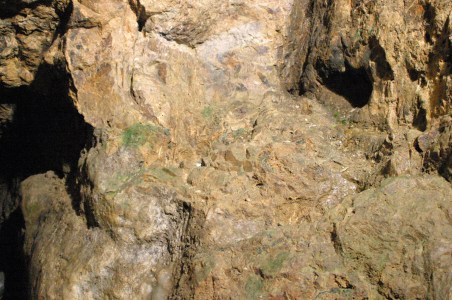
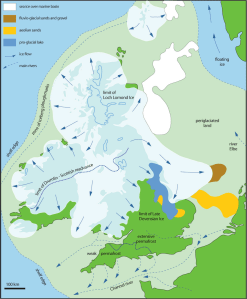


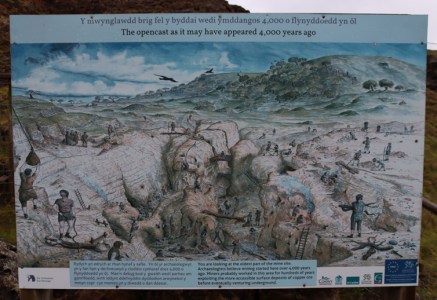


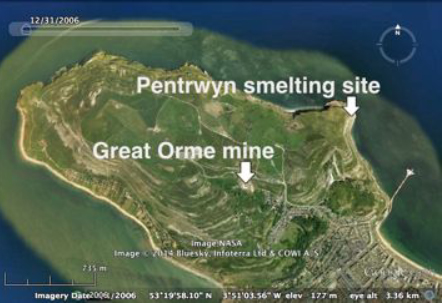

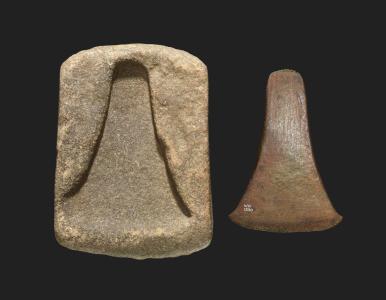


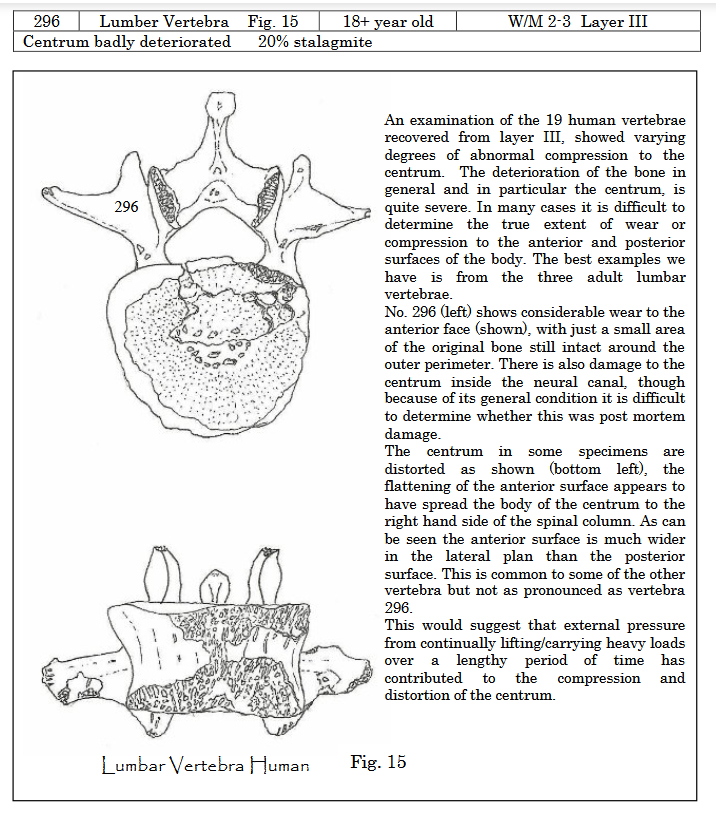


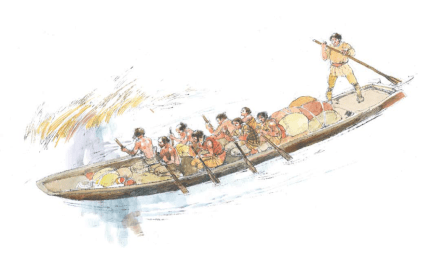


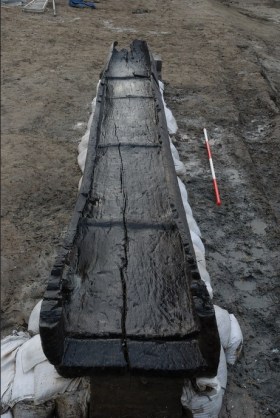


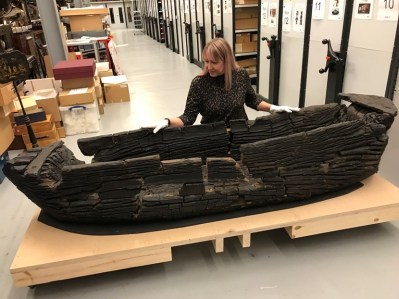


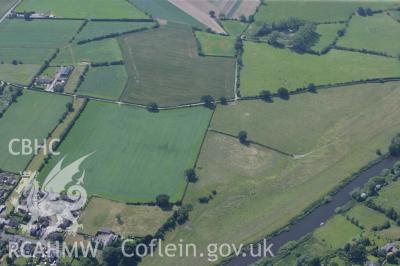


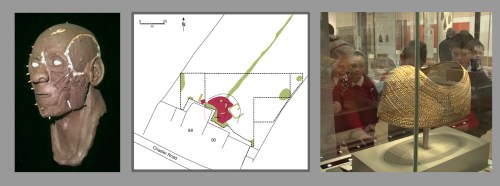

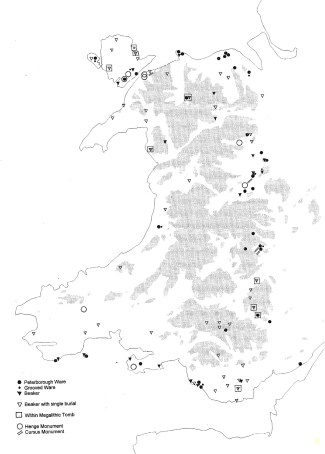
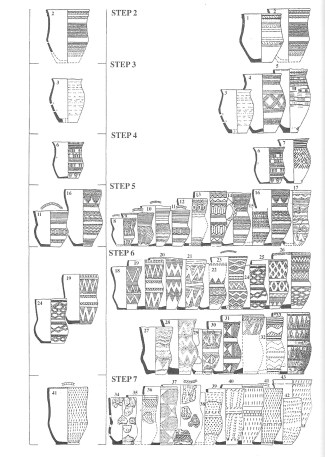





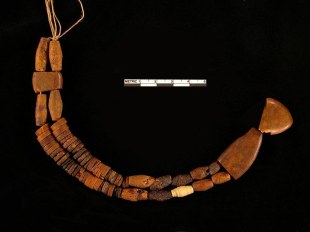


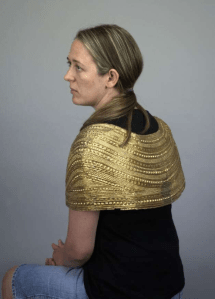


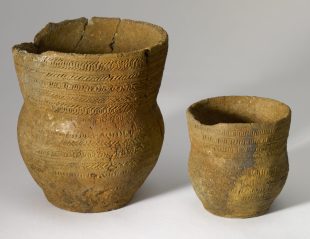


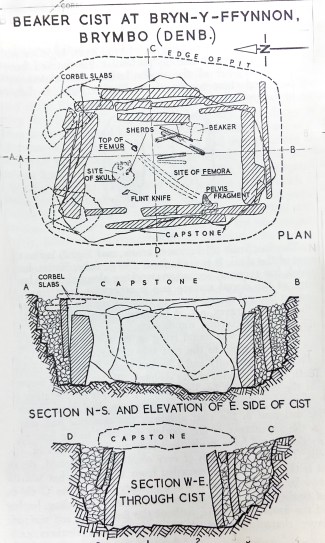
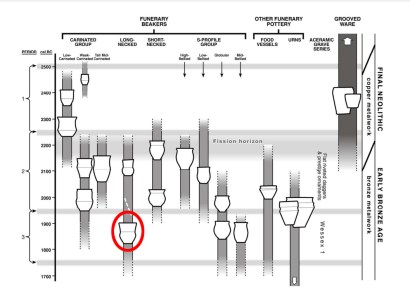


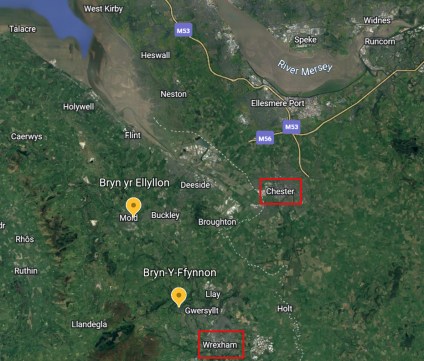
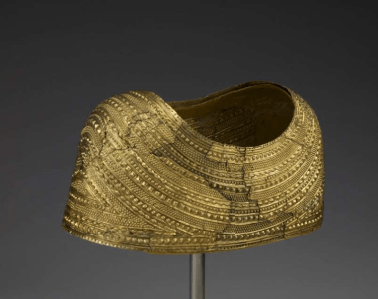


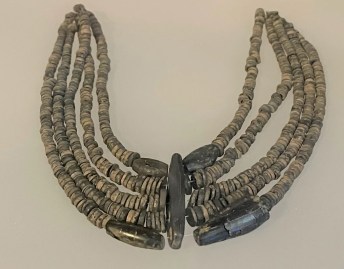










 Based in Churton


.jpg)


.jpg)


