Cheshire Proverbs 3: “To grin like a Cheshire cat chewing green gravel”

“To Grin Like a Cheshire Cat Chewing Green Gravel”


J.C. Bridge no. 342, p.125


John tenniel’s illustration of the Cheshire Cat, for Lewis Carroll’s Alice’s Adventures in Wonderland, (published 1865).  Source of photograph:  Wikipedia

Bridge’s version of this proverb is the one that I always knew, quite simply stating “To grin like a Cheshire cat.”   Bridge adds that variants of the proverb regarding the familiar grinning cat involved it chewing gravel or green gravel, which is the version that I’ve included in the header, merely for its novelty value, although Bridge is dubious regarding the authenticity of either variant.

Lewis Carroll (1832 – 1898), who lived in Daresbury in east Cheshire, was responsible for the popularity of this particular proverb, and it was made famous by John Tenniel’s illustrations in Carroll’s 1865 book Alice in Wonderland.  Carroll, however, did not invent the grinning Cheshire cat proverb.

During my short time looking at proverbs, I have learned that although their meanings sometimes survive, in many other cases the origins of the proverbs are long-lost in the quagmire of oral history, itself a tale of Chinese whispers.  Proverbs fascinate people not merely because they are striking, but because they are multi-layered.  As well as meaning, they have history, and as well as history, they capture a tone of the oral vernacular past that has been largely lost. Carroll’s entertaining appropriation of the Cheshire cat in 1865 presumably had very little to do with the proverb itself, but acquired an energy and life all of its own.  As time passes and Alice in Wonderland fades from the reading lists of current and future generations, Carroll’s reinvention of the Cheshire cat may also fade, much like the cat itself, which slowly vanishes to leave behind nothing but the grin itself.  That would be a shame.

Bridge is rather severe about the proverb.  He says that it is must be made clear that it is not an old saying “and no old writer or old collection of Proverb gives it” (Bridge’s italics).  He says that the oldest example is in the works of Peter Pindar dating to c.1794/1801:  “Lo! like a Cheshire cat our court will grin.”  He points out that it is not “and never has been” a very common saying in the Cheshire county.  Finally, he says that to date (and his date was 1917) none of the numerous attempts to elucidate it had been successful.

Bridge devotes another two and a half pages to this lack of success.  He begins with the unsubstantiated story of an unskilled sign-painter whose attempt to depict a lion-rampant looked more like a grinning cat, and the rest runs along similar lines.  It is a highly entertaining discourse between different writers on the possible origins of the proverb, but none of it is, as Bridge points out, verifiable or even plausible.  I particularly like the idea posed in 1850 that some Cheshire cheeses were sold in the form of a cat with bristles inserted to represent whiskers.  An indignant Bridge comments “I feel sure that the writer was mistaken.  Good Cheshire Cheese could not be made, and certainly never was made in the shape of Cats, or it would have ceased to be high class and to command the market.”  In the end Bridge thinks that a theory put forward by one Egerton Leigh is most likely to represent the reality:  “one need not go far to account for a Cheshire cat grinning.  A cat’s paradise must naturally be placed in a County like Cheshire, flowing with milk.”

Heat sensitive Cheshire cat-themed mug. Source: Amazon.

Carroll’s imaginative revival of the proverb has been incorporated into many popular contexts.  My family lived in Nantwich for a couple of years, and there was a very famous pub there called The Cheshire Cat, a half-timbered building that was originally built in the 17th Century. It had gone out of business when I was last there a few years ago, but there’s a website that indicates that it is back up and running, which is good news.

I was amused to see that the concept of the Cheshire cat has infiltrated itself into scientific lore.  Wikipedia has a list of examples, and a nice one from quantum mechanics has a phenomenon named “The Cheshire Cat,” in which a particle and its property behave as if they are separated.  Just as much fun, although infinitely less sophisticated, is the heat-sensitive mug that I found on Amazon, where the John Tenniel illustration of the cat vanishes as the mug warms through, leaving just the grin behind.

For more about J.C. Bridge and this Cheshire Proverbs series, see Cheshire Proverbs 1.

Sources:

Carroll, L. 1865. Alice’s Adventures in Wonderland.

Wikipedia: Cheshire Cat
https://en.wikipedia.org/wiki/Cheshire_Cat


The 1854 turnpike from Chester to Worthenbury via Churton, with a branch to Farndon – Part 2: The Turnpike

View west from the turnpike.

This is part 2 of the story about the Chester to Worthenbury turnpike, a rural toll road that ran peacefully through Huntington, Aldford, Churton (with a branch to Farndon), Crewe-by-Farndon, and Shocklach before terminating at lovely Worthenbury.   Part 1, posted the day before yesterday, looked at the background to turnpikes (toll roads) in the 17th to 19th Centuries, and their roles in everyday life as a setting for the Chester to Worthenbury turnpike.  Part 2 looks at the turnpike itself.  As I said in Part 1, the reason for splitting the post into two is that it turned out to be a fairly mammoth topic.  If you prefer to read it as a PDF or print it, you download the PDF by clicking here.

Most former turnpikes are still busy.  For example, when you wait patiently at Milton Green to turn on to the A41 that runs from Chester to Whitchurch, the thundering HGVs that happily ignore the “please drive carefully through our village” signs make it is difficult to imagine it populated with quietly plodding horses and carts.  It is a different story once you have driven from Crewe-By-Farndon via Shocklach to Worthenbury, because an entirely different leap of the imagination is required.  This time, it’s a case of wondering why such a quiet and rural stretch of road could ever have been sufficiently busy to require turnpiking.  Churton, Shocklach and Worthenbury are all well-defined villages, but other places marked on the map, such as Crewe-by-Farndon, Castletown and Caldecott Green are little more than a single big house and/or farm with a couple of associated buildings.

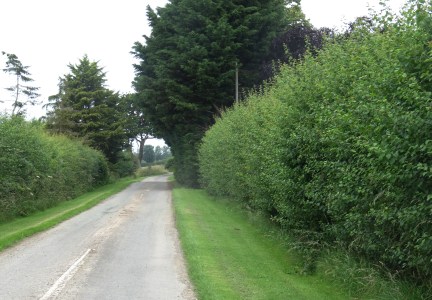
Scenery flanking the road that was turnpiked in 1854.


The route of the Chester to Worthenbury turnpike

In many areas, the presence of a Roman road dictated the line of Medieval and later roads, but the Roman road that once ran from Chester through Aldford fell out of use.  As you head south from Aldford, a small lane to the left, Lower Lane, indicates where the path of the Roman road splits from the B5130 and thereafter becomes a series of farm tracks and footpaths, its route sitting in between today’s A41 (Chester to Whitchurch) and A483 (Chester to Wrexham).  This Roman road, known today as Watling Street West (or more prosaically 6A), passed through Ecclestone, Heronbridge and Aldford then veered to the east of Churton, bypassing both Churton and Farndon  (I have written about the Roman road in an earlier post, here).  

The bending course of the road that was turnpiked in 1854. My photograph CC BY-NC-ND 4.0

Later, however, the establishment of Farndon as an important crossing to Holt and the rest of north and mid Wales meant that the path of the Roman road southeast of Aldford, was abandoned during the Middle Ages, and the line of the road shifted instead west towards the Dee, passing through what is now Churton before reaching Farndon.  This route was established at least during the reign of Edward I, (reigned 1272-1307), who followed it on one of his peripatetic Royal Itineraries, heading south from Chester through Ecclestone and Malpas.  Rachel Swallow says that a toll gate was documented at Shocklach at around 1291, all traces now vanished. 

The Chester to Worthenbury turnpike followed a path from Chester through Huntington, Aldford and Churton before heading down what is now Sibbersfield Lane and across the modern bypass before vanishing down the quiet, wending country B-road to Worthenbury.  As with every turnpike, an Act of Parliament was required before Trustees could be appointed, and this was the Chester, Farndon and Worthenbury Turnpike Road Act 1854, “An Act for making a Turnpike Road from Chester, by Farndon, to Worthenbury, with a Branch therefrom to the Village of Farndon,” which passed into law on 3rd July of that year.  The exact wording of the first part of the Act is shown below the bibliography, Sources, right at the end of this post.  It was the last road in Cheshire to be turnpiked.  Here is the description of the route from the 1854 Act:

A Turnpike Road to commence in Boughton in the Parishes of Saint Oswald and Saint John the Baptist, or One of them, within the Parliamentary Borough of Chester, by a Junction with the Road leading from the City of Chester to Whitchurch opposite and near to a Public House called the “Jolly Gardener,” and to terminate in the Township and Parish of Worthenbury in the County of Flint by Two Junctions with the Whitchurch and Marchwiel Turnpike Road, one thereof at or near to a certain Farm House called “Broughton Lodge,” and the other thereof at or near the Finger Post at the Junction of the present Highway from Shocklach with the Whitchurch and Marchwiel Turnpike Road : A- Branch Turnpike Road to commence from and out of the said intended Turnpike Road in the Township of Churton, by Farndon and Parish of Farndon, at or near the Point where the existing Highways leading from Churton to Farndon and from Churton by Crewe and Shocklach to Worthenbury respectively diverge, and to terminate in the Village, Township, and Parish of Farndon by a Junction with the Turnpike Road leading from Wrexham to Barnhill near to the Raven Inn, all in the County of Chester.

A court case that followed the demise of the turnpike is useful for describing the state of the road before it was turnpiked

“Before and until the passing of the Chester, Farndon and Worthenbury Turnpike Road act of 1854, it consisted of an ordinary fenced road, varying in width from about 20-30ft, of which nine feet wide only was paved with stones along the centre;  the sides not being metalled were of grass or earth.  The stone of which the pavement was formed was got in the township from the lands alleged in the indictment . . . . The road, which was an ordinary carriage highway was at that time repaired by John Brock Wood, the owner of the said lands.”

The stones of the old pavement were used in the construction and macadam was brought from Penmaenmawr to lay along its surface.  The width was not expanded beyond the original fences that flanked it.

The Chester to Worthenbury turnpike trust

The sheer number of trustees appointed in the 1854 Act staggered me, as I had been imagining something in the region of ten or twenty responsible dignitaries.  There were 66 (give or take – I may have lost one or two in the process of counting).  After including “All Her Majesty’s Justices of the Peace for the Time being acting for the County of Chester, for the County of the City of Chester, and for the County of Flint respectively” the Act goes on to name individual trustees, and here they all are:

Sir Richard Puleston of Emral Hall. Source: Puleston Ancestry.

The Honourable Hugh Lupus Grosvenor commonly called Earl Grosvenor, the Honourable Richard de Aquila Grosvenor commonly called Lord Richard de Aquila Grosvenor, the Honourable Henry Cholmondeley commonly called Lord Henry Cholmondeley, Sir Robert Henry Cunlife Baronet, Robert Ellis Cunliffe, Sir Watkin Williams Wynn Baronet, Sir Philip de Malpas Grey Egerton Baronet, Philip Le Bel- ward Egerton, Samuel Aldersey, Thomas Aldersey, the Rector of Aldford for the Time being, Roger Barnston, Harry Barnston, Thomas Boyden Clerk, Richard Barker, Francis Henry Barker, Thomas Chorlton Glutton, Charles Colley, Hugh Colley, Henry Crane, Tanat Wynne Denton, Thomas Dixon, Thomas Dixon the younger, James Dixon, the Minister of Farndon for the Time being, William Wynne Ffoulkes, Edward Francis French, Alexander Price French, Philip Stapleton Humberston, Thomas Cowper Hincks, Thomas Cowper Hincks the younger, Thomas Hignett, John Hignett, Robert Broadhurst Hill, the Minister of Holt for the Time being, Robert Howard, Francis James Hughes, Townsend Ince, Thomas Jones, John Hurleston Leche, Sir William Lloyd, Richard Massie, John Finchett Maddock, Thomas Finchett Maddock, Townshend Mainwaring, Henry Water Meredith, Robert Buckley Orton, Sir Richard Puleston Baronet, Francis Richard Puleston, Theophilus Puleston, Charles Potts, Henry Potts, Charles William Potts, William Parker, John Parker, Richard Powdrell, William Rowe, Samuel Rowe, John Rogers, Thomas Vernon Royle; Joseph Sparkes, John Townshend, Charles Townshend, John Williams, Edward Tilston, John Brock Wood, William Henry Wood, the Rector of Worthenbuiy

Pratt’s 1912 study offered the following comment on the sheer number of trustees that could be in charge of a turnpike:

One result of the excessive localisation of the turnpike system was that trusts of absurdly large proportions were created to look after absurdly small stretches of road. “The fundamental principle,” says a writer in the “Edinburgh Review” for October, 1819, “is always to vest the whole management in the hands of the country gentlemen; and, as they act gratuitously, it has been the policy of the law to appoint in each act a prodigious number of commissioners—frequently from one hundred to two hundred, for the care of ten or fifteen miles of road; and thus a business of art and science is committed to a promiscuous mob of peers, squires, farmers and shopkeepers, who are chosen, not for their fitness to discharge the duties of commissioners, but from the sole qualification of residence within a short distance from the road to be made or repaired. . . .

The whole time of the meetings of turnpike trusts was “occupied in tumultuous and unprofitable discussions, and in resolving on things at one meeting which run a good chance of being reversed at the next; that the well informed and civilized commissioners become very soon disgusted with the disorderly uproar, or the want of sense, temper or honesty of some of their companions; and that the management finally falls into the hands of a few busy, bustling, interested persons of low condition, who attend the meetings with no idea of performing a public duty, but for the purpose of turning their powers, by some device or other, to the profit of themselves or of their friends or relations.

Scenery flanking the road that was turnpiked in 1854. My photograph CC BY-NC-ND 4.0

Local landowners could invest their own funds to improve a road, but generally loans were taken out to meet the initial set-up costs, with the interest theoretically being paid back from the income derived from tolls, or at least that left over after paying salaried staff and carrying out frequent repairs.  Even where the accounts tallied, which they often did not, huge debts were accrued.  The Select Committee on Turnpike Trusts in 1839 reported that eighty four trusts had paid no interest in years, and that the total estimated debt of English and Welsh turnpike trusts together exceeded £9,000,000, a staggering sum in those days. It seems remarkable, under these conditions, that a new turnpike Act was passed in favour of the Chester to Worthenbury turnpike so late in the turnpike era.

The reasoning behind the creation of the turnpike

One of the many farms that lines the turnpike’s route. My photograph CC BY-NC-ND 4.0

The Chester to Worthenbury road wended its bendy way at its own leisure through agricultural land, connecting a number of villages, including Churton, Crewe-by-Farndon and Shocklach.  A drive down that section of the road south of Sibbersfield Lane confirms it as a winding, rural road with a few farm buildings along its routes, the few villages very small and quiet.  A branch ran from Churton into Farndon.   Worthenbury, a rural village that has changed very little since the 19th Century, was not an obvious destination for traders, merchants, carriers or passenger vehicles, traditionally the main users of turnpikes.   The destructive impact of the transportation of heavy loads of cheese was given as a primary reason for the creation of a turnpike between Chester and Whitchurch.  The production of Cheshire cheese was certainly of great importance to the county, as Defoe explains in 1725:

This county, however remote from London, is one of those which contributes most to its support, as well as to several other parts of England, and that is by its excellent cheese, which they make here in such quantities, and so exceeding good, that as I am told from very good authority, the city of London only take off 14000 ton every year; besides 8000 ton which they say goes every year down the Rivers Severn and Trent, the former to Bristol, and the latter to York; including all the towns on both these large rivers: And besides the quantity ship’d both here, and at Leverpool [Liverpool], to go to Ireland, and Scotland. So that the quantity of cheese made in this country, must be prodigious great. Indeed, the whole county is employ’d in it, and part of its neighbourhood too.

However, this situation was over a century before the Chester to Worthenbury turnpike was mooted and there’s no indication either in contemporary newspapers or in the Act itself whether the carriage of Cheshire cheese or any other particular problem was a reason why the Chester to Worthenbury turnpike was deemed worth the cost and effort.  The Act merely says that the turnpike “would be of great public value,” which is somewhat unhelpful.  Crosby suggests “the rather remote possibility of abstracting traffic from the Chester-Wrexham and Chester-Wrexham roads,” but the encyclopaedic New Historical Atlas of Cheshire (2002) is silent on the subject, as is Latham’s Farndon

Scan of map showing turnpike roads in Cheshire, from the New Atlas of Cheshire (Phillips and Phillips 2002, p.77).  The Chester to Worthenbury turnpike is shown in green at the far left, crossing the Broxton to Wrexham Turnpike (in yellow).

Perhaps the object of the exercise was to improve the quality of the road network in this part of West Cheshire. This area was rather isolated.  The canal network bypassed the Dee, south of Chester, with the 1772 Chester Canal (now part of the Shropshire Union) heading southeast from Chester via Beeston to Nantwich to Birmingham, linking into other parts of the canal and turnpike networks as it went, and the Dee itself was only navigable by very light traffic. By the end of the 18th Century there were already serviceable turnpikes between Chester and Whitchurch and Chester and Wrexham, which accounted for most of the market-bound and commercial traffic.   

The turnpike  linked up with Whitchurch after passing through Worthenbury, but it was a very rambling route, and the Chester to Whitchurch turnpike would have been a much better option unless you were starting from somewhere like Churton, Farndon or Holt.  The New Atlas shows an intersection with the Wrexham to Broxton turnpike (now the A534), which was opened in the period 1760-1789, linking the Chester to Wrexham and Chester to Whitchurch roads.  There was a turnpike between Bangor On Dee and Malpas, which opened in 1767.  Although the road between Worthenbury and Bangor on Dee (the B5069) does not appear to have been turnpiked, it was a short stretch and would have been easy enough to maintain in good condition if there was sufficient motivation.

Emral Hall, Worthenbury.  The lower photo shows the ballroom, now preserved (thank goodness) in the Town Hall at Portmeirion.  Source: Wrexham Online.

A number of large estates and prosperous farms were located along the route of the turnpike.  The largest of these were Crewe Hill in Crewe-by-Farndon, Boughton Hall near Threapwood and the magnificent Emral Hall just to the south of Worthenbury.  Crewe Hill was the principal home of the Barnston family, and the base of their wide-ranging and profitable estate that included land in and around Farndon and extending north to the middle of Churton.  The lovely half-timbered Broughton Hall was sadly demolished in 1961, but at the time was the home of the Howards.  Emral Hall also tragically demolished in the 1930s, was the home and estate of the Pulestons throughout the 18th and 19th Centuries.  Others along the route, from north to south, are Aldford Hall, Churton Hall, Sibbersfield Hall, Crewe Hall, Shocklach Hall,  Kingslee and Caldecott Hall.  Trustees included community members from all areas through which the turnpike passed, so members of the family present on the trustees list does not prove that they were driving forces behind the turnpike, but it is still interesting to see (where these family names can be traced) which estates provided family members as trustees.  

  • Broughton Hall, demolished 1961. Source: Threapwood History Group.

    • Aldford Hall:  The Earl of Westminster and Lord Richard de Aquila Grosvenor
    • Churton Hall:  Roger Barnston and Harry Barnston
    • Sibbersfield Hall:  William Rowe and Samuel Rowe
    • Crewe Hill:  Roger Barnston and Harry Barnston
    • Caldecott Hall:  Philip Stapleton Humberston
    • Broughton Hall:  Robert Howard
    • Emral Hall: Sir Richard Puleston (baronet), Francis Richard Puleston, and Theophilus Puleston


Sibbersfield Hall, just outside Churton. Ordnance Survey 1888-1913.  Source: National Library of Scotland

Other trustees on the above list with a vested interest in being able to get around were the Rectors of Aldford and Worthenbury and the Ministers of Farndon and Holt.  Trustees Samuel Aldersey and Thomas Aldersey of Aldersey Hall, would also have benefitted from the tunrpike road, to which the road on which Aldersey Hall was located was linked.  And so it goes on.

There are apparently some omissions and question marks too.  Although a large building is shown on the site of Churton Lodge, no details are available on the Tithe map.  Shocklach Hall was only built in the 1850s, so was perhaps itself under construction at the time, or built partly because the turnpike was there.  In the 1840s tithe maps the land on which it as located was owned by Emral Hall.  Crewe Hall (as opposed to Crewe Hill) was owned and occupied by the Bennion family when the 1838 tithe map was published, but they do not appear as trustees.  

Crewe Hill from the garden. Source: Landed Families of Britain and Ireland website

Some of the very few buildings along the turnpike route at Crewe-by-Farndon and Shocklach.  From left: Crewe Hall, one of the buildings in the village of Shocklach, the Bull in Shocklach and Kingslee.  My photograph CC BY-NC-ND 4.0

Toll cottages along the route

The tollgate was usually accompanied by a toll cottage.  The Grade-2 listed, two-storey brick-built Cross Cottage in Churton is built across the junction between Chester Road and Pump Lane and, by virtue of the fact that it was built to serve the turnpike, must have been built at around 1854.  It is strategically located just to the north of where the road splits into two, one road going into Farndon and the other proceeding via Stannage Lane, to Crewe-by-Farndon and on to Worthenbury.  Both roads were part of the turnpike, with the Farndon section a branch of the main turnpike to Worthenbury.  The attractive recessed arch, which is at both front and rear, was once centred in the middle of the building, and was provided with a slender band of sandstone between the upper and lower floors.  An extension of uncertain date, possibly the 1930s, breaks down this symmetry, although it was done sympathetically using almost identical bricks to the originals but does not repeat the sandstone band.

The rear view of Cross Cottage. Source: mylisting365.

The roof is currently hipped (converging in from four sides onto a central ridge), but before the addition of the extension, the roof was probably pyramidal, converging from four sides onto a single point.  The original roof was probably also made of slate, as today.  There are two chimneys today, but there will only have been the one in the 19th Century, with a central flue.  Although it was Grade II listed in 1984, there are no details on the Historic England website about the interior, and whether any of the 19th Century interior survives in tact.

The listing details are as follows:

  • NGR 4180856444
  • List number 1228714
  • First listed 28th December 1984

Toll collectors could improve their wellbeing by keeping livestock and growing fruit and vegetables in the confines of their properties, and some toll cottages were provided with a small amount of land that could be used for either the keeping of livestock or the development of small horticultural plots.   Cross Cottage was provided with a large garden that could have been used for either.

The bridge at Worthenbury. My photograph CC BY-NC-ND 4.0

I went looking for any other toll cottages that might have been built along the road.  On some turnpikes additional toll gates were added as a way of trusts earning more revenue, but there was nothing that looked remotely like a toll cottage.  There should have been one at Worthenbury, the end of the turnpike.  In cases where a river crossing was present, toll gates were often set up against a bridge, making it more difficult to evade, but although there is a beautiful old bridge in Worthenbury, the western side of it is open fields, and the eastern side is now the site of a modern home, part of a housing estate.  The bridge replaces one that was damaged by floods in 1872, and was built in 1872-3.  This was the period when the Chester-Worthenbury turnpike was amalgamated with the Chester-Whitchurch.  Still, tolls would have required ongoing collection, and if there was a toll gate here, there’s no sign of it now.

The toll collectors

There is a toll-house at Churton so it of course follows that there must have been at least one toll collector, possibly accompanied by his family.  Regrettably, I have not yet worked out who he/they might have been, because the commercial directories available online don’t mention a Churton toll collector during this period (the1857 Post Office Directory of Cheshire and the 1864 Morris & Co.’s Directory of Cheshire).  Whilst the Delta variant of Covid is still at large, it’s probably not a good idea to start hitting the record offices, but perhaps someone who has checked into the available resources can illuminate me.  Speculating, this absence from the directories may be because although early turnpikes were manned by manor employees and then by specially hired toll collectors, the appointment of later collectors was given into the hands of specialist contractors, who would bid for the lease at auction.  It may be that under such conditions, the toll collectors were deemed to be transient members of the community.

Toll collectors had an ambivalent position in local society.  Because toll charges were lengthy and complex, incorporating a large number of variables, a toll collector needed to be both literate and numerate, and hopefully (but not always) trustworthy. As people of responsibility, often living in custom-built homes with their families, toll collectors might be people of high status within a community.  Although in many ways, toll collectors were about as popular as tax collectors are today, they provided a vital role.  A toll house could bring prestige to an otherwise fairly nondescript community, even attracting the building of inns where passengers could purchase refreshments and where carriage horses could be rested or changed, meaning that gentry and clergy could be regular visitors, raising the status of an entire village.  

The 1898 mile post at Shocklach. My photograph CC BY-NC-ND 4.0

The toll charges for Chester-Worthenbury are probably described in the 1854 Act, but this too is not available without tramping the real-world archive trail, and I will update this post when I have the chance to check this out, as a copy is apparently available locally.  Each turnpike Act set out the maximum toll chargeable for each animal and category and size of vehicle, and all the multiple variables of each.

As I said in Part 1, the mile posts that dot the western verges of the former turnpike post-date the end of the Cheshire turnpikes.  Disturnpiked in the 1870s, there must have been mile posts because they were a legal requirement, but when Chester County Council was created on 1st January 1889 and was given the job of maintaining highways, it presumably replaced the original milestones with its own iron ones, all dating to 1898.  I have found some of these, marked on the Ordnance Survey map, but not others.  The one shown in Part 1 is in Churton and the one shown above is in Shocklach.

The final days of the Chester to Worthenbury turnpike

The lovely Georgian St Deiniol’s Church in Worthenbury. My photograph CC BY-NC-ND 4.0

The Chester-Worthenbury turnpike was never much of a success and was amalgamated with the Whitchurch Trust in 1871.  The joint body expired in 1877.  Presumably, and not very surprisingly, the Worthenbury turnpike failed to justify its costs, and the Whitchurch turnpike was probably put out of business by the London and North Western Railway.  The railway’s important route to London via Crewe had opened by 1840, and the branch that ran from Chester to Whitchurch opened between 1870 and 1879.

An indictment concerning repairs to the road following the lapse of the Act

Rural landscape to the east of the once-turnpiked stretch of road that passes through Churton. My photograph CC BY-NC-ND 4.0

The most interesting part of the turnpike’s history, or at least the most interesting bit to survive, refers to what happened when the Act for the Chester to Worthenbury section had been disturnpiked, and a question arose over responsibility for its ongoing care arose.  In 1890 an indictment was raised in Crown Court for failure to repair a highway.  The issue was by no means straightforward.  The law stated that responsibility for repair of a road that had formerly come under a turnpike trust would revert to common law liability on the lapse of the trust, but only if “the highway remains similar in character to what it was up to the time of the passing of the Turnpike Act.”  For those roads that were significantly altered, “as to destroy what was the old highway, the common law liability is put to an end by operation of the law.”  In addition, there were ambiguities about the responsibilities for occupiers versus mere owners, where roads were concerned.

The indictment covered several stretches of road that had become “miry, deep, broken and in great decay,” due to “such want of due reparation and amendment.”   This included the stretch from Huntington to Farndon.  The same allegation was made against stretch from Chester to Saighton.  The text from the court case is damning.

“The liege subjects of the Queen could not and still could not go, return, pass, repass, ride or labour on foot with their horses, coaches, carts and other carriages in, through, and along the said public highway aforesaid as they ought and were wont and accustomed to do, without great danger and common nuisance of all the liege subjects of our said Lady the Queen, her crown and dignity, and that the defendant, by reason of his tenure of certain lands and tenements situate in the said township of Huntington, ought to repair and mend the same.”

It goes on:

“As to the road mentioned in the first count [Saighton was the second] it was proved that before and until the passing of the Chester, Farndon and Worthenbury Turnpike Road Act of 1854, it consisted of an ordinary fenced road.”

The individual who had taken responsibility for repairing the road before it was converted to a turnpike was John Brock Wood, who is recorded in the list of trustees for the turnpike.  The record of the indictment states that there was no evidence that he had contributed to its maintenance during the continuance of the Act, but on its expiry in 1876 he resumed repair work, continuing to do so until his death in 1888.  The person who inherited John Brock Wood’s responsibilities “the devisee in trust of the said lands” continued to repair the road in the belief that he was legally liable.  He provided proof that he had expended £155, £224 and £206 in 1887, 1888 and 1889 respectively.

View from the former turnpike over the fields to Worthenbury

The prosecution (Tatham and Proctor for Carrington and Baker, Chester) claimed that as John Brock Wood had accepted responsibility before the establishment of the Trust, it was now the devisee in trust’s responsibility following the expiry of the Act.  However, the law stated that if significant alternation had taken place during the conversion of a road to a turnpike, the original owner was no longer responsible for maintenance.  In fact, Chester County Council had been approached with a view to taking on responsibility for the road, but they had refused to do so under Section 97 of the Local Government Act 1888.   The estimated costs were in excess of £400 and may have been as much as 1000.

The defense (the company Cunliffe and Dawn for Churton, Chester) claimed that the alternations to the road when it was converted to  a turnpike were so extensive as to destroy any liability that either he, or for that matter John Brock Wood, should have had.  In response, the prosecution argued that by repairing the road, the defendant had acknowledged the liability and could be indicted for non-repair.

The judge overseeing the proceedings, Lord Coleridge C.J. ruled in favour of the defendant.  In his view, citing Rolle’s Abridgement from the reign of Charles I, the occupier and not the owner is the person responsible for repairs, and the defendant was the owner but not the occupier.   In addition, he found that the road had been significantly altered, and therefore liability for the repairs should not fall on the original owner or occupier.  The indictment was quashed.  The judge was concerned that under these circumstances, the “graver question” was if any person was actually liable to repair the road.  He does not, however, come to any conclusion about how to resolve the problem.

In the end, Chester County Council must have adopted the road, but this may have been at a much later date.  Section 97, “Saving as to liability for main roads,” which they used to avoid the responsibility, falls within Sections 92-98 “Savings.”  It reads “Nothing in this Act with respect to main roads shall alter the liability of any person or body of persons, corporate or unincoprorate, not being a highway authority, to maintain and repair any road or part of a road.”

As always, please let me know if you have any questions
or have some more information to contribute


Sources for parts 1 and 2:

Books and papers:

An Act for making a Turnpike Road from Chester, by Farndon, to Worthenbury, with a Branch therefrom to the Village of Farndon, 1854

Benford, M. 2002. Milestones.  Shire Publications

Crane, N. 2016.  The Making of the British Landscape.  From Ice Age to the Present.  Weidenfeld and Nicholson

Crosby, A.G. 2012.  New Roads for Old. Cheshire Turnpikes in the Landscape 1700-1850.  In (eds.) Varey, S.M. and White, G.J. Landscape History Discoveries in the North West.  University of Chester Press, p.190-223.

Cunningham Glen, R. 1895. Indictment presented before Lord Coleridge, C.J.  Reg. vs. Barker.  Reports of Cases in Criminal Law argued and determined in the courts of England and Ireland, vol.XVII, 1890-1895. Reported by R. Cunnigham Glen Esq., Barrister at Law. Horace Cox

Defoe, D. 1724–1726 (Rogers, P. ed.). A Tour Through the Whole Island of Great Britain Penguin (particularly, Volume II, 1725, and its appendix).

Harvie, C. and Matthew, H.C.G.  1984, 2000.  Nineteenth Century Britain. Oxford University Press

Hindle, P. 1998 (3rd edition).  Medieval Roads and Tracks.  Shire Publications Ltd

Keys, D. 2016. Discovery of huge Bronze Age wheel sheds light on transport in prehistoric Britain.  The Independent, Friday 19th February 2016
https://www.independent.co.uk/news/science/archaeology/prehistoric-britain-discovery-bronze-age-wheel-archaeology-a6882671.html

Langford, P. 1984, 2000. Eighteenth Century Britain.  Oxford University Press

Latham, F.A. 1981.  Farndon. The History of a Cheshire Village.  Local History Group.

Local Government Act 1888 (51 and 52 Vict. c.41). Section 97, Saving as to liability for main roads.

OS Landranger map 117 2016.  Chester and Wrexham.  Ordnance Survey

Phillips, A.D.M. and Phillips, C.B. 2002.  A New Historical Atlas of Cheshire. Cheshire County Council and Cheshire Community Council Publications Trust.

Pratt, E.A. 1912.  A History of Inland Transport and Communication in England. Kegan Paul, Trench, Trübner and Co Ltd.
Project Gutenburg: https://www.gutenberg.org/files/52087/52087-h/52087-h.htm

Pryor, F. 2010.  The Making of the British Landscape.  How We Have Transformed the Land from Prehistory to Today.  Allen Lane

Swallow, R. 2013-14. Two For One:  the Archaeological Survey of Shocklach, Castle, Cheshire. Cheshire History Journal, No.53, 2013-4
https://www.academia.edu/4577267/Two_for_One_The_Archaeological_Survey_of_Shocklach_Castle_Cheshire_in_Cheshire_History_Journal_No_53_2013_4_Cheshire_Local_History_Association_2013_

Wright, G. N. 1992. Turnpike Roads. Shire Publications Ltd.

Websites

A Collection of Directories for Cheshire
Cheshire County Council
http://cheshiredirectories.manuscripteye.com/index.htm

British Listed Buildings
Cross Cottage, Churton
https://britishlistedbuildings.co.uk/101228714-cross-cottage-churton

Broughton Hall, Threapwood
Threapwood History Group
http://www.threapwoodhistory.org/broughtonhall.html

Cheshire Tithe Maps Online
Cheshire Archives and Local Studies
https://maps.cheshireeast.gov.uk/tithemaps/

Emral Hall, Worthenbury
Wrexham Online
https://www.wrexham-history.com/emral-hall-worthenbury/ 

Historic England
Cross Cottage, Churton
https://historicengland.org.uk/listing/the-list/list-entry/1228714

Dig Diary 19: Discovering Britain’s Oldest, Complete Wheel
February 29, 2016
Must Farm Dig Diaries
http://www.mustfarm.com/progress/site-diary-19-discovering-britains-oldest-complete-wheel/

National Archives
Chester and Whitchurch Turnpikes Trust
https://discovery.nationalarchives.gov.uk/details/r/11e8a8d6-43c5-4704-a93b-58fe6d0444a6

National Library of Scotland Mapfinder
OS 6-inch map, 1888-1913
https://maps.nls.uk/geo/explore/#zoom=15&lat=53.09734&lon=-2.86868&layers=6&b=1

Peterborough Archaeology
Must Farm Bronze Age Settlement
https://peterborougharchaeology.org/peterborough-archaeological-sites/must-farm/

Turnpike Roads in England and Wales
Turnpikes.org.uk
http://www.turnpikes.org.uk/Tollhouse%20design.htm

The 1854 Act (excerpt)

Most of the Act is in big undifferentiated chunks, so the paragraphs in the following excerpt are mine, simply to aid with digestion.  The URL of the source of this excerpt is at the end, but if you want to see the entire Act, paid subscription is required.

[3rd July 1854]
Chester, Farndon and Worthenbury Turnpike Road Act 1854
(17 & 18 Vict.) c. lxxxvi
An Act for making a Turnpike Road from Chester, by Farndon, to Worthenbury, with a Branch therefrom to the Village of Farndon.

ANNO DECIMO SEPTIMO & DECIMO OCTAVO VICTORIA REGINA. ********.*****************.********************* Cap. lxxxvi. An Act for making a Turnpike Road from Chester, by Farndon, to Worthenbury, with a Branch therefrom to the Village of Farndon. [3d July 1854.]

WHEREAS the Formation and Maintenance of a Turnpike Road from Chester, by Farndon in the County of Chester, to Worthenbury in the County of Flint, with a Branch therefrom to the Village of Farndon in the said County of Chester, would be of great public Advantage: And whereas certain of the Highways in the Line of the said intended Road and Branch, or Portions thereof, might advantageously be made available for the Purposes of such Road and Branch ; but the same cannot be effected without the Aid and Authority of Parliament : May it therefore please Your Majesty that it may be enacted ; and be it enacted by the Queen’s most Excellent Majesty, by and with the Advice and Consent of the Lords Spiritual and Temporal, and Commons, in this present Parliament assembled, and by the Authority of the same.

That in citing this Act for any Purpose whatsoever it shall be Short Title. sufficient to use the Expression ” The Chester, Farndon, and Worthenbury Turnpike Road Act, 1854.” H. That in this Act the following Words and Expressions shall Interpreta have the several Meanings hereby assigned to them, unless there be tion of [Local.] 15 D something Terms. 1302 Appointment of Trustees. Power to appoint additional Trustees. 17 & 18 VICTORUE, Cap.lxxxvi. 171e Chester, Farndon, and Worthenbury Turnpike Road Act,1854. Something in the Subject or Context repugnant to such Construction ; (that is to say,) The Expression ” the Trustees,” or ” the said Trustees,” shall respectively mean the Trustees for the Time being acting in the Execution of this Act : The Word Lands ” shall include Messuages, Tenements, and Hereditaments of any Tenure : The Expression ” Toll Gate ” or ” Toll Gates” shall respectively include Turnpikes, Bars, and Chains. III.

That all Her Majesty’s Justices of the Peace for the Time being acting for the County of Chester, for the County of the City of Chester, and for the County of Flint respectively, together with the Honourable Hugh Lupus Grosvenor commonly called Earl Grosvenor, the Honourable Richard de Aquila Grosvenor commonly called Lord Richard de Aquila Grosvenor, the Honourable Henry Cholmondeley commonly called Lord Henry Cholmondeley, Sir Robert Henry Cunlife Baronet, Robert Ellis Cunliffe, Sir Watkin Williams Wynn Baronet, Sir Philip de Malpas Grey Egerton Baronet, Philip Le Bel- ward Egerton, Samuel Aldersey, Thomas Aldersey, the Rector of Aldford for the Time being, Roger Barnston, Harry Barnston, Thomas Boyden Clerk, Richard Barker, Francis Henry Barker, Thomas Chorlton Glutton, Charles Colley, Hugh Colley, Henry Crane, Tanat Wynne Denton, Thomas Dixon, Thomas Dixon the younger, James Dixon, the Minister of Farndon for the Time being, William Wynne Ffoulkes, Edward Francis French, Alexander Price French, Philip Stapleton Humberston, Thomas Cowper Hincks, Thomas Cowper Hincks the younger, Thomas Hignett, John Hignett, Robert Broadhurst Hill, the Minister of Holt for the Time being, Robert Howard, Francis James Hughes, Townsend Ince, Thomas Jones, John Hurleston Leche, Sir William Lloyd, Richard Massie, John Finchett Maddock, Thomas Finchett Maddock, Townshend Mainwaring, Henry Water Meredith, Robert Buckley Orton, Sir Richard Puleston Baronet, Francis Richard Puleston, Tlieophilus Puleston, Charles Potts, Henry Potts, Charles William Potts, William Parker, John Parker, Richard Powdrell, William Rowe, Samuel Rowe, John Rogers, Thomas Vernon Royle; Joseph Sparkes, John Townshend, Charles Townshend, John Williams, Edward Tilston, John Brock Wood, William Henry Wood, the Rector of Worthenbuiy for the Time being, and their Successors, being duly qualified to act as Trustees of Turnpike Roads in England, shall be Trustees for putting this Act into execution.

That it shall be lawful for the said Trustees, at any Meeting under this Act, to elect any Number of Persons, duly qualified to act as Trustees of Turnpike Roads in England, not exceeding Three in the whole, to be Trustees for, the Purposes of this Act, in addition to the 17 & 18 VICTORIAE, Cap.lxxxvi. 1303 The Chester, Farndon, and Worthenbury Turnpike Road Act, 1854. the Trustees hereby nominated, and such Trustees so elected shall have the same Powers and Authorities for executing this Act as if they had been hereby appointed. V. That the said Trustees shall meet together on the Twenty-first Meetings of Day after the passing of this Act, or as soon after as conveniently Trustees. may be, at the Exchange in the City of Chester aforesaid, or at some other convenient Place in Chester, and shall then and from Time to Time afterwards adjourn to and meet at such Times, and at such Places on or near to the said Roads, as they shall think proper. VI.

That the said Trustees may appoint Committees out of their Power to take the Care and Management of any particular Part point Committees. of the Roads, or to execute any of the other Purposes of this Act, according to such Instructions and Regulations as shall be laid down by the said Trustees at any General or Special Meeting ; and the said Committees and their Officers may proceed and act according to such Appointment, but subject always to the Authority and Control of the said Trustees. VII. That this Act shall be put into execution for the Purpose of Roads to making and maintaining, according to the Provisions of this Act, the which Act is applicable. Turnpike Road and Branch herein-after mentioned ; (that is to say,) A Turnpike Road to commence in Boughton in the Parishes of Saint Oswald and Saint John the Baptist, or One of them, within the Parliamentary Borough of Chester, by a Junction with the Road leading from the City of Chester to Whitchurch opposite and near to a Public House called the “Jolly Gardener,” and to terminate in the Township and Parish of Worthenbury in the County of Flint by Two Junctions with the Whitchurch and Marchwiel Turnpike Road, one thereof at or near to a certain Farm House called “Broughton Lodge,” and the other thereof at or near the Finger Post at the Junction of the present Highway from Shocklach with the Whitchurch and Marchwiel Turnpike Road : A- Branch Turnpike Road to commence from and out of the said intended Turnpike Road in the Township of Churton, by Farndon and Parish of Farndon, at or near the Point where the existing Highways leading from Churton to Farndon and from Churton by Crewe and Shocklach to Worthenbury respectively diverge, and to terminate in the Village, Township, and Parish of Farndon by a Junction with the Turnpike Road leading from Wrexham to Barnhill near to the Raven Inn, all in the County of Chester. VIII. And whereas Plans and Sections describing the Lines and Power to Levels of the said intended Roads, and the Lands through which the make Roads &c. according to deposited Plan, &c. Power to deviate from Plan to a certain Extent. 17 & 18 VICTORIAE, Cap.lxxxvi.

The Chester, Farndon, and Worthenbury Turnpike Road Act, 1854. Same are to be carried, together with Books of Reference containing the Names of the Owners or reputed Owners, Lessees or reputed Lessees, and Occupiers of such Lands, have been deposited with the Clerk of the Peace for the County of Chester, with the Clerk of the Peace for the County of the City of Chester, and with the Clerk of the Peace for the County of Flint respectively : Be it therefore enacted, That it shall be lawful for the Trustees to make and maintain the intended Turnpike Roads.

https://vlex.co.uk/vid/chester-farndon-and-worthenbury-808261441

The 1854 turnpike from Chester to Worthenbury via Churton, with a branch to Farndon – Part 1, Background

Every now and again one of my posts turns into something that needs to be split into  two or more parts.  This is one of them.  I found the subject so gripping that the post acquired a momentum all of its own and has grown into something of a monster, more diplodocus than tyrannosaurus, but still a bit of a beast.  I have therefore divided it into two.

Former toll cottage, Cross Cottage, on the corner of Pump Lane and Chester Road (my photograph, CC BY-NC-ND 4.0)

This first part looks  at turnpikes (toll roads) in general, as a background to the Chester to Worthenbury turnpike.  If you wish to save or print this as a PDF, please click here.

The second part looks at the turnpike itself, which ran from Chester through Huntington, Aldford, Churton, Crewe By Farndon and south through the villages along that road to Worthenbury, with a branch that ran from Churton to Farndon.

Anyone pausing to look at Cross Cottage on the corner of Chester Road and Pump Lane in Churton might wonder why it was located with its façade facing diagonally across the corner of these two roads.  This diagonal aspect is typical of many toll-houses, some of which were hexagonal in other parts of the country, in order to provide the toll collector with the best view of the approaching traffic.  The rest of the building does not immediately suggest its role as a toll-house to anyone more familiar with the single-storey Welsh ones, which are generally tiny, charming and fairly easy to spot.  Cross Cottage is brick-built, has two storeys, and is a substantial albeit rather bijou structure (more about it below).  It was built on the turnpike (or toll road) that was established by an 1854 Act of Parliament to run between Chester and Worthenbury, via Aldford, Churton and Shocklach, with a branch to Farndon.

Turnpikes and tolls from the 17th to 19th Centuries

Although the wheel had been known from around 1000 BC during the later Bronze Age, for much of British prehistory and early history the easiest means of transporting goods was by water, either coastal or riverine.  Travel over land was much more challenging until at least the 16th Century, even though the Romans, with their superior planning and engineering, may appear to give lie to that statement.  Prior to Roman roads and once again following the withdrawal of Rome in the 5th Century, the condition of tracks and roads was fairly grim.

From Tudor and Stuart times the responsibility for roads had fallen on the parish or township.  The Highways Act of 1555 set this down in law.  Members of the parish were obliged to contribute labour and equipment for repairs, in batches of consecutive days.  For parishes in rural areas with no major byways this was not necessarily a problem, but parishes that hosted major routes were victim to very unfair financial burdens and the condition of roads from one parish to another became very inconsistent. During the 16th  and 17th Centuries matters deteriorated as oxen- and horse-drawn waggons and carts replaced packhorses, and carriages capable of travelling longer distances became more common.  In the first half of the 16th century the long wheelbase waggon had been introduced, which allowed much heavier cargoes to be carried.  The Highways Act of 1662 included measures to try to reduce the damage to major highways by prohibiting the use of more than 7 horse teams to pull vehicles, and by banning the use of wagons with wheel widths that were in excess of 4 inches.

The London to Birmingham Stage Coach by John Cordrey, 1801. Source: Birmingham in the 18th Century

Carriages and coaches were a particular phenomenon of the late 18th and early 19th Centuries, when improvements in design, particularly improving ride by use of spring-loaded, shock-absorbing suspension and much better reliability via improved wheel design meant that both public and private transportation was much more common, faster, and could be pulled by more horses, all of which inflicted damage on roads.  Post, mail coaches and stage coaches began to offer a network of passenger travel across Britain.  Pratt gives the following statistics:

Over 3000 coaches were then on the road, and half of these began or ended their journeys in London. Some 150,000 horses were employed in running them, and there were about 30,000 coachmen, guards, horse-keepers and hostlers, while many hundreds of taverns, in town or country, prospered on the patronage the coaches brought them. From one London tavern alone there went every day over eighty coaches to destinations in the north. From another there went fifty-three coaches and fifty-one waggons, chiefly to the west of England. Altogether coaches or waggons were going from over one hundred taverns in the City or in the Borough.

The development of the turnpike network from 1741 to 1770. Source: Langford 2000, p.34-5

The state of roads in England and Wales became so poor that some were almost impassable in the winter.  Connections between villages and market towns were threatened, some becoming virtually cut off in bad weather.  Collection of rents became difficult and long distance trade was always in jeopardy in some regions.  This situation was aggravated during the 18th Century as the population expanded, and the demand for goods and produce increased.  As the Industrial Revolution gained momentum and coal, building materials, textiles and more food began to be needed all over the country as well as for export markets, cargoes were moved both locally to town markets, and then on to river and canal wharves and coastal ports and for transport over long distances and people travelled far more widely on business.

To take control of important routes, and place the cost of maintenance on the users rather than the parish through which they passed, turnpike trusts were set up to manage the rebuilding of existing bits of the road network and to construct new linking sections of road.  An initial experiment was set up in Lincolnshire in 1663, and in 1706 an Act of Parliament established a turnpike along a stretch of the A5, that became a model for future turnpikes.  The first of these turnpikes, or toll roads, were rolled out during the 18th and early 19th centuries, peaking in the early 1800s.  The Acts of Parliament that were required to establish a turnpike endured for a fixed period, initially of 21 years.  When this period expired, the Act could be renewed or permitted to lapse (“disturnpiked”).  In 1741 new legislation gave trustees the right to install weigh-bridges, and any load over 3 tons carried a surcharge.

The Rebecca Riots. Illustrated London News 1843

Tolls were payable by users of the turnpikes to foot the bill for them in the long term, with toll rates based on usage of the road.  This meant that the cost of maintaining the road fell on those who used it, much like modern road tax, rather than on the often landless and impoverished members of the parish.  A single person on horseback would pay much less than someone taking animals or a cart of goods for sale at market.  Again, it’s a bit like modern road tax where a four-wheel-drive or a van is charged at a higher rate than a small runabout.  Some people were exempt from tolls, including those attending church on a Sunday, clergymen, voters attending elections, mail coaches and funerals.  Local gentry were not exempt, and nor was farm traffic.  Although often very unpopular, penalties for damaging turnpikes began as whippings and up to three months imprisonment but were escalated, as protests increased, to include the possibility of deportation.  This did not prevent a number of protests and even riots being organized, mostly by farmers.  The best known of these are the Welsh Rebecca Riots of 1839-1843, when farmers dressed up as women to avoid identification, but there had been many earlier examples too. Most everyday personal protests took the form of attempting to cheat the toll or evade it entirely, rather than inflicting any physical damage.  Toll cheating was a favourite pastime.

Others, however, were much more enthusiastic.  Daniel Defoe, writing in 1725, was a fan.  Travelling around Britain and writing his “A Tour Through the Whole Island of Great Britain” he described one section along Watling Street in ecstatic terms:  “The bottom is not only repaired, but the narrow places are widened, hills levelled, bottoms raised and the ascents and descents made easy.”

Each new turnpike trust was authorized by an individual Act of Parliament, which initially lasted for 21 years, after which they could be renewed until the decision was made after the first half of the 19th Century to allow all turnpikes Acts to expire.   The turnpike trusts were composed of local landowners and dignitaries, including clergy and the new class of professional men that included ambitious local merchants and manufacturers.  Although the trustees were not paid, it was absolutely in their interests to improve the economic infrastructure of their particular areas.

The trustees in turn appointed salaried officers, such as solicitors and bankers, to do the actual work of building and maintaining the road and managing the collection of tolls.  Turnpikes helped to establish reliable timetables and improved the dependability of the mail.  Ribbon developments grew up along them, particularly as they headed out of a town, or passed through a major intersection, and new coaching inns were established to meet the needs of passengers, horses and carriage crew.   In 1745 it had taken a fortnight to reach Edinburgh from London, but by 1796 this had been reduced to two and a half days, and by 1830 just 36 hours.  By the end of 1750 there were 166 turnpike trusts covering 3400 miles / 5500km.  By the 1870s turnpikes covered 19,000 road miles (30,000km).

Most turnpikes simply repaired existing roads and others reinvented existing roads in terms of their construction, sometimes rerouting them.  Only occasionally were entirely new roads were built.  The Chester to Worthenbury stretch was somewhere between the first two of these, improving the road surface and drainage whilst maintaining the original width and route of the old road.

The main activities required for the establishment of a turnpike were hard-surfacing and draining as well as signposting.  The surfacing was required to prevent animals and cart and carriage wheels from carving up the roads, and drainage, as the Romans had discovered, was required to maintain the surface and prevent it reverting to deeply indented mud.  Edwin Pratt’s 1912 study of inland transport (an invaluable source of information for this post), was most unflattering about the quality of the turnpikes before Thomas Telford and particularly John Loudon MacAdam began to standardize a better, reliable way of surfacing roads:

Although a vast amount of road-making or road-repairing was going on, at the very considerable expense of the road users, and to the advantage of a small army of attorneys, officials and labourers, it was not road-making of a scientific kind, but merely amateur work, done at excessive cost, either with unintelligent zeal or in slovenly style, and yielding results which mostly failed to give the country the type of road it required for the ever-increasing traffic to which expanding trade, greater travel, and heavier and more numerous waggons and coaches were leading. Before the adoption of scientific road-making, the usual way of forming a new road was, first to lay along it a collection of large stones, and then to heap up thereon small stones and road dirt in such a way that the road assumed the shape of the upper half of an orange, the convexity often being so pronounced that vehicles kept along the summit of the eminence because it was dangerous for them, especially in rainy weather, to go along the slope on either side.

John McAdam. Engraving by Charles Turner. Courtesy of the Trustees of the British Museum

This was probably not true of all turnpikes, but was clearly valid in a daunting number of cases.  In the early 19th Century McAdam’s first insight was that road surfaces needed to be impermeable so that water did not pass through to the soil beneath and begin to run away, collapse and otherwise undermine the road above.  His second insight was that stones laid as road surfaces should be  broken and angular, not rounded, so that when subjected to the weight of traffic they would consolidate, compact and bear weight.  He ran successful experiments to test his ideas.  This was the first strategic and standardized approach to road building in Britain since the Romans left.

Signage, much like the M6 Toll today, advertized the presence of a turnpike, and promoted its use, but also showed routes to villages along roads with which it intersected.  A gate was set up and a toll cottage or at the very least a hut was usually built.

Milestones

1898 milepost, just to the north of Churton (my photo, CC BY-NC-ND 4.0)

Milestones or mileposts were set from the first half of the 17th Century onwards, starting in southeast England, mainly for the benefit of mail coaches and other passenger vehicles.  Turnpikes were encouraged to install them from the 1740s and in 1766 became obligatory when it was found that as well as being useful for coachmen and passengers, it enabled accurate measuring of distances for the pricing of different routes.  It also helped to improve improved the reliability of timetables, something to which the turnpikes themselves, had enabled, particularly relevant in bad weather.

There are some very fine milestones dotted along the road along the line of the old Chester to Worthenbury turnpike, but all are dated to 1898, two decades after the expiration date of the 1854 Act.  They were erected by Chester County Council after it had accepted responsibility for the road.  A forthcoming post will talk about the milestones.  Sadly, if there were original milestones belonging to the 1854-1876 Chestser to Worthenbury turnpike, which in theory there should have been, none remain.  They may have been removed when the 1898 ones were put in place.  Looking around online for earlier mileposts in Cheshire, they were all made of stone, some of sandstone, engraved with the mileage details, and some are badly eroded.  Perhaps some fallen and lost ones will eventually turn up.

I am keeping a record of all the surviving 1898 mileposts, as I find them, and the condition that they are in on another post, here.

The end of the turnpikes

Arguments that turnpikes were an impediment to free trade were also beginning to be heard, and national infrastructure was gradually coming under more active government control.  The Local Government Act of 1888 put responsibility of roads into the hands of local councils, at which point many of the turnpikes became redundant, although sections 92-98 of the 1888 Act provided for some exclusions.

Railways of England and Wales 1825-1914. Source: Harvie and Matthew 2000

According to Crosby, by the mid 19th Century the network of turnpikes in Cheshire covered around 590 miles.  As the the railways began to cover more parts of the country, far more efficient at transporting both people and cargoes, including livestock, turnpikes were no longer as important.  In the 1840s, as railways took off, income from tolls fell dramatically.  From this time forward, and particularly from the 1860s, as turnpikes came up for renewal most were allowed to lapse, and the government decided to referred to as “disturnpiked.” In 1895 the last of the turnpikes closed down.

Some villages that had been bypassed by a major turnpike, suddenly became economically prosperous when railways were run through them.  For example, Aberdovey, a small but important port for the coastal trade in mid-West Wales (known to many of today’s West Cheshire residents for its golf course), was bypassed when an east-west turnpike was built following the Merioneth Turnpike Act of 1775, but when the railway arrived in the middle of the 19th Century it became an increasingly important port for the transportation of Irish livestock, and became a popular destination for tourists.  Rail fares began to undercut stagecoaches and were faster, and the stagecoaches rapidly went out of business as the reach of the railway network grew.  Most of the last turnpike survivors had become feeders to the railways.

However, one of the major reasons for turnpikes being disturnpiked was that they were always something of a headache.  Construction methods were not standardized until very late (and then only if the trust chose to go down that particular path), and care was highly variable.  Pratt puts this down in part to the way in which labour was sourced:

Managed or directed by trustees and surveyors . . .  the actual work on the turnpike roads was mainly carried out by statute labour, pauper labour or labour paid for out of the tolls, out of the receipts from the composition for statute duty, or, as a last resource, at the direct cost of the ratepayers, who were thus made responsible for the turnpike as well as for the parish roads.  Statute labour was a positive burlesque of English local government. Archdeacon Plymley says in his “General View of the Agriculture of Shropshire” (1803): “There is no trick, evasion or idleness that shall be deemed too mean to avoid working on the road: sometimes the worst horses are sent; at others a broken cart, or a boy, or an old man past labour, to fill: they are sometimes sent an hour or two too late in the morning, or they leave off much sooner than the proper time, unless the surveyor watch the whole day.

The milestone outside Glebe Farm, part way between Churton and Aldford

The piecemeal organization of the turnpikes meant that they served local interests but only sometimes contributed to long-distance travel and communication.  Even on a region by region basis, there were big gaps in good quality road infrastructure because a county as a whole was not of much interest to local trusts.  This significant failing in centralized strategy for inland communications was something that the government knew it needed to address, particularly as manufacturing became increasingly industrialized, demand grew and merchants wanted better access to a much wider geographical choice of markets.  In a period of expanding opportunities and spending power, turnpikes had helped to improve conditions for the economy and for passengers, but they had simply never been able to meet the needs imposed on them by the late 19th Century.

For two centuries turnpikes had been essential to the support of local links and longer distant trade and travel.  The toll houses established were usually added at each end of a turnpike and  sometimes in between, and some of those remain dotted around this and neighbouring counties.  Some of the mileposts and signposts also continue to be dotted around the modern rural landscape.  When Cheshire County Council was formed on 1st January 1889, it inherited an excellent network of roads linking all its key towns and villages, most of which had been turnpikes and soon began to position its own mileposts on major highways, many of them former turnpikes.

As always, please let me know if you have any questions
or if you have additional information to contribute

Part 2 can be found here

Sources for Parts 1 and 2:

Books and papers:

An Act for making a Turnpike Road from Chester, by Farndon, to Worthenbury, with a Branch therefrom to the Village of Farndon, 1854

Benford, M. 2002. Milestones.  Shire Publications

Crane, N. 2016.  The Making of the British Landscape.  From Ice Age to the Present.  Weidenfeld and Nicholson

Crosby, A.G. 2012.  New Roads for Old. Cheshire Turnpikes in the Landscape 1700-1850.  In (eds.) Varey, S.M. and White, G.J. Landscape History Discoveries in the North West.  University of Chester Press, p.190-223.

Cunningham Glen, R. 1895. Indictment presented before Lord Coleridge, C.J.  Reg. vs. Barker.  Reports of Cases in Criminal Law argued and determined in the courts of England and Ireland, vol.XVII, 1890-1895. Reported by R. Cunnigham Glen Esq., Barrister at Law. Horace Cox

Defoe, D. 1724–1726 (Rogers, P. ed.). A Tour Through the Whole Island of Great Britain Penguin (particularly, Volume II, 1725, and its appendix).

Harvie, C. and Matthew, H.C.G.  1984, 2000.  Nineteenth Century Britain. Oxford University Press

Hindle, P. 1998 (3rd edition).  Medieval Roads and Tracks.  Shire Publications Ltd

Keys, D. 2016. Discovery of huge Bronze Age wheel sheds light on transport in prehistoric Britain.  The Independent, Friday 19th February 2016
https://www.independent.co.uk/news/science/archaeology/prehistoric-britain-discovery-bronze-age-wheel-archaeology-a6882671.html

Langford, P. 1984, 2000. Eighteenth Century Britain.  Oxford University Press

Latham, F.A. 1981.  Farndon. The History of a Cheshire Village.  Local History Group.

Local Government Act 1888 (51 and 52 Vict. c.41). Section 97, Saving as to liability for main roads.

OS Landranger map 117 2016.  Chester and Wrexham.  Ordnance Survey

Phillips, A.D.M. and Phillips, C.B. 2002.  A New Historical Atlas of Cheshire. Cheshire County Council and Cheshire Community Council Publications Trust.

Pratt, E.A. 1912.  A History of Inland Transport and Communication in England. Kegan Paul, Trench, Trübner and Co Ltd.
Project Gutenburg: https://www.gutenberg.org/files/52087/52087-h/52087-h.htm

Pryor, F. 2010.  The Making of the British Landscape.  How We Have Transformed the Land from Prehistory to Today.  Allen Lane

Wright, G. N. 1992. Turnpike Roads. Shire Publications Ltd.

Websites

A Collection of Directories for Cheshire
Cheshire County Council
http://cheshiredirectories.manuscripteye.com/index.htm

British Listed Buildings
Cross Cottage, Churton
https://britishlistedbuildings.co.uk/101228714-cross-cottage-churton

Broughton Hall, Threapwood
Threapwood History Group
http://www.threapwoodhistory.org/broughtonhall.html

Cheshire Tithe Maps Online
Cheshire Archives and Local Studies
https://maps.cheshireeast.gov.uk/tithemaps/

Emral Hall, Worthenbury
Wrexham Online
https://www.wrexham-history.com/emral-hall-worthenbury/ 

Historic England
Cross Cottage, Churton
https://historicengland.org.uk/listing/the-list/list-entry/1228714

Dig Diary 19: Discovering Britain’s Oldest, Complete Wheel
February 29, 2016
Must Farm Dig Diaries
http://www.mustfarm.com/progress/site-diary-19-discovering-britains-oldest-complete-wheel/

National Archives
Chester and Whitchurch Turnpikes Trust
https://discovery.nationalarchives.gov.uk/details/r/11e8a8d6-43c5-4704-a93b-58fe6d0444a6

National Library of Scotland Mapfinder
OS 6-inch map, 1888-1913
https://maps.nls.uk/geo/explore/#zoom=15&lat=53.09734&lon=-2.86868&layers=6&b=1

Peterborough Archaeology
Must Farm Bronze Age Settlement
https://peterborougharchaeology.org/peterborough-archaeological-sites/must-farm/

Turnpike Roads in England and Wales
Turnpikes.org.uk
http://www.turnpikes.org.uk/Tollhouse%20design.htm


Friendly Friday: Wildflowers in my garden (a.k.a. weeds that I like)

I’ve never joined a blog challenge before, but I was invited to join this particular Friendly Friday  challenge and it is such a warm and super idea that I jumped at the chance.  Whoever hosts Friendly Friday declares a theme, and all those participating on their own blogs post something concerned with that theme.  It doesn’t have to be photographic.  It can, for example, be a recipe, poem, illustration or anything that can be posted on a blog.   This week’s host is forestwood, whose challenge is posted here.

I have chosen to select four wildflowers that I have permitted to run free in my garden.  Officially, they are weeds, but the choice to let one or two of them remain where they landed makes them part of my garden, and I choose to dignify them with the name wildflower rather than weed 🙂 Friday 2nd July, 21:53.

Weeds love my garden, and most of them are hauled out with extreme prejudice, using a mattock, spade or archaeological trowel, depending on how big they are and how deeply rooted.  I have become more of an expert on the annoying weeds than on those treasured flowers and shrubs that what I’ve so carefully planted, mainly because I am very intimate with what the weeds are doing underground.  The worst of my weeds have huge tubers that, even when the plant is small, have to be dug out rather than pulled out.  When I inherited my garden, it majored on ivy, holly and stinging nettles, and their unchecked spread are still a legacy problem, but some of the self-setters are much more welcome.

It has taken a long time to recover a rose bed full of mature rose bushes from giant holly trees and ground ivy but it is now looking beautiful, with two buddleias to provide additional colour and texture.  As I was pulling up some of the worst self-invited weedy offenders I recognized corn / common poppy leaves.  That bed had no poppies last year, meaning that these had blown in on the wind and settled down to establish themselves in amongst my roses.  Allowing poppies (Papaver rhoeas) to seed is always disastrous, because they spread like crazy and are so hard to remove in the long-term.  But I have a weakness for them and although I may be kicking myself this time next year, they are so glorious that right now I feel no regrets.  They are almost as tall as me, bright red with black centres, wending their way through the branches of a white rose.  This bed has been considerably disturbed in the last few years as we have restored it, and disturbed soil is a favoured habitat for the common poppy.  The effect is truly spectacular.  It has been used for medicinal uses throughout history in many cultures and is well known for its narcotic properties.


My second garden wildflower is also a newcomer to my garden.  It likes to set itself along the edges of rivers and around the edges of ponds and lakes, where it has a freshness and lightness that draws attention to both itself and the water that it frames.  It has small yellow flowers that cluster together and a decorative green leaf that is best known for capturing dewdrops and rain water which, trapped on the leaf, creates prisms of fabulous colour in the sun.   The sun had just vanished as I left the poppies, and the sudden clouds brought a sudden shower of good old English rain, but here they are:  Common Lady’s Mantle (Alchemilla vulgaris), a previously absent herbaceous perennial clustering in an uninvited fringe around my leaking pond with tiny yellow-green flowers and lobed pale green, slightly hairy leaves.  Connecting from one to the next by rhizomes, it is going to be a beast to eradicate from other parts of the garden, but it looks very good around the pond.   It was used for a number of medicinal purposes in the past (and may be in the present too).


A firm family favourite, which we have always encouraged into our gardens, is the red campion (Silene dioica).  I used to collect them in bunches as a child before we moved abroad, and I always associate them with good childhood things, like walking the family dog and running around without a care in the world.

Blasting off in all directions from the ground, they are truly exuberant, and their lovely pink flowers, here there and everywhere, warm the heart.  As shown here, the petals form five sets of two pairs, almost heart-shaped, with a green and white centre holding them together.  The stem is hairy.  They grow everywhere around the UK, particularly at home in woodland and in verges.  Their seeds spread from the dry capsule after the flowers have fallen, and they establish easily.  Flowers are male and female.  They look similar but grow on different plants.


Finally, Herb Robert (Geranium robertianum, a member of the geranium family) is an old favourite, and a real weed.  It pulls out very easily, and I have been dragging it up in bag-fulls all year, but I have allowed one or two to remain where they decided to set themselves, in some of the less formal parts of the garden, just because I like them.  I am probably making a rod for my own back, but given that they pull up so easily I will almost certainly forgive myself next year.  Little pink  and red-striped flowers sit on top of bright red stems, with deeply lobed leaves that are sometimes also fringed with red, and they spread across the ground in a joyful, albeit straggly network of colour.  I’ve never seen stems so very red as the ones here.  Also shown at the top of this post.


Sources:

de Sloover, J. and Goossens, M. (English translation Lucia Wildt).  Wild Herbs. A Field Guide.   David and Charles

Fletcher, N. 2004. Wild Flowers. Dorling Kindersley

Grey-Wilson, C. 1994.  Wild Flowers of Britain and Northwest Europe.  Dorling Kindersley

Raspberries and strawberries have arrived in Holt, and they are perfectly heavenly

I popped into Bellis in Holt to buy some compost, together with a few flowering pots of this and that in the garden centre on Monday and, blissfully, their own-grown raspberries and strawberries have arrived.  The taste of summer.

Raspberries are my favourites, but the strawberries, small and firm, are wonderful too, and both are being picked in the morning.  Super fresh.  If you are tempted by the strawberries, do go early.  On Monday they had sold out by 11am on Monday and although yesterday I was there at about 1015, they were vanishing fast.

Yesterday I bought a punnet of raspberries for myself and one each of raspberries and strawberries for my father.  By this morning, I had eaten the entire punnet of raspberries without any accessorizing (no sugar, no cream, no anything), and they were truly heavenly – sweet but with a tiny hint of sharpness.  I had the restraint not to eat the ones I had bought for Dad, but it took every ounce of self-discipline that I had 🙂

Dad had his raspberries in the evening with crème fraiche, which I can also recommend.  The slightly tart edge to the crème fraiche is a perfect complement to the sweetness of the fruit, less heavy and rich than ordinary cream, a visual delight and an absolute party on the taste buds.

I have been grazing on some of the strawberries this morning, much like I did on Smarties as a child, but there are plenty left over for a small dessert this evening.  Bliss.


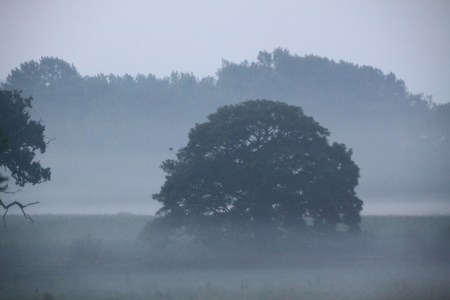
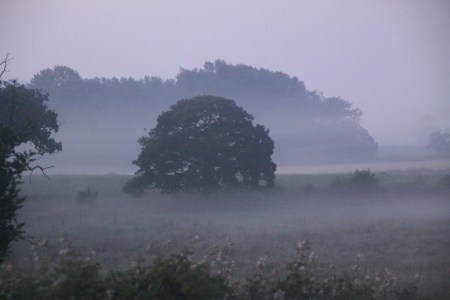
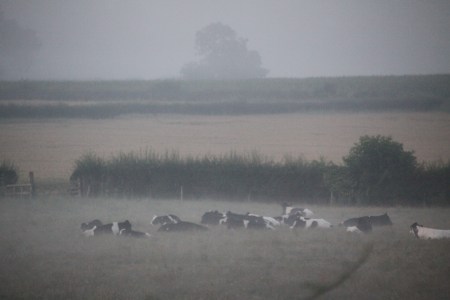
Marvellous mist – this morning’s view from my home office

I love the view over the fields, and have become fascinated both with the light on the big tree to the left, as well as the antics of the black and white cattle that rush, at certain times of day, from the field in front of the tree back to the farm at a fast canter, and at other times sit and mellow in the grass.  I had no idea that dairy herds could be so thoroughly interesting.  Today, however, is the first time that I have seen the view look as eternal as this, the light and mist creating a shifting continuum between pale grey and charcoal, with only faint hints, now and again, of darkest green.   I’ll let the landscape speak for itself, the photos taken between 4am and 6am.


Wildflowers at the Barnston Monument

Today we dropped in at the Barnston Monument (about which I wrote a couple of weeks ago), because every time I drove past it I saw a blast of bright colour – yellows blues, reds and bright whites on a deep green backdrop.  Phenomenal.  It is on one of the Barnston Estate fields, part of the new Monument Meadow Natural Burial Ground, which will replace the churchyard cemetery at St Chad’s in Farndon. The burial ground will have no markers, and caskets will be made of natural materials.  The car park, surrounded by small saplings, and the wooden pavilion are already in place.   We bumped into a lady having her lunch there.  I cannot think of a better place for it.

The photos are a bit fuzzy, because I only had the little camera that I keep in my handbag with me, but they are enough to give an idea of the beauty of the wild flower meadow at the moment.  The cornflowers are particularly superb, a dazzling, intense blue.


Sources:

Chester Standard
Barnston Estate near Farndon to build burial ground
https://www.chesterstandard.co.uk/news/18611529.barnston-estate-near-farndon-build-burial-ground/

Churton residents in 19th and early 20th Century directories

Commercial Directories, much like the telephone directories that most over-50s remember, list the names of people and their roles, organized by village or town name.  There are limitations to how useful the information contained in the directories actually are.  They do not, for example, provide the actual postal addresses such as house or road names.  Nor do they contain a complete listing of residents, just those who were deemed to be most relevant to community, commerce and local government.  In villages, these included, for example, gentry, clergy, businesses (including shops, joiners, wheelwrights, carriers and farms) and Post Offices.

To actually make use of such information, directory information needs to be tied into data supplied by other resources such as the national census, registers of births and deaths,  property deeds, local newspapers (both articles and adverts) and any surviving relevant accounting records.  But it seems worth including it here as a resource for anyone who, like me, is just starting out with research into the area, as well as for those trying to trace ancestors.

This is a copy-and-paste job, but  I did visit St Chad’s Church in Farndon and St John the Baptist Church in Aldford to see if I could match up any names in the directories with gravestones, and was able to find a few,  some of which are shown here.

I’ve had to cram in rather a lot of images, so I’ve kept them smallish, but you can click on any to expand them and read the text.

The directories used are  exclusively the ones listed on the Cheshire Directories website, and are as follows:

  • 1789 Cowdroy’s Directory of Cheshire
  • 1822-3 Pigot’s Directory of Cheshire
  • 1857 Post Office Directory of Cheshire
  • 1864 Morris & Co.’s Directory of Cheshire
  • 1871 Worrall’s Directory of Warrington
  • 1878 Post Office Directory of Cheshire
  • 1883 Slater’s Directory of Cheshire and Liverpool
  • 1902 Kelly’s Directory of Cheshire
  • 1906 Kelly’s Directory of Cheshire
  • 1910 Kelly’s Directory of Cheshire

The relevant details from each of the directories are listed below, in chronological order from earliest (1789) to latest (1910).

Cowdroy’s Directory of Cheshire 1789

N/A.  Churton (Churton by Aldford / Churton by Farndon) is not included.  Nor are Aldford or Farndon.

It is, however, an utterly fascinating read it its own right, which as usual contains a history of Cheshire (for f read s):  “THE magnitude and importance of this county will not be difputed, when the reader is told that its circumference is more than ‘200’ miles: To give an idea of its form, Speed has not unaptly compared it to the right wing of an eagle, ftretched forth from the furtheft point of Wirral hundred, and touching, with her firft feather, upon the confines of Yorkfhjre. – In the unhappy days of civil contention when England felt all the: horrors; of internefine feuds and domestic warfare (in the garb of religion) ftlalked over the face of the kingdom, this county was not without its share of the general calamity.”

Pigot’s Directory of Cheshire 1822-3

N/A.  Churton (Churton by Aldford / Churton by Farndon) is not included.  Nor are Aldford or Farndon.

Post Office Directory of Cheshire 1857

p.8
Aldford is a parish, comprising the townships of ALDFORD and CHURTON, and CHURTON HEATH, or BRUERA, BUERTON, and EDGERLEY.
CHURTON-BY-ALDFORD is a township, 2 miles southwest, with 251 inhabitants and an area of 572 acres

p.116-117
CHURTON-BY-FARNDON is a township and small village, partly in the parish of Famdon and partly in that of Aldford, distant 7 miles south-by-east from Chester and 1½ north Farndon; it consists principally of one long straggling street.  The remains of an ancient cross mark the boundary of the two parishes. The population, in 1851, was 148; the acreage, about 430. Major Barnston is lord of the manor; and he, and the Marquis of Westminster, and C. Galley, Esq. of Churton, are the chief landowners.

Private residents

  • Calley John, esq. Churton lodge
  • Parker Mr. William

Commercial

  • Baker James, farmer
  • Baker Moses, beer retailer
  • Barlow Geo, shoemaker & shopkeeper
  • Brown Mary (Mrs.), farmer
  • Clubbe George, wheelwright
  • Harrison Charles, shopkeeper
  • Huxley Joseph, farmer
  • Lawrence Peter, farmer
  • Letsom William, Red Lion
  • Nevell James, shoemaker
  • Parker John, farmer
  • Thomas William, blacksmith

Letters through Chester

Morris & Co.’s Directory of Cheshire 1864

p.45.
CHURTON-by-ALDFORD, is a township in Aldford parish, Great Boughton union containing, by the census of 1861, 217, inhabitants, and 572 acres; in the hundred of Broxton, South Cheshire, 7 miles south from Chester, adjoining Cllurton-by-Farndon, of which manor it forms a part. The Primitive Methodists have a chapel here. The Marquis of Westminster is lord of the manor.

Clergy and Gentry

  • Finley Hugh, Esq., The Lodge
  • Grace Mrs. Ann
  • Shankling Mr. Thomas

Trades and Professions.

  • Baker James, farmer,
  • Baker Moses, beer retailer
  • Ball Thomas, farmer
  • Brown George, farmer
  • Clubbe William, joiner
  • Logan Mr., Inland Revenue officer
  • Nevitt James, shopkeeper
  • Parker William, jun., farmer, The Grange
  • Thomas William, blacksmith
  • Warburton Samuel, baker and shopkeeper

The grave of Churton resident James Nevitt’s wife Mary, who died at the age of 39 in 1846, in the cemetery of St John the Baptist Church, Aldford

p.53.
CHURTON-by. FARNDON is a township in the parishes of Farndon and Aldford, the boundaries of which are marked by the remains of an ancient cross; 1½ miles north from Farndon, and 7 miles south-east from Chester, in Great Boughton union; containing, by the census of 1861, 128 inhabitants, and 432 acres. Major Barnston is lord of the manor.

Gentry

  • Parker John, Esq. Churton Hall
  • Parker, Mr William, Grange

Trade and Professions

  • Baker James, farmer
  • Baker Moses, beer retailer
  • Ball Thomas, farmer
  • Brown George, farmer
  • Clubbe George, wheelwright
  • Lawrence Peter, farmer
  • Nevitt James, shoemaker
  • Parker John, farmer
  • Thomas William, blacksmith
  • Williams Richard, Red Lion Inn

Letters through Chester.

Post Office Directory of Cheshire 1878

p.3. “The following is a list of Poor Law Unions . . .” Tarvin Union, (including):

  • Aldford
  • Churton-by-Aldford
  • Churton-by- Farndon
  • Farndon

p.3. “The following is a list of the hundreds, with the places contained In each:—
Hundred of Broxton (Higher division).— Aldersey, Aldford, Barton, Bickerton, Broxton, Bulkeley, Burwardsley, Caldecott, Garden, Cholmondeley, Chowley, Churton-by-Aldford, Churton-by-Farndon, Clutton, Coddington, Crewe, Egerton, Farndon, Grafton, Handley. Harthill, Horton-by-Malpas, Kingsmarsh, Stretton, and Tilston.”

p.14. Churton-By-Aldford is a township, 2 miles southwest. The Duke of Westminster is lord of the manor and principal landowner. The area is 672 acres; rateable value £935 ; the population in 1871 was 274. POST OFFICE.—Mrs. Hannah Clubb, receiver. Letters through Chester arrive at 7.30 a.m.; dispatched at 5.25 p.m. Farndon is the nearest money order office
Infant School, Miss Annie Jones, mistress

  • Maylor John, Churton lodge
  • Parker Henry, The Grange
  • Parker Thomas
  • Ball Thomas, farmer
  • Brown George, farmer
  • Hughes William ,shopkeeper
  • Parker John, farmer, beer retailer
  • Warburton Samuel, shopkeeper

p.186
FARNDON is a parish, comprising the townships of Barton, Churton-by-Farndon, Clutton, Crewe, King’s Marsh, and Farndon . . .

Churton is a township and small village, in the parishes of Farndon and Aldford, part called Churtonby-Farndon and part called Churton-by-Aldford, 7 miles south-by-east from Chester, a mile and a half north from Farndon and 5 west from Broxton railway station on the east bank of the Dee; it consists principally of one long straggling street. The remains of an ancient cross mark the boundary of the two parishes; the Primitive Methodists have a chapel here. Harry Barnston, esq. is lord of tbe manor for Churton-by-Farndon, and the Duke of Westminster of that of Churton-by-Aldford; the Duke of Westminster, Harry Barnston, esq. and John Maylor, esq. of Churton, are the chief landowners. The area is 432 acres; rateable value for Churton-by-Aldford £1,296 ; rateable value for Churton-by-Farndon £935; the population in 1871 was 123.

Letters through Chester. The nearest money order office is at Farndon INSURANCE AGENT.—Liverpool and London and Globe, Joseph Ball.

p.187

  • Maylor John, Churton lodge
  • Parker Thomas, sea. Churton house

Commercial

  • Ball Thomas, farmer
  • Brown George, farmer
  • Clubbe George, jun. Red Lion
  • Clubbe George, sen. wheelwright
  • Dutton John, joiner
  • Hawkes William, shopkeeper
  • Nevett James, shoe maker
  • Parker Henry, farmer, Grange
  • Parker John, farmer and beer retailer
  • Parker Thomas, farmer, Churton hall
  • Thomas William, blacksmith
  • Warburton Samuel, shopkeeper
  • Williamson Richard, farmer
  • Woolley Thomas, farmer

Slater’s Directory of Cheshire and Liverpool 1883

Churton by Aldford

Post Office, CHURTON-BY-ALDFORD, William Clube, Post Master.-Letters arrive from all parts (via Chester) at eleven morning, and are despatched at six evening.

Alphabetical Directory

  • Brown George, farmer, Churton by Aldford
  • Parker Henry, farmer, Churton, by Aldford
  • Thomas Lawrence, White Horse, Churton, by Aldford
  • Warburton Samuel, shopkeeper, Churton, by Aldford
  • Williamson Richard, farmer, Churton, by Aldford

Farmers

  • Ball Thomas
  • Brown George
  • Maylor John
  • Parker Henry
  • Parker Thomas
  • Williams Richd.

Lawrance Thomas of Churton, who died 15th December 1881, aged 23.  It is impossible to know, at this time, whether this was the Lawrance Thomas who is listed as being based at the White Horse, or a father or son.  At the age of 23 he seems young to have been the pub landlord.

Shopkeepers

  • Clube, Wm.

Taverns and Public Houses

  • White Horse, Lawrance Thomas

Dissenting Chapels

  • Methodist (primitive)


Churton by Farndon

Nobility, Gentry and Clergy

  • Maylor William, Esq. Churton lodge, Churton

Grocers and dealers in sundries

  • Warburton Samuel, Churton

Farmers

  • Ball Thomas
  • Brown George
  • Clubbe Thomas
  • Clubbe Williams
  • Parker Henry
  • Parker Thos. Junr.
  • Thomas Abraham
  • Williamson Richd.

p.216:  “Farndon comprises the townships of Barton, Churton by Farndon, Clutton and Crew and Farndon township.


Kelly’s Directory of Cheshire 1902

CHURTON-BY-ALDFORD is a township, on the road from Chester to Malpas, 5 miles south from Waverton station and 5 north-west from Broxton station, both on the Shrewsbury and Crewe section of the London and North Western railway. The Duke of Westminster is lord of the manor and principal landowner.  The area is 558 acres; rateable value, £928 ; the population in 1901 was 223.
Public Elementary School (infants), built in 1864 by Richard, and Marquess of Westminster, for 48 children ; average attendance, 20; Miss Mary Meredith, mistress; the school is in part supported by the Duke of Westminster
Post Office.—Joseph Smith, sub-postmaster. Letters through Chester arrive in summer at 7 a.m.; winter, 7.30 a.m. and dispatched at 6.10 p.m.  Postal orders are issued here, but not paid.  Farndon is the nearest money order and telegraph office, 2 miles distant.

  • Maylor, Mrs., Churton Lodge
  • Parker Thomas
  • Alwood John Farmer
  • Barlow Charles Shopkeeper
  • Parker James Beer Retailer
  • Smith Joseph Shopkeeper, Post Office
  • Warburton, Miss, Shopkeeper

George Clubbe died in 1841 and was buried in the cemetery of St Chad’s in Farndon. In the 1910 directory he is listed as a shopkeeper.  Edward Clubbe, presumably a close relative, is listed as a farmer.  The Clubbes appear in directory after directory for Churton, the earliest (from 1857) being William Clubbe, wheelwright.

CHURTON is a township and small village, on the east bank of the river Dee, in the parishes of Farndon and Aldford, of which part is called Churton-by-Farndon and the rest Churton-by-Aldford; it is 5 miles west from Broxton railway station, on the Shrewsbury and Chester section of the London and North Western railway, 7 south-by-east from Chester and a mile and a half north from Farndon. The village consists principally of one Iong straggling street. There is a Primitive Methodist chapel here, erected in 1833. Harry Barnston esq. M.P. who is lord of the manor of Churton-by-Farndon, the Duke of Westminster G.C.V.O. and Mrs. Maylor, of Churton, are the chief landowners.

The gravestone of Joseph Bartlem Edwards, who died in 1915 at age 54, and his wife Mary Elizabeth who died in 1958, age 84. The directory lists Joseph as simply Joseph B. St John the Baptist, Aldford

The area of Churton-by-Farndon is 445 acres; rateable value, £928; the population in 1901 was 126. Churton-by-Aldford township is given with Aldford.

  • Jackson Thomas Sibbersfield Hall

Commercial

  • Bellis bros farmers and fruit growers, Churton Hall and Farndon
  • Clubbe Edward, farmer
  • Clubbe George, Shopkeeper
  • Dutton Joshua, Joiner
  • Edwards Joseph B. farmer
  • Williamson Richard farmer
  • Williamson Samuel Holland farmer

Kelly’s Directory of Cheshire 1906

A sad gravestone. The children of beer retailer James and Martha Parker died in succession, Amy aged 16 in 1913, Elizabeth aged 32 in 1919 and Norman in 1922 aged 26. James and Martha themselves died in 1922 and 1928.

CHURTON-BY-ALDFORD is a township, on the road from Chester to Malpas, 5 miles south from Waverton station and 5 north-west from Broxton station, both on the Shrewsbury and Crewe section of the London and North Western railway. The Duke of Westminster is lord of the manor and principal landowner. The area is 574 acres; rateable value, ;£928 ; the population in 1901 was 223.

Public Elementary School (infants), built in 1864 by Richard, and Marquess of Westminster, for 48 children ; average attendance, 20; Miss Elizabeth Draper, mistress; the school is in part supported by the Duke of Westminster

Post Office.—Joseph Smith, sub-postmaster. Letters through Chester arrive in summer at 7 a.m.; winter, 7.30 a.m. and dispatched at 6.10 p.m. Farndon, 2 miles distant, is the nearest money order and telegraph office

  • McKindlay Andrew
  • Maylor Mrs. Churton lodge
  • Parker William,
  • Alwood John, farmer
  • Lawrence Thomas, shopkeeper
  • Lewis Edwin, farmer
  • Parker James, beer retailer
  • Powell Samuel, shopkeeper
  • Smith Joseph, shopkeeper. Post office

Gravestone (at St Chad’s Farndon) of Richard and Elizabeth Williamson. Richard, a farmer, is listed in the 1906 Kelly’s Directory of Cheshire.

CHURTON is a township and small village, on the east bank of the river Dee, in the parishes of Farndon and Aldford, of which part is caUed Churton-by-Farndon and the rest Churton-by-Aldford; it is 5 miles west from Broxton railway station, on the Shrewsbury and Chester section of the London and North Western railway, 7 south-by east from Chester and a mile and a half north from Farndon. The village consists principally of one long straggling street. There is a Primitive Methodist chapel here, erected in 1833. Harry Barnston esq. is lord of the manor of Churton-by-Farndon, and the Duke of Westminster, Harry Barnston esq. and Mrs. Maylor, of Churton, are the chief landowners. The area of Churton-by- Farndon is 445 acres; rateable value, £928; the population in 1901 was 126. Churton-by-Aldford township is given with Aldford.

  • Grossmann Alex, Sibbersfield Hall

Commercial

  • Bellis Bros, farmers & fruit growers, Churton Hall and at Farndon
  • Clubbe Edward, farmer
  • Clubbe George, shopkeeper
  • Dutton Joshua, joiner
  • Edwards Joseph B. farmer
  • Williamson Richard, farmer
  • Williamson Samuel Holland, Red Lion P.H

Kelly’s Directory of Cheshire 1910

CHURTON-BY-ALDFORD is a township, on the road from Chester to Malpas, 5 miles south from Waverton station and 5 north-west from Broxton station, both on the Shrewsbury and Crewe section of the London and North Western railway. The Duke of Westminster is lord of the manor and principal landowner. The area is 574 acres; rateable value, £928 ; the population in 1901 was 223.
Public Elementary School (infants), built in 1864 by Richard, and Marquess of Westminster, for 48 children ; average attendance, 26; Miss Elizabeth Draper, mistress; the school is in part supported by the Duke of Westminster
Post Office.—Joseph Smith, sub-postmaster. Letters through arrive at 7.15 a.m. ; sunday, callers only & dispatched at 7.40 p.m.; Sunday, 7.40 p.m. Farndon, 1¼  miles distant, is the nearest money order and telegraph office

  • Carr Austin Cooper, Kingsmead
  • McKindlay Andrew, Churton house
  • Maylor Mrs. Churton lodge
  • Allwood John, farmer
  • Lewis Annie (Mrs.), farmer
  • Parker James, beer retailer
  • Powell Margaret (Mrs.), shopkeeper
  • Smith Joseph, shopkeeper. Post office
  • Thomas Lawrence, shopkeeper
  • Thomas William, blacksmith

CHURTON is a township and small village, on the east bank of the river Dee, in the parishes of Farndon and Aldford, of which part is called Churton-by-Farndon and the rest Churton-by-Aldford; it is 5 miles west from Broxton railway station, on the Shrewsbury and Chester section of the London and North Western railway, 7 south-by-east from Chester and a mile and a half north from Farndon. The village consists principally of one Iong straggling street. There is a Primitive Methodist chapel here, erected in 1833. Harry Barnston esq. M.P. who is lord of the manor of Churton-by-Farndon, the Duke of Westminster G.C.V.O. and Mrs. Maylor, of Churton, are the chief landowners. The area of Churton-by-Farndon is 445 acres; rateable value, £928; the population in 1901 was 126. Churton-by-Aldford township is given with Aldford.

  • Bellis Brothers Limited, farmers and fruit growers, Churton hall; and at Farndon
  • Clubbe Edward, farmer
  • Clubbe George, shopkeeper
  • Dutton Joshua, joiner
  • Edwards Joseph B. farmer
  • Williamson Richard, farmer
  • Williamson Samuel Holland, Red Lion P.H.

Source:

Cheshire Directories. Working in Partnership. Cheshire East / Cheshire West and Chester
http://cheshiredirectories.manuscripteye.com/index.htm
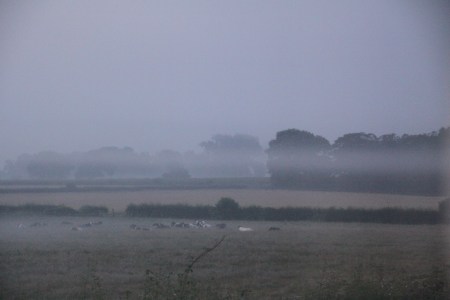
Object histories in my garden #4: A Dinky Toy SEPECAT Jaguar

Not an adjective but a brand name, in this case dinky refers to Dinky Toys, a range of miniature toy vehicles, everything from engineering marvels like fighter planes such as this one, to life-like lawnmowers.  Dinky Toys were the brainchild of Frank Hornby, who was the innovator behind Hornby Trains and Meccano.  The Dinky Toys were made by Meccano Ltd.  They were produced in England between 1934 and 1979 at Meccano’s Binns Road factory in Liverpool.  They pre-dated other well known diecast brands, including the now better known miniature Corgi and Matchbox brands.
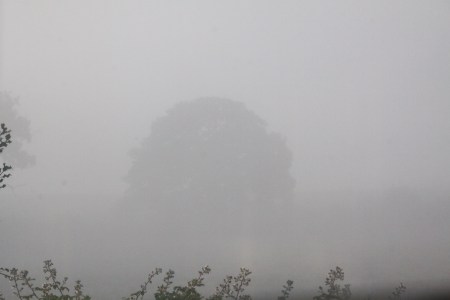
This particular object is a model of an Anglo-French SEPECAT Jaguar fighter plane, model number 731. The fighter on which the toy was modelled came into service in 1973, and the toy version was one of a series capitalizing on a new interest in modern warplanes.  It was one of the many curios pulled out of my garden during its ongoing revamp.  Most of the garden relics consist of fragments of decorated ceramic, but one or two are of particular interest (garden finds link).  Most of the later 20th Century items that we have found have been true rubbish, and every  object that we have found has been broken and was almost certainly dumped.  At first I thought that this toy was probably lost during play rather than deliberately disposed of, but on closer inspection it too is broken.

A promotional image of the Meccano Ltd. factory at Binns Road, Liverpool, taken from the back cover of the 1927 Hornby Book of Trains. Source: Brighton Toy Museum
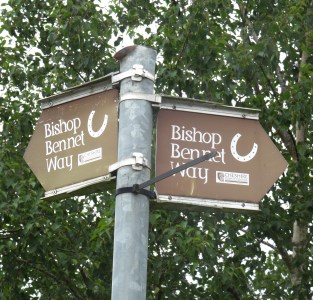
The Dinky Toys company was the creation of Frank Hornby, whose name is forever associated with model train sets.  Hornby originally began with a vision of educating children wishing to teach  basic mechanical principles, which he translated into construction kits for children, the first of which were patented in 1901.  As Oliver Wainwright puts it,

With his “Mechanics Made Easy” sets he gave the system ultimate flexibility by punching holes on a regular grid across all of the pieces, allowing the parts to be bolted together as well as providing bearings for axles and gear shafts. Sold with a range of brass wheels and pulleys, gears and shaft collars, any number of complex mechanisms could be dreamt up – from bridges to cranes, to devices to ambush your unsuspecting sister.” 

The Meccano brand was launched in 1907, and went from strength to strength.   Hornby’s model train series came next, accompanied by all the accessories required to give them a real-life context.  The Hornby railway models, both mechanized and static, were so popular that Hornby’s next idea materialized itself as his Dinky Toy company, which was set up in 1934 to produce realistic model vehicles.  Wainwright again:

“The things he made didn’t look like toys, but precise versions of the real world, manufactured with exacting detail. His products were not packaged with the amoebic forms and infantilising colours of today’s toys, but gained their magical quality simply from taking things of fascination – industrial machines, trains, boats and planes – and shrinking them to the scale of 1:48, reducing the entire world to something that can fit in a box.”

The Dinky Toys were made from die-cast ZAMAK. Die casting is a manufacturing process that can be used to make geometrically complex metal parts in reusable molds called dies.  ZAMAK is a form of zinc alloy, described as follows on the DECO website:  “ZAMAK is a type of zinc alloy that consists of aluminum, magnesium, copper, and of course zinc. This alloy family contains copper, but is spelled with a K. This is because the acronym ZAMAK uses the German spelling: Zink, Magnesium, Aluminum, and Kupfer. That being said, ZAMAK is some times spelled ZAMAC with an English spelling. ZAMAK alloys are a separate family from the zinc aluminum (ZA) alloys although they both maintain a consistent composition of 4% aluminum.”

The Jaguar is 18cm long from nose to tail.  Although most of it is metal it also has small black plastic parts under the tail.  The top layer of paint is a fairly deep royal blue, and has slowly peeled off during its afterlife in my garden, revealing an undercoat of pale blue and the core dark metal grey beneath both. Comparing it with surviving examples online, it would have been painted with camouflage and other markings.  The whole thing is satisfyingly heavy to hold.  The canopy was spring-loaded to make it a moving part when depressed, and originally a plastic fighter pilot was positioned inside.  When the canopy spring was activated, it ejected the pilot.  Only a tiny piece of the canopy remains in situ, but the spring, a piece of cleverly bent metal, is intact and can be operated.  The plane once stood on three wheels, but all three wheels, plus the struts connecting them to the rest of the plane are now missing.  Two hollow spaces sit where the rear wheels would have been fitted.  The wheel struts were hinged so that the wheels could be folded into the main body of the plane.  There is a metal flap on the underside of the cockpit that may preserve the front wheel in situ, but cautious work to loosen it has failed and I really do not want to snap it.  The nose cone, originally black plastic, is missing.

Now if the garden would magically produce a Dinky Toy model 749, the delta-winged Avro Vulcan bomber (1955), I would be so happy.  I saw the XH558 Vulcan flying at Farnborough Airshow in 2014, and it was love at first sight.  Since then, I have fallen in love with the Vulcan all over again at Cosford Royal Air Force Museum, twice.  Irrespective of its ultimate purpose, it is a thing of awe and beauty.

For anyone new to this occasional series on objects extracted from my garden during everyday gardening activities, see the History in Garden Finds page.  These are not objects used in the garden, but objects, usually fragments, lost or disposed of in the garden and found during digging, troweling and planting.

Sources:

Books and articles

Wainwright, O. 2013. Frank Hornby:  The Man who put the World in a Box.  The Guardian, 15th May 2013
https://www.theguardian.com/artanddesign/architecture-design-blog/2013/may/15/frank-hornby-meccano-dinky-toys

Websites

Custompart.net
Die Casting
https://www.custompartnet.com/wu/die-casting

DECO
What is Zamak?
https://decoprod.com/zamak/

Dinky Site
Digital Museum
https://www.dinkysite.com/rare-dinky-toys

Wikipedia (very well referenced page)
Dinky Toys
https://en.wikipedia.org/wiki/Dinky_Toys#CITEREFGardinerO’Neill1996

Adventures with Churton Honesty Eggs – Ham Horns

In a previous post I talked about the super honesty system in Churton that enables local people to buy free range Churton eggs from a barrow by the side of the road.   On that post I showed photos of how I used one of the eggs in a Middle Eastern lamb baharat, and another two to make a lovage and lime mayonnaise.  On this occasion it is all about ham horns.

This is the weather for al-fresco dining, and I love to eat outdoors so today I made a ham horn with salad for lunch.  The ham horn was an invention of my Mum’s and quite apart from the fact that I like to use Mum’s inventions, it is very easy to make and amazingly filling.  So filling, in fact, that I had to change my plans for my evening meal to something significantly smaller than originally planned.

A ham horn is quite simply a tube of ham stuffed with chopped eggs (and herbs if you fancy them) in mayonnaise.  Sometimes the simplest things are the most delicious.  The ham horn is supposed to be wider at one end than the other to give it the horn shape, and Mum’s were always proper horns, but mine always come out uncompromisingly pancake-shaped.

You can make ham horns with mayo from a jar, of course, but there is nothing that you can purchase in a supermarket that looks or tastes remotely like home-made mayonnaise, especially when additional flavours are added to give it an extra hit of something special.   Unlike the supermarket white mayo, a home made one based on eggs yolks, which are of course deep yellow, transforms the ingredients into a lovely primrose colour.  Mayonnaise is so quick and easy to make that it is well worth taking out five minutes to do it.  If you want a herb mayonnaise, the herbs have to be fresh; dried ones simply don’t work.  The only exception I have found is dried tarragon, which can be soaked in vinegar to release the flavour, and then both the vinegar and the dried tarragon can be used as part of the base for the mayonnaise.  Another way of adding flavour is to used flavoured oil, which can be home made.

I do my mayonnaise in a mini food processor.  Most mini processors have a hole in the lid for precisely this purpose, but mine is ancient and I had to drill a hole into it.  I know that some people use plastic blades for mayo, but I’ve never had any trouble with a metal blade.  I start with a good dollop of Dijon, Senf (German mustard) or tarragon mustard, with a good squeeze of lemon or lime juice or white wine vinegar (depending on what it is to accompany).  On this occasion it was Dijon mustard and lemon juice, with a good turn of black pepper and a sprinkling of sea salt.

The eggs are separated and the whites retained for a future use (and can be frozen).  I have the whites earmarked for a tempura dish, but they are also great for souffles and meringues.  I then chuck the eggs into the bottom of the food processor with the mustard, lemon juice and seasoning and give it a quick spin.  The trick, and it’s the only serious trick, is to add the oil terribly, terribly slowly.  I was using a  Filippo Berio “mild and lighter in colour” oil into which a few weeks ago I had added some sliced lemon, chilli, garlic and lovage, and was a gorgeous shade of sunshine yellow.  If you are new to making mayonnaise, I would suggest that you use olive oil (any) or sunflower oil rather than rapeseed, as the latter is much more difficult to emulsify (thicken).

When you begin to add the oil, the mix in the bottom of the food processor is a dark yellow (thanks to the yolks and mustard).  As you add the oil, in a very slow, very thin stream, the oil and egg yolks gradually emulsify and the dark yellow starts to lighten as the mayonnaise thickens.  This lightening process is the emulsification taking place.  The more oil you add, the thicker it gets.  I have occasionally become so engrossed in adding the oil that I’ve forgotten to stop now and again to check it for thickness, and have ended up with something that can be carved like butter!  On this occasion I stopped on time, with a nice, soft texture to which I added chopped herbs to the food processor and gave it a good pulse.

If, after tasting, you find that you want to add more lemon juice or wine vinegar to add a bit more acidity, just be aware (the second trick) that this will loosen the emulsion, so unless it was already very stiff, you may have to add more oil.  You can also add salt to help thicken it up (the third and final trick).  Do this incrementally so that it is not over-salty, and keep tasting as you do it, but it works.

You can use any herbs that you like, of course (parsley, spring onions, chives and dill are all good options, and tarragon is terrific), but I have recently discovered that lovage and coriander, both strong, highly  aromatic herbs, go superbly together in some contexts.  I’ve always been a fan of coriander in egg mayonnaise, ever since buying a gourmet sandwich in a Turkish café on Leather Lane, near where I worked in Clerkenwell (London), but the idea of lobbing in some lovage was new, and I was so pleased when it worked so well. Lovage is very powerful so be a bit careful with it.  In the mayonnaise, the flavour of the herbs is brought out by the lemon juice (or vinegar if using that instead) in the mayo.

To prevent the top forming a skin, I store my mayo in the fridge with the clingfilm actually resting on the surface until it is needed.  An hour before I am ready to assemble the ham horn, I take the mayonnaise out of the fridge and let it come to room temperature.  This is because it becomes more solid in the fridge, and at room temperature it loosens back to the original texture that it had when scooped out of the mini processor.   Just before assembly I peel the egg, chop it up and stir it into the mayo.

The ham I had to hand was thinly-sliced Italian porchetta, which has a lovely flavour but is ultra-thin and very difficult to extract in one piece from the wrapping.  A thicker ham would have  been better, but I didn’t have one.  So instead of a smooth, elegant horn, I ended up with a battered and patched flattened tube.  Still, it tasted delicious.

I made a salad from three types of lettuce that I grow in pots on the patio, and lots of herbs, again from patio pots, chosen with care because I didn’t want an unholy clash with the lovage and coriander in the mayo.  Parsley, oregano, sorrel, and mint accompanied the lettuce and were joined by some delicious little oval yellow tomatoes that Dad gets for me (brand name Natoora), that are tart instead of sickly sweet, and full of amazing flavour.  I like them straight from the fridge, ultra cold.  A dampened piece of kitchen roll laid over the top keeps everything fresh.  I always have a jar of home made French-style vinaigrette in the cupboard (mustard, white wine vinegar, olive oil, garlic clove, freshly ground black pepper, all given a seriously good shake), and I served that on the side to be stirred in at the last minute to prevent the salad going soggy.

When I had finished, and took it all out into the garden on a tray, I had a ham horn, a herb salad and chilled yellow baby tomatoes on a plate with the vinaigrette in a little dish on the side and a tall glass of lovely still lemonade, very cold (not home made but divine).  It was all rather delightful.

The Churton egg continues to rock.
If you want to check out more of my Churton egg adventures, click on
the Churton Eggs label in the right hand margin.
More will be added soon 🙂