This satisfyingly chunky piece of glazed earthenware, featuring a roughly beaded rim, was once a fairly large, open vessel, probably a pot or a tall-sided bowl. Mocha ware, produced between the mid 1700s and the early 1900s, was relatively cheap and cheerful, pottery for using rather than admiring. Its defining features include its colouring, the linear decoration (usually combined with panels of colour or white background) and the “dendritic” design. “Dendritric” means “branching,” and in mochaware refers to a pattern consisting of a feathery fern-like tendrils, usually emanating from a main stem, typically coloured either black or blue. Vessels without the dendritic design are usually referred to simply as banded creamware or annular (ring-like) ware, in both cases due to the encircling bands of colour. It is only those vessels with the dendritic design that are supposed to be referred to as mochaware. We have found both in the garden, but the piece of mochaware is the most impressive, both in terms of solidity and distinctiveness.
The name mocha derives from an imported stone known as moss agate, which was also known as mocha stone due to its export from the port of Mocha (al Mukha) in Yemen, on the southwestern end of the Arabian peninsula. The stone is not actually found in that part of the world, and was imported from India and some parts of central Europe. Many of the first examples to find their way into western Europe were brought back by the East India Companies of Britain and the Netherlands. Although the appearance suggested to its European admirers that plant remains had been preserved in the stone, moss agate consists of quarts with mineral inclusions, usually manganese and iron oxides. It is not actually an agate at all.
In the 18th century the belief that the stone preserved plant remains indefinitely suggested that it had special health-preserving properties, providing good luck to the wearer. Many were accordingly turned into jewellery, particularly as polishing techniques improved, and they were often accompanied by gemstones in settings. The ability to cut the stone into thin sheets that could be polished encouraged its incorporation into various decorative objects. The Royal Collection Trust has in its collection a piece of sliced moss agate formed into the lid of a box, by Fabergé, which shows clearly how the pottery emulates the stone, and how it might be used in luxury goods. There are many similar examples.
The Greengates Works in Tunstall during the 1780s. Source: thepotteries.org
It is thought that the comparatively humble mochaware pottery was first made by William Adams of the Greengates factory, Tunstall, England (1745-1805). Production moved to the factory of his cousin, also William Adams, at Brickhouse, Burselm and later at Cobridge Hall in Cobridge. Many English factories were soon turning out large quantities of mocha, mainly in Staffordshire into the early years of the 20th Century. Other factories were set up in Bristol, Hull, Leeds, Glasgow, Swansea and Llanelly.
Annular and mochaware vessels usually combine a limited repertoire of colours. The concentric rings include yellow, yellow ochre, blue, black and and beige. More rarely some feature terracotta, orange and green bands. The background is usually cream or white, and the dendritic design is usually blue or black. In some cases the mochaware decoration remained purely abstract, but on some vessels the acidic solution is controlled to create images representing trees. Some examples of both abstract and more representational uses of the style are shown below.
Being so inexpensive, and at the same time so attractive, it became extremely widespread. It was often used to make pint mugs for pubs, marked with an imperial symbol confirming the correct volume, and ordinary domestic items like cups, mugs jugs, jars, lidded pots and mixing bowls, and even chamber pots. It was almost never used for flat items like dishes, plates or platters. Because the patterns made could be influenced but not precisely determined, each piece was unique. Mocha and banded creamware were exported in large amounts to the United States, which was soon manufacturing its own mochaware.
On the pottery, the tendril effect of the moss agate is achieved by dripping a dark acidic colouring (which could include urine, tobacco juice, lemon juice, ground iron scale, hops or vinegar) onto the alkaline slip (mixture of water and clay) of the pot, whilst still wet. The alkaline liquid splits, and the result was thought to resemble the moss agate. Here’s a description of the technique from the University of Toronto’s Physics department:
The original recipe involves a “tea” made by boiling tobacco, which is then colored with e.g. Iron oxide. The piece is first coated with a wet “slip” (very runny clay/water mixture). Then the tea mixture is touched onto the wet surface. The acidic tea reacts with the alkaline slip and the dendrites grow quickly from the point of contact. The dendritic pattern is clearly the result of a dynamic process in which the contact line between the two liquids, tea and slip, becomes unstable. The surface tension of the tea is less than that of the slip. The instability is probably driven by a combination of capillary and Marangoni (surface tension gradient) stresses, coupled somehow to the acid/base chemical reaction. Similar looking instabilities are known in surfactant driven flows.
A decisive contributor to the production of both mochaware and annular ware was the rose-and-crown engine-turning lathe, developed by Josiah Wedgwood. There was a hefty up-front cost, but it allowed a mechanized approach to the otherwise hand-applied concentric rings of coloured slip.
Experiments described by The Ceramic Arts Network website, explain how the techniques have been used to make modern mochaware in modern experiments:
Pint tankard with an imperial stamp. Source: 1stDibs
The mixture that is used to form the patterns is called “mocha tea.” It was originally made by boiling tobacco leaves and forming a thick sludge that was then thinned with water and mixed with colorant. However, nicotine solutions are only one form of mild acid; many others will work, such as citric acid, lemon juice, urine, coffee or vinegar, particularly natural apple-cider vinegar. One of these would be mixed with colorant. Most colorants work quite well, although carbonates and stains are usually better than oxides, since they are typically a physically lighter precipitate than oxides. Heavy materials such as black copper oxide, black cobalt oxide and black iron oxide do not work well, because the acid can’t adequately hold them in suspension. A ratio of about one heaping teaspoon of colorant to a quarter cup of mild acid is usually a good starting point. However, a good deal of individual testing has to be done to get the two liquids to work together to create significant dendritic formations or diffusions.
The Copeland (formerly Spode) pottery works in 1834. Source: Spode Museum Trust
The Colonial Sense website tells how Charles Dickens visited the Copeland Pottery Works at Stoke on Trent in the Potteries:
I am well persuaded that you bear in mind how those particular jugs and mugs were once set upon a lathe and put in motion, and how a man blew the brown color (having a strong natural affinity with the material in that condition) on them from a blow pipe as they twirled; and how his daughter, with a common brush, dropped blotches of blue upon them in the right places; tilting the blotches upside down, she made them run into rude images of trees.
Mochaware sherd from the garden
The sherd from my garden shows a band of yellow ochre on and beneath the rim with a beaded or rouletted design impressed into the surface below the rim, produced by using an embossed rouletting wheel. The beading was achieved by a simple cylinder attached to a handle and rolled onto the surface of the ceramic. It took a very steady hand. Some rouletting is very subtle and complex, but this is clearly not. Still, it is another decorative aspect to the vessel. A segment of black dendritic patterning is visible on a cream background, separated from the wide band of yellow ochre by a thin band of blue. It is a solid, utilitarian piece of earthenware, almost 1cm (a third of an inch) thick at the rim, narrowing into the body of the vessel. The vessel originally had a diameter of 25.5cm (10 ins), which makes it a fairly substantial object. Its walls show very little vertical curvature, unlike most mixing bowls, so it may have been a large pot of some description.
Yellow ochre reverse side (interior) and section of the sherd showing the fabric and glaze
Today,whole and undamaged items of mochaware attracts collectors on both sides of the Atlantic. My sherd, though part of a fascinating story, is of course worthless. As usual, apart from trying to find out information about the odds and ends in the garden, together these objects are combining to form a sense of who lived here before and what sort of livings they may have had.
There’s a truly illuminating video of dendritic mochaware being produced by a modern artisan on YouTube, showing how the acid reacts when it meets the alkaline, as follows:
For anyone new to this occasional series on objects extracted from my garden during everyday gardening activities, see the History in Garden Finds page. These are not objects used in the garden, but objects, usually fragments, lost or disposed of in the garden and found during digging, troweling and planting.
Sources:
Books and papers
Wright, K.F. 2021. Artifacts. In Loske, A. (ed.) A Cultural History of Color in the Age of Industry. Bloomsbury Academic.
The tree in early April 2021, still rather bare of leaves.
Just for fun, since April 2021 I have been photographing the deciduous tree that I can see from the window in my home office. It stands in the middle of a rather untidy fence, completely dwarfing it, but finds itself in arboreal isolation, between two fields that belong to the Churton Hall / Barnston Estate dairy farm. On the far, eastern side of the hedge, the field was eventually ploughed.
On the western side, cows grazed all summer during the day, vanishing at speed from time to time, presumably for milking and feeding. Most of the time the cows ignored the tree, but on hot sunny days often gravitated towards it, even though it is not very large, and never offers much shade.
The same tree a few weeks later in mid-June 2021
The cows have surprised me. Not dull, static, plodding things but always on the move, pushing one another out of the way for that special patch of grass, often cantering around together, and frequently departing back to their barn at a serious gallop, presumably for food. The fresh air certainly seemed to agree with them. The cattle vanished at some point during the late summer or autumn and the field remained empty of livestock, but reappeared in early April, making me smile when I saw them first exploring their fresh environment, rushing around and bumping into each other in something resembling excitement.
The tree, the backdrop to all this bovine activity, was ever-changing. The time between bare branches in April and richly new light green leaves in June, a complete metamorphosis, was a mere six weeks. Extraordinary.
This post is simply a set of photos of bits of a year in the tree’s life. One or two of the photographs look as though the colours have been messed with in Photoshop to make them more interesting, but there would have been no fun in that.
I am too far away to know for sure what specie it may be. I suspect from the shape that it is an oak, but I need to see the leaves, and the longest lens on my camera cannot get me close enough. fdfasdf
An amazing sunset on 16th March 2022, when even my house, which is painted white, was peach-coloured. No Photoshop employed.
Snow on the 31st March 2022
Early April 2022, with the cows returned to the field
Mid April 2022, with leaves arriving on branches and a doom-laden sky in the background
It never occurred to me that I would find any politically incorrect objects in the garden, but this is certainly a contender. I dug it out of one of the flower beds when doing some planting last summer, and for a moment couldn’t figure out what it was I was looking at, partly because I was holding it upside down, but partly because it was so unexpected.
I remember that Robertson marmalade and other Robertson products were everywhere, with the distinctive Golliwog logo on their labels, with its bright clothing and crudely caricatured face. ln spite of the Golliwog’s big red smile, or perhaps because of it, I found it threatening. For others, however, it was (and still is) a cheerful and entertaining character, rather absurd but benign.
The Golliwogg as it first appeared in Florence Kate Upton’s “The Adventures of Two Dutch Dolls” of 1895. Source: Wikipedia
The name “Golliwogg” (with the double g at the end) was invented by Florence Kate Upton, whose parents had emigrated from England to New York in 1870, and who had a black minstrel soft toy as a child, which was at the heart of many childhood games. When the family returned to England in the late 1880s, Upton began to illustrate children’s books to raise money to attend art school, with verses for the books written by her mother Bertha. The Golliwogg was introduced in their 1895 book The Adventures of Two Dutch Dolls, complete with the shaggy hair, clown-like grin, bright clothes and bow tie. This was the first of fourteen very popular books that featured Golliwogg as a central character, a jolly, benevolent, and good-natured friend who embarked on international adventures.
The name and character invented by the Uptons were not copyrighted, and the character was incorporated into works by other authors. It became a popular home-made rag doll, but it soon went into production as a soft toy, mainly in Germany and Britain, marketed as a “Golliwog” (without the final g). The German Steiff Company became the first to mass produce them in 1908, going on to produce a female version of the doll.
Robertson’s Golden Shred Golly Badge, Pre-War Issue dating from 1937 commemorating the coronation of King George VI. Source: Portable Antiquities Scheme via Wikipedia
In the 1910 James Robertson and Sons (based in Droylsden in Greater Manchester) first adopted the “Golly” on its branding after James’s son John had seen them being played with on a trip to the U.S., and by the early 1920s had been rolled out to many of their products. In 1928, the company began to offer Golly brooches in return for tokens printed on product labels as a marketing gimmick. The first were a series of Gollies engaged in different sporting activities and the Golly became a runaway success for Robertson’s.
It was only in the 1960s when increasing issues surrounding attitudes to race and the growth of racism became dominant that the role and significance of the Golly became questionable, and began to seem like very bad taste, offensive to many, potentially encouraging unconscious bias in children. In some countries today the word, either in its entirety or split into “golly” or “wog” is categorized as a racial slur, and the image of the Golliwog has been banned from some of them. At the same time, Golliwog-themed items, particularly vintage ones, have become collectable. Indeed, the Robertson’s Golly was not actually retired until 2001. The BBC reported that it was to be replaced by characters from Roald Dahl books, illustrated by Quentin Blake. Robertson’s Brand Director Ginny Knox commented on the changeover:
We sell 45 million jars of jam and marmalade each year and they have pretty much all got Golly on them. We also sell 250,000 Golly badges to collectors and only get 10 letters a year from people who don’t like the Golly. Whereas we are concerned about those people and it’s not our intention to be offensive with the Golly, we have to look at what our research says and what the sales say. The feedback has consistently been that for the vast majority of people, the Golly is a positive thing that they like.
One wonders what, in particular, people said that they liked about the Golly.
The very battered sherd from my garden was probably part of a child’s teacup or similar. The fabric is just over 2mm thick, and the diameter is probably something a little in excess of 7cm diameter. This would be more accurate if this as a rim piece, which can be measured by laying the rim on a simple map of concentric circles, (a rim chart or radius chart) but even though this is just a body sherd, the curvature is obvious and it is unlikely that it will have been much wider at the top.
The head of the Gollywog is typical, with the big round eyes, spiky hair and wide red mouth. The bow tie is yellow and the waistcoat or jacket is blue, fastened with a big white button. Just visible across the base of the waistcoat/jacket is a splash of red, which could either be a jacket buttoned across the base of a waistcoat or the top of the trousers.
The eyes look slightly down to its left, which was a standard feature of the Robertson’s Golly. The most familiar Robertson’s Golly was usually shown with a bright yellow waistcoat, red bow tie, blue jacket and red trousers but there variants. In spite of making myself substantially uncomfortable by paging through dozens of images on specialist websites, as well as paging through Google Images, I have not found one that looks like the piece from the garden.
The paragraphs looking at the history of the Golliwog on this post were based on Dr. David Pilgrim’s detailed article The Golliwog Caricature on the Ferris State University / Jim Crow Museum website (dated November 2000, edited 2012), which includes a full bibliography. For the really fascinating, if often disturbing full story, with a useful discussion of the racism issue, see the link below. Dr Pilgrim is Professor of Sociology at the Ferris State University. https://www.ferris.edu/HTMLS/news/jimcrow/golliwog/homepage.htm
The above-mentioned story about the end of the Golly as a Robertson’s brand in 2001 is on the BBC website.
Updated 13th April 2023, Thursday: The Guardian newspaper reported that toy Golligwogs were being banned from eBay and Etsy “amid new evidence that more people now regard the toys as racist.” I’m amazed that it took so long:
safdfas
For anyone new to this occasional series on objects extracted from my garden during everyday gardening activities, see the History in Garden Finds page. These are not objects used in the garden, but objects, usually fragments, lost or disposed of in the garden and found during digging, troweling and planting.
Lovely to see spring all around us at the moment, transitioning from late-flowering daffodils, bleeding hearts, camellia, snake’s head fritillary and tulips to bluebells, blossom, dark red beech leaves and the first summer buds. Everything in the garden looks stunning in the sun.
Cadw sign at the site showing a cutaway of how the interior of the Valle Crucis abbey church may have appeared
Part 1of this series about Valle Crucis Abbey near Llangollen introduced the background to 12th Century monasticism in Britain, via St Pachomius and St Benedict, and talked about the Cistercians, the spread of the Cistercian order in Wales and why Valle Crucis was located where it was. Part 2 looked at how the buildings at Valle Crucis were used and how the monastic community functioned. Part 3 looked the architectural development of the abbey, an architectural jigsaw of a story from foundation in 1201 to dissolution in 1536.
Part 4 and upcoming part 5 look at how the patrons, abbots, priors and monks of the Cistercian Order contributed to life at Valle Crucis. In Part 4, the top levels of the abbatial hierarchy are introduced, and in Part 5 the main body of the monastic community is described, all helping to build a view of what sort of people were to be found at the abbey, and what life was like within the cloister.
It is the way of the literate world that more is known about those at the top of the hierarchy than those of the main body of the community, because it is the patrons and abbots whose names were on formal documentation, and who were accountable to the mother abbey at Strata Marcella, to the General Chapter at Cîteaux, to the pope, and ultimately to God. More mundanely, the abbots were also subject to the vagaries of political activity and war, and as leaders of the abbey were named as its representatives. Even so, there are considerable gaps in the list of abbots at Valle Crucis, many of whom are simply unrecorded and others are known only by their names, and even then not always with certainty, and sometimes only partially. dsfsdfsdfs
Normans, Cistercians and Welsh princes
The remains of Strata Florida in midwest Wales. Photograph by Jeremy Bolwell. Source: Wikimedia
Although Wales had its own monastic tradition both before and after the Norman invasion in 1066, by 1150 Norman lords had established houses attached to a number of monastic orders in Wales, connected with French orders. The Normans also set about normalizing the priesthood, bringing it under the archdiocese of Canterbury, and a number of new dioceses were established, each under a new, Norman-sponsored bishop. Welsh Cistercian monasteries were spawned by the Anglo-Norman abbeys in Tintern and Whitland in the south. Whilst Tintern remained embedded in the Norman-Marcher tradition, Whitland’s fortunes became bound up with the Welsh princes in the 12th century when the Lord Rhys ap Gruffudd restored the fortunes of Deheubarth by claiming it from the Anglo-Norman Robert fitz Stephen. Lord Rhys assumed patronage of both Whitland (founded with monks from Clairvaux) and Strata Florida in mid-west Wales (founded with monks from Whitland), the latter initially founded by fitz Stephen. The new Welsh monasteries spawned by Whitland spreading from south to north, were all founded with this sense of being true to the Cistercian order, the spirts of St Benedict, the Virgin Mary and Christ, but were, at the same time, Pura Wallia, pure Welsh.
The regulations and charters of the Cistercians formalized the original intentions of St. Robert of Molesme Benedictine Abbey, who founded the Cistercian order in 1098. Robert was was conscious that the labora component of the Benedictine motto “ora et labora” (prayer and work) had been largely abandoned. In the Cluniac order in particular there was too much comfort, a lot of elaborate and time-consuming ora and very little labora. Cistercian abbeys were intended to be self-sufficient, combining work, prayer and solitude, distant from the distractions of urban areas. This was Robert’s vision for the New Abbey at Cîteaux. Robert was recalled somewhat forcibly to Molesme to resume his role, but was succeeded as abbot at the New Monastery by Alberic (1099-1109), who built on Robert’s initial work and successfully obtained papal privilege for the new abbey and its community in 1100. Alberic was in turn succeeded by Stephen Harding in 1109, an English monk and theologian who consolidated his predecessors’ work over the next 25 years.
Abbot Stephen Harding is usually credited with much of the underlying structure that ensured the success of the Cistercian order. He appears to have understood that new abbeys, each one its own world isolated from its predecessors and peers, meant that standards would be difficult to maintain. One of his priorities was to standardize life throughout the Cistercian network of abbeys, to ensure conformity to both the Benedictine Rule and Cistercian values, and it is generally thought that he produced the official constitution for the Order, the Carta Caritatis (Charter of Care), ratified by the Pope in 1119. Amongst other regulations were a number that dealt with governance and accountability. The governance was to ensure that all abbeys had the resources to conform to the Cistercian vision. The accountability was the means by which abbeys were monitored, disciplined and assisted.
Records of life at Valle Crucis are sketchy. To complicate matters, as the centuries passed and the Cistercian order relaxed some of the more severe of its dictums, daily life changed accordingly. This means that there is no single Valle Crucis way of life because as ideological decay set in, so did the way in which lives were lived. This phenomenon of gradual departure from early Cistercian values is by no means unique to Valle Crucis, and was remarkably consistent across the Cistercian abbeys and across the centuries. Some of this is visible at Valle Crucis, and the records that do survive give some insights into a few of the peaks and troughs at Valle Crucis. Between what is known about Valle Crucis and what is known about Cistercian abbeys in general, we can make a fair stab at getting to know some of the people and their roles. asfdasdf
Patronage of the abbey
The founder and first patron of Valle Crucis
Cistercians might seek relatively remote locations, but they never made any decisions about founding new abbeys without the input of the Cistercian order, local senior clergy and influential secular local dignitaries. The most important of these secular authorities was the patron who put up the money for the building of the core monastic buildings, including the church, and provided the abbey with lands to secure its income. Welsh monasteries were not merely religious but had a political and territorial role.
Valle Crucis Abbey in its valley setting today. Source: Archwilio
Prince Madog ap Gruffudd Maelor of Powys Madog (north Powys, northeast Wales) was the last of the major landholders in Wales to invest in a Cistercian establishment, and was convinced by four of the nearest abbots that he should found a monastery in his territory, extending the reach of the Cistercians in Wales. Investing in Valle Crucis was not a light-hearted undertaking. As well as land on which to establish the monastic precinct (the monastery buildings, the abbey church, the gatehouse, storage facilities and possibly farm buildings), the abbey had to be allocated lands to ensure that it could at least achieve self-sufficiency and, ideally, to make a profit to fund future activities. Although monks took a vow of poverty, some abbeys and priories became very wealthy in their own right. In the case of Valle Crucis, endowment first meant relocating the village that already occupied the land chosen for the abbey, and providing it with land and other properties, such as mills and fishing rights. The lands subsequently allocated to the abbey, both highland and lowland, suitable for livestock grazing and agricultural development respectively, had previously fed into Madog’s own coffers.
Depiction of purgatory in the 15th Century Les Très Riches Heures du duc de Berry. Source: Wikimedia
In return, what did Madog acquire to compensate himself for the ill-will of villagers and farmers, the loss of a useful revenue stream? The position, prestige and identify of the Welsh princes in the 12th Century was dependent not merely upon political power, but also on spiritual security, which could be secured by investment in monastic establishments and the prayers that would be dedicated to them by the monks. Richard Southern’s epic narrative about the Middle Ages emphasises the importance of monasteries to patrons (p.225):
The battle for the safety of the land was closely associated with the battle for the safety of the souls of their benefactors. It was this double objective that induced great men to alienate large portions of their property for monastic uses. They and their followers and families . . . believed that their temporal and eternal welfare equally depended on the warfare of the monks.
At the same time, his personal prestige would grow along with the monastery. He had achieved a new status, a validation of his authority and a connection into the wider European world of erudition, culture and divine integrity represented by the spread of the Cistercians and their influence. With a Cistercian abbey in his heartland, no-one could accuse any ruler of presiding over an uncivilized land. The spread of the Cistercians in Wales was often connected with reinforcing power, prestige and identity, whilst still maintaining a Welsh personality all wrapped up in a nicely Christian package. A neat trick.
By investing in a monastic establishment, Madog also stayed on the good side of the Church. More importantly, what he obtained for himself and his family was the most important direct commodity that the abbey had to offer – its prayers. As the horrors of purgatory loomed ever closer, patrons hoped that the strength and integrity of monastic prayer would offer powerful intercession. The prayers of monks who were so close to the divine might work wonders on behalf of the deceased and his family. Although the Cistercians initially banned burial of secular people within monastic premises, no matter how important, this rule was not observed at many Cistercian monasteries, and certainly at Valle Crucis part of the arrangement seems to have included the burial of Madog and members of his family within the monastic precinct, yet another step nearer to God.
Patrons descended from Madog ap Gruffudd Maelor
When Madog ap Gruffudd Maelor, prince of Powys Fadog (north Powys) died in 1236, his son Gruffudd Maelor ap Madog (c.1220-1269/70), appears to have taken over most of the responsibilities of Madog’s role, although the domains were split between all five of Madog’s sons. It was Gruffudd who in the year of his father’s death re-confirmed the founding charter, meaning that Valle Crucis retained the properties and assets that had been bestowed upon it by Madog. He had two sons, Gruffydd Ial ap Madog and Madog ap Gruffydd Maelor. The family had complicated allegiances, swapping sides between the Welsh and the English, but retained their lands until Edward I took Powys Fadog in 1277. Gruffudd’s sons were both buried at Valle Crucis, and had presumably taken over the patronage as their father had done before them.
Patronage under English rule
Map showing Bromfield and Iâl (Yale). Source: Rogers 1992, p.444
Valle Crucis, located in a part of Powys known as Bromfield and Iâl, found itself in the middle of several political tugs of war and it is difficult to know what sort of patronage followed between the death of Gruffyd and the suppression of Valle Crucis in 1536. The answer lies somewhere in the history of Bromfield and Iâl, which had become something of a diplomatic bargaining chip. It seems worth recounting some of that history in order to highlight how political complexities could impact both Valle Crucis and other monastic establishments in Wales.
Following Edward I’s conquest of Wales Edward I’s reparations to Valle Crucis were generous, but these were intended for replacement of stock, repairs to property, and general compensation for the injury to the dignity of the monastery, but Edward did not replace the Powys princes as patron. Madog ap Gruffyd, the great-grandson of founder Madog ap Gruffudd Maelor, was buried in the abbey in 1306, as was his cousin Gweirca, implying that they continued to support the abbey even after Edward I. However, on the death of Madog ap Gruffyd everything changed.
Much of the following has been based on information from the 1992 doctoral thesis The Welsh Marcher Lordship of Bromfield and Yale 1282-1485 by Michael Rogers (any errors are, of course, my own). Rogers quotes a charter of Edward I from 7th October 1282 at Rhuddlan:
Notification that the king, for the greater tranquillity and common benefit of him and his heirs and of all his realm of England, has granted by this charter to John de Warenne, earl of Surrey, the castle of Dinas Bran, which was in the king’s hands at the commencement of the present war in Wales, and all the lands of Bromfield, which Gruffudd and Llywelyn, sons of Madog Fychan, held at the beginning of the said war . . . saving to the king the castle and land of Hope . . . ; and the king also grants to the earl the land of Yale, which belonged to Gruffudd Fychan, son of Gruffudd de Bromfield, the king’s enemy; doing therefor the service of four knights’ fees for all service custom and demand . . .
Seal of John de Warenne, 6th Earl of Surrey. Source: Wikipedia
Two years later in 1284, John de Warenne granted Bromfield and Iâl to his son William, who died young in 1286. The crown once again took possession whilst John tried to claim his rights to the lands, but in the following year Bromfield and Iâl were restored to John, in spite of possible claims of William’s baby son, also John, born in 1286. When John de Warenne died on 27th September 1304, his grandson and heir, William’s son John was still a minor and became a ward of the king, with Bromfield and Iâl remaining in crown hands until 1306.
The history of Bromfield and Iâl was tied closely to the history of the village of Holt, which was also given to John Warren on Madog’s death, and which also passed to William. John began the castle, which William subsequently continued to build. Holt and its castle passed by marriage into the hands of the Earl of Arundel, who fell foul of Richard II and was executed. After reverting to the crown and again being granted to the Earls of Arundel, Holt and its castle were granted by Richard III to Sir William Stanley, together with Chirk Castle the lordship of Bromfield and Iâl (now known as Yale) in 1484. It is this family that appear to have taken on the patronage of Valle Crucis. Unfortunately Stanley was himself executed for treason in 1495. Holt Castle next passed to William Brereton, who was apparently also a patron of Valle Crucis, before being executed in 1536 under Henry VIII for most foolishly tinkering with Ann Boleyn. Bromfield and Iâl was then transferred to the crown under Henry VII and subsequently Henry VIII.
In 1536 the Act of Union withdrew the special status of the Marcher lordships, and Bromfield and Iâl were incorporated into the new county of Denbighshire, together with Chirkland, Denbigh and Dyffryn Clwyd. 1536 was a momentous year for Bromfield and Iâl, and marked the dissolution of Valle Crucis.
After the death of Madog, with Bromfield and Iâl passing to John de Warenne, Valle Crucis had now of passed from the Welsh line to the English. In spite of its location in the territory of Bromfield and Iâl, it is by no means clear whether Valle Crucis received any real material support from de Warenne or subsequent owners of the land. On the other hand, it seems as though the descendants of the former Welsh ruler of Powys Madog still took an active interest in the abbey, and that local landowning patrons may have been involved with the abbey’s writing of Welsh history and its connection with Welsh poets, whom local gentry also supported. The Trefor family, from whom two of the 15th century abbots as well as bishops of St Asaph were derived, is one example.
It was not until the arrival of Sir William Stanley in the picture that clear support for the abbey is once again demonstrated. Whilst it is possible that the Stanley family may have continued to support the abbey on a private basis after Sir William’s death, it is more likely that reversion to the ownership of the crown changed the abbey’s circumstances yet again. Eventually Bromfield and Iâl passed to Henry Fitzroy, duke of Richmond and Somerset, who became the patron of Valle Crucis and who was involved in untangling the problems that ensued, not long before the dissolution, under Abbot Robert Salusbury.
I suspect that there is a lot more to be said on the above, and hope to dig out some more details as I continue to look into Valle Crucis.
Abbots of Valle Crucis
One of the ways in which Cistercian standards were maintained was in the strict hierarchy of the abbey. The senior position was abbot, who was supported by a prior and, at larger establishments a sub-prior. Beneath them were the choir monks who made up the primary community of the monastery. Although monks were in theory equal in status, many of them had particular responsibilities, and the requirement for self-sufficiency meant that these roles were very clearly delineated and were of importance to the smooth running of the abbey. The monks assigned certain roles were called obedientiaries. The monks will be discussed in part 5.
The role of the abbot
The remains of Strata Marcella, the abbey from which Valle Crucis was founded. Source: Coflein
The most important person in the abbey was the abbot (from the Greek abbas, father). He would normally be assisted by a prior, the second in command. The abbot was responsible for maintaining order according to the Cistercian regulations. He was accountable to both the mother abbey, Strata Marcella in mid Wales, as well as the founding abbey, Cîteaux, for the abbey’s performance and adherence to Cistercian standards, as well as for internal morale and discipline. An abbot could have been a prior or an experienced monk before being elevated to the most senior position within a new abbey. He could be promoted internally from within his own abbey or another Cistercian abbey on the retirement, death or elevation of a predecessor. Alternatively, when a new abbey was established the mother house provided the abbot and monks, and the new abbot was responsible for managing not only the monks but also for overseeing the building of the monastery and its church, a process that could take 40 years or more.
Most importantly, the abbot was responsible for ensuring that salvation was ensured for all of of the monks under his authority. Salvation could only be achieved by undivided focus on God, achieved by adhering to the Order’s rules, including obedience, commitment and remarkable self-discipline. Individual breaches of internal order would be profoundly disruptive to the community as a whole and, depending on the nature of the transgression, could place the individual’s soul in jeopardy. Even the most dedicated and devout might find frustrations and difficulties associated with such a life. Maintaining strict discipline, albeit with compassion, empathy and care, was of fundamental importance for a community that lived together, usually for life, and the abbot was responsible for the wellbeing of both individual monks and the community as a whole, the father of his community.
Salvation. God seated in glory with angels to either side, proclaims salvation; the archangel Michael fights the 7-headed dragon as devils are hurled by other angels from the sky. From the Cistercian Abbey of Citeaux. Source: Wikipedia
The abbot was also responsible for the welfare of the monastery’s finances and its economic self-sufficiency. Each abbey received land and associated assets to ensure that it was self sufficient, but these resources did not manage themselves and, with assistance from key obedientiaries, the abbot was responsible for ensuring that the abbey achieved ongoing financial security. Obedientiaries, monks with specific roles within the community, were each allocated a budget to finance their particular area of responsibility, and the abbot would have been responsible for overseeing how to allocate funds, and how these individual budgets, once allocated, were employed. The running of a monastic establishment was equivalent to running a business, and the abbot was its managing director.
Each year, abbots were obliged to proceed to the heart of the Cistercian order, the New Monastery at Cîteaux, to attend a meeting called the General Chapter, which discussed matters of policy, changes to the rules and statutes, and disciplinary matters and ensured that standards were maintained. Sometimes abbots at lesser abbeys such as Cymer near Dolgellau, or abbeys going through economically rough patches, were forced to borrow the funds required for this long trip, which might place a heavy burden on the economic resources of the monastery.
Abbots of Valle Crucis
The abbey took its tone from the abbot, and there were both successes and failures recorded at Valle Crucis. Nothing much could be done about the war waged by Edward I on the abbey’s properties, and although reparations were made by Edward twice in the late 13th Century, the financial constraints and perhaps even some privation within the community may have been felt. It would have been the job of the abbot at that time of these and other difficulties to mitigate the impacts of the worries and any challenges that the abbey experienced.
There are no likenesses of any of the abbots of Valle Crucis, with the possible exception of a stone effigy that may have been Abbot Hywel, shown below and discussed further in part 5. The Cistercians did not believe in adorning their monasteries with art works, and even though later Cistercian abbots might have indulged themselves with portraits, during the dissolution of the monasteries, Henry VIII commanded that all the assets of the monasteries be sold or destroyed. Only a few Cistercian portraits therefore survive, and none of them were from Valle Crucis.
Sculpted face at the far end of the slype. Source: Wikimedia
Valle Crucis, founded in 1201 with monks and an abbot, Abbot Philip, from Strata Marcella, received an annual visitation from the abbot of Strata Marcella, or his proxy, throughout its life to ensure that it was conforming to the rules and values of the Cistercians. Nothing is known of Abbot Philip, except that his appointment as abbot of an important new house marks him out as a highly responsible and suitably motivated individual, in all ways suitable for the daunting task of bringing up a monastery and its economic infrastructure from scratch. Certainly the architectural development of the abbey argues that Abbot Philip was very capable in at least that respect, but a statute issued early in his tenure refers to him rarely celebrating Mass or receiving the Holy Eucharist. He was apparently not alone, as the Abbots of Aberconwy and Carleon were also found guilty of the same lax behaviour.
There is mention of an an Abbot Tenhaer in 1227 and again in 1234. Nothing about him is known, but three dates tie in roughly with his tenure. In the mid 1225 and 1227 Valle Crucis was recorded as being in dispute with neighbouring monasteries Strata Marcella and Cwmhir respectively, probably in connection with grazing rights. In 1234 the General Chapter recorded that the incumbent abbot had allowed women to enter the monastic precinct. The name of the abbot is not given, so the guilty party could have been either Tenhaer or his immediate successor whose name is not recorded.
Between approximately 1274 and 1284 an Abbot Madog or Madoc is known, his name recorded in two notable documents. The first was a letter to the Pope in 1275, in which seven of the Welsh Cistercian abbots defended the reputation of Llywelyn against charges made by Anian, Bishop of St Asaph. The other six abbeys were Aberconwy, Whitland, Strata Florida, Cwmhir, Strata Marcella and Cymer. Valle Crucis is recorded in the same year as having only 5 monks. The second document is a document dating to December 1282, which notes a loan from Prince Llywelyn ap Gruffud of £40.00 to “expedite and sustain Abbot Madog” on abbey business. That was a substantial sum – the National Archives Currency Convertor estimates that today this would equate to £27,762.78 (or 47 horses, 88 cows or 173 stones of sheep wool). It may well have had something to do with Edward’s two major assaults on Wales in 1277 and 1282–83 respectively. Edward’s generous compensations to Valle Crucis and other northern abbeys indicate the level of damage inflicted on the monastic establishments, allocated to Valle Crucis in 1283 and 1284 (£26 13s 4d and 160 respectively – the latter the highest sum paid to a Welsh Cistercian monastery).
Fragment of a gravestone, possibly from Valle Crucis and perhaps showing Abbot Hywel. Photograph by Professor Howard Williams. Source: ArchaeoDeath blog
An Abbot Hywel is mentioned in February 1294 and July 1295. The dates tie in with a record showing that Edward I placed the estates of Roger of Mold in the care of the abbey in 1294 (whilst Roger was on Crown work in Gascony), and then visited in person in in 1295, making oblations (religious gifts) of “two cloths.” It is possible that he is the same Hywel Abbas shown in the fragment of a gravestone effigy showing a tonsured monk, first recorded in 1895 and now in Wynnstay Hall near Ruabon, which was on loan for a period to Llangollen Museum. A photograph of the effigy is shown left. Professor Howard Williams and colleagues have researched the fragment, the style of which is consistent with the late 13th century, and believe that it probably came from Valle Crucis. Whilst it may have been one of the choir monks, the investment in the carving of the slab argues that it was someone of more importance.
Abbot Hywel was succeeded by a number of abbots about whom, again, almost nothing is known, but in 1330 Abbot Adam was appointed and is apparently mentioned on several occasions until perhaps January 1344. It is thought that the inscription that remains clearly visible on the rebuilt gable on the west façade of the abbey church belongs to this abbot, claiming credit for the restoration work. His inscription was not consonant with Cistercian ideas of modesty and humility, but this type of autograph was by no means unknown in the Cistercian Order.
St Asaph Cathedral, which dates back to the 13th Century. Source: Wikipedia
Again there are some names or partial names recorded, but this was the period of the Black Death that arrived in 1349, when keeping up to date records was probably the last thing on most people’s minds, and it is not until Abbot Robert Lancaster that more details are again available. Abbot Robert was installed as abbot of Valle Crucis in about 1409, the year in which the papacy was reunited under pope Alexander V after the Great Schism of 1378. Shortly afterwards he was elevated to the bishopric of St Asaph. He held the positions of Abbot and Bishop simultaneously, until September 1419. His is an interesting case, although not unique. In that same year, 1419, a petition to the pope records that he had undertaken repairs to the monastery following a fire possibly inflicted during the Owain Glyndŵr rebellion. Another extension to his twin role was granted In June 1424 for another fifteen years. The conflicting demands of St Asaph and Valle Crucis may have tested his leadership skills because there is papal correspondence to the monastery, reminding the monks of their vows of obedience to the abbot, implying that there had been at least one serious breach of discipline or a challenge to his authority. Abbot Robert may have retained the abbacy of Valle Crucis up to the time of his death in March 1433. It is somewhat ironic that 6 generations on from Madog ap Gruffudd Maelor, the founder of Valle Crucis, the damage inflicted on the abbey during the Welsh rebellion between 1400 and 1410, was lead by Madog’s own descendent Owain Glyndŵr. This time, there was no compensation, and it is not known how Valle Crucis, under Abbot Robert, was able to fund its own recovery.
The English Richard or John Mason held the position of abbot, for a period period lasting between February 1438 and July 1448, which may have been a period of neglect, although the evidence for this has not been clearly stated. Abbot Mason was English, which may have caused difficulties within a Welsh context. Although 18 years after the end of Owain Glyndŵr’s rebellion, nearly a generation on, there must have been residual resentment and a sense of loss amongst the Welsh gentry of Powys Fadog, if not amongst those monks of the Valle Crucis community who retained a sense of Welsh identity.
Sculpted head at the far end of the slype. Photograph by Llywelyn2000 Source: Wikimedia
There is a gap of some seven years in the records, but the three abbots that followed, Sîon ap Rhisiart (John ap Richard, 1455-1461), Dafydd ab Leuan ab Iorwerth (1480-1503) and Sîon Llwyd (John Lloyd) seem to have engineered a turnaround in the fortunes of the abbey, which now came under the patronage of the Stanley family who have been discussed above. Under these abbots, Valle Crucis became a centre for literature and poetry. At the same time, it seems to have become a rather more gregarious establishment than in previous centuries, entertaining high profile guests in fairly lavish style, praised in verse by Welsh poets Guto’r Glyn, Gutun Owain and Tudur Aled.
Abbot Sîon ap Rhisiart (John ap Richard) was abbot between c.1455 and 1461. David Williams refers to him as an “abbot-restorer,” who was from an important local family, the Trefors. He is best known for the enthusiasm with which his hospitality was received by the poet Gutun Owain who described Valle Crucis as “a palace of diadem.”
Abbot Dafydd ab Leuan ab Iorwerth seems to have become abbot in February 1484. He may have come from the Aberconwy monastery, and was again a member of the important local Trefor family. He too was being praised by the Welsh poet Gutun Owain for his hospitality, commenting, with hindsight somewhat ambivalently “how good is the lord who loves to store his wealth and spend it on Egwestl’s noble church.” Owain also praised Dafydd’s architectural achievements, including a fretted ceiling in the abbot’s house. The village of Egwestl was the one that Valle Crucis had supplanted, and the abbey was still known locally by the village name. Abbot Dafydd became deputy reformator of the Cistercian Order in England and Wales in 1485, a position of considerable importance. Between 1500 and 1503 he was raised to the position of Bishop of St Asaph in Wales which, like Abbot Robert Lancaster earlier in the same century, he held concurrently (in commendam) with the the abbacy of Valle Crucis. He died in about 1503.
Abbot Sîon Llwyd (John Lloyd) became abbot in about 1503 and stayed in the position until about 1527. He became one the overseers of the compilation of the Welsh pedigree of Henry VII, a royal appointment, and in 1518 he was described as “king’s chaplain and doctor of both laws.” Like his two predecessors, he was praised in verse for his hospitality by a well known poet, this time Tudur Aled. Although he was buried at Valle Crucis, his tombstone was moved after the suppression and placed outside the church of Llanarmon yn Iâl.
Henry Fitzroy, duke of Richmond and Somerset, and patron of Valle Crucis during the abbacy of Robert Salusbury and during the dissolution of the abbey. Source: Wikipedia
Unfortunately but interestingly, this relatively brief period of glory was followed by disgrace. The richness of the abbey in its late years, and its comfortable lifestyle, seems to have attracted quite the wrong sort of abbot, of which more in the next post. The member of a local family was appointed to the post of abbot, although it is far from clear how he was able to obtain the position. The family was prominent and well respected, but Abbot Robert Salusbury, who held the position from 1528-35 has been implicated in a number of crimes and felonies and appears to have had no training as a monk. As Evans puts it (Valle Crucis Abbey, Cadw 2008): “He was a totally unsuitable candidate, who appears to have been imposed upon the abbey; he was probably under age, never served a proper novitiate as a monk, and does not seem to have been properly professed or elected.” Five monks left, leaving just two behind, forcing Robert Salusbury to acquire seven more from other monasteries, who he paid to serve. In February 1534, with matters clearly out of control at the abbey, Henry Fitzroy, duke of Richmond and Somerset, Lord of Bromfield and Iâl, and patron of Valle Crucis, sent a visitation (inspection) to Valle Crucis, headed by Abbot Lliesion of Neath (reformator of the Cisternian order in Wales), and accompanied by the abbots of Aberconwy, Cwmhir and Cymer. Things were soon set in motion for change. In June 1534, the abbey was put under the care of the Abbot of Neath. in 1534, assisted by the prior Robert Bromley. Salusbury was sent to Oxford for re-education, with a generous allowance, but the order’s good intentions were wasted. Salusbury was eventually imprisoned in the Tower of London for leading a band of highwaymen in Oxford.
Abbot John Herne/Heron/Durham had the unenviable task of succeeding Robert Salusbury. He had been a monk of the Abbey of St Mary Graces, Smithfield, London. It must have been something of a culture shock transferring from one of the Cistercian order’s few urban locations to the rural splendours of Valle Crucis, especially as he found the finances in such a poor state that he was forced to borrow £200 to meet the expenses of his own installation. He was abbot of Valle Crucis from June 1535 until August 1536. He was abbot when the Valor Ecclesiasticus, Henry VIII’s valuation of all the abbeys in the realm, was carried out. All monastic establishments valued at less than £200.00 were listed for immediate suppression and and the abbey was closed accordingly in 1536. Henry Fitzroy, patron of Valle Crucis, died in the same year, at the age of 17. After the suppression of the abbey, it is recorded in March 1537 that Abbot John was granted a pension. fsdfasdf
Priors and sub-priors
The opening page of the Valor Ecclesiasticus, showing Henry VIII. Source: Wikipedia
The prior was secondary only to the abbot, was usually promoted from within the abbey’s own ranks and could rise to abbot of the same or another establishment, particularly a new, daughter establishment.
The only prior to receive attention in records associated with Valle Crucis is Prior Robert Bromley, who had been at Valle Crucis since about 1504 was passed over in favour of Robert Salusbury in 1528, a clearly very bad decision. Williams says that he was given several privileges, perhaps as compensation for being passed up for the abbacy in 1528: “He was now absolved from ecclesiastic censure due (if any) for not wearing the habit; he was permitted (because of infirmity) to wear linen next to his skin, long leggings of a decent colour (the monks were normally hare legged beneath their habit, and a ‘head warmer’ under his hood; he was allowed to talk quietly in the dorter [dormitory] . . . . and to eat and drink in his own (prior’s) chamber” (The Welsh Cistercians, p.68). Such concessions were usually allowed only to the abbot. When Salusbury was ousted by the Abbot of Neath in 1534, it was put in Bromley’s care temporarily, but he had no desire to become abbot of such a neglected establishment. He too was a victim of the Valor Ecclesiasticus, and was respectably pensioned off. fsdfasdf
Final comments on part 4
Valle Crucis from the south
As I was trying to untangle the stories of Powys Fadog and Bromfield and Iâl with a view to determining how they impacted patronage of the monastery, and to see what sort of political world surrounded and incorporated the abbey, it became increasingly clear why there were peaks and troughs in its career. Whilst there were periods of investment in architecture and scholarly output, it was also clear, and perfectly understandable, that the abbey had been through periods of downturn and neglect.
The Black Death of 1349 raised questions in secular minds about the value of the clergy and of monastic prayer, whilst the Hundred Years War between 1337 and 1453 and the Great Schism of 1378-1409 inevitably challenged more than the idea of a unified Cistercian identity, placing Britain and France (the homeland of the Cistercians), in opposing camps. For the entire period of the Great Schism, the annual General Chapter at Cîteaux was cancelled, with a papal bull from Urban VI releasing the Cistercians outside France from their obedience to the abbot of Cîteaux. The General Chapter resumed in 1411, but the tone of Europe, the perception of the Church and the character of the Cistercian order had changed. It was during the late 14th and 15th centuries that the abbots of Valle Crucis became more worldly, less committed to the original ideals of either St Benedict or the earliest Cistercians.
The penultimate abbot, Robert Salusbury, was clearly a very poor decision, but demonstrates how both the abbey’s current patron, Henry Fitzroy, and the Cistercian order mobilized together to resolve the undoubtedly embarrassing problem. They might not have bothered had they known how soon their world was to come tumbling down.
Next
Part 5 is coming shortly, and will talk about the monastic community below the level of abbot and prior, and how the monks and their colleagues lived their lives. All parts are available, as they are written by clicking on the following link: https://basedinchurton.co.uk/category/valley-crucis-abbey/ fsdfasdf
Sources for part 4:
Tying in various bits of data would have been a lot more difficult without the excellent Monastic Wales website, a brilliant resource for all monastic establishments in Wales, which lists a number of abbot names mentioned in documents, highlighting gaps in the sequence and allowing a clear impression of what is and is not known about both the abbey and its abbots. I used this as my starting point for reading about the personnel at Valle Crucis. As usual, The Welsh Cistercians by David Williams (2001) and the booklet Valle Crucis Abbey by D.H. Evans (2008) have been invaluable.
Last week we went to Marford Quarry, just off the Chester-Wrexham road just south of Rossett. I had never visited before, but it has been open to the public for walking and cycling for decades and has had a lot of work invested in it to make it a great place to walk dogs and stretch legs. Bigger and smaller footpaths and trails make for a lot of variation, as do the multiple facets of the quarry and its surroundings, with different types of plantation and wildlife providing a lot to see. Some of it looked almost like a desert landscape, whilst other parts were thick with shrubs and trees. Although trees dominate even the sparsely covered areas, particularly silver birch and conifers, and the bird song is fabulous, there is a lot more going on at ground level, with wild flowers clustering in favoured spots and the rustle of birds turning over the leaves. We saw a wren, long-tailed tits, blue tits, great tits, blackbirds and plenty of robins bouncing fearlessly near the paths. The heart of the quarry a deep bowl with a slight rise in the centre with a single tree on top, is a dramatic sight, like an enormous amphitheatre.
Marford Hill, climbing from Rossett towards Wrexham, is what remains of a glacial moraine. An article, The Last Ice Sheetby Pam Gibbons in Essentials magazine, has a photograph of the quarry before it began to be quarried for sand and gravel to make cement. It is shown right, around 130ft high and up to 25,000 years old, dumped by the glacier as it melted, and the ice retreated north. The former smithy, used by ATS for so long, and recently replaced by two modern houses, is clearly visible on the left at the foot of the hill. A marvellous photograph, with thanks to Pam Gibbons for recognizing its significance when she saw it.
There was originally a motte and bailey castle at the top of Marford, called Rofft. I’ll see what I can find out about it, but the quarrying destroyed it, which surprises me given how aware people were of the value of historical sites by the 1930s. It is such a shame.
Here’s the original caption from the Wonders of World Engineering website: “BUILDING THE ROADWAY through the Mersey Tunnel. Made of reinforced concrete, the roadway is supported by two intermediate walls, 12 inches thick and 21 feet apart, and is anchored to the cast-iron lining. The finished road in the main tunnel has a width of 36 feet between the kerbs. The tunnel has a capacity of 4,150 vehicles an hour, with cars 100 feet apart and moving at twenty miles an hour. The space beneath the roadway acts as the duct for fresh air and is sufficiently large to provide a second road or railway should they be necessary.” Source: Wonders of World Engineering
The quarry opened in 1927 and closed in 1971. Its biggest claim to fame is the it supplied material for the Mersey Tunnel. The Mersey Ferry and the railway tunnel, between them doing a good job of carrying passengers to and fro, could not cope with the growing demands of road traffic. Initially a bridge was proposed, but the engineering wisdom came down in favour of a tunnel, which required a lot of aggregate. Work on the tunnel started on December 19th 1925. Today, the former Birkenhead to Wrexham railway, following the river valley, still runs between Chester and Wrexham and runs immediately to the west of Marford Quarry, with the A483 bypass now running between them. The railway enabled the quarried materials to be loaded directly on to the train and carried to Birkenhead, a super-efficient and cost effective way of acquiring the building materials for the tunnel project. For a good article on the building of the Mersey Tunnel, with some great pictures, see the Wonders of World Engineering website, which gives the following details “On July 18, 1934, the Mersey Tunnel was opened to traffic by His Majesty King George V. The main tunnel has a length of 3,751 yards, from the Old Haymarket, Liverpool, to King’s Square, Birkenhead. The branch tunnels which lead to the docks on either side of the river bring the total length of roadway to 5,064 yards, or nearly three miles.” Funny to think of Marford’s glacial moraine holding it all together. For more about the history of the quarry and its ownership, see the Maes y Pant website.
The main bowl of the quarry, a single tree standing on a slight rise, the rest of the quarry edges rising like an amphitheatre all around it. When I first rounded a corner and saw it, completely empty of people, I found it distinctly eerie.
The 39 acre site was designated a Site of Special Scientific Interest in 1989 and the following year 26 acres of it were bought by the North Wales Wildlife Trust. As the North Wales Wildlife Trust puts it “The reserve is especially important for a specialised group of invertebrates, aculeate Hymenoptera (bees, ants and wasps), with an astounding 171 different species recorded (2018). Ants, in particular, are an important source of food for green woodpeckers.” In 2011 the site was split into two, and one section of the site is now owned by the Maes-y–Pant Action Group Ltd.
Sadly, the photos taken with the emergency back-up camera that I carry in my handbag did not come out as well as I hoped, but hopefully give some sense of what is there to be seen. There was a bit that we missed, where there is apparently a viewing point and an outdoor gym, but we figured out where they were so will visit them next time.
Visiting: There were all age groups present, and several of the unwilling-leg variety who were doing very nicely on the nicely maintained paths, making good use of plenty of benches dotted around (and lots of fallen logs to sit on). There are some gradients, but not many severe ones, and it is very easy to avoid them.
There are two places to park, one on Springfield Lane just below the Trevor Arms in Marford, with spaces on the side of the road, and a small but proper car park on Pant Lane just beyond (heading north) the Co-op at the top of the hill. We parked in Springfield Lane and walked along the quarry footpaths to Grove Street, and I walked back to retrieve the car to collect Dad. It’s about a 15 minute fast walk from one to the other.
As the glossy chocolate Easter eggs line up on the supermarket shelves, replacing the eternally dubious Valentine’s Day gifts, I have gone into Churton egg mode, with a Ukrainian slant.
I have an Eastern European recipe book, which is absolutely excellent, and has a few Ukrainian recipes in it. One of them is a stuffed egg recipe фаршировані яйця – farshyrovani yaytsya (or stuffed eggs). Better and inferior versions of this are recognizable over most of Europe, and in 1970s Britain was a particular (very dubious) favourite as a starter, with the mayo mixture sprinkled with paprika and crossed with two salted anchovies.
In the Ukrainian version, the chopped egg yolk is mixed with mayonnaise (my mayo recipe is here), sour cream, as well as finely chopped chives or spring onions. I put my sour cream into the mayonnaise as I was making it I used chives, but I also added cress, and the result was excellent. This mixture not merely stuffs the little yolk cavities but overflows to provide a really good dollop of the mayo mix. Crucially, the egg is topped with caviar (please note – inexpensive Danish caviar). Caviar is salty, which I love, and is delicious.
As I was eating the finished article, I wondered whether the salted anchovy fillets that usually sat on a 1970s British mayonnaise-stuffed egg were attempting to replicated the caviar experience, fishy and salty at the same time. I am not denigrating the 70s version, which might well be worth revisiting
Photographs online show various different ways of presenting the Ukrainian фаршировані яйця. Mine is topped with two chives pointing out at angles, emulating many of the pictures online, and some cress over the top of the caviar, which is nothing like the traditional pictures, but which I liked. I have mine sitting on a fan of wild garlic leaves. If you have the time in your life to stuff an egg, this is a really nice way of doing it 🙂
I have never used food dye before, but just for fun here’s a Ukrainian flag theme, using hard boiled eggs, halved. I simply left hard boiled eggs, halved, with a few drops of dye in cold water in a glass bowl, and left in the fridge for a few hours, checking them occasionally to see what depth of colour had emerged. The yolk didn’t survive intact, disintegrating slowly during submersion, so the result is rather more decorative than edible.
The above is light-hearted, but of course the situation in Ukraine is absolutely no joke. It is peculiar how one’s mind turns to different ways of expressing any possible form of solidarity.
In an authentic assessment of Ukrainian Easter eggs, here’s an excellent link showing how Ukrainian eggs are not merely given a bit of a paint job at Easter, but are provided with remarkable and beautiful designs: https://ukrainian-recipes.com/easter-eggs-discovering-symbolism-of-colors-in-ukraine.html. I really wish that my artistic skills were up to it, but they are not.
Today I was able to take a photograph of the 1898 Sibbersfield Lane milepost, just on the way out of Churton as the road heads towards Crewe-by-Farndon (which is on the other side of the bypass). I have been taking photographs of the mileposts since I first became interested in the turnpike.
The turnpike (or tollroad) that ran from Chester to Worthenbury was marked with mileposts. All of those surviving date to 1898, when the council was obliged to take over the turnpike. They presumably replaced earlier ones. I have been collecting them, digitally, for over a year now. So many of them were completely encased in foliage and shrubs that it was impossible to verify their existence until the winter, when all the leafage died back. I have posted about the turnpike in two parts. The first looks at turnpikes in general, and the second looks at the Chester to Worthenbury turnpike in particular. Another post includes photographs of the mileposts as I have located them.
Sibbersfield Lane is a very fast road, and it is not at all safe to stop, get out and take photographs, and as much as I would have liked to get some good shots, it was clearly unwise to get out of the car to risk life and limb, so these are two shots taken from the car, with my handbag camera. I didn’t have the professional camera that I usually use, so they are a bit blurred. The camera was, however, perfectly level, and this can be seen by the line of road and hedge. It is the poor, sad milepost that is at a perilous angle, slowly subsiding into a ditch. It seems, otherwise, to be in reasonable condition. I will alert Chester West and Cheshire Council, but it seems unlikely that it will be high on their list of priorities.
Chester Cathedral from the south-east. Photograph by Stephen Hamilton. Source: Wikipedia
First, my sincere thanks to Katie Crowther Chester Green Badge tourist guide, who initiated me into the multi-layered and complex history of the cathedral and its environs. On holidays in the past I have experienced horrible tour guides, primed to stuff visitors to the eyebrows with indigestibly voluminous facts and figures, until the will to live id vanishing fast, sanity is being eroded by the nanosecond, and absolutely nothing sticks. Katie, by contrast, imparted exactly the right amount of information to make sense of how the building had evolved and how it had functioned in the course of its daily existence, pointed out unmissable features from every period, talked through key figures in the cathedral’s distant and more recent past, and answered all my questions., It was not a wall of sound. It was a relaxed stroll, not a route march, and I came away feeling bright, alert and informed, rather than resentfully crushed and exhausted 🙂 Needless to say, any opinions and any errors below are my own, and nothing to do with Katie’s excellent narrative.
The rib-vaulted cloister
It is quite impossible to do justice to Chester Cathedral in a single blog post, so I have had to cherry-pick just a handful of features. There is so much to see, and it is a place that rewards repeat visits.
Although the title of the post refers to this being my first visit, I had in fact visited the cathedral many years ago, but I had no clear recollection of the appearance of the interior which is infinitely more impressive then I remembered. The red sandstone, beautifully carved and finely finished, gives it a warmth and personality that I had forgotten, and there were features like the the utterly superb quire and misericords (mercy seats) and the consistory court that were so surprisingly original and unique that I blush for the fact that I had failed to appreciate it all on my previous visit.
We arrived at the cathedral on Friday 25th February, a bright and sunny day that filled the place with light. I had a head stuffed with a complete tangle of questions. Who was the cathedral dedicated to? Who was St Werburgh and why is she featured so strongly in the cathedral’s iconography? I remember being surprised some time ago that she was female. Her name is clearly Anglo-Saxon, so how does that fit in to a Christian context? The cathedral was previously an abbey, and most monastic houses were dissolved by Henry VIII, so how did it survive to become the most important ecclesiastical establishment in Chester? And, in passing, why on earth is the south transept so ridiculously enormous? Katie explained all.
The story starts not in Cheshire, but Mercia. Mercia no longer exists, but what we call Cheshire today is a small northern part of the vast Mercian hegemony, which peaked during the 8th Century, when it covered a huge portion of England south of the line of the Mersey. Christianity had not replaced older religious beliefs at this time, but it was making inroads. Pope Gregory the Great had sent a mission to convert England in the 6th century, and his envoy Augustine was given permission by the King of Kent, whose wife Bertha was Christian, to establish himself in Canterbury and to preach the Christian message. The message was slowly disseminated throughout England, and the monastic tradition began to gather real momentum during the 7th century.
Werburgh, or Werberga, was a royal princess, born in Stone in today’s Staffordshire in the mid 7th century at around 650. Her parents were King Wulfhere and Queen Ermenilda, herself daughter of King Eorcenberht of Kent, where Augustine had first established himself. Werburgh’s maternal aunt was Etheldreda, Abbess of the Abbey of Ely. Options were limited for an aristocratic woman in the 7th century, and rather than chosing marriage Werburgh opted for the conventual life, following in her aunt’s footsteps and eventually rising to the position of Abbess of all the nunneries in Mercia.
Lovely pilgrim badge showing the geese of St Werburgh, probably bought in the 14th century by a pilgrim to the abbey. Source: British Museum
Saints, as part of their job description, perform miracles, evidence of being touched by God. Werburgh’s main miracle is somewhat unusual. As well as the usual miracles “to alleviate sickness, trouble, pain or personal problems” (Nick Fry 2009), her main claim to miraculous fame was the episode with the goose. When Werburgh heard that geese were attacking attacking the abbey’s fields, she asked a servant to round them up and secure them. He was unable to resist temptation, and cooked and consumed one of them. When Werburgh returned and set about releasing the geese, its companions asked for their missing friend to be returned to them. Touched by their pleas, she gathered up the carcass and feathers of the eaten goose, and brought the bird back to life. This story may incorporate the reality of flocks of migratory geese devastating crops, with placatory sacrifices made to prevent such devastation. These, when combined with ideas of resurrection, were all folded into the interface between the still partially pagan community and the Christian church, formalized in communal secular rites of gleaning (leftover crops collected by the poor) and the Christian celebration of the harvest (in which fruit, vegetables and grain crops were donated to the poor), which Thomas Pickles refers to as “the moral economy.”
Shrine to St Werburgh
Werburgh died on February 3rd in 706 and was buried at Hanbury in Staffordshire. This was not, however, her final resting place. Viking incursions in the 9th Century led to the decision to move Werburgh to greater safety. When her tomb was opened, she was found to be perfectly preserved, absolute confirmation that she was indeed a saint. Werburgh was brought to Chester, a fortified and much more secure urban location than Hanbury. It is thought that there was a wooden church dedicated to Saints Peter and Paul founded here by Wulfhere, which would have housed her remains, and over which the abbey was later built. When the abbey was erected, she was rehoused within its walls and remained safe until Henry VIII’s suppression of the monastic houses, when her shrine was destroyed and her remains lost. The remnants of her shrine were reconstructed in the 19th Century, and remain today within the cathedral, but Werburgh’s remains were never recovered. Werburgh continues in her role as the patron saint of Chester, which is one of a handful of English cities to have a female patron saint (including Ely, whose patron saint is Werburgh’s aunt Etheldreda).
Hugh “Lupus” d’Avranches and the Benedictine Abbey
Coat of arms of Hugh d’Avranche. Source: Wikipedia
The history of any ecclesiastical establishment is greatly influenced by its patrons and by the aristocracy that owned the land on which it was built. Early pre-Norman monasteries were dependent upon initial royal patronage and ongoing interest.
After the Norman conquest under William in 1066, Norman aristocrats were put into positions of power, particularly along the Welsh borders, and they too began to found monastic houses. In Chester, which had given William considerable trouble in the 1070, William installed his nephew Hugh d’Avranches (1047-1101), as Earl of Chester, an immensely powerful position with powers second only to the king. He was known as Hugh Lupus (Hugh the Wolf) in earlier life, and later on (and much less flatteringly) Hugh the Fat. His first major investment was the building of Chester Castle. Having already founded two Benedictine monasteries in Normandy, in 1092 Hugh set about creating a new abbey in Chester, inviting the great theologian and philosopher Anselm (Archbishop of Canterbury from 1093 to 1109) to advise him. The new Abbey of Saint Werburgh provided a new home for the saint, whose remains had attracted pilgrims from the moment of her death, and gave Hugh Lupus the hope not only that monastic prayers would ensure his salvation, but that pilgrims would help to support the abbey’s upkeep. In tones of some austerity and disapproval, John Hicklin summarizes his final years:
Hugh Lupus, following the example of most of his predecessors, lived a life of the wildest luxury and rapine. At length, falling sick from the consequence of his excesses, and age and disease coming on, the old hardened soldier was struck with remorse; and—an expiation common enough in those days—the great Hugh Lupus took the cowl, retired in the last state of disease into the monastery, and in three days was no more.
Plan of Chester Cathedral, showing how the layout is arranged around the abbey cloister, and providing an idea of how the building developed from the Norman period onwards. Click to expand, but also have a look at the source page, where the numbers are tied in to a key. Source: Wikipedia
An abbey, headed by an abbot or abbess and occupied by monks or nuns, is a monastic establishment, incorporating a church, chapels, administrative and domestic buildings, all arranged around a covered walkway that encloses a square garth, or garden. This walkway and garth, the cloister, was the focal point of British Benedictine and St Benedict-inspired monasteries.Chester’s abbey gave its character to the subsequent cathedral, with the abbey church forming one side of a four-sided architectural complex that surrounded a square cloister and “garth” or garden. The early abbey church was built along traditional lines, in the form of a cross. The long part of the cross was the nave, where the lay brothers (and later the general public) sat. This terminated at a stone screen (now a 19th century wooden screen), on the other side of which was the crossing, the section immediately under the tower. On either side of the crossing were the two short arms of the cross, called transepts. Beyond was the chancel, the private area where the monks performed their liturgies. As time went on, this basic plan became more elaborate as suggested on the above multi-period plan.
Interestingly, the abbey’s plan is, like Tintern in south Wales, flipped, counter to the Benedictine plan. In an ideal world the abbey church was built to the north of the cloister, putting the administrative and domestic buildings of the monastery around the cloister facing south, into the sun and warmth, the tall church building providing some shelter from the wind and rain. At Chester, however, the church was built to the south, and the other cloister buildings to the north. I can’t see any reason why this should be so, but sometimes the practicalities of sourcing water or building drainage caused this type of inversion where no topographical reason was obvious. The conventional arrangement of the abbey church has been retained, with an east-west axis in which the nave at the west end.
Lovely remnants of the Norman north transept
Although the Gothic style, first introduced into the monastery in the 13th century dominates today, early Norman Romanesque features are found at various points throughout the Cathedral. The most substantial and most arresting can be seen in the north transept, a great chunk of wall and arches thought to incorporate earlier Roman building materials. The Norman abbey church’s floorplan was big. Built in the shape of a cross, the long section, the nave, is thought to have been the size that it is today. The walls were shorter in height than the current cathedral, probably little more than half the height, and the east end was probably apsidal (semi-circular). The north transept (the left arm of the cross) sits on the original footprint of Hugh’s abbey church and retains some of its Romanesque features, with the rounded rather than pointed arches, with a row of small arched arcades perched on top of the great arch, representing the top level of the Norman abbey. The little row of arches may be Roman in origins. At the west end of the nave, the baptistry also features some superb Romanesque arches. The present day refectory dates mainly to the late 13 or early 14th century, but the arch leading into it from the cloister is Norman, its arch featuring scalloped shaping.
Norman arches from the abbey’s pre-Gothic period
I thought I should say, before proceeding, that when I went back to take photographs on another day, the nave was filled with a purple light, and there was a raised platform, presumably for some upcoming event. Apologies, therefore, for the slightly surreal purple lighting in one or two of the shots that follow.
The Gothic Abbey
Although the Norman abbey defined the layout of the cathedral complex, it grew upwards and outwards as new demands were made of it and new abbots (and restorers) wanted to put their own stamp on it. The abbots and patrons of Chester, confronted with new abbeys being built all over England and Wales in the newly fashionable Gothic style with its soaring, upwardly mobile character, must have looked at their short walls and Norman curves and found them very dated. Major programmes of modernization began in the 12th Century and carried on throughout the abbey’s life until the late 1530s, not in a smooth programme of architectural revision, but in fits and starts as energy and funds permitted. One of the earliest of these transformations was the arch and window that accompanied the day stairs (leading from the former monks’ dormitory) in the east walkway, which are probably 12th century and are decorative but bold and unfussy. In 1282 the abbey remarkably introduced running water, which was piped from Christleton, two miles away.
The chapter house
The mid 13 century remodelling of the important chapter house, where the monks met daily to discuss their work, address disciplinary matters and to hear a reading of a chapter from the Rule of St Benedict, included an impressive rib-vaulted roof, each vault slender and elegant. The vestibule, the approach to the chapter house, has a lower and less elegant still very impressive stone rib-vaulted ceiling as does the neighbouring slype (a passageway, which acted as a meeting place for the monks, sometimes referred to as a parlour).
From the earliest history of the abbey, those who were important to the abbey were buried there. An example is Ranulf de Blondeville, 6th Earl of Chester, descendant of Hugh Lupus, and the builder of Beeston Castle. He died at Wallingford on 26 October 1232. According to one of his biographers, Iain Soden, Ranulf’s remains were divided between different places. His viscera were buried at Wallingford Castle, and his heart was taken to and buried at the abbey he had founded, Dieulacres, near Leek in Staffordshire. The remainder was carried to St Werburgh’s. Today this seems bizarre, but it was not at all unusual in the 13th century. (See my post about Ranulf here). The abbots of the abbey had the right to be buried at the site, and some of them were buried under the arches along the wall shared between the cloister and the church. This cloister was used for reading and writing, and it must have been unnerving for the monks to be watched over in their work by the former abbots.
The Lady Chapel was one of the first major additions to be completed during the abbey’s reinvention of itself, completed in the late 13th century, providing a new eastern extension of the south aisle. The “Lady” refers to the Virgin Mary, for whom a Mass was dedicated daily. George Gilbert Scott had a hand in its 19th century modernization, but the colours date to a sympathetic 1969 restoration of the chapel and are designed to replicate the types of colours that would have been used in in the medieval period. One of the surviving ceiling bosses is an usual and terrific scene showing the murder of Thomas Becket. Henry VIII ordered most of the scenes showing this event to be destroyed, making it a very rare survivor. All of these roof bosses, showing some similarly fascinating scenes, are well worth taking the time to appreciate.
Perhaps the most remarkable feature of the Gothic abbey is the quire area at the east end of the abbey church, where the monks delivered their liturgies, their songs and delivered their prayers, the opus dei (God’s work) laid down by St Benedict in his monastery in Monte Cassino, Italy, in the 6th century, which were performed seven times during the day and once at night. The Rule of St Benedict century states clearly that the opus dei should be delivered standing, which was a challenge for the elderly or otherwise impaired.
From the 12th century onwards a small ledge began to be added to cathedral quires, providing support for the monks, particularly valuable for the elderly or infirm. Not a chair, more a prop to rest on, the misericords were the perfect opportunity to add decorative flourishes, and those at Chester are particularly splendid featuring scenes from a number of sources. They were constructed in around 1380, probably by the craftsmen who were responsible for the quire stalls in Lincoln Cathedral. It is worth taking some time to explore them. The elephant with horse’s hooves and a castle on his back is a particularly well known favourite, but all of them have massive charm and merit. If you are interested in the quire sculptures, a leaflet in the gift shop has an amazingly useful site plan of the quire, showing where to find each of the most interest corbels, misericords and bench ends.
The enormous south transept of the church, complete with side aisles, was a mid 14th century extension of the original south transept. Originally the south and north transepts, the short arms of the cross, will have mirrored one another. The extension was built to incorporate four new chapels for ordained monks to practise masses for the souls of the dead. In the mid-14th century, the time of the Black Death and subsequent phases of plague, the subjects of death and the reception of the dead were very much on the minds of all people.
The pulpit and the stairs that lead up to it in the refectory, now used as a café
Another feature of the abbey that survives today is the refectory, where the monks gathered to eat, most of which dates to the late thirteenth or early 14th century. One of my favourite details in the cathedral is the magnificent pulpit, built into the wall in stone, and reached via a stone staircase fronted by a row of five arches and itself framed by a pair of arches. The arches, although clearly gothic in inspiration, also appear to echo the scalloping of the Norman archway that opens into the refectory from the cloister. Meals were eaten in silence but, much like Cuban cigar factories, the silence was alleviated by readings. Religious texts and hagiographies (biographies of saints) were favourite subjects. The roof dates to 1939, and should not be missed.
As with the rest of Europe, the 14th century was scarred by successive plagues,the city was in crisis, labour was difficult to secure, the economy was under enormous strain. There was a hiatus in work in the abbey between 1360 and 1490.
Chester Cathedral garth. Photograph by Jeff Buck. Source: Geograph.
The garth, which would have been used for growing medicinal plants and herbs, is framed by a stone arcade, that today is sheltered by much later glass, about which more below. The cloister, its rib-vaulted arcade, with ornamental bosses where the ribs meet, and its arcade are very fine indeed, and although built first in the late 11th century, it was modified several times over the centuries, including the 19th and early 20th centuries. In spite of the different styles and ideas, it still manages to provide a sense of peace and orderliness. All the walkways were used for processional purposes, but each of the walkways could be used for different activities. In the north walkway, the lavatorium was located, a water trough in which the monks washed their hands before entering the refectory to eat.
In this cloister walkway, between the columns on the left, there were desks called carrels where the monks wrote and copied from other texts. A modern version has been placed there as an example. The arches on the right mark the burial places of former abbots.
During the medieval period, the role of literature became important in monastic establishments. The copying of books, both religious and historical, to build libraries and to disseminate knowledge, was an important part of many abbatial activities, carried out in the south walkways of the cloister, between its pillars, at desks called carrels. It is thought that the Chester “mystery plays” (dramatizations of episodes from either Old or New Testament) were written here and enacted by the monks up until the 14th century, when the Chester Guilds, of which 23 survive, took over, each performing a different play in the streets of Chester. The Ironmongers Guild performed The Crucifixion, for example, whilst the Guild of Grocers, Bakers and Millers performed The Last Supper. Opposite the carrels are arched recesses, which once housed tombs.
There are two pieces of glass thought to be original are fragments, tiny details. One shows a resurrected figure on Judgement Day, which is quite frankly the stuff of nightmares, and the other a man, crowned and bearded with a halo. The light was too dim for me to even make the attempt to photograph, so the two below are by Jeff Buck, from the Geograph website.
Medieval glass fragments incorporated into a modern design with plain glass. Photograph by Jeff Buck. Source: Geograph
Originally the abbey was supposed to have two big towers at the west front, in the style of Notre Dame in Paris or Kölner Dom in Cologne, but the early stump of the southwest tower, started at around 1508, was blocked off. It is interesting that ambitious construction was carrying on so late. Not only was the wealth to do this available, but there appears to have been no sense, at least at Chester, that the monastic system was under any threat, a threat that became a reality only 30 years later. The consistory court (see later) sits under the proposed site of the southwest tower and the baptistry under the northwest.
The abbey occupied 6 hectares of the town’s land, and was enclosed by walls with access controlled by gatehouses. This was a source of ongoing dispute between the abbey and the town, and as late as 1480 seems to have resulted in something of a brawl between monks and tradesmen. Greene comments that “the wall failed to prevent the monks from going out into the town to frequent taverns and consort with prostitutes,” behaviour that would not have endeared the monks to either the Church or to the townspeople.
The original monastic structure may have been quite neatly planned, but its growth over the centuries was clearly organic, responding to specific needs and ambitions, and even today continues to be modified as restoration and conservation require ongoing modifications.
Henry VIII’s new England and the founding of the Cathedral
What children of my generation all knew about Henry VIII was that his physical appearance was quite unmistakeable, and that he chopped off the heads of his wives. I am sure that our teachers tried to stuff us full of more relevant information, such as the importance of Henry’s decision to establish the Church of England, but rolling heads have a way of grabbing the attention in ways that ecclesiastical reform does not. I confess that the chopped heads still horrify me, but history turns its attention to the consequences of one particular beheading, that of Catherine of Aragon, who failed to deliver an heir to the crown. Henry wanted to divorce her but was denied permission by the Pope. In order to legalize his marriage to Anne Boleyn, he pushed through the Act of Supremacy, putting himself and his heirs at the head of the Church of England. Looking back at the earlier legacy of Henry I, whose only male heir had drowned, plunging the country into civil war on the king’s death, it was perfectly clear to kings that a legitimate male heir was essential for succession. Elizabeth I proved them wrong, but the legacy of the civil war between Henry I’s chosen successor, his daughter Matilda (often referred to as the Empress Maud), and Henry’s nephew Stephen, who took the throne on Henry’s death, would not have encouraged anyone to have high hopes of a stable country under parentally-sponsored female succession.
Valle Crucis Abbey near Llangollen, founded in 1201, was dissolved in 1536 and thoroughly pillaged by Henry VIII, as well as being robbed for building stone by local people, and is now a ruin. This postcard shows it in 1905.
Henry VIII, now freed from Papal obligations, took the opportunity to “suppress,” or eliminate the monasteries. He saw them on the one hand as a disruptive legacy of the Papal regime, potentially undermining his new order, and on the other as a source of much-needed wealth. Some abbeys were merely pillaged for their leaded roofs, their valuable fittings and their treasures before everything else was auctioned off. Some were converted into parish churches, and still others were gifted to Henry’s followers and became elaborate homes. Other abbeys were less fortunate, and were razed to the ground. Chester Abbey experienced none of these humilities, being one of the rare ecclesiastical survivals of Henry VIII’s rampage of pillage and, in some cases, persecution.
As part of Henry’s reorganization of his lands, central England was divided into new regions. Whereas formerly Chester had been part of the enormous diocese of Lichfield (a diocese being an ecclesiastical unit, including parishes, over which a bishop had authority), Chester became a diocese in its own right, and it needed a cathedral of its own with a bishop at its helm. The former abbey was the perfect choice for fulfilling the role of an icon of Henry’s Church of England, stamping out the old and ushering in the new with the same sweeping wave of the royal hand in 1541. It became the Cathedral Church of Christ and the Blessed Virgin Mary.
The Cathedral Church of Christ and the Blessed Virgin Mary
The post-monastic cathedral in the later 16th century to the beginning of the 19th century is worthy of more than a small section on a single post. Chester Cathedral is so big and there is so much to see that it is difficult to pick out just a couple of features to talk about, but here are some that seem important to its role and its development. Interestingly, most of the cathedral’s footprint belongs to the abbey, and only a few extensions were made. That surprised me, but it is possible that an abbey that was home to an entire community of monks was more than enough for a non-residential cathedral.
The only Consistory Court to have survived history in Britain is now at the westend of the nave, a truly remarkable thing. It was originally built in the late 16th century, and located in the Lady Chapel. It was moved to the end of the nave in 1636, losing part of the canopy over the main chair in order to fit it in. Although tiny by modern court standards, there is something about it that remains seriously intimidating. The diocese had a significant role in legal issues, not merely wills and probate as one might expect, but also dealt with libel, witchcraft and heresy. They were also responsible for fining those who failed to attend church. It was a time-consuming role, and the chancellor was supported by to clerks, who flanked him, and an apparitor who sat in the seat raised at the corner to oversee the paperwork on the table below.
A splendid memorial dating to 1602 is still in situ between the south transept and the crossing, brightly coloured and completely engaging. It depictsThomas Greene, Sheriff of Chester in 1551 and mayor in 1569, with both of his wives, both of whom he outlived. All of their hands were originally clasped before them in prayer, but during the Civil War in the middle of the 17th century, the hands were chopped off because they were considered to be popish, and it is something of a miracle that the rest of the memorial survived.
The Civil War had a serious impact on Chester, culminating with the Siege of Chester that took place over 16 months between September 1644 and February 1646. It must have been a time of great trauma for the cathedral, which must at the same time have supported the local community to the beast of its abilities. The cathedral’s medieval windows, deemed to be idolatrous, were all smashed. A tragedy. It was all replaced with plain glass until modern stained glass was added.
The south transept
Nick Fry tells how the huge south transept effectively became a church in its own right towards the end of the 15th century, a story of some perseverance by the parishioners of the collegiate church of St Oswalt who had been given the right to use the south transept in the 11th century. In the 13th century, the abbey decided to usher them into their own premises very close to the cathedral, in what is now Superdrug, but they managed to reclaim the south transept in the late 15th century, coming full circle. Wooden screens were erected between the south transept and the rest of the church, effectively segregating it, and these were only removed in the late 1880s, when the south transept resumed its role as a component part of the cathedral proper.
Another, very fine feature of the cathedral, is an ornamental lantern dating to the 17th century that hangs in the baptistry over the 19th century font. Both lantern and font are framed between two lovely Norman arches. afafafd
The 19th Century Cathedral
The 19th century modifications are pretty much as you would expect. There are some rather unlovable features like some of the mosaics and some of the highly coloured stained glass windows that are teetering right on the perilous edge of being a step too far. These are very consistent with a society that often valued lavishly rich and romanticized themes. But there is also much to admire. There are some imitation medieval windows, that capture at least something of the essence of the earlier periods, and there are some unexpectedly attractive ceilings.
Old Testament themed mosaics dating from the 19th Century in the north aisle of the nave
There are several mosaics from this period in the cathedral, some better than others. Most are contained within relatively limited spaces, but the north aisle of the nave has an entire sequence dedicated to scenes from the Old Testament. The one shown here from the 1880s shows the Pharaoh’s daughter finding the baby Moses in his basket on the Nile. Others, behind the High Altar (showing the Last Supper showing Judas, isolated from the group and minus a halo) and the ones in the St Erasmus Chapel, patron saint of sailors and also known as St Elmo, which was co-opted as a memorial to Sir Thomas Brassey by his family, were designed by J.R. Clayton and feature a lot of gold and very bright colouring.
Thomas Brassey was an important personality in Britain’s head over heals expansion of the railways. He was a civil engineer and railway entrepreneur who was such a prolific investor that by the time of his death in 1870 he is credited with having built one in every twenty miles of railway in Britain. He had worked under Thomas Telford when he was young, on the London to Holyhead Road, and he later became a major investor in the company that was formed to rescue Isambard Kingdom Brunel’s enormous ship, Great Eastern after she was launched having bankrupted her owners (see my post about Great Eastern here). He was born in Aldford, south of Chester, and the chapel of St Erasmus, includes a marble bust of Brassey by M. Wagmiller.
Not part of the aesthetic design but unmissable and absolutely endearing in the unfathomable way that so much 19th century engineering is, is the 19th century heating system. In 1999 underfloor heating was installed in the cathedral, but it was not the first heating to be installed. In the 19th century circular cast iron Gurney stoves were added, manufactured by The London Warming and Ventilating Company who bought the patent registered in 1856 by Goldsworth Gurney, surgeon turned engineer. The stove looks like the filter in my wet-and-dry vacuum cleaner, with ribs standing out from a central cylinder, distributing heat in a full circle. It was fired by anthracite, and the entire thing sat in a trough of water, helping to add humidity to the air. The cathedral retains severalof them, and they are in at least 22 other cathedrals too. One wonders what the monks would have made of it. A smaller but still sizeable version was installed in Captain Scott’s hut in Antarctica, carried there by ship. The mind boggles. An interesting modification of Scott’s was the addition of a water tank about the radiator, to heat water, vital for the freezing conditions (for photos see thepage dedicated to the stoves on the Antarctic Heritage Trust website).
The most irritating aspect of the 19th century work was George Gilbert Scott, who clearly loved medieval architecture and sculpture, but could not prevent himself making what he believed were improvements on the original conceptualization. Scott was given a regrettably free hand with the renovation work, and reimagined much of the original architecture with his own vision. One cannot argue that he was attempting to do anything but good, albeit with a lot of self-indulgence coming into play, but he often got it rather dreadfully wrong. On the other hand, I am a pushover for 19th century floor tiles, and he produced some rather good ones, including the rectangular section of the Crossing (beneath the tower). He was also responsible for the current organ, which incorporated elements from an earlier 19th Century organ, and has been extended since. It sounds marvellous.
Located next to the Romanesque arch in the north transept is a tiny and extraordinary back-lit copy of a painting by Lucas Cranach the Elder. What makes it extraordinary is that it was painted onto a caterpillar net, like a cobweb. I had never heard of this 19th century tradition, but it apparently became very popular in Austria and there are only around 60 examples remaining in existence.
There are a lot of sculptural memorials to the deceased hanging from the walls, most of them relating to tombstones below, under the cathedral floor. All of them are interesting, but some of them have slightly unusual inscriptions, of which three are shown below, and are side by side in the cathedral, all in the north quire aisle (number 15 on the plan at the top).
The Cathedral in the 20th – 21st Centuries
There was no sudden break between the 19th and 20th centuries, but the onset of war in 1914, and then again in 1936, must have raised the cathedral’s role as a place of solace and support. In the south transept there are a number of memorials commemorating military sacrifice from various periods, but those from the two World Wars are characterized by a brevity and understatement that makes them particularly touching.
At the same time, the cathedral continued to be developed architecturally. One of the most remarkable innovations of the early 20th century, and one of its best, was the glazing of the cloister arcades the personal mission, in 1920, of the new Dean, Frank Bennett. As well as the main window lights, which show saints, including St Werburgh and her aunt St Ethelreda, archbishops of Canterbury, holy days or important festivals, there are also little memorials that are far more personal and provide a link with some of the people who were part of Chester’s everyday life: one commemorates the Cheshire mountaineers George Mallory and Andrew Irvine. Another is dedicated to John Elliott “Physician of this City.”
dfasdaf
Moving more firmly into modern times, more recent experiments with modern sculpture and stained glass are worth thinking about. How you feel about any of the modern contributions to Chester Cathedral is a very personal thing. Some of the modern stained glass is inoffensive, some of it is a lot less successful. The garth has been beautifully planted with spring bulbs, but its dominating feature is a substantial modern sculpture in the centre, and I would have preferred the monastic peace without the contrived intrusion, although I loved the sound of the fountain. I could also seriously live without the big flat-screens, which show as white rectangles in the photograph on the left at the top of this section. I mentioned above that there was purple lighting in the nave when I returned to take photographs on March 3rd. The overall impact was distinctly weird, but probably had relevance to an upcoming event, and was only temporary.
One of the modern touches does a good job of linking past and present, and draws some attention from visitors, a fascinating American quilted representation of the Mystery Plays. Katie says that it was once kept in an inlet at the approach to the main entrance, and that it was stolen. The police were involved and it was eventually returned and is now safely installed in the body of the cathedral. We stood and looked at it for a while, picking out scenes that are particularly intriguing or amusing. The Mystery Plays are still enacted today every five years, and are coming up again in 2023.
The former monks’ dormitory is now the Song School. The dormitory had been replaced by a concrete roof by the time that the decision was made to build the Song School over the rib-vaulted chapter house vestibule, the slype and the song practise room, and is accessed from the day stairs, by which the monks entered the cloister when it was still an abbey. It has been very sympathetically done from the outside view. The red sandstone is very new and clean, but will weather in time and I like that it is differentiated from the older stone, not pretending to be something that it is not.
Addleshaw Tower. Photograph by Mike Peel. Source: Wikipedia
Not part of the cathedral building, but in its surrounding gardens and best seen from the Chester Walls is the Grade II-listed standalone bell tower, the Addleshaw Tower, something that is likely to divide opinion. I rather like it, although a lot of people don’t. It was built to house the bells after they had been renovated, and when the original bell tower was deemed to be rather too fragile to support the weight without additional structural work that could have been excessively intrusive. The idea of an external bell tower was a neat solution, but of course the design was controversial. The design by George Pace was displayed at the Royal Academy of Art’s annual Summer Exhibition in 1969, and the foundation stone was laid by Lord Leverhulme in 1973. The main external building materials are pink sandstone and Welsh slate, which hide a reinforced concrete frame. It has been well maintained and still looks brand new. asfadsfasf
Those who are working behind the scenes today to sustain Chester Cathedral for the modern world have done an excellent job of making the transition from place of worship to tourist attraction, whilst ensuring that there are still spaces available for private prayer, with plenty of quiet areas in which to light candles. I was particularly touched by the prayer for Ukraine placed in St Werburgh’s Chapel at the east end of the north aisle (number 16 on the plan above).
Chester Cathedral works, and it is a good example of how to get it right. I have always struggled a little with churches and cathedrals, mainly because the blend of old and new is often (but not at Chester) so jarring, and so difficult to process. Tatty vestries, rows of plastic chairs, and aged sun-bleached pinboards with dog-eared notices often make for a dismal experience. In spite of modern seating, there is nothing remotely dismal about Chester Cathedral, which balances modern lighting (not usually purple) and underfloor heating with daily services, and a nice blend of dignity, heritage, practicality and the divine, celebrating its more remote past and retaining a sense of purpose. I’m not quite sure how it has been pulled off.
At the moment the far west end of the name is being restored, and that is one of the most notable and admirable signs of modern activity, but although this is just one restoration project, this is probably a never-ending story with small pockets and larger programmes of of work being undertaken all the time, and there are probably many more underway out of sight of the public.
Final Comments
Later pillar somewhat ruthlessly positioned in front of one of the Norman archways in the cloister. My favourite bit of the cathedral, because it is so human
It is interesting that when it comes to describing the cathedral today, it is the abbey that stands out as the main influence on everything that happened subsequently, even the 19th century attempts to give it a new touch. I was expecting more 16th-18th century interventions, but even though the Norman has largely been eliminated by the abbey’s Gothic phases, it is the pre-Dissolution abbey that still speaks out, even through a veil of 19th century and even more recent modifications.
I tend to bang on about multi-layered experiences when talking about enduring archaeological and historical buildings, because the sense of time being both visible and concealed, thick and thin, horizontal and vertical, subtle and brash usually hits me like a tidal wave. Chester Cathedral, incorporating the remains of the 7th Century shrine and remains of Saint Werburgh, was built, rebuilt, renovated and reinvented over 600 years, and is still in use today as both a place of worship and a tourist resort. It fills the head with temporal chaos, but it’s a good chaos because it represents the accumulation of history, and even though it scrambles the brain, that historical scramble has an awful lot to say. The challenge is to get to grips with the narrative.
I am colossally aware of the futility of making the attempt to do justice to the cathedral in a single post. The guide books help enormously, doing an excellent job of trying to compress a staggering amount of information into something digestible, but it’s still a big ask to contain centuries of change within a restricted format. If you are are going, I recommend either booking a tour or buying a guide book online before you go and reading it first.
The organ, which dates to the 19th century, was being played whilst I was there to take photos, a stunning sound, and if you want to get a sense of how wonderful it is, have a look and listen at this YouTube video of an hour-long concert held in Chester Cathedral, beginning with the Overture to Mozart’s Magic Flute, in which the cathedral’s is being played by the remarkable Jonathan Scott, who talks about how the organ delivers its sound via keys, pedals and stops. There is some great footage of Jonathan Scott’s finger work on all four tiered keyboards, and for me it was a particular revelation to see the amazing foot work required. I had no idea. There are also some great internal views of the cathedral on the video. It lasts for an hour, and is a truly illuminating insight into organ music.
Visiting and accessibility
We drove in to Chester, and parked at the Little RooDee car park on Grosvenor Road, just round the back of Chester Castle. It is a long-term car park, £5.00 for the whole day, and worth it for a visit to the cathedral, where there is so much to see, particularly when you are planning on lunch as well.
Full details of the cathedral’s opening times etc are at www.chestercathedral.com, and should be checked in case things change. Photography is permitted, although lighting is very low. I didn’t check about flash and cannot find any reference to it on the website. Access is currently free, but suggested £4.00 donations are very much appreciated and deserved – you can donate in the reception area by popping money into an enormous glass coffer, by handing it to the person on the till, or by buying Lego blocks of the superb Lego cathedral in the nave, which is such fun (a pound a block) and very useful for getting a birdseye view on the cathedral buildings. All the contributions go to repairs, conservation and restoration.
Regarding accessibility, there is not much to worry about. It has not been converted throughout for wheelchair access, at the time of writing, but there is a ramp from the reception area into the main cathedral and there is still a lot to be seen without tackling steps. For those on foot, there are only a few stone steps here and there, and for most people these are too few to worry about. Most are very shallow and easy to tackle, and those that are likely to trip you up in the low light are painted white along the edges. Like all old buildings, however, keeping an eye on where your feet are going is a very good idea.
If you are keen on stained glass, be warned that nearly all of it is 19th Century and modern, and that if you want to get a good idea of it, a bright day helps.
On both visits I was very lucky to be trdated to live music. There was choral singing in the south transept when I was there with Katie, the singers informal in jeans and comfy clothes, filling the entire cathedral with a gentle but lovely sound. This happens between 10.30 and 12.00 on Fridays in the south transept, led by Ella Speirs. According to her website, sing.dance.love., the music was developed by Taize, an ecumenical community in France founded after the Second World War, which creates a harmony in song using short phrases from scripture. It was a fabulous accompaniment to the visit, for which my thanks to those who took the trouble to lend their voices to the morning. On the day when I was taking photographs, the following week, an organist was playing, and the sound was glorious.
Our final stop was the monastic refectory, a tall, light-filled space, now a really good coffee shop/café where we had lunch. Very appropriate. As you wait for your food to arrive you can admire the glorious 1939 hammer-beam ceiling, the Gothic architecture, the modern stained glass window, and soak up the atmosphere. I had latte and a Welsh rarebit, the latter served with a gorgeous coleslaw that tasted anything but synthetic and a light and ultra-fresh salad with crispy oak-leaf lettuce, crunchy cucumber and firm but juicy little cherry tomatoes, all tossed in just the right amount of balsamic dressing. The cheese was golden, perfectly melted, deliciously browned in places and gorgeous. I’ll be stopping there again.
The garth within the cloister, a completely secluded area. The Water of Life sculpture is in the foreground, and the new sandstone of the Song School is clearly visible behind the cloister arcade. Photograph by Harry Mitchell, Source: Wikipedia
We exited through the gift shop, as you do, where there are postcards, books, booklets, choral music, DVDs, jewellery, games and other items. If you are interested in exploring the subject of the cathedral’s stained glass, you can buy a booklet about it, and the same with the misericords. The shop is very nicely done, and you can buy your stamps for postcards at the same time. I came away clutching postcards, stamps, a guide book and the little leaflets about the misericords and the cloister windows.
There are “Cathedral at Height” tours that take you to upper layers in the cathedral, all the way to the top of the tower, and although I haven’t yet done this, Katie says that a reasonable amount of fitness is required (216 steps), and anyone suffering from claustrophobia or vertigo may want to think twice. I suffer from neither, and am seriously looking forward to the experience and the views from the top of the tower. Find out more on the Chester Cathedral website. fasfasfasd
Sources
When the bells were removed, George Pace designed a ceiling decoration in gold on wood in 1973, to seal the bell tower, that still draws the eye and looks stunning
For the first time, my main source cannot be pinned down to a publication. Thanks very much again to Katie Crowther, Chester Green Badge tourist guide for introducing me to Chester Cathedral, who says that Nick Fry’s generous contribution of his expertise on the cathedral’s history was a great source of information for all those on the Green Badge course. His guide book is listed below. I did not take notes, and the following sources helped me to nail down facts that I had half-remembered. Any errors in the above are, as usual, all my own work 🙂
fdasfsdafasf
Books and papers
Burton, J. and Kerr, J. 2011. The Cistercians in the Middle Ages. The Boydell Press
Fry, N. 2009. Chester Cathedral. Scala
Greene, J.P. 1992. Medieval Monasteries. Leicester University Press
Hiatt, C. 1898. The Cathedral Church of Chester. A Description of the Fabric and A Brief History of the Episcopal See. George Bell and Sons. Available on the Internet Archive
Hodge, J. 2017. Chester Cathedral. Scala
Smalley, S. 1994. Chester Cathedral. Pitkin Guides
Soden, I. 2021 (second edition). The First English Hero: The Life of Ranulf de Blondeville. Amberley
Pamphlets
Brooke, J., Fry, N., Ingram, B., Moncreiff, E. and Thomson, J. (no date). The Windows of the Cloister. Chester Cathedral
Smalley, S. (additional research, Fry, S.) 1996. Chester Cathedral Quire Misericords. The Pitkin Guide. Chester Cathedral.
Uncredited 2010, with an introduction by the Dean of Chester. Refectory Treasures. Chester Cathedral
It was such a gloriously sunny day yesterday that even though I had marked today for giving the house a much-need top-to-toe clean, I abandoned the whole project, jumped in the car, and stopped off to pick up my Dad before driving down to Chirk Castle to enjoy the pristine garden and the walks in the small woodland. It is a great time of year for it. The castle, the only one of Edward I’s Marcher fortresses still inhabited today, always a little intimidating in its block-like immobility, is far less bellicose in the bright sun.
The topiary is great at any time of year, and the colours of new foliage and bright heather give a real lift to everything, whilst the daffodils and snowdrops, popping up everywhere but particularly good in the woodland, are a joy. The snowdrops are all in full swing, but although a lot of daffodils are out and looking terrific, there are still more to break out of their buds. We stopped off on a perfectly placed bench for a blissful half hour in the sun to look out beyond the ha-ha over the rolling hillside towards the view below. It’s only a short outing, but a very agreeable one. I’ll let the pictures speak for themselves.
Plan of Chirk Castle grounds. Most of the snowdrops are in the Pleasure Ground Wood, but the daffodils are everywhere. Source: Chirk Castle, National Trust (website and free leaflet available in the ticket office)
Details of visiting are on the Chirk Castle website (National Trust). Regarding my usual comment on access, a wheelchair user might be able to see some of the gardens, but the woodland is probably not advisable. As for unwilling legs, yes if you keep in mind that the ground is uneven. There is a shuttle from the car park to the castle entrance, as the walk up can be challenging for unwilling legs.

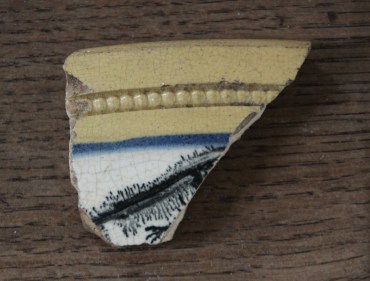





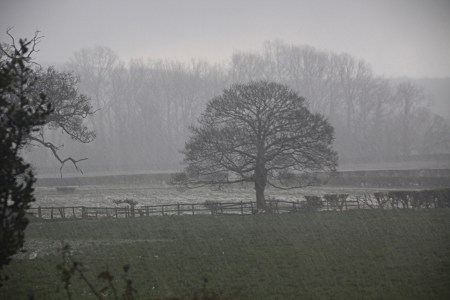







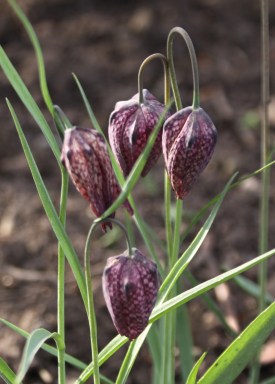
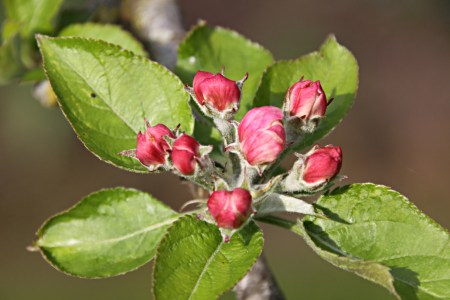












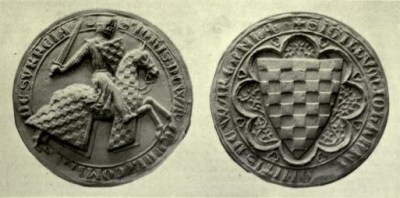


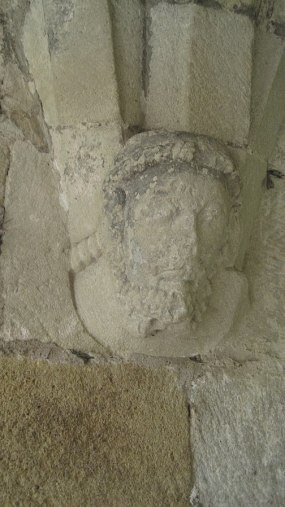


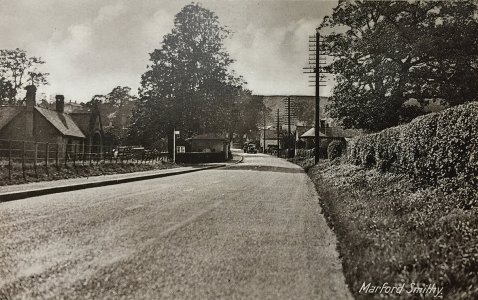


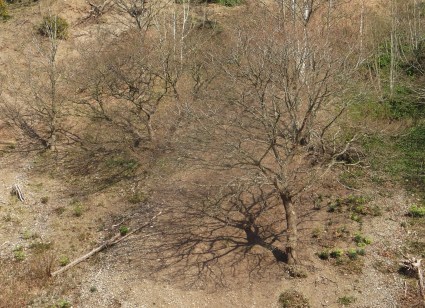






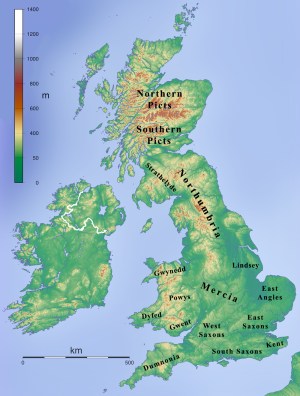


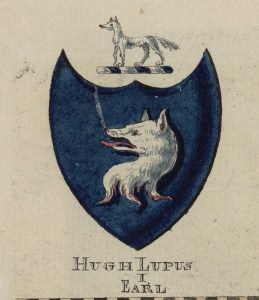


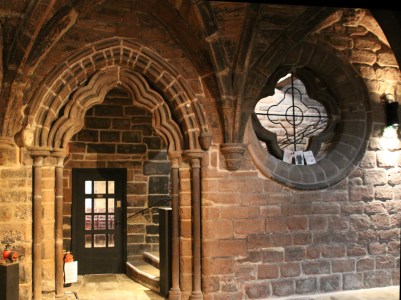


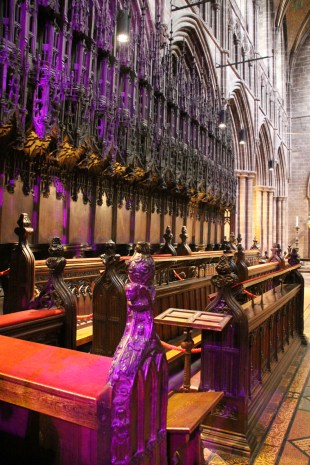
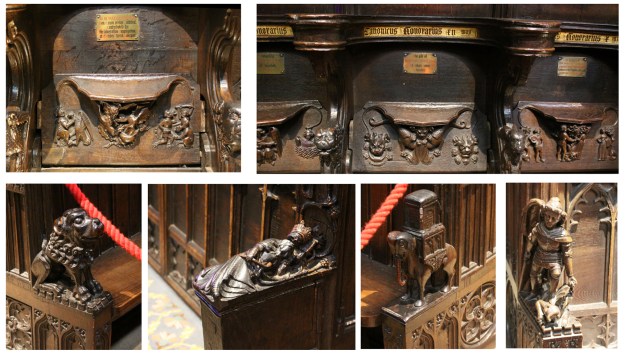

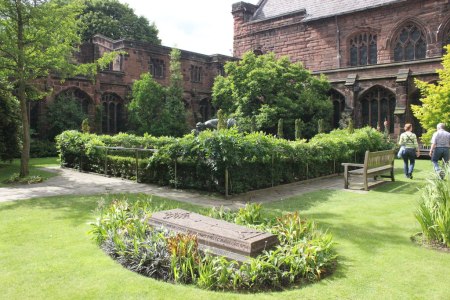


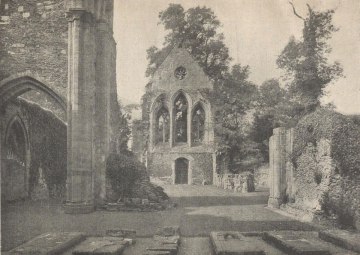

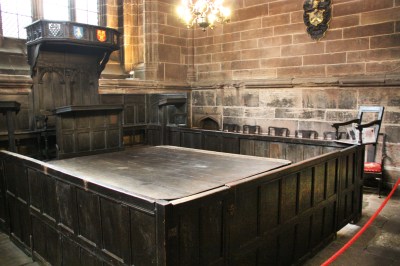
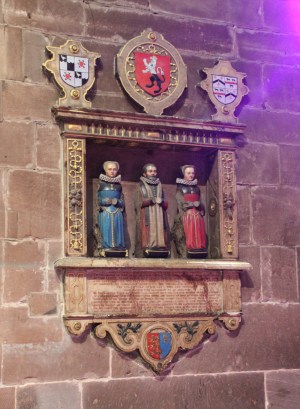
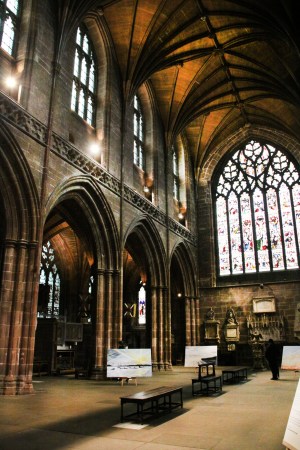
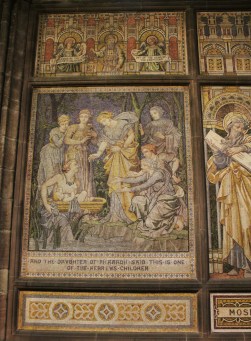


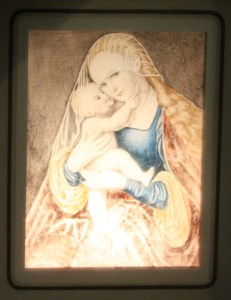
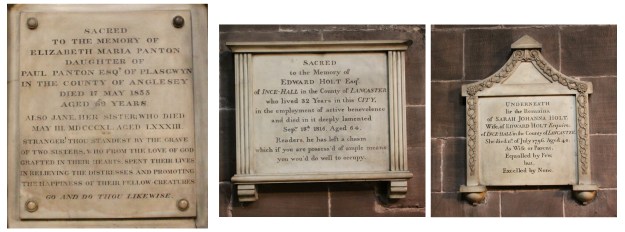

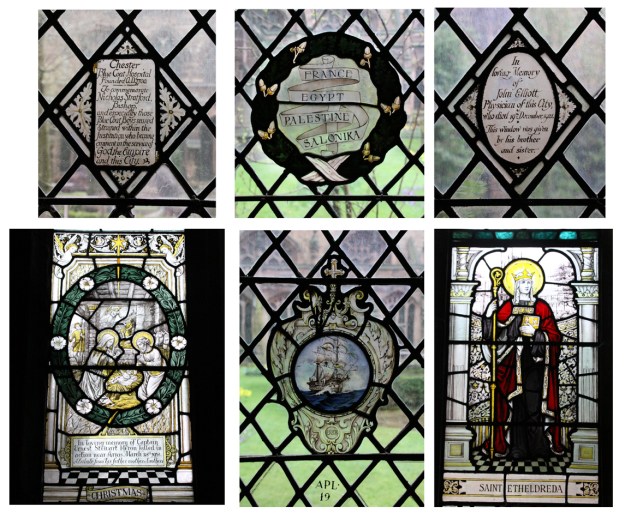


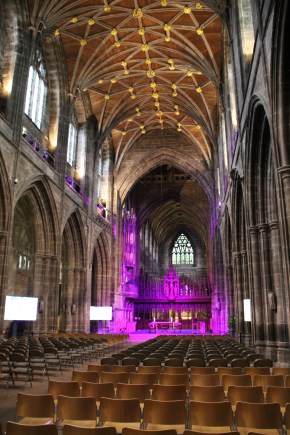
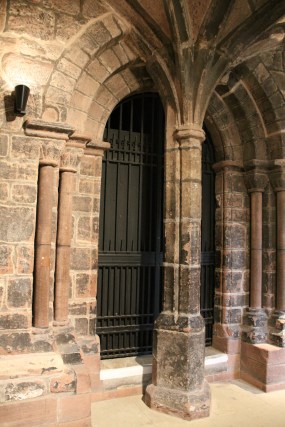



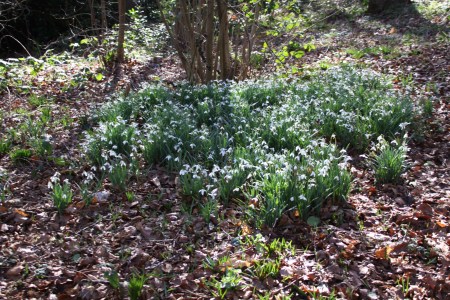


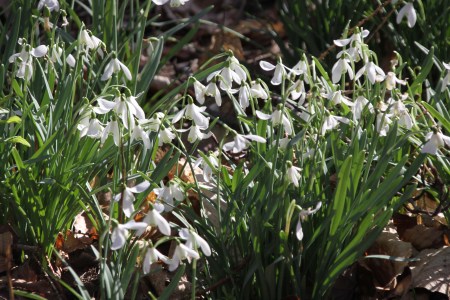
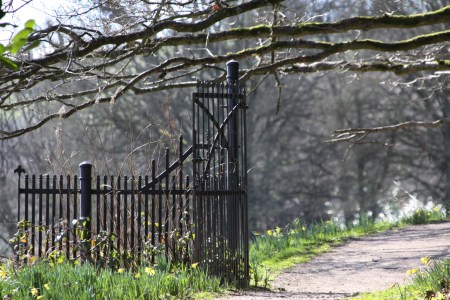


 Based in Churton

.jpg)


#/media/File:1837-42-Sir_William_Stanley.png)


_-_Google_Art_Project.jpg)


.JPG)
