Category Archives: Walks suitable for unwilling legs

Tŷ Mawr Country Park, including the Cefn viaduct, the Pontcysyllte aqueduct and some lovely walks


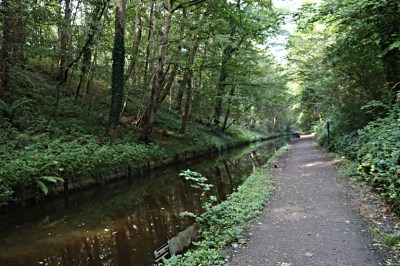
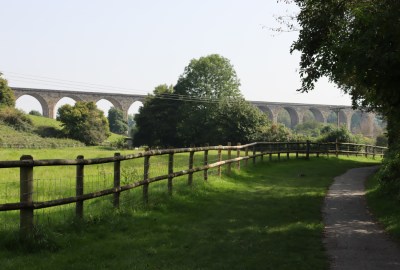
The Tŷ Mawr Country Park, just ten minutes south of Ruabon (LL14 3PE / What3Words ///disprove.dart.isolated) in the Vale of Llangollen, consists of walks through fenced fields, woodland tracks and views over the river Dee and the surrounding countryside.  Most spectacularly, its starting point lies almost underneath the monumental stone-built Cefn railway viaduct, from where a circular walk begins, whilst a less formal there-and-back branch off a circular walk takes in the iron-built Pontcysyllte aqueduct.

Map on the outside of the visitor centre showing all the route options (click to enlarge). At far left is the Cefn viaduct and at far right is the Pontcysyllte aqueduct.

The circular walk begins and ends at the Tŷ Mawr car park (pay and display, but only £1.00 for the day at time of writing, and with two power points for electric cars), visitor centre and café (both closed when I visited yesterday, Wednesday 6th September), and toilets (which were open).

Behind the visitor centre there is a picnic area with excellent views over the countryside and the Cefn viaduct.   There is also a small children’s farm with chickens, goats and other farmyard animals, and a children’s play area.  The circular walk is a metalled pathway through small fields and woodland, which takes in the river Dee, with a small picnic area near a tiny “beach” and has a number of picnic areas. I haven’t found an online PDF of the map above, but you can download my photograph of it as a PDF here (sorry that the text is not particularly clear).

You can go either way around the walk, but the recommended route on the map fixed to the outside of the visitor centre is anticlockwise, which finishes at the Cefn viaduct and the memorial dovecot.  Although there are some inclines, I would suggest that it is entirely suitable for those with unwilling legs.  It was certainly okay for a group of women with pushchairs.  It probably takes no more than half an hour to 40 minutes to walk, with stops to admire the river and the viaduct.  There are occasional benches, a picnic area by the Dee and further picnic areas with lovely views at the top of the walk behind the visitor centre.

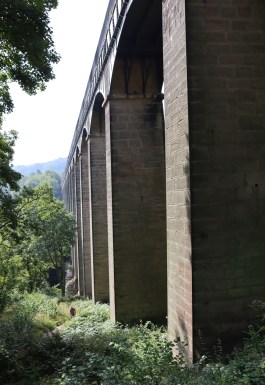
The real star of the circular walk, missing off the leg to Pontcysyllte, is the Grade II listed Cefn viaduct, which can be seen around much of the circular walk.  The walk goes right up to and along the base of the viaduct, which really is an awesome sight as you approach it and begin to get a sense of its scale.  The Cefn viaduct was designed by civil engineer Henry Robertson, who had purchased the Brymbo Ironworks, and was built in yellow Cefn sandstone and red brick by contractor Thomas Brassey (to whom there is a chapel dedicated in Chester Cathedral). It was built surprisingly quickly over a two year period to carry the Shrewsbury and Chester Railway over the Dee valley.  It opened in 1848, 43 years after the opening of Pontcysyllte, at a cost of £72,346.  It has twenty one arches, nineteen of which are 60ft (18m) wide, and two of which, one at either end, are 30ft (9m) wide.  If you approach the country park from the Ruabon direction, you will pass under one of the two narrow ones.  The arches span 1508ft (466m) and at their most dizzying tower 147ft (45m) above the level of the river. 

The additional leg of the walk to the Pontcysyllte aqueduct along the path of the Dee is not suitable for anyone who cannot handle steps, as there is a flight down from the circular walk to near the level of the river, with no handrail.  There is a signpost and small Pontcysyllte-themed bench indicating where you have to turn off the path down the stairs to a more informal section towards the aqueduct.


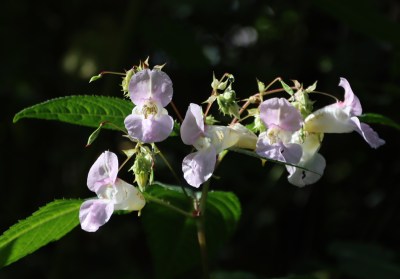
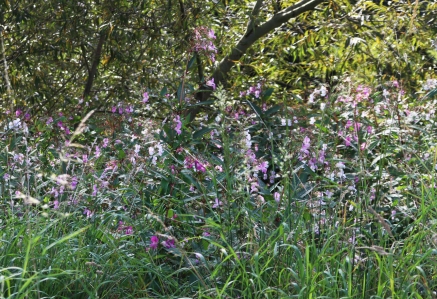
I enjoyed this more informal section, which after a wending track following the path of the Dee through woodland and open field leads to steps at the other end that take the walker to the level of the aqueduct and the Trevor Basin, with fully open visitor centre and other facilities (including boat trips across the aqueduct).  The section along the river to Pontcysyllte will be highly seasonal, with different vegetation allowing or blocking views to the river, offering seasonally variable wildlife.  Yesterday it was very attractive, with glimpses of the river through the tall plant life, and occasional tracks through the vegetation to get down to admire the river itself, much-used by dog walkers whose canine friends were doing a lot of swimming.  The dominant floral element was Himalayan balsam, with orchid-like flowers in pinks and pinkish whites, which is terminally invasive, a complete monster which, given half a chance, takes over its entire environment, but is endlessly pretty and no bother at all in the massive acreage of the park.


Viewing point for the Pontcysyllte aqueduct

The narrow track follow a well sign-posted route, although there are only a few places where choices are required.  When you reach the aqueduct viewing-point that is marked by a metal sculpture of a camera (which acts as a frame for taking photographs of Pontcysyllte) there is a choice to go straight on to the main steps, or turn right to approach the aqueduct from a different angle.  If you are not interested in going up to the canal and aqueduct level but are happy to enjoy some terrific views of the remarkable structure from below, by the side of the river, go straight on.  You can still change your mind and walk up to canal aqueduct level, but be warned that it’s a fairly long and steep flight.  You can always drive back via the Trevor Basin, at the beginning of the aqueduct, where you can park up at the level of the aqueduct.  A better option when you reach the “camera” is to turn right to go up a much shorter and less strenuous flight of steps, which brings you out onto a wooded path that both includes a viewing point and  then delivers you to the canal, Trevor Basin and the aqueduct. You can then then return to Tŷ Mawr via the steeper staircase which is a lot easier going down than up, turning this final section into a circular walk.

The glorious aqueduct, built by Thomas Telford and opened in 1805, is always a joy.  I have written up a summary of Pontcysyllte’s history and visitor information on a previous post.  It is worth going on a bright, cloud-free day, because the views from the aqueduct down to the Dee valley are enhanced by the sun glinting off the water, and by the brightness of the green fields and trees that flank the river.  The towpath along the aqueduct trough is quite narrow, but wide enough for people to pass one another.  The iron railings are high to prevent accidental falls, but not so high that you cannot see over them.  This really is one of the highlights of the area for visitors.

Once done with the aqueduct and Trevor Basin and the visitor centre, going down the longer set of steps to return back to Tŷ Mawr is a great option, walking down the side of the aqueduct and getting a real sense of its scale.  The Dee is particularly delectable here too, bubbling over shallows and glistening in the sun.  A great place to plonk down on the river bank and enjoy an ice cream.

Having retraced your steps, and once back on the more formal circular walk, the star of the show is the Cefn viaduct that looms every close.  There is an option to stop at a picnic area where a small beach is a great spot for admiring the river.  There are tracks that let you walk just a little bit further along the river before heading back to the circular walk, or you can simply pause on the path, admire the view, and keep going up the slope towards the base of the viaduct.  The viaduct is amazing.  You can see it for most of the circular walk.  At first just a few arches appear, and then gradually the entire 19-arch run of the stunning structure is revealed until you arrive at the top of the slope and at the foot of one of its enormous columns.  Look up.  Wow!  At the very top of the arch at the top of the yellow stone-faced columns, the underside of the arches are formed of red brick-built, providing a contrast with the yellow Cefn sandstone.

There is a bench where you reach the viaduct, and a signpost.  The left option continues the circular walk along the foot of the viaduct, which you will have to do anyway to return to the car park.  The right option requires you to cross a stile, and allows you to walk just a few metres in order to see down to the feet of some of the arches in the river, albeit through the vegetation, and to stand right under one of the arches and get up close and personal with the stone work.

When you return to the last stretch of the circular walk, following the viaduct along its base, you eventually reach the attractive dovecot.  This looks much older older than it is, rather like the 18th century example at Erddig, but it is modern, built in 1993 as a memorial.

It’s a short and largely undemanding but seriously enjoyable walk.  Including the walk to Pontcysyllte, the walk only took about two hours to and from Tŷ Mawr car park, with lots of stops for photos and 10 minutes sitting overlooking the river at the foot of the aqueduct with a much-appreciated ice cream.  Apart from the steps, it’s an easy walk, and there is much to see.  I arrived at Tŷ Mawr at 11 and left shortly after 1pm, so it’s not a day-eater.  A great place for a stroll, rather than a hike.  Up-to-date visitor information is available on the Wrexham County Borough Council website.

The name Tŷ Mawr translates as “big house” or “great house.”  There’s no sign of a house, and no mention of one on any of the websites that talk about the country park.  Many old houses have been lost, but I can find no mention of one associated with the country park.  Does anyone know if there was once a property associated with the site?


A roof boss in Chester Cathedral: the murder of Thomas Becket

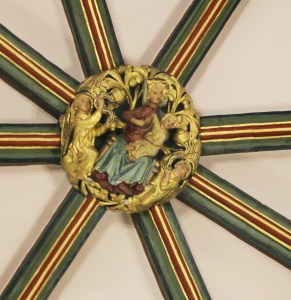
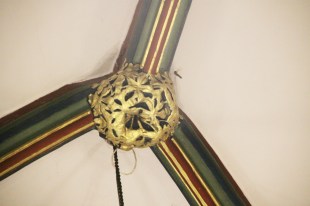
The Thomas Becket ceiling boss in the Lady Chapel, Chester Cathedral. Photograph by Andie Byrnes

  • Introduction
  • Who was Thomas Becket?
  • The Becket Boss in the Lady Chapel of St Werburgh’s Abbey
  • Final Comments
  • Sources

Introduction

Chester Cathedral plan (annotated). Source: Wikipedia

In the 13th century, Abbot Simon de Whitchurch (1265-1291) began the construction of Lady Chapel in St Werburgh’s Abbey (which is today Chester Cathedral, and about which I have posted here, with visiting information including accessibility).  It was dedicated to the Virgin Mary. In the ceiling, where the vaulting ribs meet, three round ceiling bosses high above the floor show religious themes.  One shows the Holy Trinity and the second shows the Virgin Mary and the baby Jesus.  The third, shown above, shows shows the murder of Thomas Becket, Archbishop of Canterbury, by four knights loyal to Henry II on 29th December 1170 in Christ Church Cathedral in Canterbury.  It is one of only two Becket ceiling bosses known to survive in Britain; the other is at Exeter Cathedral (shown below left).

Exeter Cathedral’s Thomas Becket ceiling boss. Source: Feasts, Fasts, Saints and the Medieval Church blog

What these two busy little scenes in Chester and Exeter depict was a brutal and savage act of great violence.  The murder of Becket was a violation one of England’s holiest precincts, a modern martyrdom, and an affront not only to the ecclesiastical hierarchy in England but to the papacy itself.  All eyes turned towards Henry II.  This was not the sort of attention that Henry wanted, and he spent the rest of his reign attempting to distance himself from the event.

The news of the murder spread swiftly and was deeply shocking to 12th century English and European society.  The terrible events were captured by eye witness accounts, not least that of the clerk Edward Grim who attempted to intervene and protect Becket. Almost immediately miracles were attributed to Becket, and only three years later he was canonized by the pope, becoming St Thomas.  His story was told in biographies of the saint, and his scenes of his life, martyrdom and miracles were rendered in wood, stone and paint, whilst relics were assiduously collected and displayed. In a world where martyrs and their deeds were factual events but remote, the real-time martyrdom of the head of the English church by representatives of the king was religious persecution in action, fresh and alarming in a way that past events might not be.  It was unthinkable.

Document dating to around 1180, around a decade after the event, showing the murder of Becket, from an eye-witness account by John of Salisbury (Cotton MS Claudius BII f.341r). Source: British Library.

From the moment of his murder, people were attracted to Christ Church cathedral to commemorate Becket.  His canonization made Christ Church Cathedral a formal and very desirable pilgrim destination.  The shrine itself, completed 50 years after Becket’s death, became one of Europe’s top pilgrim sites.

The saint was still attracting pilgrims in the 16th century when Henry VIII, identifying the cult of Becket as a challenge to his absolute control over religious as well as secular matters, ordered that every image of the martyr should be destroyed.  The systematic annihilation of Becket shrines and images contributed to the demise of Becket’s legacy, which was reinforced by further systematic defacements of Catholic artistic and architectural themes during the Reformation, including various monuments in Chester Cathedral, including the St Werburgh shrine.

Who was Thomas Becket?

Becket’s early career

Map of Medieval Cheapside, Medieval London in the 1560s. Source: Medieval London, Fordham University

Thomas Becket was the son of a Norman merchant who moved from Normandy (northwest France) to take up opportunities in London following the invasion of William I in 1066.  Gilbert and his wife Matilda lived in commercial area of London called Cheapside.  Gilbert rose to the position of sheriff, climbing several rungs on the social and political ladder.  It is thought that Thomas Becket was born around 1118-1120.

Becket was was born into the period of civil war between King Stephen and the Empress Matilda (mother of Henry II).  He received a good formal education, first at Merton Priory (now in southwest London), and later at a school in London.  In his late teenage years he went to Paris to study, in a Parisian heyday of scholarship and artistic endeavour.  His studies included some of the most popular scholastic topics, including grammar, rhetoric and canon (church) law, which were essential tools for anyone wanting to make their mark on the world, but did not include any formal religious education.  He returned to England in the early 1140s under the reign of Henry II, who was crowned as monarch on the death of Stephen in December 1154.

Seals of Archbishop Theobald and of Christ Church, Canterbury. Source: “Theobald. Archbishop of Canterbury” by Avrom Saltman via the Internet Archive

In the mid 1140s Becket was recommended to the Archbishop of Canterbury Theobold of Bec (c.1090-1116) and obtained a role as a clerk in the cathedral, a mainly administrative position which, however, offered opportunities for advancement. A cathedral is both the principal church of the diocese and the seat of the bishop and, as at Christ Church, often included a monastic establishment.  Becket’s Paris education was probably attractive to Theobold, who had a number of similarly educated young men in his employ.  Like most incumbents of the Canterbury archbishopric, Theobold was both a cleric and a diplomat, closely involved in crown matters, but had twice been exiled by King Stephen due to his intervention in political matters.  He sent Becket to Auxerre in France and Bologna in Italy to study law.  Law, divided into Church (canon) law and state law, was rapidly becoming an important topic in Medieval England.

Becket’s rise to power

The 12th-century Topographica Hiberniae (Topology of Ireland) by Gerald of Wales shows a rare contemporary image of the king. Source: Wikipedia

In 1154 Becket was promoted to the role of Archdeacon of Canterbury. As well as the financial rewards that enabled him to satisfy his love of luxury, his new position was sufficiently prestigious for Theobold to recommend Becket to the 21-year old Henry II as the new royal chancellor.  Henry’s coronation at Westminster Abbey, following the death of Stephen, had taken place in the same year.  Their professional relationship evolved into a friendship over a period of eight years as Becket flourished in a position of enormous responsibility.  It was a mark of Becket’s success in this role that on the death of Theobold in 1161 Henry moved to appoint him Archbishop of Canterbury, to hold both positions simultaneously.  Becket had no religious ambitions, had received no clerical training and consequently had never been ordained into the priesthood.  In spite of these drawbacks, Becket was elected to the role by the monks of Canterbury and the bishops of southern England.  Ordination was rushed through, and Becket was consecrated as Archbishop on 3rd June 1162.  His appointment was confirmed by Pope, who sent him a pallium, a vestment that symbolized his new office and status.

Needless to say, the appointment was not universally celebrated.  Quite apart from the fact that Becket had made enemies on his rise to power, decisions such as the appointment of an archbishop was one of the areas of conflict between Crown and Church.  The Church thought that it should have complete autonomy over its own affairs, answerable only to the papacy and  to God; but the Crown, conscious of the power and wealth wielded by the ecclesiastical institutions, wanted to exercise its own authority over the activities of the most important institutions, including Canterbury.  The right to appoint the most senior ecclesiastical personnel, was only one bone of contention.  The right of the Church to operate under its own canon law was another.

King Henry II and Thomas Becket arguing. Peter of Langtoft’s Chronicle, Royal 20 A II, f.7v. Source: British Library

There was no reason to think that Thomas Becket would not continue to remain completely committed and loyal to the Crown.  It was therefore a very unpleasant surprise to Henry II when Becket began to take his new role seriously, resigning his position as chancellor to focus on promoting the rights of the Church and representing the authority of the papacy.  From this point forward, Becket and Henry had opposing interests.  Becket’s training in law put him in an excellent position for arguing that the Church, rather than the Crown, should be in charge of ecclesiastical justice, in which Church clerics who committed even violent crime would be judged not by secular courts but by the far more lenient ecclesiastical courts.  There were many other disputes between the two, when Becket took a stand not only where ecclesiastical interests were involved, but in matters of state as well.  Henry attempted to resolve the situation by imposing a set of “customs,” or rules adhered to in the era of Henry I, Henry II’s grandfather, assembled in the Constitutions of Clarendon to which he commanded that Becket and all the bishops defer.  Although Becket at first refused to ratify the document, he and the bishops eventually submitted to pressure and signed.  However, Henry was seriously annoyed and began to investigate Becket, finding grounds for ordering him to court to address a number of charges.  When Becket refused first to accept the charges against him and then to reject the resulting sentence, he made the decision to flee to France.

The Abbey Church of the monastery of Pontigny. Photo by Mediocrity. Source: Wikipedia

Becket lived in exile at the Cistercian monastery of Pontigny in France from November 1164 until 1170.  In exile he attempted to drum up support, but alienated Henry still further by excommunicating a number of his advisers. Pope Alexander sent papal legates to try to resolve the dispute instructing Becket to refrain from taking any more actions against the king and his court, but in April 1169 Becket excommunicated another ten royal officials.  In 1170 Henry’s son Henry was crowned as the Young King, in a secondary role to Henry II order to settle any potential succession disputes.  The coronation was presided over by the Archbishop of York, Roger de Pont L’Évêque.  It was the right of the Archbishop of Canterbury to preside over coronations, and Becket responded to this insult by laying an interdict on England, with the pope’s permission.  This forced Henry back to the negotiating table, and he came to terms with Becket on 22nd July 1170.  Becket returned to England in the December of that year. One might have thought that Becket would count his blessings, but before he arrived he could not resist excommunicating the three individuals most closely associated with the coronation of the Young King, one of whom was the Archbishop of York.  The three appealed to the king, who was in his Normandy territory, and it was at this point that Henry, in a rage, expressed his frustrations about Becket’s latest act of rebellion.  What Henry II actually said is not recorded, but it spurred four of his knights to set off for Canterbury from Normandy.
———-

Murder in the cathedral

One of the earliest known representations of the murder of Becket (c.1175–1225). British Library Harley MS 5102, f.32. Source: Wikipedia

The knights rode from London to Canterbury.  They left their armour and weapons outside the cathedral precinct, intending to arrest Becket and return him to London for trial.  Becket was having none of it.  Eye-witness accounts state unambiguously that Becket’s behaviour was that of a very angry man under serious threat, confronting the knights on the steps of the cathedral.  Goaded by Becket’s verbal retaliation and refusal to back down, they retreated to put on their armour and retrieve their weapons, returning to slaughter the unarmed archbishop in rage.  Blows of the sword to his head killed him relatively swiftly, producing an alarming amount of gore that spilled onto the floor around him.  One of the swords struck him so powerfully that the sheer momentum carried it to the ground, snapping the end off the blade.  Edward Grim, who attempted to intervene, was badly injured.

His murderers were Reginald FitzUrse, William de Tracy, Richard Brito (or le Breton) and Hugh de Morville.  FitzUrse, whose name means “son of bear,” is often marked out on images of the murder with the image of a bear’s head on his shield.  He is shown on both the Chester and Exeter bosses.   Having committed the crime, the knights headed for Yorkshire where they remained for a year.  Curiously, Henry made no move against them, but in 1171 Pope Alexander III excommunicated them, and 1172 they headed for Rome to seek absolution from the pope.  It is thought that they were probably sent on crusade, and either died on their way, or in battle, although there are a number of unsubstantiated traditions about their ultimate fates.

The Christ Church was closed for nearly a year so that Pope Alexander III could be consulted on how to proceed so that the cathedral could be re-consecrated and returned to normal use, rejuvenated as a destination for pilgrims.

Miracles and legacy

Detail of the Canterbury Christ Church Cathedral miracle window, which shows some of Becket’s miracles. Source: Reverend Mark R Collins blog

Until his death, Becket had been a political creature, and a representative of ecclesiastical interests.  He did not position himself as a man of the people, but as a newly inspired champion of the rights of the Church.  This did not prevent the place of his death becoming a destination for pilgrims of all social scales, even before he was officially canonized.  Curiously, Becket was not merely an emblem of devotion to the Church and a promoter of its rights in the face of opposition from the Crown, but a saint who produced miracles for the everyday person, becoming an unlikely saint to act on behalf of the general populace.

A reconstruction of the Thomas Becket shrine in Canterbury Cathedral. Source: Smithsonian Magazine

The first miracles reported following the death of Becket took place at his tomb.  Hundreds of others soon followed, 703 being reported within the first 10 years, many recorded by Benedict of Peterborough.  Within twenty years of the murder, no less than twenty biographies had been written about the saint including contemporary accounts including, for example, those by John of Salisbury, Edward Grim and Benedict of Peterborough, the latter listing many of his miracles.  Images of him in various media appeared all over Europe, and his relics spread just as far.  As the Oxford History of Saints comments laconically, “His faults were forgotten and he was hailed as a martyr for the cause of Christ and the liberty of the Church.”  In short, Becket and the miracles associated with him went viral.

Thomas Becket pilgrim badge. Source: Museum of London

Fifty years after his death, a new shrine was opened with great ceremony, and St Thomas was moved into a new tomb within the shrine.  It was a spectacle of gold and precious gems, and was surrounded by stained glass windows telling the story of his life and miraculous works. At the height of its popularity, it attracted over 100,000 pilgrims a year. In the Jubilee year of 1420 the shrine earned £360 for Canterbury Cathedral, which equates today to around £231,483, which could have purchased 83 horses or 620 cows (data from the National Archive’s Currency Convertor) or could have been used to build a new section of cathedral.  Images and symbols of St Thomas were moulded into ampullae and badges for the hundreds of pilgrims who visited his Canterbury shrine.  The shrine no longer survives; it was destroyed in 1538  under the orders of Henry VIII.
——–

The Becket boss at St Werburgh’s Abbey

The Lady Chapel

The Lady Chapel, Chester Cathedral

St Werburgh’s Abbey featured many architectural-sculptural elements which embellish the core structure of the building, providing focal points, colour and a hint of glamour.   The Lady Chapel was built under Abbot Simon de Whitchurch (1265-1291).  In Burne’s words, “He was evidently an outstanding character and under him the abbey flourished exceedingly.”  It was a period of great prosperity for the abbey, with an income derived from, amongst other things, church pensions (a sort of tax), appropriated church tithes, gifts of houses and lands, and possibly pilgrimage to the reliquary-shrine of St Werburgh, although the new shrine  to the saint was not built until the 14th century, and it is unclear how important it was as a pilgrim destination before then.

Although the earliest known Lady Chapel predates the Norman invasion, the Lady Chapel became particularly important in the 13th century when the Virgin Mary was undergoing a resurgence of devotion.  The elegant, vaulted Lady Chapel St Werburgh’s was built in the 13th century.  Like most Lady Chapels it was built to the east of the High Altar, projecting from the main building.  Here clerics performed daily services to the Virgin Mary. It is easy to forget that most architectural elements would have been brightly painted, but the Lady Chapel in Chester Cathedral, restored to a typical colour scheme of green, blue, red and gold in the 1960s, provides an excellent example of how these components would have looked.  The lancet windows at the end of the chapel date to 1869, when Gilbert Scott removed the later Perpendicular window to be more faithful to the 13th century vision.

The Holy Trinity, with God holding the arms of the crucifix in his hands

Some Lady Chapels are large and ornate, but in some cases they form smaller, more private and tranquil spaces than other chapels within a monastery or cathedral.  The Chester example is delectable, its small footprint and relative height giving a sense of both intimacy and space.  The reconstructed shrine of St Werburgh, a victim of the Reformation’s hostility to reliquaries and idolatry, is located at its east end, but according to Jessica Hodge was probably originally at the east end of the quire.

The ceiling bosses form a row across the centre of the chapel, from east to west.  The east end was symbolically the most sacred, and it is at the east end of the chapel that the ceiling boss showing the Holy Trinity is located.  In the centre is, the Virgin Mary is depicted, and at the west end is the Becket boss.  The chapel was created during a period of great religious significance during the reign of Henry III, who had been crowned for the second time in 1220, the same year in which Becket’s remains were moved to a custom-built shrine on July 7th 1220, reinvigorating the already vibrant cult. The spectacular event was used by both the Archbishop of Canterbury, Stephen Langton, and the king to help to heal the ongoing rift between the Church and the king.  In 1225 Henry ratified the Magna Carta, granting the freedom of the Church.  This was a momentous decade in the Church’s history and religious houses throughout Medieval England rode the crest of this remarkable period during the rest of the century with new architectural projects, rebuilding, expanding and celebrating.  By 1260-1280 when the Chester Lady Chapel was built, it was the centenary of Becket’s death.  It is possible that the Becket boss was installed to commemorate this event following an ecclesiastically bright start to the century.

The St Thomas ceiling boss

Ceiling bosses are both architectural and sculptural elements, usually circular or sub-circular, positioned in the ceiling where the vaulting ribs that form arches meets, either to hide the join, or acting as keystones to add structural integrity to the complex set of tensions and stresses. There can be much more to them than first glance suggests, and behind the decorated end, an undecorated portion of the boss may be inserted into the join.  Examples on the floor of the cloisters provide a good idea of this, showing the decorated section that would face down, and the plain stump that would be inserted into the join.

Three relatively large stone vaulting bosses were provided at the point where seven or eight stone ribs of the slender vaulting meets, each carved and painted with a different aspect of Christian iconography.  Smaller bosses were also added to at vault joins, where three or four ribs meet, sculpted into beautiful foliage, and gilded.  Corbels, where the vaulting ribs begin, are also decorated with foliage.  These carved stone features would all have been carved and painted prior to installation.  The white painted ceiling and walls between the brightly coloured features are the perfect foil for them, providing them with reflected light and emphasizing the  rich colours.

The Becket scene offers a sanitized version of the traumatic event on 29th December 1170, recycling a scene that bears only a passing resemblance to the terrible violence of reality, one version of a standardized formula for representing this event, an overstuffed and static little scene that looks rather like a posed portrait, with all of the protagonists shown full face, as though looking towards a camera. The composition is curious.  Three knights dominate the scene.  Sir Reginald FitzUrse is identifiable, as he is in the Exeter ceiling boss of this scene, by the bear’s head on his shield.  One knight at the front strikes at Becket’s head.  At the back of the group is clerk Edward Grim holding a cross and appears to preside over the scene.  Becket is squashed into the lower right hand section of the scene, kneeling behind an altar, his hands held, palms outwards, in front of him.  Behind him, even more squashed and barely visible, is the fourth knight, striking at Becket’s head, his sword converging with the sword of the knight in the foreground.  In spite of all four swords, the most dynamic element of the scene is the way in which Becket’s hands are raised in front of him, either in prayer, supplication or in a gesture of surrender.

Exeter Cathedral ceiling boss. Source: Feasts, Fasts, Saints and the Medieval Church blog

By contrast, the Exeter ceiling boss, which Burne says is about a century later, makes rather more compositional sense, placing Becket at the centre of the scene, looking out at the viewer with his hands raised, whilst the knights crowd in on him, intent on their deadly purpose while Grim does his best to ward them off.  It has far more dramatic impact, and is easier to understand as a narrative.  Both bosses share the same formulaic approach to the event.

When the chapel was built between c.1260 and 1280, over a century had passed since the martyrdom of Becket, and the detail of the real event had become less important than its symbolism and the theological narrative built around it.  Becket shown praying in front of an altar conveyed the sense of Becket’s purity and holiness far more efficiently than the actual scene of anger, shouting and resistance that preceded the murder. Similarly, the Grim was not a cross-bearer clerk.  However, there is an obvious dramatic advantage to showing him holding the cross as he confronted the knights in support of Becket.  It remains a peculiarity of the scene that the knights and Grim are the central characters, whilst Becket is squeezed to the side.

Who was the intended audience?

Lady Chapel, Chester Cathedral

In the 13th century the eastern end of the abbey church was the exclusive domain of the abbey monks, and it is unlikely that the Lady Chapel was seen by anyone else.  By the 14th century, the pilgrim status of Chester, with the miraculous holy rood in St John’s, and nearby pilgrim destinations at Holywell and St Asaph, lead to a reinvigorated interest in the Anglo-Saxon St Werburgh.  A new shrine to St Werburgh was built in the 1300s and according to Jessica Hodge, was situated at the east end of the quire, presumably accessed via the nave and the north aisle.  Pilgrims to the shrine would therefore have been granted access to the usually private east end, and they may have been shown the neighbouring Lady Chapel and the Becket boss as part of their pilgrimage.  Some of them may have included a visit to the Nunnery of St Mary in their travels, which possessed a relic in the form of the girdle of Thomas Becket.

Lady Chapel corbel

When they were new, the monks would have been well aware of the subject matter of the ceiling bosses.  As time went by they may have been repainted and repaired, but there will have been periods when they receded into the background.  Even today, people don’t always look up, and even when they do, they are not always sure what they are looking at.  Even if access had been generally available, the ceiling bosses are so high up that it is difficult to see the detail without either a telephoto lens or a ladder.  When I was last there, I pointed the Becket boss out to a lady who asked what I was photographing, and the only way that she could make it out, even with her distance glasses on, was to see the enlarged image on the screen of my digital camera.  Similarly, I only really got to grips with the subject matter on the other two bosses by photographing them and bringing them up on my computer screen later.

If one factors in the available lighting in the Middle Ages, which was confined to any light that passed through the stained glass windows, supplemented by candles, it is unlikely that these bosses were generally very visible from the ground.  Compare them with those in the enclosed walkway (cloister), which are much closer to the ground and therefore much easier to appreciate.

Why were images of Becket purged during the 16th century?

The Becket boss prior to restoration. Source: Godfrey W. Matthews, The Becket Boss in the Lady Chapel, Chester Cathedral

Chester became a cathedral after the Benedictine monastery of St Werburgh was dissolved by Henry VIII.    In spite of this lucky escape, it is possible that the ceiling boss was deliberately defaced at this time. Godfrey W Matthews, writing in 1934, described it as follows:  “It is very badly worn, which is curious, as the two bosses to the east of it are in a good state of reservation.  It is possible that some attempt had been made to deface it, for the figures suggest chipping.” Henry VIII imposed a policy of extreme prejudice against Becket, ordering all images of him to be destroyed.  The tomb and pilgrim shrine in Canterbury were removed in 1538 and Becket’s mortal remains disposed of.  Images throughout the country were removed.

Chester Cathedral also came under fairly savage review during the Reformation, when various architectural features and monuments were maimed or destroyed to remove overtly Catholic themes.   Most of the survivors are in high places that were difficult to reach.

Are ceiling bosses works of art, or mere architectural flourishes?

Stonemason, artist and researcher Alex Woodcock, whose PhD focuses on Exeter stone sculptures, highlights how the bright colours and dark shadows at Exeter were contrasted to give reveal a sense of depth and to emphasise the three dimensional character of the bosses and corbels.  This can be seen at Chester as well, where the depth of the three dimensional aspect of the sculpted forms provides a sense of theatre and allows simple shapes to be very skilfully highlighted.  Woodcock points out that architectural sculpture “is often assumed to be secondary to free-standing sculpture, possibly because of its very architectural function” and that because the boss would have been there anyway, the images are seen less as art than mere decoration.  As he points out, however, “in terms of the hours needed to complete the carving using hand tools, their production would appear almost prohibitive in terms of expense today.”  Not all ceiling bosses and corbels are good art, but many of them are tremendous and well worth the time taken to appreciate them as stand-alone works.

Final Comments

The Lady Chapel in the 1870s. Source: Blomfield 1879

Most of us learned a version of the “turbulent priest” story at school.  This was a man who stirred up hornets’ nests in his role as Archbishop of Canterbury, both within the royal court and within the cathedral.  He divided opinion in his own lifetime, finding friends and making enemies.  His immediate legacy was to generate a healthy income for Canterbury Cathedral, as pilgrims flocked to share in the wonders of the miracle-worker.  Politically, he became an ongoing reminder of the conflict between royalty and the Church, a symbol not merely of spiritual martyrdom, but carried with him a morality tale about the dangers of the crown having absolute power over both the church and the people.

On a vaulting boss in Chester Cathedral, accompanied by the Virgin Mary and the Holy Trinity, Becket and his murderers look down on the visitor.  Representing a scene of appalling violence, Becket, Grim and the errant knights are a reminder that throughout the early Middle Ages, the Church and the King were equally powerful, and serious conflicts ran the risk of monstrous outcomes.

After nearly 400 years of popularity, Becket and his legacy were terminally undermined by Henry VIII and the Reformation, destroying his images in cathedral, church, monastery and private residence.  Queen Mary briefly restored both Catholicism and Becket’s status, but Elizabeth I followed her father’s lead.  Although Becket is remembered today, the split from the papacy and the tidal wave of the Reformation swept away his significance and his popularity in Britain.  Having said that, the lady I was chatting to in the Lady Chapel in Chester Cathedral told me that in the congregation of her Liverpool Anglo-Catholic church they follow the missal, and continue to commemorate the date of Becket’s murder.  Although he survives mainly as a historical figure, Thomas Becket has not vanished from view.

Sources:

Books and papers

Bartlett, R. 2013. Why Can the Dead Do Such Great Things? Saints and Worshippers from the Martyrs to the Reformation.  Princeton University Press

de Beer, Lloyd, and Speakman, Naomi 2021. Thomas Becket,  Murder and the Making of a Saint.  The Trustees of the British Museum

Blomfield, Reverend Canon 1859. On the Lady Chapel in Chester Cathedral. Courant Office. Digitized by Project Gutenberg
https://www.gutenberg.org/files/61922/61922-h/61922-h.htm

Burne, R.V.H. 1962. The Monks of Chester. The History of St Werburgh’s Abbey. SPCK.

Crouch, D. 2017. Medieval Britain, c.1000-1500. Cambridge University Press

Farmer, D. 2011 (5th edition). The Oxford Dictionary of Saints. Oxford University Press

Guy, J. 2013. Thomas Becket. Warrior, Priest, Rebel, Victim.  A 900-Year-Old Story Retold.  Penguin

de Hamel, C. 2020.  The Book in the Cathedral. The Last Relic of Thomas Becket. Allen Lane

Hamilton, B. 2003.  Religion in the Medieval West.  Arnold.

Hamilton, S. 2021. Responding to Violence: Liturgy, Authority and Sacred Places c.900-c.1150.  Transactions of the Royal Historical Society 2021, 31 (202), p.23-47.

Hodge, Jessica 2017.  Chester Cathedral. Scala Arts and Heritage

Jenkins, J. 2023. Who Put the ‘a’ in ‘Thomas a Becket? The History of a Name from the Angevins to the Victorians, Open Library of Humanities 9(1) https://olh.openlibhums.org/article/id/9353/

Luxford, Julian 2005. The Art and Architecture of English Benedictine Monasteries, 1300-1540.  A Patronage History. The Boydell Press p.21-27

Matthews, G.W. The Becket Boss in the Lady Chapel, Chester.  Historic Society of Lancaster and Cheshire 86, 1934, p.41-46

Orme, N. 2017. The History of England’s Cathedrals. Impress

Schmoelz, M. 2017. Pilgrimage in medieval East Anglia.  A regional survey of the shrines and pilgrimages of Norfolk, Suffolk, volume 1.  Unpublished PhD thesis, University of East Anglia, June 2017

Webster, P. 2016. Introduction. The Cult of St Thomas Becket: An Historiographical Pilgrimage.  In Gelin, M and Webster P. (eds.) The Cult of St Thomas Becket in the Plantagenet World, c.1170-1220.  Boydell and Brewer.

Williams, Godfrey W. 1934.  The Becket Boss in the Lady Chapel, Chester.  Historic Society of Lancaster and Cheshire 86, 1934, p.41-46

Woodcock, A. 2018 (2nd edition). Of Sirens and Centaurs.  Medieval Sculpture at Exeter Cathedral. Impress Books

Websites

British Museum
A Timeline of Thomas Becket’s Life and Legacy
https://www.britishmuseum.org/exhibitions/thomas-becket-murder-and-making-saint/timeline-thomas-beckets-life-and-legacy
Who Killed Thomas Becket? (by curators Lloyd de Beer and Naomi Speakman)
https://www.britishmuseum.org/blog/who-killed-thomas-becket

Museum of London
Thomas Becket: a life and death in badges. By Kirstin Barnard.  13th February 2020
https://www.museumoflondon.org.uk/discover/thomas-becket-life-and-death-badges#/

Smithsonian Magazine
Researchers Digitally Reconstruct Thomas Becket’s Razed Canterbury Cathedral Shrine. By Meilan Solly.  9th July 2020.
https://www.smithsonianmag.com/smart-news/researchers-digitally-reconstruct-thomas-beckets-lost-canterbury-cathedral-shrine-180975280/

An visit to the working Stretton Water Mill

The Grade 2 listed Stretton Water Mill is recorded from the 14th century, and was in almost continuous use until 1959.  It was restored by Cheshire Council in 1975 and became a museum in 1977.  It is located not far from Farndon and Holt, in Cheshire, very near to the villages of Stretton and Tilston.  Today it is a museum, with working water wheel, gears and related machinery, looking like an enormous clockwork toy, but powered wholly by water.  The mill still produces flour, but this cannot be purchased because the methods used, which are entirely authentic, contravene modern health and safety regulations.  However, flour from Walk Mill, near Chester, is sold in the shop.

This tiny vernacular cottage-type building, part red sandstone, part weather-board, is approached down a single track road (lots of passing places) and sits in an attractive rural setting.  It lies to the east of the well-manicured village of Stretton and its rural environs.

As well as the mill building, the two water wheels and the mill machinery, there is a big millpond, a picnic area, a car park (in a small field), and access via both external steps and disabled-friendly slopes between the two floors.  There is more visitor information at the end of this post.  

Stretton Mill is is a splendid remnant of rural architecture and at the same time tells a story about the industrial importance of water power in the lives of rural areas from the Middle Ages into the 20th Century, working around the clock during the Second World War.

—–
Getting your bearings: The waterworks

If you find that the tour is already in progress when you arrive (the tour is obligatory due to health and safety considerations) it would be a good use of the waiting time to get your bearings.  If you go straight into the tour, don’t forget to have a look around afterwards.  Simply walk up the short footpath from the car park towards the first storey of the mill, and look at the large, motionless expanse of water behind the building.  This is the millpond, which is fed by the Carden brook.  The brook is out of sight, but can be seen running under the road just a little further up the road towards Carden from the mill.

Sluice from the millpond into the by-wash

The job of the millpond is to feed the two water wheels.  The mill pond’s level can be controlled by a sluice into a wide by-wash,which drains the water into a tail-race or escape channel that eventually meets up with the main stream.  On the other side of the mill is a short flight of steps leading up to the other side of the mill, with some picnic tables.  Sluice equipment also controls the volume of water reaching the wheels from the millpond by raising or lowering the paddles (rectangular pieces of wood that can be dropped to stop water flow or raised to allow it).  When the wheels are out of use, for example when the mill is closed to visitors or to permit repairs to be carried out, the paddles can be dropped to stop the water entirely.

A typical watercourse layout. Source: Traditional Corn Milling Windmills by Nigel S. Harris, drawings by John Brandrick, fig. 12, p.9


A Short History of British Milling

Grinding grain

Roman water wheel replica in the grounds of the Museum of London (at its Barbican location). Source:  Geograph, by Martin Addison CC BY-SA 2-0

Harvested grains of wheat and barley are rock solid on the outside, and there is very little that one could imagine doing with them for nutritional purposes, except perhaps soaking and fermenting them.  The prehistoric solution, and one that was followed by subsequent millers, was to break them up and reduce them to powder by grinding them between stones, by hand.  By the Roman period, water wheels had been invented, and in the Medieval period, when Stretton Mill was built, these had been turned into both an industry and an art form, using vast carved stone wheels driven by water and a series of gears in an end to end process that introduced grain at one end and produced flour at the other.

Medieval mills

The mill at Stretton dates at least to 1350.  Water-powered mills were the dominant industrial mechanism during the Middle Ages, and were widespread, rescuing householders from the time-consuming, back-breaking and tedious task of grinding corn by hand.

A mill with an overshot wheel like the one at Stretton, and mill race.  Further up the stream there are eel traps, shown in the 14th century Luttrell Psalter (Add MS 42130, British Library).  Source: Wikipedia

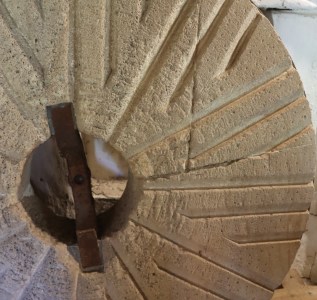
The millstones in a watermill, one set over the top of the other, were coarse.  They were carefully and skilfully carved with a set of precise grooves called furrows that helped not only to grind the grain but to move it from the centre of the millstone to the exterior.  The coarse stone cracks open the seed grains to allow the release of the kernel, and the grooves allow it to escape down a chute to be collected in bags below. 

Millstones were sourced both from within Britain and beyond, with imports of millstones made from particularly desirable stone areas overseas recorded at ports around the coast.  The cost of the millstone itself could be considerable, and the additional expenses of transportation and fitting meant that these were high value items that were carefully maintained.   

Millstones, laid in pairs, one over the top of the other, contain a complex series of grooves, called furrows, that grind the grain and move it towards the edge.  This is one of a former pair on display at Stretton.

Some mills with twin wheels would operate different milling activities simultaneously, such as corn processing and wool processing (known as fulling).  A mill was built by the lord of the manor (the term manor referring to the estate rather than just the house), who charged tolls called soke rights for its use.  Initially this was in form of a share of the corn and later was on a cash basis. Corn mills were used for reducing grains into products suitable for human and livestock consumption.  The term “corn,” which is generally used in conjunction with mills, refers not to the New World corn but was used as a generic term for wheat, barley, oats and rye.  The soke rights paid for the initial capital outlay and maintenance costs, and provided an income for the manor.  The use of the mill by manor tenants was not optional.  Manual milling at home was banned and anyone owning private milling equipment could be fined.  It is estimated that estates could extract as much as 5% of the estate’s total income from watermills.

Run-off channel (tail race) from the overshot wheel

In the mid 14th century after a period of severe famine, the Black Death arrived and obliterated around 25% of the population.  Once recovery was underway with a much smaller population, there was competition for labour and a rise of wages.  Instead of operating mills themselves, lords of manors often leased out their mills to private tenants such as the minor gentry, merchants and specialist millers and craftsmen who found themselves in a world of expanding opportunity.   At the same time, the abrupt decline in population meant that many other mills were abandoned, and fell into disrepair before either being revived at a later date or being allowed to decay.  In the case of Stretton it is not known precisely what happened, but subsequent records indicate that enough of the local population survived to either maintain or restore that the mill after the traumas of the 14th century.  Indeed, the use of the mill to save on manual flour processing during a population crisis would probably have assisted economic recovery.
———

Stretton Mill

The Medieval and Early Tudor Mill

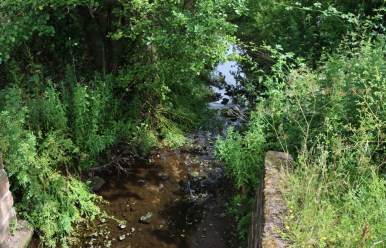
Carden Brook, which supplies the water for the millpond and waterwheels

From 1281 the manor (estate) of Stretton was owned by the Warren family, who held it until the 15th century. The mill at Stretton dates at least to 1350, when it is first recorded in a transfer deed, meaning that it was built before this date.  Given that the Black Death was sweeping through Britain in 1348, it was probably built before that date.  It is not known exactly what the mill would have looked like before the 17th century.  The mechanism in the mid 14th century would have been very much the same as the one still working today, with the waterwheel operating via gears to turn the millstones.  There was only one waterwheel until the 18th century, positioned to the left as you face the mill, and this would have been on the outside, and was not incorporated into the interior of the building until the 19th century.

Stretton was dedicated to the processing of grain, mainly barley, oats and rye with some wheat.  Wheat bread was the most expensive, and used only for bread for the better off.  Barley could be used for an inferior bread, oats could be used to make porridge and oat cakes and rye was used bread and beer.   Barley, oats and rye could all be used for animal fodder too.

In the 1500s, Stretton Mill was purchased by the Leche family of Carden Hall.

Stretton Mill 1600-1900

Stretton Mill as it would have looked in the 1600s. Source: Author Uncredited – West Cheshire Museums

The oldest part of the mill dates to 1630.  In the 17th century the building is thought to have been made of a timber framework, filled with wattle and daub.  Wattle and daub is a mixture of thin wooden strips woven like basketry to form into a lattice, which provides a base to which a material can be added to create panels that form the walls of the building between the timber frames.  The mill was almost certainly thatched, the materials for which were easy to source in a rural agricultural location.  The fixtures that attached the wattle and daub to the frame can still be seen at the mill, and an example was pointed out on the guided tour. The windows, vital not only for visibility but to allow the flour-filled air to clear, would have been provided with shutters.  The water wheel was known as a breast-shot, and was located on the east end of the mill, to the left as you face it from the road.

The main types of waterwheel. Source: Guide to Ford End Watermill

There are four main categories of water wheel, the undershot, pitchback, overshot, and breast-shot. The main difference between them is how water is fed to the wheel, how the wheel uses this water to turn, and what sort of power this delivers to the machinery.  Each has benefits depending on a number of factors.  The overshot wheel is fed from an overhead channel, requiring a water source that is at least as high as the top of the wheel, runs counter clockwise and is the most efficient when plenty of water is available.  It is also an  expensive solution, requiring extensive installation work.  The undershot is powered by a low level water source that works by capturing the water between the wheel and the wheel pit, and is the least efficient.

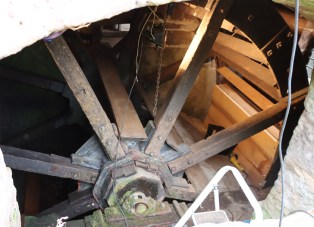
The breast-shot wheel when it was under repair

The breast-shot design sits between the overshot and undershot, receiving water from a higher level than the undershot but a lower level than an overshot.  The main advantage of the breast-shot over the overshot is that it can use lower levels of water, allowing a mill to continue output even during periods of drought.

The breast-shot wheel at Stretton is unusual in that the sluice controlling access of water to the wheel has three paddles, each of which can be operated to let water into the waterwheel’s buckets at different levels.  This makes it very flexible when the water level of the millpond changes.

The water for the breast-shot wheel vanishes under the east wall of the building’s extension, into the wheel-housing, shown to the right.  Look out for this feature when you are outside at the level of the millpond’s surface.

The oldest local extant contemporary buildings in the area are Stretton Lower Hall, which was built in 1660 on a site that had been apparently been moated, and Stretton Old Hall, built in the 17th century and extended in the 19th century. 

By the 18th century, Stretton was one of a great many watermills and several windmills dotted throughout Cheshire and the Wirral.  As the map below shows, water power dominated in Cheshire whereas on the Wirral wind power was source of power for milling.  As the Industrial Revolution began to gain momentum, mechanization, mainly dependent on a water source, spread rapidly.

Map of water mills and wind mills in the 1770s. Source: Phillips and Phillips 2002, p.67

At Stretton there is an inscription commemorating major structural changes to the mill in 1770.  Improvements included a sandstone base, topped with weatherboard and finished off with a slate roof, still with a new overshot wheel added to the west end, together with a window overlooking it, on the right as you face the mill.  The breast-shot wheel at the east end was still on the outside.

Stretton Mill in 1770. Source: Author Uncredited – West Cheshire Museums

The addition of the overshot wheel was an important one.  The breast-shot wheel has been explained above.  The overshot wheel, which delivered water directly to the top of the wheel via a trough, was far more efficient when the millpond was full.  There is considerable drop from the millpond to the trough in which the overshot wheel sits.  This drop is known as the head.  The higher the head, the more powerful the potential of the waterwheel.

The water is taken away from the mill after passing through the wheels. Each has a tailrace that takes the spent water under the road, and if you cross the road you can see it leaving via small natural-looking channels that wend through the fields to re-join the Carden Brook.

The overshot wheel

The combination of the two wheels gave the mill the ability to function at maximum efficiency when rainfall provided a healthy supply of water, allowing both wheels to be operated, with the overshot wheel being particularly productive.  At the same time, when drought lowered the level of the millpond, putting the overshot wheel out of action, the breast-shot would still be viable.  The combination of two wheels was a very good risk-management strategy.

Contemporary with the mill at this period is Stretton Hall, brick-built in 1763 for John Leche (1704 – 1765) of Carden.  There were actually nineteen men at the head of the Leche family named John, and this was the fourteenth of them.

In the early 19th century the building was extended to the east to incorporate the breast-shot wheel, which could be inspected from the small arched window shown in the illustration below, and which survives today.

Stretton Mill in 1819. Source: Author Uncredited – West Cheshire Museums

The extension was built of red sandstone, but the weather-board was retained on the older section of the mill.  This is very like the mill building that survives today, albeit with less  red sandstone and more weatherboard than today’s building.  As well as the original wooden shutters, glass was probably fitted into the windows at this time.

The 1940s

The watermill was in 24 hour use during the Second World War, milling grains for both bread and animal feeds. It was in continuous use until 1959, when its last miller died, and it fell into disrepair.

The modern era

Millstone leaning against a wall in the stone room of Stretton Mill

The mill was acquired in 1975 by Cheshire County Council and was renovated in 1977 and given Grade 1 listing.  Stretton Mill as it stands today is part red sandstone, part weatherboard, and has a brick-built extension.  The fact that it incorporates earlier features of the mill building is a particularly attractive aspect of the mill that helps its history to be recreated, and apart from repairs it has changed very little since the 19th Century.  It is still fully functional, and produces flour which, unfortunately, does not conform to modern health and safety standards so cannot be purchased from the shop.
—–

What you see today

The exterior

Much of what can be seen of the building’s exterior today has been described above, but there are two notable exceptions.  One is the red sandstone-built chimney at far right, which connects to the hearth on the ground floor of the mill.  The hearth is a particular mystery given the risk of fire in an environment in which dry goods were being milled and could fill the atmosphere with combustible material.  The other is the brick-built extension in the middle of the three photographs above. The dates of both are unknown.  The use of brick does indicate a date after the mid 1700s, but is likely to be much later.

The water wheels

You can see both the overshot wheel on the outside, at the west end, and the breastshot wheel on the inside at the opposite end.  Of the two water wheels, only the overshot water wheel was working in late summer 2022, and was doing a great job.  The other was under repair but in June 2023, when I drove past, was not operating although the mill was open at the time, although the overshot wheel was trundling away.

The machinery

Stretton’s purpose was to grind grain.  The internal gearing translated the power of the big water wheel, via a series of interconnected wheels to turn the millstones.

The ground floor (meal floor)

If you look at the wall opposite the doorway, you will see that it is damp.  This is because the millpond is on the other side, and in the ground floor room you are well below the surface of the pond, as you can see when you walk up to the first floor level.

Spurwheel drive for two pairs of millstones. The vertically mounted pitwheel is connected to the waterwheel outside, and translates the power of the waterwheel to the smaller horizontal wallower above, and the large horizontal spurwheel above that.

The ground floor contains the drive machinery for both wheels, and on the tour the machinery for the overshot wheel is clearly visible.  When you enter the ground floor, you can see how the water wheels connect to the rest of the machinery that drives the mill via a series of toothed wheels, which interlock with one another to send power to the millstones above.  The Stretton arrangement is known as an underdriven spurwheel arrangement, where the water wheel links to a much smaller vertical pitwheel wheel that is fitted on the same axis and turns at the same rate.  This has teeth that interlock with a small horizontal wallower wheel, above which is the spur wheel, all of which can be seen in the above photograph.

This is also the room into which the processed grain falls from the stone room, so it both begins the process and ends it.

The top (bin room) and middle (stone room) floors

We were able to visit two floors, but originally three floors were in use, which is the usual arrangement for a watermill.  The top floor, the bin floor, is inaccessible to visitors, located in the eaves of the roof, and reached by a stepladder.  This is where grain was stored before being tipped into a grain bin that released the grain into a chute that entered the hoppers of the stone room below.

Source: Medieval Technology and American History

The stone floor, which is at the level of the mill pond surface houses the machinery and devices for funnelling grain.  It feels rather like being inside an enormous clockwork toy, with interlocking cogs and gears controlling the turning of the millstones and the grinding of grain, as well as the lowering and raising of the top millstone (the runner) and the raising and lowering of sacks.  With hindsight it seems extraordinary that so much equipment could be fitted into such a small space.

The meal floor gearing enters the stone floor and interlocks with two pinions called stone nuts, which turn the millstones.  There are two pairs of millstones at Stretton, each pair driven by its own wheel. The stones are contained within wooden containers called tuns.  There is a small gap between the upper millstone, the runner, millstone and the lower millstone, bedstone.  This gap is called the nip.  The nip was adjusted by the miller in response to the type of grain being processed and the fineness required.  According to the West Cheshire Museums Booklet about the mill, the breas-tshot stones are currently French burr stone from the Paris Basin and the overshot stones are millstone grit from the Peak District.

The millstones are contained within the octagonal tun. Above it, the square-mouthed hopper sits on a frame and feeds grain into the millstones

The grain falls from the bin floor, into a large wooden funnel on the stone floor called a hopper, which sits on a horizontal wooden frame called a horse.  It is funnelled down a chute called a meal ark into the millstones where it is ground before being forced down the to the edge of the millstones where it is funnelled down a meal spout into a meal bin or ark on the meal floor.

Visiting details

It is a short drive from Farndon and is shown on brown heritage signs from the main roads in the vicinity.  If you are relying on the brown signs, look out for them carefully, as some of those closest to the mill are often partly concealed behind foliage.  The postcode for satnav systems is SY14 7JA.  The road to the mill, from either direction, is single track but has plenty of passing places.

Do check out the opening times on the Chester and Cheshire West web page for Stretton Mill before visiting because the mill is only open in afternoons and only on certain days of the week.   There is a small entrance fee, £3.70 at the time of writing.  Please note that it is cash-only.  Here’s the web address:
https://strettonwatermill.westcheshiremuseums.co.uk/visit-us/

The by-wash

The site is partially suitable for those with mobility issues.  There is a footpath that winds very gently up the slope that leads to the upper level of the mill, avoiding stairs, but this would probably be a struggle for wheelchair users during or after wet weather.  There are seats at all key points for those who are mobile but need to rest legs.

Because of very valid health and safety issues, you will need to be accompanied around the interior of the building on a guided tour (see below).  You can walk around the exterior without a chaperon, and there is step-free access, as well as some nicely located picnic areas for those who wish to linger and enjoy the view over the mill pond.  It is a really lovely location.  There is a gift shop, selling postcards, books, posters, and flour (milled at Walk Mill, not far from Chester because Stretton Mill is not a commercial milling enterprise and falls below rigorous modern health and safety standards).

Walking further along the road in the opposite direction from Stretton village, approaching Carden, the rural scene gives way to golf, as you find yourself around the back of the Carden Park Hotel and its immense golf course, which spans both sides of the road.


The guided tour

Steplader leading to the top, bin floor

The guide on the day provided us with a creative version of the birth of agriculture in the Near East.  If you want to prime yourself beforehand with the basics of the spread of agriculture from the Near East through Europe to and throughout Britain see the Britannica’s Origins of Agriculture web pages, if you can put up with the adverts.

At the end of this talk our guide gave us some hard wheat grains to hold and examine.  The inner kernel is contained within a hard husk that protects it, and the husks demonstrate unambiguously why processing is so necessary.  They are extremely tough.  We were then taken on a fascinating tour of the building, starting with the water wheels. Only the overshot wheel was working when we visited, due to repairs on the breast-shot wheel.  Next, we proceeded to the first floor “stone room” to look at where the milling happens. There is a long curving ramp that enables those who cannot manage steps to reach the top floor.  We then returned downstairs to look at where the external overshot wheel meets the internal gears, and to see where the milled flour was collected.

The tour of the mill equipment was very informative and extremely useful.  Unless you are familiar with how all the pieces fit together, it is helpful to have an explanation of the entire process as it would have happened in real time.

Final Comments

The video below was taken during our first visit in summer 2022.  I drove past in June 2023 and had a look to see if the breast-shot wheel, which had been under repair in 2022, was running again, but it was not.  The overshot wheel, however, is terrific, issuing a rhythmic rumbling noise that it is difficult to describe, but can be heard in the video.

It was an absolute treat to see a working watermill, and this one is a particularly engaging example in a lovely location.


Sources:

Books, booklets and papers

The by-wash, which can be used to lower the level of the millpond

Author uncredited.  Historical Background to Stretton Watermill and the Milling Process. West Cheshire Museums.

Dyer, C. 2005.  An Age of Transition?  Economy and Society in England in the Later Middle Ages.  Oxford University Press

Harris, N.S. Traditional Corn Milling Watermills, with drawings by John Brandrick. Written and published by Nigel Harris

Phillips, A.D.M. and Phillips, C.B. 2002. A New Historical Atlas of Cheshire. Cheshire County Council and Cheshire Community Council Publications Trust

Singleton, William, A. 1952. The Traditional House-Types in Rural Lancashire and Cheshire, off-print from The Transactions of the Historic Society of Lancashire and Cheshire, Volume 104, p. 75-91.

Watts, M. 2000.  Water and Wind Power.  Shire Publications

Watts, M. 2006. Watermills. Shire Library

Wenham, P. 1989. Watermills. Robert Hale

Websites

British Listed Buildings
Stretton Mill and Steps, Millrace and Sluice Adjoining
https://britishlistedbuildings.co.uk/101279423-stretton-mill-and-steps-millrace-and-sluice-adjoining-stretton

Cheshire Live
The 700-year-old ‘idyllic’ Cheshire watermill that’s like stepping back in time by Angela Ferguson, 12th March 2023
https://www.cheshire-live.co.uk/whats-on/700-year-old-idyllic-cheshire-26422639

Geni
Carden Hall, Cheshire (for details of the Leche family)
https://www.geni.com/projects/Carden-Hall-Cheshire-England/27610

Mills Archive
https://catalogue.millsarchive.org

Stretton Mill at West Cheshire Museums
Stretton Mill – Visits
https://strettonwatermill.westcheshiremuseums.co.uk/visit-us/

Wikipedia
Listed Buildings in Stretton, West Cheshire and Chester
https://en.wikipedia.org/wiki/Listed_buildings_in_Stretton,_Cheshire_West_and_Chester

A super visit to Blue Planet Aquarium on the Wirral

This was a completely off-the-cuff visit, as we were planning to go somewhere else but found that it was temporarily closed.  I am so glad that we were forced to change our plans, because we absolutely loved the aquarium.  Located in the Ellesmere Port area, it was opened in 1998, but it has been so well cared for that it looks brand new.

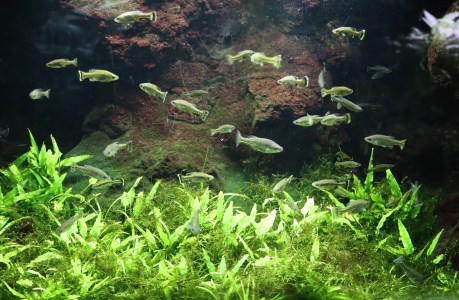
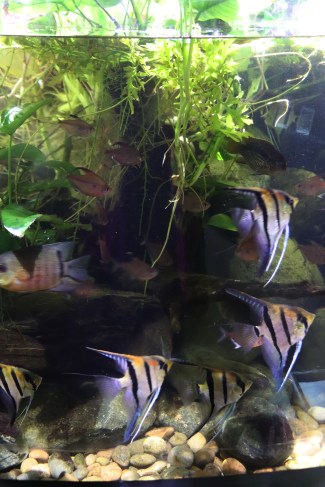
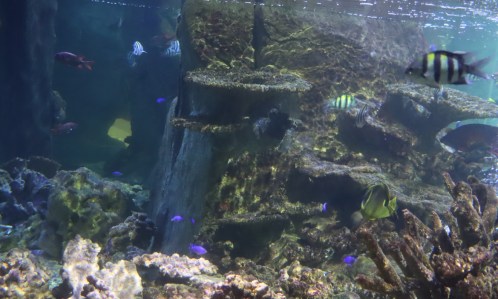
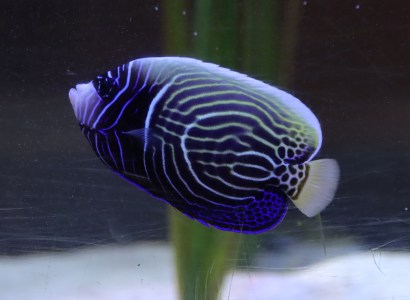
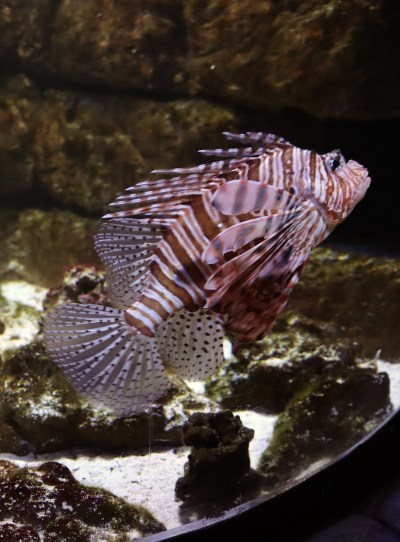
The fish are fabulous – everything from sharks bigger than me to tiny fast-moving flashes of spectacular colour and light.  the myriad of shapes, sizes, colours and types of movement is a massive eye-opener.  Nature went to town on the aquatic spectrum of possibilities.  There are also timeless tortoises, sinuous snakes, iridescent frogs and a remarkable chameleon, whose projecting, rotating eyes are an evolutionary marvel.  One of the most attractive features of the aquarium is the profusion of richly flourishing plant life.  Oh that my indoor plants would look like that!

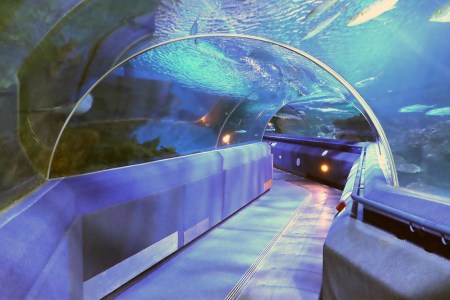
The underwater tunnel, which passes through the aquarium, is a sensational experience, with an incredible array of fish, including sharks and stingrays, flowing around you and overhead and conger eels peering out at you from rocky enclaves.  It is the nearest that any non-divers are ever going to get to a first-hand sense of experiencing the enchantment of the aquatic universe.  Rather than carrying on with the superlatives, here are the  rest of the pics.  Visiting details (including disabled access) are at the end, as usual.


Where else could you possibly find yourself looking up into the intimidatingly toothy mouth of a shark overhead, or glory in the soft, pure-white underbelly of a stingray, elegance on the wing, as it glides effortlessly just inches from your eyes?  Magic.


Visiting

Blue Planet was easy to find, clearly signposted with brown signs from the M53.  When you reach it, you find yourself confronted with a series of car dealerships, and cars parked all along the approach road, but the aquarium is the big silver building on the left at the end of the approach road, with its own big car park, including disabled parking.  For SatNav users, the postcode is CH65 9LF.  Bus and other transport info is on the website’s Getting Her page.

See the website for the opening times and entry and parking charges.  We visited on a Wednesday at around midday, and although there were other people there, it was very quiet, and ideal for us.  A couple of school trips were in progress, but were easy to avoid as the kids were well managed and herded together.

For those with leg issues and for wheelchair users (both were there having a great time) there is a disabled lift (just ask if you cannot find it).  The aquarium ranges over two floors, and each is on the flat.  Some of the rooms are quite dark, and that may be a problem for people with balance problems.  You can find more on the disability page on the website.  There are plenty of places to sit down.

Outside, on the other side of the shop, there is the pelican enclosure (with real, live pelicans),  a picnic area, a kid’s play area, and a small wildlife reserve.  There are daily talks and events, and you can book special visits, all details available on the website.

The shop is stocked with loads of truly fun soft toys, aquatically themed.  I managed not to buy a giant fluffy stingray or octopus, but it was touch and go (had I been alone it might have been a different story 🙂 ).  There is a large café.  We didn’t try it, but it was well used.

———–

A winter walk through the fields from Churton to Farndon

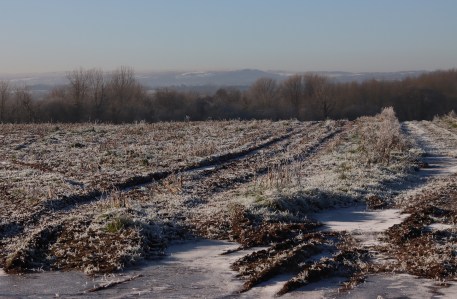
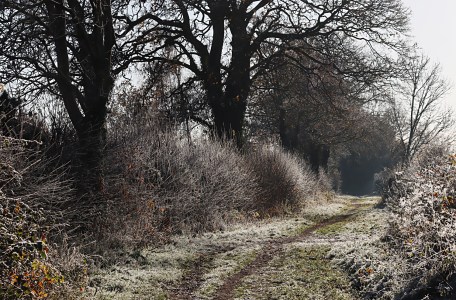
The walk through the fields from Churton to Farndon and back again is always enjoyable, taking about an hour for the full circuit, or less if you don’t pause for photos.  It always varies enormously by season, but was quite spectacularly distinctive yesterday, glazed in frost under a bright blue sunny sky. Where the tractors had been out, during wet weather the deep tracks along some of the footpaths had filled with rainwater and frozen solid, but the ridges between were ice-free.  Literally freezing in the shade, it was actually quite warm in the sun.  A splendid walk, all colour and light.


The route taken from Churton to Farndon along official footpaths (in bright pink). The return route takes the pink footpath that starts in Brewery Lane.  The red blobs are the approximate locations of two possible prehistoric sites, now ploughed out. Source of map: The Public Map Viewer.


A great day out at Greenfield Valley Park, Holywell

On visit to Basingwerk Abbey a few months ago, we noticed signage indicating that the abbey was at the south end of the Greenfield Valley Park, the north end of which is Holywell just to the south of Holywell town centre.  The Greenfield Valley Park had been on my to-do list for ages, but it was my friend Katie’s suggestion that we go today, and she brought David Berry’s guide book with her, which included a map that we followed to make the most of the park (details below).

Map from Greenfield Valley Visitor Centre

The park, which includes the ruined abbey and St Winifred / Winefrede’s Well follows both the line of the Holywell Stream that erupts in bubbles at St Winifred’s Well, as well as the line of a former railway track that ran from Holywell to Greenfield Dock.  It is one and a half miles as the crow flies from north to south, but covers 70 acres and consists of a network of metalled paths (marked on the map) and tracks, beautifully maintained, connecting some remarkably preserved industrial heritage.  Each one of these buildings was accompanied by large tracts of water that were used to power water wheels that were built in the late 18th century and continued to be used well into the 19th century.

As well as being fascinating, the tree-filled park is a lovely place to walk, particularly appealing in its multi-coloured autumnal garb.  In the summer there are birds and butterflies, and even at this time of year there was the occasional woodland flower.  There is also the little Bakehouse café in Basingwerk House at the  south end of the park, next to Basingwerk  Abbey, which serves good coffee, cake and a small, imaginative menu of nicely presented and very enjoyable food.

This post is confined to the really gripping industrial heritage.  I’ll talk about Basingwerk Abbey on another post, and St Winifred’s well, both of which we visited on the same day, will also be dealt with separately.  The following highlights of the walk start in the north and head south ending at Greenfield Dock.  The numbers in the text refer to the map above.
sdafasdfas

The Holywell Rail Line and bridge

The wide metalled footpath that links Holywell in the north with the A548 to the south follows the line of a standard gauge railway built in 1868.  Its purpose was to carry minerals from the Greenfield Wharf, now known as Greenfield Dock, and to ship products made at Greenfield Valley to Liverpool for sending further afield. In 1912 it was converted to carry passengers, and became known as the Little Train.   It claims to have been the steepest conventional passenger railway line in Britain, with a 1:27 gradient.  At the top of the path, near Holywell, there is a massively constructed railway bridge (10) with two wide arches.  Today, charmingly, it is a footpath, leading from Tesco to a housing estate.
asfasdfsd

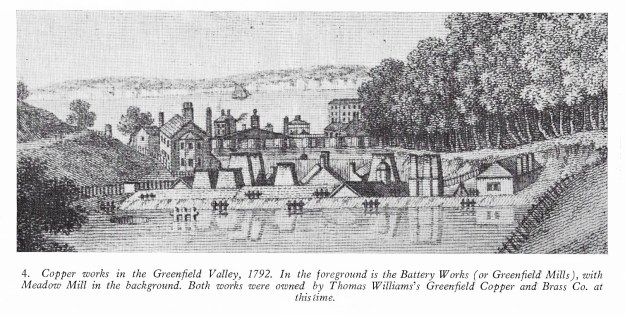
Greenfield Valley 1792. Source: Davies and Williams 1986

Battery Works

Established in 1776, the Battery Works (8), also known as Greenfield Mills, was built to manufacture pots and pans from brass sheets.  Davies and Williams describe the process (p.28-9):  Each of the four copper and brass battery mills “consisted of large hammers raised by a cog on a rotating beam.  The beam extended from the axle of the waterwheel so that each waterwheel worked up to six hammers.  Once the cog had passed, the hammer fell, striking an anvil.  Workmen would hold sheets of plates of metal on the anvils and as the hammer hit them, shape them into pans, bowls and other articles.”

fdfdsfsd
The troughs that held the water to turn the wheels can still be seen.  One of the pits where the waterwheel turned can still be seen in the photograph below, together with a section of wall with a circular hole where the wheel once turned. Like all the main industrial operations along the river, it was backed with a large body of water at its northern (upriver) side.  The water is now full of bull rushes.  Even though it is impossible, just by looking at the ruined remains, to see exactly how all the different elements fitted together, this is a massively impressive piece of the Greenfield site.  The finished products were shipped to  Africa via Liverpool and exchanged for West African slaves.  

Meadow Mill

In 1787, eleven years after the Battery Works, a new mill (7) was built by the Greenfield Copper and Brass Company to produce rolled copper sheets, and to make copper rollers for printing patterns on to cloth.  The main building was a sizeable affair, 86 x 69ft (26 x 21m), with two pillars 11.5ft (3.5m) apart supporting a roof made of copper sheet.  It was  fitted with three cast iron wheels, each 20ft (6m) in diameter.  Copper ingots were melted and moulded into plates 3 (0.9m) x 4ft (1.2m) and about 1/2 inch (1.27cm) thick, which were cut into strips, that were in turn fed between pairs of rollers to create sheets of various thicknesses.   These could be turned into wire or other products.  When this work came to a close, the site was used by a number of other smaller-scale industries, including a tin plate works.

Meadow Mill  is backed by a basin of water that fed the water wheel that powered the mill.  It is now marshy and full of algae, making life rather interesting for the moorhens, and the surrounding foliage is now home to several species of butterfly. On the other side of the water wheel, the water was taken down to the next level of the valley down a purpose-built run-off.  

In the 1850s it was taken over by Newton Keates as a lead works.  This was followed by a tinplate works, then a brass rolling and wire works, and in 1890 was leased to William Eyre for rubber grinding and processing.

Lower Cotton Mill

There were a number of cotton mills along the Greenfield Valley, built for the manufacture of cotton textiles, all water-powered, in a period when cotton was one of Britain’s primary exports. John Smalley, one of the backers of Richard’s Arkwright’s ground-breaking spinning frame, established a mill with his colleague John Chambers. Their company was the Cotton Twist Company.  The earliest mill was built from stones taken from the nearby Basingwerk Abbey, and was called the Yellow Mill.  The business was declared bankrupt in 1780 and Smalley died in 1782, but Smalley’s window Elizabeth was able to find partners to push the business forward, and the business went from strength to strength.  Upper Mill was built inn 1983, Lower Mill (6) In 1785 (in just 10 weeks) and Crescent Mill in 1790.  All were fitted with Arkwright’s spinning frames and were worked by many local people, including young children.  The six-storey mill that survives today is the Lower Cotton Mill, its spinning frame once powered by a waterwheel 18ft high (5.5m) and 7ft (2.1m) wide with a 16ft (4.8m)  fall of water.  You can see the culverts that were built to carry the water beneath the buildings and feed them further down the valley.

From where we were walking, on the upper path, we could look down into the ruined warehouse’s, which was impressive.   In the 1850s it was taken over by a flour merchang and renamed the Victorian Corn Mill; the water basin is still called the Flour Mill Pond. Later it was the premises of a wheelwright and a brickworks.

If you were on the lower path, one of the buildings (which we did not know about) has apparently been restored and now houses a steam bottling plant, a railway museum and an exhibition on the industries of the Valley.  It was something of an omission that we missed this!  A good excuse to go back.  At the time of writing, admission is free.

Abbey Wire Mill

The Abbey Wire Mill overshot waterwheel in pit. Source: Chris Allen, Geograph

The site of the former copper and brass wire factory (5), the main output of which was  pins and bolts, has little to see.  It originally covered about an acre, and was the site of the wire mills of the Parys Mine Company, where rods of copper and brass were pulled through a series of holdes of decreasing size and then heated and cooled until wire was produced.  The site does contain an original waterwheel pit in which a waterwheel is still located, now renovated and capable of producing electricity for the museum.

In 1856, Newton Keates and Co leased the site and raised the level of the dam to create a larger pool.  This was a mistake.  Water broke through and flooded in 1857 and 1858, so the height of the water behind the dam had to be lowered.  The works closed in 1894 and the machinery was auctioned off.

Apparently, at a later date in the early 20th century, a small soap-works was built on the site which produced, presumably amongst other themes, soap imprinted with images of St Winifred, the first batch of which were sent to the Pope.  The mind boggles.  Today there is a small bandstand at its edge.

Further down the path, and the Bakehouse Café is located in Basingwerk House, a fine 1930s building.   We had a very good lunch there.  Beyond that is Basingwerk Abbey (about which more on another post) and beyond that is a car park and the A458, which you need to cross to reach Greenfield Dock, which is off the above map.

Greenfield Dock

Greenfield Dock is beyond the Green Valley Park, but is only a short walk away, reached by going through the car park beneath the abbey, crossing the main road, heading left for a short distance and taking the first on the right.  This is Dock Lane, which takes you to Greenfield Dock and the Wales Coast Path.  There’s not a lot to see, just a couple of tiny fishing boats in an inlet, and views (on a less grey day) across to the Wirral, but the dock was an important contributor to the Green Valley industries, linking with the Holywell Rail Line.

The Wales Coast Path, however, looks excellent in both directions, and a great destination for a sunny day.  It starts in Chester, and can be followed continuously around the entire Welsh coastline, but can be done in short chunks.  From here, for example, one could head upriver to Flint along the Path, and visit Flint Castle (which I have written about here), which is a walk of 4.3 miles (6.9 km) from Greenfield Dock to Flint Castle, but don’t forget the return journey.
——-

Wales Coast Path: Flint to Holywell. Source: Wales Coast Path

Visitor Information:

This is an excellent place to visit, with stacks to see.  If you are interested in industrial archaeology, wildlife on land and water, and woodland walks, you will not be disappointed.

To give some idea of how long it took us, we started out from Churton (about 15 minutes drive south of Chester) at 1030, arriving in Holywell at about 1115, having taken the most direct route along the A55, and we left at 1530, with a short stop for coffee and a snack in the park.  This is a dry-day walk, because there is nowhere to shelter.

In the Greenfield Valley everything is open and free to see other than the Green Valley Park Museum and St Winifred’s Well and Chapel.  We didn’t visit the museum, which is behind the visitor centre but details are available here.  Details for St Winifred’s Well can be found here.  The museum and visitor centre are closed from the end of October onwards.  There are also details about children’s activities on the Greenland Valley website here.

From a mobility point of view, a number of tracks, including the one that follows the line of the old railway are wide and metalled, but there is a distinct downhill gradient from Holywell to the abbey, and of course there’s the uphill gradient on the return journey.

Sources:

Berry, David, 2012. Walks around Chester and the Dee Estuary.  Kittiwake Books

Davies, K. and Williams, C.J., 1986. The Greenfield Valley. An Introduction to the History and Industrial Archaeology of the Greenfield Valley, Holywell, North Wales.  Holywell Town Centre

Greenfield Valley visitor’s Guide and Map (A3 fold-out)

The Industrial Heritage of Greenfield Valley. KS2 and KS3 Teaching Resource
cadw.gov.wales/sites/default/files/2022-02/Industrial%20Heritage%20-%20Greenfield%20valley%20resource%20-%20English.pdf

Greenfield Valley Park:  www.greenfieldvalley.com

A terrific visit to the Lion Salt Works in Northwich

The Pump House

What a brilliant place! The Lion Salt Works in Northwich is not only the last open-pan salt works in Cheshire but one of only four remaining in the world.  I had really very little idea of what to expect, but of all the places I have visited, this one most resembles an industrial time capsule.  It is as though things were left just as they were when the Works closed, which is more or less what happened.  The biggest market for Lion Works salt was West Africa, but when the Nigerian Civil War broke out in the late 1960s, and the political situation that followed it failed to improve matters, the Lion Salt Works struggled to survive, and the business closed in 1986.  The decision was made to convert the Works into a museum of salt working, and what a good decision that was.  There are lots of information boards, models and sound effects, all excellent, but what really grips is the sense that this could all start up again tomorrow.

Roman and Medieval salt pans

Another extraordinary aspect to the place is how for just under a century, between 1894 and 1986, the method of making salt from brine hardly changed.  In fact, the method used was pretty much the same as that employed by the Romans in the same area.  Open-pan salt manufacturing is just what it says – the salt-carrying water, brine, was pumped up from two levels of rock-bearing beds from below the surface and then fed into huge rectangular iron pans, which were heated from below to drive off the water, and then dragged to the side of the pan to help them drain

Salt beds beneath the Lion Salt Works

The Cheshire salt was once suspended in sea water.  In the Triassic Period, c.220 million years go, the Cheshire Basin was a tropical lagoon in which seawater became trapped.  As the water evaporated from the lagoon, it left behind a rock salt known as halite (Sodium Chloride).  Two bands of of salt lie under Northwich and were tapped by the Lion Salt Works.  The first is 40m (131ft) down and is 20m thick (65ft), then there is a 10m (33ft) layer of marlstone and then a second, 30m (90ft) layer of salt.  When rainfall entered the water table and washed over the salt layers, it dissolved the salt again, and created subterranean streams of highly salted water known as brine.  Natural forces pushed these salty streams to the surface in the form of natural springs, but the streams themselves could be tapped by drilling down to them and pumping the brine out at the pump house.

Inside the Pump House

The pump house is a good place to start your visit on the way from the car park to buy your ticket in the former Stove House, now containing a brightly modern shop and café.  The brine, once extracted from the borehole,  was stored first in a tank and from there it was distributed to the salt pans for processing.  A steam engine powered the pump, and both the engine and its boiler are still visible in the pump house.  The pump was known as the “nodding donkey” due to the motion of the overhead beam as it rose and fell.

Once beyond the ticket office, you follow the signs to enjoy a self-guided tour.  There are plenty of disabled elevators for the leg-challenged and for wheelchair users, which you can operate yourself.

The first building that you come to is a former terraced house, the Red Lion Inn.  The original Red Lion Hotel was knocked down in order to expand the mining operation, so two terraced houses were purchased in order to give the workers somewhere to relax after the heavy labour in the stove and pan houses.  This building is now used to show Roman and Medieval versions of the pans (just smaller, not actually any different in how they were used) and to show a reconstruction of the works office, complete with clocking-in machine, and the Red Lion bar.

Indoor salt pan on the first floor

It is difficult to get one’s head around the salt pans.  The concept is childishly simple, but the sheer hands-on labour involved even as late as the 1980s is truly remarkable.  There are displays showing the role of each of the workers.  The Lion Works was set up and run by six generations of the Thompson family, and the workers were all local people.   At first both men and women were employed in the heavy duty work of the Works, but later women were confined to the less strenuous work of packing up the salt and carrying out administrative tasks.

The two main initial tasks were to rake up the salt in the pans once the water had been evaporated off (creating steam-heavy rooms), and to feed the fires in the stove houses.  Here’s a somewhat eye-popping excerpt from the guide book:

Salt-making was a ‘dark art’ and the salt workers would add all sorts of things to make the salt crystals form.  These included strong ale, bullock’s blood and eggs, but these were replaced by soft soap and glue

First floor stove room

Workers known as wallers worked in the outdoor pans, pulling the salt along the edges of the pan to form large walls to drain it.  Inside, lumpers worked on smaller (but still huge) pans to rake the salt to the sides where it drained, before pacing it into blocks or lumps. The lumps were taken on barrows to the stove rooms to dry out.  From here they went through a crushing mill, a splendid piece machinery that was steam-powered until the 1950s when it was converted to electricity.  The resulting salt grains were graded from fine to coarse before being packed up in bags or small plastic packs.

The salt that was processed outside was inferior to that made inside, not due to the original brine or the work of the crushing machine, but due to the temperature at which it was heated in the pans.  This is because of the multiple uses of salt, from fine-dining to packing fish caught at sea.  The Trent and Mersey Canal runs alongside the works.  Coal to power the engines and to heat the pans was delivered by narrowboat and the packaged salt was also sent out by narrowboat.  The canal network was huge, and even though canal travel was slow compared to the railways that eventually replaced them, was well equipped for transporting heavy, bulk products reliably to towns, cities and ports.

The mining works had a dramatic knock-on effect on the structural stability of the town of Northwich.  The story of the subsidence caused by the mining is another aspect to the story that is truly compelling.  On the approach to the Lion Works, one of the mines subsided so thoroughly in 1928 that two flashes now flank the road.   The subsidence had a truly transformative impact on buildings and infrastructure, and not in a good way.  Buildings shifted, some tilting backwards or forwards, others dividing slowly into two, the brickwork forming great fissures as the subsiding and pulled them in opposite directions.  The solution was to go back to Medieval domestic building traditions, creating light-weight frames and building in jacks points into which levers could be inserted, in order to persuade buildings back into position.  Other buildings, like the Bridge Inn, could simply be moved in their entirety.  This gives the town today a half-timbered look.  It is an astonishing idea that to respond to the conditions, buildings became just as shiftable as furniture. Roads too subsided, and one collapse caused a major breach in the neighbouring canal.

Left: The Bridge Inn in Northwich on the move, giving new meaning to nomadic settlement strategies. Middle: The Marston Hall mine collapse caused part of the canal to subside in 1907. Right: Warrington Road frequently sank and 1000s of tons of salt pan cinders were used to build it up again.

There is lots more to find out at the museum, and I recommend it for anyone interested in industrial heritage.  As well as the Works themselves, there are plenty of really excellent information boards, some interactive displays aimed mainly at children, and some absolutely splendid photographs.

Visiting

We piled out to Northwich along the M56, and it was easy to find the Lion Alt Works by leaving at Junction 10, but we had intended to return via the A51, taking in the Anderton Boat Lift on our way back.  In our dreams.  At the time of writing (September 2022) Northwich is up in extensive roadworks, and the diversion signs must lead somewhere, but heaven knows where.  A sign half-buried in an overgrown verge directed wannabe Boat Lift visitors to follow the diversion signs, which was hysterically funny as the diversion signs were, as stated,completely unfathomable.  We just about found our way to the A51 to Chester (although not by following the diversion signs), but we never did find the Boat Lift, in spite of several attempts, both with and without the SatNav.

At the museum there is a car park, café and shop.  A free map is given out, but a really useful guide is available for purchase too.  The opening times on the website state that the museum is closed on Mondays except bank holidays, and there is an entrance fee.  For up to date information check out their website.
https://lionsaltworks.westcheshiremuseums.co.uk/

The smithy

The staff at the museum were friendly and helpful.  We were chatting to one of them at the end of our visit when we were sitting in the café.  His knowledge was immense, and he knew the answers to all the questions that we fired at him.  I failed to catch his name, but my sincere thanks.

The coffee came from a push-button machine, but was absolutely fine, and the tea was served in a lovely little pot.  The coffee was a particularly nice surprise after the undrinkable swill that was being served with breakfast in the Novotel in Greenwich (London), where I was staying recently!

For disabled and mobility-challenged visitors, there are wheel-chair friendly lifts to the upper floors, and you can operate these yourself.   The whole museum is intended to be disabled friendly, and at least to my eyes, looked very well thought out.

Feeding the ovens beneath salt pan 3

I wanted to see if there was any edible (as opposed to ornamental) local salt for sale, but forgot.  I am real salt enthusiast and always have several types at home for both cooking and seasoning at the table, so I am a tad miffed that I forgot to look!  If you go, do let me know if they were selling any.  There were blocks of ornamental salt for sale, in beautiful shades of pink, but I have no idea if it was edible too.

Manager’s house

Northwich town itself looks as though it will be well worth visiting after all the roadworks have come to a close, particularly if you are a fan of inland waterways and the architecture and civil engineering that goes with them (which I am).  Make sure that the Anderton Boat Lift is open if you want to see it, as its opening times seem to be something of a movable feast.


The crushing mill

Interior of the smithy


Day trip: Flint Castle – Edward I’s first permanent Welsh foothold

Northwest “garrison” tower at far left, with the big detached southeast “Great” tower in the middle and the northeast “Eagle” tower at far right.  Out of sight, opposite the Great Tower, is the southwest “Prison” tower

A visit to Flint Castle is not really a day trip if your starting point is the Chester-Wrexham area because it’s only about half an hour away, but because we started out quite late, and decided to combine it with a visit to Basingwerk Abbey in Holywell (a 10 minute drive from Flint), and had a long, lazy coffee in the sun, it did turn into something of a day trip.  If you are into fascinating ruins, I recommend both Flint Castle and Basingwerk, particularly as they are such a short distance from one another and overlap chronologically.  Basingwerk Abbey was founded in 1132 and closed in 1535, so its inhabitants would have seen the first construction of Flint Castle.  I’ll be talking about Basingwerk on another occasion.

As Edward began his castle building extravaganza, Llywelyn at last paid homage to the king of England, sitting to the left of the king’s throne, with Alexander of Scotland at the king’s right.

I have already posted the background story to Edward I’s castle building programme in northeast Wales, describing how different generations of Llywelyn the Great’s descendants clashed with England and the Marcher lords in a fight for territory and prestige in Wales.  I have not repeated any of that here, so if you would like the background information, do have a look at my earlier post.

Flint Castle is right on edge of the river Dee estuary, with beautiful  views across to the Wirral, and even though it is on the edge of a busy town with somewhat chaotic traffic, the castle itself is set back from a quiet housing area and stands apart even from that.  Although the river has silted up in front of the castle today, when it was built, the river flowed up to the castle itself.  It has a sense of isolation and peace about it and is a lovely place to visit, and can be combined with sections of the Wales Coast Path.  See my notes about visiting the castle at the end of the post, together with maps.

The Who, When and Why of Flint Castle

Artist reconstruction of the southeast and northeast towers of Flint Castle by A. Hook. Source: Ancient and Medieval Architecture

When Henry III died in 1272, Edward was on his way home from an underwhelming crusade, having narrowly survived an assassination attempt, and he took his time to return to England.  He was not crowned until 1274.

Henry III and Edward had been troubled throughout Henry’s reign with rebellions in Wales, masterminded by Llywelyn ap Gruffud, known as Llywelyn the Last.  Several treaties had failed to achieve long term peace, and although the Treaty of Montgomery of 1267 looked as though it might hold, Llywelyn ap Gruffud was labelled an outlaw in 1276, and war was declared in 1277.  A peace was brokered, but although Edward had every reason to believe that the treaty might secure peace between England and Wales, he began to build a series of castles in northeast Wales, beginning at Flint in 1277 and rolling out along the coastlines throughout the next two decades.

Why here? The location of Flint Castle

Strategic importance of the castle
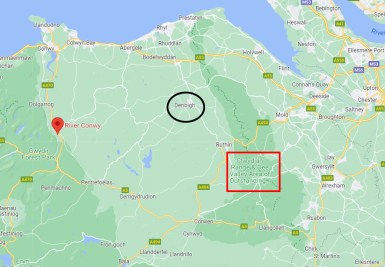
View down the Dee estuary towards Chester showing Flint Castle in the foreground. The build-up of marshland is a recent phenomenon. In the 13th century, the castle was right on the edge of the river, accessible by boat.  Source: Coflein

The unoccupied site for Flint Castle was chosen for its excellent views for miles around, and the slab of bedrock on the edge of the estuary, on which the castle would be built.  Although the castle was sited on a floodplain rather than on a more traditional hill, its location on the Dee floodplain still provided clear lines of sight in all directions.  It would be impossible to sneak up on Flint Castle unless it was foggy.  With tall towers on all four corners, any approach by land or water would be easy to spot, and the town that Edward had planned from the beginning sat on the landward side of the castle, preventing any large-scale onslaught from going unnoticed.

Map of the Welsh Cantrefi showing the location of Flint Castle. Source: Wikipedia.

Although Flint was in English hands in the heart of Llywelyn’s former territory, it was only a day’s march from Chester, one of the great earldoms along the Welsh border.  The castle could be supplied with food and other essentials from Chester by boat, and the estuary provided a potential, although not terribly reliable route of escape, should it be needed.  In addition, a small garrison was maintained at Ness on the Wirral, opposite the site of Flint Castle. When the tide was out, the river between Flint and Ness could be forded.  Most importantly, Flint Castle was a stepping stone into Wales, allowing Edward to build his series of castles one day’s march from one another.  This simple linear network, which could be supported by the sea, began to enclose Gwynedd, particularly as Edward and his magnates began to repair or rebuild Welsh castles that they had defeated.

Castles under siege were always at risk from running out of supplies, but the potential of being restocked from the sea was one form of additional security, and the castle had two wells, one in the centre of the inner ward, and one in the detached southeast tower.

Economic potential of the area

Flint Castle northwest corner

Although Flint Castle was a military installation, Edward intended for it to have a town accompanying it, to take advantage of the area’s natural resources.  A new town would need to attract inhabitants, and as well as incentives, the land itself would need to be able to support the town.

Although there was no settlement at Flint, which was named by either Edward or one of his entourage, it would be wrong to think of the land along the estuary as deserted when the castle was first thought up in 1277.  As far back as the Domseday survey of 1086 the nearby hamlet Atis Cross had a church, a corn mill and a a hide of land, something in the range of 120 acres, belonging to Hugh Lupus of Chester, and there was a lead smelting works here.  Nearby Coleshill (Cwynsyllt) was also mentioned in the Domesday book, and Hen Blâs motte and bailey castle at Bagillt, just over a mile away, which lies within the township of Coleshill Fawr, may have served as the llys (court) for the commote of Coleshill.  Archaeological excavations in the mid 1950s concluded that the castle was replaced by a fortified manor house in the early 13th century, which was in turn abandoned in the late 14th century.  In 1132 the abbey of Basingwerk was built here, and in the 13th century it had water mills and a nearby windmill.  This was potentially a prime area for water mills, as water dropped at speed from the hills towards the Dee, ideal for turning water wheels for processing grain or sheep’s wool.  The area was also suitable for agrarian development, sharing with Anglesey a lowland, fertile location that could be cleared for fields and farmed.

The designer and the design 

1919 plan of the castle grounds that were passed into state care, showing all four towers, the inner keep, the well and the remains of the connecting walls.  Only part of the outer keep is preserved.  The same area  remains under Cadw guardianship today. Source: Coflein

Although much of the castle was deliberately torn down following the civil war in the 16th century to prevent re-use, many of the key features are still visible on the ground.  Castle architecture has some basic requirements that are shared by all castles, but Flint itself showed a number of innovations that make it stand out today. Most of Edward I’s castles in Wales were designed primarily by Master James of St George, but Flint Castle was the brainchild of Richard L’Engenour (d.1315), a wealthy resident of Chester, an architect, master mason and military engineer, the owner of three farms in the Chester area, who in 1304 became Mayor of Chester.  It is probable that Edward’s input is reflected in features of the castle that resemble the castle of Aigues-Mort from which Edward left on crusade in 1270.

The wide open site placed few constraints on its designers and builders.  The castle has a number of notable features, including a double moat and the massive offset donjon, that were innovations in British castle building.  Although Flint began with the castle, a town was always part of Edward’s plan for Flint, so the layout of castle and town were conceived of together.

The castle comprised an inner ward (or bailey) and an outer ward, separated by a moat and drawbridge.  The outer ward protected the main gate into the castle and acted as an interface between the inner ward and the outside world.  It was shaped rather like a funnel, allowing access via a single gatehouse into what was effectively a holding area, narrowing into a path that connected it to a gate into the inner ward, which was overseen by the battlements and by the southwest and southeast towers.  It would have had buildings to house and feed troops stationed there, together with stables for horses and a gaol for holding prisoners.

The rectangular inner ward was made up of round towers built into the walls on three corners, and a detached round tower on the south-eastern corner.  Sturdy curtain walling connected all four towers, with the detached tower joined to the inner keep by a footbridge.  Some foundations remain within the inner ward, plus the all-important well.  On the day that I visited in mid June, the water of the well in the inner ward was clearly visible at about 5ft (152cm) below the ground surface.  Buildings within the inner keep would have included a bakehouse, brewhouse, kitchen, chapel and a hall.  Both wells, the one in the inner ward and the one in the donjon, were fed by the freshwater Swinchiard Brook.  Uniquely, the castle had two moats.  An inner moat protected the main castle and an outer moat protecting access from the town.

The southwest tower and a stretch of the curtain wall.

Each of the towers was different.  Although all had spiral staircases leading to battlements for defence, each had its own function.  The southwest tower is, according to Vicky Perfect, recorded in the payroll as the Prison Tower, so may have served as a gaol before a more formal building was added to the outer ward.  It originally had three storeys.  The basement, where prisoners were presumably held, had no steps, which would certainly have frustrated attempts at escape.  The northwest tower, also known as the Garrison Tower, had four points of access, which was useful for deploying troops to the battlements in a hurry, and its basement was probably the store for weaponry.  The northeast, Eagle Tower, was three storeys high, with a basement that was accessed via a trapdoor.  Guests and servants were housed here, and there was a fireplace on the second floor with a chimney up on to the battlements.  A spiral staircase ran up one side.  The potentially standalone southeast Great Tower (also known as the castle keep or donjon), is of particular interest.  Its isolation from the rest of the castle was an additional form of security against any successful incursion, accessible only via a drawbridge, now replaced by a permanent bridge. Sitting within its own portion of moat, it is unique in Britain.  It is a truly massive piece of architecture, about 20ms in diameter, was accessible only on the drawbridge, and contained a central space some 6m diameter.  It was several storeys high.

Southeast Great Tower, donjon or keep.  In the centre and on the right, images sourced from Coflein

The donjon or southeast Great Tower

On an everyday basis the Great Tower was the home of the Constable, but also housed the king’s chamber, which was completed in 1286.  The walls of the keep were 7 meters thick at ground floor level, but were still 5 meters thick at upper levels.  To add to its independence from the rest of the castle, and to provide the king with some privacy when he was in residence, it was provided by its own well.  Holes in the floors above it allowed water to be drawn rather than carried, and a wooden wheel was fitted to raise and lower the pail.  It was also provided with garderobes (toilets) and its own chapel.  Its basement, shown right, had a barrel-vaulted ceiling, limewashed to provide reflective light, but also illuminated by torches.  At times of siege, livestock could be moved into the tower to provide supplies on the hoof.

A watergate was built into the north wall, with steps down to the river frontage.   This was for loading and unloading boats directly into the castle.  A smaller watergate was also built into the donjon, again reflecting its design as a standalone unit.

Building the castle 

The first stage in the construction of the castle was to clear an overland route to Chester.  Although the castle could be supplied by boat, there was no road to Flint from Chester. The tidal character of the river meant that the castle could only be reached at high tides, so an overland route was vital.  More immediately Edward was unwilling to run the risk of penetrating the alien countryside where he could be attacked by those with superior local knowledge.  The road allowed him to travel with realistic protection to his new castle, and to enable his army advance unhindered along the Welsh coastline. A road was carved out of the densely vegetated coastal landscape.  It took 10 days to clear the route to Flint, and from there the castle was linked with routes to Rhuddlan, Degannwy and eventually to Conwy.

The next step was to dig a deep ditch around the chosen site at Flint to protect builders and visitors alike, which took three weeks.  The castle was to be built on bedrock, which gave it a solid base on the otherwise soft floodplain.

View from Flint Castle across the estuary and the River Dee to the Wirral

Wood for scaffolding, lifting equipment and for the defences that would surround the planned town was sourced mainly from the Forest of Toxteth (now part of Liverpool).  The fill of the walls of the castle was built mainly of yellow sandstone, much of which Vicky Prefect says was sourced from Ness on the Wirral, opposite, across the estuary, and other locations on the edge of the Wirral.  Ness could be reached over the sands when the tide was out by fording the river, but stone could also be brought in by boat.  Edward kept a small garrison at Ness.  Other sandstone was available locally, along with other natural resources including lead ore, lime for mortar and white limewash for walls (both lead and lime available from Halkyn Mountain).  Although yellow sandstone dominated, red sandstones were employed for some parts of the outer and inner walls, some of which came from Burton Point, a bit upriver from Ness, with the inner space between them filled with mixed rubble, including stones from the beach and broken building materials.

Many of the original payrolls for the construction of the castle have survived, meaning that details of names, home towns, job roles, and salaries of the workers who built the castle have survived.  Just as the king could demand that his noble subjects should provide men for his armies, he could assemble workforces of specialist craftsmen from across England, whether they wanted to go or not.  The building site and the craftsmen were protected by armed forces. This formula worked so well at Flint that the same model, and many of the same craftsmen, were used at the subsequent castles.  Here’s Vicky Perfect’s description of the first weeks of work in the summer of 1277:

The workforces were placed under the control of various knights, and split into groups under their twenty men (foremen). . . . In week one of the the build a total of 1858 men were involved in the first stage of the building of the castle.  Most were dykers who were required to help prevent the water from filling in the newly dug foundations.  The first order of 10,000 sandstone blocks was placed at the quarry of Ness prior to 25th July 1277.  Large numbers of carpenters and wood cutters were employed, some working in the forest s at Toxteth cutting the timber and building the 250 rafts needed to transport the stone across the water.  Many others were working on site, constructing the stockade required to keep the men safe and making the lifting machinery to move the sandstone blocks into place.  There were also numerous masons, working the stones delivered from Ness Quarry.  Smiths were employed to make and mend the metal tools required for the project.

By week two, the workforce had increased dramatically to 2,911, indicating the urgency of making the site safe.  More specialist workers were brought to the site, such as Carbonarii (miners) to mine the coal to fuel the smith’s fires.  The number of dykers working on the site doubled, including a group from Holland.

The well in the Great Tower.

The rest of that chapter is worth reading in its entirety, providing some fascinating facts and figures including lists of some of the workers, their trade, the number of them employed and how much they were paid.  For example, in the first two weeks, the castle employed dykers, smiths, carpenters, masons, woodcutters, miners, cinder carriers, masons and constables, paid from 2d to 8d a day, the latter reserved for the specialist Dutch dykers.  Other specialists were brought in as work progressed.  John le Blund, for example, was brought from London and paid 19 shillings for dressing stones for the well in the Great Tower.

The castle was not completed until the mid 1280s, by which time it had been painted with  white limewash, and the towers, which had been provided with temporary roofs of thatch, were now provided with lead roofing.  In 1302, following storm damage, lime was brought to repair the castle walls.  In 1304, wood from Ewloe produced 60 boards, 12,000 pieces of wood for tiling, 1000 lathes and four louvres for repairs so kitchen and stabling.

The town

John Speed early 17th century map of Flint. Source: Coflein. Click to enlarge.

An accompanying town, (or “implanted bastide”) was part of Edward’s original plan for the castle.  The idea of establishing defended new towns around castles in hostile territory came from Gascony, where Edward had already founded a number of new defended towns.  Pioneer settlers were granted considerable commercial privileges as incentives, and were expected to help defend the town should it come under attack.  These new towns reinforced the network of castles with economic as well as military foundations, and the enclaves of English commerce also introduced English urban traditions within rural Wales.  Flint and Rhuddlan were two of the earliest examples. 

Writing in 1924, Patrick Abercrombie commented that “There is no town in this country that is of greater interest to the student of Town Planning than Flint. Laid out by Edward I, in 1277 as an appendage to his mighty castle, it has preserved its mediaeval plan almost intact. Like most artificially planted communities, there was no fundamental human need in this place for a town, which accordingly grown in the past little beyond its original size.”  It is a fascinating idea that new towns, built from scratch, arrived with the Normans.  According to Francis Pryor, a total of 172 of these towns are known in England and 84 in Wales, and Edward was the “last great instigator” of the new towns.  As well as the layout of the towns, functional considerations were also important, and Edward believed that to support markets, good road links were vital.  Communications became one of his mantras, vital for a peripatetic king and court, but also for the movement of troops and the commercial viability of new settlements. 

Excavations in 2015 explored what are thought to be part of the town’s defences. Source: BBC News

An indication that the beginnings of the town, which  were already established by early in 1278, was a proclamation of a weekly market each Thursday and an annual fair.  Edward decreed that the burgesses of Flint should hold a market on Thursday of each week, and an annual week-long fair at the time of the Pentecost (50 days after Easter Sunday).  The castle constable was to serve as mayor, one of Edward’s own brothers was installed as chaplain at the castle, and agents were appointed to rent out plots of land to any pioneering English inhabitants who were prepared to chance their luck even though the defences were incomplete.  To encourage take-up, in 1282 these agents offered plots in the town free of rental for ten years, followed by a reduced rate in subsequent years, and residents came under English, rather than Welsh jurisdiction.  Burgesses (property-owning merchants) were exempt from the payment of tolls. In 1284 the town received its first royal charter, which conferred full English-style free borough privileges.  The settlers had their own guild and courts.  Conveyances of property suggest that many of the settlers were from Cheshire, who took advantage of the provision of land in the royal demesne and forests.  Others probably came from Shropshire.  A town mill was constructed, and permission was granted for another, which incurred an annual rate of ten pounds. Even with these benefits, it was obviously an uphill struggle to attract residents at first, in spite of the fact that by 1300 much available land in England was in use and the expansion of population during the 13th century meant that it was becoming increasingly difficult to find land.   By 1292, however, the town had taken off and there were 74 burgesses registered for tax in Flint.

The main source of information for the town’s layout is John Speed’s sketch of 1610, shown above.  The Norman new towns were built as grids.  The maps show that Flint still preserved its Medieval layout, and that it was one of the most symmetrical known, with a very precise underlying geometry.  Four parallel roads ran perpendicular to the river, whilst Edward’s coastal road passed through the middle of the town parallel to the river.  Whether the dog-leg was original or developed between the 1280s and Speed’s map of 1610 is unknown.  One of the four parallel roads, along the route of modern Church Street, connects the entrance to the town with the entrance to the outer ward, passing in front of the Church of St Mary’s and the town square.

Tithe map of Flint area, showing the original Medieval field systems. Flint castle is handily under the left-hand red blotch, and the grid layout of the town is easily seen, as are the neatly arranged fields.  Source: People’s Collection Wales

The economy of most of north Wales was based on livestock herding. Nearby Basingwerk Abbey depended for some of its locally derived income on its 53 heads of cattle and its 2000-strong herd sheep.  However, some lowland areas could be developed for mixed farming.  Anglesey was “the bread basket of Wales,” and the river lowlands at Flint were potentially ideal for agrarian land use.  In order for agriculture to underpin the activities of the settlers at Flint, clearance of neighbouring land took place to create new fields, the outlines of which survive, remarkably, on the 1839  tithe map, shown above.  This shows Flint town’s four parallel roads immediately in front of the castle, but extended on either side beyond the bissecting coast road.   The surrounding land is similarly divided up on a grid pattern of long, thin fields.  Although residential, commercial and industrial growth have obliterated much of this, some of it still survives to the south of Flint town.

Access from the outer ward into the inner ward

Writing about the design of Flint Castle’s town, Caroline Shillaber concludes that “Viewed in historical perspective, Edward I appears as the forerunner of British planners who regard the creation of new towns as a function of national government, who locate and plan the towns to serve an overall administrative policy, who lay out the towns  in accordance with the needs of the people, and who devise economic conditions conducive to their growth and development.”  Some areas were riskier than others, however, as the settlers in Flint discovered in 1294 when renewed hostilities between England and Wales resulted in the town being burned to the ground.  Even though residents received compensation and the town was rebuilt, it must have been a daunting thought to stay in a town where its supposed protectors were willing to burn it down if the need presented itself.

A tax assessment of the town had been made in 1293, naming residents like Adam the carter, Benedict the miner, Godfrey the carpenter and Nicholas the smith.  The assessment recorded 76 households.  Only five of those named were Welsh, like Madog ap Iorwerth and Einion Cragh, indicating that even in an English enfranchisement Welsh people held property.  Things changed after the town was burned down after 1294, perhaps due to bad feeling about the devastation of the town thanks to Welsh hostilities.  This is reflected in a petition of 1297, written when the town was still being rebuilt.  The English burgesses of Flint complained that in an English town, Welsh individuals had “bought land in the town and bake and brew, contrary to their charter and custom,” although there was actually nothing in the 1284 town charter to restrict the nationality of residents. 

Matthew Stevens gives an account of an Englishman named Richard Slepe who had been in Flint town from its inception, and had remained after the town had been burned down.  His daughter Agnes had married a Welsh man, Adda ap Einion.  When Richard died in 1327, Agnes and her husband inherited Richard’s properties, but because Adda was Welsh, they were confiscated by local officials.  They appealed the decision but were turned down.  Enfranchised Welsh towns, occupied by the English, made no concessions to a mixed-nationality marriage, a situation that continued until the 1536 Act of Union giving Welsh nationals equal rights to English.  

The castle under attack during the reign of Edward I

In March 1282 Llywelyn’s brother Daffyd launched a ferocious assault on Hawarden Castle, and this was followed by further attacks on Flint and Rhuddland castles, in which Llywelyn appears to have participated.  Attempts by Archbishop Pecham to negotiate a peace failed, and Edward through everything he had at the brothers, as described on my previous post.  Llywelyn was killed in battle in December 1282, and Dafydd was captured and put to death the following year.  The Flint area, including Basingwerk Abbey, was trampled underfoot, but Basingwerk was given significant compensation and Flint Castle was repaired and construction work completed by 1284.

As mentioned above, in September 1294, those who had been lured to settle in Flint met the dangers of living in the shadow of a strategic military facility head-on when the constable of the castle, William de la Leye, ordered that the town be set on fire to prevent forces led by Madog ap Llywelyn from using it as a protective screen.  Madog ap Llywelyn, one of Llywelyn the Last’s more remote cousins, considered himself to be a successor of Llywelyn and made a bid for power, supported by other Welsh landowners.  Some of them joined Madog on an opportunistic basis, with territorial claims in mind, but all of those who retaliated at this time acted in response to a massive tax demand, and a culling of Welsh men to supply troops for his activities in Gascony. Attacks were co-ordinated and took place at castles both built and appropriated by Edward, at Aberystwyth, Builth, Castell-y-Bere, Denbigh, Criccieth, Harlech, Caernarfon, Morlais, Flint and Rhuddlan.  It was a serious rebellion, and it demanded a serious response.  Edward immediately diverted the troops waiting to ship out to Gascony, sending them instead to Wales, where they advanced from three bases. Madog’s revolt was put down after some delay in March 1295, with Madog surrendering in July.  Edward compensated seventy five burgesses with £521.00, and the buildings were all re-built, but life next to a strategic outpost of an invading nation cannot have been particularly reassuring.  

View along the Dee towards the west from the inner ward

Edward I died in July 1307 at the age of 68 and was succeeded by his son Edward II (April 1284 – September 1327), who had been declared Prince of Wales in 1301.  Edward’s reign was colossally unpopular and he was forced to abdicate in January 1327 in favour of his 14-year-old son, Edward III. Following the quashing of the rebellion of Madog, North  Wales remained more or less at peace until the rebellion of Owain Glyndŵr under the reign of Henry IV in 1400.  Flint Castle continued to be strategically important, and retained a garrison.  The town, protected by the castle, was a financial and administrative centre during the 14th and 15th centuries, meaning that even in times of peace the castle retained its importance and was accordingly well maintained.  Future archaeological excavations may provide information about the original town, both before and after the fire.

Back in the wars after Edward I

Richard II 

Richard II at his coronation. Source: Wikipedia

In terms of great events after Edward, Flint Castle’s next claim to fame was as the venue for the abdication of Richard II (1367-1400) in favour of Henry Bolingbroke, who became Henry IV.  Richard II was the grandson of Edward III, and on the death of his own father, Edward the Black Prince, became heir to the throne, succeeding in 1377 at the age of 10.  He was deposed in 1399.  Flint Castle itself had had nothing to do with Richard II’s career up until that point.  Richard’s regency was managed by a number of councils.  One of his most important advisors was his uncle John of Gaunt. 

The regency councils saw England through the continuing eruptions of the Hundred Years War and the Peasants’ Revolt of 1381, and Richard himself was forced to deal with a number of substantial disruptions, including the threat of invasion from France.  As he came into his own power, Richard’s mistrust for the aristocracy lead him to select both his friends and personal guard with care, causing discontent amongst the powerful aristocracy.  When a group of them took control of the government in 1387, refereed to as the Lords Appellant, Richard was able to reinstate himself, but punished the conspirators with exile or execution.  One of the exiled was his cousin Henry Bolingbroke, son of his advisor John of Gaunt. 

The coronation of Henry IV, from a 15th-century manuscript of Jean Froissart’s Chronicles. Source: Wikipedia

On the death of John of Gaunt, Richard denied Henry Bolingbroke his inheritance, and this was enough to push Henry to open rebellion, landing in Yorkshire in June 1399. Richard II seems to have been very unpopular, and it does not appear to have taken Henry a substantial amount of effort to depose his cousin.  While Richard was in Ireland, Henry moved south.  Richard landed in Wales in July 1399 and entered negotiations with the Earl of Northumberland before surrendering to Henry on 19th August at Flint Castle.  Shakespeare puts these words into Richard’s mouth (Act 3, scene 3):

Cousin, I am too young to be your father,
Though you are old enough to be my heir.
What you will have, I’ll give, and willing too;
For do we must what force will have us do.

Henry Bolingbroke, in Shakespeare’s version, shows all due reverence and offers the king dignity and reverence, but the reality is that Richard was forced to resign in exchange for his life and was forced follow behind Henry to London, where he was incarcerated in the Tower of London.


Owain Glydwr 

Northwest tower

In 1400, a wealthy and London-educated Welsh nobleman was the source of the final great rebellion.  Owain Glyndŵr was the descendent of Llywelyn the Great and the princes of Powys, Owain Glyndŵr (c.1359–c.1415), and had served as a soldier under Richard II revolted against King Henry IV of England, using guerrilla tactics and his knowledge of the terrain to inflict damage on English forces. As with Madog in 1294, his primary grievances were unfair taxation, land disputes, and systematic neglect by the English government.  Owain’s first move was to attack key English castles, including Flint, placing it under siege in 1403.  The burgesses retreated into the castle whilst the town was plundered, inflicting damage that again took substantial time to repair.  Owain inflicted a number of defeats on the English forces with the aid of foreign assistance, and for a few years controlled most of Wales.  He called a parliament in Machynlleth in mid Wales, which was also attended by foreign dignitaries, where he named himself Prince of Wales, presented his plans for an independent Wales, which included building two national universities and the reintroduction of the traditional Welsh legal system.  In the long term, however, even with foreign military aid Owain was unable to compete with England’s superior forces and the king began to regain control of Wales.  Owain Glyndŵr continued to be a thorn in England’s side until 1412, when he disappeared after escaping a siege at Harlech.  He became something of a folk hero and a powerful symbol of Welsh nationalism and heritage.


The English Civil War (1642-1651)

Colonel Roger Mostyn (c.1623-90)

When Charles I acceded to the throne in March 1625, he came into conflict with Parliament from very early in his reign.  Like Henry III, he believed that the king ruled by divine right, and this in turn meant that he was answerable only to God, and not to any earthly authority.  His marriage to a Catholic did not help his popularity.  Constant bickering over religion and funds for Charles’s various projects, none of which Parliament was willing to fund to the king’s satisfaction led to the deterioration of the relationship, and in 1642 the country was torn in two, when civil war broke out.

By this time Flint Castle had been abandoned and was in very poor condition.  It was still, however, located in an excellent strategic position and local landowner Roger Mostyn made the decision to repair the castle and install a garrison as a contribution the Royalist cause.  A useful store for supplies for Chester, the castle changed hands several times during the conflict.  Back under Roger Mostyn, Flint found itself under Parliamentarian siege on 1st June 1646 and held out for nearly three months until all supplies had been exhausted and the garrison under Roger Mostyn surrendered rather than starve.  Although the Parliamentarians allowed them to leave unharmed, they were taking no chances regarding the castle, which was immediately slighted (rendered unusable).

The king was defeated at Rowton Heath, south of Chester, on September 24th 1645.  John Taylor in A Short Relation of a Long Journey, which he wrote in the summer of 1652, painted a thoroughly gloomy picture:.

Surely war hath made it miserable; the sometimes famous castle… is now almost buried in its own ruins, and the town so spoiled that it may truly be said of it, that they never had any  market (in the memory of man). They have no sadler, taylor, weaver, brewer, baker, botcher, or button maker; they have not so much as a signe of an alehouse . . . and this (me thinks) is a pitiful description of a shire town.

Future archaeological excavations may provide information about the original town, both before and after the 1294 fire.

An object of artistic interest

J.M.W.Turner’s painting of Flint Castle. Source: williamturner.org

Although it’s life was over as a military installation, Flint Castle joined other nearby ruined castles and abbeys, like Beeston Castle in West Cheshire and Valle Crucis Abbey near Llangollen, as popular tourist destinations, which were also popular with artists.  The best known of these was J.W.W. Turner (1775-1851), who painted both of the previously mentioned sites, and created a typically atmospheric view of Flint Castle too.  It is fairly typical of Turner’s paintings of this period, produced in the 1830s.  It shows the main subject of Turner’s interest in the background, with contemporary activities in the foreground.  Rather than place his ruins centre stage, Turner usually placed them where they eye was drawn to them, but in much less detail than the activities taking place in his foregrounds.  The man on the right looks towards the castle.  The sun rises at the castle’s side.  A line of blue-grey along the horizon draws the eye from left to right, tying the composition together.  The castle’s silhouette contrasts spectacularly with the yellows, reds, oranges and golds of the rest of the composition.  Everything in the painting draws the eye away from the more detailed and busy foreground to the static silhouette of the the castle’s profile.  Both beautiful and clever.  This was not Turner’s only study of Flint Castle, but it is my favourite.

View of Flint Castle by Richard Reeve 1812. Source:

I also very much like Richard Reeve’s earlier, far more prosaic and much less virtuoso portrait of Flint Castle.  Painted in 1801, instead of Turner’s juxtaposition of past and present, it blends the two, showing everyday life in in harmony with the ruins.  In Reeve’s view, the castle, the the beached boats drawn up on the shore alongside, the cottages in the foreground and the horse and cart driving away all occupy the same time zone without difficulty.  The men pulling in the nets are so accustomed to the castle’s looming presence that it is a mere backdrop to their activities.

Although no-one of Turner’s luminary talent has been drawn to the castle since the 19th Century, probably because of its urban and industrial surroundings, plenty of artists and photographers continue to find inspiration from Flint Castle.

Flint Castle today

Today the castle is a tourist attraction managed by Cadw.  It is beautifully maintained and money has been lavished on creating staircases that give safe access to and within the towers.  The views from both the inner ward and the towers are superb.

There is not much in the way of explanatory signage.  If you want to be informed, it is best to do the reading in advance.  There is a Cadw guidebook that takes in Ewloe castle as well, but it is out of print and difficult to get hold of.  Former mayor of Flint Vicky Perfect has dedicated a small but excellent book to Flint Castle, which is very well researched and written, and includes photographs, illustrations and maps (details of both books are in Sources at the end).

Visiting

Map showing the location of Flint Castle relative to Chester and Holywell (Basingwerk Abbey, marked as “Abbey” at the top left of this map, on the coast at Holywell, can be combined with Flint Castle for a visit). Source: streetmap.co.uk

You have to watch carefully for the road signs directing you to the castle (little Celtic cross symbols) because they are easy to miss.  Alternatively, as we did, check it on the map first to get an idea of the location and then just rely on GPS (I use the free Google Maps app on my iPhone, which works a treat).  There is a good car park overlooking the castle and estuary, with picnic benches on the grass below.

Short walk taking in Flint Castle, and suitable for those with mobility issues, although accessing towers within the castle requires the ability to tackle staircases.  Even without entering the towers, the sense of the castle from within the inner keep is excellent, and the views from the inner keep across the estuary towards the Wirral are lovely.  Source: Flintshire County Council

Flint Castle itself is a bit of a mixed blessing for those with unreliable legs.  One of the best things about Flint Castle is that it is possible to walk up staircases (both original stone ones and bright, modern metal ones), some of which are quite steep.  Although access is on the flat into the outer and inner wards, and the views from the inner ward are lovely, it is difficult to really experience all the components of the castle unless you tackle some stairs.  On the other hand, the walk shown here (from the Flintshire County Council website) shows a walk that includes that castle but could easily be done for those with unwilling legs.

Access to the castle is free, but check the Flint Castle pages on the Cadw website to check if it is closed for certain seasons or specific dates.  The car park is also free of charge.  There was a mobile café van whilst we were there, but there are no other café type facilities on the site.  There is a nice café at Basingwerk Abbey in Holywell if you are combining the two on a single visit to the area.

A section of the Wales Coast, marked with green diamonds, heading west from Flint Castle (marked at left with a white cross on a blue background). Source: Wales Coast Path interactive map

If you like walking, the castle is handily located on the Wales Coast Path, and although the Welsh side of the Dee is characterized by light industry, the views from the Wales Coast Path are across the estuary towards the Wirral.  We’ve not yet done any of the Wales Coast Path in that part of Wales, but the views from the castle argues that it has lots of potential, and I am hoping for sea and marsh birds too.  I cannot state whether or not it is suitable for those with unwilling legs, but it does seem plausible, because it is all on the flat.
asdfasdfa

1726 print of Flint Castle.  Source: Coflein

Sources

Books and papers

As usual, the main sources used are shown in bold.

Note:  Vicky Perfect’s book on the castle (listed below) is great guide to Flint Castle in one convenient publication, with excellent illustrations.  In particular, Chapter 3 “The Building of Flint Castle” makes excellent use of primary sources to provide a fascinating insight into the resources required, the techniques used and the men involved in the construction work (including details of some of their roles and daily pay).

Abercrombie, P. 1924.  Flint.  The Town Planning Review, Vol. 10, No. 4 (Feb., 1924), p.241-244
https://www.jstor.org/stable/40101411

Butlin, R.A. 1978. The Late Middle Ages, c.1350-1500.  In Dodgshon, R.A. and Butlin, R.A. (ed.) An Historical Geography of England and Wales.  Academic Press, p.119-150

Davies, J. 2007 (3rd edition). A History of Wales. Penguin

Dyer, C. 2002.  Making a living in the Middle Ages.  The People of Britain 850-1520.  Yale University Press

Jack, R.I. 1988. H. Wales and the Marches. In Chapter 4, Farming Techniques in Hallam, H.E. (ed.) The Agrarian History of England and Wales, Volume II, 1042-1350. Cambridge University Press, p.412-496

Jenkins, G.H. 2007. A Concise History of Wales. Cambridge University Press

Hume, P. 2020. The Welsh Marcher Lordships. I: Central and North. Logaston Press

Morris, M. 2008. A Great and Terrible King. Edward I and the Forging of Britain. Penguin

Perfect, V. 2012. Flint Castle. The story of Edward I’s first Welsh castle. Alyn Books

Pryor, F.  2010. The Making of the British Landscape.  How we have transformed the land, from prehistory to today.  Allen Lane

Renn, D.F. and Avent, R. 2001 (2nd edition). Flint Castle – Ewloe Castle. Cadw

Rowley, T. 1986. The High Middle Ages, 1200-1500. Routledge and Kegan Paul

Saul, N. 1997. The Oxford Illustrated History of Medieval England. Oxford University Press

Shillaber, C. 1947. Edward I, Builder of Towns. Speculum, Vol. 22, No. 3 (Jul., 1947), p.297-309
https://www.jstor.org/stable/2856866

Stephenson, W. 2019. Medieval Wales c.1050-1332. Centuries of Ambiguity. University of Wales Press

Vening, T. 2012. The Kings and Queens of Wales. Amberley

Walker, D. 1990. Medieval Wales. Cambridge Medieval Textbooks


Websites
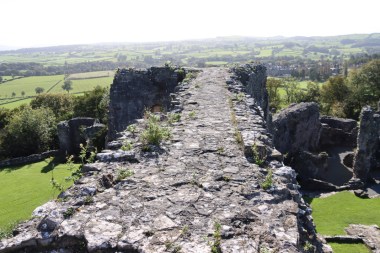
Ancient and Medieval Architecture
Flint – Castle (particularly useful for images) (Janusz Michalew)
https://medievalheritage.eu/en/main-page/heritage/wales/flint-castle/

BBC News
Historic Flint Castle defences found under block of flats. June 7th, 2015
https://www.bbc.com/news/uk-wales-north-east-wales-33032562
Flint Castle: History behind castle chosen for sculpture. By Matthew Frank Stevens (Senior Lecturer in History, Swansea University). 1st November 2019
https://www.bbc.co.uk/news/uk-wales-50260758

Cadw
Flint Castle
https://cadw.gov.wales/visit/places-to-visit/flint-castle
Flint.  Understanding Urban Character.
https://www.flintshire.gov.uk/en/PDFFiles/SHARP/Flint-Understanding-Urban-Character-(Cadw-2009).pdf

Clwyd Powys Archaeological Trust
Historic Settlement Survey – Flintshire
https://cpat.org.uk/ycom/flints/flint.pdf

Coflein
Site Record: Flint Castle (with some excellent image and plans)
https://coflein.gov.uk/en/site/94448/

Curious Clwyd
https://www.mythslegendsodditiesnorth-east-wales.co.uk/

Halkyn Mountain
https://www.halkynmountain.co.uk/

Wales Coast Path
Home page
https://www.walescoastpath.gov.uk/?lang=en
Interactive Coast Path Map
https://www.walescoastpath.gov.uk/plan-your-visit/interactive-coast-path-map/?lang=en#


New Chester Walking Tour: Women of Chester

Chester Visitor Information Centre. Source: Experience Chester

On the Chester Heritage Week’s tour of the Medieval features of Chester Cathedral by Nick Fry, Green Badge tour guide Katie Crowther was in attendance and mentioned that she was leading a new weekly tour themed around Cestrian women, “Women of Chester”, bookable in person in the Chester Visitor Information Centre.  So on Sunday 3rd July at 1130, I presented myself punctually to join the hour-long walking tour outside the Visitor Information Centre, geared up for sun, cold, and/or rain.  Although slightly cool, it stayed dry and it was a very good day for an outdoor walk.

The Green Badge is only awarded to Chester tour guides after a lengthy course and a tough practical exam, so is a good indication that you’re in safe hands.  Katie is one of life’s natural communicators, avoiding any temptation to swamp visitors with paralyzing volumes of data, and instead delivering an information-packed and enjoyable tour in an entirely digestible and memorable way.

The introductory talk took place midway between the Visitor Information Centre  (itself incorporated into the 19th Century Town Hall), behind St Werburgh’s Cathedral, with a randomly placed Roman column in view.  It was a well-mixed architectural locale for the enormously helpful potted history of Chester, providing the key chronological framework onto which the rest of Katie’s narrative was neatly hooked.

Tombstone of Curatia Dionysia

This is not a tour about famous women married to famous men at the top of Cestrian society.  Nor is it a feminist agenda.  Instead, it is part ancient history, part social history, delving into how political, cultural and economic life shaped the lives of women who, in turn, responded to the drivers of Chester life in different ways.  In short, the tour has tentacles that reach into most parts of Chester’s rich and varied past.  As well as looking at women who, in sometimes surprising circumstances, have performed conspicuous and/or leading roles in Chester life, the tour also looks at those who fell foul of religion, convention and tradition, and suffered for it.  

Roman women are the earliest to be recorded in any detail in Chester, and are particularly visible on Roman tombstones, representing the upper echelons of Chester’s Roman society, those who experienced the most comfortable contemporary life.  By contrast, a horribly unfortunate woman accused of witchcraft in the 17th century suffered terrible conditions in the local prison whilst others were burnt at the stake. 

St Werburgh pilgrim’s badge. Source: British Museum

Two of the earliest women who are known to have played a pivotal role in Chester’s history, were Anglo-Saxon.  It is remarkable that the revolutionary diplomat and strategist Aethelflaed (c.870-918), daughter of Alfred the Great and wife of Aethelred, Lord of Mercia, is so unrecognized in Chester that almost no mention of her is made.  She came came to Chester during the illness of her husband to take on a critical role in the defence of Mercia against the Vikings here, and was remarkably successful.  The second Anglo-Saxon name that is intimately tied to Chester is St Werburgh, who died in about 699.  Her remains were brought to Chester Hanbury in Staffordshire at some time between 875 and 907 by the aforementioned Aaethelfaed, raising the profile of Chester as an important Christian centre and destination for pilgrimage.  Chester Cathedral is still dedicated to her.

Sylvia Brown. Source: CheshireLive

Amongst some of the many other women of Chester with great stories was one who kept an evocative record of what it was like to be under siege within the walls during the civil war; an 18th century pioneering commercial and retail entrepreneur; a mayor; a sheriff and two women who lost, respectively, three and four sons in the Second World War.  Of course, Queen Victoria visited, and a famous Chester landmark is dedicated to her, although there is kink in the tail of this story that raises a smile.  Suffrage and music hall provide equal, if more than slightly contrasting examples, both of women’s attitudes and of attitudes to women. Coco Chanel adds more than a touch of glamour to Chester’s story.  Sculptress Annette Yarrow’s life-size female elephant calf called Janya is a fun way of highlighting the connection between the city and Chester Zoo and is a great presence.  For those of us living in Churton, there is even a link to Churton Lodge!  I won’t repeat any of the specifics, partly because I couldn’t possibly do justice to all the information imparted (particularly some of the funnier stories), but also because it would spoil the experience.

The walking tour ranges freely around Chester within the city walls, going up on to the walls for a chunk of the talk, and taking in a number of both famous and lesser known sites along the way.  We also walked through the town, which retains the original Roman plan and in turn gave definition to the Medieval and modern town.  As well as describing women in terms of Chester, and Chester in terms of the women who, though often invisible, helped to define it, the tour gives an excellent sense of the variety of architectural styles, old and new, and the use of space within the walls.  Again, I won’t spoil the experience by saying which sites we visited or why, but there is something for everyone in the tour.

In terms of accessibility for those with unwilling legs or with wheel chairs or push chairs, there are disabled and wheeled options that avoid stairs.  If your legs are fairly co-operative but hesitant, the number of staircases you have to tackle is minimal, with a couple of short flights of stairs up to and down from the city walls and the rows, all with good banisters to hold on to.   If in doubt, ask on the day, and the guide will sort out either wheel-friendly or leg-friendly options.  Apart from some slightly uneven pavements and the cobbled abbey square, there is nothing more challenging to tackle.

Coco Chanel. Source: medium.com

The “Women of Chester” walking tour is well worth an hour on a nice quiet Sunday, with lots of other places to visit afterwards to turn it into a day out.  The tour offers a different slant on Chester’s history and it takes you to some interesting and sometimes unexpected parts of Chester’s heritage.  The entire group of us, leaning perilously over a section of city wall to achieve a good view of a section of the wall immediately below us that had been rebuilt using Roman tomb stones, must have been a most peculiar sight!  Some of those wonderful carved tomb stones, rescued in the 19th century, are now in an excellent display in the Grosvenor Museum.

It was a good outing, with a lot to make us smile.  

The “Women of Chester” walking tour has been  developed by three of the Green Badge guides, shown in the photograph to the right, and they take turns to guide this tour, so that each of them usually only delivers it once in every three weeks, ensuring that for each of them the material remains fresh.  As new information is discovered it will be incorporated into the tour, meaning that it will be updated over time.  At the same time, women who made a mark on Chester are being incorporated into a new database that it is hoped will provide a foundation for future research projects.

You can follow the Green Badge tour guides on Twitter at @visitchester and you can ask for more details about the Women of Chester tours on Twitter at  https://twitter.com/WomenofChester


Eaton Hall Gardens Charity Open Days 2022

My father and I booked for the open day on Sunday 26th June.  All tickets have to be booked in advance, both for the gardens and for the train a narrow gauge railway.  We skipped the train option so I don’t know what that experience was like (lots of children, I would imagine) but the gardens were superb, and in some ways unexpected.  Brief comments on practicalities for those considering July or August visits, in terms of parking, suitability for those with mobility issues etc, are at the end of this post.

The Eaton Hall Gardens are open to the public three times this year, the last Sunday in June, July and August, all in aid of three different charities.  If you are intending to go, but have not yet booked a ticket, I suggest you book immediately via EventBrite, as it sells out every year. I missed the chance last year.  The benefiting charities for the 2022 events are Cheshire Young Carers, Cheshire Wildlife Trust and Kidsbank.

We entered via the Belvedere gate just north of the Grosvenor Garden Centre on the old Chester to Wrexham road (the B5445).  It is an ostentatiously long approach to the property.  Just in front of a gigantic obelisk is a checkpoint where you show your tickets.

Young RAF Air Cadets were on hand everywhere to direct traffic and answer questions, and did an absolutely splendid job of keeping the traffic moving.  Once we had followed their directions and parked in a field (but see my notes on disabled access at the end), and walked up towards the estate buildings, you pass through a gate where your tickets are checked again.  Here you are handed a leaflet about the charity being supported, and another highlighting garden features that you might want to visit by head gardener Jan Lomas, with an excellent map on the back showing the locations those features, with  recommended routes between them, which is absolutely necessary if you are not going to miss anything.  You can download my battered copy of the map here if you want to plan your visit in advance.

We were lucky with the weather, because although it was overcast, with only short burst of occasional sunshine, it remained dry, and it was warm.  You can click on any of the photos to see a bigger version.

The description of the gardens on the EventBrite website gives some idea of the treats in store:

Eaton Hall Gardens extend to 88 acres and have been developed over many years by prominent designers, most recently by Lady Arabella Lennox-Boyd. The gardens have a wide variety of planting, including four formal colour-themed rose gardens and grand colour-themed herbaceous borders. There is a newly completed hot border design and a stunning bedding scheme in the Dragon Garden which is not to be missed. Visitors can also enjoy the walled Kitchen Garden, as well as the wildflower garden and the lake walk, where you can take in fabulous views of the Hall and grounds. Finally, the Tea House is filled with roses and herbs and sits perfectly at the end of a short walk past the lake area.

We found all the gardens except the wildflower garden (up a flight of stairs out of the Dragon Garden), and we didn’t do the lake walk simply because it was getting rather late, but looks like a brilliant venue for the picnics that were being carried by more organized visitors.

The first place that we visited was the camellia walk, a long, slender glass corridor lined with camellia bushes.  Although none of the camellias were in flower (they are a spring flowering species), the conservatory building itself was a thing of real beauty, and the sense that it goes on and on without visible end is wonderful.

Nearby are the sheds and the platform for the narrow gauge railway (with open-sided carriages pulled by a steam engine, which used to connect to a Chester-Shropshire railway line siding some 3 miles away).  We walked along a track round the walled kitchen garden towards the courtyard entrance, which is an intriguing little walk, as there is a lovely tree-lined walk towards the kitchen garden, and a couple of quirky buildings, but no signs that it is in use for anything.

The first port of call for most people is the former stable block surrounding a courtyard.  The stable courtyard is open to the public, and there is a horse-drawn carriage display in the light-filled atrium that gives access to it.

The open courtyard itself is laid out with tables and chairs, and is one of the places where refreshments are served in aid of charity (for cash only), and was very congested, but the surrounding buildings were not at all busy.

The former stables themselves, built by Alfred Waterhouse in around 1869, are open.  The saddle horses and harness horses were stabled separately, and there was a harness room and a carriage house too.  There is some information about the horses stabled there and a reconstruction of the stud manager’s office, as well as the family history and exhibition rooms.  You can also, from the stable courtyard, access the bizarre shell grotto and the 1870 Eaton Chapel from the courtyard (stained-glass windows by Frederic James Shields).  Live organ concerts were being played in the chapel, majoring on Johann Sebastian Bach, a lovely, intimate sound in that small space.   

After visiting the courtyard, which is the first place that everyone seems to filter into first, the nearest of the gardens to visit is the walled kitchen garden.

Along one of the walls is a broad border filled with brightly coloured flowers, many of which grow on a massive, upwardly skyrocketing scale.  Within the walls, the beds are divided into squares and rectangles by multiple pathways, many of which are provided with colourful arches.  Some of the beds are defined some defined by short hedges of interlaced apples.  Some of the flowers are exotic and gaudy, others are more humble and subtle, and there is a lively mix of floral displays and vegetables, with lots to see.  The overall impact is one of careful husbandry with a real eye for colour, scale and shape.

asfsdfs
dafdsfs

From there we walked down to the Parrot House, a little round building looking rather like a Graeco-Roman temple, but designed to keep tropical birds.  It was built in the 1880s by Alfred Waterhouse and was fitted with heating to create suitable conditions for such birds, but apparently never housed anything more tropical than some budgies.  There were hay bales outside for visitors to sit and watch the band.

From here it was a short walk to the rose gardens, which sit in front of the Eaton Hall house, offering the first real glimpse of the house and the great clock tower of the neighbouring chapel.  The Country Seat website offers the following very useful potted history of Eaton Hall (not open to the public, but an unavoidable presence).

A Victorian Gothic iteration of Eaton Hall in the late 19th Century. Source: Lost Heritage

The first notable Eaton Hall was designed by William Samwell and built in 1664 but was replaced by a vast Gothic creation by William Porden in 1803, which was then enlarged by William Burn in 1845. This was then replaced by the Victorian Gothic of Alfred Waterhouse in 1870, before the whole edifice was swept away in 1961 as the trustees of the then young Duke couldn’t imagine anyone living in such splendour again. Faced with being a Duke with no seat in his 11,500-acre estate in Cheshire, in 1971 the 5th Duke commissioned a starkly white modernist country house from John Dennys, (who also happened to be the Dukes’ brother-in-law) which was as striking as it was controversial. This was then given a vaguely ‘chateau’ style makeover in 1989 for the 6th Duke, to designs by the Percy Thomas Partnership. So of the five major houses which have been graced with the name Eaton Hall, the current one, though impressive, still doesn’t quite have the gravitas of the others. Perhaps, in time, a future Duke may decide to replace it again.

The current house is an ugly great block of a thing looking not unlike Faengslet prison. I daresay it has more going on in its favour on the inside.  Next to it, rather more endearing in a uniquely Victorian way, is the Eaton Hall chapel clock tower and the chapel itself, behind which is the the stable courtyard.  Although the history of the house is of interest, the visit is all about the gardens, which are excellent.

The gardens are dotted throughout a park that sits above a lake and extends to the east.  Instead of being clustered around the house, as in most houses and estates of this type, the different gardens are dotted around, approached both via metalled surfaces and grass paths mowed through stretches that have been allowed to run wild.

The rose gardens are probably the highlight of the gardens at this time of year, with climbing roses climbing up trellis obelisks and running along heavy rope links.  The twin gardens flank a long rectangular ornamental pond that runs towards the house.  The pond is often shown with fountains, but they were not operating when we visited.

The rose gardens, supplemented by other species to complement the colours of different sections, form part of a remarkable of a set of terraces.  The top terrace, not accessible to the public, is on the level of the house.  The rose gardens are next down, and below this is the lioness and kudu pond, which in turn overlooks the slope down to the lake, which is fed by the River Dee.

The rose gardens and the pond are flanked by wooden arches connected with thick ropes, and both the arches and the connecting ropes support white and palest pink roses.

On each side of the pond are two square rose gardens, separated by yew hedges, cleverly offset so that one garden cannot be seen from the next, giving the impression of being the entrance to a maze.  Each of these rose gardens has a central focal point, a circular path, and four beds, each with a massive obelisk in its corner.  Each of the gardens is colour-themed.  One, for example, is blue and yellow, whilst another is pure white.  The roses are certainly the dominant flower, but they are supported by penstemons, clematis, geraniums and various other species that help to create a mass of different textures and shapes.

asfsfdfsd
The Dragon Garden is named for the dragon sculpture in the centre of the garden.  A formal geometric garden, planted with small species  of blues, purples, lilacs and mauves, this is a delightful sight, highly structured and precise.  There is a statue of a figure on each corner of the garden, possibly former family members.

After a pause to enjoy the view at the end of the terrace, and to look down over the lioness and kudu sculpture (a truly bizarre thing) we went towards the Dutch Tea House and the accompanying Tea Garden.  Outside this garden, and elsewhere on the estate, several of the vast oaks are wrapped in fine mesh.  I had seen this on a previous visit to the Aldford Iron Bridge on the other side of the estate, and had wondered what it was all about.  A helpful sign explained that it was an experimental measure taken against acute decline disease, thought to be caused by a parasitic boring beetle.  The mesh restricts the movement of the beetles and prevents them spreading.  At the same time, the roots of the tree, under soil compacted over the decades, prevents water and nutrients reaching the tree, so a programme of mulching has been undertaken to help retain water and help the transfer of nutrients and water via the roots into the trees.

The Tea House is a little ornamental building, approached via a path that leads through the pet cemetery, and look out for a delectable little wooden Wendy house on the other side of a low hedge.   If you have a pushchair or wheelchair / buggy, there is a side entrance to the garden that avoids the steps down from the Tea House.  Giant fennel plants give a wonderful bitter-sweet scent on approach to the garden.  The garden has a statue of Mercury at its centre (standing on a personification of the wind).  The garden is beautiful in a less formal way than the rose gardens, with a more unaffected feel, with lovely block-paved paths and beds filled with flowers and highly aromatic herbs that deliver a gloriously chaotic range of different aromatic scents that follow you around.  On a hot day I imagine that it would be even better as the aromas heat through.  

From here there was a choice of walking down to the lake, or taking one of the grass paths to another little temple-like building, referred to as a loggia.  We opted for the walk to the loggia, rectangular this time, which was flanked by two genuine Roman columns and housed a genuine Roman altar, the latter found to the east of Chester between the Tarvin and Huntington roundabouts, about 320 metres east of Boughton Cross, and 1.8 km due east of The Cross, Chester.  Given how much Roman architecture has been lost from Chester, it was probably a kindness to remove and preserve them, although the public only rarely have access.

The altar is today known officially as RIB 460.  On two sides it reads “Nymphis et Fontibus
leg(io) XX V(aleria) V(ictrix),” translated as “To the Nymphs and Fountains the Twentieth Legion Valeria Victrix (set this up).”  It was rediscovered first in 1821.

There is a grass avenue from here back to the Parrot House via the terrace with the lioness and kudu pond.  The band’s little white marquee is stationed in front of the Parrot House so you don’t really get a sense of the connection between the two buildings, but it is a nice arrangement.  As you walk onto the pond terrace, you pass through a grass path flanked with two borders filled with lavender.  We paused to run fingers through it and release the splendid scent.  The wall that runs below the upper terrace where the rose gardens were located is covered in white hydrangea petiolaris, a form of hydrangea that climbs. The pond itself has a vast greened sculpture in the middle showing a lioness about to leap on and kill a kudu (a deer-like animal).  As you walk up behind it, the change of perspective gives a strange sense that the lioness is in motion. It is absolutely not my cup of coco, and I would have it moved somewhere a lot less conspicuous, but it is certainly attention-grabbing.

From the Parrot House it was a short walk along the bottom edge of the walled garden to the field where we were parked.  We found the Air Cadets who were stationed around all the entrances and exits very helpful in sorting out somewhere where I could easily pick up my father.

Later, whilst my father was masterminding a fabulous culinary extravaganza in his kitchen, I read the leaflet about the Cheshire Young Carers charity that the day’s takings were to support.  It was something of an eye-opener to learn how many children care for their parents or their siblings, unsupported by any official mechanisms.  I was so pleased that our tickets had gone towards helping this excellent organization, which not only helps with practical support but organizes away days for children, activities that allow them to escape their responsibilities for a short time.
sdfsfas

Visiting Practicalities

The parking arrangements were very well managed with plenty of Air Cadets and other personnel at the ready to give directions and advice.  The car park was a field.  The field surface was dry buy very uneven.  A brief conversation with one of the parking officials enabled me to drop my father off on the hardstanding that led up to the gardens, and park nearby, where some spaces had been kept free, but if you have a disability badge, there are is special parking right by the entrance to the gardens.

There is a disability stand where disability scooters and other aids can be collected, and the gardens as a whole are generally easy for those with mobility issues, as well as for wheelchair and pushchair users. The gardens are connected with the lake by metalled paths leading between gardens, and within some of the gardens and in the park between them, there are level grass surfaces and light slopes throughout, which (at least on a dry day) are suitable for wheelchairs and pushchairs.  There are not many benches or seats around, and none between the gardens.

It was only moderately busy.  The car parks seemed to be stuffed full of cars, but the park and gardens seemed to swallow visitors very easily.  Only in the places where people tend to convene, like refreshment areas and places where there was live music, was there a sense that it might become crowded.  The gardens themselves gave no sense at all of there being too many people for the space.

Full details of the event, plus booking information, are on the Eventbrite website at:
https://www.eventbrite.co.uk/e/eaton-hall-gardens-charity-open-day-tickets-308591705097

sdfd
Sources:

EventBrite
Eaton Hall Gardens Charity Open Days 2022
https://www.eventbrite.co.uk/e/eaton-hall-gardens-charity-open-day-tickets-308591705097

Historic England
Eaton Hall Park and Garden
https://historicengland.org.uk/listing/the-list/list-entry/1000127?section=official-list-entry

Lost Heritage
Eaton Hall
http://www.lostheritage.org.uk/houses/lh_cheshire_eatonhall_info_gallery.html

Roman Inscriptions of Britain
RIB 460
https://romaninscriptionsofbritain.org/inscriptions/460

The Country Seat
Country houses of the 2014 Rich List – Top 10
https://thecountryseat.org.uk/tag/eaton-hall/