
“A face like a Buckley panmug”
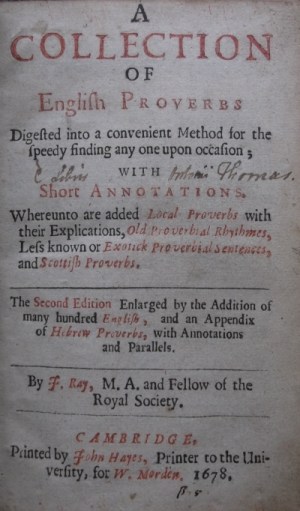
Bridge, J.S., no.6, p.2
I love this proverb, although Bridge, in irritatingly understated mode, comments simply “Buckley in Flintshire, a few miles from Chester, produces a good deal of coarse red earthenware.”

Buckley wares in the Grosvenor Museum collection
This is the sixth of Bridge’s proverbs, on only the second page of his collection, and although it clearly failed to impress Bridge with any sense of historical depth and interest, the Buckley ceramic potteries near Mold in north Wales were major producers of a number of different types of pottery, nearly all coarseware, produced in great volume. There is not a field or garden in the area that does not produce at least a few sherds of Buckley ware, and many of them produce a great deal. I have unearthed tons of it in the form of sherds from my garden.
The earliest potteries were established in the Middle Ages and continued to produce coarsewares well into the 20th century. Nearly all of the potteries have been lost, as the Buckley area has been expanded via large housing developments, although archaeological excavations have been carried out in recent decades that have helped to supplement documentary information.

Different examples of Buckley pottery. Source: CPAT Report no.1246.
The Buckley potteries were established to take advantage of the underlying on Westphalian (Coal Measure) clays where crops of Ruabon Marl appear on the surface, comprising mudstones, siltstones and sandstones that formed from waterlogged alluvial floodplain silts and provided the fireclays used in the potteries.
First, what on earth is a “panmug” when it escapes from domestic captivity? I could not find a picture of one but thankfully, amongst other sources, here’s a description from Egerton-Leigh’s 1877 glossary of Cheshire dialect, which makes it quite clear that it was indeed made of the Buckley coarse red pottery, that it was used primarily for dairy products, and goes on to explain the “face like a panmug” reference:
Panmug, s. – (pronounced paanmoog) . . . The coarse red crockery used in family operations for cheese milk, butter, &c., and any rough use. A girl who was taken to see Capesthorne Hall, which contains (or contained before the fire), amongst many curiosities, a valuable collection of Etruscan vases, described to her mother on her return how beautiful everything was, but that she had been surprised to see “the paanmoogs kept in the house place” i.e. the best sitting room). Our Cheshire panmugs are manufactured mostly at Buckley, in the neighbouring county of Flint. A man with a red, coarse, blotchy countenance (not unfrequently the result of hard drinking) is said to have “a feace like a Buckley paanmug.” [Leigh 1877]

The base of the beehive kiln at Lewis’s Pottery during excavations in 2000. Source: Earthworks Archaeology, via CPAT Report 1246.
Although established in the Middle Ages, the Buckley industry began to expand significantly in the 18th century, becoming a major producer in the 19th century. Well-known travel writer Thomas Pennant visited in 1786 and described 14 potteries that produced coarse earthenware “such as pans, jugs, great pots for butter, plates, dishes, ovens, flower pots, etc,” with a significant export trade to Ireland and the Welsh coast. Research since then has identified at least 31 potential potteries, all small family industries. The range of items produced was considerable. As well as household and garden items, specialized products were also manufactured, like door handles, as well as items for the tourist industry, such as teapots and novelty items specific to particular resorts showing placenames and phrases in Welsh. Industrial output included heat-resistant refractory bricks which could be used in kilns, crucibles and blast furnace linings.
Other areas made very similar coarse wares, including Stoke-on- Trent, South Lancashire (including Liverpool), Whitehaven, and the Glasgow. Each of these produced black-glazed, red-bodied earthenwares using very similar clays and techniques to those at Buckley. Although when found locally it can be confidently assigned to Buckley, when found further afield it may be difficult to distinguish from pottery made by these other centres. A classic example is the richly glazed dark coarseware decorated with curving lines of yellow slip, often referred to as “Staffordshire ware” but, in this area, much more likely to be Buckley ware.
Although Buckley ware was commonplace, many types are now collected, and it may be found in museum collections and can reach fairly high prices in antique shops and at auction.
For more about J.C. Bridge and this Cheshire Proverbs series,
see Cheshire Proverbs 1.
For the other proverbs in the series, click on the Cheshire Proverbs label
in the right hand margin, or see the end of the Archaeology, Heritage and Art page, where they are listed.
xxx
Sources:
Books and papers
Bridge, J.C. 1917. Cheshire Proverbs and Other Sayings and Rhymes Connected with the City an County Palatine of Chester. Phillipson and Golder (Chester)
Jones, Nigel, W. 2019. The Buckley Potteries Recent Research and Excavation. Archaeopress
Leigh, Lt-Col Egerton M.P 1877. A glossary of words used in the dialect of Cheshire founded on a similar attempt by Roger Wilbraham F.R.S. and F.S.A. Contributed to the Society of Antiquaries. Minshull and Hughes
ia801204.us.archive.org/0/items/glossaryofwordsu00leigrich/glossaryofwordsu00leigrich.pdf
Websites
Clwyd-Powys Archaeological Trust (CPAT)
CPAT report No. 1246 The Buckley Potteries: an assessment of survival and potential
https://coflein.gov.uk/media/263/618/652220.pdf
CPAT Report No. 1476 Brookhill Pottery, Buckley
https://coflein.gov.uk/media/291/13/652259.pdf
People’s Collection Wales
Buckley Pottery
https://www.peoplescollection.wales/collections/376938
Pilgrims and Posies blog
The Cheshire Prophet
https://pilgrimsandposies.blogspot.com/2013/01/the-cheshire-prophet.html












 Based in Churton

