Category Archives: Canal walks

Walking the history of Chester’s canals, from the river Dee to Boughton #2 – The Walk

This post has been divided into two. Part 1, already posted here, looks at some of the history of the Chester city canals, in brief. Part 2 is a mainly photographic account following a walk along the canals from the point where the river Dee connects to the canal network to just beyond Tarvin Bridge.  Part of this was once the Chester Canal, which then became the Ellesmere and Chester Canal, as two different systems joined up with the rest of the canal network, and finally became the Shropshire Union Canal, the name by which it is known today.
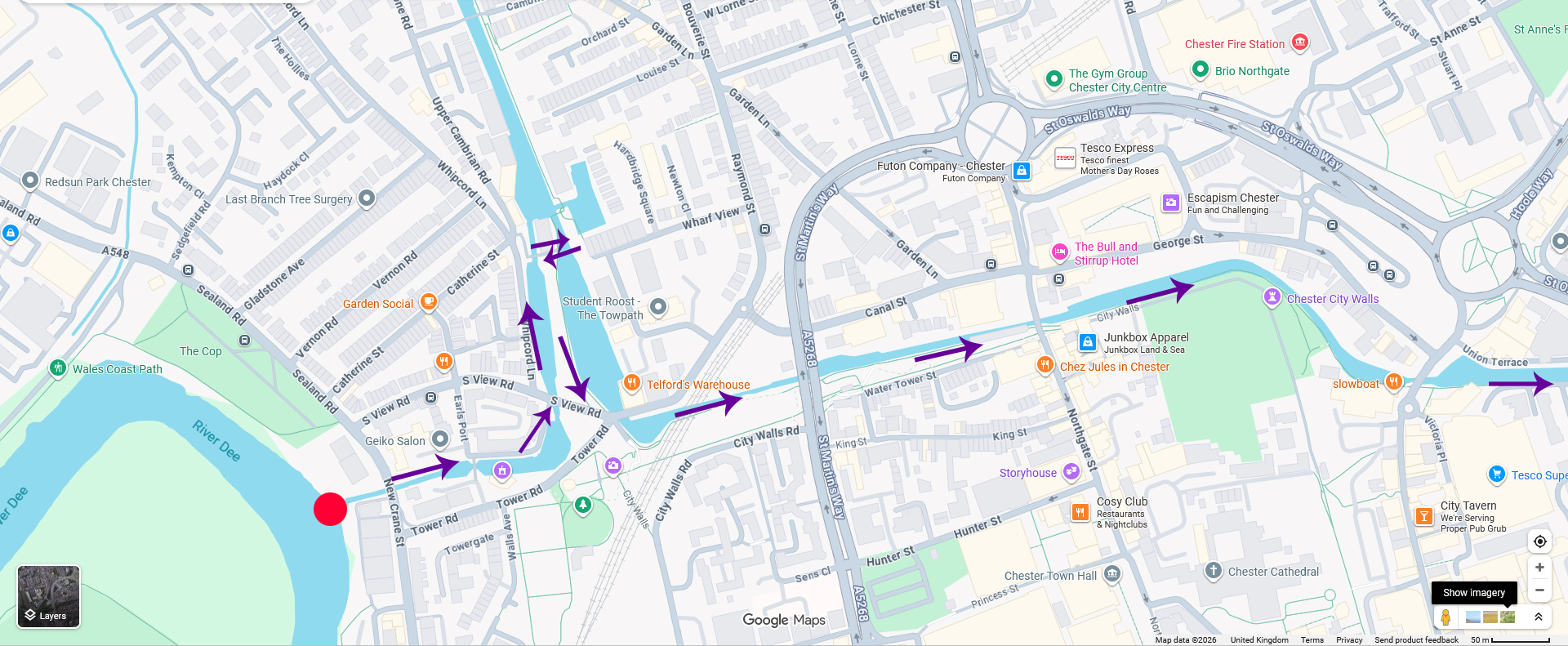
Map of the first part of the canal route

Map of the first part of the canal route. The start point is marked by the red dot.  The rest of the route follows the canal as far as the Chester Boughton Hall Cricket Club
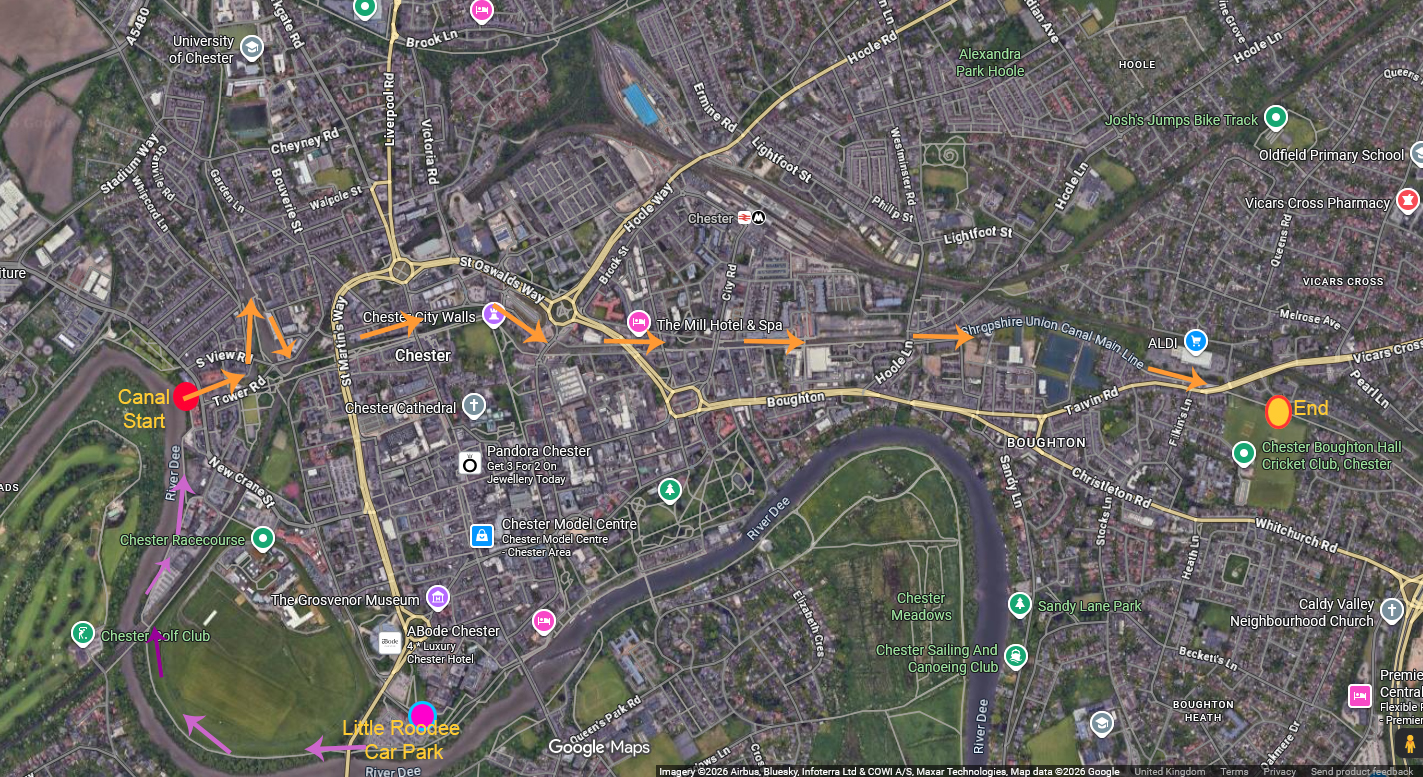
Map of the entire route from the Dee to Chester Boughton Hall Cricket Club

Map of the entire route, with the orange arrows showing the route from the Dee to Chester Boughton Hall Cricket Club. The pink arrows are the route I took from the Little Roodee car park to the start of the canal.  The darker purple arrow marks the arch beneath the railway viaduct that continues the river walk.
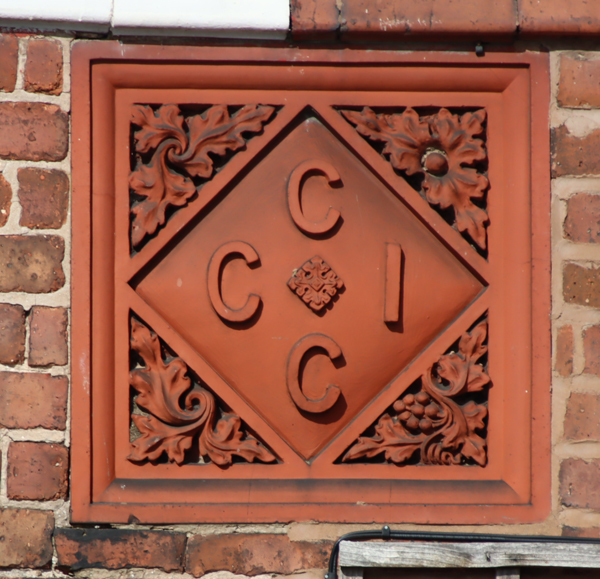
Detail of Tollemache Terrace

The walk begins at the point where the canal meets the river Dee, at the red dot (What3Words ///golf.finishing.upset).  It follows the tiny section of the old Chester Canal around the corner into the Dee Branch, which was created to allow access from the Wirral Line to the Dee.  The walk then crosses the roving-bridge with views up along the Wirral Line, across to the boatyard and down Tower Wharf Basin towards the main line of the canal to the east.  The walk then proceeds between Tower Wharf Basin and the Dee Branch, round the corner into the turning basin and along the rest of the canal, without any additional complications.  You can, of course, do as much or as little as you like. There is much more to see than included here – it’s a terrific walk.  I went as far as the Chester Boughton Hall Cricket Club, and the photographs go that far, but of course you can walk on as far as Wolverhampton if you have the time and stamina!

The return route is slightly different.  I parked in the long-term Little Roodee car park, which is under the city walls, so on the return route along the canal walked up onto the city walls (What3Words ///gone.dome.paths) and followed the walls back to the car park.
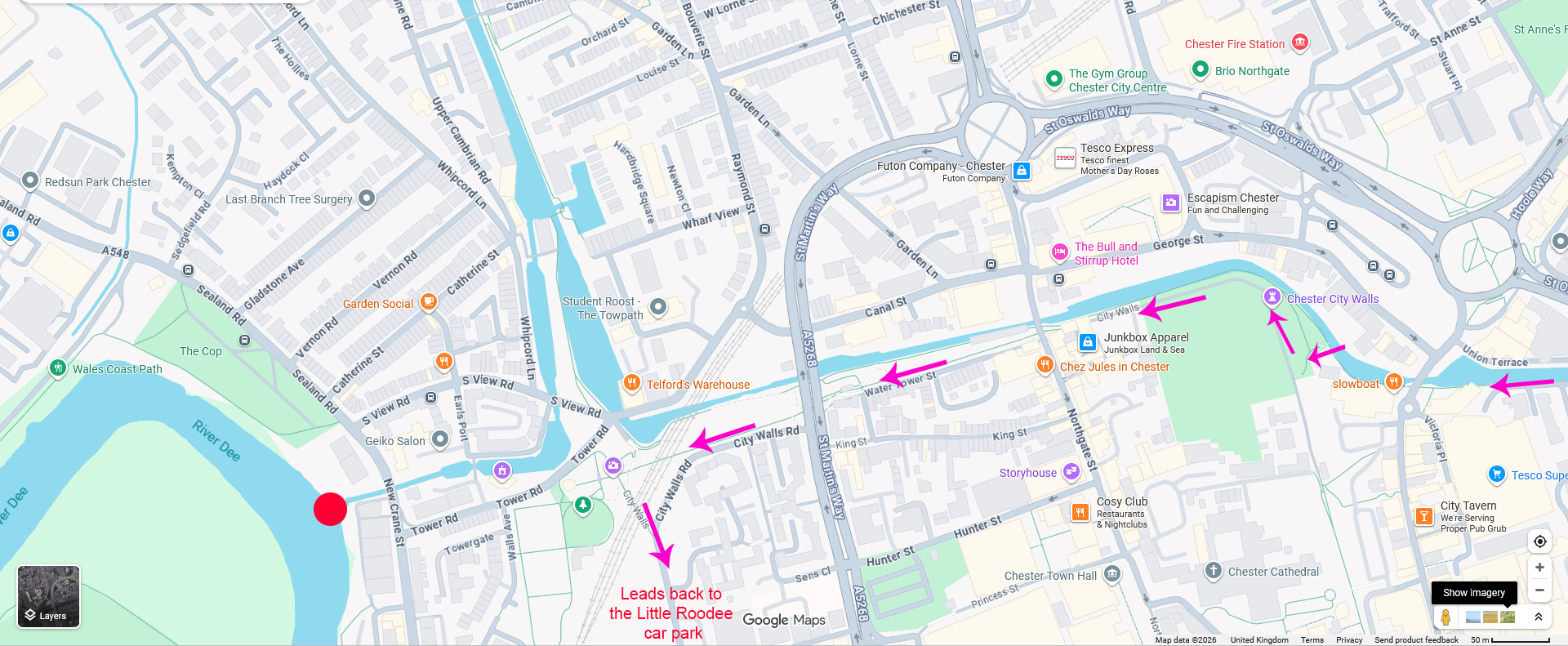
Map of the return route via the city walls

The slightly different return leg of the route, which leaves the main line of the canal and goes up on to the city walls looking down on the canal before heading, still on the city walls, towards the Little Roodee long term car park

There is plenty of parking in Chester, but I chose to park in the Little Roodee (What3Words ///helps.going.budget) because I was not sure how long I would take, and this is a long-term fixed-fee car park.  In the event, with plenty of stops to take photographs, it took around two and a half hours in total, two hours out (with lots of stops to take photos) and then an hour back to the Little Roodee via the City Walls, coming off the canal and walking above it from near to the King Charles Tower.  There are plenty of places to stop for drinks and a bite to eat.
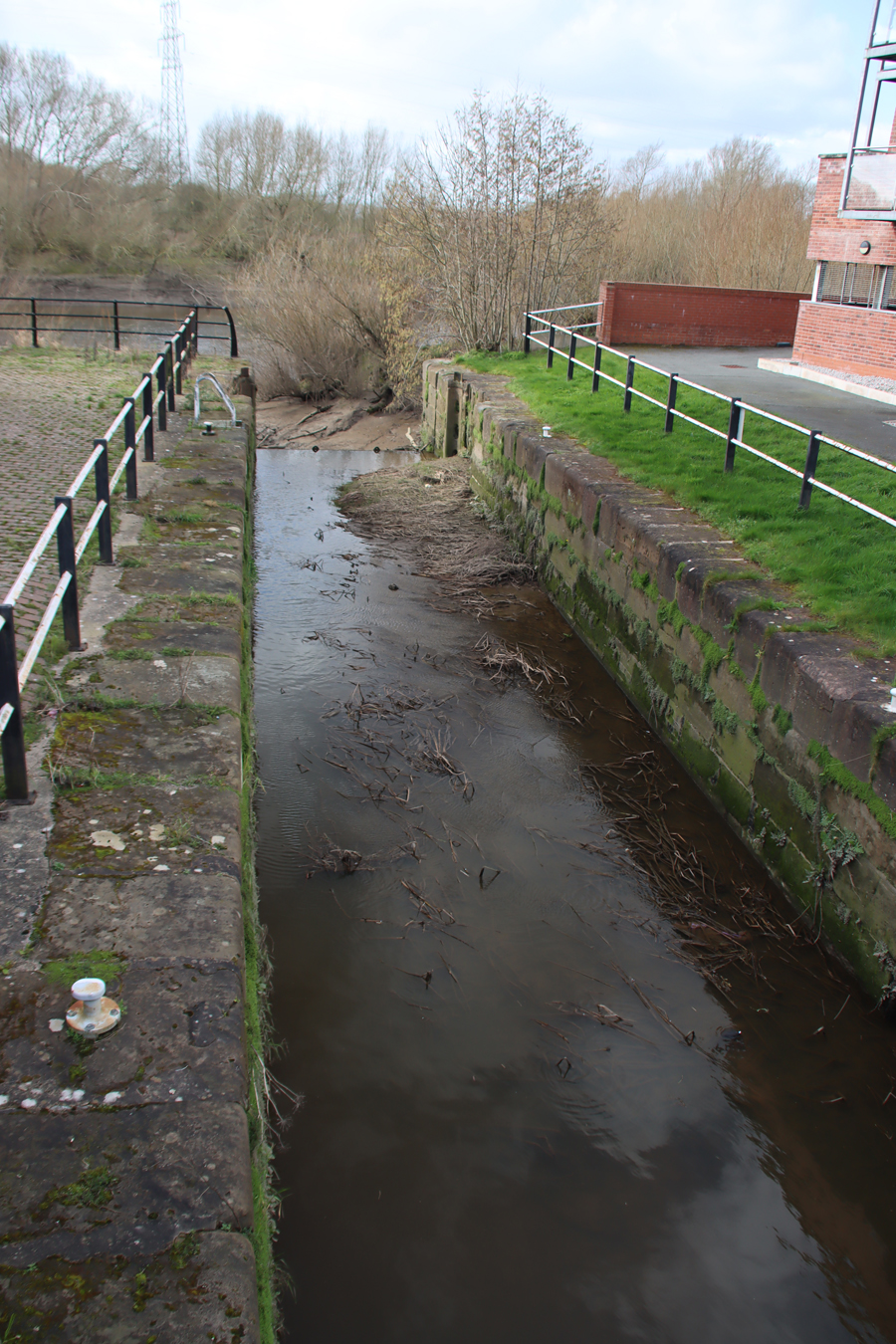
The starting point

The starting point, where the canal tips water into the river Dee. The lock gates are long vanished, buy you can see where they once were.

The two main points to make at the beginning of the walk at the lock between the canal network into the Dee are that 1) this is obviously derelict and no longer usable, meaning that the canal network is now divorced from the river; and 2) this is one of the earliest parts of the Chester system, a legacy of the first Chester Canal, which went from Chester to Nantwich.  The connection with the river authorities had not been agreed before work began on the canal, and it took a number of years before the essential link between the Port of Chester and the Chester Canal were negotiated.

The walk continues over the road, from where this photograph was taken. Note that the canal passes under the road bridge.  Although this is now a fixed bridge, it was once a swing bridge to allow vessels of all heights to enter and leave the canal system.

Over the road (cross with care as it is on a blind corner) you continue along the canal, staying to its left.  This is the final set of locks as you come from the west and south, or the first as you begin to proceed up the canal system towards Nantwich, the source of the water.
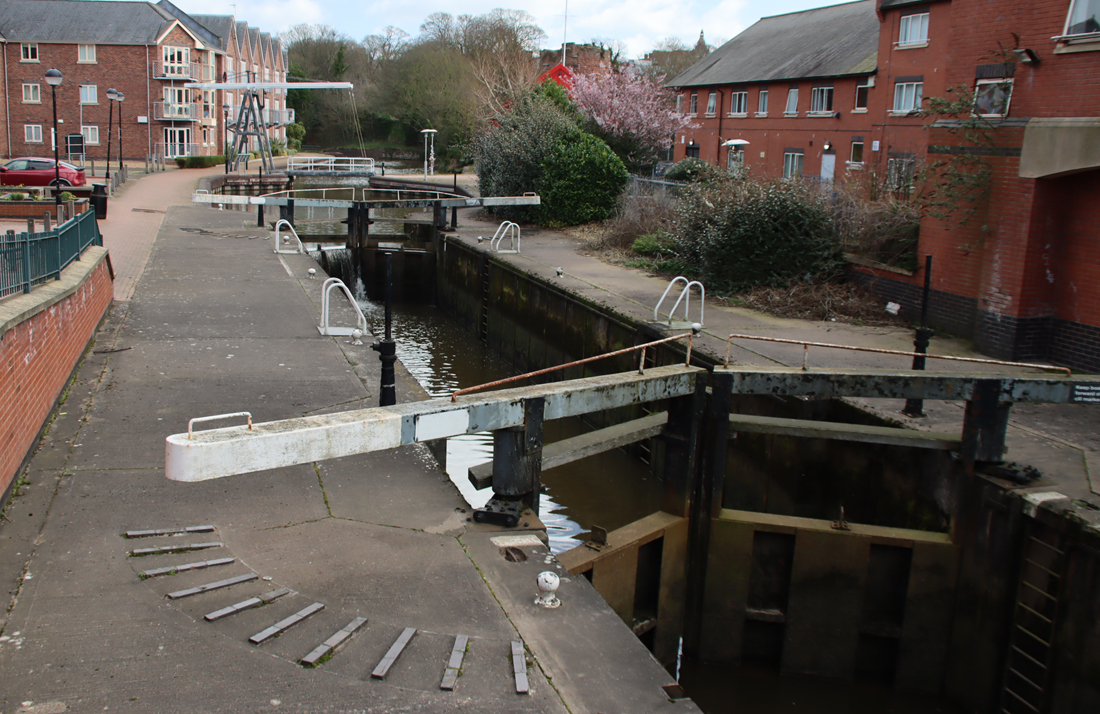
Beginning to explore the Chester leg of the canal system

Beginning to explore the Chester leg of the canal system

On your left is a housing development with retail at its base.  This marks the site of the old Dee Basin which is where, after coming down a flight of five locks, narrowboats and wide barges would enter a holding area to await the tide.
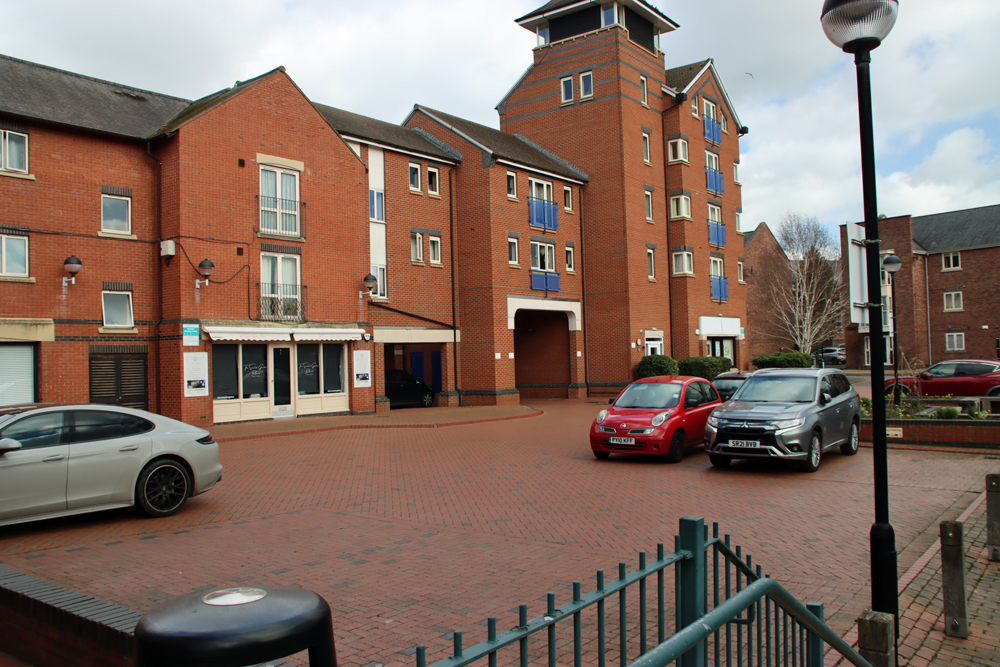
The former Dee Basin
The former Dee Basin


The former Dee Basin

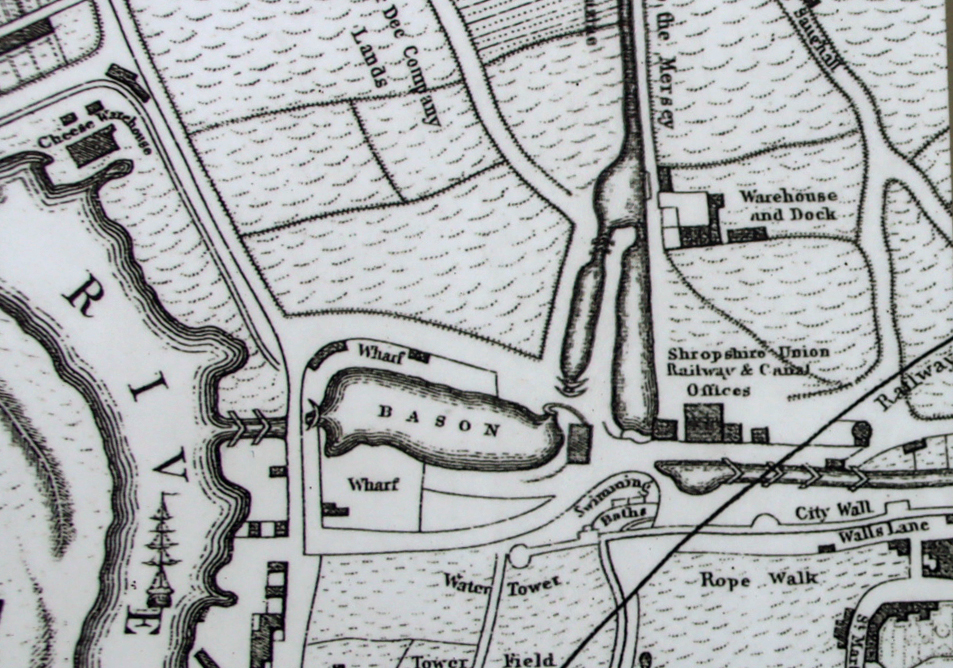
The former Dee Basin, shown on signage in the Tower Wharf Basin

When the Chester Canal was first built this was a tidal basin, but when the Chester Canal and the Ellesmere Canal merged, the water level was controlled by locks.  Continuing on, and staying left of the modern lift bridge, the bridge ahead of you leads you into the opening of the so-called Dee branch and on to Tower Wharf and the heart of the Chester canal system.   To proceed, do not go under the bridge (the footpath ends here) but go up the flight of steps to its left, turn right and cross the road and enter the Tower Wharf basin via the white gates.  On your right is the main line and Tower Wharf.  On your left, at a much lower level, is the Dee Branch, a requirement after the Wirral Line was added by the Ellesmere Canal (see an explanation of this in Part 1).  A lock was added to allow access to this lower section that flows out to the former Dee Basin and the river lock.
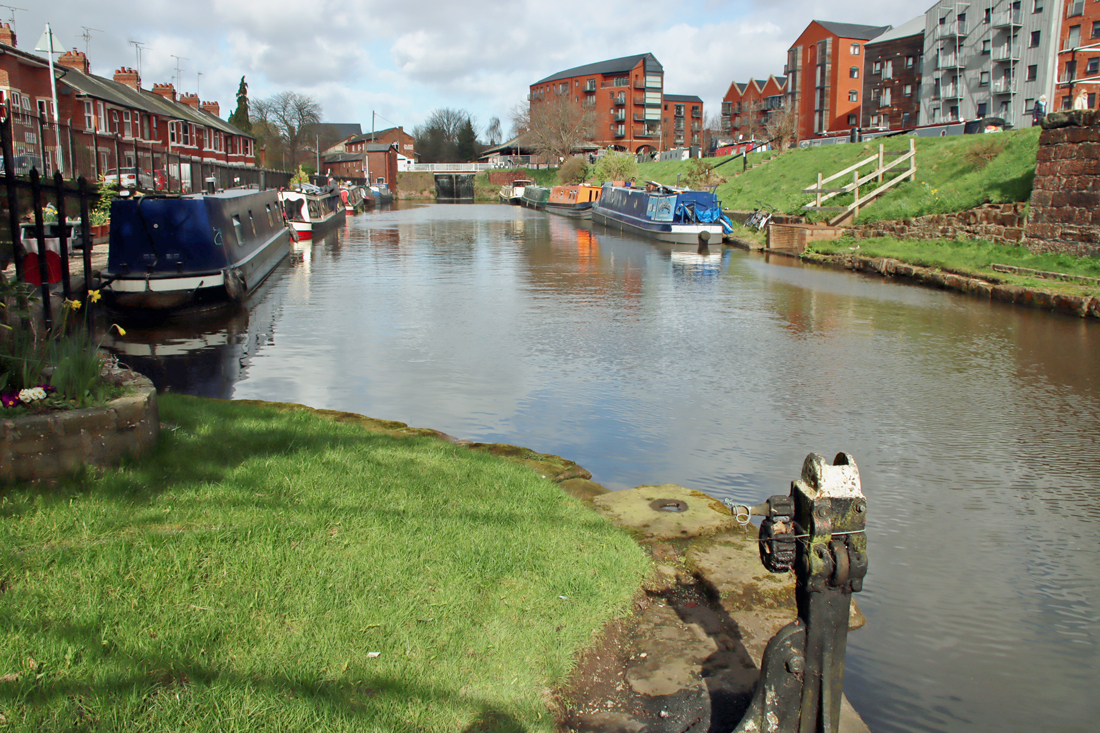
The Dee Branch

The Dee branch, with the main line up the bank at a higher level.
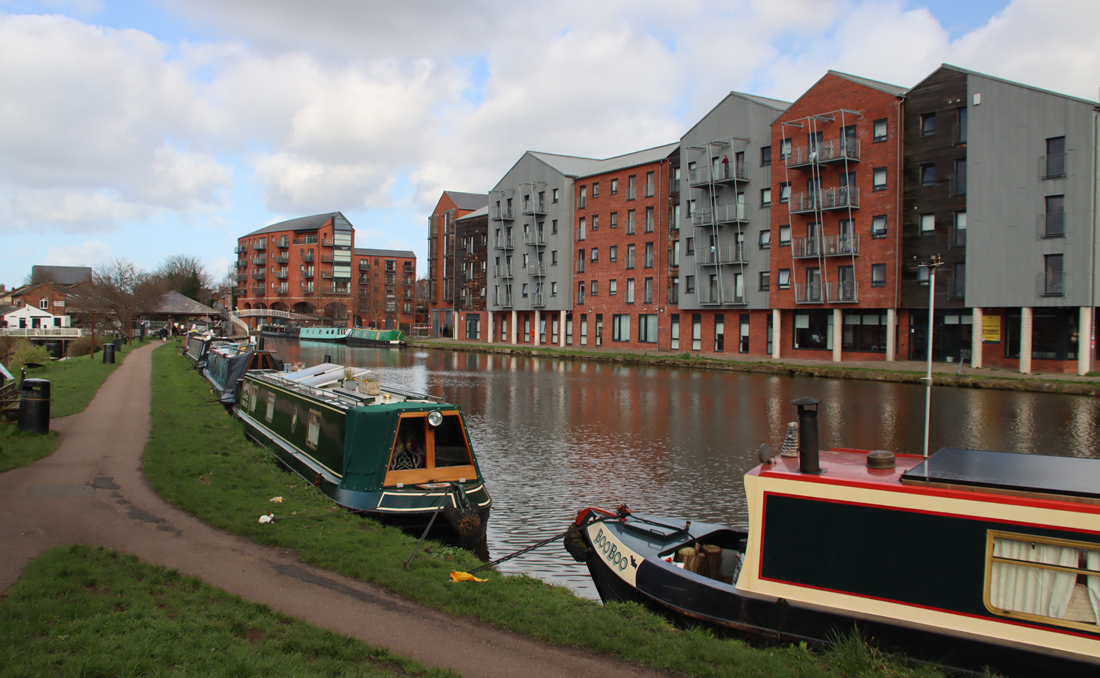
Tower Wharf basin
Tower Wharf basin


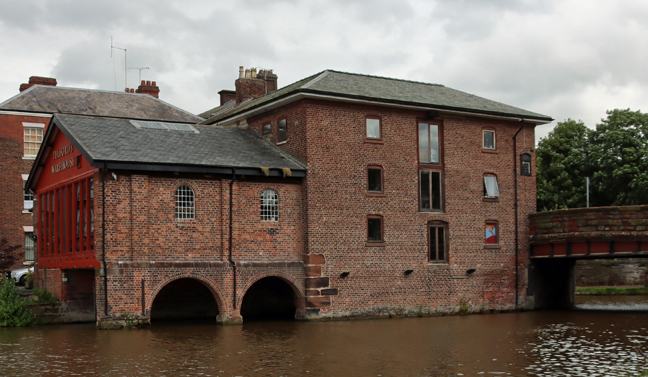
Telford's Warehouse

Telford’s Warehouse

There are some terrific features to look out for in the Tower Wharf Basin.  When the Wirral Line was built a new boatyard was added with a graving dock, both still in situ, and the boatyard not only survives but has been in continuous use since it was built.  Immediately on your right, at the far southern end of the basin, is a late 18th century building called Telford’s Warehouse (now a pub), designed by Thomas Telford with the open arches allowing vessels to load and unload under cover.  Running along the side of the Dee branch is an attractive row of Victorian brick-built terraced housing on Whipcord Lane, post-dating the canal.

Straight ahead is what is known as Taylor’s Boatyard after a former owner, complete with the graving dock.  The graving dock is a dry dock into which ships can be floated, and then the lock emptied so that hulls can be worked on.  Sadly it is surrounded, for safety reasons, by ugly metal fencing, but it is a lovely feature.  The boatyard lies beyond.
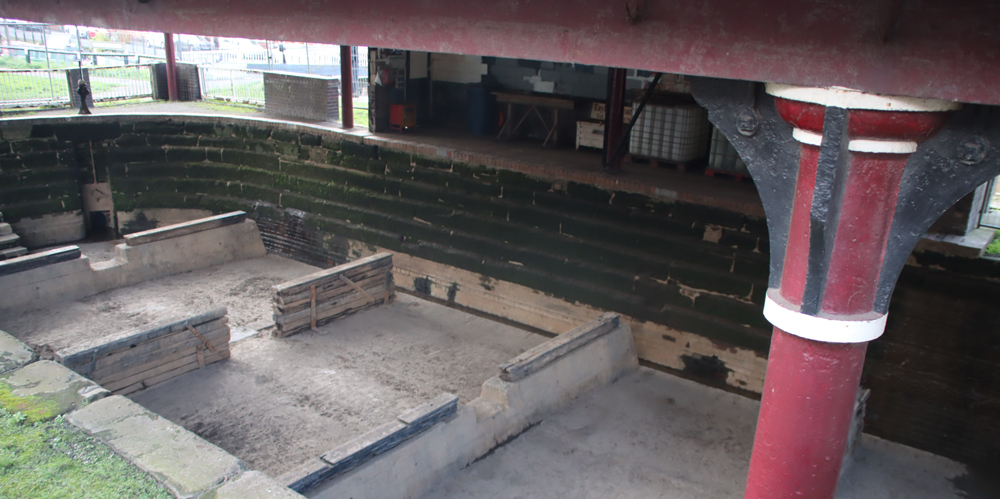
Looking down from the roving-bridge into the graving dock
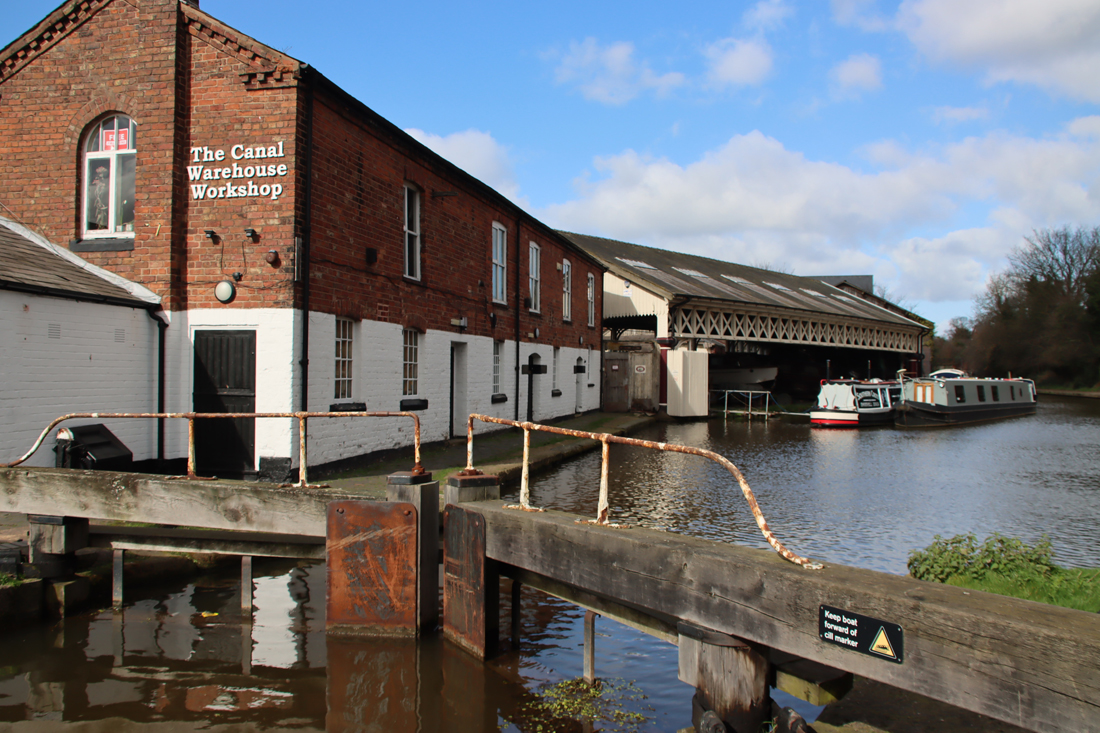
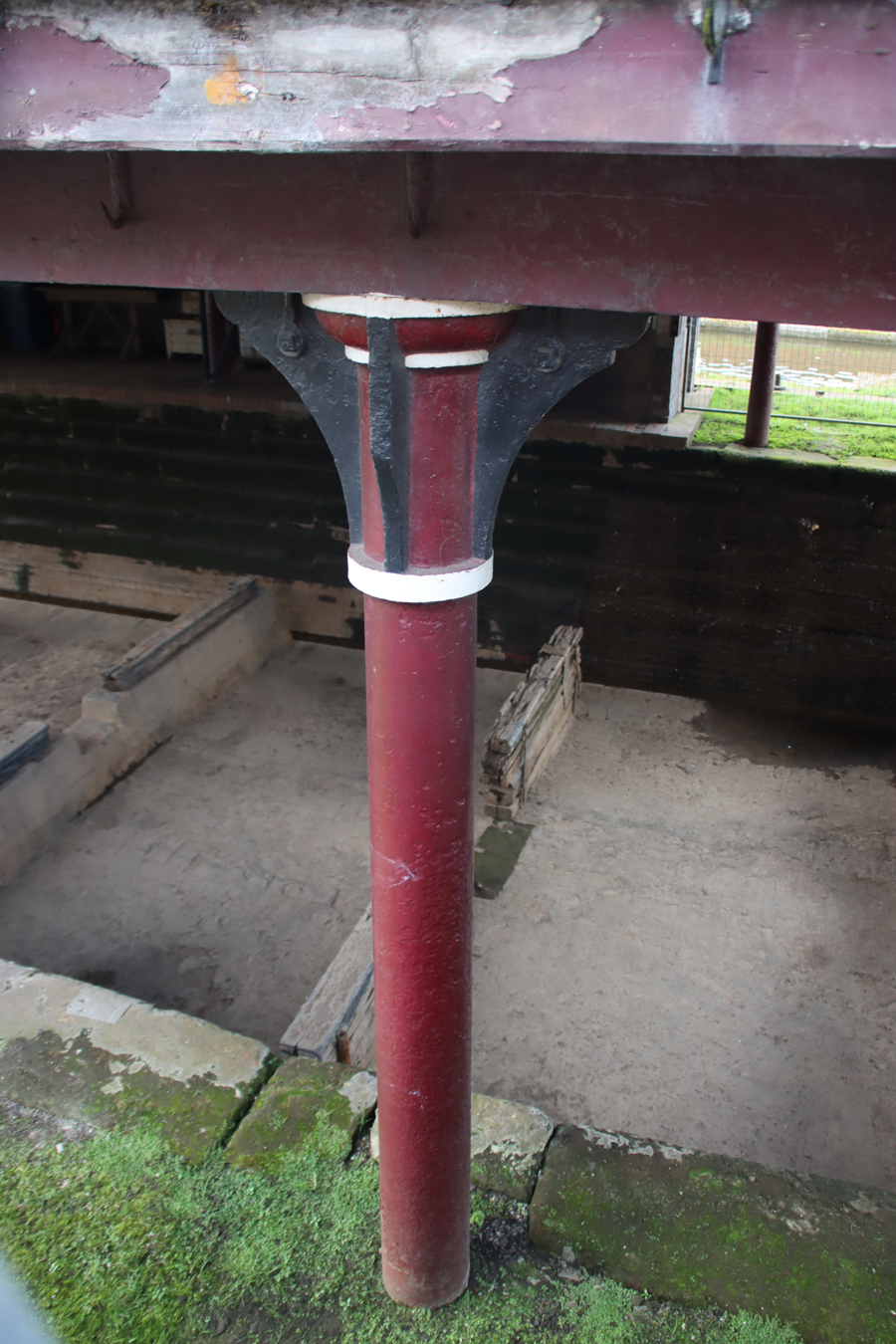
Attractive iron column in the graving dock

In 1802 business in the Basin had not only picked up but was doing so well that its capacity was considerably over-stretched and a new basin was required, named North Basin, which was surrounded by more warehousing.  An absolutely delightful roving-bridge or snake/turnover bridge connects Tower Wharf with North Basin, an innovation that allowed horses pulling boats to cross the canal without being unhooked from the vessel.
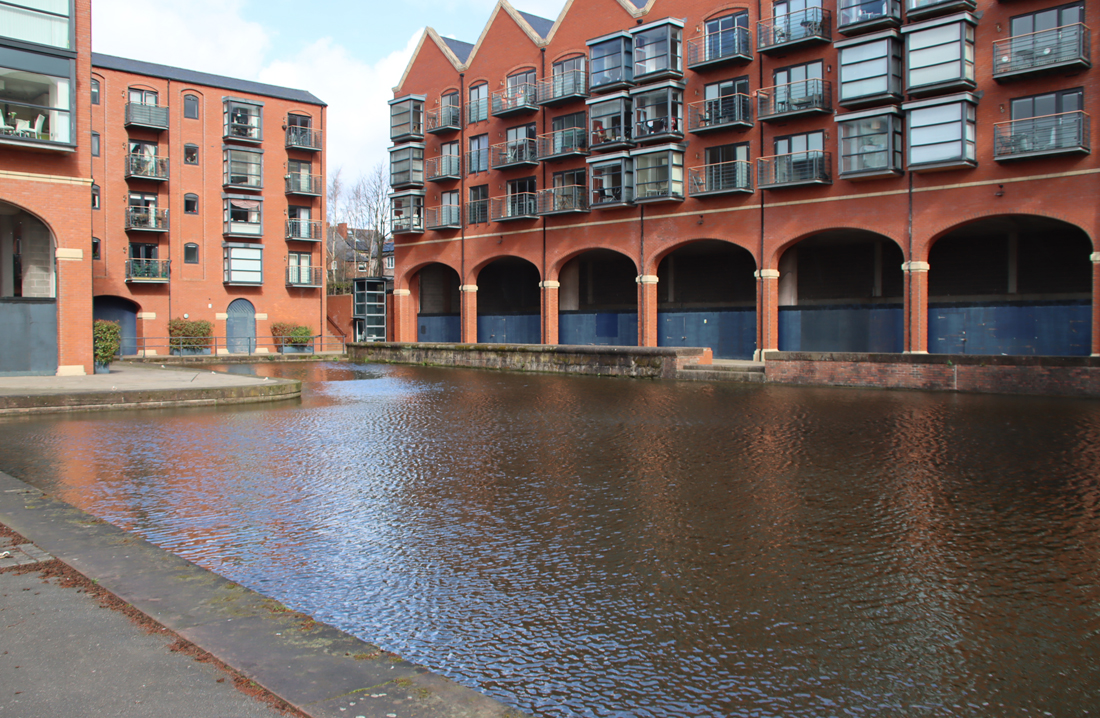
North Basin
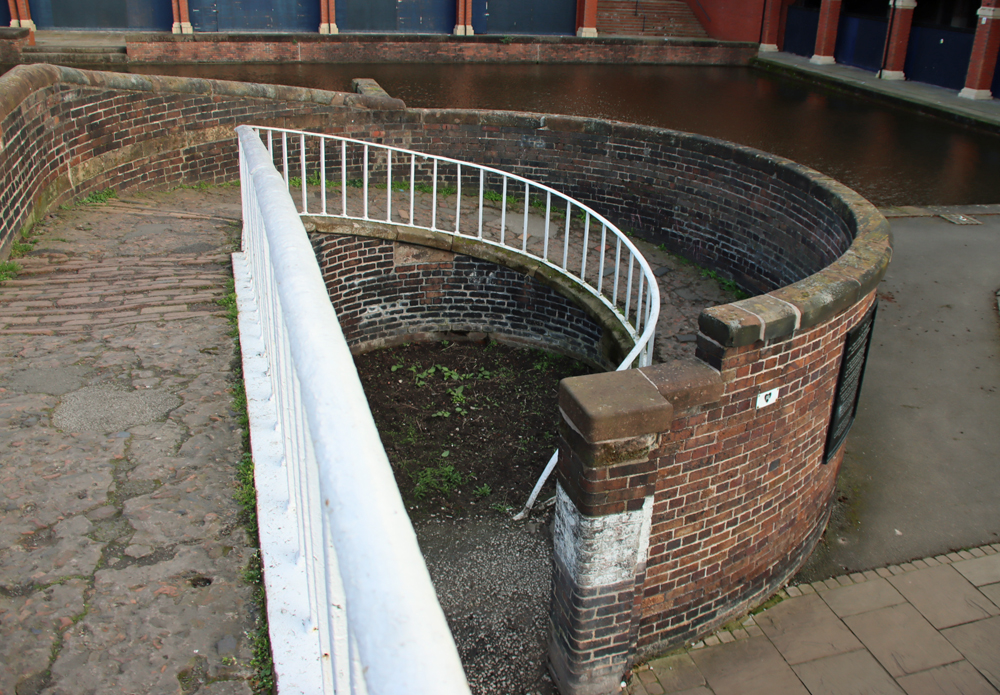
North Basin

The roving bridge

The roving bridge

If you have crossed the bridge, re-cross it to return to the central section of the basin, between the Tower Wharf Basin and the Dee Branch and retrace your steps.  Instead of going back up to the road where you entered, go under the bridge, following the towpath.  From here on, the route simply follows the towpath.  There are too many sights and sites to describe in detail, but here are some of the most interesting features contemporary with the working canal, with links to more information where I have found it.

As you leave the Tower Wharf Basin complex, you walk under the railway bridge and turn left into a section known as the Turning Basin, made particularly wide to enable horse-drawn vessels to negotiate the sharp turn into the basin.  There is a turning hook on the wall just under the Raymond Street Bridge that was also there to help vessels make the turn.  If you look up to the south (or your right, heading out along the canal) note that the canal follows the line of the city walls.
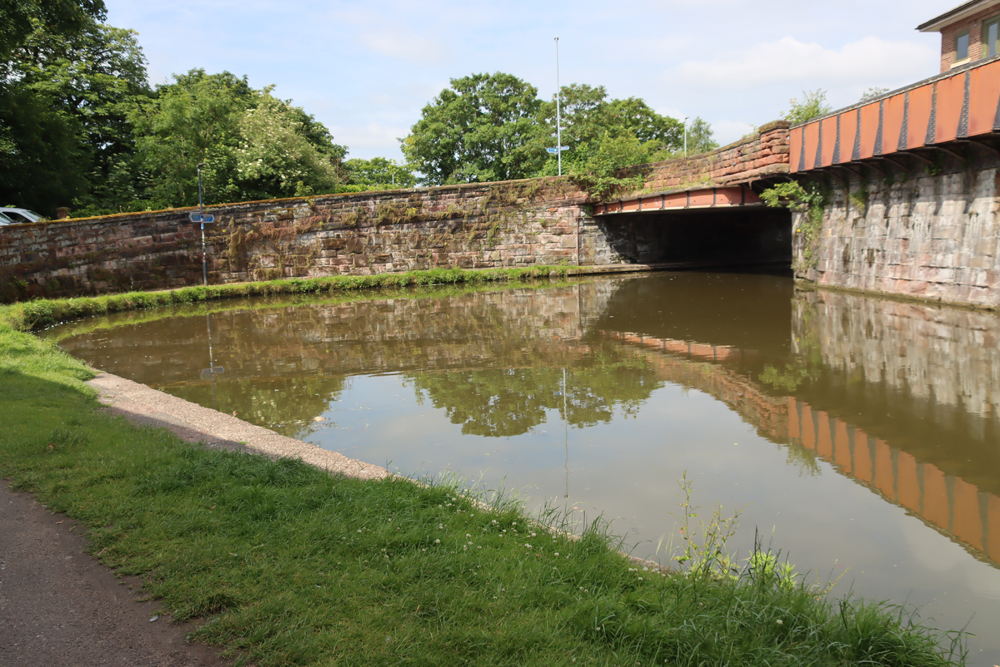
Looking back at the turning basin at the entrance to Tower Wharf Basin
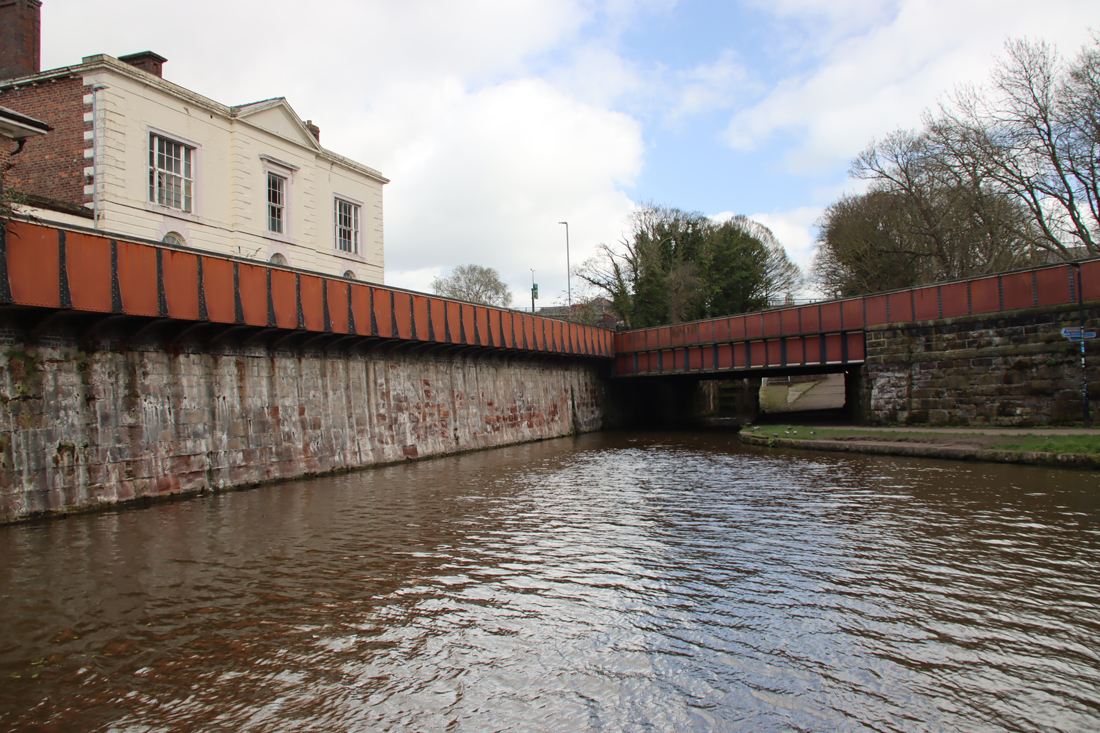
The other end of the basin, leading to the locks

The other end of the basin, leading to the locks

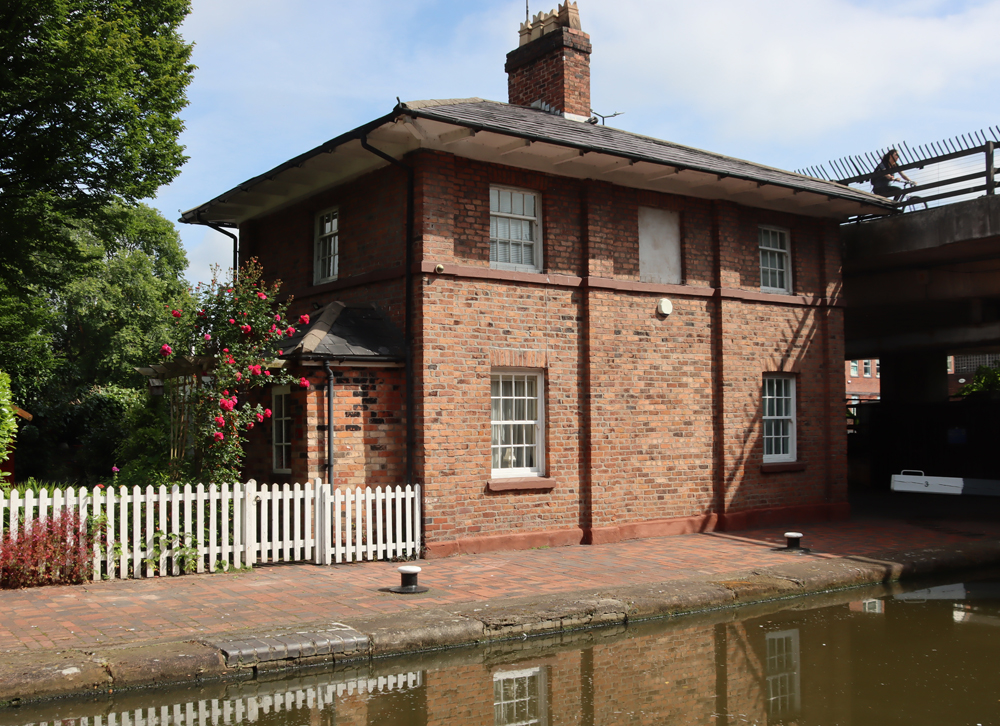
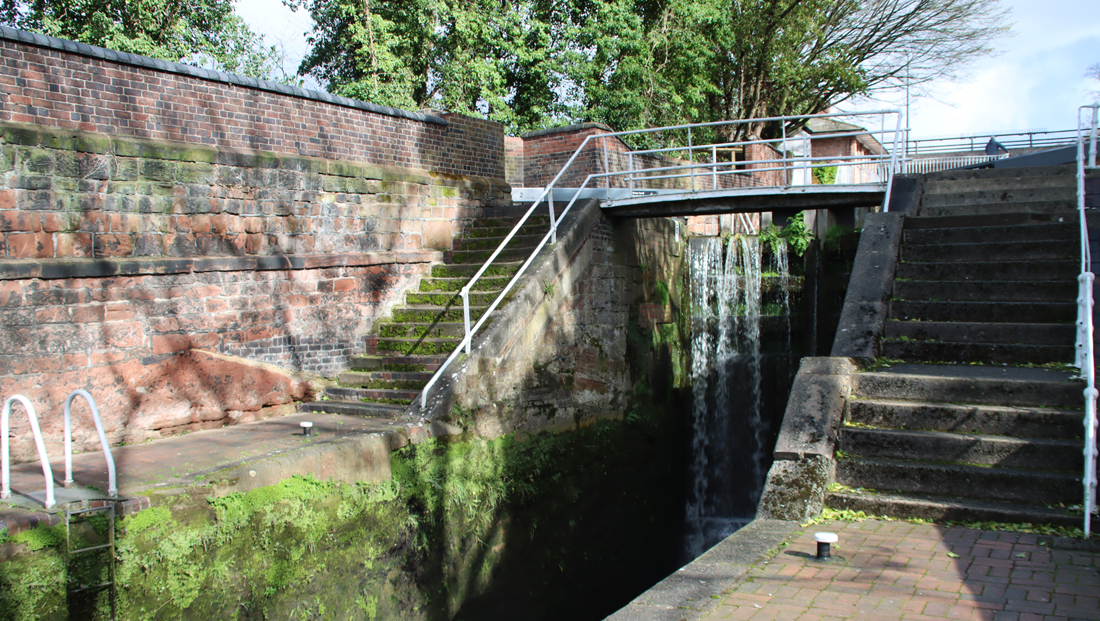
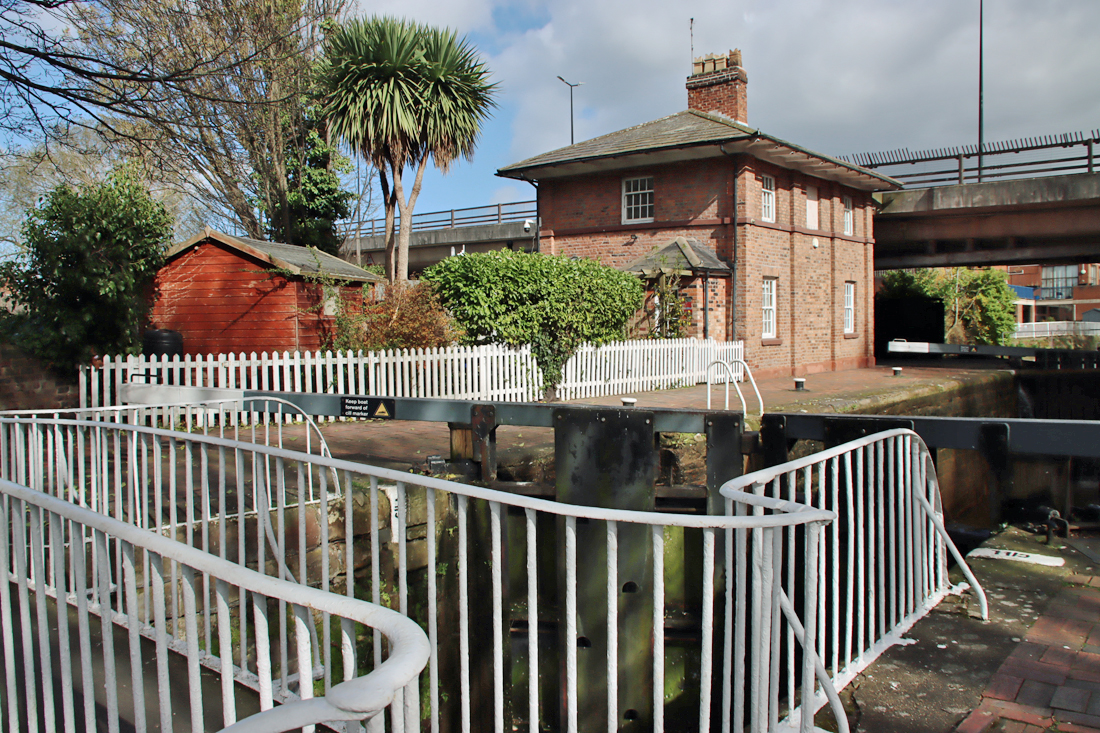
Before the Ellesmere Canal Company introduced the Wirral Branch, there used to five locks that went all the way up to the Dee Basin, which has now largely been filled in and used for modern housing.  When the new branch was added, the bottom two locks were demolished and the canal diverted north.  The three remaining locks are still fully functional today and allow vessels to navigate a 33ft (10m) drop/rise.  At the top of the locks is a square house with a prominently overhanging roof eave, again one of Telford’s designs.  At this point today the canal runs under the St Martin’s Way ring road before carrying on along the foot of the northern stretch of the city walls.
After passing a row of modern house on your left you will notice two bridges overhead, the first tiny.  This is the somewhat battered-looking Grade II listed Bridge of Sighs, probably built in the 18th century. Although it is named after the magnificent one in Venice, the similarity lies in the fact that both were used for carrying prisoners, in this case from the prison to the chapel in the Bluecoast School to receive their last rites prior to execution.  The next bridge carries Upper Northgate Street over the canal, some sdfdsf ft / sdfsd m above.
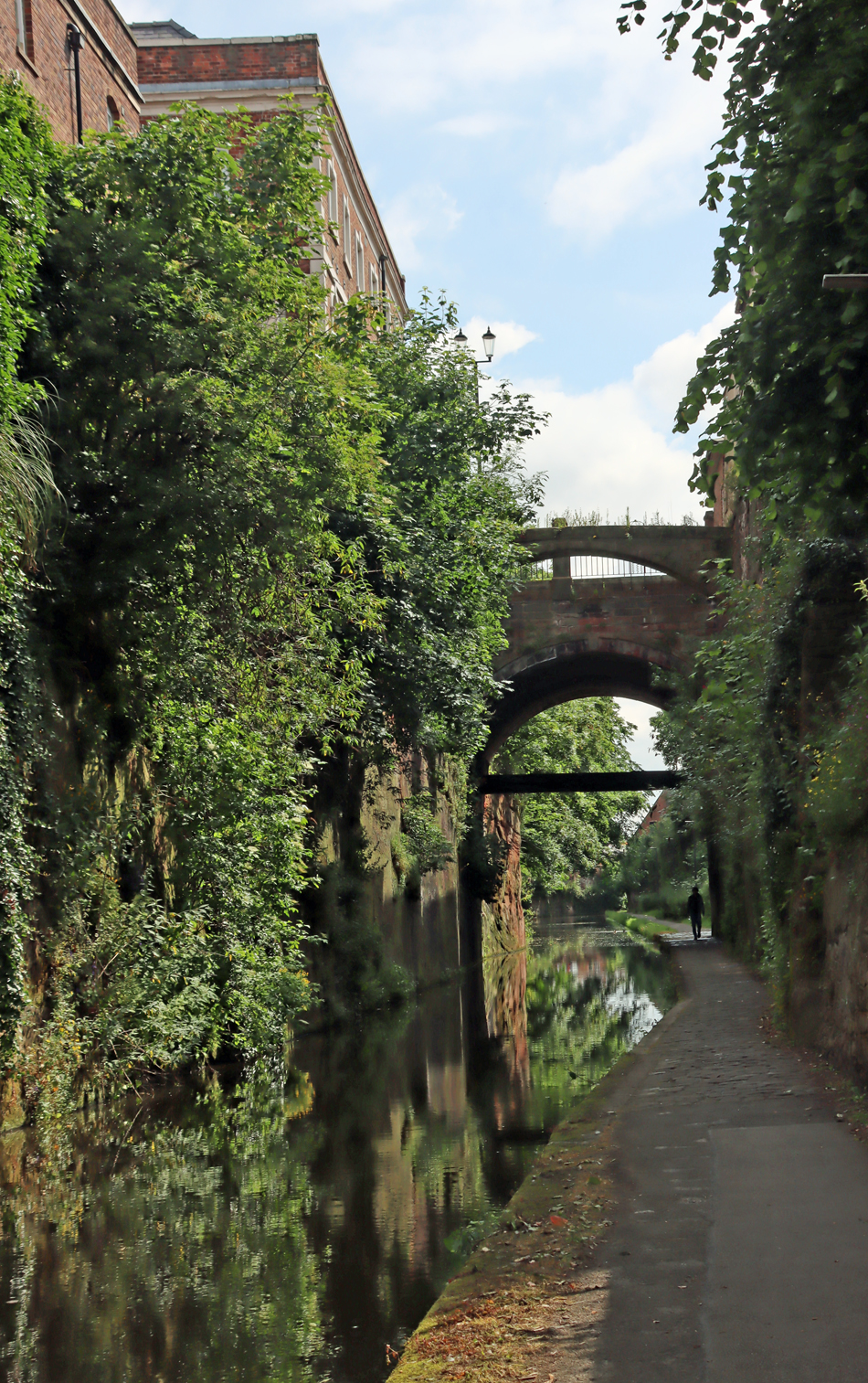
 

The tiny Bridge of Sighs over the canal, followed by the Northgate Street bridge
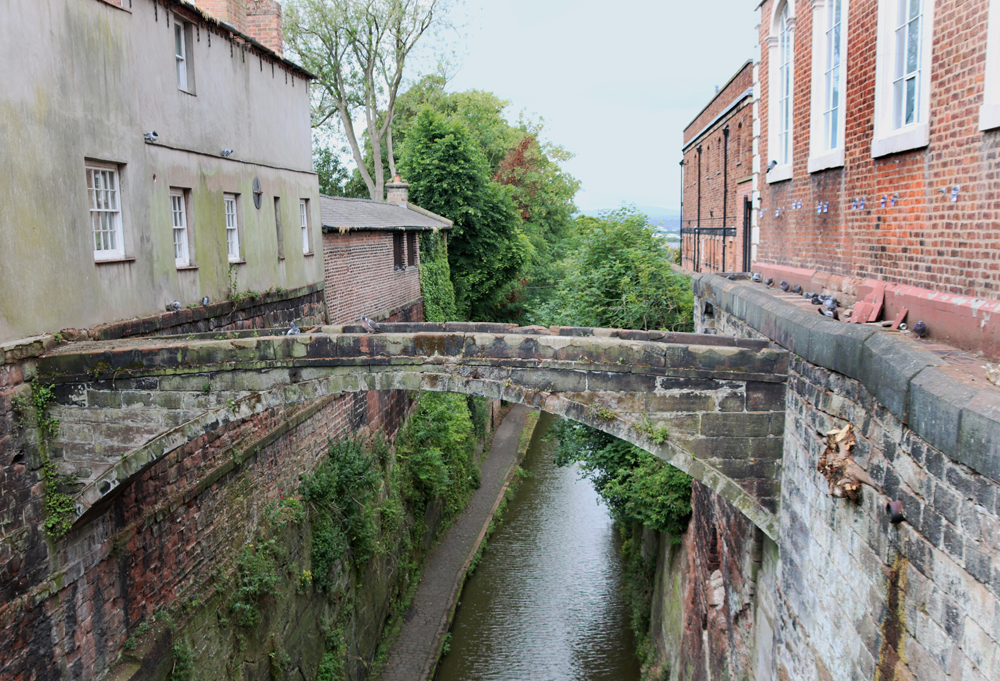
Bridge of Sighs

Bridge of Sighs, Chester, shown from Upper Northgate Street
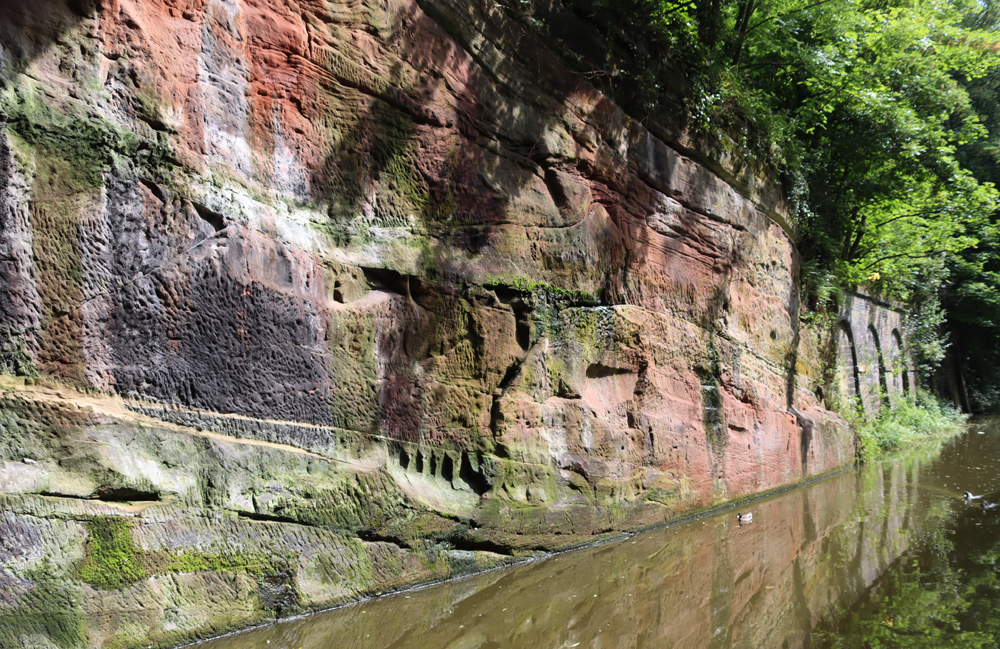
Triassic sandstone through which the canal was cut

Triassic sandstone through which the canal was cut, allegedly following the line of a Roman ditch
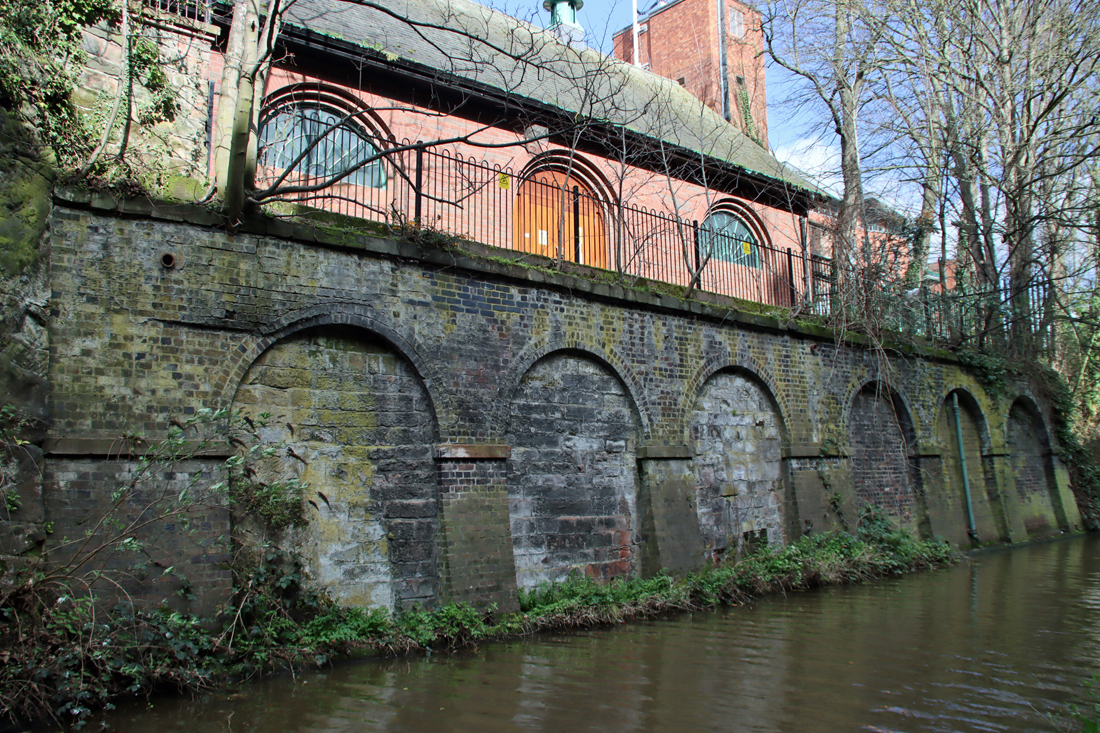
The canal passes the King Charles Tower as the canal and city walls part company, the canal briefly heading southeast and then due east.
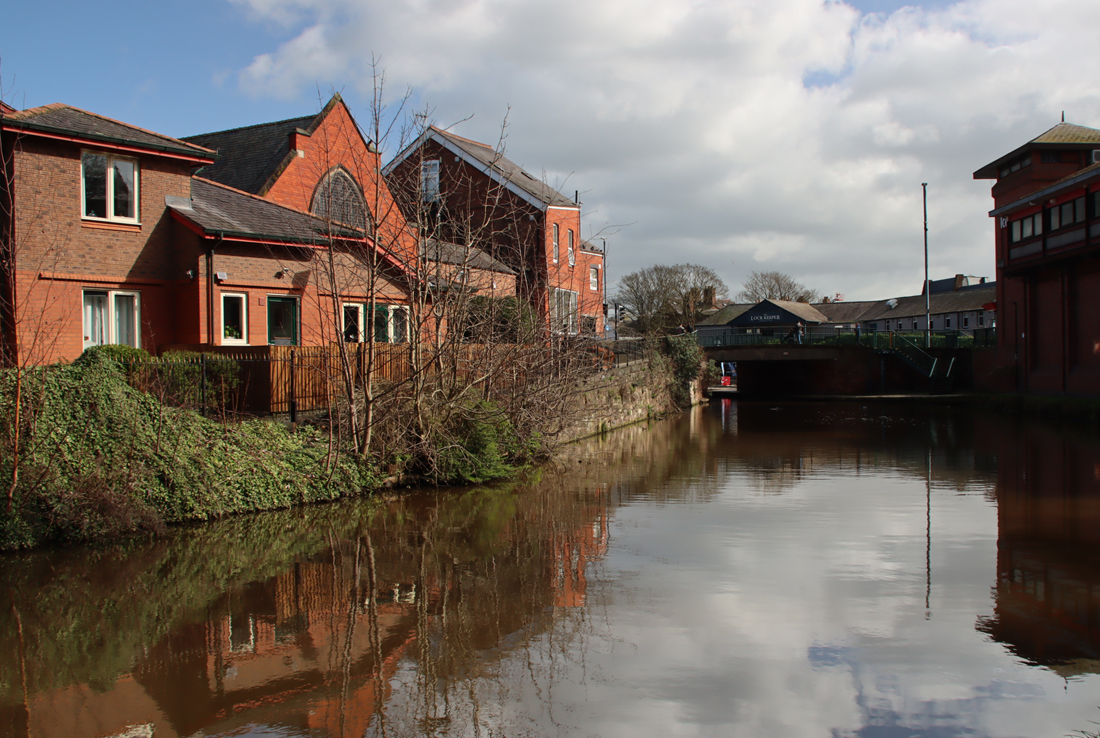
 

The back of the Memorial Chapel next to Abakhan on Gorse Stacks

The back of the Penri Chapel next to Abakhan on Gorse Stacks. The Iceland on Frodsham Street is on the right
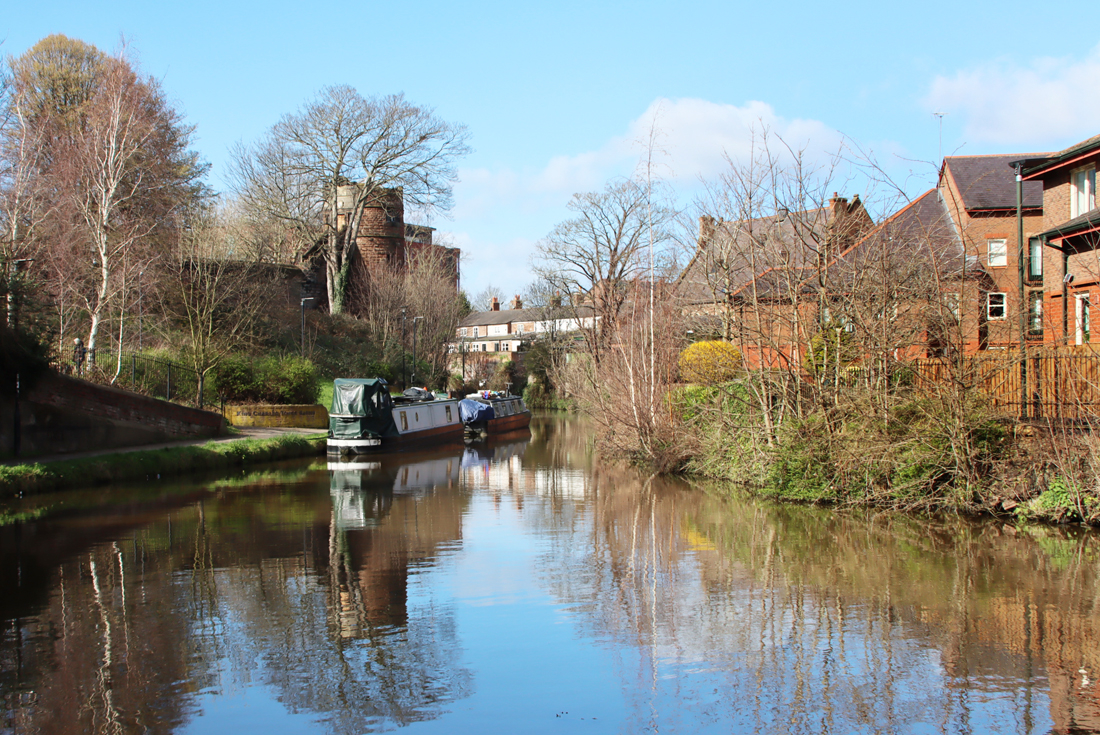
Looking back to the city walls and the King Charles tower above the canal. It is at this point on the reverse leg of the walk that there is a path up to the walls, which leads back to the Little Roodee car park.
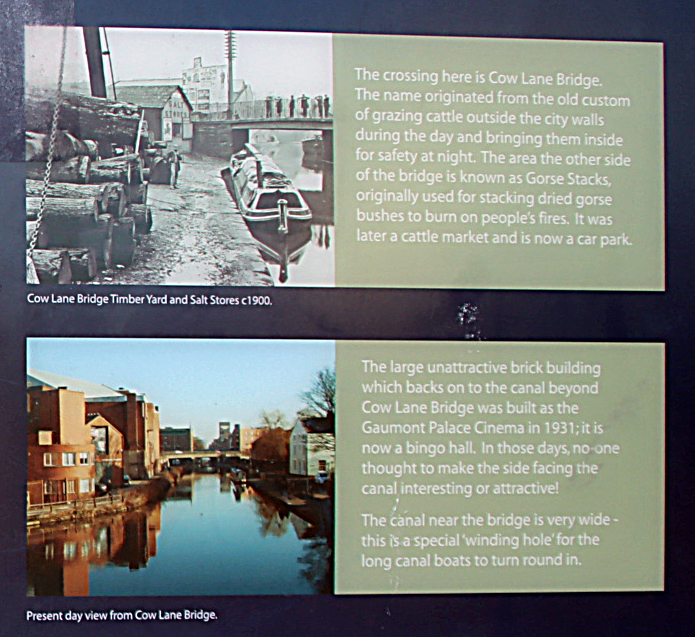
 

Signage at Cow Lane Bridge
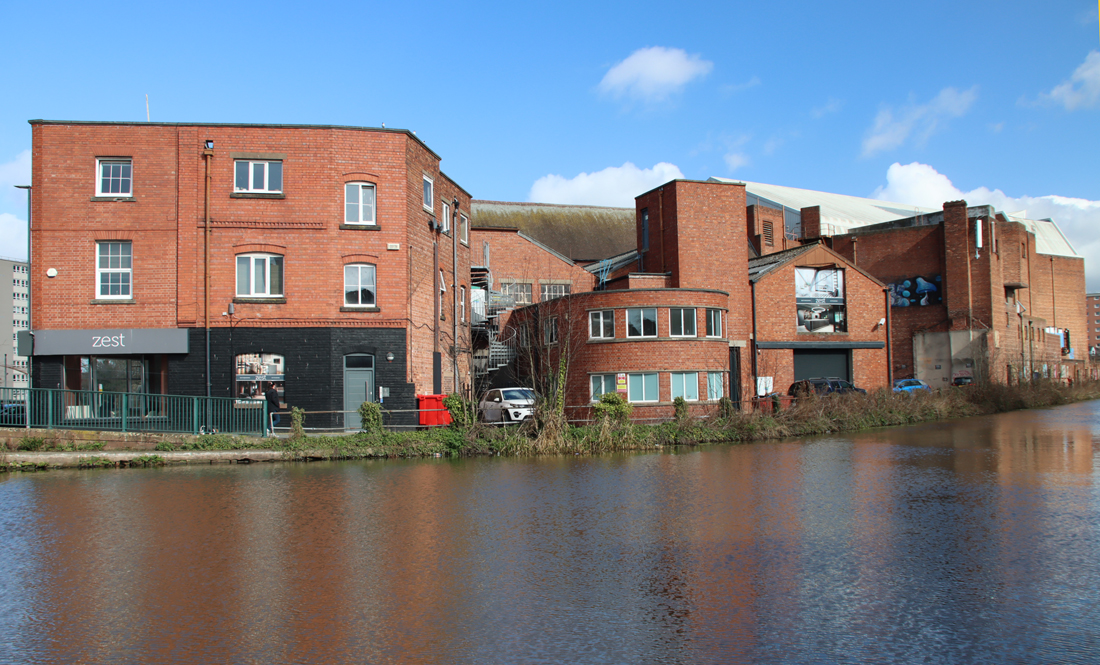


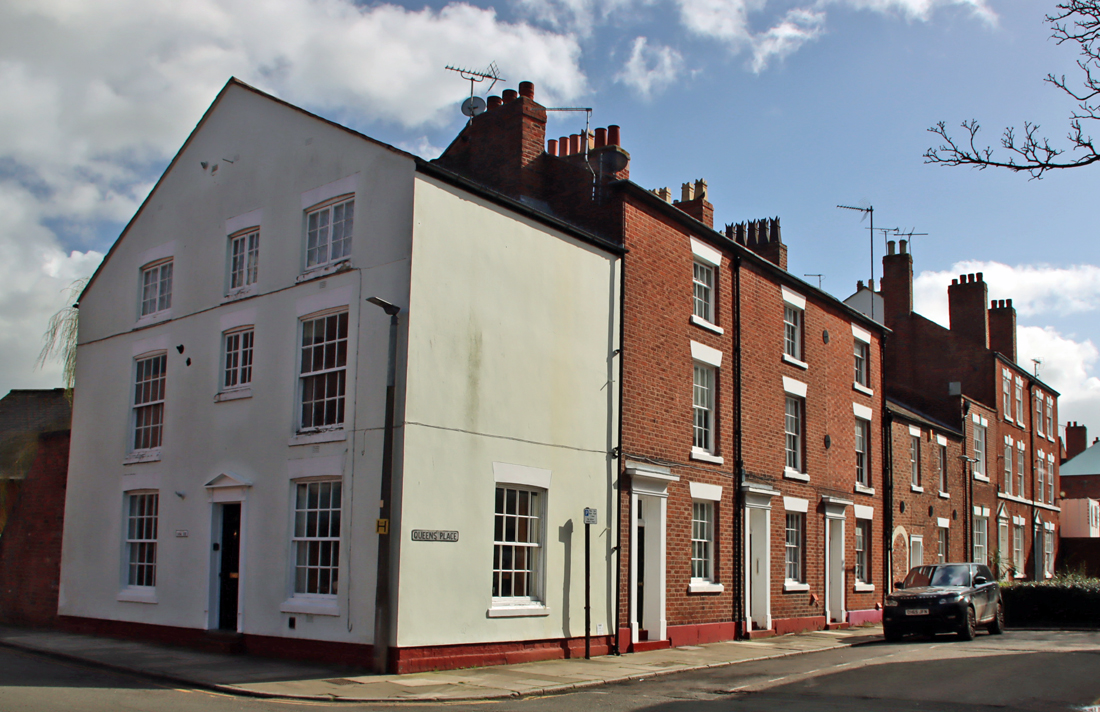
Queen's Place

Queen’s Place


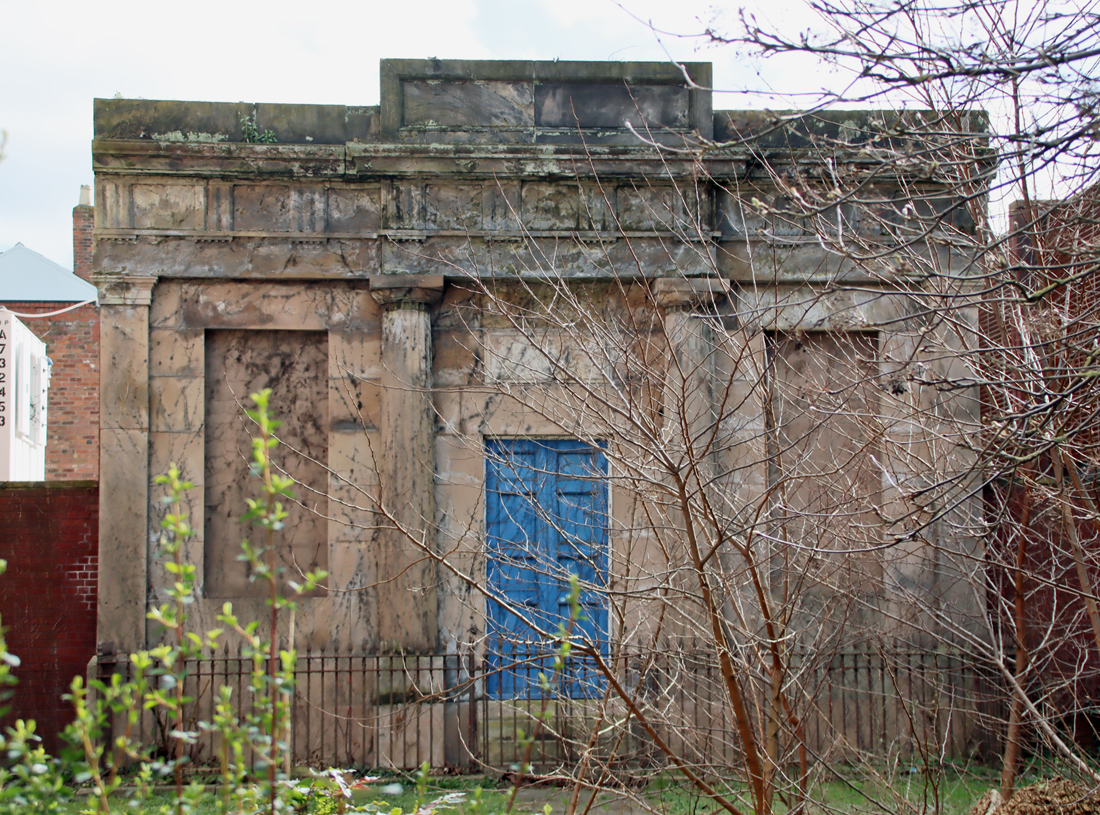
This unexpected structure at the end of Queen’s Place is just a facade with no building behind it, the remnant of a lecture hall once attached to the 1777 Independent Chapel
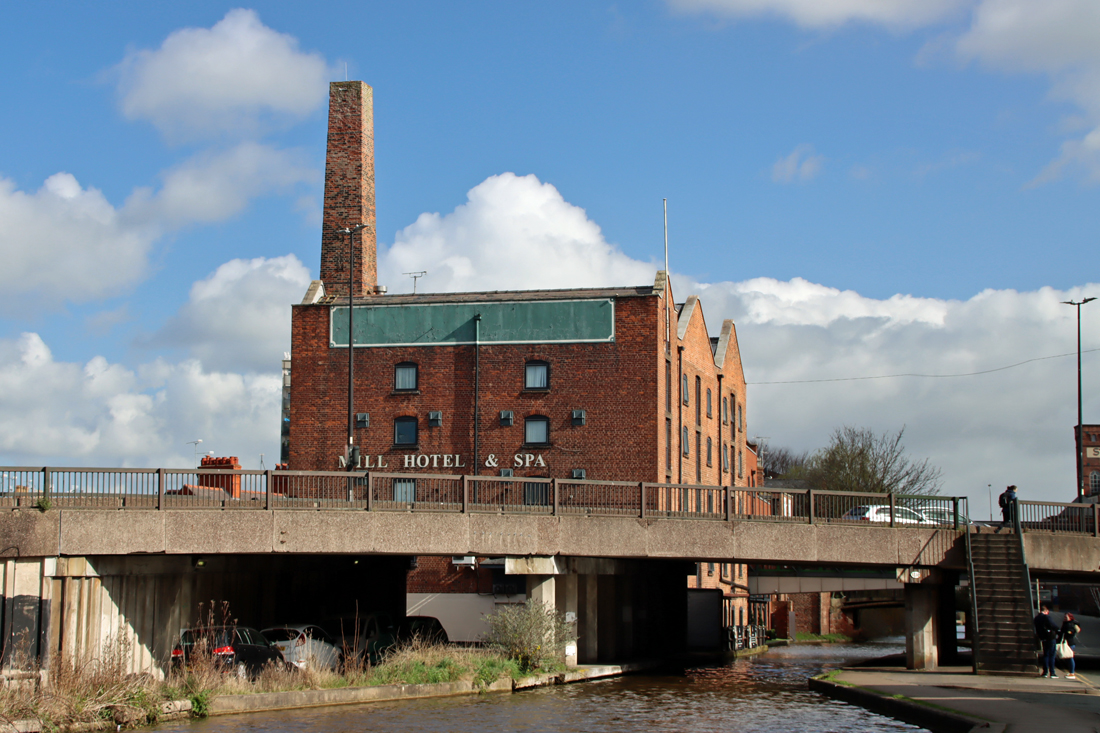
The original Griffiths Corn Mill is now the Mill Hotel and Spa
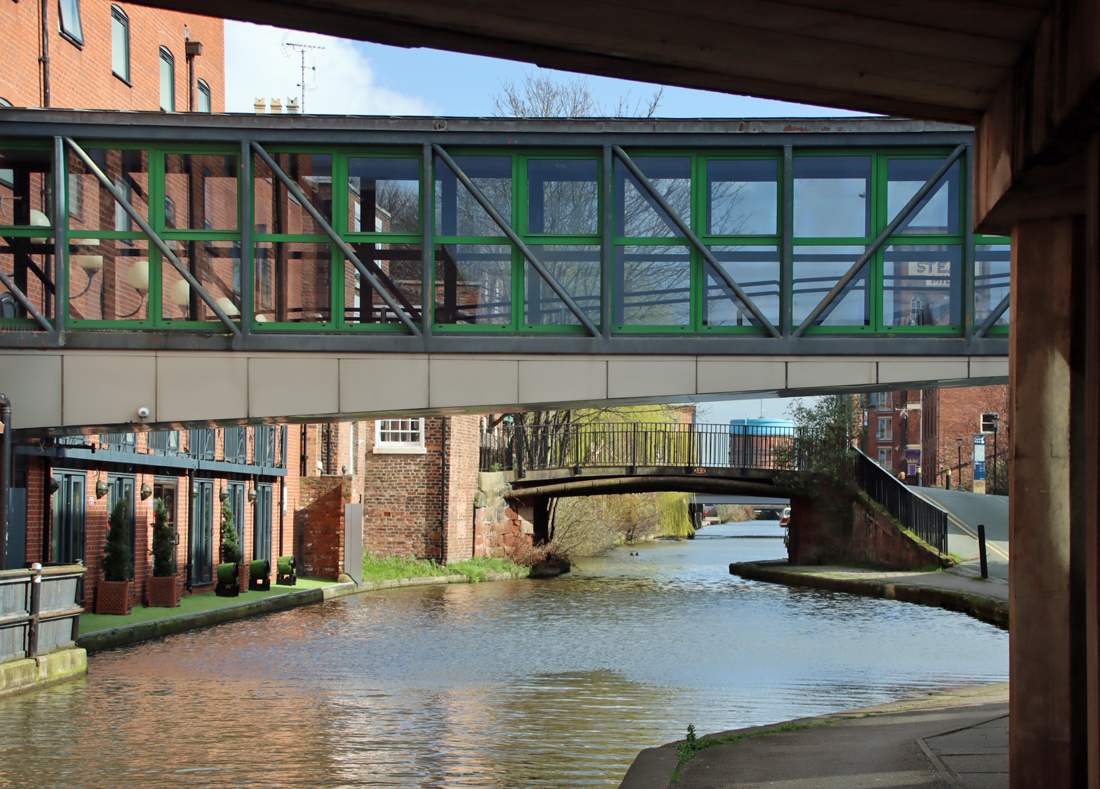
The original Griffiths Corn Mill is now the Mill Hotel and Spa

Footbridge

Covered footbridge linking two parts of the hotel, with the Hoole water tower beyond
 

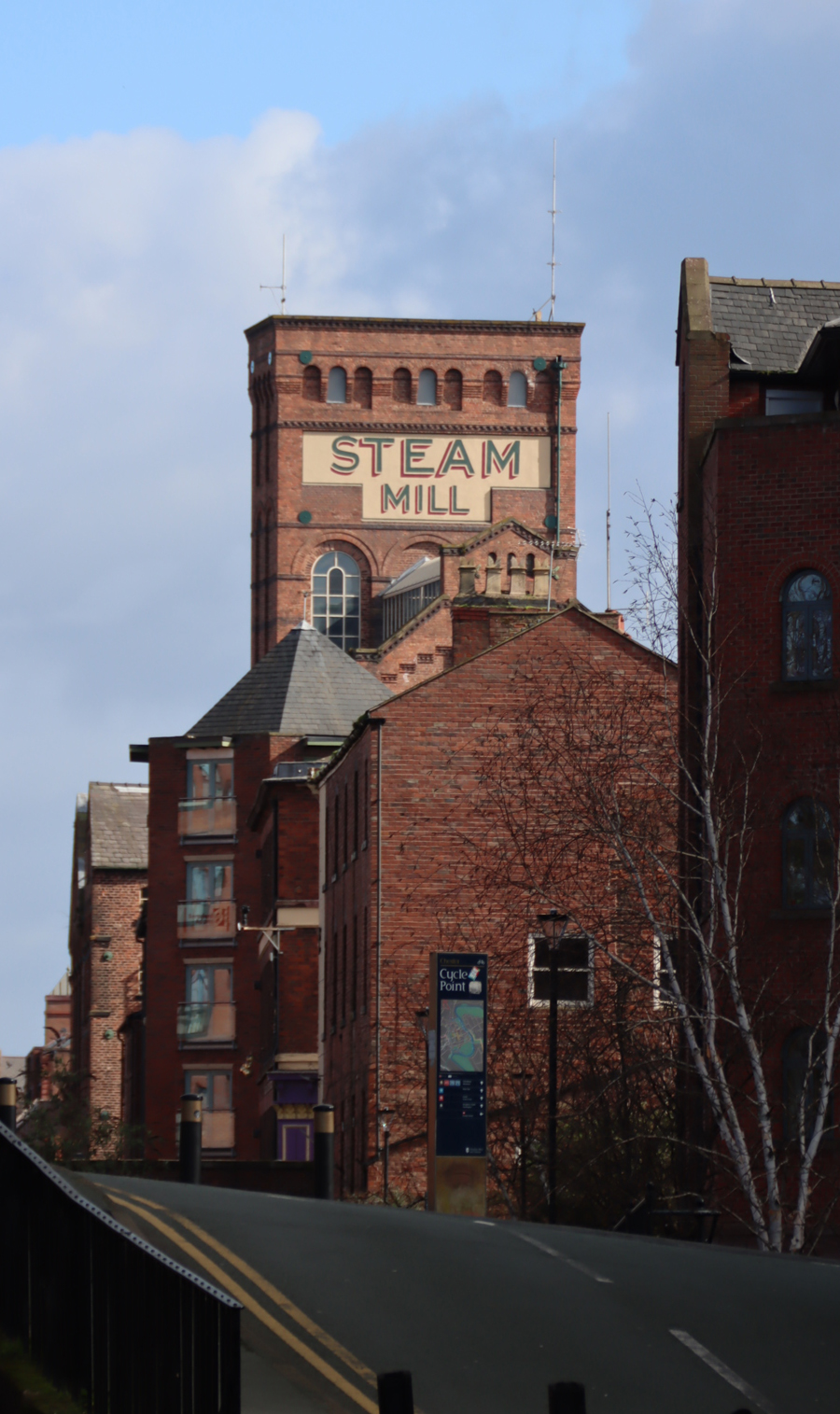
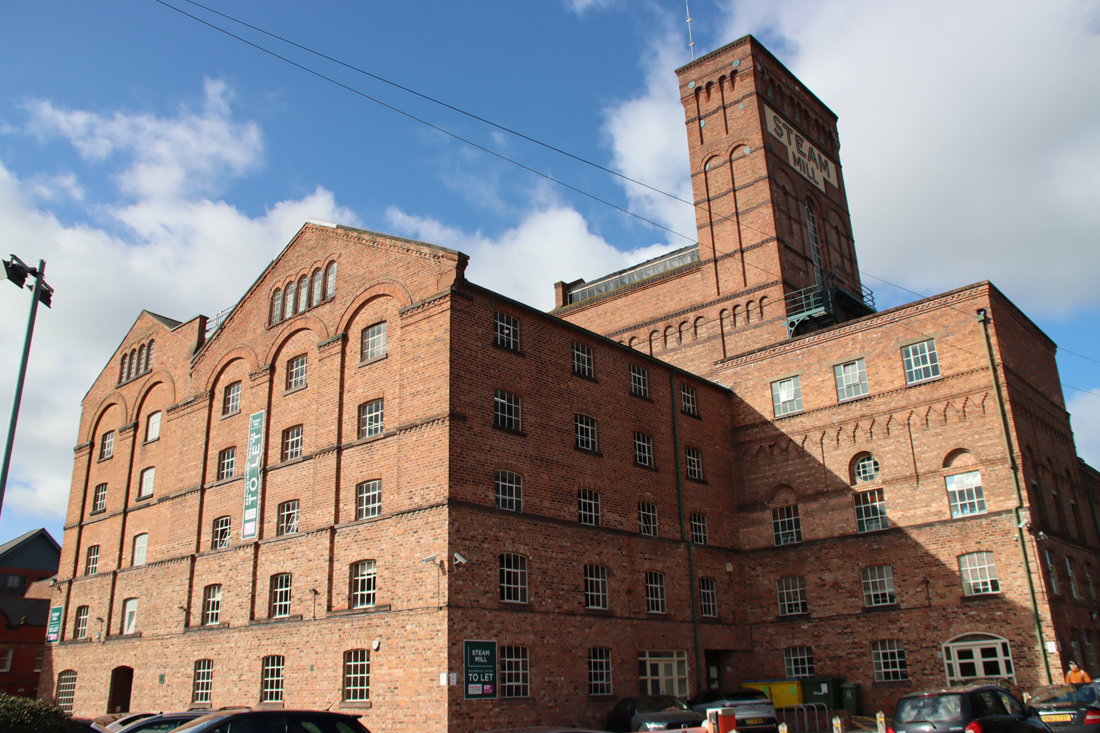
Steam Mill

The Grade II-listed Steam Mill building was built in 1786 as one of Britain’s first steam-powered flour mills. The listing details can be found on the Historic England website
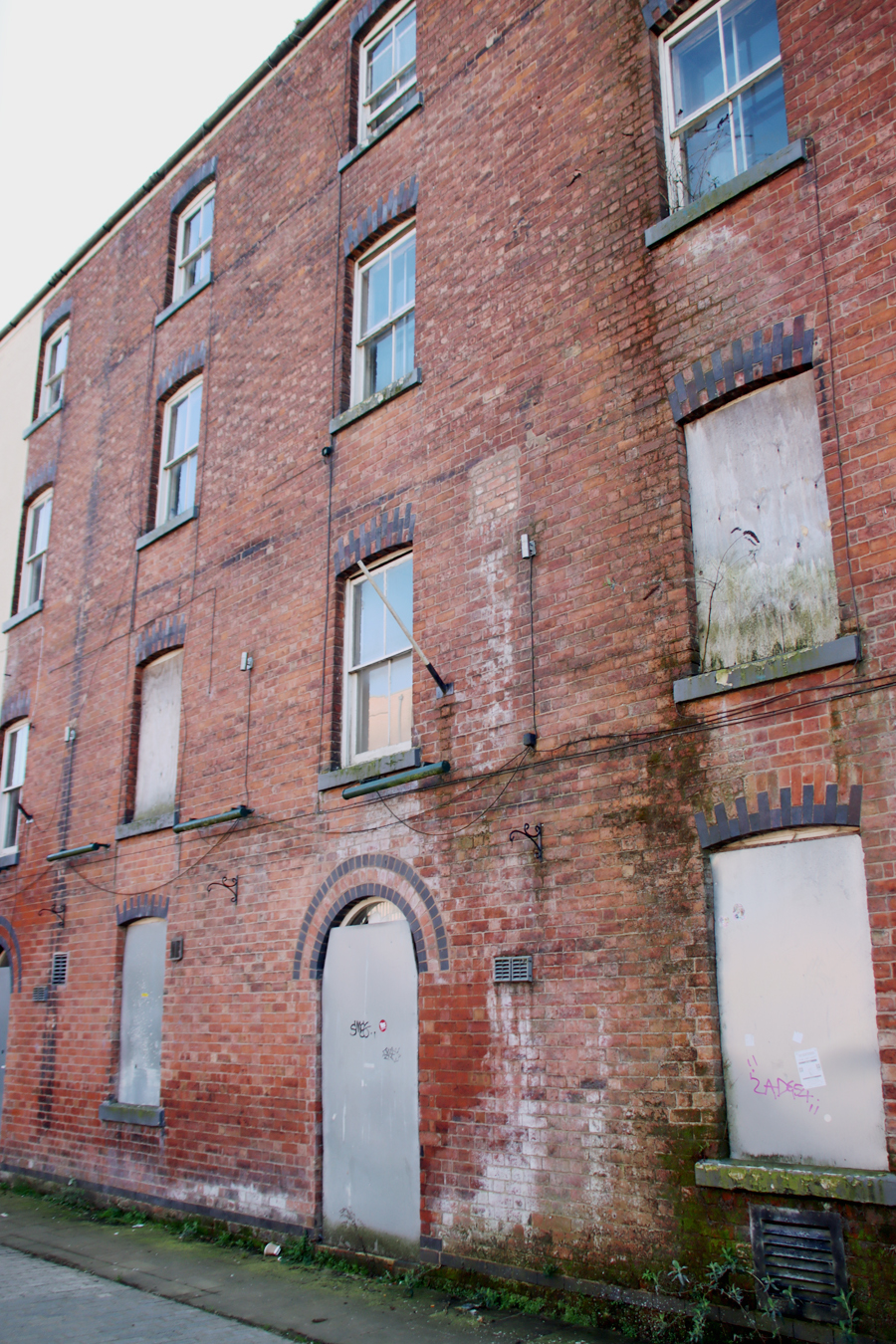
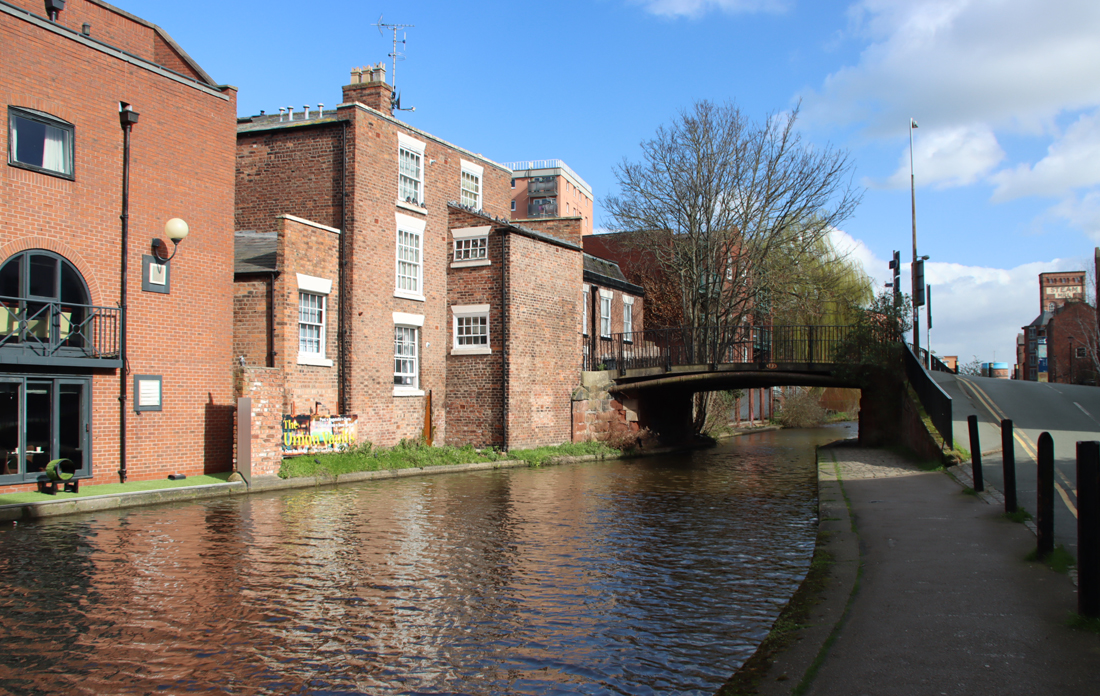
This canalside building near the Union Canal Bridge is in a very sorry state.

This was a busy area, with industrial and commercial enterprises moving in to take advantage of the proximity of the canal.  There are a number of very fine buildings to spot here, and if you follow Stuart Shuttleworth’s walk (see video below) he takes you into some of the surrounding streets to explore some of the relevant buildings behind the canal.
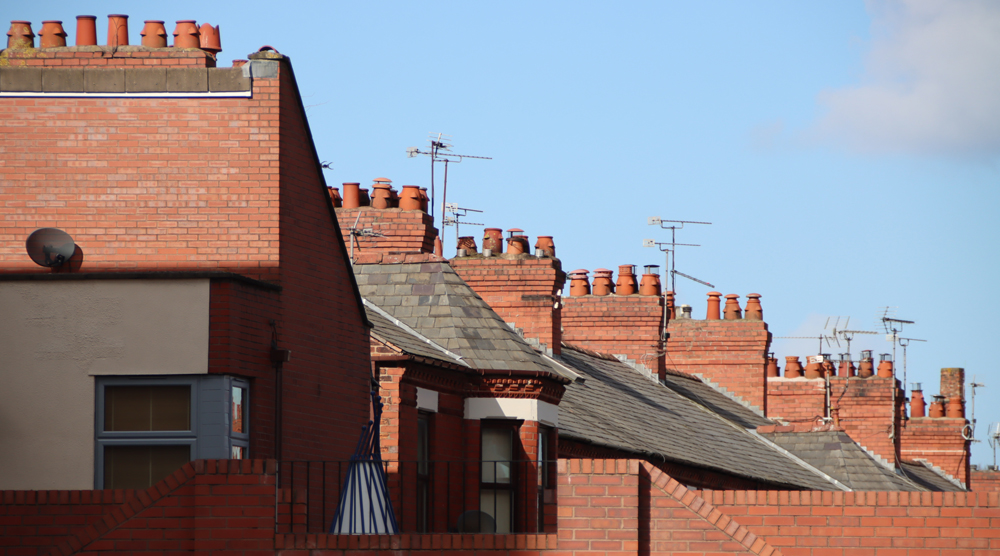
Union Canal Bridge. Details are available on the Grace’s Guide industrial history website.
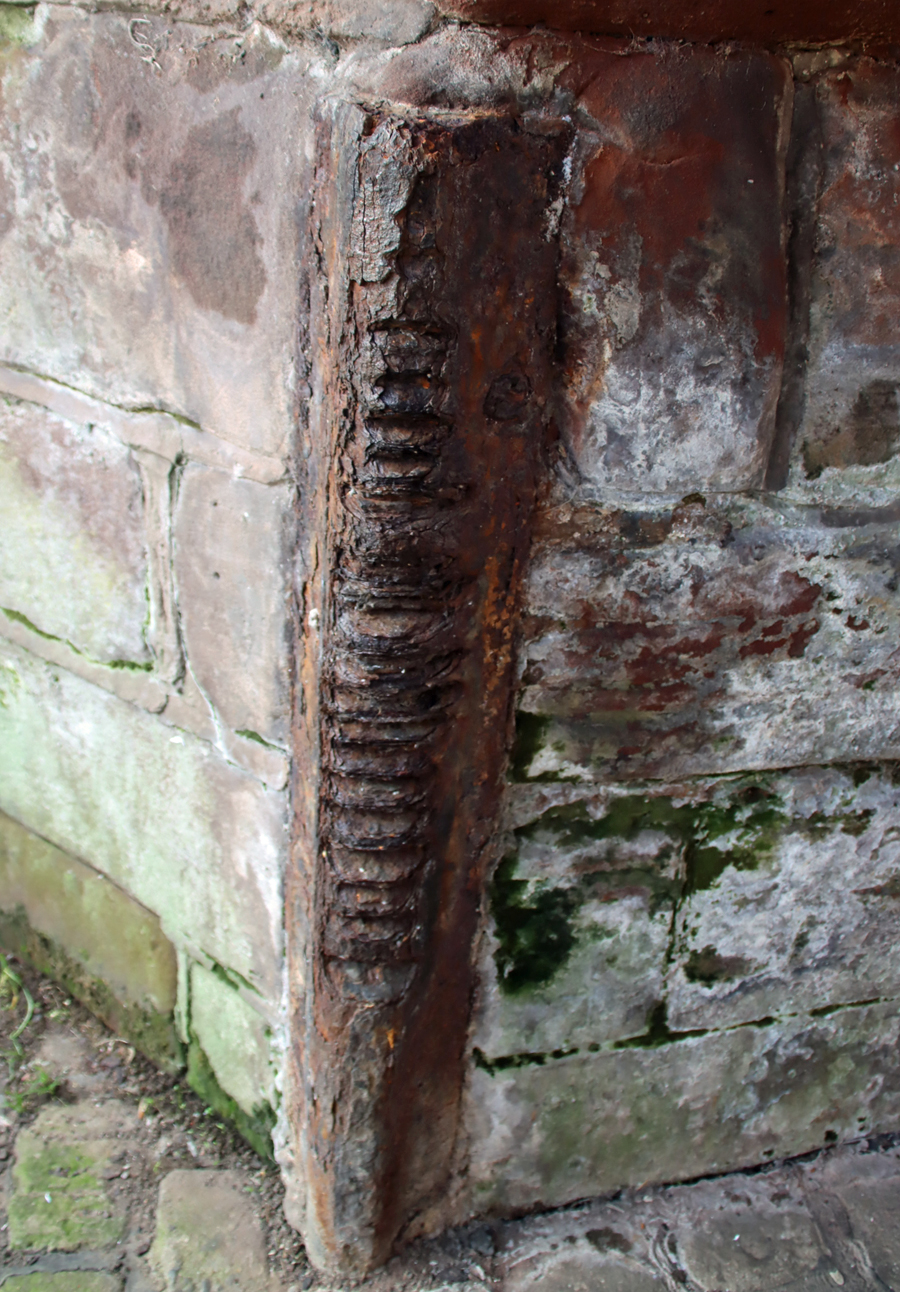
One of the protective iron uprights on the Union Bridge stonework, with rope markings from the barges pulled by horses
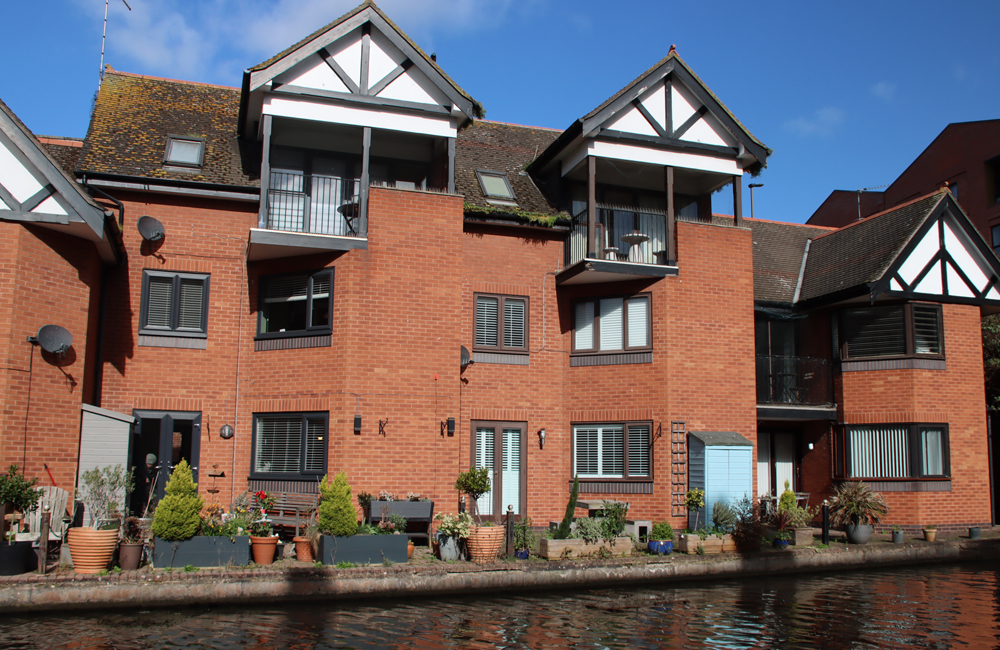
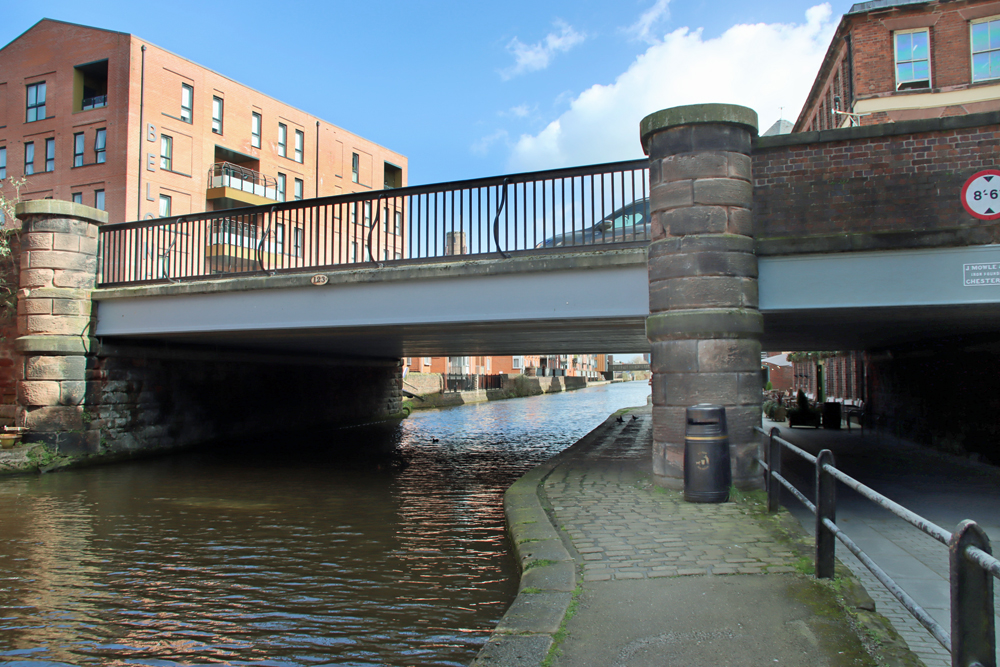
City Road Bridge (1863) by J. Mowle and Co.
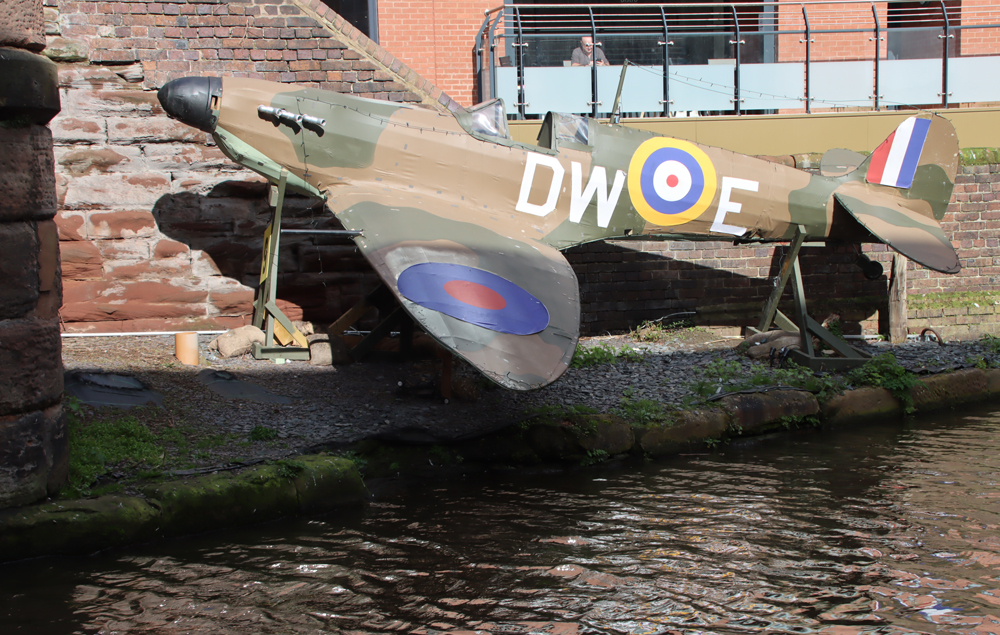
Replica Spitfire, apparently once used as a raft

Replica Spitfire, apparently once used in a raft race
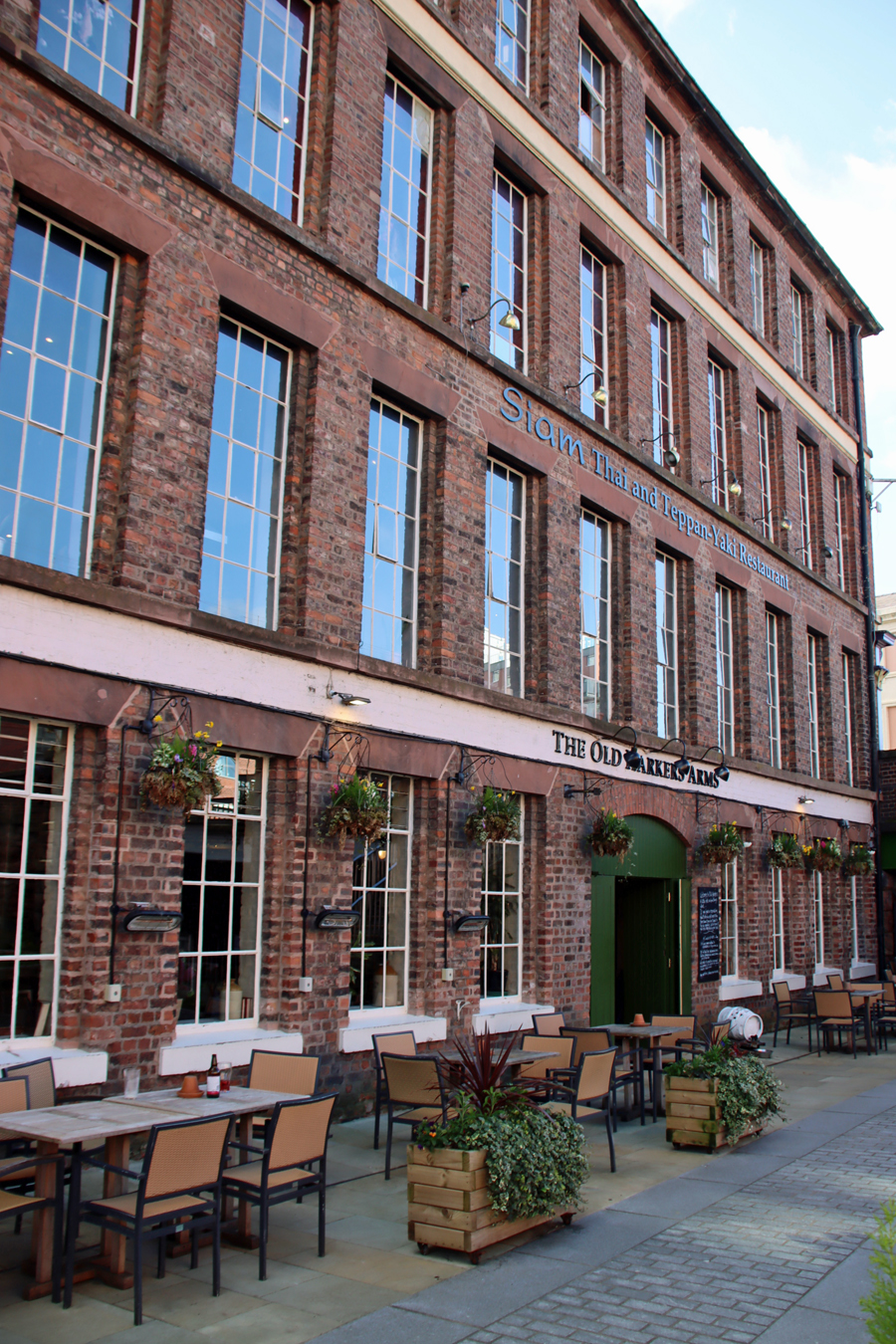
Old Harker's Arms

Looking back to the Old Harker’s Arms
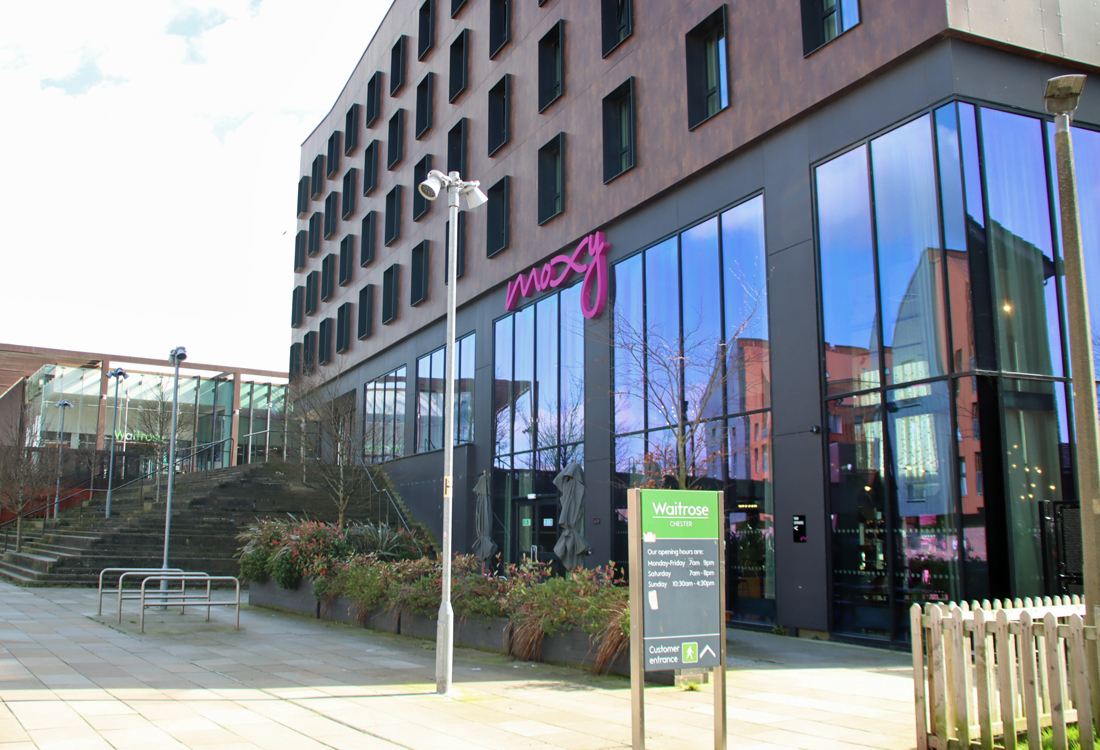
 

Moxy Hotel with Waitrose beyond
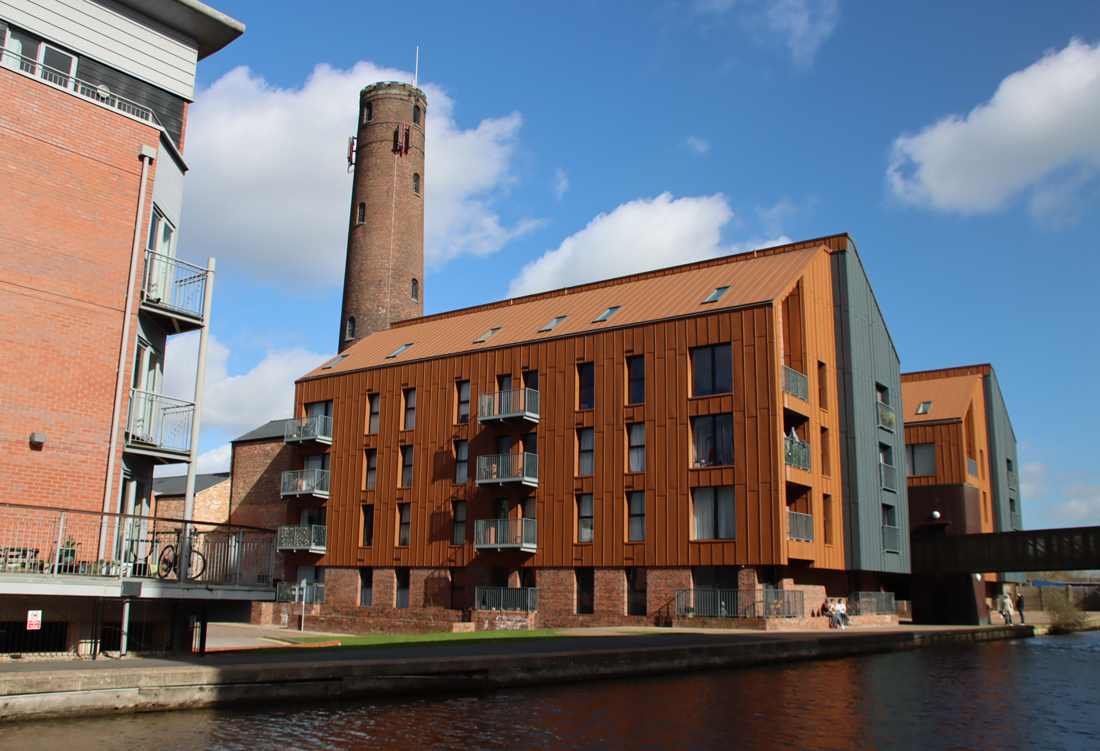
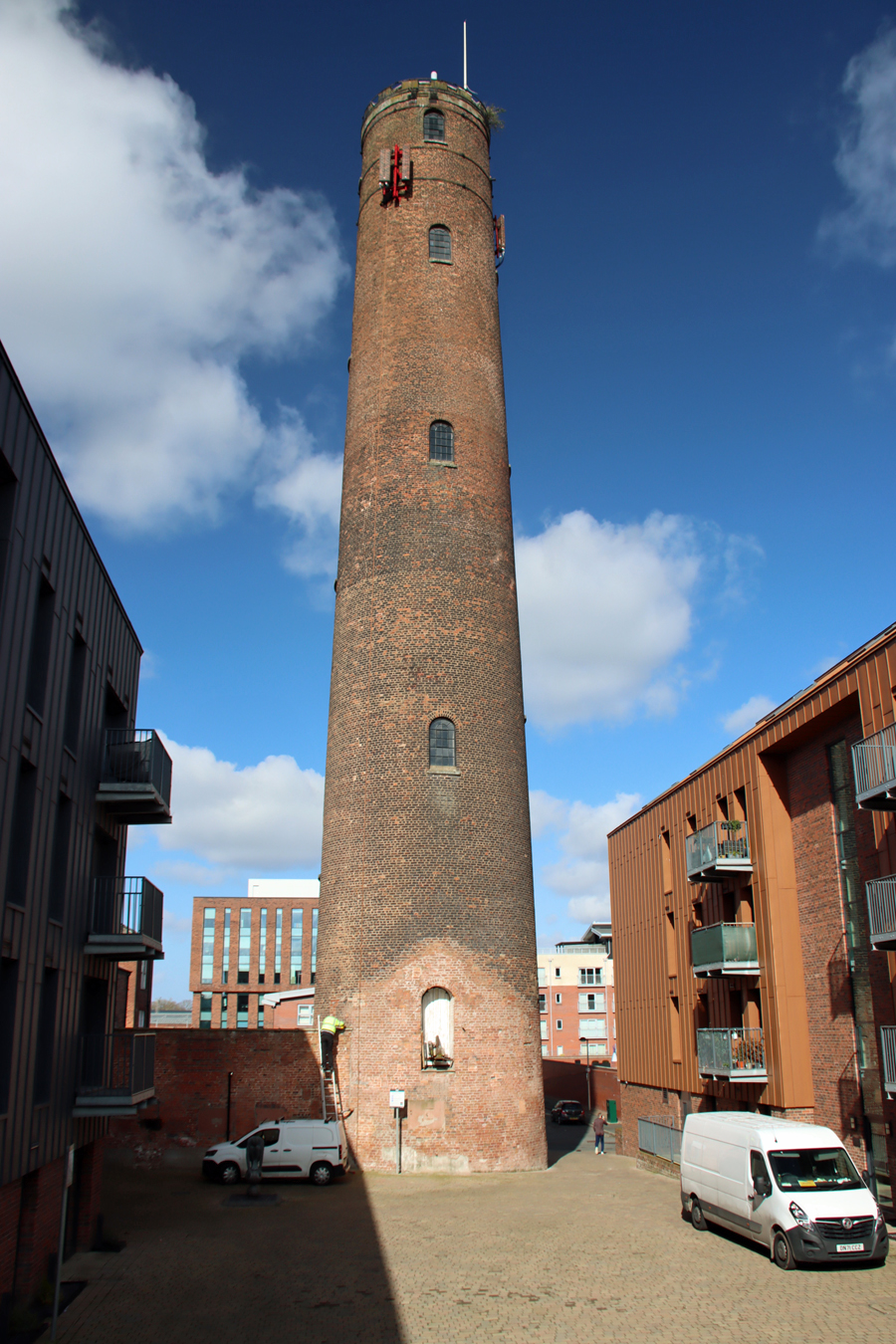
The Chester leadworks shot tower. Information about the works and the tower on the Historic England website
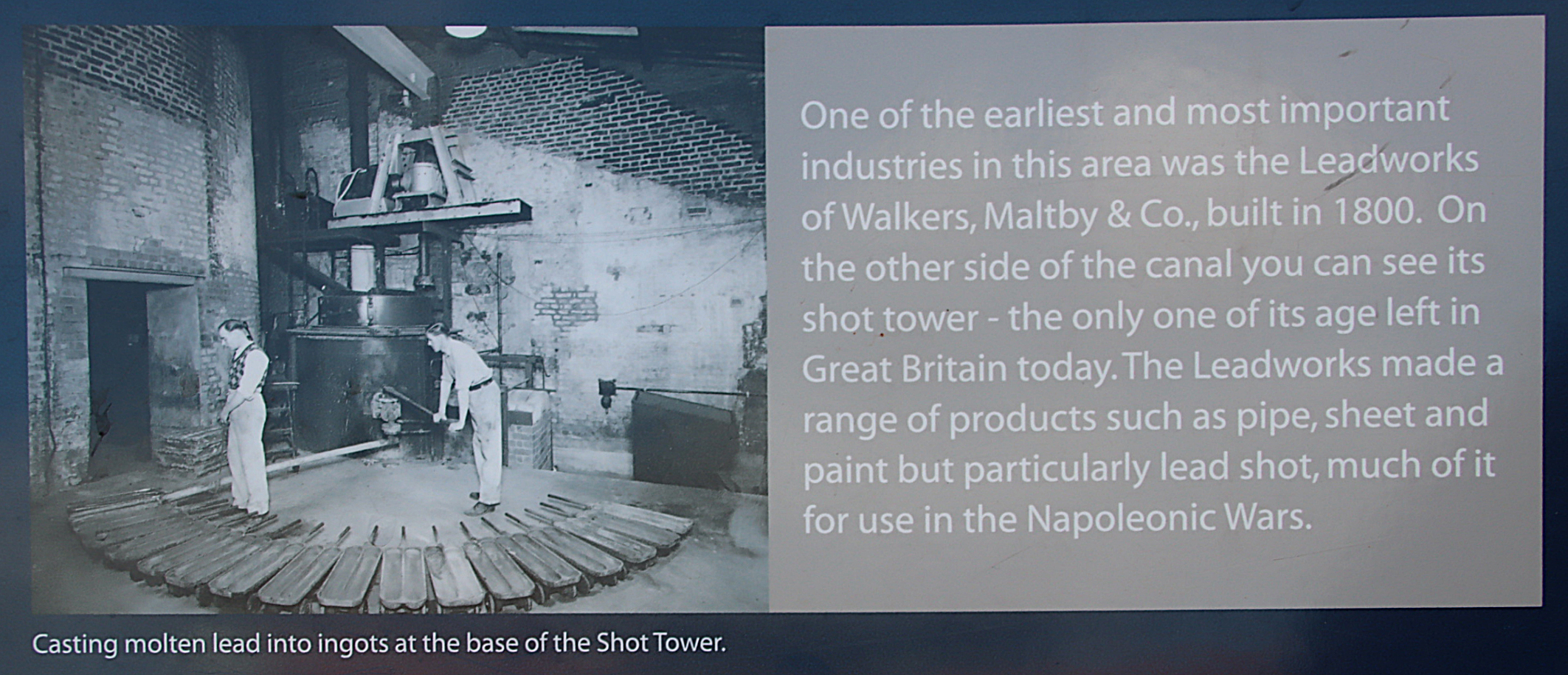
Signage along the canal showing original photograph of the leadworks
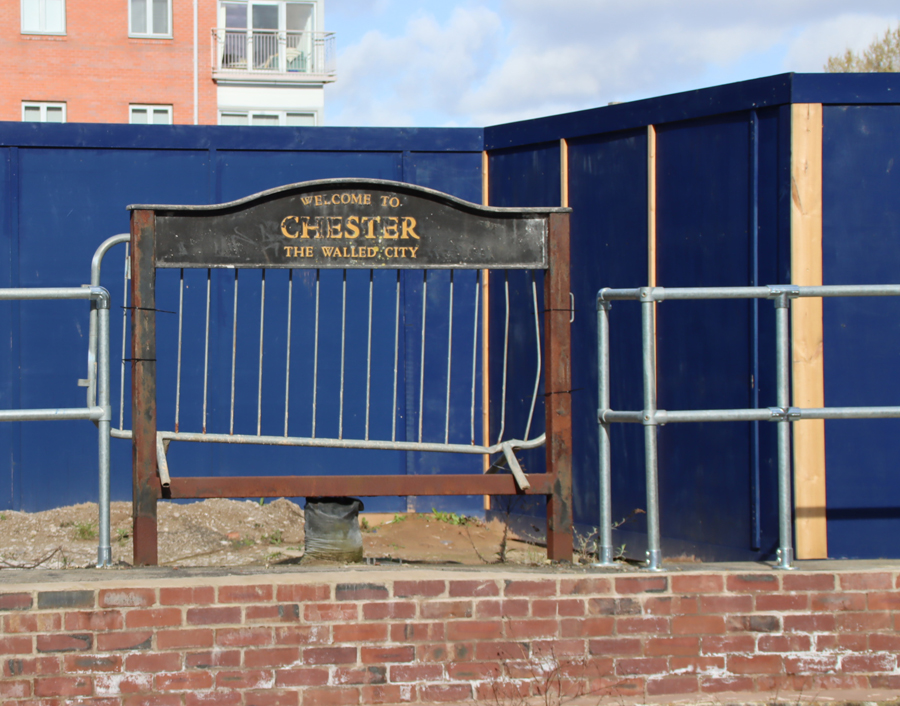
Sign on the edge of the canal, and in front of a building site for “luxury retirement apartments”
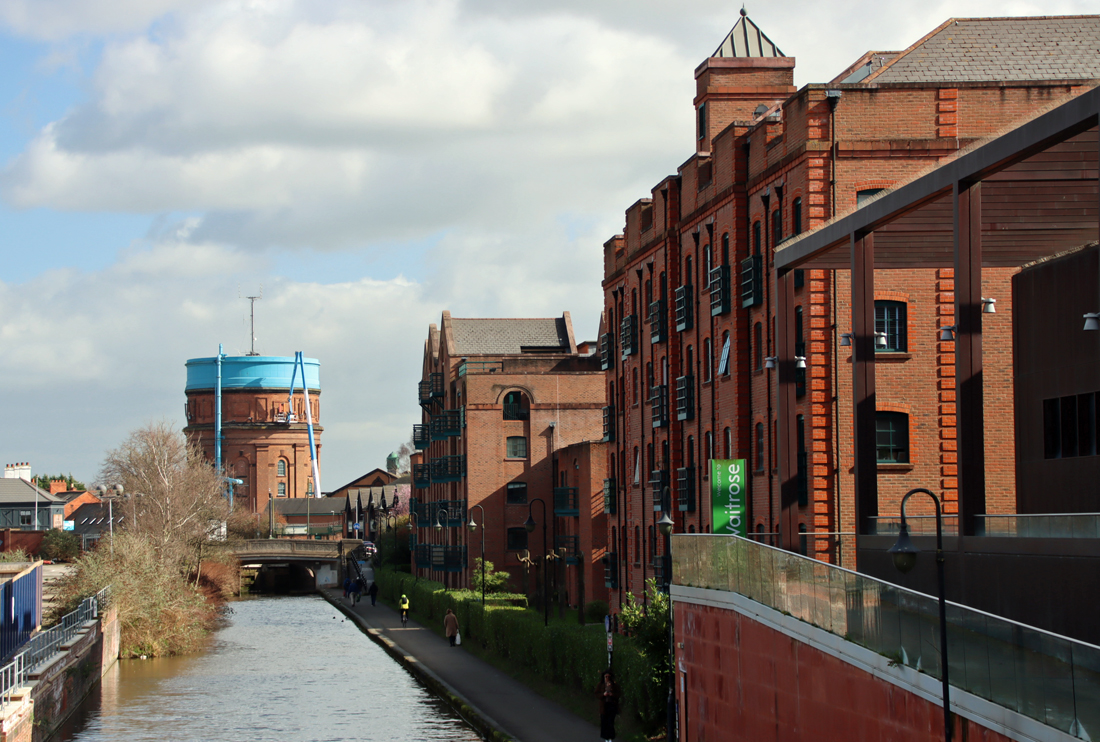
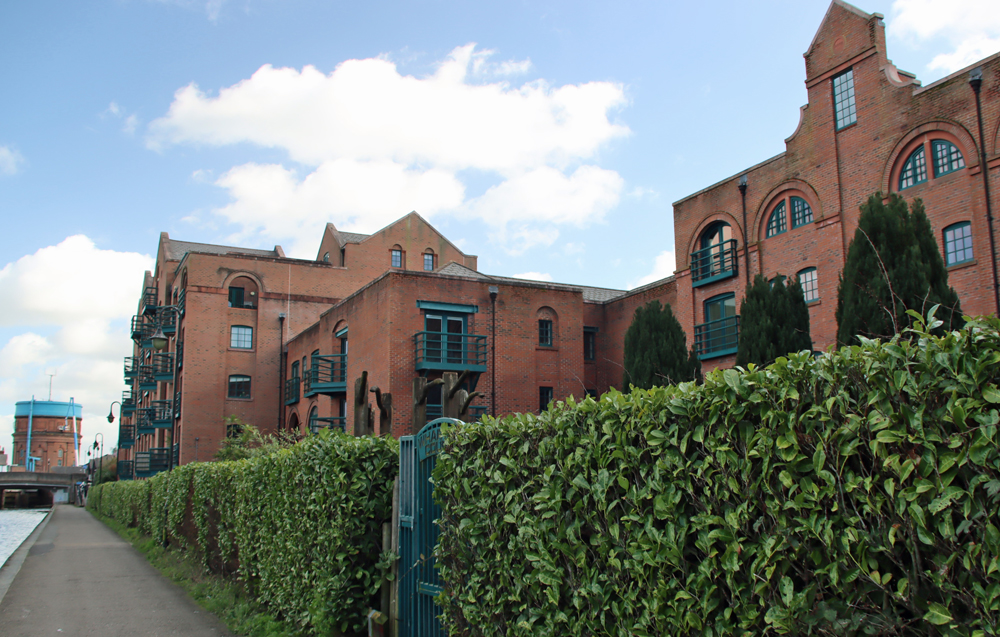
Wharton Court
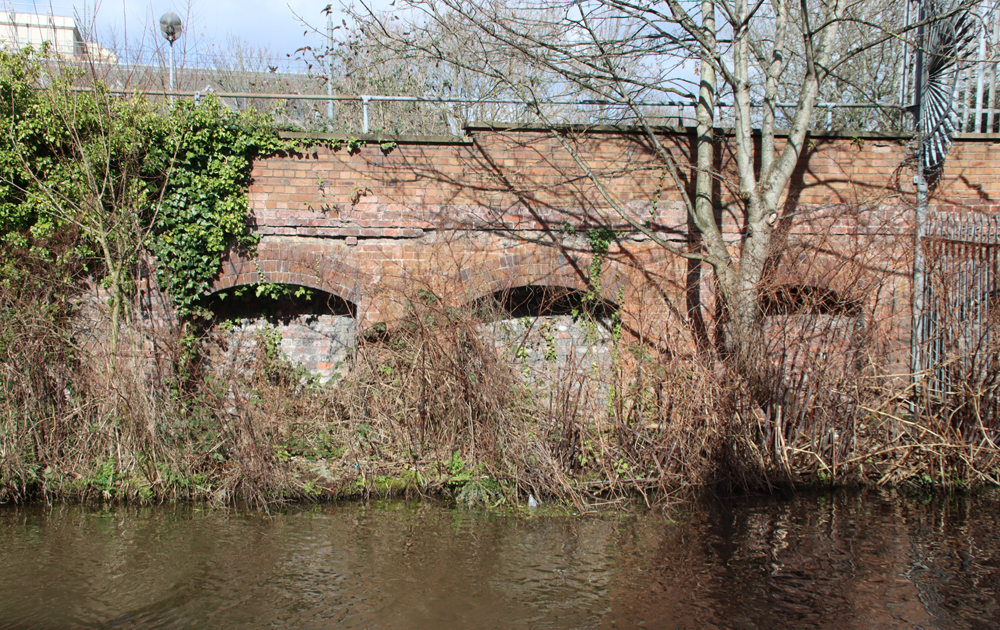
Wharton Court

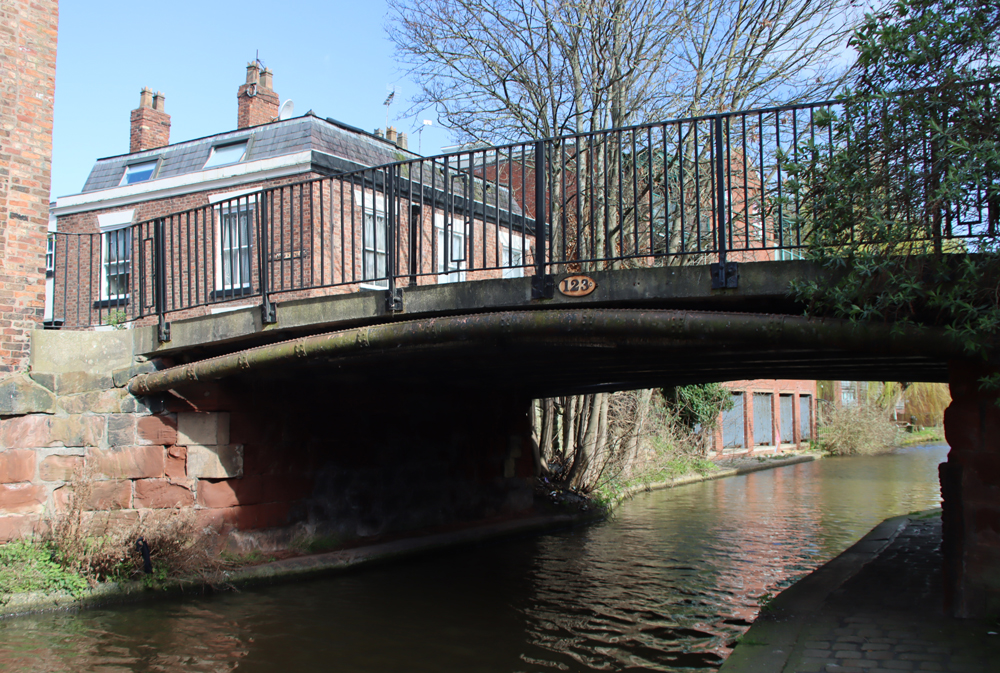
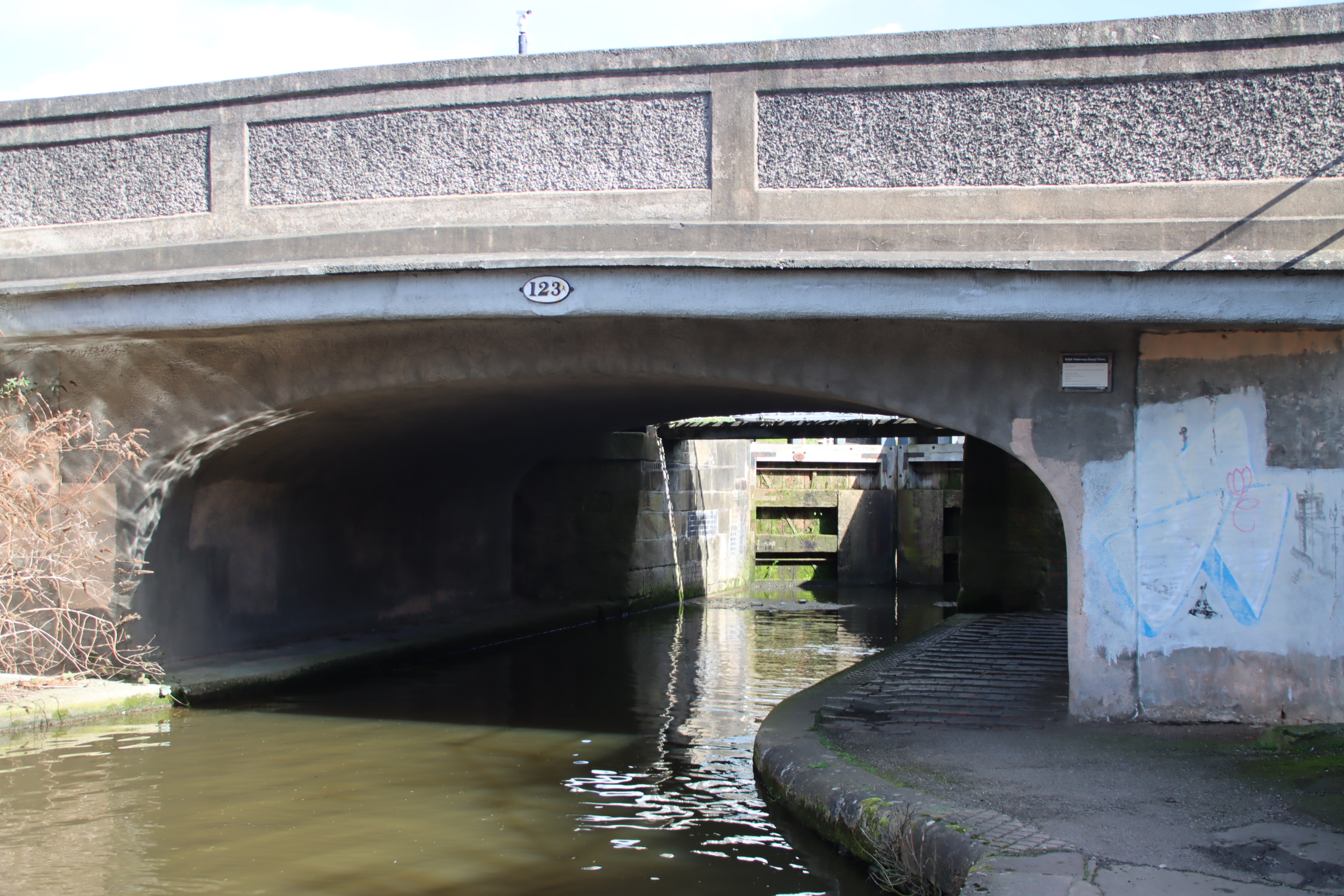
Hoole Lane Bridge, 123A
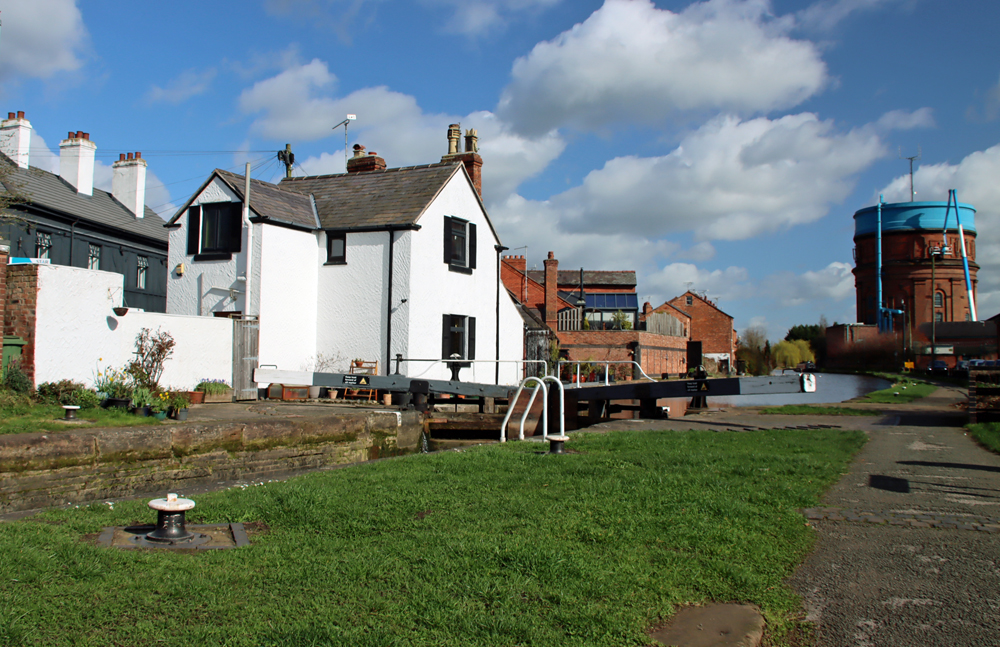
Hoole Lane Bridge, 123A

Hoole Lane Lock
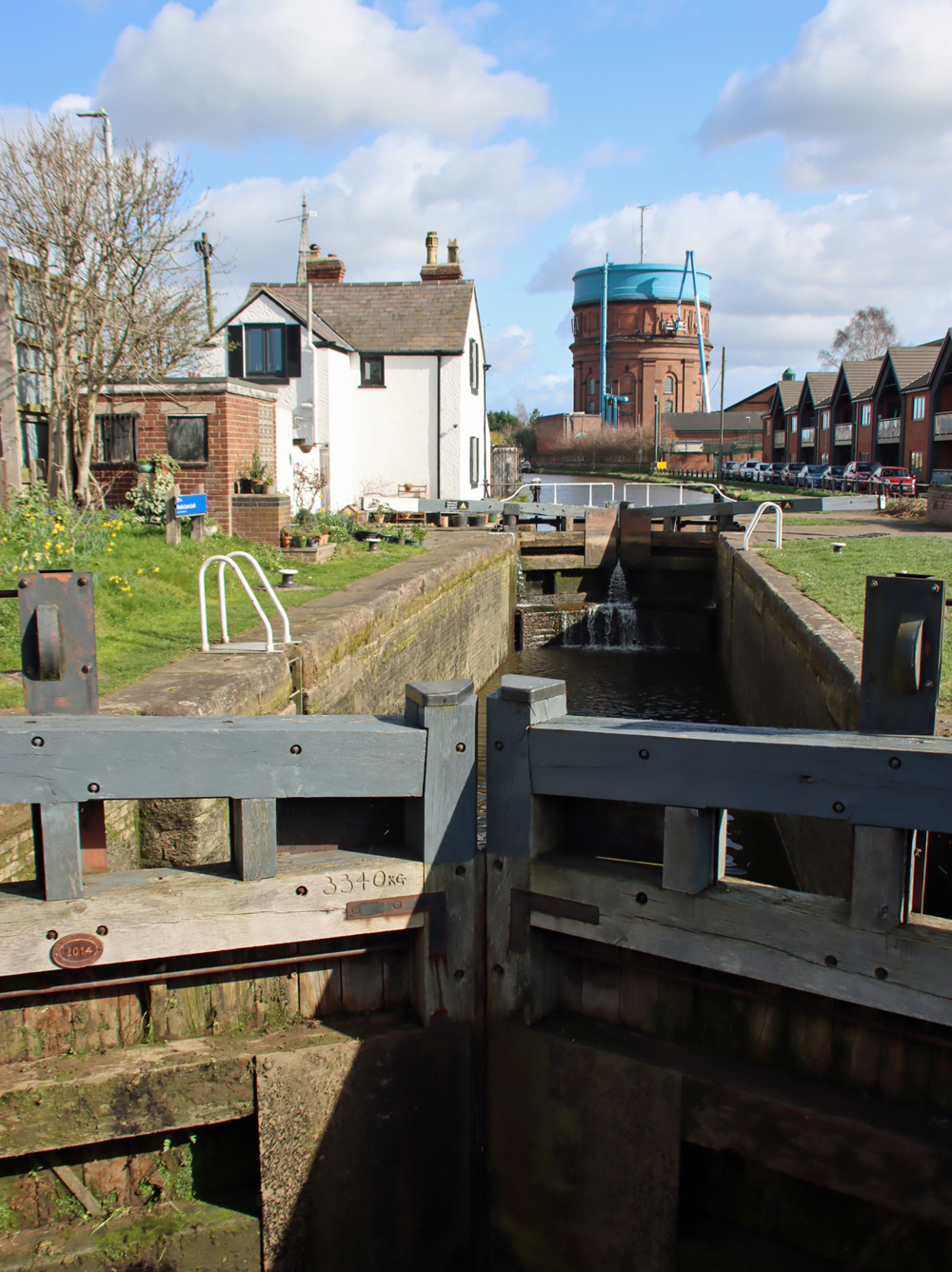
Hoole Lane Lock
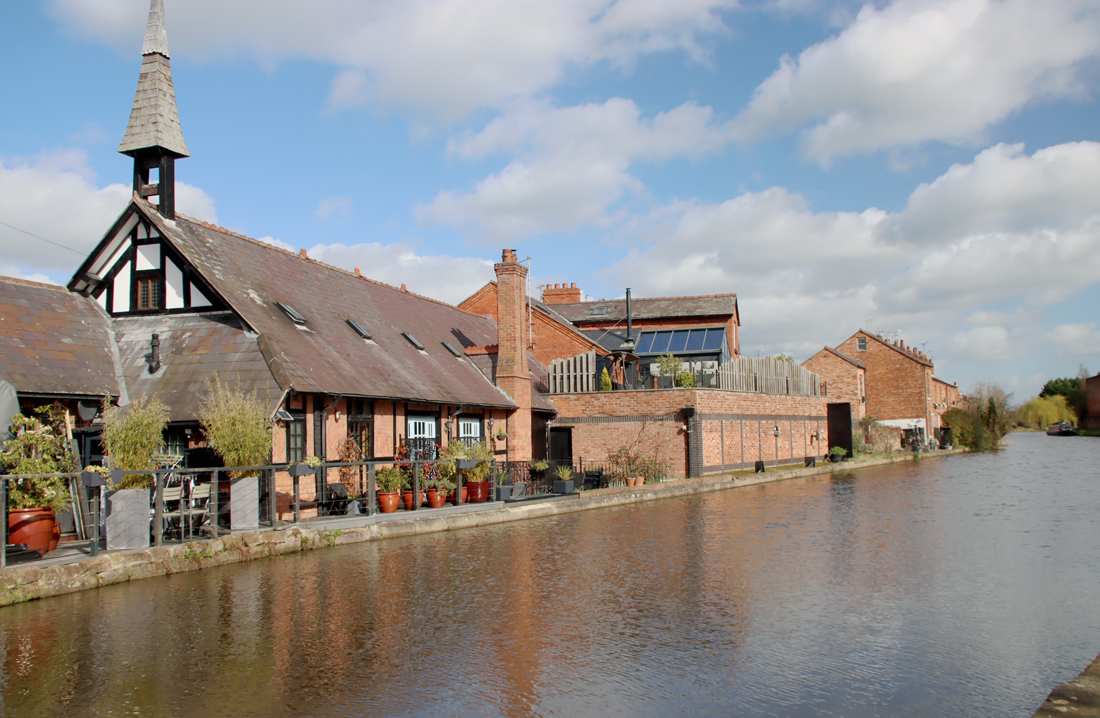
Hoole Lane Lock

Hoole Lane Mission Hall. Information at Hoole History and Heritage Society
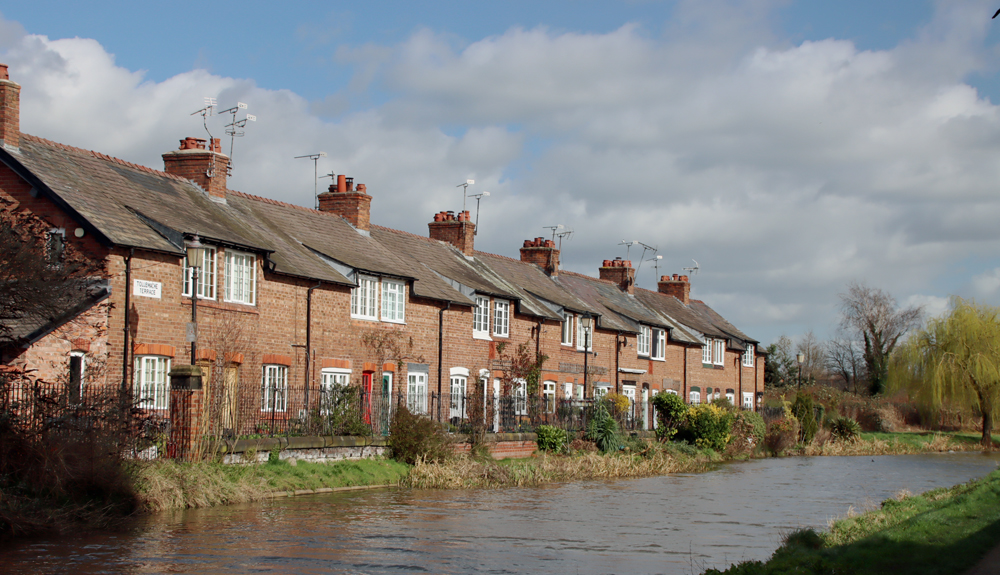
Tollemache Terrace
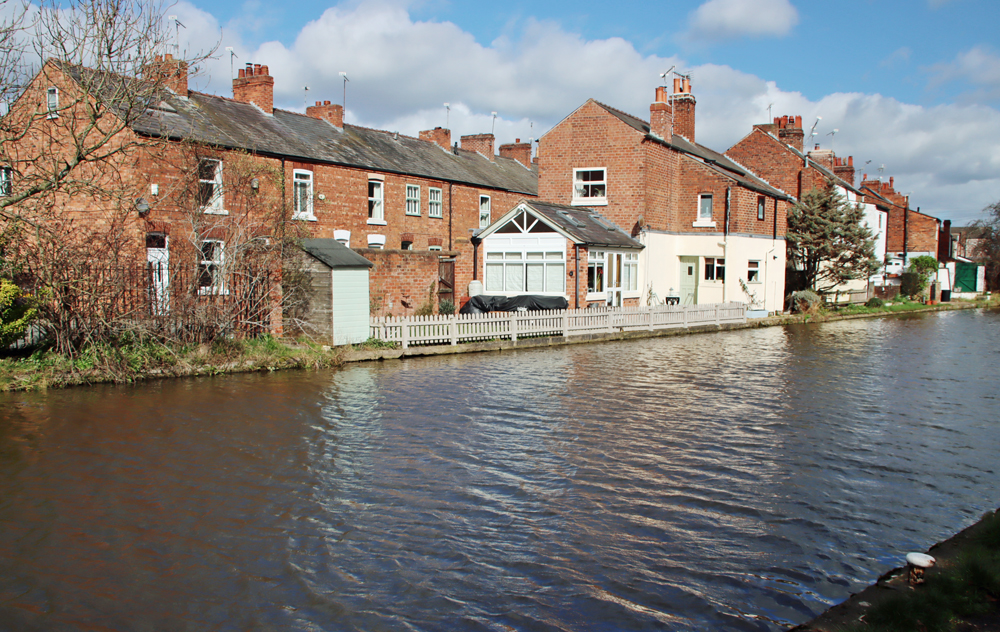
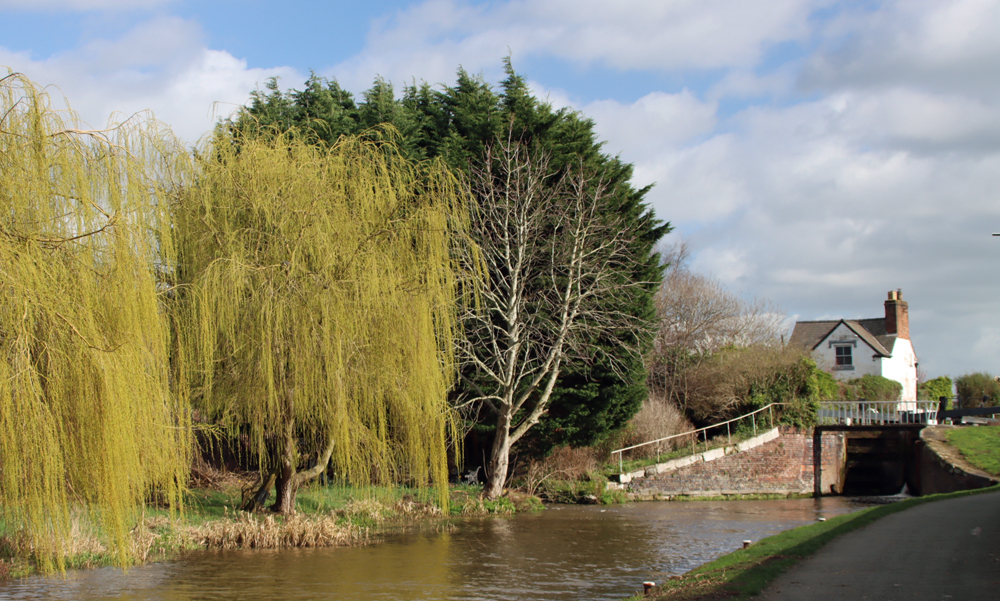
Tollemache Terrace

Chemistry Lock and sluice, Grade II listed. More information on the Historic England website
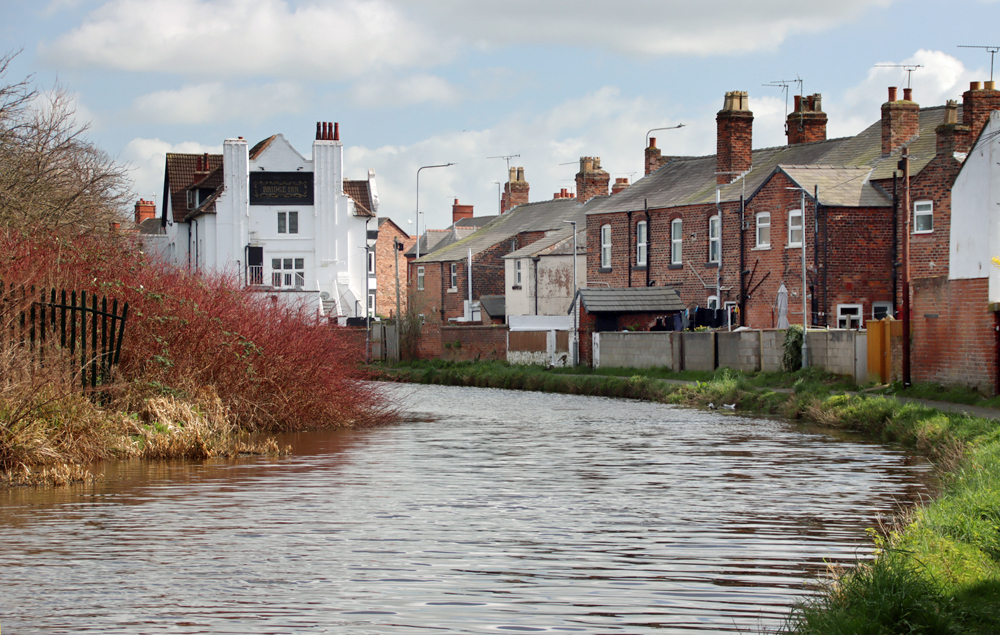
Towards the Bridge Inn (the white building)
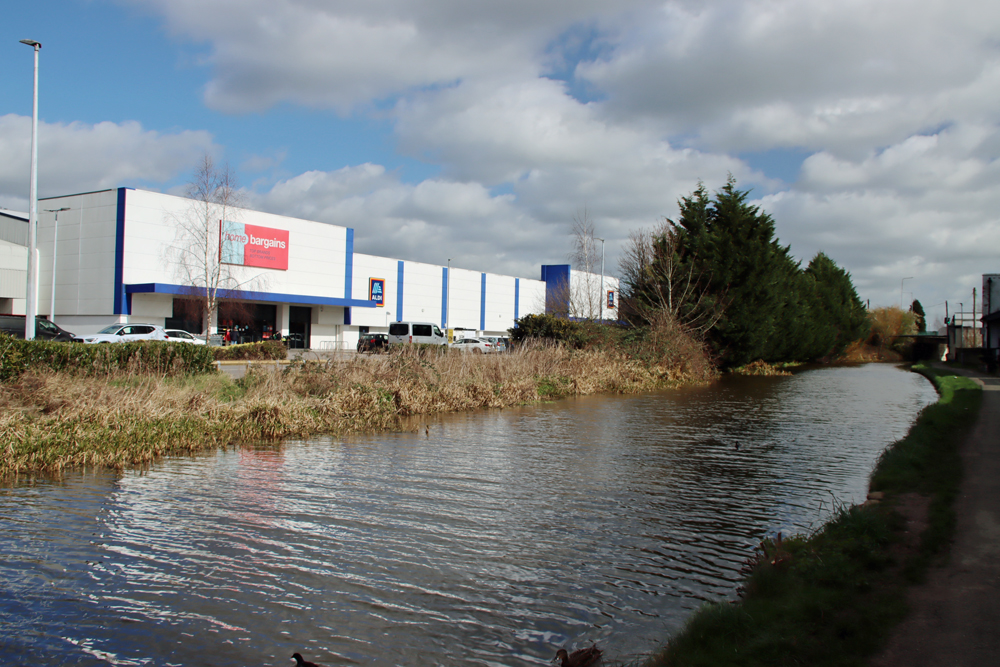
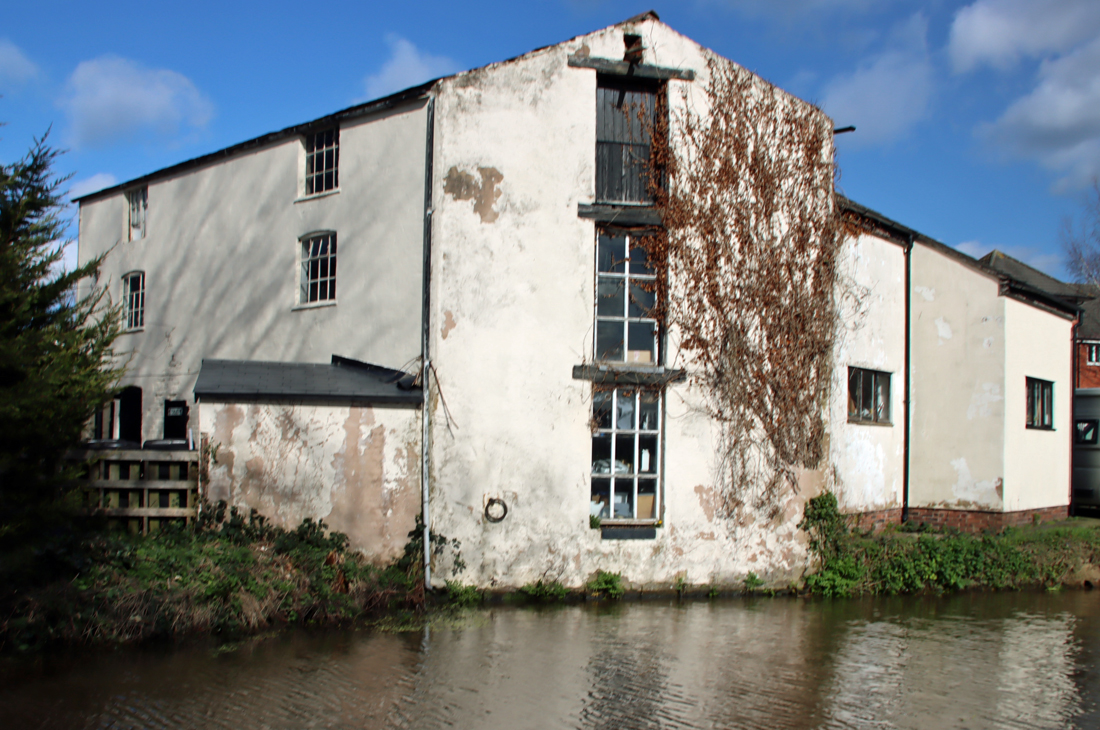
Towards the Bridge Inn (the white building)
Tarvin Lock

Tarvin Bridge Lock

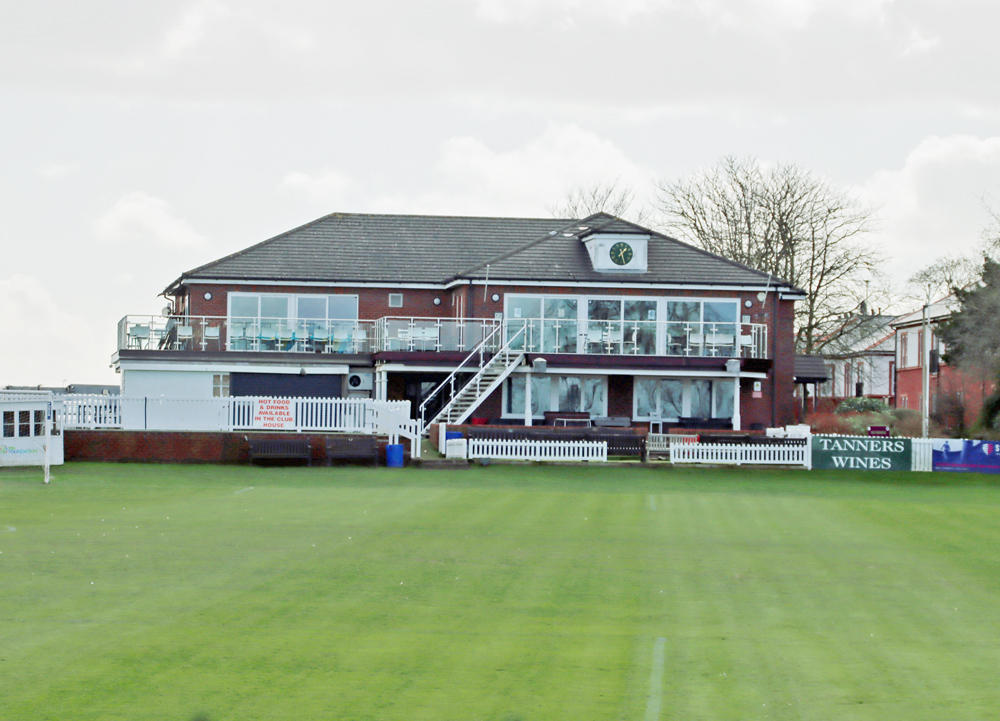
Chester and Boughton Hall Cricket Club
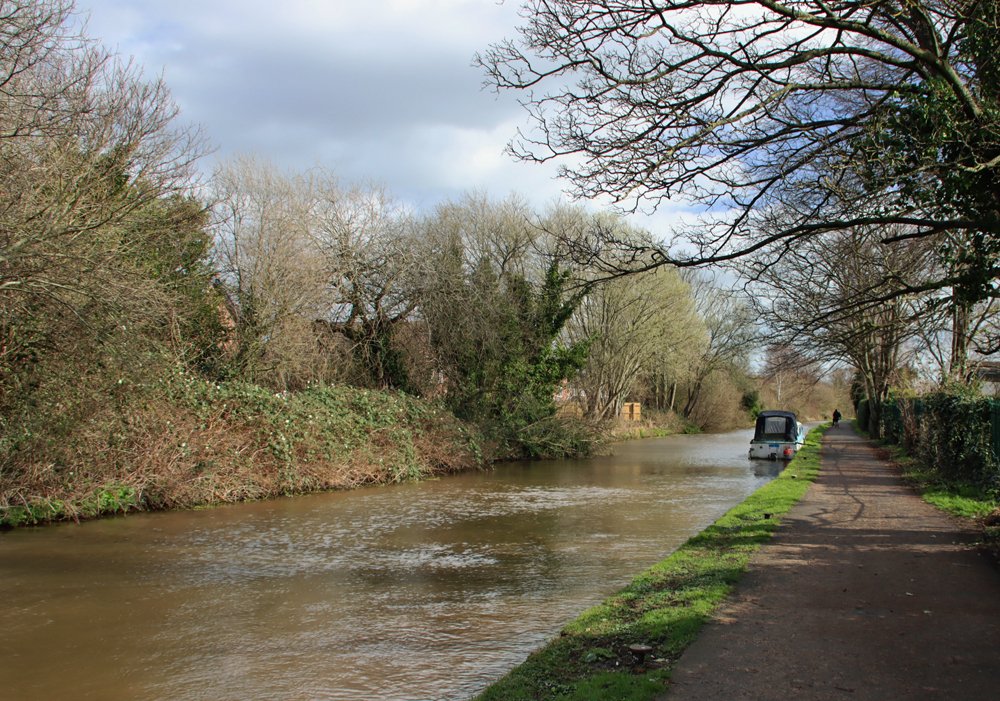
The view of the canal as it moves out of Chester towards Waverton and beyond
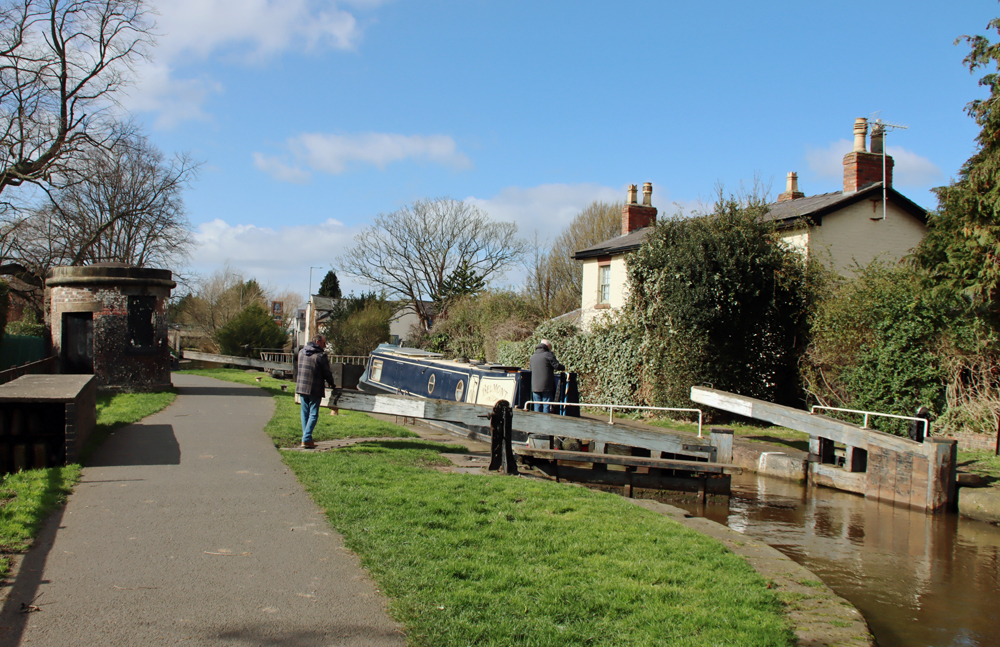
 

Starting the return leg of the walk at Tarvin Bridge Lock, next to the cricket club
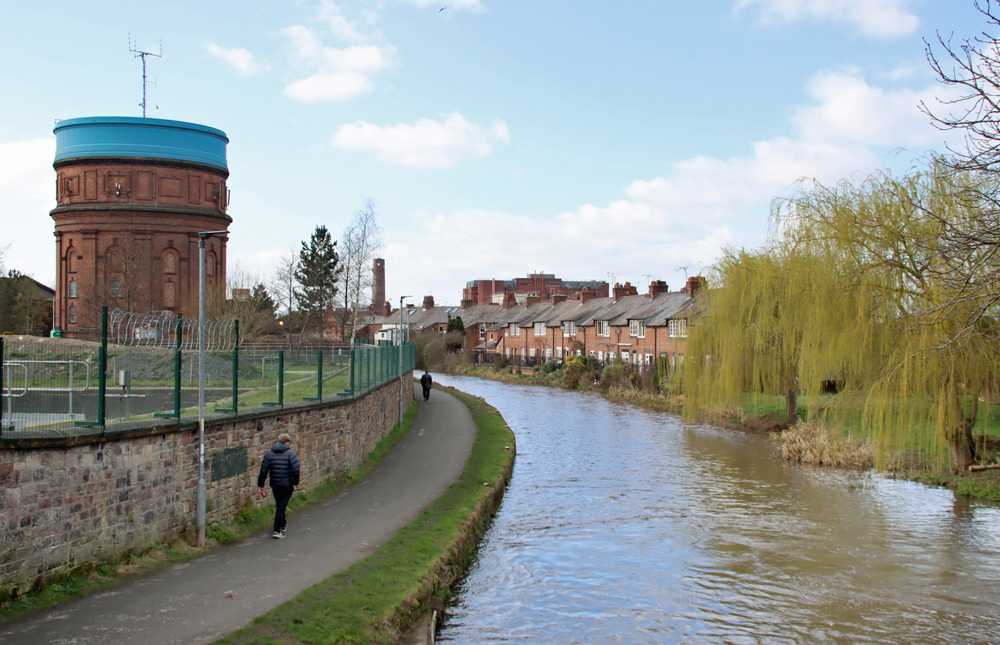
Walking back into Chester, past the Boughton water tower.  See details on the Historic England website.
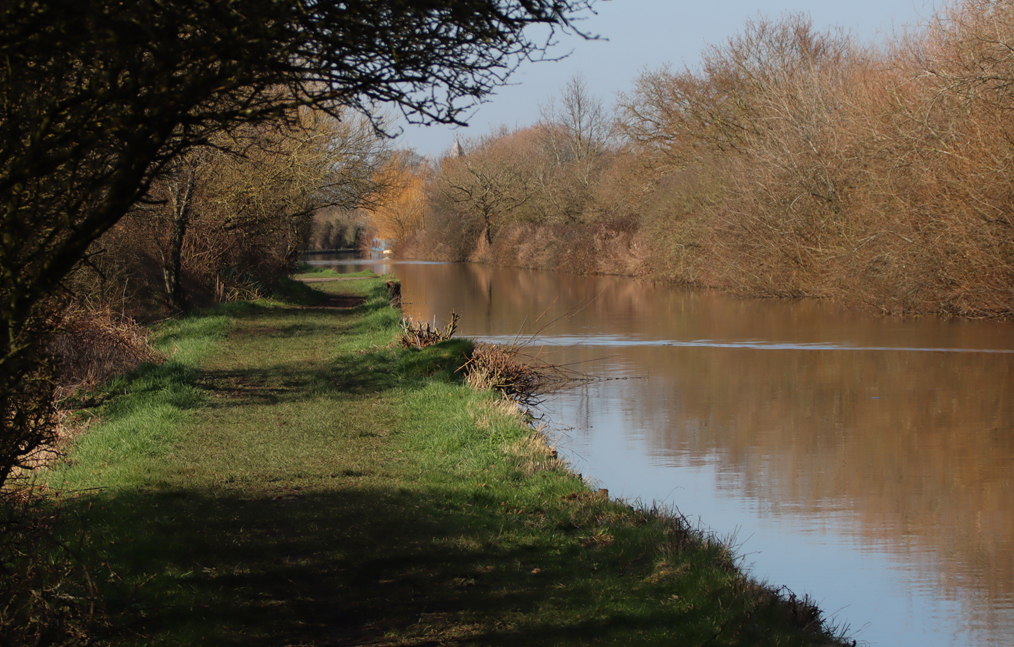
The point on the towpath at which I walked up to the flight of steps to go up to the city walls and turn right to return to the car park.


Sources

The full list of sources are in Part 1
 

Walking the history of Chester’s canals, from the river Dee to Boughton #1 – Short History

This post is divided into two. Part 1 looks in brief at some of the history of the Chester city canals, mainly to untangle the complicated story of what is happening at the Tower Wharf Basin, where the Chester and Ellesmere Canals came together.  Part 2 is a mainly photographic account of a walk along the canals from the river Dee to the Chester Boughton Hall Cricket Club, just beyond Tarvin Bridge.
The pink arrows are my route from the Little Roodee car park to the start of the canal. The orange arrows are the route taken from the start of the canal at the river Dee to Chester Boughton Hall Cricket Club. Details of the walk are in Part 2.

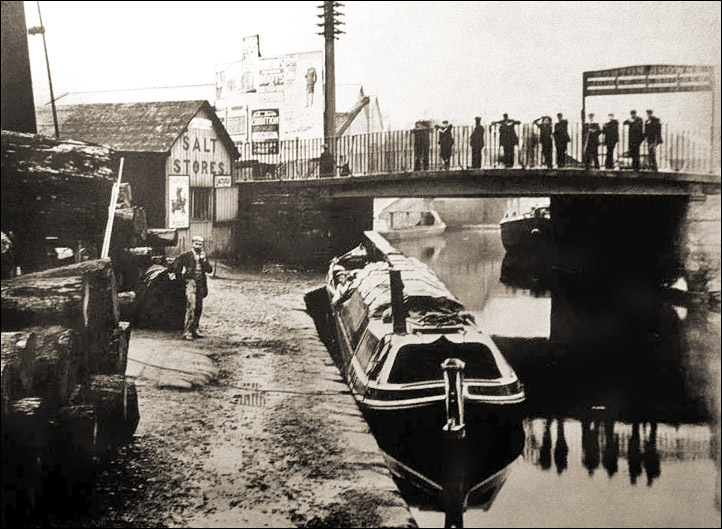
Cow Lane Bridge 1880s

Cow Lane Bridge in the 1880s. Source: chesterwallsinfo

This post begins with a short description of the history of the Shropshire Union Canal, describes why the intersections just beyond the Northgate staircase lock is so complicated, and goes on to describe the walk.

The Shropshire Union Canal runs today from the Mersey and the Manchester Ship Canal at Ellesmere Port, to Autherley Junction near Wolverhampton on the Staffordshire and Worcestershire Canal over a distance of 66.5 miles (107km).  Because it runs beyond the city walls, only making its presence felt to tourists where it crosses Northgate and along the base of the city walls, it does not feature on the city’s usual tourist routes.  Unlike Chester’s well known medieval, Georgian and Victorian architectural attractions, the canal is more directly a component part of the city’s industrial past, but is just as essential in the city’s story.

The history of the Shropshire Union Canal

During the 18th century civil engineer James Brindley (1716-1772) was responsible for building over 365 miles of canals.  Brindely realized that any inland waterway network would need to connect to all the great navigable rivers that connected to the sea, including the Thames, the Mersey, the Severn and the Trent, incorporating other important navigable rivers like the the Avon and the Dee.  The network was a sprawling affair, but it revolutionized transport, avoiding roads that would become mired and impassable in winter, as well as unnavigable sections of rivers, and the riverine problems of tides, drought and flood.  Water into and out of the canal system was regulated and therefore predictable, and allowed year-round transport.  The advantages became very clear very quickly, and manufacturing and trading businesses began to locate themselves at critical points on the canal network.  Eagerness to invest in infrastructure resulted in a canal boom in the mid to late 1700s.  Each new section of canal required an Act of Parliament, subject to Royal Assent, and Act after Act was passed as the network expanded.

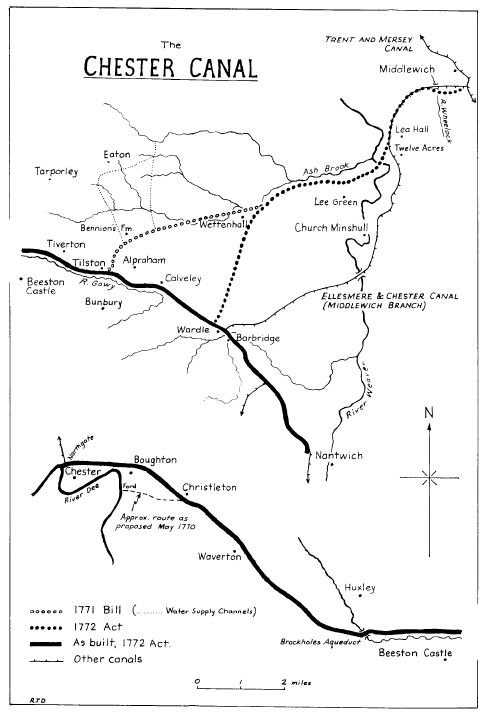
The Chester Canal. Source: Shearing 1985, p.150

The  execution of the canal project for Chester was deeply flawed.  Jumping on the canal bandwagon, entrepreneurs and investors envisaged a money-making venture that would bring Shropshire and Cheshire into the mainstream trade network with Birmingham, the nation’s canal hub and centre of industry, via a junction at Middlewich with the 1777 Trent and Mersey Canal.  Unfortunately, the builders of the Chester Canal did not have agreements in place to connect their new Chester Canal either to the Trent and Mersey Canal, which denied them permission to build a junction, or with the River Dee Company, which also put barriers in their way leading to several years of negotiation before a satisfactory solution was reached.  The Chester Canal, opening in 1779, was not built to Middlewich, where it had been planned for the Chester to join the Trent and Mersey, and instead stopped at Nantwich, segregated from the rest of the national canal network.  With little traffic carrying low-value cargoes, as well as a packet boat service, the canal was a fairly substantial failure.  In 1787 the Beeston staircase locks collapsed and there were insufficient funds to pay for repairs.  The Chester Canal hovered on the verge of bankruptcy.

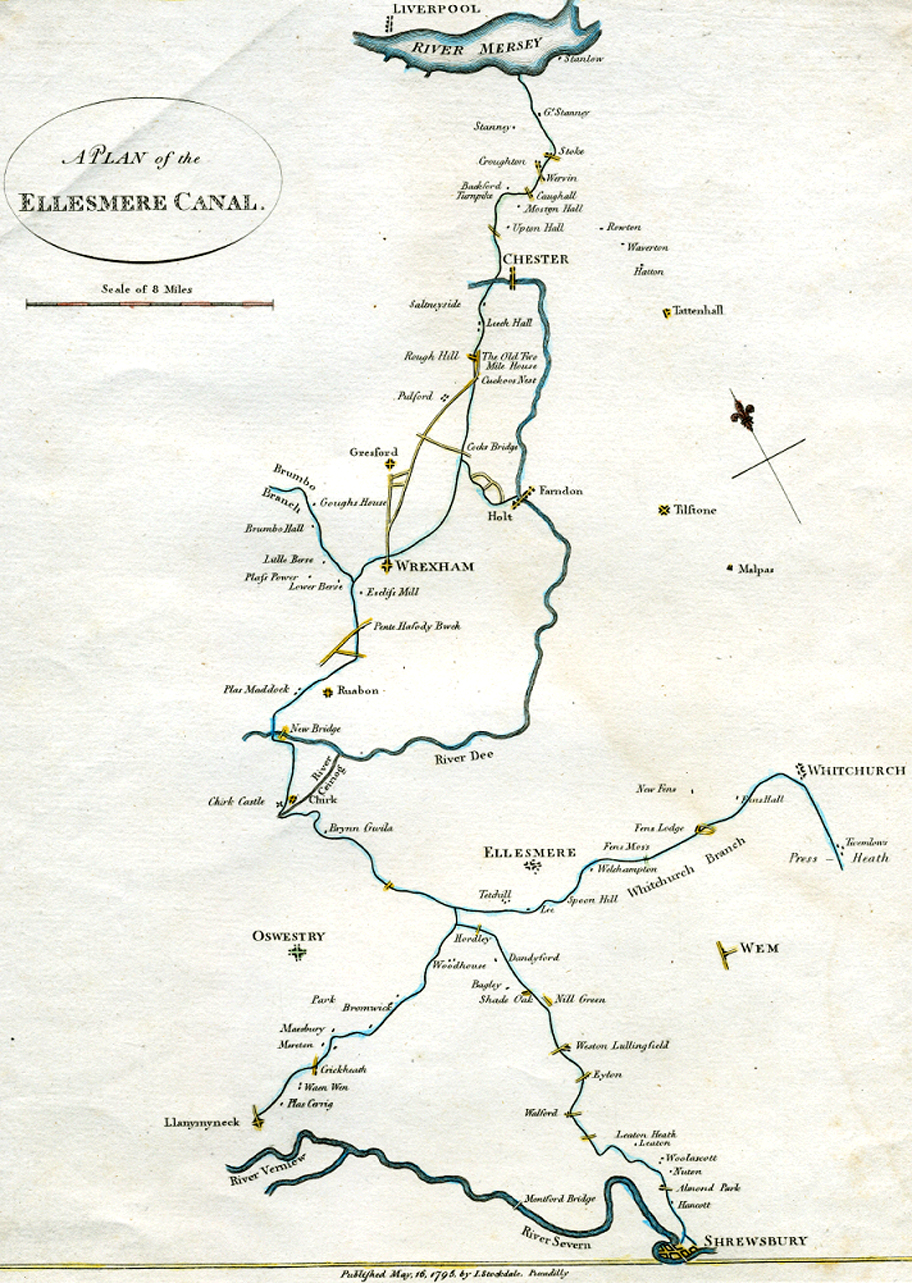
The complex arrangement of the Ellesmere Canal

The complex arrangement of the Ellesmere Canal and its branches is shown as thin blue winding lines. The thick blue line from Chester is the Dee. The yellow lines are roads. Click to see a bigger version. Source: Wikipedia

If it had not been for the 1791 Ellesmere Canal project, the Chester Canal would not have managed to limp on much longer.  The proposal for sections of canal to link the Mersey at Netherpool (now Ellesmere Port) to both the river Dee at Chester and the Severn at Shrewsbury was ambitious, but attracted sufficient support for a surveyor to be hired and possible routes to be explored.  The Ellesmere Canal proposal was presented to parliament and received its Royal Assent in April 1793.   Although shortages in funding prevented the realization of the full vision, shown right, Chester was at last brought into the national canal network. Part of this necessitated the addition of a new branch of canal from Chester to Ellesmere Port, which connected with the Chester Canal in what is now the Tower Wharf Basin.  The two companies merged in 1813, becoming the Ellesmere and Chester Canal Companh.  In 1833 the Middlewich branch was added, as the Chester Canal company had originally planned, and was connected to the rest of the network via the Trent and Mersey.

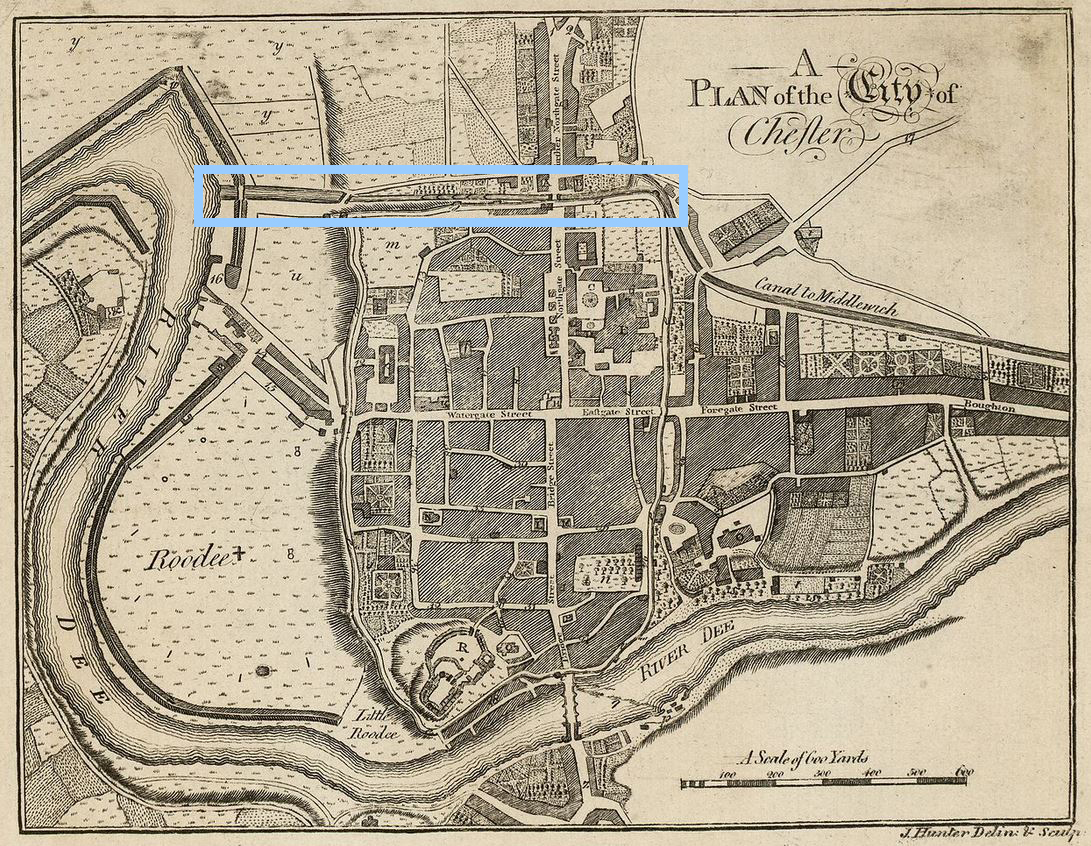
Hunter 1782 map with canal

Hunter 1782 map with the canal before the basins were added for the Wirral Line

These changes required major infrastructure changes in Chester itself that are still clearly visible today.  Starting from the former interface between the river and the canal, just off Sealand Road, the derelict remains of the river-canal lock are clearly visible as industrial archaeology.  The gates have long gone and this section of the lock and the branch that once lead into the Dee Basin, along Tower Road on the map below, on its way to the Dee Branch, is full of aquatic plant life.  As you walk along towards the Dee Branch, rounding the corner and passing under the bridge, you find yourself in the basin complex, the Ellesmere Canal Company’s solution to how best to incorporate the Wirral Line north to Ellesmere Port.  However before the Ellesmere Canal Company was involved, the Chester Canal simply ran straight ahead, running directly along the Dee Basin into a set of five staircase locks before heading east towards Boughton.

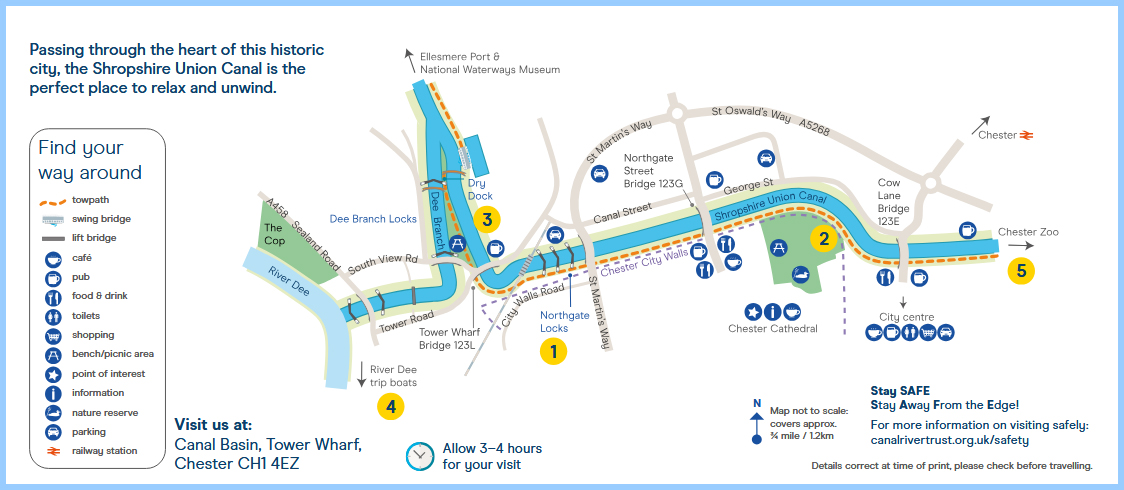
Canal and River Trust map of the basin and wharves, showing the complex arrangement of locks and basins required to incorporate the Wirral branch of the canal to Ellesmere Port.


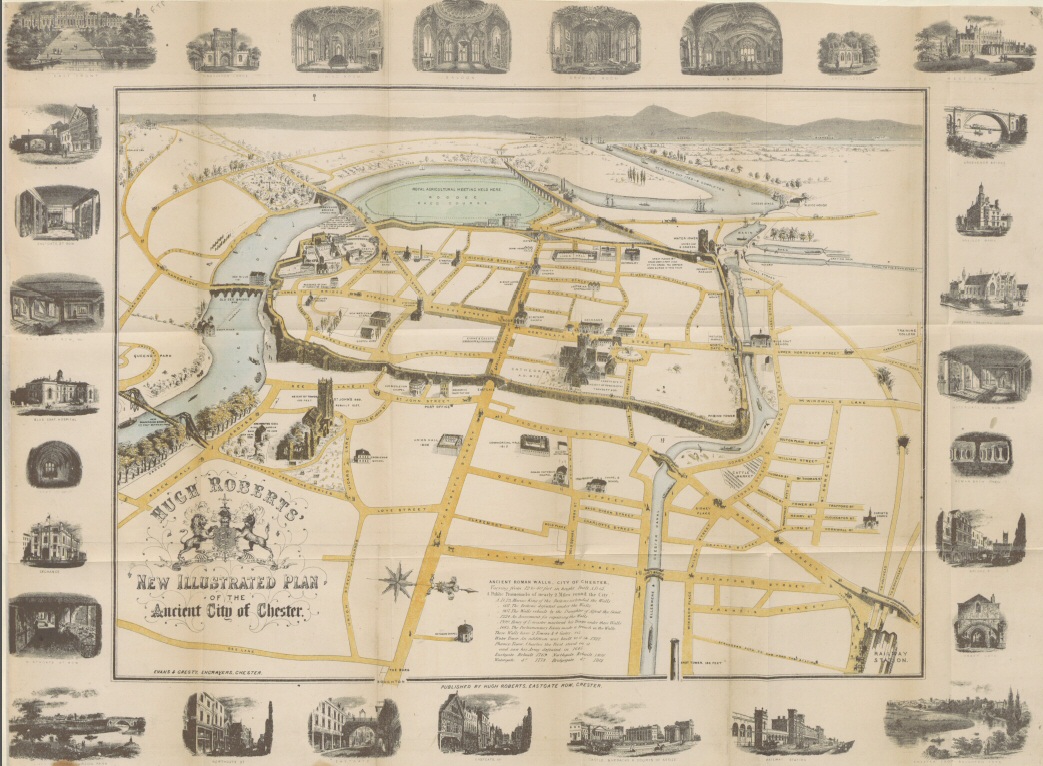
Map from the 1858 Roberts Chester Guide

Map from the 1858 Roberts Chester Guide, showing the big Dee Basin at the far end where locks connected it to the Dee. Click image to enlarge

The set of basins and wharves that became necessary when the Chester Canal was incorporated into the Ellesmere Canal Company’s plans capture the fascinating history of how the area’s canal system was forced to evolve.  Three different sections of the canal are involved in this complex arrangement, shown above.  The earliest of these phases belongs to the original Chester Canal, which begins at the river Dee and once headed straight along into a series of five locks that climbed the hill to the dramatic sandstone cut and onwards to Hoole and Boughton before turning south to Christleton and beyond.  The second phase is the Ellesmere Canal Company’s civil engineering work to incorporate the new “Wirral Line,” which headed in a roughly northerly direction out of Chester.  This now chopped off the Chester Canal at the base of the locks, demolishing two of the five locks, to create the Tower Wharf Basin.  The new arrangement cut off the canal from the river, meaning that another section of canal, called the Dee Branch, had to be created parallel to the main basin and accessed via a lock, to allow vessels to travel between the main line, the Wirral line and the Dee.  It is not an elegant solution, but it worked.  The rest of the canal is very straight forward as you walk towards Hoole, Boughton and beyond.  The historical interest in those sections of the canal is more about the bridges and the flanking architecture that grew up around the canal.

The docks at Ellesmere Port during the 19th century

The docks and wharves at Ellesmere Port during the 19th century, from the Ellesmere Port canal museum archives

In 1846 the decision was made to bring together the various canal and railway interests together under one umbrella organization, the Shropshire Union Railways and Canals Company, providing the different sections of canal from Ellesmere Port to Wolverhampton with a single name:  the Shropshire Union Canal.  In 1894 the Manchester Ship Canal opened, and the Ellesmere Port access to the Mersey was now via the new shipping channel.

In spite of canalization of the Dee in the 1730s was intended to make the rapidly silting river navigable and to make Chester competitive once again with Liverpool, but in spite of these measures silting continued and the river became impractical for serious commercial shipping and shipbuilding, particularly in the face of Liverpool’s rapid expansion.  The last ships were built on the Dee in the early 20th century, ending a centuries old industry, and the connection between the Shropshire Union and the river went out of use.

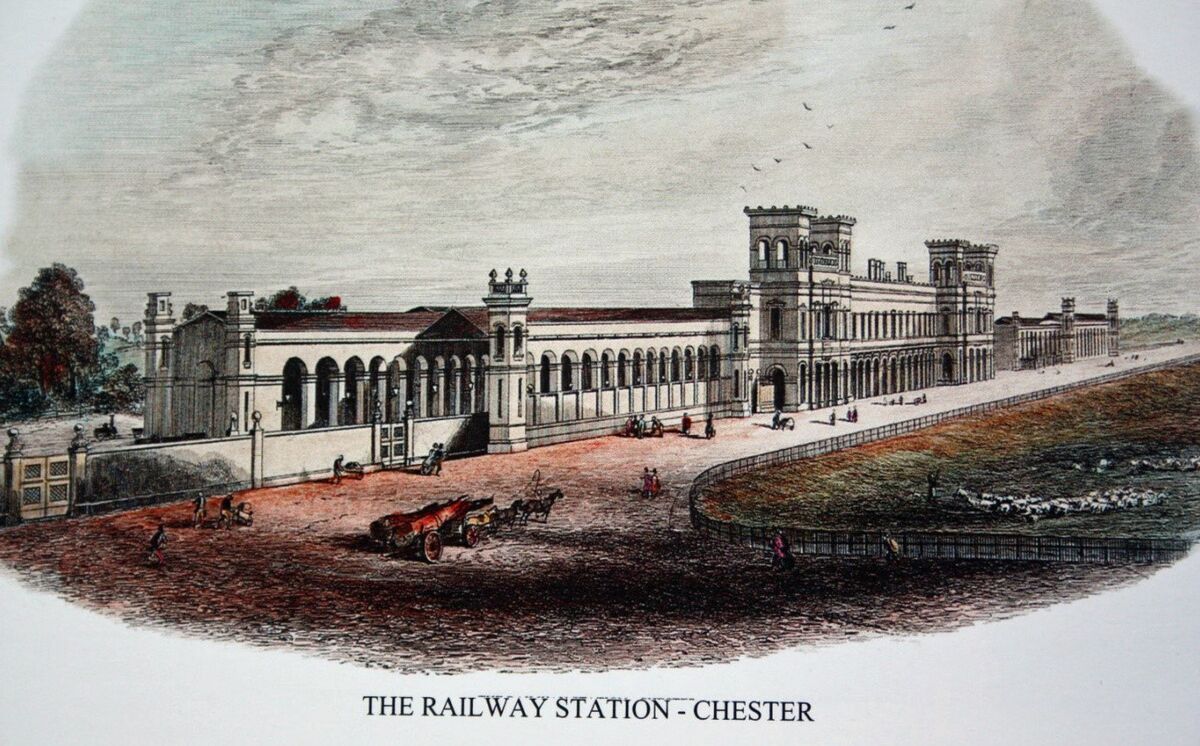
Chester Railway Station

Chester Railway Station 1848. Source: Hoole History and Heritage Society

The railway came to Chester in 1840, picking up some of the slack, but Chester’s days as a centre for trade and industry were over and the main financial opportunity that the railway brought was tourism.  The canal, however, continued to be used as part of the canal network, connecting to maritime trade via the Mersey.  Eventually, as rail replaced the canals, many of them became derelict, only reviving as leisure resources in the later 20th century.

The canal attracted many businesses along its edges, and today the canal preserves a considerable amount of commercial and industrial heritage, adding a welcome extra dimension to Chester’s historic legacy.  The canal network today is used for pleasure, mainly in the form of cruising, walking and cycling.  It still covers a vast region of England and Wales and is managed by a mixture of state organizations and by both regional and local charities.

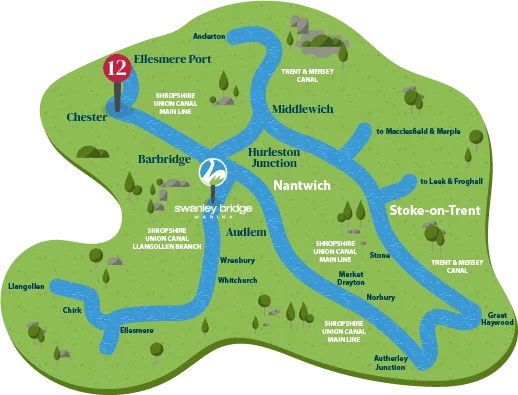
Schematic map showing how Chester relates to the canal network

Schematic map showing how Chester relates to the canal network today. Source: Swanley Bridge Marina

As canals have become attractive for residential development, new housing has also been erected, some developments more sympathetic than others, but all interesting.  The mixture is captured in the walk in Part 2. Apart from a few isolated examples, most of the warehousing that once flanked the basins and the canal has long gone, replaced by modern apartments, including student accommodation and retail outlets.

The Dee no longer connects to the canal network.  The lock between the river and the Dee Branch of the canal, lying just over Sealand Road, is completely derelict.  One of the locks further along is padlocked shut. The old swing bridge that had allowed vessels to interrupt road traffic to enter the canal network was replaced by the fixed road bridge in the 1960s.   Today the leg of the Dee branch of the canal running parallel to the Basin, once used for access to the river, is used for mooring privately owned narrowboats.

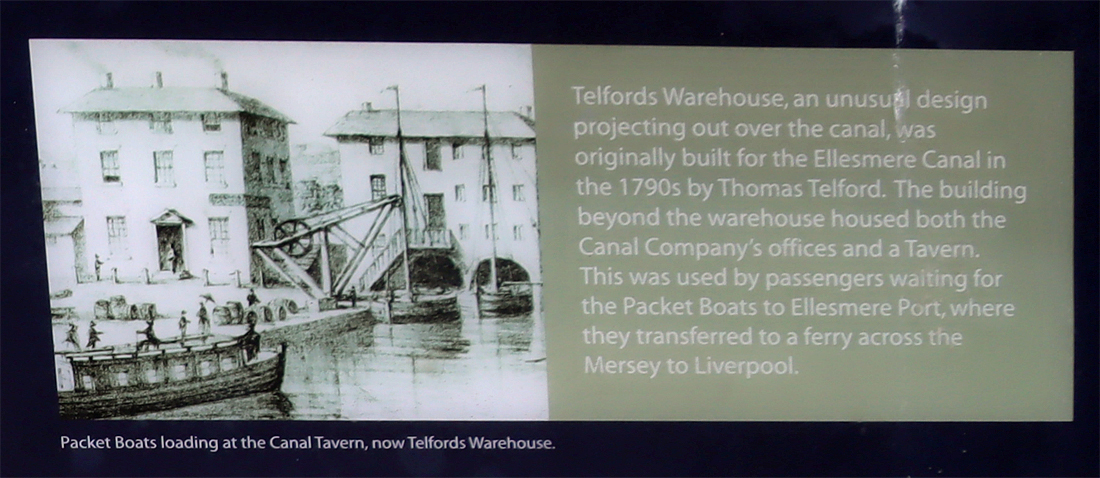
Signage at the canal basin showing information about Telford's Warehouse

Signage at the canal basin showing information about Telford’s Warehouse

I have kept this history brief, merely to introduce the walk.  Rather than reinventing the wheel, please see the Sources below, which contain much more information.  The three video links also provide an excellent overview, between them, of the canal, its history, and some of the buildings and businesses associated with it.  The first is by John Herson, one of whose guided canal walks I have done and thoroughly enjoyed, which focuses on Tower Wharf, the Canal Basin and the relationship of the canal with the Dee.  The second is by Stuart Shuttleworth and looks at the main line of the canal as it passes through Chester.  Together they form a brilliant introduction to the subject, showing the key places to visit.  At the end, underneath Sources, there is another video by “Pastfinder,” which is longer and explores what remains today in more depth, walking and talking at the same time, making it quite easy to retrace his footsteps.  There are some fascinating additional pieces of information in this.

John Herson:

Stuart Shuttleworth:


Sources:

A lot of information is contained in the two videos above and the one at the end of the post.

Other sources of information are as follows:

Books and papers

Carrington, Peter 1994. English Heritage Book of Chester.  Batsford / English Heritage

Martin, Richard 2018. Ships of the Chester Rivers.  Shipbuilding on the Dee from Chester to the Point of Ayr 1800-1942. Bridge Books

Mosse, J., David Lobband and Judith Pile 2023 (9th edition).  Collins Nicholson Waterways Guide 4. Four Counties and the Welsh Canals.  HarperCollins

Nicholson, R. 1989 (4th edition). Nicholson/Ordnance Survey Guide to the Waterways 2: Central. Robert Nicholson Publications and Ordnance Survey

Shearing, Edwin A. 1985. Chester Canal Projects: Part I. Journal of the Railway and Canal Historical Society. Vol XXVIII, no.3, November 1984. p.98-103

Shearing, Edwin A. 1985. Chester Canal Projects: Part II. Journal of the Railway and Canal Historical Society. Vol XXVIII, no.4, March 1985. p.146-154

Ward, Simon 2013 (2nd edition). Chester. A History. The History Press

Websites

Canal and River Trust
Welcome to Chester. Escape the city on this tranquil waterway (PDF)
https://canalrivertrust.org.uk/media/document/0z8YCnXdfYHg_am-LmUGSg/p22Wl115w_dWrQTRa-XYJd5Q5nl2UR6N17EY2G1JFyc/aHR0cHM6Ly9jcnRwcm9kY21zdWtzMDEuYmxvYi5jb3JlLndpbmRvd3MubmV0L2RvY3VtZW50Lw/0192bddd-4001-76ad-a95b-0ad3662ccdcc.pdf

Canal Routes
Chester Canal History
https://www.canalroutes.net/Chester-Canal.html
Chester Canal Route
https://www.canalroutes.net/Shropshire-Union-Canal.html#Chester-Canal-Route
Ellesmere Canal – Wirral Line
https://www.canalroutes.net/Shropshire-Union-Canal.html#Ellesmere-Canal-Wirral-Line
Shropshire Union Canal
https://www.canalroutes.net/Shropshire-Union-Canal.html

Cheshire West and Cheshire
Chester Canal Conservation Area Character Appraisal Ellesmere Port to Nantwich (PDF)
https://www.cheshirewestandchester.gov.uk/documents/planning-and-building-consultancy/total-environment/conservation-and-design/conservation-area-appraisals/canal-conservation-area-elesmere-port-to-nantwich-latest-version-261118.pdf
Chester Characterization Study
https://www.cheshirewestandchester.gov.uk/your-council/policies-and-performance/council-plans-policies-and-strategies/planning-policy/chester-characterisation-study

chesterwalls.info
Photographs of the Chester Canal Old and New, parts 1-5
https://chesterwalls.info/gallery/canalgallery.html

Chesterwiki
(with a lot of adverts interspersed)
Canalside
https://chester.shoutwiki.com/wiki/Canalside
Canal and Boatyard
https://chester.shoutwiki.com/wiki/Canal_and_Boatyard

Grace’s Guide to British Industrial History
James Brindley
https://www.gracesguide.co.uk/James_Brindley
William Jessop
https://www.gracesguide.co.uk/William_Jessop

Heritage Chester
Bite-Sized Wonder – The Lead Shot Tower
YouTube video

Historic England
Bridge of Sighs, Upper Northgate Street
https://historicengland.org.uk/listing/the-list/list-entry/1375967
Telfords Warehouse, Raymond Street

https://historicengland.org.uk/listing/the-list/list-entry/1375919?section=official-list-entry

Inland Waterways Association, Chester and Merseyside Branch
Chester Heritage Port Designation Document (PDF)
https://70cf2f03-3eb2-43c8-889f-b8f841fc3757.usrfiles.com/ugd/70cf2f_64e6633c34b9420f8c06a368857d1a42.pdf

UK Waterways Guide
Map of the Shropshire Union Canal
https://www.ukwaterwaysguide.co.uk/map/shropshire-union-canal/all-branches

“Pastfinder”:

A sunny spring canal walk south from Waverton to Golden Nook Bridge

Waverton to Golden Nook Bridge

Waverton to Golden Nook Bridge

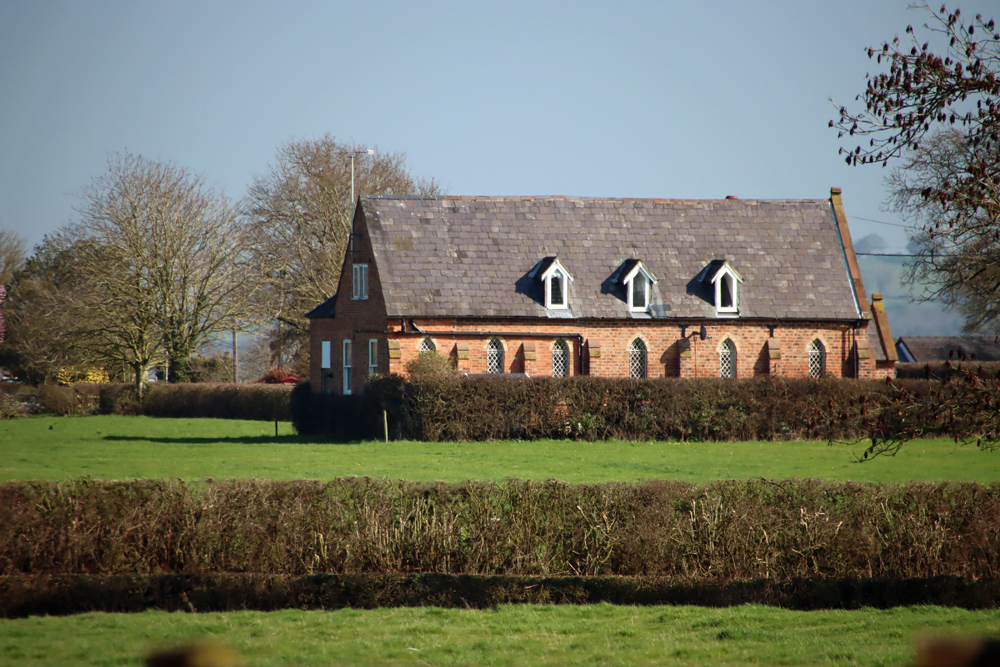
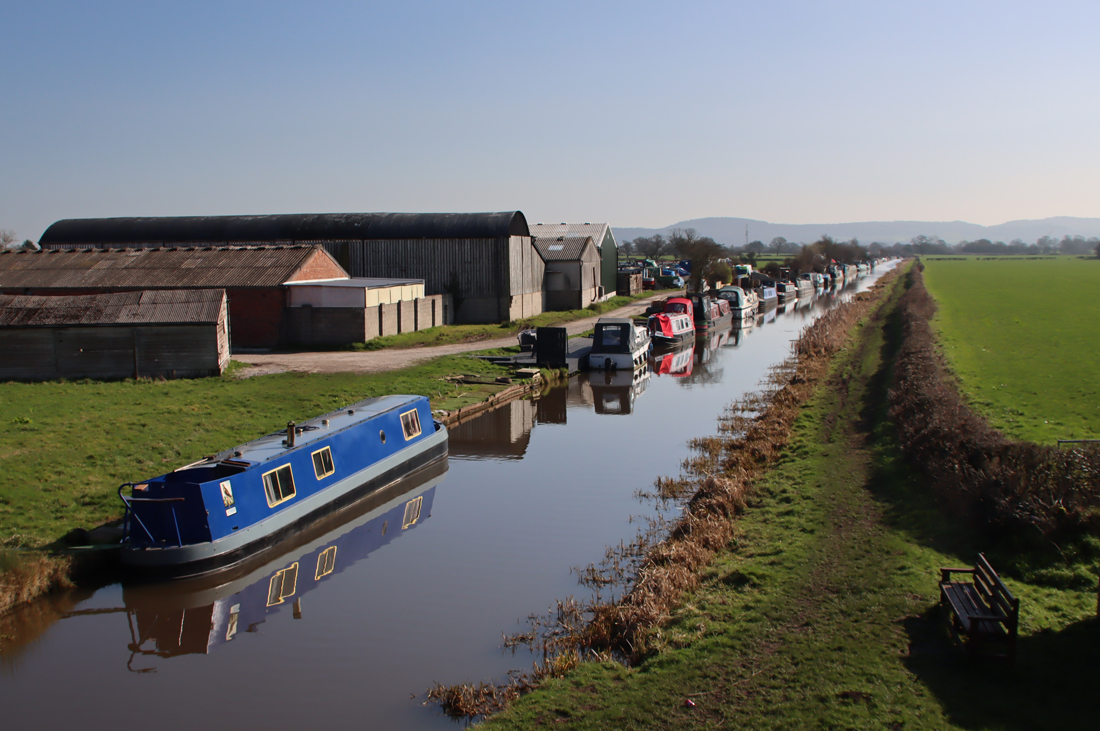
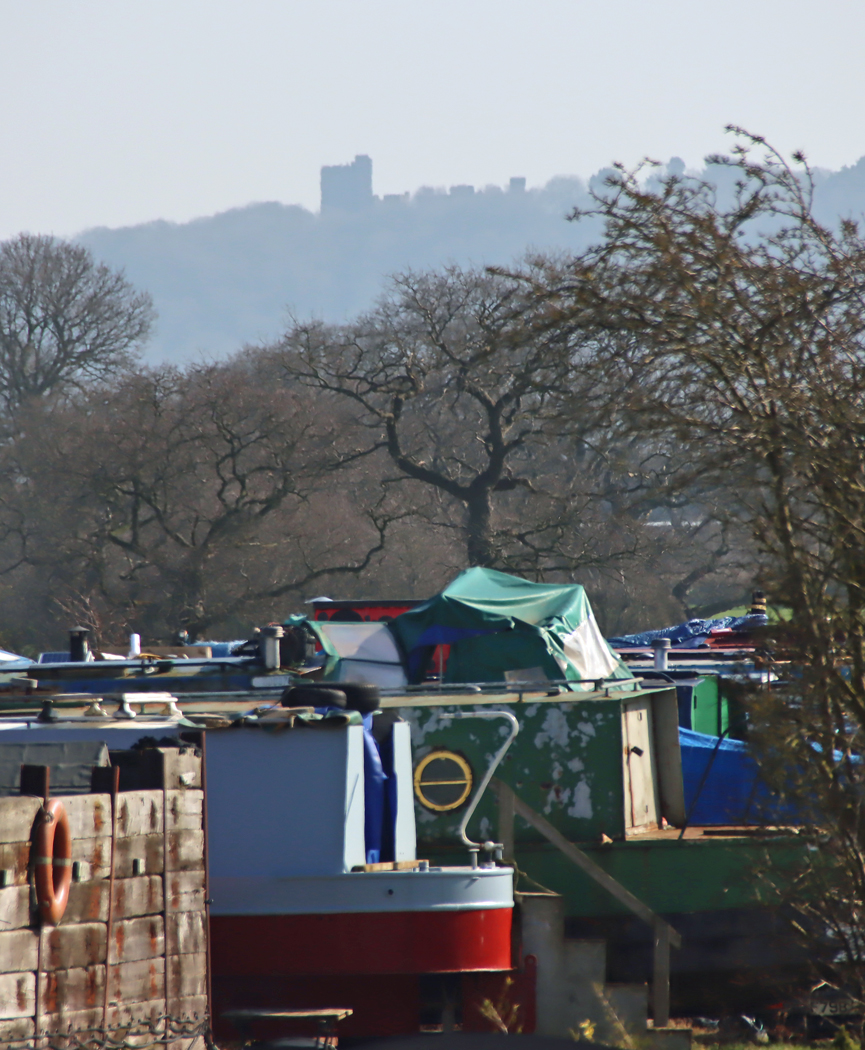
In late October last year I took advantage of a beautiful sunny day to walk the towpath along the Shropshire Union canal from Waverton towards Chester, which I posted about here.  A couple of days ago the sky was clear and the sun was out, so I grabbed my rucksack and some damp-proof footwear (needed, as it was distinctly soggy underfoot) and headed out to do the section of the canal between Waverton and the wonderfully named Golden Nook Bridge, near the village of Hargrave, to its south. It took about an hour and a quarter each way at a brisk pace, stopping to take photos and chat to other walkers.  It was a rewarding walk, even at this time of year when there were only a few signs of spring beginning to make its mark.  Because of the season, the light meant that the walk provided two different experiences, there and back, with a silvery, ethereal light on the way out and a much more colourful walk on the return leg.  The birdsong was particularly lovely, and I have added a 36-second video at the end that was done purely to catch something of that sound.  I was lucky enough to see a kingfisher, a flash of bright orange as it settled on a branch followed by a flash of bright, electric blue as it took off.  It was too fast for me to photograph, but an absolute treat to see.

Waverton is just off the A41, so very easy to reach.The car park is quite small, with a capacity for about 20 cars, but at 11am there were only a few other cars parked up.  The What3Words address for the car park is ///fingertip.snored.deals.

To start the walk walk from the car park to the canal, just a few steps away, and turn right, heading south.  During the first couple of minutes the canal passes homes on the other side of the canal.  There is a section where it passes a golf course on the opposite side, but it is soon a very rural route with open fields flanking the canal.  Long Lane suddenly appears to the right as you walk south, the quiet stretch of road running parallel to the canal.  Shortly after this, official moorings begin on the other side of the canal, with a line of narrow boats and small cruising boats as far as the eye could see.  I stopped at Golden Nook Bridge and turned back, but the moorings presumably continue all the way to Tattenhall Marina.

St Peter's Church, Waverton

St Peter’s Church, Waverton

In total, there and back, the walk took about 2 1/2 – 3 hours, all on the flat.  Unlike the section towards Chester this part of the towpath is not metalled, and can be very uneven underfoot with tree roots and stones poking through.  It was also quite muddy after several weeks of rainfall.


View from Golden Nook Bridge and beyond to the sandstone ridge

View from Golden Nook Bridge and beyond to the sandstone ridge


Golden Nook Bridge, looking from the south and returning towards Waverton

Golden Nook Bridge, looking from the south and returning towards Waverton


36 seconds of birdsong from one of the canal bridges, taken on my smartphone.  There is a little interference from the breeze, but you can hear the birds giving forth wonderfully.


A walk from Waverton towards Chester along the Shropshire Union Canal

I have driven over the canal bridge on Eggbridge Lane in Waverton so many times thinking that I really must take advantage of the little car park just before the bridge to go and take a stroll down the towpath.  Having woken up early on a sunny morning I decided to investigate. Waverton is just off the A41, so very easy to reach. The car park is quite small, but it was not full even on a bright and warm morning.  The What3Words address for the car park is ///fingertip.snored.deals

Victoria Mill, Waverton

Immediately opposite the car park, as you walk to the towpath, is a very attractive canal building, the Grade 2 listed, a mid-19th century Victoria Mill, a former steam-powered canal-side corn mill, with bays for loading and unloading narrowboats, and now converted for modern use. The Historic England description is here.  This is part of the heritage of the Shropshire Union Canal, which if you keep walking north eventually ends up at Ellesmere Port.  To the south, it eventually connects up with the rest of the main canal network at Hurleston Junction.  The Shropshire Union has quite a complicated history, as does Chester’s canal heritage as a whole, and was not completed until 1835.

As with most canal walks, there’s always a choice to turn right or left, and as I had no idea what to expect from either direction I decided to head north, leaving the walk south for another occasion. Out of the car park I turned left under the unprepossessing bridge no.119 and headed up the towpath.  This section is metalled, so it avoided the mud and sludge that I had been half expecting.

If you take this route you find yourself walking along a short row of houses with canal gardens along a metalled pathway.  Canal-side gardens are always fascinating.  I used to live on a narrow boat many years ago, and it is always a lot of fun to see how different minds have dealt with a garden that opens directly on to a canal.  These are always hugely individualistic and personal.  There is always much to see in the way of garden furniture, garden ornaments (someone will always have gnomes, and there is usually at least one example of traditional canal painting), sheds in various states of repair, a wide range of summer houses, varieties of approaches to terracing, often some very interesting specimen trees and shrubs, and different attitudes to garden seclusion, along a spectrum from solid barriers of hedging or fencing to a complete lack of interest in any form of privacy.  A real cultural treat.

After just a minute or so the towpath enters a more rural section, and in the late season sun it was a real pleasure to take in all the autumnal colours on trees and shrubs that flank the canal.  I’ve posted some of the photos below. It’s a well-used section of towpath, with joggers, cyclists and plenty of dog walkers, but everyone is very civilized about moving over to make passing easy.  There was not much in the way of canal traffic, with just two narrowboats on the move, but I expect that it is much busier in summer.

Keep an eye out on your left as you leave the housing on your right and reach the more rural section.  Partly concealed by the grass next to the towpath, there is a short inscribed red sandstone Parish Boundary Marker. This section of the canal passes through the parish of Rowton, famous for the Civil War Battle of Rowton Heath (see the Wikipedia entry on the subject and a more detailed analysis by Historic England).  King Charles I is said to have watched his army lose that battle from the Phoenix Tower that still stands on Chester’s city walls. The stone marks the boundary between the parishes of Christleton (CP on the stone) and Rowton (RT).  The date commemorates the date of the battle in 1645 and, below the level of the grass, 1995, the 250th anniversary of the battle.
===

After this more countrified section there are more houses, all interesting, with some lovely weeping willows and other water-loving species, and a very attractive hump-backed bridge, that I have since discovered carries Rowton Bridge Road into Christleton.  I walked up as far as The Cheshire Cat, which sensibly has a gate onto the towpath, and carried on just a short way beyond it, but at that point the canal converges closely with the A41 (Whitchurch Road) and it becomes quite a noisy experience with the unremitting traffic, especially during the week.

Checking the map later (for example see the plotaroute.com website), I note that by coming off the towpath at Rowton Bridge it is possible to walk into the attractive village of Christleton, with its marvellous pond, and I would have done this had I realized.  Another time.  had to be somewhere else in the afternoon, so it was a short walk, probably an hour and a bit there and back at strolling pace, with pauses to let bicycles pass, and to take photographs.

For those with unwilling legs (see the blog’s Introduction for details about what this refers to), the towpath heading north from Waverton is metalled, but quite uneven.  No problem for most people, I would have thought but do keep an eye on it.  There are places where the edges of the surface are particularly uneven, but this just means that if you are with someone else you need to go in single file for short sections.  Otherwise, it’s on the flat and very enjoyable.

On the way back I followed the towpath beyond the car park for a few minutes to see how far the housing that backs onto the canal extended.  This part of the towpath is not metalled, was muddy and is single-track.  These houses and gardens are another interesting mixture – each of the sections of housing and gardens has its own personality, presumably reflecting both when it was built and the pricing.  These look as though the garden-canal margins were all designed with narrowboats or other canal vessels in mind. There was indeed one narrowboat moored up at a garden.  The housing stops after a couple of minutes and the towpath reverts to a far more rural appearance.  I’ll investigate further on another day.

A visit to The National Waterways Museum at Ellesmere Port

Although quite literally freezing cold, the sun was stunning yesterday so on the spur of the  moment, having just run an errand to Rossett, I plotted a route to the National Waterways Museum at Ellesmere Port on the Wirral.  It’s very easy to find, being just off the M53.  I have been meaning to visit ever since I moved to this area.  It is one of those places best done in dry weather, because there is as just as much, if not more, to see outside as indoors.  Visitor information details are at the end.

Background History

The museum occupies the 19th century canal and port complex, re-using the lovely brick-built buildings for exhibits and displays and using sections of the docks and basins for a number of fascinating canal and waterway vessels.   Ellesmere Port was the largest Inland Waterway dock complex in the United Kingdom.  The name Ellesmere Port refers to the town of Ellesmere, where many of the decisions about the Shropshire Union canal network were made.  There was no Ellesmere Port until the port was established in 1796 as a small base at the Mersey end of the Shropshire Union Canal.

The Shropshire Union Canal was one of a number of canals built at different times which, in 1846, were amalgamated into a single operational network.  The earliest part of this network was the Nantwich to Canal section.  The earliest part of the system was the Chester Canal which ran from Chester to Nantwich in 1772.  It was not until 1793 that a section connecting Chester to the Mersey was built, with its terminus at Ellesmere Port.  The section from Nantwich to Birmingham, the Birmingham and Liverpool Junction Canal, was the main north-south artery of this network, and was not completed until 1835, joining the national canal network for which Birmingham was the central hub.

By 1802 as well as a series of locks with a lock keeper’s house, there was also three basins, wet and dry docks, a small wharf, a clerk’s house and a canal lighthouse.  Over subsequent decades additional wharves were added and warehouses, workshops and sheds were built.  A scheme by Thomas Telford for a dock and entrance for seagoing vessels was completed in 1843, significantly improving the port’s suitability for transhipping.  During the 1850s the most important cargo was iron, followed by ceramics from the Potteries, and substantial facilities were provided for both.

The opening of the Manchester Ship Canal in 1894, and the simultaneous improvement in facilities at Ellesmere Port significantly improved the prosperity of the port.  Unfortunately this was something of a swansong for the canal port, and In 1921 the Shropshire Union Canal Company sold its fleet of barges and the commercial viability of the canal and the port for freight handling came to an end.  The railways replaced the canals throughout Britain, with many of the former wharves and ports falling into disuse and dereliction. Ellesmere Port managed to survive until the 1950s and became a museum in the 1970s.

More details of the history of the port, (together with some of the business and industries it attracted, the development of the surrounding settlement and details of the drainage of Stanlow marshes by German prisoners of war in the First World War), are available in Vince Devine and Jo Clark’s excellent survey (see Sources at end).

The Museum

The derelict port buildings became a museum in the 1970s after a heroic effort by a group of volunteers, and is now a conservation area with nineteen Grade II listed buildings.  It was originally known as the North West Museum of Inland Navigation and had various other names until it became The National Waterways Museum, with its emphasis on inland waterways, both rivers and canals, although coastal vessels are also included.  As well as boats and exhibition and display spaces, the site is also home to the Waterways Archive, and education centre, conference facilities, a shop and café and other amenities, all located within the port buildings.

Map of the museum. Sorry it’s a bit crumpled, but there does not appear to be a clean version online. Click image to expand.

Entrance is via the ticket office that sits between the shop and the café.  There is a 5 minute video to watch if required, and then access to the rest of the museum is on the other side of the shop, which sites on the side of the canal entrance to the port.  There were obligingly two narrowboats moored further up the quayside, hemmed in with ice, and this is a very good place to orientate oneself with the help of the excellent map that comes with your entry ticket.   It’s quite a complicated site, with several buildings containing exhibits, so the map is invaluable.

I started out by walking over the bridges towards the Exhibition Hall, former warehousing, taking in some of the historic boats moored up alongside the quays in the Upper Basin.

The big former warehouse, called the Island Warehouse, has displays on two floors.  The ground floor is a vast collection of objects connected to the waterways, including bits of engine, windlasses, tillers, rudders, sack barrows, buckets and lamps and a zillion other objects, parts and bits.  There’s very little information on display, although a QR code promised more details about some of the objects via your smartphone (I had left mine in the car by accident).

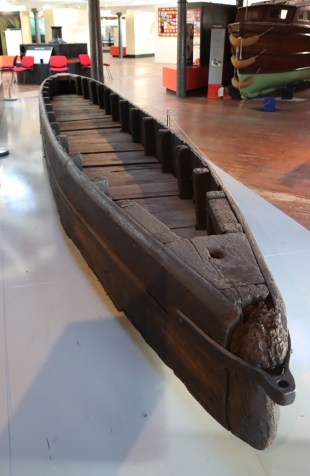
A really wonderful find on the ground floor was a long glass cabinet containing a prehistoric log boat found in Baddiley Mere in Cheshire, and made of a single, hollowed-out trunk of oak.  This is a nationally important object and it was splendid to see it.  I had no idea it was at Ellesmere Port.  Sadly, the cabinet was hemmed in on all sides with other objects. It was also covered in dust and the glass sides reflected the surroundings, so it was difficult to get close or see it properly and impossible to photograph well.  I do wish that it was on the first floor exhibition area, where it could be seen and appreciated properly.  According to the Heritage Gateway website, it is on loan from the Grosvenor Museum.

The prehistoric log canoe, which could be rather more conspicuously and sympathetically displayed.

—————-

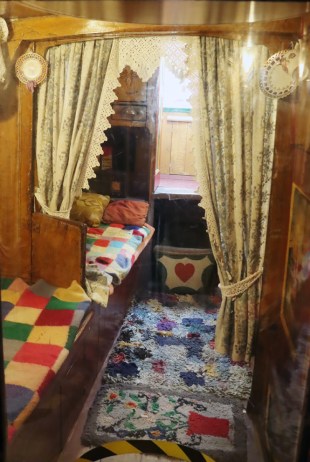
The first floor is a more formal exhibition area.  There is a cut-away narrowboat called Friendship with its painted bow and stern and a tiny little cabin, the unimaginably small living quarters of the narrowboat’s operator and his family.  A delightful pleasure boat, the 1954 Amaryllis, glows with glossy mahogany and polished brass.  My favourite was an example of a long, slender boat called a “starvationer,” designed to run on the 46 miles (74km) of subterranean canal tunnels in the Duke of Bridgewater’s Worsley coal mines.  Other cabinets have model boats and ships showing a range of different types and sizes.  A couple of cabinets have examples of canal art associated with narrowboats.  Items commonly found in the dock and canal port are included.  There’s even a working model of the Anderton Boat Lift.  Information boards provide plenty of detail.

A “starvationer”

Sack chute

Out on the other side of this building, back outside, there are more boats.  Some of the boats that are usually out in the summer are under cover for winter, still visible but not as accessible.  This is particularly true of the valuable wooden narrowboats like Gifford and the ice-breaker Marbury.  Being under cover, they are also easier to work on.  The ongoing care and repair of wooden boats is a major part of the out of season work at the museum, and there information boards explaining what is being done to each.

The ice-breaker “Marbury”

Walking to the left, a splendid ship hull rests in a giant covered cradle, the remains of the Mersey flat barge Mossdale. According to the signage she is the only surviving all-timber Mersey flat.  She was initially named Ruby, in which guise she carried cargoes of up to 70 tons, towed by steam tug on canal, river and along the coast.  In spite of her flat base she was very stable. She was sold in 1920, after which she carried pottery, grain, flour and sugar along the Bridgewater canal.

Mossdale

Beyond this is the splendid Pump House with its 69ft (21m) chimney built in 1873.  This was closed to the public on the day I visited.

Heading back, the next place to visit is Porters Row, four terraced houses, each one fitted out with furniture, accessories, wallpaper, technology and kitchen equipment that would have been found in dock workers’ homes of the 1830s, 1900s, 1920s and 1950s.  This is such fun, a really evocative way of getting a sense of how past objects were deployed in ordinary homes, although some were clearly more prosperous than others, one with a piano, and more remarkably one with a organ!

Beyond and downhill (reached via a ramp, or by locks if you are in a boat) is the Lower Basin containing more boats, with the rather well disguised Holiday Inn hotel beyond.

Crossing to the other side of the port, there is another set of buildings that includes the old stables (for the horses that pulled the unpowered narrowboats), the blacksmith’s forge (still operational), and the Power Hall, which is a display of ship engines, one of which can be operated via a push-button.

FCB18 – a barge made of concrete

On the other side of the Power Hall are two more boats, one of which, the barge FCB18, is fascinatingly made of concrete, which is a crazily counter-intuitive concept. But there it is, happily afloat.  The information signage says that she was built in 1944 during the war, which was a time of steel shortage.  Concrete was readily available and cheap, and although steel was still required, only 18 tons was required, as opposed to the 56 for a steel barge with a carrying capacity of 200 tons.  Unfortunately, the resulting barge was heavy, difficult to steer, and brittle.

The other boat is Basuto, looking like something built of rusty Meccano, but again, still afloat in a sea of green weed.

Back up towards the exit is a sign pointing you to the slipway with its blue-painted wooden winch house, and from here you can see over to the channel that connects the Manchester Ship Canal to the River Weaver and Ellesmere Port.  When you leave the museum, you can turn left along the road that passes between the museum and the car park, and walk along the channel’s edge towards the Holiday Inn, where there are some great swing bridges and more canal-side buildings, including a unique port lighthouse.

The above is just a sample – there’s lots to see.  A great visit.

Visiting Information

A dry day is preferable for a visit, because there is a lot to see outside, and the buildings themselves are part of the attraction.  Opening times are on the Canal and River Trust website here.  At the time of writing (January 2024) the entrance fee was £11.75 for an adult, which seems quite steep but the ticket lasts for a year, and I will certainly be making use of mine for another visit.  Other entrance fees are on the museum’s website on the above link.  There is a nicely presented shop with books, toys and canal-themed ornaments, and a bright, comfortable café.  Outside there are plenty of picnic benches, and a play area.  The museum was amazingly quiet.  Given the bright sunshine I thought that it would be fairly busy, but the cold was obviously a deterrent, the docks being frozen solid.

I was warned at the ticket office about icy surfaces, which takes on a particular resonance when you are walking along the edges of frozen expanses of water with almost no-one around.  But they had done such a good job with the salt and grit that even in the cold shadows there was no ice on which to slip.

For those with unwilling legs, there are ramps nearly everywhere.  In the Island Warehouse there is an elevator to the first floor, but this was out of order when I visited so it might be a good idea to phone first if you need it.  There is a lot to see on the first floor, so it would be best to go when the elevator is working.  The Pump House was closed, but this appears to be accessible only via a short flight of steps (5 or 6 steps).   Otherwise, as far as I could see, the whole site seemed to be fully accessible for wheelchair users and those with unwilling legs.

Boat trips are available in the summer.


Sources

Books and papers

Vince Devine and Jo Clark. 2003.  Ellesmere Port Archaeological Assessment. Cheshire Historic Towns Survey
http://www.cheshirearchaeology.org.uk/wp-content/uploads/2013/06/HTS_Arch_Assess_EllesmerePort.pdf

Websites

The Ellesmere Port Canal Port Trail
The Mersey Forest
https://www.merseyforest.org.uk/things-to-do/walks-bike-rides-and-more/walks/ellesmere-port-canal-port-trail/

The Shropshire Union Canal
The Canal and River Trust
https://canalrivertrust.org.uk/canals-and-rivers/shropshire-union-canal
Virtual Tour of the Museum
https://canalrivertrust.org.uk/things-to-do/museums-and-attractions/national-waterways-museum-ellesmere-port/virtual-tour-of-the-national-waterways-museum

History of the Shropshire Union Canals
The Shropshire Union Canal Society
https://shropshireunion.org.uk/shropshire-union/early-history-of-the-shropshire-union-canals/

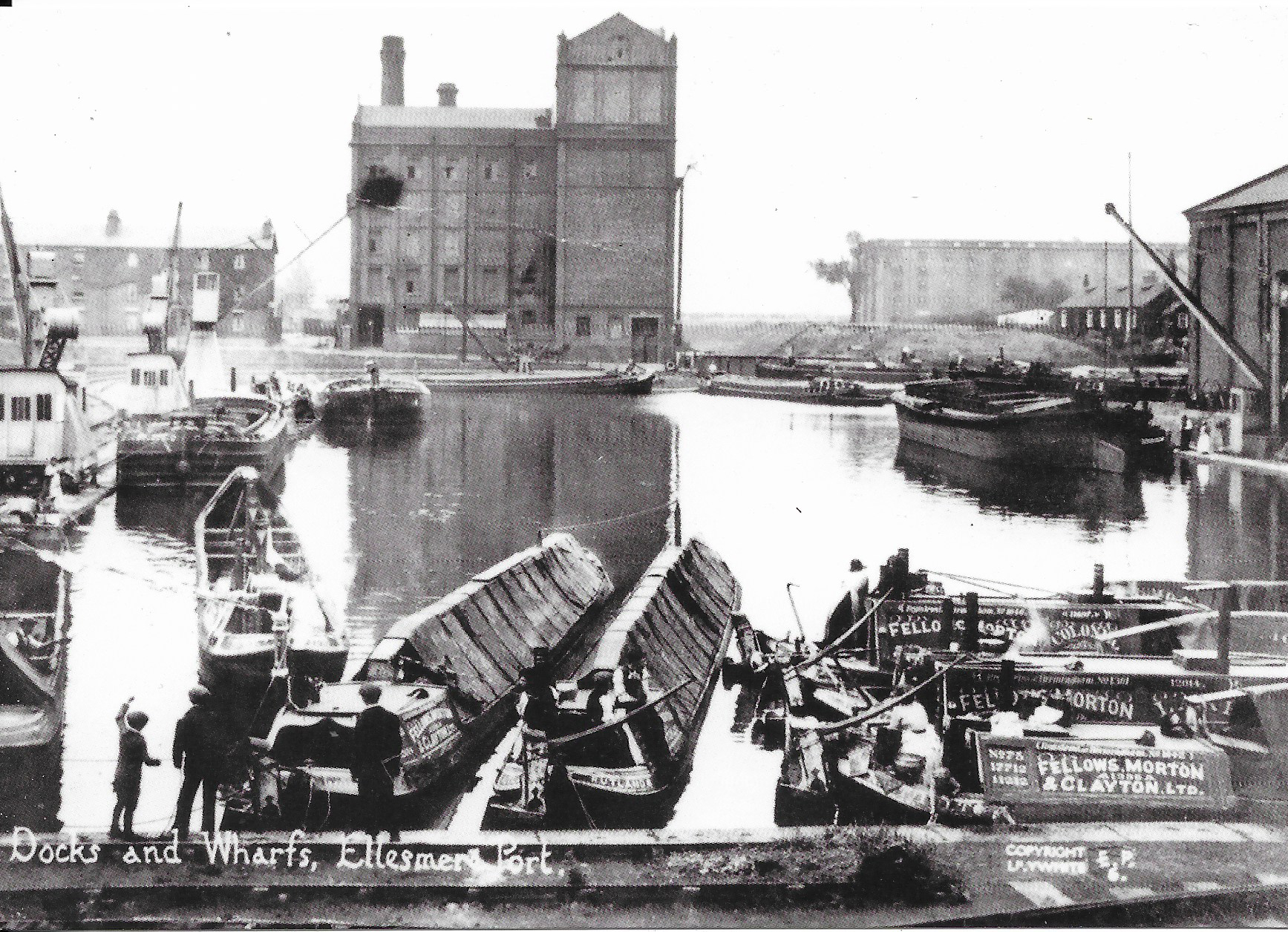
Postcard of a photograph from the museum archives. Lovely to see all those Fellows, Morton and Clayton narrowboats lined up. A real canal legend.

The magnificent aqueduct and viaduct at Chirk, and a very, very dark tunnel

Chirk aqueduct and viaduct on an old postcard. Source: History Points

Having engaged in a two-bridge extravaganza with a visit to the Cefn viaduct and the Pontcysyllte aqueduct via the footpaths in the Tŷ Mawr Country Park recently, I decided to complete the local big-bridge experience with the beautiful Chirk viaduct and aqueduct.  The aqueduct (lower) and viaduct (higher) run parallel within a few feet of one another, high above the floodplain of the river Ceiriog.  A towpath accompanies the LLlangollen Canal across the aqueduct, doubling as a footpath, giving great views over the viaduct and the valley below.  Even better, the aqueduct and towpath vanish into a 1381ft / 420m tunnel under the hill.  The railway, running alongside over the taller and slightly longer viaduct, does not vanish underground and carries on over the top of the hill, where there is a station.  This was a short walk because I had an appointment elsewhere, although it didn’t have to be because once you are on the canal towpath you can simply keep walking in either direction until you feel that it’s time to get back to wherever you have abandoned your car.

Cleaning the Chirk aqueduct in 1954 showing the cast iron plates. Source: History Points

The aqueduct and viaduct, at different heights, seem like such a good pairing but they were not built at the same time, and nor were they designed by the same civil engineer or built by the same contractor.

The aqueduct was built to carry the Llangollen Canal, which was part of a complex plan, only partially realized, to connect north Wales to the large national canal network, about which I have already talked in detail on my post about the building of Pontcysyllte.

As typical with the Jessop and Telford partnership, the  aqueduct had an innovative design.   (https://www.pontcysyllte-aqueduct.co.uk)

As part of this immense canal project the  Chirk aqueduct was built in 1801, four years earlier than the better known Pontcysyllte aqueduct. The aqueduct was a collaboration between William Jessop and the younger Thomas Telford, who had been hired to assist Jessop, but had proved himself an innovator in his own right, even though he had lacked canal experience when taken on.  It is unsurprising, therefore, that the the aqueduct was an innovative design. The weight of the water and its traffic were carried on 10 masonry arches with hollow sections, and a water channel provided with a flat bed of iron plates, its brick sides sealed with hydraulic mortar.  The successful deployment of iron plates inspired the construction of the even more innovative Pontcysyllte aqueduct.  The canal travels under the hill via a tunnel to maintain its level, from where it parts company with the railway, which travels at a higher level than the aqueduct.

The railways came later than the canals, eventually replacing them as the primary form of transport, and the Chirk viaduct came 47 years after the aqueduct as part of this vast expansion and eventual domination of rail.  The viaduct, designed by Henry Robertson who also designed the nearby Cefn viaduct, was built by Thomas Brassey for the Shrewsbury to Chester Railway in1848 (to whom a chapel is dedicated in Chester Cathedral).  It was 710ft (220m) long and 70ft (20m) above the valley floor, with a total of 16 arches.  Look out for the nice decorative niches at either end, the sort of flourish that demonstrated the pride with which such massive civil engineering enterprises were regarded.  It must have felt as though they were changing the world, which they were.

The view from the aqueduct is mainly of the river Ceiriog floodplain, a vast grassy area.  The Ceiriog runs to one side, like something of an afterthought.  The vast expanse of green, although lacking any ooh-ah factor gives a real sense of how much land is being traversed by the arches, and how far above the ground level it is.  And it’s a long way down!  The peace seems so complete that a train suddenly rumbling so closely to the towpath is just a little disconcerting.


If you are planning to walk through the tunnel  you absolutely must take a torch, but do note that you do not have to go through the tunnel to continue along the tow-path.

If you want to avoid the tunnel but proceed to the other side of towpath, stop at the information sign near the tunnel entrance.  There’s a ramp up to the road, and you can walk the length of the tunnel over-ground (a couple of minutes along a quiet road) and rejoin the towpath on the other side.  More about this over-ground route, and other visiting details, are below.


There’s a great view of the aqueduct from a viewing platform at the end of Station Road, if you walk back that way, and you can also reach it from the aqueduct side by going up the slope.

Visiting Details

There are various options for parking, depending on how close to the bridges you want to be, and which side of the tunnel. You could park in Chirk itself or at the Chirk marina, for example, and head south towards the tunnel (the bridges are on the other side of the tunnel, north to south).  Or you could park west of the bridges and head north, which means that you reach the bridges before the tunnel.  I followed the latter strategy and parked in the small car park (10 cars max, no charge) actually on the towpath opposite Canal View, just before a very pretty canal bridge.  Canal Way itself is on the towpath, but has homes along it and is strictly private parking.  The photo of the information board above is fairly dismal due to the light and shade, but if you click it to enlarge it you should be able to make out the main parking areas, plus other features.

If you park where I parked opposite Canal View, walk from the car park along the towpath, with your back to the road.  If you park up and then cross the road on to the towpath opposite, you are going in the wrong direction.  It’s a nice, stretch of metalled canal towpath through woods on either side, passing a couple of houses on the right.  You will suddenly find yourself on the aqueduct over the Dee floodplain, with the viaduct running parallel a very short distance to your left.  The tunnel is at the end of the aqueduct.

The towpath over the aqueduct has a nice safe railing with tightly woven wirework, preventing any chance of falling into the valley.  Like Pontcysyllte, however, the canal trough has nothing on the other side.  Those travelling by narrow-boat, kayak or canoe have a far more interesting time of it.

Signage on the towpath

I have mentioned that you do not have to walk through the tunnel to walk the full length of the canal towpath.  When you reach the tunnel entrance (at both ends) there is a pathway up to a road that runs parallel, and another that runs back down to the towpath, so if you don’t fancy the pitch dark (no lighting unless you bring a torch), there is a perfectly viable alternative.  I came from the Chirk Bank direction on the sign right, and vanished into the tunnel just after the You Are Here label and emerged with he blue arrow.  I took the slope up from the towpath to the road, turned left across the railway and then right down Station Road, as far as the roundabout.  Crossing the road at the roundabout, there is an excellent viewing point for the aqueduct (and a seat to sit on). Just to the left of the viewing point is the slope down to the aqueduct.

When you enter the tunnel, switch on your torch, and be prepared for drips from above even during fine weather.  The towpath in the tunnel will let two people pass, and there is a handrail along the water’s edge.  If you have small children you will probably want to go up to the road level instead, and rejoin the towpath on the other side of the tunnel because although there is a handrail to prevent adults falling into the canal, it is not a fence or barrier, just a handrail on posts.  Dogs should be on a lead.

This is suitable for unwilling legs if you stick to the towpath because it is level all the way.  If you want to avoid the tunnel and are up for some gentle slopes, the two ramps up from the towpath to the road should be okay and the roads themselves are on the flat.

Tŷ Mawr Country Park, including the Cefn viaduct, the Pontcysyllte aqueduct and some lovely walks


The Tŷ Mawr Country Park, just ten minutes south of Ruabon (LL14 3PE / What3Words ///disprove.dart.isolated) in the Vale of Llangollen, consists of walks through fenced fields, woodland tracks and views over the river Dee and the surrounding countryside.  Most spectacularly, its starting point lies almost underneath the monumental stone-built Cefn railway viaduct, from where a circular walk begins, whilst a less formal there-and-back branch off a circular walk takes in the iron-built Pontcysyllte aqueduct.

Map on the outside of the visitor centre showing all the route options (click to enlarge). At far left is the Cefn viaduct and at far right is the Pontcysyllte aqueduct.

The circular walk begins and ends at the Tŷ Mawr car park (pay and display, but only £1.00 for the day at time of writing, and with two power points for electric cars), visitor centre and café (both closed when I visited yesterday, Wednesday 6th September), and toilets (which were open).

Behind the visitor centre there is a picnic area with excellent views over the countryside and the Cefn viaduct.   There is also a small children’s farm with chickens, goats and other farmyard animals, and a children’s play area.  The circular walk is a metalled pathway through small fields and woodland, which takes in the river Dee, with a small picnic area near a tiny “beach” and has a number of picnic areas. I haven’t found an online PDF of the map above, but you can download my photograph of it as a PDF here (sorry that the text is not particularly clear).

You can go either way around the walk, but the recommended route on the map fixed to the outside of the visitor centre is anticlockwise, which finishes at the Cefn viaduct and the memorial dovecot.  Although there are some inclines, I would suggest that it is entirely suitable for those with unwilling legs.  It was certainly okay for a group of women with pushchairs.  It probably takes no more than half an hour to 40 minutes to walk, with stops to admire the river and the viaduct.  There are occasional benches, a picnic area by the Dee and further picnic areas with lovely views at the top of the walk behind the visitor centre.

The real star of the circular walk, missing off the leg to Pontcysyllte, is the Grade II listed Cefn viaduct, which can be seen around much of the circular walk.  The walk goes right up to and along the base of the viaduct, which really is an awesome sight as you approach it and begin to get a sense of its scale.  The Cefn viaduct was designed by civil engineer Henry Robertson, who had purchased the Brymbo Ironworks, and was built in yellow Cefn sandstone and red brick by contractor Thomas Brassey (to whom there is a chapel dedicated in Chester Cathedral). It was built surprisingly quickly over a two year period to carry the Shrewsbury and Chester Railway over the Dee valley.  It opened in 1848, 43 years after the opening of Pontcysyllte, at a cost of £72,346.  It has twenty one arches, nineteen of which are 60ft (18m) wide, and two of which, one at either end, are 30ft (9m) wide.  If you approach the country park from the Ruabon direction, you will pass under one of the two narrow ones.  The arches span 1508ft (466m) and at their most dizzying tower 147ft (45m) above the level of the river. 

The additional leg of the walk to the Pontcysyllte aqueduct along the path of the Dee is not suitable for anyone who cannot handle steps, as there is a flight down from the circular walk to near the level of the river, with no handrail.  There is a signpost and small Pontcysyllte-themed bench indicating where you have to turn off the path down the stairs to a more informal section towards the aqueduct.


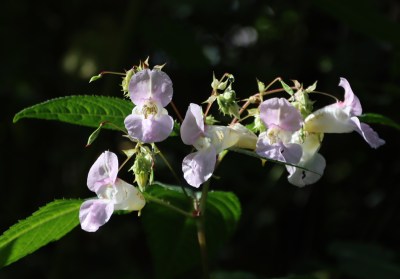
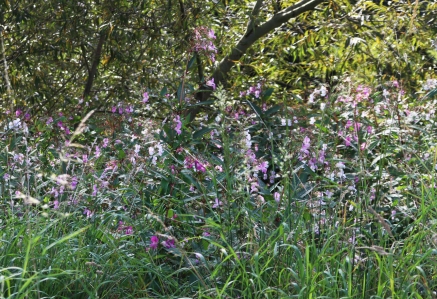
I enjoyed this more informal section, which after a wending track following the path of the Dee through woodland and open field leads to steps at the other end that take the walker to the level of the aqueduct and the Trevor Basin, with fully open visitor centre and other facilities (including boat trips across the aqueduct).  The section along the river to Pontcysyllte will be highly seasonal, with different vegetation allowing or blocking views to the river, offering seasonally variable wildlife.  Yesterday it was very attractive, with glimpses of the river through the tall plant life, and occasional tracks through the vegetation to get down to admire the river itself, much-used by dog walkers whose canine friends were doing a lot of swimming.  The dominant floral element was Himalayan balsam, with orchid-like flowers in pinks and pinkish whites, which is terminally invasive, a complete monster which, given half a chance, takes over its entire environment, but is endlessly pretty and no bother at all in the massive acreage of the park.


Viewing point for the Pontcysyllte aqueduct

The narrow track follow a well sign-posted route, although there are only a few places where choices are required.  When you reach the aqueduct viewing-point that is marked by a metal sculpture of a camera (which acts as a frame for taking photographs of Pontcysyllte) there is a choice to go straight on to the main steps, or turn right to approach the aqueduct from a different angle.  If you are not interested in going up to the canal and aqueduct level but are happy to enjoy some terrific views of the remarkable structure from below, by the side of the river, go straight on.  You can still change your mind and walk up to canal aqueduct level, but be warned that it’s a fairly long and steep flight.  You can always drive back via the Trevor Basin, at the beginning of the aqueduct, where you can park up at the level of the aqueduct.  A better option when you reach the “camera” is to turn right to go up a much shorter and less strenuous flight of steps, which brings you out onto a wooded path that both includes a viewing point and  then delivers you to the canal, Trevor Basin and the aqueduct. You can then then return to Tŷ Mawr via the steeper staircase which is a lot easier going down than up, turning this final section into a circular walk.

The glorious aqueduct, built by Thomas Telford and opened in 1805, is always a joy.  I have written up a summary of Pontcysyllte’s history and visitor information on a previous post.  It is worth going on a bright, cloud-free day, because the views from the aqueduct down to the Dee valley are enhanced by the sun glinting off the water, and by the brightness of the green fields and trees that flank the river.  The towpath along the aqueduct trough is quite narrow, but wide enough for people to pass one another.  The iron railings are high to prevent accidental falls, but not so high that you cannot see over them.  This really is one of the highlights of the area for visitors.

Once done with the aqueduct and Trevor Basin and the visitor centre, going down the longer set of steps to return back to Tŷ Mawr is a great option, walking down the side of the aqueduct and getting a real sense of its scale.  The Dee is particularly delectable here too, bubbling over shallows and glistening in the sun.  A great place to plonk down on the river bank and enjoy an ice cream.

Having retraced your steps, and once back on the more formal circular walk, the star of the show is the Cefn viaduct that looms every close.  There is an option to stop at a picnic area where a small beach is a great spot for admiring the river.  There are tracks that let you walk just a little bit further along the river before heading back to the circular walk, or you can simply pause on the path, admire the view, and keep going up the slope towards the base of the viaduct.  The viaduct is amazing.  You can see it for most of the circular walk.  At first just a few arches appear, and then gradually the entire 19-arch run of the stunning structure is revealed until you arrive at the top of the slope and at the foot of one of its enormous columns.  Look up.  Wow!  At the very top of the arch at the top of the yellow stone-faced columns, the underside of the arches are formed of red brick-built, providing a contrast with the yellow Cefn sandstone.

There is a bench where you reach the viaduct, and a signpost.  The left option continues the circular walk along the foot of the viaduct, which you will have to do anyway to return to the car park.  The right option requires you to cross a stile, and allows you to walk just a few metres in order to see down to the feet of some of the arches in the river, albeit through the vegetation, and to stand right under one of the arches and get up close and personal with the stone work.

When you return to the last stretch of the circular walk, following the viaduct along its base, you eventually reach the attractive dovecot.  This looks much older older than it is, rather like the 18th century example at Erddig, but it is modern, built in 1993 as a memorial.

It’s a short and largely undemanding but seriously enjoyable walk.  Including the walk to Pontcysyllte, the walk only took about two hours to and from Tŷ Mawr car park, with lots of stops for photos and 10 minutes sitting overlooking the river at the foot of the aqueduct with a much-appreciated ice cream.  Apart from the steps, it’s an easy walk, and there is much to see.  I arrived at Tŷ Mawr at 11 and left shortly after 1pm, so it’s not a day-eater.  A great place for a stroll, rather than a hike.  Up-to-date visitor information is available on the Wrexham County Borough Council website.

The name Tŷ Mawr translates as “big house” or “great house.”  There’s no sign of a house, and no mention of one on any of the websites that talk about the country park.  Many old houses have been lost, but I can find no mention of one associated with the country park.  Does anyone know if there was once a property associated with the site?


A walk from Telford’s Horseshoe Falls to the outskirts of Llangollen

Photograph taken from the top of the path leading from the car park, looking down at the Horseshoe Falls

The Horseshoe Falls are just outside Llangollen, a remarkable and lovely feature developed by Thomas Telford as part of his solution for supplying the Llangollen canal with water.  As the name suggests, it is a semi-circle of falling water, actually a man-made weir, which combines human symmetry with the natural beauty of water.  It looked spectacular in the sun, more art than engineering.

I usually make my comments about accessibility for people with uncooperative legs at the end, but in case the above photo makes you think I have lost my mind to categorize it as suitable , this is because there are other ways to approach the falls than from the top of the hill, approaches that are completely on the flat along the canal towpath.  Bear with me; clarity will emerge 🙂

Map of the Horse Falls area. Source: Pontcysyllte Aqueduct website

I had not set out to do this walk yesterday (Friday), and was actually on my way back from Valle Crucis (open once again to the public, but closed Tuesday and Wednesday each week), and was not ready to go home, so decided to drive down the road to the car park for the Falls, which is clearly signposted, and do a short walk to find out what it was like with a view to returning for a longer walk on another day.  The car park is pay-and-display but it is only a pound for the entire day, payable by cash or by swiping your debit card.  There are also public toilets.  I imagine that it gets quite busy at the weekends.

It is a short walk from there up a very slight slope along a metalled path to the top of the hill, from which the valley unfolds below.  There is an information sign here too.

I covered the basics of the building of the canal on earlier my post about the fabulous Pontcysyllte aqueduct, which you can find here, so won’t repeat that on this post, but the Horseshoe Falls deserve an explanation in its own right.  To secure water from the Dee, which ultimately comes from Lake Tegid at Bala, Telford gained permission from the owner of the lake to take off water  from the Dee for the new canal. The water had to be diverted from the Dee into the Llangollen canal by means of a feeder channel, some 1.8 miles long.  The distinctively shaped weir helps create a pool of water that can be pumped into the feeder channel. 

This link between the river and the canal required the installation of a pumping station by the side of the pool below the weir.  It was replaced by a new  Meter House or “valve house” in 1947, which still stands.  A massive pipe, 20ft long and 3ft in diameter runs 8ft below the ground to supply the Dee water to the Llangollen canal feeder.  This flow is released and slowed by means of guillotine valves which are controlled from the valve house.  By using the water of the Dee as it fell from Snowndonia via Lake Tegid, over 11 million gallons of Dee water a day, is fed into the Llangollen canal, eventually emptying into Hurleston reservoir, just north of Nantwich, where the Llangollen Canal meets the Shropshire Union Canal and contributing to the greater canal network. It was completed in 1808.

asfafas
It is a short and not particularly steep walk down to the falls from the car park, and the hillside is, at the moment a sheer delight, with the slopes covered in giant buttercups, purple thistles and daisies, with a few blue speedwells dotted in amongst them.  Once down at the falls, you are at the source of the Llangollen canal, a remarkable thought.   The valve house for the canal is at your left, and the footpath runs both left (east) and right (west).

I cannot yet comment on the footpath heading west, but if you head left, towards Llangollen, you find yourself immediately on a wide, level path, the towpath, which runs deliciously between the canal on your left and the Dee on the right.  The canal is very narrow at this stage, just a feeder, and not navigable.  The Dee too changes character, from a wide, deep run of uninterrupted river to fast, impressive rapids channelling itself through large slabs of natural rock.  Although the towpath runs above the level of the Dee, there are paths down to the river, and people were sunbathing on the huge slabs and paddling in the water.

The sound of the river coursing over the rocks is glorious, and a fabulous contrast to the peaceful, mirror-surfaced channel of canal that runs along the base of a solid wall of local rock, infiltrated by all sorts of rock-loving plant species and overhung by trees.  The canal widens as it goes, but remains un-navigable because, even where the canal is sufficiently wide and deep, there is no winding point (an indent where narrow-boats can turn around.  Long, sinuous weeds signal the direction of flow in the apparently motionless water, and fish, swimming against the current, hold a stationary position.  With the sun on it, when not mirroring the vegetation and sky above, it appears gold and velvet brown.  There are bridges all the way along, some modern and metal, but there are also traditional stone canal bridges, clearly numbered, with ramps for horses.  There is also an impressively substantial bridge spanning both the canal and the river.

One bridge is a delightful exception, and very unexpected.  The Chain Bridge Hotel contains within its Dee frontage, access to a small but perfect suspension bridge that provides access from the tow path to the railway station on the other side of the river, and some height above.   There is a small car park at the hotel, which can be used by the public.  I didn’t stop for a for a drink or a bite to eat, but the views from the terrace, over the bridge and the Dee rapids, are excellent.  This would probably be a good place to start and end your walk (particularly if the food is any good) if your legs like things simple, because the whole walk is on the flat.

I didn’t go much further because it was already getting rather late and I had other things to do.  I suppose I must have walked for about half an hour, with breaks to take photos, and then turned and walked back. Another way of tackling the walk would be to start in Llangollen and walk out towards the Horseshoe Falls.  This would be a much longer walk, and one for another day,  and again on the flat all the way along the towpath.  I am looking forward to it.

I went some way past the Motor Museum, which was to the right and below the level of the towpath.  The walk was particularly good on a day like yesterday, with hot sun and a light breeze.  At this time of year, with leaves on the trees, the towpath is in dappled shade, perfectly warm but not too hot.

Here are the rest of the photos:
dafsdfds

A visit to the Pontcysyllte Aqueduct near Llangollen – Thomas Telford’s iron trough 126ft over the Dee

It is without question a marvel of modern engineering and a remarkable sight, but what strikes most people when they first see the 1000ft (c.305m) Pontcysyllte  canal aqueduct is that the handrail along the pedestrian walkway 127ft (38.5m) over the river Dee is only a few steps away from the other side of the narrow canal trough, which has no handrail at all to separate a boat user from a straight drop into the valley bottom.  Until you lean over the towpath’s handrail and look straight down, 127ft is a rather abstract number.  The photograph on the right shows me crossing it on a 40ft narrowboat in the 1990s on a two week canal holiday.  What you cannot see are the white knuckles with which I am gripping the tiller for dear life, in spite of having absolutely no fear of heights, because there was absolutely nothing between me and that drop.  The aqueduct, Grade I listed, and a UNESCO World Heritage Site since 2009, is the longest and highest in Britain.  It’s a long way down.

The Pontcysyllte Aqueduct passing over the Dee valley at Trevor. Source: Dronepics Wales

Seen from below or from a distance, the Pontcysyllte aqueduct is a fabulous sight, not pretty but truly awe-inspiring, and it shows exactly what Pontcysyllte is:  an iron trough built on 18 vast tapering brick piers, with 19 arches.  It was all about function, nothing to do with aesthetics, and has no ornamentation to soften it, but the sheer ambition of it grips the imagination and makes one look beyond the factual details of the thing.  It really is superb.  There is a path leading down along the side of the approach to the aqueduct into the valley below, a long but well maintained track to the valley bottom, where you can walk along the Dee and get a long at the aqueduct from a distance.  That’s one for another day.

It was a beautiful day, absolutely flawless, with cerulean blue skies, a golden sun warming one’s face, and a brightness of autumnal colours that takes some beating.  After attending the Remembrance Day commemoration at the Churton war memorial, with a memorable and moving address, and a two-minute silence filled with birdsong, I collected the car first, the parent next, and we proceeded towards Trevor, on the A539 to Llangollen.  There’s a brown signpost pointing to the aqueduct’s pay-and-display car park at the Trevor Basin, which is the home of a number of canal boat companies today, but when it was built was used for the transhipment of coal, building stone, iron products, timber and bricks, much of which was brought to the canal wharf by horse-drawn waggons.

Map of the key canal features in the Vale of Llangollen. I have added a red arrow to show the best car park for Pontcysyllte. Click to enlarge. Source: Pontcysyllte Aqueduct & Canal World Heritage Site

Thomas Telford and his chosen team

Portrait of Thomas Telford, who chose to be painted with the Pontcysyllte aqueduct in the background. Engraved by W. Raddon from a painting by S. Lane.

The aqueduct (built (1794-1805) was part of the Ellesmere Canal project.  It is one of the many British civil engineering projects that has the names of Thomas Telford (1757-1834), ironmaster William “Merlin” Hazeldine (1763-1840) and master stonemason John Simpson (1755-1815) attached to it, three men who had brought their particular skills to many different joint projects and in doing so had developed an invaluable relationship of trust and mutual respect.

Thomas Telford started his career as a stone mason, working in London on buildings such as Somerset House, and had ambitions to develop his career as an architect.  When he became the County Surveyor for Shropshire, he worked on a great variety of building projects including, by his own estimation, 40 road bridges between 1790 and 1796, two of which employed iron in their construction.   Hazledine had initially trained as a millwright, but  his family owned a small foundry  and Hazeldine went on to grow his iron casting business with the large Coleham Foundry at Shrewsbury.  Hazledine and Telford, both Freemasons, had met at Salopian Lodge  in Shrewsbury in 1789 and become friends and professional collaborators.  On one of his earliest projects in Shrewsbury Telford hired a childhood friend Matthew Davidson to oversee works, and Davidson employed master stonemason John Simpson who worked on many of Telford’s projects. Telford described Simpson as “a treasure of talents and integrity.”

Although Telford is by far the best known of the three, he, Hazledine and Simpson worked together frequently on many different projects to produce some of the great civil engineering constructions of their era, mainly bridges.  All three were involved with the Pontcysyllte aqueduct, where  Matthew Davidson also joined them, but the story of the canal starts before any of them were recruited to work for the Ellesmere Canal project.

Background to the aqueduct

The Trevor Basin today.

The big name in canal construction was James Brindley (1716-1772), who was responsible for building over 365 miles of canals by the time he died.  Brindely realized that any inland waterway network would need to connect to all the great navigable rivers that connected to the sea, including the Thames, the Mersey, the Severn and the Trent, incorporating other important navigable rivers like the the Avon and the Dee.  Most of his canals were contour canals, wherever possible built on the level and avoiding slopes so that locks and lifts could be avoided.  The network was therefore a sprawling affair, but it revolutionized transport, avoiding roads that would become mired and impassable in winter, as well as unnavigable sections of rivers, and the riverine problems of drought and flood.  Water into and out of the canal system was regulated and therefore predictable, and allowed year-round transport.  The advantages became very clear very quickly, and manufacturing and trading businesses began to locate themselves at critical points on the canal network.  Eagerness to invest in infrastructure resulted in a canal boom in the late 1780s and 1790s.  Each new section of canal required an Act of Parliament, subject to Royal Assent, and Act after Act was passed as the network expanded.

The complex arrangement of the Ellesmere Canal and its branches is shown as a think blue winding line. The thick blue line is the Dee. The yellow lines are roads. Click to see a bigger version. Source: Wikipedia

In 1791 a proposal for a canal to link the Mersey at Netherpool (later renamed Ellesmere Canal) to the river Dee at Chester and the Severn at Shrewsbury was discussed by three Shropshire entrepreneurs, carrying mainly coal, iron and lime, supported by other goods as well.  It was decided that a branch would be needed to Wrexham and Ruabon and onwards, via Chirk, bypassing Oswestry at its west, to Shrewsbury in the south with a branch to Whitchurch in the east and another to Llanymynech.  Originally it was planned to run a branch from Ruabon to reach the Irenant slate quarries near Llantysilio, via Llangollen, but this was at first dropped and later revived for different reasons (discussed below).  That branch would in turn connect to the Montgomery Canal from Frankton Junction via Welshpool to Newtown in mid Wales (for carrying limestone, coal, timber, stone and slates).

This seriously ambitious plan found sufficient support for a surveyor to be hired and possible routes to be explored.   William Jessop, an experienced canal engineer, was hired to head up the project and oversee all of its different components.  After disagreements over the final route were resolved (albeit not to everyone’s satisfaction), the Ellesmere Canal proposal went through parliament and received its Royal Assent in April 1793.  There were still a lot of technical and logistical details to resolve, including how the canal was to cross the Dee and Ceiriog valleys.

It was clear that Jessop needed help, and although the internal promotion of William Turner was Jessop’s first choice, Telford was brought in without his input. It is not certain how Telford, increasingly bored with life as a county surveyor, managed to insert himself into this ambitious engineering project, but the canal was already generating considerable excitement in the area and it looks as though he heard of the position and sought the support of one of Britain’s most prominent industrialists, John Wilkinson, to help him secure it.  Jessop made it clear in his letters what he thought of having Telford, who he had never met, brought in against his wishes as his right hand man, and refused to attend the meeting that appointed Telford to the Ellesmere Canal Company.  In spite of this rocky start, Jessop and Telford seem to have hammered out a decent working relationship, with Jessop teaching Telford what he needed to know about canal construction, and Telford injecting some ideas into the project.  Like Jessop, Telford managed to broker a deal to enable him to carry out other projects when his personal presence was not necessary, and this enabled him to work on other civil engineering works whilst the Ellesmere Canal was being built.

Building the aqueduct

Work began at Netherpool on the Mersey, renamed Ellesmere Port, in 1793.  The 9-mile canal ran down the Wirral to meet the Dee at Chester, and went so well that it opened for traffic in 1795 and was an immediate success.  While this section was underway, discussions were underway about how the canal might cross the Dee.  The original idea presented to the directors by Jessop and Turner, and apparently not opposed by Telford, was a relatively low level stone channel crossing three stone arches, with step locks either side to manage the ascent to and descent from the level of the canal to the aqueduct.   This would have been an expensive option, requiring not only the locks but the management of the water that would feed the locks.  Even after this had been agreed in principle, concerns resulted in a new plan for an iron channel on stone columns.  It is likely that it was proposed by Telford and supported by Jessop partly because it would have reduced the cost as iron was lighter, easier to work and move, and cost less.  A sketch by Telford from March 1794 survives showing an early version of this aqueduct design.

Telford’s Grade 1 listed Longdon-on-Tern aqueduct in Shropshire, 1796. Source: Chris Allen, Wikimedia
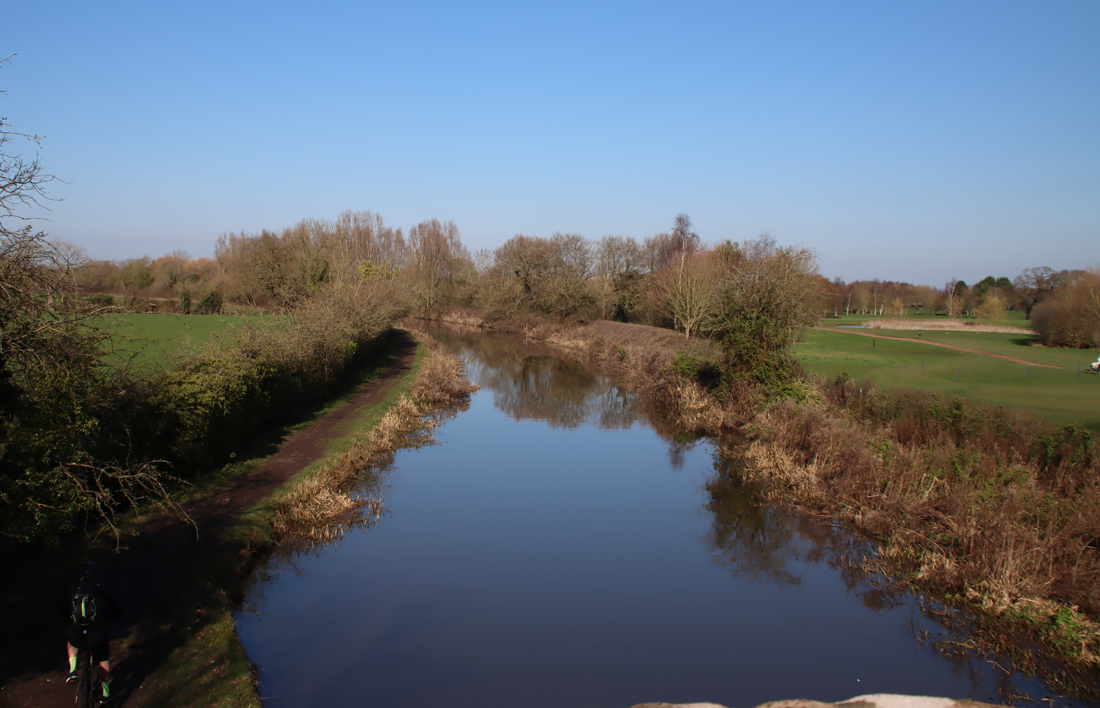
In early 1795 Telford had the opportunity to try out a smaller, less ambitious version of the design at Longdon-on-Tern on the new Shrewsbury Canal, on which Telford was also working, as replacement for the incumbent engineer who had died mid-project.  Later in the same year he had built a fully navigable iron aqueduct on a canal that had none of the problems of leakage or shattering that had worried other engineers.  Whether or not this was taken into account by the directors of the Ellesmere Canal Company, they decided in the same year to go for the iron trough on immense stone piers that was eventually built.

Telford’s friend and frequent collaborator, master mason John Simpson soon joined him on the project.  Telford also brought in Matthew Davidson, his childhood friend of Telford, a stone mason, civil engineer and excellent organizer, to oversee the bridge works.  Telford and Davidson had worked successfully together on Telford’s Montford Bridge project of 1790 – 1792.  Shortly afterwards, William Hazledine arrived to establish an ironworks and take charge of the construction work for the iron ribs and the trough.  By assembling three men that he had worked with before and trusted absolutely, Telford was not only ensuring that the project was in good hands, but that he had a team who could operate in his absence. The foundation stone for the aqueduct was laid on 25th July 1795.

Jessop and Telford made wooden models to test the design for the trough, finding that 1000s of iron parts would be needed.  The cast iron for the aqueduct was made of cast iron that was produced in William Hazledine’s new iron foundry nearby at Plas Kynaston, Cefn Mawr.  Hazledine established the Plas Kynaston foundry to service the construction of the Pontcysyllte aqueduct, thereafter taking advantage of the canal network to carry his cast iron in segments to be transhipped by river or sea to where it was needed.  When he built the Eaton Hall Iron Bridge at Aldford on the river Dee (described on an earlier post) it was from Plas Kynaston that the iron was shipped by canal.

After 1801 Jessop was much less involved and Telford also had interests elsewhere, and Telford was also involved in other projects, leaving Davidson, Hazledine and Simpson to run with the project.  The piers rose steadily, each built in turn from south to north by, at the peak of the project, over 500 men.  Jessop had been desperately worried from the beginning by the dangers to workmen’s lives of such tall piers, and safety precautions were taken very seriously, with the loss of only one life.  The iron parts were manufactured as needed at Plas Kynaston, and were numbered according to the order in which they would be needed so that only pieces needed at any one time would be delivered to the site.  First, ribs of iron were fitted to the piers, and then the trough was bolted on top, after which a wooden towpath was fitted to the side.  The entire project was finished in 1805, and opened on a sunny afternoon on November 26th 1805 at a grandiose ceremony followed by a lavish feast.  The entire cost for the aqueduct project was £47,018, which in today’s money translates as around £617,855 (National Archives Currency Convertor).
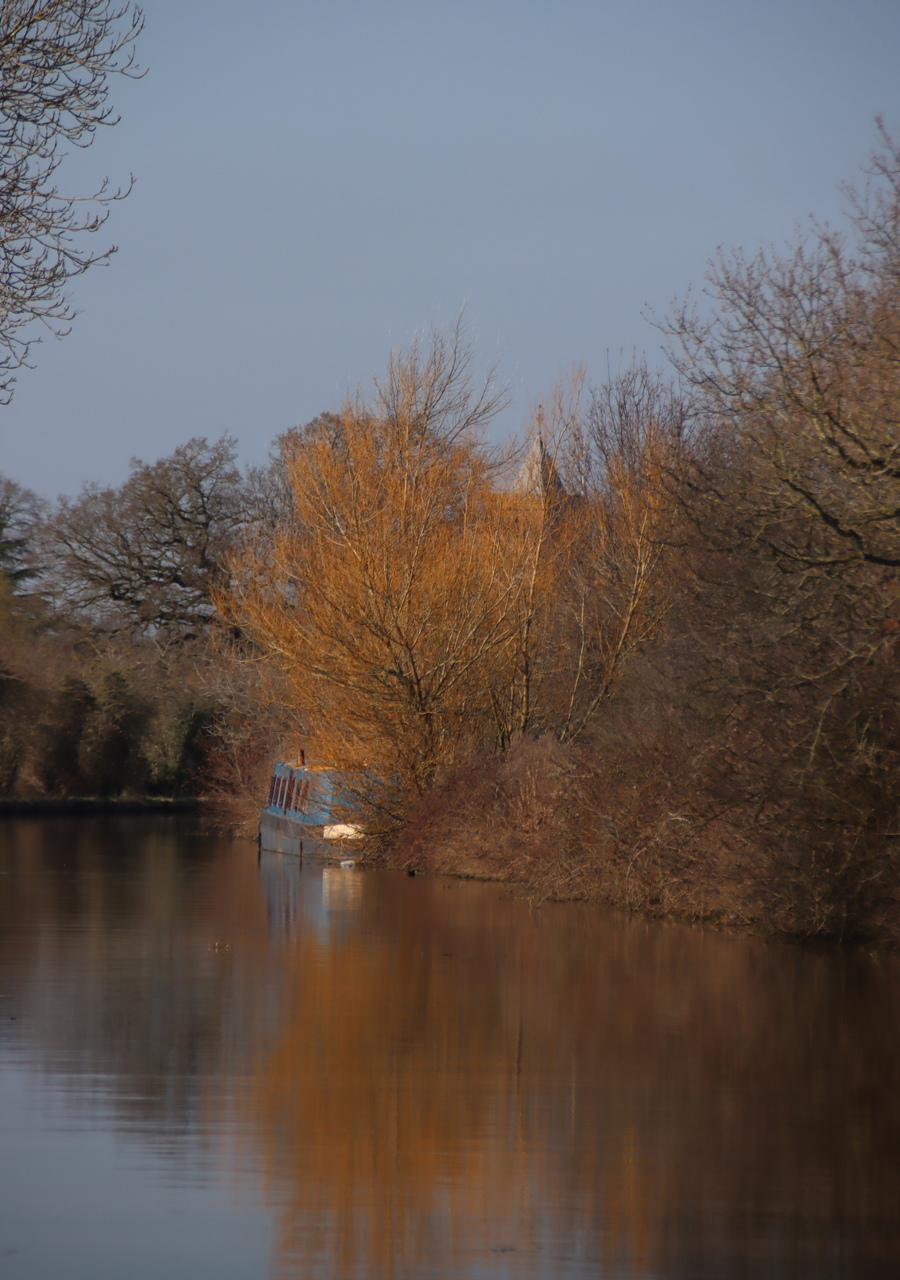
Metalwork over and under the arch at the left-hand Rhos y Coed bridge.

Although not as visible in the finished design, iron was also used in the Chirk aqueduct on the Llangollen canal where ten semi-circular masonry arches were crossed by a water channel with an iron bed plate and brick sides sealed using hydraulic mortar.  As well as in the aqueducts, iron was used in various ancillary structures too.  for example, Bridge 29, Rhos y Coed, at the Trevor Basin has visible iron metalwork supplementing the stone arch, and iron was used to cap the weir at the Horseshoe Falls.

The role of the aqueduct

Map from Nicholson’s Guide to the Central canal system, showing the stump end (framed in orange) of the planned Ruabon to Chester section of the canal, which was never built and now houses the attractive Trevor boatyard where the visitor centre is located. Source: Nicholson 1989

The Pontcysyllte aqueduct was almost immediately  in danger of becoming something of a white elephant, because its original role as a direct route to Wrexham and Chester was never fulfilled.  The section that led past Trevor Basin over the aqueduct was supposed to run straight on to the west of Ruabon, via Wrexham and on to Chester where it would link with the Wirral stretch leading to the Mersey and to the  Dee and the Shropshire Union Canal.  All that is left of the Trevor-Ruabon-Wrexham-Chester branch is a stump end occupied by the Trevor Basin, where the car park is located.  This is clearly visible on Nicholson’s map left, where the main line of the canal comes to a sudden, abrupt end.

The abandonment of this important part of the original plan was due to both engineering problems and financial issues.  There were only  two obvious engineering options – an enormous tunnel or a series of locks climbing towards Wrexham and another descending into the Cheshire plain where the canal could run along the flat plain to Chester.  The tunnel would have been appallingly costly, and it was difficult to know how the locks, by no means a low-cost option themselves, could have been supplied with the sufficient water.  Although other technologies were considered, they were rejected for reasons of practicality and cost.  This left the problem of where the water was to come from to feed the rest of the Ellesmere Canal and its branches.

Horseshoe Falls

At the far end of the Llangollen canal is Telford’s great arc of a weir, today known as the “Horseshoe Falls,” marking the point at which the Dee begins to feed the Llangollen canal.  An original survey had considered using the water of the Dee as it fell from Snowndonia via Lake  Tegid at Bala and through the Vale of Llangollen as a water source for the canal.  The idea had been to link the canal to a slate works, feeding the canal at the same time.  This proposal was now revisited.  The owner of Lake Tegid gave his permission and the plan was actioned.  At the Horseshoe Falls the canal is fed with water from the Dee via a sluice and meter, and today carries over 11 million gallons of Dee water a day, emptying it into Hurleston reservoir, just north of Nantwich, where the Llangollen Canal meets the Shropshire Union Canal.  I will be posting more about the Horseshoe Falls weir on another day.  There is no turning point for vessels over 10ft long beyond Llangollen, so the final stretch is only used by minimal traffic today.

This means that the vast aqueduct, such a remarkable feat of civil engineering, would only ever lead to the relatively unimportant narrow section of canal and feeder to a complete dead end at Llantisilio after passing high through Llangollen.  This navigable channel is approached from the aqueduct by negotiating a sharp left-hand corner just beyond the exit of the trough.  Although this seems like a sad role for an aqueduct that should have carried many times the traffic that it eventually did, without the aqueduct there would have been no water to feed the rest of the system.

Even without the Ruabon – Chester link, those wishing to carry all their goods by canal were still able to connect to the main canal system, although to reach Chester they had to take a very long way round, and Wrexham was excluded completely.  The Llangollen canal still linked to the Shrophsire Union at its eastern end, from which the rest of the vast canal network could be reached.

  • Chester could still be reached by travelling the full length of the Llangollen canal to Hurleston Junction, just north of Nantwich, on the Shropshire Union Canal.  From here Chester was nearly 16 miles away.
  • Just to the north of Hurleston Junction was the Middlewich Branch, which headed east and linked to the Trent and Mersey Canal, from where Manchester, Stoke on Trent, the eastern Midlands and Yorkshire could all be reached.
  • In the opposite direction, from Hurleston Junction the Shropshire Union ran directly to Birmingham, which was a vast junction for canals in all directions, including London on the Thames and Gloucester on the Severn.

The Cefn Mawr railway viaduct, which opened in 1848.

Along the line that the original canal would have taken, a cast iron tramway was built to connect local collieries and ironworks with the canal, the iron supplied by Hazledine.  This made the Trevor Basin a particularly important hub of activity, taken delivery of bricks, tiles, coal, iron limestone, slate and sandstone for transhipping along the canal.  It was also a boatyard, with  working narrowboats being built and repaired by Hills Boatyard in the dry dock next to the Visitor Centre (now occupied by a floating take-away café).  Later, there was an interchange with the steam railway.

Visiting Pontcysyllte

A small pay-and-display car park is available for visitors at the Trevor Basin, now the home of some canal trip and holiday companies.  There is also a pub with outdoor seating, and a take-away small café on a little boat next to the visitor centre.  There is a lot of disabled parking provided for in the small car park, which is reached from the A539 in Trevor, clearly signposted with brown heritage signposting.   The aqueduct is a very short walk from the car park, and the towpath heads for miles in both directions.

If, before or after crossing the aqueduct, you are interested in finding out more about the general context of the aqueduct and its location in relation to other parts of the canal, at the Trevor Basin there is a visitor centre, a small but nicely put together display space.  As well as a map of the area that takes up a wall and shows all the main features of the landscape and the canal system itself, there is a display of some of the tools that were used in the construction of the aqueduct, which are startlingly basic, and photographs and artists’ impressions of some of the supporting works, including the foundry at Plas Kynaston.  There are ring folders full of additional information, including facts and figures, that you can look through.

Walking the aqueduct itself is not for everyone.  The towpath is rock solid, with a tall handrail on the valley side, but only wide enough for two people, so there is a lot of stopping still to allow others to pass and there is nothing to stop you falling into the canal.  The canal is only just over 6ft (1.8m) wide, and beyond that is an unrestricted (no handrail, no nothing) drop 127ft to the valley floor.  A couple who I passed told me that they were determined to walk the full length and back, but were conquering their fears to do so, and they were gripping firmly to the handrail.

An alternative to walking is to cross by boat.  There are a number of short cruises that leave the Trevor Basin and run for about 20 minutes before turning and coming back (depending on which one you take and the time of year).

For those with uncooperative legs, everything is on the flat, so it is a very good walk for those who find uphill sections of walks difficult.  After rainfall, towpaths always become a bit muddy, and can be slippery, but even though we’ve had some rainfall recently, it was fine.  The towpath between Trevor and Llangollen is beautiful, and a good choice if you can face the aqueduct.

I noticed that one of the passenger boats said that it was suitable for disabled passengers, but I would recommend getting in touch with them first to find out about timings, prices and suitability for different types of disability.

Sources

Books and papers

Glover, J.  2017.  Man Of Iron.  Thomas Telford and the Building of Britain. Bloomsbury

Lynn, P. A. 2019.  World Heritage Canal.  Thomas Telford and the Pontcysyllte Aqueduct.  Whittles Publishing.

Nicholson, R. 1989 (4th edition). Nicholson/Ordnance Survey Guide to the Waterways 2: Central. Robert Nicholson Publications and Ordnance Survey

Rolt, L.T.C. 1958, 2007.  Thomas Telford. The History Press.

Pattison, A.  n.d. William Hazledine (1763-1840): A Pioneering Shropshire Ironmaster.  West Midlands History https://historywm.com/articles/william-hazeldine-1763-1840  (Pattison’s full 278-page M.Phil, on which the article is based, is available here: https://etheses.bham.ac.uk/id/eprint/3358/1/Pattison12MPhil.pdf )

Websites

Canal and River Trust
Montgomery Canal
https://canalrivertrust.org.uk/enjoy-the-waterways/canal-and-river-network/montgomery-canal?gclid=CjwKCAiAp8iMBhAqEiwAJb94z7aIVzLoaYuqtwbDdRQsaUL73ssnmF_u1LpoURZmI9YxVUlrKi15whoCtxoQAvD_BwE

DronePics Wales
Pontcysyllte
https://dronepics.wales/pontcysyllte/

Engineering Timelines
Longdon-on-Tern aqueduct
http://www.engineering-timelines.com/scripts/engineeringItem.asp?id=308

Grace’s Guide to British Industrial History
James Brindley
https://www.gracesguide.co.uk/James_Brindley
William Hazledine
https://www.gracesguide.co.uk/William_Crosley_(1802-1838)
William Jessop
https://www.gracesguide.co.uk/William_Jessop

Pontcysyllte Aqueduct and Canal World Heritage Site
https://www.pontcysyllte-aqueduct.co.uk/