Today I was able to take a photograph of the 1898 Sibbersfield Lane milepost, just on the way out of Churton as the road heads towards Crewe-by-Farndon (which is on the other side of the bypass). I have been taking photographs of the mileposts since I first became interested in the turnpike.
The turnpike (or tollroad) that ran from Chester to Worthenbury was marked with mileposts. All of those surviving date to 1898, when the council was obliged to take over the turnpike. They presumably replaced earlier ones. I have been collecting them, digitally, for over a year now. So many of them were completely encased in foliage and shrubs that it was impossible to verify their existence until the winter, when all the leafage died back. I have posted about the turnpike in two parts. The first looks at turnpikes in general, and the second looks at the Chester to Worthenbury turnpike in particular. Another post includes photographs of the mileposts as I have located them.
Sibbersfield Lane is a very fast road, and it is not at all safe to stop, get out and take photographs, and as much as I would have liked to get some good shots, it was clearly unwise to get out of the car to risk life and limb, so these are two shots taken from the car, with my handbag camera. I didn’t have the professional camera that I usually use, so they are a bit blurred. The camera was, however, perfectly level, and this can be seen by the line of road and hedge. It is the poor, sad milepost that is at a perilous angle, slowly subsiding into a ditch. It seems, otherwise, to be in reasonable condition. I will alert Chester West and Cheshire Council, but it seems unlikely that it will be high on their list of priorities.
Chester Cathedral from the south-east. Photograph by Stephen Hamilton. Source: Wikipedia
First, my sincere thanks to Katie Crowther Chester Green Badge tourist guide, who initiated me into the multi-layered and complex history of the cathedral and its environs. On holidays in the past I have experienced horrible tour guides, primed to stuff visitors to the eyebrows with indigestibly voluminous facts and figures, until the will to live id vanishing fast, sanity is being eroded by the nanosecond, and absolutely nothing sticks. Katie, by contrast, imparted exactly the right amount of information to make sense of how the building had evolved and how it had functioned in the course of its daily existence, pointed out unmissable features from every period, talked through key figures in the cathedral’s distant and more recent past, and answered all my questions., It was not a wall of sound. It was a relaxed stroll, not a route march, and I came away feeling bright, alert and informed, rather than resentfully crushed and exhausted 🙂 Needless to say, any opinions and any errors below are my own, and nothing to do with Katie’s excellent narrative.
The rib-vaulted cloister
It is quite impossible to do justice to Chester Cathedral in a single blog post, so I have had to cherry-pick just a handful of features. There is so much to see, and it is a place that rewards repeat visits.
Although the title of the post refers to this being my first visit, I had in fact visited the cathedral many years ago, but I had no clear recollection of the appearance of the interior which is infinitely more impressive then I remembered. The red sandstone, beautifully carved and finely finished, gives it a warmth and personality that I had forgotten, and there were features like the the utterly superb quire and misericords (mercy seats) and the consistory court that were so surprisingly original and unique that I blush for the fact that I had failed to appreciate it all on my previous visit.
We arrived at the cathedral on Friday 25th February, a bright and sunny day that filled the place with light. I had a head stuffed with a complete tangle of questions. Who was the cathedral dedicated to? Who was St Werburgh and why is she featured so strongly in the cathedral’s iconography? I remember being surprised some time ago that she was female. Her name is clearly Anglo-Saxon, so how does that fit in to a Christian context? The cathedral was previously an abbey, and most monastic houses were dissolved by Henry VIII, so how did it survive to become the most important ecclesiastical establishment in Chester? And, in passing, why on earth is the south transept so ridiculously enormous? Katie explained all.
The story starts not in Cheshire, but Mercia. Mercia no longer exists, but what we call Cheshire today is a small northern part of the vast Mercian hegemony, which peaked during the 8th Century, when it covered a huge portion of England south of the line of the Mersey. Christianity had not replaced older religious beliefs at this time, but it was making inroads. Pope Gregory the Great had sent a mission to convert England in the 6th century, and his envoy Augustine was given permission by the King of Kent, whose wife Bertha was Christian, to establish himself in Canterbury and to preach the Christian message. The message was slowly disseminated throughout England, and the monastic tradition began to gather real momentum during the 7th century.
Werburgh, or Werberga, was a royal princess, born in Stone in today’s Staffordshire in the mid 7th century at around 650. Her parents were King Wulfhere and Queen Ermenilda, herself daughter of King Eorcenberht of Kent, where Augustine had first established himself. Werburgh’s maternal aunt was Etheldreda, Abbess of the Abbey of Ely. Options were limited for an aristocratic woman in the 7th century, and rather than chosing marriage Werburgh opted for the conventual life, following in her aunt’s footsteps and eventually rising to the position of Abbess of all the nunneries in Mercia.
Lovely pilgrim badge showing the geese of St Werburgh, probably bought in the 14th century by a pilgrim to the abbey. Source: British Museum
Saints, as part of their job description, perform miracles, evidence of being touched by God. Werburgh’s main miracle is somewhat unusual. As well as the usual miracles “to alleviate sickness, trouble, pain or personal problems” (Nick Fry 2009), her main claim to miraculous fame was the episode with the goose. When Werburgh heard that geese were attacking attacking the abbey’s fields, she asked a servant to round them up and secure them. He was unable to resist temptation, and cooked and consumed one of them. When Werburgh returned and set about releasing the geese, its companions asked for their missing friend to be returned to them. Touched by their pleas, she gathered up the carcass and feathers of the eaten goose, and brought the bird back to life. This story may incorporate the reality of flocks of migratory geese devastating crops, with placatory sacrifices made to prevent such devastation. These, when combined with ideas of resurrection, were all folded into the interface between the still partially pagan community and the Christian church, formalized in communal secular rites of gleaning (leftover crops collected by the poor) and the Christian celebration of the harvest (in which fruit, vegetables and grain crops were donated to the poor), which Thomas Pickles refers to as “the moral economy.”
Shrine to St Werburgh
Werburgh died on February 3rd in 706 and was buried at Hanbury in Staffordshire. This was not, however, her final resting place. Viking incursions in the 9th Century led to the decision to move Werburgh to greater safety. When her tomb was opened, she was found to be perfectly preserved, absolute confirmation that she was indeed a saint. Werburgh was brought to Chester, a fortified and much more secure urban location than Hanbury. It is thought that there was a wooden church dedicated to Saints Peter and Paul founded here by Wulfhere, which would have housed her remains, and over which the abbey was later built. When the abbey was erected, she was rehoused within its walls and remained safe until Henry VIII’s suppression of the monastic houses, when her shrine was destroyed and her remains lost. The remnants of her shrine were reconstructed in the 19th Century, and remain today within the cathedral, but Werburgh’s remains were never recovered. Werburgh continues in her role as the patron saint of Chester, which is one of a handful of English cities to have a female patron saint (including Ely, whose patron saint is Werburgh’s aunt Etheldreda).
Hugh “Lupus” d’Avranches and the Benedictine Abbey
Coat of arms of Hugh d’Avranche. Source: Wikipedia
The history of any ecclesiastical establishment is greatly influenced by its patrons and by the aristocracy that owned the land on which it was built. Early pre-Norman monasteries were dependent upon initial royal patronage and ongoing interest.
After the Norman conquest under William in 1066, Norman aristocrats were put into positions of power, particularly along the Welsh borders, and they too began to found monastic houses. In Chester, which had given William considerable trouble in the 1070, William installed his nephew Hugh d’Avranches (1047-1101), as Earl of Chester, an immensely powerful position with powers second only to the king. He was known as Hugh Lupus (Hugh the Wolf) in earlier life, and later on (and much less flatteringly) Hugh the Fat. His first major investment was the building of Chester Castle. Having already founded two Benedictine monasteries in Normandy, in 1092 Hugh set about creating a new abbey in Chester, inviting the great theologian and philosopher Anselm (Archbishop of Canterbury from 1093 to 1109) to advise him. The new Abbey of Saint Werburgh provided a new home for the saint, whose remains had attracted pilgrims from the moment of her death, and gave Hugh Lupus the hope not only that monastic prayers would ensure his salvation, but that pilgrims would help to support the abbey’s upkeep. In tones of some austerity and disapproval, John Hicklin summarizes his final years:
Hugh Lupus, following the example of most of his predecessors, lived a life of the wildest luxury and rapine. At length, falling sick from the consequence of his excesses, and age and disease coming on, the old hardened soldier was struck with remorse; and—an expiation common enough in those days—the great Hugh Lupus took the cowl, retired in the last state of disease into the monastery, and in three days was no more.
Plan of Chester Cathedral, showing how the layout is arranged around the abbey cloister, and providing an idea of how the building developed from the Norman period onwards. Click to expand, but also have a look at the source page, where the numbers are tied in to a key. Source: Wikipedia
An abbey, headed by an abbot or abbess and occupied by monks or nuns, is a monastic establishment, incorporating a church, chapels, administrative and domestic buildings, all arranged around a covered walkway that encloses a square garth, or garden. This walkway and garth, the cloister, was the focal point of British Benedictine and St Benedict-inspired monasteries.Chester’s abbey gave its character to the subsequent cathedral, with the abbey church forming one side of a four-sided architectural complex that surrounded a square cloister and “garth” or garden. The early abbey church was built along traditional lines, in the form of a cross. The long part of the cross was the nave, where the lay brothers (and later the general public) sat. This terminated at a stone screen (now a 19th century wooden screen), on the other side of which was the crossing, the section immediately under the tower. On either side of the crossing were the two short arms of the cross, called transepts. Beyond was the chancel, the private area where the monks performed their liturgies. As time went on, this basic plan became more elaborate as suggested on the above multi-period plan.
Interestingly, the abbey’s plan is, like Tintern in south Wales, flipped, counter to the Benedictine plan. In an ideal world the abbey church was built to the north of the cloister, putting the administrative and domestic buildings of the monastery around the cloister facing south, into the sun and warmth, the tall church building providing some shelter from the wind and rain. At Chester, however, the church was built to the south, and the other cloister buildings to the north. I can’t see any reason why this should be so, but sometimes the practicalities of sourcing water or building drainage caused this type of inversion where no topographical reason was obvious. The conventional arrangement of the abbey church has been retained, with an east-west axis in which the nave at the west end.
Lovely remnants of the Norman north transept
Although the Gothic style, first introduced into the monastery in the 13th century dominates today, early Norman Romanesque features are found at various points throughout the Cathedral. The most substantial and most arresting can be seen in the north transept, a great chunk of wall and arches thought to incorporate earlier Roman building materials. The Norman abbey church’s floorplan was big. Built in the shape of a cross, the long section, the nave, is thought to have been the size that it is today. The walls were shorter in height than the current cathedral, probably little more than half the height, and the east end was probably apsidal (semi-circular). The north transept (the left arm of the cross) sits on the original footprint of Hugh’s abbey church and retains some of its Romanesque features, with the rounded rather than pointed arches, with a row of small arched arcades perched on top of the great arch, representing the top level of the Norman abbey. The little row of arches may be Roman in origins. At the west end of the nave, the baptistry also features some superb Romanesque arches. The present day refectory dates mainly to the late 13 or early 14th century, but the arch leading into it from the cloister is Norman, its arch featuring scalloped shaping.
Norman arches from the abbey’s pre-Gothic period
I thought I should say, before proceeding, that when I went back to take photographs on another day, the nave was filled with a purple light, and there was a raised platform, presumably for some upcoming event. Apologies, therefore, for the slightly surreal purple lighting in one or two of the shots that follow.
The Gothic Abbey
Although the Norman abbey defined the layout of the cathedral complex, it grew upwards and outwards as new demands were made of it and new abbots (and restorers) wanted to put their own stamp on it. The abbots and patrons of Chester, confronted with new abbeys being built all over England and Wales in the newly fashionable Gothic style with its soaring, upwardly mobile character, must have looked at their short walls and Norman curves and found them very dated. Major programmes of modernization began in the 12th Century and carried on throughout the abbey’s life until the late 1530s, not in a smooth programme of architectural revision, but in fits and starts as energy and funds permitted. One of the earliest of these transformations was the arch and window that accompanied the day stairs (leading from the former monks’ dormitory) in the east walkway, which are probably 12th century and are decorative but bold and unfussy. In 1282 the abbey remarkably introduced running water, which was piped from Christleton, two miles away.
The chapter house
The mid 13 century remodelling of the important chapter house, where the monks met daily to discuss their work, address disciplinary matters and to hear a reading of a chapter from the Rule of St Benedict, included an impressive rib-vaulted roof, each vault slender and elegant. The vestibule, the approach to the chapter house, has a lower and less elegant still very impressive stone rib-vaulted ceiling as does the neighbouring slype (a passageway, which acted as a meeting place for the monks, sometimes referred to as a parlour).
From the earliest history of the abbey, those who were important to the abbey were buried there. An example is Ranulf de Blondeville, 6th Earl of Chester, descendant of Hugh Lupus, and the builder of Beeston Castle. He died at Wallingford on 26 October 1232. According to one of his biographers, Iain Soden, Ranulf’s remains were divided between different places. His viscera were buried at Wallingford Castle, and his heart was taken to and buried at the abbey he had founded, Dieulacres, near Leek in Staffordshire. The remainder was carried to St Werburgh’s. Today this seems bizarre, but it was not at all unusual in the 13th century. (See my post about Ranulf here). The abbots of the abbey had the right to be buried at the site, and some of them were buried under the arches along the wall shared between the cloister and the church. This cloister was used for reading and writing, and it must have been unnerving for the monks to be watched over in their work by the former abbots.
The Lady Chapel was one of the first major additions to be completed during the abbey’s reinvention of itself, completed in the late 13th century, providing a new eastern extension of the south aisle. The “Lady” refers to the Virgin Mary, for whom a Mass was dedicated daily. George Gilbert Scott had a hand in its 19th century modernization, but the colours date to a sympathetic 1969 restoration of the chapel and are designed to replicate the types of colours that would have been used in in the medieval period. One of the surviving ceiling bosses is an usual and terrific scene showing the murder of Thomas Becket. Henry VIII ordered most of the scenes showing this event to be destroyed, making it a very rare survivor. All of these roof bosses, showing some similarly fascinating scenes, are well worth taking the time to appreciate.
Perhaps the most remarkable feature of the Gothic abbey is the quire area at the east end of the abbey church, where the monks delivered their liturgies, their songs and delivered their prayers, the opus dei (God’s work) laid down by St Benedict in his monastery in Monte Cassino, Italy, in the 6th century, which were performed seven times during the day and once at night. The Rule of St Benedict century states clearly that the opus dei should be delivered standing, which was a challenge for the elderly or otherwise impaired.
From the 12th century onwards a small ledge began to be added to cathedral quires, providing support for the monks, particularly valuable for the elderly or infirm. Not a chair, more a prop to rest on, the misericords were the perfect opportunity to add decorative flourishes, and those at Chester are particularly splendid featuring scenes from a number of sources. They were constructed in around 1380, probably by the craftsmen who were responsible for the quire stalls in Lincoln Cathedral. It is worth taking some time to explore them. The elephant with horse’s hooves and a castle on his back is a particularly well known favourite, but all of them have massive charm and merit. If you are interested in the quire sculptures, a leaflet in the gift shop has an amazingly useful site plan of the quire, showing where to find each of the most interest corbels, misericords and bench ends.
The enormous south transept of the church, complete with side aisles, was a mid 14th century extension of the original south transept. Originally the south and north transepts, the short arms of the cross, will have mirrored one another. The extension was built to incorporate four new chapels for ordained monks to practise masses for the souls of the dead. In the mid-14th century, the time of the Black Death and subsequent phases of plague, the subjects of death and the reception of the dead were very much on the minds of all people.
The pulpit and the stairs that lead up to it in the refectory, now used as a café
Another feature of the abbey that survives today is the refectory, where the monks gathered to eat, most of which dates to the late thirteenth or early 14th century. One of my favourite details in the cathedral is the magnificent pulpit, built into the wall in stone, and reached via a stone staircase fronted by a row of five arches and itself framed by a pair of arches. The arches, although clearly gothic in inspiration, also appear to echo the scalloping of the Norman archway that opens into the refectory from the cloister. Meals were eaten in silence but, much like Cuban cigar factories, the silence was alleviated by readings. Religious texts and hagiographies (biographies of saints) were favourite subjects. The roof dates to 1939, and should not be missed.
As with the rest of Europe, the 14th century was scarred by successive plagues,the city was in crisis, labour was difficult to secure, the economy was under enormous strain. There was a hiatus in work in the abbey between 1360 and 1490.
Chester Cathedral garth. Photograph by Jeff Buck. Source: Geograph.
The garth, which would have been used for growing medicinal plants and herbs, is framed by a stone arcade, that today is sheltered by much later glass, about which more below. The cloister, its rib-vaulted arcade, with ornamental bosses where the ribs meet, and its arcade are very fine indeed, and although built first in the late 11th century, it was modified several times over the centuries, including the 19th and early 20th centuries. In spite of the different styles and ideas, it still manages to provide a sense of peace and orderliness. All the walkways were used for processional purposes, but each of the walkways could be used for different activities. In the north walkway, the lavatorium was located, a water trough in which the monks washed their hands before entering the refectory to eat.
In this cloister walkway, between the columns on the left, there were desks called carrels where the monks wrote and copied from other texts. A modern version has been placed there as an example. The arches on the right mark the burial places of former abbots.
During the medieval period, the role of literature became important in monastic establishments. The copying of books, both religious and historical, to build libraries and to disseminate knowledge, was an important part of many abbatial activities, carried out in the south walkways of the cloister, between its pillars, at desks called carrels. It is thought that the Chester “mystery plays” (dramatizations of episodes from either Old or New Testament) were written here and enacted by the monks up until the 14th century, when the Chester Guilds, of which 23 survive, took over, each performing a different play in the streets of Chester. The Ironmongers Guild performed The Crucifixion, for example, whilst the Guild of Grocers, Bakers and Millers performed The Last Supper. Opposite the carrels are arched recesses, which once housed tombs.
There are two pieces of glass thought to be original are fragments, tiny details. One shows a resurrected figure on Judgement Day, which is quite frankly the stuff of nightmares, and the other a man, crowned and bearded with a halo. The light was too dim for me to even make the attempt to photograph, so the two below are by Jeff Buck, from the Geograph website.
Medieval glass fragments incorporated into a modern design with plain glass. Photograph by Jeff Buck. Source: Geograph
Originally the abbey was supposed to have two big towers at the west front, in the style of Notre Dame in Paris or Kölner Dom in Cologne, but the early stump of the southwest tower, started at around 1508, was blocked off. It is interesting that ambitious construction was carrying on so late. Not only was the wealth to do this available, but there appears to have been no sense, at least at Chester, that the monastic system was under any threat, a threat that became a reality only 30 years later. The consistory court (see later) sits under the proposed site of the southwest tower and the baptistry under the northwest.
The abbey occupied 6 hectares of the town’s land, and was enclosed by walls with access controlled by gatehouses. This was a source of ongoing dispute between the abbey and the town, and as late as 1480 seems to have resulted in something of a brawl between monks and tradesmen. Greene comments that “the wall failed to prevent the monks from going out into the town to frequent taverns and consort with prostitutes,” behaviour that would not have endeared the monks to either the Church or to the townspeople.
The original monastic structure may have been quite neatly planned, but its growth over the centuries was clearly organic, responding to specific needs and ambitions, and even today continues to be modified as restoration and conservation require ongoing modifications.
Henry VIII’s new England and the founding of the Cathedral
What children of my generation all knew about Henry VIII was that his physical appearance was quite unmistakeable, and that he chopped off the heads of his wives. I am sure that our teachers tried to stuff us full of more relevant information, such as the importance of Henry’s decision to establish the Church of England, but rolling heads have a way of grabbing the attention in ways that ecclesiastical reform does not. I confess that the chopped heads still horrify me, but history turns its attention to the consequences of one particular beheading, that of Catherine of Aragon, who failed to deliver an heir to the crown. Henry wanted to divorce her but was denied permission by the Pope. In order to legalize his marriage to Anne Boleyn, he pushed through the Act of Supremacy, putting himself and his heirs at the head of the Church of England. Looking back at the earlier legacy of Henry I, whose only male heir had drowned, plunging the country into civil war on the king’s death, it was perfectly clear to kings that a legitimate male heir was essential for succession. Elizabeth I proved them wrong, but the legacy of the civil war between Henry I’s chosen successor, his daughter Matilda (often referred to as the Empress Maud), and Henry’s nephew Stephen, who took the throne on Henry’s death, would not have encouraged anyone to have high hopes of a stable country under parentally-sponsored female succession.
Valle Crucis Abbey near Llangollen, founded in 1201, was dissolved in 1536 and thoroughly pillaged by Henry VIII, as well as being robbed for building stone by local people, and is now a ruin. This postcard shows it in 1905.
Henry VIII, now freed from Papal obligations, took the opportunity to “suppress,” or eliminate the monasteries. He saw them on the one hand as a disruptive legacy of the Papal regime, potentially undermining his new order, and on the other as a source of much-needed wealth. Some abbeys were merely pillaged for their leaded roofs, their valuable fittings and their treasures before everything else was auctioned off. Some were converted into parish churches, and still others were gifted to Henry’s followers and became elaborate homes. Other abbeys were less fortunate, and were razed to the ground. Chester Abbey experienced none of these humilities, being one of the rare ecclesiastical survivals of Henry VIII’s rampage of pillage and, in some cases, persecution.
As part of Henry’s reorganization of his lands, central England was divided into new regions. Whereas formerly Chester had been part of the enormous diocese of Lichfield (a diocese being an ecclesiastical unit, including parishes, over which a bishop had authority), Chester became a diocese in its own right, and it needed a cathedral of its own with a bishop at its helm. The former abbey was the perfect choice for fulfilling the role of an icon of Henry’s Church of England, stamping out the old and ushering in the new with the same sweeping wave of the royal hand in 1541. It became the Cathedral Church of Christ and the Blessed Virgin Mary.
The Cathedral Church of Christ and the Blessed Virgin Mary
The post-monastic cathedral in the later 16th century to the beginning of the 19th century is worthy of more than a small section on a single post. Chester Cathedral is so big and there is so much to see that it is difficult to pick out just a couple of features to talk about, but here are some that seem important to its role and its development. Interestingly, most of the cathedral’s footprint belongs to the abbey, and only a few extensions were made. That surprised me, but it is possible that an abbey that was home to an entire community of monks was more than enough for a non-residential cathedral.
The only Consistory Court to have survived history in Britain is now at the westend of the nave, a truly remarkable thing. It was originally built in the late 16th century, and located in the Lady Chapel. It was moved to the end of the nave in 1636, losing part of the canopy over the main chair in order to fit it in. Although tiny by modern court standards, there is something about it that remains seriously intimidating. The diocese had a significant role in legal issues, not merely wills and probate as one might expect, but also dealt with libel, witchcraft and heresy. They were also responsible for fining those who failed to attend church. It was a time-consuming role, and the chancellor was supported by to clerks, who flanked him, and an apparitor who sat in the seat raised at the corner to oversee the paperwork on the table below.
A splendid memorial dating to 1602 is still in situ between the south transept and the crossing, brightly coloured and completely engaging. It depictsThomas Greene, Sheriff of Chester in 1551 and mayor in 1569, with both of his wives, both of whom he outlived. All of their hands were originally clasped before them in prayer, but during the Civil War in the middle of the 17th century, the hands were chopped off because they were considered to be popish, and it is something of a miracle that the rest of the memorial survived.
The Civil War had a serious impact on Chester, culminating with the Siege of Chester that took place over 16 months between September 1644 and February 1646. It must have been a time of great trauma for the cathedral, which must at the same time have supported the local community to the beast of its abilities. The cathedral’s medieval windows, deemed to be idolatrous, were all smashed. A tragedy. It was all replaced with plain glass until modern stained glass was added.
The south transept
Nick Fry tells how the huge south transept effectively became a church in its own right towards the end of the 15th century, a story of some perseverance by the parishioners of the collegiate church of St Oswalt who had been given the right to use the south transept in the 11th century. In the 13th century, the abbey decided to usher them into their own premises very close to the cathedral, in what is now Superdrug, but they managed to reclaim the south transept in the late 15th century, coming full circle. Wooden screens were erected between the south transept and the rest of the church, effectively segregating it, and these were only removed in the late 1880s, when the south transept resumed its role as a component part of the cathedral proper.
Another, very fine feature of the cathedral, is an ornamental lantern dating to the 17th century that hangs in the baptistry over the 19th century font. Both lantern and font are framed between two lovely Norman arches. afafafd
The 19th Century Cathedral
The 19th century modifications are pretty much as you would expect. There are some rather unlovable features like some of the mosaics and some of the highly coloured stained glass windows that are teetering right on the perilous edge of being a step too far. These are very consistent with a society that often valued lavishly rich and romanticized themes. But there is also much to admire. There are some imitation medieval windows, that capture at least something of the essence of the earlier periods, and there are some unexpectedly attractive ceilings.
Old Testament themed mosaics dating from the 19th Century in the north aisle of the nave
There are several mosaics from this period in the cathedral, some better than others. Most are contained within relatively limited spaces, but the north aisle of the nave has an entire sequence dedicated to scenes from the Old Testament. The one shown here from the 1880s shows the Pharaoh’s daughter finding the baby Moses in his basket on the Nile. Others, behind the High Altar (showing the Last Supper showing Judas, isolated from the group and minus a halo) and the ones in the St Erasmus Chapel, patron saint of sailors and also known as St Elmo, which was co-opted as a memorial to Sir Thomas Brassey by his family, were designed by J.R. Clayton and feature a lot of gold and very bright colouring.
Thomas Brassey was an important personality in Britain’s head over heals expansion of the railways. He was a civil engineer and railway entrepreneur who was such a prolific investor that by the time of his death in 1870 he is credited with having built one in every twenty miles of railway in Britain. He had worked under Thomas Telford when he was young, on the London to Holyhead Road, and he later became a major investor in the company that was formed to rescue Isambard Kingdom Brunel’s enormous ship, Great Eastern after she was launched having bankrupted her owners (see my post about Great Eastern here). He was born in Aldford, south of Chester, and the chapel of St Erasmus, includes a marble bust of Brassey by M. Wagmiller.
Not part of the aesthetic design but unmissable and absolutely endearing in the unfathomable way that so much 19th century engineering is, is the 19th century heating system. In 1999 underfloor heating was installed in the cathedral, but it was not the first heating to be installed. In the 19th century circular cast iron Gurney stoves were added, manufactured by The London Warming and Ventilating Company who bought the patent registered in 1856 by Goldsworth Gurney, surgeon turned engineer. The stove looks like the filter in my wet-and-dry vacuum cleaner, with ribs standing out from a central cylinder, distributing heat in a full circle. It was fired by anthracite, and the entire thing sat in a trough of water, helping to add humidity to the air. The cathedral retains severalof them, and they are in at least 22 other cathedrals too. One wonders what the monks would have made of it. A smaller but still sizeable version was installed in Captain Scott’s hut in Antarctica, carried there by ship. The mind boggles. An interesting modification of Scott’s was the addition of a water tank about the radiator, to heat water, vital for the freezing conditions (for photos see thepage dedicated to the stoves on the Antarctic Heritage Trust website).
The most irritating aspect of the 19th century work was George Gilbert Scott, who clearly loved medieval architecture and sculpture, but could not prevent himself making what he believed were improvements on the original conceptualization. Scott was given a regrettably free hand with the renovation work, and reimagined much of the original architecture with his own vision. One cannot argue that he was attempting to do anything but good, albeit with a lot of self-indulgence coming into play, but he often got it rather dreadfully wrong. On the other hand, I am a pushover for 19th century floor tiles, and he produced some rather good ones, including the rectangular section of the Crossing (beneath the tower). He was also responsible for the current organ, which incorporated elements from an earlier 19th Century organ, and has been extended since. It sounds marvellous.
Located next to the Romanesque arch in the north transept is a tiny and extraordinary back-lit copy of a painting by Lucas Cranach the Elder. What makes it extraordinary is that it was painted onto a caterpillar net, like a cobweb. I had never heard of this 19th century tradition, but it apparently became very popular in Austria and there are only around 60 examples remaining in existence.
There are a lot of sculptural memorials to the deceased hanging from the walls, most of them relating to tombstones below, under the cathedral floor. All of them are interesting, but some of them have slightly unusual inscriptions, of which three are shown below, and are side by side in the cathedral, all in the north quire aisle (number 15 on the plan at the top).
The Cathedral in the 20th – 21st Centuries
There was no sudden break between the 19th and 20th centuries, but the onset of war in 1914, and then again in 1936, must have raised the cathedral’s role as a place of solace and support. In the south transept there are a number of memorials commemorating military sacrifice from various periods, but those from the two World Wars are characterized by a brevity and understatement that makes them particularly touching.
At the same time, the cathedral continued to be developed architecturally. One of the most remarkable innovations of the early 20th century, and one of its best, was the glazing of the cloister arcades the personal mission, in 1920, of the new Dean, Frank Bennett. As well as the main window lights, which show saints, including St Werburgh and her aunt St Ethelreda, archbishops of Canterbury, holy days or important festivals, there are also little memorials that are far more personal and provide a link with some of the people who were part of Chester’s everyday life: one commemorates the Cheshire mountaineers George Mallory and Andrew Irvine. Another is dedicated to John Elliott “Physician of this City.”
dfasdaf
Moving more firmly into modern times, more recent experiments with modern sculpture and stained glass are worth thinking about. How you feel about any of the modern contributions to Chester Cathedral is a very personal thing. Some of the modern stained glass is inoffensive, some of it is a lot less successful. The garth has been beautifully planted with spring bulbs, but its dominating feature is a substantial modern sculpture in the centre, and I would have preferred the monastic peace without the contrived intrusion, although I loved the sound of the fountain. I could also seriously live without the big flat-screens, which show as white rectangles in the photograph on the left at the top of this section. I mentioned above that there was purple lighting in the nave when I returned to take photographs on March 3rd. The overall impact was distinctly weird, but probably had relevance to an upcoming event, and was only temporary.
One of the modern touches does a good job of linking past and present, and draws some attention from visitors, a fascinating American quilted representation of the Mystery Plays. Katie says that it was once kept in an inlet at the approach to the main entrance, and that it was stolen. The police were involved and it was eventually returned and is now safely installed in the body of the cathedral. We stood and looked at it for a while, picking out scenes that are particularly intriguing or amusing. The Mystery Plays are still enacted today every five years, and are coming up again in 2023.
The former monks’ dormitory is now the Song School. The dormitory had been replaced by a concrete roof by the time that the decision was made to build the Song School over the rib-vaulted chapter house vestibule, the slype and the song practise room, and is accessed from the day stairs, by which the monks entered the cloister when it was still an abbey. It has been very sympathetically done from the outside view. The red sandstone is very new and clean, but will weather in time and I like that it is differentiated from the older stone, not pretending to be something that it is not.
Addleshaw Tower. Photograph by Mike Peel. Source: Wikipedia
Not part of the cathedral building, but in its surrounding gardens and best seen from the Chester Walls is the Grade II-listed standalone bell tower, the Addleshaw Tower, something that is likely to divide opinion. I rather like it, although a lot of people don’t. It was built to house the bells after they had been renovated, and when the original bell tower was deemed to be rather too fragile to support the weight without additional structural work that could have been excessively intrusive. The idea of an external bell tower was a neat solution, but of course the design was controversial. The design by George Pace was displayed at the Royal Academy of Art’s annual Summer Exhibition in 1969, and the foundation stone was laid by Lord Leverhulme in 1973. The main external building materials are pink sandstone and Welsh slate, which hide a reinforced concrete frame. It has been well maintained and still looks brand new. asfadsfasf
Those who are working behind the scenes today to sustain Chester Cathedral for the modern world have done an excellent job of making the transition from place of worship to tourist attraction, whilst ensuring that there are still spaces available for private prayer, with plenty of quiet areas in which to light candles. I was particularly touched by the prayer for Ukraine placed in St Werburgh’s Chapel at the east end of the north aisle (number 16 on the plan above).
Chester Cathedral works, and it is a good example of how to get it right. I have always struggled a little with churches and cathedrals, mainly because the blend of old and new is often (but not at Chester) so jarring, and so difficult to process. Tatty vestries, rows of plastic chairs, and aged sun-bleached pinboards with dog-eared notices often make for a dismal experience. In spite of modern seating, there is nothing remotely dismal about Chester Cathedral, which balances modern lighting (not usually purple) and underfloor heating with daily services, and a nice blend of dignity, heritage, practicality and the divine, celebrating its more remote past and retaining a sense of purpose. I’m not quite sure how it has been pulled off.
At the moment the far west end of the name is being restored, and that is one of the most notable and admirable signs of modern activity, but although this is just one restoration project, this is probably a never-ending story with small pockets and larger programmes of of work being undertaken all the time, and there are probably many more underway out of sight of the public.
Final Comments
Later pillar somewhat ruthlessly positioned in front of one of the Norman archways in the cloister. My favourite bit of the cathedral, because it is so human
It is interesting that when it comes to describing the cathedral today, it is the abbey that stands out as the main influence on everything that happened subsequently, even the 19th century attempts to give it a new touch. I was expecting more 16th-18th century interventions, but even though the Norman has largely been eliminated by the abbey’s Gothic phases, it is the pre-Dissolution abbey that still speaks out, even through a veil of 19th century and even more recent modifications.
I tend to bang on about multi-layered experiences when talking about enduring archaeological and historical buildings, because the sense of time being both visible and concealed, thick and thin, horizontal and vertical, subtle and brash usually hits me like a tidal wave. Chester Cathedral, incorporating the remains of the 7th Century shrine and remains of Saint Werburgh, was built, rebuilt, renovated and reinvented over 600 years, and is still in use today as both a place of worship and a tourist resort. It fills the head with temporal chaos, but it’s a good chaos because it represents the accumulation of history, and even though it scrambles the brain, that historical scramble has an awful lot to say. The challenge is to get to grips with the narrative.
I am colossally aware of the futility of making the attempt to do justice to the cathedral in a single post. The guide books help enormously, doing an excellent job of trying to compress a staggering amount of information into something digestible, but it’s still a big ask to contain centuries of change within a restricted format. If you are are going, I recommend either booking a tour or buying a guide book online before you go and reading it first.
The organ, which dates to the 19th century, was being played whilst I was there to take photos, a stunning sound, and if you want to get a sense of how wonderful it is, have a look and listen at this YouTube video of an hour-long concert held in Chester Cathedral, beginning with the Overture to Mozart’s Magic Flute, in which the cathedral’s is being played by the remarkable Jonathan Scott, who talks about how the organ delivers its sound via keys, pedals and stops. There is some great footage of Jonathan Scott’s finger work on all four tiered keyboards, and for me it was a particular revelation to see the amazing foot work required. I had no idea. There are also some great internal views of the cathedral on the video. It lasts for an hour, and is a truly illuminating insight into organ music.
Visiting and accessibility
We drove in to Chester, and parked at the Little RooDee car park on Grosvenor Road, just round the back of Chester Castle. It is a long-term car park, £5.00 for the whole day, and worth it for a visit to the cathedral, where there is so much to see, particularly when you are planning on lunch as well.
Full details of the cathedral’s opening times etc are at www.chestercathedral.com, and should be checked in case things change. Photography is permitted, although lighting is very low. I didn’t check about flash and cannot find any reference to it on the website. Access is currently free, but suggested £4.00 donations are very much appreciated and deserved – you can donate in the reception area by popping money into an enormous glass coffer, by handing it to the person on the till, or by buying Lego blocks of the superb Lego cathedral in the nave, which is such fun (a pound a block) and very useful for getting a birdseye view on the cathedral buildings. All the contributions go to repairs, conservation and restoration.
Regarding accessibility, there is not much to worry about. It has not been converted throughout for wheelchair access, at the time of writing, but there is a ramp from the reception area into the main cathedral and there is still a lot to be seen without tackling steps. For those on foot, there are only a few stone steps here and there, and for most people these are too few to worry about. Most are very shallow and easy to tackle, and those that are likely to trip you up in the low light are painted white along the edges. Like all old buildings, however, keeping an eye on where your feet are going is a very good idea.
If you are keen on stained glass, be warned that nearly all of it is 19th Century and modern, and that if you want to get a good idea of it, a bright day helps.
On both visits I was very lucky to be trdated to live music. There was choral singing in the south transept when I was there with Katie, the singers informal in jeans and comfy clothes, filling the entire cathedral with a gentle but lovely sound. This happens between 10.30 and 12.00 on Fridays in the south transept, led by Ella Speirs. According to her website, sing.dance.love., the music was developed by Taize, an ecumenical community in France founded after the Second World War, which creates a harmony in song using short phrases from scripture. It was a fabulous accompaniment to the visit, for which my thanks to those who took the trouble to lend their voices to the morning. On the day when I was taking photographs, the following week, an organist was playing, and the sound was glorious.
Our final stop was the monastic refectory, a tall, light-filled space, now a really good coffee shop/café where we had lunch. Very appropriate. As you wait for your food to arrive you can admire the glorious 1939 hammer-beam ceiling, the Gothic architecture, the modern stained glass window, and soak up the atmosphere. I had latte and a Welsh rarebit, the latter served with a gorgeous coleslaw that tasted anything but synthetic and a light and ultra-fresh salad with crispy oak-leaf lettuce, crunchy cucumber and firm but juicy little cherry tomatoes, all tossed in just the right amount of balsamic dressing. The cheese was golden, perfectly melted, deliciously browned in places and gorgeous. I’ll be stopping there again.
The garth within the cloister, a completely secluded area. The Water of Life sculpture is in the foreground, and the new sandstone of the Song School is clearly visible behind the cloister arcade. Photograph by Harry Mitchell, Source: Wikipedia
We exited through the gift shop, as you do, where there are postcards, books, booklets, choral music, DVDs, jewellery, games and other items. If you are interested in exploring the subject of the cathedral’s stained glass, you can buy a booklet about it, and the same with the misericords. The shop is very nicely done, and you can buy your stamps for postcards at the same time. I came away clutching postcards, stamps, a guide book and the little leaflets about the misericords and the cloister windows.
There are “Cathedral at Height” tours that take you to upper layers in the cathedral, all the way to the top of the tower, and although I haven’t yet done this, Katie says that a reasonable amount of fitness is required (216 steps), and anyone suffering from claustrophobia or vertigo may want to think twice. I suffer from neither, and am seriously looking forward to the experience and the views from the top of the tower. Find out more on the Chester Cathedral website. fasfasfasd
Sources
When the bells were removed, George Pace designed a ceiling decoration in gold on wood in 1973, to seal the bell tower, that still draws the eye and looks stunning
For the first time, my main source cannot be pinned down to a publication. Thanks very much again to Katie Crowther, Chester Green Badge tourist guide for introducing me to Chester Cathedral, who says that Nick Fry’s generous contribution of his expertise on the cathedral’s history was a great source of information for all those on the Green Badge course. His guide book is listed below. I did not take notes, and the following sources helped me to nail down facts that I had half-remembered. Any errors in the above are, as usual, all my own work 🙂
fdasfsdafasf
Books and papers
Burton, J. and Kerr, J. 2011. The Cistercians in the Middle Ages. The Boydell Press
Fry, N. 2009. Chester Cathedral. Scala
Greene, J.P. 1992. Medieval Monasteries. Leicester University Press
Hiatt, C. 1898. The Cathedral Church of Chester. A Description of the Fabric and A Brief History of the Episcopal See. George Bell and Sons. Available on the Internet Archive
Hodge, J. 2017. Chester Cathedral. Scala
Smalley, S. 1994. Chester Cathedral. Pitkin Guides
Soden, I. 2021 (second edition). The First English Hero: The Life of Ranulf de Blondeville. Amberley
Pamphlets
Brooke, J., Fry, N., Ingram, B., Moncreiff, E. and Thomson, J. (no date). The Windows of the Cloister. Chester Cathedral
Smalley, S. (additional research, Fry, S.) 1996. Chester Cathedral Quire Misericords. The Pitkin Guide. Chester Cathedral.
Uncredited 2010, with an introduction by the Dean of Chester. Refectory Treasures. Chester Cathedral
It was such a gloriously sunny day yesterday that even though I had marked today for giving the house a much-need top-to-toe clean, I abandoned the whole project, jumped in the car, and stopped off to pick up my Dad before driving down to Chirk Castle to enjoy the pristine garden and the walks in the small woodland. It is a great time of year for it. The castle, the only one of Edward I’s Marcher fortresses still inhabited today, always a little intimidating in its block-like immobility, is far less bellicose in the bright sun.
The topiary is great at any time of year, and the colours of new foliage and bright heather give a real lift to everything, whilst the daffodils and snowdrops, popping up everywhere but particularly good in the woodland, are a joy. The snowdrops are all in full swing, but although a lot of daffodils are out and looking terrific, there are still more to break out of their buds. We stopped off on a perfectly placed bench for a blissful half hour in the sun to look out beyond the ha-ha over the rolling hillside towards the view below. It’s only a short outing, but a very agreeable one. I’ll let the pictures speak for themselves.
Plan of Chirk Castle grounds. Most of the snowdrops are in the Pleasure Ground Wood, but the daffodils are everywhere. Source: Chirk Castle, National Trust (website and free leaflet available in the ticket office)
Details of visiting are on the Chirk Castle website (National Trust). Regarding my usual comment on access, a wheelchair user might be able to see some of the gardens, but the woodland is probably not advisable. As for unwilling legs, yes if you keep in mind that the ground is uneven. There is a shuttle from the car park to the castle entrance, as the walk up can be challenging for unwilling legs.
Many thanks to Chester Archaeological Society for circulating the news that Dr Katherine Wilson (Associate Professor in Later Medieval European History, University of Chester) was inviting CAS members to see and handle medieval objects in Chester from the Grosvenor Museum’s collections at two pop-up events. Both were part of the Mobility of Objects Across Boundaries initiative. The first event was on the day that I attended, the 3rd March at the Garret Theatre in the Story House, and another on the 4th March. We were all greeted warmly by the team from Chester University, which included students who were seated in front of trays full of objects for us to go and investigate and learn about.
The format was very straightforward and worked perfectly. A number of trays containing the objects were organized on a u-shaped table layout, so that we could easily move between them without being on top of each other. In front of each tray was a University of Chester student, all of them helping us to explore the objects, encouraging discussions and real involvement with the objects in front of us and how they might lead us to understand more about the lives that left them behind. Each tray had a selection of very different objects, so in each case there was a lot to talk about. I didn’t catch the names of the students, but they were excellent.
Chester has a rich Medieval past, but as the team made clear, most people thinking about Medieval Chester focus almost exclusively in terms of the Cathedral and the half-timbered shop fronts, when there are not only other great buildings, like St John’s Church (Chester’s first cathedral), but there are also all the objects that have been excavated over the years, the items of every day life that people used, wore, carried with them or used in their daily work. These items bring to life, at least in the imagination, the people who owned them.
Each object has a knack of opening windows into other parts of Medieval life that are no longer easily visible or reproducible. The shoes were particularly evocative. The first tray at which I sat down contained fragments of a black material, some very thin, one rather thick. When I was asked what I thought they were, I said the first thoughts that came into my head: leather, protective, item of clothing. I guessed a hood, perhaps because I was drenched from rain 🙂 They were, of course, fragments of shoes. In the other boxes there were far more complete items, one sole with an additional patch of leather attached over the heel as a protective layer, much like a flat shoe today. All of them bore the signs of wear, most of them were marked by tiny holes where one piece had been connected to another, and there was even a fabulous child’s shoe with an open toe. These shoes, preserved in a waterlogged ditch just outside Chester, posed so many questions – how expensive were they (a goose, a sheep?), and in turn were they high status objects? Were they everyday wear or were they only worn for best? Where did their owners wear them? How far did their owners, wearing their leather shoes, travel for trade, as messengers, or on pilgrimage?
There were several keys, some of which had remarkably patterned and intricate ends or bits. For every huge key there must have been a vast door, opening into home or business premises, whole worlds within worlds. For every tiny key, each fascinating in its own complexity, there is a missing lock, a missing box and the missing contents to contemplate. Perhaps such keys, each either looped or perforated at the tops, were carried on a string, worn around the neck when small enough or tied to a belt or locked in a draw, along with other keys. Whilst the keys themselves were portable, and the small keys may have opened small and very portable chests, the big keys probably opened big doors, either room doors or cupboard doors, and whilst the keys themselves were portable, what they were opening was much less so.
The pieces of wheel-thrown pottery were impressively large and well made. There was no sign of glazing, so these were probably very practical, every day items. Being rim sherds, the diameters could be calculated to give an idea of the size of the pots. There were no bases, so it was not possible to see if there was any sign of the sort of charring that would be expected for cooking. Perhaps they were used for storage. They were solid and designed to be moved around, re-used and to do a reliable, practical job. A piece of handle probably belonged to an even bigger vessel, looking very like a Roman amphora handle, thick and ribbed, impressively chunky. The contents of the vessel must have been heavy to require such big handles, perhaps a liquid of some sort. If these items travelled, and were broken in the process, it was probably in the process of being shifted across a room or in the case of the thick-handled vessel, perhaps being carted from farm or port to market.
Medieval floor tiles seem like the antithesis of mobility or portability, but they too had travel tales to tell, as one of the students pointed out very vividly. Between the pattern designers, the clay diggers, the mould-makers, the artisans and those who laid the floors, these pieces passed from hand to hand until they were eventually laid on the ground. They are thick, about 3.5 cms from memory, and as the lady sitting next to me pointed out at one of the trays, there was little sign of inclusions in the fabric. This presumably made them less prone to cracking, more able to bear the weight of people walking over them. The tiles were splendid, the glazed ones with the indented moulded decoration capturing light as we moved them. In candle light, the images, lions and griffins, must have appeared to shift and shimmer, providing them with a type of dynamism beyond the pattern that the contributed to on the floor. I was looking at the Victorian floor tiles in Chester Cathedral last week, for which I have a guilty liking based on the hallways of countless terraced houses around the country, but when compared to the Medieval ones they seem very two-dimensional and glossy. The Medieval ones have a texture, luminosity and energy that are truly remarkable.
There was one piece, possibly a tile, that was neither rectangular or glazed, but perfectly round with a lion’s head looking out. The puzzle, the student told me, was that the rectangular ones were all mass-produced, because they would be laid on floor, just like modern ones, but round ones were most unusual. This was small, only about 10cm in total diameter, and deeper than the square ones. It was also, if memory serves, made of stone. The lion’s head was painted on, not moulded, and although the disk itself would have been fairly tolerant of feet, I wonder about that lion. A possibility is that it was the centre of a radiating design, but the radiating pieces would also have to be specially shaped, and if so, where are they? As he said, a puzzle, but a very nice one.
Some of the objects came from outside of Britain. A gorgeous little cross within a circle, just a few centimetres across, was from Siena in Italy, and was probably sewn on to a piece of clothing, and would have looked like a brooch. Other items may have worked their ways all the way down the Silk Road, eventually finding their way to Chester. One particularly startling piece, featuring a very austere male face, is a tiny St Thomas Becket flask for containing holy water, called an ampulla (ampullae in the plural), the ears forming little loops for string attachment to a belt or clothing. Its weight suggests that it was made of lead. Some of these long-travelled objects were moulded, and easy to mass produce, but owning them would still have been precious, often representing a serious achievement, something to which others might aspire, and making the owner visibly one of a circle of similar achievers, irrespective of birth or background. asdfasdfsd
In another tray was a tiny but highly decorative little piece of metal, a devotional token. It is in the face of a head, and was broken below the neck, so certainly had once been somewhat longer. It probably had something of a similar role to a pilgrim’s badge – the souvenir or, rather more importantly, an indication of pride, the sense of achievement with which a particular devotional religious task is associated. There was also a very, very thin copper ring on the same tray that had a wide section at the front, with tiny little carved symbols marking it, thought to have been different events in the owner’s life. In another tray was a silver spoon handle from Rome showing the face of St Peter and topped with a cockerel, representing Peter’s denial of Christ three times. These three items were so small and personal that they spoke of how people who made long journeys, perhaps people who did not have sufficient silver pennies to make many such journeys, valued these objects as emblems that declared numerous concepts – achievement, affiliation with an idea or an ideal, veneration of a religion or a preferred saint. One student (wish I had known any of their names) had on his own jacket a replica pilgrim’s badge of geese in a basket, the symbol of St Werburgh, whose remains were moved to Chester Abbey (now Cathedral) in the 10th century, attracting pilgrims.
Poppy worn by thousands of British people each year in memory of those lost and wounded in war. Photograph by Philip Stephens. Source: Wikipedia
Taking this a step further, people have been using objects to signify identity, nationality and membership since prehistory, and we still wear objects to communicate similar ideas. Examples are badges of membership of a particular association or society; shirts supporting a particular sporting team; sweatshirts declaring an affiliation to a particular university; handbags advertising how elite they are by displaying their designers’ logos; poppies on Remembrance Sunday expressing our debt to those injured in war and, just recently MPs in the symbol-laden House of Commons wearing Ukrainian flag ribbons. Today some of these icons and symbols travel the globe very easily, but travel was more difficult in the past, and some images that found there ways into Medieval society travelled from other parts of the planet via trade and pilgrim routes, copied and re-interpreted as they travelled. The emblems of association with guilds, religions and the signals of achievement must have had a much greater depth to them, and new images and their ideas must have been both challenging and fascinating.
Distributed through a number of the trays were coins, tiny silver pennies, so thin that they were terrifying to handle and difficult to read. One was a Henry VI penny, so beautiful and so subtle that it looked more like a piece of ornamentation than something one would do business with. The question of how one measures value came up. Many exchanges were done in kind, trading one set of skills or products for another in the form of services, foodstuffs and finished products but for assessing those who had coinage, the National Archives has a fabulous Currency Convertor, enables you to put in a year, a monetary value (like a penny, pound or £10, 3s, 1d and press a button to calculate how many horses, heads of cattle, sheep wool, days of labour etc you would get for your money. It goes back to 1270 and gives a vivid sense of what value something may have been in the past, and since I found it about 10 years ago has always made me think of historical coins in terms of what that would have purchased. If we plonk ourselves down somewhere in the middle of the king’s first reign, say 1440, when there were about 240 pennies to the pound, what would £1.00 have bought you? One horse, two cows or seven stones of wool. That also equates to 33 days of a skilled tradesman’s labour. All those little pennies added up to something very significant if only, just as today, you could save enough of them.
It’s amazing how one can get things so badly wrong. One object, with a very sharp point and spurs of different sizes, I speculated might have been a device for cleaning sheep hooves. I am a bit livestock-orientated, having specialized in livestock management in my own research. On rethinking, I thought that it might have been used for both piercing and shaping leather or other materials. Turns out that it was another key, presumably incredibly well worn 🙂 One of the great things about the object handling event was that there was absolutely no derision. All ideas were welcomed. Handling the objects, talking about them, thinking about them was a great way of bringing all that reading to life and imagining how people’s lives actually looked and felt.
Grosvenor Museum. Photograph by Dennis Turner. Source: Geograph via Wikipedia
There will be an exhibition based on a similar theme at the Grosvenor Museum in Chester beginning at the end of April. I used to volunteer there, working on finds during the 1980s. Dates and top-level details for the upcoming exhibition, which will probably be added to in the future as the exhibition nears, are at: https://events.westcheshiremuseums.co.uk/event/medieval-chester-retold/
Repeated thanks to Dr Katherine Wilson and her excellent team, who did such an excellent job of talking us through the objects on the trays in front of them. Thanks again too to Chester Archaeological Society for the email that told me that it was happening. A great couple of hours. For more about the Mobility of Objects Across Boundaries project, see the website at: https://mob.chester.ac.uk/ https://mobilityofobjectsacrossboundaries.wordpress.com/
I went for a second wander around the cathedral afterwards, and was lucky enough to catch the organ in full swing. Glorious. Although this is a 19th century organ, with bunches of pipes popping up everywhere, there are records of an organ in the abbey since before the Dissolution, perhaps contemporary with some of the objects that we were handling today. asdfsdfsdfsd
With Pancake Day (Shrove Tuesday) coming up on March 1st, here is a recipe of my mother’s. It always feels good to do some of the recipes that I associate exclusively with her, even when I have the devil’s own job reproducing them. I’m not very keen on sweet stuff, so on Pancake Day savoury pancakes are excellent.
Eggs are used in the recipe both in the pancake batter (beaten) and into the pancake filling (hard-boiled and chopped). The chopped egg makes a real difference to both the flavour and the texture of the filling. This is an immensely filling dish. I make one small pancake and serve a light salad to accompany it. It is a great dish for making use of leftover roast chicken, but of course you can grill or fry some chicken (thigh has great flavour) specially.
You may want to pre-heat your grill if it is electric.
Although most of my recipes are gung-ho, pancakes are simply not a suck-it-and-see item. The relative proportions are important. Hence, for two people:
100g plain flour,
190ml milk,
1 large egg, lightly beaten,
1/2 tbsp vegetable oil
a pinch of salt
tablespoon of oil or butter for the frying/omelette pan
The eggs and milk are whisked together with the oil, then poured into the flour and whisked lightly, ignoring small lumps. After a couple of failures on the pancake front, when I first had a go at this, I was told that being careful not to over-whisk the batter was important, and that leaving the batter in the fridge for a couple of hours, giving it a final stir before using, would increase the likelihood of success. This seems to work for me.
Heat the oil or butter in the pan and pour in the batter. Before flipping, it needs to be set well on one side, and I always take a sneak peak to make sure that it is going golden on the underside before flipping with a big wooden spatula.
To make the filling, which I do in advance, and heat through whilst making the pancakes, toss the following in hot oil and/or butter
two large handfuls of mushrooms (they shrink in volume when cooked)
two handfuls leftover roast chicken, thickly sliced or in chunks (or slice up and grill/fry a large chicken thigh)
crushed garlic, to taste (optional)
bay leaf (optional – and remember to fish out before stuffing the pancake)
When the mushrooms begin brown and give off a wonderful aroma, the following are mixed together and thrown in, and stirred just until everything is warmed through:
one or two hard boiled eggs, chopped
fresh tarragon, sage or oregano/marjoram to taste
a big handful of parsley
chopped spring onions or chives, to taste
seasoning to taste (I used salt, ground black pepper, ground fennel seeds and a few chilli flakes)
Next add the following, and stir gently until the spinach begins to wilt and everything is again warmed through:
some chicken or vegetable stock
cream (traditionally double cream, but I usually use crème fraîche, and sour cream also works a treat)
a really big handful of spinach
The filling is added to the pancake, heaped in a line up the middle. The pancake is folded to cover the filling and overlap, and then turned onto a baking tray (which is how I did it for the photo on the right this time last year) or oven-proof dish (the one at the top of the page, which I did most recently) so that the edges are secured underneath. I find that pancakes are so filling that instead of making two, I put additional filling down the edges of one small pancake in an oven-proof dish. Cheese is grated over the top (for my most recent version it was a mixture of Cheddar and Emmental with chilli flakes sprinkled on top) and it all goes under the grill until the cheese starts to melt and go golden-brown. In the summer I scatter over some fresh marjoram leaves from a pot on the patio to provide an aromatic edge. On this occasion I served it with a light side salad drizzled with a mustard vinaigrette.
Notes and alternatives:
I have to take real care not to pour too much batter into the pan, which makes the pancake too thick. A thick pancake results in something really stodgy, quite hard to roll and unpleasant to eat. It needs to be thin and light. Part of the trick is to make sure that the pan is hot enough to melt the butter or heat through the oil, but not so hot that the moment the pancake batter hits the pan it starts to set. It needs time to flow out to the sides of the pan and spread properly before the heat is turned up to allow it to set.
The previous time I did this I noted that the filling needed to be rather oozier than the one I made, because of course the pancake itself is dry, and requires a bit of liquid to balance it. So I was careful not to simmer off too much of the stock and cream, and although it looked a bit too liquid, it actually provided a really good oozy sauce. An alternative would be to make a sauce to pour over it, like parsley and chive, or chervil sauce.
If you don’t have time to fiddle around making pancake batter, or if it always comes out more like pizza than pancake, you can always use pre-made soft tortilla flat-breads instead, which are sold in all supermarkets these days. I’ve had a go, and they work well if they are heated and softened gently in a dry non-stick frying pan just before adding the filling.
Whether using either pancakes or tortillas, if you are using a baking tray and serving on a plate, anything that has fallen out of the pancake during the perilous transfer from grill pan to plate can be served to the side of the pancake. To avoid having to move the pancake from the oven dish or baking tray to the oven, a good alternative is to serve it in individual oven dishes straight to the table, with side dishes on the side.
Alternatives or additions to the chicken in the filling could include pancetta or chopped bacon, sausage-meat balls, or chunks of ham hock, the latter going well with leeks added to the fill. Dijon mustard is a great addition to the sauce for all these.
The basic recipe is easy to convert to a vegetarian recipe by adding extra hard boiled egg and replacing the chicken with loads of wild mushrooms, or/as well as leeks, asparagus, courgettes and/or fennel bulb, and using mustard and cheese to add more flavour to the sauce. A very nice seafood version made with king prawns makes a great alternative by leaving out mushrooms and instead adding fennel, asparagus and/or leeks, and making the sauce super-cheesy. This combination works well with ham hock as well.
Leftover filling can be used on toast for lunch, or served deliciously on a baked potato, with cheese or fresh parsley sprinkled over the top. I often make more than I need deliberately to use in this way, and this is my plan for Shrove Tuesday. I have a wood burning stove, and a maris piper spud wrapped in foil and chucked in for 45 minutes works wonderfully. Even with the foil, the smoked wood flavour penetrates and is wonderful.
Inside the rib-vaulted slype (or passage) passing through the east range of the cloister, to the rear of the abbey. Source: Coflein
In part 1 of this series, the establishment of the Cistercian order of monks, a branch of break-away houses based on the rule of St Benedict is explained, and its spread into Wales during the 12th century is discussed. Within this context, the foundation of Valle Crucis Abbey by Prince Madog of Powys Fadog is introduced, establishing the abbey as a member of a unique family of Cistercian houses that had its own particular Welsh character.
Part 2 looked at what each of the monastic buildings was for and how each room was used by the community of monks that lived at the abbey, potentially for the duration of their lives. It is discussed how the layout of each abbey was unique, but was guided by the basic Cistercian model of mixing domestic and religious buildings around a square, the cloister, and how this is demonstrated at Valle Crucis.
This post, part 3, takes a look at the history of the abbey buildings, pointing out how how certain architectural features indicate developments between the time of the foundation of the abbey in 1201 to its dissolution in 1537. Over this time, the occupants of the abbey responded to disasters, including fire and war; fluctuating economic conditions; changes of abbey leadership, and evolving outlooks, including eroding values, within the Cistercian order. The architecture of the claustral buildings reflects many of these changes, whether imposed upon or chosen by the community, capturing them uncompromisingly in stone.
The row of arches that define the eastern range of buildings surrounding the cloister.
The entire abbey is a narrative of time passing, and the east range of the cloister is a good example. In the photograph of the east range to the left, this small but well preserved section of the abbey reveals an immense profusion of architectural change, during the lifespan of the monastery and beyond its closure by Henry VIII. The combination of the row of arches above the window frames, lines of holes and protrusions and the slate-tiled roof above it all, capture how change over time is revealed in the abbey’s architecture. A simple list of just some of the architectural changes visible in the east range helps to illustrate the point.
The rounded entrance at the left is early 13th century, one of the earliest parts of the abbey, leading into the early 13th century sacristy.
Next to it, the ornate entrance to the book room in the middle is mid 14th century.
At the far right is a very elaborate passage from the cloister to the eastern part of the monastery precinct, and although this incorporates an earlier 13th century arch from elsewhere in the monastery, its construction dates to the late 15th or early 16th century, only a matter of decades before closure
The first floor was originally the monks’ dormitory when the abbey was first builtin the 13th century
Excavations found that the east range had been much longer in the 13th century, but for reasons unknown was later reduced in size, and when this happened the latrine (marked on the above photograph by rough masonry) must have been added
The row of holes are beam holes that supported the roof of an arcade (a covered walkway)
The two rows of stone protrusions, corbels, that stick out of the east range above arch level date to different periods. The upper set supported the base of an ornamental parapet belonging to the early 15th century, whereas the lower set supported the roof of the arcade of the 14th century
The blocked doorway on the first floor is 16th century, but this in turn replaces a 15th century doorway that followed the demolition of the roof that covered the walkway, when the abbot converted the dormitory into his personal apartments; a wooden staircase would have led down into the cloister
The slate roof visible today was put on after the monastery had been abandoned, and when the east range had been converted into a farm house, as is the square window to the left of the top floor’s blocked 16th century doorway.
See the excellent booklet by D.H. Evans (B.A., F.S.A) for more in the same vein as the above (Valle Crucis Abbey by D.H. Evans, Cadw 2008). Evans walks visitors through Valle Crucis building by building, room by room, picking out features from different periods in each. In this post, I have used Evans as my main source for architectural change, looking at what happened at different periods in chronological order, so that the development of the abbey as a whole can be understood as a historical narrative.
The arrival of the Cistercians at Llanegwestl in 1201
The meagre surviving remains of Strata Marcella. Source: Coflein
The first abbey to be established in Wales was Tintern in 1131, in Monmouthshire, South Wales, only the second abbey to be established in the British Isles. It was followed in 1151 by Whitland Abbey in Monmouthshire (also in south Wales, on the borders of Pembrokeshire and Carmarthenshire), founded with monks from Clairvaux Abbey, of the Cistercian order in France. Both were founded by Cambro-Normans, a bare century after the Conquest, but whereas Tintern remained firmly under Norman control, Whitland was adopted by the Lord Rhys, the Welsh prince of Deheubarth, who also adopted Whitland’s offspring, the abbey Strata Florida. The Lord Rhys established a new tradition of monasticism in Wales, referred to as Pura Wallia. As well as Strata Florida, Whitland provided the monks for Strata Marcella in 1170 and Cwmhir in 1176, which in turn provided abbots and monks for their own off-springs, resulting in three branches of Cistercian abbeys in Wales, spreading from south to north, an eastern branch a central branch and a western branch. In the eastern branch, Whitland founded Strata Marcella in 1170, and Strata Marcella in turn founded Valle Crucis, at the top of the western branch, in 1201.
Map of the cantrefi of Wales showing Powys Fadog. Source: Wikipedia
By the end of the 12th century, northern Powys (Powys Fadog) was the only territory or cantref in Wales to be without a Cistercian monastery, a matter of some discontent amongst the other monasteries in the Whitland network, including Whitland itself, Cwmhir, Strata Florida and Strata Marcella. Their abbots joined forces to persuade Prince Madog ap Gruffudd Maelor, ruler of northern Powys (Powys Fadog) to make the endowments required for the foundation of a new Cistercian monastery in northeast Wales. As described in part 1, when Prince Madog founded Valle Crucis in the commute of Iâl, it was in partnership with the Strata Marcella Abbey in mid Wales. Strata Marcella (founded 1170) provided the abbot and monks, and Prince Madog provided upland and lowland estates, mills, fishing rights and the agricultural infrastructure to enable Valle Crucis to establish and maintain itself.
Nant Eglwseg, running to the east of Valle Crucis
The site chosen by Madog and the Cistercians for the new abbey was remote from urban life, but was not an untamed wilderness. There was, in fact, a settlement already there called Llanegwestl, and the abbey was often referred to thereafter by the former settlement’s name rather than by its official Latin name. The site was ideal for village life. On the edge of a fast-flowing and generous stream it was sheltered by tall hillsides and benefited from both upland and lowland ranges, ideal for grazing sheep and cattle respectively, and was even sufficiently fertile on the floodplains for some agricultural or horticultural activity. It was near enough to the village of Llangollen for local trade to be practical, and was within reach of outlying farms (granges) that belonged to it.
The east face of Valle Crucis. View from the other side of the monastic fish pond. Source: Coflein
For the Cistercians, the proximity of water was integral not only to drinking, cooking and washing, but to their liturgies. At all Cistercian monasteries, a complex and often impressive network of subterranean drains and sluices was established, by which water was moved around each abbey to where it was needed. Water was also diverted form fish ponds. Inevitably, in order for the monks to move in, the villagers were forced to move out, and this was the first step taken to establish the new abbey. This was by no means an unusual, if unpopular event when a Cistercian abbey moved in, and Madog provided the dispossessed residents of Llanegwestl with land to the east, at Northcroft and Stansty (Bromfield) near Wrexham.
In 1201, the abbot and monks supplied by Strata Marcella arrived at their newly vacated destination, and started work. Although the following account is by no means not exhaustive, I have picked out some of the key points about the abbey’s architectural past to give an idea of how the abbey began, what happened to it in the course of its history, and how both accident and design led to physical changes in the function and appearance of the abbey’s surviving buildings. safasdfa
The early 13th Century
Butler’s 1970 excavation was published in Archaeologia Cambrensis in 1976.
Archaeological excavations by Lawrence Butler in 1970 shows that once the villagers had been resettled, the site was cleared so that an initial set of essential buildings could be built rapidly in wood, probably including a small church, chapter house (where the monks met each morning), and sleeping and eating quarters, the core infrastructure that St Benedict had determined was the bare minimum for a monastic community. Whilst living in the temporary buildings, the Valley Crucis monks set about overseeing the construction of their stone church, starting at the east end. The church, as the focus of abbey life, was always the first building to be started, although others could subsequently start to be developed simultaneously.
The early Cistercian order required choir monks to engage in manual labour as part of their daily duties, but it is unlikely that they engaged in any significant work on building activities due to the demands of their seven daily prayer sessions. Instead, specialist joiners, masons and labourers, perhaps with the assistance of any of the conversi (lay bretheren) not actively engaged in farming and related activities, will have carried out the bulk of the work. It is thought that many of these craftsmen were itinerant, making a living out of building and repairing ecclesiastical buildings.
Each Cistercian abbey’s floorplan was an echo of the Cistercian order’s “Bernadine” plan, promoted by St Bernard of Clairvaux abbey, which itself echoed the layout of earlier Benedictine monastic establishments. All Cistercian abbeys were guided by the principal of opus Dei, God’s work, and were organized to meet the needs of regular devotion in church, scholarly activity, economic self-sufficiency, personal poverty, communal support, all embedded in routines and activities that brought these ideas together and ensured their sustainability. As Cistercian monks took a Vow of Stability, which bound them to a given monastery for life, unable to leave it without good reason and then only with the permission of the abbot, a strict regime of route and reinforcement of core values was essential, all embodied in the claustral arrangement.
Valle Crucis ground plan. Source: Valley Crucis Abbey by D.H. Evans (Cadw 2008)
The west front of Valley Crucis abbey church
As the church continued to go up and attention could be turned to the rest of the monastic complex around the cloister, one of the first tasks will have been to have laid out the claustral plan and to put in drains that would run under rooms and subsequently be covered with floors. Butler’s excavation of the site, published in 1976, found several sections of stone-lined drains that passed under floors and under the garth, but he was unable to trace sufficient stretches to map them as a network. Therefore, how they functioned as a network is still not fully understood, although they almost certainly led, at a minimum, to the kitchen, the lavatorium (water basin) in the garth, and to clear the latrine drains.
fdsfsadfasdfa
As you leave the car park, look up, and you are confronted by the impressive west face, shown in the photograph above left. It is evident, when you pause to take it in, that there are considerable differences in the masonry, which mark work carried out at different periods. There is very little of the early 13th century remaining. The most noticeable features date to over 100 years after the abbey was founded, including the lancet windows and the arch that frames them, the doorway, the rose window and the finely dressed yellow sandstone ashlar (covering stone) in which the rose window sits, and will be discussed below. The earliest parts of the west face are, unsurprisingly, at the base, where a dressed plinth in preserved, and rather severe dressed buttresses (supporting squared pillars built against the walls) rise from the ground to support the tall west face.
Vaulting shaft shown in red, string course between the two periods of masonry shown with the blue arrow, and one of the church windows, of which only the bases remain along the north wall, is shown in green. click to expand the image.
Moving inside the church, more of this earliest phase is visible in the north aisle (the wall at far left). In the early 13th Century the walls were built roughly faced rubble held in place by a lot of mortar, combining bigger and smaller pieces that would have been plastered over when finished. There is a clear change in the style of this construction, visible in the photograph to the right. The lighter, lower part of the wall, consisting of poorly sorted masonry below is the earlier wall, and the darker, more regimented masonry above the stringcourse (row of projecting stones at the top of the lighter looking stonework) followed a fire that swept through the abbey at around 1240. Also in the photograph, in the centre at ground level, is one of several “vaulting shafts,” the bases of small pillars built against the wall. These too were part of the early 13th century vision. Had fire not have swept through the part-built abbey, they would have supported stone-vaulted roofs over both aisles. Instead, the early 13th century aisle roofs were built in wood.
There are five pairs of piers, or columns. The first four of these help to mark out the original footprint of the nave, where the conversi, any guests and corrodians (paying residents) attended church services. They were separated from the east end of the church, and the abbey’s choir monks, by a stone screen, called a pulpitum. The eastern end, where the choir monks carried out liturgies and services, with the presbytery, high alter, and two chapels in each of the two transepts, was started first. The nave lay on the other side of the pulpitum. The remains of the pulpitum today are where they were moved at a later date, and this later position is marked by the base of a spiral staircase. However, the base of the spiral staircase has features that date to the early 13th century, so it looks as though that both this and the original pulpitum were simply moved one bay along, extending the nave and reducing the eastern end. Originally it will have crossed the nave at the previous set of piers. It is thought that the staircase probably led up to an organ loft.
The fabulous sacristy was also built at this time, shown in the photographs below. The sacristy had doorways into the church and into the cloister. Its role was to house the vestments and altar furnishings, and any other paraphernalia required during the liturgies and services. It is an extraordinary part of the building, with a marvellous tunnel-vaulted stone roof, which is shown below, is a unique part of the abbey. Seen from the cloister, the entrance to the sacristy also dates from the early 13th Century and retains the round-topped arch of the Romanesque style (see photograph below), which sits rather strangely against the pointed arches of most of the abbey’s early and later Gothic styles, but echoes the sacristy’s interior tunnel vaulting. Today church sacristies and vestries are often rather dismal spaces, little more than untidy cupboards, but at Valle Crucis the magnificently built room was also an interface between church and cloister, and was given an appropriately dignified character.
On the left: The entrance to the sacristy with its rounded arch, dating to the early 13th century. Above it is a hotch-potch of later changes of direction. Note the pieces of facing stone above the arch and beneath the square window, coloured red by the later fire (my photo); On the right: the interior of the sacristy (source: Coflein)
All of the north transept is early 13th century. Although alterations were made at a later date, none of these survive. The north transept incorporates two chapels, each with some nice features original to its construction, including two small cupboards (aumbries) where communion vessels would have been stored, and a stone basin (piscina) for cleaning them following use. The south transept and its chapels also belong to the early 13th century, but all of its upper levels belong to the period after the fire. The entrance between the dormitory and the night stairs in the south transept dates to the 13th Century. This doorway led directly from the first floor dormitory to the east end of the church via a flight of wooden stairs (10ft / 3m) above the ground level of the church) for access to the church for the night-time liturgy.
South transept. The door to the day stairs is at far right, the stairs now long gone. To its left is the entrance to the sacristy. The big arch at the far left is the entrance to one of the two chapels.
Out in the cloister, the base of the water basin (lavatorium) is still in situ, and was almost certainly there since the establishment of the abbey. Excavations found that the east range of the cloister found that it extended for another 12m (40ft).
The east end of the abbey church, seen from the other side of the fish pond. The early 13th century pilasters with quoins are framed in red
Walking through the slype, the passageway at the end of the east range (itself of a later date), and heading outside to look back at the eastern end of the abbey, there are more original 13th century features. The lower level of walls and pointed lancet windows date to this time, although the central lancet window would have been taller, reflecting the arrangement of the west end windows. The church buttresses that lie flat against the walls (pilasters) are later in date. However, the buttresses that are visible to the left of the church, against the south transept. Instead of being completely covered in stone dressing, like the church buttresses, they are built of rubble and provided with dressed stone, quoins, on the corners.
The 12th and early 13th century Cistercians valued simplicity and rejected ostentation, associating it with adulation of the material, wealth, self-indulgence and a tendency to succumb to luxury. However, even in the early 13th century one or two pieces of decorative stonework were erected and have survived. One of the very few pieces of early ornamentation is the ceremonial arch that leads from the church in the north corridor of the cloister into the cloister, and has very beautiful sculpted columns topped with stiff-leaf capitals, which can be seen on the photograph below.
South transept arch with stiff-leaf capitals. Source: Coflein
The cemetery was also established in the early 13th Century. The abbey’s abbots and its most conspicuous contributors to the abbey’s property, possibly its founder Prince Madog, whose gravestone was found at the site would have been buried within the church. Ordinary monks would have been laid to rest in the cemetery that grew to the north and east of the abbey within the abbey precinct. A 13th century tombstone was used, post-dissolution to make a fireplace in the dormitory, which by then had been converted into a farmhouse, but is evidence for high profile 13th Century burials both within the abbey and in the abbey precinct.
Evans says that by around 1225 the eastern half of the church was well advanced, work had started on building the stone roof over the presbytery, transepts and crossing. By about 1240 the western church had been laid out and the lower parts of the walls and piers were underway.
The monastic precinct must have been growing at the same time. The full extent of the abbey’s immediate precinct is unknown, but must have been home to a number of ancillary buildings, as discussed in part 2. The core buildings that exist today did not live in a vacuum, although its full extent is unknown, The main entrance into the abbey precinct, was probably overseen by a gatehouse on the outer edges of the abbey precinct, perhaps were the buildings at the top of the lane leading to the abbey are now located. Once within the abbey precinct, visitors could attend the church to participate in services in the nave (the long, west end of the abbey church). Just as it is today, in 1201 the main entrance to the abbey church was in the west, nowadays approached from the car park.
The mid-13th Century fire and its consequences
The fire in the first half of the 13t Century swept through the abbey church, changing some of the yellow sandstone pink. The design of the church had to be changed to a rather more modest design with a wooden roof, rather than the vaulted stone roof originally envisaged
When Madog, the founder of Valle Crucis, died in 1236, his son Gruffudd II Maelor (d.1269) confirmed his father’s gifts to the monastery in a new charter, rather like renewing a contract, ensuring that the abbey retained its lands and continued to be viable.
Around 40 years after its establishment in 1201, the abbey was coming along nicely, with the stone walls rising impressively from the ground. The community must have had a very real sense of progress and achievement. The eastern end of the abbey church was approaching completion. The short presbytery at the east end of the church, where the most sacred liturgies took place, was complete. So too were the transepts, the two eastern piers and the two eastern chapels. The west end of the church was probably laid out and work was underway on the walls and piers of the nave. Buttress bases were established, ready to support the tall walls on all sides of the church. The entire building must have been a cat’s cradle of wooden scaffolding. The refectories and other south and west range buildings were probably built, but made of wood.
Although it is not recorded in any surviving documentation, it is clear that there was a major fire at Valle Crucis. It was fierce and spread fast through the wooden scaffolding, turning yellow sandstone features pink. Given that the source of the fire seems to have been the kitchen area, it is probable that the fire was connected with the preparation of food for the refectories. The refectories were probably the first to burn down.
Entrance to the nave at the west end of the church. The shape of the arch is early Gothic, but the decoration imitates Norman predecessors
Repairs were immediately implemented, but the overall design was subjected to a rethink. Instead of vaulted stone ceilings, the church aisles were provided with wooden roofs. The same walls continued to go up, but instead of mixed sizes of stone, only smaller, flatter and thinner pieces were selected, laid flat. Romanesque curves were largely eliminated, and early Gothic features dominated. It was all about height and drawing attention to it with tall, pointed lancet windows and doorways with pointed arches.
Some of these features, far more ornamental than the early 13th century vision, are clearly seen on the west front. The arched ceremonial doorway that was added to the earlier west face dates to after the fire and is also early Gothic in style. It was inserted into the west front, probably replacing an earlier and simpler version. The wall had only just reached the level of the windows by the time of the fire. When work resumed, tall lancet windows were provided with elaborate “lights” (ornamental dividers) that divided each into two.
Wall support for bell tower after the fire at the right, at the end of the south aisle and in front of an arch that opens into the cloister. Source: Wikimedia Commons, J. Armagh
The structural integrity of the bell tower that rose above the crossing point beneath the two transepts and the main axis of the church was apparently undermined by the fire. A new wall was built along the south aisle where it approached the south transept, and a filled relieving arch was added to the south wall of the tower, at the end of the south aisle.
Looking at the exterior of the east end of the church, which can be reached by passing through the passage at the end of the east range, the buttresses that lie flat, but sit flat between and either side of the church windows form a remarkable arch at the top. The upper windows, thin lancets, echo the lower windows but are incorporated into the buttresses. These feature all date to the mid 13th century , when the rebuilding took place.
The east and south ranges also had to be rebuilt and the opportunity was taken to build it of stone. Postholes within the lowest surviving course of the refectory walls show the position of the timber supports for the roof of the building. The refectory pulpit may have predated the fire, but by only a short time. The kitchen was also rebuilt at this time. The western range appears to have had relatively insubstantial stone courses, which has led to suggestions that first storey half-timbered and therefore more lightweight and requiring less support.
The later 13th Century and Edward I
Edward I, from Westminster Cathedral. Source: Wikipedia
One of the challenges that the Welsh monastic houses confronted in the latter half of the 13th Century, was the military ambition of Edward I (1239-1307) in Wales. Edward’s grandfather King John (1166-1216) had lost the bulk of the French territories that kings of England had sought to retain since the arrival of William the Conqueror. Edward I had both the leisure and the inclination to bring the rest of the island under his control. In 1276-77 and again in 1282-83 Edward concentrated his energies on Wales, allowing nothing to stand in his path, including religious houses, a few of which he made use of and some of which experienced severe damage to buildings, land and agricultural resources. Some monasteries were occupied, and many suffered financial loss due to damage of the main abbey or its related granges (farms) and by devastation of its herds and crops. At least one Cistercian abbey’s entire community, Aberconwy, was forcibly moved to new premises and its old premises were occupied by Edward’s troops. In spite of its proximity to the well-sited Castell Dinas Brân (Castle of the Crow), the ruins of which continue to overlook the Vale of Llangollen and Valle Crucis itself, Valle Crucis was subjected to the indignities of war. Interestingly, there is little evidence that the abbey core buildings. The evidence underlying the suggestion that property owned by Valle Crucis had suffered some form of financial harm comes from payments made to the abbey by Edward I following the conquest of Wales, by way of compensation. It is possible, therefore, that whilst Valle Crucis properties were damaged, the core of the abbey itself was protected.
Cadw signage showing the layout and possible appearance of Castell Dinas Brân
The stone castle was built in the late 1260s by Prince Gruffudd ap Madog (c.1220-1270), but may have been preceded by a wooden structure, and it is uncertain whether Valle Crucis was built under the eye of the castle, or whether the castle came later. Dinas Brân was passed on the death of Madog to his four sons in 1236. Although it is not known which of the brothers made the decision to resort to a desperate measure, when confronted by English attack, under the Early of Lincoln, the castle was burnt by the the Welsh soldiers who held the castle in 1277, perhaps to prevent the English taking it. In fact, the English found that it could be repaired and, greatly admiring it, retained it and held it until 1282, after which it was abandoned.
Edward, a veteran of the eighth crusade, was a solid supporter of religious establishments, founding the Cistercian abbey of Vale Royal in Cheshire in 1270. Valle Crucis received £26 13s 4d in 1238 and £160 in 1284. In the absence of signs of damage to the abbey itself at that time, it seems likely that either abbey granges had been damaged, or that abbey resources, including crops and livestock, were pillaged by Edward’s armies.
Page from Peniarth Ms. 20, folio 260v. (c.1330), the earliest copy of Brut y Tywysogion. Source: Wikipedia
At some time during the later 13th Century, Valle Crucis began to be an important source of scholarly texts. Cistercians were often formidable scholars and had a mission to perpetrate both religious and historical literature. Valle Crucis is thought to have been one of the important centres of literary output, possible the primary centre, for the copying and distribution of a series of historical and religious, of which more on a future post. One of these documents is known as Peniarth MS 20 (its National Library of Wales reference number), is the one that is thought by some to have been copied at Valle Crucis. It consists of a number of different texts, including a version of the Brut y Tywysogian (Chronicle of the Princes), Y Bibl ynghymraec’, (a version of The Bible in Welsh), Kyvoesi Myrddin a Gwenddydd (the prophecy of Merlin and his sister Gwenddydd) and a summary of bardic grammar, as taught to fledgling poets.
The 14th Century
View of Valle Crucis from 1905, with gravestones in the foreground at the east end of the church, with the west front at the end. Source: Wikipedia ( Illustrations and photographs of places and events in Welsh history from a childrens book called ‘Flame Bearers of Welsh History’)
In the late 13th and early 14th centuries, Valle Crucis was apparently still supported by Madog ap Gruffudd’s descendants. A 1290 tombstone from the site names “Gweirca daughter of Owain,” who may have been Madog’s great granddaughter, and in 1306 Madog’s great grandson, another Prince Madog ap Gruffudd, was buried at the abbey. In 1956 his grave stone, with his grave beneath were found in front of the church’s high altar, a very high honour. The beautifully carved slab includes a heraldic shield showing a lion rampant, a sword, a spear and a riot of fruit and foliage. The inscription surrounding the shield names the prince. These grave stones were shifted from their original locations and placed in the former eastern range dormitory.
It is in the east range that the 14th century changes are most obvious. Although individual monks took a vow of poverty, the reality is that many monastic establishments could become very wealthy if they were well endowed and well managed. Individual abbots could become very highly regarded, and abbeys noted for particular achievements might host important guests. Throughout the late 14th and 15th Centuries, the role of Valle Crucis and its abbots in particular, began to change, becoming both more worldly and more prestigious, and some of the signs of these changes are visible in the architectural embellishments at this time.
Inscription on the west face of Valle Crucis, above the rose window
The west front of the abbey was rebuilt under the abbacy of Abbot Adam, c.1330-44. Just above the rose window, is an inscription in Latin, with Lombardic lettering that reads ADAM ABBAS CECIT HOC OPUS IN PACE QUIESCAT AMEN (Abbot Adam carried out this work; may her rest in peace. Amen). The repair work restored the arch that contained all three lancet windows on the exterior, but failed to do so on the interior. The rose window was added , a popular architectural convention at this time, with eight lights, providing an ornamental focal point for the west face, inside and out. At the same time the surrounding gable was elegantly faced with sandstone blocks.
In the east range there were a number of changes. First, the entire east range was reduced from its early 13th century length by some 40ft (12m). Although the east range had a chapter house from day one, in the mid-14th century it was rebuilt and replaced with something far more ambitious than the early 13th century monastery would probably never have attempted or approved of. The entrance was replaced with something much more impressive, and the door to the book cupboard, with its ornate tracery, is now one of the most remarkable features of the ruined abbey, perhaps accompanying the rising importance of Valle Crucis as a literary centre. The ornate detail of the east range with its impressive chapter house would certainly have drawn the attention of important guests, including other monastic scholars, who came to contribute to or learn from the work of the Valle Crucis monks. It should be noted that the windows at the rear of the chapterhouse were reconstructed in the Victorian period and the flagstone floor was probably laid in the 18th century.
Artist’s reconstruction of the east range as it might have looked in the mid 14th Century, complete with the book room entrance, the arcade and a dormitory separated into individual cells by wooden dividers. The lean-to latrine is at the end. By Chris Jones-Jenkins. Source: Evans 2008
This trend to incorporate ornate gothic elements that had become so popular in ecclesiastical buildings was found throughout the Cistercian tradition at this time.
The lovely rib-vaulted passageway at the far end of the east range, the slype, was either completely new or, more probably, was an extension or rebuild of an earlier version. There is a photograph of it at the top of this post. A 13th Century arch was incorporated into the end of the passage, perhaps moved from the chapter house to make room for the new chapter house door. The elaborate character of the passageway is unusual, and it has been suggested that although a passage located in this position would originally have lead to the cemetery, this more ostentations version may have led to the abbot’s personal house, marking his increasingly public role at the abbey.
Stairs built into the relocated pulpitum, perhaps leading to an organ loft. Source: RCHAMW
In the late 14th or early 15th century, within the abbey church the pulpitum and east end choir were moved an entire bay east towards the end of the church, so that it now sat between the two piers immediately in front of the transepts. At the same time, a stone screen was added as an extension to the pulpitum across the north aisle. This happens at other monastic churches at this time, and may be because the space at the west end was no longer needed for lay congregations, or perhaps because there were fewer choir monks. At around the same time, the cloister arcade was probably built or rebuilt. Excavations were unable to shed any light on the subject.
During the mid-14th Century the Black Death tore through Britain, wiping out much of the population, including the conversi (lay brotherhood), which had already been on the wane during the late 13th Century. Managers and servants had to be employed to do their work. The western range, discussed in part 2, was no longer required for the conversi, and must have been adapted for other uses. Unfortunately, so little of it left that even excavations have been unable to cast much light on the subject.
Further damage was thought to have been inflicted on the abbey during Owain Glyndŵr’s uprising between c.1400 and 1410. Excavations found evidence of another fire early in the century, which destroyed much of the western and southern ranges, the latter containing kitchen and refectory, which may or may not have been an outcome of the Owain Glyndŵr rebellion. However the fire started, both ranges were apparently rebuilt under Abbot Robert of Lancaster, who arrived in 1409 and was simultaneously bishop of St Asaph. The kitchen was supplied with a new fireplace with a large external chimney.
The abbey seems to have struggled in the following years. Unlike Edward I, Glyndŵr appears to have made no provisions to the Welsh abbeys to compensate them for damage caused, probably because although he made some short term progress, he was ultimately unsuccessful, vanishing in around 1412. It also seems as though the incumbent abbots in the years after these events, between 1419 to 1438, were unable to turn the abbey’s fortunes around. It was not until later in the century, between 1455-1527, that new abbots and new patronage combined to inaugurate a new era for Valle Crucis, again as a centre for Welsh literature and poetry, this time with an emphasis on the work of the Welsh bards rather than more scholarly historical or religious texts. Further elaboration to the design of the abbey, giving it yet another ornamental flourish, was the addition of a parapet to the church, as well as to the east range. Corbels, the protruding stone supports that remain visible today, are all that is left of this.
Valle Crucis dormitory on the first floor of the east range. Source: Coflein
It is always difficult to stifle ambition, and the abbots of Valle Crucis became increasingly differentiated from the choir monks. Three abbots in particular, attracted attention to themselves as patrons of Welsh literature and poetry between 1455 and 1527, building a scholarly reputation for Vale Crucis. These activities may be been enabled or at least assisted by the patronage of the Stanley family who were granted Bromfield and îal (today known as Yale) in 1484. Once the princes had ceased to support the abbeys, after the conquest of Wales by Edward I at the end of the 13th Century, the monasteries were forced either to make the most of their existing assets or to find new ways of generating income. This will be discussed in a future post. However, finding a new patron so late in its history was an important and very lucky break for Valle Crucis.
In the early 16th Century the dormitory had been converted into a great hall for the abbot, and at least part of the arcade had been removed to allow a staircase to be added to the former dormitory. By Chris Jones-Jenkins. Source: Evans 2008
In the 12th and 13th Centuries the Cistercian custom had been for the abbot as well as all of the brothers to share a dormitory on the first floor of the east range, but the abbot became more isolated, often moving into a private dwelling on the precinct, near to the core abbey buildings. In the 15th century at Valle Crucis the dormitory in the first floor of the east range was replaced with a new suite of rooms for the abbot, and possibly accommodation for particularly important guests. Cistercian monasteries were committed to providing for guests, but it is probably that most guests were quartered somewhere else within the precinct. Only the most prestigious of guests would have been accommodated in the east range. This required the removal of at least one side of the arcade to allow a staircase to be built from the upper storey of the east range down into the cloister.
The monks who had inhabited the dormitory must have been accommodated elsewhere in the abbey, perhaps in the west range, which had been abandoned during the mid-14th century. Although they had been housed in an open-plan dormitory in the early 13th century, this custom changed over time throughout the Cistercian order, and monks were given some privacy by separating their beds by divisions, into separate cells. As other rules were relaxed and the dormitory was co-opted by the abbot, more comfortable quarters might have become available.
By the 16th Century it was not only the living arrangements that had changed. The style of architecture now included decorative elements, and stained glass is thought to have been added to some windows. Most of the stricter Cistercian rules were relaxed. As Greene puts it “Valle Crucis had become unrecognisable as a Cistercian abbey in comparison with its early thirteenth century beginnings” (p,108).
Unfortunately, its comfortable lifestyle seems to have attracted quite the wrong sort of abbot between 1528 and 1535, of which more in the next post. The abbey had to be put under the care of the prior of Neath, but before he had time to make any significant input, Valle Crucis fell victim to Henry VIII’s dissolution of the monasteries. In January 1537, it was wound up. Although parts of the building were re-used for secular activities, and the church survived as a ruin, it would never again serve as a monastic establishment. The details of the dissolution and the former abbey’s subsequent history will be looked at in a later post.
Final comments
One of the striking things about Valle Crucis is the process of change visible in the architecture. People with archaeological training tend to be a bit change-fixated but at Valle Crucis the architectural developments mirror changing ideas about how strictly Cistercian rules should be obeyed, how the abbot was perceived, and what sort of role the abbey should perform in cultural terms. At the same time, traces and subsequent impacts of the mid 14th century fire can be tracked throughout the abbey. Changes to the east range, for example, reflect the switch from the early Cistercian focus on austerity and simplicity to a far less demanding approach to monastic life, which included ornamental display and the expansion of the abbot’s quarters. Modifications of the west face of the abbey church, which included the addition of an ornamental doorway and a rose window, followed damage inflicted on the building, but the opportunity was taken to add ornamental flourishes to a previously plain façade.
By the time of Henry VIII and the reformation of the Church, which resulted in the suppression of Valle Crucis in the first round of monastic closures, the abbey had developed in fits and starts from a strictly governed house of the Cistercian order to a community living under a less regulated, more nonchalant interpretation of Cistercian rules, barely differentiated from other monasteries that were nominally but not actually practising in the original Benedictine tradition. The monks no longer worked the land themselves, and a much more elaborate selection of foodstuffs than the Cistercian order originally permitted was consumed, including meat. Meat had been banned by St Benedict because he thought that it would inflame passions, but passions were perhaps no longer quite as worrying as they had been in the 11th Century. The plagues of the 14th Century wiped out what remained of the lay brethren, and their work was now carried out by paid servants. Income was derived not from hard work but from tithes and rent. The abbot was provided with finely specified quarters incorporating a room for entertaining, and . Although the monastic community at Valle Crucis experienced deep troughs, including fire, war, conquest and rebellion, as well as its own troubled leadership, it was also a centre of literary output and became a lodging for some of the great Welsh bards. Ambition and display had replaced austerity, self-discipline and communal privation, but the abbey had also left its mark on history with its literary output and its lovely buildings.
Next
Part 4 looks at how life was lived within the abbey, what individual responsibilities were, how the monks were organized and what sort of problems they experienced over a period of 376 years of political, social and ecclesiastical change. All parts are available, as they are written by clicking on the following link: https://basedinchurton.co.uk/category/valley-crucis-abbey/ dasdasd
Bibliographic sources for parts the Vale Crucis series:
Introducing Isambard Kingdom Brunel’s S.S. Great Eastern
The Great Eastern under repair, refit and restoration on the shore of the Mersey, at a cost of £80,000. Illustrated London News ,16th February 1867
On this day, February 16th 1867, 155 years ago, the colossal, and glorious iron steamship S.S. Great Eastern was beached on the Mersey just off shore from Rock Ferry, opposite Liverpool, for repairs, a major refit and some much-needed restoration after two years of laying cables across the Atlantic. The work was undertaken to return her to her status as a luxury passenger liner, ready to embark on a voyage to New York to collect passengers for the 1867 Paris Exposition in France. She was beautifully captured by an artist for the Illustrated London News, which often featured the vast ship. I have the same page framed on my kitchen wall.
A sketch by Brunel in his journal, accompanied by the following comment: “”Say 600 ft x 65 ft x 30 ft” (180 m x 20 m x 9.1 m). Source: S.S. Great Eastern Facebook page
On 25th March 1852, Isambard Kingdom Brunel, perhaps the greatest civil engineer of the Victorian era, and certainly the most ambitious, had sat at his desk and made a sketch, accompanied by the following comment: “Say 600 ft x 65 ft x 30ft” (180 x 20 x 9m). The title was “East India Steamship.” As Rolt puts it so evocatively, “Thereafter the pages of the sketch books are haunted by the apparitions of gigantic ships.” There had been problems with his other two major shipbuilding projects, Great Western and Great Britain, launched in 1837 and 1843 respectively, but Brunel had a gift for sweeping along hard-nosed investors in his wake, building on the confidence and excitement of a Britain that knew that the world getting smaller everyday, and that it was well-placed to reap the commercial rewards of new technologies. Although just toying with the idea on those pages, Brunel had no reason to believe that he would have difficulty finding an investor.
In the opening lines of a book devoted to S.S. Great Eastern, George Emerson observes that “By the middle of the nineteenth century the people of Britain were not easily impressed; they thought they had seen everything,” an impression confirmed by the Great Exhibition of 1851. If there were multiple blind allies in Victorian creativity, there were also splendid successes, and the sense of unstoppable progress was hard to resist, even when some of the ideas were rather more brave and optimistic than they were viable or sustainable. Even in such a creative and ambitious era, where technological ambition had produced innovation after innovation, Great Eastern stood out as a true landmark of engineering excellence and unrestrained ambition.
Building Brunel’s “Great Babe”
Guide to the Great Eastern Steamship. Captain John Vine Hall commander. Source: Library of Congress
Brunel referred to the ship as “Great Babe,” and she was his last project, his last great gift. He envisioned Great Eastern carrying passengers and cargo to Australia. The idea came to him whilst working on a much smaller project. Brunel had been asked to design two steamships for the Australian route for the Australian Royal Mail Company. He had become aware of the “wave-line principle” proposed and researched by shipbuilder and marine engineer John Scott Russell, who had suggested an optimal hull shape for moving a ship through turbulent energy-draining seas. Brunel, impressed with Russell’s research, invited him to bid for the contract. The partnership resulted in two iron steamships, the Adelaide and Victoria, launched in 1853.
One of the sturdier sailing ships on the Australian route, the St Vincent, built in 1829, shown here departing with a full load of emigrants in 1844. She also carried convicts. She was still sailing when Great Eastern was launched. Source: Illustrated London News, via Wikipedia
The investment in steam by the Australian Royal Mail Company reflected the growing reliability of steam over sail in an era when the passage to and from Australia was still dominated by sail. The requirement to deliver mail to a schedule put pressure on companies to develop timetables, and this was difficult when depending on sail. Sailing ships serving Australia could take advantage of the trade winds to do the journey between Australia and Britain in 90-120 days, and although better and faster sailing ships were being built all the time, they were at the mercy of winds and tides. They were forced to follow routes where the winds were to be found, and were uncomfortable for passengers. No sailing ship could compare to an iron-hulled steam-powered ship fitted with masts and sails, whose captains could fire up its engines to choose shorter routes and propel it through becalmed waters, whilst still having the option to set sails to save fuel where winds were available. Even though steamships had to be refuelled en route, the most modern steamship engine designs had improved fuel usage, and now seen journeys of 70-80 days, and these technologies were were improving all the time. Timetables, previously an impossibility, were now a realistic and exciting possibility, and the Australian Royal Mail Company had jumped on the steamship bandwagon to enable it to meet the terms of its mail contract.
Houses behind the shipyard where Great Eastern was built. Great Eastern rises behind them with the Thames running parallel to the hull on her other side. Source: atlantic-cable.com
Brunel, who had already built two transatlantic ships, now turned his formidable brain to the challenges of sailing to and from Australia. His key insight was that the ideal ship should be able to carry all the coal she needed to complete the entire round trip without refuelling. The Australian gold rush of 1851 had supercharged emigration from Britain to Australia, and as Australia became a more economically active part of the global economy, improved communication and transport links were becoming annually more imperative. But who would finance such a ship? The obvious customer, the Australian Royal Mail Company, had now been provided with what it needed. Instead, he looked to the Eastern Steam Navigation Company (ESN Co), which had been formed the previous year, to which he submitted a paper proposing the new ship. In spite of misgivings of some of its board of directors, the proposal was accepted. At this stage, two sister ships were envisaged, the first to be used between Britain and Ceylon (today Sri Lanka) off the southeast coast of India, to be used as a distribution network from which smaller cargoes would be sent to Madras, Calcutta, Hong Kong and Sydney in Australia. If that were to prove successful, the two ships would then do regular runs to Calcutta and Australia. The mind fairly boggles at the idea of two Great Eastern ships on the oceans.
Working on “Great Eastern” in 1857 at night, preparing the great ship for launch by gas light. Source: atlantic-cable.com
Work began with the laying of the keel plate in May 1854 in John Scott Russell’s Millwall yard on the Thames, almost opposite Henry VIII’s Royal Docks at Deptford. Although these beginnings went unnoticed by either the public or general media, specialist reports began to emerge, drawing attention to the vast scale of the ship, and even before she was launched, there was a momentum of interest in the enormous ship. As she went up, slowly materializing in Russell’s yard, the sheer scale of Brunel’s vision became evident, and the popular media began to take an interest. The Times waxed lyrical about the build on 5th April 1857:
Where is a man to go for a new sight? We think we can say. In the mist of that dreary region known as Millwall, where the atmosphere is tarry and everything seems slimy and amphibious, where it is hard to say whether the land has been rescued from the water or the water encroached upon the land . . . a gigantic scheme is in progress, which if not an entire novelty, is as near an approach to it as this generation is ever likely to witness.
Remains of the slipway down which Great Eastern was launched. Source: Wikipedia
Great Eastern was built just behind today’s Thames Clipper (river bus) stop called Masthouse Terrace Pier, which can be seen on the photograph below. Operations were directed by John Scott Russell. The old slipway is still in situ and can be visited, a very short distance from Masthouse Pier, shown right. When popular novelist Charles Dickens went to see the work in progress, he commented that she rose “above the house-tops, above the tree-tops, standing in impressive calmness like some huge cathedral.” In fact, the noise associated with the welding and riveting of 30,000 iron plates to form her double hull and watertight bulkheads must have been deafening rather than calm, an absolute cacophony, but Dickens does manage to convey the majesty of the enterprise. The build of the ship was fraught with problems, financial and technical, and of course there were accidents and injuries, as well as a fire that destroyed much of the shipyard. The relationship between Brunel and Scott Russell became increasingly acrimonious towards the date of the proposed launch, and it is something of a miracle that Great Eastern was ever completed.
Superimposition of Great Eastern on the modern Google satellite image by Mick Lemmerman. Masthouse pier is clearly visible. Source: Isle of Dogs – Past Life, Past Lives blog
When it came to her launch, her very size created a unique situation. As shown in the photograph and superimposition by Mick Lemmerman, left, she was so long that she had to be built parallel to the Thames, rather than perpendicular to it. In a lecture that I attended in London a few years ago, Thames archaeologist (and excellent speaker) Elliott Wragg commented that if the ship had been launched stern-end first, as was usual, she would have plunged into and across the Thames, shattering its southern banks before proceeding to carve her way down Deptford High Street. Everyone at the lecture, all of us familiar with today’s thriving Deptford High Street, burst out laughing, but he made his point very effectively. The ship really was immense. Russell had to lease part of a neighbouring shipyard to accommodate her, and plans were made for a sideways or broadside launch.
Robert Howlett’s famous photograph on the occasion of the first launch attempt, 2rd November 1857. It is the only photograph that shows Brunel and Russell together. Russell is at far left, and Brunel is third from the left. Source: Wikimedia
At that time known as Leviathan, Brunel’s dream ship became a reality when she was launched on the Thames on January 31st 1858, following several, increasingly embarrassing abortive attempts that had begun on 3rd November 1857. There were few witnesses when the Great Ship, as she had become known, was eventually launched without ceremony or drama. The public, initially excited by the prospect of the 1857 launch had lost interest, but as the news of the launch spread, bells were rung across London in celebration.
Great Eastern was now afloat, and an impressive sight. She had two means of propulsion, other than sail, consisting of two huge side-mounted paddle-wheels, and a single screw propeller. When both were used simultaneously she could reach a maximum speed of 15 knots (or 27.7 kilometres per hour),and she carried 6500 yards (5943m) of sail on her six masts. Each of the ten engines built by James Watt and Co. was the size of a house. She had four decks, and could carry 4000 passengers and 15,000 tons of coal.
Infographic comparing ship sizes, in chronological order from left to right. Click to expand. Source: JF Ptak Science Books.
She measured 692ft (211m) long, 83ft (25m) wide, with a draft of 20ft (6m) unloaded and 30 ft (9m) fully laden, and displaced 32,000 tons fully laden. In comparison, S.S. Persia, the next in size launched two years earlier in 1856, was 390ft (119m) long and 45ft (13m) wide. Not until 1906 was her 22,500 ton displacement exceeded in 1906 by Cunard’s RMS Lusitania; and her great length surpassed, in 1899, by the White Star Line’s RMS Oceanic of 704ft (215 m). At the time of her launch in 1858, S.S. Great Eastern was the biggest ship that anyone had dared to imagine.
One of Robert Howlett’s photographs of Brunel with Great Eastern in 1857 prior to launch. Source: Wikimedia
In spite of the launch, celebration was not on the minds of the ESN’s company directors. She had already cost an eye-watering amount, and to fit her out, a lot more investment was required, and there was no money left. Emerson summarizes the situation as follows:
The great ship was in the water but how was she to be completed? About £640,000 had been expended on an unfinished, partially engined and boilered ship which no one seemed to want, with a debt of £90,000 handing to it like a superfluous anchor. . . . There was growing belief among some of the directors that the ship should be put up for sale or auction.
For a long time, the ship sat on her mooring at Deptford, incomplete. Eventually Brunel persuaded railway contractor Thomas Brassey to form a new company to raise the money to complete Great Eastern. The “Great Ship Company” was formed, which purchased the ship for £160,000, whilst raising additional capital to fit out the ship and ready her for active duty. Brunel, sent by his doctors to Egypt for his health, was absent for much of the fitting out, returning in time to oversee final work under preparation for Great Eastern‘s maiden voyage in September 1859. Checking her over on the 5th September, Brunel suffered a stroke and was carried home, partially paralysed.
Sea Trials in 1859
Great Eastern set off on sea trials under Captain William Harrison and a team of engineers without Brunel, on 17th September 1859, proceeding with the aid of tugs down the Thames, which must have been a remarkable leg of the journey given her size, before turning into the open sea, heading south and then west along the coast. The Times reported: “She met the waves rolling high from the Bay of Biscay. The foaming surge seemed but sportive elements of joy over which the new mistress of the ocean held her undisputed sway.”
On her first sea trials, without the ailing Brunel to supervise, she was proceeding along the English Channel near Hastings when an explosion in the paddle engine room sent one of the funnels flying upwards, destroyed the beautiful grand salon, the fire and pressurised steam tragically killing five stokers and injuring twelve. Thanks to her double-skinned hull and watertight bulkheads Great Eastern remained intact, and thanks to alternative propulsion, she was able to proceed under her own steam. Brunel was told of the explosion, which must have been an awful blow. He died six days later, aged 53.
Repairs to the ship were soon underway in Weymouth and the ship proceeded to Anglesey in October, where she dragged the two anchors holding her and began to drift in the same gale that sunk the S.S. Royal Charter nearby, with 446 lives lost. Thanks to her captain, crew and the engines used to hold her in position, she survived the night but the episode raised serious concerns about her ability to endure a storm at anchor. Great Eastern suffered damage in the storm and underwent more repairs,
Consideration now had to be given to the ports that would be able to handle Great Eastern at home in Britain. She usually sailed from either Milford Haven in southwest Wales, or Liverpool, on the Mersey. In both places she could be accommodated with moorings in relative shelter, and laid up on gridirons when she was under repair or out of service.
The career of the S.S. Great Eastern
Great Eastern in New York in 1860. Source: Library of Congress (LOT 14160, no. 10)
Great Eastern had been designed to carry passengers and cargo to Australia, carrying sufficient coal to complete the round trip without refuelling. In an era before the building of the Suez Canal, which opened in 1869, Great Eastern could have chugged round Africa and back at greater speeds, with greater reliability, than any sail- or steam-powered ships currently operating. She could have offered far greater comfort and at much less risk with enormously more capacity for passengers and cargo than any sailing ship owner could dream of at that time. Unfortunately no-one had taken into consideration that she was far too big for nearly all the harbours to which she might have sailed, meaning that passengers, their luggage and the cargo would have to be ferried to shore in smaller vessels. In addition, her experience anchored off shore at Holyhead in Anglesey in a gale had cast doubt on how well she was equipped to sit at anchor beyond harbour walls.
More to the point, the struggling Great Ship Company was unable or unwilling to raise the funds to send her that far, and the decision was taken to send the ship to America on its maiden voyage, as a transatlantic passenger liner. To top off a rough few years, in January 1860 Brunel’s chosen Captain, William Harrison, drowned in a freak accident in a small sailing boat on the approach to Southampton harbour. He was replaced by John Vine Hall, who was in charge of her maiden voyage to New York in the same year.
Interior of the Great Eastern showing the grand saloon. Source: McCord Museum, Quebec
Great Eastern‘s first commercial trip on 17th June 1860, her official maiden voyage as a luxury liner, was from Southampton to New York under Captain Vine. On board there were only 38 paying passengers and 418 crew. Great Eastern was greeted as a fabulous spectacle in New York, a shining, magnificent newcomer. Taking advantage of this, with the intention of milking her for all she was worth between arrival and departure, the decision was made to sell tickets for a two-day excursion, a mortifyingly mismanaged episode that did nothing to shower the ship or her owners in glory. She returned to Britain via Halifax with 72 passengers and was laid up for winter at Milford Haven in southwest Wales.
Repairs and adjustments were made, at a cost that the slim gains from America were unable cover, and more financial controversies ensued, all reported in the media, and proving a barrier to further bookings. In May 1861 around 100 passengers embarked at Milford Haven for New York. Four days in, they hit a gale, and the previously steady ship was tossed around much like her smaller competitors, Passengers experienced nothing worse than cuts and bruises, and no serious damage, but it frightened the passengers and undermined the storm-proof reputation of the ship.
1958 lithograph of Great Eastern by Charles Parson. Source: Wikipedia
Great Eastern put into New York just after the outbreak of the Civil War and following her return to England she was refitted as a troop ship to carry British soldiers and family members to Canada from Liverpool. Once the refit was complete, she sailed for Quebec in June 1861 with 2144 officers, 473 women and children and 122 horses, as well as 40 paying passengers and a crew of 400. This was the first and last time her massive capacity was actually useful for carrying passengers. After a 10 day voyage from Liverpool to Quebec, she remained for a month, taking on paying sight-seers, and accumulating bookings for the return trip, carrying 357 passengers back to England. She began to be a regular on the transatlantic route.
The Great Eastern in a gale, 1861. Source: Royal Museums Greenwich
After several incident-free voyages, in September 1862 the ship left Liverpool with 400 passengers and a commercially healthy load of cargo. On the afternoon of the second day out, the ship hit a gale and in the process of turning into the storm, the rudder was hopelessly damaged which, hanging loosely, began to damage the propeller. In addition, one paddle wheel damaged in the storm was shredded, lifeboats were lost, and furniture and fittings were tossed throughout the ship’s interior. Water entering through smashed skylights and portholes began to overwhelm the pumps. The day was saved, but not by captain, officers or crew. A passenger, civil engineer Hamilton Towle, devised a scheme to steer the rudder manually. Under his direction, the crew managed to wrap chains around the rudder, restart the screw propeller, turn the ship around and limp her into Queenstown (today Cobh) in southeast Ireland. She was subsequently escorted by tug to her mooring at Milford Haven. It cost some £60,000 to repair the ship, and Towle claimed that as Great Eastern would have foundered without his intervention he could demand a salvage fee. He was awarded £15,000, and again the management company found itself struggling.
Cross section of the Great Eastern. Source: Original unknown; this was downloaded from Encyclopedia Titanica
Great Eastern returned to the New York run in May of 1862, with only 128 passengers on the way out but 389 and a hold full of cargo on the return journey. Her July 1862 voyage was also successful. In spite of this, she was not competitive with the fastest ships against which she was running, all of which, being so much smaller, were running at their full passenger and cargo capacity and burning much less coal. These were profitable where Great Eastern was struggling. Her third voyage in 1862 caused more financial worries when,on the approach to New York in late August, she scraped against an uncharted reef. Although the ship made port without difficulty, thanks to the double-skinned hull, the tear was 80ft long and the cost of a temporary repair was £70,000, partly due to the difficulty of obtaining materials during the American Civil War. She returned to Liverpool in January 1863, with a substantial cargo, and was put on a gridiron on the Mersey for the damage and repairs to be inspected. The temporary repair had to be made good, and two boilers required work.
1863 was a much better year and she carried a total of some 2700 passengers to New York and 950 in return over three trips. Still, she made a substantial loss thanks to a pricing war started between the Cunard and Inman Lines, which pushed fares down to below the 1862 rates. Combined with mortgage and creditor debts, the Great Eastern was no longer viable, and she was put up for auction in January 1864. She failed to meet her reserve, and the ship was withdrawn from sale. Instead, she was sold privately for £25,000 to a new company formed to buy her for cable laying, The Great Eastern Steamship Company.
The following years were Great Eastern‘s most productive. She was ideally suitable for laying telegraph cables along the floor of the Atlantic, the only ship large enough to carry the machinery and the 2,000 nautical miles of cable required to reach from Ireland to America. She was first engaged on this work from 1865-1866. Although the first attempt to lay cable failed due to problems with both the cable laying equipment and the cable itself, the value of Great Eastern herself was proved, and the second attempt in July 1866 was a great success, and there were now two telegraph cables lying across the seabed of the Atlantic. A dividend of 70% was returned on the Great Eastern Steamship Company’s shares.
Great Eastern and the Paris Exposition Universelle of 1867
Magnificent painting of Great Eastern under repair at New Ferry, by Edwin Arthur Norbury. The Illustrated London News engraving at the top of the post is thought to have been based on this painting. Source: Artware Fineart
Great Eastern had been a familiar sight on the Mersey from the early 1860s, when she often used Liverpool as a base for her transatlantic crossings. The Mersey was one of the few rivers wide enough and sheltered enough to provide her with safe harbour when she was not at sea. After 1866, Great Eastern returned to Milford Haven. The Great Eastern Steamship Company, having completed its work, jumped at the opportunity to rent her out for a one-off voyage as a passenger ship. She was leased for £1,000 a month to a French company, La Société des Affréteurs du Great Eastern, which planned to use her to take around 3000 wealthy Americans to the Paris Exposition, and was moved to the Mersey for a refit. Some illustrations refer to her being at New Ferry, others at Rock Ferry. There is some confusion in publications over whether New Ferry or Rock Ferry was the most appropriate name for the location. In fact, both appear to refer to the Sloyne, an anchorage in the Mersey, lying off shore where Tranmere Oil Terminal is located. It was popularly used as a mooring for particularly deep ships, including the Royal Navy training ship HMS Conway.
The French company agreed to pick up the bill for refitting Great Eastern, together with new screw boilers, at a cost of £80,000. A Liverpool company picked up the contract to restore her to her former finery and overhaul the engines, work taken place at the Sloyne, as shown in the picture above and at the top of the post, between 19 January and 21 February 1867, ready to sail in March.
The story of Great Eastern‘s repairs was reported 26th January 1867, as follows in the Brecon County Times Neath Gazette and General Advertiser for the Counties of Brecon Carmarthen Radnor Monmouth Glamorgan Cardigan Montgomery Hereford.
Account of the repairs to Great Eastern at Rock Ferry. Source: Brecon County Times
BEACHING OF THE GREAT EASTERN. The big ship was, on the 19th, placed on the grid- iron at New Ferry, just above Liverpool, on the Cheshire side of the river. The gridiron, on which the ship now rests, was constructed about three years ago, when the vessel was first overhauled in the Mersey, but has since been altered, strengthened, and very much improved. There was a very high spring tide, and although the ship was drawing 18 feet 6 inches of water on an even keel, there was quite sufficient depth on the shore to render the operation of beaching a safe one. She lies broadside on the grid running parallel with the river. About nine o’clock a.m. all was in readiness, and the ship left her moorings. Sir James Anderson, the commander of the big ship, attended to the navigation, while Mr. Brereton, the successor to Mr. Brunel, and Mr. Yockney, carefully watched the engineering department. Four steam-tugs (two on each side the Great Eastern assisted to keep the vessel in position, as with scarcely perceptible motion she neared the beach. The screw engines only of the big ship were worked. Tie screw boilers have been taken out of the ship, and are to be replaced by new ones, and the screw engines were consequently worked from the paddle boilers. The big ship took the grid about ten o’clock. She was placed with great nicety in the exact position fixed upon. Every- thing passed off without the slightest accident, and the beaching may be said to have been accomplished in the most skillful and successful manner. The Great Eastern is kept in position by two massive dolphins. Although her sides and bottom are rather dirty, the lines, bolts, and rivets appear in excellent order. The gridiron is perfectly flat for 60 feet wide, and the big ship rests in perfect security upon it. Every precaution has been taken to prevent accident. Thousands of men are at present engaged on the ship, and she will be ready at the time specified to trade between New York and Brest. Her first voyage after she comes off the grid-iron will be from Liverpool to New York, with goods and passengers.
Great Eastern sailed to New York with 123 passenger on board, which took a lengthy 14 days due to storms and the need to run in new parts. Jules Verne, renowned for his novels about futuristic technology, was on board Great Eastern when she left the Mersey . His subsequent novel The Floating City, is a real mixed blessing, combining his own real world experiences with a very bad fictional drama. In spite of that, the bits of his text where he talks about the ship herself are excellent. One of my favourite bits describes her leaving her mooring on the Mersey before heading across the Atlantic (the rest of this account can be found at the end of this post):
Illustration in the Jules Verne book The Floating City
At this moment large volumes of smoke curled from the chimneys; the steam hissed with a deafening noise through the escape-pipes, and fell in a fine rain over the deck; a noisy eddying of water announced that the engines were at work. We were at last going to start.
First of all the anchor had to be raised. The Great Eastern, swung round with the tide; all was now clear, and Captain Anderson was obliged to choose this moment to set sail, for the width of the Great Eastern, did not allow of her turning round in the Mersey. He was more master of his ship and more certain of guiding her skilfully in the midst of the numerous boats always plying on the river when stemming the rapid current than when driven by the ebb-tide; the least collision with this gigantic body would have proved disastrous.
To weigh anchor under these circumstances required considerable exertion, for the pressure of the tide stretched the chains by which the ship was moored, and besides this, a strong south-wester blew with full force on her hull, so that it required powerful engines to hoist the heavy anchors from their muddy beds. An anchor-boat, intended for this purpose, had just stoppered on the chains, but the windlasses were not sufficiently powerful, and they were obliged to use the steam apparatus which the Great Eastern, had at her disposal.
At the bows was an engine of sixty-six horse-power. In order to raise the anchors it was only necessary to send the steam from the boilers into its cylinders to obtain immediately a considerable power, which could be directly applied to the windlass on which the chains were fastened. This was done; but powerful as it was, this engine was found insufficient, and fifty of the crew were set to turn the capstan with bars, thus the anchors were gradually drawn in, but it was slow work.
After an on-board accident leaving port, the ship reached New York without further incident, and preparations were immediately made for her voyage from New York to Brest in France, from where passengers were to be sent on to Paris. She had berths prepared for 3000 passengers, but the lengthy outward passage, much publicized, proved to be a deterrent and she left New York with only 191 on board. This was a disaster for the French company that had invested so much in her. It was also a disaster for the Great Eastern Steamship Company, which was caught up in legal disputes concerning unpaid crew fees amounting to £4500.00. When the company told aggrieved crew members to sue the French firm that had leased the ship, they took legal advice. Great Eastern was seized by the Receiver of Wrecks, and the Great Eastern Steamship Company eventually awarded the crew a miserly £1500.00. No dividend was paid in 1867.
From 1869 to 1870 and between 1873 and 1874, the great ship had returned to cable work. Between these two contracts she sat unused at anchor on the Mersey and in 1874 was returned to Milford Haven where she again sat unused.
Great Eastern’s final days on the Clyde and the Mersey
Back in Milford Haven, no-one could think of a commercially viable use for Great Eastern, and she was beached on a gridiron in 1874 and was left there for twelve years. In 1885 she was eventually auctioned to a coal haulier, Edward de Mattos for £26,200, who had first shown interest in her in 1881. He is thought to have wanted her as a coal hulk in Gibraltar, but his plans fell through, and he agreed to lease her to Louis S. Cohen. Cohen, managing director of Lewis’s Emporium in Liverpool, one of the earliest department stores, had attempted to purchase the ship himself to use as a show boat, but was prevented by some of his mortgagees. Leasing her was the next best solution, and Cohen hired crew to bring her from Milford Haven to Liverpool, inviting 200 guests to enjoy the voyage. In May, she left Milford Haven, once her engines were persuaded back to life by one of her former engineers, George Beckwith. Having sat unused for so long, her paddles had rusted and were useless, but the screw propeller was in tact and the engines obediently fired up. Unsurprisingly, the engines could not achieve anything like maximum output, and the hull was mired with seaweed, mussels and limpets, but she still averaged 5 1/2 knots. The engines failed once when pipes burst, and there was a small fire, but these problems were resolved en route and the guests were delivered safely to their destination. News of her upcoming arrival in the Mersey had generated considerable interest, and the crowds began to gather.
All along the shore from Crosby crowds of people might be seen assembled looking for the arrival of the big ship. Tugs crowded with persons approached and cheered. The Cheshire shore and the New Brighton pier were crowded, and all the way up the river on either side the shore riverwalls and landing stages were black with spectators. (New York Times).
Great Western with an advert for Lewis’s department store painted on her hull, on the Mersey. Source: Royal Museums Greenwich (P10569)
Advertising was painted on her hull, promoting Cohen’s own chain of Lewis’s department stores, the painting having been carried out before her arrival at Liverpool. Lewis’s was a local success story. It was founded in 1856 by the son of a Jewish merchant who called David Levy, who changed his name to Lewis. He did an apprenticeship with tailors Benjamin Hyam and Co, and at the age of 23 opened a boys’ clothing shop. His wife’s nephew was Louis Cohen, and the two teamed up to grow the business into the Lewis’s supermarket chain, with the flagship store in Liverpool, and branches opening during the later 19th Century in Manchester, Sheffield and Birmingham, all marketed with the slogan “Lewis’s are friends of the people.” David Lewis died in 1885, after which Louis Cohen took over the entire enterprise. The entrepreneurial spirit that drove the retail chain was clearly drawn to the marketing possibilities of Brunel’s great ship.
Moored on the Wirral side of the Mersey, visitors had to be ferried over to Great Eastern from Liverpool, and there was no shortage of visitors willing to pay a shilling for a visit, accompanied by entertainments including music and dancing, and religious music played on a Sunday.
When Cohen’s contract came up for renewal, he decided against renewing and de Mattos decided to covert Great Eastern into a funfair, with space rented out to performers, vendors and other interested parties. She opened complete with merry-go-rounds and acrobats, with a music hall, a dining room and bars. After opening in Liverpool, she spent the winter in Dublin with adverts for tea painted on her hull, returning to Liverpool in April 1887. She was now refused a license for alcohol, possibly because of church objections to the employment of workers on a Sunday, even for performances of sacred music. The novelty had worn off and the revenues dried up, and she was moved to Greenock on the Clyde in August 1887, to lure in residents of Glasgow who were delivered by steam packet, but again the scheme was a financial failure. The ship was put up for auction and posters were printed publicizing the sale.
TO BE SOLD AT PUBLIC AUCTION on Thursday 20th October 1887 at 12 O’Clock, at the Brokers’ Saleroom, Walmer Building, Water Street, Liverpool, if not previously disposed of by private treaty, THE CELEBRATED, WORLD-RENOWNED, MAGNIFICENT, IRON PADDLE AND SCREW STEAMSHIP ‘GREAT EASTERN’, as she now lies in the Clyde. Lately steamed from Dublin to Liverpool and then to the Clyde with her screw engine, which is 1,000 h.p. nominal; paddle engines are 1,000 h.p. nominal. She has lately been painted and decorated.
The ship was now purchased by a Mr. Craik for £26,000 who seems to have been de Mattos’s manager and had bid on the ship to prevent a financially ruinous sale. After several more weeks of failure to find a buyer for Great Eastern, she was sold to a shipbreakers for £16,500.
This cartoon was published in 1858 at a time when members of the media were poking fun at the multiple failures to launch the ship, which at that stage was still called “Leviathan.” It is bizarre and truly regrettable that this silly satire became the commercial reality nearly 30 years later. By Watts Phillips. Source: Mariners’ Blog
By October, Great Eastern was again up for sale, and was purchased only to be auctioned for scrap in 1888 to Henry Bath Ltd, 30 years after her launch in London on the Thames. Henry Bath was established in 1794, and is still going today, although no longer involved in ship breaking. She left the Clyde on 22nd August 1888. Unable to make more than 4 knots, she was provided with a tow from the accompanying tug boat, Stormcock. It took three days to move her to the Mersey.
Great Eastern, beached in advance of being broken up on the Mersey, Wirral side. Source: Liverpool Echo
Great Eastern was broken up on the Mersey on the same gridiron erected for the repairs. It is a measure of how big an impression she still made that there was a huge demand for souvenirs, with people lining up to buy pieces of the ship before she the work began. Breaking began on 1st January 1889. In this too she ate into her new owner’s profits. The company directors had estimated that it would take 200 men a year to break up the ship, but she was so well built that it took nearly two years to complete the brutal and punishing task of taking her apart. Her buyers, having been very happy with the purchase price and having made an excellent start selling pieces of her hull and her fittings, had looked forward to a substantial profit from breaking her up as scrap. Instead, they found themselves paying out for far more man-hours than anticipated, as well as having to bring in additional machinery, including wrecking balls, to finish the job. She was broken up at a loss.
Final comments
Flagpole at Anfield, which was originally a topmast from Great Eastern. The flagpole still stands today. Source: Play Up, Liverpool
There are plenty of paintings and contemporary newspaper articles, as well as original documentation, from which much of the Brunel and Great Eastern story have been retold in books, articles, museums and art galleries. An example is a display in the Merseyside Maritime Museum’s Emigration Gallery where the ship’s bell is preserved. There is also a silver model of the ship made for the son of Captain Paton, who had been with the ship from 1860-1863. Captain Paton’s son, James Paton, had been born on board Great Eastern. A part of one of the ship’s funnels, which exploded during her sea trials, is now at the S.S. Great Britain Museum, saved after she put into Weymouth for repairs. In 2011, Time Team, a Channel 4 archaeological series carried out a geophysical survey on the Mersey foreshore that suggested that some small pieces of the ship are still buried where she was broken up on the Mersey. Perhaps the most unusual remnant of the ship is at Liverpool FC in Anfield, where one of Great Eastern‘s top masts is used as a flagpole. There must be dozens of souvenirs purchased in the final days before Great Eastern was broken up, still out there, perhaps unrecognized.
The Leviathan or Great Eastern Steam Ship. Source: Royal Museums Greenwich
It is often said that Great Eastern was ahead of her time, but in some ways, she was too late for the moment when she would have fulfilled Brunel’s vision of filling her to capacity with passengers. The gold rushes of California (1848–1855) and Australia (1851-1860) saw massive emigration from the UK. In Australia, by the early 1870s the population had tripled, and most of the emigrants accounting for this phenomenon were carried on sailing ships in often dreadful conditions; they would have been far better off on Great Eastern. It remains something of a mystery to me why, after her initial service in the US and as a cable layer, she never did go to Australia. In 1869 the Suez Canal opened, putting many sailing ships out of business in China, because they were unable to navigate the Red Sea’s difficult cross-winds, whilst steam ships could chug on regardless, in a fraction of the time. Full-rigged tea clippers like Cutty Sark (launched in 1869) shifted on to the Australian route, carrying out passengers and goods for wealthier emigrants and farmers, and returning with sheep wool. Steam ships of the era could not carry sufficient coal to be competitive on the Australian route, but Great Eastern would have been perfect. Emerson interestingly suggests that some of the company’s directors may have wanted to avoid putting her into competition with shipping lines serving Australia and the Far East in which they had interests.
As Kenneth Clark said in his classic book Civilisation, Brunel “remained all his life in love with the impossible.” There are plenty of survivors to remind us of this wild, explosive imagination. One of Brunel’s earlier and brilliant ships, the Great Britain, has been preserved in dry dock in Bristol, and his railways and bridges are still used today. It is a true tragedy that Great Eastern could not be rescued, but she really was too big and expensive to maintain. It is impossible to imagine how she could have been saved. Brindle calls her Brunel’s “ultimate triumph, and his greatest folly.” Sad.
I am left wondering it was like to be at the helm of such an enormous ship, powered by steam or sail, propelled by screw or paddle. So far, I have found nothing about what it was like to handle that vast, glorious bulk, so please let me know if you know of any first-hand accounts by one of her former captains or crew.
The same length as Great Eastern, the Silver Spirit, photographed in 2021. Source: Vessel Finder
Cruise ships today are still being made that are the same length as Great Eastern, although their other vital statistics are unsurprisingly considerably different. One example is Silversea’s Silver Spirit, 211m long (the same length as Great Eastern), with a passenger capacity of 608. Although she was shorter when first built in 2009, she was cut in half and a middle section added in 2018 and is now, from bow to stern, the same length as Great Eastern.
The following is a short but visually appealing 2-minute Royal Museums Greenwich video about Brunel and the Great Eastern:
Here’s more from Jules Verne on what it was like to be on board the leviathan.
A Floating City
Chapter V – Off at Last [leaving the Mersey]
Jules Verne
THE WORK of weighing anchors was resumed; with the help of the anchor-boat the chains were eased, and the anchors at last left their tenacious depths. A quarter past one sounded from the Birkenhead clock-towers, the moment of departure could not be deferred, if it was intended to make use of the tide. The captain and pilot went on the foot-bridge; one lieutenant placed himself near the screw-signal apparatus, another near that of the paddle-wheel, in case of the failure of the steam-engine; four other steersmen watched at the stern, ready to put in action the great wheels placed on the gratings of the hatchings. The Great Eastern, making head against the current, was now only waiting to descend the river with the ebb-tide.
The order for departure was given, the paddles slowly struck the water, the screw bubbled at the stern, and the enormous vessel began to move.
The greater part of the passengers on the poop were gazing at the double landscape of Liverpool and Birkenhead, studded with manufactory chimneys. The Mersey, covered with ships, some lying at anchor, others ascending and descending the river, offered only a winding passage for our steam ship. But under the hand of a pilot, sensible to the least inclinations of her rudder, she glided through the narrow passages, like a whale-boat beneath the oar of a vigorous steersman. At one time I thought that we were going to run foul of a brig, which was drifting across the stream, her bows nearly grazing the hull of the Great Eastern, but a collision was avoided, and when from the height of the upper deck I looked at this ship, which was not of less than seven or eight hundred tons burden, she seemed to me no larger than the tiny boats which children play with on the lakes of Regent’s Park or the Serpentine. It was not long before the Great Eastern, was opposite the Liverpool landing-stages, but the four cannons which were to have saluted the town, were silent out of respect to the dead, for the tender was disembarking them at this moment; however, loud hurrahs replaced the reports which are the last expressions of national politeness. Immediately there was a vigorous clapping of hands and waving of handkerchiefs, with all the enthusiasm with which the English hail the departure of every vessel, be it only a simple yacht sailing round a bay. But with what shouts they were answered! what echoes they called forth from the quays! There were thousands of spectators on both the Liverpool and Birkenhead sides, and boats laden with sight-seers swarmed on the Mersey. The sailors manning the yards of the Lord Clyde, lying at anchor opposite the docks, saluted the giant with their hearty cheers.
But even the noise of the cheering could not drown the frightful discord of several bands playing at the same time. Flags were incessantly hoisted in honour of the Great Eastern, but soon the cries grew faint in the distance. Our steam-ship ranged near the “Tripoli,” a Cunard emigrant-boat, which in spite of her 2000 tons burden looked like a mere barge; then the houses grew fewer and more scattered on both shores, the landscape was no longer blackened with smoke; and brick walls, with the exception of some long regular buildings intended for workmen’s houses, gave way to the open country, with pretty villas dotted here and there. Our last salutation reached us from the platform of the lighthouse and the walls of the bastion.
At three o’clock the Great Eastern, had crossed the bar of the Mersey, and shaped her course down St George’s Channel There was a strong sou’wester blowing, and a heavy swell on the sea, but the steam-ship did not feel it. . . .
Our course was immediately continued; under the pressure of the paddles and the screw, the speed of the Great Eastern, greatly increased; in spite of the wind ahead, she neither rolled nor pitched. Soon the shades of night stretched across the sea, and Holyhead Point was lost in the darkness.
Colour lithograph (7 in total) of the S.S. ‘Great Eastern’, designed by Isambard Kingdom Brunel and John Scott Russell, launched 1858. 1850s. Longitudinal section. Scale 1/8″ : 1′. Flat copy. Click to see bigger image,and click the link following to see close-up details in sections. Source: The Science Museum
Sources:
Books and papers
Brindle, S. 2005. Brunel. The Man Who Built the World. Weidenfeld and Nicolson
Cadbury, D. 2003. Seven Wonders of the Industrial World. Harper Perennial
Emmerson, G.S. 1980. The Greatest Iron Ship. S.S. Great Eastern. David and Charles
Maggs, C. 2017. Isambard Kingdom Brunel. The Life of an Engineering Genius. Amberley Books
Rolt, L.T.C. 1957 (with an introduction by Buchanan, R.A. 1989). Isambard Kingdom Brunel. Penguin
If you want to know more about Brunel or Great Eastern and are looking for just one book to read:
Of all the books about Brunel in general, rather than the Great Eastern specifically, I found both Maggs and Rolt the most useful. Rolt offers the best narrative with most detail (447 pages). Maggs is also thoroughly digestible, and is the best for quoting Brunel himself (310 pages). Brindle is by far the least useful for detailed analysis (195 pages), but is an enjoyable romp through Brunel’s life. All three have shiny illustrations and photographs clumped together. All three, being about Brunel, end with his death, and do not pursue the longer term fortunes of any of his ventures. Regarding Great Eastern, Emerson’s book is invaluable, with a good analysis and some terrific photographs, although it is not always easy to track dates; Cadbury did an excellent job in the chapter of her book (and the other chapters on other engineering triumphs of the period are also a good read); the chapter by Maggs is short, but quotes Brunel extensively, which offers great insight into Brunel’s thinking; Rolt provides a lot of excellent detail in two and a half chapters on the subject; finally, Brindle devotes only 21 pages to all three best-known ships, which renders it fairly useless for insights into Great Eastern.
I only started doing the Big Garden Birdwatch when I moved out of London, but it has become a real pleasure since then. This is my fourth go at it, but my first in Churton, done on 30th January. At this time of year with the unpredictable weather, it can be a bit hit or miss, particularly as we now experience so many more storms. Luckily, in spite of Storm Malik, in which one of my bird feeders vanished completely in spite of my efforts to locate it, there have been long dry periods and the birds have been out and about, stocking up with calories whilst the going is good. Because it has been so dry, I had to refill the bird bath, and they were soon drinking from it.
Of the birds that paraded themselves for one hour this year, there was nothing rare, but that’s not what it’s all about. Any and all Birdwatch observations contribute importantly to the statistics that have been collected by the RSPB for over 40 years and help to chart trends in bird populations. In 2021 over a million people took part.
Just a selection of my visitors on the day. My kitchen windows seriously need cleaning 🙂
I was in the kitchen, looking out of the window due to the cold, so I was mainly watching the bird feeders on the Japanese maple about 10ft away. The robin that fights for the patio territory with ferocity was there, scooping everything that the almost ubiquitous blue tits and great tits drop so untidily on the floor. Male and female house sparrows have mastered the bird feeders, some even performing the rudimentary forms of gymnastics that the tits perform so sublimely. Male and female blackbirds bounced around the ground, scattering the smaller birds. I was so pleased to have three chaffinches, a male and two females, for the first time ever, and they arrived very handily in the hour that I was doing my official watch. They scurried around underneath the bird feeders in the shade of the shrubs, and I couldn’t capture them with the camera. Another time. Missing from the usual suspects were the collared doves and the sole dunnock that often visits.
My garden is quite long so I could not see what else was dashing around in the trees and shrubs in the rest of the garden, but splendid magpies, raucous crows and enormous waddling pigeons were all visible in a patch of fugitive sunshine at the end of the garden, as were two squirrels competing for territory in the beech tree.
One of my recent visitors
Over the last few weeks, I’ve had some more unusual visitors recently. A week ago I saw a spotted woodpecker who was sitting in the big Japanese maple on my patio, trying to work out whether or not the bird feeders were at all feasible (not). On the same day I walked downstairs to find a pheasant standing at my back door looking in. I assume that someone else is feeding him from their back door, because he looked so expectant. In my last house, in Aberdovey (west Wales) I had a community of pheasants daily in my garden during the winter, which I used to feed on peanuts, but although pheasants roam the fields around here, I’ve never before seen one in the garden. Once in a while I hear and then see a thrush, but so far none have established a territory here. I have been trying to encourage goldfinches into the garden with nyjer seeds, because I had a community of them at my last house and they are enchanting, but so far they are resistant to all my efforts, although I saw some splashing in a pool of water in Pump Lane last year. ——
Perhaps it’s just me being unobservant, but I have seen very few good sunsets since I arrived here. This one, however, was lovely. Night before last. fdsfads
I found these photos the other day in an old file and thought that they ought to be shared. I cannot remember the exact date, but it was somewhere in the mid to late 1980s when Jack Edwards, who ran the Cavendish Enterprise Agency in Birkenhead, gave me the most brilliant work experience opportunity after I left university, one of the best times of my life. Up until that time, my work experience consisted of digging up archaeological sites around Britain, and Cavendish was a real insight into another world. There were so many superb projects. Jack noticed that I photographed anything that came my way, so one of the projects that he set me was to take photographs of the derelict Birkenhead docks and its wharves. This was pre-digital, all slide and print film. It was always a bit of an anxious moment when photographs came back from the film processors, to find out whether they were any good. I have resisted the temptation to tweak them in Photoshop.
Jack was collecting tram rails at the time, in the yard at Cavendish, because there was a lot of conversation about restoring the docks along the lines of the Albert Dock in Liverpool, and he thought that it would be terrific to run replica trams through it. When I went to the docks, my beloved Nikon in hand, I took the incumbent boyfriend with me, on the grounds that the derelict docks were probably not the best place to be wandering around alone, but we encountered no-one. Not merely derelict, but deserted. The photographs were never used for anything, although Jack loved them, but I am so glad that he sent me to take them, because this is something that no-one will ever see again. A moment in time, captured.
Jack was my Dad’s great friend, and thanks to my ruthless custom of gate-crashing their many lunches, he became a lifelong friend of mine too. We lost Jack last year. In the tornado of questions that I failed to ask him over the many happy and boozy lunches, one of the big ones was – Jack, what on earth did you do with all those tram rails? afaf

 Today I was able to take a photograph of the 1898 Sibbersfield Lane milepost, just on the way out of Churton as the road heads towards Crewe-by-Farndon (which is on the other side of the bypass). I have been taking photographs of the mileposts since I first became interested in the turnpike.


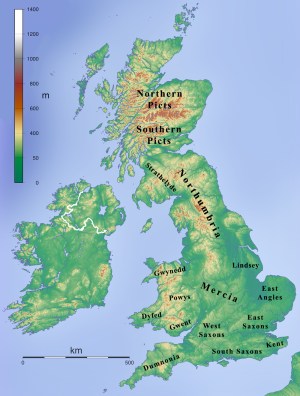


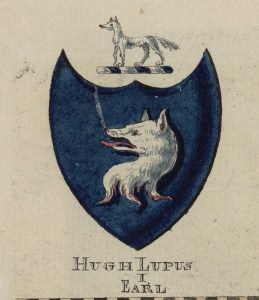


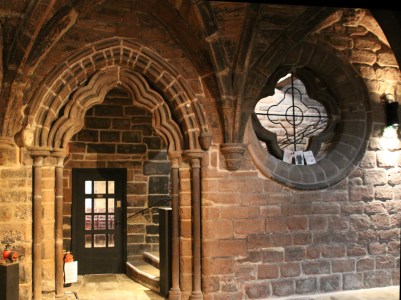


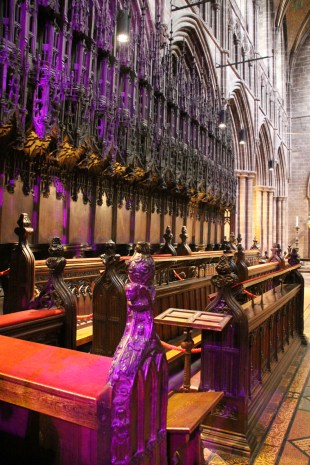
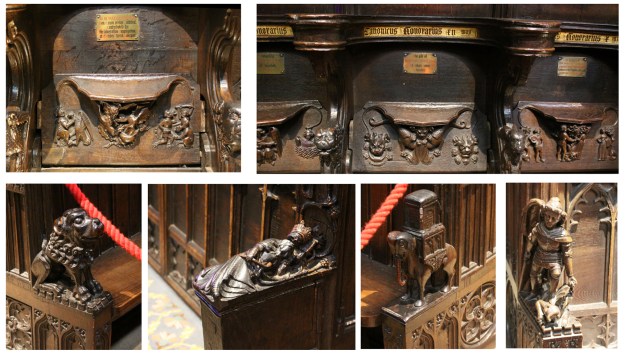

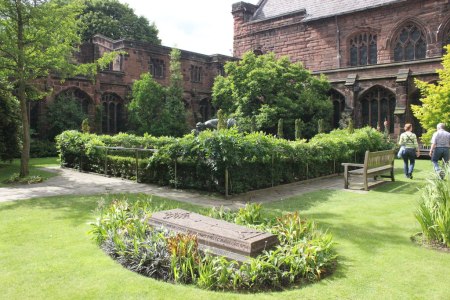


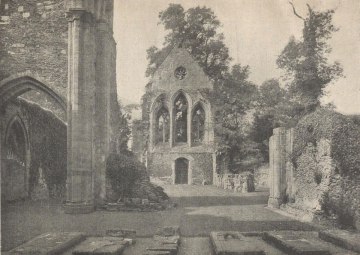

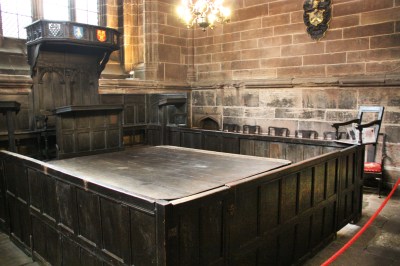
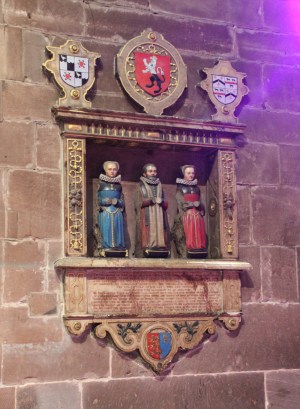
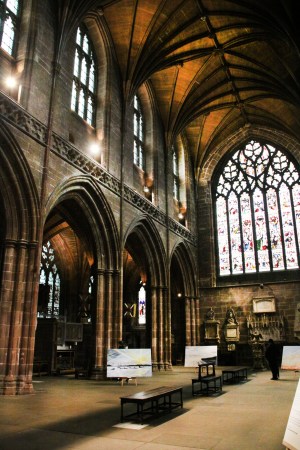
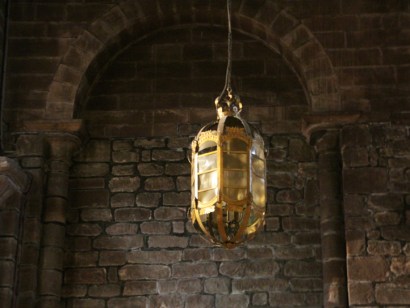
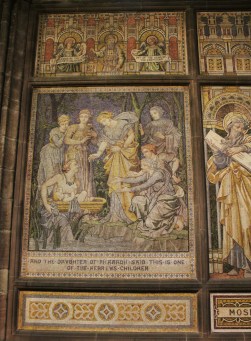


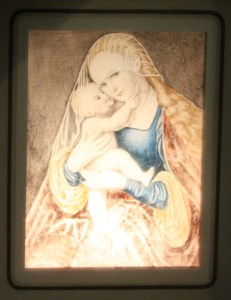
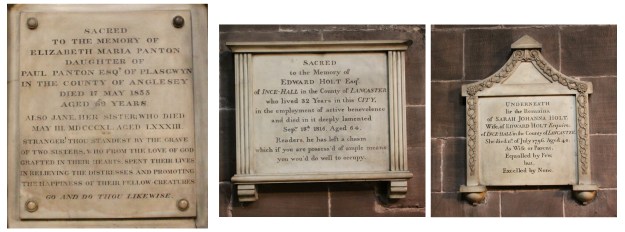

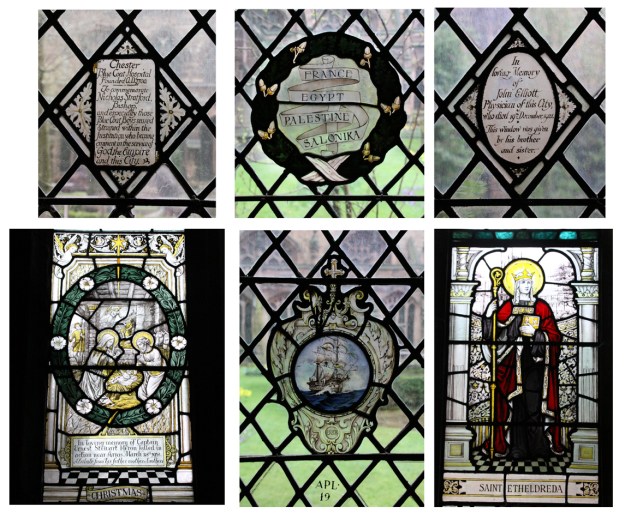


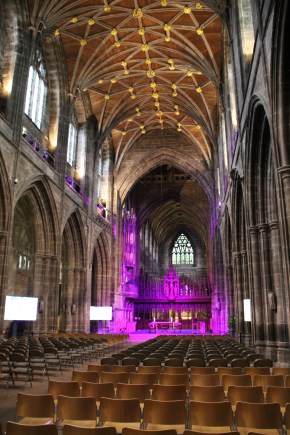
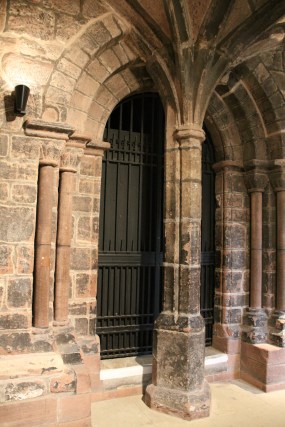



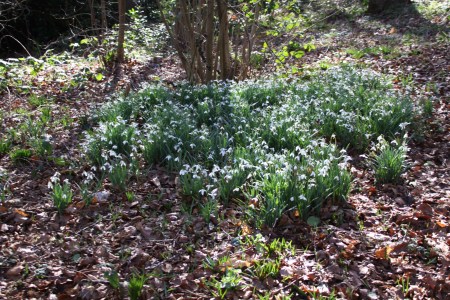


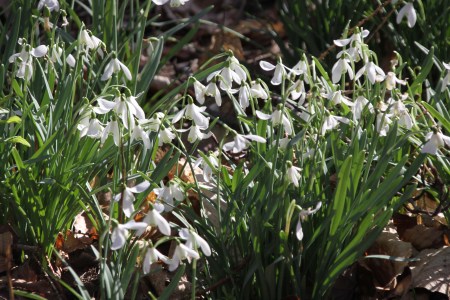
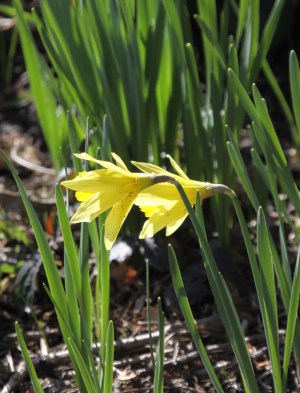


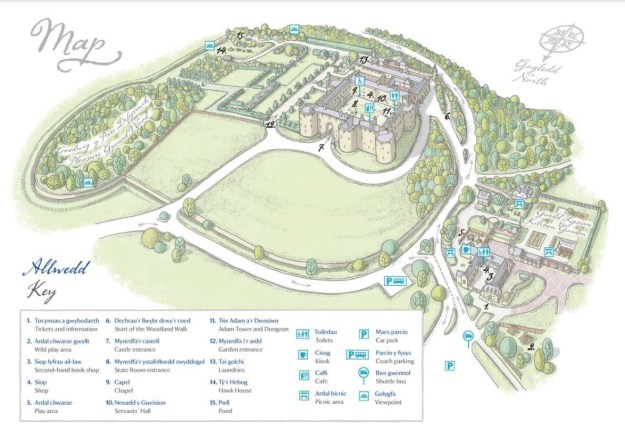

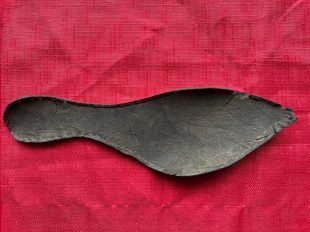
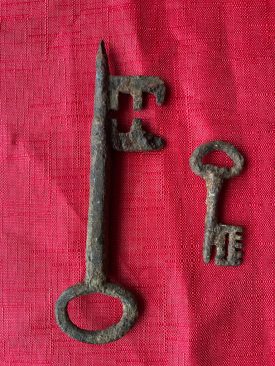


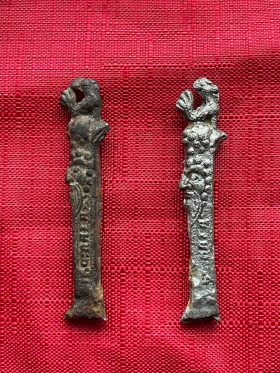


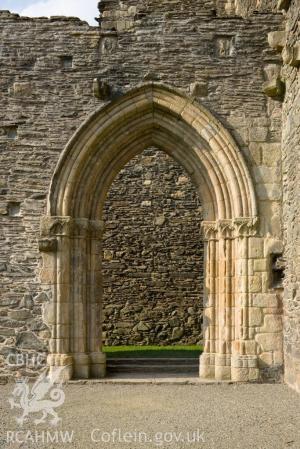


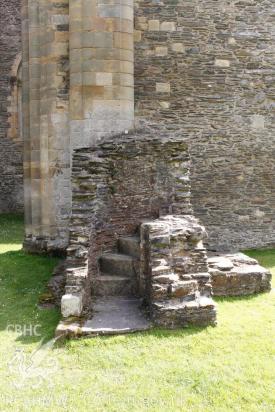

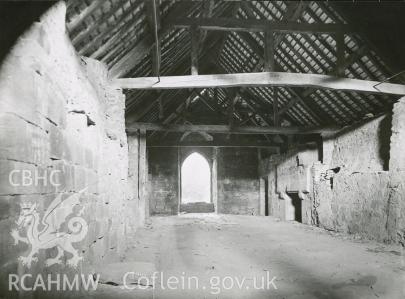


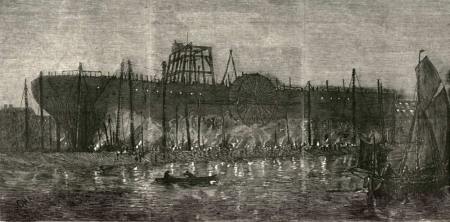
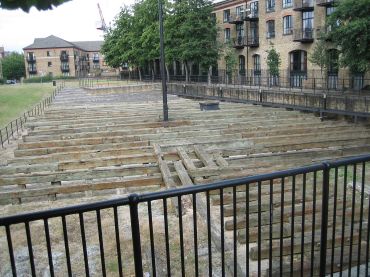


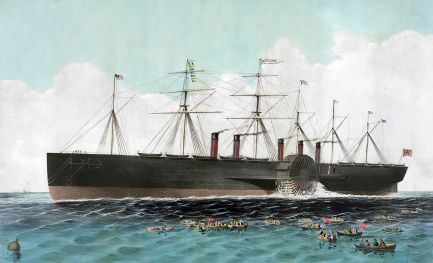


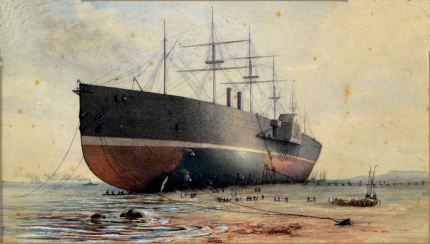









 Based in Churton


.JPG)


.jpg)
#/media/File:StateLibQld_1_47700_St_Vincent_(ship).jpg)


