Introduction

Rhuddlan Friary by Samuel and Nathaniel Buck 1742. Click to see the larger image. Source: Coflein
Prior to visiting Edward I’s 1277 Rhuddlan Castle (upcoming) I was having a look on the Ordnance Survey map of Rhuddlan, and saw that a little way downriver from Edward I’s castle, and beyond the earlier motte-and-bailey castle of Twthill, there is a site marked as “remains of a friary.” I was unaware of anything there, so I had a look through my books and on the Coflein website. Sure enough, there was a substantial Dominican friary there, established in 1258 by Llywelyn ap Grufudd (Llywelyn the Last), 19 years prior to Edward I’s castle. It went the way of the greater percentage of monastic establishments, and was dissolved by Henry VIII in 1538. In some texts it is referred to as a priory, but the friaries were originally quite different from abbeys and priories.
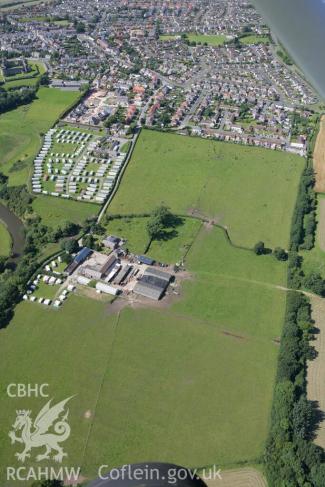
The site of the Rhuddlan Dominican Friary today. The farm in the foreground lies over the site, and some of the buildings incorporate elements from the Medieval building. Source: Coflein
Today there is almost no sign that it ever existed. This is by no means an isolated case of a monastic or mendicant building being erased from the landscape. Of around 270 friaries of the different orders, only 15 in England and Wales have survived well enough to determine their layout and appearance. Some are known only from their archaeological remains and others have yet to be investigated archaeologically and therefore appear, for all intents and purposes, to have vanished. In the case of Rhuddlan Friary, there are details of its past that can be recovered even without any ruins to examine, although it has been a jigsaw assembled by many people and published in different places. The earliest useful account, by Harry Longueville Jones in 1847, worked hard to pull together the various tenuous threads, as its author describes: “The unsatisfactory complaint, of fewness of materials for the history of Religious Houses in Wales, applies with peculiar force to that of the Priory of Rhuddlan; and the utmost that can, at present, be attempted, towards an account of it must consist in the stringing together of various brief uncorrected relics, scattered up and down in various books and a few manuscripts.” It still feels a bit like that, but it is work like that of Jones that paved the way for people like me.
Over the site where it once stood there is now a working farm and caravan park, formerly Plas Newydd and currently called Abbey Farm. It does, however, incorporate some stonework from the former friary, and parts of it are therefore of considerable interest. The farm is private property and not open to visits from the general public, although a public footpath skirts it. Fortunately, there are various accounts and photographs available of the surviving masonry and tomb slabs. In addition, much of the friary church was still standing in the middle of the 18th century, when a drawing of it was made by Buck (above) showing a simple but substantial layout with gothic styling, with Rhuddlan Castle in the background, and this has allowed assessment of what was there at the time of the dissolution. It has also been mentioned in a number of Medieval documents.

Rhuddlan. The map on the left shows the location of Rhuddlan (source: Google Maps). The map on the right shows the location of Rhuddlan Priory in relation to the 11th century Twthill motte-and-bailey castle and Edward I’s 1277 stone castle (source: Ordnance Survey Explorer 264 – Vale of Clwyd)———–
The Dominicans

Saint Dominic (c.1170–1221), portrayed in the Perugia Altarpiece by Fra Angelico. Galleria Nazionale dell’Umbria, Perugia. Source: Wikipedia
The Order of Preachers (Ordinis Praedicatorum), better known as the Dominicans, Black Friars or Preaching Friars were founded in Toulouse, France, in the early 13th century by Spanish priest Dominic of Caleruega. Attwater describes a Dominican friar as “one who combines elements of the earlier monasticism – its dedicatory vows, its communal life, its daily round of praise of God in church – with the manifold works of the pastoral ministry.” In a pre-plague era where overpopulation was a serious problem, and the poor and uneducated were clustered into many towns, the role of the mendicant orders was conspicuous and often impressive.
The order of St Dominic (c.1170-1221) was officially recognised by the papacy in 1216. Like the other monastic and mendicant orders they had strict rules, but unlike the majority of other British monastic establishments, they based themselves not on the rules of St Benedict but on the Rule of St Augustine. They were therefore much closer in their practises and values to the Austins, Franciscans and Carmelites, also mendicants, than any of the orders based on the Rule of St Benedict that dotted the British rural landscape. The three main focal points of the Dominicans were:
- Scholarship and intellectual integrity were seen as essential to salvation for heretics and the poor, whose ignorance led them astray. Dominicans recruited amongst graduates and clerics. Robust theological training was given to all new Dominican friars, and education was essential to their ethos
- A vow of corporate as well as personal poverty was also integral, meaning that, at least in the first century of their activities, they could not engage in commercial activities and were dependent on charity for their survival, and would accept land and houses with which to establish themselves, or money with which to purchase them (unlike the Franciscans who rejected the ownership of property)
- A mission to both preach to and lend aid to the poor, weeding out heresy was fundamental to their ideas, following the example of the apostles to evangelize, leading the misguided and disadvantaged to salvation

St Dominic’s house, Maison Seilha,n at Place du Parlement Chapelle, Toulouse, France. Source: Wikipedia
The Dominicans organized themselves with a system of centralized government, an elected body that resembled the General Chapter of the Cistercian order (an annual conference to administer and rule the order). The Dominican friaries were divided into provinces, each of which was headed by an elected provincial prior. These answered to a master-general who was himself elected. Each friary had a prior at its head who was elected by the chapter, and not only attended the annual chapter but was also accompanied by another member of the same priory whose role was, somewhat disconcertingly, to report on the prior’s performance. This type of performance review and downward as well as upward accountability is very modern in concept. It was this organization and accountability that turned the Dominicans from wandering clerics into a force to be reckoned with, which became important as the different mendicant orders found themselves increasingly in competition for donations, both with each other and the older institutions.
The Dominicans arrived in England in around 1221, and were known as the Black Friars or Friars Preacher. They spread first to Ireland and then, in 1230, to Scotland. There were five Dominican houses in Wales, two of which, Bangor and Rhuddlan, were in north Wales. By 1260 the Dominicans had persuaded both wealthy and poor that there was much to recommend them. They had around thirty six houses in England, nine in Scotland and the five in Wales, and by the end of the 13th century there were around 60 in total.
The earliest preaching took place in public places like market squares where a sizeable audience could be gathered. As they became established and increasingly popular, and were able to use donations to found churches to which audiences could be attracted, they began to preach on their own premises. They tailored their preaching to their audience, and presented themselves as men of the people, sharing their poverty, quite distinct from both the upper echelons of society and the more established Benedictine monasteries. At the same time they also appealed to the new commercial classes in the urban centres that they favoured.
Dominicans believed that ignorance was at the heart of heresy and defection from God, and that education would provide the ignorant and the poor with the tools to achieve salvation. Throughout Europe the teaching of theology and logic continued to be of importance to the Dominicans, and each Dominican priory was responsible for setting up its own school to teach the basics, while they also set up regional schools for the further education of those friars who were academically promising. Leading Dominicans increasingly contributed to the development of Medieval universities. Their mission to educate the laity was given an extra relevance by the decision of the Fourth Lateran Council of 1215, which required that every person should make confession to a priest at least once a year. This required the general public to understand exactly what was required for a blameless life, and what steps were required in order to make a valid confession.
Whereas Benedictine monks renounced all personal possessions and properties, the monastic houses in which they lived and worshipped could be very wealthy indeed, and were often fairly massive and elaborate structures. Fountains Abbey (Benedictine, Yorkshire), Glastonbury (Benedictine, Somerset) and Lewes Priory (Cluniac, Sussex) are good examples. The mendicants, by contrast, were permitted only to acquire enough resources to survive, via begging for alms or through charitable donations and bequests. Even so, the friars of different orders were so popular, amongst the wealthy as well as the poor, that churches grew from simple places of worship to much grander affairs. As J. Patrick Greene puts it “the more successfully the friars gave enabled the wealthy to gain spiritual grace through the vicarious experience of poverty, the less it became a reality for the friars themselves.” This can be seen at the Franciscan friary in Oxford and the Dominican friary in Chester. Hinnebusch expands on this, and suggests that in the 13th century the Dominicans were also able to generate income of their own: “Most houses had gardens, orchards, groves, and sometimes vineyards and fish ponds. Undoubtedly some houses were able to sell part of the produce from these sources and thus supplement the alms of the people.” At least in the early years of their mission, their properties were not rented out, certainly as this was in direct violation of Dominican rules, which were strictly enforced. There is more on this in connection with Rhuddlan Friary, below. In the later Medieval period, however, matters changed as Hinnebusch explains:
In 1261, a papal bull allowed the Order to accept revenues for the purchase of ecclesiastical ornaments, vestments, and books. In 1266 friars were allowed to accept inheritances which would have come to them if they had remained in the world. These could be held or converted into money for the maintenance of the community. In 1274 after the attack on the mendicant orders at the Council of Lyons, Gregory X declared that the friars could “accept properties with a safe conscience.” The bull Supra Cathedram of Boniface VIII, 1299, in obliging the friars to give a fourth of all legacies, bequests, funeral charges, and other donations to the parish church struck a death blow to mendicant poverty. Under these conditions the quest and voluntary gifts were no longer sufficient, and the Order was obliged to seek for fixed sources of income.
Inevitably the mendicants stepped on the toes of the secular clergy, those bishops and parish priests whose congregations and incomes were under threat by the arrival of the mendicants, particularly as the mendicant churches grew and incorporated larger congregations. Papal intervention was sought on several occasions, but the tensions continued.
——–
The Dominican Friary at Rhuddlan
The foundation of the friary
The Dominican Friary at Rhuddlan was established by Llywelyn ap Gruffud (Llywelyn the Last) in 1258, 19 years before work began on Edward I’s castle nearby. He is also thought to have founded the priory at Bangor in the mid-13th century. It was a tradition amongst the Welsh princes to found monasteries. Although Cistercian monasteries were particularly prestigious amongst the princes, with one in each of the main cantrefs, Llywelyn was not a lavish spender on elaborate monastic projects, although he occasionally made financial gifts to those houses established by his ancestors. He became a benefactor of the very small Cistercian monastery at Cymer near Dolgellau that had been established by Gruffudd ap Cynan of Gwynedd in 1198, as well as of Beddgelert Augustinian Priory near Bangor, thought to have been established by one or more of the lords of Gwynedd in 1200. He made a loan to an abbot of Valle Crucis Cistercian Abbey near Llangollen, which had been founded by Madog ap Gruffydd Maelor, ruler of Powys (north), in 1201. Perhaps when it came to founding his own houses, he preferred the ideologies and practices of the Dominicans; it is also possible that they represented a rather less eye-watering investment. It should be noted that Samuel Lewis, in his 1849 Topographical History of Wales, believed that it had been established in 1197 by Ranulf III of Chester, but he gives no explanation for his thinking.
Rhuddlan Friary was established on the River Clwyd, 4.8km (3 miles) to the sea on the cost of North Wales, set above the floodplain, with a short cliff separating it from the valley below. A town had been here since the Anglo-Saxon period, taking advantage of the best pace to ford the river. William the Conqueror is thought to have ordered the building of the Twthill motte-and-bailey castle which was built in the 11th century and was probably still maintained for defensive purposes when the Dominicans set up their friary.
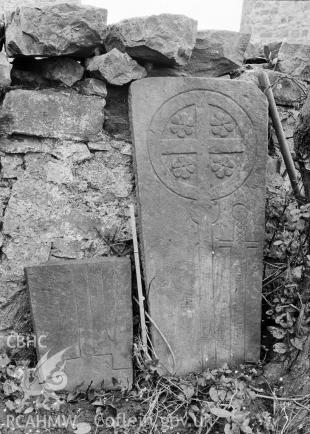
Inscribed tomb slab. Source: Coflein
There were only two Dominican houses in north Wales, the other being in Bangor, established in 1251, seven years earlier than Rhuddlan, again probably by Llywelyn ap Gruffud. Wales was not strong on mendicant orders in general, primarily because they favoured urban areas, and Wales in the 13th century lacked the busy towns that were growing up in England. There was only one Franciscan house in north Wales, on Anglesey, and a single Carmelite house, at Denbigh. Given that there were so few mendicant orders represented in north Wales it would be interesting to understand why Rhuddlan, of all the possible towns in Wales, was selected as an attractive site for the Dominicans. Although it may have had something to do with Llywelyn himself, it is also possible that the founding friar may have had input, and may have had a connection to Rhuddlan.
Whether parish church, abbey, priory or friary, all religious establishments came under the wing of a regional ecclesiastical body, a diocese, headed by a bishop. By 1291 Rhuddlan Friary came under the diocese of St Asaph (in English), Llanelwy (in Welsh), together with other ecclesiastical deaneries (groups of parishes) like Aberconwy Cistercian Abbey, Strata Marcella Cistercian Abbey near Conwy, Valle Crucis Cistercian Abbey near Llangollen and Basingwerk Cistercian Abbey near Holywell. Rhuddlan Friary, Valle Crucis Abbey and Aberconwy Abbey all provided St Asaph with bishops. Rhuddlan’s Prior Anian II (or Einion II) became the bishop of St Asaph in 1268.
It is not known where the friars came from. Dominican scholarship was an important component of their ethos, and the Rhuddlan friars would have received training when they joined the order, although Latin would have formed a common language, and a common bond. Rhuddlan had passed between the English and Welsh through its history, but because friars mingled with communities, it is probable that at least some of the friars must have been Welsh speakers. Attwater points to the dozen Dominican bishops that he knows of with English names, but says that the impression they give is misleading, and that Welsh friars predominantly had Welsh names. Potential sources for friars to populate a new friary could have included the other Welsh friaries, but also reasonably nearby was Chester, where a Dominican friary had been established in 1236 and was doing very well.
The friary architecture
Although there is almost nothing left of the Dominican friary at Rhuddlan, it will have been built on the lines of other Dominican communal establishments. Like the more numerous Benedictine monasteries and priories, a Dominican friary consisted of a church, which made up one side of a complex of buildings that were arranged in square or rectangle around a garden, the garth. The church would usually be on the north, and the domestic and administrative buildings were incorporated into the other buildings over one or two storeys. The image below shows the layout of the mainly 14th century Dominican friary at Norwich, as an example, in this case fairly elaborate but, like most Dominican friaries, the church had no side transepts which makes them look significantly different from Benedictine-style abbeys and priories.

Ground plan of Norwich Friary. Source: Giraud, E.J. and Linde, .J.C. 2021 – via Google Books
The drawing by Buck shown at the top of the page and shown again below has been invaluable to architectural experts who have been able to clarify the main features. The following is taken from Clapham, published in 1927, who has done an excellent job of deconstructing the image and reconstructing the friary, and concludes that the friary was built on a “much more ambitious scale than was usual among lesser friaries.”
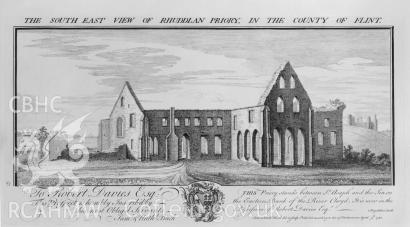
Rhuddlan Friary by Buck. Source: Coflein
The whole length of the building shown was no doubt occupied by the dorter [dormitory] on the first floor and at its north end is some indication of the junction with the church, though even then this building had been entirely destroyed. Projecting eastwards from the range is a gabled structure, with three lancet-windows in the east end and three in the south return wall; this was undoubtedly the chapter-house with a room above it. Further south, in the main range, is the archway of a passage from the cloister, and still further south a chimney-stack, probably that of the fireplace in the warming-house.
At the south end of the range is a large doorway, at the dorter-level, evidently that leading to the rere-dorter [latrines], the ruins of which, with its connecting bridge, are also shown. Of the southern range of the cloister court, the eastern part of the inner or north wall is still standing and contains four small square-headed windows of red Chester stone, set high in the wall, above a string-course which probably marked the level of the cloister-roof. The rest of the range seems to have been rebuilt, but the south side of it is shown in
steep perspective in Buck’s view. The only other ancient portion of the existing buildings is the northern portion of the outer wall of an outbuilding on the west of the yard.
It appears to have projected westward from the original western range, as there is a return angle at the south end. It contains two pointed windows, probably of the fourteenth century, and blocked with ashlar. The rest of this range contains other pointed windows, but they appear not to be original and the walls themselves to be of post-suppression date.
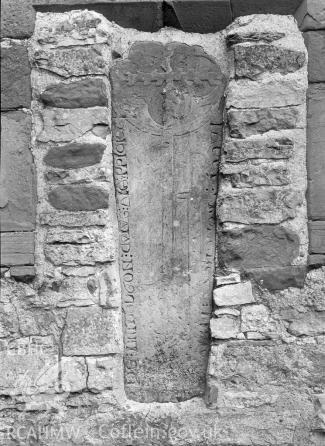
Inscribed stones in vicarage wall at the Friary near Rhuddlan Church, taken by Leonard Monroe. Source: Coflein
At Abbey Farm today, the farmyard is thought to occupy the site of the cloister garth and part of the south cloister range, with the farmhouse occupying the site of the church, and the southern range perhaps incorporated into another farm building where blocked windows probably date to the 14th century. Modern buildings have obscured what was probably the cloister, c.26-28m square. Medieval building materials have been identified and in one of the farm buildings at the east of the farm complex, with some sepulchral slab fragments incorporated into the walls, as well as a niche with a heavily eroded 14th century effigy still visible in it, shown below. Clapham picks out details that were incorporated into the farm buildings that sit over the site, including bits of architectural and sepulchral masonry (tomb slabs). Some of the tomb slabs are shown on this page, thanks to a digitization programme by Coflein, but with no attempt to put them in any particular order. See captions for credits and links.
Built into the garden-wall, to the north of the yard, are portions of a moulded and cusped arch of early fourteenth-century date and probably part of a tomb recess. Of the various funeral monuments built into the walls of the buildings round the yard . . . .

Engraving incorporated into a wall. Photograph taken by Leonard Monroe. Source: Coflein
On the east side of the yard: (a) effigy in high relief of a civilian in hood with flap, belt with skirt of gown tucked into it and holding in both hands a baton, or possibly a mace, probably fourteenth-century; (b) part of a coffin-lid with inscription.
On south side of yard: (a) incised slab with figure of an archbishop1 in mass-vestments with cross-staff and marginal inscription to William Freney, archbishop of Rages, c. 1290.
This slab has now been removed to the parish church; (b) slab with raguly cross in relief, head in a quatrefoil, sword at side and inscription to Robert, son of Robert de Bridelton, early fourteenth-century.
On west side of yard: coffin-lid with elaborately enriched cross on stem inscribed ‘Hie jacet [here lies] Snaisii,’ the rest of the inscription destroyed, thirteenth-century. The inventory of goods taken at the suppression mentions the quire with a table of alabaster on the altar and new stalls, two bells in the steeple and the kitchen.
There are references to the friary church having a particularly magnificent rood screen, which attracted pilgrims, about which more below. In 1849, Samuel Lewis writes that “near it [the friary] is a fine spring, from which the priory derived water, conveyed to it by leaden pipes, that were taken up not many years ago: from this spring the town of Rhuddlan is now supplied during seasons of drought”
Unlike the better known Cistercian monasteries of north Wales, which were built in areas where the monks could worship in isolation, as separate from the world beyond the cloister as possible, the Dominicans always intended to be part of the local community and their friaries were built either on the edge of towns, like Rhuddlan, or within them, like Chester’s Dominican friary. The friars’ lives were a balance between the communal living and worship that too place within their monastic premises and the preaching that they carried out in neighbouring communities. They built their friaries in or near towns and the friars would have been familiar figures around the town of Rhuddlan where they would have mingling with townspeople and recruiting support in their missionary roles.
How the friary sustained itself

Inscribed stones in vicarage wall at the Friary near Rhuddlan Church, taken by Leonard Monroe. Source: Coflein
The friary appears to have been well provided for throughout the 13th century, and must have had significant status locally. By 1283 there were 23 friars at Rhuddlan, a very healthy number. In Cardiff and Haverfordwest, both Dominican friaries, numbers are recorded in 1285 as 30 and 39 respectively, but Rhuddlan was rather more remote. In 1268 Rhuddlan Friary’s prior “Anian (Einion) of Nanneu” became Bishop of St Asaph, a significant honour. It is unlikely that such an appointment would have been made from a minor establishment, a suggestion supported by other appointments to the position from the big Cistercian abbeys of Aberconwy and Valle Crucis in north Wales. Records of payments to the monastery also give a sense of its importance, including a payment in 1281/1282 at the time of the birth of the princess Elizabeth at Rhuddlan, Edward and Eleanor’s 5th child, of 7s 8d to the friars of Rhuddlan and 1s 1d for the brethren of the hospital of Rhuddlan (about which more below); a bequest in the will of Bishop Gervase de Castro in 1370 of 60 shillings and another bequest, this time of 20 shillings, from Llewelyn ap Madoc, bishop of St Asaph, in 1373.
The friary also appears to have been taking steps, beyond accepting alms and bequests, to care of itself. Hinnebusch comments “At Rhuddlan in 1534, the prior leased several gardens and an apple orchard ; two years later a second apple orchard was leased. When the house was sup pressed, the sale of the effects of the priory included kine and pigs.” Kine were a type of cattle.

Map showing Rhuddlan on the Welsh pilgrim routes, which link north and south Wales. See the following link for the full UK map. Source: The British Pilgrimage Trust
The excellently researched academic Monastic Wales Project website states that “Pilgrims flocked to visit the rood at Rhuddlan,” but does not expand on the comment. The rood is the screen that divides the nave (where the public worship) from the chancel (the sanctuary at the eastern end of the church that was confined to the friars). It is usually ornate, and made of open tracery in wood or stone (more likely wood at a Dominican friary like Rhuddlan, as it was much less expensive). It was usually topped with a beam that held the rood (a depiction of the crucifixion), often accompanied by other key figures from the Christian story. At Bangor, part of the rood survives, and symbols of the evangelists, the ox, eagle, lion and man, accompanied Christ. Some rood screens attracted pilgrims either because of their particular design or because of associated miracles, In her PhD thesis, Lisa Garland says that many depictions of Christ became objects of pilgrimage, particularly in the 15th century, many gilded. In north Wales, both Rhuddlan and Bangor had rood screens that attracted pilgrims, were celebrated in Welsh bardic poetry, and and were located on Welsh pilgrim routes, as shown on the map above right. Pilgrims might be depended upon for offerings to a religious institution, helping to support them. The rood at Rhuddlan was celebrated by the poet Gruffudd ab Ieuan ap Llywelyn Fychan, which would probably have been good PR for the friary.
The Impact of Rhuddlan Castle
Edward I saw himself as a devout Christian. He had been on crusade, and he had made a vow to build a Cistercian monastery, which he founded in east Cheshire at Vale Royal in c.1270. Edward I’s military activities often dragged monastic establishments in Wales into the conflict. Being devout, or at least concerned about his status in the eyes of God, Edward compensated a number of monastic establishments in north Wales, both big and small, with significant sums of money and other gifts. These included Basingwerk (near Flint Castle), Valle Crucis (near Llangollen), Aberconwy (near Conwy), and Cymer (near Dolgellau).

Inscribed tomb slab incorporated into the wall above a doorway. Source: Coflein
There is no surviving record of Rhuddlan Friary suffering damage to building or losing resources such as grain or livestock, but Llywelyn surrendered at Rhuddlan Castle in November 1277 and it seems improbable that the friary escaped entirely unscathed during the conflict. The friars of Rhuddlan are credited with having organized the care of the wounded at that time, so were clearly in the thick of it. Whether from guilt about harm inflicted or from appreciation of the Dominicans, Edward continued to finance the friary after Llywelyn’s death in 1282. This is not particularly surprising, as both Edward’s father Henry III and Edward I himself were supporters of the mendicants in England, providing them with the much-valued stamp of royal approval. In addition, Edward had a policy of compensating religious houses for damage inflicted during his conflicts with Llywelyn in Wales. By way of thanks for royal support, Rhuddlan Friary supplied Queen Eleanor with honey from its own hives. Queen Eleanor died in 1291, Rhuddlan Friary was a beneficiary from her will, which included a grant of 100 shillings each to the Dominican houses of Wales and England. Rhuddlan Friary was also allocated 2 and 1/2 acres of land.
The community of Rhuddlan friary

The Danse Macabre or Dance of Death (1493) by Michael Wolgemut, from the Nuremberg Chronicle of Hartmann Schedel. Source: Wikipedia
Very little is known about the individuals who lived within the community of Rhuddlan Friary or any of the activities that were carried out, including their preaching. Rhuddlan is considered to be a probable source of a version of the danse macabre (dance of death, also known as the dance of Paul’s). Several of the mendicant orders used the danse in their sermons, and the Dominicans were particularly enthusiastic about its terrifying imagery, often featuring death as a cadaver coming to claim the living, which was a warning of perils to come, and a reminder of the need to prepare one’s soul for the inevitable. Here’s a flavour from a paper by Gray and Hale, translated from the Welsh, by poet Dafydd Ddu Hiraddug:
The corpse that was full of excess in a dirty closed place
As food for insects without worthy blessing …
The beautiful eyes now rounded holes
Full of maggots, in truth;
The comely mouth, which was so playful,
And was haughty, sad its form
A sardonic black hole, unlikely to be loved,
Black sorrowful nape, pathetic loneliness:
And the white teeth like old pegs
Dirty grey putrid bones
The long arms and the beautiful legs
Are sticks with gristle: offensive and putrid!
Enough to put the fear of God into anyone.
Only one of the community members is known for certain, and that is because he achieved prominence outside the friary’s walls as Bishop of St Asaph. I have included his biographical details below because it is some indication of the level of seniority that the friary could attract.

Effigy of Anian in St Asaph Cathedral. Source: Wikipedia
Anian, the Rhuddlan prior who became Bishop of St Asaph in 1268, was often a chosen intermediary between Llywelyn ap Gruffudd and both Henry III and Edward I, but he became alienated from Llywelyn as the relationship between the prince and Edward I deteriorated. Towards the end of 1273 Anian he wrote to Pope Gregory X to make charges against the prince. This put him in confict with the Cistercian order in Wales, whose abbots in turn wrote to the pope, on 7 March 1274 in defence of Llywelyn. His loyalties remained with the king and he continued to represent Edward’s interests against Llywelyn. When Edward was defeated in 1277, Anian’s diocese, St Asaph passed to the control of the English Crown. In 1281 Anian was given support from Edward in his bid to the papacy to move bishopric from St Asaph to the new royal castle and its accompanying town at Rhuddlan, a far higher status location, but this came to nothing. During the resumption of hostilities between Wales and England in 1282, the cathedral of St Asaph was burned, infuriating Anian, who refused to lend the king further support and excommunicated the soldiers who attacked the cathedral. The king seized his goods and denied him the diocese. The rift was repaired in 1284 with the intercession of the Archbishop of Canterbury, Pecham. Anian was granted the advowson (vacant ecclesiastical appointment) of Rhuddlan in return for a good will gesture of 500 marks. Throughout this period he fell out with many other secular and religious dignitaries. He died on 5th February 1293.
In 1284 some indication of the status of the friary is provided by the appointment of the prior of Rhuddlan by Archbishop Pecham to the commission of inquiry tasked with assessing the need for rebuilding and repair of churches damaged during the Edwardian wars in Wales. This was not Anian, who was by now the bishop of St Asaph, but I have not yet tracked down his name.

St Mary’s Church on the River Clwyd, Rhuddlan, which now houses the tomb of William de Freney. Edward I’s Rhuddlan Castle is shown in the bacground. Source: photograph by Mike Searle on Geograph.
There would have been cemetery at Rhuddlan Friary, where the inmates would have been buried. There are various pieces of tombstone incorporated into stone walls at Rhuddlan, re-used as building materials. Only one of the burials has been identified for sure, dating to c.1290: when William de Freney, archbishop of Edessa (Upper Mesopotamia), was buried at Rhuddlan. His tomb was saved because it was removed to St Mary’s Church in the town, where it remains. If this was done at the dissolution it is something of a puzzle why none of the other tombs were moved at the same time. William de Freney was a Dominican monk, but although he was buried at Rhuddlan, his career unfolded far from north Wales, and although it is possible that he ended his days at the friary it is by no means certain. He was a diplomat and skilled orator and linguist. It is possible that when Edward went on crusade in 1270, de Freney went with him, but his movements are unclear until his death at Rhuddlan. Edward I spent a lot of time in the 1270s and 1280s in Rhuddlan, and the presence of de Freney at Rhuddlan was almost certainly connected with Edward’s own movements. The tomb slab is inscribed with a legend in Norman French: PRIEZ PVR LALME FRERE WILLIAM DE FRENEY ERCHEVESHE DE RAGES (Pray for the soul of Brother William de Freney Archbishop of Rages). The name Rages appears to have been identified with Edessa.
The friary and the town
There are no records about interactions between the friary and the town, although they must have been frequent and various. The friars must have been impacted just as much as the townspeople by the famine and then the plague, both of which swept through England and Wales in the first half of the 14th century.
Where Edward built castles in Wales, he changed the entire character of each of those areas. Oddly, the friary was not included in the new borough established by Edward in 1278, which went against usual practice. I have read nothing to explain this. Perhaps the exclusion was at the request of the friary itself, to maintain its independence, or for other reasons of its own. The town that the friars attended before the arrival of Edward I in 1277 was a very different place from the one that Edward built for English immigrants, a Gascon-inspired planned town called a bastide, and the friary presumably extended its reach to the English newcomers, although it is very probable that the majority of the Dominican friars were in fact Welsh. This could of course have changed over the decades as the town changed and new members were accepted in to the friary.
When Edward’s engineers and labourers had finished straightening out and deepening 2 miles of the River Clwyd to enable seagoing ships to reach the castle, the friars may have benefitted. As soldiers and sailors arrived by ship, the friars would certainly have had new audiences for their preaching might, which might very well have been welcome as they contemplated war with Llywelyn, the privations of the terrain and the weather and their own mortality.
Unsurprisingly, given the order’s pastoral mission, during the Black Death of the 14th century, the order was very nearly wiped out as the friars throughout Europe mixed with their communities, attempting to bring support, and placing themselves at the highest possible risk. Figures are highly elusive for Wales, but one estimate suggests that by the end of the 14th century the population of Wales had been reduced from a total of around 300,000 to under 200,000, a reduction of some 100,000 people. Although an earlier famine had some part to play in that figure, successive resurgences of the plague were the main cause. Most of these would have been in the minority of lowland urban centres like Rhuddlan, rather than in the upland areas where the population was more dispersed, but its impact was still ferocious.
It is not known exactly how the Black Death impacted Rhuddlan, but enough of the population survived to enable both town and friary to survive. Under 100 years later, the senior occupants of the burgess and their land are recorded in a document dated 1428. Most of the survivors noted are English names, probably those descended from Edward I’s settlers. As well as recording that a community of burgesses had formed a landholding corporation, and that St Mary’s itself had land holdings. No mention is made of the friary, but this was excluded from Edward’s new borough.
A public footpath connects the friary to the still-surviving motte of the 1073 Twthill motte-and-bailey castle, and Edward I’s 1277 stone castle beyond. This part of the valley must have been quite a sight in the 13th and 14th centuries, with the canalized river running at the foot of friary and the cliff below both castles, new and old, with ships moored against the river.
The dissolution

The opening page of the Valor Ecclesiasticus, showing Henry VIII presiding over the valuation of the religious houses prior to their dissolution. Source: Wikipedia
The friary was dissolved in 1538, when six friars signed the Act of Surrender. The surviving details of the abbey, as meagre as they are, have been discussed above. The process of dividing the assets for sequestration and sale was overseen by Richard Ingworth, Bishop of Dover, who was ironically Dominican. He recorded that he sold “cows and pigs for 22./-; paid for servants, and carried off a little chalice.” The chalice would have contributed to the treasure trove being amalgamated from the dissolution by Henry VIII. The premises additional to the church and cemetery are recorded at that time as a hall with three chambers, two other chambers, a kitchen and a stable.
——–
A monastic hospital?
There is considerable confusion about the presence of a hospital during the 13th century, when the friary was founded. There are two references to it in documentation associated with Edward I, but it is by no means certain that it belonged to the Dominican friary.
In 1848 Harry Longueville Jones, in the second part of his piece on Rhuddlan Priory, gives a description of the hospital’s location, although he still gives no further idea of why he thought that a hospital was located here: “The Hospital stood about a quarter of a mile to the NE of the priory on the southern side of the road leading to Diserth; an old building, although perhaps not original, was standing here until within a few years. It is now replaced by an ordinary cottage, in which all features of antiquity are disappeared. Leaden pipes and conduits, leading from the hospital to the priory, have been dug up in the fields near that latter building” (p.48), He goes on to suggest that it was “not improbable” that it could have been a “Lazarhouse” (a hospice for lepers), but this seems simply to be speculation.

Effigy in a wall at Abbey Farm. Source: Jones 1847
One of Edward I’s edicts states that the burial ground at the church of Rhuddlan had become inadequate, and that another site near the hospital should therefore be made available, suggesting at the very least that a hospital was in the vicinity. One possibility is that references to a hospital refer not to a permanent facility, but to the work that the Dominicans are recorded as having carried out during the 1277 war, tending the wounded on a temporary basis. The friars must have been involved again in Dafydd’s rebellion of 1282, and there is reference to money being granted to a hospital in the same listing where a much larger sum was also granted to the priory. The friars were probably spared the violence in the national uprising led by Madog ap Llywelyn (in the north) and Morgan ap Marededd (in the south) in 1294-5 when English troops were garrisoned at Rhuddlan, but the castle was not one of those that was attacked by the rebels.
One idea, repeated by Harry Longueville Jones in July 1847, is that there might have been a Templar hospital at the site, perhaps adopted by the Dominicans after the closure of the Templar order. A piece of data discussed in this context is the presence of a farmhouse near the friary that was called Spittal or Ysbythy, although the word Ysbyty (hospital) can simply identify land that belonged to the Knights Hospitallers or Templars, and does not always indicate the presence of an actual hospital.
Excavations carried out to the east of the castle in 1978 as well as beyond Edward’s borough defences found no traces of a hospital, and so far remains have not showed up on aerial photographs. It was presumably completely robbed out for building materials.
Final Comments
It is easy to see why the mendicants, who combined secluded worship and pious austerity with community involvement the religious education and salvation of the poor would be attractive to the wealthy, their offering far more visible and easier to relate to than the older, more remote orders.

The remnant of a lovely tomb slab at the Abbey Farm (also shown above in black and white). Source: Geograph, by Mike Searle
The stories of Rhuddlan and former Rhuddlan friar Anian, who became Bishop of St Asaph, show how religion and politics are inevitably intertwined. The Dominicans had no way of Knowing, when they established their new friary in Rhuddlan, that Edward I would follow a decade later, and the new royal castle and town would have changed the entire profile of the area, introducing not only a garrison but English settlers, and drawing a target on the town for the wars of 1277 and 1282, although it appears to have escaped attack in the uprising of 1294. This would have raised the importance of the Dominican friars as a source of Christian values and salvation within a war zone, but in times of peace, a perhaps even more important role was attempting to help cement the different elements of the royal town and the local Welsh interests.
At the moment, there are many more questions than answers about the Rhuddlan Friary, but answers may lie under the surface. Further excavations around Rhuddlan may clarify the remains of the friary, help to date of some of the fortifications, and clarify what other buildings may have existed during the Medieval period.
The surrounding former abbey precinct that once extended across the surrounding fields has suffered the same indignity as Valle Crucis Abby in Llangollen, being used a caravan and chalet park. The friars would probably have been turning in their graves, had their graves survived.

Rhuddlan Abbey Farm. Over the lintel of the blue door on the far left the above tomb slab has been incorporated into the stonework of the wall. Source: Geograph, by Mike Searle
There are no visitor details on this post, because the remains of the friary are on private land, and are not open to the general public, so I was unable to visit. There is a footpath that runs around the outside of the farm.
I have not yet visited Rhuddlan for well over a decade, and am looking forward to a visit to the castles. The friary is a real insight into how much one can learn from published and online resources without visiting the site. A big hats-off to those early illustrators and writers who have captured so much that later writers have used to recreate past buildings and landscapes. I wrote this entire piece without leaving my house, and that’s a massive reflection on how much work others have done.
Sources
The sources that I have used are listed below. For a full bibliography for Rhuddlan Friary, see the Monastic Wales Project website at
https://www.monasticwales.org/browsedb.php?func=showsite&siteID=61
Books and papers
Attwater, D. 1949. The Black Friars in Wales. Blackfriars, Vol. 30, No. 354 (September 1949), p.421-424 https://www.jstor.org/stable/43812856
Burton, J. 1994. Monastic and Religious Orders in Britain, 1000-1300. Cambridge Medieval Textbooks. Cambridge University Press
Clapham, A. W. 1927. The architectural remains of the mendicant orders in Wales. Archaeological Journal, 84 (1927), p.96-7
https://archaeologydataservice.ac.uk/archives/view/archjournal/contents.cfm?vol=84&CFID=3f7f06e0-94cc-44a1-8b8d-c7796029e9c7&CFTOKEN=0
Clwyd Powys Archaeological Trust 2014. Rhuddlan. Historic Settlement Survey – Denbighshire – 2014. CPAT
https://cpat.org.uk/ycom/denbigh/rhuddlan.pdf
Cule, J. 1977. Early hospital development in Wales. National Library of Wales journal. 1977, Winter Volume XX/2.
“Extracted onto the pages of GENUKI with the kind permission of the National Library of Wales. This is a complete extract of this article (Gareth Hicks May 2003):”
https://www.genuki.org.uk/big/wal/Archives/NLWjournals/EarlyHospitals.
Davies, J. 2007 (3rd edition). A History of Wales. Penguin.
Garland, L.M.2005. Aspects of Welsh Saints’ Cults and Pilgrimage c.1066-1530. Unpublished PhD Thesis, Kings College London
https://kclpure.kcl.ac.uk/portal/files/2935809/420753.pdf
Giraud, E.J. and Linde, J.C. 2021. A Companion to the English Dominican Province: From Its Beginnings to the Reformation. Brill
Sample: https://books.google.co.uk/books?id=8BkgEAAAQBAJ&printsec=frontcover&source=gbs_atb#v=onepage&q&f=false
Gray, M. and Hale, D. 2021. Dancing and Dicing with Death: literary evidence for some lost wall paintings in Wales. Ancient Monuments Society Transactions Volume 65 (2021), p.7-19
Greene, J.P. 1992. Medieval Monasteries. Leicester University Press
Gumbley, W. 1915. The Dominican Priory of Rhuddlan. Flintshire Historical Publications 5 (1915), p.34-35
https://journals.library.wales/view/1256711/1257147/46#?xywh=-936%2C-227%2C4106%2C4136
Gumbley, W. 1915. The Dominican Bishops of St Asaph. Flintshire Historical Publications 5 (1915), p.31-33
https://journals.library.wales/view/1256711/1257147/46#?xywh=-936%2C-227%2C4106%2C4136
Gumbley, W. 1915. The Dominican Friary of Rhuddlan. Flintshire Historical Publications 5 (1915), p.43-44
https://journals.library.wales/view/1256711/1257147/46#?xywh=-936%2C-227%2C4106%2C4136
Hayman, R. 2018. Rood Screens. Shire Library
Hinnebusch, W.A. 1944. The Domestic Economy of the Early English Dominicans. The Catholic Historical Review , Oct., 1944, Vol. 30, No. 3 (Oct., 1944), p. 247-270
Jackson, P. 2005. Freney, William (fl. 1263–1286). Oxford Dictionary of National Biography (Online [2014] ed.). Oxford University Press.
https://www.oxforddnb.com/view/10.1093/ref:odnb/9780198614128.001.0001/odnb-9780198614128-e-92436;jsessionid=11E5391F2DD975CD06FDDFAA92E58B14
Jones, H.L. 1847. Priory of Dominican Friars, Rhuddlan, Flintshire. Archaeologia Cambrensis, July 1847, p.250-259
https://journals.library.wales/browse/2919943
Jones, H.L. 1848. Rhuddlan Priory, No.II. Archaeologia Cambrensis, January 1848, p.46-49
https://journals.library.wales/browse/2919943
Lewis, B.J. Gray, M., Jones, D.C. and Morgan, D.D. 2022. A History of Christianity in Wales. University of Wales Press
Lloyd, J.E. 1959. Anian II (died 1293), bishop of St Asaph. Dictionary of Welsh Biography.
Morris, M. 2008. A Great and Terrible King. Edward I and the Forging of Britain. Penguin.
Platt, C. 1995 (2nd edition). The Medieval Abbeys and Priories of Medieval England. Chancellor Press
Taylor, A. 2004. Rhuddlan Castle (abridged from a text by Arnold Taylor). Cadw
Walker, D. 1990. Medieval Wales. Cambridge University Press
Websites
Abbey Farm Caravan and Camping Park
History
https://abbeyfarmrhuddlan.co.uk/portfolio-item/history/#top
Based In Churton
Valle Crucis abbey (ongoing series of posts about the abbey). By Andie Byrnes
https://basedinchurton.co.uk/category/valley-crucis-abbey/
British History Online
A Topographical Dictionary of Wales. Originally published by S Lewis, London, 1849.
https://www.british-history.ac.uk/topographical-dict/wales/pp345-356
Cadw
Rhuddlan Castle
https://cadw.gov.wales/visit/places-to-visit/rhuddlan-castle
Rhuddlan, Norman Borough
https://coflein.gov.uk/en/site/303586
Coflein
Rhuddlan Friary (Dominican); Abbey Farm
https://coflein.gov.uk/en/site/157155/
Monastic Wales
Rhuddlan Friary
https://www.monasticwales.org/site/61

 This was a completely off-the-cuff visit, as we were planning to go somewhere else but found that it was temporarily closed. I am so glad that we were forced to change our plans, because we absolutely loved the aquarium. Located in the Ellesmere Port area, it was opened in 1998, but it has been so well cared for that it looks brand new.
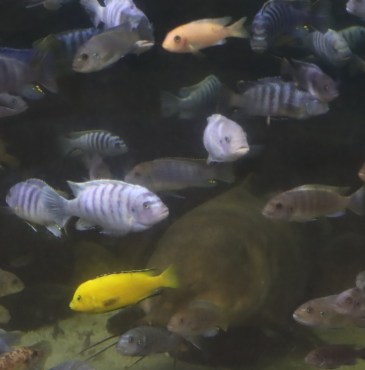
 The underwater tunnel, which passes through the aquarium, is a sensational experience, with an incredible array of fish, including sharks and stingrays, flowing around you and overhead and conger eels peering out at you from rocky enclaves. It is the nearest that any non-divers are ever going to get to a first-hand sense of experiencing the enchantment of the aquatic universe. Rather than carrying on with the superlatives, here are the rest of the pics. Visiting details (including disabled access) are at the end, as usual.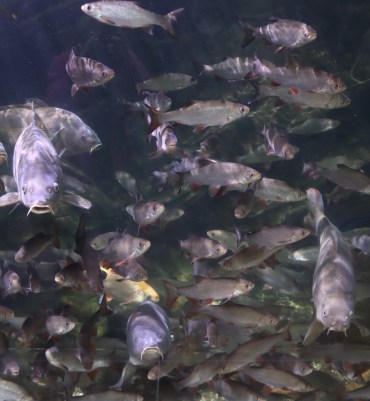
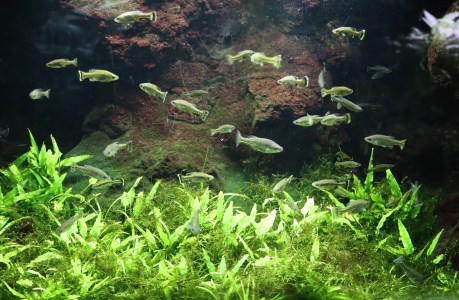
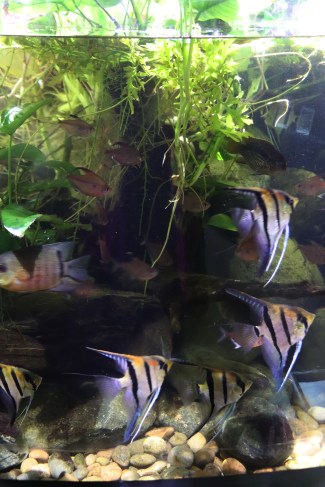
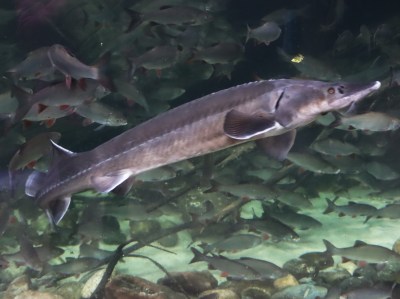


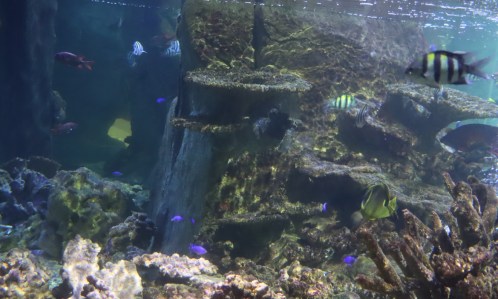

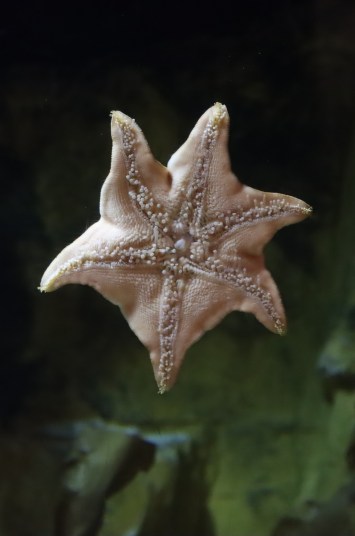

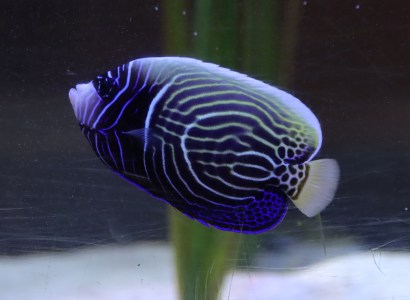

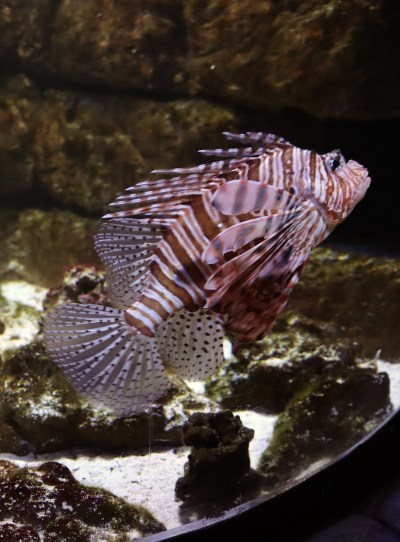
 Blue Planet was easy to find, clearly signposted with brown signs from the M53. When you reach it, you find yourself confronted with a series of car dealerships, and cars parked all along the approach road, but the aquarium is the big silver building on the left at the end of the approach road, with its own big car park, including disabled parking. For SatNav users, the postcode is CH65 9LF. Bus and other transport info is on the website’s Getting Her page.
 Outside, on the other side of the shop, there is the pelican enclosure (with real, live pelicans), a picnic area, a kid’s play area, and a small wildlife reserve. There are daily talks and events, and you can book special visits, all details available on the website.








































 Based in Churton
.jpg)

_-_courtyard.jpg)


.jpg)


.jpg)
.jpg)

.jpg)