
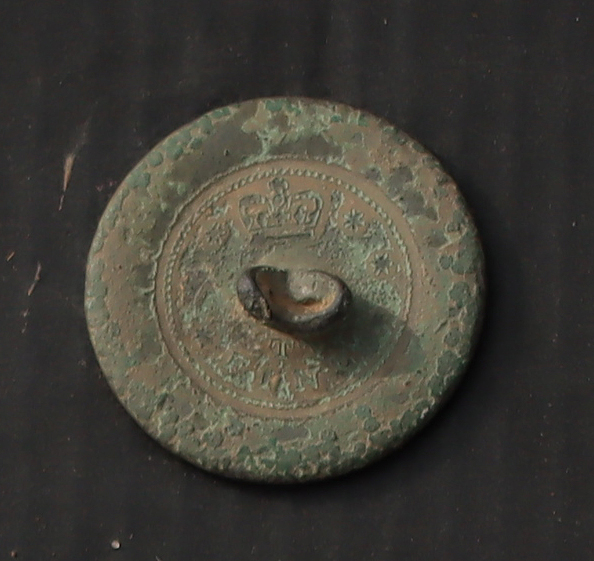
Button with an emblem of a crown at the top, little stars flanking it and elsewhere around the circuit, and text at the base
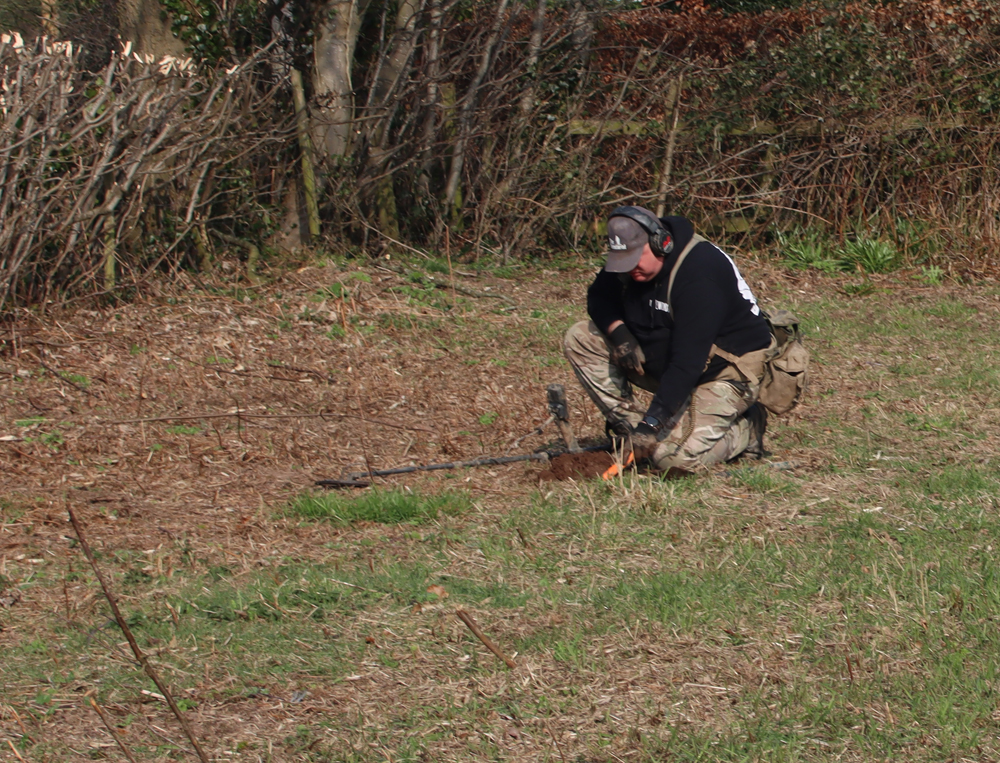
Not only have I never done any metal detecting myself, but I have never seen it being carried out either. I was lucky enough to have my first exposure to this activity with Rob Jones, famous in these parts for finding the superb Roman lead ingot near Rossett, now in the Wrexham Museum, which lead to the discovery of the Rossett Villa (being excavated late this year by DigVentures after initial work was completed at the site in 2021). With Helen Anderson, who organized the day with Rob and very kindly invited me along, we met at the field near Churton which is owned by Helen’s family, so we had no problem with obtaining permission. Rob did all the hard work, whilst Helen and I basked in the sunshine, diligently dry-brushing the thick red earth off anything that Rob found, irrespective of how old or recent it might be.
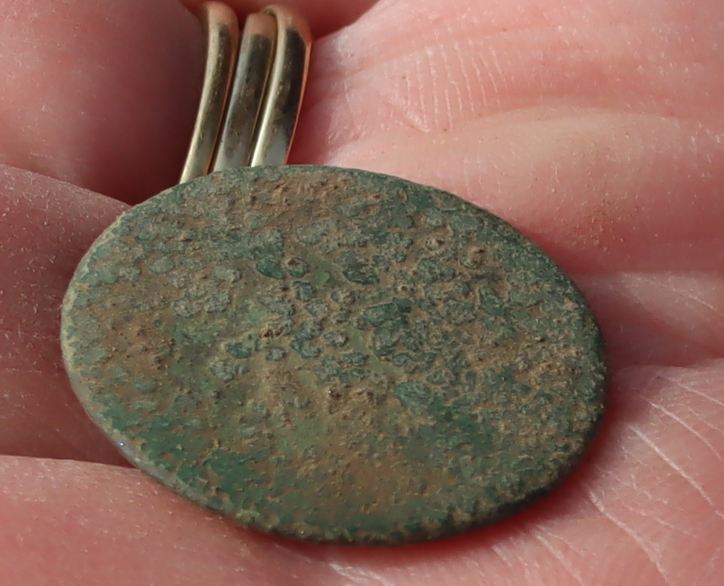
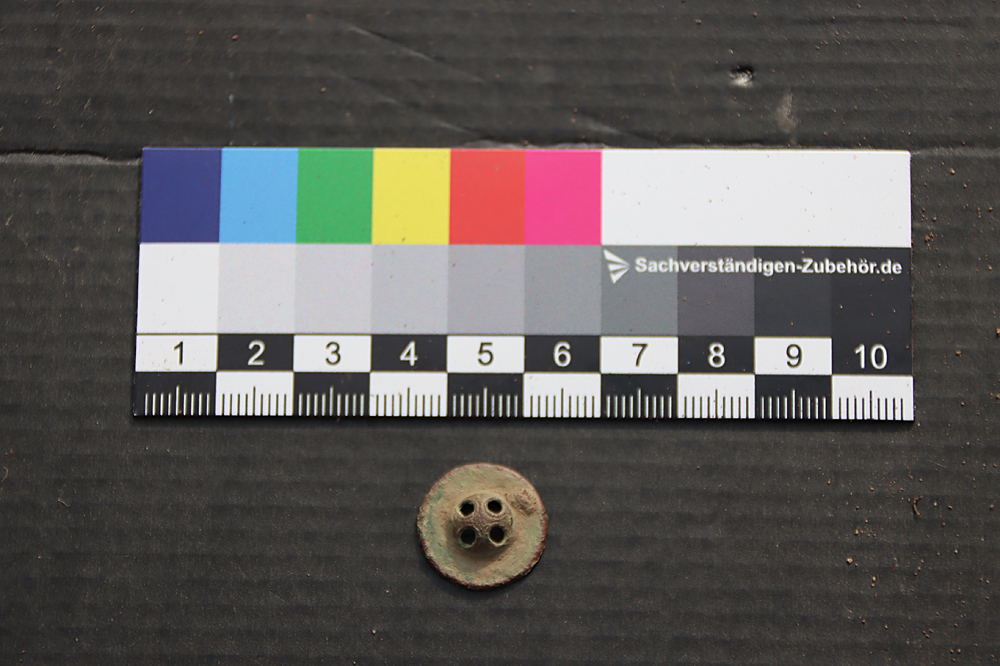
The other side of the button above
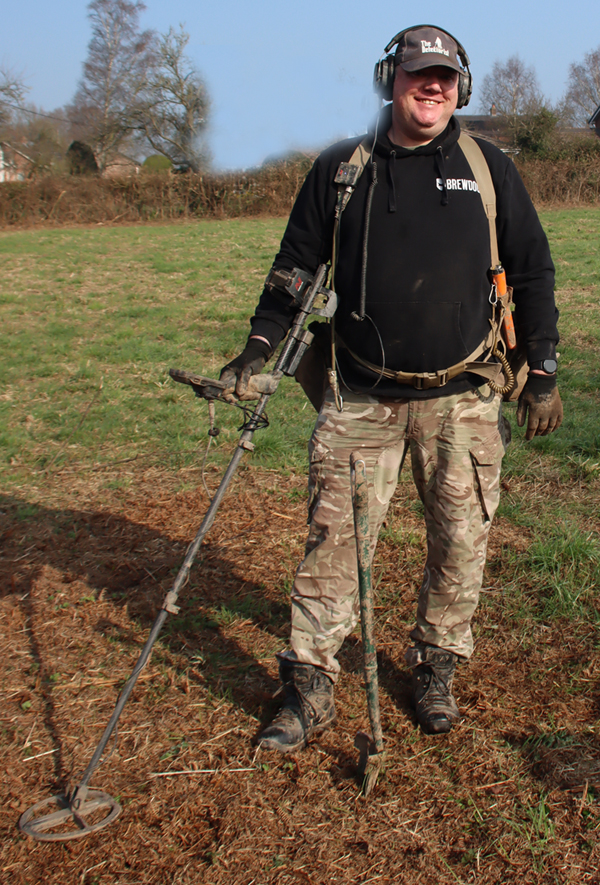
Rob Jones in situ at the field, very kindly agreeing to pose!
Rob has been a metal detectorist since 1996, and in 2020 was awarded the The Searcher Magazine‘s ‘Most Significant Find Wales’ award for his discovery of the Rossett Roman ingot. He works closely with the Portable Antiquities Scheme, reporting all his finds so that they can be included in the PAS database, and (with luck) helping to identify previously unidentified sites. He has worked as an on-site expert with archaeological projects at, for example, the Rossett villa and Basingwerk Abbey in Holywell, supplementing archaeological survey and excavation activities and helping to identify potentially rewarding places to investigate.
The field near Churton was naturally less promising than either, not having been home to either Roman or Medieval buildings, but it had the merit of being virgin territory, never having been built on or investigated before. Although under ridge and furrow in the Middle Ages, it has been largely unused for the last few decades. We had no real idea what the field might reveal, but it turned out to be a right old mix, even though the field was, in Rob’s terms fairly “quiet.”
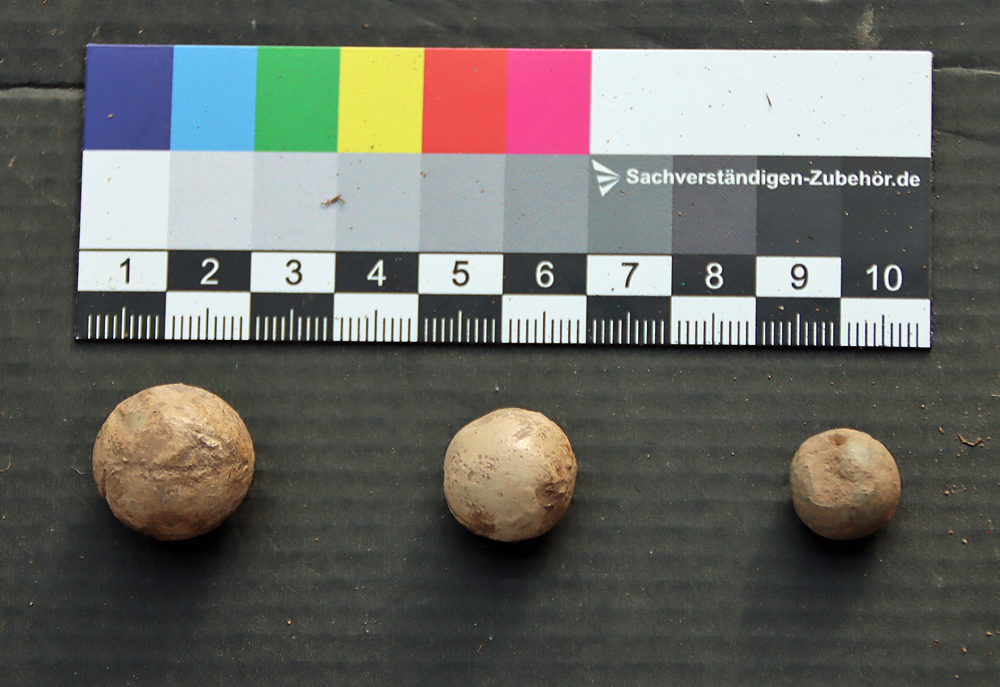
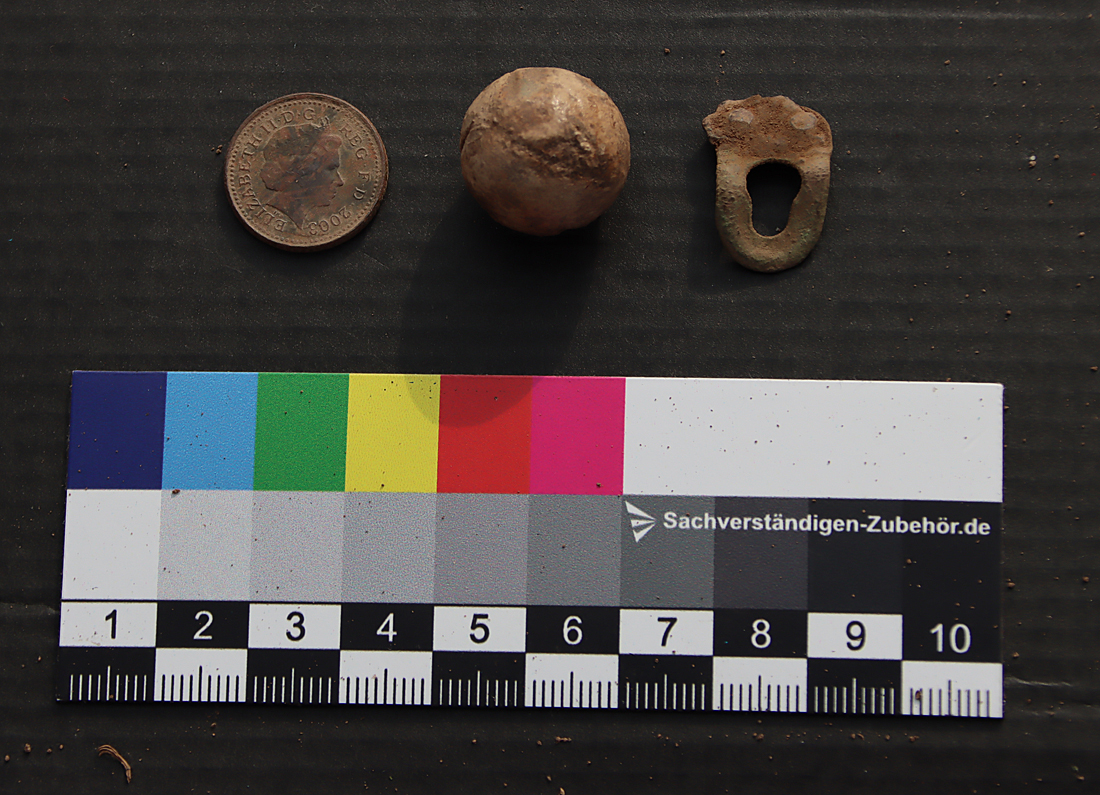
17th century musket and pistol balls
- We were all delighted by two lead musket balls and a smaller pistol ball (above), probably dating to the 17th century, all of them found in one small patch of the field in quick succession. Even though they are small, the little spheres are noticeably heavy in the palm of the hand. Both the local churches in Farndon and Holt, on opposite sides of the river, both named for St Chad, have musket ball shots in the masonry due to the offensives of the opposing forces that used the churches as their bases. I have posted about both – the post on the Grade-II* St Chad’s in Farndon (5 minutes down the road from Churton) here, and the one on the Grade-1 listed St Chad’s in Holt here.
- A very intriguing object was what appeared to be a very small pouch, with holes at the top, perhaps for attaching to clothing. It would be good to know more about what this was used for.
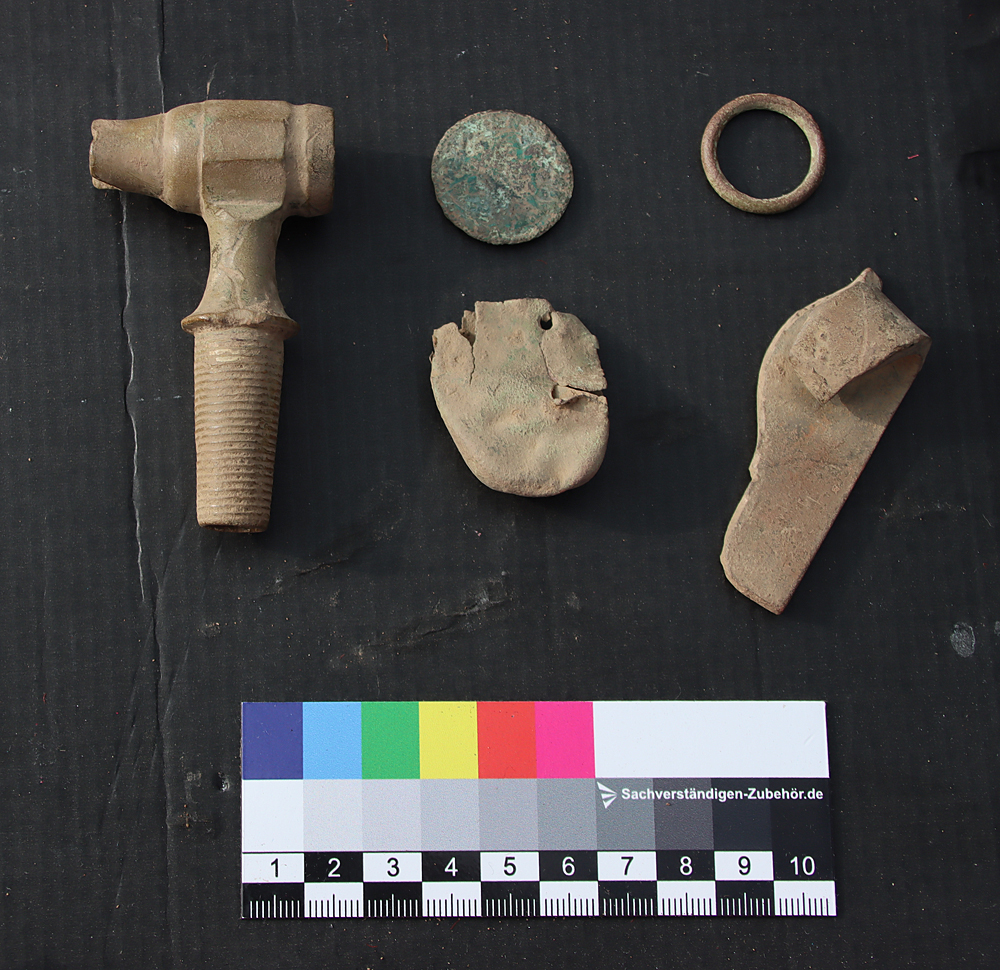
- One of the most entertaining of the finds was a piece of a toy gun, nicely made and originally painted blue, with the words RUSTLER GEM clearly visible.
- A small button with four holes, the shape of a flying saucer, was surrounded by lettering, the bottom half of which clearly states “Chester,” with the rest too worn to be read, apart from a possible M. at the start (an initial?) and a clear DY at the end, perhaps preceded by an E. A brief lurch around the Internet suggests that these are typical on suits and waistcoats of the late nineteenth and early 20th centuries, and are marked with the name of the tailor.
- Another button with a metal loop has a crown engraved on the loop side, together with other emblems and some indecipherable text, and is perfectly plain on the other.
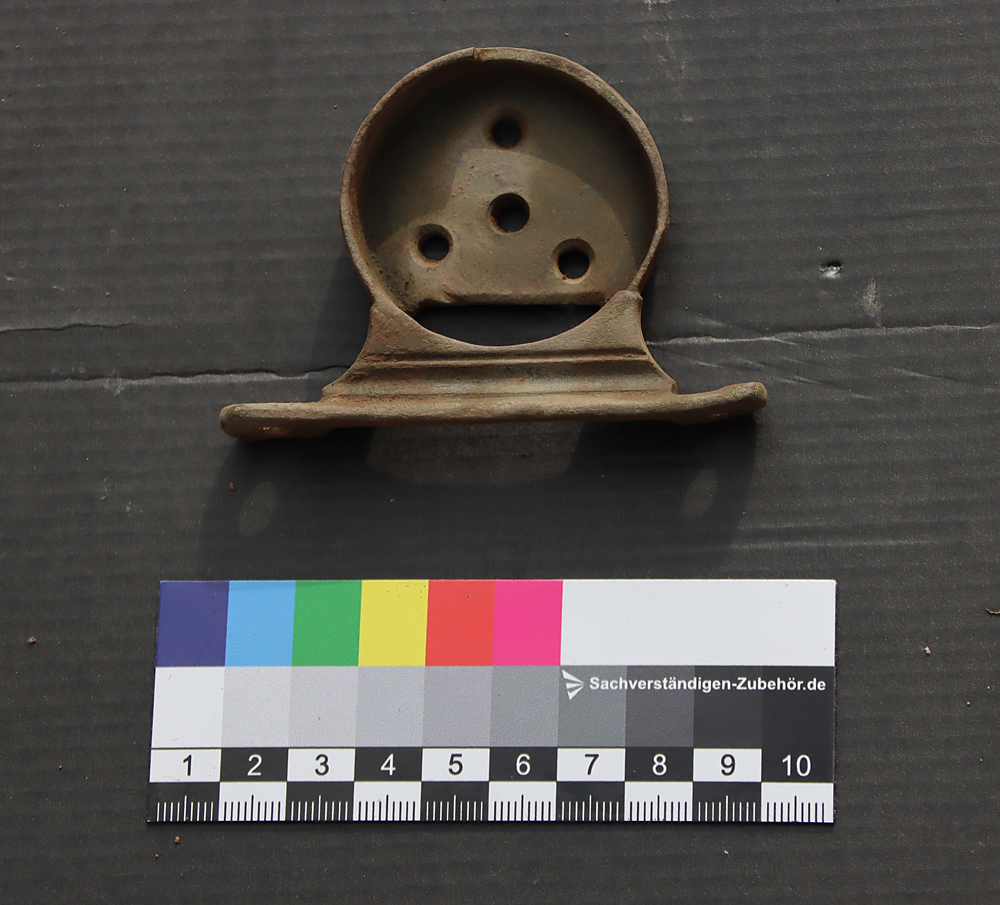
- A broken pair of cufflinks, with only one face remaining, was rather charming, and a piece of thimble was the sort of thing that only an experienced detectorist would have recognized.
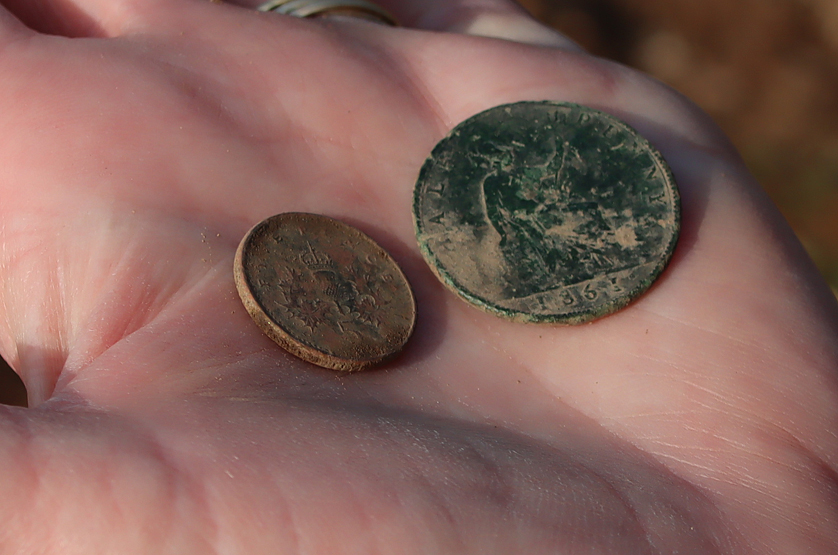
- The oldest coin we found was a penny dating to 1861, and there was also a 2003 five pence piece!
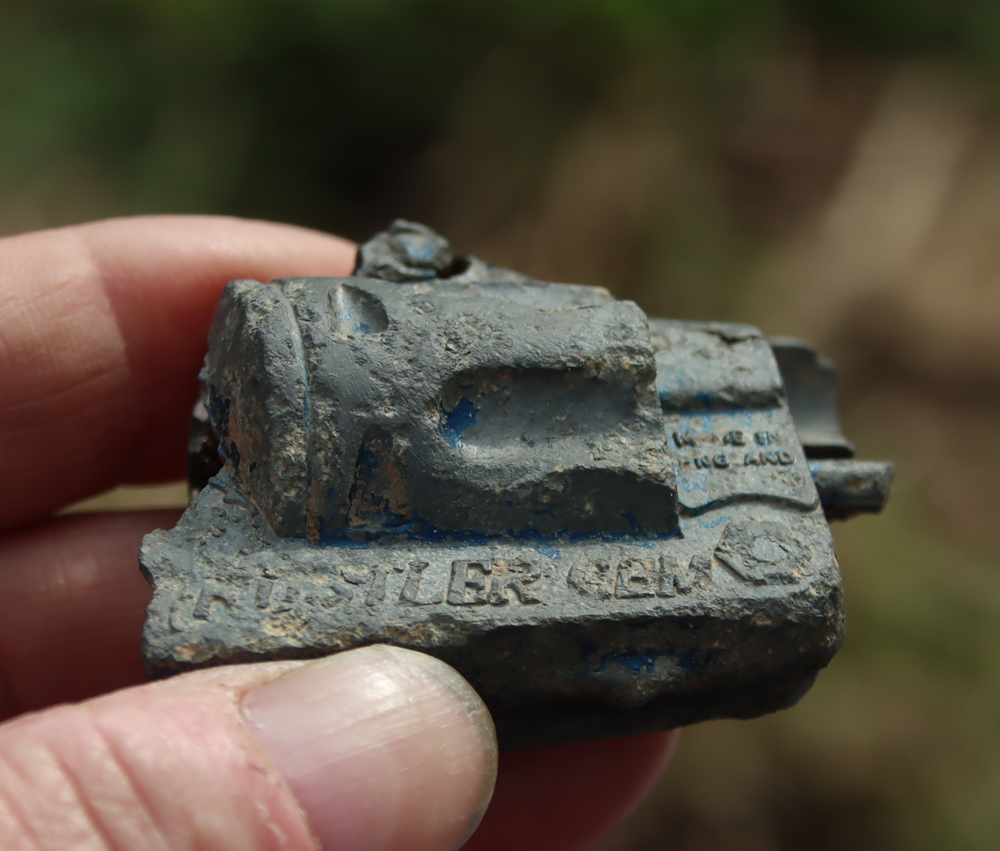
The Rustler after cleaning
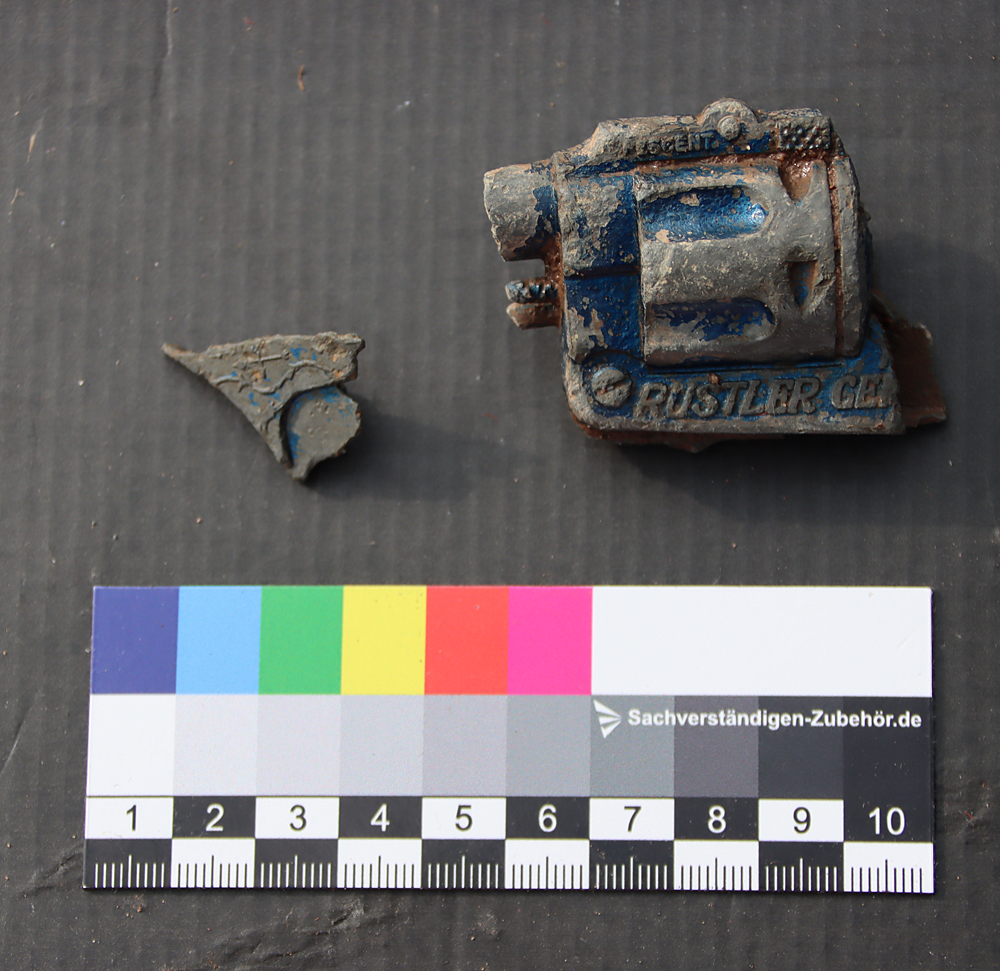
The other side of the Rustler Gem
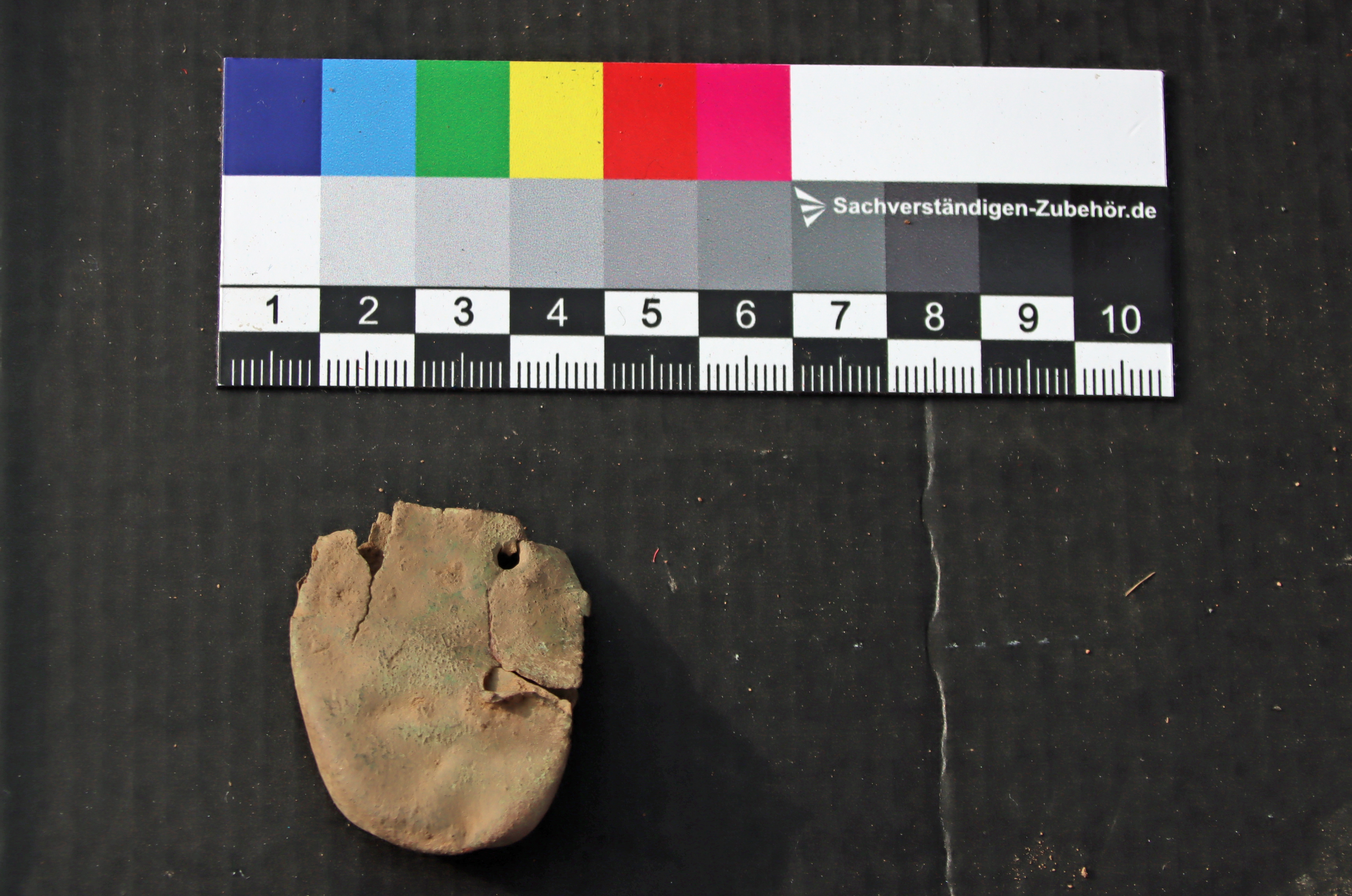
The pouch with two holes at the top, function unknown.
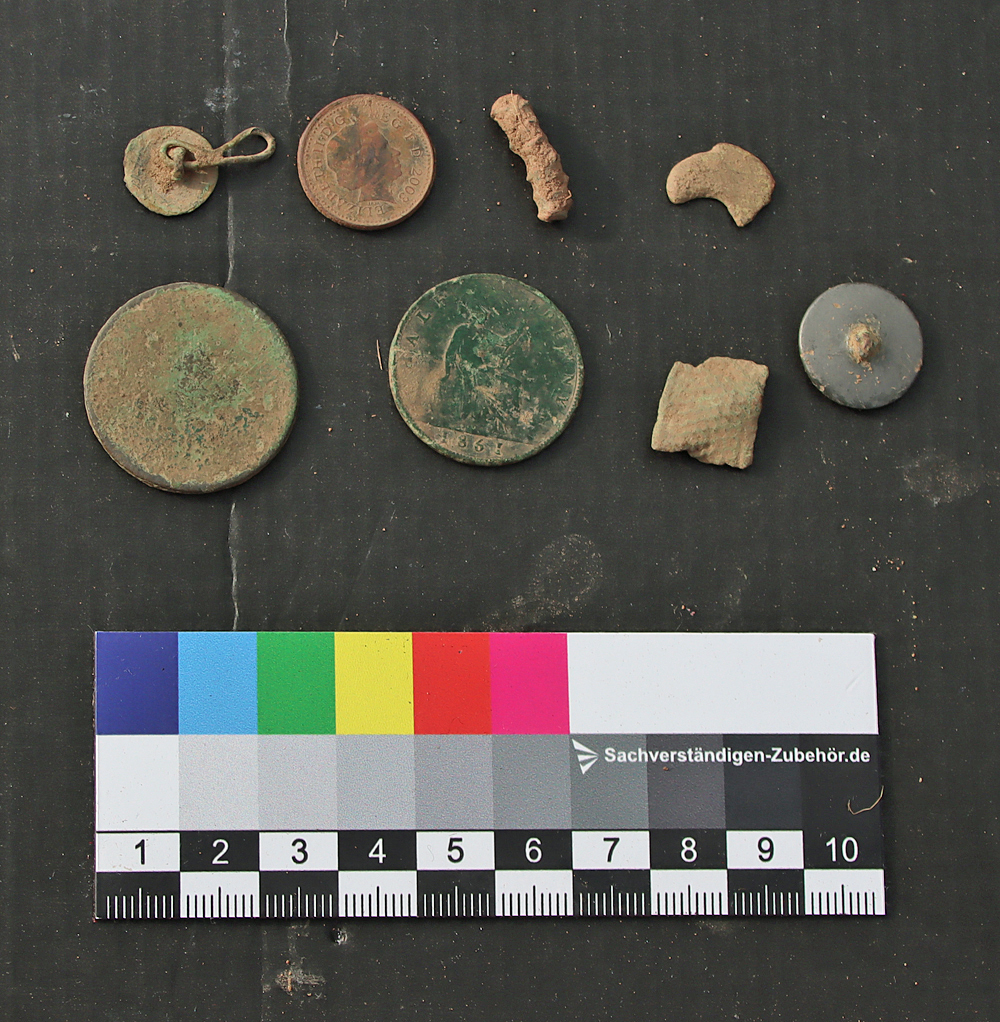
Top left is the half cufflink. Bottom right is the piece of thimble.
Other bits and pieces were a mixture of broken bits of modern equipment and pieces that were largely unidentifiable but, as they were found, each piece was welcomed back into the world with equal enthusiasm, brushed free of damp earth, photographed and bagged up for further examination. There was almost nothing else other than metal, although we did poke around in the holes made, and kicked out all the available mole hills to see if there was anything non-metallic. It was remnant, random stuff of everyday life, but no less rewarding for that.
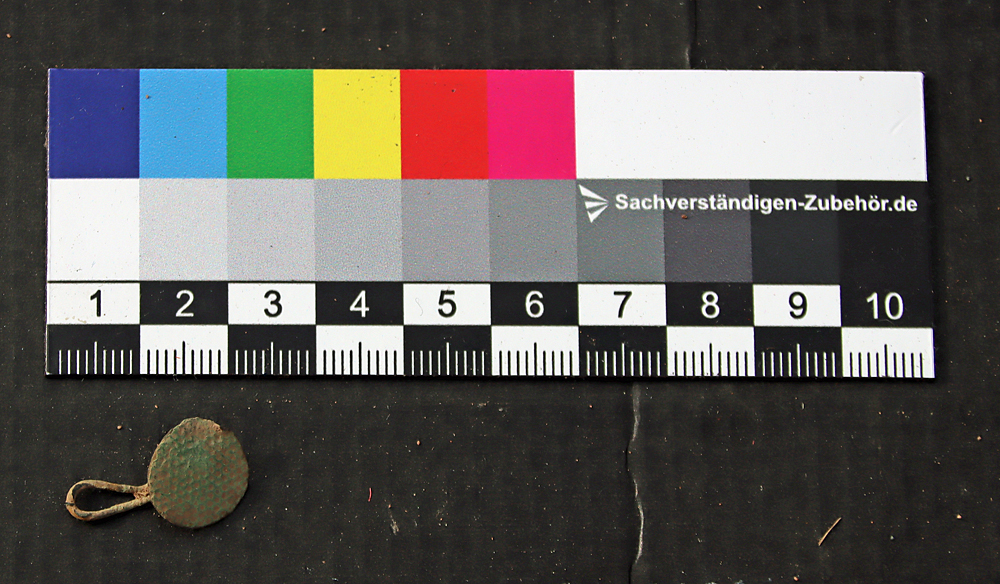
The other side of the cufflink, showing the lightly ornamented face
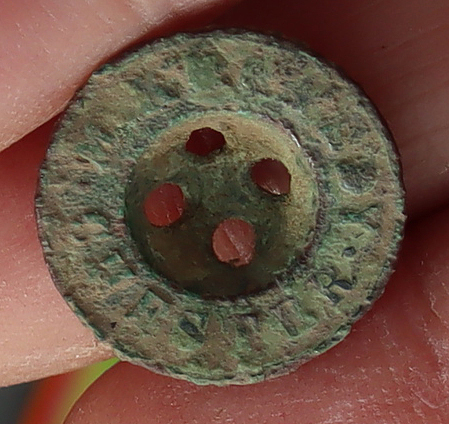
The four-holed button showing “Chester” at the bottom and indecipherable text at the top, possibly a tailor’s name, apparently beginning with an M. and ending with DY (perhaps preceded by an E).
Many sincere thanks to Rob for taking the time to spend the day with us, and also for showing us how a metal detector functions, with different fittings available to improve sensitivity, and how a separate pointer probe helps to focus in on the object that the detector has identified after the hole has been dug. Rob even has a special customized spade for making small holes, not unlike a long-handled bulb planter but far more robust. The metal detector is a far more subtle piece of equipment than I had anticipated, and it was an education to see it in action. And many thanks to Helen for inviting me! Truly fascinating, and such a fun and mellow day.
 Based in Churton
Great day and a great post! So exciting to find those 17th C pellets, and imagining the battles that went on there once.
Clare D.
LikeLike
It was such a fun day, finding the pellets was rather special given the Civil War damage at both the local churches, and talking to Rob about his experiences was a real education. There was some field-walking in the fields between Churton and the Dee years ago, but the results were never published, which is a shame.
LikeLike