
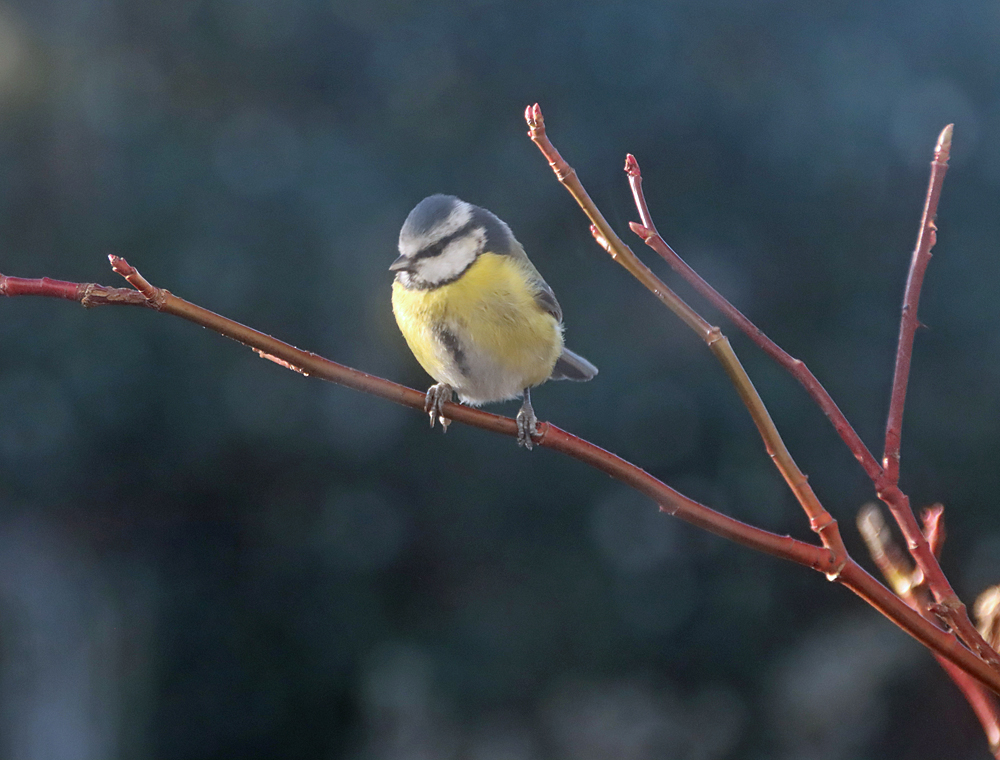
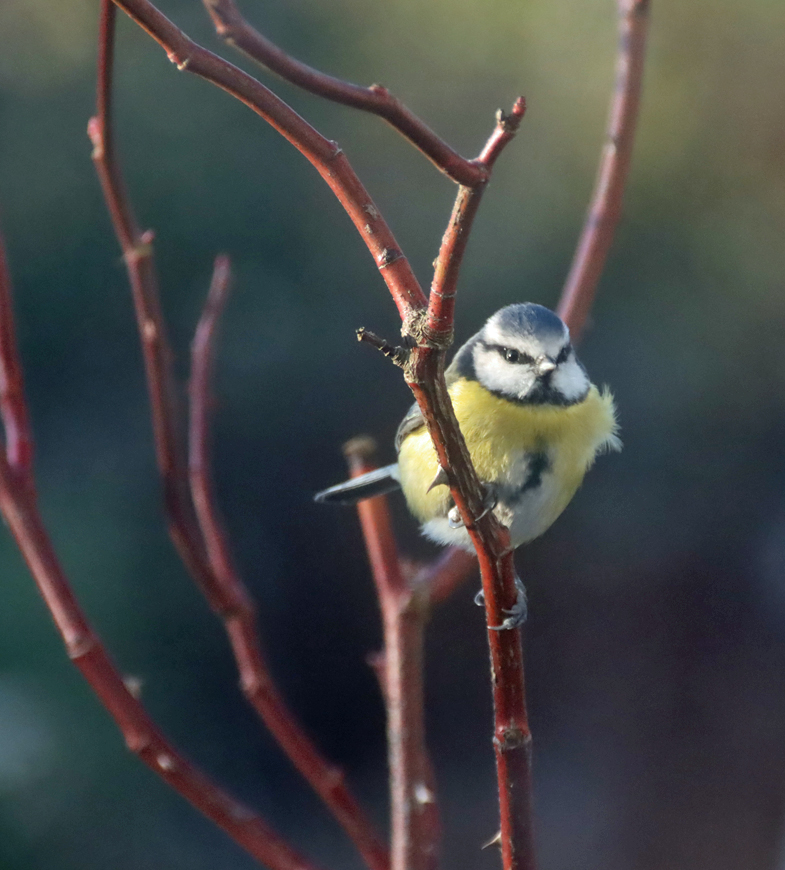
Blue Tit on a rose bush in my garden, January 2026
I have been doing the RSPB Big Garden Gardenwatch for about 10 years, but it has been going since 1979, collecting the same data each year so that the analysis of birds can be sensitive to time as well as geography, charting alterations in bird populations throughout the UK. These changes can be considerable. As climate change impacts both regional and highly localized environments, the distribution and numbers of different animal and plant species alter accordingly. Overall the UK has lost 38 million birds in the last 60 years, and although House Sparrows were the “most spotted” bird during 2025, comparing actual numbers with previous years shows that this figure is down 64% since 1979. This means that House Sparrows are now on the red list, which is the highest level of conservation concern.
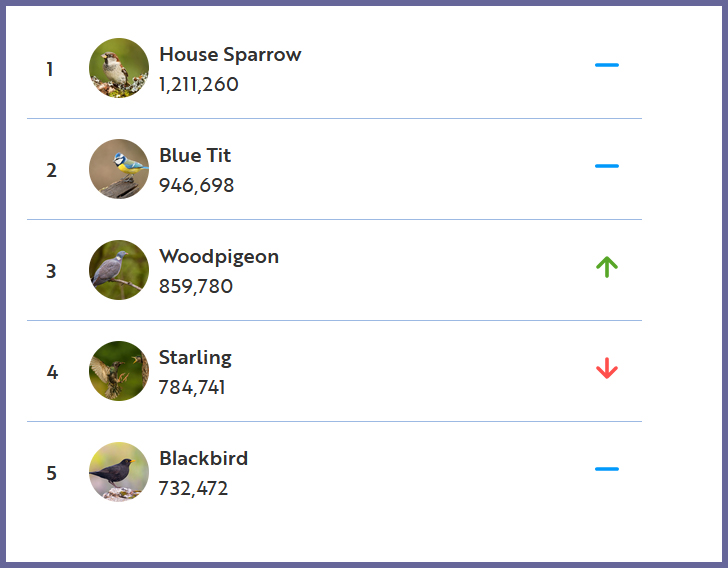
Most spotted in 2025, from the current Birdwatch webpage
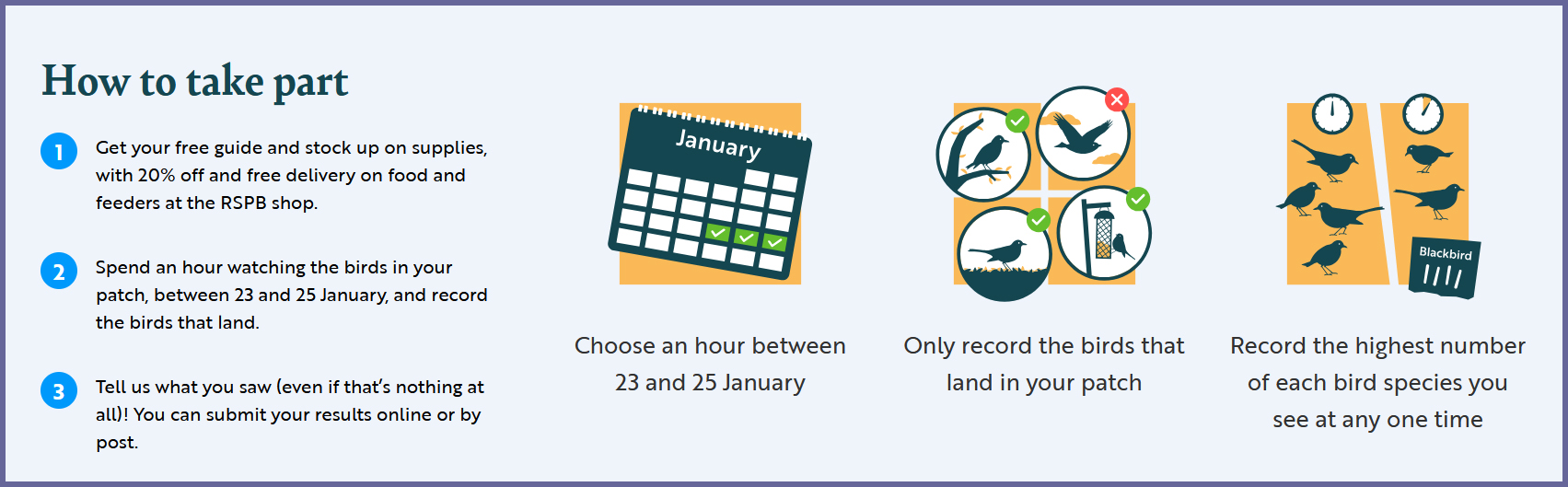
 You can enter your results online or by post, making it very easy to participate. Instructions for participating are at the Big Garden Birdwatch page here, but it’s a simple task. On either 23rd, 24th or 25th January simply select a convenient hour to do some birdwatching in your garden, local park or wherever you settle yourself down. The idea is to count only the maximum birds you see at any one time in that hour, and only those that land, not birds flying overhead. You can download the bird identification sheet in English or Welsh here.
 I’ve always vaguely wondered why the survey is done in the winter, when we would all rather be tucked up indoors, but the answer makes a lot of sense:
Because that’s the time of the year garden birds need us most – if it’s really cold, it’s likely more birds will come into our gardens looking for shelter and food. This makes is easier to count the birds. Because the Birdwatch takes place at the same time every year, we can look back through the years to see if anything has changed.
I will be doing mine from the nice, safe warmth of the kitchen, from where I can watch the bird-feeders and the birdbath without suffering from hypothermia!
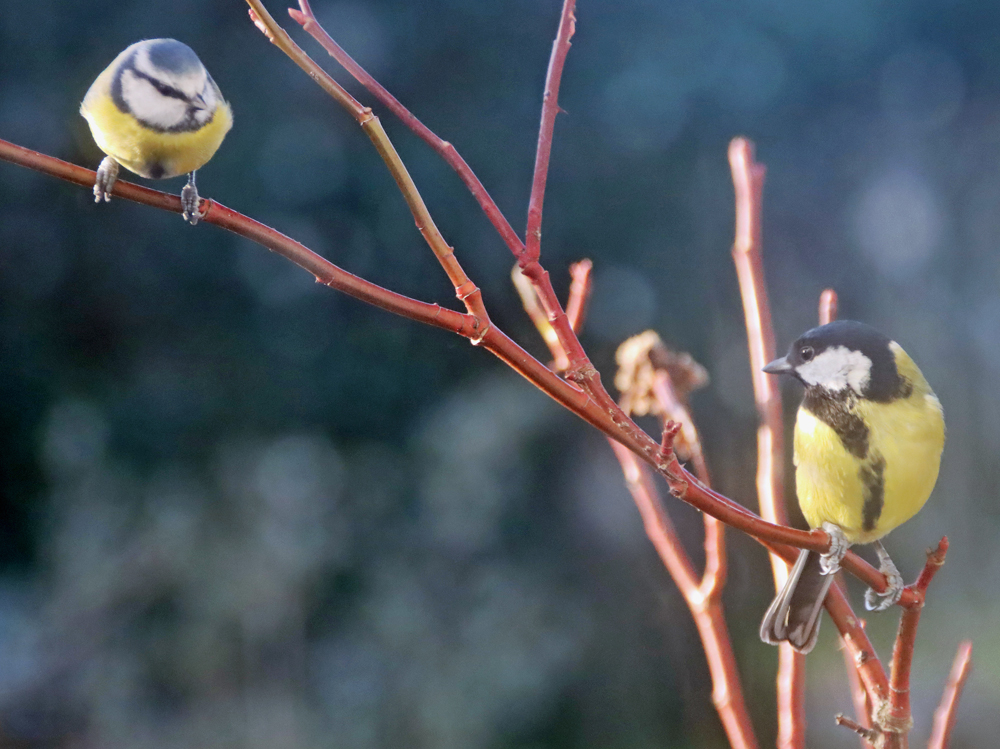
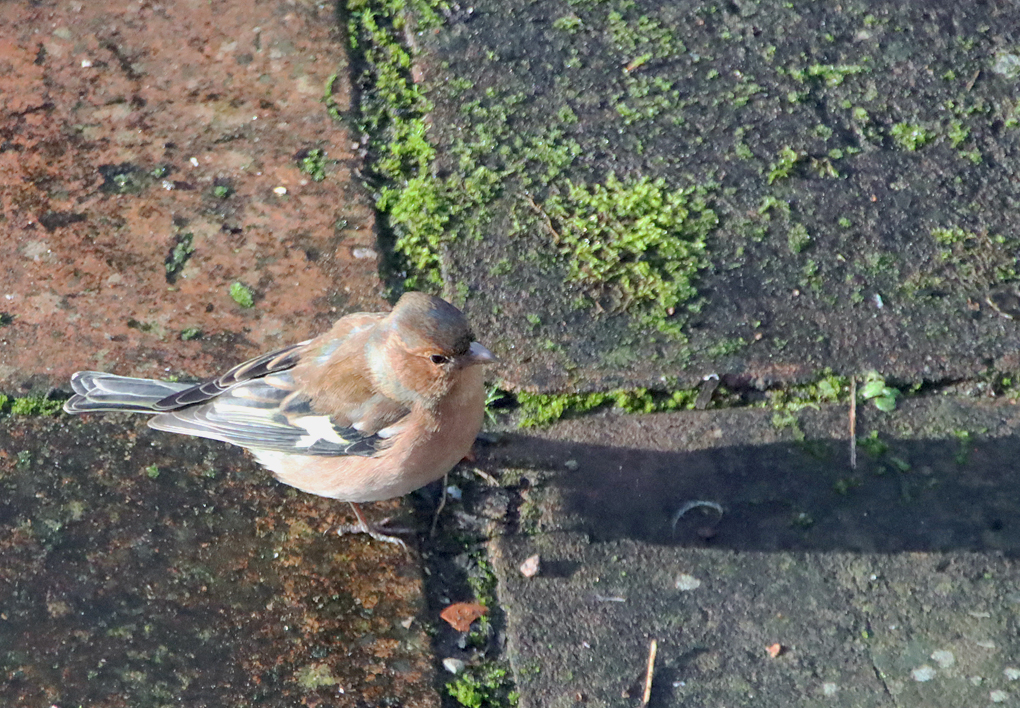
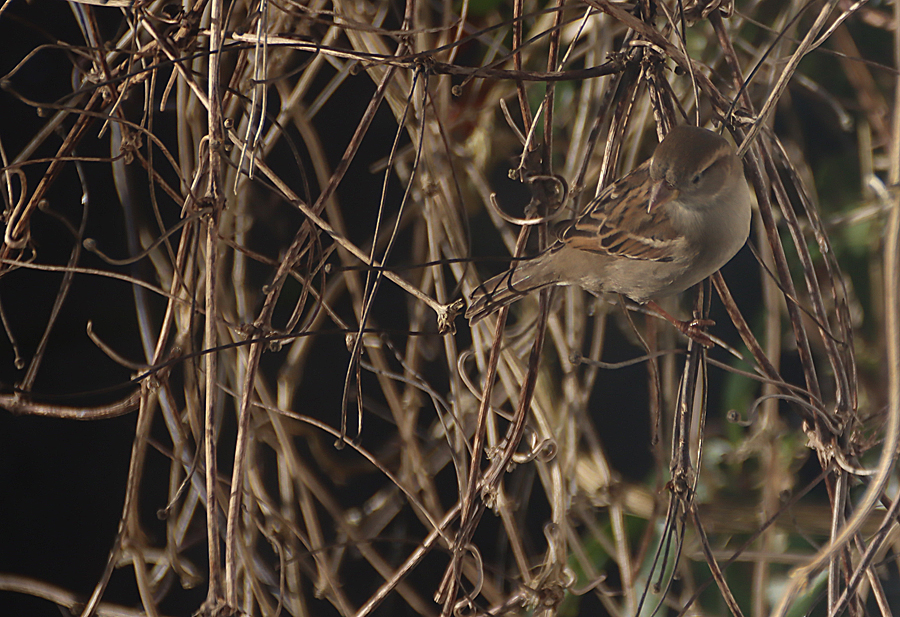
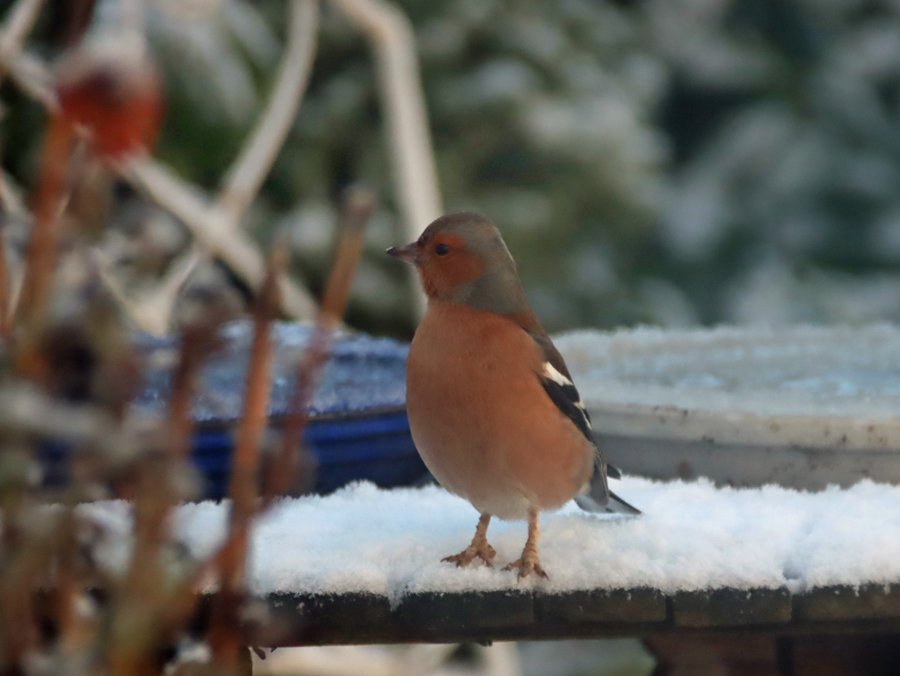 Most of the birds taking advantages of the bird feeders are small – blue tits, great tits, sparrows, the occasional dunnock, a few long-tailed tits, and quite a few very shy chaffinches. It is impressive how the sparrows and chaffinches are so at home on the bird feeders, not as gymnastic as the tits, but perfectly happy perching on the outer cage. Black birds and collared doves, and even some of the local community of jackdaws and the occasional magpie scavenge underneath the feeders because the small birds are all messy eaters and drop a lot.
 Unexpectedly, a couple of weeks ago I was in the kitchen making a coffee and looked out of the window to see a Great Spotted Woodpecker, at first hanging nearly upside down on one of the bird-feeders but making a really good job of arching its neck around to get at the mixed sunflower hearts, dried mealworms, suet pellets and peanuts, before it adjusted itself into a more convenient upright position. Gorgeous. It has been back several times since, always on the bird feeder furthest from the house. It answers the very puzzling question of why the bird feeder at the far end is always emptied much more quickly than the others, as the small birds don’t seem to mind where they feed. I could never have imagined a more efficient vacuuming operation. I’ve heard it in my neighbour’s garden throughout the summer, tapping away at a tree, but only had fleeting glimpses of it.
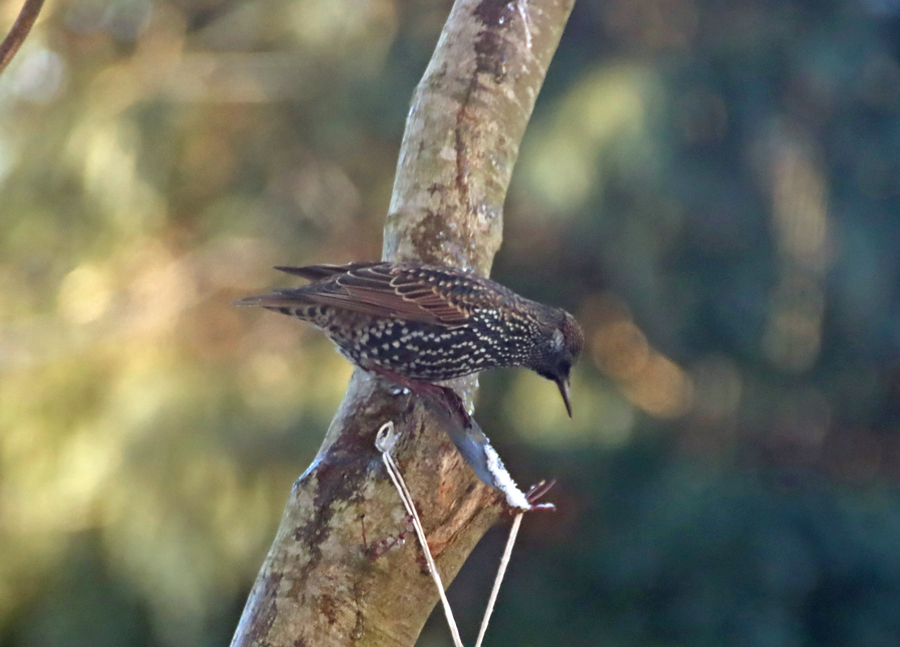
 Most of my birdfeeders are like the one in the above woodpecker photo, but I have had great success with some very ugly ones that stick to windows with suckers, particularly with the robins and sparrows. I take all the bird feeders down during the course of early spring, one at a time, so that my winter visitors return to fending for themselves, passing on their natural foraging skills to their young, so on the whole I don’t mind a bit of ugliness over the winter. The window feeders supply the birds that don’t do well on the hanging feeders, particularly robins and sparrows, but the tits and finches also enjoy them. A more surprising visitor is a single starling, which simply cannot get the knack of the hanging feeders. I have never seen starlings in the garden before. It is almost impossible to take a good photograph of anything in the window feeders, thanks to the suckers and the general mess that the birds somehow manage to make, but here’s my visitor, taking up all of the available space.






 Based in Churton